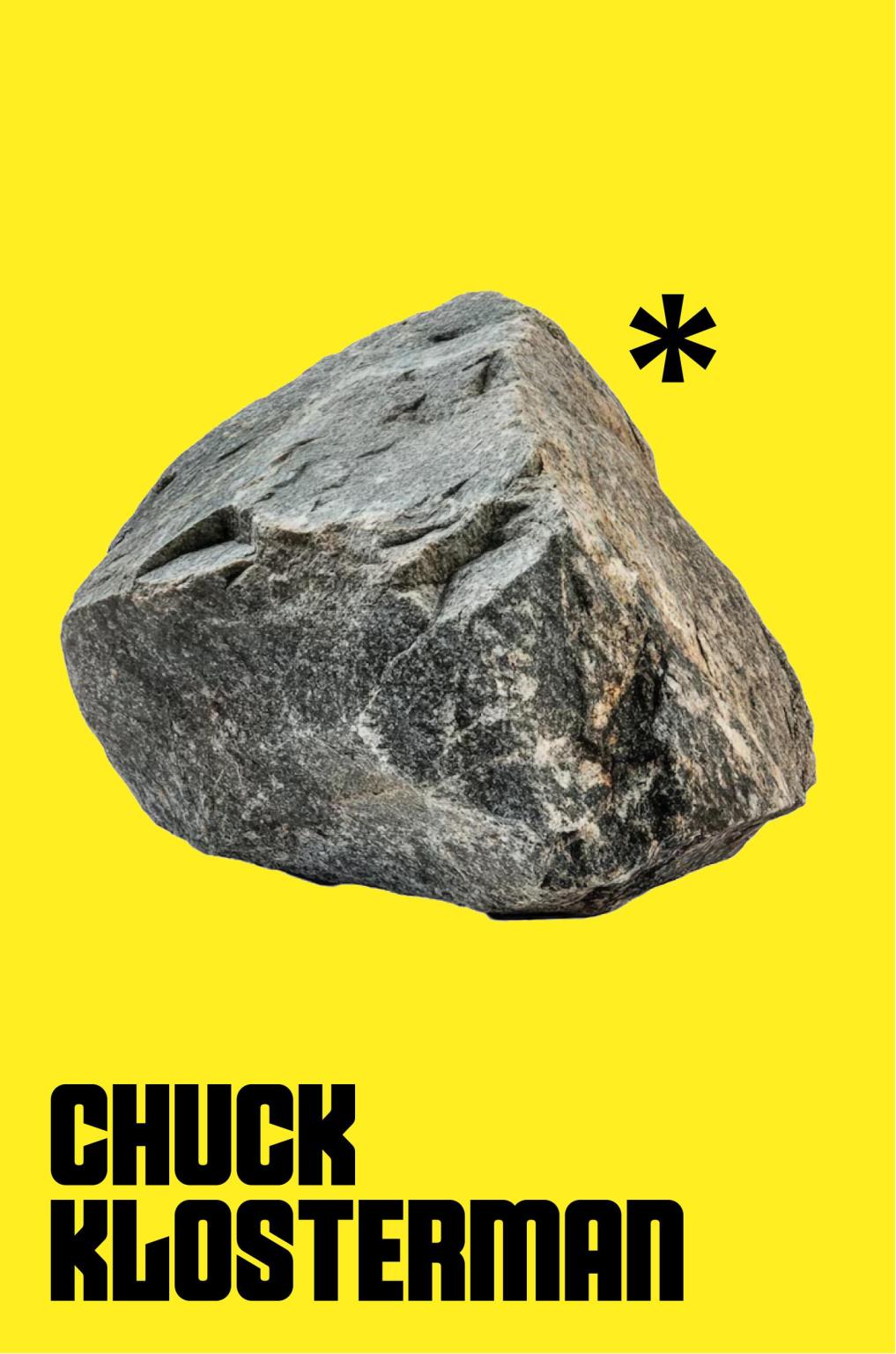
Chuck Klosterman is a writer known for his strong and sometimes out-there opinions. While he writes on a multitude of topics, he mostly deals with music. His essays have appeared in numerous magazines and have been collected in his books like Sex, Drugs, and Cocoa Puffs, or Eating the Dinosaur. While Klosterman has dabbled in fiction to varying results over the years, his newest book Rock*: A Mainstream Alternative History Of Alternative Mainstream Music, combines these into one of the most interesting concepts for an alternative history book.
Chuck Klosterman’s fictitious rock & roll timeline poses the question: what if the Beatles had only developed a cult following while the Velvet Underground emerged as the most popular band in the world? One little thing can change a trajectory, and this is one trajectory that definitely changes. However, it is this contrast of Klosterman’s multi-versed version that highlights the truths we know about our own rock & roll history.
The music nerd extraordinaire conjectures a decidedly different rock & roll history. First, it connects the rock & roll of the era to the Velvet Underground’s 1967 self-titled record and how it influenced music going forward. This sets up some different timelines in which some musicians lived beyond their deaths in our timeline. In this reality, Elvis Presley is still alive into the 2000s, allowing Klosterman to imagine projects and collaborations that would be impossible in our timeline. This book throws more pop culture references at you than Ready Player One did, but here it is done much better due to its remixing and repurposing of the context.
Klosterman’s recounting of Lou Reed and the Velvet Underground’s formation is complete, but direct. This is a music world designed by Lou Reed, not Lennon and McCartney. While they exist in the timeline Klosterman postulates, they may as well not even exist. Weird events in this rock history include Lou Reed’s murder in 1983 and the phenomenon of Velvetmania in 1967, which was a completely different approach altogether. The concept of Velvetmania indifference was a direct inverse of Beatlemania chaos. In this world, Altamont was the big successful music festival, and Woodstock was the disaster, exposed after Peter Jackson made a Get Back-style documentary about the upstate New York Festival. There are other examples, but this book is better experienced than explained.
For as strange as this book is, eventually it became like a puzzle of figuring out what rules exist in this Velvet Underground-tinged world. It’s this weird amalgamation of the essays that gained him notoriety and his underappreciated fiction writing. That being said, some genuinely laugh-out-loud moments border on Spinal Tap genius. However, Klosterman includes some things to intentionally mess with readers. In his world, the Beatles, as a group, last longer, but Yoko Ono is eventually added as the fifth Beatle. Things like this are spoken as if they’re facts.
Fans of Klosterman’s earlier work may want something closer to his anthologized books rather than this weird mash-up of his previous work and Marvel Comics’ ongoing comic series What If…, but this is an interesting approach to talk about fandom. In spots, it’s directly contradictory, just to be, which can be weird.
It’s hard for me as a comic nerd to not see The Watchmen all over this. It’s an alternate history with guitars, rock stars, and pop culture. It’s not bad; it’s just weird, especially for music fans who know their facts or know just enough. Hopefully people will get the concept because it is a fun and genius way to look at music. Like Watchmen, the alternate history becomes a way of examining the reality it diverges from.
Whatever your opinions are on Klosterman, this book probably won’t help them. His remix of rock & roll history is head-scratchingly genius. This alternate universe makes sense and feels natural while at the same time bringing forth some of the biggest and blasphemous alternatives to rock and American History. It’s definitely one to experience for yourself.
Chuck Klosterman’s Rock*: A Mainstream Alternative History Of Alternative Mainstream Music is published by Da Capo Press.
Discover more from Dying Scene
Subscribe to get the latest posts sent to your email.