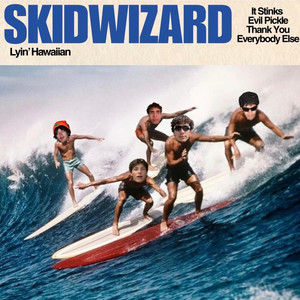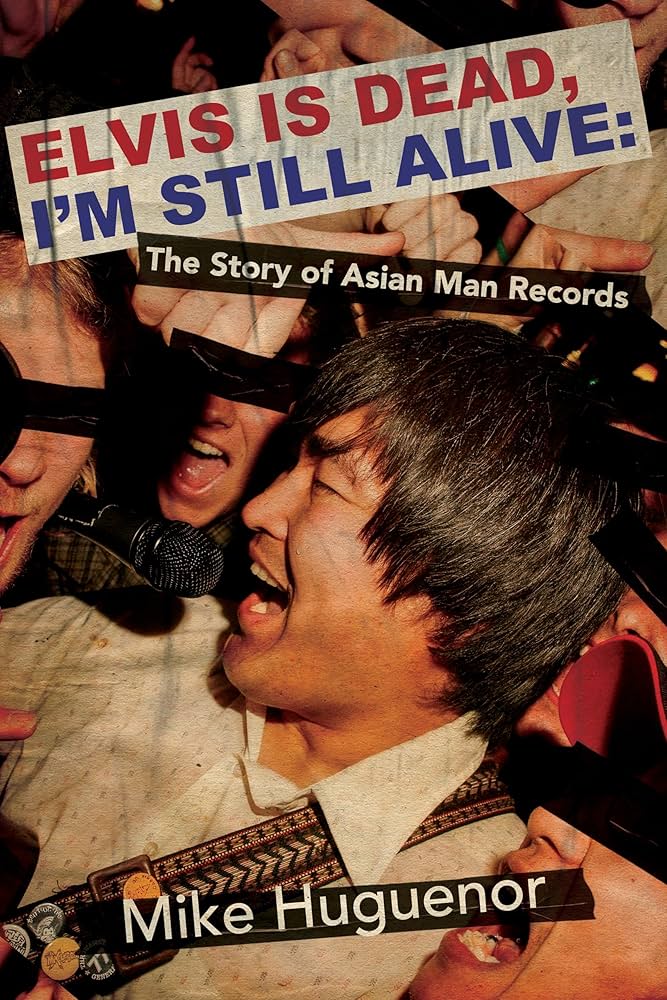
For 30 years Asian Man Records has launched the music careers of many artists spanning across multiple genres. As a DIY label, Asian Man has been the fulcrum of a musical community that calls for nonviolent action (Plea for Peace) as well as introducing a wider audience to nascent groups such as The Lawrence Arms, Less Than Jake, and Alkaline Trio. Writer and former Asian Man artist Mike Huguenor started working on “Elvis Is Dead, I’m Still Alive: The Story of Asian Man Records (EIDISA)” 4 years ago, and ultimately offers 30 years of stories and lore as told directly by Mike Park, the man behind Asian Man Records, and other noticeable figures from across the globe. What started as a response to passion that was lost through constant touring from his prior band, Skankin’ Pickle, has turned into something much bigger that has directly influenced the lives of many, as would be revealed in this book.
“EIDISA” starts with Mike Park’s early life, from childhood to high school, progressing to his first high school band Yellow Jam. It becomes apparent pretty early on, most noticeably with the actual name of the record label, that this narrative addresses racial issues that effected Park’s early life as a Korean American, which would influence a ton of his own writing and projects. It’s important to include a lot of Mike Park’s personal narratives when discussing the Asian Man Records and I think Huguenor does very well in dedicating the first quarter of this book to Park, Skankin Pickle and Dill Records, and to the start of Asian Man before getting into many of the bands that signed with the label.
The biggest staples of Asian Man have an entire chapter dedicated to themselves, from The Plea for Peace Tour, Misfits of Ska, even Asian Man Japan. Slow Gherkin, Bomb the Music Industry!, and Park’s other projects The Chinkees and The Bruce Lee Band are just a few of the other Asian Man collectives that have a few incredible stories packed into their own chapters.
While Asian Man Records was first linked closely with ska bands in the midst of the third wave era, its transition to indie rock and emo talent also sheds a light on the tediousness of it in terms of sales, however gaining a cult following years later with bands like Korea Girl and AJJ.
“EIDISA” also looks upon the controversial era of The Queers’ time at Asian Man. While the incident around a certain tweet didn’t exactly tarnish the label, but forcibly dragged into unnecessary drama, this chapter was meant to make the reader consider the amount of power social media now has over the music industry, more specifically how much power a person can have whilst hiding behind their screen.
On top of being a touring guitarist, Mike Huguenor shows he is also an incredible raconteur, that sets up stories well enough to make you keep reading. While I found information to be sometimes repetitive, it doesn’t distract from the witty and sometimes emotional passages sprinkled throughout “EIDISA”. Is this the greatest book ever about Asian Man? Seeing as it’s the only, I would say yes.
I was lucky to meet with both author Mike Huguenor and Jeff Rosenstock upon the book’s release, and it’s apparent on the amount of research and interviews that Mike had gone through for this book. I found the advice he gave me as a writer is quite the same as how he describes bands from Asian Man getting their start into popularity. Overall, this is a super entertaining read packed with information that will hopefully inspire its readers to get out and do something for their community.
Discover more from Dying Scene
Subscribe to get the latest posts sent to your email.