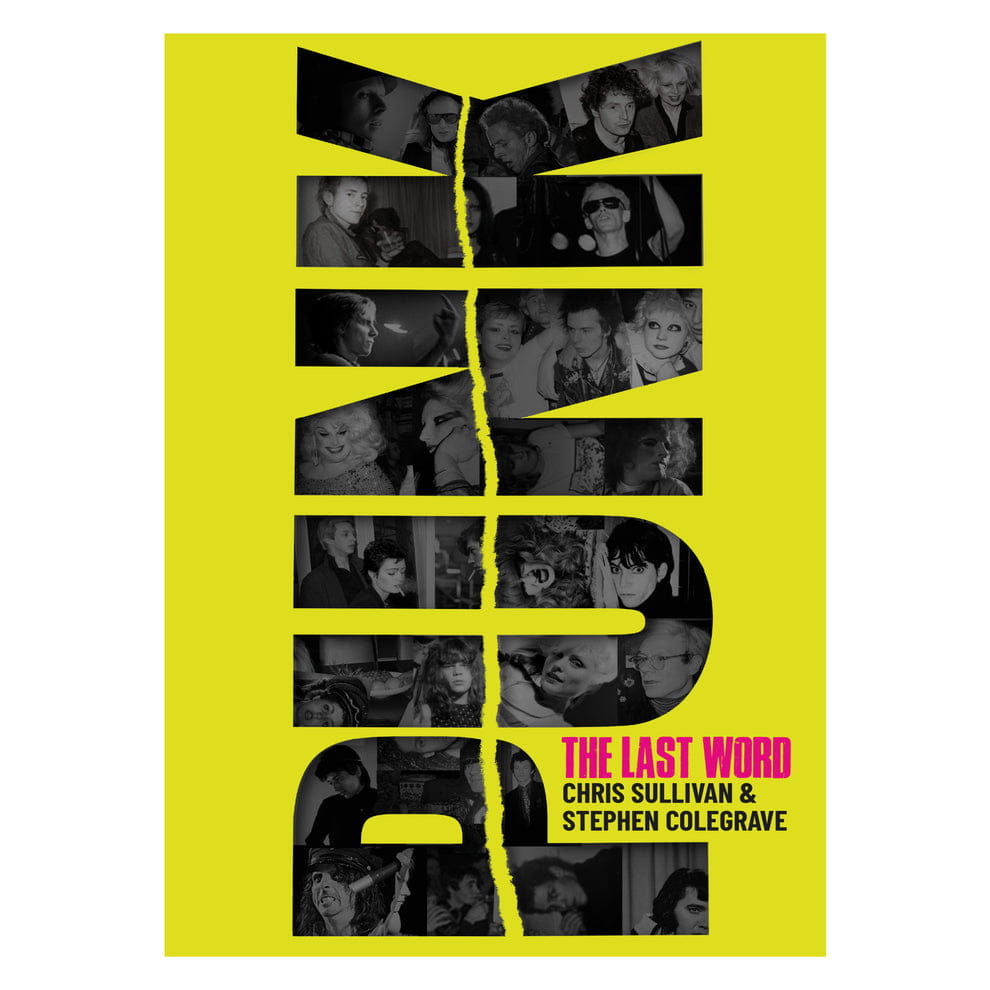
Similar to their other books on punk rock, Chris Sullivan and Stephen Colegrave give an account of the genre that made its splash into music’s lexicon in the 1970’s. This time, told through the lens of punk as a DIY philosophy, the early architects of punk rock tell their experiences and memories from a genre that made itself relevant on its own terms. Boasting over 150 interviews, Punk: The Last Word, might be that very thing.
Starting with a section called “Historical Harbingers,” Sullivan and Colegrave provide accounts of historical figures who embodied the punk attitude and the wherewithal to push back against society. These go back to playwrights like Socrates and pirates like Blackbeard, as well as filmmaker Federico Fellini and rock and roll legend Little Richard. There’s a chunk on the Beats, whose manifesto of hard living and free will definitely influenced punk rock. Acknowledging that most of these writers would have been supporters of punk rock if they had survived long enough to see the movement flourish.
Sullivan and Colegraves’s book organizes their interview with the players of these burgeoning scenes in a way that feels natural. The parallels between, the US and UK scenes, are presented fairly. As the seedlings of things are happening in different corners of their respective scenes, the written accounts detail how they each came together to make a whole scene on both sides of the Atlantic and the influence they had on each other’s work in tandem. Whether it is the Bowery in New York or King’s Road in England, we get a sense of where punk was cultivated and the locations where the scene flourished. From CBGB’s, the dingy dive bar where so many US bands got their start, to Vivienne Westwood’s Sex Shop, where Malcolm McLaren gathered the Sex Pistols, everything is given the reverence it deserves.
Chapters on the bands that became the foundation for punk include the usual, the Velvet Underground, The Stooges, and the MC5, but also include Jonathan Richman and the Modern Lovers and Alice Cooper. Despite their being labeled in genres that aren’t necessarily punk, these artist can be put in either due to their aesthetic or work ethic. There are entries on Andy Warhol’s Factory, along with CBGB’s and Max’s Kansas City, and a brief entry on Stonewall.
When it jumps to England’s scene and talks about its origin there are quotes from England’s living punk rockers like Glen Matlock and Siouxie Sioux, and get into the meat of the England scene starting with Vivienne Westwood and building out from there. Interviews with Malcolm McLaren and Don Letts pepper these sections. From there the book jumps back and forth between the UK and US punk rock scenes with some crossover, making it a more cohesive movement than a battle of who started it first.
For as gigantic as this book is, some of these entries seem a little slim. It can be argued, though, that more of the story can be told through other entries and the interviewees’ experiences, but some entries last about a page and a half. The book is written like an oral history, but organized almost like an encyclopedia, though not alphabetically. More or less, it is set up like a timeline. As the book progresses, there are more and more architects, and more origin stories of these punk rock institutions. While the book has the advantage of 50 years of history, the broad strokes never change. However, the interviews do shed some light on some smaller details.
Punk: The Last Word is a beast of a book at just under six hundred pages long. This book is perfect for the completist in your life. If you have any holes in your knowledge of early punk rock, this book is essentially a catch-all. In their intro, Chris Sullivan and Stephen Colegrave call this “the last word” as it will be the last book they release on the subject of Punk. I’m sure between their previous tomes, there isn’t much left to cover or in some cases, anyone alive to tell it. Regardless, Punk: The Last Word is a comprehensive history of the beginning of punk rock with quotes from the architects of the scene reflecting on building a movement.
Punk: The Last Word by Chris Sullivan and Stephen Colegrave is available through Omnibus Press.
Discover more from Dying Scene
Subscribe to get the latest posts sent to your email.