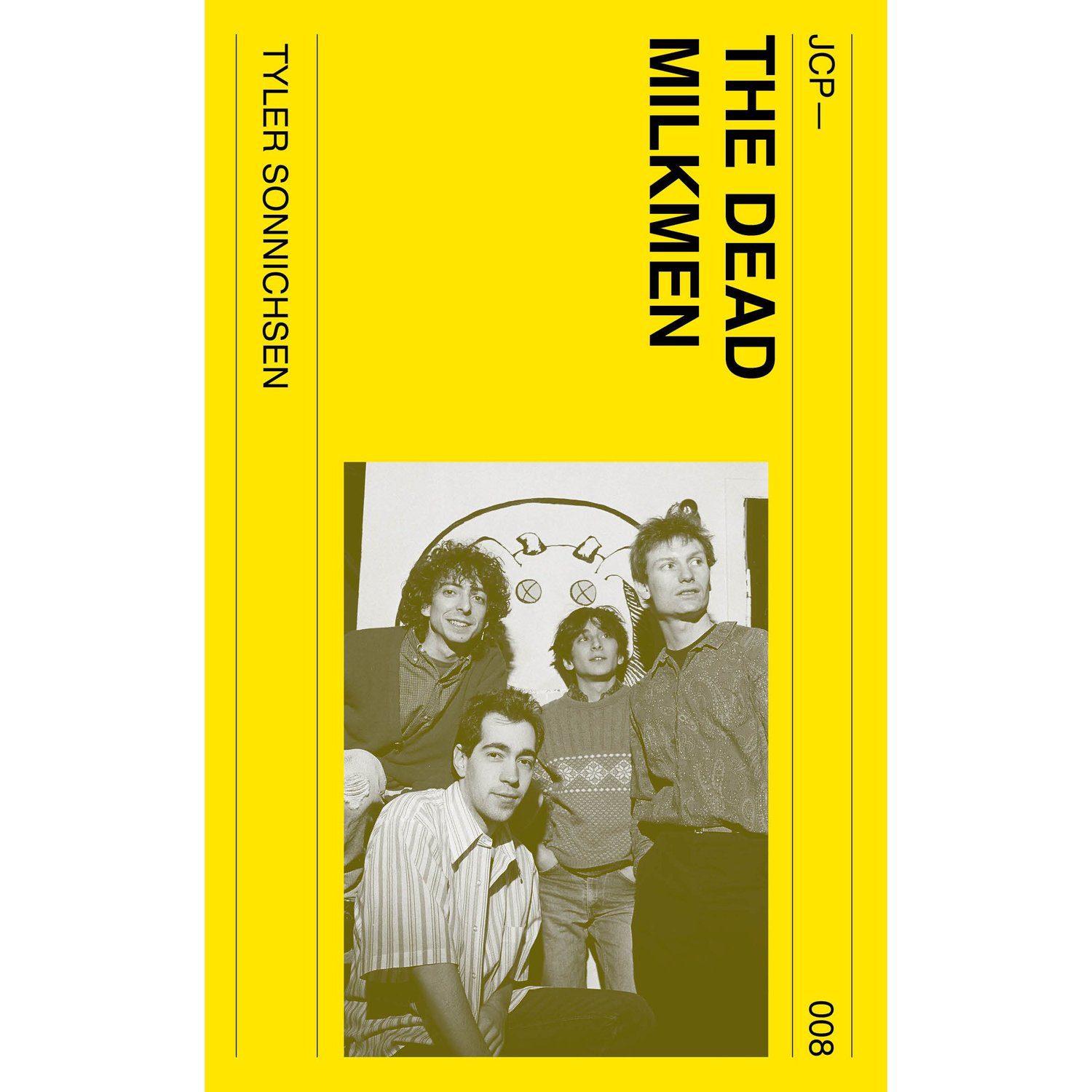
J Card Press produces books about the smaller but impactful bands of the last two or three decades. Releasing a few titles each year, they have produced a pretty decent lineup of titles based on bands ranging from AFI to The Apples in Stereo to De La Soul. Their latest book, written by Tyler Sonnichsen, is about a band whose mythological career finally gets the attention it deserves: Philadelphia, PA’s own The Dead Milkmen.
Sonnichsen’s telling of the band’s origin is just as crazy as the band’s own output and told as strangely as the songs that inhabit their records. His writing breaks new ground in the Milkmen’s story, finally getting the straight story rather than the fun but fabricated ways that only the Dead Milkmen would invent in past interviews or fan club correspondence. Sonnichsen dispels some of the myths the band had set up for themselves, giving an accurate origin story put down on paper. Some people may get upset when that magic and mystery are destroyed, but it also shows the band’s inventiveness on a different level.
Sonnichsen perfectly captures the Dead Milkmen in the way they could be presented achieving this amazing feat by making each chapter an essay that could stand on its own working individually and together to tell the Milkmen’s story. This structure affects the pace a bit, but it achieves the book’s goal in its own way. The book isn’t lengthy, but it is a curated buffet that gets to the core of the band. It tells the story in mostly chronological order, but uses the themes of each along with the title of a song as a chapter name. Whether these titles are metaphorical or analytical, as in the chapter that is a deconstruction of a song like “Bitchin’ Camaro” told in five crashes or moments that Sonnichsen feels make the song. It remains another interesting way to present the Dead Milkmen’s story.
Sometimes thought of as a punk comedy troupe, the band operates in the space of comedy, satire, and sometimes political humor. His comparison of the band to the Marx Brothers even goes so far as to assign one brother to each band member. He does point out that there are more punk rock bands that are humorous outside of the Dead Milkmen. Rodney’s obsession with TV puts him on the same level as Americans, while still being able to critique their laughable aspects. There aren’t a lot of bands that would get away with songs like “I Dream of Jesus” or “Beach Party Vietnam,” but the Dead Milkmen do. It’s not the use of humor, but rather the type and its surrealness that makes the Dead Milkmen’s brand stick out.
The range of musical influences spreads much farther than you would think. The Dead Milkmen cite musical influences like The Beatles and Wings, along with the punk rock bands they played shows with. However, Sonnichsen argues that The Dead Milkmen are a hardcore punk band that was influenced by a number of bands they were peers with from the 1980s hardcore era of American punk rock. While The Dead Milkmen concede their sound is much more complicated than that, Sonnichsen shows how The Dead Milkmen’s influences contradict what people assume about them.
J Card’s roster of books for small but seminal bands gives an opportunity to dive into these stories that no one else will tackle. Their inclusion of Tyler Sonnichsen’s Dead Milkmen biography fits perfectly. Their story is as interesting as any other band’s. While unfortunately tragic in spots, The Dead Milkmen’s story is told with the humor and care that only a well-informed fan can give. Sonnichsen’s biography is a must-have for fans of the band who have laughed at America and themselves, even if you didn’t get the joke.
Pick up the Dead Milkmen by Tyler Sonnichsen and other books at J Card Press.
Discover more from Dying Scene
Subscribe to get the latest posts sent to your email.