In the interest of full disclosure, I should start with a bit of a confession. It could be due in large part to the fact that I am a multi-multi-generational New Englander (fourteen generations on one particular branch of the Stone family tree), I think I only have half an understanding of what Southern Gothic literature is or what the term even means. Aside from maybe Their Eyes Were Watching God and I guess To Kill A Mockingbird, I don’t think I really dipped my toe into the worlds of Faulkner and McCarthy and Flannery O’Conner until I was on this side of 30. But I sort of have an idea.
Parts of the American South, and especially the small towns of the rural American South, look familiar to my Yankee eyeballs. A quick Google Street View search of places like one of Ben Nichols’ familial stomping grounds of a place like Altheimer, Arkansas, reveals a small town the likes of which may have one time hustled or bustled but have, in more recent years all-too-commonly collapsed in upon themselves. Change out the kudzu for northern pine and you could very realistically be in a own like one of my own familial stomping grounds of Swanzey, New Hampshire. But there’s a different sort of darkness in the south. While places up north were busy fighting things like devastating winters and, I suppose, the American Revolutionary War, the rural south was very much still the wilderness, at least to the white man. It would be generations before the Louisiana Purchase would annex much of the region to a growing United States and even more time before the cotton gin and, with it, slavery would cast a pall over the region that, frankly, still lives on in vast stretches of society. It is in this darkness and struggle that Southern Gothic literature and imagery was born, a macabre, sometimes grotesque and and certainly haunting way of looking at death and class and poverty that were – and still are – unique to the American South.
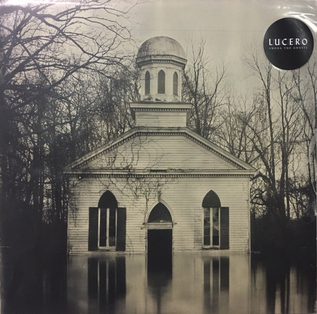
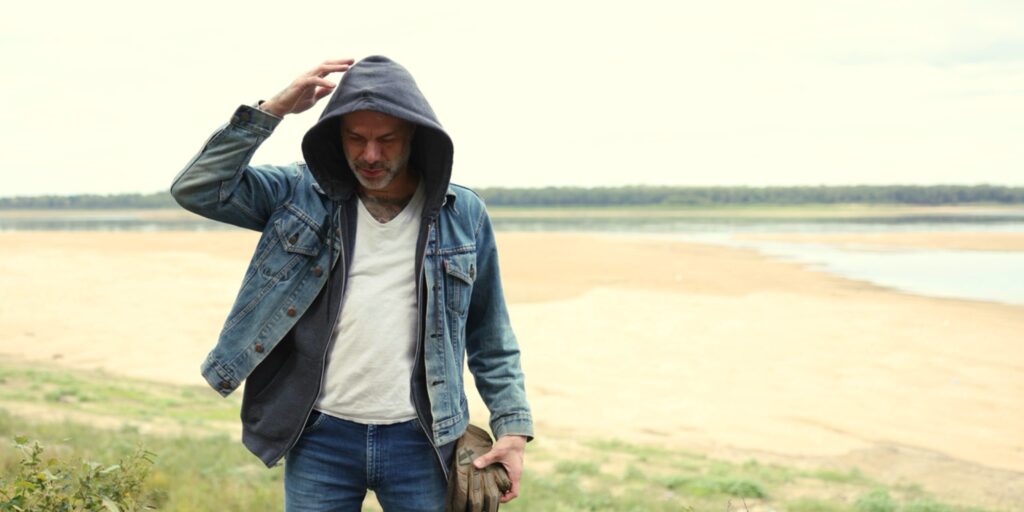
It’s this world that much of Lucero frontman Ben Nichols’ new solo record, In The Heart Of The Mountain (July 25, Liberty & Lament), exists in. The record – which is Nichols’ first solo effort since 2009’s The Last Pale Light In The West (and in many ways is his first original solo full-length given that Last Pale Light… was a seven-song record centered on the characters in Cormac MacCarthy’s anti-Western classic Blood Meridian) – is not the first time that Nichols has dallied in Southern Gothic storytelling. Lucero’s 2021 record When You Found Me is rife with songs like “Coffin Nails” and “Have You Lost Your Way” and its predecessor is literally called Among The Ghosts and has cover art that features a tintype photo of an abandoned Baptist church in Rodney, Mississippi. But to hear Nichols tell it, the idea of incorporating some version – his version – of Southern Gothic storytelling stretches back unexpectedly further, as he started to flex his songwriting muscles nearly decade-and-a-half ago for Women And Work, specifically with tracks like “Sometimes.” “There’s these stories, possibly imagined from my youth in a rural Arkansas environment populated with these kinds of ghosts and maybe myths and folktales and things that I’ve absorbed over the years,” Nichols explains. “I’ve got this kind of made-up family history where I’ve incorporated all of that into my grandparents’ story and my father’s story and where they were from. It’s all kind of that graphic novel I’ve always talked about writing one day. I’ve never done it, but it’s all in my brain and then that comes out in the songs.”
The idea for a second solo record is one that Nichols had been toying with – publicly and privately – for a long time. “(It) had been in the back of my mind for a while. I started stumbling across these guitar parts that might actually work for that idea,” he says. “I just kind of set them aside and I kept tinker with with them. Then I had a few lyrics – just a couple of lines here and there.” The creative process for the album started to pick up steam in a bit of an unlikely way, specifically when it came to trying to nail down names for a couple of ideas, like the song that would eventually become “From A Western Or A War Movie.” “That song could have easily become overtly cheesy…and it was at first!” Nichols laughs. “That one involved some wrangling. I didn’t have a good title that I liked for it. The chorus didn’t make a good title. But then one time just randomly doing chores around the house it popped into my brain and I was like, “ah, that song’s, it’s kind of like it would be a scene from a western or a war movie.” And I just ran through my head and I was like, “ooh, From A Western Or A War Movie, that’s it! That’s a good title!”
When added to the list of songs like “The Darkness Sings” and “In The Heart Of The Mountain” that were already named and completed, Nichols started to notice that the potential tracklist could be poetic in its own right. “I’d already kind of been thinking that “The Darkness Sings” and “In The Heart Of The Mountain” kind of go together as a sentence. And then I was like, “the darkness is singing a song from a western or a war movie…” I’m like, “ooh, I can make all four song titles go together kind of like a phrase or a sentence.” And then that got me thinking about what if I did all 10 song titles that actually made up almost a poem. And so once I got the title “From A Western Or A War Movie,” then I was like, “okay, these are all gonna be one big project.” And so then I actually kind of started writing different titles that could fit into my poem. And some of the songs were written specifically because I needed a song with this title.” One of the songs that followed was “While The Stars Disappear,” another track that plays on the album’s recurring themes of darkness and light constantly being present, pushing and pulling in spite of – or perhaps because of – one another. “I just had that phrase, because it fit in between the two songs on either side of it. Then the lyrics for it, I wrote specifically to fit that little spot that I needed in the poem. It was kind of a long hit-and-miss process, but it all fell together in the end.” The song title poem, while admittedly a little loosely defined, was the sort of spark needed to turn the solo record idea into a tangible project. With the exception of the aforementioned Last Pale Light In The West EP in early 2009, “every lyric, every guitar part, everything I do has pretty much 100% gone into Lucero for the last 27 years, so to get my brain wrapped around doing something other than Lucero, I kind of had to have it clearly defined.”
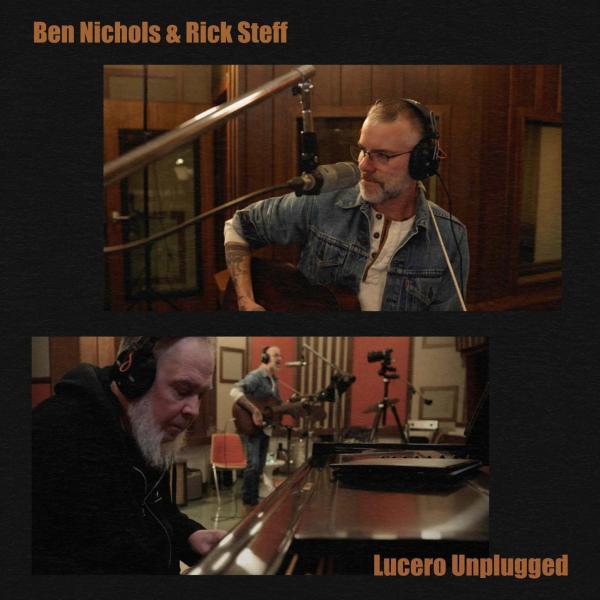
The album closes with a triplet of songs – “The Prayer,” “The Swamper’s Lament” and “The Devil Takes His Leave” – that work together not only in terms of the tracklist poem, but as an interesting look into the contrast between good and evil in the strictly Biblical sense. The first of those tracks should be recognizable to Lucero fans, as it is also featured on the acoustic record that Nichols and longtime Lucero keyboard player Rick Steff collaborated on earlier this year. Its origin actually dates back several decades, however, to a time when Nichols’ younger brother Jeff was still in film school in North Carolina. The younger Nichols was working on a short film that centered on an 1806 duel in which Andrew Jackson shot and killed Nashville attorney Charles Dickinson over an argument that started over horse betting. “I kind of wrote that from Andrew Jackson’s perspective,” states Nichols. “Andrew Jackson’s definitely not a well-liked historical figure, especially today. It almost makes me a little uncomfortable to sing…because it’s about making your will God’s will; it’s co-opting God and calling on the power of God to fulfill your wishes.”
“The Prayer” is followed by “The Swamper’s Lament,” a tale that finds our protagonist sitting on death row for taking the life of Big Jim Stone (no relation) in order to win a prospective lover’s affections. Nichols explains that the song was written fairly quickly with the intention of it being included on a soundtrack to another film that never got made, and while the story told is purely fictional, the setting was at least inspired by a bit of family history. “There’s a little bit of my granddad on my mom’s side in there,” Nichols explains. “He was a little bit older. I think he was born in 1911. And so when he was 14 in the 20s, he was working, doing some logging and working in some lumber yards or with some lumber companies in southeastern Arkansas, like driving mules and hauling logs as a kid. And so that was kind of the original idea. I was like, “ah, I’ll do something like where Pawpaw was as a kid.”
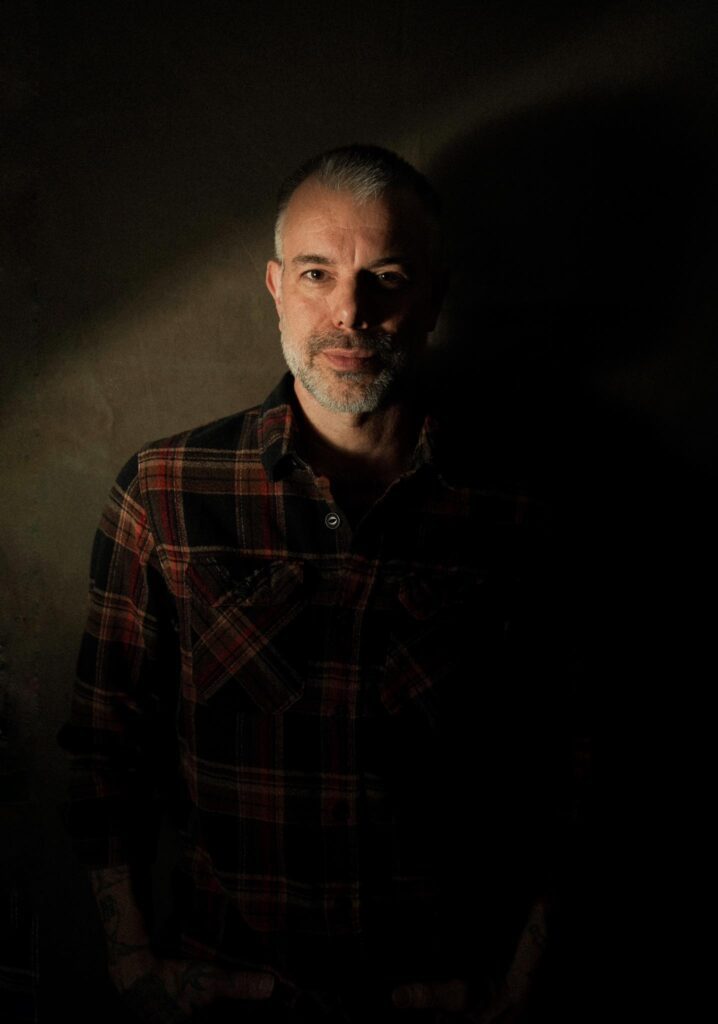
The trilogy – and the album – are brought to a close by “The Devil Takes His Leave,” perhaps yours truly’s favorite song on the record. “The Devil Takes His Leave” is another one that I kind of had to figure out,” he states. “That one really started with the lines, “I don’t mind the company, but we don’t have to talk,” and then “You’ve got all the answers. And all I ever knew was I’m not like you.” Taken on their own, the two lines could be about myriad situations, like picking up a hitchhiker, for example. But Nichols also used the line “I don’t know if God has a plan, but I’m sure the Devil does” on the synth-rock record he did with his stepdaughter Joslyn during Covid, and he was taken enough with that line that he new he wanted to reuse it, essentially to plagiarize himself. “I had that God and Devil line and I was like…what if I stick those together? And then I was like “oooh, then you’ve got a whole song about the Devil calling God out for being a hypocrite…can I write a whole song about the problem of evil in a monotheistic religion?” And that became one of my favorite ones on the record.”
From a songwriting perspective, In The Heart Of The Mountain became an interesting and thoughtful way for Nichols to exercise some muscles that he doesn’t normally. “A lot of Lucero songs are like ‘oh, I’m heartbroken’ or ‘oh, I’m too drunk’,” Nichols jokes. “It was fun to write (songs) that were a little more…different, out of my paygrade. “Swamper’s Lament” and “The Prayer” and “The Devil Takes His Leave” in particular are definitely not, you know, from last Saturday night in Ben Nichols’ real life.” From a sonic perspective, the emphasis was also placed on making it not sound like a Lucero record. “It’s not that they wouldn’t have worked as Lucero songs, but they would have sounded different in the end,” he explains. “I wanted a more acoustic-based record with some instrumentation that Lucero just doesn’t have at the moment, with the pedal steel and the violin.”
Much like the last few Lucero records, including the Unplugged record earlier this year, In The Heart Of The Mountain was recorded in Memphis at Matt Ross-Spang’s Southern Groove Studio. And while Ross-Spang engineered the record and collaborated with Nichols in the recording process, Nichols very much produced the record and crafted its unique sonic direction on his own. Fairly early on in the process, Nichols had identified the ideal lineup to provide the perfect Southern Gothic soundscape for his stories to exist in. “Ever since Todd Beene left Lucero to play with Chuck Ragan and just go his own way, I was hoping that one day I’d get to play some songs with him again. He’s just such a great guy. He’s such a friendly guy and a really good musician.” Beene has a way of approaching the pedal steel that lift it from being a throw-in, pop country-by-numbers instrument to an atmospheric, spooky-yet-melancholy-yet haunting texture that provides emotional depth to a record. He also plays electric guitar on the record, as does the inimitable Cory Branan. Branan has long been thick-as-thieves with Nichols, and has served as sideman at a handful of Nichols’ solo shows over the years. “There’s always a certain ‘it could go off the rails at any moment’ edge to Cory Branan, which I love. It’s part of what makes him so special,” Nichols explains. Branan and Beene at times trade lead electric guitar duties on the record, though most moderately-trained listeners will be able to identify each’s unique style and how it fits into the overall mix. (Branan has semi-jokingly acknowledged that he enjoyed adding his “Mark Knopfler falling down stairs” thing to the record, and if you have ever heard a Dire Straits song, you get it.)
Rounding out the mix was MorganEve Swain, perhaps best known in these pages from her role in The Huntress And Holder Of Hands, the string-heavy post-metal Americana band that joined Lucero in opening for Flogging Molly on a full US tour back before Covid. She’s also more recently been featured in The Devil Makes Three, the folk/bluegrass project that has occupied much of her time recently. “MorganEve could only come in for a couple of days…really just one night. She landed at the airport and came straight to the studio,” explains Nichols. What happened next was, essentially, magic. “We just started playing the songs for her and she would lay down a violin part and she was like, “okay, let me do it one more time.” And then she played a different violin part. She’s like, “okay, one more time.” And she would play a third violin part. And she wasn’t trying different things because she’d messed up the time before, she was building a three-part violin section. And she’d be like, “all right, play them all back at the same time.” And it was just gorgeous. It was like a your own little orchestra.”
Nichols kicks off a few weeks of solo album release shows this Thursday and Friday in his old hometown of Little Rock, Arkansas. He’ll have Swain, Beene and Branan in tow for the first week of shows (full schedule here), while Swain will have to duck out of the second week, meaning the live band will be a trio. Some semblance of that may be the way things work going forward from a solo, in-between-Lucero-tour perspective. I would love to do more of it, but getting all three of them together is really tricky,” Nichols explains “One of the thoughts I had when I was making the record is like, “well, if I get all three of them, then whatever tour I do, I can probably get at least one of them, and then if one of them’s not available, I could get another one of them and I could just switch them out.” So even though they’re not all three available at the same time, I’ll take whoever I can get. It’ll be really cool.”
And don’t worry, Lucero fans…the band itself isn’t going anywhere. If anything, crafting the solo record has gotten the creative juices flowing for the next Lucero record too. “I want to do Lucero songs. I want to do Lucero songs for Lucero, and I know exactly what those sound like in my brain now, at least for me. I know the next version of Lucero that I want to do.” What will that sound like, you ask? “It‘s not necessarily this spooky Southern Gothic stuff that is all over this In The Heart Of The Mountain solo record,” he reports. “I want to get back and do a rock and roll record, but not necessarily like the last two, And not necessarily like Among the Ghosts either. I want to kind of find a new path with Lucero. And I’m actually excited to get back into that, which was kind of a residual effect of the solo record that I didn’t really plan on, but I’m really excited about. And I’m glad it kind of reinvigorated me.”
Check out the videos from In The Heart Of The Mountain, and keep on scrolling to get our full Q&A. Lots more details about the writing process and the recording process and the concepts of good and evil in a monotheistic religion and about Southern Gothic storytelling and family history and why he thought it necessary to have my uncle Jim tossed into a band saw!
(*Editor’s Note: The following text has been edited and condensed for content and clarity’s sake. Yes, really.)
Jay Stone: I was trying to figure out the best place to start because it’s sort of a unique situation where somebody that’s been in a band for 27 years does like their first real all original solo record while still being in the band. This is a thing you were talking about for a while, but when did it go from something you were thinking about to like, all right, now’s the time to actually do like the next Ben Nichols solo record?
Ben Nichols: I started working on these songs about three years ago. And like with everything else, it’s kind of insane how long it takes to go from writing the first few chords and getting excited about a new song to actually having the record in people’s hands. And for me, yeah, it’s probably about a three-year process. But you know, that first year was figuring out if I had enough songs to actually make an album and enough songs that I liked that I thought fit together well enough to make doing an album make sense. I was still doing plenty of Lucero stuff. And I mean, I guess really three years ago, it was either during or right after the last Lucero album kind of cycle, Should’ve Learned By Now. So the beginning was right on the heels of that last Lucero record. I started, you know, stumbling across a few more little guitar lines that I liked. And I was playing a lot of acoustic guitar. Like you said, a solo record had been in the back of my mind for a while. And so I started stumbling across these guitar parts that I thought might actually work for that idea. I just kind of set them aside and I kept tinkering with them. And then I had a few (lyrics). I had just a couple of lines here and there. Lyrics always come last for me. That’s always kind of the last stage of the songwriting. But I had one of the older songs ended up being “From A Western Or A War Movie.”
I love that song. And we’ll talk about that later, but I love that song.
That one was, it was kind of a puzzle for me. I liked the idea of the song. It took me a while to edit the lyrics to where I got them to a point that I actually did like them and they weren’t too cheesy. That song could easily become overtly cheesy. And it was (at first). That one involved some wrangling, and the title of it was actually a big part of it. I didn’t have a good title that I liked for it. The chorus didn’t make a good title. But then one time just randomly doing chores around the house it popped into my brain and I was like, “ah, that song’s, it’s kind of like it would be a scene from a western or a war movie.” And I just ran through my head and I was like, “ooh, From A Western Or A War Movie, that’s it! That’s a good title!” And I’d already kind of been thinking that “The Darkness Sings” and “In The Heart Of The Mountain” kind of go together as a sentence. And then I was like, “the darkness is singing a song from a western or a war movie…” I’m like, “ooh, I can make all four song titles go together kind of like a phrase or a sentence.” And then that got me thinking about what if I did all 10 song titles that actually made up almost a poem. And so once I got the title “From A Western Or A War Movie,” then I was like, “okay, these are all gonna be one big project.” And so then I actually kind of started writing different titles that could fit into my poem. And some of the songs were written specifically because I needed a song with this title.
Yeah, yeah, yeah, right. What an interesting way to work. That’s a very different way to work.
It’s definitely different than what I’ve done in the past. And “While the Stars Disappear,” that one I just had that phrase, because it fit in between the two songs on either side of it. And then the lyrics for it, I wrote specifically to fit that little spot that I needed in the poem. But so yeah, it was a different way of working. And it was kind of a long kind of hit-and-miss process, but it all fell together in the end. And yeah, I’m glad I finally got to do this. It’s been something I’ve been wanting to do for a while.
Is that really when you sort of pressed on the gas pedal? Once you realized that like you could have the song titles make up the poem, does that get the sort of creative juices flowing as to what this whole thing is actually gonna be? So it’s not just like this theory of a Ben Nichols record?
Right. Yeah. And I don’t know if it’s just me, but I feel like I need an excuse to make them something other than Lucero songs. Like the only other project I’ve done close to this would be The Last Pale Light in the West, which was 2008, 2009. And that was easy to compartmentalize because I was writing songs with Cormac McCarthy lines from Blood Meridian, or I was writing songs around the Cormac McCarthy lines. So all those songs were very specific to that piece of work. So that was easy to separate in my brain from Lucero, because for the most part, everything…every lyric, every guitar part, everything I do has pretty much 100% gone into Lucero for the last 27 years, except Last Pale Light in the West. So I guess, for me personally, to get my brain wrapped around doing something other than Lucero, I kind of have to have it clearly defined. And so, even though it’s not necessarily that big a part of the record, the fact that the song titles kind of combine into a poem, it allowed me to separate it from my day job and focus on it and feel comfortable working on it outside of the band. Yeah, and it sort of does paint a theme for the record.
There’s a lot of songs that are push and pull. There’s light and darkness and that sort of conflict. There’s a lot of good and evil. I feel like some of those things sort of have leaked into Lucero, maybe since Among the Ghosts. But this seems a lot more like, I don’t know if cinematic is the right word, but it seems like that’s sort of a bigger concept. And not because one song is called “From A Western or a War Movie,” but in my mind while I was thinking about it, I was like, this seems like a cinematic record. I feel like I can picture myself in some of those scenes.
Yeah, I love those kind of records. And I felt like Among the Ghosts, the Lucero record, was an embodiment of that idea. And that’s still one of my favorite Lucero records as a whole. I thought it flowed really well and kind of carried that theme throughout the whole album. Some Lucero records are just kind of a group of mutts that are all kind of strays that are all stacked together just because that’s the songs we had at the time. In fact, putting a full album together that has a unity of vision and that kind of cinematic feel is, yeah, I like that on Among the Ghosts and I’ve been trying to pursue that more since then. That was definitely part of my thinking going into In the Heart of the Mountain.
These songs were written specifically for this record versus a Lucero record, but does that change how you physically write a song? Like, are there things that you know you can write for yourself that you couldn’t write for Lucero or vice versa?
Not necessarily. I think it’s just more what this album and what this idea called for. I just wanted to make sure the things, especially the lyrics, but also the chord choices and the instrumentation choices and just the mood of the music, I wanted to make sure that it all fit together in a cohesive way. And so it’s not that they wouldn’t have worked as Lucero songs, they would have sounded different in the end, a lot different, I think. I wanted a more acoustic-based record with some instrumentation that Lucero just doesn’t have at the moment, with the pedal steel and the violin. And so I really wanted to focus on that cohesiveness and that, whatever it is, that kind of Southern Gothic.
I was just gonna say, yeah, yeah. I wrote that a few times in my notes. I’m from up here, obviously, so I don’t know Southern Gothic, but this feels like a Southern Gothic record.
I’m not sure if I really know really what Southern Gothic is, but I know what I think it is in my brain. (*both laugh*) Now, whether that would pass a literary professor’s definition of what Southern Gothic is, I’m not sure. But that’s the idea that I was working in. And yeah, like you said, it’s popped up over the last few Lucero records here and there with songs like “Coffin Nails” from When You Found Me. And even way back, I re-sang a song called “Sometimes” from Women and Work, I think, where there’s these stories, I don’t know, possibly imagined from my youth, rural Arkansas environment populated with these kind of ghosts and maybe myths and folktales and just things that I’ve absorbed over the years. And nobody really knows this necessarily, but I’ve got this kind of made-up family history where I’ve incorporated all that into my grandparents’ story and my father’s story and where they were from. And this is all kind of that graphic novel that I’ve always talked about writing one day. And I’ve never done it, but it’s all in my brain. And then that kind of comes out in the songs. I’m not getting a graphic novel done, but it’s still in there and I want to use it for something. And so it comes out in bits and pieces in these lyrics. So yeah, I guess that’s my version of Southern Gothic.
So just, because I feel like I have the idea, right? But like these characters sort of exist in a fictionalized version that your dad, granddad, great-grandparents, whoever, grew up with. Like these are songs in their world, but not of them specifically.
Exactly. Yeah.
That’s real cool.
That’s definitely how I think of “Coffin Nails,” which is a similar song. I’d read an Irish folktale somewhere about someone, a person in the village dying and you hear the banshee howling. But there was something about, something flew out of the sky and landed on the window sill, and they couldn’t tell what it looked like it was howling all night long. And I took that and I took my grandfather’s and great-grandfather’s names and imagined my great-grandfather’s passing in rural Arkansas and put this kind of weird banshee creature into the story. Just melding classic folklore from all over the place with my personal family history. That’s really fun for me. And so it’s not overt. This isn’t like a concept record. It doesn’t necessarily tell a story, but all of these songs would be appropriate within that environment, I think.
So they’ll be the soundtrack to the graphic novel someday.
Exactly. Exactly. It’s actually, yes, that synth record that I did with my stepdaughter, Joslyn…that and this combined to make a double album soundtrack for the graphic novel. Coming soon. (*both laugh*)
Without knowing that that was the idea, I have written down that there are some themes that you sort of borrow from yourself and revisit. And I think from the record you did with your stepdaughter too, that like some of those ideas and concepts and even lines from this record might be directly from that one…
Totally, yeah, yeah. There was one that was just too good not to use. Cause not a lot of people listened to that synth record. Some did, and I appreciate it. And you know, I still might, if I can scrape the money together one day, I might put it on vinyl just so it exists. A few copies of it at least. But I knew those songs weren’t going to be heard by a whole lot of folks. And so, yeah, there was one line, that line about and the devil takes his leave, and I don’t know if God has a plan, but I’m sure the devil does. I was like, “that’s too good for more people not to hear,” so, yeah, I just blatantly plagiarized myself. That line is in a song on the synth record, and it’s the chorus to “The Devil Takes His Leave.” And yeah, that song is another one that I kind of had to figure out. It wasn’t originally about the devil, you know, talking to God or bitching out God. That one really started with the line, “I don’t mind the company, but we don’t have to talk,” and then “You’ve got all the answers. And all I ever knew was I’m not like you.” I had those lines, but those could have been in anybody’s story. I wasn’t sure who it was about at first. I had a guy hitchhiking and talking to the guy that picked him up. And I had a few different scenarios where those lines could be said. But then I had that God and devil line, and I was like, “that’s really good…what if I stick those together?” And then I was like, “ooh, then you’ve got a whole song about the devil calling God out for being a hypocrite. I’m like, “can I write a whole song about the problem of evil in a monotheistic religion?” And that became one of my favorite ones on the record. I wasn’t planning on writing a song about that but once I combined that line with some others that I had, that’s what it became. And that’s songwriting at its most fun , when you accidentally kind of piece things together and it actually works, and then you can build on that. I think that’s what’s attracted me to songwriting since I was a kid, like those little accidents, seeing what happens. I got lucky with that.
Yeah, that line in “Devil Takes His Leave” – “my brightness dims with the rising sun.” That’s such a cool visual. And it’s like the perfect sort of embodiment of that battle between the two of them, of good and evil, right and wrong, light and dark, the whole thing. That’s such a perfect phrase.
There’s all those little bits and pieces of stuff that wasn’t necessarily in the Bible, but then it’s like the whole Lucifer being the morning star, maybe, I don’t know. And it’s pieces that, it kind of doesn’t matter if I remember it correctly, it’s just whatever I remember goes into this song. So it’s not gonna pass muster in a theology course, but it works in my songs. And I was thinking possibly the rising son, maybe there’s a Jesus reference in there.
Yeah, absolutely.
It’s kind of like, it’s almost like the Old Testament. Oh, I can’t remember what it was, because there’s no real devil in the Old Testament. It was like the Malach or something or other that was doing God’s bidding, like killing the firstborn sons of the Egyptians and bringing plagues and testing Job. It wasn’t necessarily Satan, but it was just, it was an angel doing God’s bidding, basically. And I guess-
You paid a lot more attention in Sunday school than I did.
I’ve been listening to a lot of podcasts. (*both laugh*) I’ve never thought I’d be so into Bible study in the last couple of years of my life, but it’s mainly more…saying “devil study” sounds really bad. I’m interested in the folklore and the mythology around the Bible, just the history of the Bible. That’s really intriguing to me, more in that way than a religious way. It’s kind of fascinating. But yeah, I’ve been listening to a lot of Bible studies. Maybe this is going from that Old Testament Bible devil to the New Testament Bible Devil. And this song is kind of about that transition from the Old Testament God to the New Testament God and what that means for the Old Testament devil to the New Testament Devil. Whereas in the Old Testament, they’re almost one and the same. And then in the New Testament, they want this hard split between an all good God and an all bad Devil to take the heat off of God. God has to answer a lot fewer questions. God’s life is a lot easier if he doesn’t have to answer that whole evil question. And so, in my song at least, the devil’s taking umbrage with the fact that it’s getting all laid on in his lap. I don’t know. A lot of Lucero’s songs are like, “oh, I’m heartbroken or I’m too drunk.” (*both laugh*) It was fun to write a song that was a little more, I don’t know, just different, out of my pay grade, just a whole different type of thing.
When did the instrumentation come along? You sort of mentioned the wanting different sounds that Lucero just doesn’t have in the fold right now. But when specifically did you think of, “I should call Cory, I should call Todd Beene, I should call MorganEve Swain”? Did you write with them specifically in mind or just the idea of their instruments?
I think pretty early on, once I had three or four songs and maybe the idea of the song titles, I was like, “okay, yeah, I’m gonna call these folks.” Cory Branan had sat in with me on some Bike Rider shows, just kind of improvising on electric guitar, and when it sounded good, it sounded really good. And even when it wasn’t perfect, it still sounded pretty good. And that was just him playing on the fly, just doing what Cory does. And I was like, “man, that would be really fun to get in the studio and really kind of nail some of that down.” And then ever since Todd Beene left Lucero to play with Chuck Ragan and just go his own way, I was hoping that one day I’d get to play some songs with him again. He’s just such a great guy. He’s such a friendly guy and a really good musician and a really good electric guitar player. I was always a big fan of his electric guitar in Glossary. And it’s a totally different type of electric guitar than what Cory does on electric guitar. And that’s part of what I love about this album is even when they’re both playing electric guitar, you can tell who’s Cory and who’s Todd. You can tell their parts apart just with their style of playing. So that was fun too. And then MorganEve from The Huntress… I just think I’m such a big fan of Huntress and The Holder of Hands from when we toured with them and Flogging Molly a few years back. Just because they’re so good and kind of classy and just, MorganEve is just musician’s musician. She’s just can do anything. And so the fact, like one night on tour, when I first met them, she’s like, “you should play ‘Long Way Back Home.’ I’m a fan of that song.” That just kind of blew me away. I didn’t think she’d actually even pay attention to us or listen to us at all. And the fact that she had said that, I was taken aback. And then we kind of became friends and kept in touch. And she always joked about, “we should play songs together sometime.” And so when I got into writing these, I let her know. I was like, “okay, I’ve got something in the works. I’m gonna fly you to Memphis sometime and you’re gonna record some violins for me.” And so, yeah, she was kind enough to actually do it.
Yeah, that’s a really great trio. Separately and together, that’s a really great trio. And I’ve been fans of all of theirs for a long time, but it’s cool to have them behind you.
Yeah, it’s huge. It gives me goosebumps right now, just thinking about it.
Did you have to give them much direction or do you just go “here’s the song, do whatever you’re gonna do on it?”
Half and half, really. With MorganEve, I just let her go and she was amazing. The way the studio worked is that I went in for a couple of days and laid down kind of the basic guitar and vocals. And then Cory came in and started laying down some guitar and Todd came in pretty much at the same time. And those two were working. And that was a little trickier, figuring out who goes where, kind of, because they both didn’t play the whole thing, and so piecing those together took a little bit of work. I had written some guitar parts, some lead electric stuff and Cory was really good at just like, “oh, you want that part like that on the demo? Yeah?” and he just would play it. And that was amazing. But then MorganEve came in. She was so busy with The Devil Makes Three, she could only come in for like a couple of days. Really just kind of one night. She landed at the airport and then came straight to the studio. We just started playing the songs for her and she would lay down a violin part and she was like, “okay, let me do it one more time.” And then she played a different violin part. She’s like, “okay, one more time.” And she would play a third violin part. And she wasn’t trying different things because she’d messed up the time before, she was building a three-part violin section. And she’d be like, “all right, play them all back at the same time.” And it was just gorgeous. It was like a your own little orchestra.
I can’t imagine having that kind of talent, like just in your brain.
Right? It’s insane. And she would do the same thing with the backing vocals. She’d kind of layer the backing vocals and just do three takes, but they’re all different. “You can put them all together and then just use what you want.” It was a really fun recording process.
Yeah, I like the times where you let Cory do the sort of thing I think he jokingly calls “like Mark Knopfler falling downstairs” – that super clean, spanky sound that is such a Dire Straits, Mark Knopfler tone.
Yeah that became a big part of “The Darkness Sings.”
Yeah, it’s a little bit on “When The Stars Disappear” too. That twangy thing. I mean, I love Cory anyway, but I like when he does that.
Yeah, I love that style, but he’s one of those you can dial in different sounds with. There’s always an insane edge to whatever he’s doing. (*both laugh*) There’s always a certain ‘it could go off the rails at any moment’ edge to Cory Branan, which I love. It’s part of what makes him so special. But yeah, the fact that he could do that and then an Eddie Van Halen guitar solo. And you can probably pick which Van Halen record you want. “Do you want more 1984? Right. Or do you want more…” you know? And he can dial in. He’s got a great knowledge of music, rock and roll history and he’s pretty good at dialng any of those sounds in that you want. And then yeah, Todd Beene as well. Todd Beene’s very professional. He’s like, super on top of it. And Todd’s really good at knowing what I would want. He’s like, “I can just tell from the way this chorus goes into this bridge. I know what you’re doing. I know what you’re doing.” And then he just does it. And yeah, you always know what you’re getting with Todd and it’s always gonna be good. It’s really cool.
Yeah obviously he’s been out with Chuck a lot and Chuck actually came out for a while earlier this year and played shows up here and it was supposed to be the two of them…
And then I think that’s when he broke his arm!
Yeah!
He felt terrible. I remember he called me and told me what had happened and he felt awful for having to miss those shows. I feel for him. That kind of injury… if you’re a pedal steel player, you need all your limbs working in conjunction. It’s like flying a helicopter. You’ve got to use all your feet and toes and hands and arms. (*both laugh*)
Yeah, I felt bad for him. I was actually at a Hot Water show, I think the day that Chuck found out. So I’ve been friendly with some of those guys for a long time, and Michael, their merch guy, knew I was going to a couple of the solo shows and was like, “Chuck’s freaking out. He doesn’t know what he’s going to do. Because he’s got no Todd now. And is he going to even do it?”
Yeah, Todd is so good. I understand the feeling of like, wait, I can’t do this without Todd.
And he’s all over Chuck’s new record, too.
100%
It’s a Chuck record, but it’s a Todd Beene record, too.
100%. Yeah, 100%. And yeah, I was glad that I could steal Todd away and borrow some of that Todd magic for this record. But at the same time, I think we did a pretty good job of blending it all in. It’s a MorganEve record and a Cory Branan record and a Ben solo record.
Yeah, they did an amazing job.
And then I’ve got to credit Matt Ross-Spang, too, for taking all those people…like any one of them individually could have carried the whole record and taking all three of those and editing the stuff to make it all make sense and really making the record work. Me and Matt spent a lot of time on that, and Matt Ross-Spang did a great job, too.
And to make it ‘not a Lucero record.’ I mean, because they’re not Lucero songs. There’s obviously some that, like you said, could pass, but he’s worked with the band for so long that he knows kind of how the band works. So to make this definitely not a Lucero record, too, was important.
Right. And he also helped me mix that Last Wolf in the Woods synthesizer record. So he’s seen Ben in full Lucero mode, Ben in exactly opposite Lucero mode with the synthesizers. And then this was somewhere in between, which is actually that’s a perfectly fine way of looking at it. This kind of crosses…this is the bridge between the synth record and the traditional Lucero stuff. This record exists somewhere in between. And Matt knew exactly how to capture that.
So I was sort of curious about this. Knowing that there’s a lot of guys in the scene, like whether it’s Fallon or whether it’s Chuck or Craig Finn or whatever, that have sort of balanced both doing their own thing and doing the band thing…do you ever toss this idea around with those guys? Like, “how do you make it work? How do you make it land OK with the band that I’m going to do my own thing and still do the band thing?” Like, is that a thing you talk about?
I probably should have. (*both laugh) I probably should have asked people, in hindsight, how to make that work? Yeah. All those guys would probably have some wisdom and some insight. No, I didn’t really talk to them about it. Yeah, maybe I should have. With Lucero, I just kind of assume Lucero is always going to be there. Maybe for better or for worse, I take it for granted. Lucero is, yeah, it’s just my life and it’s Brian and John and Roy and Rick’s life right now, too. And in my head, I just don’t see it changing. If I stopped and thought about it and thought about reality, we’re all getting older and time passes and things change, I should maybe start, you know, thinking about how Lucero progresses into the future and what that actually looks like. But to be honest, I’ve avoided that.
That’s what management is for. That’s what I assume.
Yeah, exactly. I don’t know. In my brain, yeah, just from the outside, you see all those guys like Craig Finnn or Brian Fallon, and I was like, “they make it work.” And so I didn’t even think twice. I was just like, “yeah, I can make this work.” But yeah, the logistics and the reality of it do get a little tricky, especially just the fact that Lucero makes all of our money pretty much playing live shows. And so routing is important. And yeah, things are still tight. Lucero’s never bounced back completely from the pandemic. I felt like we were really going pretty strong in 2018, 2019, and the pandemic stopped us in our tracks, just like everybody else. But coming back, that climb has been pretty steep. Ticket sales have been tough. We super appreciate our hardcore fans that have been with us for so long and are still there. They’re great. But bringing new people on board and getting those, you know, kind of casual listeners out to the shows has been a lot tougher for Lucero in recent years. And so now with me booking solo shows, and I’m not booking a lot, but even a few that I’m trying to book, like, it’s like I’m my own competition all of a sudden between Ben Nichols and Lucero. And promoters, like if Lucero’s played that town that year, they don’t want to do a Ben Nichols show. Or if they do a Ben Nichols show, they’re not going to do a Lucero show next year. It shouldn’t be this complicated. But it’s tricky.
So we’re navigating that. They’re all aware of it. And I hope they’re not worried. One of the upsides to the solo record, which I didn’t really think about when I started it, because I was just so happy with the way these songs were coming out. And I was like, ‘Oh, this is exactly what I want to be doing right now. These musicians are fun.’ These songs are fun for me. But now that the process has kind of come, well, not to a close, but the record’s actually being released. And so the creative process of it is at an end, and now it’s releasing the record process. But now I’m like, ‘Ooh, I want to get back to writing. I want to do Lucero songs. I want to do Lucero songs for Lucero.’ And I know exactly what those sound like in my brain now, at least for me. I know the next version of Lucero that I want to do. And it’s not necessarily this spooky Southern Gothic stuff that is all over this In The Heart Of The Mountain solo record. And it’s more of a… I want to get back and do a rock and roll record. But not necessarily like the last two. And not necessarily like Among the Ghosts either. I’ve got, I don’t know, I want to kind of find a new path with Lucero. And I’m actually excited to get back into that, which was kind of a residual effect of the solo record that I didn’t really plan on, but I’m really excited about. And I’m glad it kind of reinvigorated me and got me excited about writing some new Lucero songs too.
You sort of hinted at that, actually, when we talked six months ago about the unplugged record, that knowing that the solo record was almost done and almost going to be out, you were already sort of amped up about the next Lucero record too. So it’s good that six months later that’s still the case.
Yeah, I am. I’m really looking forward to getting into it. I got my baggage out of the way now. And I just want to focus on doing Lucero songs with the Lucero guys. Just, I want to get in there and just do what Lucero does best is kind of what I’ve decided now. Instead of trying to make Lucero everything that I want to do and Lucero having to carry the weight of all of my whims and notions…Instead of forcing all of that into Lucero, now I’ve had a chance to kind of get some of that out of my system, all in a good way. I can just really enjoy letting Lucero do what Lucero does well. So yeah I don’t have a lot yet, but I’ve got a couple of pieces. I’ve got the start of a new record. And so yeah, yeah, I’m looking forward to it.
Before we get all the way through your afternoon, I have to ask about “Swampers’ Lament.” So I have like three, maybe four favorite songs on the record, and that’s one, but as I’m listening to “Swampers’ Lament,” my first thought was, “wait, what did my Uncle Jim ever do to Ben?” (*laughs*) Because have an uncle Jim Stone.
That’s funny!
And so I was like, oh, wait, what did Uncle Jim ever do to Ben to get thrown in a bandsaw.
I know! Ouch! That one had been floating around for a little while. And I think there’s a Lucero version of that recorded somewhere. But a guy, John Michael McCarthy, a Memphis filmmaker, who’s made kind of low-budget, raw drop films since forever ago. He’s always been around making these kind of crazy indie films. And he called and was like, “I’m going to try to make a new movie.” This was right before the pandemic. And when the pandemic hit, I don’t know what happened to it. I haven’t really heard about it since then. But he’s like, “I want the whole soundtrack to be murder ballads.” I was like, “ooh, yeah, I could try a murder ballad or two or three.” And I only ended up writing one. But it was “Swampers’ Lament.” And so I’d kind of been sitting on it for a while. Not sure if it was going to be used in this movie or not. And it never came to fruition. So I was like, “all right, this is actually mine.” And I kind of grew to like it. I kind of wrote it really fast. And I didn’t think much of it at first. But I’ve really grown to love it.
Yeah, it’s different thematically. It’s different musically.
For sure. And yeah, because that was supposed to be not necessarily a Lucero song. Not necessarily a Ben Nichols song at all. It was just supposed to sound like a… I wanted it to sound like it could be a traditional or an old school kind of murder ballad. But it tells a whole lot of story in just two verses. And when I went back and looked at it, I was like, “oh, man, there’s actually a lot in there.” And yeah, I don’t know where I got Big Jim Stone. You’re just kind of singing it as you go along, making up words as you go along, and that just kind of flowed. I didn’t put a lot of thought into it, but Big Jim Stone is just what happened to come out. I’m sure like with everything I do, I had to have stolen it from somewhere. There’s probably another song with a Big Jim Stone or a movie.
Well, so I actually thought about that. I was like, “oh, I wonder if this is a character in something I’m not familiar with.” I Googled it and I quite legitimately couldn’t find anything. There was like a Canadian soldier or something like that. But it wasn’t from anything.
Oh, that’s funny. Well, good! Usually, whether you know it or not, you’re usually stealing it. Even if you’ve never heard of it before. There’s so much out there that’s already been written, so that’s nice to hear that it’s not easy to Google Big Jim Stone. But there’s a little bit of my granddad on my mom’s side in there. He was a little bit older. I think he was born in 1911. And so when he was 14 in the 20s, he was working, doing some logging and working in some lumber yards or with some lumber companies in southeastern Arkansas, like driving mules and hauling logs as a kid. And so that was kind of the original idea. I was like, “ah, I’ll do something like where Pawpaw was as a kid.” And so that was the idea for the setting, I guess, originally for that one.
Are those stories talked about a lot in your family? Because I mean, obviously whether on purpose or on accident, you weave a lot of family history into the songs. But are those stories like that get passed down and talked about and like, “so-and-so did this as a job and so-and-so was here in the war” and so on? Is that a regular thing?
I wish it was more regular. Yeah, I wish it was more regular. I think it’s just a little bit. I guess maybe it was a pretty regular topic of conversation (years ago) and I’ve been able to hold on to a few bits and pieces that end up in the songs. And there’s probably a lot more that I wish I could remember and that I wish maybe had been talked about more. But yeah, I eat that up. Everybody does, you know? That’s why Ancestry.com is so popular. Everybody’s super fascinated by their own family history and where everybody comes from, of course, that fascinates each person. And it’s the same for me. And so, yeah, I don’t know, I haven’t thought about this in a while…and I don’t know, this is a silly way to frame it, but if I could make some wishes, being able to go back and kind of watch some of my family history, different scenes from the past, if I could have that superpower or be granted that wish, that would be something I would be really interested in. Even just, you know, my dad working in the drugstore as an 8-year-old kid in 1950s, if he was 8, it’d be 1956 in Altheimer, Arkansas, when all the cotton field workers would come in on a Saturday night. And my dad’s, you know, selling comic books and cigarettes and soda pop at the drugstore. And he said it was like Mardi Gras. Like the street, it’s just this one row of buildings. And he’s like, between those and the train tracks on the other side of the street, it was just like Mardi Gras every Saturday night. And I would just love to see that. And then, of course, my granddad in the war and and when he comes home from the war. There’s just so many different things I would love to actually be able to go back and witness. So yeah, I’m holding on to a few little stories. Yeah, it makes me want to call my mom and dad and talk more.
Yeah, right! When you travel, because you obviously travel a lot more than I do, but if you are places where you know that you’ve had some family history or connection to, or that you know of historical things that have happened, do you ever just stop and put yourself there? Because I do that. Especially in and around Boston. Just to even stop and be like…to try to put yourself in what it was like at the time, but like how your ancestors kind of navigated in there. I haven’t been to Gettysburg yet, which is a bad thing for me, but I have a family member who was killed there. John Stone from New Hampshire.
Oh wow!
Yeah, and my dad actually has his knife, like his field knife.
No way!
Yeah, it’s really cool. And I haven’t been there, although my kid has…but just to like, put yourself there and know what that battle was like, and where like, they died in the peach orchard or whatever, like.
Oh, that’s, that’s, that’s intense. Yeah, I do that in a much more mundane way too. A lot of times I’ll be driving from Memphis to Little Rock. And instead of taking I-40 straight across, I’ll take little highways and go through some of those small Delta towns. And sometimes I’ve even gone all the way down to Altheimer, which is a little out of the way, but yeah, passing through those towns, which are pretty much obliterated now, like literally just caved in on themselves, wiped away, and now there’s maybe a brand new little post office, and that’s all there is, where there used to be, you know, a main street. There’s like a water tower next to the post office, and the post office was built in 2002, so it doesn’t look anything like it did in the old days. There might be some houses still and a couple of buildings and a church or two, but trying to picture it…like I remember when I was a kid in the 70s and 80s, and that was completely different. There was a lot left then, and then trying to piece it together from old family photos and stuff. I love that. I love trying to, yeah, put myself into their shoes and into their place. And that was, that’s where that old Lucero song “The War” came from. That was just me trying to put myself in my granddad’s shoes as a 20-year-old kid in Europe in World War II. Yeah, that’s important to me for sure.
Isn’t it asinine to think that like, those kids were 20, 18, 17 in some cases? Like…
Insane! Insane!
Like your stepdaughters are older than that now. My kid is 17 and a half. Can you imagine them being on the front lines?
Yeah, it absolutely boggles my mind. And it’s such a, just such a momentous time and a momentous piece of history that, you know, he was a part of. Just like your, just like your ancestor in Gettysburg, such a pivotal moment in American history. And the fact that, yeah, yeah, people have family members that were actually, they were real people. And they were real kids at 20 years old, doing this stuff and changing the world. It’s fascinating and inspiring and yeah, yeah, a little intimidating.
Yeah, we always think about like veterans as older people, right? Because when you’re growing up, it doesn’t matter how old you are, the veterans you see are always older than you so you just equate them with old people sometimes. And then you realize like, for example, my grandmother had a half brother who she never met, but he was killed at Iwo Jima and he was like 19, 19-and-a-half, something like that. And I’m like, what the hell?
I remember, I remember being 18 and I might as well have been 12.
Absolutely. I still think that and I’m 46. (*both laugh*)
Yeah. Yeah. Mentally, I’m pretty slow. Like at 18, I was still functioning pretty much as a 12-year-old in an 18-year-old’s body.
Right!
And now I’m a 50-year-old functioning as an 18-year-old in a 50-year-old’s body. (*both laugh*) So yeah, I can’t imagine what was going through their minds and how they saw the world. And trying to figure out, what am I missing? Am I missing something? Did they see it the same as me or were they completely mature?
It’s funny to say that you can’t imagine because at some level, you have. Like that has been part of your job.
Trying to, yeah. I guess I try to imagine is a better way of saying it than I can’t, because I mean, obviously I can’t know exactly what’s going through their head, but I do try. I do try. I try to get as close as I can sometimes.
“The War” sounds probably pretty accurate, at least to me.
I think so.
“The Prayer,” too. It isn’t about war, but if you pull back a little it could be about a lot of different situations, about what somebody’s thinking when they are about to go to battle…that was for your brother’s old student movie, right?
Right. Yeah. I’d actually heard a story in a history class – in my American History college course that I had taking and Jeff needed a story for his student film that year. He was still in the North Carolina School of the Arts, in the director’s program. And it was the story about Andrew Jackson getting into a duel. And so I kind of wrote that from Andrew Jackson’s perspective. Um, and Andrew Jackson’s definitely not a well liked historical figure (*both laugh) especially today. But it was a cool story and it made a great little short student film and I had this song left over. And it almost makes me a little uncomfortable to sing it because as much as “The Devil Takes His Leave” is calling out God, “The Prayer” is making your will God’s will. It’s kind of co-opting God. “The Devil Takes His Leave” is calling him out, where “The Prayer” is co-opting him and calling on the power of God to fulfill your wishes.
And your wish is to kill this guy.
Exactly, You’re saying you’re doing this in His name, but really it’s just, you want to kill this guy. And so, yeah, it sounds like a heavily Christian song, but in reality it’s, uh, I’m very skeptical of that narrator’s intentions. Um, and so, yeah, I was glad I could go to some of these places with some of these songs, like the, the murder ballad, “Swampers Lament,” and “The Prayer” and “The Devil Takes His Leave,” those last three songs in particular are definitely not, you know, that’s not from last Saturday night in Ben Nichols’ real life (*both laugh*) like a lot of other Lucero songs. It was really fun to step into other characters. But I gotta say “The Prayer,” that’s another kind of rediscovered one that I wrote… 20 years ago? I kind of switched up the arrangement just a little bit and tidied it up, but I kind of rediscovered that one and I was like “ Ooh, um, I don’t want that one to disappear.” And so it’s nice that it exists out in the world now too, even though the narrator’s not necessarily the most reliable.
Well, no, but unfortunately, thematically, that’s a thing that’s still pretty prevalent now, right? Co-opting, uh, your will onto God’s will for nefarious purposes…
Yeah, right! And so I’m glad that it’s quickly followed up by a murder ballad and then “The Devil Takes His Leave.” I’m glad that all three of those work almost in conjunction, like one alone would be maybe too heavy, but with all three, you’re like, “Oh, I don’t know what Ben actually believes in.” And that’s just fine with me.
Yeah, yeah, right. Sometimes it’s better that way.
Exactly. Exactly. Just confuse them. And, uh, yeah, just put it all in there. But I think… I’m proud of the songwriting and all three of them.
The album’s out officially, what, next Friday? The 25th?
Yes, the 25th.
Is it a different sort of like anticipation or even vulnerability knowing that it’s just Ben Nichols on the front and not Lucero? Like, even if you might be the principal songwriter in Lucero and whatever, does it feel different when it’s just your name and picture on the cover?
Yeah, it’s funny…Lucero is just…for better or for worse, we’ve been going for so long. Lucero has a certain momentum even still. And so I know this release won’t be as big. It’ll be a more limited release, and I’m okay with that. I understand that. Any bad reviews I would probably take even more personally.
Yeah, right. For sure.
But, so far the little bit of press that it’s had has been pretty encouraging and pretty positive. But no, it’s kind of the same, just a slightly smaller scale, which is fine. I would love to do more touring, especially with Cory and MorganEve and Todd. I’ve got them all for one week and then MorganEve has to drop off and I’ve got Todd and Cory for a second week. And then we’ll see in the future. I would love to do more of it, but getting all three of them together is really tricky. So yeah, we’ll see what kind of touring I can do, but I’m actually hoping…one of the thoughts I had when I was making the record is like, “well, if I get all three of them, then whatever tour I do, I can probably get at least one of them, and then if one of them’s not available, I could get another one of them and I could just switch them out.” So even though they’re not all three available at the same time, I’ll take whoever I can get. It’ll be really cool. So that’s kind of my plan for solo tours for the near future is just to get whichever one of them’s available, they’re coming with me, and they’re all going to be great no matter what.
It’s almost like four different shows. Like you could see Ben Nichols four different times in the same year with four entirely different projects.
Yeah!
And it’ll all be good.
I feel like it’ll do the song’s justice, no matter who’s with me. So yeah, that’s the plan now that the record’s coming out. I’ll try to squeeze in as much solo touring as I can in between Lucero’s stuff, and hopefully take those folks out with me whenever I can.
I look forward to it coming up here someday. Uh, I think I looked at the routing. I was like, “well, at least we had Ben and Rick earlier this year, because Cleveland is the closest thing now.”
Yeah. So my plan is maybe I could get to the West Coast at the end of this year with some version of this solo tour, and then I’m hoping early next year to do a version of the solo tour and on the, on the East Coast. So don’t, don’t hold your breath, but don’t forget about me either, and I’m not going to forget about y’all.
Discover more from Dying Scene
Subscribe to get the latest posts sent to your email.