When ska had its time in the sun in the 1990s, a lot of bands emerged. From Reel Big Fish to the Mighty Mighty Bosstones to Buck-O-Nine, ska was back in a big way, getting airplay on modern rock radio for the first time in a decade. Ska had essentially disappeared from the radio when the Two Tone bands lost their luster or broke up, making the genre’s presence nil. While modern radio in the 1990s may have been cashing in on a fad, some kids cutting their teeth in music found a way of life. While I had made some exceptions for bands like Skankin’ Pickle and Suicide Machines, Goldfinger was a band I dragged my feet on, chalking them up to third-wave slop. This was an unfair sentiment from my youth that I’ve since reversed.
The more I went backward and listened to the earlier waves of ska, the more I became disconnected from what was being fed to me on the radio. Discovering bands like The Specials, The English Beat, and Operation Ivy instilled in me the conviction that this music was intended to address social issues, racism, and politics, with these themes at the forefront. As I heard more songs off their self-titled record, it didn’t take too long to give in. Once I purchased and listened to the record, I learned what I had been missing out on. While the lead single, “Here in Your Bedroom,” was a ska pop-punk song that featured many of the tropes that turned me off to third-wave, the record draws cues from a variety of other genres, including punk, metal, and even a touch of jazz.
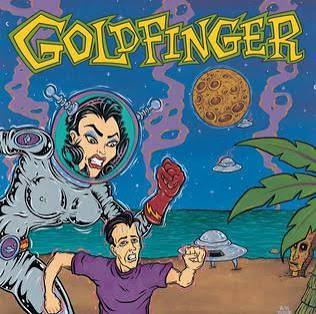
This year, Goldfinger’s self-titled album celebrates its thirtieth anniversary. Guitar player Charlie Paulson was kind enough to talk to Dying Scene about the making of their self-titled record and its place in ska-punk history.
Dying Scene (Forrest Gaddis): Thank you for your time, Charlie.
Charlie Paulson: Of course. First of all, I have a question for you. Why this record?
Why this record? I love this record. I didn’t at first; it took me a minute to get into it. I just kept hearing more and more songs off it. I was a dumb punk rock kid who was like, “This isn’t punk rock. This isn’t ska.” I heard more. I was like, “Why am I being stupid about this?” I just ended up buying it and I had a whole summer where I listened to it.
Yeah, a lot of you were not alone in that appraisal.
How did the band form?
I knew Feldy from around Hollywood because he was in a band (The Electric Love Hogs) that me and a bunch of my friends would go see at the time in LA. Punk was sort of dormant; there wasn’t a whole lot happening that was exciting around that time, the early 90s. We had L7, Bad Religion. There wasn’t a whole lot beyond that. It was before alternative was happening, bands like Jane’s Addiction and Fishbone. Those were the bands that sort of took the place of punk rock. The Electric Love Hogs were not really that metal. They played shows with all those bands. They were a great live band. So I knew Feldy from that.
I worked for the band a couple of times and I crashed on his couch. That’s how we became friends. We talked a lot about how we loved The Buzzcocks, The Clash, and The Specials, and shit like that. When the Love Hogs sort of ran their course, I saw him out one day just hanging out. He asked, “Hey, I want you to hear something?”
I went out to his little fucking Dodge, this little fucking beater. He popped in a cassette and was playing me a bunch of like these little, it was just him and an acoustic guitar, playing these pop punk songs. I’m like, “That’s cool.” He looks at me and he’s like, “Well, would you want to do this?”
“What do you mean?” He asked, “Do you want to start a band?” He knew that I loved a lot of the same music that he did. That’s sort of how it started. We auditioned a couple of drummers who were terrible. Then I went on tour as a guitar tech on a Danzig tour. He wound up putting an early version of Goldfinger together with a different guitar player. While I was on tour, that guitar player overdosed and was in rehab.
When I got home from the tour, I knew that Feldy always had an insane work ethic. I knew he probably already had a bunch of shows booked and no guitar player. So I called him. I said, “Look, I will fill in for Steve while he’s in the hospital.” I did, and they didn’t want Steve back. That’s the very abridged version.
From those acoustic songs that Feldman had, to when you went to the studio, how long did it take for those to come together?
A couple of years. I mean, he probably first approached me in like ‘93. Then I joined the band a year later. I mean, it wasn’t a band. He still had commitments and shit with his other band.
He didn’t really put Goldfinger together for a year, maybe. It took him a while to find people. I would say a couple years from that first conversation we had to the release of the first record, that was three years.
Where did you guys record the album?
We did it at this studio in Santa Monica, right by the beach, called Media Ventures. I didn’t like it because it was really sterile. They recorded a lot of soundtracks there and things like that. They had never recorded a straight-up rock band. So, we got it at kind of a discount because they didn’t really know what they were doing. I didn’t like it because it was really clean. The walls were beige. It looked like a dentist’s office.
I remember saying that. The first day that we went in to start tracking drums, somebody brought in a bunch of Bob Marley and Sex Pistols posters. I appreciated the effort.
The record is raw, but it’s still kind of clean at the same time. Was that because of where you guys were recording it, or is that just the sound John Feldman had in his head?
That was part of it, but Feldy was also meticulous about it. He really wanted it to sound like a real album. He didn’t want it to sound like demos. I think we may have overcorrected a little bit. What’s really funny about that, though, is as anal as he was, that record is totally out of tune. If you sit down with a guitar and try to play along with that record, it’s gonna drive you crazy because it’s just not in tune. If you just listen to the album, it sounds fine. But when you try to play along with it with a tuned guitar, it is wildly out of tune.
You do what the pop-punk bands were doing, where you kind of have your jokey songs, but even those are presented with reverence.
Well, part of that was when I joined the band; we all sort of adapted to John’s work ethic. We rehearsed at least four hours a day, five days a week. I mean, we rehearsed, like, fucking crazy. We were super fucking tight. We did a Sno-Core kind of tour right before that record came out. In January and February, we were on the road with this hardcore band from New York called Dog Eat Dog and Ugly Kid Joe. So, by the time we wanted to track that record, we were fucking razor sharp.
And you hear it too.
Yeah, that’s part of why that record sounds like that. We were so fucking tight. I remember at the end of that tour, we came home and we played a show at the Whisky. My friends were like, “What the fuck?” It didn’t feel any different to us because we were doing it every night. Nothing tightens a band up like the road. We came home off that tour. The next day, we had a show at the Whisky. The day after that, we loaded into the studio to start tracking.
Were there any songs you fought hard for in terms of arrangement, tempo, or feel, or was it just all what Feldman had in his brain and he wanted it out?
Those first three records, Feldy would come in with the song, and it was about 80% there. Then the band would sort of beat it into shape, write our own parts, and all that sort of thing. The way we make records now is wildly different. Back then, it was very organic. You know what I mean? We had a shitty rehearsal room downtown. Feldy would come in, and he would say, “I have an idea, and I kind of want this feel.”
Then we would sort of build it around there. I wrote a lot. I wrote most of that song, “Answers.” I wrote part of “Nothing To Prove,” “Mable.” Those were definitely like band compositions. Feldy would come in with chords and melody and lyrics. Sometimes I wrote a lot of lyrics. The band would just sort of beat them into shape. When we’d go on the road, they would really kind of come into their own.
How many of these songs still survive the set?
Currently? It depends. Not enough. I wish we had played a lot more from the first couple records, but we still play “Here in Your Bedroom.” We still play “Mable.” We played “Mind’s Eye” a couple of times, and it kind of broke my heart because we hadn’t played it in years. We played it, and it’s just kind of like, I’m not sure how many people that still come see us were familiar with the song, which bummed me out. I mean, there are a lot of songs on that record I wish we still played. I wish we still played “Stay.” I really miss “Only A Day.” I really like to play “King For A Day.”
I hated it at the time because I thought it was too clean. I thought it was too polished. Now, I go back and listen to it, and it really just sounds like four dudes in a room. My punk and John’s punk were different. He came up on super poppy stuff. He loved the Buzzcocks, the Descendents, and the Adolescents Blue Album. Those sound like crazy punk rock records now. Back then, those bands were considered pop punk because they sang harmonies.
I remember people kind of thought they were the Beach Boys of punk. Bad Religion definitely took a heavy cue from them, especially, the Blue Album. Bad Religion with all their harmonies and their arrangements. By the time the ‘90s rolled around, the natural evolution of all the early pop punk that John was listening to turned into bands like NOFX and Green Day. That was sort of the trajectory that Feldy was on and what he sort of wanted to accomplish with that record.
My punk rock bands were Fear and X. We did have some common denominators. I also loved Bad Religion and the Adolescents, but I liked sort of nastier shit, you know what I mean? When we were making that record, I’m like, “This doesn’t sound anything like Black Flag.” I thought it was overproduced, but now I listen to it and it’s pretty fucking raw.
Were the first three albums on Mojo, or just the first two?
The first three. There was also, there was also an EP in there. We did Darrin’s Coconut Ass.
When you guys were recording it, did you have any idea that this would be a classic album for people?
Not at all. I mean, when Goldfinger started, I was crashing on Feldy’s couch. I was like this homeless squatter punk. I was living in squats off Hollywood Boulevard or crashing on people’s couches. When Goldfinger started, I was sleeping in a closet. Next thing I know, I’m in his studio and I’m making a fucking record.
It was very much, I can afford to feed myself. It was really funny when we started getting all the backlash about being major label sellouts, rock stars, and all this shit. For the first time in my life, I can afford to go have fucking eggs and bacon down the street from my house. My house being literally a closet in somebody’s guest house. People were like, “You fucking big time sellout.”
I’m like, “You can suck my fucking dick.”
As far as legacy, no. I just knew I could buy a new pair of Vans if I wanted them. That was it. I was so in the moment.
What do you think people misunderstand about that era of punk and ska in general?
That all the things that now get associated with punk won’t really stick. I don’t think Goldfinger was a punk band. I think we were a really tight pop band that had heavy punk and ska influences. I mean, we weren’t really blazing new territory. All our songs were about girls. It wasn’t like we were really challenging. I think the most punk Goldfinger ever was, we used to fight with cops and bouncers a lot. I mean, fight like winding up in the hospital because we would be sticking up for kids or that sort of thing. We were more punk in spirit than musically. Then when we got heavy into animal rights, that was pretty fun.
Dookie is not really a punk record to me. People refer to Bon Jovi as a metal band, you know, forty years later, and there’s nothing fucking metal about Bon Jovi. I think time has a weird way of like blurring those lines.
Everybody was like, “Oh, it’s a ska album.” There are like, four songs that are really ska songs.
There’s not even really a full on ska song on the record. There’s songs with ska parts.
Maybe you could probably get away with calling “Pictures” a ska song.
Even then it’s got that metal breakdown. Like I said, we have punk and ska influences. We also have metal influences. There’s a little bit of jazz on that record. I’m not splitting hairs at this point. If you want to call us a punk band, that’s fine.
What’s the most surprising way you’ve seen this album resonate with the newer generation?
We’re in a funny timeframe for us. When we go out and play shows, we still sell a lot of fucking tickets, but now it’s like you can tell our audience are people that were teenagers when that record came out. They’re in their forties and they’re bringing their kids. I’ll meet an eight-year-old kid who is learning how to play guitar to “Mind’s Eye” or “Mable.”
I mean, obviously, it’s an influence of their parents, but you know, that eight-year-old kid is still listening to that first record. In fact, we did a show, I don’t know, last year at some point. We always invite people up on stage during “Mable.” This kid, he was maybe twelve. He’s on stage and he’s pointing to my guitar. He goes, “Can I play?”
I’m like, “Do you know this?”
And he said, “Yes.” I just hung my guitar on this kid. He played Mable. It was awesome. I liked it. It’s kind of weird that there are a bunch of kids on stage with John singing a song about my dick. It’s certainly uncomfortable for me.
What felt bigger at the time: to have your first album released or to be asked to have “Superman” on the Tony Hawk game? I know “Superman” is not on this album, but what felt bigger?
The first album, for sure. That was life-changing for us. I was literally living in a closet at $80 a week. Then four months later, I’m in Times Square seeing my fucking album cover 10 feet in the air. That completely changed my entire fucking life. The Tony Hawk thing is funny because we were on a lot of soundtracks and video games. All the music supervisors in charge of finding music for films and TV shows were looking for the new, current thing. Bands like us, No Doubt, and The Offspring were on all the soundtracks, so we got asked to be on a video game.
We thought it was cool that it was Tony Hawk because we all skated; we didn’t really think anything of it. I was stoked that we were there with the Dead Kennedys; that meant a lot to me. I didn’t really think anything of it until we got to Europe later that year. We’re playing like 500 seater clubs, we kick into “Superman” and the place would go fucking nuts. At the time, “Superman” was just another song. We just throw it in the middle of the set and their going fucking ape shit for that song. We’re like, what the fuck is happening?It was because of Tony Hawk. So that song is our song. Now, that song is absolutely the thing we’ll be remembered for. Yeah, at the time, it was a slow burn. It did not take off at first. Yeah, it took a while.
Thanks, Charlie.
Goldfinger recently released their latest album, NINE LIVES, last month, and it’s fantastic. Check out Jacob’s review of it, here.
Discover more from Dying Scene
Subscribe to get the latest posts sent to your email.