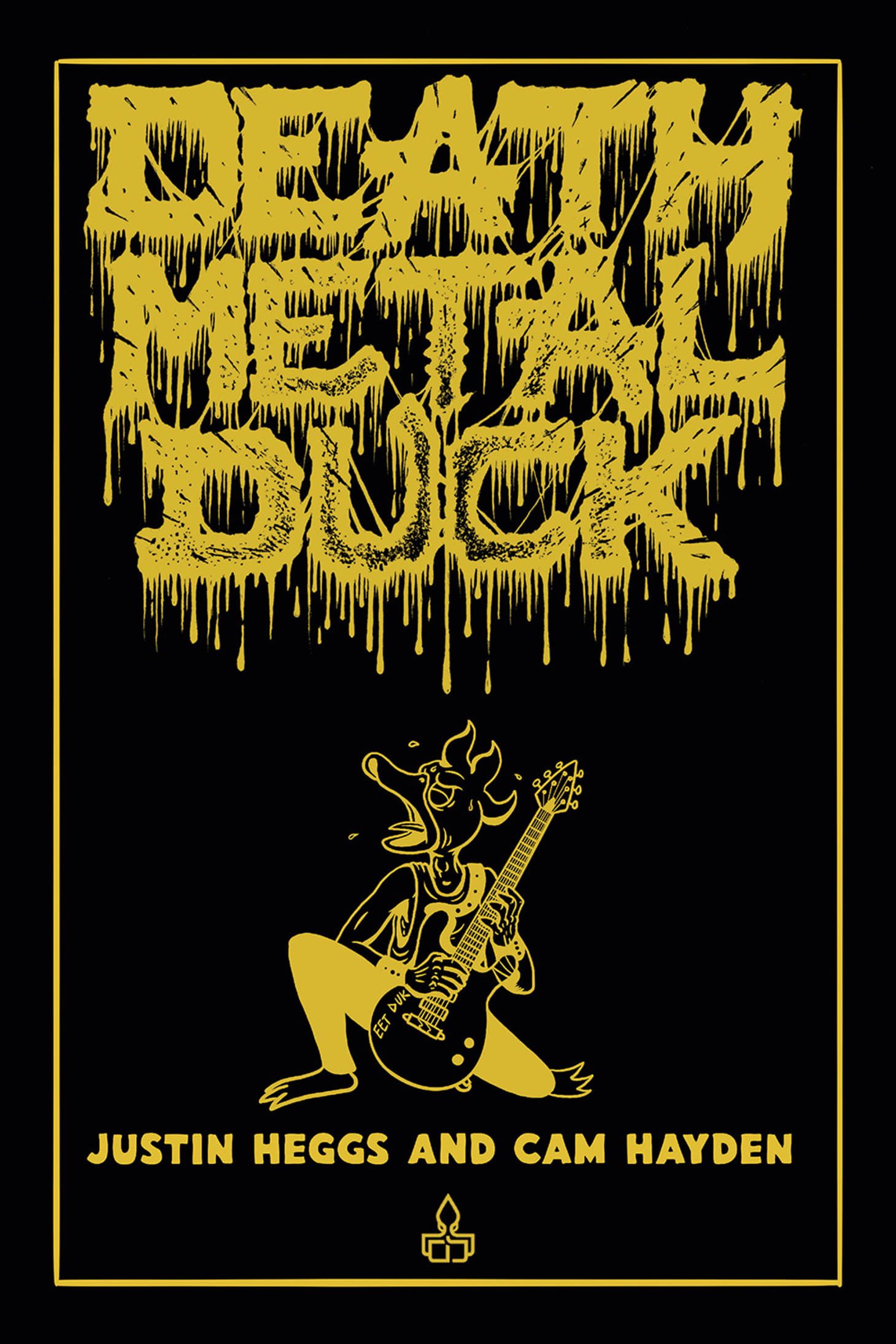
Creativity rarely follows a straight line. Whether you’re writing music, a book, or a comic, inspiration and frustration can hit at different times. Take comic book writer Justin Heggs. After writing the first issue of Death Metal Duck in 2007, he decided to quit writing and step away from comics completely. While his artist on the book, Cam Hayden, continued to level up his skill, it took Heggs about seven or eight years to jump back on the wagon and finish the book he had started.
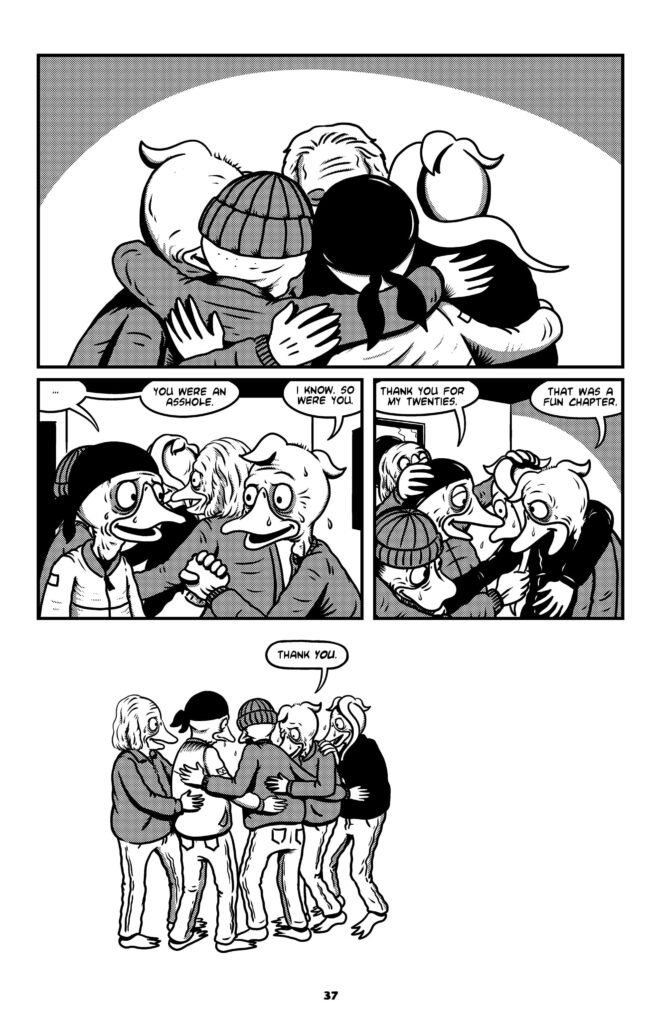
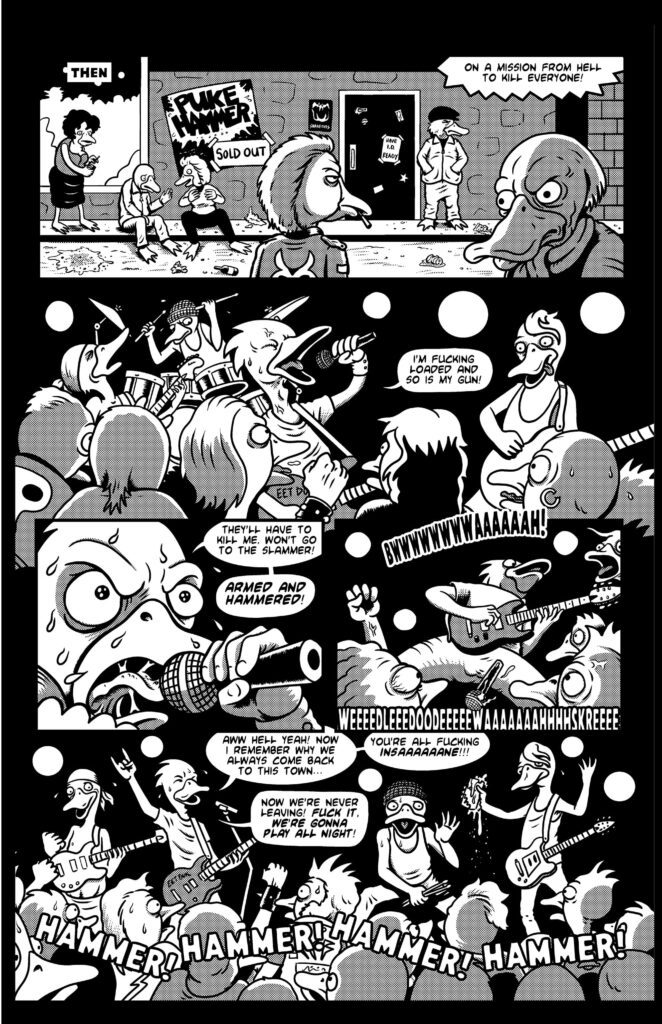
Together, they tell the story of Curtis, who was once the frontman of thrash metal band Puke Hammer. After the band fizzled out, Curtis settled into being a dad and husband. Time hopping back and forth, we learn about Curtis’s metal past, the contrast of the present, and the potential future where both of those things merge. Curtis’s second chance plays out in a story that has as much heart as it does angst. Justin and Cam talk to us about the journey to getting Death Metal Duck published and the surprising reactions they’ve received from it.
How did this idea come about?
Justin Heggs: Do you know the book, The History of Marvel Comics by Sean Howe? I got to the chunk in the 1970s, and they were talking about everyone who was working there. They hit on Steve Gerber and stuff like that. I really got interested in his story. Because of Steve Gerber and Howard the Duck, I think the name Death Metal Duck came from that. That was the initial thing for it, but once I had the name, I think it just sort of came out. That first 20 pages, like the first chapter of it, was written pretty quickly. The ducks were just sort of a tribute to Steve Gerber. I think ducks in general have a pretty big place in comics, in the history as far as the different characters that have been in it. So yeah, it definitely fit.
Dying Scene: Did you have any bands, eras of music, or subgenres that kind of shaped the tone of the book for you?
Justin Heggs: When I was writing the first issue, that was right when The Grinding Wheel by Overkill came out. That whole album is basically the soundtrack of me writing the first chapter of the book; that was a huge thing. I don’t know if it made its way in there or anything recognizable, but if I listen to that now, that’s what’s in my memory for sure. Then, as far as music, Children of Bodom was the one that’s mentioned in the book. Alexi Laiho and his playing were kind of supposed to be what he would be styled after, what I had in my mind for sure.
Dying Scene: Cam, how different were the earliest versions of the ducks in this world? Did they all kind of stay the same, or did you change anything up a bit?
Cam Hayden: A lot of it was locked in when we did the initial first issue. We kind of took a first crack at it about ten years prior. When we went to finish it off, I wanted to go back and redraw the first issue because I’d gotten ten years more experience. As far as the character designs and things like that, we had to lock those in early. They stayed pretty consistent as it progressed to the version that we have now.
Dying Scene: Did the story change at all in those ten years from the initial idea to the finished product?
Justin Heggs: Yes, I think so. I stopped writing after Death Metal Duck after the first issue came out in 2017, so I didn’t have the rest of the story finished yet. I just had some notes and such. When I came back to finish it in 2024, some of my notes were there, but I think it changed from what it would have been back then because it’s a lot more. I’ve been saying it’s a little autobiographical of myself. I think it took a more real turn. I was thinking maybe Spinal Tappy or something like that. I don’t think the story ever really ended up leaning that way. It always just sort of came out a little more… I don’t know about serious, but sincere or something like that.
Dying Scene : I don’t think that would have been a bad comic, but I think this is the better version of that story.
Cam Hayden: I do think it sort of sets that up a little bit. I think when people see it on the table, their first thought is probably, “This is going to be this crazy gonzo rock story with just excess and mayhem.” Then we pull a bit of a switcheroo on them when they read it. They find that it kind of hits them differently than they’re expecting, which is good so far. There’s just that sincerity that sort of hits them in the feels a bit.
Dying Scene: Trying to juggle art and grown-up shit hit me really hard. Were there any world rules or logic rules for Death Metal Duck, or just ducks as humans?
Justin Heggs: I really like the collaborative nature of comics, working with somebody else like this. So I try to, if I don’t have a specific thing that I’m picturing for whatever reason, like maybe later down the road that has to come back so it has to look a certain way, I really like just handing it out there and seeing what comes back. There were no rules other than when he’s older, he has a bald spot. Like he’s got three pieces of hair when he’s younger, two pieces later, so you know when the flashbacks are. Other than that, it was anything goes. Cam came back with things like, they don’t wear shoes or any of that sort of stuff. That was all him, which is awesome.
Cam Hayden: Which sort of cuts off the ability to give them like Gene Simmons KISS boots and stuff like that.
Justin Heggs: No need for platforms.
Cam Hayden: So they’re fully decked out in every other way, except they just got their bare feet hanging out. I guess they’re gnarly enough.
Dying Scene: Were there any tiny details that you added that readers may miss? Any kind of heavy metal Easter eggs or anything like that?
Justin Heggs: There’s a couple. I think there’s a few connections that maybe people miss or don’t pick up on maybe the first time through. I wrote it sort of dishing out the information a little bit at a time and sometimes out of order.
I still sometimes have people surprised, like, “Who’s Michael?” And he shows up four pages later. So, you know, you’ll piece it all together. I didn’t want to have a scene where they just sort of explained that. It just sort of comes in. So I think there’s some of that that gets missed, little details. There are definitely a couple of rock legend cameos in there that Cam put in.
Cam Hayden: Yes, I grew up reading Mad Magazine, so I was a big fan of the Will Elder Chicken Fat. I like to put little things in the background just for some visual spice, I guess. They’re definitely sprinkled throughout. Little callbacks to metal things and comic things.
Justin Heggs: There’s definitely a duck Lemmy. I’ll say that.
Dying Scene: Cam, were there any key decisions outside of the “no shoes” you had for the character designs?
Cam Hayden: Not really. When I got the script, I just started drawing it and sort of feeling it out. I didn’t do a lot of planning ahead. I just wanted to see how it would come out when I just started drawing it. If there were any changes along the way, then I would go back and make adjustments. I kind of just wanted to follow my intuition on it.
I didn’t want to make them look like Disney ducks. I wanted them to be fairly human-looking because it lends itself more to realistic band equipment and things like that. I didn’t want it to look like a Disney rip-off. I wanted it to look more underground, which I tend to lean towards anyway. Not a ton of pre-planning. I just kind of did what I do, for better or worse.
Dying Scene: How did you guys come up with the band name?
Justin Heggs: I think that’s something I had. I don’t know where Puke Hammer came from. I think the idea was that the logo could definitely be very splatter-heavy and unreadable. That was supposed to be one of the ideas as well: having Puke in there and then Hammer.
Dying Scene: And it’s like the most metal name anyway. How has Puke Hammer not been taken all this time?
Cam Hayden: Puke Hammer and the title Death Metal Duck, both of those just knocked it out of the park. Coming up with those, they’re very direct and attention-grabbing. It’s all good. My hat’s off to you.
Dying Scene: How did you incorporate metal aesthetics without parodying them too much?
Cam Hayden: I think because I’ve played in bands, I sort of understand the seriousness of it. I know some people look at stuff like that, and it’s done in a jokey way, and it’s sort of ridiculous. I think it is, in a lot of ways, sort of like a uniform, like a musical tribe. I know it can be kind of goofy and zany, but the script didn’t call for it to really be like that.
In most cases, there are a couple of instances where we kind of lean into the funny aspects of it. Anyone who likes metal is aware of that. I’m a big fan of KISS. Part of the attraction of KISS is how goofy they are and the way they fall on their face all the time. They’ve got some great albums and then they’ve got some just absolute stinkers. Their costumes, their get-ups, on one hand, they’re kind of goofy.
On the other hand, that’s what drew me to them in the first place, and it’s awesome about them. I still love bands like Ghost and GWAR, all that stuff. It’s visually awesome. It’s entertaining. I think I wanted to approach it in a respectful way because I’ve played in bands similar to that. I love bands that are like that, so I respect it.
Dying Scene: Do you have a page or panel that you feel captures the book, what the book is about?
Cam Hayden: I don’t know. The splash page turned out pretty good.
Justin Heggs: I definitely have panels that are like… There’s one where Murphy’s exhaling and he’s like, “Have you been crying?” I was like, “Holy shit, that’s all I do now.” I really like that. That was mostly just for the detail of a duck exhaling smoke. There are a lot of pages that have a lot of meaning for me, but I don’t know. It might be them on stage.
Cam Hayden: Yeah, there are a lot of different layers going on. Maybe I’m too close to it as well.
Dying Scene: Did you have a way to figure out the dialogue? Did it start feeling more autobiographical than you were expecting it to be as you were going through?
Justin Heggs: When I came back to start writing again, that was literally the day that I told Cam that I was going to finish Death Metal Duck. So that was me coming back after a long time off from writing anything at all. A lot of that coming back into the music stuff that Curtis is doing, there were a lot of feelings of that coming back into the writing part of it for me. There are definitely some parts in there that are text messages that I have with friends and stuff like that on Instagram or just whatever, talking about what I was going through at the time. Reading it back now, I put a lot of that in there. It was definitely affected for sure.
Dying Scene: Outside of Howard the Duck and Metal, were there any non-metal inspirations that shaped the comic?
Cam Hayden: I would say that even though Puke Hammer is a metal band, as a guy who plays in bands, I can say that it is very representative of my experience as well in bands that are not necessarily metal bands. I think that’s true for a lot of my friends who are in bands, who are our age, and who have had a family kind of land in the middle of what they thought was being on the verge of taking off in their band situation and just having everything kind of reprioritized and the card deck reshuffled. If you’re looking just at music, I think any sort of genre of music, I think it’s applicable too. I find a lot of the band dynamics transfer pretty readily across every band that I’ve ever been in, at least.
Justin Heggs: I think for me it just ended up being the importance of creating. If that’s something that you’re drawn to, we would have printed this and sold it ourselves at the shows that we happened to go to. It would have been similar to the other 2017 version where if you bought it or if you read it, you got it directly from us because that was the only way to get it. We were totally going to do that, you know, no big deal, and then it got picked up; it blew up into something different.
The importance of creating it as part of the story. Like, if that’s in you, then bottling that up doesn’t work. That’s what Curtis is doing. That’s why it’s not so much that there are obstacles he has to overcome, whatever it is. And like, that’s what the story is that kind of goes pretty smoothly for everybody once they decide what they want to do. But that’s the story, you know, like these things happening for all these characters and based on just going back and tackling that dream again, right?
Dying Scene: What was your collaborative process like? How did you guys divy up the work, if you will?
Justin Heggs: I think once I had sent Cam the script, I just sort of stepped back. I didn’t know if he was going to send character sketches or anything like that. I think the first thing that he sent me was the first three pages done. As far as what he’s doing and what I’m doing, I wrote it. There were very little changes or anything like that. Anything that has to do with that was all his department.
Cam Hayden: There may have been a couple of instances where I would send a page and you would have a couple of notes on it, but it was nothing, no crazy redraws or anything. It’s kind of just you fire me a script, and I would turn it around and shoot it back at him. And then usually it was, it was okay.
Dying Scene: Were you guys mostly on the same page?
Justin Heggs: There were a couple of things I noticed. There’s maybe two word balloons that I think Cam added in that sort of move the story forward a little bit between panel progressions. And it was like, “Oh, yeah, you know, that works or whatever,” just sort of like, I think he put it like a “so” just to sort of move the scene on. I was like, “Yeah, that works perfectly.” I think those were the only things that I noticed. Other than that, I think it was pretty accurate to what I had written.
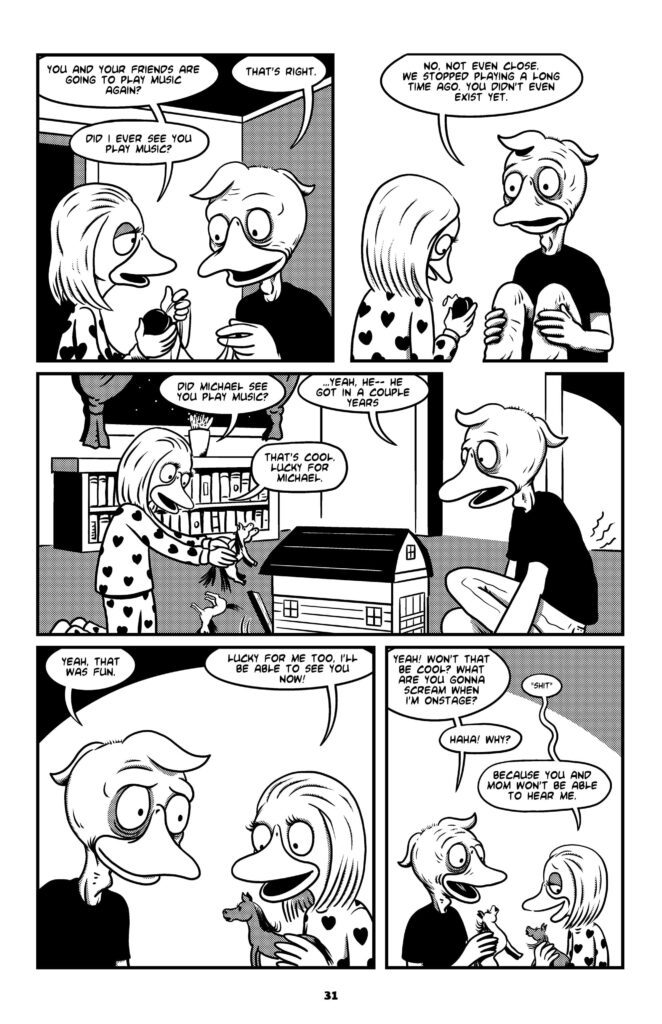
Like, the old version of the book was like, one of the best things I had done up to that point. I was super proud of it. Getting the art back for the redraw of what turned into all of this blew my mind. Cam definitely leveled up a few stages for all of that. So I was very grateful for all that. I think the detail that blew my mind was in the word balloons for when Curtis is talking to his daughter, Macy, and he says, “What are you going to scream when I’m on stage?” And she says, “shit.” The word balloon’s tail is all squiggly, and it just sort of comes up. It was just perfect and not a detail that I had added in at all. He did the lettering and the art as well. The lettering is a huge part of it. Stuff like that was genius. It communicates just with a squiggle in the balloon line.
Cam Hayden: Yeah, for me, I think it was kind of when the scripts for Part Two and Three came in, because where we left off in Part One, it definitely could have gone into kind of this gonzo, crazy rock story. I was pretty blown away just by how deep the script was. For anyone who’s seen any of my other work that I do, it’s pretty lowbrow, just goofy comedy, horror stuff. It put me in a bit of a different ballpark than what I’m normally functioning in. The depth of the story kind of blew me away and knocked me into another lane, which I think is good. I think a lot of people who buy it, who are familiar with my previous work, are impressed with the script that Justin has done for this, as I was as well.
Dying Scene: Are you guys going to do any more?
Justin Heggs: It’s hard to say. I definitely have a story for it now, but I don’t know if it’ll be like the next thing we do or anything like that, trying to get this one sold as much as possible. Get that out there, but there is definitely a Side B for this. I mean, it took us ten years to make this one. Maybe we have to wait ten more years for the sequel. That just might be how it works.
Cam Hayden: We are getting a really good response from it, though. If there are people who want more, and there’s a script ready.
Dying Scene: Did you pitch it to Black Panel Press, or did they have a copy of the old one and pick it up?
Justin Heggs: When Cam was probably halfway through redrawing the first issue, I was like, “Holy shit, we should pitch this instead of just trying to do it ourselves.” I think by that time, we had the first issue done, the first twenty pages, which is a great amount to be able to send to people because it breaks off the story in a nice little cliffhanger or whatever. We were able to send twenty pages to all the places you can think of that you would want to publish your stuff. Black Panel got back to us probably a month later, and just based off of those twenty pages, was interested in it.
Dying Scene: I like their lineup of books because they’re very unique in what they choose. What feedback have you received from comic readers that surprised you?
Justin Heggs: I guess I’ve been surprised that everyone’s been pretty positive about it. That’s been a pleasant surprise, just because I’ve never put anything out there beyond personally selling it to someone at a convention. People in stores that I don’t go to and don’t know have bought and read the book. It seems like it’s been received pretty well. I think it’s personal, but it also sort of makes it more general because everybody is kind of feeling some piece of something that I’m mentioning in the book. That’s why I’m happy when anybody says that they connected with it, or what they took out of it, maybe not music. Just the parenting stuff or getting older. I guess 100% of us are doing that.
Dying Scene: Have metal fans read it? Do you know if they like it?
Justin Heggs: I think so. I don’t know if they’ve specifically said, “We represented the music well,” or something like that. When we were at TCAF (Toronto Comics Art Festival) selling it, there were people who came the second day because someone told them on the first day that there’s a book called Death Metal Duck.” All walks of life, right? So, I mean, I hope they liked what we did afterwards. That definitely brought them in.
Pick up Death Metal Duck through Black Panel Press. Follow Justin and Cam on their socials to keep up with the rest of their work.
Discover more from Dying Scene
Subscribe to get the latest posts sent to your email.