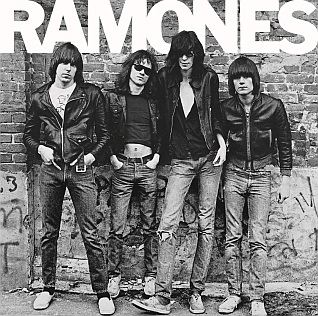
Fifty years ago, four kids from Queens, New York, recorded and released a record that would become an instant classic. The Ramones were already a name around the New York punk scene and clubs like CBGB, but you could only hear them if you ventured into the Bowery, which was not the safest place in the 1970s. This first album from Joey, Johnny, Dee Dee, and Tommy was not only a snapshot of the band but also laid the groundwork for the Ramones’ future albums. Released in 1976 and considered the first true punk rock album, it also serves as a blueprint for future punk rock albums in general.
While the dial for what’s punk or not keeps moving, the album establishes some of the universal tropes in punk rock, including short songs, most of which are two minutes or less. This was achieved by cutting the fat out. Fat, in this case, included things like solos and bloated intros or outros. The self-titled record has fourteen songs in thirty minutes, and still sounds more complete than a lot of the albums released at the time. Also present in most songs is Johnny Ramone’s buzzsaw guitar sound, which has only evolved over time in a number of genres influenced by the band.
Song subject matter is another thing this record has going for it. There are a handful of things that the Ramones write about on this first record, and would continue to write about throughout their career. Things like war, relationships, and horror movies would become the bread and butter for the Ramones, along with some songs about their lives and eventually their mental health. Some songs felt like modern nursery rhymes for kids born on the wrong side of the tracks.
With Dee Dee’s army brat upbringing and Johnny’s strict home life, a lingering feeling of military presence is felt in the Ramones’ music. A lot of these references are present on this first album, specifically in the lyrics for “Blitzkrieg Bop” and “Today Your Love, Tomorrow the World.” While Johnny may have had a regimented, no-nonsense way of life, Dee Dee grew up in the ashes of post-WWII Germany. While a lot of people are put off by the song’s use of Nazi references and imagery, these songs were culled from Dee Dee’s fascination with WWII history. “Today Your Love, Tomorrow the World” uses themes from Nazi Germany and is told from the point of view of a Nazi shock trooper. The song closes by repeating the title, “Today Your Love, Tomorrow the World,” which in theory could have been Hitler’s mindset.
The album drips with their musical influences, too. On top of their cover of Chris Montez’s “Let’s Dance,” one song you could consider the outlier on this record is “I Wanna Be Your Boyfriend.” It’s the only song on this album that doesn’t make use of Johnny’s buzzsaw sound. It’s a very simple love song and their take on the Beatles, Beach Boys, and other sixties groups that influenced the band. One of the other ways this record used these influences is how it’s mixed. Tommy Ramone and producer Craig Leon mirrored how the Beatles mixed their early records by putting the guitar on the right, bass on the left, and vocals and drums in the middle.
Each Ramone writes songs on this record, but most of the songs came from Dee Dee. Dee Dee had arguably the most interesting pre-Ramones life. He was born in the U.S. and moved to Germany while still a baby, but moved to Queens, N.Y., at the age of fifteen to escape his alcoholic father. Not having a great home life led to Dee Dee’s use of drugs and being a male prostitute to fund that habit. Songs like “Now I Wanna Sniff Some Glue” and “53rd and 3rd” hold more weight than one would think. “53rd and 3rd” tells the story of a Vietnam Vet who comes home from war desolate, works as a prostitute, and kills his Johns with a razor blade. While Dee Dee likely didn’t go that far, the amount of his participation was a secret he took to his grave.
While each of the Ramones had their vices of some sort, the yin to that yang was that they were also into horror movies, comics, and adolescent things men never grow out of. Two songs on this album are representative of this: “Chain Saw” and “I Don’t Wanna Go Down To the Basement.” Despite Joey’s weird pronunciation of it, “Chain Saw” is specifically about Tobe Hooper’s The Texas Chain Saw Massacre. The movie, though revered now, was pretty taboo with its extreme violence upon release. “I Don’t Wanna Go Down To The Basement” may be a little more generic with its use of the familiar trope from many horror movies, but songs about horror movies would eventually come full circle when Dee Dee wrote the theme for the movie adaptation of Stephen King’s Pet Sematary.
While the record has one love song, the album itself has three about being in relationships, all varying in tone and phase of a relationship, but all three with Dee Dee’s hand in them. Out of the three, “Loudmouth” probably aged the worst, given its repeating verse of threatening abuse towards a partner, even if punk used exaggerated violence as cartoonish expression. However, songs like “Listen To My Heart” and “I Don’t Wanna Walk Around With You” are great examples of breakup songs that give strength rather than ask for pity. They acknowledge mistakes were made, but in the end, the subject will be better off.
By far the most popular song on the album and in the band’s catalog is “Blitzkrieg Bop.” The Tommy and Dee Dee-penned song was said to be about fans attending a Ramones concert. Dee Dee again uses imagery from WWII; the word “Blitzkrieg” is a reference to a German war tactic meaning “lightning war.” Immediately recognizable by its chant, “Hey Ho! Let’s Go!” “Blitzkrieg Bop” is a staple of sports stadiums and movies. The song’s opening lyrics were a way to emulate the Bay City Rollers’ 1973 hit “Saturday Night,” which also begins similarly. For a group of kids that initially set out to make music for outsiders, their song became an anthem for everyone, not just the punks.
The Ramones’ self-titled record is not just a template for Ramones albums, but for other punk bands as a whole. The Ramones’ self-titled album gave a voice to the quiet kids who were more into reading than sports. Yet, it also gave a voice to the kid who might be getting into trouble, or who had a rough home life, or just a kid who was attracted to the more dangerous things life has to offer. The Ramones gave permission to all of these kids to let their weird quirks out.
The Ramones’ momentum would just keep building until their end in 1996 and has remained pretty consistent. Since then, the band has been the subject of every form of release possible. Whether it be box sets of reissues, books, or documentaries, The Ramones have been mined more press than some of the bands they were initially rallying against.
Discover more from Dying Scene
Subscribe to get the latest posts sent to your email.




Johan
Great documentary!