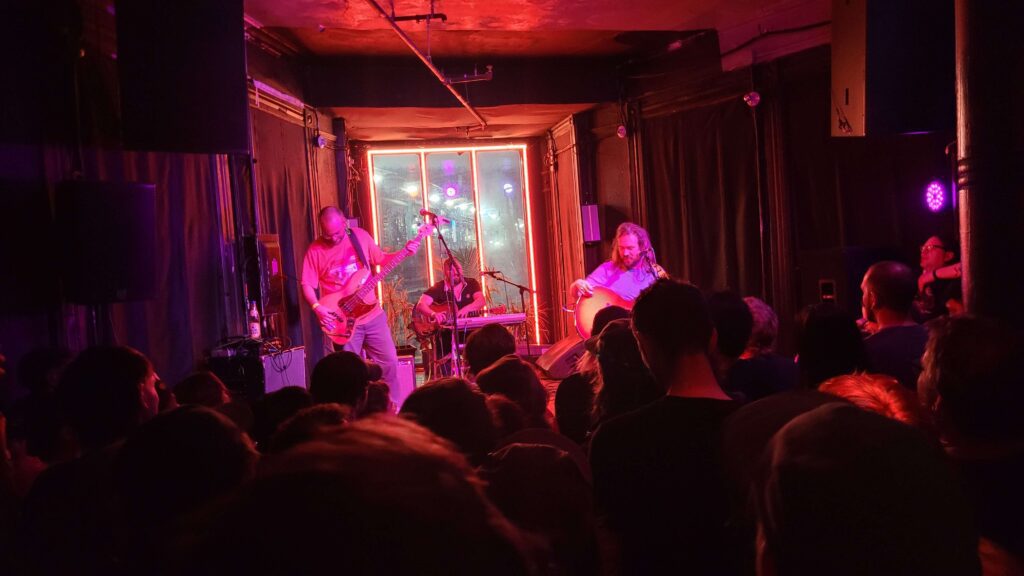
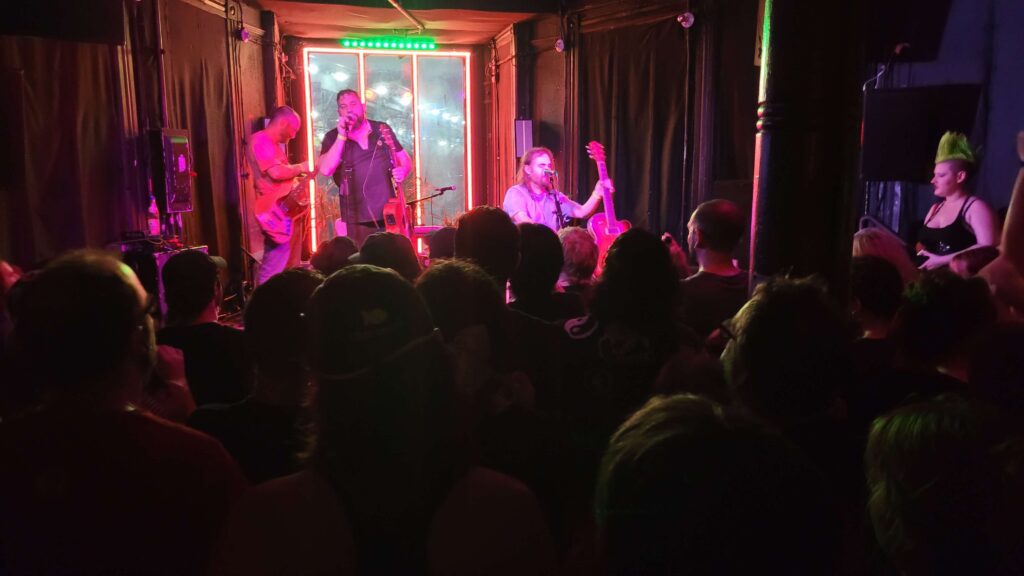
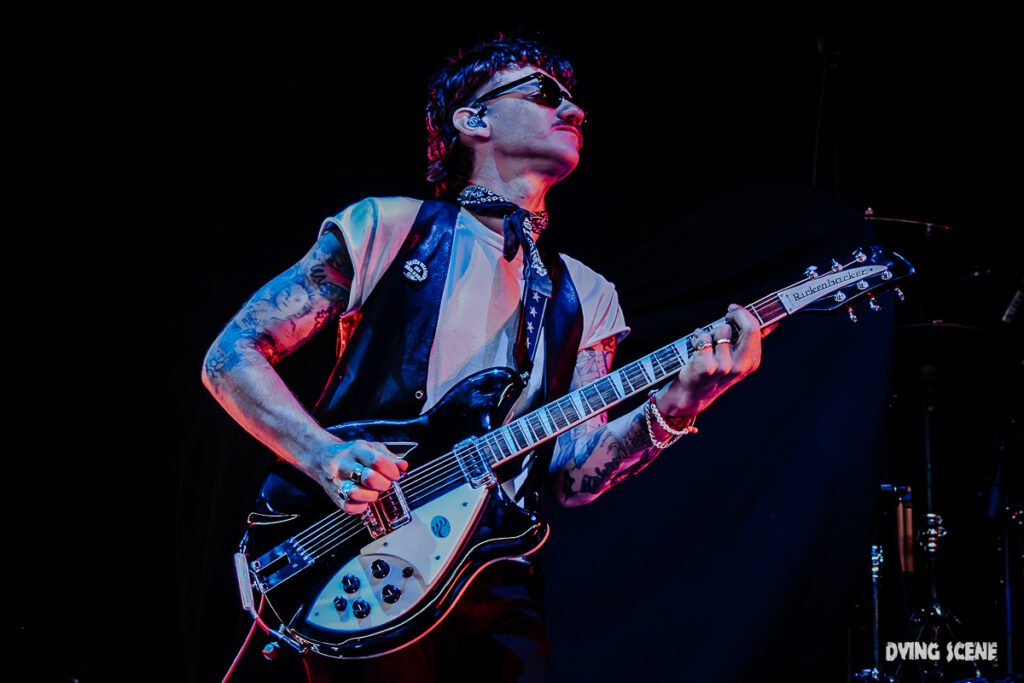
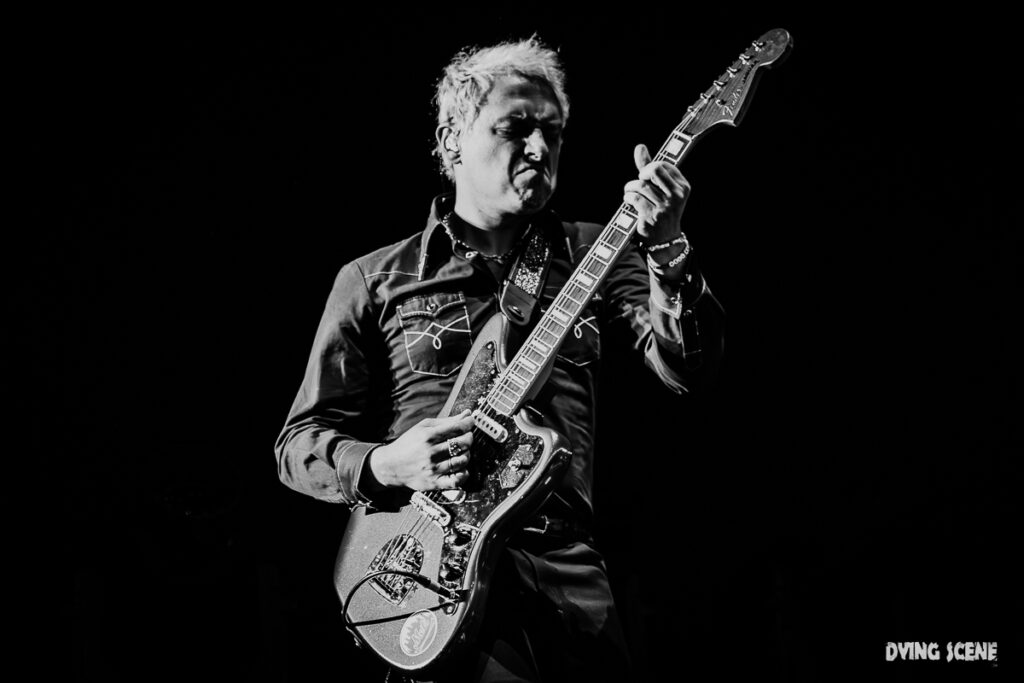
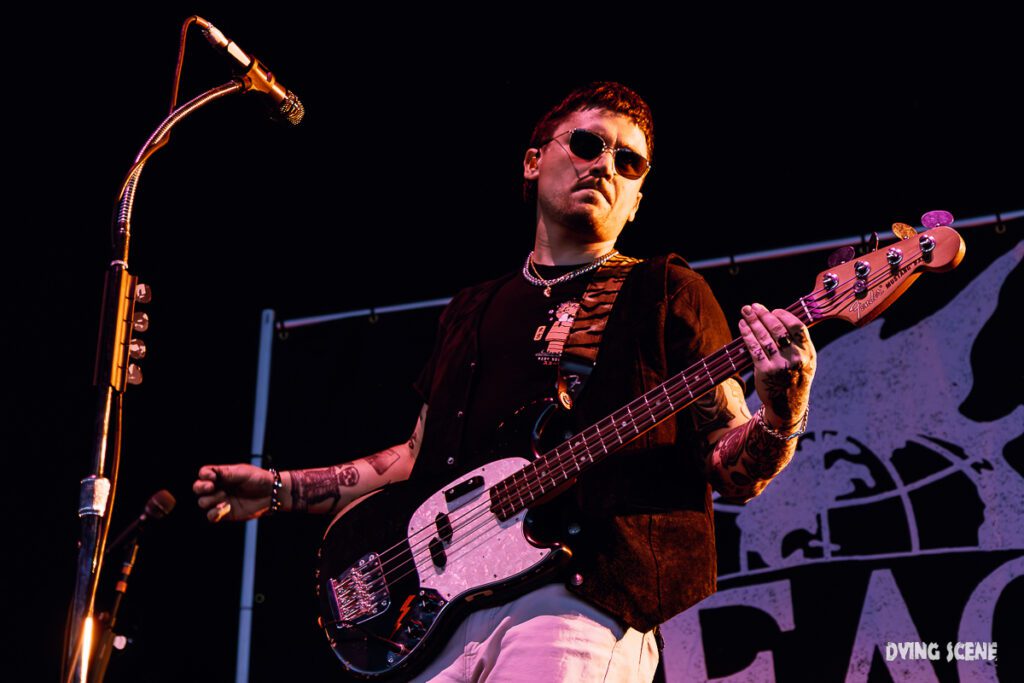
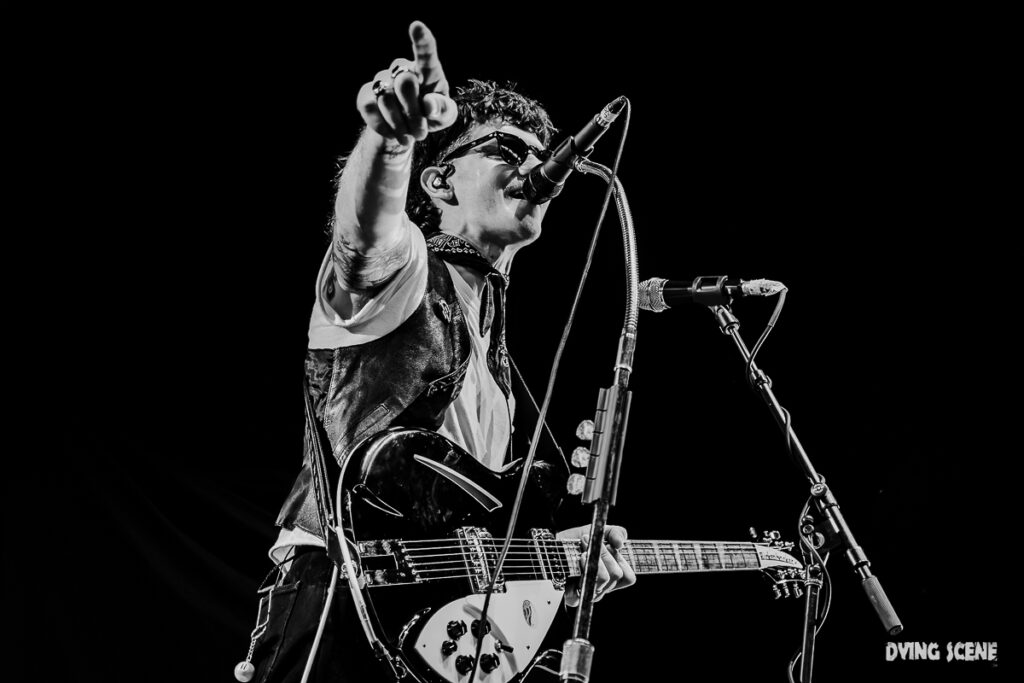
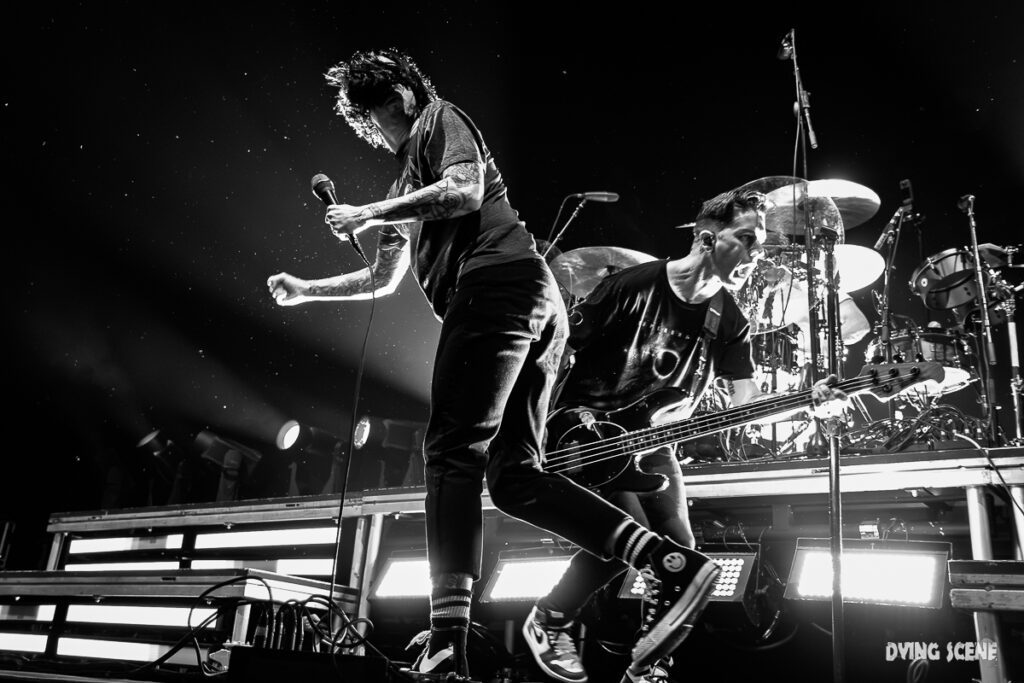
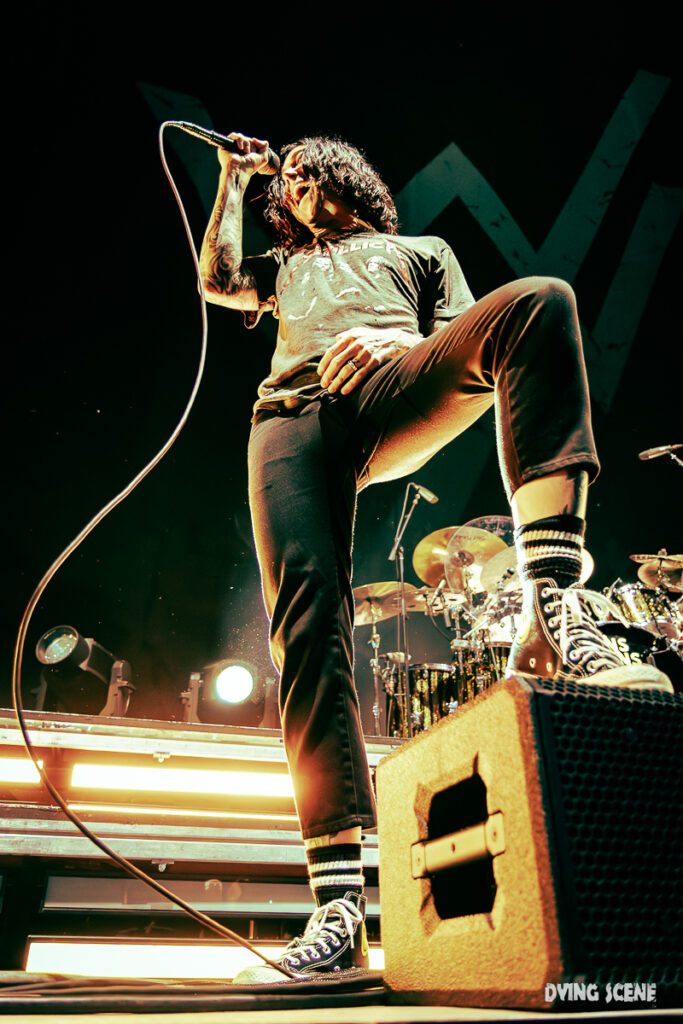
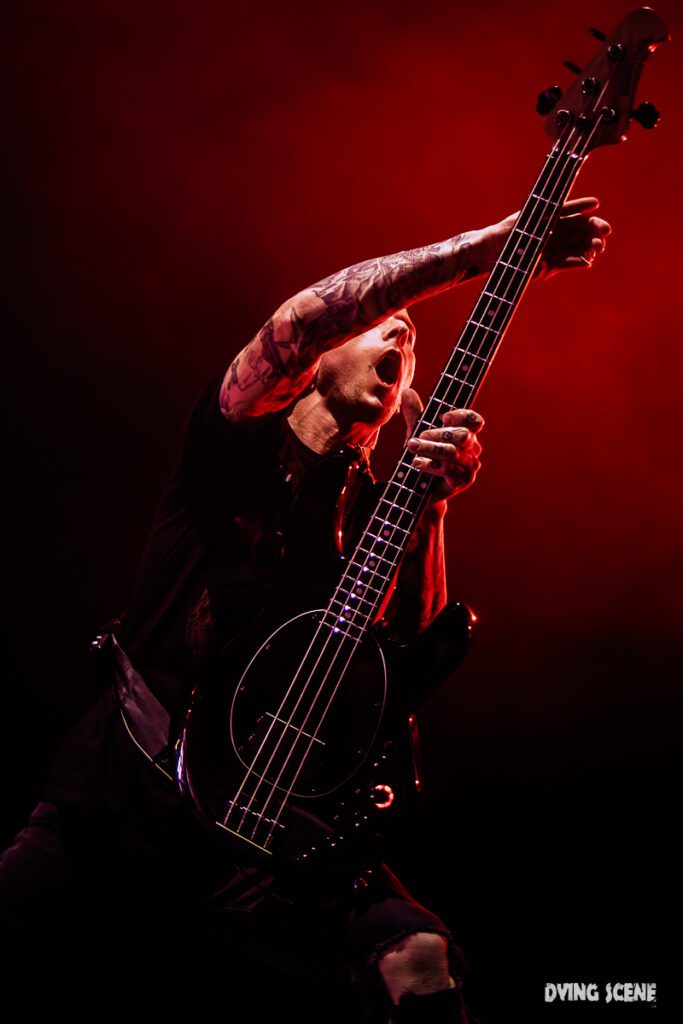
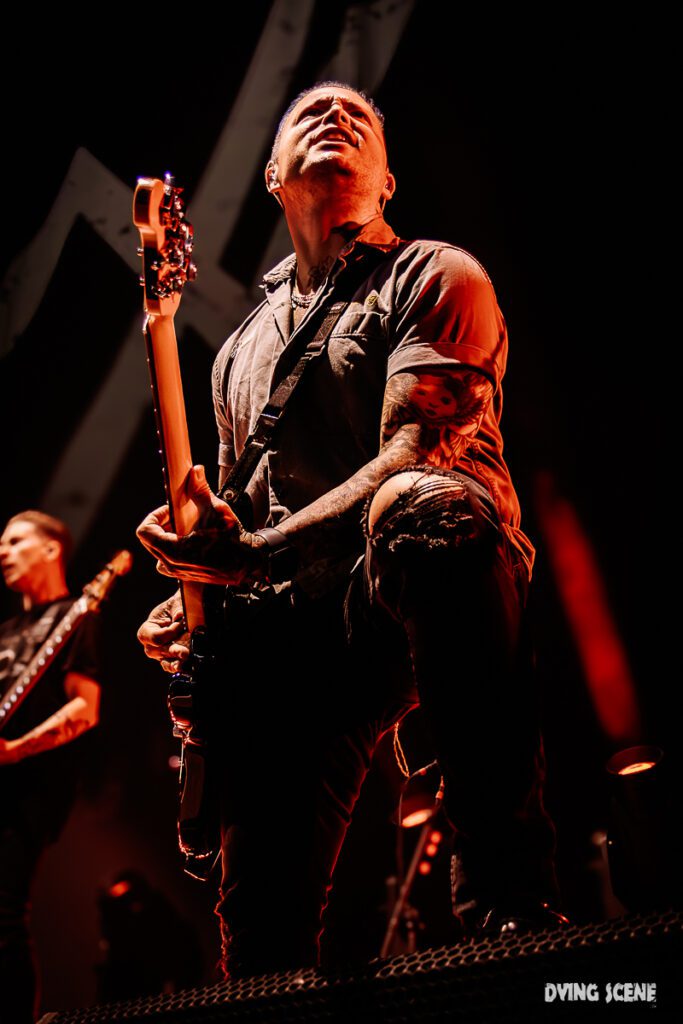
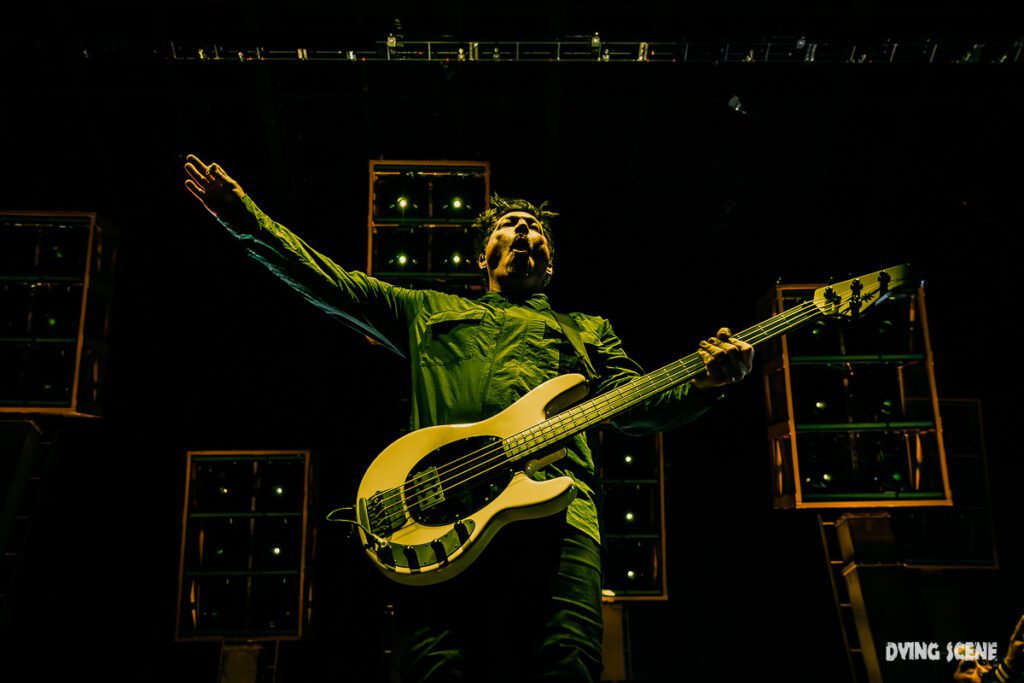
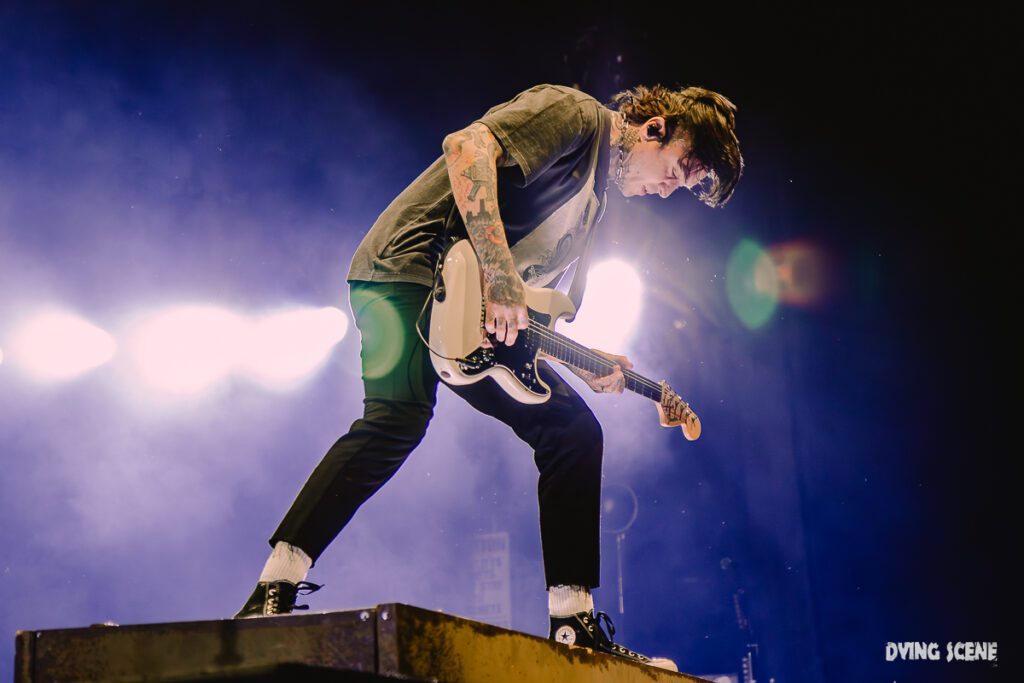
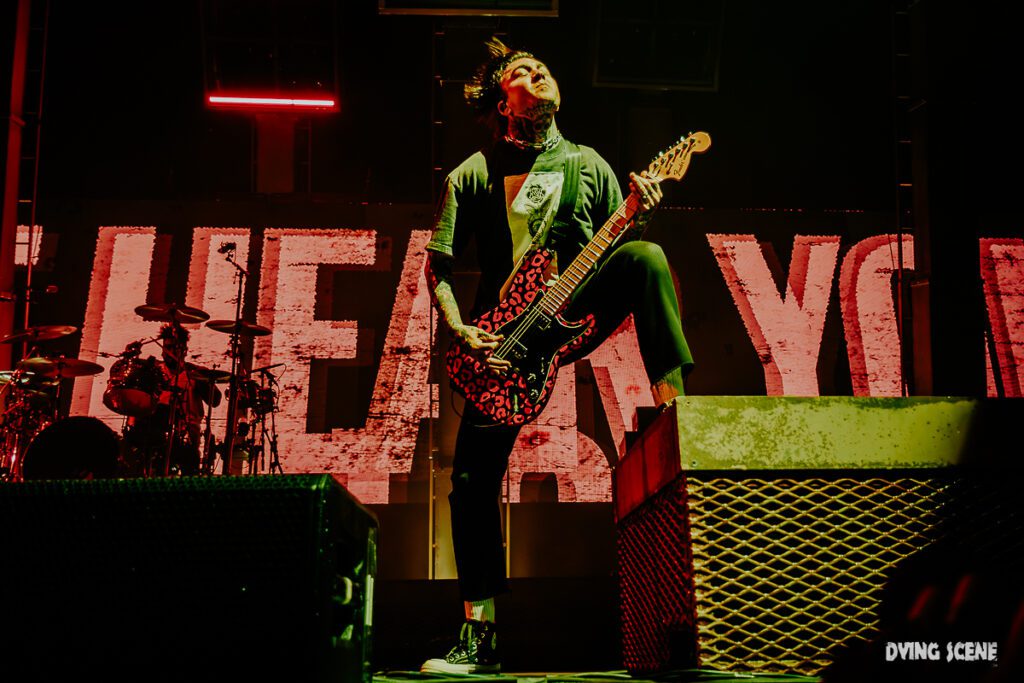
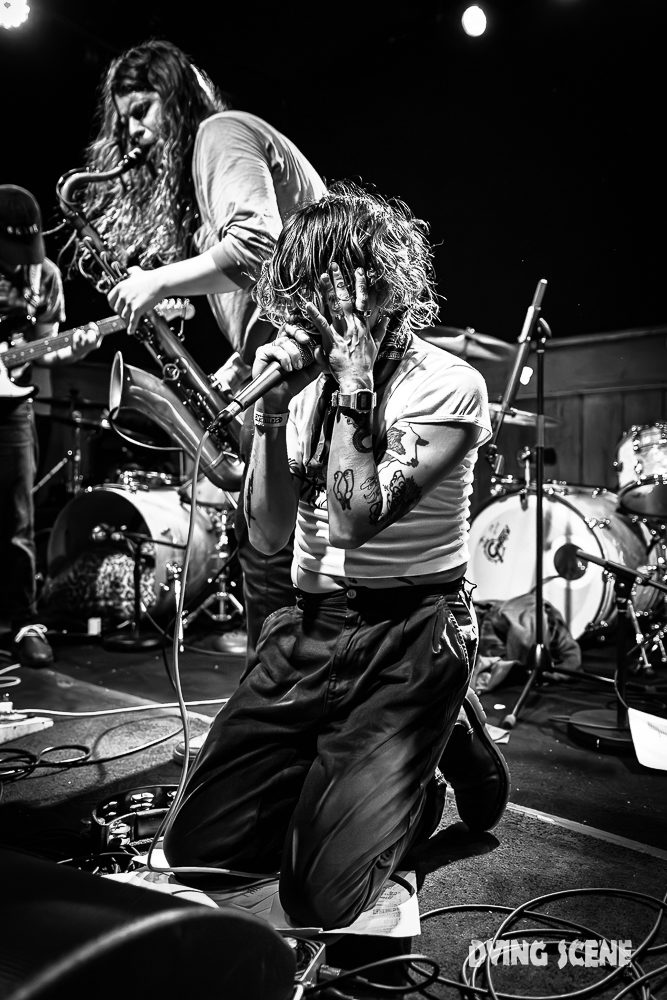
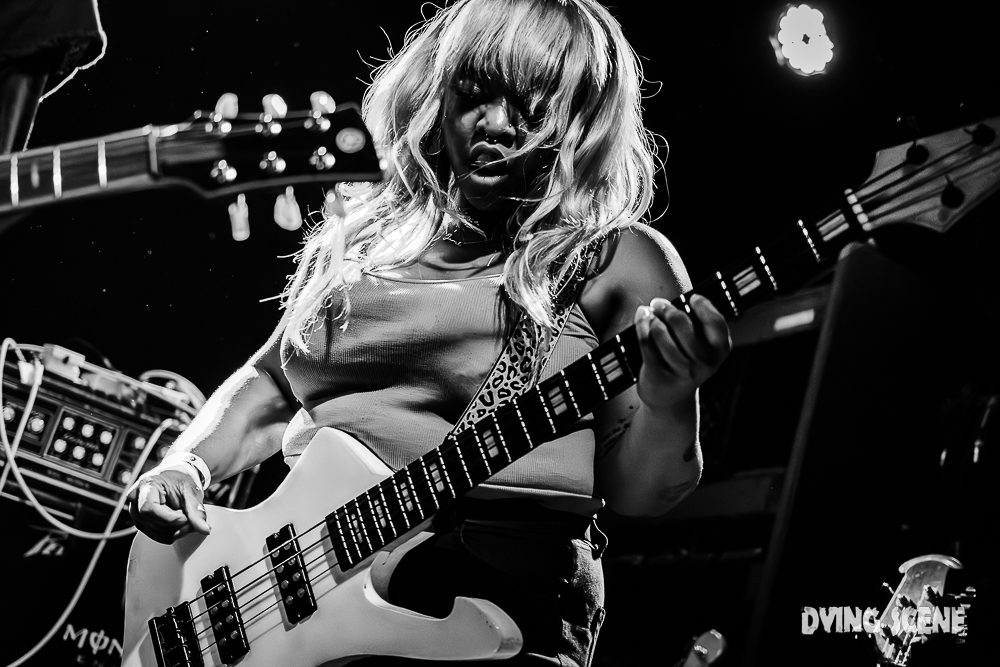
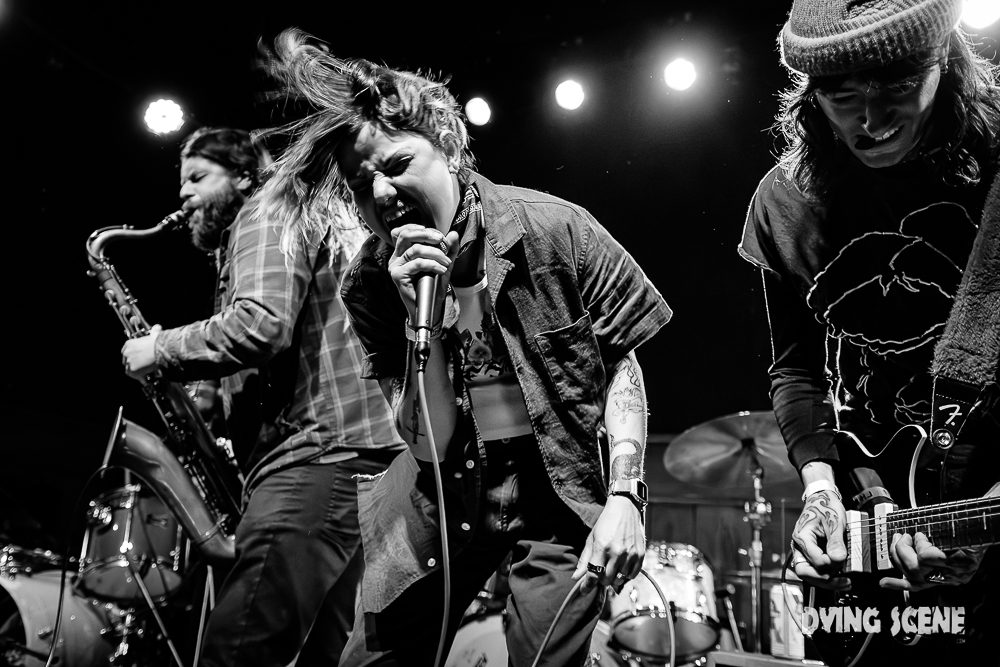
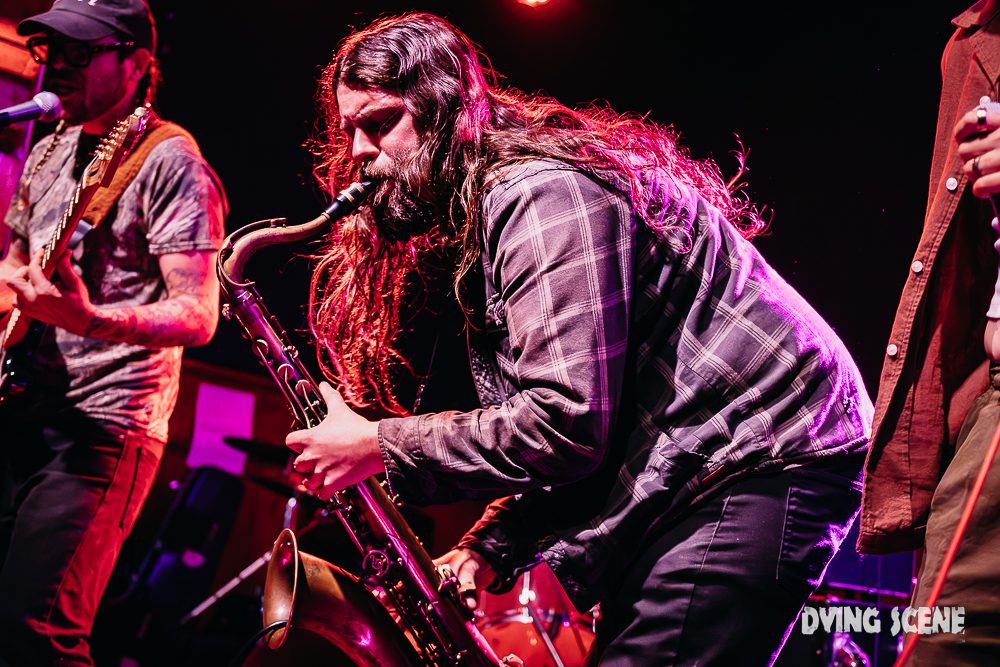
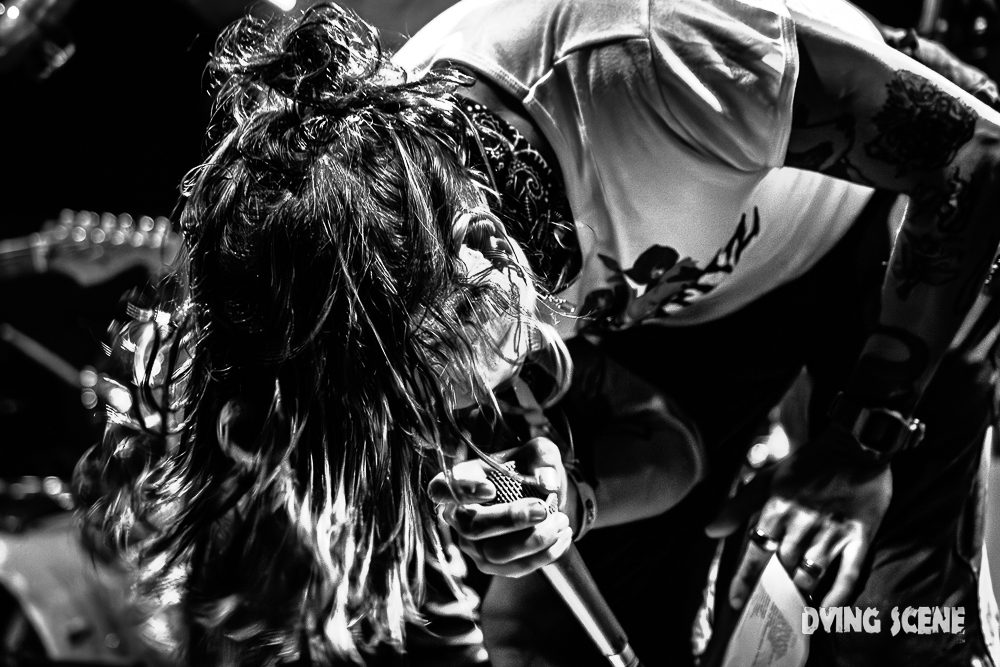
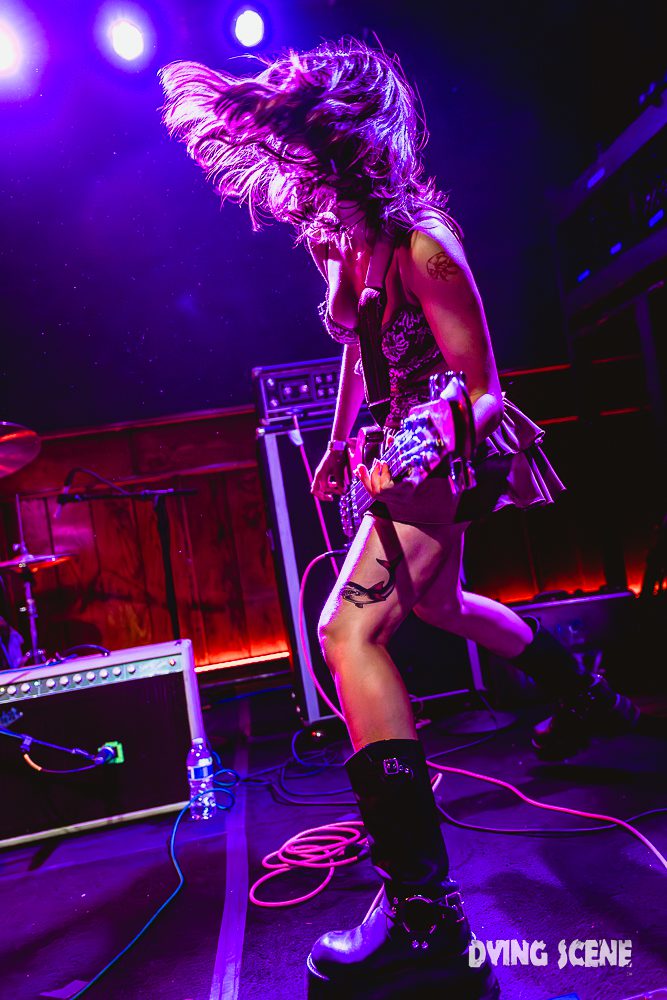
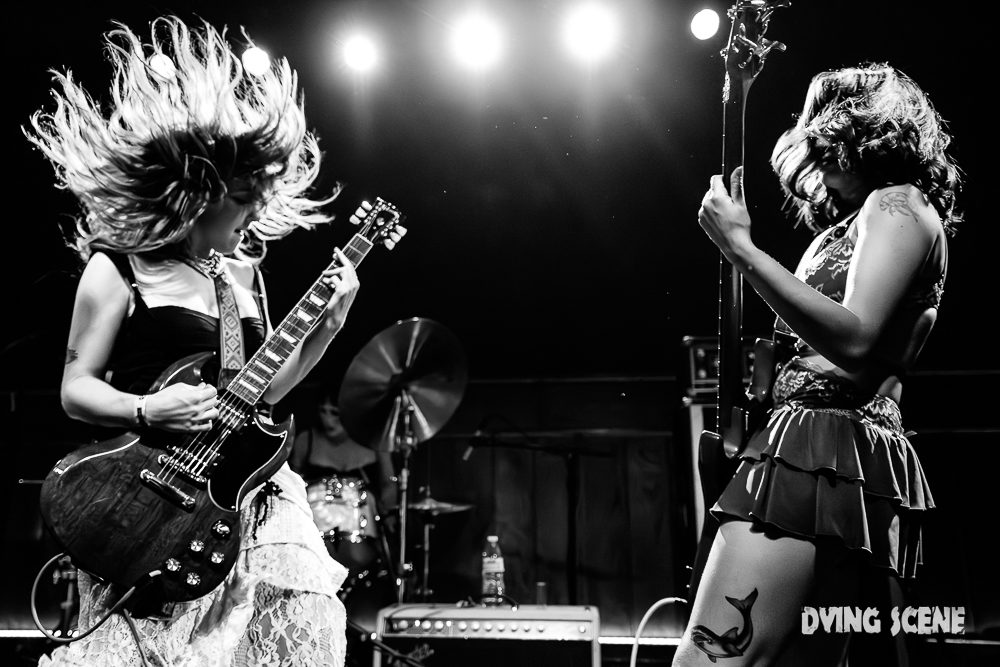
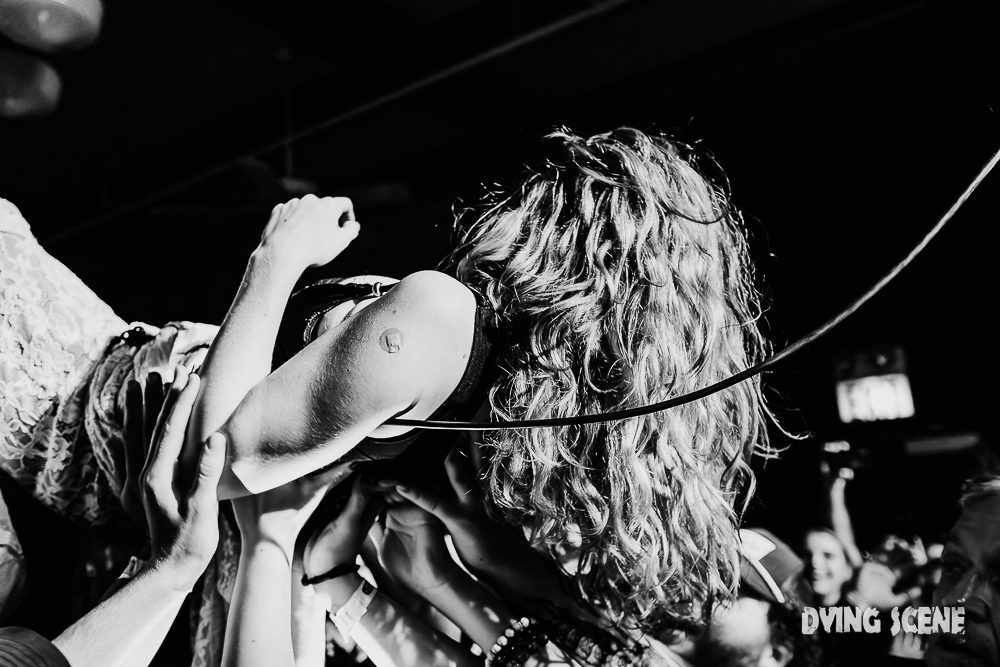
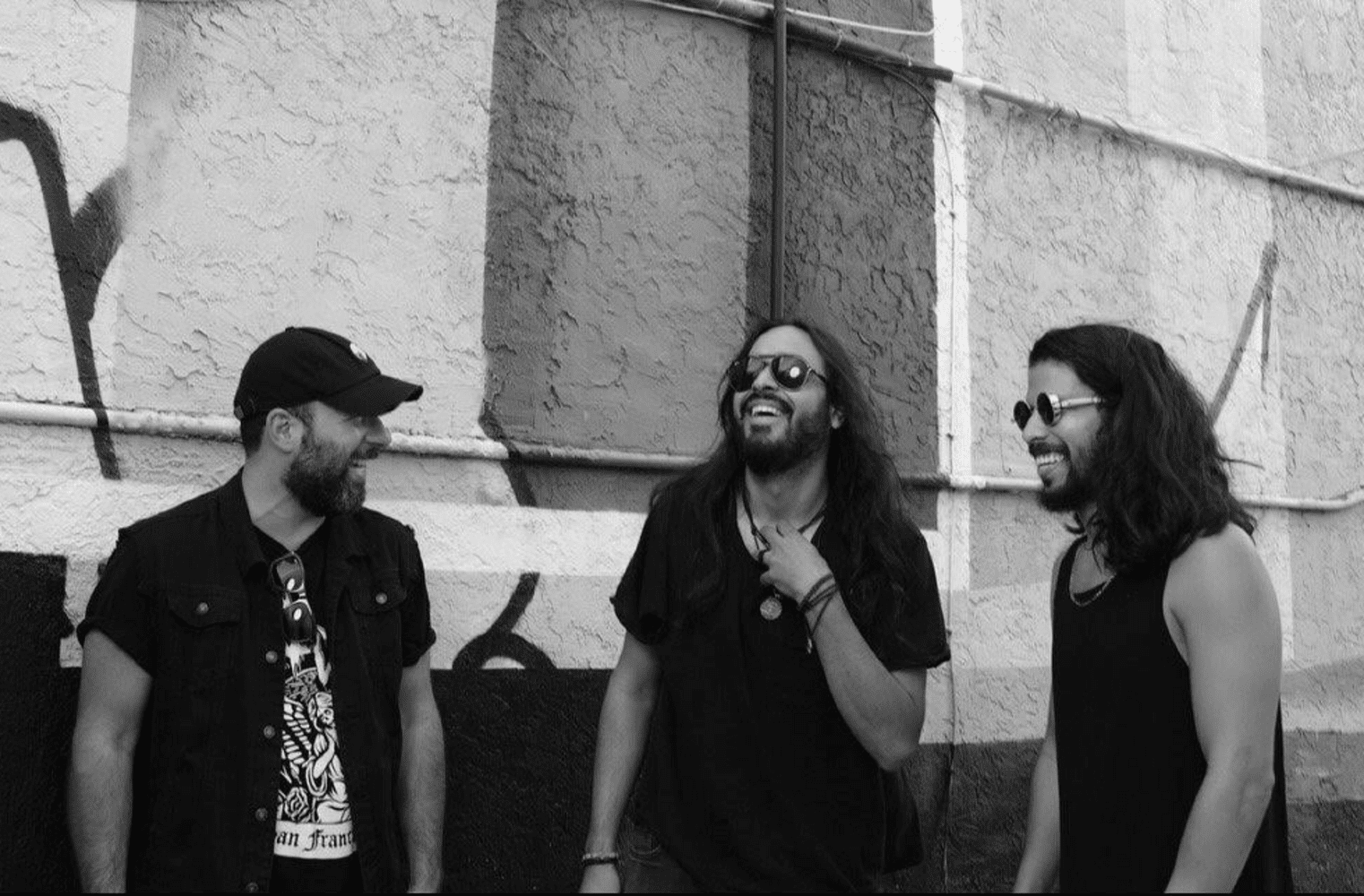
The terms “cult following” and “legendary” often coincide. Both can be used to describe Fishbone, which has blended ska, funk, punk, soul, and metal to create one of the most unique sounds for over forty years. If you’ve ever been to a Fishbone show, it’s almost a religious experience, with Angelo Moore preaching a sermon to the crowd moshing in the pit before him.
Fishbone has been in a transition period over the last year. While founding members Walter Kibby and Norwood Fisher left the band in 2024, the remaining members have been busy touring, recording, refining their sound with new members, James Jones (bass), Hassan Hurd (drums), and John “JS” Williams II (trumpet,vocals). The fruits of these labors have brought us Fishbone’s first full-length album in twenty years, Stockholm Syndrome. Fishbone members Angelo Moore and Spacey T talked to us about the new record and this new era for the band.

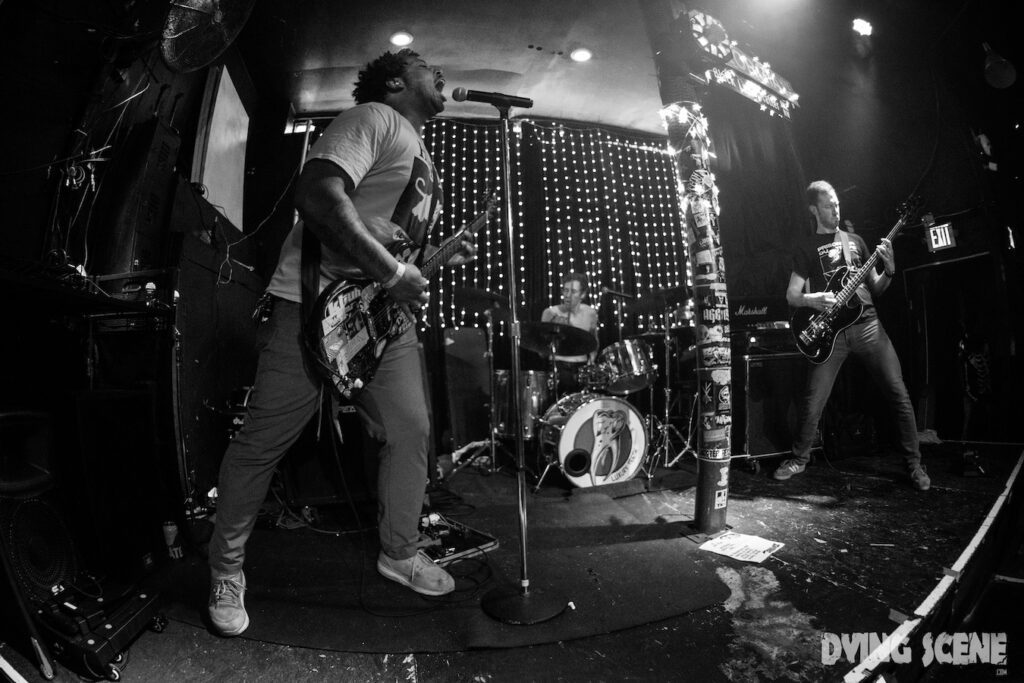
Photo by Matt Dessner
Dying Scene (Forrest Gaddis): You guys have some new members. Is everybody in the band right now on the album, or was it recorded before the new members?
Angelo Moore: Minus one person, James. James is the only one that came in after it was all recorded.
It’s very much a protest album, and I like that because I don’t feel like a lot of the newer bands are doing records like this. I feel it’s still the old guard holding that torch. Were there any records or anything that you’ve been listening to that kind of got you there, or is it just pretty much just everything that’s been happening lately?
Angelo Moore: Everything that’s been happening, the releases that have come up as far as like reference or influence when it comes to the stuff on this record, it’s just been a lot of songs that we started to work on, but we never finished because of the transition that happened. So we just finalized those songs, did some work on them, and we finished building a lot of the songs. And the guys that helped translate what we were working on, what we had in store. Some of the stuff was from the previous lineup, but Norwood, Walt, and Steward were there. And then some of the stuff we had already been working on just individually or maybe in a group.
Diving into the songs, “Last Call in America” feels like the antithesis of James Brown’s “Living in America.”
Angelo Moore: I felt like it was more along the lines of the Clash.
Kind of Combat Rocky, huh?
Angelo Moore: The only thing that’s got James Brown about it is the title. You know, the Temptations, man. You know, when I think about it now, I hear a little bit of James Brown, but mainly the Temptations, man. It’s like some Temptations. Stuff like that.
I like “Racist Piece of Shit”, too. I went and saw you guys right after it came out in November, and it was fucking great to see you guys play that.
Spacey T: The song is banned, too, which we probably knew that was going to happen. We knew they were probably going to ban it, because what else are you going to do with a song like that?
They’ve banned it already?
Spacey T: On Meta, they’re banning it. With a dictator in office like that, and the way the government’s changing, they don’t want nobody telling that kind of truth. So, of course, they’re going to ban it.
My kid dug it.
Angelo Moore: Harsh truth with a nice little sing-a-long vibe going on. Your kids, they’re going to pick up all kinds of stuff listening to the internet, watching the internet, listening to the radio, man. All kinds of hateful things out there. So, it’s up to the parents to give them guidance on what kind of cursing and what kind of protesting is worth something and what ain’t worth something.
Spacey T: Because it’s all out there. You don’t hear it.
Angelo Moore: They got to know what’s a reason to curse. When you are cursing, there’s a reason for it. Good cause or bad cause. You know what I’m saying?
There’s always an amalgamation of genres on the albums. How did you land on the types of songs that you chose for Stockholm Syndrome?
Angelo Moore: We were in the middle of finishing with the last lineup, when the divide came into the picture. We decided we were going to finish those songs whether or not those guys were going to be in the band anymore or not. You can’t just leave songs just laying out there. That’s like leaving your kid on the corner. That’s like leaving your kid on the corner with a half-empty lunch plate.
Spacey T: When I came along, the songs were all done. All they needed was guitar, you know? Aroyn Day, the bass player that’s on the record, played some guitar on the record too. He wanted me to record all of his guitar parts. I’m like, “Nope, I’m not doing it. Your guitar parts are great. I’ll do a couple of them, but most of them I’m going to leave because they sound really great.” My job was to do what Angelo and Chris heard as far as guitar parts. They gave me some freedom on the solos, but all the parts were exactly what they wanted me to play.
Angelo Moore: And I loved it, that’s the part right there. Spacey knows the origin of a lot of the styles of what we wanted. Not a lot of guys that came through the band knew the origin or the history of some of the parts that we wanted to play and how we wanted to play. Spacey had been in Fishbone before in the Special Forces line-up.
And how long were you in the band?
Spacey T: I was in the band for like six years. I left in 2003, I think it was, and after 22 years, I’m back.
How does it feel to be back? Does it feel like you left at all?
Spacey T: It’s starting to feel like I’ve never left. At first, getting those road chops back and the whole new group of people. Angelo and I are the only ones that worked together before. When I was there before, Chris wasn’t there. So once Chris got there, that’s when it really – it just clicked.
Angelo Moore: Chris and Spacey were never in Fishbone at the same time.
Does it feel like those two eras are kind of clashing in a good way?
Angelo Moore: Yeah, man, because it’s a lot of songs. Even though they weren’t in the band at the same time, there’s still a lot of songs that the band has been playing, no matter who was in the band. Some of the staple songs.
Spacey T: Yeah, and I’m getting to play some that I didn’t get to play before, when Chris wasn’t there. I never got to play “Black Flowers” or a lot of this stuff, you know? It’s really good now to finally play the ones that I’ve been really wanting to play. Chris will be playing some stuff that he missed out on. So it’s a lot of songs that this present line will still be playing. Plus, it’s a trip, because I experienced Angelo with Chris, and the other guys, Hassan, James, and J.S. They don’t have any history with the band. So it’s pretty interesting and challenging to play to how they interpret the music.
Angelo Moore: I’ve been playing for them since the beginning, for a big chunk of what Spacey has done, what Chris has done. So they interpret it from a whole new, fresh perspective, with no trauma, no history, none of that. It’s like getting a fresh blood transfusion. It’s very fresh. It’s like a super upgrade, you know?
Are the new members assimilating well?
Angelo Moore: They’re outstanding.
Angelo, you’ve been the one constant member of the band. I saw the documentary when it came out years ago, and there’s some dark moments in it. How did you stay motivated this whole time?
Angelo Moore: I got sober in 2020. So, that enabled me to be able to see a little more clearer than I was seeing before while I was drinking. While I was drinking, I was talking about a lot of dysfunctional personality defects that was part of the Fishbone of makeup. A lot of ego, pride, jealousy, and there was a lot of that shit happening. I was drinking a lot.
After the quarantine came, that’s pretty much when Fishbone became Fishbone penitentiary. You can imagine, just using that word to describe that, right? It was a lot of the freedom and interpretation that went down. It just got to a point where some of the guys didn’t want to accommodate the other ones to fulfill their dreams and make their dreams. I felt like there was a big factor in those guys leaving. I thought, well, shit, the music and the message and the art has to continue. Hell, if I quit the band, if we didn’t continue on, we’re using that title Stockholm Syndrome as a way of healing moving forward. You know what I’m saying?
We still thank those guys that were here. We thank all of them for the music and the art and the inspiration that they incorporated into it all to make it keep going. We thank them. Even though it felt like a penitentiary, we still thank them. If it wasn’t for them, we wouldn’t be playing a lot of this stuff. We wouldn’t be here now. It’s just unfortunate that they’re not here with us on the other side of the black hole now. It felt like going through a black hole, man. You know, when you go through a black hole, you get stretched and pulled and dispersed into a thousand little pieces, but that didn’t seem to happen to me. I made it through the other side. There’s a whole other band, guys that I remember being in some parts of the band’s existence, which is Spacey and Chris, which is Hassan, JS. They’re bringing it, too. They brought it all to the table.
Did you approach any aspects of this album differently than the previous albums, or do you have a way that you go into every album?
Angelo Moore: It was different this time, man, because there was a lot of those dysfunctional factors that weren’t part of this lineup. We were able to get music done faster and more efficiently. I came in with a whole record done in two sessions.
What was the oldest song on there that you had? You said there were a bunch of songs that hadn’t been finished.
Angelo Moore: What’s the oldest song? Damn, that’s a hard one. You’re getting them to brainstorm. I can’t remember. It didn’t take five years. We know that. The last one took five years. That was ridiculous. After everybody left the band, it was just me and Chris left. I don’t even know. Do you remember that first one we started working on?
Spacey T: “Dog Eat Dog.” That’s one of the songs with the guitar parts I left alone. I didn’t want to change his guitar part on that song.
It jumps around genres a bunch, and that’s the other part I like about it. I mean, “Gelato the Clown” sounds like a New Orleans jazz song. I love it.
Angelo Moore: That one changed. “Dog Eat Dog,” that’s about us getting our masters back, and “Gelato the Clown” is about the bullying epidemic.
I just saw that episode of The Simpsons you were on. Are you a fan, or was it just something they asked you to do?
Angelo Moore: I’m a fan of The Simpsons, and it is something that they asked me to do. I’m so glad. I’m thankful that these opportunities come my way, see? You know?
Fishbone is on tour now as a part of the Less Than Jake Summer Circus Tour with the Suicide Machines, Bite Me Bambi and Catbite and as a part of the Vans Warped Tour. Physical copies of the album will be on sale at the shows along with thumb drives of the album; the digital release is set to be out on June 27th. They have a plethora of other things like comic books, a coffee table book, and hot sauce all for sale. Don’t forget to check out Stockholm Syndrome when it drops.