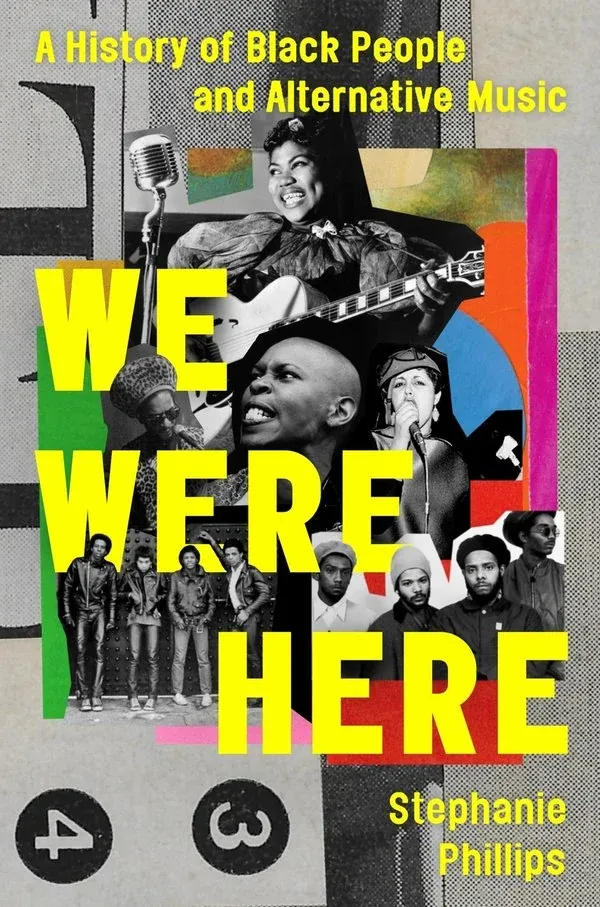
A lot of books have been written about the small pockets of punk rock and its history. You can throw a rock and find out the history of one city’s scene. Some of these people have written books giving perspective to underrepresented voices of these scenes. Yet, the majority of these books in general have overlooked Black artists and their contributions to music that doesn’t suit other people’s idea of the norm. Stephanie Phillips’ We Were Here: A History of Black People and Alternative Music is here to set the record straight.
Phillips’ retelling of rock and roll’s origins goes over the erasure of Black artists from rock music. Phillips explores the debate over how rock and roll started and the convoluted mess that conveniently leaves Black artists out. The artists that influenced Elvis Presley and the Rolling Stones get some time in the sun. Phillips also digs into rock’s history with blues and how prominent women in the genre were in shaping the genre. Not only have Black musicians been erased, but Black women have been erased. Here she invokes people like Ma Rainey and Sister Rosetta Tharpe as two pioneers of rock who often get overlooked despite their influence on the supposed King of Rock and Roll.
There’s a lot of Elvis talk here, and not always in a negative light. Phillip’s book gives a great explanation of the animosity, but also the gray area, along with the perspective that Elvis Presley stole his sound from Black artists. It feels like the blame should be put on the fans for not doing their homework on artists like Presley and the Rolling Stones, who used black influences in their sound. These white musicians and others are listed in the book with quotes that direct their fans to the originals written by Black artists, but fans, as they are, only want what has been put in front of them, even if it’s derivative. A problem that persists today.
Phillips’ vulnerabilities are on display too. Her regret is not recognizing Jimi Hendrix as an important figure despite his placement in the pantheon of mainstream music. Her research into the early Black musicians of the 1970s, like Sly and the Family Stone, The Equals, and Thin Lizzy’s Phil Lynott, isn’t unfounded, but it seems like memories of these bands have a tendency to fade if their importance isn’t highlighted. One of the questions Phillips postulates early in the book is extremely important: “If White people stole rock n roll, why didn’t Black people fight harder for it?”
I would call this filling in the blanks, but it seems that the genre that touted itself as being inclusive for the overlooked kids did that very thing with most of these artists. This book expands on footnotes in a way that shouldn’t be necessary. These bands should have been included all along. While it would have been hard to ignore Bad Brains, more Pure Hell conversations should have taken place way before this. While someone like Poly Styrene didn’t fall through the cracks, thereshouldn’t have to be a book to tell these stories separately.
While it’s commendable that this and other recent books have made these additions, it shouldn’t have taken this long. That being said, Stephanie Phillips’ We Were Here: A History of Black People and Alternative Music is thoroughly engaging and well written. It avoids the doldrums of getting bogged down like some nonfiction books do by weaving a narrative that doesn’t always pass the blame, but zeroes in on where it can be found from different perspectives. Rock and roll is Black music whether people want to accept it or not. Its roots and influences are pointed out in a clear, concise way. Phillips’ journey through rock and roll history by going to each era and pulling back the curtain is a fantastic voyage that is not one to be missed.
Pick up Stephanie Phillips’ We Were Here: A History of Black People and Alternative Music through Da Capo Books or at your local brick-and-mortar store.
Discover more from Dying Scene
Subscribe to get the latest posts sent to your email.