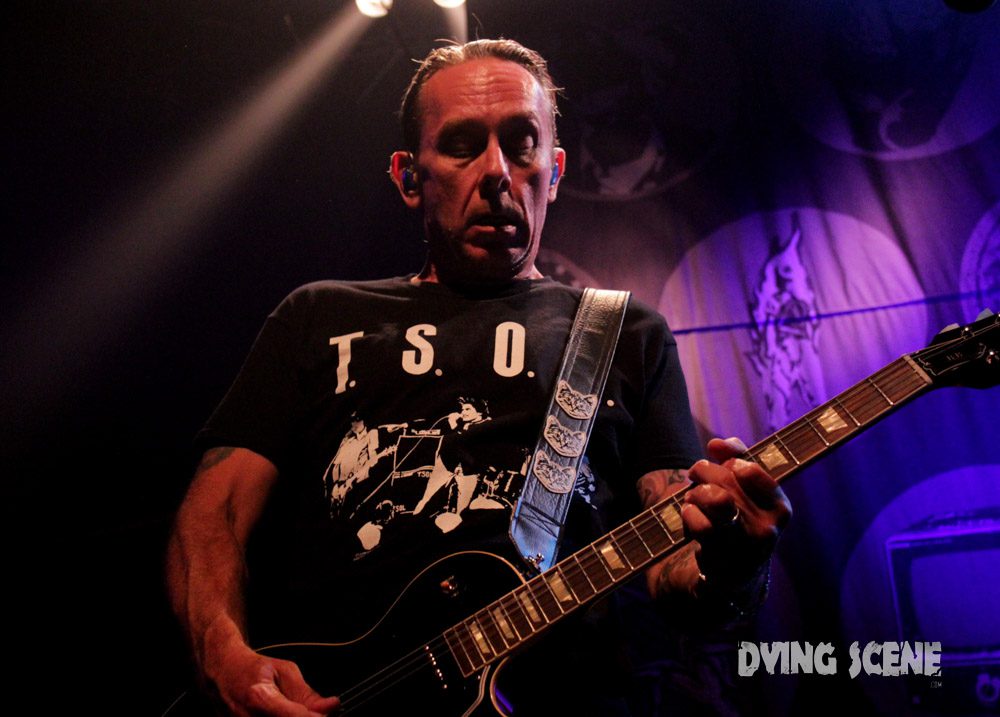
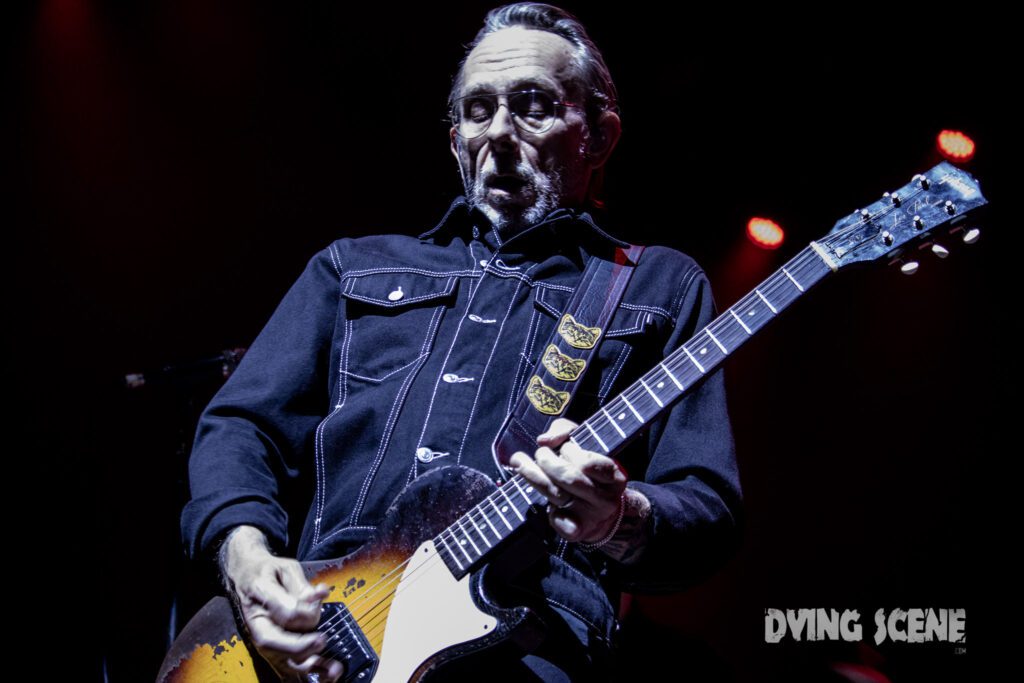
Once upon a time, Brian Baker played bass in Minor Threat. He then played guitar in Minor Threat and then went back to bass again and that band broke up but not before completely changing the musical landscape for the next several generations. In the meantime, Baker went on to play guitar for Samhain for like a fortnight and was in Government Issue for a little longer and then started Dag Nasty and he went kinda metal in Junkyard and he almost went college radio with REM but instead he came back to the punk rock world by joining Bad Religion when Brett Gurewitz left. Brett of course came back, but Baker stuck around and has for three-plus decades now. (He’s also shredded for bands like Fake Names and Beach Rats and more that I’m sure I’m forgetting. Foxhall Stacks maybe?) Anyway, it’s Bad Religion that has afforded Baker the opportunity to travel the world a few times over. For the last fifteen or so of those years, Baker – like the majority of us – has been accompanied by his cell phone. In his case, it’s an iPhone. Not a fancy iPhone, mind you, but whatever one gets the job done; the job usually of sending texts and taking pictures to mark various interesting places and locations and images.
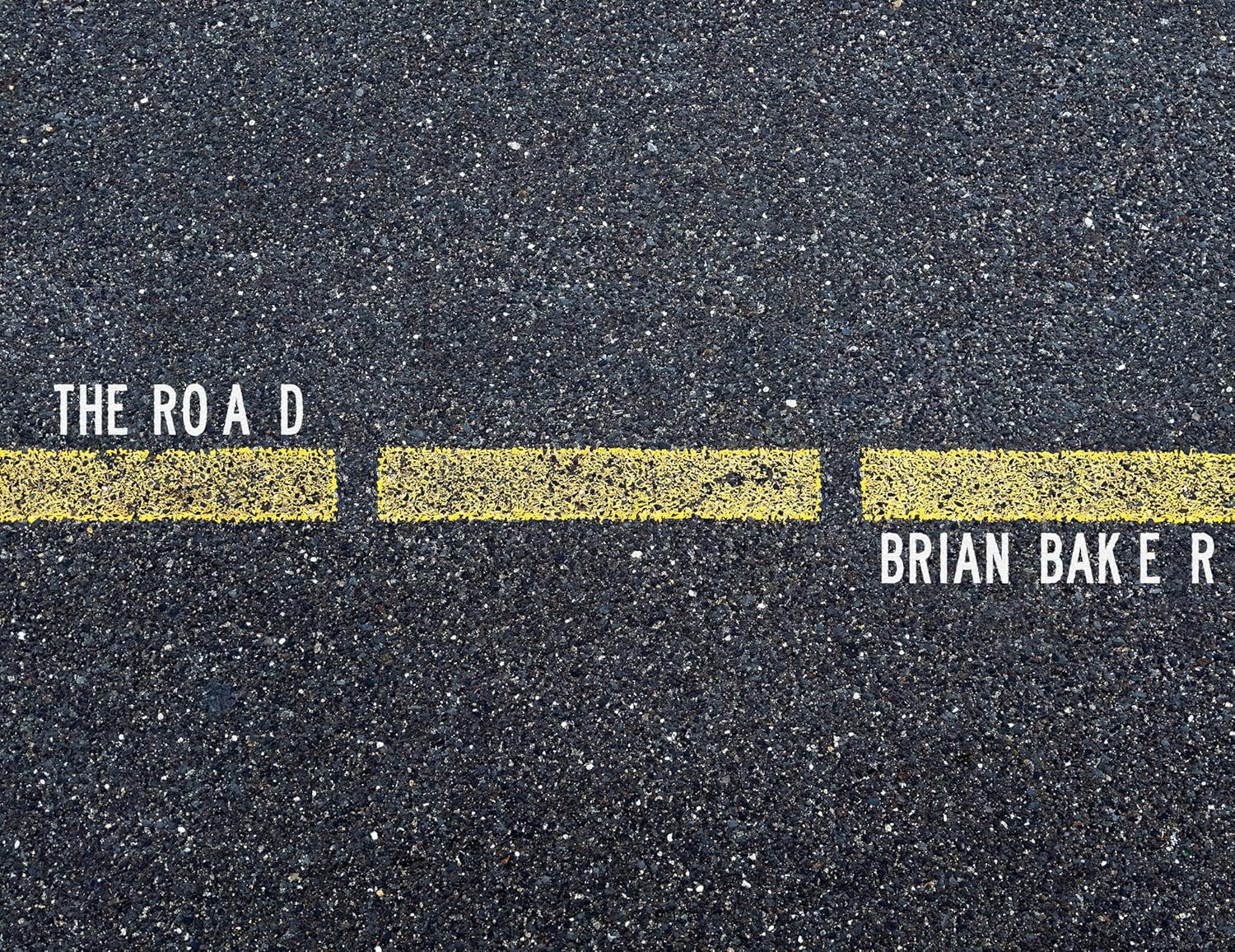
Fast-forward to November 4th of this year and we find ourselves at the release of The Road (Akashic Books). The book is a collection of a hundred or so of the iPhone images Baker has captured over the years, mostly presented without context. This creates the effect of encouraging the viewer to tell their own story as to what that particular sign was saying, or where that particular building is, or why that particular doll’s eyes look so blank and creepy. As Baker tells it, the goal was never even remotely to have a physical, tangible display of his cell phone pictures. At first, the goal wasn’t even to share them outside the small circle that was their intended recipients. “Initially, I wasn’t even ‘taking pictures,” he explains. “I was just sending a visual text basically, because it’s easier to sent a picture than a text. Half (of this book) is so completely uncontrived that it’s just pictures I was taking to text to someone to tell them where I am. “Where are you?” “Oh, I’m here at the graveyard.” Twenty years later, you go, “well that was a pretty cool picture,” when I was really just trying to tell (Bad Religion bassist Jay) Bentley where I was.”
Eventually, Baker did start to pepper some of his interesting travel pictures on his Instagram page, sprinkled in amongst the Bad Religion/Fake Names/Beach Rats promo flyers and New York Mets fanposts and his delightful “One Guitar In One Minute” series where he – you guessed it – tells the story of one of his guitars in one minute (give or take). It took the repeated insistence of his wife, Victoria, to get Baker to even consider that people might enjoy and even buy a collection of his pictures in book form. It turns out there are more than a few similarities between the way this book came together and the way the first Minor Threat foray into recorded music came to be. “I know that there would have been no Minor Threat records if we hadn’t run into a guy named Don Zientara, who had built his own studio and knew how to record music…sort of,” states Baker. Minor Threat’s Ian Mackaye and Jeff Turner had also famously already started the now iconic Dischord Records, so they already had a label and distribution in house.
And so sure, Baker’s wife was supportive, sure, but as the co-founder and director of Transformer, a long-running visual arts non-profit in Washington DC, Victoria also knows more than a thing or two about the subject matter. She also knew some people who could help make it happen. Enter Jennifer Sakai, book designer and Board President at Transformer. “My wife had said “Hey, Jennifer, you know, you should check out Brian’s Instagram page.” And Jennifer, on her own, made a mock-up just using pictures from my Instagram page and emailed it to me. And I was like, “whoa!” And this is the early stages. It’s not what you’re holding now. But it was just…I had never even thought about it in that way. And most of those pictures aren’t in the finished product, she was using them as placeholders. And I was like, “Jesus, that’s so cool.”
When it came time to actually commit to producing a physical book and distributing it to the world, Baker also didn’t have to look very far; his former Washington DC elementary schoolmate and current Fake Names bandmate/bassist Johnny Temple (Girls Against Boys, etc.) also happens to be the same Johnny Temple who founded Brooklyn-based Akashic Books in the late 1990s. “I showed it to him, and I said, “Do you think this is something you’d want to put out?” And he went, “absolutely. I’d love to put it out,” Baker explains. “And that was it. That’s the contract. It’s very, you know, it’s very punk. Akashic is kind of very Dischord-y. They just do what they feel like. There’s no contract, really. It’s just like, “we’ll split the profits 50/50 if there are any, and most of the time there aren’t.”
Once the idea to create a book had solidified, Baker et al got to work determining which photos would actually make the cut for the project. To make life easier, a couple of guardrails were put in place: they had to be cell phone pictures, and they had to be pictures that Baker himself actually took. You don’t have to extend beyond the very first image in the book to see how sometimes that meant there had to be a little creativity involved. “So the first picture in the book is a picture I took in 1975 with a Kodak camera that I’d have to look up,” (editor’s note: we think it was an Instamatic, which is not unlike yours truly’s own first camera that I snuck into the 1997 Warped Tour) he explains. “And I took that picture of my first guitar (a 1965 Epiphone Olympic if you’re keeping score at home) and amp…and then of course, I took a picture of that picture with my iPhone.”
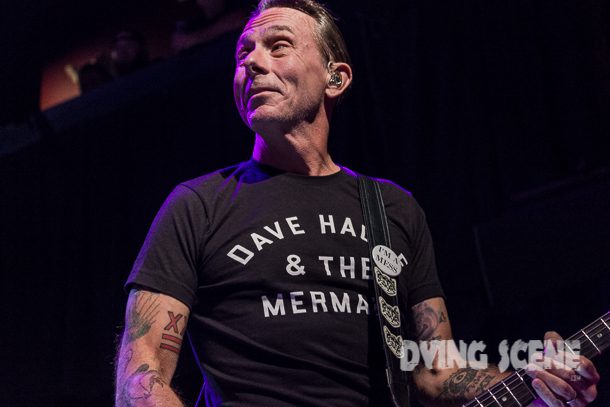
Baker and I talked at length about the how the path from becoming a punk rock guitar player first and eventually a bona fide punk rock musician runs parallel to the path that runs between an amateur photo taker and an avid photography enthusiast (if not an actual bona fide photographer). “I have no technical knowledge. And I never really never aspired to any. It’s just, you know, it’s just kind of an accident. I have to say much like it’s punk rock,” says Baker. “It’s very punk. Like, I was accidentally in a punk band. I didn’t play bass until I joined (Minor Threat) as a bass player.” Philosophically, it’s similar to the approach he’s taken with photography.
Lest you expect that there’ll be a “One Camera In One Minute” series to come someday, Baker assures us that he is not, in fact a camera guy. “I aspired to be a camera guy,” he explains. “I remember that (first) camera and I found maybe 50 pictures that I took from ages nine through 12 with that camera, but like everything, it just didn’t stick because it was this whole “I’m going to go bring the camera with me and take pictures” thing, and that’s a whole different thing than what this book is.” This was followed by another attempt twenty-odd years later, around the time of joining Bad Religion. “Greg Graffin has been a photographer, most of his life and and is he’s a great photographer. He does a lot of landscape stuff. And he has really nice cameras. He bought me my first – and only – real camera. He bought me a Pentax of some stripe, you know, a professional or semi professional grade, 35 millimeter camera and a couple of lenses when I joined Bad Religion. I thought it was nice, because it’s the first time I’m gonna have a lot of things to take pictures of, because I’m now in this band that is traveling the world on a level that I had never been on. And again, I made a good effort. But I, you know, after about a year, I just didn’t take any more pictures.”
Something did start to change a few years ago, after Baker had gotten into the habit of taking and posting pictures on social media. A few years before the book idea was generated, Baker began the habit of not walking by things that were calling to be photographed. “Something I did up until about 2022, that I would see something cool, and I wouldn’t bother to stop walking and take my phone out of my pocket and take a picture of it. And then sometimes something would be so good, I’d walk three blocks and go, “you really have to go back and take a picture of that,” of whatever the fuck it was. And I realized that this was a healthy thing to do. And whether it’s a part of dealing with my OCD, or spending time during the day, or whatever, I started to consciously not walk by photographs. Doesn’t mean they were good. It’s just never letting opportunities go away.“
To try to define Baker’s eye for photography – and his ear for writing guitar hooks – is to strip some of the magic away from the process itself. Whether they’re pictures of guitars or road signs or gravestones or old plaster masks, there’s something compelling in each and every photo chosen for the book. They tell a story, sure, although what that story is depends largely on the viewer. You can check out our full interview below, where we talk a lot more about the comparisons between punk rock guitar playing and taking compelling pictures, and even more about how the book came together. You can also still-pre-order the book through Akashic (or most places you find books), and if you’re lucky, you can catch Baker in a short run of book talks with Johnny Temple in Ridgewood, NJ on 11/3, with Walter Schreifels at Rough Trade Below on 11/5, with Ian MacKaye at the MLK Memorial Library in DC on 11/9, with Tony Pence at the Enoch Pratt Free Library in Baltimore on 11/10, and at the Asbury Book Cooperative in Asbury Park on 11/15. Who knows…maybe there’ll be a Boston area date down the road!
**Editor’s Note: The following transcript was edited and condensed for content and clarity’s sake. Yes, really***
Dying Scene (Jay Stone): So thank you for doing this. I have said many times here and other places and to most people that have asked ever that Bad Religion and Minor Threat were definitely my gateway drugs into the world of punk rock. And Bad Religion’s Gray Race tour was my first punk rock show as a wee little high schooler. And so…this has all been your fault.
Brian Baker: Guilty.
I have said that to you. I’ve said it to Jay (Bentley), I have said it to Greg (Graffin); like anybody that asked that Bad Religion and Minor Threat were my gateway drugs into whatever was punk rock. That is when everything in my head went, “oh, this is different. And this is my thing. This is not my dad’s music. This is not like my generation’s version of my dad’s music. This is like this is my thing. These are my people.” It’s been that way for however many years now. So I genuinely appreciate getting to talk to you guys specifically.
Well thank you! It’s been, god, 30 years now? Something like that? 31?
Yeah. My first punk rock show was the Gray Race tour in Boston. So that was April of ’96.
April ’96.
Okay, so almost 30 years ago, which is bananas. Bananas. And it’s really cool to get to talk to you about something other than guitar playing. Because this is I really enjoyed this book. I will hold it up. Not that anybody’s going to see this. I have all my notes in the book already. Like, I love it. This is really fun. It’s a really fun book.
Great. You know, like so many things, I never really set out like “I’m gonna make a book,” you know? It just kind of happened. And the way it turned out, I’m so pleased with it. I don’t really have a rap for this book, because I’m not a book person. But what I know is that there would have been no Minor Threat records if we hadn’t run into a guy named Don Zientara, who had built his own studio and knew how to record music…sort of. (*both laugh*) He had this expertise that was completely foreign to us. And in much like with this book, Jennifer Sakai, who is the woman who put it made a book out of my pictures. And she established this narrative that goes through the book. And it was her skill. I was like, “well, who would want to see this?” Because a lot of these pictures are just from my phone, or they’re so low resolution, they would never work. And it didn’t occur to me that someone who does this professionally would be like, “Oh, no, no, I can make this stuff look great! And we can do this kind of paper… She just turned it from, you know, kind of a weird file of stuff into something that’s really cool to hold and look through. And it kind of has a story. And I’m just so grateful, and I could not have done it if it were not for her.
You’ve been touring the world essentially for four or five decades. I’ve known you as a gear guy, guitar-wise and amp-wise. Were you ever like the camera guy on the road? Or did this really just start like with the iPhone?
I aspired to be a camera guy. And the first picture in the book, the first picture in the book is my first way to skirt the “I took every picture on my phone” rule. Okay, so the first picture in the book is a picture I took in 1975 with a Kodak camera that I’d have to look up. It’s not a Brownie, but it was maybe called an Instamatic? I think if your parents were getting you like a very cheap starter camera. Like I don’t even think it had a focus. I think it was just a, you know, pinhole, you know, for the for lack of a better term. And I took that picture of my first guitar and amp. And then of course, I took a picture of that picture with my iPhone…
Oh, I wondered about that.
Yeah, yeah. With my iPhone three or whatever it was. So it qualified as right from my phone. So I remember that camera and I found maybe 50 pictures that I took from ages nine through 12 with that camera, but like everything, it just didn’t stick because it was this whole “I’m going to go bring the camera with me and take pictures” thing, and that’s a whole different thing than what this book is. This book, half of it is so completely uncontrived that it’s just pictures I was taking to text to someone to tell them where I am.
Yeah, right.
“Where are you?” “Oh, I’m here at the graveyard.” And then 20 years later, you go, “well, that was a pretty cool picture.” I was just trying to tell Bentley where I was. (*both laugh*)
Right.
So, so and with the camera stuff, I had tried in, in Junkyard, I had a video camera that I thought, okay, “well, if I have a video camera, I’ll use it more” or something. And again, like now I’ve got, you know, three 90-minute cassettes of just nothing really important. Like it just became a chore to use the tool. And Greg Graffin…when I joined Bad Religion, Greg Graffin has been a photographer, most of his life and he’s a great photographer. He does a lot of landscape stuff. And he has really nice cameras. He bought me my first – and only – real camera. He bought me a Pentax of some stripe, you know, a professional or semi professional grade, 35 millimeter camera and a couple of lenses when I joined Bad Religion, and I think it was also nice, because it’s the first time I’m gonna have a lot of things to take pictures of, because I’m now in this band that is traveling the world on a level that I had never been on. And again, I made a good effort. But I, you know, after about a year, I just didn’t take any more pictures. And I think it just never became like musical equipment, where I got passionate about the equipment itself, or kept developing. It just never took. And it was only when I had a camera on me at all times, that with that convenience, I started to take pictures of things. And as I just said, like, and initially, I wasn’t even taking pictures, I was, I was just sending, it was like a, you know, a visual text, basically, because it’s easier to send a picture than a text.
So at some level, it seems like I have wrangled with this myself over the years, as somebody who’s taken 10s of 1000s of pictures at concerts, I always shy away from calling myself a photographer, because I think that a photographer means two things: A)that you know what you’re doing; and B) that it’s almost a professional thing, right? Like, like, like, you’re booking, I don’t know, it may and I’ve had people tell me, “No, you’re a photographer.” But like, I have always viewed it as a hobby. I don’t get paid to be a concert photographer, or whatever. I do it because I love it. And because I’m awkward, so I need to something to do with my hands. (*laughs*)
But the terminology is the same as the difference between saying that you’re a musician or a guitar player.
Yeah, right!
And like, I was a guitar player for a very long time. I’ve only been a musician recently. (*both laugh*) But I understand exactly. I don’t think of myself as a photographer. Pictures are great, I love good photography. It’s fun. Photography is great. But I’m yeah, I don’t know, maybe an enthusiast or practitioner. Not, you know, an actual photographer.
Yeah. And so I wondered if you had ever gotten more into it – I don’t want to say professionally – but like learning photography, learning f-stops.
No!!
I have had people try to teach me that, and I always say “you might as well be speaking Klingon. It does not resonate with me. I don’t understand.”
Yeah, I don’t have any of that. I have no technical knowledge. And I never really never aspired to any. It’s just, you know, it’s just kind of an accident. I have to say much like it’s punk rock.
I was just gonna say it’s punk rock.
Yeah, it’s very punk because it’s the same thing…like, I was accidentally in a punk band. I didn’t, you know, I didn’t play bass before in my life. Until I joined a band as a bass player. I’ve never played one before.
Right!
So, you know, why can’t I be a photographer?
Right, exactly. When did you realize that not only do I have a folder of 20,000 pictures in it, or whatever, but like, how does that morph into becoming an actual tangible thing?
Sure!
Well, it was a couple of things. My wife runs a visual arts nonprofit, and with a gallery space in DC called Transformer. And basically, she has been a curator and on the hunt for emerging artists. She has this great eye. And that’s what she does. She’s an art person. And she had told me for a long time, “you know, I think people would buy your pictures. I think that people that these are you have great photographs.” And I went from “you’re out of your mind” to “Yeah, but who cares, you know? That’s what Instagram is for.” I just never took it very seriously. But she was very encouraging. And then I think the real, the real linchpin here was the combination of things. Jennifer Sakai, who, as I said, was the book designer, she is on the board of directors at my wife’s nonprofit. So my wife, you know, had said, “Hey, Jennifer, you know, you should check out Brian’s Instagram page.” And Jennifer, on her own, made a mock-up just using pictures from my Instagram page and emailed it to me. And I was like, “whoa!” And this is the early stages. It’s not what you’re holding now. But it was just…I had never even thought about it in that way. And most of those pictures aren’t in the finished product, she was using them as placeholders. And I was like, “Jesus, that’s so cool.” At this point, this is maybe two or three years ago, where I’m like, kind of a grown-up now. (*both laugh*) I’m a man in his 50s. It’s like, “why the fuck not? Why not?” And then the convenience and the joy is that the bass player in my band Fake Names is Johnny Temple, and he is the founder of Akashic, the publishing company. And he has put out hundreds of books and he has put out books of photographs.
I showed it to him, and I said, “Do you think this is something you’d want to put out?” And he went, “absolutely. I’d love to put it out.” And that was it. That’s the contract. It’s very, you know, it’s very punk. Akashic is kind of very Dischord-y. They just do what they feel like. There’s no contract, really. It’s just like, “we’ll split the profits 50/50 if there are any, and most of the time there aren’t.” I’ve learned that a lot of times, and John doesn’t give a shit because he loves books. And it was just perfect , it just all happened like that. And I’m like, “okay, well, now I’ve gone in two weeks from not having anything to this potential project.” I just leaned into it. And I was like, “yeah, let’s do it. It’d be fun.”
I will say as a plug for Akashic, they have been wonderful to work with, for this and for a variety of other things. We have a contributor, Forrest, who’s based out in Orange County. And he’s a book guy. And so he does all sorts of book reviews and interviews, and I think he’s lined a few things up with Akashic. They’re wonderful to work with. That’s a good group.
Yeah, they’re awesome. I could I could definitely do worse.
So then does it become overwhelming to narrow down what you actually had in, let’s say, the folder on your iPhones? And like, what makes a good picture? And what makes a picture make the cut for the book?
Well, the first thing I had to do is make sure that everything was something I actually took, and wasn’t a screenshot, or forwarded to me from somebody else. All of this stuff is cell phone, but like, a lot of it didn’t have tracers on it. The older stuff in the book, I can’t just open it up and say, “see, November 2009, iPhone 3.” It doesn’t have any language on it at all, so I had to do enough research to make sure that nothing in the book is something I didn’t actually take myself. So that was the fundamental part. I thought “I have to have some guardrail here. So it has to be from when I first got a camera phone,” which happened to be that iPhone. I wasn’t brand loyal. It just was, that’s the one I had. And so once that was done, I recognized that Jennifer knew what the fuck she was doing. And there were photos in there that I may not have picked. But when I saw the way she was using them to talk, to create a narrative… I did not initially understand the flow of this entire piece, I was still looking at “oh, cool picture of me with Bruce Dickinson! Oh, wait, I didn’t take that.” I mean, all of that stuff. And so, I didn’t just nitpick. I mean, I just made some swaps after I started to really understand her vision. I swapped some things out with that in mind. And I think one of the benefits of this is because it’s stuff I took, it isn’t what what, you know, “hey, it’s the rock book from Brian Baker!”
Totally.
“It’s like, it’s not, you know, “here’s an enormous crowd in Barcelona! Here’s me and Axl Rose! Here’s me and Dave Grohl!” It’s none of that, because I didn’t do any of it. The people who do show up in it with me is because I’m holding the camera.
I was gonna say there are very few selfies, there are a few pictures of you. There’s the one on the bicycle, but there are very few other selfies. So it’s a book by Brian Baker on the road, but it’s not just a book of you.
I do recall cutting down on some of the selfies. I didn’t want them to be too many of them. But I also understood what Jennifer did. The way she used them was cool. And also, I mean, if you have a picture of yourself and Vinny Stigma, that’s as good as the picture that I have of me and Vinny Stigma…(*both laugh*) And by “good” I mean how cool Stigma looks…(*both laugh*) You put it in the book. It’s fucking Stigma!
Right! Right!
I have one of Roger (Miret) too. I can’t wait till book two because I have got a shot from that same day with Roger that’s awesome too, but I couldn’t, you know, I couldn’t go full on East Coast. I have to respect the whole country.
I have taken only a handful of selfies with music people over the years because I like to just be in the background or whatever. But one of my favorite pictures …and I printed it out for this occasion, and it would be in my book if I ever did a book… is you and I in Providence, Rhode Island at an outdoor festival in 2019. I say that we were wearing the same shoes and said “oh, can we take a picture?”
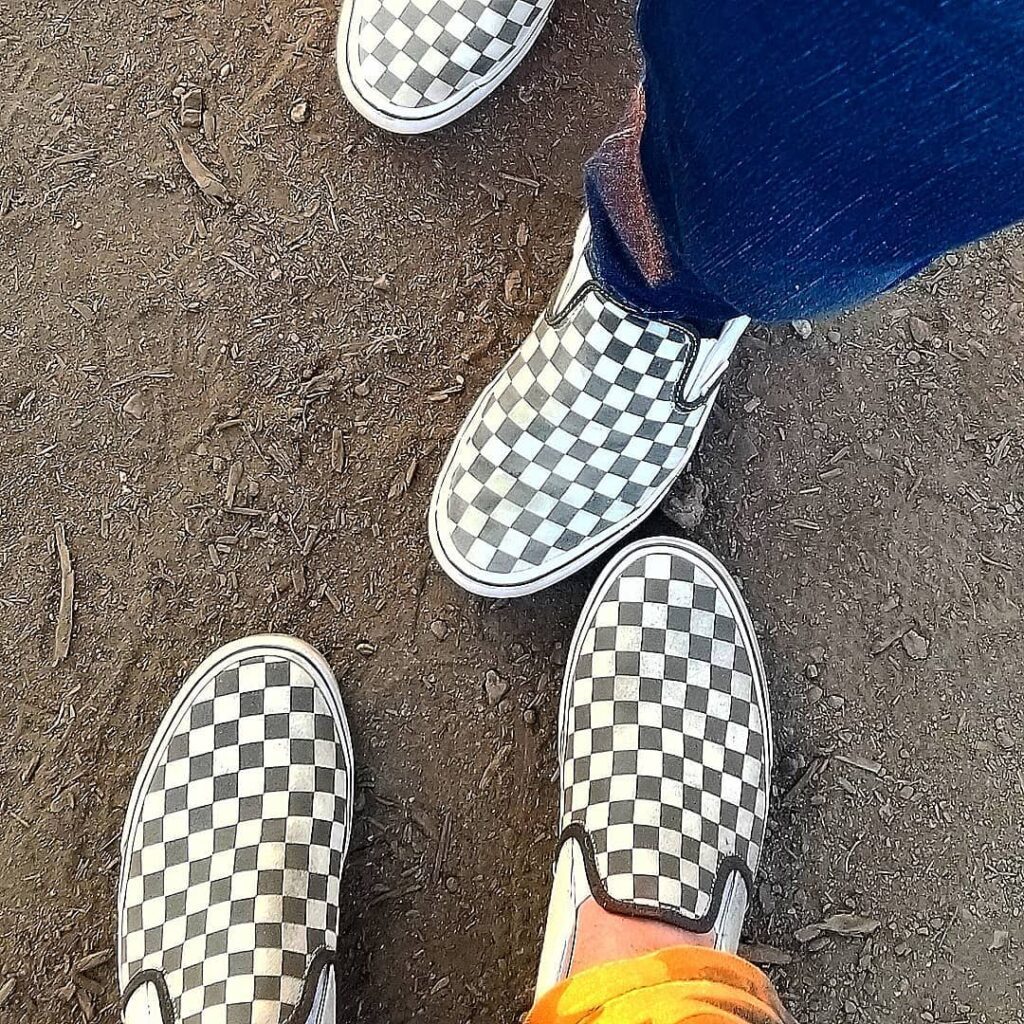
I remember this!
It’s one of my favorite pictures. I love it. And especially because three people know what it is, you, me and my wife (*both laugh*).
Yeah, that’s great. That would have made it into the book for sure.
And like, to me, it tells a story. And it’s a story that three people remember. I love it. Yeah, that will go in the book someday, which…
Well I know a guy with a publishing house… (*both laugh*)
Yeah, it just seems so daunting. Like trying to wrap my head around you going through pictures and figuring out “yes, no, maybe; yes, no, maybe.” It seems overwhelming to me. And to me, that would be enough to be like, “you know, I don’t want to do it.” Did you have those moments, or was it just like, full steam ahead once you did it?
Well, I think I’m not going through this because I hadn’t been taking pictures purposely, really, for a very long time. I really didn’t have to sort through 20,000 images. Let’s face it, I probably had to sort through 2000. And half of them immediately, were not going to be right, because they just weren’t. They didn’t even fit the criteria. So it wasn’t that big a deal. I also just have favorites. I don’t know. I mean, I guess that I’ve been told by people who have gotten the book who are like “Oh, I didn’t know you took pictures; you have a really good eye.” And I was like, “Well, I don’t even know what that means. But thank you.” And I think it just means that I look at a picture and go, I like that one better. And that’s it. And I just say that one’s better. I don’t know why it’s better. I don’t know what makes it better. Again, I’m just a, you know, just a kid with a phone, to oversimplify it a little. It’s just a feeling I get. It’s the same feeling when I’m writing a Dag Nasty song. It’s like you have three riffs…“does this one work? Is this good? No, but this one’s good. Well, that’s gonna be the riff, and that’s just how it is.”
Yeah. And I appreciate that. I do think that you have a good eye. And yet I’ve never necessarily known how to quantify what a good eye is. And I think that when you try to start quantifying what a good eye is, like, you lose some of the magic.
So maybe this all links to playing guitar, and maybe punk guitar specifically, because there’s so little structure involved with it. I’m sure there’s more expressive, ruleless versions of guitar than within the punk genre, because it does tend to have its own guardrails, but nevertheless, being a self-taught or not trained musician, and yet this stuff comes out. I mean, like, you think anyone told Bob Mould how to play guitar? I don’t think so. But how unbelievably beautiful and Bob Mould his guitar playing is, it’s just immediately identifiable. That’s just a thing; an intangible. And I think this is what an eye might be with a photographer. It’s just something. It just happens. You just know.
Are all of these pictures from prior to when you made the decision to put the book out? Or were any of these pictures taken let’s say since two years ago or whatever?
That’s a great question. And should actually prepare because I’m going to do a number of these conversations. The only one I’m aware of – and it’s because I’ve had to talk about it – is there is a picture of a stack of Les Paul Juniors. I know that I took that because I knew that I was doing a book. It’s a picture of Johnny Two Bags and my and Mike Dimkich’s guitars from the Bad Religion/Social Distortion tour from the summer of 2024.
I took a lot of pictures of those guitars on stage.
Right. And so I knew I had this book in in the works. I don’t remember exactly what the status was, but I know that when I when I found out that we were going to tour with Social Distortion, independent of the book, I’m like, “Oh, my God, I finally get to take a picture of all these guitars together.” Because I’m great friends with Johnny, and he has these beautiful instruments. It’s like, this is gonna be so cool. We’re gonna have all these vintage guitars together that are also punk vintage; like fucked up vintage guitars. And I must have taken 30 pictures that wound up being that. I mean, it was like the third day of the tour. And (in the picture) these guitars are all stacked up on a shipping pallet. There was a shipping pallet like by where the trucks were loading. And I’m like, “Oh, that would be really cool.” And I’m just like, “let’s go.” I found Johnny and Mike and was like, “grab your guitars and just go” and I took that picture. The inside of one of the semis was empty, because they loaded all the gear out of it, and so I kind of made it look like the guitars were just sort of thrown down in the semi. I did a lot of different setups, maybe three or four different setups, and that’s the one I wound up keeping. And I just I think it’s my favorite picture in the book. And also, because it’s so cool. It’s Johnny and Mike.
Yeah, it’s awesome. I mean, it makes me nervous as a pretend guitar aficionado, like, “Oh, that makes me nervous. That’s so much so much awesome gear.”
But they’re just tools. And also, it’s not like I threw them there. I gently put them down.
No but it looks like they’re just toothpicks that fell on the floor. But I did wonder that if knowing that there’s a book coming, I’m assuming you have still taken pictures, even though all of these pictures were submitted, but does that change what you take pictures of?
No.
And it hasn’t changed the way your brain works that way?
No, it hasn’t. But because I think that I had made a change, and this is definitely prior…for the purposes of this discussion, let’s just say that I knew that there was going to be a book out in the beginning of 2024. I don’t recall, but let’s just say that that’s when I finally started to talk about doing it. Well, I know that for a couple of years prior to that, I consciously had started making myself not walk by photographs. And this is something I did up until about 2022, that I would see something cool, and I wouldn’t bother to stop walking and take my phone out of my pocket and take a picture of it. And then sometimes something would be so good, I’d walk three blocks and go, “you really have to go back and take a picture of that,” of whatever the fuck it was. And I realized that this was a healthy thing to do. And whether it’s a part of just, you know, dealing with my OCD, or spending time during the day, or whatever, I started to consciously not walk by photographs. Doesn’t mean they were good. It’s just never letting opportunities go away. And so that was definitely happening long before Jennifer made a mock-up of my Instagram page. But it wasn’t for my Instagram page. I’ve never really thought of that as like…I’m not a social media maven. I don’t have a brand. That page has never been like, “this is my ticket out of here, man!” (*both laugh*) Like, “Hey, Graffin, man, I don’t need your fancy words!” (*both laugh*) That was always just sort of like a communication device. Again, I just never really took it seriously. So I wasn’t amassing stuff for public consumption is what I’m saying. I just took pictures anyway. But for a few years prior to deciding to do this book, I was trying to not miss anything for whatever that’s worth.
Maybe that’s where the switch flips from “somebody who takes pictures” to “somebody who’s a photographer,” right?
Possibly.
Maybe that decision is like the circuitry rewiring.
It could be. And that’s true. Maybe it’s when you’re playing guitar and then one day you start to make up your own songs.
Yeah, right.
And you’re like, “oh, I should remember that riff.” I mean, I just see so many parallels in the way I learned to be a guitar player and then a musician with this photography thing. With photography, I’m still in the stage where I’m like in the band after Minor Threat (*both laugh*). Like I’m in like Government Issue as a photographer. Like maybe I’m going to be in Samhain for two weeks right about now, you know, in my personal timeline. (*both laugh*)
This hasn’t made you want to invest in like a fancy Sony mirrorless camera to do another version of this?
I don’t know. You know, I have no desire to get another camera or another phone. And my phone, my current phone, is the iPhone 13 Mini because they’re so easy. And I know now that it’s old enough where it’s starting to like do weird things and you can’t buy them anymore. Again, I’m not a phone person, so I’ve never been like “the next phone’s out!” It’s like I get a new one when the old one, when this technology will no longer let me us it.
You and me both.
Yeah, exactly. So I know the next one I get, the camera is going to be way better. But since I don’t really manipulate, like I don’t know what that means. I’m not going out to look for a film camera or a, you know, a good digital camera. Like I can’t even… I can’t.
It’s too much, as somebody who pretends to be a photographer. It’s too much.
It’s too much. And I’d never use it, you know?
Yeah. And then it becomes a thing, and then you’re conscious about it.
Here’s how little I’m helping myself as a photographer…This is great. I went to a Mets game with Glen E. Friedman, who I’ve known forever, about just before there was a physical copy of the book. And I went to the Mets game with Glen. We watched a baseball game. It takes a long time to watch a baseball game.
Less than it used to. But yes, it does.
Right. And I was going home. I think we blew it out. We were winning and I left in probably like the eighth inning. And on the way home, I realized that not only had I not mentioned to Glen that I had made a photo book, but I had not asked Glenn about taking pictures. I was sitting next to my favorite punk photographer…(*both laugh*)…Who is insanely talented. I didn’t ask him one question. (*both laugh*) I mean, next time I hang out with Glenn, I’m going to pepper him with shit.. But that’s how detached I am from being like a quote photographer is I had this incredible opportunity. It’s like going to dinner with Eddie Van Halen. “And what strings do you use?” Like, I just didn’t. I was so dumb. Not going to miss that again.
I was going to say, I wonder if he appreciates that, because I’m sure everybody talks to him about being a photographer.
Yeah, but he’s cool.
I think if you’re buddies…
Yeah. Yeah. I think he’d be cool. I wish I told him that I had a book. I haven’t even sent him one, actually. I should probably.
So there are a couple of pictures in the book that I wanted to talk about. One of my favorites, because I have almost an identical picture, is Bruce’s ’52 Nocaster or whatever.
Yeah. Yeah.
In Freehold. I love that. And I didn’t know it was there the time that I saw it. And as a person who historically has gone to Asbury Park for music and like whose parents are still dyed-in-the-wool Springsteen fans, I didn’t know that guitar was there. And I was like, oh, my God.
And I didn’t know it was there. And I’d lived here for probably four years. And then I found out that it’s on 10th Avenue.
Yeah.
And it’s like “oh, of course it is. The Freeze Out.”
Right. Yeah.
Because I’m not really very versed in Springsteen. But of course, now that I’ve lived in…well, I live in Neptune, but we just call Asbury Park.
Right, it’s close enough.
It’s kind of like you being in Boston, you know?
Exactly.
So being in Asbury Park for eight years, of course, I feel that I am very remiss in my duties; my Springsteen knowledge. But I just haven’t, you know…saxophones, you know? (*both laugh*) I like punk.
I get it. I get it. To me, it was the synthesizer, the keys, like in the Born In The USA era. I did this podcast recently where they have you pick four records from essentially each quarter of your life. What was the defining record from that quarter? And for me, the first quarter of my life, the first I called it the first 11 years, was Born In The USA, because that album was on all the time in my house. My parents went to Giant Stadium to see Springsteen on that tour. It was huge. And I have tried to listen to it in years since and I don’t really like it at all. I don’t like production on it, I don’t like the keyboard. “Born In The USA” would be such a good song if it didn’t have that ham-fisted (*hums synth line*) in it. Like, it’s so I can’t listen to it.
Good lyrics.
Sure.
You know, I mean, I just look at it that way. Like, I can’t really listen to it either. But I get why it’s good. And I’m glad it’s out there. It’s like Dylan for me, or probably Geddy Lee for people, except for, you know, maybe I wouldn’t relate. (*both laugh*)
I love Geddy Lee myself.
Yeah, you know what I mean? But (Bruce) is a very nice man, and he does great stuff for the community. And, you know, he’s not taking any shit. I like that, too.
I love it. Yeah, I love it. There are a lot of pictures in here of busts of…
Right! I collect busts.
Oh, really?
I collect busts, but I didn’t realize I collected busts until I just happened to have a lot of them. And now I know I collect them. And that means that, you know, with like the cutoff is like 100 bucks. I just think they’re cool. I don’t know. Maybe it’s because of DC, growing up in DC, that kind of, you know, retro Greco thing. I mean, looking at right now talking to you, I have a bust of Teddy Roosevelt.
Oh, funny.
Sitting right next to my computer. And I mean, you could do worse for presidents.
Yeah, absolutely.
He had something going on, but he’s like many of them, a product of their time. (*both laugh*) But yeah, and so there are a lot of pictures of graveyards and busts and stuff. I just my eyes just love it. I just love them.
Yeah, there’s something compelling about a lot of them. And there’s one, I didn’t put a sticky on that one, but it almost looks like somebody’s death mask, right? That had been painted some and I forget, I feel like it’s towards the beginning. So I’ll flip and talk and stall…but I don’t think it was a death mask, but it’s sort of like that. I’ve always been sort of drawn to that sort of imagery myself.
That mask that you’re talking about is made of plaster. I have had that piece, probably 30 or 40 years. I bought it at a thrift store or yard sale. And I don’t know what its purpose was, you know, like theater kids practice or something. It was just some… I don’t know what it was. Obviously amateur. I don’t think it’s supposed to be artwork. I think it might have been from some kind of production.
It’s like vaguely John Waters looking.
Yeah! I just found it and I’ve just kind of carted around, you know? It used to be in like my room at the group house and eventually made it all the way to my grown-up house in the garage. Does it have glasses on it? Because …
I don’t feel like it does. No, it is not wearing glasses.
Okay, in real life it does, because the glasses that are on it are my old glasses from Minor Threat.
Oh, funny! So the glasses aren’t supposed to go with it.
No.
That’s funny. Yeah, I like that. I like, I like your eye. And I like that all these pictures were taken just as a means of capturing images that were cool to you without the point of a book behind it. Because it really seems like authentic and punk rock that way. This is it’s really fun to go back and look at. Yeah, I don’t always say that about photography books.
Yeah, well, great. I’m really glad. And I kind of agree with you. It’s like, I just don’t. I don’t know if I’m allowed to say it. But it is authentic in punk rock. Because it’s just completely not contrived. And it was for no purpose other than to exist. Yeah it’s just cool, and I’m so grateful that I had some friends who could help me and make it into something because, again, there’d be none of these early punk records if there weren’t people who were like, “hey, I’m interested in recording music.” You know, where would people be?
Right! Thank you for doing this.
My pleasure. My pleasure.
I have seen the list of people that you’re chatting with. Walt and Ian and Damian and Brett Gurewitz, and to pretend I’m even tangentially in that class is good for my ego.
So you’re not just tangentially in that class, you’re in that class!
Discover more from Dying Scene
Subscribe to get the latest posts sent to your email.