
If I can be allowed a moment of self-indulgence before we begin this story, allow me to peel back the curtain on the process of creating a feature story here at Dying Scene HQ. Most times when you book an interview – even for a fly-by-the-seat-of-your-pants operation like Dying Scene – things tend to go generally according to plan, occasional technical glitches notwithstanding. You pick your preferred method of communication, find a place where you’re relatively free of interruptions, make the scheduled call, exchange pleasantries, and get down to business, largely sticking to your predetermined bullet point questions, leaving room for the conversation to wanted and twist and turn in ways you maybe didn’t foresee along the way. Then, you exchange thank yous and joke about how long it’s going to take to transcribe and you wrap it up and begin work on the actual story. But then there are those times that the plan shifts on you right from the jump and it turns into something cool and wonderful in ways you hadn’t expected and makes the story better than you’d hoped and it was no fault of your own. Such was the story of the trip we took here…
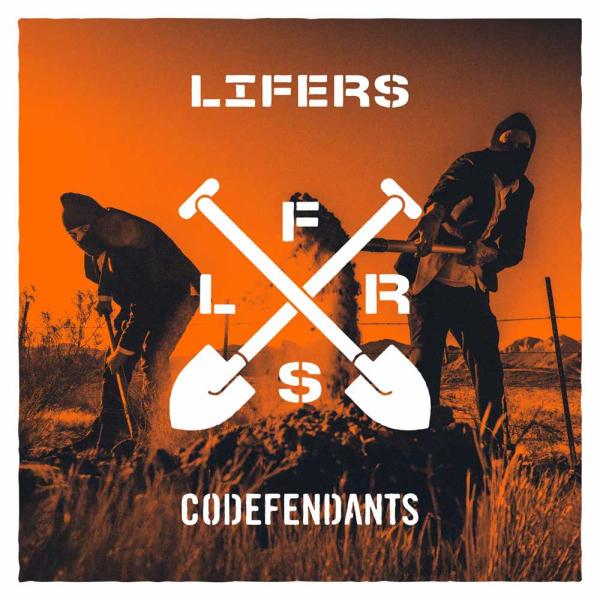
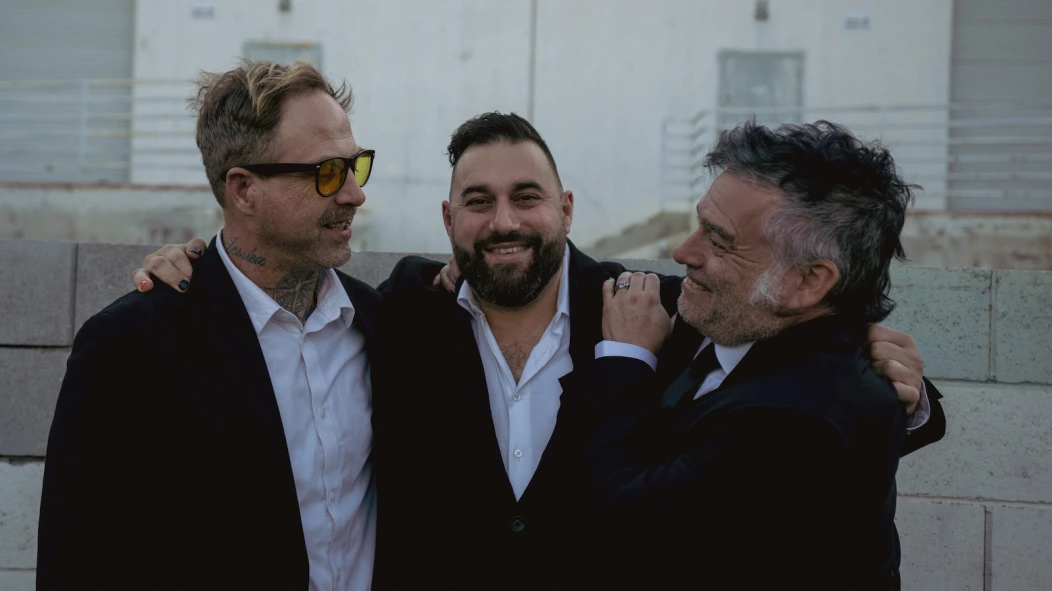
The plan here was to chat with Ceschi Ramos, who alongside Sam King (Get Dead) and obviously Fat Mike (NOFX, etc) makes up the three-headed songwriting monster that is Codefendants. Yours truly has interviewed both Sam and Mike on a few occasions, but had never had the chance to chop it up with Ramos, who in addition to his spot in Codefendants has been an extraordinarily unique singer and songwriter and storyteller in the acoustic folk punk indie hip hop crossover world, if that’s a thing. He’s also from the state of Connecticut, and while my interview career at DS is well into its stubborn teenage years at this point, and while Connecticut is the state I’ve spent far-and-away the most time in without actually living there, a quick check at my list reveals that I’ve never actually chatted on the books with someone from the Constitution and/or Nutmeg State. The plan – at least in my head – was to chat about the new standalone Codefendants single, “Right Wrong Man,” and about their upcoming gigs at Punk Rock Bowling and the Punk Rock Museum in Vegas and Rhyme Fest in LA and probably a little about the New Haven music scene (shut up, it’s a real thing).
And so imagine my surprise when Ceschi’s camera jumped to life and revealed not only his face, but those of Sam and Mike over his right shoulder. As it turns out, Codefendants were actively working on new music, and so we connected with Ceschi and friends from Fat Mike’s recording studio in the middle of a session for what will become the group’s second full-length. We can’t tell you many spoilers, although we can tell you that there is another track that features legendary rapper The D.O.C. in a bigger role than he had on “Fast Ones.” And while the album isn’t in the can yet, we can tell you that the aforementioned single/video “Right Wrong Man” won’t be on it. “The new single is a song that we’re dropping off the album cause we didn’t think it was good enough for the album,” Mike explains. “I just think the other songs are better,” adds Ceschi, “(but) the video was my most fun video moment for me. It’s a lot of fun. And I love working with INDECLINE.“
Codefendants’ previous full-length, 2023’s This Is Crime Wave, and the stand-alone singles like “Living Las Vegas” and “Counting Back From 13” have been self-described as “genre-fluid,” and that trend continues on both “Right Wrong Man” and the still-to-be-completed upcoming full-length, though Mike quips “it’s (called) riot pop. It’s a new genre.” “It sounds like if Gorillaz had more balls…or drug problems,” jokes Ceschi.
Much of that genre fluidity has been by design, with none of the band’s members being too eager to recreate sounds they’ve already used in other projects. “When we first started the project, Mike was REALLY adamant about not sounding too punk rock,” Ceschi explains. “We had what I think were some really great punk rock songs that he totally canned because “oh that one’s got too fast a beat” you know?”Just now we’re entertaining hardcore again.” And it wasn’t just NOFX sounds that the band are careful to not recreate. “Sam and I wrote this song, and it felt too much like a Get Dead song, so we canned that one as well…it might actually be a Get Dead song now!“
Mike and Sam and Ceschi have close to three-quarters of a century of combined songwriting experience between them in their prior projects, but that doesn’t mean the collaborative process in this project has been easy, particularly when it comes to lyrics. “I’ve never been in a project with two great songwriters,” explains Mike. “We all have to be happy with something. We all have to love it before we release it, and it really works that way.” “We’re all really good friends and trust each other too,” adds Ceschi. “We’ll shout out edits. Sometimes it’s chaotic, sometimes people fucking run out of the studio!“
The bond that has been formed between the three might be publically centered on music and creation, but it’s a marriage that’s helped shepherd them each through some difficult personal times. When work started on new material a couple of years back, “I think we were all kind of depressed or going through our shit,” says Ceschi. “I was,” adds Mike. Even the band’s origin story dates back to some trying personal times that coincided with peak pandemic lockdowns. As Ceschi explains it: “I flew from Puerto Rico where my family’s from and Sam was just on his shit and he was just going through a divorce and he’s like, “come out to L.A. I got a session” and I couldn’t have guessed that it would have led to what it led to. But it’s changed my entire life and I’m very grateful.” “Changed my life too,” Mike adds later.
And while any relationship formed during and after trauma and personal hardships can be a tumultuous one – “this band is going to end tragically,” jokes Mike – it’s also capable of creating some beautiful and surreal and compelling moments. “That tour with NOFX was an unbelievable privilege,” states Ceschi. “I have been doing this for 20 years DIY, running my own label. I feel like I grinded my way to some attention, but it took a lot of teeth-pulling to get where I was. And the fact that I can now play to 10 or 20 thousand people at a show…past age 40…is unheard of, you know?“
A quick search through the back end of the DS Archives (don’t try it on the front end – it’s broken because this site is super wonky, but that’s punk rock baby!) reveals pages and pages of stories featuring Sam’s work in Get Dead and obviously Fatty’s work in NOFX and obviously in helping to build and maintain the punk rock scene over the course of several decades with Fat Wreck Chords. But it also reveals that we’ve been woefully behind covering Ceschi’s career, which has been lengthy and genre-fluid in its own right. Ceschi moved from Berkeley to southern Connecticut early in his teenage years and quickly enmeshed himself in a burgeoning scene that centered on places like the Tune Inn in New Haven. In the annals of rock history, New Haven specifically and Connecticut in general tend to be overlooked due to their relative location wedged as a drive-thru between the Boston and New York markets, but maybe for that reason it became a bit of a unique and diverse gem of a scene. “New Haven had a huge hardcore and ska scene,” Ceschi explains. “Probably the most well-known band from New Haven from the ska scene was Spring Heeled Jack. I also saw the birth of Hatebreed. I saw the birth of a hardcore scene that was one of the biggest hardcore scenes in the nation.” And no, that’s not hyperbole. “Being there at the time, we were on fire. Everybody was there. In fact, I listened to an interview with Madball – and it’s funny, because we’re actually opening for Madball in Italy – and they were like “yeah, Connecticut was actually a bigger scene for us than New York.”
As indicated above, Ceschi’s solo career doesn’t really fit in with a particular genre, unless folk-punk-progressive-hip-hop-latin-art-collective is a genre. As such, he started his own record label, Fake Four, in the mid-00s as a way to release music for he and his brother and their friends and crew who were navigating in similar underground spaces. “I’ve run a record label since 2008 because of necessity,” says Ceschi. “And in meeting Mike, it’s just kind of like my, I had a big brother moment with him where it’s literally the same shit I did, but he just did it on the biggest scale possible, you know?“
Speaking of some of the biggest scales possible, Codefendants are playing Punk Rock Bowling TOMORROW (Sunday 5/25) at 4:10PM on the Monster Party Stage. The single release party for “Right Wrong Man” will take place at the Punk Rock Museum on Tuesday the 27th, and will feature Sam and Ceschi giving a guided tour, then playing a set in the Pennywise garage with Zeta as their backing band (minus Dani – details on that below). Next on the docket after the Vegas festivities is an appearance with the legendary D.O.C. at Rhyme Fest at the LA Coliseum on August 16th. Tickets here. Fire up the “Right Wrong Man” video and check out our full wide-ranging conversation with Ceschi (and surprise appearances by Sam and Fat Mike) below!
***The interview below has been edited and condensed for content and clarity. Yes, really. ***
Dying Scene (Jay Stone): Thanks for doing this. This is awesome. I didn’t know all of you were there together.
Ceschi Ramos: We didn’t know that it was going to happen either.
This is pretty awesome.
Fat Mike: It is awesome. We just finished a song and we’re almost finished another song. And boy are these guys drunk. They don’t do cocaine like me, so they can just get drunk.
Sam King: I wear long sleeves now. (*all laugh*)
Fat Mike: Alright, what do you want?
Well let me start by saying thanks to all of you because this is pretty rad and unexpected. I thought I was just going to have Ceschi and we’d talk about Connecticut and shit.
Ceschi: We can do that!
So you’re writing actively. You’re quite literally in the studio as we speak. Like almost finished with Crime Wave Two Electric Boogaloo or whatever we’ll call it?
Ceschi: The Next Album.
Fat Mike: It’s riot pop. It’s a new genre.
Ceschi: Every album is a new genre.
Fat Mike: We’re actually working on lyrics together, which is really nice.
How does that work? How do you guys write, just in studio? Do you bring ideas to each other or do you just kind of riff? How does that whole thing work?
Fat Mike: Well the thing is, I don’t like doing that at all.
Right!
Fat Mike: I just fucking write my lyrics.
Ceschi: This guy was a dictator before. I had to be like “Yo, stop! Stop editing my lyrics!”
Fat Mike: Eric Melvin has a song called “Riot.” He sings “Riot!…Riot!…Riot!…” He sounds like a fucking frog. (*all laugh*)
Ceschi: Are you saying this because you’re not involved in writing his lyrics? (*laughs*)
Fat Mike: I’ve never been in a project with two great songwriters, and we get the best. We all have to be happy with something. We all have to love it before we release it, and it really works that way. We have this song “The Fix,” and I wrote all these lyrics and they’re like “nah…nah…I’m not singing that. You can sing it, Mike, but I ain’t singing that.” And I’m not a singer in the band, so it gets frustrating, but today it’s been working so well.
Ceschi: Yeah, we’re all lead singers in our own rights, so it’s a little bit challenging for us to have this group, but we’re all really good friends and trust each other too, so we write together. Sometimes we bring ideas to the table and it gets edited in the studio. I mean, Marcel too (*waves*) Marcel has been recording a lot of our new album, and he sees it. He sees us editing together. We’ll shout out edits. Sometimes it’s chaotic. Sometimes people fucking run out of the studio.
Fat Mike: It’s ridiculous. We’ve been working on this record for two years.
Ceschi: Yeah. We used to, and so it started when we lived together at this mansion in Las Vegas that Mike rented kind of, we were all, we were all going through splits at the time with our partners, and we ended up in this big ass house together. I think we were all kind of depressed or going through our shit.
Fat Mike: I was.
Ceschi: Yeah, I was too.
Fat Mike: And Sam beat up my fucking vacuum cleaner.
Ceschi: We had a lot of interesting nights there.
Fat Mike: It was racist because my vacuum cleaner was black. And a robot. So I’m clearly a plantation owner. (*all laugh*)
Ceschi: Sam’s white rage, you know? I was trying to explain to him how Irish people weren’t even white when they first came here.
A hundred percent right.
Ceschi: Oh I know, that was what I studied in school I was a cultural studies major.
Yeah, but that’s a weird conversation to have…
Ceschi: It’s a very difficult thing for people to wrap their heads around, the origins of whiteness, but I studied that shit in university and I mean, like I was trying to explain that to Sam, he got so frustrated, he kicked a Roomba across the fucking hallway.
Well, I mean, it’s a good thing you guys have writing to fall back on in living in a situation like that, because that could have gone like…like the fact that you had a positive outlet is good because even with the positive outlet, you were shooting shotguns into doors and kicking the vacuum. So it’s a good thing you have music because that could have like ended tragically, the three of you being depressed and coming out of relationships, living in pretty close quarters…
Fat Mike: This band is going to end tragically. (*all laugh*) Don’t fucking..
Ceschi: … that might be why we’re going to be the biggest band. I mean, it’s definitely going to be the biggest band in my life. It’s just going to end tragically.
Fat Mike: What’s your name?
My name’s Jay.
Fat Mike: Hi Jay. What’s your last name?
Stone.
Fat Mike: Oh, I like people with two-syllable full names. Jay Stone. You know? It’s easy to say. I bet people call you that. They use both your names.
They call me Jay Stone, yeah. It just becomes one word, it’s easier that way.
Ceschi: It’s like an actor’s name. That’s a strong name.
Fat Mike: It’s a strong name. Jay Stone. So Jay Stone, have you heard this new record yet?
Um, no, it’s not even done yet! I heard the new single. The new single’s cool.
Fat Mike: You know that the new single is a song that we’re dropping off the album cause we didn’t think it was good enough for the album.
Is that right? I’m well, I wondered why that came out, but then there’s like no word of an album.
Fat Mike: We didn’t want to give them a good song off the album. So we gave this song that we all planned on dropping. (*both laugh*)
Ceschi: It’s kind of grown on me though.
And what do you not like about it?
Ceschi: I like it now.
Fat Mike: The other songs are better, that’s the only thing.
Ceschi: I just think the other songs are better.
That’s fair.
Ceschi: And the video might’ve been one of the most…that was my most fun video moment for me. It’s a lot of fun. And I love working with InDecline.
The InDecline guys are awesome. That crew is awesome.
Ceschi (*sits down solo on couch*): Ask me some real questions now, man. (*both laugh*)
This is a…this is a trip already.
Ceschi: My life has become an absolute trip since I met these guys. (*laughs*)
I can only imagine. And so actually that’s one of the things I wanted to talk about. Like you’ve been around for a long time by yourself and obviously Codefendant’s been around for a few years, but for somebody who’s been around for a while, do you still get moments that like, holy shit, this is my life? Like, and I ask, I ask you because like, even just the limited shows that are coming up for Codefendants is like Punk Rock Bowling, then the release party and the tour at Punk Rock Museum and then like Rhyme Fest with The D.O.C. and Onyx and Dilated Peoples…
Ceschi: And then it’s like Europe with the Refused and Madballs.
That’s fucking rad. Like, isn’t it? I mean, that’s still a thing for you, these “pinch me” moments or whatever?
Ceschi: All the time, man. That tour with NOFX was just an unbelievable privilege, you know what I mean? I have been doing it 20 years DIY, running my own label. I feel like I grinded my way to some attention, but it was like, it took a lot of teeth pulling to get where I was. And the fact that I can now play to 10 to 20,000 people at a show…at past age 40, it’s like, it’s unheard of, you know?
It’s pretty fucking awesome. And I have to say, like, at some level, I have to say thank you to you guys collectively, because I’ve been doing this thing with Dying Scene for a long time. I’ve been in and around the punk rock scene for a long time. And I get bored all the time. And like, cause things just sound stale, and I end up listening to the same eight bands I’ve listened to forever. And then I remember hearing about this Codefendants project first coming together, because I’ve been a fan of Mike’s forever and yours for a long time and Sam’s forever through Get Dead and I remember thinking, “well, how the fuck is that going to work? Like that sort of amalgamation…” and then hearing it, I was like, “oh, this is awesome.” And it like reignited that sort of like thing in me. So I thank you guys for that, man.
Ceschi: That’s really, really kind. I think it works because we’re actually friends. We actually respect one another and we could actually yell at one another and kind of like, you know what I mean?
Fat Mike: Like I was yelling the other day and I came back like 30 seconds later and I apologized and I realized what a dick I was being.
Ceschi: Cause I was living with one of my lyrics. I really liked one of my lyrics and I, you know, I’m in a song. I think I’m a pretty, pretty decent songwriter and I think Mike’s a very great songwriter. And I think Sam is too.
Fat Mike: We had other lyrics that we worked on together. And I had this guy sing harmonies on it and it’s like Simon and Garfunkel, and I worked so long on it that I was attached to how hard I worked on it. And when he told me how important his lyrics were to him, it took me a few minutes to realize, “yeah, wait a second, this is important to Ceschi.”
Ceschi: It was a good moment of like camaraderie…
Fat Mike: and humility for me.
Ceschi: And yeah, ’cause Mike’s the boss, you know what I mean? Like this motherfucker built a DIY empire, you know what I mean? That’s the way I talk about it. I think Mike is the biggest DIY artist of all time.
Yeah, I could agree with that.
Ceschi: You know, it’s the same shit we’ve all done. I’ve run a record label since 2008 because of necessity. A hip-hop label called Fake Four. And in meeting Mike, it’s just kind of like my, I had a big brother moment with him where it’s literally the same shit I did, but he just did it on the biggest scale possible, you know? It’s amazing. Even these festivals, Mike said “fuck off Live Nation.” Mike told a lot of people to fuck off because he wanted to do it his own way. And that’s what the last NOFX tour was. It was his way. It was like it was an entire team of people that he had known for sometimes like 30-plus years. And it’s it’s incredible to be included in that world. And I feel I’m super grateful. And to answer your original question, I’m constantly, I’m constantly in these states of like, “what the fuck is my life now?” Like my personal life in many ways has completely imploded, but it’s all worth it because it’s sort of like this marriage to music that I never thought (would happen). I was very ready to quit music and get a regular job, be a teacher again or something, maybe go back to school, you know? Very close. I’m going to get out of here because you guys are working on this song.
You had known Sam before knowing Mike, but then like how long after meeting them, did you realize that like, “oh, this could actually be a thing? Like put our egos aside because that’s a thing, right? Let’s put our egos aside and do this actual like project.
Ceschi: I think it was just the first sessions with Sam, just Sam and I. Sam kind of filled some void in my life, and I think I feel some void in his when we first met. We had recently lost some of our best friends. You know, I lost like 10 friends – like my best friends since childhood – in the span of a couple of years, right? He did, too. He lost some of the closest people. I think that connection, we feel that for each other. And we were also kind of like I think a lot of the theme of this new album is that we’re lifers. This is our marriage. You know, I’m actually going through a divorce right now, like an actual divorce. I think it’s solidified this whole thing of being lifers for music. Whatever this job is (*both laugh*). I think I think my connection with Sam, I think being around Mike, Sam and Mike are such good friends. We were writing a lot of the stuff at Mike’s house, even when before Mike was involved. I remember writing, sitting in Mike’s tennis court. Mike was inside recording like NOFX stuff. I specifically remember him recording that song “I’m A Rat,” which is one of the newer NOFX records. And we’re hearing him sing that. And we had to walk away from the studio because we were being too loud, writing the song “Suicide by Pigs.” We finished that shit in like Mike’s tennis court sitting on the floor, you know, and Mike started noticing and then we brought him like three demos and he’s like, “wait, I want to be involved with this. This is like this is special.”
Was that intimidating? Having somebody like Mike, who is obviously a legend in DIY, a legend in punk rock, but he’s very much his own like songwriter, too. So is that like did that become like an intimidating thing or was it just kind of natural because you were friends?
Ceschi: Yeah, you know, the thing is, even though I’ve known NOFX’s music since I was about 13 years old…
Like all of us…
Ceschi: Right! I’ve met a lot of famous people. And I kind of just treat them all as artists, right? Like my equal. Like, I met Christina Ricci recently, right? I looked at her as another artist that I respect. You know what I mean? That I wanted to talk to. I met Morrissey oddly. You know, Mike was my friend first in a way, and we didn’t even think about making music together. And when he got involved, I knew that it would make the whole thing bigger. But we were willing to do it even if Mike wasn’t involved. We were willing to fucking grind this shit DIY and like, you know, put it through our outlets and Fake Four and whatever. His involvement changed the whole trajectory, right? It made it all more important or whatever. But the best part of it was actually this camaraderie that was built like this. I remember like just late nights at his studio in Sherman Oaks and writing songs together. I hadn’t done that so long, I was a solo artist for so long.
I stopped thinking about fame and I really don’t entertain fame very much. I understand the farce of it all. So, of course, I respect him very much. But it was like he was just another artist equal to us. And yeah, I think all three of us maybe checked each other’s egos at times. But that was really good for all of us. And, you know, so I should say this was like a lockdown time.
Like there was still deep, deep pandemic when we all met and started this band. I shouldn’t have flown to L.A. when I did. (*both laugh*) I flew from Puerto Rico where my family’s from and Sam was just on his shit and he was just going through a divorce and he’s like, “come out to L.A. I got a session” and I couldn’t have guessed that it would have led to what it led to. But it’s changed my entire life and I’m very grateful.
Fat Mike: (*walks through the background*) Changed my life!
Ceschi: I mean, I think we’re like very close friends and like that’s really the most important part of it all. You think that I saw a lot of… honestly, Mike is such a legend, and maybe this is some inside baseball shit…I guess from afar I came in and I saw a lot of people that were just leeching off him and kind of doing fake jobs. This is what it’s like to have like a hundred employees. It’s like, “what does that guy do? This guy is lazy. This guy is terrible at his job.” Like I wasn’t saying these things. I was just noticing. I was like, and I’m proud of him. I’m actually proud of him for retiring. NOFX caused him a lot of stress. You know what I mean?
Like anything, it becomes a business, right? Like, it can be DIY still, but the bigger…
Ceschi: But that’s still like… there were 20,000 people in Montreal, 20,000. We played the 15,000 people in Los Angeles. I mean, NOFX sold over a million dollars in merch on the final shows alone.
That’s crazy.
Ceschi: It’s beyond just “the business.” It’s stressful.
Yeah, right.
Ceschi: The more money’s involved, you know…
Right! More money, more problems, right?
Ceschi: But yeah, I saw it. I saw the stress and I care about him. So I was like, “fuck, dude, you do this for so many people and so many people don’t appreciate it.” Like any boss. I’ve been a boss, too. You know, unfortunately, it’s kind of like I fell into that position. I call myself an anti-boss because of my politics and whatever. But that is like I’ve fallen into that position where I’m the person helping people pay for their kids, working on it still and shit. It’s a weird position to be in. It’s stressful.
That’s why I don’t do it anymore. Right.
Ceschi: So for him, it’s that times a hundred? Like, damn, bro. So I was very aware of that coming into it. And yeah, I don’t know. I don’t even know where this conversation started. (*both laugh*)
I don’t either. But it’s going in a good place, I think. So I was actually looking at my list. I’ve done, I don’t know, a few hundred interviews now for this thing, but I don’t think I have ever interviewed anybody who hailed from my wife’s home state of Connecticut. (*both laugh*) She grew up not far from New Haven. Her dad still lives not far from New Haven.
Ceschi: Oh where?
He lives in Milford now. She grew up in New Britain.
Ceschi: I have a lot of friends from Milford.
Yeah, it’s an interesting place. New Haven’s an interesting place. Having spent some time in that area, like the haves and the have-nots all live really sort of close together, like on top of each other. And like, even just the campus of Yale is both ends of the spectrum in the same place. But I’m sort of curious, like like what the scene was like growing up in Connecticut and like whether a folk punk scene or a punk rock scene or a hip hop scene…was it all of the above, or was it sort of siloed?
Ceschi: OK, so we’re probably from similar eras. I moved from Berkeley, California to New Haven when I was thirteen. So, man, I got to say it was a very exciting time in New Haven. New Haven had a huge hardcore and ska scene.
I was going to say they had a big ska scene.
Ceschi: Yeah. So probably the most well-known band from New Haven from the ska scene was a band called Spring Heeled Jack.
One of my favorite bands of all time.
Ceschi: Yeah! I’m friends with all of those guys. And in fact, like J.R. from fucking from Less Than Jake still lives in Connecticut.
He will always be J.R. from Spring Heeled Jack. Like he’s been in Less Than Jake for 20 years or whatever, but he will always be J.R. from Spring Heel…Chris Rhodes will always be Chris Rhodes from Spring Heel.
Ceschi: You know, all those guys, Rick, Mike Pellegrino. Like I know Tyler, who ended up joining…
Both: Rest in Peace.
Ceschi: Yeah…he ended up joining, you know, Real Big Fish, I believe he was in there for a while. You know, these are characters, elders of mine that I looked up to. Also, I saw the birth of Hatebreed, you know? I saw the birth of a hardcore scene that was one of the biggest hardcore scenes in the nation, I’m pretty sure. You know, the first person to ever record my music was a member of 100 Demons. You know, my cousin, who is 10 years older than me, he was in a band that was managed by the management of Rage Against the Machine. And they were a band called Gargantua Soul. And they played like the New Haven Coliseum with At The Drive In and Gang Starr and Rage. You know, like they did Woodstock 99. The 90s in New Haven was really an amazing time. And there was a venue called the Tune-Inn that was like our main spot.
I would go to shows with my now-wife there. One of our first shows together was a Big D and the Kids Table show with like Thumper and Sgt. Skagnetti.
Ceschi: Oh, Sgt. Skagnetti! Those guys are my boys. They’re like fans of my solo music, and I’ve opened for them. And past the point, I probably should be opening for them. You know what I mean? Just out of respect to them.
Like, right, right, right. Yeah, that’s so funny. One of the first things my wife and I ever did when we were dating, like 20, no, almost 30 years ago was a show in Tune-Inn.
Ceschi: No way. I’m talking to a person who actually knows what the Tune-Inn is. That’s awesome.
Oh, hell yeah. Didn’t they have like a fence down the middle, where like the under 21 people were on one side and 21 plus or the drinking people were on the other?
Ceschi: That happened later. They didn’t introduce alcohol to the Tune Inn for years and years. That was like late 90s. Before that, it was all ages and there was no alcohol.
Oh, wow.
Ceschi: And it was just like us, like smoking cigarettes until I became straight edge (*both laugh*) and just fucking beating each other up. I remember some of my most. This is funny now, but I think some of the most exciting shows were like, 25 Ta Life. 25 Ta Life at that time was so exciting. He would bring like a whole flea market of fucking underground gear. And then I think I saw Candiria there for the first time. That totally changed the trajectory of my music. Candiria was this band, I don’t know if you ever heard of those guys. They fell into the hardcore scene, but they were a metal band who played like jazz fusion. So this is before Dillinger Escape Plan and all that. I think they were quite influential to them. I think they must have been quite influential and an influence on Dillinger Escape Plan, in fact. So they were like crazy musicians. I saw them in like ninety-five, ninety-six for the first time. I went to any show I could at that at that venue. It was it was just my. I went every weekend, no matter what the event. I remember going to shows there that were bad, that were like indie rock bands that three people would show up or five people. I just went no matter what.
Is that where some of like the seed was planted? Like “I could do this!” Whether it was punk rock or hip hop or whatever.
Ceschi: No, that was my cousin. My cousin Opus. He’s the drummer of Cro-Mags right now. He’s been a thrash and punk drummer since he was 16 and he’s 10 years older than me. So it was just watching him doing it. Honestly…I’ll be honest. Opus was a weed dealer and a drummer. And I did all those things, too. (*laughs*) I went to fucking prison for weed. I think he went too. I think he caught a case for that, too, honestly. It’s so silly sounding now.
Isn’t wild to tell younger kids today that like you could do legit prison time for weed? Like you could do numbers…
Ceschi: It’s crazy. I’ve had friends that did five, six years for weed. Like federal. It’s insane.
Yeah, right. It’s insane.
Ceschi: And at the time that it happened, it was insane.
Yeah, right, right.
Ceschi: I was very aware of the fact that it was a really dumb law that I was going under for. So, yeah, it’s so cool to me that, you know, about this place. Did you ever know? I loved a band called Jiker that was based out of New Haven. They were like a skate-punk ska band. They had they were just fast skate punk. But like with horns. They were one of my favorite bands. All of them. And the thing is, Fernando, who ran the Tune Inn, he had a record label and he had a little record store in the Tune Inn.
Yeah, right, right, right, right.
Ceschi: Yeah. And a lot of those bands. In fact, the band called Blind Justice…the singer of Blind Justice, Kris Keyes, was another huge influence on me, and he became the singer of my cousin’s band Gargantua Soul. So there was just… there’s a lot of that. The guitarist of Dismay, which was a hardcore band out of New Haven, became the guitarist of Gargantua Soul. One of my best friends, Viquel James from Blind Justice, you know, went on some of my first tours. He was Talib Kweli’s guitarist as well.
Yeah, yeah, yeah.
Ceschi: You know, it was just a lot of like elders. These guys are like a lot of my buddies, they’re like almost 10 years older than me, you know, so.
I think that scene doesn’t get enough credit for…
Ceschi: At the time, though…being there at the time, we were on fire. Everybody was there. In fact, I listened to an interview with Madball. And it’s funny because we’re actually opening for Madball in Italy. But like. Which…my childhood shit is flipping over that. But I listened to an interview and they were like, yeah, “Connecticut was actually a bigger scene for us than New York.”
Interesting. Yeah. Interesting.
Ceschi: It makes a lot of sense when I think about my friends who came out of Connecticut: With Honor, all the Stillborn shit, 100 Demons, Hatebreed, you know.
Yeah, I feel like Connecticut and Jersey, like at least for me and my music became like like more influential than even than a lot of the Boston scene was. And I grew up like half an hour from Boston.
Ceschi: But I remember some cool bands from Boston. I remember that band. I like that band Tree.
Yeah, Tree was all right. Yeah.
Ceschi: And eventually I was in a band called Dead by Wednesday and we played we played Massachusetts a lot. Yeah. And we played all over. New Bedford to Boston. Yeah, I can go on and on about that.
Yeah, right. Do you think that the fact that the scene was as vital and as varied as it was at the time – you guys have mentioned Codefendants as being “genre fluid”…
Ceschi: Haha, yeah, Mike said that. I would never have said it like that … (*both laugh*)
Yeah, but it makes sense!
Ceschi: Oh it does! It is true.
Even internally, you had this career in the folk punk scene, Mike was obviously NOFX, Sam, our people probably know most from Get Dead of course, but his roots are 100% hip hop.
Ceschi: Straight up. That’s another crazy connection. His entire crew from San Francisco is people I’ve known for twenty years. I just never met Sam during that time, but I know literally everyone else from his group.
That’s really weird.
Ceschi: I met them because of touring in Europe too. And like, Derek Weisberg, who did the cover for one of my albums, he knew about Sam years before I did. It’s crazy (*laughs*)
You met when you were supposed to meet, right? Like, maybe Codefendants wouldn’t be Codefendants if you had met in 2004 versus 2020 or whatever, right? Whether you believe in that shit or not, maybe it happens for a reason.
Ceschi: Oh it very much feels like that. It’s one of those moments in life that is still surreal to me, man. All the time. I keep experiencing shit that blows my mind.
That’s awesome, and I like that as someone who is a fan of yours and roots for you. I think that what you’re doing is different enough. Like, when it comes to writing new music, you’re not writing a new NOFX song, you’re not writing Ceschi songs, you’re not writing Get Dead songs, so I’m sorta curious how that process even starts, and can you call each other on like “no, that sounds too much like this old song” or whatever.
Ceschi: I think when we first started the project, Mike was REALLY adamant about not sounding too punk rock. We had what I think were some really great punk rock songs that he totally canned because “oh that one’s got too fast a beat” you know? Just now we’re entertaining hardcore again. We were just listening to Bad Brains in the studio thinking about how we could do like a two-step beat. We’re just entertaining this stuff now because he wanted to get so far away from what he was known for. Luckily most of the things we were bringing to the table were pretty far from the things he was known for. But I remember bringing a fast punk song to the table, and they threw it on the B-Side of a ten-inch. I thought that song was pretty damn good, but because it was a fast punk song – it was like a Jawbreaker kind of vibe – he was like “absolutely not. It’s too punk.” (*both laugh*) And we were just talking about this, Sam and I wrote this song – Sam wrote most of it, I think I wrote the guitar. And it felt too much like a Get Dead song, so we canned that one as well, and it might actually be a Get Dead song now. It’s a super good song, it just didn’t fit with the vibe that we were going for. This new album is almost like if Gorillaz had more balls or something. (*both laugh*) Like if Gorillaz all had drug problems. (*both laugh*)
When you’re writing new music, do you have to figure out how you’re going to be able to pull this stuff off when you’re playing live? Because sometimes it’s you and Sam, sometimes it’s you and Zeta, sometimes it’s you and the Get Dead guys? Do you talk about that stuff when you’re writing or is it just like “fuck it, we’ll figure it out later”?
Ceschi: We’re normally like “Fuck it,” but that’s changed a bit on the new album. We have a few songs that I don’t think we’re going to be able to do live, which is going to be a bummer to some people because one song in particular is a song where The D.O.C. is the prominent voice on the song. He’s got hte biggest verses, it’s one of the best songs on the album, and it’s him! We’re going to be able to do it at Rhyme Fest because he’s coming out for that, but we won’t be able to really play that one live and it’s kind of a bummer. I’m not going to go up there and imitate The D.O.C. I’ll go up there and imitate Mike because Mike’s a closer friend of mine. (*both laugh*) “That’s right, right where it all went wrong!” (*both laugh*)
And Mike certainly wouldn’t mind you taking the piss out of him for doing that.
Ceschi: Yeah, we were just talking about that. But The D.O.C. wouldn’t be possible. It’s not authentic. You can’t mimic that voice. With “Fast Ones,” he’s the last verse, so it’s a little easier. With this one, there’s multiple verses in between our verses. But that’s one of the only songs that’s like that, and hopefully people like the other songs too. (*both laugh*) I think they’re pretty good too.
You’ve all but wound down playing shows solo and wrapped up the solo discography as Ceschi. Do you mind commenting on why? Does it feel like the solo project has run its course, or is it a desire to go all in on Codefendants going forward?
Ceschi: You know…..I never really came into music hoping to be a solo act. It was something that happened naturally because it was an economical choice for touring, recording etc. It never would have been my number 1 choice to be the guy alone on stage that everyone stares at and analyzes. Yet, that’s kind of the thing people knew me for even though I had been in 3 other bands. I like the idea of wrapping up a discography after 20 years – proud of the work I’ve done without compromising my artistic integrity ever. To be honest I think more artists should do that. We are in an era where churning out music like a machine is what tech companies want us to do. People do throw away art to keep their monthly listener counts high. fuck all that noise. Yes, Codefendants is something I’m fully going for. Perhaps my last major hurrah.
In both your solo music and with Codefendants, you’ve been very honest about some of the struggles you go through – depression, trauma dumping, etc. And really, Sam and Mike are similar). The line in “Right Wrong Man” about being a “self-saboteur since the day (you) were born” as a recent example. When you’re vulnerable like that, I’m sure you’re no stranger to fans approaching you about how much a song resonated with them, and telling you about their own struggles. Is that a thing that you get used to and does that ever get uncomfortable having to be a sort of therapist to people?
Ceschi: Talking to Sam about this recently… I realize I never made music for money or girls or social clout or whatever….it was my only form of therapy as a juvenile delinquent dealing with a difficult childhood, depression, etc. I think we want to be voices for the voiceless – write words clearly for people who don’t have that same outlet of expression. Still, it’s absolutely challenging to be looked at as a therapist or even a best friend to strangers who just know me from my music. People come at me like they’ve known me for years when we’ve never met. That’ll always be a trip.
Last time I saw you up in this neck of the woods – at the Crystal Ballroom in Somerville – was one of the cooler shows I’ve bene to in a long time, in part because the lineup had Ian “the punk cellist” on it and because Ian and Zeta and Myles “beatbox poet” all hopped on stage with you at different points. It felt loose and artistic and inspiring. In an ideal world, is that like a perfect example of what a Codefendants should be for you (because I feel like it was for me)? (Side note: it makes me happy to see Zeta play w/you guys. That band is ferocious and they don’t get enough credit. I saw them up here a few years back at free afternoon Labor Day celebration in a local park and it was one of the most cathartic sets I’ve seen in a long time.)
Ceschi: That was a really fun night ! Yes. I think we’d love to have that element at Codefendants shows more often. We’re even doing stuff like that at some big festivals. At the final NoFX show in San Pedro we had Zeta, The D.O.C., Stacey Dee & N8NoFace all up on stage with us. All codefendants in their own right. We see This Is Crime Wave as a growing movement of like minded artists that’s just spearheaded by Codefendants. And, yes, Zeta is one of the greatest live bands of all time in my opinion. It’s been an incredible honor to work with those brothers. Sadly, Dani has been forced to leave the United States – but we hope to all join forces again.
Discover more from Dying Scene
Subscribe to get the latest posts sent to your email.