Since its inception in 1976, punk rock was kind of this thing, that even if you hadn’t seen it before, you kinda knew what it was when you did. It was a response to the mainstream. A way to differentiate from the flock, but most importantly it wasn’t just one thing. Punk rock manifested in many ways, but it was mostly expressed through music. While there is a mostly universal line up of bands that we consider the first wave of punk rock bands, what if it could be argued that that list was far more extensive and global than we thought?
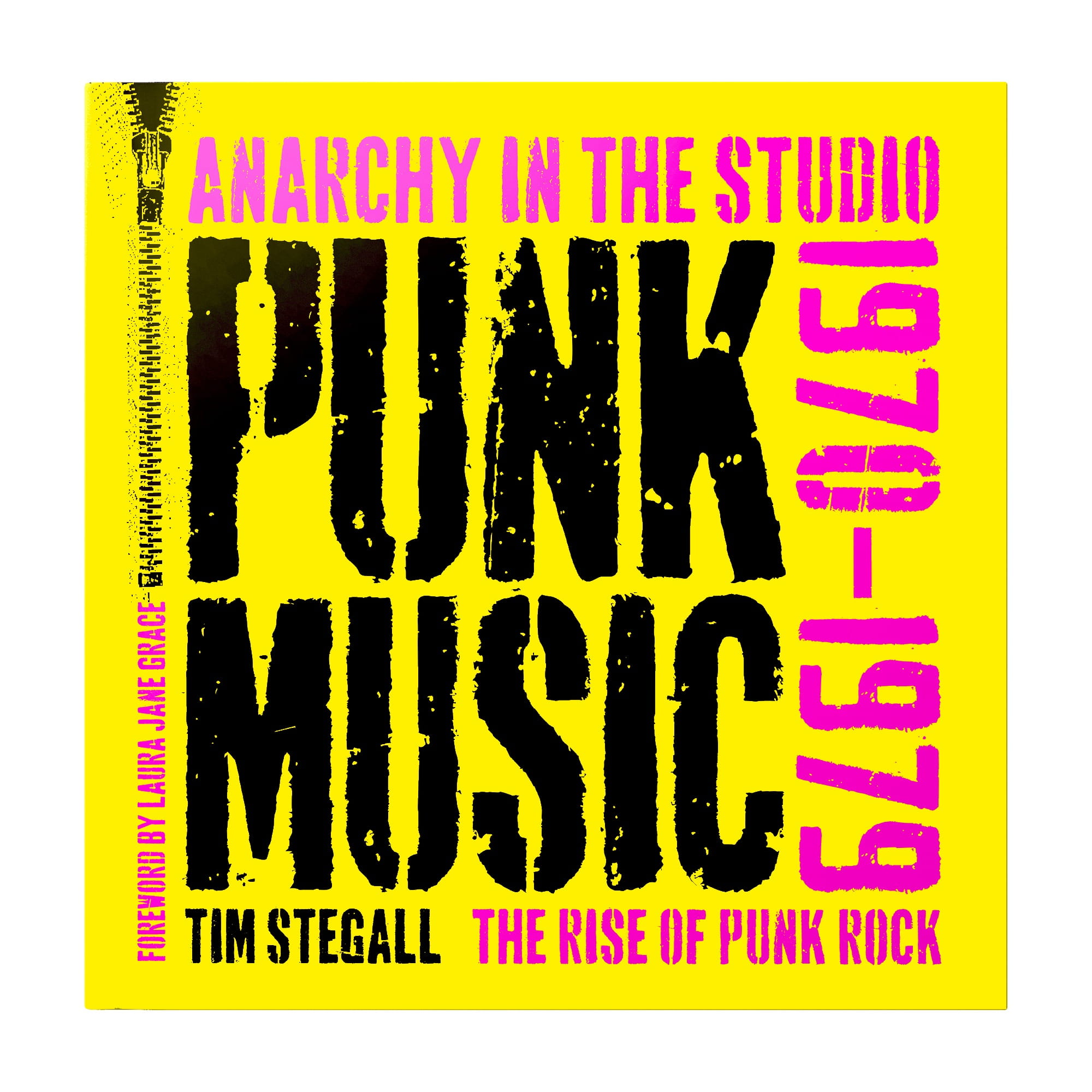
Ruffian Book’s newest tome, Anarchy in the Studio: Punk Music 1970-1979 – The Rise of Punk Rock written by Tim Stegall is just that thing. On the surface this book may look like your typical book regurgitating the same five facts you know about the same twenty or so bands. However, Stegall has done the ground work to deliver a fantastic collection of records and their stories. Given that the spectrum of what is considered punk rock has widened in the last couple of decades, Stegall’s definition of the genre is not the most traditional, but it will make more sense as you read on. (edited for clarity)
Tim Stegall: Is this Forrest?
Dying Scene: This is Forrest. How are you doing, Tim?
Tim Stegall: Doing just fine. I’m working on my next Substack, which is going to be about when Bob Seger started to suck and the fact that basically the reason why his later records sucked was that he forgot that initially he wanted to be Mitch Ryder and the Detroit Wheels. The classic 60s Bob Seger garage band records are incredible. It’s all based on Mitch Ryder and the Detroit Wheels, to be honest. I’ve come to the conclusion Mitch Ryder and the Detroit Wheels are the entire square root of Detroit Rock N Roll.
I mean, think about this for a second. The Stooges, that’s the Detroit Wheels plus Psychosis. The MC5, that’s the Detroit Wheels with big fucking amps, radical politics, and free jazz. Ted Nugent, he’s Jim McCurdy, the Detroit Wheels guitarist; if he only played in one key, had really shitty taste and shitty politics. You can go down the line. Alice Cooper, that’s the Detroit Wheels in a Hammer Horror film. Grand Funk Railroad, that’s the Detroit Wheels if they had big fucking amps and they sucked. I’d be kind of hilariously and intentionally reductivist here, but I am that maniac about Mitch Ryder and the Detroit Wheels. Starting with that name, that’s the greatest band name ever in the history of rock ‘ n ‘ roll. I’m telling you, Elvis wished his band was called Mitch Ryder and the Detroit Wheels. You might notice, if you’ve read my stuff in the past, that I get very enthusiastic about things, and that’s when my writing starts to really take off; when I get really enthusiastic.
Dying Scene: This book is massive in size. Is it even considered a coffee table book? I feel like you can protect your house with this book.
Tim Stegall: I always advise people who order it: lift with your knees. It’s somewhere between a coffee table and one of those damn Taschen books, that’s about half photos and half text, except I hope I’m not as academic as those damn Taschen books. It was kind of Mike Shea’s vision to begin with. This thing morphed several times over the creation of it. When it started out, the contract I signed was supposed to be finished in two months’ time. It was supposed to be one hundred fifty punk rock album covers. I chose the albums, you know, spanning the 70s. And I would write two hundred fifty-word blurbs for each one. Then, about midway through writing that first draft, Mike Shea suddenly says, well, wait a minute, Tim, you’re a writer, and you’re a punk historian, so just write. It ended up becoming Encyclopedia Punktanica, basically.
Mike Shea (Ruffian Books) has always been like that. He’s always been the one that sees the potential in any given situation. I’ve been working with this guy for 35 years or so. At the time that he and I first met, I went up on a field trip to Cleveland. I was still writing for Flipside and Your Flesh and all of that. I was very, very early in my career. Alternative Press at that time was a fanzine itself. We were both from this world, and Mike was wanting to basically transition Alt Press into a newsstand publication at that time. He’d already transitioned it into being roughly the size of Spin and Rolling Stone. He gave it a glossy four-color cover at that point. I happened to have this interview I had just done with Steve Jones of the Sex Pistols nobody wanted to run. It was covering his entire history. Steve even detailed every single heist that he pulled off to get equipment for the Sex Pistols. Very bold-facedly telling me about all of this. When he wrote his autobiography, he started to kind of backtrack a little bit. I had this interview, and Mike said, “Well, I’ll run it.”

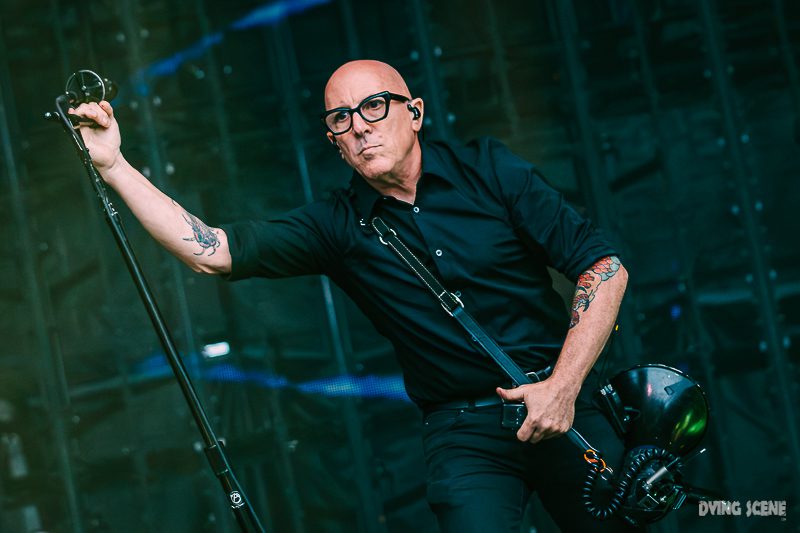
Photo Credit: John Anderson at The Austin Chronicle
He lied to me that they paid seventy-five bucks per article or whatever. Two days later, Joe Banks, the editor at the time, called me up. I was still living at home in Alice, still going to college. Joe asked, “Did Mike promise you money? I’m sick of him doing that. I’m going to make sure you get paid.” I ended up being the very first paid freelancer for AP. Mike saw when he had me and Jason Pettigrew on the staff that he had a couple of writers who could write serious, needy articles. Somewhere along the lines of like Creem or something like that in its heyday. So, he was able to start transitioning it into the newsstand publication that it became.
Years later, after he’d sold the magazine to the Madden Brothers from Good Charlotte, I ended up being the last man standing from the original AP staff. I didn’t last because they wanted to just take things into a different direction. Mike called me up and said he was starting up a small press and wanted to launch it with a book by Tim Stegall. It ended up being this massive thing that I don’t think any of us envisioned that it would become. I think I became a better writer over the course of working on this thing myself.
Dying Scene: You hear about all the crazy shit they would do on stage and off, but never anything really inside. Where do you go after you’ve told all the legends and the myths?
Tim Stegall: I did definitely want to shatter some myths there. First of all, the etymology of the term “punk rock.” For the longest time, Dave Marsh got away with telling the world,he invented that term punk rock used it in a piece he wrote about Question Mark and the Mysterians in Creem in 1971. Wrong. The year before, almost a year to the day, Ed Sanders of the Fugs was being interviewed. He was promoting his solo album at the time, a country record, believe it or not, called Sanders’ Truck Stop. He calls his album Punk Rock in that article.
Six to eight months later, Lester Bangs published his massive three-part review of the Stooges’ Fun House album, Of Pop & Pies & Fun. You can find it in the collection of Lester’s work, Psychotic Reactions and Carburetor Dung. He calls the Stooges a punk rock band in the first part of that review. Two or three weeks later, Suicide, playing their very first shows, and post a flyer using that phrase, punk rock, that they read in Lester Banks’s reviews. This all happens a good six to eight months before Dave Marsh publishes that Looney Tunes column about going to see Question Mark and the Mysterians.
From there, it just becomes the general term for what we now know as 60s garage rock or garage punk. Obviously, Lenny Kaye used it in the liner notes to the Nuggets album. Later on, in about ‘76, it could have been Legs McNeil uttering it, or it could have been Caroline Coon in Melody Maker; although I think she got the idea from reading Punk magazine. There’s a lot of things like that that I’m trying to dispel.
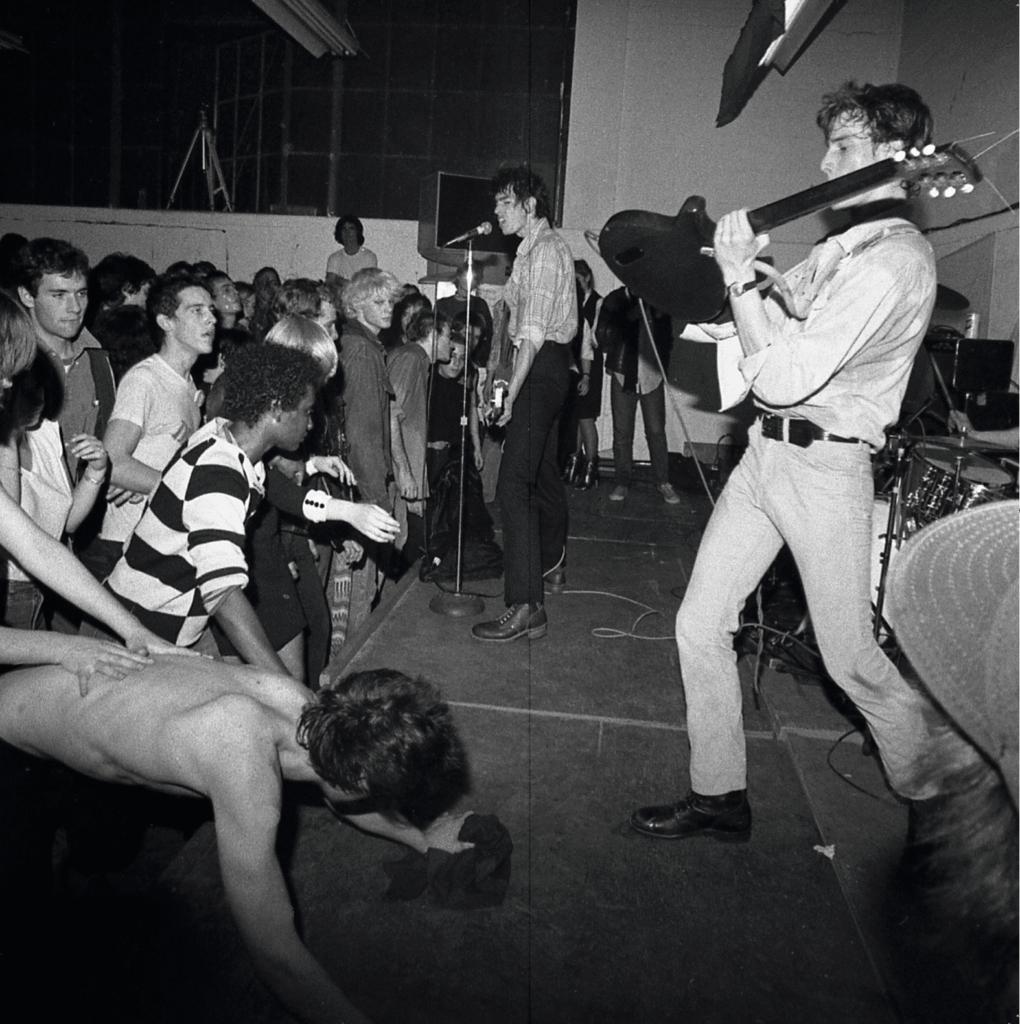
The other thing is the whole myth that punk began with the Ramones at CBGB’s. They’re certainly important to the story, but really, if you want to look at this, punk is a viral outbreak that happens internationally. In 1975, people in these far-flung corners all over the world were local freaks who are buying Stooges records, New York Dolls records, Velvet Underground records, Flamin’ Groovies, MC5, whatever. They start forming bands because they’re not hearing the music inside their heads in the outside world.
They’re going to start that band, and they don’t care if anybody else has the same idea. People all over the world have this same idea. It just goes pandemic in ‘76. They start looking around. Those guys over in Cleveland called the Dead Boys don’t sound dissimilar to us. Hey, look at that band up in Boston called DMZ. I think the ultimate proof of all of this is The Saints’ “I’m Stranded” single. That is, to me, if a Martian lands and comes up to me and asks me, “What is punk rock?” I would play that one single. It came out three months after the first Ramones album was released. It was recorded a month later. These guys were in Brisbane developing this very same idea. There’s no way that they heard the Ramones before they started playing like this. They already were playing this way.
It was just an idea that was in the air, and a lot of people had it. The Ramones basically offered a very distilled, very graspable way of playing and looking a certain way. Not to take anything away from them, but a lot of people deserve credit as much as they do. It’s not that punk began in one place, unless you want to point to Detroit in 1969. The other thing that I was trying to get across was kind of destroying the great man theory of punk rock. Yeah, I love the Sex Pistols. I love the Clash. I love the Ramones. I’m writing about all those bands, but it was originally supposed to be kind of a level playing field.
I try to give the same importance and weight to the Weirdos or DMZ or the Saints or the Avengers or that I would with the Sex Pistols or any of those bands, you know? I’m enthusiastic about all of that. That was kind of the way growing up in a small Texas town in the late 70s and early 80s that I kind of received all this. It kind of just made me when I finally got out of there and moved out in the world. I saw that there were all these geographical rivalries; even rivalries within the scenes. It’s like, “Come on, I thought we were supposed to be all in this together.” It felt like at the time there was like a million records coming out every week and they were all great, and it wasn’t Fleetwood fucking Mac. That’s the way I received all this information, and I’m hoping I’m imparting some of that in the way I wrote this book.
Dying Scene: When you’re putting this together, did you start with the records that you felt were more of the punk records and work backwards, or did you start with the older records and move forwards?
Tim Stegall: Oh, we did this exactly the way the book is, in chronological order. That’s the other thing. I wanted to treat what we call proto-punk as if it was punk rock. It was deliberately concentrated on the 70s. It began in 1970 with Back in the U.S.A. and Fun House, end it with London Calling and the first Pretenders album. We began with a list of records that I compiled, and then I bounced it off of Mike Shea and as well as my editor, Paige Owens, who was also another Trouser Press alumnus. They would tell me, “What about this? What about that?” Even after I finished writing. I think the second draft, I came back and said, “OK, I want to bring in this. I want to bring in that.”
There were considerations brought to me; we need to make sure this is inclusive. I had to point out to them, OG Punk Rock was inclusive. You had Kid Congo Powers and Alice Bag; both told me when I interviewed them for the Bonus Interviews book that it wasn’t that you were gay or you were Mexican or you were black or whatever. You were a punk rocker. None of this stuff is supposed to matter. It’s like there were a lot more black punk bands than the Bad Brains, you know? We’ve all discovered Death years and years later, and Pure Hell, as well.
I remember seeing photos of Pure Hell in Rock Scene magazine when I was a little kid. God, they seemed like the freakiest band ever. It was important for me to emphasize to them, and, in some ways, hardcore kind of bleached out everything. I think the ultra-violent aspects of hardcore ended up chasing away a lot of women and a lot of sensitive artistic souls. It ended up being this white suburban sausage party in so many ways, but you don’t have punk rock without the slits, Penelope Houston, Gay Advert, Kleenex out of Switzerland. All these different things.
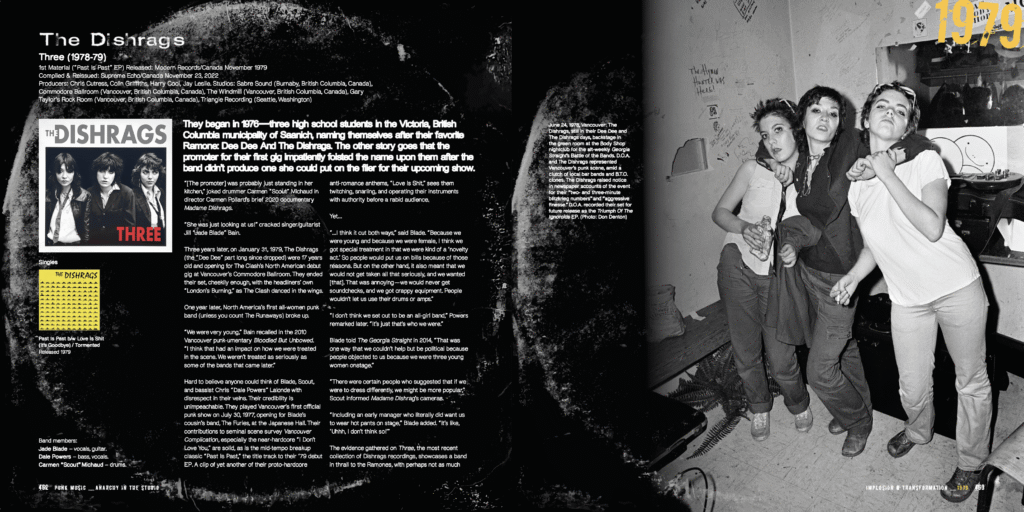
My favorite band that I interviewed for the book, and they were the only complete band that I talked to, was the Dishrags out of Vancouver. Oh, my God, they were so much fun, and their music is just great. They had a really unique take on things. I mean, writing breakup songs from a very, very sort of feminist point of view in a way. “Past is Past,” Oh, my God. I mean, that’s as catchy and as beautiful as any Ramones or Undertones record, and as raw as anything. Probably from the fact that they weren’t terribly skilled, but that lyrical viewpoint, you know, is just really incredible and really unique to them, I feel.
Dying Scene: In the last ten years, there has been a revisionist version of what constitutes “punk” or “proto-punk. I got into Elvis Costello in my mid-twenties, and nobody was considering him punk, but recently it feels like This Year’s Model is considered a punk rock record.
Tim Stegall: I kind of wrestled with that a little bit myself. It’s not exactly as hard as Rocket to Russia, but ultimately, I had to think. At the time, he was considered a punk artist, and This Year’s Model is very much of an intelligent garage punk record. Right down to that Vox Organ sound that Steve Nieve puts all over the record. My actual favorite Elvis Costello song, “Big Tears,” which was a B-side, features Mick Jones on guitar. Clash fans need to look up that record if they’ve ever heard it.
Dying Scene: He wrote it while listening to the Clash’s first record. He talks about being influenced by the Clash and coffee.
Tim Stegall: The Clash and coffee; That’s a good combination there, Elvis. I’ve never forgiven him for taking the first name of my first rock and roll hero. It’s hard to deny the power of those early records. Although I’ve got to say the demo that he did with the Attractions of “Watching the Detectives” is better than the officially released version. The only place I’d ever heard that was on this tape that the NME attached to the cover of one issue that came out during Punk’s 10th anniversary called Pogo a Gogo. I really wish the NME would re-release that either on vinyl or on CD or whatever, because it was a really good collection of stuff.
Dying Scene: My Elvis Costello favorite rarity has always been the Mersey version of “Every Day I Write the Book,” but I have to dig out my CD whenever I want to hear that version or pull it up on YouTube. I don’t always want to do that.
Tim Stegall: You might have noticed that I kind of adhered to the broader version definition of the term punk rock, and that’s because I hated that as 1977 went along, suddenly there’s a style manual and list of rules of what is and isn’t punk rock. I prefer that broader definition. Let’s sit here and just name some random punk bands. Suicide, The Stranglers, The Cramps, The Dead Boys, The Clash, The Ramones, The Sex Pistols, The Buzzcocks. Okay, what do these bands have in common? Do they sound alike? They do not, but they probably all have very similar record collections; they just have a very, very different take on how they play this style.
Dying Scene: For the bands from the 1970s through 1975, what do you feel like they have in common?
Tim Stegall: Well, they aren’t James Taylor. They aren’t Melanie. They aren’t the crap that was on the radio at the time. I mean, it was what they have in common. They remembered when rock and roll was dangerous, something that was simple without being simplistic, easy to grasp, and had a certain excitement. They also all pretty much grew up on 50s and 60s top 40 radio. Three-chord, two-minute-thirty-second songs. They had that kind of aesthetic, and it was when those were the parameters you could just come in. That’s why I think that the 45 is the best medium for punk rock because you come in with your best song, your best ideas. You threw them on there, you got in, you got out, mastered the damn thing. That’s the best sort of presentation. That was one of the great things about the 60s stuff.
If you put Jeff Beck in the Yardbirds in service to a two minute thirty seconds song, he doesn’t get too excessive. He could experiment all over the place, being as innovative as he can be, but it’s only going to be within twelve bars or eight bars. It’s not taking over the entire song.
Dying Scene: I love that whole introduction to the other musicians in history who were kind of the outliers. The country, rockabilly, and glam artists that were kind of punk rock before the term was coined. You make the case that blues artists and the jazz women from the 1920s through the 1940s had proto-punk credibility? I’ve been saying that for a while. They were going up against the norms of what white people were doing?
Tim Stegall: I think I know what you’re trying to, what you’re trying to get to. Take a look at “Strange Fruit” by Billie Holiday. I think I talked about that, if I remember correctly, in the intro. That strange fruit hanging from a hollow tree. Those were black people getting lynched. I mean, how punk rock is that? She got that song over on the radio and it sold how many copies? That’s total punk rock right there. Anytime that you subvert the norm like that and deliver a message effectively, you’re seeing punk rock in action.
Dying Scene: You’re just seeing Iggy Pop or Mike Watt or Lee Ving. It’s these artists who have been playing for thirty or forty years. Mike Watt plays in like four or five bands right now.
Tim Stegall: If you really want to compare punk to jazz, are the Sex Pistols and the Ramones ragtime or like Louis Armstrong or something like that? And something like H09909 and Soul Glo- is that, you know, free jazz?
Dying Scene: I would be thinking that maybe Iggy would be considered the ragtime, but that’s weird to call Iggy ragtime.
Tim Stegall: It’s kind of a similar trajectory. I mean, jazz just continued evolving and morphing. The same thing has happened with punk. You get these incredible things. There’sThere are acts that experiment with industrial elements and hip hop elements. I really enjoy a lot of that stuff. I saw this band opening for the Sex Pistols on my 61st birthday called Panic Shack out of Wales. It felt to me like, you know, maybe every city has a band like Die Spitz now. That’s not necessarily a bad thing at all but, you also got things that are very much traditional punk rock that’s very good.
I absolutely love the Sleeveenes. They’re my favorite band right now. A band I’m as obsessed with as I was with the New York Dolls or the Clash growing up. I think Stef Murphy is such an incredible songwriter. He’s as good as somebody like Townes Van Zandt, and the band plays his songs like they’re Clash songs. Two albums so far. The first one is a self-titled one that’s out on Dirt Nap. Goner Records put out the second one just this summer. It’s called National Anthem. The fact that those two labels put out their product should tell you a little bit about this band.
Dying Scene: Which smaller band was most important for you to include? You’ve gone over a couple of them, but which one was most important for you to include?
Tim Stegall: Like I said, I wanted to treat proto-punk as if it was punk rock. They just didn’t have the name for it yet. That’s why in my mind, the New York Dolls are a punk rock band. Third World War comes to mind. The Hollywood Brats, for sure. There are bands that I grew to appreciate more. The Boys definitely come to mind. I became a bigger fan of them after I wrote this book. Same with Teenage Head. I became a bigger fan just from writing this book of those things. Believe it or not, it was important to me to include Plastic Bertrand.
Dying Scene: I appreciated that. My son, for whatever reason, when he was about ten, loved that album. I grew an appreciation for it.
Tim Stegall: It’s understandable. It’s catchy as hell. I dug up his story, and it’s just a ridiculous story about how that song came together and everything. It turns out that Plastic Bertrand himself was basically the Milli Vanilli of punk rock. Then you find out everybody under the sun has recorded that fucking song. Richard Thompson did an acoustic version. Metallica; You should find the clip. It’s Metallica covering it in Belgium. They get the entire stadium singing along. It’s hysterical. It’s hysterical. You know, I wasn’t surprised Billy Childish recorded it because he’s recorded everything; it feels like at this point.
Dying Scene: Were you surprised that any of the bands hadn’t received more attention at the time?
Tim Stegall: Oh, God. Yeah, The Boys, for sure. I think pretty much any of the bands that I just named off was important for me to get in. I’m shocked that they didn’t become bigger than they were. DMZ, The Weirdos. So much of this stuff was just important for me to get this in there and give their stories as much love and attention as I did the story of Never Mind the Bullocks, Here’s the Sex Pistols.
Dying Scene: Do you feel like these bands were appreciated in their respective areas?
Tim Stegall: Not in Third World War’s day at all. They went nowhere. They sank immediately without a trace. They were not appreciated at all. The Hollywood Brats, as well. It was only over time that these bands found their fame or their cult or whatever. I just want to give all those things the same love.
Dying Scene: What positive qualities do you think the 1976 through 1979 bands inherited from the earlier bands mentioned in the book?
Tim Stegall: Everything. I think that the punk bands, the proper punk bands, got more pronounced with hardcore. I think I wrote a little bit about how the attitude was, “Oh, so you’re not going to sign us? You’re not going to put us on the radio? Well, fuck you. We’ll build our own world.” I think there was some of that maverick intensity and complete rejection of the status quo. There was some of that prevalent in early punk, but all those bands honestly thought that they were going to get signed to CBS Records. I joke with the Ramones; the Ramones thought they were going to be the Beatles in A Hard Day’s Night. That did not happen. What they got was something that was a little bit more lasting and a more substantial than that in so many ways.
10,000 people bought the first Ramones album? I think every one of those people formed a band. The old thing that everybody quotes from Brian Eno: only 6,000 people bought the first Velvet Underground album, but every one of them started a band. I think that’s incredibly true. It spawned successive waves, and then those waves spawned other waves. I mean, it really is the butterfly effect here.
Dying Scene: Do you think any of the later bands fundamentally misunderstood the earlier artists that influenced them?
Tim Stegall: I don’t think so. Everybody took what they took from those earlier bands. And it’s basically it’s like those handwriting books that you get when you enter first grade, and it shows you how to draw these shapes. These shapes become your handwriting. That’s why it’s important to go and copy “Johnny B. Goode.” You’re not going to end up playing it just like Chuck Berry, but you’re going to learn some fundamentals. You’re going to end up putting your own style upon it. Hopefully they learn something, but there were a lot of bands that also just copied the Sex Pistols and didn’t add anything to it. It was crass. Not the band. I have my own ideas about Crass. I did include them in the book. Even though I’m not necessarily a fan, I have to admit, at least the politics of punk rock actually all come from Crass rather than the Clash. To be honest, musically, they all sounded to me like a bunch of people who could not play, copying Hawkwind; that’s not necessarily a bad thing. I do enjoy some of that Crass stuff.
If I’m going to put on a record, I’m going to put on L.A.M.F. I’m just saying there were a lot of opportunists and charlatans that did get in on this because maybe their careers playing Deep Purple covers at the local pub weren’t panning out at that point because the climate had changed. I don’t know if anybody necessarily got anything wrong. It’s just they were just trying to play to the best of their abilities. Maybe this is what comes out, you know.
Dying Scene: Radio Birdman never gets enough love.
Tim Stegall: Never. Probably the Saints even less. I interviewed both Ed Cooper of the Saints and Deniz Tek of Radio Birdman for like three hours apiece for the interviews book. The Dils don’t get enough love; that was important. I love Australia’s take on punk rock, and I wanted to include as much of that as I could. This is a problem when you’re writing punk rock history books. I mean, we did specifically concentrate on the 70s, but most of the time when people, like John Savage or somebody, write a book, they end up cutting it off with Sid Vicious dying. It’s as if hardcore never happened. As if grunge never happened. I’m hoping to encompass all of that as we go along.
Dying Scene: Were there any revelations that surprised you during your research or any of your reviews?
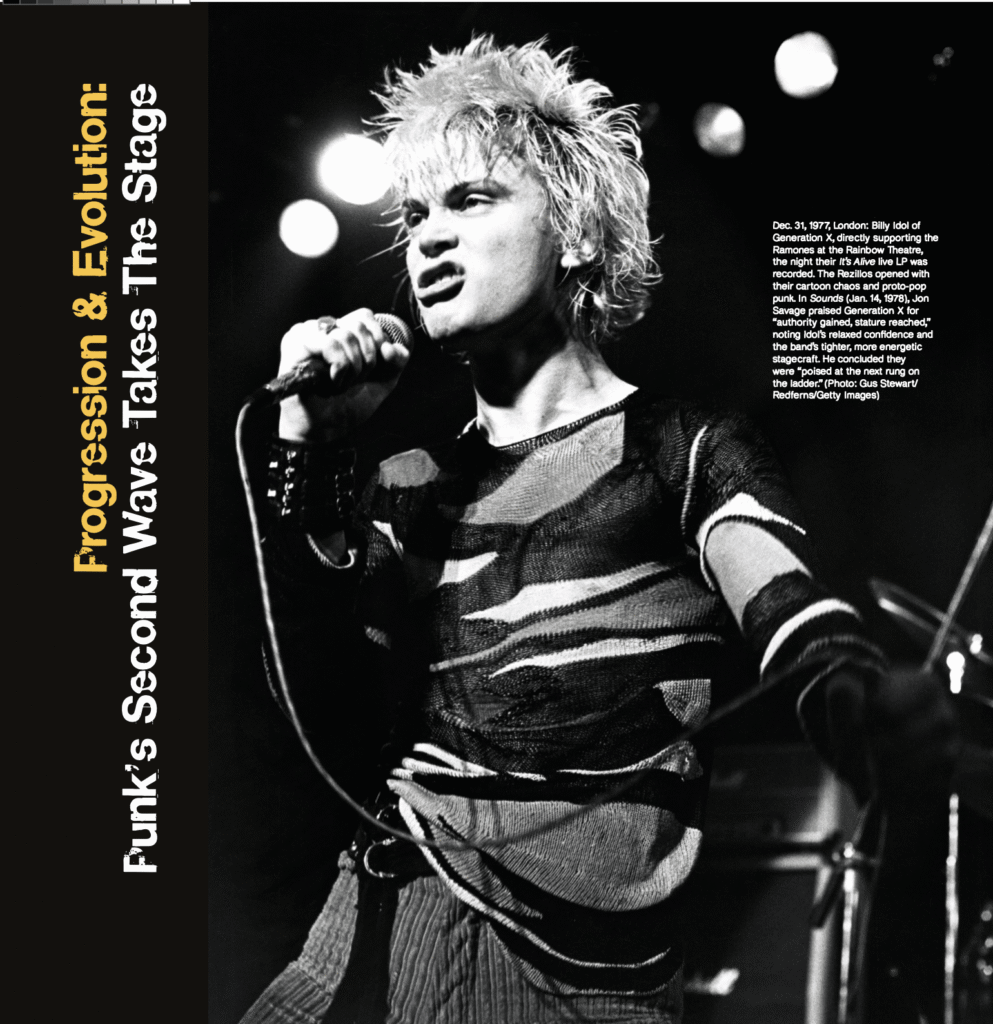
Tim Stegall: Oh, man. Yeah, Danny Fields corrected a lot of stuff that he was involved with. He gave me the straight-ahead account of how the MC5 and the Stooges both got signed to Elektra through him. He corrected a lot of the legends that Iggy Pop himself perpetrated about the night he met David Bowie. There were certain things that got said to me during some of those interviews. Hilarious shit like Derwood Andrews from Generation X. At one point he says something to me like, ” You want to know why I always looked miserable when we were on Top of the Pops? It’s because I fucking hated Billy Idol and Tony James. I fucking hated playing with them. You know, they never listen to my ideas, blah, blah, blah. That’s me up there basically thinking, God, I wish I was in Joy Division.
I was just amazed. It’s like, how miserable were Billy and Tony making Derwood that he wants to be in the most notoriously miserable band in post-punk history? You know, that was just hilarious. Wreckless Eric telling his entire story. I mean, that guy’s got this incredible, self-deprecating, deadpan sense of humor. He recorded his demo that he presented to Stiff Records over a copy of Eric Clapton’s Rainbow Concert. You know, he did that thing that we used to do over the lug hole, and he recorded it. As he put it, well, he only had about twenty minutes of material left, so I sat in silence for the rest of the tape.
Then his whole tale about how he presented the demo at the Stiff Records offices. He was so nervous and shy that he had to get a couple of pints down in him in order to get the courage up. And then he said I walked past this tatty little storefront once or twice because I was expecting this big high-rise, and no, turns out Stiff Records is in this little storefront. Apparently he walked in and announced, “I’m one of these cunts that walks into record companies with a tape.” He said this huge lumberjack with a beard approaches me; it turned out to be Huey Lewis. He was there recording the first Elvis Costello album with his band Clover. He said there were all these psychotic delinquents sitting around in the room as well. That turned out to be the damned.
He said that Nick Lowe was just so amused with this little spectacle after he went running out that Nick went and got the tape from Huey Lewis. He goes back to where the boombox is and puts it on. The first song he hears is “Whole Wide World,” and said Nick immediately went looking for Jake Riviera. Jake has the same reaction that Nick has. It took them days to locate him because apparently, he just ran off and was already gone by the time they heard the song.
Eric claimed that for two or three days, the payphone at his boarding house was ringing and he didn’t pick it up because he didn’t think anybody wanted to call him. It was Jake Riviera trying to find Wreckless Eric so that they could record “Whole Wide World.” I mean, so many of these people, they tell their stories, and it sounds like the punk rock version of that movie, That Thing You Do.
Dying Scene: Were there any commonly accepted punk narratives that fell apart when you looked into them a little closer?
Tim Stegall: Like I said, Danny Fields told a very, very different version of how David Bowie met Iggy Pop. It’s not terribly different, but just different enough. Tracing the etymology of the term punk rock itself, that was like the big revelation for me. I certainly wanted to destroy the whole myth that Malcolm McLaren created everything that had to do with the Sex Pistols. That has pissed me off for years. Let’s face it, Malcolm McLaren could not play guitar like Steve Jones.
They existed as a band of sorts called the Swankers before Malcolm agreed to start managing them. He did introduce them to John Lydon, who Bernie Rhodes discovered, actually. Malcolm tried to claim a lot of credit for that band, but no, they were not this prefab Monkees-style band that everybody thinks they were. They were writing those songs. Nevermind The Bullocks… is such an explosive, perfectly recorded rock and roll record, honestly.
Dying Scene: What chapter was what of these bands was the hardest one to research?
Tim Stegall: The hardest one to research, probably Third World War. Honestly, there’s just not a lot out there.
Dying Scene: Which record in the book do you feel has aged the best?
Tim Stegall: Well, I don’t think any of them sound dated to me. You know, to be honest, because there’s just a vitality and excitement to this music, obviously. There’s a number of them that just still sound fresh to me. Raw Power by Iggy and the Stooges. First New York Dolls album. The Saints, I’m Stranded. The second one, too. The first Saints album is just so mind-blowing to me. I mean, there’s not a bad cut in the entire thing. It feels perfectly recorded. Everything about it is perfect to me. Yeah, there’s quite a few, you know. But like I said to me, all this stuff just has a vitality that never grows old.
Dying Scene: What records in this book deserve the biggest reassessment, either positive or negative?
Tim Stegall: I think the first DMZ album does. Everybody talks about the production being bad, but I think it actually suffered from the same disease that afflicted the Heartbreakers LAMF album. It was poorly mastered. I think the mastering is bad on a lot of these things. Same thing with the Rich Kids album, Ghosts of Princes and Towers. Glenn Matlock, when I brought this up to him, said he thoroughly agreed with me that the mastering was bad. He and Rusty Egan went and remixed that debut Rich Kids album for Record Store Day. And I got that after he told me about it. It’s like somebody lifted a wet blanket off of this off of this record suddenly. There’s a few of them like that that should probably be reassessed. Those immediately come to mind.
Dying Scene: Were there any records that got cut from this book?
Tim Stegall: Lots got cut for space, unfortunately. Slaughter and the Dogs, Do It Dog Style. The Heartbreakers Live at Max’s. Some of these, I’ve actually taken those excised entries, and I’ve run them at my Substack. The Ramones It’s Alive. There’s lots of things that got cut, and I didn’t get any Austin or Texas bands into it. That’s simply because no Texas bands put out an album back in the 1970s. There’s a lot of bands that we included, like the Weirdos or whatever. We went to compilations because they didn’t put out albums either. They put out tons of demos and a few singles or something like that. Those later got collected into an album, but we don’t really have anything like that: The Skunks here in Austin or The Nervebreakers in Dallas. Unfortunately, we couldn’t get anybody like that from my home state.
Dying Scene: If someone who reads this book discovers one new artist, who do you hope it is?
Tim Stegall: The Dishrags or the Boys or the Saints. There’s tons that I hope that they discover from this. I’ve said a few times that this is the book I wish I had when I was fifteen and just walked out of seeing The Clash at the Armadillo and deciding this is what I wanted to do with my life. It’s the book I wished I had back then. I’m hoping that this serves that function for some fifteen-year-old who’s deciding they want to discover punk rock.
I hope I’m giving them enough of the cultural signifiers. Like what movies these people were watching or what books they were reading or whatever. Talking about things like fanzines and squatting and just different aspects of this life. You know, DIY record production, things like that. Yeah, I would love for that to be, you know, some sort of guidebook, if possible.
Tim Stegall’s Anarchy in the Studio: Punk Music 1970-1979 – The Rise of Punk Rock is available through Ruffian Books. You can keep up with Tim and his writing at his Substack.

Discover more from Dying Scene
Subscribe to get the latest posts sent to your email.