After a three-year hiatus, Bad Religion reformed in 1988 with most of their original members. They would go on to record two of their fastest and most popular albums, Suffer and No Control, leaving no traces of their time in the unknown. If their 1985 EP Back to the Known was a palate cleanser, these next three releases were a three-course meal of perfection.
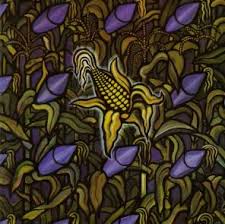
After the one-two gut punch that was Suffer and No Control, Bad Religion recorded Against the Grain; an album that feels like a continuation of those previous records. The albums and their songs are short, to the point, yet still thought-provoking. In a time where old punk rock songs feel more relevant than ever, the warnings Bad Religion has been giving us for the last forty years hit harder than they should.
The record opens with the song “Modern Man,” a Greg Graffin-penned song about how humans have essentially taken all of the planet’s resources for granted and the callous behavior we exhibit toward anyone who tells us otherwise. A common theme in many Bad Religion songs is how, collectively as humans, we suck. This is a blunter way of calling out de-evolution of humans when Devo’s methods weren’t taken seriously. It sets the perfect tone for this record.
While Graffin handles the majority of the songwriting on Against the Grain, Brett Gurewitz also writes a good chunk. His song “Flat Earth Society” seemingly calls out people who push back on science by coming to the wrong conclusions and the inane theories that come from this. While there was a real group called the Flat Earth Society at one point, it’s clear Gurewitz has the same regard for their members as anyone loudly broadcasting similar beliefs.
Where Gurewitz goes big on satire, Graffin hits harder emotionally with “Faith Alone,” a song about the trappings of blind trust in faith without action. It’s about saying, “God will work it out,” rather than taking action to make changes yourself; it’s waiting for some deity to fix the problem. Growing up, I noticed that as Bad Religion hit the mainstream, several kids raised in religion who heard them on the radio clung to them or at least responded to their beliefs being challenged in a healthy way.
Bad Religion’s radio hits leaned more into their more socially conscious tracks rather than their political ones. These earworms were catchy enough for someone to buy the record and be exposed to some of the smartest, most philosophical lyrics in music. This leads me to suspect that there were either cracks in that foundation to begin with, or this helped form them. I’d like to think “Faith Alone” was something that tipped some of those kids over the edge.
The title track, “Against the Grain,” discusses being an outcast and pushing back against the norm. There was a time when punk rock embodied this. It also advocates for free thinking despite the inevitable pushback. Musically, this song isn’t as fast as the others, but as each verse progresses, Greg’s vocals become more intense, starting almost as talk-singing through the first chorus. The aggression builds during the second and third verses until it peaks in the fourth verse. Graffin’s vocal performance becomes the song’s narrative arc.
People talk about how different their next album, Generator, was, but songs like “Faith Alone” and “21st Century Digital Boy” are good indications of where their sound was going. This record is still fast, but hints at broader melodic songwriting in the band’s future. Other bands I’ve spoken with who were signed by major labels in the 1990s have said it was annoying and unnecessary to re-record songs from previous albums that may have some appeal to mainstream audiences. This is something that happened with “21st Century Digital Boy” and its inclusion on 1994’s Stranger than Fiction. A song would typically be pulled from their previous album, yet here they went three albums back. While it can be debated which one is better, there are definitely differences between the two versions.
Before re-listening to this record, Against the Grain was one of the Bad Religion albums I’d spent the least time with, aside from Into the Unknown. I hate to call this album formulaic, but I don’t think that’s a bad thing in this case. This trilogy of albums during this era of the band is one of the strongest in the band’s and punk rock’s history. It’s amazing how hard some of the songs still hit, but sad at how relevant they still are. Bad Religion albums, like most works of philosophical thought, should have been taken as warnings, but instead got written off as punk rock songs. A dismissal that feels more damning now than ever.
Discover more from Dying Scene
Subscribe to get the latest posts sent to your email.