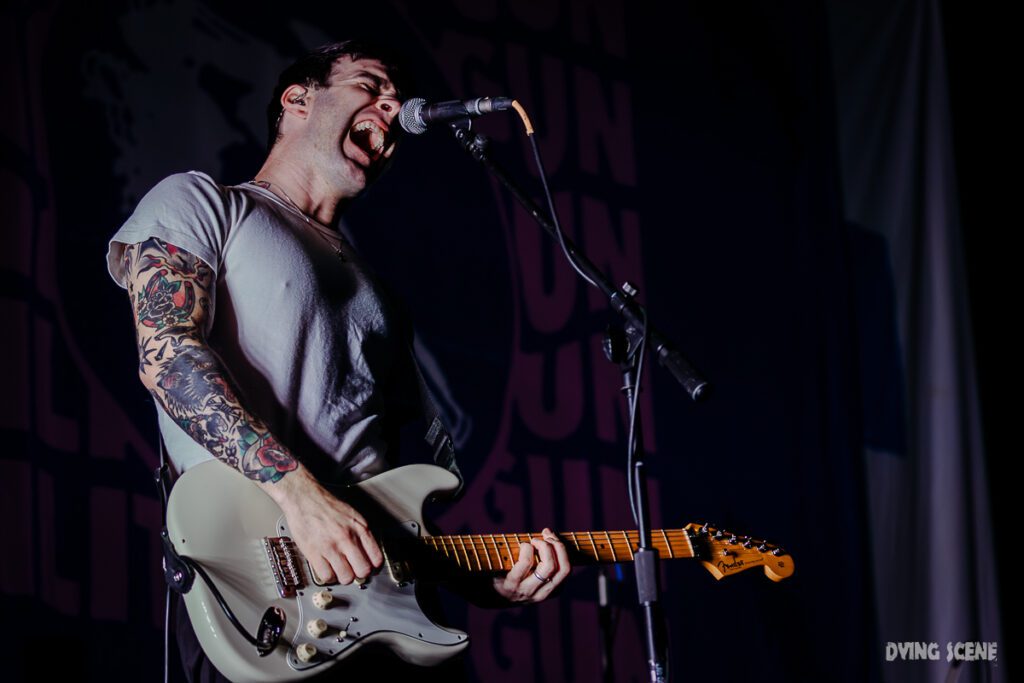
DS Interview: Chuck Ragan on the eight year journey to “Love And Lore”

Imagine it’s early 2016 and you’re Chuck Ragan. You’ve just put out your latest studio record, a unique release called The Flame In The Flood. It not only serves as the soundtrack to the 2017 video game of the same name, but it’s also your fifth solo record in less than ten years, and you […]

Imagine it’s early 2016 and you’re Chuck Ragan. You’ve just put out your latest studio record, a unique release called The Flame In The Flood. It not only serves as the soundtrack to the 2017 video game of the same name, but it’s also your fifth solo record in less than ten years, and you got to make it with some of your buds like Jon Gaunt and Joe Ginsberg and Todd Beene in the shed/studio on your property in Northern California. You’ve also got a wife and a one-year-old at home, and your main musical squeeze, Hot Water Music, is getting busy on what will – by my math – turn into their eighth studio record, Light It Up (and pulling together what will turn into the Keep It Together compilation double album). Because of the thematic nature of The Flame In The Flood, you’ve still got some other thoughts and ideas and new music of your own that you’re woodshedding, so you keep sending ideas to your conspirators and keep stockpiling music for the next, more traditional solo record.

But life has a way of making other plans. In addition to normal family matters and balancing his fishing expedition business, the Light It Up tour gets an interesting wrinkle when your brother-in-arms, co-frontman Chris Wollard, has to step back from the touring life to help his mental health find equilibrium, so you weave a new spark plug, The FlatlinersChris Cresswell, into the fold. There’s a follow-up HWM EP, Shake Up The Shadows, which is released in time for the band’s 25th anniversary, so of course there are all of those festivities. You finally book some solo time in the studio for early 2020 and a global plague breaks out. Somehow, you manage to stay at least virtually connected with the Hot Water crew and producer Brian McTernan enough to put out a new record, Feel The Void, in 2022, touring on that album when it seems right to do so. Then you FINALLY get to start recording your new solo record, only you realize you’re right at about 30 years of Hot Water Music and so there’s ANOTHER new Hot Water album, Vows, and 30th anniversary tour to pull off, so you push the new record back even more.

And that’s just a fraction of the things that could have derailed the project entirely…day jobs and family matters and shall we say “acts of god” have a funny way of throwing monkey wrenches into your good intentions. But it’s also a testament to the labor of love that is Love And Lore. Throughout the extended run-up, Ragan would send ideas to frequent collaborator Beene to fill out or rework or, sometimes, just go wild with them. The pair finally got together in the studio with Gainesville’s Ryan Williams, Hot Water’s live sound person and frequent audio recording engineer, and a cast of characters that includes George Rebelo on drums, Spencer Duncan on bass, Jon Gaunt on fiddle (obviously) and guest vocal appearances from Chris Cresswell, John Paul White and the wonderful Paige Overton. I hesitate to call the final product the crown jewel of Ragan’s solo work because I feel like that implies it’ll be his final work, and he is very much in fact still always writing new music as a means of connection and expression and therapy. But I do mean to imply that it’s great. Familiar and fun, yet some sounds we’ve never really heard from a Ragan solo record before. More rock-and-roll. More attention to the full-band sound, rather than songs grounded in just Chuck and an acoustic.

We caught up with Ragan via Zoom from a backstage green room in Germany, where Hot Water had just finished soundchecking for the Hanover stop on their 30th anniversary tour. We talked at length about the trials and tribulations of making the record, and the conscious decision to allow the music to flow in new directions. We talked a lot about the difference in songwriting for Hot Water versus writing for a solo record. We talked about the impact of turning 50 at the same time the band turned 30 and what those legacies mean. And of course there are some teases for tour plans that’ll keep him busy in 2025 and beyond. We should have talked about how cool it is that he and his HWM brothers got awarded keys to their collective hometown of Gainesville, Florida, last month, but I ran out of time. Anyway, keep reading down below. And make sure you pick up Love And Lore. You’ll be glad you did.

(*NOTE: The conversation below is edited and condensed for content and clarity*)

Dying Scene (Jay Stone): Thanks for doing this. Especially given time zones and daylight savings time and being on the road in a different country…this is awesome. 

Chuck Ragan: Excellent. Well thank you for having me, man. Stoked. 

Me too. It’s been a while. I think the last time you and I talked was like Hot Water Music’s 25th anniversary, and here we are at like the 30th, which obviously we’ll talk about your record, but congrats on the 30th anniversary of Hot Water and on turning 50 last week. Those are two pretty awesome milestones, man. 

Thank you, bud!

When you line the math up, I don’t know why I never really considered it, before. But I said, “wow, like 30 years of Hot Water and turning 50 means that that like you guys were 19, 20 when Hot Water Music started.” And it’s really bizarre to think about it in those terms that like, yeah, as sort of monumental as it has become…you guys were kids!

I think if I remember right, George is the oldest. And then me. And then Wollard and then Jason. So if I remember right, we were all like 18, 19. Jason was 18. Yeah, I believe so. 18, 19 and 20. Sure enough. 

And obviously that makes sense. But it’s bananas to think about 30 years down the road … If you’re 19-year-old Chuck Ragan, right, could he ever foresee a day where Hot Water Music is still alive 30 years from now? And frankly, that you’re still alive 30 years down the road? 

No, no way. I mean, in those days,o ur mentality was so different, you know? We didn’t even come close to looking past the age of 22, much, you know, 30 years older. (*both laugh*) And yeah, you know, as far as the band goes, we were always…I’ve talked about this before…we were always a very much short-term-goal oriented band being kids. We just didn’t have the thought process to think that far ahead. So everything was definitely, you know, the short-term goals of let’s write three songs, you know. And then we would just put our heads down and work to achieve it. Then it was make a demo tape and figure out what we’re going to call ourselves. And then it was play a show. Then it was play the Hardback, you know. And then it just kept going like, oh, let’s try and do a tour. We never thought that we would end up playing thousands of shows and countless tours and or even coming overseas.

Right. Just to think 30 years ago, like 30 years down the road, you’d be having a Zoom conversation from Germany with someone like me. The amount of things that had to change in that time. 

Sure enough. Yeah. You know, a lot of sacrifices. And over the years and which, you know, I think anyone has to make in any line of work, especially if it’s an independent type of work or you’re some type of artist, musician, a contractor, any type of tradesman, you know? If you’re out there hunting and looking for your own security and you definitely have many, many moments and months of that feast or famine, where you’re wondering how the hell you’re going to keep the lights on, how you’re going to feed yourself. And then especially when family comes into play, you know, you tend to sometimes have to make a lot of sacrifices to continue whatever that is, whatever that you’re grinding for, you know?

And you keep making (those sacrifices). And so that’ll transition us nicely into talking about this little guy (*holds up Love And Lore vinyl like he’s a late-night talk show host*). What a great record. Love and Lore, it’s the new record. It’s on Rise Records, right? Yeah, I have that right. What a great record and what a labor of love it seems like it must have been, because the last time you and I talked about a Chuck Ragan record was 10 years ago, which is bizarre. Was there a time where you didn’t think it either would or should happen, to have the next Chuck Regan record come out? 

I mean, I kind of…I never have any idea when the next thing is going to happen. You know, I feel like I’ve kind of… I stopped chasing stuff a long time ago in the sense that I feel like I don’t I don’t have (to do this). I’m not doing this because I have to do it. I’m doing it because I love it. And at the end of the day, first and foremost, it’s something I need to do. It’s a part of my therapy, a part of my own healing process and reflection and understanding. And I mean, you’re you’re holding one of my journals, right? 

Yeah, right. 

That’s what it is to me. I would like to think we’ll always be proud of what we’re doing. And we do enjoy making records and having projects and playing with amazing people. But to me, the closure aspect of creating something from ideas and emotions and, you know, scribbling stuff down on papers and matchbooks and random thoughts and ideas and whatnot and coming up with parts and collaborating with friends. And then when you transition into a studio and start to materialize these ideas and lay them down, record them onto something in a way where you’re chiseling that stuff into stone. And you get to a point where you’re like, “that’s all I got. That’s as good as I can make it. That feels right to me. I am now leaving it alone.” And from there, it’s taken and physically stamped, pressed into wax that you are holding there. And when I get that at home and I pull that out and put it on my record player and pour a glass of bourbon and sit back and play it more often than not, in all honesty, it’s like, often the first and last time I ever play that record.

I’m sure, yeah.

And it’s very much like kind of picking up an old journal, you know, and reading through it, closing that book and sticking it on the shelf and moving on to the next. 

Yeah, and the amount of time that it takes for vinyl to be pressed nowadays must play into that too. Obviously, you recorded this album, what, essentially a year and a half ago at this point? Or at least started to? Is that right? 

(*laughs*) I mean, the timeline on this record is kind of insane. (*both laugh*) The idea of even making this thing began in 2016, you know, and there were already a handful of songs in the works before that, or at least like bits and bobs. 

Is that around Flame in the Flood time? Like, was it sort of an extension of that or not an extension of that, but same sort of writing? 

Yeah, some of the demos. And I mean, that’s how my writing has always gone is, you know, there may be a song on a record we put out today that began 15, 20 years ago, you know? I just have tons of archives and old demos and parts and, you know, a little crummy recording where I’m just singing gibberish and maybe a couple lines that I wrote down and it’s one part or maybe a verse and a chorus and that’s it. And, you know, there’s stuff like that laying around and it’s become a lot easier over the years with these with phones and whatnot to just grab it and lay down an idea and you archive all this stuff. And then I’ll sit down when I make the time to actually write and work on songs and look at stuff. And if I don’t have something on my mind right then and there that just kind of drives me to grab a guitar and sit down and just get something off my chest – which happens often too – but sometimes if I get stumped, I’ll scroll through all these archives. I’m like, “what’s that thing? What’s that thing?” And every once in a while, something will jump out at me that either charges me up, makes me feel something or seems perfectly relevant to focus on in that moment, where I sit back and go, “oh, wow. OK.” And then kind of sit back, decipher it, figure out where I’m at with it. And sometimes it rolls smooth and sometimes I’m beating my head against the wall, you know?

How do you narrow it down? I mean, if you’ve got that many ideas going over the years, if you’ve got parts of 10, 20, 50 different songs going, how do you narrow it down? And it’s like, OK, let’s actually put our like focus on making a record and then figure out which 10 or 12 of these go together. That’s got to be daunting. 

Yeah. Usually for me, like my rule of thumb for that has it’s been this way for quite a few years. However many songs are going on or are on that record, I want to go into the studio or at least in a project mindset with twice as many. Like I want to I want double the you know, if there’s 12 songs where I want to go in with 24, 25 ideas, right? Often it’s a hell of a lot easier when you when you’re working with people you respect and that you you move with, you get along with, musically like-minded folks. You know, sometimes those projects move faster like that and kind of determining what it is. But to me, I always looked at, you know, creating songs moreso in a way of discovering them rather than me creating them or me writing them, if that makes sense. It may sound weird. 

Yeah, sure. 

I feel like they’re all there. They’re already all there. All these topics that we’ve all sang about, that everybody sings about, every writer writes about or filmmaker…like it’s all the same stories, all the same topics. So all these stories are there. They’ve been there. You know, we have our own perspective of what that is. But essentially the bare bones of, you know, the story of love and conflict or war…it’s all the same. I’m not creating any notes, right? Any chords, right? They’ve been created, all the beats and the rhythms, like everything’s there. And so to me, I feel like it’s my process is more so doing my best to open my mind as much as possible to see the path, you know, to see where it’s meant to be, see where it’s supposed to be. It’s already there, I just have to connect the dots. 

How fleshed out are all these ideas when you go into the studio? I mean, I think Todd Beene is all over this record and obviously everybody loves Todd Beene and you’ve worked with him forever. But yeah, is he sort of all over this record? And I feel like it’s in a different way than he has been before. 

Yeah, yeah. 

How fleshed out was that idea going into the studio? Did you write together before or do you just kind of let him go be Todd Beene? 

And yeah, for Todd, Todd’s brilliant. And I would love to have him even moreso a part of everything that I do in the writing processes and everything. I just think he’s wonderful and he’s brilliant. A lot of these songs, like I said, I mean, many of them were worked out pretty good, some of them or at least a quarter of them, you know, in the very, very beginning and would slowly kind of add another to the batch. I was sending Todd demos, you know, back in…Yeah, back in twenty-sixteen, twenty-seven, that early. You know, and it wasn’t until twenty eighteen because we signed that I signed this contract in twenty-sixteen with Rise. 

Oh, jeez. 

Yeah! At the time I was working directly with Craig Ericson and (Sean) Heydorn over there, some great folks at Rise, but mostly just communicated with Craig. And I told him Hot Water was fairly busy at that time. And man, I have no idea when I’m going to even finish songs, much less make this record. And he was real mellow and like he’s like, “oh, man, anytime you want, could be a year, five years, I don’t care. Do it when it feels good.” And so that immediately took the pressure off. Maybe made me a little lazy about it.

Maybe took too much pressure off. (*both laugh*)

Yeah, right. Right. And, you know, at the same time, I had a baby, I had a two-year-old, you know? And so home life was way different when it came to actually working on songs and music. And it was, you know, and sleeping and everything changed when kids came in the picture. It wasn’t until 2018 that I got in touch with Todd and was like, “hey, man, I really want you involved in this record.” Because Ryan Williams, myself and Todd Beene did the Flame in the Flood out in my shed on my property, in the shed studio. And it was just such a great experience. I just wanted to do that again, you know. And so we started sending him demos and he would lay stuff down. He would work on stuff. We’d talk about structure. He’s very much, you know, involved early on. Some of them were pretty fleshed out where at least there was here’s the verse in the chorus and another verse and a bridge and whatnot. And, you know, but Todd is completely brilliant and I trust him so much when it comes to, you know, arranging. I love his taste in music. I love his ideas. And this one, I just I kind of wanted him to go nuts. And I think he did, too. He took the session to his place. And, you know, once he gets in his wild of electric guitars and pedal steels and everything in his home studio, there’s no telling what’s going to come out of there, you know. 

But it’s great that you give him the freedom to do that. You could go in saying, “I just want to pedal steel for this third” or whatever. But you trust in him to be able to say, look, do what you’re going to do because it’s going to be awesome…

A hundred percent. I mean, I definitely have my opinions and I like, you know..

It’s still your name on it.

Yeah, like “I need this one stripped down,” you know? “Let’s just kitchen sink it, you know, have some fun.”

Yeah. Yeah. 

So but yeah, it was a hell of a process, man. We got serious in 2018 for a minute and started, you know, had some demo sessions in Florida, actually got into the studio, started laying stuff down. And then the plan was to really hone it through in 2019 and get into the studio early 2020. And we were scheduled to be in the studio in April of ‘20. 

And what’s going on that month? (*both laugh*)

Yeah. World shutdown. Monkeywrench in the gears. I just had to do whatever I could do to provide for the family. And then, you know, fast forward again, we were in you know, twenty twenty-two and finally got another session on the books and that had to move for some reason. It just seemed like this record for the longest time was…just if anything could go wrong, it was just going wrong. Or not even going wrong, just just kind of putting the brakes on us. Ryan Williams, him and his wife had a beautiful baby while we were actually in the studio. 

Oh, wow!

Yeah. He one day literally was like, oh, oh, oh, I guys, I got to go! (*both laugh*) And we were like “you go, we’ll lock up, man!” 

Yeah, right. That’s wild! 

That was the end of the session! Luckily, I had finished all of my vocals and guitar. I’d finished all of my stuff. Todd Beene then had to take the session up to his place and while he was there, a tree fell on his house. So that put brakes on him there.

Of course it did, yeah. 

You know, relationship madness, like just you name it, it just kind of kept coming. And then when we were finally ready, it got way too close to this whole Hot Water Music 30 year campaign. So then it was us who decided, all right, now that we’re done. Let’s just sit on it! (*both laugh*) 

Right. Right. Sure. It’s been this long. 

Put it out later.

Yeah, I feel like as you know, life exists on social media. So I feel like in watching through social media, I remember you and Todd and a few other people posting stuff from the studio, probably late 22, early 23, something like that. And as a fan of yours, like solo parallel to your work in Hot Water, I thought “oh good! It’s been seven years since the last Chuck record, this is awesome!” And then another whole Hot Water album came out. Obviously, Vows came out this year, so I’m like, what the fuck? Like, where’s the Chuck record? (*both laugh*) Do you think the album would have come out differently…would it sound differently or be themed differently if none of that stuff happened and if you had actually recorded it in, let’s say, 2019? 

A hundred percent. There’s no telling what it would have been, you know? I think I think there because, you know, a lot of my songs, the majority of our music, my stuff, Hot Water music, you know…even though they stem from dark places at times like there’s always got to be some hope. There’s got to be a glimmer of hope. There’s got to be a light at the end of the tunnel. Like that’s a crucial element in making music for me because I’m doing it to heal.

Right. 

That’s the reason. And I’m doing it for myself and my friends and my community, right? And like so it being a healing process, you know, some of these songs, like tend to come from, you know, places that aren’t all that pleasant at times. it  can be a dark place. And, you know, there was I mean, there was some uncertainty. There was some darkness kind of between that, you know, from the time you’re talking about, if we were to do it in 2019 to, you know, 2023, a lot a lot of darkness around. Whether we like it or not, if you’re creating anything, you know, or expressing anything, you know, whatever is happening around you within your life, within your community, your neighborhood, your society, in the world, like it’s going to come out if you’re, you know, just reflecting and just trying, you know, doing your best to stay genuine to yourself and the work that you’re doing, it’s going to leech out, you know. Yeah, for sure. I think who knows what it would have been, you know, I don’t know. 

You’ve talked before, obviously, your songwriting is very personal and you’ve certainly shared stories like with the Wayfarers. I’m a proud early member of the Wayfarers Club. And so you’ve obviously talked about personal stories that go into the Hot Water songs like “Remedy,” for example. And so your Hot Water writing has always been personal, but it feels like your solo work is like differently personal, if that makes sense. It might all still come from darkness, but it seems a little more like actually focused on the light and focused on sort of the family aspect of things more specifically than Hot Water. Hot Water might be like a little more general, the concepts. And it seems like…is that a conscious thing that like if it’s a Chuck Regan record, it might be a little more like explicitly personal? Or do you even think about it on those two terms? 

That’s a really good question, you know. To me, usually it’s kind of one in the same writing often at the time that I’m writing. The last thing I’m thinking about is this is one of my songs and this is a Hot Water song. 

Interesting. 

Until I play it, because the majority of the writing that I’m doing, I’m playing on a Martin, you know, unless it’s time to work on Hot Water stuff. And, you know, I’m communicating with the gents and we’re just like, yeah, we need to plug a guitar in, And I am like writing for Hot Water music, you know, playing like I would just beat the hell out of the thing, you know. But usually a lot of like a lot of our songs that ended up like “Much Love” or “Habitual” or, you know, a lot of these songs, these were old demos on an acoustic guitar sitting on the porch from, I don’t know, 10, 15 years ago, somewhere. And, you know, back then I had I had no idea, you know, that this is going to end up on a Hot Water music record in 2024. 

Yeah, right.

So, yeah, I don’t know. That’s a great question. I think that when it comes down to really honing the stuff, music definitely kind of evolves as I’m working on these demos and there’s definitely moments where I’m like, yeah, that that definitely would fit in the Hot Water catalog more so than than my stuff.

Is that more true musically or lyrically? Or both? 

Probably musically. Yeah, I would say.

So, for the lyrics, I mean, obviously you might have a line or part of a verse or a chorus or whatever that stand-alone that you build off of. But do the lyrics sort of come last in a case like that? But you don’t write lyrics differently for Chuck Reagan versus for Hot Water, I guess?

That happens a couple of different ways. Sometimes I’ll just go on a tangent, you know, and write like I’m writing poetry, more or less. You know, and sometimes it’s a mess. It’s run-on sentences and it’s like just dumping, getting stuff off of my chest. And who knows, you know, I can’t say I would say, you know, for the most part, lyrics get honed at the end. You know, often demoing this stuff, we’ll sing just straight gibberish. Like I was saying about discovering the songs, like, I think the story is already there. You know, the note, everything’s already there. And there’s an energy and an emotion and a feeling that gets us started in the first place. And it’ll come out in a melody. It’ll come out either in a guitar melody, a vocal melody or both kind of combined. And to me, it’s important to, like, tap into that energy right then and there, whether I have words for it or not. Some of the time I don’t! I mean, I’ll hit record sometimes and, you know, make sure nobody is around (*both laugh*) and just start howling at the moon, you know?

Right, right!

You know, the Wayfarer folks have probably heard, you know, some of this and this isn’t stuff that I would normally play for anyone, you know? It took quite a few conversations between us before we kind of let some of that out in the Wayfarers club, because, you know, it’s just so exposing, you know? And just knowing or not knowing, I guess, how crazy it may sound.

Yeah, yeah! (*both laugh*)

I mean, I listen back to it sometimes I’m like, oh, my God, I’m out of my mind. I’m just tunnel vision, in some kind of vortex. But it’s important to tap into those energies when they come to us, at least for me. I think a lot of songwriters do things differently, but for me, as a way to just get stuff off my chest, that’s how I’ll do it. And every once in a while – and I’d have to think longer on why it possibly works this way – but every now and then I’ll just be dumping and a phrase will come out or a word will come out, and many, many times – more often than not, it dictats the path or the meaning of the song. I think it’s something subliminal that I need to get off of my chest but I don’t know how to do it. IT’s like, you know what you need to say, you know what you have to get out, but you haven’t been able to articulate it. Like your wheels are turning faster than your mouth can speak. 

In regards to your solo music – since you never really know when you’re playing it live what format it’ll take: it could be you, it could be you and Todd, or there was a time when it was you and Jon (Gaunt) and Joe (Ginsberg) and maybe (David) Hidalgo. Obviously you know when you write a Hot Water song, if you ever play ti live, that’s pretty much what it’s going to sound like and all those same guys will be there playing their parts. But when you’re writing a song like “Wild In Our Ways,” which is an awesome full band song and could be such a Tom Petty and the Heartbreakers track, but are you conscious when you’re writing it that “this is going to sound different when I’m playing it live”?

Um…I don’t worry about that stuff now as much as I did at one time. I have at moments had that mentality, because the majority of the time I’m going to be playing by myself or with Jon or with Todd, so I’ve definitely had those moments. When we were doing Covering Ground, Joe and Jon and I, we were mostly just playing as a three-piece. It made sense to add Chris Thorne on there and Todd on there in little bits, but the bones of the record I needed to be – all the drums on the record were very stripped down and sparse, and that was intentional. But at some point, I started to realize that I may never play a show for these songs. So it became “why not let the song tell us what it needs?” If we’re feeling it and if the vibe is right and we want to throw drums or keys or you name it on there, let’s just have fun and make the best recording that we possibly can. That’s the vibe. That’s the mentality. And then hopefully it’s a song that can still stand up on its own when you strip all of that stuff away if you need to.

And I’m sure that if most of that material starts with just you and a Martin writing, it’ll end up translating pretty well as just you and a Martin playing if it needs to. 

Yes, absolutely!

I know you’ve got European solo dates coming up next year, is there a plan to do things here in the States next year too?

Yeah, absolutely Jay. We’re going to be announcing a ton of stuff. We have US dates, some Canada dates. We’ll be getting out and about. 

You and Todd, or you and Todd and others, or is that an “all will be revealed” situation?

It’s going to vary from tour to tour. So much of it has to do with logistics and budget and a lot of different factors. We’re going to have fun whichever way we do it.

Have you brought Mr. Grady Joseph out on tour with you at all? I know he’s obviously seen you play, but have you brought him out on the road and let him experience other parts of the country like that and watch how you work and travel now?

Yeah, he’s been to a few places and he’s had fun. If we’re ever playing, that dude is on stage singing and dancing and he’s bringing it. Recently Hot Water played San Francisco followed by Sacramento, and my family came out, and he road on the tour bus from San Francisco to Sacramento and slept in a bunk. And maybe it was just because I was a lot more sensitive because I had my kiddo with me, but I was like “man, we are loud!” (*both laugh*) After a show when everybody is back on the bus and before everybody goes to bed, man, that volume goes up! (*both laugh*) He was trying to sleep and he was like “it’s too loud!!” so I had to put ear muffs on him so he could get some sleep. But we had a ball. He loves it. When he’s there, he’s a band member and we love having him. He has the heart for it.

Post a Comment

Your email address will not be published. Required fields are marked *

Dying Scene Album Review: Fear – “The Last Time”

Fear has released their final album, “The Last Time,” on Atom Age Industries. Lee Ving and crew present us with an album that takes risks but still feels like the band we know and love. With it’s dirty guitars and razor sharp lyrics, the main themes of most Fear albums are intact: fucking, fighting, and […]

Fear has released their final album, “The Last Time,” on Atom Age Industries. Lee Ving and crew present us with an album that takes risks but still feels like the band we know and love. With it’s dirty guitars and razor sharp lyrics, the main themes of most Fear albums are intact: fucking, fighting, and drinking beer while waiting to get drafted into war.

The first half of the album takes a swing and has a very 1970s rock feel to it, which underlies a lot of Fear’s sound, but never had them lean into it. Opening song “Here We Go Again” is a great welcome to the ride about arguing with a spouse. In “Fuel Injected Papa,” Lee Ving channels ZZ Top in his own way—a mid-tempo brag about Lee’s coolness and how age has not slowed him down. If you have heard Fear’s “Live… For the Record,” track “What Are Friends For” will sound familiar. While I could have sworn this song was on one of the other albums with “beer” in the title, the song finally gets a proper studio version here. A cover of Bob Seger’s “Ramblin’ Gamblin’ Man” caps off some of the random cover songs Fear has released in the last couple years, which included takes on songs from AC/DC and Pink Floyd, and they work alright. “Blow Away” repeats the same line over and over over some hard bluesy rock. “Brick and Steel” and “I Just Can’t Wait to Drop The Big One” seem to be the obligatory war songs on the album, with “I Just Can’t Wait to Drop The Big One” being the shortest song on the album.

“Three Blind Mice” is a repurposed song from the band’s 1978 Paradise studio sessions. While those original recordings had a three-volume, limited release in the last fiveish years, the song has been re-recorded by the band here. I can see why it wouldn’t have been released on “The Record,” but it definitely fits here. The title song “The Last Time” throws us off with an acoustic guitar—don’t panic, it’s just for the intro. “What Happens” contemplates what will happen when we die. “You Don’t Mean a Thing” is a straight-up blues country song that may fit better with Lee Ving’s Range War, but works none the less. One of the highlights on this album is the song “Pain in the Neck,” about doing your civic duty and punching out Nazis and white supremacists. “A Million Bucks” has Lee asking for a large sum of money. It’s been a minute since I’ve heard a secret song at the end of an album. Once “Million Bucks” ends, the closing bars of the National Anthem lead us into “Waiting for the Gas,” another song that was only released as a demo previously.

The previous record, “For Right and Order,” was a more straightforward punk rock album and sounds like classic Fear. “The Last Time” takes some swings and mostly connects. The fingerprints of the band’s history are all over these songs, whether rerecording old demos or using the same dirty punk rock guitar tone on something not necessarily a punk rock song. It feels like Lee is trying something new before he leaves this plane, and it works out well.

Listening to “The Last Time” was cathartic for me, as the person who introduced me to Fear and punk rock in general passed away recently. Fear was one of his favorite bands and became one of mine for a good while. In this time where we have elder punks who lived fast but didn’t die young, these retirement albums are going to become a more regular thing. While I would like to be more conflicted on these, I feel there is more thought put into a sentiment like this. People always ask if it’s better to burn out or fade away, but ending on your own terms gives you control over the light switch. I’d say that Lee Ving and Fear has done this gracefully, but if I did, it wouldn’t be a Fear record.

  1. Enjoyed this review and I am looking forward to listening to this record. I’ll raise a brew and toast to a huge Fear fan that would have loved this. Cheers !

Post a Comment

Your email address will not be published. Required fields are marked *

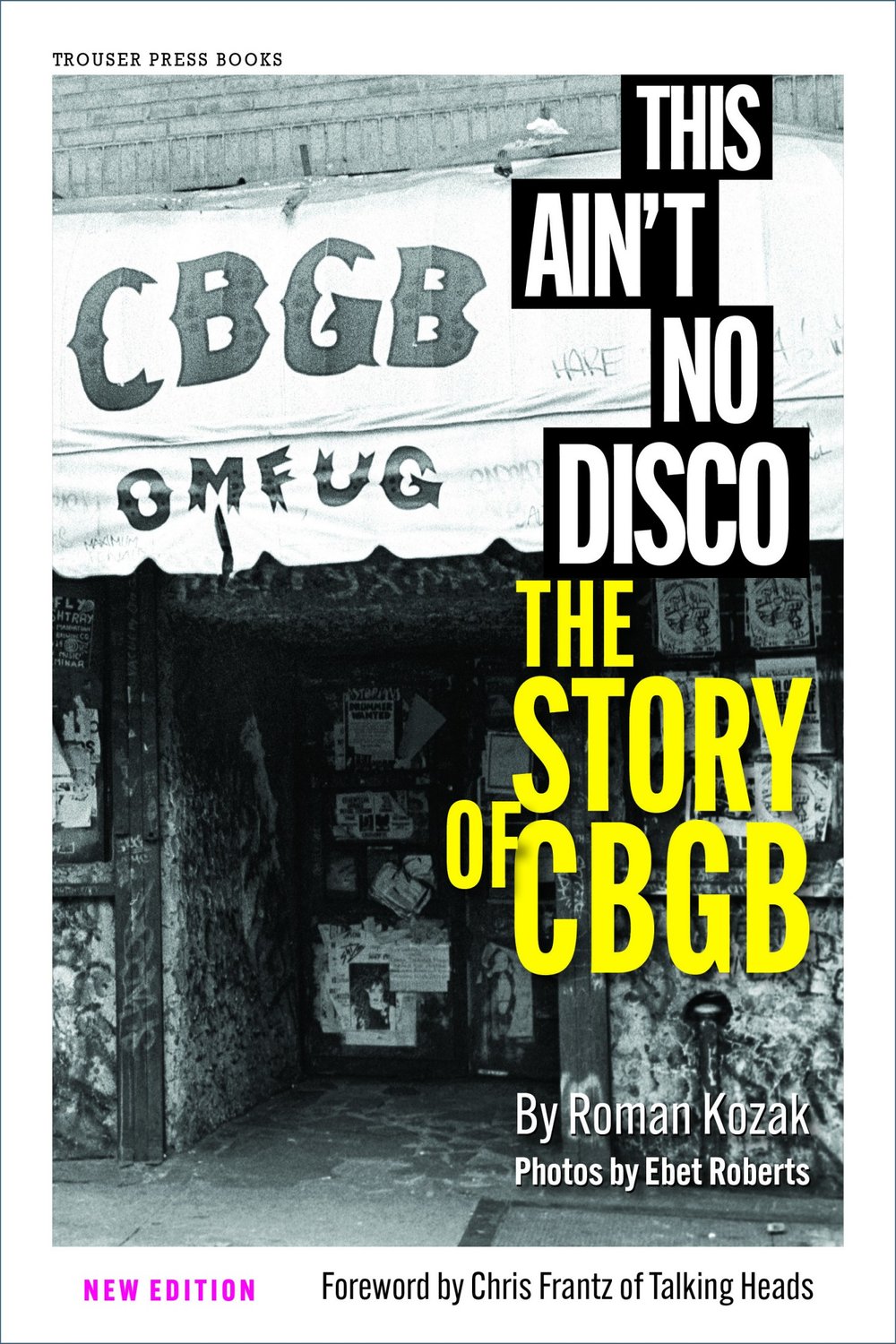
Dying Scene Book Club – “This Ain’t No Disco: The Story of CBGB” by Roman Kozak

Roma Kozak’s This Ain’t No Disco: The Story of CBGB was originally released in 1988 and was one of the first books documenting the scene at CBGB’s in New York. Located in the Bowery, the oldest street in Manhattan, CBGB’s time may have been brief in comparison to its location’s history but Kozak’s book shows […]

Roma Kozak’s This Ain’t No Disco: The Story of CBGB was originally released in 1988 and was one of the first books documenting the scene at CBGB’s in New York. Located in the Bowery, the oldest street in Manhattan, CBGB’s time may have been brief in comparison to its location’s history but Kozak’s book shows it’s definitely the most interesting.

This Ain’t No Disco sometimes feels like an oral history type of book with big paragraphs of quotes from the characters of the club. The way this book transitions through subjects is great. The stories told feel like they are being relayed to a friend reminiscing on a scene that was continuing to evolve as it covers about the first fifteenish years of the CBGB’s existence. The book has a full-on cast list of regulars where the bulk of the interviews in the book are derived. This includes members of the Hell’s Angels, members of the bands who shaped the scene, and club staff, who were all connected to CBGB’s owner, Hilly Kristal. 

Kozak gives a little backstory on Kristal and his accidental placement of a Country, Bluegrass, and Blues club in the middle of a bad New York neighborhood in 1973. While there is some info on what Hilly did before CBGB’s in regards to other bars he owned, we never get a sense of who he was before the club. There is talk about his family including his ex-wife and kids who worked at the club. This gets skimmed a bit as It seems like the club and the community that grew around it was his life. 

We get the origin stories for a lot of these early bands who formed at the club. Whether it was going over pre-Blondie band the Stilettos or Patti Smith’s transformation from poet to lead singer with the Patti Smith Group and their early performances. There’s a vivid description of trans rocknroll pioneer Jayne County’s show that may have been shocking at the time of the book’s writing, but now just seems like a regular Sunday at a drag brunch. Kozak doesn’t go too deep into how bands that were formed separately from the club, like the Ramones and Television, but does go into how The Shirts, and the Dead Boys came together while the scene was growing around CBGB’s. There is a nice little section on the women of the CBGB’s scene, outside of performers like Debbie Harry and Patti Smith, but the key word here is little and mostly involved the compiled sex list in the women’s restroom at CBGB.

As the scene grew there are accounts of CBGB and Hilly’s relationship with publications like the Village Voice and The Soho News, who either praised or punished Hilly’s club depending on his relationship with them. John Holmstrom and Legs McNeil are also interviewed about their adoption of the term punk to describe what was happening at CBGB’s and when it spread across the sea to England. Kozak’s comparison and contrast of the American punk scene to England’s is pretty spot on. There’s no disdain in the text for how England’s scene took some thunder from New York’s, but it would be hard To argue that the revolt The Clash, The Damned, and Sham 69 waged on the monarchy had no artistic merit to the weird art rock that the New York scene had created

Hilly’s failures of managing the Shirts and the Dead Boys and other ventures like the CBGB theater shows risks that didn’t always pay off, but other ones that did later in the clubs existence. It showed that Hilly failed into success. At the time this book was written a lot of hardcore bands were playing Sunday matinee shows. In the 1980s, the club had become a hub for hardcore bands as much as it was for that first wave of punks. Despite Hilly’s indifference for the genre he knew he had to evolve with the scene. There’s a great piece at the end about the New York Hardcore scene with Jimmy Gestapo (Murphy’s Law) and Roger Miret (Agnostic Front) seemingly at the beginning of their careers.

Choosing a regular patron and rock journalist was a good call. The new edition of the book boasts a new intro written by Chris Franz of the Talking Heads and some pages of photos of the early bands taken in the club’s heyday by Ebet Roberts. Ira Robbins’ articles about the club’s money problems and inevitable closing in 2006 have been repurposed as an epilogue of sorts for Kozak’s original text. 

If I have one criticism with the book, it’s that if you know the history of punk rock, a lot of this info isn’t new. It doesn’t make it any less cool and definitely fills in some gaps and in no way takes the relevance of Roman Kozak’s words away. Either the people interviewed about CBGB told the same stories over and over or this book was the source for a lot of different projects about the club. I’d like to think its the latter. The broad strokes here only made room for the details the bands around the Bowery would tell in their respective books later down the road. 

If you’ve seen the critically panned CBGB movie from 2013, you’ll clearly get the untruncated version here. While your big three – The Ramones, Blondie, and The Talking Heads – got a lot of attention in that film, here, a light is shined on some of the smaller bands that typically get left in the dust for various reasons. The real shame is that Roman Kozak passed away before the book wasreleased. CBGB shut its doors in 2006. An updated book or edition every so often and similar to Tom Shales and James Andrew Miller’s Live From New York would have been an interesting read as the scene morphed. Pick up This Ain’t No Disco: the Story of CBGB here from Trouser Press Books.

Post a Comment

Your email address will not be published. Required fields are marked *

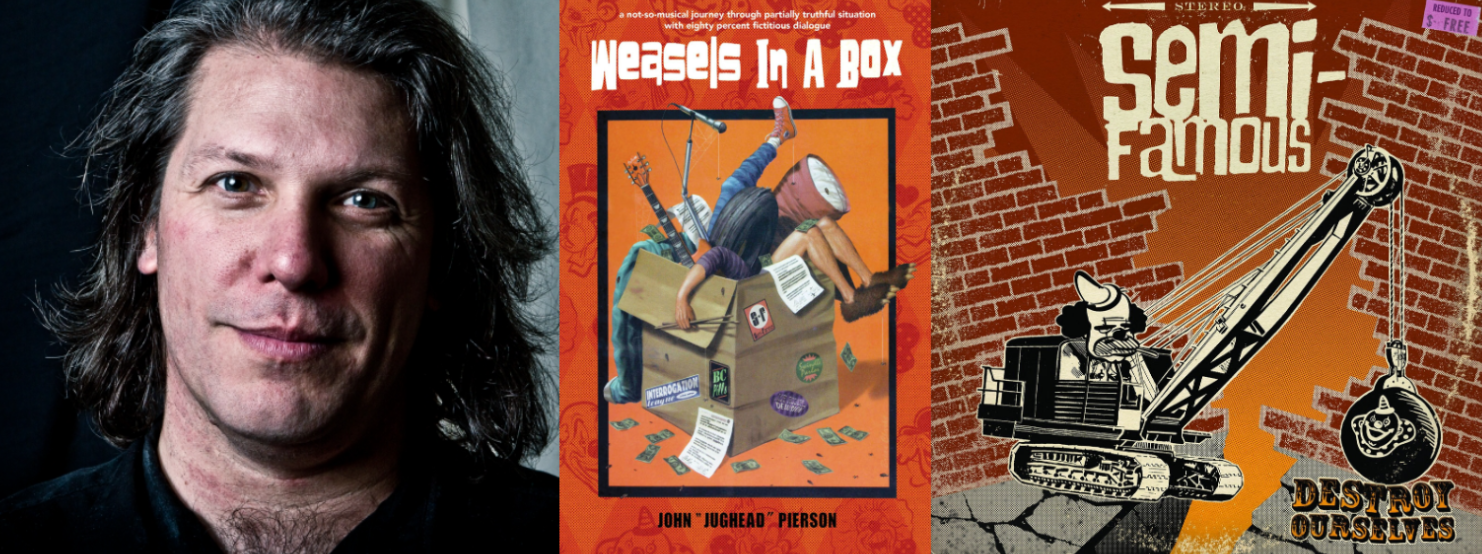
DS Interview: John “Jughead” Pierson on his Fictional Band Semi-Famous, Brought to Life with the New Full-Length “Destroy Ourselves”

John “Jughead” Pierson, known most prominently, alongside Ben Weasel, as a founding member of Screeching Weasel, has reentered the so-called punk rock spotlight through his new band Semi-Famous. First devised as the fictious subject of Pierson’s not-so-fictitious novel Weasels in a Box, Semi-Famous has been brought to life by the release of Destroy Ourselves, a […]

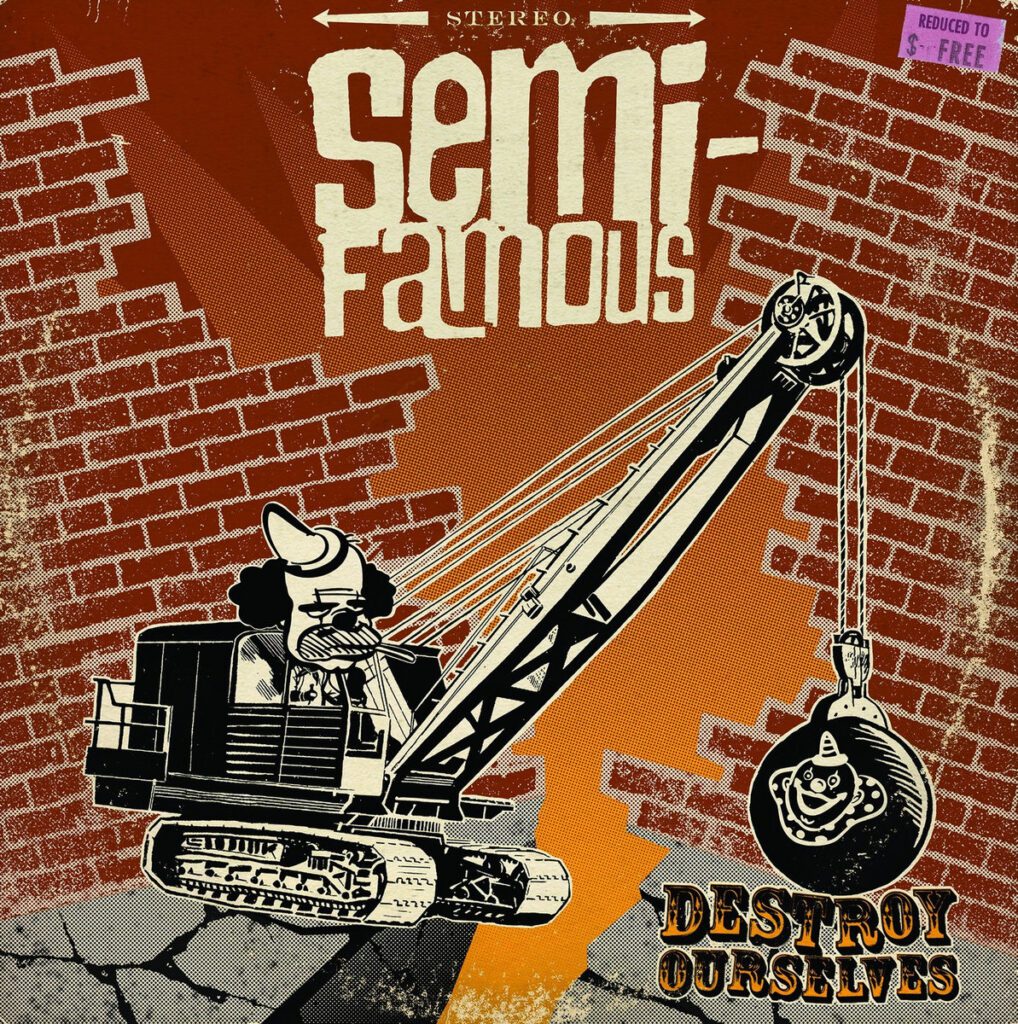
John “Jughead” Pierson, known most prominently, alongside Ben Weasel, as a founding member of Screeching Weasel, has reentered the so-called punk rock spotlight through his new band Semi-Famous. First devised as the fictious subject of Pierson’s not-so-fictitious novel Weasels in a Box, Semi-Famous has been brought to life by the release of Destroy Ourselves, a 14-track pop-punk debut of Rare Bird/ Duck! records featuring the “supergroup” lineup of Ryan Rockwell of Mixtapes, Poli van Dam (formerly of The Bombpops), Billy Brown, and Tyson Cornell.

Based loosely on Screeching Weasel, “Weasels in a Box” toed the line between fictitious dialogue and real-life experience. Now living in Japan, Pierson has scratched his creative musical itch by teaming up with permanent members Rockwell, van Dam, Brown and Cornell, along with other pop-punk heavy hitters such as Dan Vapid.

As a sort of delayed twenty years anniversary for the original release of ‘Weasels in a Box”, not only has Pierson emerged alongside others with Semi-Famous, but the book is being re-released for the very first time on paperback and audiobook, voiced by Pierson.

We touched on a whole lot of interesting stuff during our brief chat including Pierson’s initial encounters with each bandmate, including Billy Brown whose unfortunate passing predated the record’s release.

“[The emotions are] mixed. I mean, I’m very excited,” said Pierson when asked about emotions following his passing and this release. “This got Tyson to actually get to know Billy and put out one of Billy’s unreleased records that finally got the light of the day right before he passed, so I know he was super excited about that. We became family. Him and Poli and Mike and their kid Adler got really close, so it was very sad that we lost him. But in a weird, cosmic way, we still feel like he’s there with us.

This interview was chock full of great stuff including Pierson really complementing his bandmates, personal favorites off of the record, possible shows surrounding this release, and a whole bunch more. We’ve got the full-length linked below, along with the full interview. Cheers!

So where did this idea come from for bringing this band from your book to life?

Rare Bird Lit came to me with the idea, like hey, why don’t we make your fictional band real? So we did, they’re actually re-releasing the paperback too, but the audiobook is what I’m excited about. 

And so what was kind of the turning point then for you deciding to take this to a full-scale record?

Probably just the enjoyment factor, you know? I went to LA and Tyson for Rare Bird Lit has this like amazing studio that they just use for their publishing company. So when sitting there, Ryan Rockwell, who I’ve always wanted to work with from the Mixtapes, drove out and that was exciting. No, he wasn’t there for that one, but he wrote a song with me. And then me and Billy Brown, who was in LA, recorded it. And afterwards, I just had so much fun. Then Christopher Applegren jumped on to do the art and my friend, Paul Russell, who did the Weasel logo was all excited. So we just decided to, I asked Tyson if we could do another, like a full length, and he said, yeah, of course. So it was just all about excitement level. There wasn’t like any big kind of a financial or any other backing behind it besides everyone was just excited.

When I hear the term supergroup, I’m kind of hesitant sometimes because I’ve heard supergroups before where it’s obviously one guy writing the songs, just a side project for this one band. And I didn’t get that at all with this. It seems like so many different people were contributing to it. You weren’t hearing just Mixtapes, you weren’t hearing just Bombpops, you weren’t hearing just Screeching Weasel. It just sounds like so many people are contributing.

I agree. I don’t even like using the word supergroup, I mean, ever. Even the Mopes was considered a supergroup too, but we were just a bunch of friends hanging out and having fun. So I think this was the same thing. I just was really excited to get Poli involved too. And I did a podcast with her and she had announced that she quit the Bombpops and I always had that in the back of my head. I was like, well, I got to get her to do something. 

Has she been doing much since Bombpops?

Well, she took a long break because she had a lot of hard life things happen that she’s more open about now. You know, she has diabetes and it was getting rough. So she started doing a solo project, I think she’s opening up for some of the NOFX shows, I think in LA. I think it’s just called the Poli Van Dam Band. But yes, I agree with what you were saying and I’m glad you picked that up. We’ve just agreed to do another record in February and Poli’s actually going to be writing now too with her husband, Mike, who is actually a great writer too. So I’m more excited to get even more into that “everyone contributing” sort of idea. Because she was frustrated with that in Bombpops too. All of us had sort of frustrating breaks with our former pop-punk counterparts, so that’s kind of what it was about. And just one more thing on that, when I went to Mass Giorgini to mix and produce it, I had said I wanted everyone’s voices to be equally displayed there. And he says, “well, that’s a really difficult thing to do.” And I said, “well, let’s see how it works, see if we can do that.” Like if Poli and Ryan are singing at the same time, I want them singing at the same time, not like one backing the other. And I think it really shows like that. When me and Billy are singing, it’s featuring both of us, but when it’s Poli and Ryan, it features both of them. That was probably the hardest mixing process of that, trying to figure that all out, how to make that work. 

So how did you connect with everybody kind of initially? Was your first thing with Poli with the podcast, or how did you kind of, I guess, connect with her? And then how did she kind of get involved with this project, was it, you just taking note of her leaving Bombpops? 

Well, originally, I had been a fan of the Bombpops for years, and then I saw them at the Reduno Festival. But I was disappointed, I just thought they looked a little bit too LA for me to like, kind of like schmoozy on stage and I didn’t like the vibe. But then I just kept on looking over at Poli and go, “that girl, she’s real, she’s the real deal.” So then I went after her to do an interview on the podcast, and after that podcast, it was a done deal, we already felt like family after that. Her husband, Mike, was a huge fan already, so she was already excited. And Ryan, I’ve been wanting to work with him since I heard the Mixtapes years and years and years ago. And then I was oddly doing a puppet show in Cincinnati, I had a job there and I ran into him at a video store, and we just hit it off really well. And I always thought he was underrated like a writer, so I wanted to have him help me and me help him. It was kind of like a mutual helping each other type of thing.

Yeah, what really got me into them was that, I think it was a split. I don’t know, the one song they did with the Direct Hit, “Werewolf Shame”. That’s what initially introduced me to them and I fell in love with those guys. And that ultimately introduced me to some of what Maura Weaver’s released and projects she’s been a part of. I really dig some of her solo stuff.

Yeah, him and Maura had a rough time of it, but they’re both, they’re great musicians. They’ve both gone on to do some great stuff separately. 

So I’m curious, a lot of people know you obviously from Screeching Weasel. But writing for this project, has that spurred your creativity elsewhere with any of these other things you’re involved with?

Well, I’ve called myself an artist because that’s how I’ve lived my life for like 45 years. I always use a different media to affect the other media. So like I’ve used now the excitement of the music to spark me to continue working on my new book, they’re all interrelated to me. They’re all, they work together.

Got it, okay. Was this difficult for you writing sort of like a concept album? I know for my songwriting personally, when I’m writing songs, I struggle with a preconceived subject sometimes. I kind of just go wherever the song goes, but I start to struggle when I have something in mind initially to write about. Was that a struggle at all with you?

Well, this is a concept in the fact that it was sparked by the Weasels in a Box and influenced by Screeching Weasel, but the songs as a structure aren’t really the concepts together, you know. But it is a false label, like Duck Records based on Lookout and the name is even based on Kill the Musicians. So it does have that conceptual feel, but I wouldn’t consider it like musically conceptual. But it was difficult for me because I promised myself, when I started even Blackouts, that I wasn’t gonna do a pop-punk band, a straightforward pop-punk band because I just, I worked with some of the best. Ben and Vapid are some of my idols as to songwriters and I didn’t even want to compete with them for years and years and years. But when Tyson approached me with this idea, I was like, oh, okay, maybe I’m ready to try it. I did a little bit of dipping my feet in the water with the Mitochondriacs, which was more of like a angry, comical, just a release of energy I had. And then I was like, okay, I can do this. So I felt a little bit more confident going into it, especially with Ryan and Poli and Billy by my side, who you might not know him, but [Billy] was in The Unseen and a lot of other great hardcore bands, Crash and Burn. But he passed away. He passed away in January, so we lost him. 

What kind of emotions and feelings are you having with releasing this after he’s passed? 

They’re mixed. I mean, I’m very excited. He had quit music. He’s another one that had kind of quit music for a while and had some bad times, so we were all looking forward to the release of it. And this got Tyson to actually get to know Billy and put out one of Billy’s unreleased records that finally got the light of the day right before he passed, so I know he was super excited about that. We became family. We all flew out to Chicago and did two shows, the only shows we’ve done, and Billy was very sick then, so we were all gathered around him, and we really became a family. Him and Poli and Mike and their kid Adler got really close, so it was very sad that we lost him. But in a weird, cosmic way, we still feel like he’s there with us. 

Do you have any favorites off the record? Any that Billy contributed too that you guys really like?

We were actually just now working on a video for “Obvious”, which I think it’s a great song that Ryan wrote, and when Poli came in to sing it with him, I was like, oh, yeah, this is really good. I think I sensed that Ryan was missing writing for a woman’s voice. Him and Maura’s parts together are so great that I made sure that he would write some songs with him and Poli. So that one, I think, really strikes a nice balance between the two of them singing together. And of my songs, I really like “What’s a Metaphor?”  It was kind of like a clash, early Screeching Weasel influence, and it was talking about a friend of mine that passed away. And then it related to Billy, who was dealing with cancer, so singing that with him was kind of intense. So it has a lot of powerful memories for me in it, and I think it has that intensity in it. I was trying to do a part from “Slogans”, that was my favorite part that kind of got buried in the record My Brain Hurts, so I wrote that one to sort of bring that part out a little bit more. So it has a bunch of different elements in a minute and a half song, so I like that. 

What do you think the record gained from Dan Vapid contributing? 

Probably one of the best songs that I couldn’t have wrote myself. Yeah, and it was really fun to emulate Vapid, because he, I mean, I’ve worked with him for years, but he can get really, really specific. Like he sent many videos and audios of him playing it and showing us how to do things, and we just stuck to that. We pretty much did exactly what he wanted, all the backing vocals were all our ideas, but everything else, even the way he sang it, I tried to emulate how he was singing it, too. It was quite a pleasure to have, to kind of feel like I was working with Vapid again. It’s been years. 

It’s really cool seeing his name attached, because I love the guy, I love anything he puts out also. It’s really cool seeing him contribute as well among all these other people. I really, and I’ve enjoyed all the bands that everybody’s been with kind of throughout the years. Are there any kind of scenarios in your life that parallel to any of these songs? Any favorites that you’re referencing, I guess, in some of these songs? 

Well, I have, in my art and writing in general, I have a dark side, but I don’t have that dark side like Ben did. And Billy would say that to me, he would actually call me up, he would get drunk and call me in the middle of the night, and be angry that our album doesn’t have enough anger and bitterness in it. So I’m kind of disappointed, because we were gonna work on a song like that. But I felt I got a little bit of that in there. I’m not really big on self-deprecation, but it’s such a big punk thing to do, so I got a little taste of that. Like, even that song, um, I just forgot the name of my own song. It was really short, it’s a love song to my fiancee, Nanako. “There Is Always You”, that’s it. It’s kind of funny, because I wrote it as a love song to Nanako, but it actually, I had that, I got that grit that Ben had sometimes of criticizing himself. So it ended up being like, “yes, I love you because you’ll stick with me because I’m an asshole” type of song, you know? So when I showed it to her, she wasn’t really very impressed with it. “It’s not really a love song, John.” “No, no, no, not really. It’s about being an asshole. I guess that’s fine.” 

So this is an interesting question I kind of came up with. I know you said you’re working on another book. Has there ever been any thought, or is there any thought of kind of continuing what Semi-Famous is turning into, continuing that into another book or into a type of series or something else?

Well, there was an idea, and I just don’t know if I can put the work in, but me and Tyson had, he thought the book is like a world to its own, like I did a good job of creating a world is what he told me. So our idea was to kind of get my friends like Dr. Frank and Joe Queer to actually do the bands that I have in the book  and actually have a label called Duck Records. So there is some ideas in the back of our head to do that. I wanted to get Kody [Templeman] to do like a Lillington’s-like song. We have the studio, I just haven’t really put enough thought into it, I’m gonna get this record out and then start thinking about it. So there is an idea to build a world, but I don’t know how likely that will be. 

So when you mentioned the record in February, is that a Semi-Famous record you’re talking about?

That is, yeah. And we have like seven or eight of the songs already written. Poli’s working with her husband, Mike, and then me and Ryan sort of write together now, like me and Gov did with Even in Blackouts, we sort of share ideas. We’re all flying out in February. We probably will do a show sometime during that time too. It’ll be recorded at the same studio, it’s the Rare Bird lit recording studio that they have in the middle of nowhere, down the street from where Charles Manson’s farm was.

Yeah, that kind of answers my next question. I was gonna ask if this was like a one and done thing or if this was more than that, more than just a band for this record, for this book. 

Yeah, we’re all getting older now and there’s not enough money in punk for us to like survive on it. So we can’t, I don’t think any of us could commit to it as like a full-time band, but there definitely is, I was surprised that Poli was so excited about continuing on. And then I knew Ryan and I would do it, but Tyson’s excited and Mike, Poli’s husband, is joining to take Bill’s place as also another, he’s another great singer. So yeah, we’re gonna be doing something, but we don’t know to what degree. And, you know, Polly has her whole other thing, she’s the youngest one and she still has like probably a stupid great career in front of her. So we’re just trying to have her time when we can.

You kind of mentioned it, you said maybe a show here and there. Are there any solidified show plans you’ve got? 

No, but we’ll be in the studio from, I think it’s through my birthday, like the 17th of February through the 22nd. And so we will probably have a show maybe on my birthday on the 21st, but it’s not scheduled yet. But that probably will happen.

What about tour thoughts or plans, not necessarily set in stone, but any tour ideas? 

Yeah, I mean, I’m in Japan, so I’m the farthest one away. And I’m under a contract here with Universal Studios. So it’s all up to whether I get another contract. I find out in November. So November might be the magic moment before we start announcing things about the band. 

Any Japanese shows or American shows? 

That’s one of the ideas. Like Tyson is obsessed with Japan and wants to get us all out here. We don’t have anything scheduled, but that’s one of the plans. I’ve done it with Even in Blackouts and I jump shows with lots of friends here. There’s a great Ramones-style band called So-Cho Pistons here that are really great from Hiroshima. 

We just had, I had some guys I know that went on tour with Guitar Wolf, which that’s Japan, right? 

Yeah, they’re a classic band here. They’ve been doing it forever, but they were incredible, them and Shonen Knife, I think, have been around like the beginning of punk, you know, they’ve been around a long time. High Standard is still around, too. Oh, yeah, I love those guys. They just played with NOFX. 

So how did you, I’m interested with Billy Brown. How’d you kind of connect with him initially, had you known him for a while?

I’ve known Billy since, I don’t know, maybe 2000, maybe 2001.Yeah, he was in a band with my drummer from Even in Blackouts, they lived in Boston together and I flew out for a wedding and we kind of hit it off pretty great. Then whenever he was in town with one of his bands, he’d always stay at my house. And then he worked at a bar in LA, and whenever I was out there, I’d just spend the whole night with him, drinking and having a good time. And we always talked about doing something, because he’s a great musician, and also a great singer, too.

And what about with Tyson, was he another guy you’d known for forever?

No, Tyson, the funny thing is, is he’s on the, what do they call it, the inner folder of killer musicians. And he was in a band called Scooby-Dunk, which I didn’t know about, but there is like a small, rabid audience of people that still like those guys. But no, no, Chris Barrows from the Pink Lincolns had put out a photo book about all, I mean, the photos he’s been taking of the bands since like the 70s, and I thought it was done really well. And I talked to Chris about who put this out for you. And he said, this guy, Tyson Cornell. And then Tyson called me and said he’d like to put something out by me. So our relationship was, it was over the phone for quite a few years, and then when I flew out to do the seven-inch, that’s when I actually met him, I think. And he was a good drummer, too, I didn’t even know that.

So what else kind of outside of this do you have going on? Has this kind of taken up most of your time right now? 

No, I wish it was. I had music always, for some reason, I’ve been cursed with being in, I think, really good bands, but cursed with either being with someone who doesn’t like playing, or doesn’t want to anymore, or it’s just no one likes the bands. Also we’re all over the world, so it’s kind of frustrating, so I don’t do that as much. But I am working on my new book, which is called A Plight of the Lampoons. I’m pretty excited about that, it’s gonna be another year, still, at least. 

Is there any other music stuff you’re kind of dipping your toes in?

No, me and Eddie from the Mitochondriacs are talking about doing something just to keep him busy, because, you know, with the Cobain’s. He’s another one that’s cursed with bands that don’t seem to want to do anything. So we play around every once in a while, and me and Gubb keep hemming and hawing about doing another record, too, but yeah. But Liz just had another baby, so it’s a little bit more busy. It’s a little bit more difficult, so not really. This is kind of the thing I’m writing for, the next record. 

Well, that’s pretty much everything I’ve got written down. Was there anything else you wanted to add, kind of, about what’s coming up? 

About the record, my last words about that is that I had, it’s probably the, with Even in Blackouts, I didn’t care as much what people thought. This one, for some reason, I cared more, and yet, I could also listen to it and not have any idea if people would like it or not. So it was probably the most, like, black sheep of all the records I’ve done, where I just do not know whether it’s good or not. I don’t usually, like I said, I’ve stayed away from pretty straightforward pop punk for a long time, and I just, I’m excited to see what, hear what people think, but it was really difficult for me to admit to trying to write like that again. I feel like I’m exposing myself. 

Well, I can tell you, I’ve enjoyed it. It was fresh, I couldn’t tell who wrote it, if that makes sense. I couldn’t tell, oh, Poli wrote this song, this is a Mixtapes song, I couldn’t tell any of that with any of it. It’s very fresh, and I really enjoyed it.

Oh, well, thank you, and thank you, Nate, that means a lot to me, because that’s what we were trying to do.

Well it was just, it was a pleasure talking with you, I really appreciate you taking the time and I wish you the best of luck with everything you’ve got going, not just in music, but your other projects as well. 

Oh, thank you, thanks a lot. I appreciate the questions, I’ll see you later. 

Post a Comment

Your email address will not be published. Required fields are marked *

DS Interview: a word with Chicagoland’s anime-punk sensation, Rebel And Cleric!!

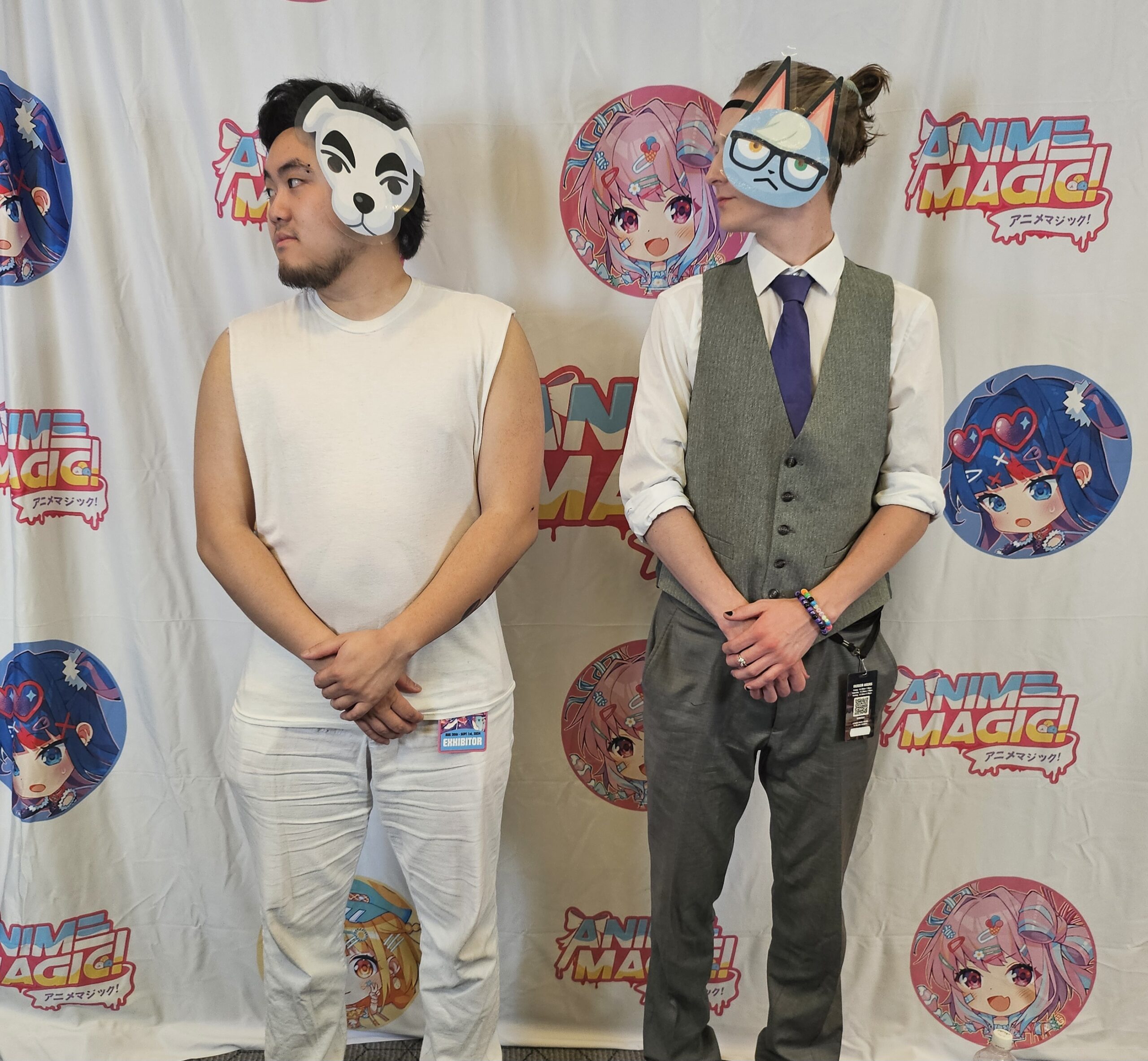
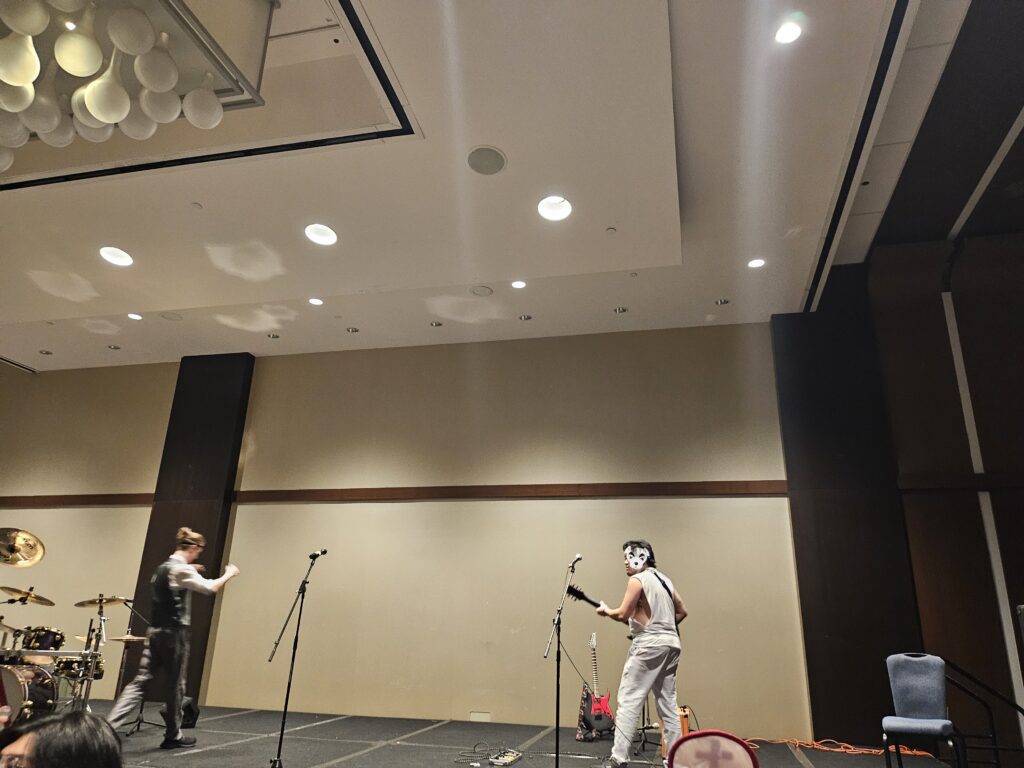
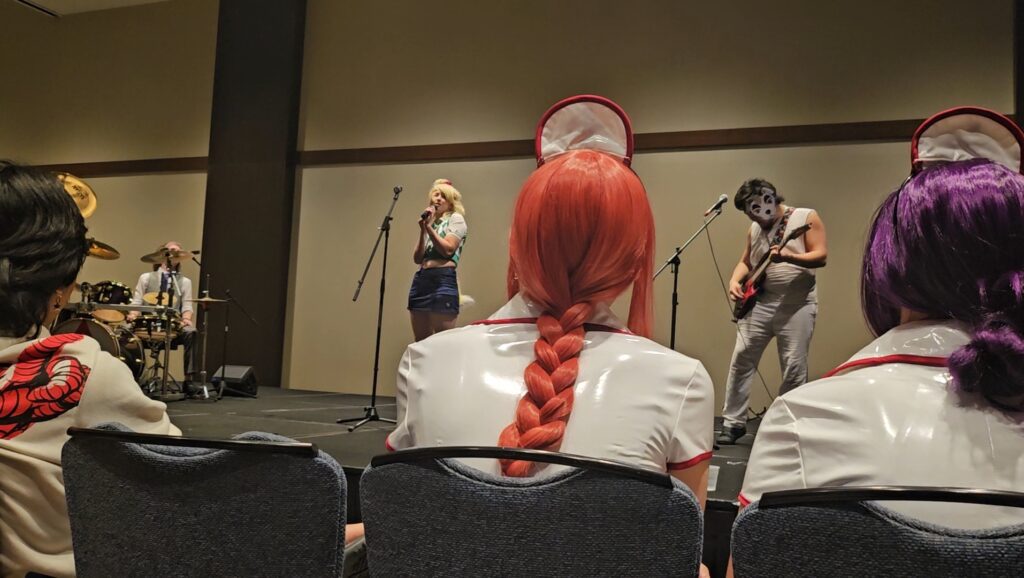
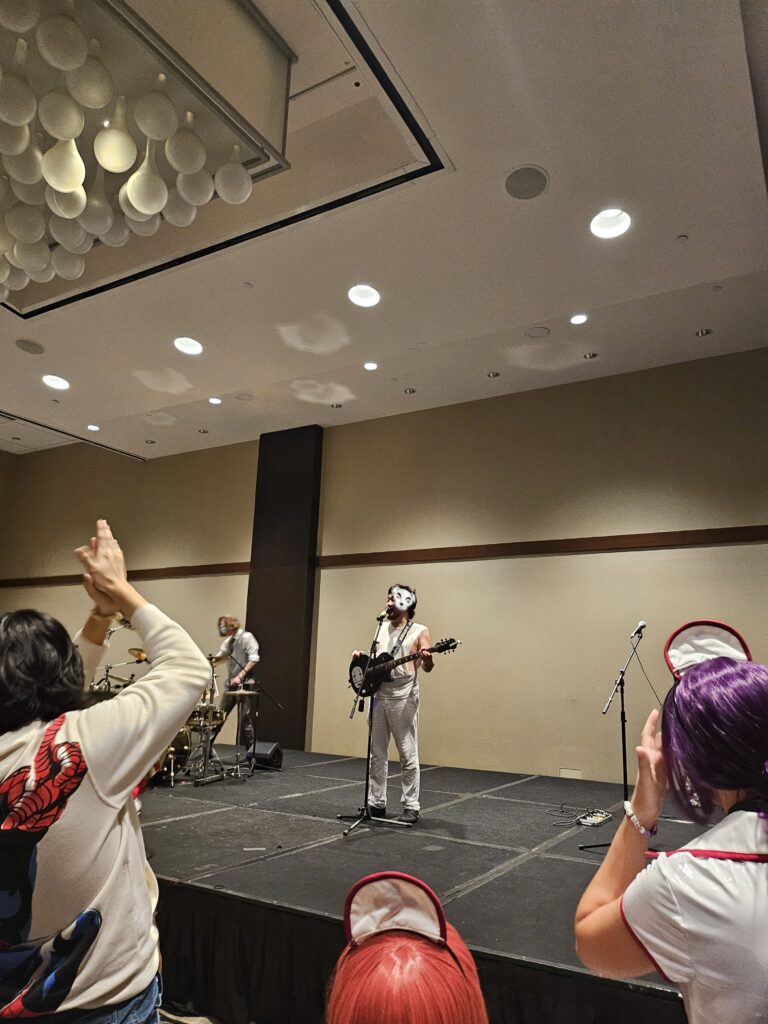
Anime Magic is a convention that takes place at the Donald E Stephens Convention Center in Rosemont during August. I found myself at Magic with the band Rebel and Cleric as they were getting ready to perform on Saturday night. I have had the pleasure of seeing them perform before at Colossal Con North which […]

Anime Magic is a convention that takes place at the Donald E Stephens Convention Center in Rosemont during August. I found myself at Magic with the band Rebel and Cleric as they were getting ready to perform on Saturday night. I have had the pleasure of seeing them perform before at Colossal Con North which takes place in the Wisconsin Dells.


Rebel and Cleric is a two-piece band consisting of members Sai and Kiwi who enjoy performing a variety of music such as punk and emo. They are known for their spunky covers of anime openings, cartoon tunes such as the “Campfire Song Song” from Spongebob, and even their own original works such as “Diet Dr. Kelp.”


Through their artistry, they prove to be a unique addition to the Midwestern alternative music scene while also catering to pop culture conventions. Their fast-paced and melodic thrills ring through everyone’s ears as they launch a full frontal assault on the unsuspecting con-goer. They are a force to be reckoned with and one that has been welcomed into the anime community for their fresh and invigorating style of music. What follows is the pleasant conversation I was privileged to have with both members prior to them setting the stage for the night life at Anime Magic. (Content is cut down from the original interview)


What are some of your musical influences?


Sai: In terms of musical influences I grew up with System Of A Down, Fall Of Troy, basically everything I played on Guitar Hero. Newer influences that I have taken to are Origami Angel, Kaonashi, stuff kind of all over. I tend to revolve more around the emo crowd of bands.


Kiwi: My musical influences drummer-wise would be John Bonham, Steve Gadd, Casiopea, a lot of my earlier drumming and musical influences were a lot of very rhythmic, very polyrhythm heavy like Ginger Baker.

When did you guys start as a band?


Sai: Kiwi started drumming for our band and that’s when it really kicked off. That started about last year when we met during Anime Central, the next Con after that is when we recruited him, so it’s been a little over a year now doing it as a duo.

Have you played in other bands before?


Sai: I’ve been playing tons of basement shows and garage shows and small venue shows in another band called The Tear Garden Collective. When we started playing as Rebel and Cleric it was here at Anime Magic but that was in 2022. That was the first show we played a full set for. Deep lore here, the first show had 5 members in the band. Now it’s a two-piece band.


Kiwi: I’ve been in music and bands a long time, partaking in a certain popular music school. There were a few bands I was in growing up to play at school events, I even put a group together with other students back around 2013. That sort of stopped in 2019 for me, I took a break from music and ventured into other interests, then in 2023 I started to venture off into the music space of Chicago. I went to Anime Central last year and ran into this guy (Sai) and we started talking about music.

Do you guys post your music online anywhere?


Sai: You can catch us pretty much anywhere like Bandcamp, Amazon Music, Spotify, even the ones people probably don’t use anymore, we’re probably on there.

Do you feel like you fit in with the Midwestern alternative music scene?


Kiwi: With our sound and our music, absolutely but personally no, I don’t fit into the scene at all. My technicality, energy and skill fit in, but at least in my personality and the way I present myself, that’s not really my sort of home. But I feel like that sort of music connects to me a lot.


Sai: I’ve been pretty deep in the scene like when I dabbled in the band Mendicant Bias. I got a couple different perspectives and saw a lot of different people who were passionate about their music. I still have a lot of friends in the scene. I’ve also seen some ugliness which is why I wanted to make something from the bottom here such as anime cons. It’s inconspicuous and something you wouldn’t expect.

Do you feel like the anime con scene has been accepting of you?


Kiwi: I love it


Sai: I’ve been loving it too, that’s one thing that we’ve collectively been loving.


What are some of your favorite anime?


Sai: Let me start from the first anime that I watched and the second one which will be a 180 flip. The first anime I fell in love with was Naruto. I was a Naruto kid and that’s easily one of my favorites. Even with the filler I still loved it and grew up with Naruto. We aged together and literally got older together so Naruto holds a special place in my heart. In terms of the second anime I watched, I’d say Elfen Lied. I watched that when I was still in grade school, Netflix back then was crazy and didn’t care what shows they’d let you watch. The story was phenomenal and as a kid I didn’t even register in my head that anime could be for adults. So when I saw a naked girl decapitating a dude’s head I thought to myself, this is very different from Naruto!


Kiwi: Number one would probably have to be Hunter x Hunter along with Erased, Gungrave, Sword Art Online, Gun Gale Online, Fruits Basket, Gabriel Dropout.


Sai: Sword Art Online? I think I’ll have to look for a different drummer.

My Chemical Romance or Panic At The Disco?


Sai: Assuming at their peak for both of them, MCR since they have more than one good album because even Panic at their peak only had two good albums like A Fever You Can’t Sweat Out and Pretty. Odd. The moment Ryan Ross left the band there kinda was no point listening to panic. Hopefully that doesn’t get my head on a stick.


Kiwi: I really like Panic’s newer stuff but only in its own thing, it’s not emo.


Sai: One of my favorite live shows I vehemently come back to is Panic’s live performance in Denver with the burlesque show. Ryan Ross on vocals. I’m so pissed he’s not recorded in studio for the album because wow that voice. I love Ryan Ross, the antithesis to Brendon Urie, because I don’t like Urie anymore.


Kiwi: That’s definitely getting your head on a stick with those fiery opinions.

Where’s everyone from?


Sai: Born in Waukegan, grew up right over the border in Camp Lake, Wisconsin. Once I landed my tattoo apprenticeship I moved down to the Antioch/Grayslake area so that’s where I’m currently at.


Kiwi: I was grown in a lab, test tube under the ocean in a vat of toxic waste, upside down. That’s where I’m from, that’s my origin story

Do you play all of the Midwest, more Chicago, more Wisconsin?


Sai: We play pretty much everywhere, farthest down we’ve gone is Peoria, farthest north is Minneapolis. Most of our shows do revolve in the Chicago area but we are open to playing in Wisconsin.


Kiwi: if it’s going to be fun then I’m down to play anywhere.

I saw you play at 2 am last year at Colossal Con North, how did that go?


Sai: It sucked because we were playing outside all day. Funny thing they didn’t expect a full band for that and thought “oh animal crossing it will only be one guy on an acoustic guitar!” Then we have this insane drummer and amped up guitars with scream vocalists, they sort of had to tell us to pipe down but the drums only have one volume. But we did have a lot of people come to the 2 am show and didn’t know how many would get our music but it interested enough people to fill the room much more than I thought at 2 am.

How does that make you feel knowing people picked you over the rave?


Sai: It was an honor, I felt like the live band was lacking and I wanted to be that insane band that had people dancing and moshing. I grew up with hardcore, punk, emo, metal, prog and those areas are filled with people. That’s the kind of “magic” I want to bring. That has been my mission and we have original music. I don’t care if it’s original music or covers of silly songs like from Spongebob, it doesn’t matter to me as long as people love us or hate us. If the people there get it and enjoy it, and bring more people into that tight culture, I feel like I have accomplished something.

What are your future prospects for the band?


Sai: It’s hard to say because my future prospects. I had a lot of before I started the band. Now that I started the band I’m here. I feel like I already accomplished a lot of things that I can’t really think of what to do better. I’m already proud of what I’ve been able to do now. There’s always room for improvement and you can always aim higher. If I’m thinking back to where I was a little over a year ago, everything I thought that I wanted I have now. For future prospects it’s just mainly exposure, more people knowing the culture. Sure people can know our band but it’s mostly the love for the music we play and the culture, people participating in that culture and people listening to music like that at anime conventions. Us becoming more well-known is a facet of that but it’s not my priority.

One Piece or Dragon Ball?


Kiwi: I haven’t seen either. Don’t put my head on a stick. It’s mainly people who grew up with it and caught up with it. Both are very dedicated and not sure if I have a preference.


Sai: I haven’t seen it either but both are long as shit. Both of those shows you have to grow up with, like watching shows before going to school.


Kiwi: I feel like an outcast in that sense because I grew up with pokemon and beyblade.

What was the last concert you went to?


Sai: Last time I went to a concert it was underwhelming because they didn’t play any of the songs I knew. This was Thrice playing with Bayside. They even stated “we hear a lot of people shouting out names for our old songs but you guys kinda have to like our new things for us to play”. I’m not shitting on them, I just feel bad for them. In terms of the last show I watched and loved, it was a year and a half ago when I saw Fall Of Troy headlining with Strawberry Girls and Kaonashi. Now they (Kaonashi) are a big influence on me, they became a huge influence for me as they were very in your face. Kaonashi was a breath of fresh air and that threw me into a music dive where I could capture some of that magic myself if I tried.

What’s the farthest you’ve gone to play?


Sai: AniMinneapolis was the furthest con we played. 5 and half hour drive.

What are your favorite music venues in the midwest?


Sai: The Concord Music Hall holds a very special place in my heart because that’s where I first saw The Fall Of Troy. I love it mainly because it’s a nice stage and setup, the balcony is awesome


Kiwi: I love the Subterranean


Sai: The Concord is awesome it’s just right and that’s why I love sort of smaller venues

How did you start playing at conventions?


Sai: I had an old roommate that sort of introduced me to the owner of Anime Magic for our very first show. He had an opening for us on the idol stage which is a small stage meant for idol dancing and lip syncs. To a guy who’s never played on a stage, I’ll play wherever. I can’t bring myself to delete the footage of the first concert we played even though none of the members playing there are still with the band besides myself. It does hold a very special place in my heart and I might re-list the video.


Kiwi: You can just put the link somewhere and hide it


Sai: So if anyone wants to do a deep dive, don’t be surprised if you listen and you’re like damn this shit’s kind of ass.


Are you into ska?


Sai: We’re about to do a cover of “Take On Me” following the Reel Big Fish version and Cap’n Jazz version. I took what I liked from them and made our own cover of it.


Kiwi: I was introduced to ska by a bassist of a band I had been invited to sub for, I do enjoy it a lot.

Black Flag or Descendents?


Sai: In terms of encapsulating the crazy-in-your-face-I-will-literally-kill-you vibe, definitely Black Flag. Henry Rollins carries that, he was the perfect face for a punk band. Punk consists of outcasts and he was an outcast among outcasts. The band as a whole have so many classics, I even covered “Nervous Breakdown” when I was in Mendicant Bias as a drummer. I even wanted to cover “Rise Above” on my own since I heard it on Tony Hawk’s Underground. That’s another game I credit to my music taste.

Misfits or The Damned?


Sai: Misifts because I love the horror theme like Teenagers From Mars. Astro Zombies is one of my favorites by them. I just really love that he (Danzig) has a tinge of Elvis in him when he sings it. It’s hilarious to me to think there’s an alternate-reality version of Elvis with crazier hair and a six-pack.

What are your dream venues or dream conventions to play?


Kiwi: Madison Square Garden, watching the live video of Vulfpeck, the energy of the crowd of that show, it’s a wide-open area, nice room on stage, it would be really fun to play there. In terms of conventions, Fan Expo or San Diego Comic Con would be crazy.


Sai: Dream convention would be Colossal Con Prime or Colossal Con Cruise because I’d love to play on a cruise ship. Most of the venues I love are small. A good dream venue would be Mall Of America, that would be so cool and dope!


Kiwi: After Minneapolis we went to Mall Of America and saw this big area with a fountain and stage with tons of chairs set up. We thought, dude we could play here that would be sick!


Sai: People moshing each other off the balcony just dropping! In terms of venues totally attainable, I would really like to play this stage at the Gurnee Mills mall which is far in the back next to Staples in a place where you wouldn’t expect anyone to play a punk concert. It’s right next to 95.5 Rock, the radio station with one of their offices in the mall. I already contacted one of the people that run it, we would just need a plan. It’s a mall not an actual venue but it would make me really happy because I remember seeing that stage when I was a toddler and wondered, when is someone going to play there?


Kiwi: What if we tried to revive these dying malls by performing in them?


Sai: It would be hilarious because we would be helping big corporations in the most ironic way possible by inciting punk crowds to throw the cafeteria tables around. It would be poetic in a way which is why it always stuck in my mind. Gurnee isn’t the first place you would think of.

Why Animal Crossing?


Sai: I thought it would be hilarious if i made a cosplay themed punk band have their first cosplay be of a quiet laid-back dog with an acoustic guitar who gives out this music for free. In the original game KK would give you whatever music you requested for free because he didn’t care about the money and I really liked that mentality, but I also really love punk. What if we could take some aspects from this funny dog in my favorite video game, merge it with some pushing and shoving, and let’s figure it out from there. It is a really good cosplay theme that I originally said we would rotate by year but people really loved the animal crossing theme. The band’s first love, Animal Crossing!

Any messages for fans old and new?


Kiwi: Stand up and get in front of the stage, just don’t be afraid.


Sai: Don’t be afraid to scream even if you’re the only one, dancing, spinning, doing flips. If I see you do it, I’m going to get right next to you and do it with you. Above all else, the most important thing to me is to spread the word. There’s people that have never seen it that would love to be a part of it. People have told us we’re their first punk show. Even people that are in the scene already but don’t know us are also welcome. So above all else spread the word, come see us if you can, share us even if by name or video. Not everyone is able to see us live, but we want to be heard and spread our message.


Post a Comment

Your email address will not be published. Required fields are marked *

DS Record Radar: This Week in Punk Vinyl (AFI “Very Proud of Ya”, Choking Victim, The Renfields, OC Supertones & More!)

Greetings, and welcome to the Dying Scene Record Radar. If it’s your first time here, thank you for joining us! This is the weekly* column where we cover all things punk rock vinyl; new releases, reissues… you name it, we’ve probably got it. Kick off your shoes, pull up a chair, crack open a cold […]

Greetings, and welcome to the Dying Scene Record Radar. If it’s your first time here, thank you for joining us! This is the weekly* column where we cover all things punk rock vinyl; new releases, reissues… you name it, we’ve probably got it. Kick off your shoes, pull up a chair, crack open a cold one, and break out those wallets, because it’s go time. Let’s get into it!

Check out the video edition of this week’s Record Radar, presented by Punk Rock Radar:

AFI’s Very Proud of Ya has been out of print for nearly a decade, and that doesn’t seem be changing any time soon… at least in an official capacity. However! A new unofficial pressing started popping up last week, with most stores selling out pretty quickly. The good news is you can still get it from Lunchbox Records, Seasick Records, Sweat Records, and Death13ss Records.

Transylvanian pop-punk band the Renfields are rising from the dead with a vinyl reissue of their 2014 debut album Go!. Mom’s Basement Records has pressed the record on three color variants, limited to 100 copies each, and they’re selling fast. Get yours here before they’re gone.

Italian punks The Colvins’ new record Nothing to Write Home About is out now on I Buy Records. This is a fantastic album! Check it out below and get it on translucent orange and/or black wax right here.

Choking Victim’s No Gods / No Managers is back in print once again, with a new Smartpunk Records exclusive pressing limited to 300 copies on “Cotton Candy Splash” colored vinyl. Truly on brand with the overall art direction and tone of the record. Get it here.

Speaking of Smartpunk, they’re one of the few places you can still get a copy of the new Pretending I’m a Superman: The Tony Hawk Video Game Story Inspired Soundtrack LP. There are a grand total of 7 variants of this thing, and all but 3 of them have already sold out. Those remaining variants include the Concrete Mix (limited to 500 copies, available here), Smartpunk’s Orange inside Blue (300 copies, available here), and Vinegar Syndrome’s White w/ Black Splatter (300 copies, available here). Of course this features classic THPS songs like Goldfinger’s “Superman”, Bad Religion’s “You”, the Adolescents’ “Amoeba”, Guttermouth’s “I’m Destroying the World” and more.

Hot Water Music and Quicksand are releasing a split LP featuring covers of each others’ songs, along with two brand new tracks. In the case of Quicksand, that new song is called “Supercollider” (not to be confused with the Megadeth song); Hot Water Music’s “Undertow” is from the studio sessions for their latest album Vows. There are like 5 trillion variants of this fucking thing and they’re selling out real fast. Links to buy the ones that remain can be found here.

The friendly people at Jump Up Records are teasing plans for a bunch of killer new records releasing this Black Friday. The first they’ve announced so far is this reissue of one of my all time favorite ska records, The Toasters’ New York Fever. Limited to 500 copies, split evenly across blue and yellow wax. Get it here!

More ska! The OC Supertones’ 1996 debut Adventures of the OC Supertones is being released on vinyl for the first time ever. I’m not sure how many copies Tooth & Nail pressed because they don’t say, but the color variant looks sick and I don’t see it staying in stock for long. Grab your copy here.

Agnostic Front and Murphy’s Law just kicked off their European co-headlining tour, and they’ve also released a split 7″ featuring covers of songs of each others’ debut albums. There’s a green color variant limited to 500 copies and only available at the bands’ merch tables on the New York Blood Tour. Coretex Records had their own exclusive yellow variant available online, but it was limited to 200 copies and looks like it’s already sold out.

And since we’re on the subject of 7″s, German pop-punks the Hawaiians have a new 3-song 7″ coming soon! Love Hula, Hat Fascism (Have a Nice Day) is gonna be pressed on a clear lathe cut 7″ and they’re only making as many copies as there are pre-orders. Get yours here.

Jello Biafra’s throwing his hat in the 7″ ring as well, with this first time vinyl release of the 2021 split between Jello Biafra and the Guantanamo School of Medicine & The November 3. You can get it on black wax here; if you want the cool looking splatter variant you’ve gotta subscribe to the Alternative Tentacles Records Patreon.

Quebec melodic punks will be releasing their debut album Fundamentals on January 17th through Thousand Islands Records. Check out the bad ass leadoff single “Where the Wind Blows” and pre-order the record on two awesome splatter color variants and/or CD right here. Album of the year 2025?

Nearly 25 years after its original release on Epitaph, Deviates’ 2001 Time is the Distance LP is back in print. La Agonía de Vivir is repressing the record on deep purple colored vinyl (200 copies) and black wax (300 copies), both of which you can get here. If you wanna save on shipping and don’t care too much about color variants, Thousand Islands has the black vinyl in North America. This has only sold 4 times in the last year on Discogs, and every one of those copies went for north of $100.

And bringing up the rear on this week’s Record Radar we’ve got the 25th anniversary reissue of Bane’s It All Comes Down to This. The album has been fully remixed and remastered and is available on a handful of color variants: Clear w/ Green & Red Splatter (500 copies / buy here), Maroon w/ Pink Splatter (500 copies / SOLD OUT), Clear Pink (250 copies / Newbury Comics exclusive aka $15 more than the others lmao), Green & Violet Eclipse (200 copies / band variant available on tour).

Well, that’s all, folks. Another Record Radar in the books. Short one this week! As always, thank you for tuning in. If there’s anything we missed (highly likely), or if you want to let everyone know about a new/upcoming vinyl release you’re excited about, leave us a comment below, or send us a message on Facebook or Instagram, and we’ll look into it. Enjoy your weekend, and don’t blow too much money on spinny discs (or do, I’m not your father). See ya next time!

Wanna catch up on all of our Record Radar posts? Click here and you’ll be taken to a page with all the past entries in the column. Magic!

Post a Comment

Your email address will not be published. Required fields are marked *

DS Review: Phoenix’ Ashes – “Defiance”

Netherlands-based Phoenix’ Ashes’ return has been hard to miss in recent months. Following the well-received single “Oceans,” the metal band from the Netherlands has released their follow-up track “Defiance” at the end of August.  While “Oceans” already showcased a more intense sound compared to their earlier work, this single takes it a step further. The […]

Netherlands-based Phoenix’ Ashes’ return has been hard to miss in recent months. Following the well-received single “Oceans,” the metal band from the Netherlands has released their follow-up track “Defiance” at the end of August. 

While “Oceans” already showcased a more intense sound compared to their earlier work, this single takes it a step further. The band’s signature harmonies are accompanied by progressive riffs and energetic, aggressive choruses. The unconventional vocals add a disorienting effect, amplifying the song’s message. 

In “Defiance,” the band addresses the growing polarization in the world and the rise of right-wing and radical ideologies. The song highlights how the discontent and uncertainty of our time are often exploited by influential figures. Masses follow without realizing the potential consequences for society, future generations, and ultimately themselves. With the recurring message “enough is enough,” the track encourages self-reflection and urges individuals to consider whether the truth they are presented with might have multiple sides. 

After years of hiatus, this is the band’s second release. Both “Oceans” and “Defiance” serve as a prelude to their upcoming EP (set to be released later this year). The band will return to the studio with Erwin Hermsen of Toneshed Recording Studio right after summer to complete the remaining recordings!

Oh. My. Gods. Arnout (Lie, guitars/backing vocals) was not joking when he told me this song was more aggressive than “Oceans” was. I was BLOWN away by how in your face this single is right off the rip. It honestly gives me huge Suicidal Tendencies vibes! “Institutionalized” immediately came to mind with the disorienting and muddled instrumentals with the shouted vocals. The lyrics are so incredibly matched as well. The craziness of the song is a great addition to the message for this insane world we are all currently living in. Let’s dive into the lyrics!

Right off the bat, the first verse seems to pack a punch of truth in various ways. It screams relatable for multiple COUNTRIES, let alone just a person situationally. These guys are just straight GENUISES with lyrics and their ability to portray ideas and facts without being blatant. It’s such a beautifully subtle finger to those who wrong us with half-truths and lies. “Out of the flock comes a wolf // To persuade all the sheep // To forget all the horrors they’ve seen // To blame it on others // That life is so tough // That all I can say is // Enough is enough“. That right there I KNOW there are an immeasurable amount of people that can relate to that. In one way or another, no specifics.

That one line – “enough is enough” – keeps its message strong throughout the entirety of the track. It has such strong symbolism and also seems very, very fitting for the situations at hand. I don’t know if they meant for it to be seen as a politically charged song towards the government, but I could see a few of us here (in America) maybe relating to it, in that sense. I DO NOT speak for the band on what this song is about, that is simply a relation that I myself am making out of my own observation and ideology. I can see many situations over the years where this would be relatable to in the “people vs the govt” situations. Regardless, their ability to write and the way they can string words together so eloquently makes me incredibly happy that it can be interpreted in SO many different ways.

The chorus drives the message home with the repetition of, “We understand that life has been tough // Ignore all the lies // Enough is enough.” I personally like that they are driving it home to such a degree, and especially when leading into the second verse. They seem to get a bit more complex with the analogies and then they bridge it beautifully into a near-perfect transition back to the chorus. “Words like opium // Falsehood of promises // Like a savior // Masked for the populace // Distorted truth // With selfish intentions // They do believe // They’re here to save us.” The message seems like it could be abundantly clear, but in reality, it can be interpreted however one chooses to. The government side makes sense just as much as a partner or a friend creating a story around you amongst friends before your story can be told and now they’re all tricked. Who knows, it’s all up to the interpretation of the listener!

What worth does truth have if truth is worth nothing // What worth does your life have if your life is worth nothing // It’s all in their lies // It’s all in their lies.” Continuing to have multiple meanings throughout the lyrics, these hit hard. I love how “in-your-face” and aggressive these lyrics came out with this track. The aggression and tenacity behind the instrumentals and the chaos of the lyrics over it make me want to pull up Suicidal Tendencies and keep the same buck-wild energy that this song has to offer.

Phoenix’ Ashes, you guys KILLED it. Again, I might add. I can’t wait to see what else you guys have in store for us in the near future! You can now stream “Defiance” on any streaming platform as of August 30th, 2024! I hope you all enjoy and rage about your rooms or in your cars as much as I did my first time listening through!

Post a Comment

Your email address will not be published. Required fields are marked *

DS Interview: Smoking Popes’ Josh Caterer on thirty years of “Born To Quit,” their longest tour in decades, and more!

If you’ve even casually perused the Dying Scene archives at any point over the last fifteen years, you’re no doubt more than a little bit aware of the significance of 1994 in the annals of history. As a cultural touchstone (or more accurately a punk rock subcultural touchstone), it’s probably second only to 1976. While […]

If you’ve even casually perused the Dying Scene archives at any point over the last fifteen years, you’re no doubt more than a little bit aware of the significance of 1994 in the annals of history. As a cultural touchstone (or more accurately a punk rock subcultural touchstone), it’s probably second only to 1976. While the latter saw bands like Ramones and Sex Pistols open the door for bands like The Clash and the scenes in the Lower East Side and London and eventually LA; the former blew the roof off the building, with bands like Green Day and The Offspring changing the sound of what qualified as ‘popular’ music and allowing the Rancids and the NOFXs and the Bad Religions of the world to not only create decades-long careers for themselves but to create exposure for another tier bands who have truly provided the life’s blood to the scene in perpetuity.

Enter Smoking Popes. The Chicago-based foursome centered around the trio of Caterer brothers (the golden-voiced Josh on vocals and guitar with brothers Eli and Matt on guitar and bass, respectively) and Mike Felumlee on drums released their sophomore record, Born To Quit, on their hometown’s Johann’s Face Records into the maelstrom that was 1994. Thanks to the modest radio success of lead single “Need You Around,” the album was picked up by Columbia Records and rereleased the following July, spawning even more modest success, the release of the now-classic “Rubella” as a single, and the use of a bunch of album tracks in movies like Tommy Boy and Angus and Boys.

This year, the Popes marked thirty years of Born To Quit with a celebratory reissue of sorts. I say “of sorts” because this isn’t your basic “remastered” or “remixed” or “repackaged with bonus content from the archives” edition. Instead, since control of the original record still lies in the corporate clutches of Capitol Records, the Popes decided to take a page from the Taylor Swift playbook and rerecord the album for release on a new label, Ryan Young of Off With Their HeadsAnxious & Angry. Earlier this year, the band gathered at Bombsight Recording Studio in Bloomington, Illinois, to update and redo the record. Rather than rework each song track by track or turn it into an acoustic record or something of the like, the band actually compiled a studio audience of a few dozen people, hit the “Record” button, and pulled it off live on the floor, sans overdubs or modern studio magic.

Because the original was largely recorded live on the floor in studio three decades ago, the two releases have a largely similar feel. The new one sounds a tad crisper and cleaner, but it’s still punchy and raw in all the right places. Plus, it features a cameo from the one-and-only Deanna Belos (Sincere Engingeer) on “Gotta Know Right Now,” whose vocal take in the second verse and chorus give the song an interesting wrinkle of immediacy. Despite being recorded live in front of a studio audience (unlike Josh Caterer’s two quarantine-era solo live albums, each recorded effectively in empty bars), the lack of banter or improvisational moments still create the feel that you’re listening to a studio record and not a traditional live album.

Always one of our favorite music scene folks to chat with – you can still see our (*both laugh*) Quarantine Chat episodes here and here – we caught up with Popes’ frontman Josh Caterer via Zoom from a hotel room in Worcester, Massachusetts, before the sold-out Boston stop on the band’s lengthy – and now completed – US tour opening for The Get Up Kids (editor’s note: here’s what the aforementioned show looked like!). We spoke at length about the recording – and re-recording – processes behind Born To Quit, embarking on their longest tour in decades, navigating what it means to be a working punk rock band circa 2024, and, perhaps, a sneak peak at what the band has in store for next year…tours? Music? Find out below!!

The following interview has been edited and condensed for content and clarity. Cover photo credit: Chris Tracy

Dying Scene (Jay Stone): Thank you for doing this. It’s been a while.

Josh Caterer: Yeah, and it worked out today, time-wise, because it’s a day off for us. And so we drove from Asbury Park. We’re playing in Boston tomorrow.

You certainly are. I’ll be there. 

Oh, good, good, good. But we’re staying in a place that I’m told is pronounced Wor-ster. 

Worcester.

Worcester.

Worcester, yes. 

But it’s spelled Worchester. 

Yeah, like Worcestershire sauce.

So there are syllables in there that you just ignore. 

Yes, it’s very Massachusetts. 

Who has time for three syllables when you can just use two instead? 

Yeah, and then you actually got to cut the R off the end, so it’s Woostah 

Woostah!

Yeah, Worcester… W-O-O-S-T-A-H…Worcester.

But so yeah, we checked in here a little while ago and just kind of chilling for the evening. Perfect time to do an interview. 

How’s tour going so far? It seems like a long one for you guys comparatively, at least since COVID. 

It is, especially if you include the two weeks in Europe that we did starting at the end of July. We were over there for two weeks, home for 10 days. Then we started the Get Up Kids tour, the first leg of which was three and a half weeks, home for 10 days again, and then started the second leg. So it all feels like one big tour. And it’s pretty cool. It’s been going great, but it feels long. It’s long enough to where we feel like we just live out here now. 

Does it feel like the old days in some speaking? Granted, touring has changed a lot since like 94, but…

Yeah, I mean, we have not done this much touring in this short amount of time since the 90s. So, yeah, it’s old days for us. But better. 

I was going to say, how has that part changed in 30 years? 

Back then, there was a lot of substance abuse and general destructive behavior going on. So we weren’t really enjoying it…we thought we were enjoying life, but in reality, we weren’t enjoying life as much as we are now. 

Who’s in the touring lineup now? Is it the three brothers, Caterer and Mike in this edition or is it you and Mike? 

My brothers are not touring right now because they both have little kids. So it’s me and Mike. And then on guitar, we have Jack Sibilski who plays in a band called Telethon. 

Sure. 

So we’re kind of borrowing him. And then on bass, we have Reuben Baird, who’s been playing with us on the road for a few years now, because even before they had kids, my brother Matt decided that he didn’t want to tour anymore. Like basically, he got married. He wasn’t in being away from home. So we started asking Reuben to fill in and he’s officially our tour bass player. 

I feel like I have seen Reuben live. I feel like one of, I can’t remember the last time you were in Boston or where the last time I saw you was because I’ve sort of seen you all over, but I feel like Reuben was there last time.

Yeah, he’s been with us for, I wish I knew the exact number of years, but I don’t. But it’s funny because on the road, people will give Jack kind of a hard time for being obviously the new guy, the fill-in guy. People come up to him and ask him, where’s Eli? What are you doing here? But nobody says anything to Reuben because he looks like a Caterer. He’s got the Caterer hairstyle for sure. (*both laugh*)

You know, I feel like that actually sounds familiar now from the last time I saw you. I know that that’s not Matt, but maybe that’s like the cousin.

Yeah, maybe they put Matt into some sort of a stretching (machine), put him on the rack. (*both laugh*) 

So let’s talk about Born to Quit, the live session. So when we have talked the last couple of times, we’re about live albums that you did solo, essentially in front of nobody during COVID.

So this was a chance to do a live album with the actual four, the three Caterers and Mike who were on the original album, but with a little bit of a studio audience. We had about, I think there were 60 people in there. 

It’s at a studio studio, right? It wasn’t at like a live performance venue.

Yeah, it’s at a recording studio where we recorded most of our new album that’s coming out next year. A beautiful studio called Bombsite in Bloomington, Illinois, which is pretty close to where Mike lives. And so, you know, the idea was to kind of do, in essence, a “Taylor’s Version” of Born to Quit. But then that evolved into, well, let’s get some people in there and do like a small studio audience. So it’s sort of a live album, but because it’s in a recording studio, it has the production quality of a studio album. It’s sort of the best of both worlds, I think. And, you know, we got to do like most of what ended up on the album was just a single take of things. But there were three or four songs that we did a second take of because we felt like there was a little something wonky in there that we could do better. But as Mike pointed out after, we ended up, even in those cases, using the first take for most of those. And there were no actual overdubs. I know like a lot of times on a live album, the live will be in air quotes and all the vocals have been re-sung and the guitar solos have been redone. But now this is actually as it happened, warts and all. And it was pretty cool because the crowd that had assembled there were people who were really passionate about that album and many of whom had like flown in from different parts of the country. There was even a dude from Ireland there. 

Wow!

And so it just felt really special. It felt to everyone, including us, like we were kind of showing some reverence for the material and trying to do it tastefully and sort of not change it too much. There are a couple of moments where we veer from the original arrangement. For example, we did a duet. We did “Gotta Know Right Now” as a duet with Deanna from Sincere Engineer

The wonderful Deanna Belos.

Yeah, she’s just great. So we had her sing the third verse, but we had to change the key. So we had to like modulate coming out of the guitar solo from D to G. And so that kind of changes the flavor of the song.

But to have her vocal on it, it brings a whole new element to the song. It’s pretty great. 

Yeah!

And she sort of gets after it, too. She’s capable of doing harmonies, but she really made that gritty, I think. That’s an interesting element to add to that song.

If we had kept it in my key and that was her original suggestion, just like leave it where it is and I’ll just sing in your key. But it would have been really low for her. And so she wouldn’t have been pushing her voice up to where it really sounds great. You know, when she kind of starts getting screamy and her voice shreds a little bit, it’s really awesome. So we wanted that to happen. 

Sort of changes the context of the lyric a little bit, too. Like people say, “it’s not what you say, it’s how you say it.” There’s a certain sort of like delicacy and earnestness to the way that you sing it. But then when she sings it, it’s like grabbing you by the throat. It’s like, hey! This is time sensitive! I need to know right fucking now!

Yeah. She brings a kind of a manic quality to it. 

Right. It’s great. Sort of a two-part question, but a lot of those songs that you have played, you’ve played for quite a while and they have been sort of staples in the set. Are there songs that sort of grew as you played them live over the course of the last 30 years that you had to sort of cut things out of to make them more like the studio record, like extended solos that you might do during “Rubella” or something like that? Are there songs that sort of you had to morph back into the original because of the way that they’ve changed in the live setting over 30 years? 

No, we weren’t thinking in those terms. Like a song like you mentioned, “Rubella.” We’ve always played, we have not changed the structure of that over the years. And so Eli is doing the leads that lead into every verse. And I think he kind of improvises a little bit, but they’re fairly similar to the original. And I think some of Mike’s drum fills are different than the original recording. And I’m not sure about the tempo. He might play it faster now, but it’s not significantly different. Same with “Midnight Moon.” I mean, I think the two songs on this album that are different, like noticeably different than the original studio versions are “Gotta Know Right Now” and “On The Shoulder.” And usually when we play “Gotta Know Right Now” and Deanna is not with us, we do stretch out the solo and make it this kind of call-and-response guitar solo thing. And then I’ll kind of like sing other things over that part of the song and just kind of just have fun with it. But yeah, we didn’t do that. But we weren’t getting it back to the original. We were doing a completely different thing. But then with “On The Shoulder,” we haven’t played that song much over the years. It’s not a regular part of a live set. So it was cool. And it has been cool since we re-recorded the album to start bringing that back into our set. That’s one of the songs that since we haven’t played it that much, it still kind of feels fresh to us. And there were a couple of songs on the album that are like that, like “Can’t Help The Teardrops From Getting Cried.” 

I love that song, but yeah, I don’t think I’ve ever heard it live.

I think we played it three or four times in front of an audience. And now I’m not even sure why. I think we had an idea that it just wasn’t going to go over well with audiences or it didn’t rock enough or something. But now that we’re playing it again, it’s like, “oh, this is really fun! This feels good to play!” Especially the guitar in there is fun. So it’s good to dust off some of those. And it’s like, “hey, old friend, welcome back into the fold.” 

Yeah. And it does, I mean, it sounds like a live album, but then so I’ve gone back and listened to the original. Obviously, we’re in an age where people don’t listen to albums straight through as much anymore. And much to my chagrin, I’m as guilty of that as anybody. But I’ve been going through and comparing and contrasting the original album with the live session. And A, it’s been really fun. But B, it sort of made me wonder how much of the original was recorded live in studio? Meaning like, how was the original tracked? Because there are parts of it where it almost sounds feel-wise similar, like you record it live and then maybe just overdub the vocals.

That is typically our approach to recording is that all the rhythm tracks are recorded simultaneously. So all the drums, bass and rhythm guitars on that album were recorded at once without really any fixes or overdubs or anything. And then we would go back in and I would do my vocal take and any guitar solos. And I feel like we only ever did a few takes of any song. We’ve never been a band that’s going to do 10, 15, 20 takes of a song. 

Yeah.

You know, we go in and we’ll do two or three takes. And if you do three takes of a song and it’s not feeling good, you’re not going to get it by doing more takes. Take a break.

Yeah, right. 

You know, go and have a burrito and come back to it later because it’s not clicking. 

And you weren’t writing in the studio, right? Everything had been written ahead of time and worked out ahead of time. So when you go in, it’s like hit record and go. 

So all the arrangements were already set by the time we went in. We couldn’t afford to write things in the studio. Back then we were saving up money from our little minimum wage jobs until we had enough for a studio session. So we didn’t have time to mess around and go in and record two or three songs and mix them all in one 12-hour session. 

Oh, wow.

Which is a fun way to do it. And one thing I do remember, though, is that on the song “Gotta Know Right Now,” on the original studio version, I went back and redid my vocal takes or did what was supposed to be a real vocal take. But I remember Phil Bonnet just kept saying, “I don’t know, guys, I really like that scratch vocal track. There was just something about it. And I think you should consider using that, even if it wasn’t EQ’d properly and it’s a little bit distorted.” So you can hear that, especially on the higher notes, like, “I gotta know RIGHT now!” It’s a little distorted and that wasn’t me roasting my voice. That was like overloading the track because it wasn’t EQ’d properly. 

Oh, wow. I’m going to have to go back and listen for that again. Something I’ve probably heard a thousand times, but not realizing what it was. 

Well, yeah, I know that was a Phil thing. He was amazing to work with because he was always more interested in how something felt than perfect. So on our recordings with him, there are these mistakes that we left in that just had a certain, they brought a certain character to it that he always really liked. But then when we got around to doing Destination Failure, working with Jerry Finn, who I have no complaints about because he was a genius in his own right. But he was much more meticulous about making things perfect. And if one of the strings on one of our guitars was slightly out of tune, he would stop the song, go over there and we’d have to plug into this huge chromatic tuner that was mounted into the wall and get our things had to be perfect. 

That’s awesome. The way you record now, is it sort of an amalgamation of the way that you’ve recorded on those early records or have you just sort of figured out your own way of doing things now? 

Yeah, it’s just a continuation of the way that we were doing Born to Quit, really, especially on this album that we just finished recording that’s coming up here. Because we’ve recorded this one like two songs at a time. And so it has taken us a really long time to make this record. I think, you know, Born to Quit only took us maybe, I don’t know how many months, it says so on the album, but maybe six months or so to start to finish. But this new album, it has taken us well over a year, just because we’d go in and record two songs. And then I would keep writing and we would get together very occasionally to work on arrangements. And then maybe three or four months later, we’d go in and record two more songs. So the process is just stretched out. But it’s basically like the same approach that we had on Born to Quit, where just all the basic tracks, rhythm tracks, are live simultaneous, and I overdub my vocals. I think the difference now is that we tend to put more layers of things on our music, especially with Eli in the studio. He is very creative and nuanced and will get ideas about little atmospheric things that can be added to the track. And so on our last couple of albums, he’s been really inspired about that and done some great guitar work that I don’t think we were capable of when we made Born to Quit

Yeah, he used to post stuff like that. I feel like pre having a little one, he used to post a lot of stuff like that on his Instagram, a lot of like atmospheric things he was sort of creating, just not folks related, just like stuff he would put together in a studio or in his house.

Yeah, he’s great at that. 

I forgot about that until you just mentioned it. 

Yeah. And I’m always delighted when he brings some of that to the Popes recording sessions. 

You put this live session out on Anxious and Angry, and I know that Ryan is a very big Popes fan and has been forever. Who approached whom about doing that? Because he doesn’t necessarily put out a lot of records as anxious, like he does a lot of merchandise and things, but he doesn’t necessarily put out a lot of records as Anxious and Angry.

Right. Well, he not only does our merch, but he just has a close working relationship with our drummer, Mike. Those two guys are really good friends. And so I don’t know who approached whom, but somewhere in their relationship, they were talking at one point and got the idea that we would do our album on Anxious and Angry, which seems great to me. Ryan’s been great to work with. And we’ve played some shows with Off With Their Heads. And not only are they a great band, but they’re cool people to be around. So I’m all for exploring that. I’m not sure that that means that we’re necessarily done putting things out on Asian Man Records. We’ll probably release, hopefully, more stuff on Asian Man in the future. It just sort of depends on what we’re doing. 

I was going to say, are you allowed to spill the beans about where next year’s new album is going to come out or is that to be revealed? 

Oh, I think I should wait on anything else about that. (*both laugh*)

I really dig the live records that you were doing during COVID from the sort of empty bars and that whole atmosphere. But I like this new version of Born To Quit. It’s an album I’ve listened to, like I said, a thousand times. And it’s enough like the original that it’s not like bands obviously will do complete reimaginings of records and strip them down. That has its place, but I don’t necessarily want that. 

These are songs I’ve sung a thousand times. “Need You Around” wouldn’t sound the same. And that was part of the discussion, too. We knew we wanted to do something for the 30th anniversary and that it would be too much of a pain to try to license the album from Capitol / Universal.

Do they still have it? 

They still have it. We get it back in a few years, but we don’t have it back yet. And so we needed to create a different version of it. And early in the discussion, we were thinking of doing the old acoustic version, which I mean, there are a lot of pretty cool examples of that. First that comes to mind is Superchunk did an acoustic one of their albums recently, and that’s cool. I know Bayside has done that. A lot of bands have done that and we considered it. But I don’t know, just the more we thought about it, the more it seemed like at least my feeling about it was that a couple of the songs, particularly “Need You Around,” is so dependent on the drum beat that any attempt to soften that or diminish that is just going to defang the song. And so it needed to be a full volume rock and roll version of it. And so that’s why we ended up doing it the way that we did. 

Yeah, and I feel like it sort of changes when bands do that. It sort of changes the way that you tour about an album, because if people get into the acoustic versions, then they’re going to want to hear you play the acoustic versions. But if you go out with Get Up Kids and they’re not doing an acoustic set, then it seems sort of weird to have an opening Smoking Pope set with a mini acoustic set in the middle. To me, it messes with the flow of it. Not that it’s inherently bad.

It just sort of changes the whole approach, I would imagine, to how you perform those songs. Yeah, I agree. 

Not inherently bad.

Right. And I feel like a lot of what we’re doing live as a band depends on there being a certain energy and a certain momentum to the set as much as I love doing acoustic shows, those are those are a different thing than going Smoking Popes live.

Yeah, I think increasingly, like every time I see Smoking Popes, I’m like, you know what? That band rocks. And that increase, that amplifies itself over the years too. Sometimes obviously bands will lose a step or three with age and with a lot of miles on their tires, but every time I see the Popes, I come away thinking “they just keep getting better, and they just keep rocking harder.” More shreddy guitar solos! It’s awesome. The pendulum usually swings the other way so I’m glad it isn’t.

I’m glad it isn’t too. Maybe eventually it’ll have to swing the other way because we physically won’t be able to rock as hard as we do now,

See but I think with your voice especially, you can still “rock” for longer than some people. You don’t have a screamer’s voice. Bands like Strung Out or whatever have put out acoustic record and Jason has put out side projects because he’s like “I can’t scream when I’m 60 the way I can when I’m 30 or 40.” I feel like as long as the voice is in place, the rest of the music is going to be there.

Thankfully I have a singing style that doesn’t overly strain my voice and it doesn’t shred my vocal chords. I don’t smoke anymore, I don’t even drink anymore, so that effect that alcohol can have on the voice, from the acids or whatever

Whiskey and cigarettes sound great on a voice but they do shorten the shelf life a little…

But then you end up sounding like Bob Dylan (*both laugh*)

Yes! And as much as I like and respect Bob Dylan…I’m sort of glad I haven’t seen him recently.

Yeah, I’m a huge fan, how could you not have tremendous respect for him? But his voice has been shot for a couple decades at this point!

Whereas Neil Young, who’s basically a contemporary…his voice has been shot since the beginning so it didn’t matter.

Exactly! It’s only as shot now as it was before! (*both laugh*)

Post a Comment

Your email address will not be published. Required fields are marked *

DS Gallery: Genre-defying Knocked Loose perform epic show in Chicago with DRAIN, Militarie Gun and Danny Brown (Aragon Ballroom, 11/1/24)

Kentucky-based hardcore band Knocked Loose has made quite the name for themselves this past year. On May 10th they released their critically acclaimed album You Won’t Go Before You’re Supposed To, earning praises from several top music outlets and critics. As part of their 18-date Fall North America tour, Knocked Loose stopped at Chicago’s Aragon […]

Kentucky-based hardcore band Knocked Loose has made quite the name for themselves this past year. On May 10th they released their critically acclaimed album You Won’t Go Before You’re Supposed To, earning praises from several top music outlets and critics. As part of their 18-date Fall North America tour, Knocked Loose stopped at Chicago’s Aragon Ballroom on November 1st with support from DRAIN,  Militarie Gun and Danny Brown. With a stacked bill like this you know you are about to get a wild show!


First up we got Militarie Gun! Militarie Gun is based out of Los Angeles, California and released their debut album, Life Under the Gun, on June 23, 2023 through Loma Vista Recordings

Melodic, catchy and so much more, Militarie Gun rose to stardom soon after forming in 2020 through frontman Ian Shelton’s pure dedication and drive. 


The Santa Cruz, California crossover thrash band DRAIN has an impressively intense show, but this should not be new news for Chicago; the band played at Riot Fest in 2023 and stirred up a bit of chaos. During their final song, “California Cursed”, frontman Sammy Ciaramitaro encouraged fans to jump the barricade to join the band on stage. Security understandably had an oh shit moment but did a great job to keep everyone safe. (Ciaramitaro did later apologize for the antics and meant no harm).

Clearly, DRAIN is not afraid to have fun with their fans and deliver an enthusiastically exciting performance. 


This show was no different; DRAIN’s backdrop in huge letters stated, “DRAIN is not responsible for anything you do in the next 30 minutes.”

Ciaramitaro jumped into the crowd, engaging with fans and crowd surfing with them. DRAIN makes it impossible to NOT have a great time.

DRAIN released their second full-length album Living Proof on May 5th, 2023 through Epitaph Records


Next up was a unique addition to the line up- rapper Danny Brown performed for the hardcore fans, but for only five stops of the Knocked Loose tour.

The pairing worked fabulously, mixing genres at concerts definitely needs to be more of a thing!


To say I was blown away by Knocked Loose would be an understatement. They are certainly making the metalcore genre their own and becoming the best in the game. You would not expect the type of banshee-screaming vocals from frontman Bryan Garris when you see him, but he knocks it out of the park.

Much like DRAIN, Knocked Loose is also well known for their hectic and intense shows and Chicago was no different. Moshing, crowd-surfing, pure chaotic energy only begins to describe it. The Aragon Ballroom was packed front to back with eager fans for the show of the year. Knocked Loose is what hardcore is about. 


The visuals were top-notch, too. The iconic glowing cross towered over the stage, as seen on the cover of You Won’t Go Before You’re Supposed To.

Knocked Loose is far from done as they have announced an EU/UK spring tour in 2025 with support from Basement, Harms Way, and Pest Control. You can also catch them at the When We Were Young festival on October 18th, 2025 in Las Vegas. Here’s a list of the current remaining tour dates!


November 7 – Grand Rapids, MI: GLC Live at 20 Monroe+# 
November 9 – Wallingford, CT: The Dome at Oakdale+ 
November 10 – Washington, DC: The Anthem^+ 

^: with The Garden 
+: with DRAIN 
#: with Militarie Gun 

2025

March 17 – London, UK: O2 Academy Brixton 
March 18 – Manchester, UK: O2 Vi
March 20 – Tilburg, NL: 013 Poppodium 
March 21 – Paris, FR: Le Bataclan 
March 22 – Lille, FR: L’Aéronef 
March 25 – Cologne, DE: Palladium 
March 27 – Berlin, DE: Columbiahalle 
March 28 – Leipzig, DE: Haus Auensee 
March 29 – Munich, DE: Tonhalle 
October 18 – Las Vegas, NV: When We Were Young music festival 


Check out all the photos from the show below!


Post a Comment

Your email address will not be published. Required fields are marked *

DS Exclusive: St. Louis punks Fight Back Mountain unleash music video for new single “Trouble & Havoc”

Hot on the heels of their stellar 2023 Backslider EP, St. Louis punks Fight Back Mountain are back for more with their brand new single “Trouble & Havoc”. The first taste of their forthcoming third full-length album, the song tackles chaotic relationships, with a nod to vocalist/guitarist Adrian Barnello and guitarist Anjelica Aquilino’s quarrelsome two […]

Hot on the heels of their stellar 2023 Backslider EP, St. Louis punks Fight Back Mountain are back for more with their brand new single “Trouble & Havoc”. The first taste of their forthcoming third full-length album, the song tackles chaotic relationships, with a nod to vocalist/guitarist Adrian Barnello and guitarist Anjelica Aquilino’s quarrelsome two cats who – fun fact – are named Trouble and Havoc!

Dying Scene is stoked to bring you the exclusive premiere of the music video for “Trouble & Havoc”, which – another fun fact! – was shot at a local cat cafe / adoption center. Check it out below and stay tuned for much more to come from Fight Back Mountain!

This premiere is brought to you in part by Punk Rock Radar. If you’d like your band’s music video to be premiered by Dying Scene and Punk Rock Radar, go here and follow these instructions. You’ll be on your way to previously unimagined levels of fame and fortune in no time!

Post a Comment

Your email address will not be published. Required fields are marked *