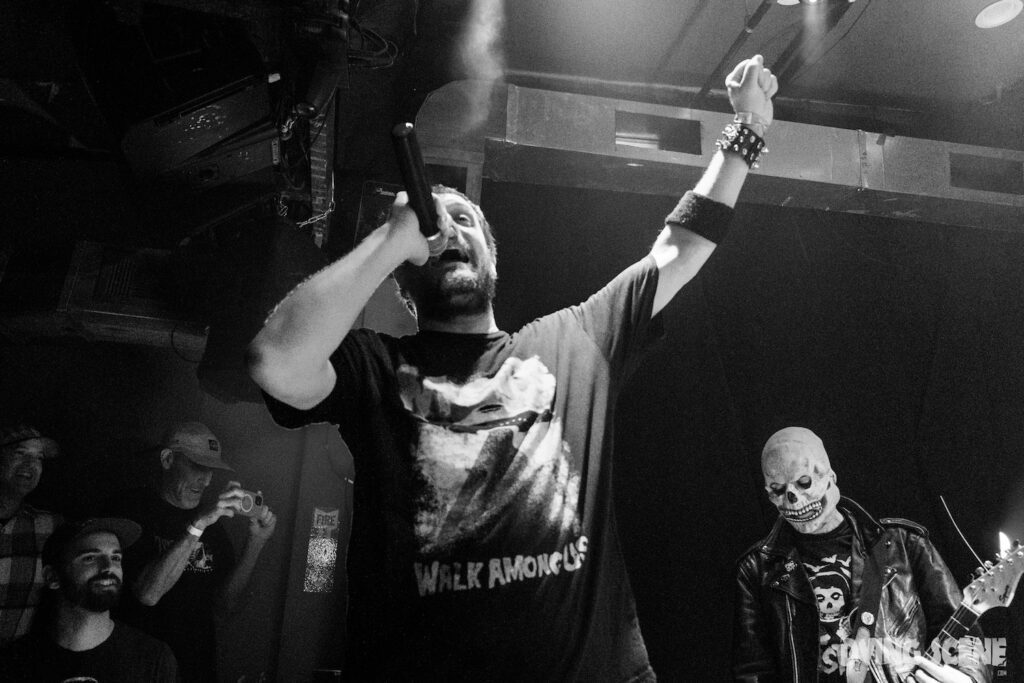
DS Throwback: 50th Anniversary of the Ramones Self-Titled Album

Fifty years ago, four kids from Queens, New York, recorded and released a record that would become an instant classic. The Ramones were already a name around the New York punk scene and clubs like CBGB, but you could only hear them if you ventured into the Bowery, which was not the safest place in […]

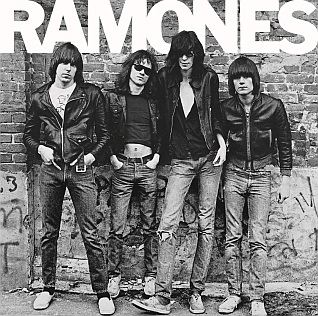
Fifty years ago, four kids from Queens, New York, recorded and released a record that would become an instant classic. The Ramones were already a name around the New York punk scene and clubs like CBGB, but you could only hear them if you ventured into the Bowery, which was not the safest place in the 1970s. This first album from Joey, Johnny, Dee Dee, and Tommy was not only a snapshot of the band but also laid the groundwork for the Ramones’ future albums. Released in 1976 and considered the first true punk rock album, it also serves as a blueprint for future punk rock albums in general.

While the dial for what’s punk or not keeps moving, the album establishes some of the universal tropes in punk rock, including short songs, most of which are two minutes or less. This was achieved by cutting the fat out. Fat, in this case, included things like solos and bloated intros or outros. The self-titled record has fourteen songs in thirty minutes, and still sounds more complete than a lot of the albums released at the time. Also present in most songs is Johnny Ramone’s buzzsaw guitar sound, which has only evolved over time in a number of genres influenced by the band.

Song subject matter is another thing this record has going for it. There are a handful of things that the Ramones write about on this first record, and would continue to write about throughout their career. Things like war, relationships, and horror movies would become the bread and butter for the Ramones, along with some songs about their lives and eventually their mental health. Some songs felt like modern nursery rhymes for kids born on the wrong side of the tracks.


With Dee Dee’s army brat upbringing and Johnny’s strict home life, a lingering feeling of military presence is felt in the Ramones’ music. A lot of these references are present on this first album, specifically in the lyrics for “Blitzkrieg Bop” and “Today Your Love, Tomorrow the World.” While Johnny may have had a regimented, no-nonsense way of life, Dee Dee grew up in the ashes of post-WWII Germany. While a lot of people are put off by the song’s use of Nazi references and imagery, these songs were culled from Dee Dee’s fascination with WWII history. “Today Your Love, Tomorrow the World” uses themes from Nazi Germany and is told from the point of view of a Nazi shock trooper. The song closes by repeating the title, “Today Your Love, Tomorrow the World,” which in theory could have been Hitler’s mindset.


The album drips with their musical influences, too. On top of their cover of Chris Montez’s “Let’s Dance,” one song you could consider the outlier on this record is “I Wanna Be Your Boyfriend.” It’s the only song on this album that doesn’t make use of Johnny’s buzzsaw sound. It’s a very simple love song and their take on the Beatles, Beach Boys, and other sixties groups that influenced the band. One of the other ways this record used these influences is how it’s mixed. Tommy Ramone and producer Craig Leon mirrored how the Beatles mixed their early records by putting the guitar on the right, bass on the left, and vocals and drums in the middle.


Each Ramone writes songs on this record, but most of the songs came from Dee Dee. Dee Dee had arguably the most interesting pre-Ramones life. He was born in the U.S. and moved to Germany while still a baby, but moved to Queens, N.Y., at the age of fifteen to escape his alcoholic father. Not having a great home life led to Dee Dee’s use of drugs and being a male prostitute to fund that habit. Songs like “Now I Wanna Sniff Some Glue” and “53rd and 3rd” hold more weight than one would think. “53rd and 3rd” tells the story of a Vietnam Vet who comes home from war desolate, works as a prostitute, and kills his Johns with a razor blade. While Dee Dee likely didn’t go that far, the amount of his participation was a secret he took to his grave.


While each of the Ramones had their vices of some sort, the yin to that yang was that they were also into horror movies, comics, and adolescent things men never grow out of. Two songs on this album are representative of this: “Chain Saw” and “I Don’t Wanna Go Down To the Basement.” Despite Joey’s weird pronunciation of it, “Chain Saw” is specifically about Tobe Hooper’s The Texas Chain Saw Massacre. The movie, though revered now, was pretty taboo with its extreme violence upon release. “I Don’t Wanna Go Down To The Basement” may be a little more generic with its use of the familiar trope from many horror movies, but songs about horror movies would eventually come full circle when Dee Dee wrote the theme for the movie adaptation of Stephen King’s Pet Sematary.


While the record has one love song, the album itself has three about being in relationships, all varying in tone and phase of a relationship, but all three with Dee Dee’s hand in them. Out of the three, “Loudmouth” probably aged the worst, given its repeating verse of threatening abuse towards a partner, even if punk used exaggerated violence as cartoonish expression. However, songs like “Listen To My Heart” and “I Don’t Wanna Walk Around With You” are great examples of breakup songs that give strength rather than ask for pity. They acknowledge mistakes were made, but in the end, the subject will be better off.


By far the most popular song on the album and in the band’s catalog is “Blitzkrieg Bop.” The Tommy and Dee Dee-penned song was said to be about fans attending a Ramones concert. Dee Dee again uses imagery from WWII; the word “Blitzkrieg” is a reference to a German war tactic meaning “lightning war.” Immediately recognizable by its chant, “Hey Ho! Let’s Go!” “Blitzkrieg Bop” is a staple of sports stadiums and movies. The song’s opening lyrics were a way to emulate the Bay City Rollers’ 1973 hit “Saturday Night,” which also begins similarly. For a group of kids that initially set out to make music for outsiders, their song became an anthem for everyone, not just the punks.


The Ramones’ self-titled record is not just a template for Ramones albums, but for other punk bands as a whole. The Ramones’ self-titled album gave a voice to the quiet kids who were more into reading than sports. Yet, it also gave a voice to the kid who might be getting into trouble, or who had a rough home life, or just a kid who was attracted to the more dangerous things life has to offer. The Ramones gave permission to all of these kids to let their weird quirks out.

The Ramones’ momentum would just keep building until their end in 1996 and has remained pretty consistent. Since then, the band has been the subject of every form of release possible. Whether it be box sets of reissues, books, or documentaries, The Ramones have been mined more press than some of the bands they were initially rallying against.

  1. Great documentary!

Post a Comment

Your email address will not be published. Required fields are marked *

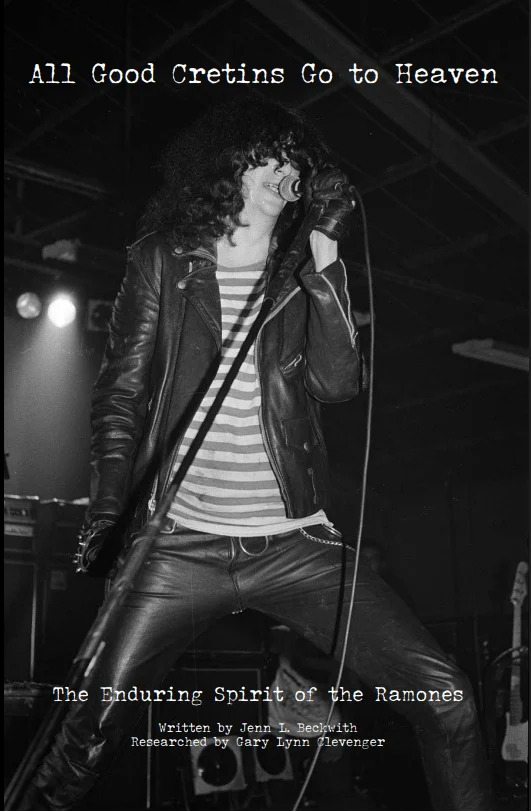
DS Book Club: All Good Cretins Go To Heaven By Jenn Beckwith

The Ramones, as a band, just missed the rise of the internet as a tool to connect with their fans, when they called it quits in 1996. However, their fans have used it as a way to document their love and devotion for the band. Jenn Beckwith has compiled a book that’s part band history […]

The Ramones, as a band, just missed the rise of the internet as a tool to connect with their fans, when they called it quits in 1996. However, their fans have used it as a way to document their love and devotion for the band. Jenn Beckwith has compiled a book that’s part band history and retrospective, powered by and for fans of NYC’s greatest export.

Plenty of words have been written about the Ramones over the last fifty years by critics. In the case of All Good Cretins Go To Heaven, it’s all about the fans whose participation helped make this book possible. While Ramones books in general will have crossover with each other, this book seems to fill the gaps more than most. It jumps around a lot, but it works because of the way it’s organized. It feels like a Ramones song: regimented but efficient.

Starting with a foreword written by Rock ‘n’ Roll High School director Allan Arkush’s memories of working with the Ramones, All Good Cretins Go To Heaven delves into the lives of Joey, Johnny, Dee Dee, and Tommy before they adopted their monikers. Their early history may seem deceptively simple, but there is so much to cover between their origin and the tension they sometimes felt for each other. Although this section is slim and repeats a good number of familiar facts, the context is still important to understand the extent of Ramonesmania. 

Each band member also receives a page and a half dedicated to them and their tenure in the band. No Ramone is left out, including Clem Burke’s very short stint as Elvis Ramone. An endearing part of this book is the chapters on Ramones fans sharing their pictures and stories about members of the band throughout the years, along with some fan art and Ramones-inspired bands like the hockey-themed Hanson Brothers and the baseball-themed Urban Outfielders, as well as many tribute bands.

Beckwith also delves into what makes a Ramones song and how their influences were the building blocks for these songs. While it may seem odd to see comparisons to Shakespeare and Aristotle, they serve as a good setup for the Ramones’ ideology, which is also discussed. This section functions as more of a dissection than a deep dive that approaches their framework without fully excavating their inner workings. It almost feels like the psychology of the band more than anything. This isn’t your regular book about a band you love. At times, the level of detail borders on what would almost feel like a stalker’s notebook if all of this info wasn’t already part of the Ramones’ public lore.

My one complaint is that there aren’t very many acknowledged blemishes. If you pick up this book, you probably know what these familiar warts are. While a few things are mentioned, a lot of the band’s documented tension remains untouched. Maybe it wasn’t always relevant to the narrative of this book, but these things still happened. A band with that long of a tenure is certain to have something in their past that should be acknowledged.

 All Good Cretins Go To Heaven is a 280-page love letter to one of punk rock’s first and finest. Between the number of pictures and the book’s fast pace, Jenn Beckwith’s book is a quick read. Releasing on the fiftieth anniversary of the Ramones’ self-titled debut, it’s a must-have for that obsessive Ramones fan in your life. Pick it up today at the Diwulf Publishing’s website.

Post a Comment

Your email address will not be published. Required fields are marked *

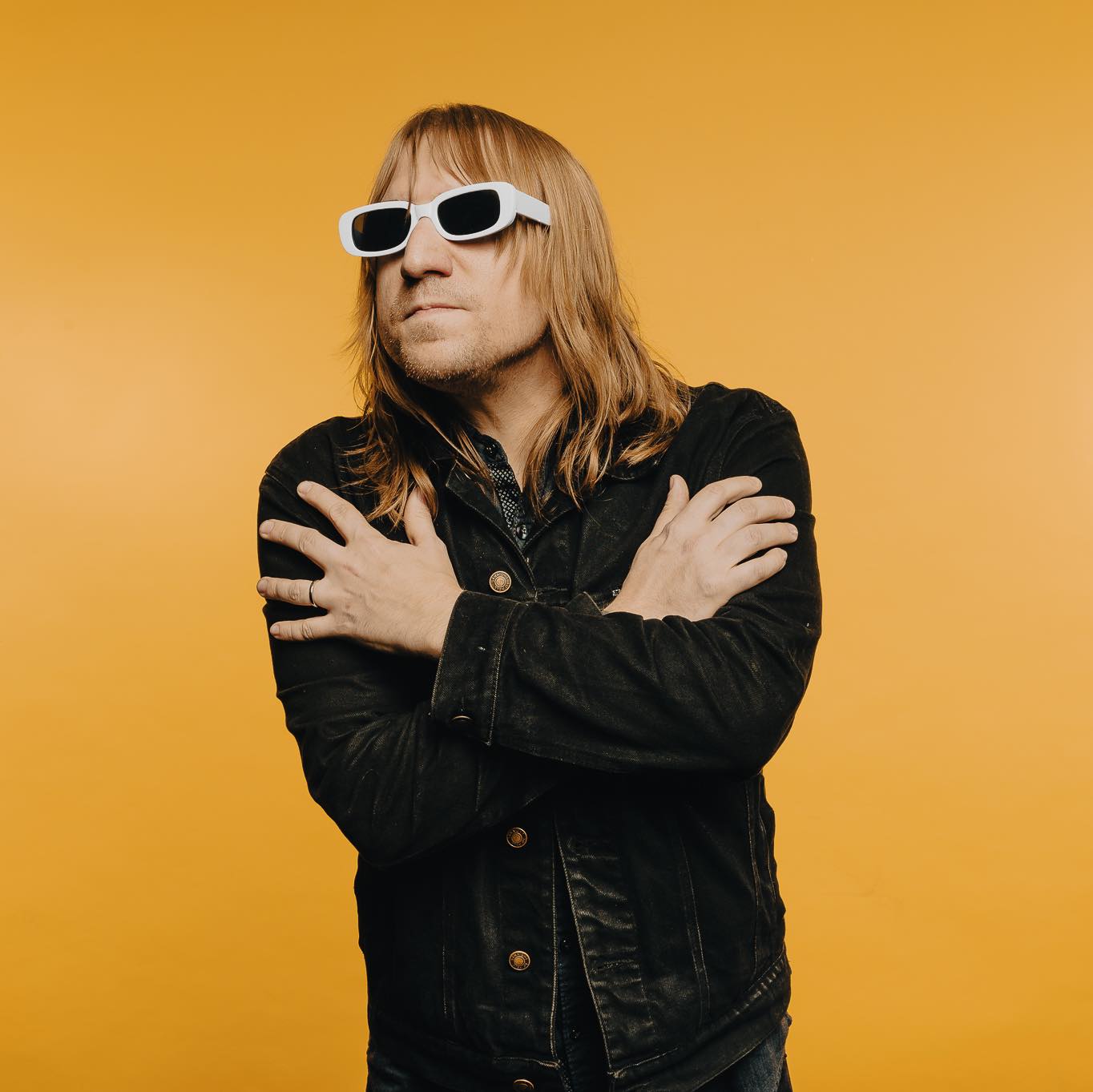
Dying Scene Radio Presents: Four Records – Episode 12: Andy Wylie (The Drowns and Dying Scene contributor)

Welcome to Four Records! Each episode, we feature one guest as they go over four records at four different times in their life. This week, Forrest speaks with Andy Wylie, bassist for The Drowns and a Dying Scene contributor. The Drowns released a live album last year and are currently working on new music. While […]

Welcome to Four Records! Each episode, we feature one guest as they go over four records at four different times in their life. This week, Forrest speaks with Andy Wylie, bassist for The Drowns and a Dying Scene contributor. The Drowns released a live album last year and are currently working on new music. While you are waiting for that to be released, you can see them on tour:

3/7/26 – Seattle, WA Clock-Out Lounge w/ the Briefs

4/17/26 – Upstairs Cabaret Ltd. – Victoria, BC w/ the Casualties

4/18/26 – The Pearl – Vancouver, BC w/ the Casualties

4/19/26 – Jackknife Brewing – Kelowna, BC w/ the Casualties

4/21/26 – Dickens Pub – Calgary AB w/ the Casualties

4/24/26 – Black Cat Tavern – Saskatoon, SK w/ the Casualties

4/29/26 – The Garrison – Toronto, ON w/ the Casualties

4/30/26 – The 27 Club – Ottawa, ON w/ the Casualties

5/5/26 – Sonia Live Music Venue – Cambridge, MA w/ the Casualties

5/8/26 – First Unitarian Church – Philadelphia, PA w/ the Casualties

5/10/26 – Black Cat – Washington DC w/ the Casualties

5/12/26 – 1884 Lounge – Memphis, TN w/ the Casualties

5/14/26 – The Sanctuary Detroit, Hamtrack, MI w/ the Casualties

5/15/26 – Reggie’s Music Joint – Chicago, IL w/ the Casualties

5/16/26 – The Argo – Whitefish Bay, WI w/ the Casualties

5/19/26 – Slowdown – Omaha, NE w/ the Casualties

Andy Wylie’s Four Records:

0-10: Ramones – Too Tough To Die

Teenage: Jason Webley- Only Just Beginning

Twenties: Nim Vind – Fashion of Fear

Recent Record: The Cure – Songs of a Lost World

Listen on Podbean

Listen on YouTube

Listen on Spotify

LIsten on Apple Podcasts

Listen on Amazon Music

Listen on iHeartRadio

Follow us on Instagram

Email: fourrecordspodcast@gmail.com

www.DyingScene.com

Opening song: Rad Skulls – Loud as Shit

Closing song: Lucas Perea – Underneath Ashes

Post a Comment

Your email address will not be published. Required fields are marked *

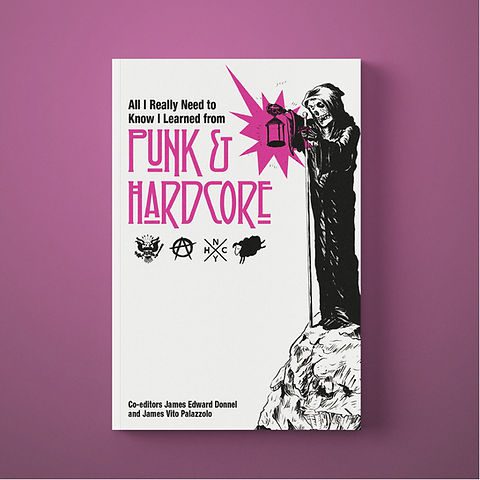
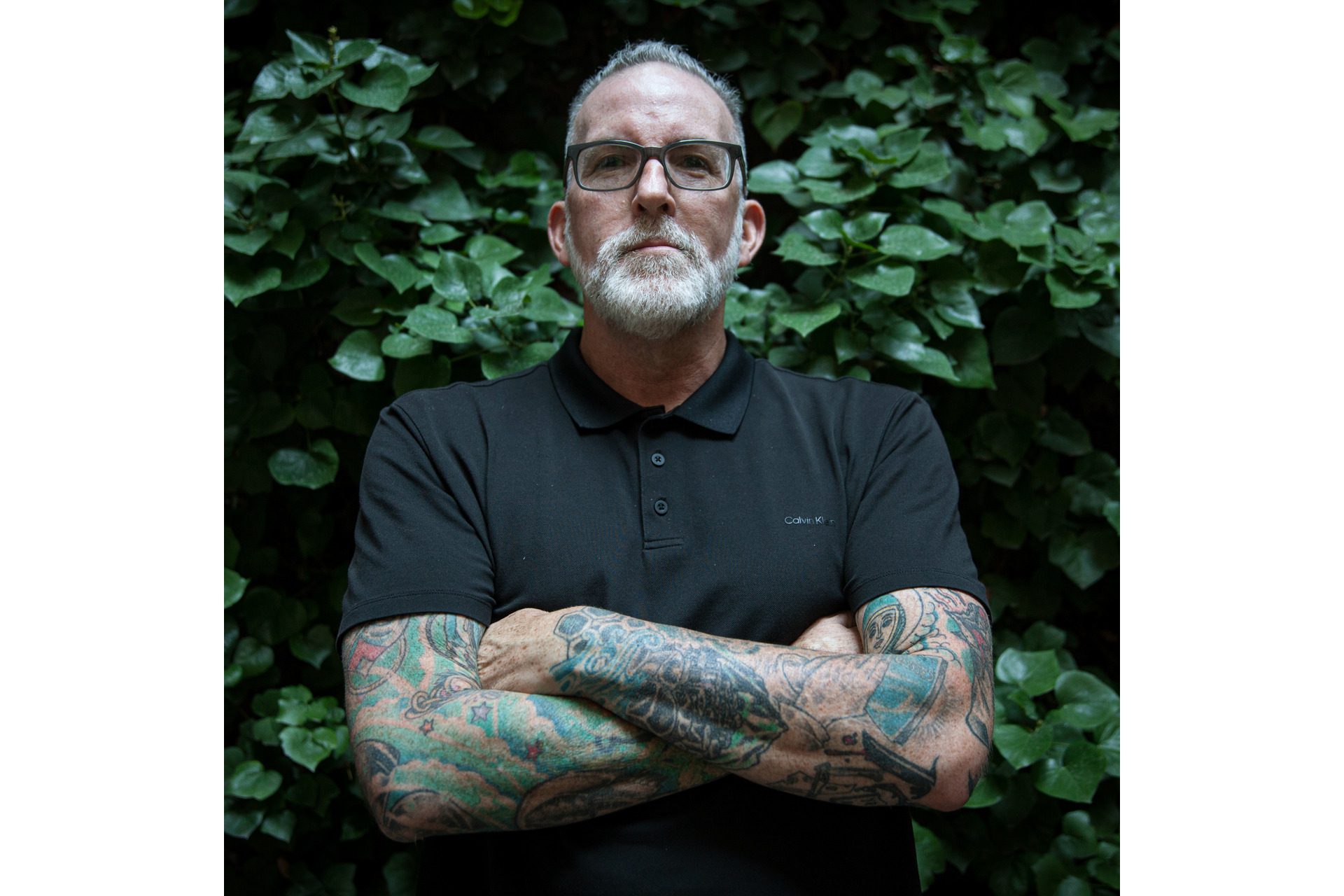
DS Book Club: James Palazzolo and James Donnel’s “All I Really Need to Know I Learned from Punk & Hardcore”

Everyone has their own stories and experiences when it comes to punk rock. While it’s the music that brought many of us together, the way people discover it can be deeply personal. Whether it be through a friend, older sibling, or some divine intervention, when you hear the right chords, it sets something off in […]

Everyone has their own stories and experiences when it comes to punk rock. While it’s the music that brought many of us together, the way people discover it can be deeply personal. Whether it be through a friend, older sibling, or some divine intervention, when you hear the right chords, it sets something off in your brain. This is part of what makes All I Really Need to Know I Learned from Punk & Hardcore a great collection of essays.

Edited by James Donnel and James Palazzolo, this first edition collects essays about different punk rock and hardcore bands and what they meant to each author. In the introduction, Palazzolo explains that the idea comes from a book he read by Robert Fulghum, All I Really Need to Know I Learned in Kindergarten, but he felt it was more accurate to track his progress into adulthood through punk rock. After some prodding and encouragement from a friend, this project was born.

The writers cover a wide range of bands throughout punk and hardcore, from staples like the Ramones and the Misfits to early hardcore pioneers like Minor Threat and Gorilla Biscuits. The book also includes bands that are on the fringe of punk rock, like the Talking Heads, The Replacements, and The Butthole Surfers. Each one of these essays is presented differently in tone, structure, and perspective. The format and how it affected the author’s life vary from piece to piece.

The essays are written by people from all walks of life. For some, this is the first piece they’ve had professionally published. Contributors include a vegan chef (Damon Brasch), a filmmaker (Vinay Chowdry), a college professor (Zack Furness), and other writers or musicians who have an affinity for punk and hardcore. Each essay is full of love for the genre and shares personal memories or feelings about its chosen subject.

With an endless list of bands, everyone’s reason for latching onto a band, song, or album makes for some great writing. Damon Brasch’s take on 7Seconds is about how their music helped him undo years of the toxic masculinity that had been ingrained in him. Jeremy Broyles tells of his hesitancy to go see Coheed and Cambria due to his hearing loss and possibly being deaf by the time the band comes through town. Other authors wax poetic about their favorite albums and how they came to be. Most of these feel like a conversation you’d have with someone you’ve just met for the first time at a punk rock show.

The last chapter contains short reflections written by the contributing authors about PMA and DIY, two cornerstones of punk rock and hardcore. Similar to the essays, each author gets about 250 words to discuss what each means to them and their journey into punk rock. The section shows how punk rock still lives in these individuals and has affected their lives in a positive way.

James Palazzolo and James Donnel have put together something truly special. The idea may not break the mold, but the content certainly does. This volume covering punk and hardcore, is the first in what will be a series covering other genres like Metal, Ska, Jazz, Country, Blues, and more. It seems that if there’s a genre, Palazzolo and Donnel want to hear your story. This is a well put together collection and deserves to be on your bookshelf. Pick up All I Really Need to Know I Learned from Punk & Hardcore at Screams Internally Publications.

Post a Comment

Your email address will not be published. Required fields are marked *

Dying Scene Radio Presents: Four Records – Episode 6: Jim Ruland (author)

Welcome to Four Records! Each episode we feature one guest as they go over four records at four different times in their life. This week, Forrest speaks with Jim Ruland, co-writer of Keith Morris’s My Damage, Bad Religion’s Do What You Want, and most recently The Rumors of My Demise with Evan Dando. Jim has […]

Welcome to Four Records! Each episode we feature one guest as they go over four records at four different times in their life. This week, Forrest speaks with Jim Ruland, co-writer of Keith Morris’s My Damage, Bad Religion’s Do What You Want, and most recently The Rumors of My Demise with Evan Dando. Jim has a bi-monthly column in Razorcake Magazine and posts weekly on his Substack, Message from the Underground. For more info please check out his website at JimRuland.net

Jim Ruland’s Four Records:

0-10: Village People – Crusin’

Teenage: Ramones – End of the Century

Twenties: Smog Town – Führers of the New Wave

Recent Record: Drain – Living Proof

Listen on Podbean

Listen on YouTube

Listen on Spotify

LIsten on Apple Podcasts

Listen on Amazon Music

Listen on iHeartRadio

Follow us Instagram

Email: fourrecordspodcast@gmail.com

Opening song: Rad Skulls – Loud as Shit

Closing song: Lucas Perea – Underneath Ashes

www.DyingScene.com

Post a Comment

Your email address will not be published. Required fields are marked *

Dying Scene Photo Gallery: Misfits Cover Band (Evilive) and Ramones Cover Band (Huntingtons). Pie Shop, Washington, DC

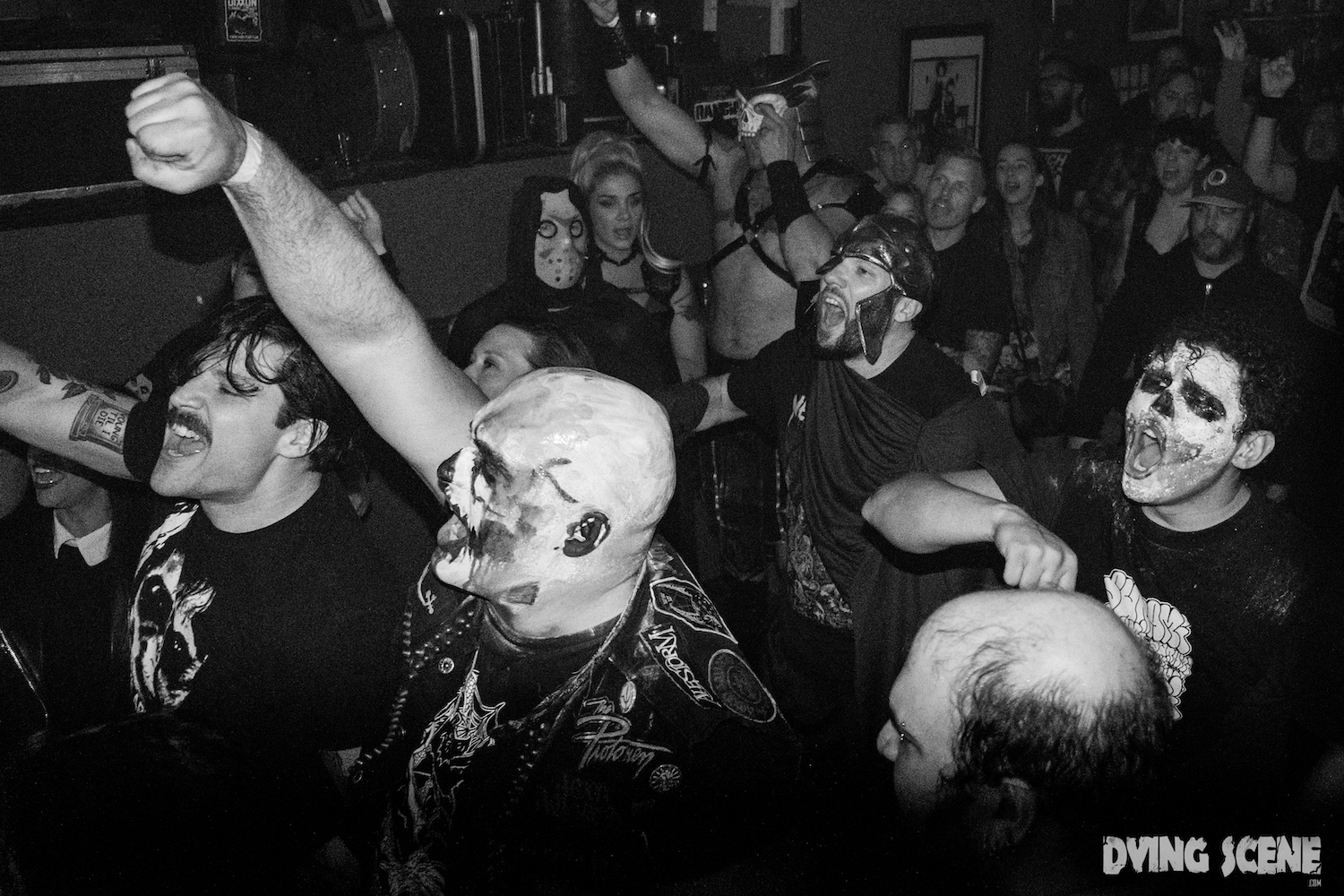
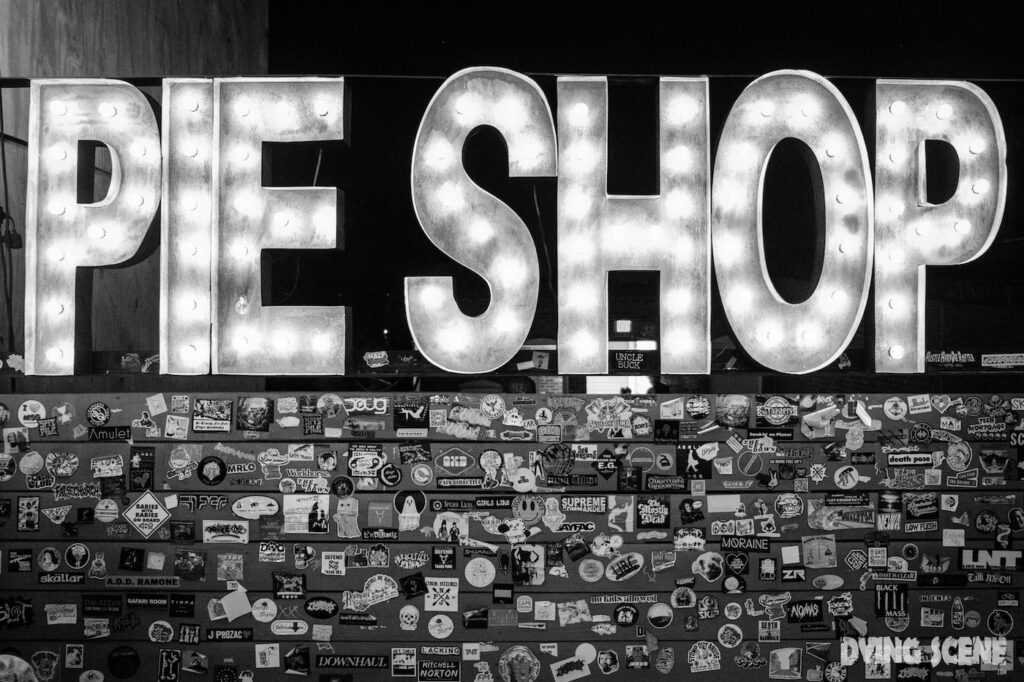
On 26 October 2024, the Pie Shop hosted a SOLD OUT pre-Halloween show featuring some of DC’s own punk legends (find out who below). This 17th Annual show featured Misfits Cover Band, Evilive and Ramones Cover Band, Huntingtons. The bands put on probably one of my favorite Halloween shows (ever) and I am looking forward […]

On 26 October 2024, the Pie Shop hosted a SOLD OUT pre-Halloween show featuring some of DC’s own punk legends (find out who below). This 17th Annual show featured Misfits Cover Band, Evilive and Ramones Cover Band, Huntingtons. The bands put on probably one of my favorite Halloween shows (ever) and I am looking forward to next year! The crowd was packed and everyone participated in singing along to every song. It was epic!

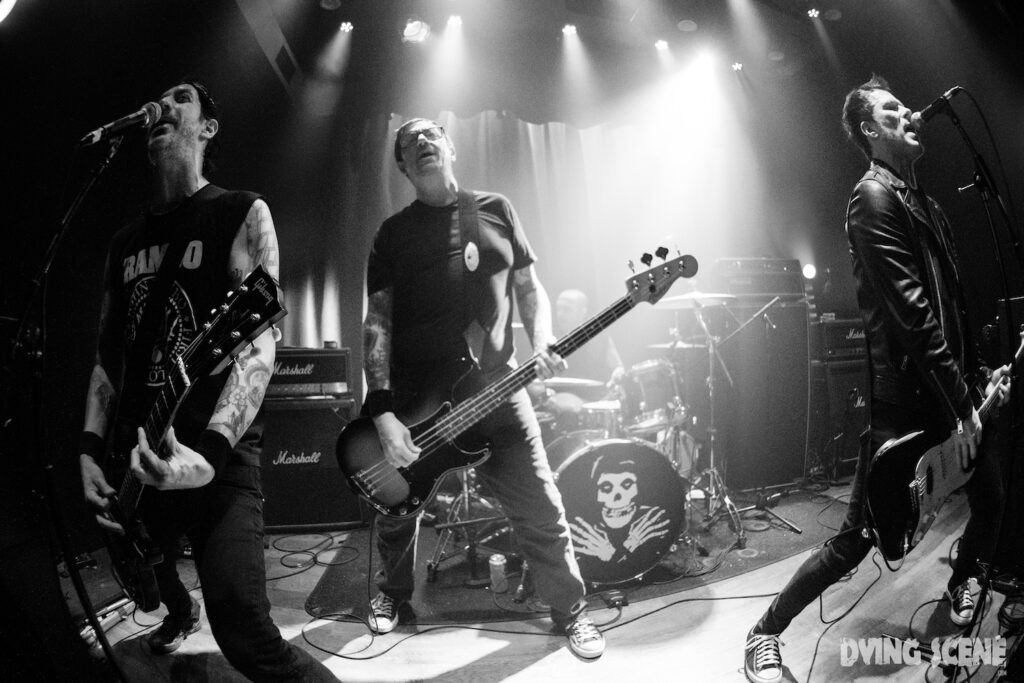
Baltimore’s Ramones inspired punk band Huntingtons did not disappoint as they ripped through their set and everyone went wild. Band currently consist of Mike Holt (bass/lead vox), Cliff Powell (guitar/vox), Josh Blackly (guitar/vox), and Chris Elder (drums). Find them here next.

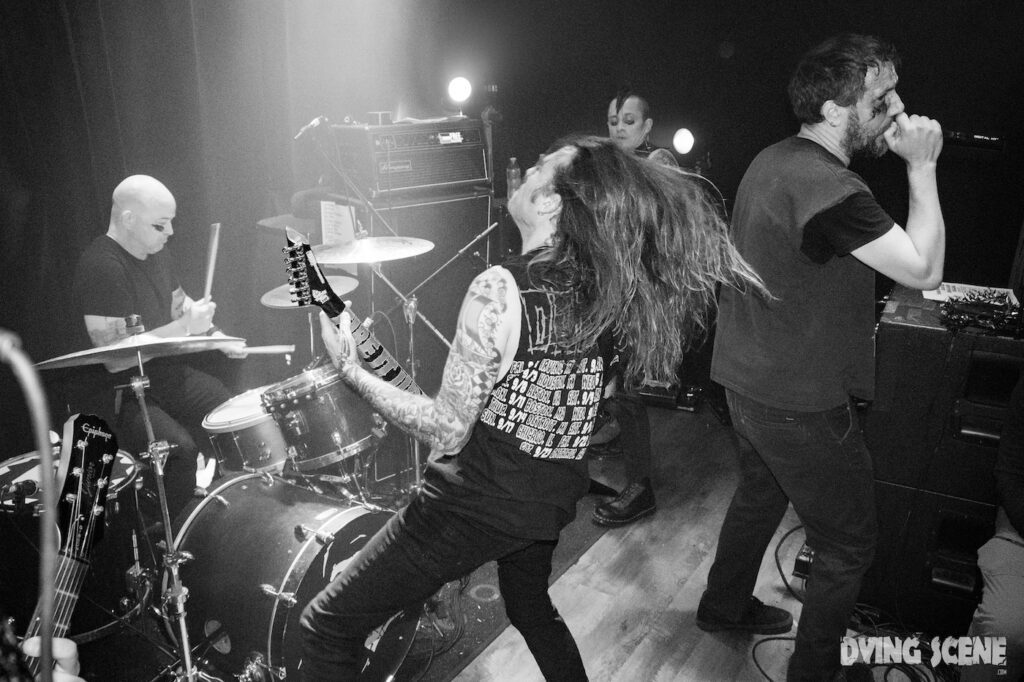
Misfits cover band, Evilive, headlined with a killer set from beginning to end. The lineup consist of mates: Tony Pee Pee (The Pee Circles) on vox, Jason Hamacher (Frodus/Zealot/Regents) on drums, Mike Schleibaum (Darkest Hour) on guitar, Tad Peyton on bass, and special guest John Christ (Danzig/Samhain) on guitar. The setlist ranged from Twist of Cain, Not of the World, Soul on Fire, Halloween and more.

You also missed Schleibaum atop the drum kick a few times flinging his locks while rockin out!

John Christ joining the band.

Evilive started off the night with Attitude, Horror Business, We Bite, Green Hell, London Dungeon, to name a few and ended with Bullet. The night was full of fantastic energy and a killer night.

Post a Comment

Your email address will not be published. Required fields are marked *

DS Interview: Catching up with Pueblo, Colorado punk vet Matt “Pickle” Hamilton

Dying Scene sat down with Matt Hamilton (aka Pickle) to discuss his long involvement in the punk rock scene. Matt has been playing drums for many years and many bands, including Produkt, S.O.S., the Coffin Boys, the Worms, the Sex Pickles, Trash Idols, Blanket of M, and Slash City Daggers. He’s also been a roadie for […]

Dying Scene sat down with Matt Hamilton (aka Pickle) to discuss his long involvement in the punk rock scene. Matt has been playing drums for many years and many bands, including Produkt, S.O.S., the Coffin Boys, the Worms, the Sex Pickles, Trash Idols, Blanket of M, and Slash City Daggers. He’s also been a roadie for Eleventh Hour and Total Chaos and currently plays drums for Diskount Vodka and the Dead End.

Dying Scene: So Matt, tell me about yourself. Who are you? Where are you from? When did you get into punk rock? When did you decide to become a drummer and why? 

P: My name is Matt Hamilton. Everybody calls me Pickle. I play drums. I started playing…well, I got into punk rock when I was about 15 years old. I didn’t start playing drums ‘til I was 17 and I’ve been playing punk rock ever since, for 30 plus years. I’ve played in tons of different bands through the years but right now, I’m playing in Diskount Vodka and the Dead End in Pueblo, Colorado. But I’m originally from from East Texas.

DS: Why did you decide to become a drummer? 

P: Because I skateboarded from the summer of fifth grade all the way ‘til the beginning of 10th grade and I messed up my knee and I needed to do something so I didn’t lose my mind. So, I started playing drums and all my friends were musicians. So, I got a friend of mine named Kevin Fender (Eleventh Hour, Employer Employee, AUNTIE) to show me a little tempo and I built off of that. Here I am, to this day, it’s the only lesson than I ever had. I also played with tons of people through my lifetime but finally just got my life back together. So, now I’m actually making a dent in society, I think a little bit. So, that’s good.  

DS: So, what other bands were you in? 

P: Let’s see, way back in the day, I was in a band called The Coffin Boys. I was in band called Blanket of M, the Worms, and I was in a real big band in Arizona called The Slash City Daggers. We went worldwide with that. It was like a trashy, glammy, punk rock and roll band. It was fun. You could find that stuff online. I sat in and played drums with Jeff Dahl and Freddy Lynxx at a live show back in the mid or late 90s back in Arizona. That was pretty badass.

DS: That’s a lot to be proud of for sure. 

P: Yeah, definitely.

DS: So, what brought you to Pueblo, Colorado? 

P: I needed to get off of drugs and I had friends here and could smoke all the weed I wanted to. So, here I am and I got a little bit right-minded again and started craving drums. So, my old roommate used to talk about this guy at the plasma center who played guitar named Carlos. So, I went and found him and here I am playing music eight years later with him in the Dead End.

DS: You’re currently in Diskount Vodka and the Dead End. How would you describe your bands? And, how do you manage your time in both bands? 

P: Diskount Vodka is just straight up old school punk rock. Some of it kind of sounds like street punk, a little Oi-ish, kind of poppy…just a little bit all over the place. We have a split seven inch with Tv Tragedy coming out on January 13th on Split Personality Records out of Las Vegas. That’s a fun one and Diskount keeps releasing singles. February, we’ll release an album. Then as far as the Dead End goes, we are a psychobilly band with punk rock influences. I’m a punk rock drummer but I play a little bit of rock and roll in that band, too. So, a little bit all over the place also as well. Hopefully we have some new music coming out soon, too. 

Diskount Vodka (left to right) Cuauhtli, Pickle, and Ellie.

DS: Cool. So, what are you up to right now? 

P: Just getting ready to release more material with both bands, but Diskount Vodka for sure. We have new material coming. So, we also have a video that came out on December 1st, a little live video with a song that we’re about to release. 

DS: So, with your two bands, have you achieved what you sought out to do as a drummer? 

P: I’ve made goals and hit those goals but now I have new goals. So, I’m just going to keep moving up the ladder. Never stop. It takes forever to get anywhere being a musician, for some reason, but it’s worth it. 

The Dead End (left to right) Pickle, LJ, and Carlos.

DS: Who are your biggest influence and inspirations? Tell me about your patches on your jacket. 

P: As far as my biggest influences, of course the Ramones influenced me playing drums at a younger age. But here recently, Scott Churilla (Reverend Horton Heat, Supersuckers) who played with Three Bad Jacks, that dude was super inspiring to watch. So, I’d say that gave me a little bit of inspiration in my life to beef up my drums some. I like listening to a bunch of Oi bands. They’re pretty inspiring. Rancid always inspires me. I like all kinds of styles of music, so I listen to psychobilly music, too. I like The Meteors, The Peabrains, The Quaranteds, and Rezurex. There’s a bunch of good bands like that. I like everything from the New York Dolls to Johnny Thunders, all kinds of stuff. 

DS: So, you’ve been performing locally and touring regionally for years now. What is the biggest show you’ve played? And, what is the best show you’ve played? Tell me about the most memorable show you’ve played. 

P: The biggest show I’ve played is Hot Rod Rock & Rumble because there were hundreds of people in front of us and then thousands of people in the whole place that heard us. So, it was pretty wild. As far as memorable shows, I could go all the way back to when I lived in Arizona and played shows with David Gardner with the Trash Idols and those shows were very memorable. Playing with Jeff Dahl was something that was super crazy in my lifetime. Raymond Burton Estes (…And We All Die) told me to buy a Jeff Dahl tape at Camelot Music in the mall for a buck. So, I did and I fell in love with it. Years later, I got to play drums with him on stage and played his songs. I was super amazed. But he’s also recorded stuff for the Trash Idols and recorded stuff for Slash City Daggers also through the years for me. So that was pretty cool. I still keep in touch with the guy. He’s awesome. So, much inspiration comes from him, too. 

DS: So, what would you say your proudest moments are? 

P: My whole career. I like it all. It’s never been a dull moment, that’s for sure. Playing with the Fat Skins. They’re a really good Oi band and those guys are really good guys. So, I’ve played with a lot of good bands. 

DS: What advice do you have for young musicians who want to start a band? 

P: You don’t want to play music. Don’t ever play an instrument! No, I’m just kidding. I don’t know…just learn that instrument and feel it. If you don’t feel it, definitely don’t play it. Just keep moving forward. You’ve got to put in the work. You can’t just sit there and expect somebody to come give it to you. You’ve got to go do it. 

DS: So, what’s next for you? What are some of the goals you have for 2024? 

P: Just put out as much music as I possibly can and maybe tour some and who knows, shoot some videos for both bands. So, just do as much as I possibly can. I only live once. 

DS: What bands are you listening to this week? 

P: Rancid, Descendents, Conservative Military Image, and a little bit of the Hellbound Hitmen, too.

DS: So, do you have anything else you wanted say to Dying Scene’s readers? 

P: Check out all the bands. Check out Dying Scene and just keep this going. Keep an eye out for the latest releases. Thank you for doing this for us. 

DS: Thank you. Thanks for taking the time to sit with us.

Post a Comment

Your email address will not be published. Required fields are marked *

DS Show Review + Gallery: Lollygagger, Sweetie & The Neighborhood Threat (Cobra Lounge, Chicago, 1/18/24)

Three local Chicago punk rock favorites played on a cold, wintery night at The Cobra Lounge but in true Chicago fashion that did not stop an eager crowd from showing up on a weeknight. Dying Scene note: I am excited to share this collaborative piece by myself (Mary) and Dean. All photography is done by […]

Three local Chicago punk rock favorites played on a cold, wintery night at The Cobra Lounge but in true Chicago fashion that did not stop an eager crowd from showing up on a weeknight.


Dying Scene note: I am excited to share this collaborative piece by myself (Mary) and Dean. All photography is done by Mary and words are by Dean. Enjoy!


Starting it off with The Neighborhood Threat, a 5-piece punk band. They have a nice, classic sort of first-wave sound, a la The Ramones or The Kinks. On stage leading the charge is Kevin Murphy on vocals, screaming his heart out and throwing himself around. Supporting him are Quinn Pokora on lead guitar, Tim Casey on rhythm, Alec Montoya on bass and Dave Catanese on drums. First up is a song called “Escape” and Murphy seems intent on doing just that, falling to his knees and writhing during the breakdown, Casey politely headbanging along, before transitioning into “Nightmares”. “Pretty good for a Thursday night” quips Murphy. Next is “Rose Gallery”, declared favorite of the band. Starting off with a languid bass intro from Montoya, we are soon launched into a wall of rock. Montoya starts bopping around a bit now too, making jokes with Catanese.


The music cuts to just bass and drums, slowly folding in guitar and vocals, before wrapping up with a gnarly breakdown. After is “237”, “The room from The Shining you’re not supposed to go into, there’s like a creepy lady in the bathtub.” Another bass intro, adding in some nice full sounding guitars, layering chords and riffs. Again, we are thrown into a wall of sound, with Montoya lunging forward through the chorus, with Murphy screeching like a stuck cat, Pokora accentuates the vocals with a high lick. It peters out into a false ending, before slamming back with even more chaotic sounding guitars, Murphy leaving us with a refrain of “Don’t go in room 237.”

Now we are shown “Another heavy number, about the nuclear apocalypse.” Pokora gives us some delicious harmonics, backed by ripping chords from Casey. Montoya gives backing vocals through the chorus. The bridge is stripped away to just drums, with Pokora soloing. We come crashing back out for the ending with Murphy clutching the microphone like it is the last clean water he will drink in his life. 


After is “Midnight”, during which Murphy stepped on his mic chord, but they manage it well. Then comes “Razorblade”, a song about “Toxic love.” Someone in the crowd yells “I love that song!” to which Murphy replies “Yo me too, cut me baby,” diving in headfirst with a yowl. This number is fast, needy and anxious, that has the rest of the band dancing along like tin men, compelled to move their rusty joints by their trusty magician.

They close out with a high riff from Pokora, with a tight, tapping arpeggio. This next one is a bit different from the rest of the set, called “Violet Marie”, about “Falling in love with a stripper.” Catanese plays with just sticks, cymbals, and rimshots, while Pokora and Casey fill in with some sweet, jazzy, broken chords. Montoya cuts in with a bass riff, which devolves into a more familiar punk sound.


They close out with “Death March”, Casey using an almost country style intro, supporting Pokora as he riffs high up the neck of his guitar, accenting Murphy’s vocals. Everything cuts out and we are left with just Murphy, dancing with his mic stand. With a death scream, he falls to the floor, and we are thrown into the music again, winding up faster and faster, before Murphy sits up again and gives us one final yell. 


Next up is Sweetie! Three extremely sweet people, who let me buzz anxiously around them and Mary before the show. Fronted by Birdy V on guitar and vocals, she is supported by Joe Soldati on upright bass and Ryan G on drums. Even just from soundcheck, you can tell all three are just some goofy people, having fun and doing what they love on stage, messing around and joking with each other. Set up and ready to go, Birdy yells to a near empty room “Hey everybody at the bar! If you don’t hurry up and come in here, none of you are invited to my birthday party!” (“Or subsequent orgy!” supplies Joe). Ultimatum set, we run right ahead into “Catholic Boy”, an almost ‘Planet Claire’ style drawling, cheeky, serenade. “We are Sweetie, thank you for the encouragement, it’s a weeknight,” quips Birdy. “Cold beer is good for your voice, right?”


Next up is “Devil Girl”. Digging deep into her chest for her voice, we’re rolled into the next number, something with a jumping, jiving, rockabilly sort of sound, which has Joe grinning like a mad man and taking to his bass like a lover. Now addressing a filled room, (or, as filled as can be for a Thursday night), Birdy chirps “Since you’re all invited to my birthday and surprise orgy, we are selling nipple tassels, and Lollygagger is selling ball gags.”

Faster, almost sleazy, we are brought through “Teeth”, sometimes feeling a bit like something from Heart. Simple but succinct and to the point, Birdy rips through power chords on her sick, two-pronged guitar, while Ryan accentuates his drumming with some nice use of cymbals. Birdy’s eyes are opened wide through the chorus, flashing the whites like a cat. 


Everybody cuts out, and Ryan counts us off into “Love Lucy”, a languid, gentle, almost mocking piece. A main refrain of “La la la las,” with Ryan opening his mouth like a snake, in rapture from his bass. They lean towards each other, playing for each other and laughing like a shared secret. Following is “Chum”, with Ryan using mostly cymbals as an intro, softening out into overdriven guitar, before coming back around again with an almost bouncing gait on the toms. With a sarcasm essential to put-upon misfits, Sweetie ambles ahead with the song, like a self-depreciating joke you just-so-happen to be allowed to get in on. Guitar and drums almost having a conversation, before breaking with a phaser-heavy solo. Joe picks up his hands like a dinosaur, before picking up his bass as easy as a briefcase, waddling over to Ryan, and headbanging at him through the outro. Birdy is back, chatting on the mic, saying “Once again! We are Lollygagger, also Birdy is my favorite person in the world and I love her.”


With vocals only in French, Birdy serenades us through “La Vie”, backed by wistful rimshots. With syllables murmuring like the ocean, Birdy rolls her eyes for the octave change in the verse, a lonely thing with just her, pausing, then the rest of the band rushing in to help. Joe solos the intro for “Howl”, the next song, with Birdy winding up with some sick feedback on guitar. With a yowl, we are thrown into the song, Joe leading the charge with his bass. And for a massive instrument, he throws it around like dancing a foxtrot, laying it across his lap and leaning back, lunging towards Birdy, and finally almost sawing it in half through the finish. 


Birdy’s on the mic again, asking us to “Go around, and have everybody say one nice thing about yourselves, Mary you go first.” She laughs, apologizes and says, “We lied, we’re not Lollygagger, we’re actually The Neighborhood Threat” (Murphy yelling “Wait!” from the crowd). With that we are lead through “Mama”, with some dirty, slow, sexy guitar, and a drumroll from Ryan shoving us towards something faster. Joe is electrified by his bass again, yelling “Get it!” before leaning forward with backing vocals. Everything cuts out to just guitar, Birdy almost monologuing with it, before jumping into the full song again, ending on a refrain of “Let me be.” Closing out with “Cha Cha Heels”, Joe gives us a quick intro, before launching into the song. Anxious and fast, this one finishes with a call and response chorus. 

You can catch Sweetie at their music video release show on March 15th at Gman Tavern in Chicago!


Finally, Lollygagger! A veteran, Chicago, 3-piece punk band. Before I found Mary and Sweetie, I was anxiously huddled at the bar (and getting carded for ordering a ginger ale). A particularly awful Nic Cage movie was playing on the TV, and I managed to calm down a little listening to these three dudes rip poor Nic apart. Lo and behold, they ended up being the headliners! Go figure. On vocals and guitar, we have Matthew Muffin, wearing a mechanics jumpsuit. On bass is Kinsey Ring and drumming is Michael Sunnycide, wearing a vest with patches, gelled hair in a mohawk, and one of the aforementioned ball gags around his neck. Starting off with a song “About a bar, not this bar, but essential to the Liars Club Lollygagger experience” is “Liars Club”. Mr. Muffin, putting most of his effort into screaming, is supported by a sick riff from Ring.


With a held screech followed by a cute solo, we transition to “Bombs Away”, with bass and drums coming back in to transition. Even though the drums are (relatively) calmer in this song, Sunnycide is still bouncing out of his seat. Ring leads, with a nasty riff on bass, while Matthew basically plays rhythm, howling away on the mic. This next song has a name that “Basically means no more tyranny. If you’ve checked the news lately, or talked to anyone, you’ll find it everywhere. Anyways, we’re a band called Sweetie” (with woops from actual Sweetie in the crowd.)

Orating like a politician in the verses, and punctuating the pre-chorus with aggressive eyebrow maneuvering, the Muffin man is in perfect caricature like a sketch artist. Sunnycide looks to Matthew through the pre-chorus with a face like a dog waiting on the word to attack. And attack he does, beating the drums like they owe him money, with Matthew calling for a circle pit to open up (it tragically didn’t happen, but most of the people dancing started dancing harder for him at least). 


Birdy chirps “Makeup’s for girls!” to which Muffin replies “Ya bitch, anybody can sparkle. This next one goes out to Sweetie!” This song is “About how controlling religion is while also being so interesting. Like going into church and being like what the fuck, are you tithing me?” With a pick slide, we are thrown into “Found In The Dirt”, Matthew narrating like a children’s author, but with a heavy dose of sardonic chastising. The music swarms together and then falls apart, cutting to just Sunnycide leaning on his toms. Ring builds tension with the bass, before Muffin cuts back in, summoning a holy ghost through his solo. “This song is about rocking through your 20’s, with no regards to your back health.” “Schmorgishbord” opens with a solo from Ring, who looks at his hand with the awe and wonder one would hold over a familiar summoned to shred. With a mild “One two three four!” we’re gently pushed into the song, Sunnycide and Muffin hammering away. Matthew leads us into “Dopamine Cops” with a chant, “When I say, ‘Fuck you’, you say dad! Fuck you, dad! Fuck you, dad!” With a sound markedly toned down compared to the rest of the set, Muffin almost drunkenly slurred his words in the verse, backed by melancholy sound from Ring and Sunnycide. Matthew lunges forward screaming again through the chorus, before cutting to just him again, voice echoing back and forth through some sort of delay effect, backed by a simple guitar riff. Sunnycide tumbles in behind him on the drums, Ring following close behind, Muffin finally calling screeching feedback with his guitar with vocals caught between it like memories. 


“So, despite the name, my boss is actually a really nice guy, but I want you to imagine YOUR boss, and punching him right in the face!”, we’re dragged screaming into “My Boss Is a Dick”, with simple chords and just cymbals. Muffin rages through the chorus, laughing maniacally as if at an ironic joke, Sunnycide and Ring nodding along in collusion. Ring solos out of there, hand crawling over his bass like a spider, while Muffin looks on both delighted and impressed. Matthew takes this moment to introduce the band, calling himself “Dingus Khan, with drums from Michael Sunnycide, and Mr. Wizard Fingers himself on bass… Everybody say, ‘I love you Sweetie’ (“I don’t love no man” from Birdy), I love you Neighborhood Threat! This next song is about sausages, cause that’s what my drunk drummer is yelling at me. It’s called ‘Might Methuselah’s Salami’.”

“You know, 8-year-old me would be stoked, yelling about sausages to a room full of people. I’ve always been a fan of tubular meat.” Somewhere within that sausage story, Sunnycide donned a ball gag. They blast through this song, with Sunnycide opening his eyes wide during the chorus, and (trying) to scream along.


Closing out the evening is “Stone”, Muffin dramatically reciting the interludes like a Greek chorus, while Sunnycide stands up and conspiratorially raps on his cymbals. Sitting down again, he damn nearly bites a chunk out that gag while he beats the life out of his drum set. Ring nods his head like a maestro conducting his orchestra, before looking endearingly at Muffin as he beats the life out of his guitar. They leave the stage while tracing a heart in the air, saying “We love you, go home, tip your bartenders, we’re Lollygagger…I mean Sweetie.”


Check out the full gallery below!


Post a Comment

Your email address will not be published. Required fields are marked *

From The Dying Scene Vault # 6: Phil Marcade (The Senders) on The Ramones, Nancy Spungen and the cast of characters on “Punk Avenue”

Thanks to everyone who has checked out all of the new content we’ve been cranking out since the relaunch of Dying Scene! We’re stoked to be back, and we’re even more stoked that you’ve been checking in! Because we have an awful lot of material from the old site in the Archive, we thought it […]

Thanks to everyone who has checked out all of the new content we’ve been cranking out since the relaunch of Dying Scene! We’re stoked to be back, and we’re even more stoked that you’ve been checking in! Because we have an awful lot of material from the old site in the Archive, we thought it would be cool to take a look back at some of the posts from our past.

It’s a bit of a bittersweet installment of From The DS Vault this time out. Word broke this afternoon that Philippe “Phil” Marcade passed away earlier this week after a relatively brief battle with pancreatic cancer. Here’s the news as relayed on his social media:

With great sadness we share the news that our friend Philippe Marcade has left us.

Phil, who thrilled audiences as the lead singer of The Senders and authored the memoir Punk Avenue, succumbed peacefully among loved ones in Paris on June 5, 2023, following a brief struggle with pancreatic cancer. He was 68 years old.

From 1976 through his final performances in 2017, Philippe remained true to the music and scene he loved, delivering a frenzied mix of rock and roll / R&B intensity and deft, inventive songwriting to audiences of both The Senders and The Backbones.

Those fortunate enough to see him perform know that Philippe Marcade was a rare individual who had true business being a LEAD SINGER. From the late- ‘70s NYC Punk scene onward, Phil would take the stage without the protection of a guitar, grab the microphone, and for an hour or so he’d croon, scream, dance, joke, blow harp and take audiences on a wild ride with easy assurance. No matter where or when, Phil always turned it on.

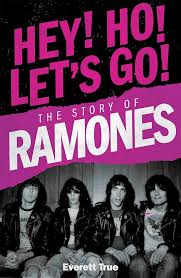
Phil and I chatted over the phone a few years ago when he was doing press for his dynamite book Punk Avenue: Inside The New York City Underground 1972 – 1982. He was living in Italy so it was very much a long-distance call (remember those!?!) and it was super fun. Phil was funny and engaging and still seemed to display a sense of awe and wonderment about some of the obviously chaotic but certainly legendary times that he was privy to in and around New York’s Lower East Side half a century ago. We stayed in contact via Facebook a few times, and he was always inspiring and interested in what was going on. When I was reading the book and doing research for our talk, I found out that a friend of mine ran in the same circle as Phil in NYC back in the 1970s, and they shared a bunch of mutual acquaintances. In a weird twist of fate, cancer has claimed both of them this calendar year. I miss them both. So without further ado, here’s my chat with Phil from May 2017.

If we were running down a list of the most famous, and infamous, figures from the epicenter of the fledgling punk rock scene in New York City’s Lower East Side in the mid-1970’s, we’d have to scroll pretty deep into the annals to find the name Phillipe Marcade. Marcade fronted the high-energy blues punk band The Senders that were staples at such legendary venues as CBGBs and Max’s Kansas City for the bulk of the late 1970s and early 1980s, and yet neither the man nor the band really got the credit that they deserved outside a twelve-block radius.

Yet Marcade was every bit as entrenched in the 1970s Lower East Side as any of the Ramones or Debbie Harry or Johnny Thunders or Legs McNeil or any of the others whose names come more easily to mind. In fact, to hear one-and-only McNeil tell it in the Foreward to Marcade’s brand-new book, Punk Avenue: Inside The New York City Underground 1972 – 1982, Marcade, “while not a household name, was friends with everyone at CBGB and Max’s Kansas City, and a bona fide member, in good-standing of the New York Punk Rock Scene.”

We caught up with Marcade over the phone from his home in Italy to discuss Punk Avenue and the early NYC punk scene in more detail. Still the purveyor of a heavy Parisian accent, Marcade is equal parts humble and engaging. That he ended up with this particular story to tell is the result of a series of profoundly fascinating circumstances. A native of France, Marcade took a trip to Amsterdam as a teenager that led to a chance encounter with a American traveler named Bruce, which, in turn, eventually resulted in Marcade spending several decades in the Lower East Side, but not before stopovers in Boston, a longer stay in Amsterdam, a hog farm in New Mexico, and…his eighteenth birthday “party” in a Federal Penitentiary in Florence, Arizona. It seems that even in the 1970s, the feds frowned on shipping large quantities of straight hash across state lines…

Marcade might have ended up in the gritty, tough-as-nails Lower East Side in the early 1970s by happy accident, and yet that’s not an entirely bad way to describe the foundation of the scene itself. Given the transient, underground nature of the close-knit, artistic community that found itself magnetically pulled to that neighborhood at that time, it’s not a stretch to say that punk music as we came to know and love it would not — could not — have started anywhere else and come out the same. The thing about living and thriving in the geographical center of a once-in-a-generation social and cultural and artistic movement is that you don’t realize you’re there until you’re gone and the moment has passed. That’s especially true when you’re viewing said geographic center from the wide eyes of an outsider. “I thought it was so magical and exciting,” says Marcade, quickly adding on that he “thought that was probably because I was new in New York, and to everybody else I thought it had always been like that. Only years later did I realize that no, that was a true revolution going on at the time!

While perhaps unaware of the importance of the movement that he was a direct witness to at the time, Marcade did, at least, recognize sheer talent when he saw it. “I think that the first very important band of the movement, without being in the movement really, was Dr. Feelgood in England. They really changed things around.” Once the music moved toward this side of the pond, the cream quickly rose to the top. Says Marcade: “The Ramones and the Heartbreakers and The Cramps were just amazing groups. I’m so glad I got to see them.” And see them, he did. Especially The Ramones, whom he estimates he saw roughly “a hundred times.” When asked of his insider’s perspective on whether or not Ramones were, indeed, worthy of what’s become iconic, almost mythological status, Marcade answers an emphatic yes. “They were just amazing! They were so good. I never went to a Ramones show and left thinking “eh, that wasn’t that great.” They never ceased to amaze me!”

On the other hand, perhaps not as worthy of her iconic, mythologized status was Nancy Spungen. Marcade knew knew Spungen prior to, and in fact had a hand in encouraging, her fateful 1976 move to London. “I always thought Nancy was kind of a sad soul, a lonely girl,” says Marcade with a hint of sadness present in his voice for the first time in our conversation. “Everybody was so fucking mean to her,” a fact that led to her leaving her heroin-addicted cat (“Oh, that fucking cat!”) with Marcade and heading to London, where she’d eventually, infamously, cross stars with the Sex Pistols’ Sid Vicious. “I think a lot of people misjudged her because of the way she carried herself, and because of the whole heroin thing. But knowing her before, she was a sweet girl. She was as much a victim as Sid. She was not that “evil woman” that turned poor Sid Vicious on to drugs… I don’t subscribe to that theory!”

There are no shortage of memorable characters and stories and moments peppered throughout Punk Avenue. Truth be told, the four-page glossary of supporting characters is almost overwhelming (and would probably better serve the reader if it appeared as a reference index to refer back to). That Marcade can recall such a large volume of names and faces and coincidences is no small feat in and of itself. “It’s funny,” says Marcade, “because I seem to have a very, very good visual memory, and when I think back to an anecdote like that, I can really remember it well.” As the project neared completion, he fact-checked and cross-referenced some of the stories and their corresponding dates with some of his surviving companions, though most stories required only little tweaks.

Yet the real noteworthy feat is not simply remembering stories, but weaving them together in a way that is fun and funny and sad and personal and gripping, whether you’re a fan of early the early NYC punk scene or not. Marcade not only does exactly that in expert fashion with Punk Avenue, but he does it in a language that’s not his first. It is perhaps that wide-eyed outsider’s perspective that keeps everything fresh and exciting and new and real to the reader, especially when the stories involve such Herculean figures. Aside, maybe, from Please Kill Me, it’s hands-down the best read about the Who, What, When, Where, Why and, especially, the How of the origins of the punk rock scene as we know it. Punk Avenue is out now, and you can pick it up at Amazon or Barnes & Noble or Target but hopefully at an independent bookseller near you!

Head below to read the text of our full half-hour conversation with Marcade. Aside from what’s touched on above, we cover a lot of ground, including the changes (read as: gentrification) in the Lower East Side in the forty years since the dawn of punk civilization, which bands from the scene got unfortunately overlooked, and which more recent bands have carried the torch most surprisingly. The results may surprise you!

Dying Scene (Jay Stone): Thank you very much for this – I consider it an honor to be able to talk to you. And congratulations on the book. I’ve read it cover-to-cover twice now and I’m now on my third time through because…

Phil Marcade (author, Punk Avenue): You’re joking!

No, I’m not joking at all. I got it in the mail shortly after the holidays and read through it pretty quickly, and then I wanted to read it again to get a little deeper knowing that we might be talking one day. I find it to be raw and uncomfortable sometimes, but you’ve got such a positive and humorous way of writing and talking about things that I find it to be a very fun and compelling read.

Well thank you very much. I’m very touched by that. Thank you!

You’ve obviously had these stories kicking around for a long time…what was the impetus for compiling everything and writing the book in 2017?

Well, what happened is that the idea was kind of turning around in my head for a few years that I wanted to do it. I started by taking a little notebook in my pocket everywhere I went, and I made little notes whenever a funny anecdote would come to mind so I could remember it. I wanted to see if I would have enough to fill up a book, so I just made a whole list of anecdotes, and then I just let time pass by. I wasn’t sure when to start (writing the book). And then, actually, I got motivated by my nephew. His name is Pierre, and he lives in France, and he was asking me questions over email about Max’s and CBGB’s and was very interested by that whole scene. So I started to write a few chapters and sent them to him. He loved them! So having an audience really helped me with getting the work done. I would write about thirty pages and send it to him, and the whole book went like this. It kept me going for about four months.

I was wondering how you were able to — I don’t even want to say recall all of those stories, but there is so much detail and there are so many people involved. The copy that I received has the glossary of who’s who, but I almost wish it had a proper index so I could go back and figure out where everybody overlapped. But I’m glad that you brought up that you started with the notebook, because I was curious how you could possibly recall all of those stories and the people that you came across. It was not just impressive but really staggering.

Thank you! It’s funny, because I seem to have a very, very good visual memory, and when I think back to an anecdote like that, I can really remember it well. The part that I find the most difficult is to put it in the exact time. It was a good job for me to verify all that on the internet afterward. For example, I say at one point that we stopped at the inauguration of Richard Nixon, so I’m checking the dates and yup! I was right. Sometimes I questioned my memory, but it seems that everything that I remembered was right. Little by little I made corrections, or I remembered something slightly wrong. It was really fun to do.

Did you reach out to any of the other people that were involved to verify some of your dates or some of your memories, or see if you got things correct?

Yes, as a matter of fact, there’s a funny incident that happened. One of the main characters is Bruce, my friend that I met in Amsterdam. I wrote the whole thing without talking to him, and since he’s in the book so much and we talk about some stuff that’s…illegal…I wanted his permission. So I called him up on the phone and I told him I wrote this book and he said “that’s fabulous! Read me a little of it!” I didn’t know where to begin, so I just started with the very first page. I read to him that it was my eighteenth birthday and I was transferred from the jail to this other penitentiary in Tempe, Arizona. And he cut me off and said “is this going to be published?” So I thought “uh oh…” I said “yes, why?” And he said “are you out of your mind?” I said “oh, you don’t want me to talk about that we were busted?” And he said “oh no, that’s fine, but the jail was in the town of Florence!” (*both laugh*) I was very relieved that he was fine with the book, and very happy that he had corrected a terrible mistake I made in the third line of the book! (*both laugh*) I talked also to my ex-wife about it and I talked to a few other people who were in the book about it and they were all very happy. I was glad they could confirm some of my stories, so that was cool.

The ‘70s in Manhattan, specifically the Lower East Side, was obviously the epicenter of such a large social and cultural movement, and we really haven’t had a movement like that since then except for maybe Seattle. I’m always curious to hear people that were there, and when they exactly realized that they were in the middle of something that was really interesting and compelling and not like something going on anywhere else. Is that a thing that you were conscious of at the time, or was it not until months or years later…

Not at all! Not at all, and I’ll tell you why. I was not conscious of it because I had just arrived in the States, especially in New York. I thought it was so magical and exciting, but I thought that was probably because I was new in New York, and to everybody else I thought it had always been like that. Only years later did I realize that no, that was a true revolution going on at the time! But since I was brand new to the scene, I was brand new and I didn’t really realize it. But indeed, it was quite incredible, and thinking back on it, what made it so special is that it was such a small scene. Everybody knew each other’s name. There might have been two hundred people, at most, at Max’s and CB’s. It was a small scene of locals. So no, I didn’t realize there was anything revolutionary going on while it was going on…I thought it was just (revolutionary) for me!

One of the things that really comes across in the book is how small but I guess how diverse the scene was. I wasn’t born until the very end of the 1970s so I obviously wasn’t around, but I think we have this romanticized view of that scene and how it revolved around bands that sound like Ramones or like The Dead Boys, but it was really more diverse than just those “punk” punk bands.

Yes absolutely! I totally agree with you!

That is something that really comes across that I think gets overlooked otherwise. The Senders, for example, are not a traditional “punk rock band” by any stretch of the imagination, but you were right there in the middle of the whole scene.

It’s true. I think that at the time when I first heard the term “punk” was through Punk Magazine, so to me, it kinda meant underground, New York, maybe if there was a style it was short hair and not very professional, not very polished, not very skilled musicians. That’s all it meant. Nobody was in the same style as another band. Nobody really knew who was “punk.” I think that all became clearer after the punk wave in England. Then, it was like “yeah, that’s punk.” But the Ramones had Beatles haircuts. Nobody thought of them as being “punk”…or at least I didn’t.  And then you had stuff like Talking Heads, or Blondie…that wasn’t “punk” at all. So it was very mixed indeed. A lot of different styles at the same time. But now, when I hear the term punk, I think 70s or early 80s New York or London, but it took a lot of years to define that image. It didn’t feel like that back then to me at all. It’s funny, because when punk became more popular, in the ‘80s, I hated the term. It had become so overly commercial. Everybody had safety pins on! (*laughs*) As time has passed, I love the term again, but for a while it was just kinda lame! (*both laugh*)

Were there other bands at CB’s or at Max’s that, for whatever reason, never took off the way that Ramones or Talking Heads or Blondie did that you were always sort of curious about why they never got bigger than they were? I think that The Senders would certainly qualify as one of those bands, but are there others that while you were watching them, you were confused about why they never got big?

Oh yes, so many. There were so many bands that I admired so much that never got anywhere. The first thing that came to mind was Buzz And The Flyers. They were tremendous! They were an incredibly good rockabilly band and I thought they would be huge. Also, a lot of bands like The Victims. In the late 70s, there were so many that were great but that never got mentioned or that have been forgotten but were truly great.

Have you been back to the Lower East Side much in recent years? I know that obviously CB’s shut down and Max’s shut down, but what are your thoughts on the gentrification of that area? Even Alphabet City is not what Alphabet City used to be!

Yeah, to say the least! (*laughs*) It’s amazing. I never go to that neighborhood much anymore. Before I left, a friend from Europe came to visit me, and I took them to Avenue B and I couldn’t believe it! It was all yuppie restaurants and stuff. The last time I had been down there, it was very dangerous! There was nothing to do there but cop heroin. It was not a place to put a restaurant! (*laughs*) It’s amazing how much it’s changed, and I find it a bit sad. It seems to me that so many cool people got pushed out of the Lower East Side and moved to Brooklyn or Queens. Like myself, I lived in Queens for fifteen years because my rent became too much. I was living between Avenue A and Avenue B for twenty years or so, and I had to move out. All my friends too. It improved, maybe, the quality of life, but it lost a lot of the artistic life. All of the musicians and artists moved out, which is a shame, because there was such a cool community there before. Everybody was within three or four blocks of each other and that really made a cool scene, but I guess they all went to Brooklyn now! (*both laugh*) You’ve got to be very rich now to live in Manhattan. It’s crazy.

Right. And I’m calling from just outside Boston, and we’ve gone through the same thing. The Rat, which you reference early on in the book, got turned into a luxury hotel years ago…

…No…

Yeah. And whatever was left of that part of the Boston scene has long since gone away.

Oh man. I didn’t know that The Rat was gone.

Yeah, that building got sold to Boston University and they basically leveled the whole block and turned it into a luxury hotel.

I haven’t thought about that place in a while. I’m really sad to hear that. And you know, it’s the exact same thing on the Lower East Side. NYU bought most of the buildings and turned them into expensive rent for students that have rich parents! (*both laugh*) That’s nice for them, but not for us!

Yeah, and I honestly have mixed feelings about it. Like you said, the art and the community and the grit are gone, and yet, the city (Boston) itself is much safer. You can walk around at all hours of the day and night and not take your life into your hands in some of those old neighborhoods, so it’s a double-edged sword.

Exactly! It’s good and bad. It’s too bad it wasn’t safe like that when we were living there. But now, all my friends moved to Brooklyn — to Williamsburg — and that’s alright. It’s less dangerous than it was in 1980. But it’s a shame. It’s beautiful! It’s very nice, but it’s impossible to afford! Not when you’re a chick playing in a band or a painter or something!

One of the characters that I find most compelling in the book — well, she’s not a character, she’s a real person — was Nancy Spungen. She and her relationship with Sid have obviously been mythologized over the last forty years, but you knew her at a very different time. I was really fascinated by the way that she wove in and out of the early third of the book. You knew her differently than the public does now, and you even took over her heroin-addicted cat! That’s fascinating!

(*laughs*) That fucking cat! (*both laugh*) It’s funny, because I always thought Nancy was kind of a sad soul, a lonely girl. She wasn’t that pretty. Everybody was so fucking mean to her. And then, I read an interview with Johnny Rotten saying “ah, she worked as a prostitute and she was ugly.” And I thought, ‘what’s the matter with him? He’s supposed to be the king of punk rockers and he’s putting her down for not being pretty?’ I mean, come on! (*laughs*) What, you have to be a top model to be a punk rocker? But yes, I think a lot of people misjudged her because of the way she carried herself, and because of the whole heroin thing. But knowing her before, she was a sweet girl. She was as much a victim. She was not that “evil woman” that turned poor Sid Vicious on to drugs… I don’t subscribe to that theory! (*laughs*) She was really, very nice.

And I think the thing that we lose sight of is that she was twenty years old when she died. So it’s not like she had this whole long history and legend…she was still in many ways a child.

Exactly. It all just went so quick.

The whole mythological thing that a lot of them — the Ramones, the Sex Pistols, bands like that — developed over the years, does some of that seem a little bizarre to you? Or were bands like that mythologized for good reason? Were they really just THAT compelling?

The Sex Pistols I couldn’t tell you so much because I never saw them. I did meet Sid, but the most I actually saw of the Sex Pistols was on TV. The Ramones however I saw a hundred times. With the years that have passed, I think that their notoriety is totally deserved. They were just amazing! They were so good! The only thing I thing that I think people kind of reproached the Ramones about in America after a while was that it was a bit too much repetition. It was always a bit the same. But what a trip! I never went to a Ramones show and left thinking “eh, that wasn’t that great.” They never ceased to amaze me. And so indeed, they deserve that notoriety. Joey Ramone deserves a street named after him, totally! And I saw things change. I think that the first very important band of the movement, without being in the movement really, was Dr. Feelgood in England. They really changed things around. Then the Ramones and the Heartbreakers and The Cramps were just amazing groups. I’m so glad I got to see them.

Are there bands or scenes that you’ve come across over the last, let’s say twenty years, that remind you of the old days? A new scene that you’ve noticed burgeoning somewhere else or bands that carried on the legacy of the Lower East Side in the 70s, or is that gone?

Well that depends. In a way, I feel that I’m a bit out of touch, but hey…I’m 62! I think it’s god that I’m out of touch! (*both laugh*) I’m sure that there are some kids, some teenagers now some place doing something that’s completely unknown that will be known and great. But in more recent years, bands that I’ve seen more recently, I really love Daddy Long Legs. They’re a great band. I also really liked about ten years ago — shit, I forgot their name — that band from Sweden. Shit…they really, really followed the spirit…they had that hit “Don’t Say I Told You So” or something like that?

Oh…damnit…is it The Hives?

Yes! Of course! The Hives! I thought they were fabulous, and I thought they were very much in the spirit of the old scene. They totally got it.

Wow…that was a great song and a great album and I think I forgot about them for about half a decade until right now.

Thanks for remembering! That would have driven me crazy all night!

They had a sort of mod, British look to them, so I think I forgot they were Swedish, but you’re exactly right. I don’t want to take up too much of your evening — my afternoon — but thank you so much for talking. I could probably pick your brain for hours. Have you gotten a lot of positive feedback about the book yet? I know it’s not out yet, and there are the obvious quotes on the back of the book, but have you heard other cool feedback from people about it yet?

Yes, so far it’s been all good. Which is good, because it’s pretty terrifying. You don’t know if you’re going to put something out and have people hate it and think it’s crap. It’s very encouraging, what I’ve heard from friends to far. But again, they’re friends, so you never know if they’re just saying it to be nice. But people that I don’t know have given it positive reviews as well, so I’m very enthusiastic about that. I hope it stays like that for a while! Probably not, but… (*laughs*)
Post a Comment

Your email address will not be published. Required fields are marked *

DS Record Radar: This Week in Punk Vinyl (Frenzal Rhomb, Codefendants, ALL “Mass Nerder”, Record Store Day 2023 & more)

Greetings, and welcome to the Dying Scene Record Radar. If it’s your first time here, thank you for joining us! This is a weekly column where we cover all things punk rock vinyl; new releases, reissues… you name it, we’ve probably got it. This week’s Record Radar is yuge, one of our biggest yet. Kick […]

Greetings, and welcome to the Dying Scene Record Radar. If it’s your first time here, thank you for joining us! This is a weekly column where we cover all things punk rock vinyl; new releases, reissues… you name it, we’ve probably got it. This week’s Record Radar is yuge, one of our biggest yet. Kick off your shoes, pull up a chair, crack open a cold one, and break out those wallets, because it’s go time. Let’s get into it!

A few weeks ago, we broke the news that ALL‘s Mass Nerder is getting a 25th Anniversary reissue. The first color variant revealed was a purple/green marble LP, which sold out within a few hours. If you missed out on that one, the good news is that more variants are starting to pop up. You can grab it on “galaxy green/purple” colored vinyl from Loud Pizza Records. Stay tuned for a lot more variants.

Frenzal Rhomb announced their new record The Cup of Pestilence, due out April 7th on Fat Wreck Chords. My fellow Americans can pre-order an unspecified color variant from the Fat webstore; European friends, Kings Road Merch has you covered. Aussies have a few options: Artist First has gold vinyl, JB Hi-Fi has a brown variant and an exclusive grey LP that comes with a bonus signed print of the cover art. Check out the lead single if you haven’t already:

In other Fat-related news, NOFX frontman Fat Mike and Get Dead singer Sam King’s punk/hip hop crossover project Codefendants will release their debut LP This is Crimewave on March 24th through Fat Wreck imprint Bottles To The Ground. Colored vinyl and bundles are available on the label’s webstore. If you just want black vinyl, Target‘s the way to go – they’ve got the record listed for $15.79 (and you save an extra 5% and get free shipping with a Red Card). Amazon‘s the second cheapest option if you have Prime.

One of my favorite albums of 2022 is getting the vinyl release it deserves thanks to Shield Recordings. I gave The Windowsill‘s latest LP Focus a much-deserved five star review and have been eagerly waiting for the day I could buy it on vinyl. This record is a must-have if you’re a pop-punk fan. Grab it here (US) or here (EU). 300 copies on transparent yellow / 200 on black vinyl.

Keeping the pop-punk theme going, our friends at Stardumb Records are celebrating their 100th release in style. They’re putting out a box set with The Apers‘ first three LPs and two records’ worth of bonus tracks. If you just want the LPs, those are available individually with unique color variants as well. They have links to all the places around the world you can get these from on their Linktree.

Asian Man Records just restocked a bunch of Alkaline Trio records on their webstore. Goddamnit, Maybe I’ll Catch Fire, and the self-titled LP are all back in stock on Asian Man’s patented random colored vinyl. The pressing info says these were meant to be distributed to record stores; they’ll probably be out of stock again soon enough so act fast.

The release list has been revealed for Record Store Day 2023, set to take place on April 22nd. This is a punk site so we’ll be highlighting the punk stuff, starting with the Ramones Pleasant Dreams (The New York Mixes). “Limited” to 7,500 copies, this release has the original mixes by producer Graham Gouldman, plus three bonus tracks from the album’s recording sessions, and alternate artwork (which I can’t help but notice omits Marky Ramone). Anyway, this shit looks cool and I’m gonna buy it because I’m a Ramones fiend.

Next up we’ve got OFF! with a 12″ EP featuring 8 B-Sides from their latest album Free LSD. It’s very creatively titled FLSD EP and it’s limited to 2,300 copies on purple(?) colored vinyl. The album was bad ass, this should be good, too. Tell your local record store to stock it!

New York Hardcore legends Agnostic Front are getting in on the Record Store Day action with an expanded 40th Anniversary reissue of their debut EP United Blood. It’s limited to 3,000 copies and features a bunch of previously unreleased recordings of the band’s early material.

Frank Turner‘s Tape Deck Heart is getting a 10th Anniversary reissue with an entire bonus LP of demos tacked on. This ‘RSD First’ release is limited to 1,500 copies on maroon colored vinyl with new art and a bunch of new liner notes from Franklin. Fawk yeah!

And our last sooper punk rawk RSD release is The AdictsFifth Overture, which is getting reissued for the very first time since its original release in 1986. No bonus tracks or anything like that on this one, but apparently it comes with a new “inner bag” (whatever the fuck that’s supposed to mean). It’s limited to 2,000 copies and your local record store is the only place you’re (potentially) gonna find it.

Holy shit, you got to the end! Well, that’s all, folks. Another Record Radar in the books. As always, thank you for tuning in. If there’s anything we missed (highly likely), or if you want to let everyone know about a new/upcoming vinyl release you’re excited about, leave us a comment below, or send us a message on Facebook or Instagram, and we’ll look into it. Enjoy your weekend, and don’t blow too much money on spinny discs (or do, I’m not your father). See ya next week!

Wanna catch up on all of our Record Radar posts? Click here and you’ll be taken to a page with all the past entries in the column. Magic!

Post a Comment

Your email address will not be published. Required fields are marked *