Welcome to Cleaning Out The Inbox! This week, we have releases from Lady Susan, Doom Scroll, LeafGreen, and Pressure Wheel. Let’s dig in! Lady Susan – Teenage Revenge (self-released) Montreal-based alt-rockers Lady Susan released their debut six-song EP on 9/25/2026. The band self-produced the record and released a video for their latest single, “Romeo.” Check […]
Welcome to Cleaning Out The Inbox! This week, we have releases from Lady Susan, Doom Scroll, LeafGreen, and Pressure Wheel. Let’s dig in!
Lady Susan – Teenage Revenge (self-released)
Montreal-based alt-rockers Lady Susan released their debut six-song EP on 9/25/2026. The band self-produced the record and released a video for their latest single, “Romeo.” Check it out below:
Keep an eye on their socials for any upcoming shows.
Doom Scroll – Exhausted Dialogue (Flail Records)
Combining the forces of folk punk, pop punk, and ska, Colorado’s Doom Scroll is back with their newest album, Exhausted Dialogue. On the surface, this mashing of genres may seem strange, but Doom Scroll makes it work. Don’t take my word for it; listen to their latest single, Sisyphus, below:
Check out Doom Scroll on the road:
October 17 — Nashville, TN — The Arcane Workshop
October 19 — Athens, GA — Flicker Theatre
October 20 — Savannah, GA — Savannah’s Arcade
October 21 — Jacksonville, FL — The Walrus
October 22 — St. Augustine, FL — Shanghai Nobby’s
October 25 — Gainesville, FL — FEST (early show)
With Pentagram String Band:
October 27 — Charleston, SC — Tin Roof
October 28 — Atlanta, GA — 529
October 29 — Huntsville, AL — Mad Malts
October 30 — Chattanooga, TN — JJ’s Bohemia
October 31 — Murfreesboro, TN — CxR Crossroads
November 2 — Cincinnati, OH — The Comet
November 3 — Lansing, MI — Green Door
November 4 — Columbus, OH — Spacebar
November 5 — Buffalo, NY — Nietzsche’s
November 6 — Pittsburgh, PA — Mr. Roboto Project
November 7 — New Hope, PA — John & Peter’s
November 8 — Wallingford, CT — Cherry Street Station
November 11 — Boston, MA — Deep Cuts
November 13 — Burlington, VT — Venue TBA
With The You and Mes:
November 14 — Quebec City, QC — Le Scanner
November 15 — Montreal, QC — Foufounes Électriques
November 16 — Ottawa, ON — Dominion Tavern
November 17 — Toronto, ON — Monarch Tavern
November 18 — Guelph, ON — Sonic Hall
November 19 — Hamilton, ON — Mills Hardware
November 20 — London, ON — Holy Diver
Leafgreen – Self-Titled
Straight out of Truro, Nova Scotia, Leafgreen’s debut self-titled full length dropped on October 9th. This twelve track record is full of catchy hooks and harmonies. Check out their latest video:
LeafGreen has a pair of shows coming up:
October 30 – The Commune – Truro, NS
November 27 – The Pint – Halifax, NS
Pressure Wheel – I Hate The Night
Jeff Meyers and Dam Zimmerman of Restorations has combined their powers with Maxwell Stern (Signals Midwest) and Jon Hernandez (Timeshares) to form Philadelphia, PA’s Pressure Wheel. Following the first release Atomic Woe, this four piece brings their latest EP, I Hate The Night.
Check them out on the road:
10/17 – Asbury Park, NJ @ Wild Air Beerworks
10/24 – Gainesville, FL @ The Fest
Sell The Heart Records Collective – A Tribute to Seaweed
You can catch the Sell The Heart Collective Saturday, October 24th, at Loosey’s in Gainesville, FL (FEST) at 3:00pm playing a Foo Fighters cover set.
That’s it for this week. If you have record or a music video you want to get some eyes on, please contact us at the Dying Scene Discord or email us at DyingSceneMusic@gmail.com
Good news, comrades…Counterpunch are back! The Chicago punks have announced a brand new track…their first since their 2022 full-length, Rewire. The new track is called “Dig” and it’s a raw, fast-paced look at the world around us. Here’s what the band had to say about the track: “‘Dig’ is a blistering, fast-paced song that hits […]
The Chicago punks have announced a brand new track…their first since their 2022 full-length, Rewire. The new track is called “Dig” and it’s a raw, fast-paced look at the world around us. Here’s what the band had to say about the track:
“‘Dig’ is a blistering, fast-paced song that hits like a raw emotional outburst.Written as an emotional release in response to the troubling things we continue to ignore and/or the activities our country continues to participate in, both at home and around the globe.”
“Dig” features the great Sean Sellars (Good Riddance/Pulley) holding down the drums. It’s officially out tomorrow (October 16th) but you can check it out here today! Get on it! And go see Counterpunch on tour with Authority Zero at the dates below!
UPCOMING SHOWS
October 17 — Denver, CO — East Fax Tap October 21 — Albuquerque, NM — Launchpad* October 22 — Tulsa, OK — The Vanguard* October 23 — St. Louis, MO — Golden Record* October 24 — Chicago, IL — Reggie’s* October 25 — Detroit, MI — Small’s* October 26 — Rochester, NY — Photo City Music Hall* October 27 — Providence, RI — Alchemy* October 28 — Westfield, MA — The Nook* October 29 — Clifton, NJ — Dingbatz* October 30 — Brooklyn, NY — Wood Shop*
Nate Powell is the epitome of a creative. On top of making comics as a teen since the early ’90s, Nate was also a part of the punk rock band Soophie Nun Squad from 1992 to 2007. Shows accented with costumes, puppets, and crowd participation were par for the course for the Little Rock, AR […]
Nate Powell is the epitome of a creative. On top of making comics as a teen since the early ’90s, Nate was also a part of the punk rock band Soophie Nun Squad from 1992 to 2007. Shows accented with costumes, puppets, and crowd participation were par for the course for the Little Rock, AR collective, taking his love for making art in different directions. After years of plugging away at comics, Powell’s projects grew in size; working with names like Cecil Castellucci and Jeff Lemire led to him becoming the artist on three volumes of March. March tells the story of the civil rights movement from leader and Congressman John Lewis’s perspective, written by Lewis and writer Andrew Aydin.
Nate’s latest graphic novel, Diana: The Punk Singer Who Ripped Through Time, is the final book written in a trilogy of stories that take place in the Arkansas punk rock scene. Preceded in publication by Come Again and Fall Through, Diana takes place chronologically before Fall Through in the story. Below, Nate Powell takes on the journey of creating this world and the Arkansas punk rock scene that helped form it (edited for clarity)
Dying Scene: (Forrest Gaddis): This was a fantastic book.
Nate Powell: Oh, thank you, I appreciate it.
Dying Scene: I dug the art. Are you a paper person, or do you draw on a tablet?
Nate Powell: Everything that I do is physically on paper, except for basic cleanup of my scans in Photoshop. A lot of that is really just the product of my precise age. I was born in ‘78, so when I graduated from high school, it was the very last class before there was a computer in my school. Even going to art school for cartooning, my class was the last class that was not required to take at least some type of computer class. Occasionally I’ll get in some kind of a jam, and one of my best friends is a graphic designer, and usually I’m like, “Can you please save me?” Thirty seconds later, I’ll just get the corrected file back, and she’s like, “Yeah, don’t worry about it, man.”
Dying Scene: Where did the idea forDianacome from?
Nate Powell: Well, it’s been quite a long path, or it actually goes back like fifteen years and multiple books. Back in 2018, I published this sort of horror-tinged graphic novel called Come Again. All my solo fiction stuff takes place in a fictionalized Arkansas, which is my home state. I grew up in the Little Rock area, but basically in this book, there’s kind of a random ten-page scene that features the band Diamond Mine, who are featured in Diana and Fall Through. At the time, I wanted to do a little tribute to one of my favorite bands with a bunch of my friends here in Bloomington, Indiana. They were called Fat Shadow, and they had just broken up. So I made this band, Diamond Mine, basically as a tribute to them playing a Fat Shadow song. They rode off into the sunset, and the story moved on, but I was like, Wait a minute, who are these characters? Where do they come from?”
I needed to know more myself. Following those curiosities led to the book that came out a couple of years ago, Fall Through. These are all standalone books, but Diana is basically a prequel to Fall Through as well. It picks up essentially where Diana leaves us, but it really gets into the nuts and bolts of the dynamics between the two main characters, Jodi and Diana, in this band, Diamond Mine. It gets into this spell that Diana embeds into a song that Diamond Mine plays.
On their one stinky little tour with one seven-inch out in a minivan, they basically find themselves in this sort of interdimensional pickle, where this one month-long tour winds up sort of eternally looping. They’re stuck in what should be like the most awesome experience of their lives together, except that they can never leave that experience. So as they’re trying to find their way out, they know that it ultimately comes at the price of the end of this beautiful thing they’d built together. That was the end of the story. More or less, like no spoilers.
When that was done, months went by, and I was genuinely depressed that there was no more of the story between Diana and Jodi that I get to work on. I had to wait a few more months, and then basically a few ideas started dropping into place. Over the summer of 2023, I spent every afternoon just turning this web of ideas into a story, and really kind of committed myself to it. A lot of that is that Fall Through is very much about connection, and Diana is sort of the inverse of it. It’s very much about loneliness, and it’s about the self-alienating impulse. It’s about feelings of imposter syndrome. It’s about trying to escape some of the stuff that made you and shaped you, but falling back into those patterns well into adulthood.
Dying Scene: Does it take place in the 1990s just because that’s the era of punk rock you grew up in?
Nate Powell: Yeah, it was this confluence of events where I wanted to figure out who these characters were, but Fall Through essentially was the book I’d been trying to make for decades. All the way from self-publishing and everything. It was my way of actually processing a lot of the underground community building and what it was like to have a band family, especially in the pre-internet South. A lot of it was like in the HeartattaCk zine era. Really getting into what it’s like to be in a transitional moment in any type of creative community. Sort of like when you grow up inside underground music as a community and as an ethos, it shapes you, and you shape each other.
And then obviously we all carry that well into our lives, and it reverberates throughout the rest of our lives. I knew that this had to take place at that formative stage in my life because I was ready to explore that. Once these ideas started popping for Diana, I realized that it needed to take place in the year or year and a half before Fall Through.
Dying Scene: Did it take some time for Diana’s voice to come to you, or was it something you had in your system fromFall Through?
Nate Powell: I thought I had these characters figured out. I’d spent a lot of time watching them grow on the page and everything, but actually it’s kind of surprising. As I got to the second half of Fall Through, I realized there was a much darker, sadder side to Diana than I thought. It made sense with this sort of character tension between Jodi and Diana and their notion of being a part of a creative community like punk or simply being misfits and finding your people. Diana was a very surprising creative experience. I’ve been making comics for 35 years, but it was one of those actually magical moments where, over the course of two years, these characters grew enough that they actually kind of surprised me as I was writing and drawing.
A lot of it is like noticing when something is changing in your creation and being able to kind of pivot with it. I draw comics for a full-time living now, and I feel very fortunate to be able to do that, but that also kind of locks you into a much more rigid schedule. I’m a parent, and I’m locked into that as a schedule and a structure for my life. Diana really became like a free space for me. I just feel very thankful that I was able to kind of have the bandwidth to watch these characters kind of grow and change in front of me.
Dying Scene: Was there any specific memory from your own youth that kind of unlocked the story for you at all? Was there anything that you went back to?
Nate Powell: Actually, yes. There’s a lot of stuff throughout Diana and throughout Fall Through that are like direct anecdotes or moments from whether it was my time in Soophie Nun Squad or just being a young person in punk, especially in Arkansas. For Diana, the very first scene that popped into my head, it was a morning where I had like one extra cup of coffee, and then things just started working really fast. There was, in real life, an early show that my band Soophie Nun Squad played back in, like, the fall of ‘94 down at this gazebo on the Arkansas River in Little Rock. It’s a place where hundreds and hundreds of bands played, like free outdoors, public, illegal, pirated shows. This other band called the Big Cats was playing, as well, and at the end of their set, the bass player of that band just chucked his bass into the Arkansas River. We all saw it; we were like, “Whoa.”
This other kid, Rhett, who’s in a band called Class of ‘84, just sees the bass go in the river and dives into the Arkansas River. The Arkansas River has all this undertow. It’s actually fairly dangerous. Someone dies on an annual basis trying to swim in the river. Everybody’s like, “Rhett, come back, come back.” He dives under, he disappears for a minute, and he comes back up with the bass, and the bass works once he dries it out. That’s the bass he used for the rest of the decade. I had this moment where all of a sudden I was thinking about the way that memory works, the older we get. Especially moving up and through punk as a community and as a network.
The way that we remember and communicate about things involves that tension where you want to avoid mythologizing things. At the same time, the more stories get passed around and the more that collective memory kind of solidifies, the more you fall into myth-making. That was a real Excalibur, Lady of the Lake moment where our teenage friend Rhett gets this bass out of the river. He’s like, “This is my divine instrument.” I’m like, this could be Jodi from Diamond Mine’s origin story of how she gets her Rickenbacker bass. From there, I was like, “Okay, it is on.”
Dying Scene: Was it a Rickenbacker that got thrown into the river?
Nate Powell: No, it was like a Fender P bass.
Dying Scene:I was about to say, that’sa crime against humanity.
Nate Powell: I did have that moment where I was like, “It’s not the correct bass,” but the Rickenbacker is like the prettiest of all basses.
Dying Scene: You’re not wrong.It feels like 1990s punk is getting a lot more attention in the last couple of years. Why do you think that’s finally happening?
Nate Powell: I mean, I think a lot of it is a natural product of people born in the 70s entering middle age, but also when we’re really talking about underground punk and hardcore in the 90s, we’re talking about developing an entirely separate system of sustaining ourselves, an entirely separate network that was very consciously anti-corporate and seeking to be self-sustaining. That was a lot easier to do in a pre-Katrina era when gas was a dollar a gallon. There’s a lot of romance attached to it, especially in a pre-internet era, being connected by phones and pen pals and passing along lists of strangers’ phone numbers who can be vouched for. I think a lot of it is realizing that, perhaps like the HeartattaCk era, 90s underground hardcore was so good at remaining underground.
That there actually for many years was not enough interest from outwards looking in at the thing we had built. Where at a certain point, you kind of realize we actually successfully remained an obscure sub-subgenre of music and a movement. If we’re going to kind of reissue the art and the music that we’ve made, we’re going to be able to talk about it and look back on it again, we’re gonna have to do it ourselves. I think a lot of that is people being like, “I’m 50 years old. I can get back together with my three friends in this band, and we’ll play a couple of shows. If we can do that, why don’t we just press a couple hundred copies of our record so that it exists for a couple more decades.”
I think it’s kind of a natural extension. It’s a middle-aged extension of DIY, recognizing all those skills that shaped us, that changed our lives. We still have them. We have often enough stability in our lives that we’re able to be like, “We’re adults, let’s just do this shit.” So I think a lot of it is actually coming from a DIY place, but because of the massive amount of musical and cultural influence that some of this has had, it hit that critical mass. I know record labels like Numero Group are doing a really good job at reissuing records and being able to provide writing and context that goes with some of these reissues, that help kind of like fill out a broader view of that time.
It was weird to make Fall Through, especially where there was like a primordial ooze of interest. Once the book came out, it was like the same year that a lot of the reissues started exploding and bands started playing again. Definitely a weird time to start this thing in solitude and be like, “Oh, there actually is a pool of interest about this.” It is funny because I remember distinctly for myself, throughout my teens and well into my 20s, there was an assumption of the stability of some of the more successful and established record labels, for example. I would never sweat it if I didn’t have an extra $7 to buy an album by a band that was on Dischord or on Lookout or something. They’re on Lookout. I can get that anytime I want. I can always get an album from Lookout. Then by the mid 2000s, Lookout doesn’t exist.
There’s a band from Little Rock that started in the late 80s called Trusty. That was part of this sort of transitional kind of melodic hardcore of the time. They ended up moving to DC and put out a few records on Dischord. They’re definitely the outliers of the Dischord catalog, a fantastic band. What’s interesting is as the decades have gone on, especially being a pre-internet band, it’s incredible how easy it is to lose the thread of documentation for any of these bands, especially in that sort of transitional window that might be from like ‘87 to ‘95 or something. Recently somebody did a four and a half hour interview with the three surviving members of Trusty. It’s fascinating because I started digging around on the internet. I’m like, oh, this is like basically the only interview with Trusty that exists in the digital era.
It’s interesting, though; with what we do, with what motivated us, especially as young people and in decades past, to make music together, set up shows, actually build this liberated space where other weird young people can get together and make something. There really wasn’t much of a concept of documenting what you were doing. There wasn’t a sense of posterity. It comes back to sort of bite you on the ass a little bit, where you’re like, “I’m sure I can find 10 people who were at that show who have vivid, similar memories of something that happened.” There is no documentation that this thing or that evening or this show ever actually occurred; and I find that fascinating. It’s kind of refreshing in 2026, in this onslaught of documentation and information, that things can actually remain obscure. I just find it fascinating.
Dying Scene: Without spoiling the story, how would you describe the rules of the time travel in the book?
Nate Powell: Basically, there’s this bootleg magic-infused kind of wormhole situation. The singer, who also writes the lyrics, embedded a spell in the lyrics of one of the songs on the seven-inch. When the band plays the song by singing the lyrics, she invokes a spell which has unpredictable results. To use a layperson’s idea of quantum physics. What I’m saying is I’m not a genius. I’m saying I’ve read a few Michio Kaku books about quantum physics and time travel and stuff. Basically, there’s a random chance that the band, through invoking this kind of wormhole situation, magically will pop into a bubble universe or some parallel universe.
When they’re on tour, often it seems like nothing has changed at all because these bubble universes are virtually indistinguishable from the universe that we might occupy. They may discover they’re a little bit displaced in time or a little bit displaced by location. Because it’s hard to tell when you’re inside these little bubble universes where you are and where you’re going, it then becomes a challenge to figure out how on earth to break out of that.
This is where, to me, writing stories is a way to talk about what you really care about, and plot is simply a way to let the writing happen. So for me, all this stuff where the band is stuck in this eternally looping tour, a lot of it is about the experience of touring with your best friends who are also your family; especially in a pre-internet kind of DIY underground. Once you leave home, you can go to a pay phone, and you can call your friends or a family member or something, but the rest of the world kind of stops existing outside of your van. By following cues and suggestions from other people across the map, you wind up in towns that seem eerily similar to the place you came from; you can wind up in towns that seem precisely like the last town you were in. So a lot of the themes of Fall Through and Diana have to do with disorientation. Everything seems fine except we know that we’re in a really bad situation that we can’t understand. We don’t know how we’re gonna get out of this, but beyond that, it’s okay. And so the reading experience is kind of disorienting because the characters are feeling disoriented. I like mysteries that are not focused on solving the mystery. I like mysteries that are about being in a state of mystery.
Dying Scene: It’s just such a strange idea. It’s not time travel via sci-fi.
Nate Powell: That’s one thing I really enjoy about comics. They’re so accessible in terms of being able to do really wild shit with just paper, an idea, and something to draw with. You don’t even need to draw well to express yourself through comics, but it also means you can try some really wild stuff. If it doesn’t work, it’s not a big deal. If it does work, then you can really see some payoff creatively. It encourages you to take bigger chances. Lately, I’ve been thinking about this phrase that I’m ripping off someone. I don’t know where it comes from, but I keep thinking about it. “If it can be drawn, it can be believed.” I like thinking about that in terms of comics. It’s sort of like a contract. When you’re entering a story, you’re basically being invited to have enough mental flexibility to kind of go with this world and figure it out as you’re moving through it. That’s a good guiding principle for making weird books that are trying to figure out their own logic.
It is amazing when you think about the economy of storytelling. By that, I don’t mean being efficient storytellers. I mean, like the economy of storytelling and filmmaking. Like the idea that you’re entering this corporate-controlled world of stage and screen. You’re entering this very, like, corporate-controlled, business-decision-dictated realm. It is interesting because Hollywood does view comics as an IP farm, basically. This is the part that’s inherently punk about comics. Comics are almost always dismissed and almost always sort of underestimated. If something doesn’t appear to already be some kind of potential hit, more established Hollywood storytelling forces are really not going to pay much attention to what you’re doing.
This sort of sets us free to actually swing for the fences. Occasionally, some indie graphic novels, like The End of the Fucking World by Charles Forsman, will wind up getting a Netflix series that’ll be totally awesome. Amazingly, to kind of watch shows like that happen, or Sweet Tooth by Jeff Lemire. Creators are able to actually work within this bigger kind of Hollywood sphere to tell their story.
Dying Scene: Regarding time travel, were there any books, films, or comics that influenced the time travel element?
Nate Powell: I mean, I’m definitely influenced a good amount through books like Ursula Le Guin’s The Lathe of Heaven. That’s more like a dreamscape, interdimensional book, but there’s some Ray Bradbury stories that definitely made an impact, but I really think about Fall Through in particular as being part of a wave of storytelling. Like a movement in storytelling that started happening about a decade ago as ideas were coming together for this whole trilogy of books. Once I kind of nailed down the interdimensional looping, circular storytelling, I feel like, in general, a lot of movies, TV shows, books in the last decade have been exploring and tapping into this notion that, essentially, we have fallen off of what should have been the proper timeline as democracy has crumbled and as we are now fighting an actual Terminator-style future: techno-fascism and the rise of possibly being destroyed by artificial intelligence.
Sometimes it comes from a lot of different sources, just thinking about TV shows as different as Stranger Things, The Flight Attendant, Search Party, and Dark. I feel like there have been dozens of shows where I feel a little bit of kinship with what I’ve been doing with these books because a lot of people are trying to process our disorientation, where nothing makes sense anymore. A lot of the assumptions we’ve had about how we’re going to spend the rest of our lives. Even a lot of this is the breakdown of American privilege and the geopolitical stability of living our days in the United States. A lot of that has become so tenuous and so uncertain that I feel like this is just part of that movement of questioning and processing how crazy and disorienting and terrifying everything is. Another really good one that did directly leave a mark on Fall Through in particular is Russian Doll with Natasha Lyonne. That’s a major touchstone where I was already writing Fall Through, and I had it pretty together. There were a couple of shows I’ll watch where, for the first few episodes, I’ll be like, “This is bad news. This is like 75% of the story that I’m doing right now.” At a certain point it diverges, but it’s also a good proof of concept where this person is concerned with the same stuff I’m concerned with. When Diana popped into my head and I started working on that book.
Everything, Everywhere, All at Once, was also just freshly out. I entered it knowing nothing about it, and I felt transformed as I left the theater. I think that really set the tone for me. I’d already started the groundwork of writing the book, but it allowed me to sweep everything off the table. What do I really want to do with this story? And a lot of it was thanks to that movie.
Dying Scene: Diana becomes deeply interested in the occult. Why was that the path she followed?
Nate Powell: This is where I feel that writing is often mostly problem-solving. You figure out how to get around to talking about what you care about and what you’re concerned with. Then figuring out how that is going to set itself up so that you can actually get the stuff off your chest. With Diana, basically, once I had arrived at a point in Fall Through where I knew that the best way to solve this time paradox was just through bootleg magic. This is where the comic is going to shine. I’ll be able to communicate it in a way so that people can go with it. Especially coming from Arkansas, I grew up in a moderate, fairly theologically liberal Presbyterian church as a kid, and then I found my own way.
I did not have this extremely repressive religious experience. My dad broke free from that with his family. His parents were both great people. I loved my grandparents, but he was always very clear as soon as I was old enough. He would talk to me about fundamentalism and rigid, inflexible thinking, and worked on sharpening up my critical thinking skills at a pretty young age. A lot of it is growing up in a very closed, cult-like, repressive religious environment and being able to escape it, but being empowered to escape it basically through music and comics.
A lot of that is just paying service to the way that we are transformed by music and art, but this is where you often struggle with the things that you did escape from. The things you’re running from, they continue to follow you. This is where her tendency is to always fall back into rigid, inflexible thinking, magical thinking, and a cult-like mindset. There is a part of punk scene by scene or crew by crew. My whole ass band was like this; You develop a way of speaking and doing things. You become sort of a closed system, and as much as punk is really built on individualism and interconnectedness in equal parts, there is this part that can be cult-adjacent.
Usually, that’s the type of stuff that’s easiest to see with people losing their goddamn minds when straight edge becomes super conservative, repressive bullshit. It can be really far out there, high-concept movements. Bands can develop enough of a fervor and momentum that people begin to attach themselves to them in kind of a cult-like fashion. Some people play with that. In the late 80s to early 90s, the Nation of Ulysses perfected riding that line between having this sort of cult-like apparatus that was making fun of cool, but it was extremely cool.
Then, in San Diego in the 90s, the way that Antioch Arrow actually became cult-adjacent as their influence permeated through the hardcore scene. It’s interesting because that was an early moment of watching fashion change in a matter of months, just based on a wave of influence from a band. A lot of that for me was processing how, even being in underground punk and being guided by this ethos of resisting cult-like thinking, we are still susceptible to it. It’s still a very personal struggle for a lot of people.
Diana develops this magical practice that works for her. Trying to build her own life, she was never really accepted by even the Wiccan subculture or any established group of magic practitioners who were around her. She found herself outside of all those modes of identification or thinking. She basically stumbled across punk as a way of establishing her own way of doing things and sort of just fell in with punk-oriented people because that’s the direction that she was taking her life in anyway.
Dying Scene: Was there a version of the story where she maybe went towards more science or rationalism instead, or was it always the occult?
Nate Powell: It was all like once I realized there was going to be magic at play, a lot of this was being a cartoonist. I wanted to draw the visual effects of magic. I especially wanted to tie that into my visual expression of music throughout Fall Through as bands were playing. A lot of it was getting to draw what I wanted to draw and then working backwards from that to develop a story that would prop that up. I was never interested in her actually pursuing anything more rational because it seemed to make sense that this mysterious kind of hippie-adjacent charisma machine would be gravitating towards magic. I also liked the idea that her magic was unpredictable and that it wasn’t something that she could necessarily control, but she wasn’t really ready to admit that she couldn’t control it.
Dying Scene: Does the occult function as rebellion, healing, curiosity, or a little bit of all of those?
Nate Powell: I feel the healing part maybe that’s the outlier there. I’d say a lot of it is curiosity. A lot of it is watching new, unpredictable things unfold and being a part of that. A lot of it really is control. It’s being able to control unpredictable things. I think for the character of Diana, that really comes into human relationships and centers a lot more around the type of vulnerability you develop with your friends and with the people who you love and who show you love. That’s terrifying for some people. I think there is a component of her cult-like thinking, sort of the magnetism that she is able to utilize that’s not magical. That’s just a part of her personality. It’s the function of her charisma, but a lot of that serves the purpose of control.
Dying Scene: For being the hero of the story, I like that the relationships she has with people are pretty gray at some points. It’s very human that way. Her humanity shines very much in this fantastical story of time travel in this weird, off-the-wall way that you haven’t seen before.
Nate Powell: Thank you. I appreciate that. I feel like this book was sort of the first time where I feel like I finally spread my wings as a 48-year-old and allowed my characters to make mistakes, to figure out things as they went along, allowed them to have half-baked ideas, very much like in the way that I would have when I was 22 or whatever. I feel like now, there’s a lot of social and parasocial pressure that I’ll see online, especially with younger people. This idea that a creator needs to have their characters and have their creation be an extension of their own values, ethics, morals. A lot of this just has to do with the constriction and binary nature, like the extreme social pressure to have a binary take on everything where there are only two possible positions. I feel like I really enjoyed working on Diana because I finally felt set free to allow characters to more authentically be, often, like 22-year-old idiots, much in the way that we are all idiots when we’re 22. A lot of that means, whether it’s at the time or later, recognizing what capacity you have to hurt the people you love the most.
A lot of Fall Through centers around this idea of building something together, like a band that all of you are putting your energy and your ideas into, and being guided by the pretense that it’s a collective effort that is egalitarian and that is felt equally by all parties involved. In reality, a lot of endeavors like a band are pushed along by people who have more drive to establish and control the direction of things. That cross-section of people is always in a dynamic tension with people who go with the flow and people who are more interested in simply putting work into the music or the art or whatever. I think it was very satisfying to process a lot of those young adult missteps, because I was finally just allowing myself to be an extension of myself.
Dying Scene: Diana has a very clear vision for her band, despite her influences being kind of disconnected; there are Siouxsie and the Banshees, Rites of Spring, Bikini Kill, and Lungfish. She sees them all as pure. Why is she searching for purity through music?
Nate Powell: I think a lot of that goes back to her falling back into kind of rigid, inflexible nodes of the repressive fundamentalist Christian baggage that she escaped or thought she escaped as an adolescent. There’s a scene that sort of lays out these different philosophical outlooks between Diana and Jodi in terms of how to conceive of something like punk as a continuum of people having these moments of creativity and what it means to take influence from things and to give influence into bands or artists whose work will come later. Diana sees things in a very linear fashion that’s very self-focused. Whatever she is doing is the natural endpoint of the entire history, let’s say, of punk.
Everything leads into her moment of what she is doing. So she kind of filters her entire concept of history and inspiration through what she is focused on in that moment. Jodi has a very different idea that’s sort of like getting back into bootleg quantum physics. It’s kind of like a multi-dimensional way of conceiving of something as weird and nebulous as what we call punk. I often just say the thing we call punk doesn’t actually exist, maybe never existed. Jodi’s outlook is that it’s sort of visualizing a tree, both above ground and below ground. You see all the branches and all the roots, and the moment where the trunk touches the ground is where you are with whatever you’re doing. All the influences as roots, that are merging into this moment come out with whatever you make. How that becomes a part of the world and impacts the people around you are like the branches, except that there are like thousands of bands doing that every single day. It’s impossible to see things through such a narrow scope. I enjoyed visualizing that. I was like, “I’m gonna have to just go ahead and lay this out visually to illustrate this philosophical difference between the two characters.”
Dying Scene: Did you imagine an actual sound for the band while you were writing it? Like, if they existed, what would their first record sound like?
Nate Powell: I do have a sense of what Diamond Mine sounds like, especially in Fall Through. There are clues around, like certain aesthetic clues with their record or flyers. Really just like the type of scene, the type of town in the year 1994. I wanted to avoid explicitly outlining what type of band they were. As a comic book nerd and a music nerd, I instantly recognize that people would get unnecessarily hung up on what type of punk band this was or precisely where they fit in the canon. It happened anyway. As soon as the book came out, I actually stopped reading reviews because it would just be like, middle-aged punk nerds splitting hairs
I imagine this is an exclusive for Dying Scene. I imagine that Diana’s voice is actually a mix between Tracy Wilson from the bands Dahlia Seed and Positive No, and hair metal power pop band Scandal. There was the vocalist for that band named Patti Smythe. They did like the songs “Warrior” and “Goodbye to You.” I think musically, there are components that are very like Moss Icon and Hoover adjacent, but also the Santa Cruz band from the mid-90s, Fisticuffs Bluff. I think there’s a good dose of Fisticuffs Bluff in Diamond Mine.
Dying Scene: The political discussion in the book that they have when they’re going to see Clinton’s acceptance speech stood out to me. What interested you about that moment?
Nate Powell: Well, it’s important to remember the like, growing up in Little Rock in fall ‘92. I was 14 years old, and the Clintons had been in everybody’s lives for like a long time. Without exaggeration, I can say that the governor of Arkansas suddenly becoming the President of the United States was a very local affair. Everyone was just one Kevin Bacon away from the Clintons. My best friend and bandmate was Chelsea Clinton’s chemistry lab partner and had to show her how to, like, work her locker. Everyone had some kind of encounter, if not multiple encounters, with every single member of the Clinton family. That actually skewed my own concept of politics on a social level for like 15 years. Just the notion that two miles down the road we’re having this massive street party because Bill Clinton is now somehow the President of the United States.
The street party that’s in Diana actually occurred. I didn’t go because I had homework that night, and I was 14. Like, I couldn’t drive myself, but a lot of Diana is about this transitional era and the way in which we look back on a huge moment of transition, like the mid-90s. For example, the 90s are often misremembered, like the 60s were. The 90s were still a pretty deeply racist and homophobic time. Especially with most of the characters in this book emerging or already existing in different strata or forms of queerness in their lives. A lot of times it comes out in kind of a stilted binary way, as they’re trying to figure out what their own deal is, how they feel, how they’re going to live, how it all fits in.
It should seem a little bit jarring to someone who wasn’t alive at that time. A lot of it is to show the difference on a society-wide level that 30 years makes. Like the hate group, the Westboro Baptist Church showed up. They’re based out of Topeka, Kansas, and were about seven hours away from Little Rock, but they would show up all the time all throughout the breadbasket. We were very familiar with them at a very early age. If shitheads like the Klan didn’t show up at some event, then Westboro Baptist Church would. The way all that incorporates the essay, The End of History, and the concept that set up the neoliberal ‘90s, and the notion that we can forget our past. Western democratic capitalism being that final form of society, it’s one of those things that obviously rings hollow to us as we’re fighting tooth and nail to prevent fascism from permanently ingraining itself in our society.
It also sort of shows that in that transitional moment, especially in the early mid 90s. People were still at a much slower pace, trying to figure out exactly what the relevance and what the implications would be one generation down the line. That was this really weird window that was very local to us, which actually wound up having this global significance, but it didn’t seem like it at the time. It was just a bunch of Arkansans partying in the street one night.
Dying Scene: What does the Arkansas punk rock scene bring to the story that a larger punk city couldn’t?
Nate Powell: In the 90s, and well into the 2000s, Little Rock’s DIY scene was very much one of the primary hubs in the middle of the country for bands who were on tour and people traveling through. It was very deeply ingrained into this DIY network, but because Arkansas is Arkansas, it’s taken for granted cultural and social cues. I don’t know, I guess the best way to put it is Arkansas often never quite gets never quite gets it right. Little Rock, for example, it’s a small- to medium-sized city; the metropolitan area is about 300,000 people, but it’s not a college town. There are some colleges there, but people don’t move there to go to college.
In general, the young people who are in Little Rock have to figure out they have to make their own cool thing if a cool thing is going to happen. There is a sense of gravity, especially as I was going from age 13 to 14 to 15. My own developing interests all of a sudden clicked when I discovered punk in eighth grade, as a young metalhead crossing over into punk. Then I realized the older kids who are seniors at my school, or that weird kid who goes to my parents’ church. That’s why they’re weird. They’re punk.
The weird kid from my parents’ church is in four bands; they’ve put out all these tapes. Basically, you’re invited into this secret society of teenagers, and you realize that the weird stuff that you thought that you were doing by yourself or with your best friend was being echoed by dozens of little pockets of other little weirdos. At a certain point, you find each other, and it does have this sort of magical revelation, where all of a sudden, we’re just all making this weird stuff together. So let’s build something out of it.
Arkansas is like the butt of many jokes, and we deserve all of that. What’s cool is people kind of ignore us. The music and the art that we made at the time was usually very central in underground emo hardcore networks. Even within that, my main band, Soophie Nun Squad, were very much a part of that and at the center of that. We were a weird mix of the Big Boys and Public Enemy, and the whole Muppet Show. It was counteracting that sense of teenagers being very focused on being very sad and taking themselves very seriously and losing that sense of kinetic energy and fighting back against the notion of how you are or are not supposed to be at a show or in public. We developed this kind of concept band that was pushing back on the idea of coolness. Weirdly, it wound up being a band that existed for like 13 years and toured a bunch. It’s the name that we stumbled across when we were 14 years old, and we were just stuck with this dumb name.
Dying Scene: Is there a hidden reference in the book that longtime members of the Arkansas scene would immediately recognize like a little Easter egg or anything?
Nate Powell: The scene that I was mentioning earlier, with the Excalibur-like scene where Jodi fishes her bass out of the Arkansas River. The band that’s playing is a band called Substance at the time. The drummer of that band is actually the drummer of Samiam now. They were massively influential on us as a local community, but also, like, they never quite fit into any precise subgenre of music, especially for the first half of the 90s. The fact that our most influential local band was a biracial band was incredibly powerful as a young teenager getting into punk, and it really helps set the stage for basically like punk being a microcosm of what type of world do you want to live in? What do you want to build together? I knew that I had to have Substance featured in the comic for multiple reasons.
Part of it was to recognize that I took for granted that punk was this actively multiracial, highly diverse community of creative young people to more established scenes, like in DC and New York City. Not only discovered that the music tended to be a little more boring, conservative, and formulaic, but that a lot of the same social structures of stratification- a lot more of the segregation racially and by gender was in effect in more established scenes. They didn’t have to figure out their own way to make a community work. That made me really appreciate my weird scene in Arkansas, like recognizing how fucked up it is that your whole scene is just a bunch of white boys.
Dying Scene: You dedicated the book to the memory of Andy Conrad. Can you tell us a little bit about him?
Nate Powell: Andy was in a ton of bands and was like five years older than me. When I made that crossover from metal into punk, he had already been in several bands. I connected the dots when I realized that’s the weird guy who always used to smash my friend’s parents’ mailbox or that was an actual punk in the neighborhood. Andy was just like a true individual who always had his heart on his sleeve and started out by being in this band called the Numbskulls. As a kid in Arkansas, that band was sort of like Econochrist was really like the central Little Rock band that then moved to California and continued. Numbskulls was like the first generation of children being in bands. So Colin, who’s now in Samiam, was in Numbskulls, and Jason White was in Green Day and Pinhead Gunpowder, was also.
Andy was in some other bands, but importantly, he was in this band called Five. We played our first several shows with them. They put out a seven-inch called All Through. A lot of that is woven in because the art that they stole from a book in the library for their seven-inch comes from this early, prototypical graphic novelist named Lin Ward, who was making graphic novels in the 1920s and 1930s. When I started working on Fall Through, I recognized this art that is influencing what I’m doing.
Andy was a person who’s beloved, but also gets into arguments with the people he loved the most, and lived a very interesting, storied existence as like a long-distance trucker for a while, always coming back to music. Yet struggled with substance abuse. He passed away last year, just about a week after I finished Diana. He’d been on my mind so much. He’s actually in multiple panels in Diana in crowd scenes in some of the shows. He was a sweet, compassionate guy, but he could be very prickly.
Little Rock is the type of town where you either leave and you never come back, or you leave and you come back one time, and you stay there the rest of your life. There’s always that type of tension of trying to find your place in the world, but knowing that Little Rock is always waiting for you and hoping it’s not like a vortex or functioning like a black hole or whatever. He was always very proud that at least in my creative endeavors. I found a way to kind of just escape the little microcosm of Little Rock. The last time I saw him was about three years ago at a memorial for the drummer of Trustee who had passed away at the beginning of the pandemic. It’s the kind of thing you always think you’re going to see someone again, and then you don’t.
The Sex Pistols (Steve Jones, Paul Cook, and Glen Matlock) featuring Frank Carter brought their “Anarchy in the U.K./ 50 Years of Punk” tour to a sold-out show at Washington, DC’s 9:30 Club on Tuesday, 29 September 2026. For support, they brought Essex, U.K.’s Bad Nerves as the opener. My husband (…And We All Die) […]
The crowd began lining up for the show sometime before 1:00 pm that afternoon, with other old-timers and eager fans putting in the sweat equity to ensure spots against the barrier, especially because the show was sold out. Who could blame them? Who could believe they’d have a chance to see this band play a venue of this size. I’m grateful my husband showed early enough to secure us a spot in front of Mr. Jones, aka Jonesy.
Bad Nerves hit the stage at 8:30 and plowed through 10 of their high-octane punk rock power pop songs in just 30 minutes. Their music is a perfect blend of the Ramones and the Strokes and doesn’t disappoint if you dig short, catchy punk songs about mental health, society, and modern life. Highlights were seeing their fans sing along, matching the energy of the band. For me, I really enjoyed hearing them play their new single, “NETWORK,” as well as older songs like “Don’t Stop” and “Radio Punk.” They’re nice guys and they appreciate the opportunity to open for the Sex Pistols and play to an older crowd. If you’re unfamiliar with this band, be sure to check them out.
Bad Nerves setlist:
“Baby Drummer”
“Plastic Rebel”
“NETWORK”
“USA”
“Loner”
“Radio Punk”
“Antidote”
“You’ve Got The Nerve”
“Can’t Be Mine Dreaming”
The Sex Pistols walked out on stage at 9:30 and delivered an unforgettable set of classic originals and covers you would expect them to play. They opened with “Holidays in the Sun,” which set the tone for the rest of the show. The crowd went nuts, exploding into a mosh pit bonanza and rushing the barrier, to no one’s surprise. Up next was “Seventeen” and it was something special to see these men approaching their 70’s wax punk poetic about their teenage experience from so many decades ago.
Throughout their set, Frank Carter alternated between the stage and floor, inciting crowd participation in the night’s punk rock performance. At times, the crowd was running a circle pit around him as Carter sang, and at others they were standing, as if fueling his energy with their own raging angst. At one point, Carter sought to ensure that the women in the crowd had their own chance to dance by mandating a female-only circle pit. This was something quite incredible to experience. Unfortunately, I’m short and couldn’t get upstairs in time to photograph this circle pit, but there are plenty of photos and videos of it online. As a woman, it’s often difficult to appreciate punk and hardcore dancing, so it was refreshing to see several generations of women getting a chance to take over the dance floor.
The Sex Pistols played all the songs from their only real album, Never Mind The Bollocks, Here’s The Sex Pistols, except Submission but they made up for this omission with covers of Paul Revere and the Raiders’ “I’m Not Your Stepping Stone” (also covered by the Monkees and Washington, DC’s own Minor Threat), The Stooges’ “No Fun,” and “My Way,” from Paul Anka (also covered by the Sex Pistols’ Sid Vicious). For me, the songs that really moved me were “God Save The Queen,” because I was on the balcony and saw the crowd go wild and sing along as if they were singers for the band. That’s not to say that the crowd didn’t participate in other songs, it really just speaks to the power of seeing so many people coming together for something as fun and memorable and historic as seeing The Sex Pistols play the 9:30 Club.
What more can I say? It was a great night with great bands. Several generations of fans showed up on a school night to celebrate songs that for some were the soundtrack of their youth and for others are songs referenced in history books. After seeing them live, I have a greater appreciation for their songs and for what their songs mean to people. If you chose not to show up because their original singer, Mr. John Lydon (aka Johnny Rotten) wasn’t on board, then you missed out. I can’t and won’t argue that their the same or better than they would have been with Lydon, but they were fantastic. At moments during their show, you could see Jones, Cook, and Matlock vibing off one another and enjoying the opportunity to share songs that made their careers and inspired so many others to play punk rock. At times, Matlock stared at the crowd in amazement as if he was wondering why they hadn’t done this sooner. I have the same thoughts as well.
Sex Pistols setlist:
“Holidays in the Sun” (Sex Pistols song)
“Seventeen” (Sex Pistols song)
“New York” (Sex Pistols song)
“Pretty Vacant” (Sex Pistols song)
“Bodies” (Sex Pistols song)
“I’m Not Your Stepping Stone” (Paul Revere and the Raiders cover)
“Liar” (Sex Pistols song)
“God Save the Queen” (Sex Pistols song)
“No Fun” (The Stooges cover) (Included band intros and “Low Rider” snippet)
The indie scene in the UK exploded in the early 2000s; bands like Franz Ferdinand, Kaiser Chiefs, and Bloc Party made their mark using some of the same DIY methods the punks had used before. Dubbed the era of “indie sleaze,” the bands and their peers tried to take the world by storm. Author Janine […]
The indie scene in the UK exploded in the early 2000s; bands like Franz Ferdinand, Kaiser Chiefs, and Bloc Party made their mark using some of the same DIY methods the punks had used before. Dubbed the era of “indie sleaze,” the bands and their peers tried to take the world by storm. Author Janine Warren helps tell their story in her book, The World Was a Mess, but His Hair Was Perfect: The Last Indie Music Scene.
Following an introduction by Franz Ferdinand vocalist Alex Kapranos, Janine details her journey through this era of UK rock music, which served as a refuge and source of healing during her teens, while also explaining the career path in the music industry that makes her uniquely qualified to write the book. It is appreciated as a reader in the US who, despite not knowing the author’s role in the scene, learned how much of it Janine Warren actually witnessed firsthand. Having been present in places like tour buses and nightclubs, Warren brings an intimate perspective to the scene.
We are finally at a place where we can get some perspective on this scene without the influence of fame, which clearly had clouded the participants’ judgments and reactions; given that the bands did have a breakthrough on our end here in America, the early 2000s era of music took a lot of the DIY ethos from bands like Bikini Kill, but gathered much of its sound from the Strokes. This new generation became defined by rejecting Britpop. They weren’t necessarily chasing a raw sound, but definitely a more intense one. Most of the people in the scene had worn out the lessons that DIY and punk taught them and wanted to cash in some of those chips, even if some in the scene treated their bands as jobs.
The book is an oral history that uses quotes as sound bites, which works while getting the feel for a topic and eventually jumping to the bigger story to bring it around again. There is much more commentary from Warren than other authors compiling oral histories. Granted, we want the stories from the people who were there, but we also want a guide. Warren does a great job of showing the ecosystem of how this scene worked. There are moments in this scene that almost echo the punk rock movement in England, and that is definitely not lost on the author or the book’s subjects.
His era of music didn’t really catch my ear, mostly because I was living under a punk rock. While I never had an interest in circling back, this book may have changed that. If you’re one of those people who like to see how the sausage was made regarding something you may have initially turned your nose up at, this may be a book worth checking out. Even if not, Janine Warren does a great job at documenting a scene that perhaps didn’t set the world on fire.
It’s been great to see Social Distortion return since Mike Ness’s bout with tonsil cancer. The band’s notorious reputation for taking long breaks between records and tours left a lot of us with our tails between our legs after learning what Ness was dealing with. The results of that wait have been spectacular. Their latest […]
It’s been great to see Social Distortion return since Mike Ness’s bout with tonsil cancer. The band’s notorious reputation for taking long breaks between records and tours left a lot of us with our tails between our legs after learning what Ness was dealing with. The results of that wait have been spectacular. Their latest record, Born to Kill, is their strongest in years, and this tour is nothing short of great.
Mike Ness and crew have been on the road with the Descendents and the Chats for a couple of months now. Although this tour was halted due to doctor’s orders for Mike Ness, they were able to trudge on for the last few dates. Their final stop was Gallagher Square next to Petco Park in San Diego, which is essentially located on the front side of the stadium, turning the stage into a standing-only, amphitheater-style venue for shows you can consider big but not stadium-sized. This definitely fits that bill.
Initially not scheduled, The Chats from Queensland, Australia, were the opening band for the entire tour, but they also probably suffered the most during the tour in regard to canceled shows. A few months back, I spoke with Descendents drummer Bill Stevenson; he was intimidated to have to follow The Chats because of how good they are live. I understand why. Their relentless, high-energy songs definitely harken back to a sound closer to the era in which the Descendents and Social Distortion cut their teeth. Plowing through about fifteen songs, the band made good use of their thirty minutes and probably gained some fans in the process. I’m sure it’s hard to get a band from Australia out to the States, so check them out when they do come back.
I’ve reached a point where I feel the older bands I grew up listening to never put on a bad set. I’m more disappointed if they miss songs I wanted to hear. With the Descendents, that’s inevitable even when they get extra time with a headlining set. It becomes a game of what gets cut so you can hear this song instead. That being said, the band played a set that was a good mix of their discography. It is interesting to see how the set has evolved since their return to the stage, as they have replaced their self-titled track with Everything Sucks as their opening song.
It is weird to see songs like “Good Good Things” slide their way into the set, even if it’s somewhat influenced by Drain’s cover. It’s heartening to see the band embrace their shorter songs like “Der Weinerschnitzel”, “My Dad Sucks”, and “I Wanna Be a Bear.” Driving down to San Diego, passing the San Onofre’s Nuclear Station had me hoping we would hear “Kids (On Coffee),” but alas, no mention of the nuclear tits. We still got some songs I hadn’t heard played live, like “I’m Not a Punk”, and a few tracks off Everything Sucks, which celebrated thirty years this last September. The band continues to do amazing things in this phase. If you have yet to see the Descendents, what are you waiting for?
Mike Ness admitted that, while he wasn’t 100%, he still wanted to put on a show for us, and he did. Opening with the former closing song “Ring of Fire” pumped up the mostly older crowd. From the back of the venue, you could see where the kids were based on the patch of crowd close to the front of the stage that formed a small pit off to the side a bit. While we got some deepish cuts from the band, such as White Light, White Heat, White Trash’s “Untitled,” and early track “Lude Boy,” there were a lot of staples missing from the set, noticeably “Another State of Mind,” “I Was Wrong,” and “Ball and Chain.” However, in the case of “Ball and Chain,” I believe it was cut as Ness’s voice started to give out. While this gave a great opportunity for a sing-along of “Prison Bound,” it was definitely missed along with any songs from Somewhere Between Heaven and Hell.
Closing the night with “Don’t Drag Me Down,” Mike Ness made a speech about the band always being anti-racist, how our country was founded by immigrants, and the disappointment that comes along with people who see otherwise. It came off mostly well, with the exception of one lady who was yelling at people outside of the venue as we all left. Overall, it was a great night. As some of these other bands start to hang up their mics and instruments, it’s good to see two of my favorites still at it and taking the newer generation on the road.
Welcome to Four Records! Each episode, we feature one guest as they discuss the four records that helped shape them at four different times in their life. This week we are guestless as Forrest and Karina celebrate one year of the podcast. They talk about some of their favorite guests and moments from the first […]
Welcome to Four Records! Each episode, we feature one guest as they discuss the four records that helped shape them at four different times in their life. This week we are guestless as Forrest and Karina celebrate one year of the podcast. They talk about some of their favorite guests and moments from the first year. Keeping with the theme, they share an album and a single they are enjoying at the moment.
Karina’s record – Olivia Rodrigo – you seem pretty sad for a girl so in love
Forrest’s record – The Linda Lindas – GOTTA GET OUT
Forrest’s single – Gameface – “All My Friends”
Karina’s single – Great Falls – “Nicotine in the Spine”
There is something special about an album like this being released in the fall. There’s a chill in the air and many of us start to spend more time at home after a busy summer, looking inwards and really feeling our feelings (for better or for worse). Well, enter Me and the Bells from Moonraker, […]
There is something special about an album like this being released in the fall. There’s a chill in the air and many of us start to spend more time at home after a busy summer, looking inwards and really feeling our feelings (for better or for worse). Well, enter Me and the Bells from Moonraker, there to remind us about what it’s like to live in this world. For fans of the Lawrence Arms, this one is for you. A west coast, so-cal dipped version of the melodic punk that I know and love. If you enjoy the call and response vocal style, you will definitely want to check this out.
The opening track “Wires” starts with more isolated vocals and overall really sets the tone for the record. Melodic, but quickly leading into the high energy punk that’s throughout the majority of the songs. “The Audacity” really stands out for me with the high energy sound and group vocals; honestly, it makes me wish I was at their show seeing it live. But it’s not without a slower acoustic number to break up the fast paced punk songs, which I always more than appreciated. “The Old Art School Try” slows things down and grows more beautiful as the song goes on with some piano strings making an appearance.
The lyrical songwriting really shines on this album and doesn’t go unnoticed. There are many instances of eloquent lines throughout along with brutal honesty about what it’s like to be human. In “Don’t Forget You’re Here Forever” they sing “cause real life looks more like crying in your kitchen just dying for someone to listen”, which really hits home with what the reality can be for so many of us. The single “Umbrage” is hard hitting and again filled with very clever wordplay – honourable mention for the pun from the first verse, “take your demons for a walk outside, lord knows they need the exorcise”.
You can pre-save the album and stream it here. Or better yet, why not order your physical copy through Punkerton Records?! In the meantime, check out the lyric video for the single “Umbrage” below.
Photos by Mary SundeReview by Brian Nielsen One day in 2005 I went to see the Groodies at the Congress Theater. In and of itself that was nothing special for that time in my life, I had become pretty chummy with the band and regularly saw them once or twice a month. This show sticks […]
One day in 2005 I went to see the Groodies at the Congress Theater. In and of itself that was nothing special for that time in my life, I had become pretty chummy with the band and regularly saw them once or twice a month. This show sticks out in my memory though, because it was a festival show and they were opening for the Misfits. Sure, the current incarnation of the Misfits at the time didn’t draw the attention and respect they reached in their prime, but it still felt like a pretty big deal. Holy crap, that was the first year of Riot Fest. It’s 21 goddamn years later they’re still doing this fest and somehow, this year I’m infiltrating the press tent and telling the public what I think about it. Who thought that was a good idea? Get ready to be disappointed.
On the subject of festivals, I remember being in my early 20s and almost passing out from heat exhaustion at Warped Tour. Funny enough, the main reason I dragged my ass out to the suburbs for Warped Tour that year was also to see the Groodies! Small world. Back to the heat exhaustion, I took this as a sign I might officially be too old for big outdoor all day festivals. I sure as shit was, but for some reason I keep forgetting and trying to prove myself wrong. I generally breathe a sigh of relief every year I decide not to go to Riot Fest. Crowds. Sun. Poorly serviced Port-a-pottys. Ever rising ticket costs. Festival pricing for food and merch. Running into people you never wanted to see again and having to pretend to be happy to see them. The disappointment of the one band you specifically came for only playing a 20 minute set, and you missed half of it because you didn’t know how long the expedition from the other end of the park was going to take. Despite knowing all that comes with outdoor all-day festivals, I can safely say I’ve been to at least five and a quarter instances of the 21 Riot Fests that have occurred, but no more than ten and a half instances. That means I’ve seen far too many bands to care about any of them anymore but I’m gonna try to pretend I do. Day one, go!
Teen Mortgage. One of the many bands this year that was new to me, Mary has photographed them before and made sure we didn’t miss them. The band told you exactly who they were before they hit a single chord by screaming Fuck Donald Trump. Off to a good start if you ask me. I’m always curious to see how two-piece bands pull off a full sound. Teen Mortgage manages to pull it off. When the drums are half the band, you have to hit the right balance. You want to be busy enough to absorb the extra attention you get when there’s only one other guy on stage, but not so busy that the foundation of the songs gets muddy or lost.
The guitar had a sick octave distortion to occupy the space typically filled by two guitars and a bass. He didn’t rely on it for every part of every song though, He bypassed the effect at the times a dedicated bassist would back off to let the soft parts of songs be soft and feel like a punch in the face when coming back for the next loud part. On the other end of the spectrum, there was a generous but tasteful use of a whammy effect, bending notes far beyond what natural sounds a guitar can make, and completely making up for the lack of a second guitar player. Their songs are high octane punk bangers, simple at their core with a lot of nuance sprinkled on top. Delightfully gritty with hooks that are going to stick in your head.
I didn’t actually watch JMSN but their music was distinctly audible while I made a stop at the press tent. Style wise, it was not something I would have expected to hear at Riot Fest but it made enough of an impression on me to look it up afterwards. I would have not guessed JSMN was the creative output of a single artist, and definitely thought I was hearing more than one singer. JMSN’s style is just enough out of my wheelhouse I couldn’t think of how to classify it. The internet describes it as a cinematic take on alternative R&B. I won’t argue with that. The vocal range has a wide register from lows to highs, and spanning several styles of singing. If I had to pick an adjective for the vocals as a whole soulful is the first word that comes to mind. The songs have great texture and arrangements. JMSN is a writer, producer, multi-instrumentalist and operates completely on his own independent label. I have mad respect for that. If you’re looking to broaden your horizons with some music that isn’t loud and angry, check out this modern versatile incarnation of classic R&B.
Photo by Brian Nielsen
I went and gave my attention to Fleshwater as soon as I was back on the park grounds. Fleshwater is one of the handful of bands that I wouldn’t consider a mainstream success yet, but has managed to make it onto my radar. I feel more and more out of touch every year with the ever decreasing number of band names on the Riot Fest line up that I am actually familiar with. Thanks for making me feel like I’m still with it, Fleshwater is dreamy, atmospheric, melodic rock featuring dreamy female lead vocals that still gets heavy as fuck and I am so here for it. Hard hitting drums. Pounding bass. Guitar parts ranging from huge cleans with lush reverbs and delay to driving rock chord progressions, fantastic 90’s alternative riffs that give way to heavy abrasion letting you know they have hardcore roots. So many guitars too! I was nerding out over the collection of classic 90’s and 2000’s guitar amps. I was delighted by the songs where the band decided two guitars just aren’t enough and had lead vocalist Marisa dawn a third leaving no faces unmelted. I’m so glad I got to catch their set, I can’t wait for them to come through Chicago again.
Bratmobile is a band I absolutely should have had long familiarity with but someone I was completely unaware of their existence until now. Early pioneers of the feminist punk Riot Grrrl movement, Bratmobile’s contribution to punk is a piece of history that should be taught in all formal education. The band can be traced back to formation in Olympia, Washington in 1991. I felt truly privileged to see them continue to deliver a blend of surf rock influenced garage-punk 35 years later. The signature smearing vocals are the perfect embodiment of their sarcastic biting and disaffected lyrics and tone. Now that I know how infrequently the band still performs, I consider myself lucky to see this one, thanks Riot Fest for a commitment to bringing bands like this back to the stage after years of hiatus.
So maybe I wasn’t actually there for it, but I have it on very good authority that hometown heroes, Rise Against, brought their a-game this year. I recall seeing what I remember as their debut show at the Fireside Bowl. The year was 1999 and everyone was excited to see what Dan Precision from 88 Fingers Louie’s new project was going to sound like. Tim McIlrath hadn’t even been recruited into the band yet. I honestly can’t remember what they sounded like without him. It’s a trip to think about the breakout success they would go on to hold. A quick aside, I am legally obligated to lecture any Rise Against fan who isn’t familiar with the side-project Tim had in the early years of RA. If this is you, you need to stop what you’re doing and go listen to The Killing Tree right now. Go. I’ll wait. This is not negotiable. Pick back up here after you do your homework. If any of the members of TKT are reading this, when’s the fucking reunion?. Riot Fest 2027? Please?
Anyways, my dumb ass stepped out of the Festival for a bit and I was sure I’d make it back in time for Rise Against. I don’t follow them as closely as I used to, but I was excited for this year. I know I’ve caught pieces of their sets at Riot fest more recently than this, but the last time I bought tickets and watched a whole set was apparently back in 2011 when Bad Religion did that thing they always do and go on tour opening up for a band that couldn’t possibly have come to exist without Bad Religion’s legacy and influence. I’m kicking myself now, because 4 of their 11 songs were off The Sufferer & The Witness, an album I have deep history with. Prior to this album, RA shared a rehearsal space with a band called Holy Roman Empire, featuring my favorite vocalist of all time. I wasn’t following RA that closely at the time but I found out she recorded backup vocals for the album. Credit where credit is due, those backup vocals are the reason I bought the album, but I would still consider it a masterpiece even if she wasn’t on it. Not only did my confidante rub it in how good the performance I missed was, she sent me all her cell phone recordings from it so I could confirm that every element of a most-see show was there, but I got it view the evidence in a format that can’t do it justice in the slightest.
After missing Rise Against entirely, I got back just in time to not reach the Rebel stage in time to see The Pixies. But I got to be serenaded by an excellent compilation of forgotten favorites while walking to the main gate and searching the park for friends I had abandoned earlier. Silver linings I guess. “Wave of Mutilation” is still stuck in my head at the writing of this article.
How old is Iggy Pop? What is holding his physical form together after the life he’s lived? Is it a privilege to still be doing something so well after so long, or does it become a curse at some point? Well, whatever deal he had to make with whatever supernatural deity it was that granted him the power to carry to keep this up, I’m glad he made it. With the number of opportunities I’ve had to see him before this, it would have served me right to wake up to Facebook some day finding out I missed all my chances and I wasn’t going to get any more. This being the case, I was carrying a conflicted heart. I just saw Gwar earlier this year. I’ve seen Gwar, at least a half a dozen times if not twice that. There was not going to be anything going on at the Radical stage during the end of Iggy’s set that I hadn’t seen before. But it’s fucking Gwar, if I can see some of Iggy and some of Gwar, I’m gonna fuckin’ see both.
Iggy came out of the gates with so many hits and so little filler, I couldn’t believe how lucky I was that I was going to miss the end of his set and I still got to hear “Raw Power”, “Gimmie Danger”, “The Passenger, Lust for Life”, and “I Wanna Be Your Dog”. The accomplices I was with had never seen Gwar before, so we were ready to head over there at this point, satisfied with the gift we’d been given. I said we could start walking over there, but if he starts “Search and Destroy”, we’re parking again until it’s over. Sure enough, we parked for one more song.
I felt like a thief, a bandit. Leaving early with all those songs sucked up by my ear-holes, I got away with something I didn’t earn. What was left that could have topped that? “1969”. “1969” was left, Brian you dummy. You missed “1969”. But you got to see Gwar eviscerate a larger than life Donald Trump puppet again instead.
Photo by Brian Nielsen
Do you like mother fuckin’ space? What about intergalactic space warriors??? Have you heard the siren song of the makers of mankind? The Scumdogs of the Universe were a group of violent cosmic thugs content to continue in their ways until they were banished to Earth, a punishment cast upon them by the Master. Their fate was to live out their days on an irrelevant muddy rock of no value, called Earth. Eons ago, when apes were the highest life form on the planet, the members of Gwar, um, well. There was some cross species pollination and next the apes gave birth to the human race. You’re welcome.
Photo by Brian Nielsen
Photo by Brian Nielsen
Now, in this, the year 2026, Gwar has discovered their beloved Tyrannosaurus Rex has fallen into the bad habits of Earth. Leaven no choice, Gwar must let nothing stand in their way as they hunt down Gor Gor, the T-Rex, to administer the ultimate act of Tough Love. One of the many obstacles in their path, this fateful night at the Festival or Riots, Donald Trump crossed paths and he did try to impede them from completing their quest. Thankful that fucking blowhard is no match for the mighty power of Gwar, and his blood rained upon many a festival goer that night. What Riot Fest is complete without cosmic aliens disemboweling a world leader on stage?
Cabaret Voltaire was kind enough to select Washington, DC as one of the few North American cities on their Final USA + Canada Tour. Founding members of the England-based band Stephen Mallinder (vocals, bass, keyboards, and sampling) and Chris Watson (keyboards and tapes) reprised Cabaret Voltaire to celebrate the group’s 50th anniversary and say farewell […]
Cabaret Voltaire was kind enough to select Washington, DC as one of the few North American cities on their Final USA + Canada Tour. Founding members of the England-based band Stephen Mallinder (vocals, bass, keyboards, and sampling) and Chris Watson (keyboards and tapes) reprised Cabaret Voltaire to celebrate the group’s 50th anniversary and say farewell to their fans across the pond. And, while Watson is only appearing on a few, select European dates, Mallinder assembled a team to celebrate these songs in real life on North American soil one last time.
Sadly, Richard H. Kirk, who along with Mallinder and Watson formed Cabaret Voltaire, passed away in 2021 and isn’t around to help pay tribute to this band and their songs one last time. Mallinder, Watson, and Richard H. Kirk started their band in Sheffield, England in the early 1970s and forged their own path by incorporating electronic music, samples, and visual accompaniments with their songs and performances, setting an example for other genres such as industrial music, post-punk, and more.
I Speak Machine hit the stage at 8:00 p.m. sharp and plowed through a non-stop 30-minute set. Busch delivered a compelling vocal performance along with an energetic dance performance set before stunning videos of her on the backdrop. Busch co-founded I Speak Machine in 2013 with filmmaker Maf Lewis whose work makes up for the lack of live music performance through film work that accentuates Busch’s theatric talents. Busch wrapped up her performance at 08:30 p.m.
Busch commanded the stage with a killer set.
Cabaret Voltaire hit the stage at 09:00 p.m. and played for nearly 90 minutes, wrapping up their set around 10:30 p.m. Mallinder was in top form, singing, playing bass and keys, and dancing to the rhythm of Cabaret Voltaire’s exquisite songs. Mallinder and crew delivered a career-spanning setlist that should have had something for fans of any era of the band or electronic music in general.
Also released earlier this year, the live album, But What Time Is It Really? is available via the band’s website and on the upcoming tour. Be sure to check it out.
While he may have been the only original member, Mallinder’s sharing of these songs made it clear that they are a record of a band whose legacy ought to be documented, remembered, and appreciated. Were it not for Mallinder, Watson, and Kirk getting together 50 years ago and putting making the music we might not very well have had bands like Big Black, Ministry, or Godflesh. Hats off to Mallinder for making this a tour to remember.

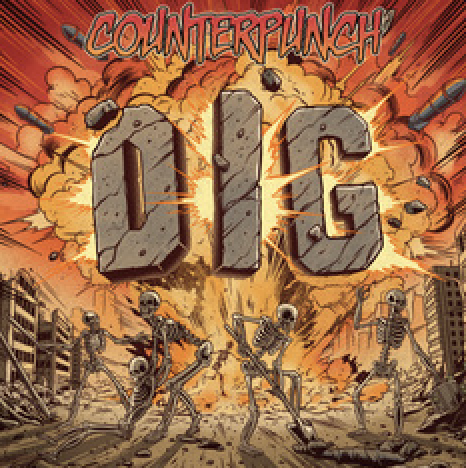
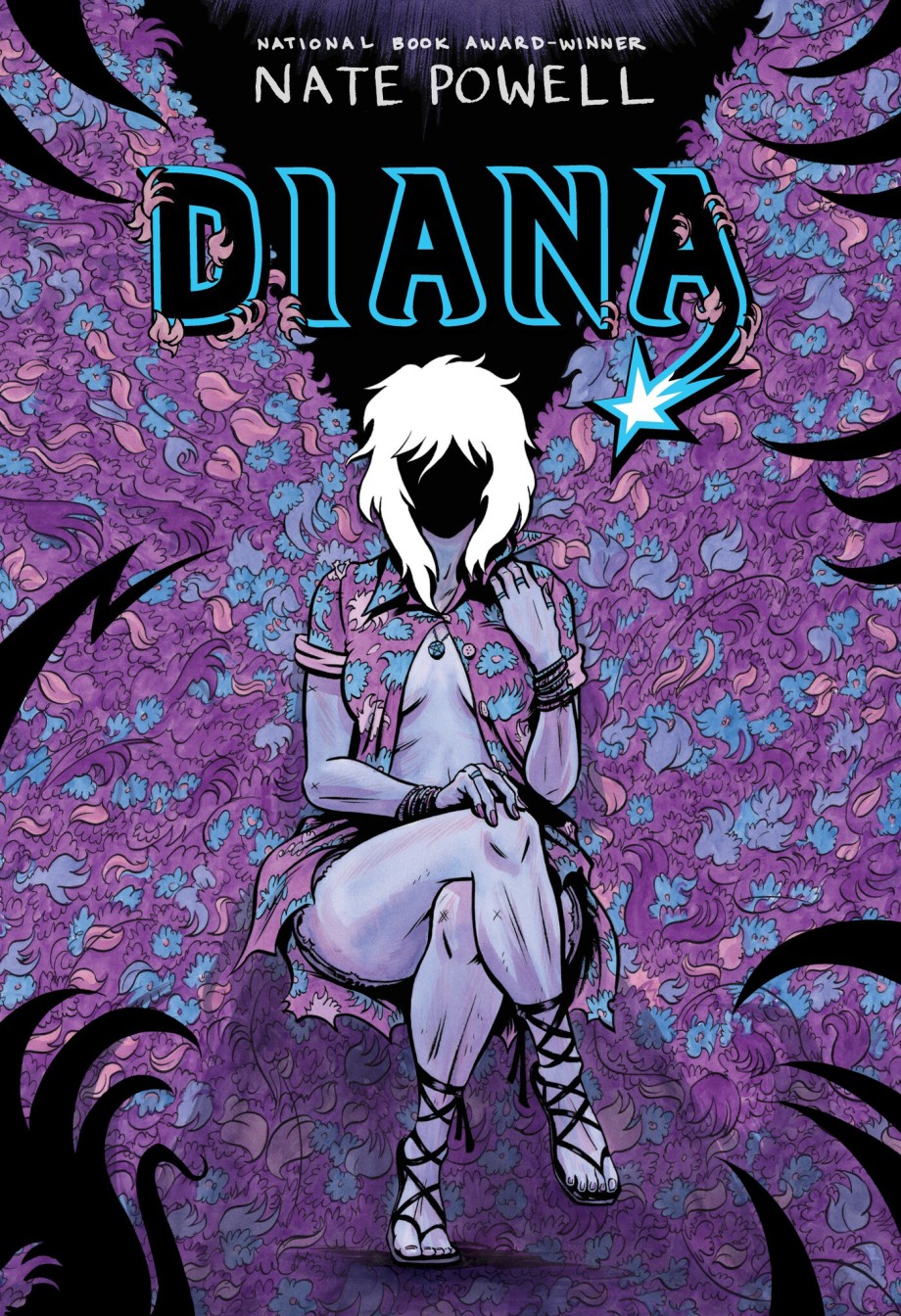
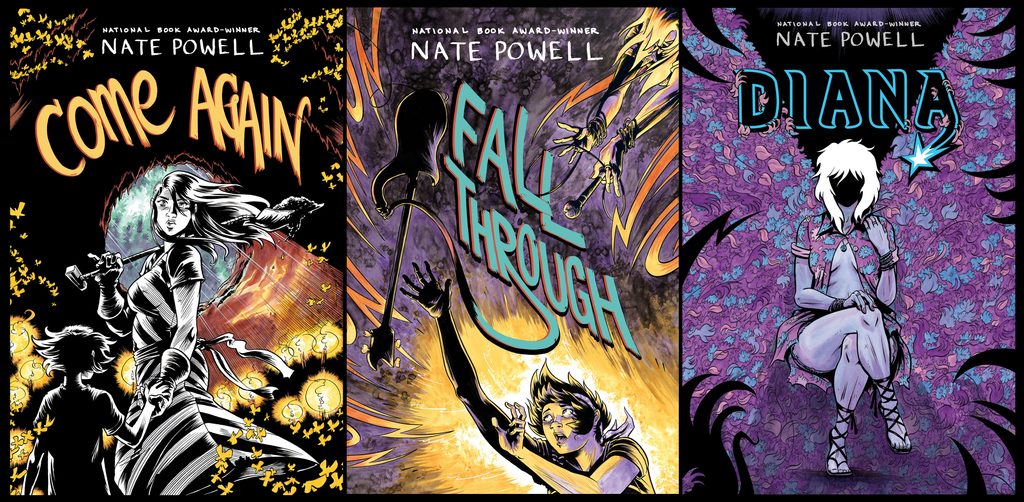
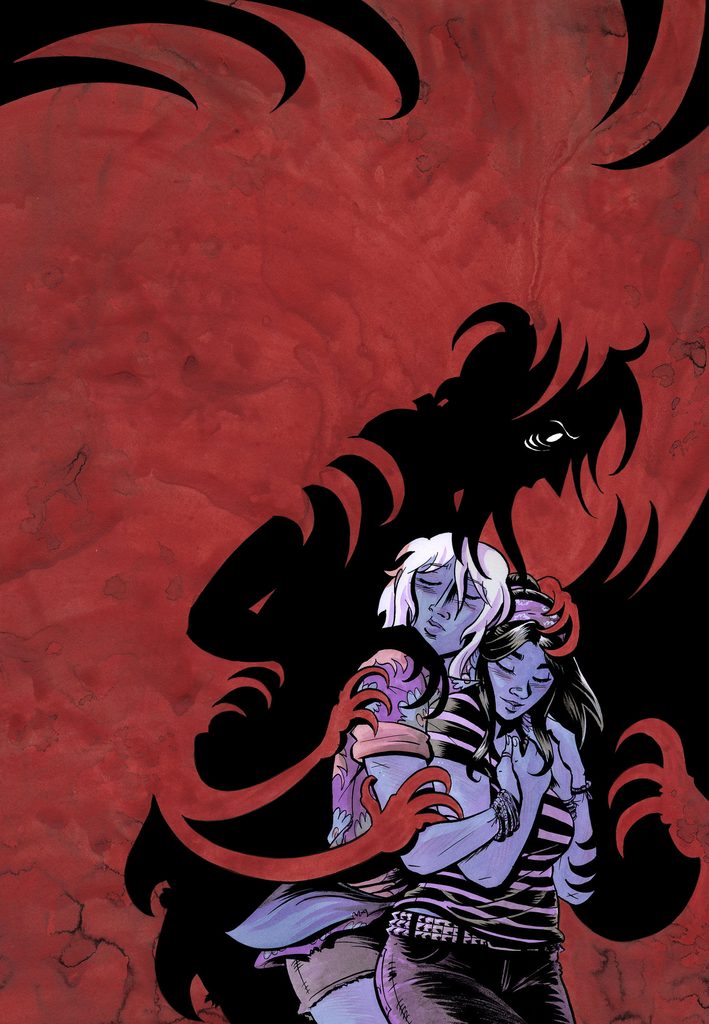
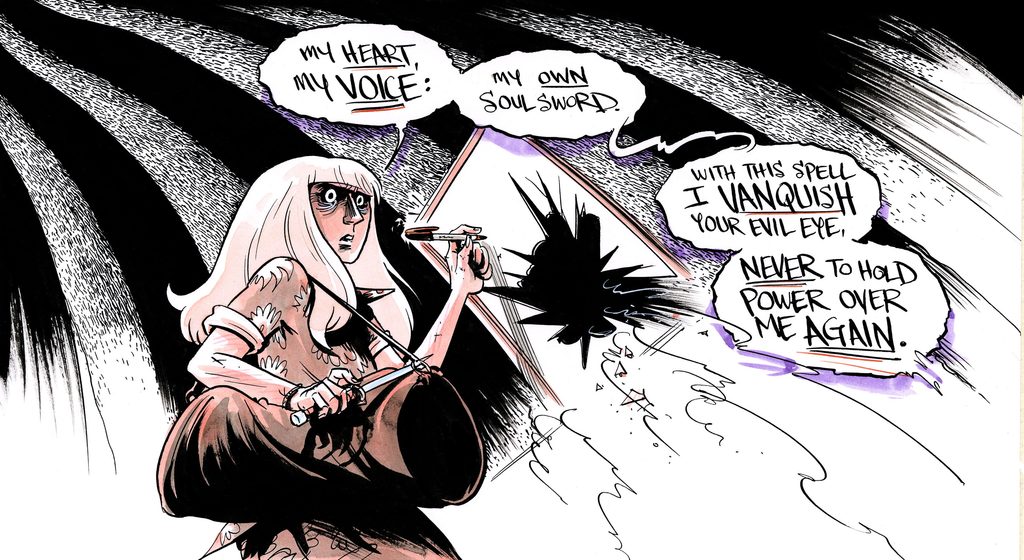
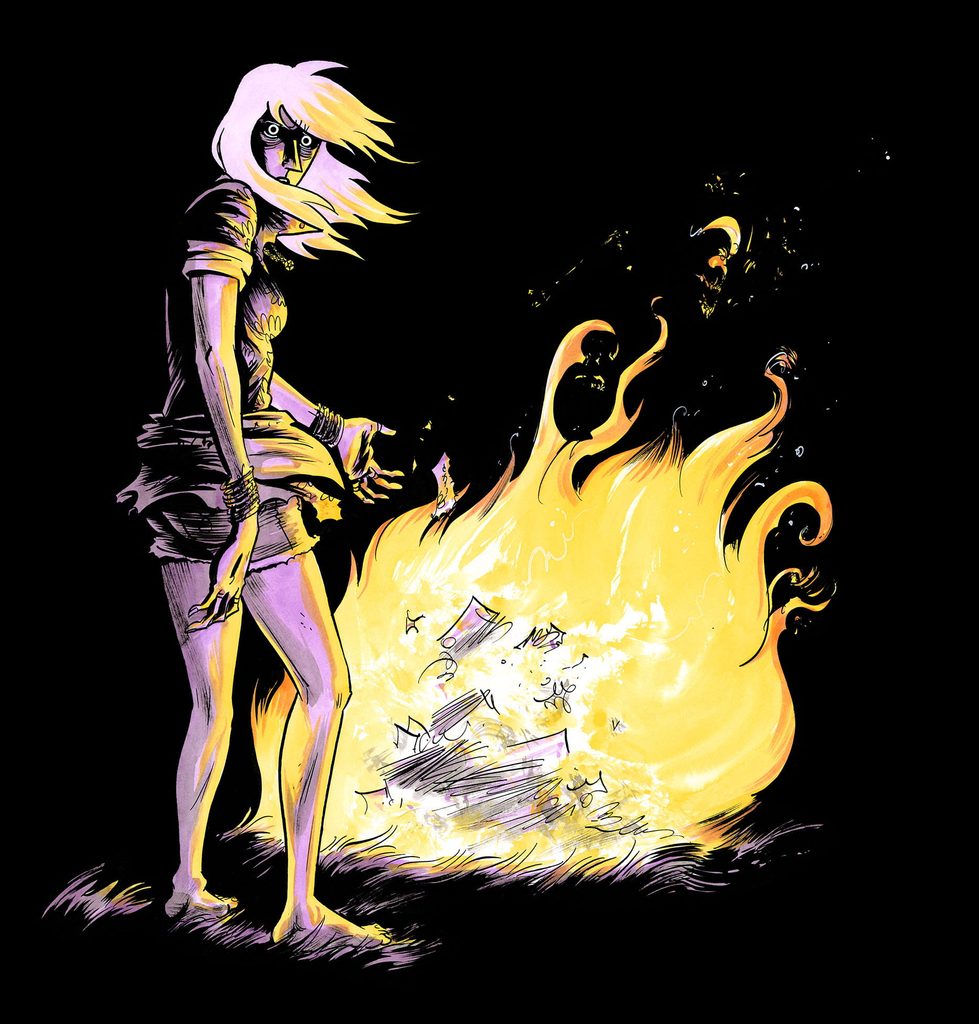
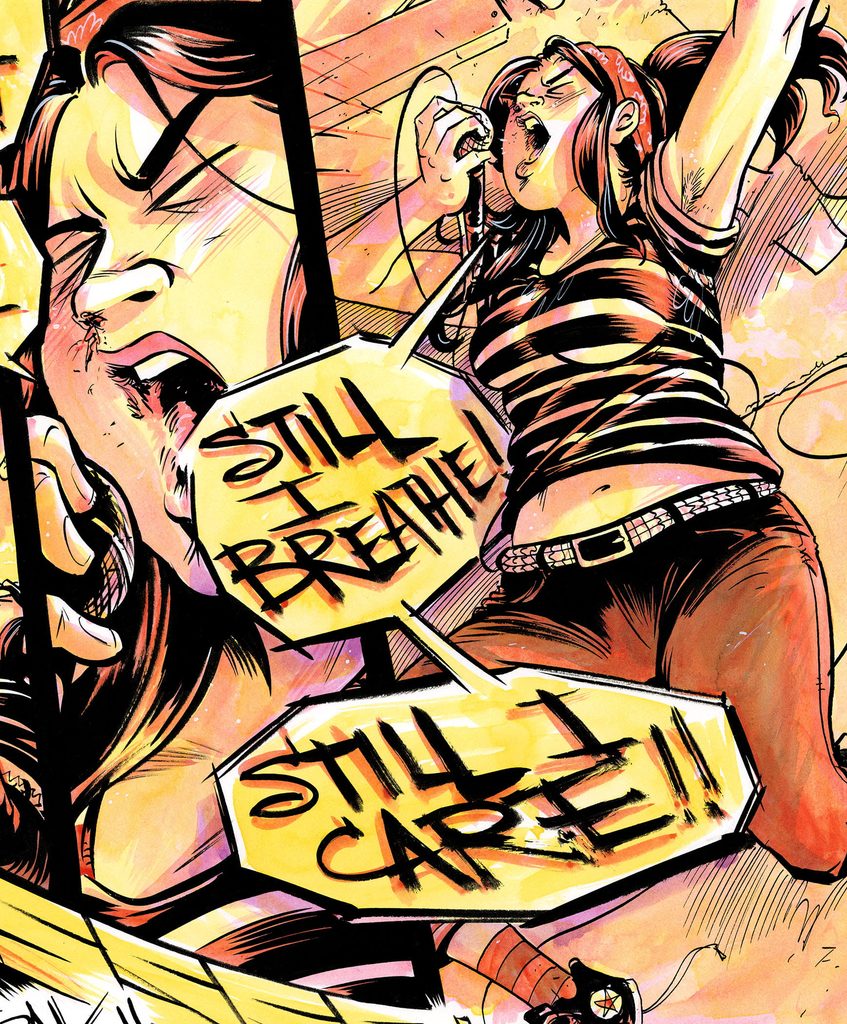
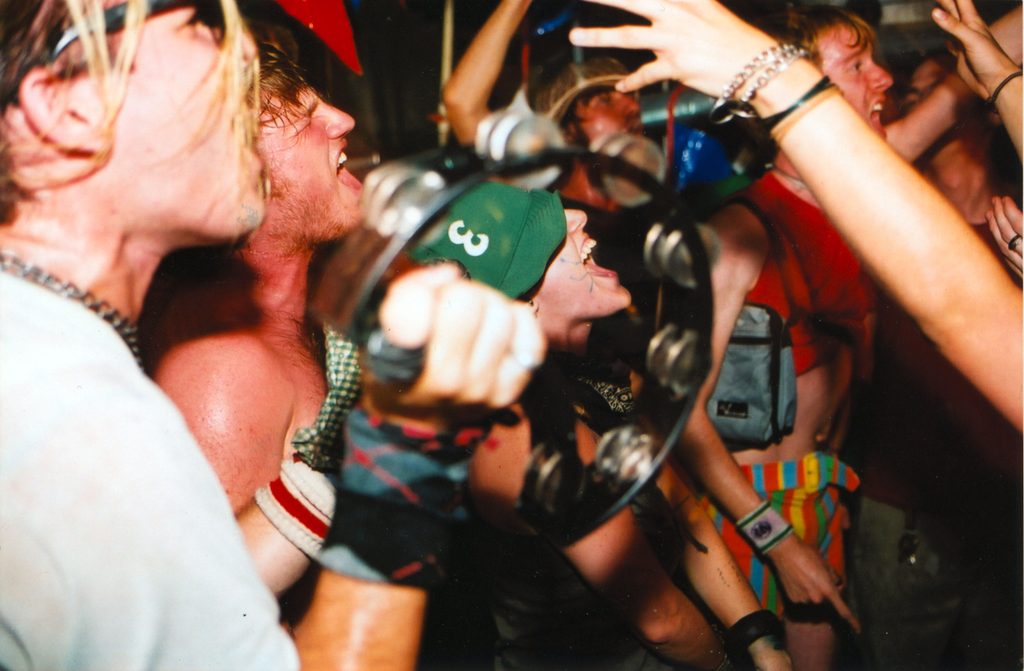
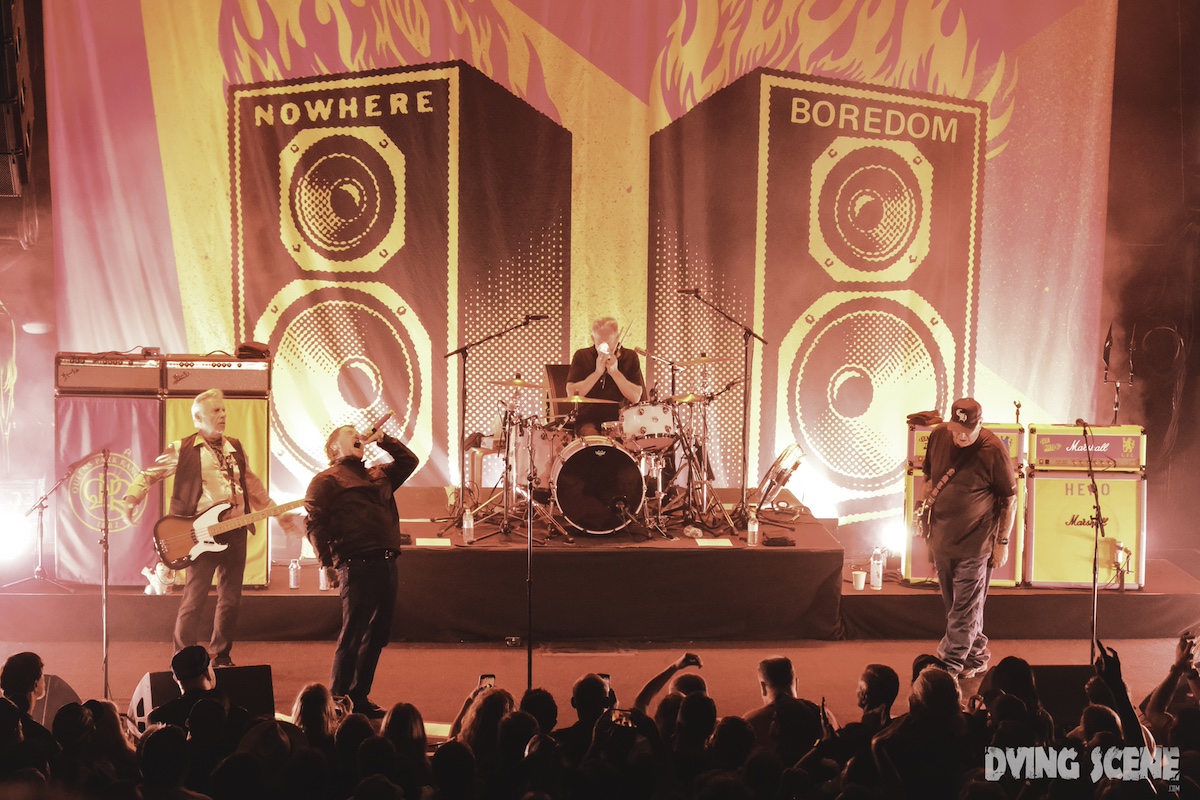
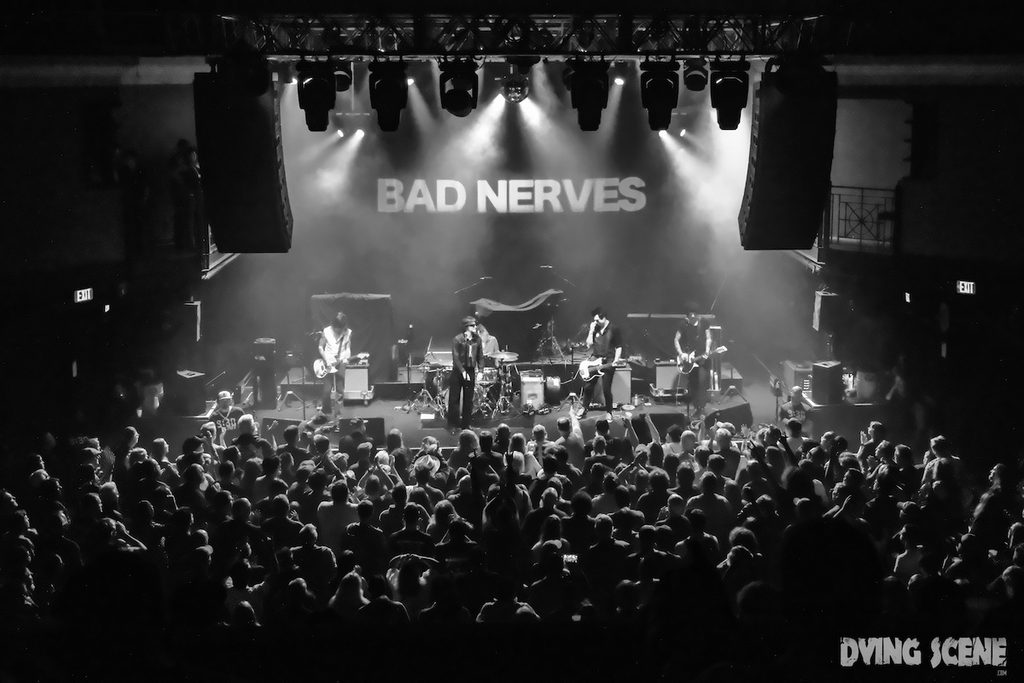
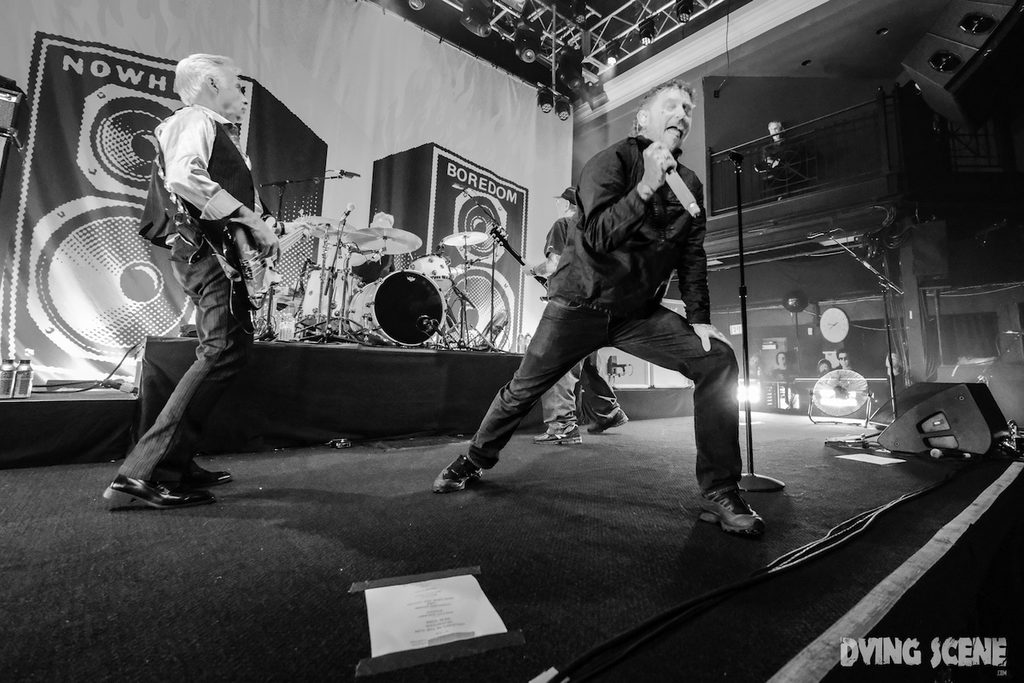
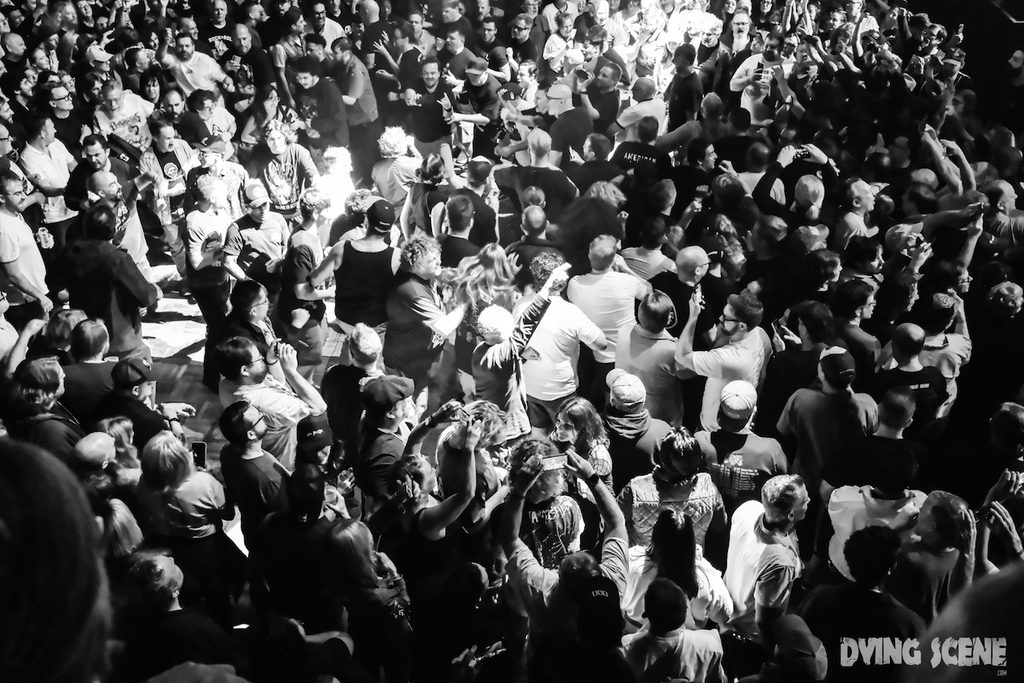
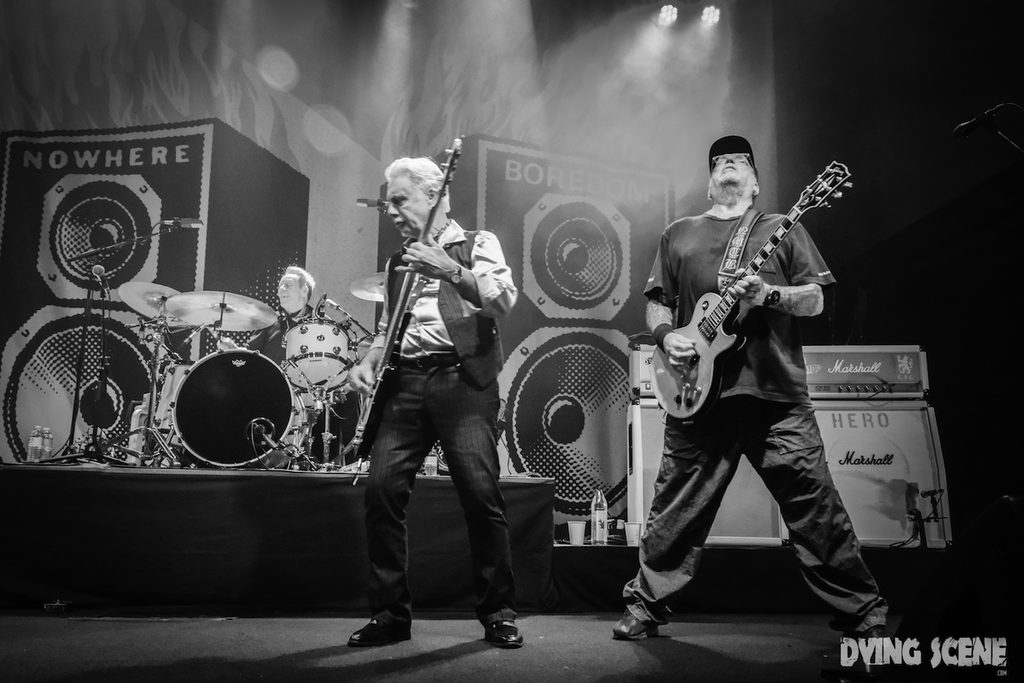
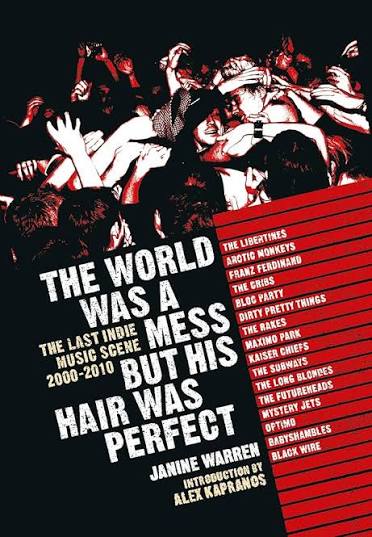
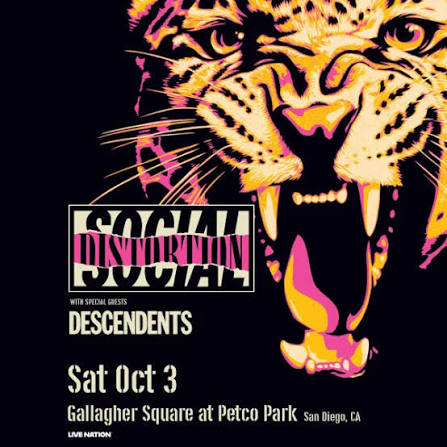
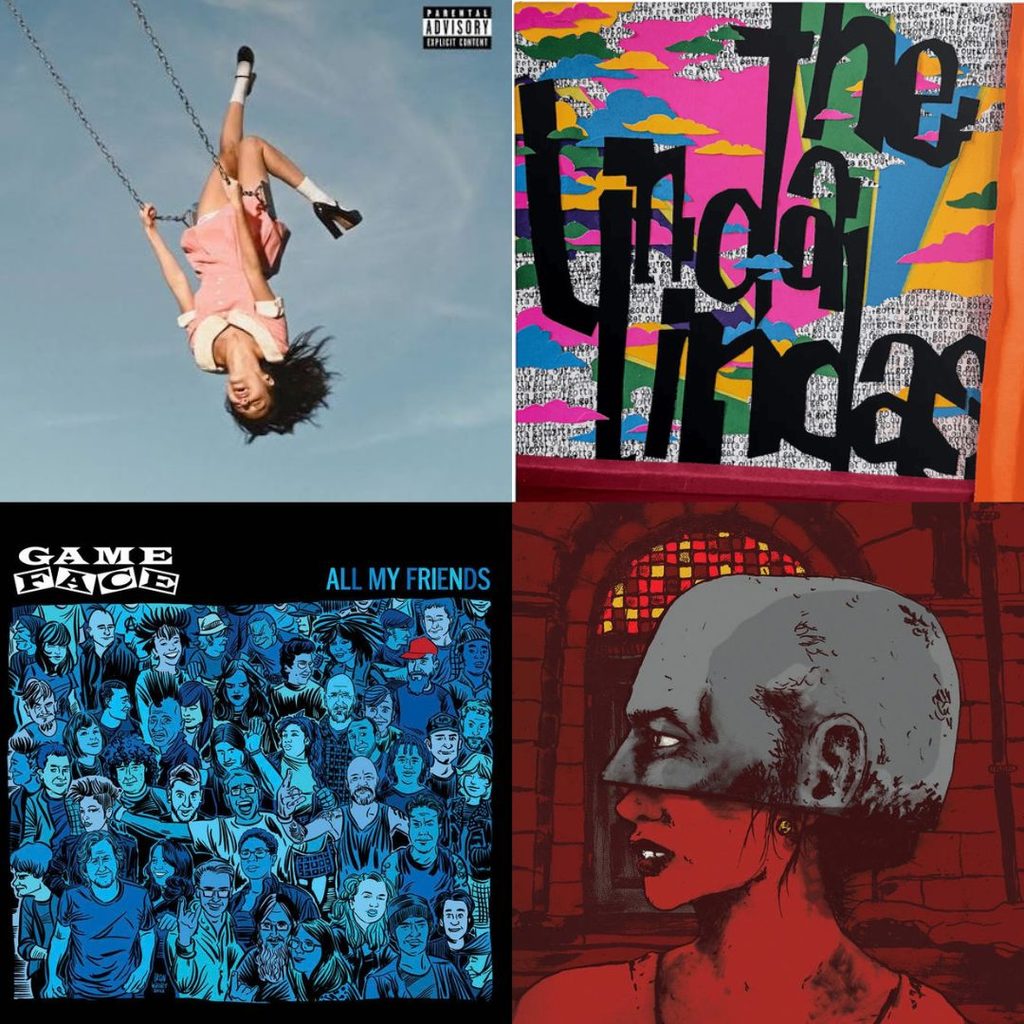
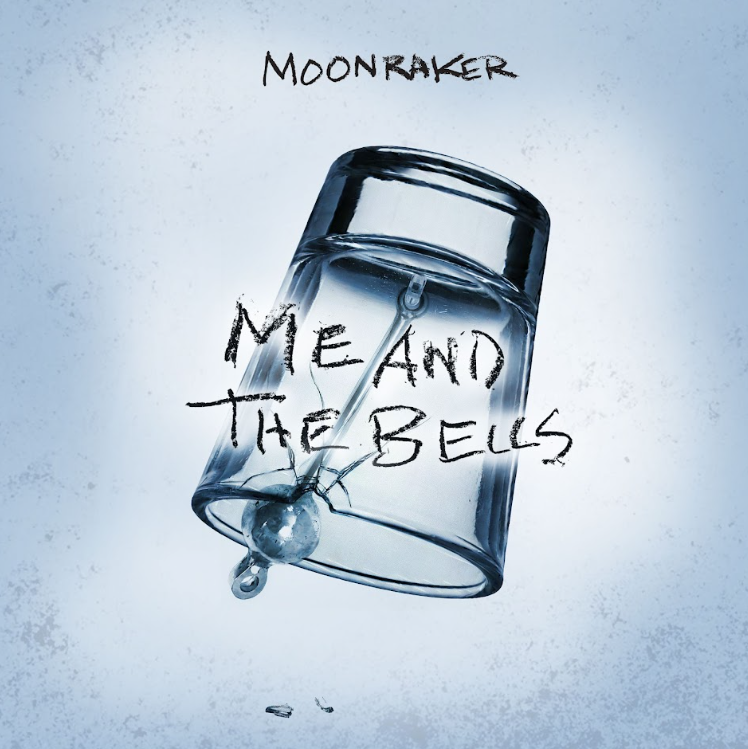
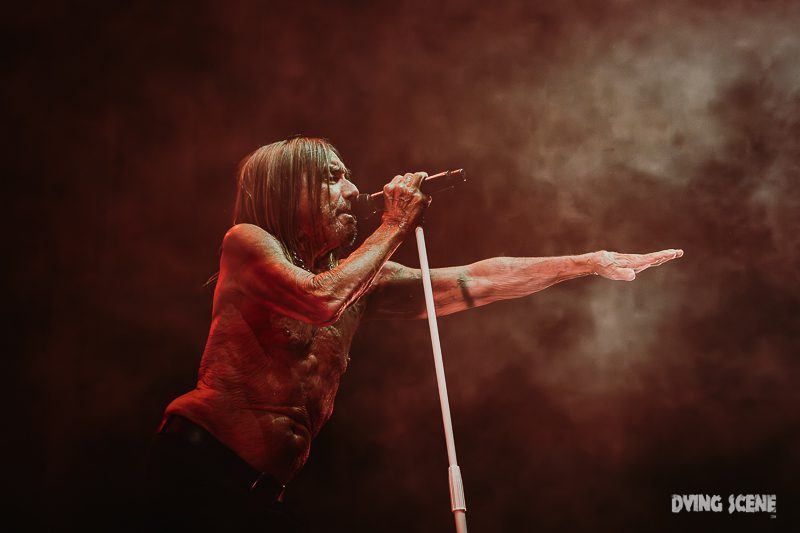
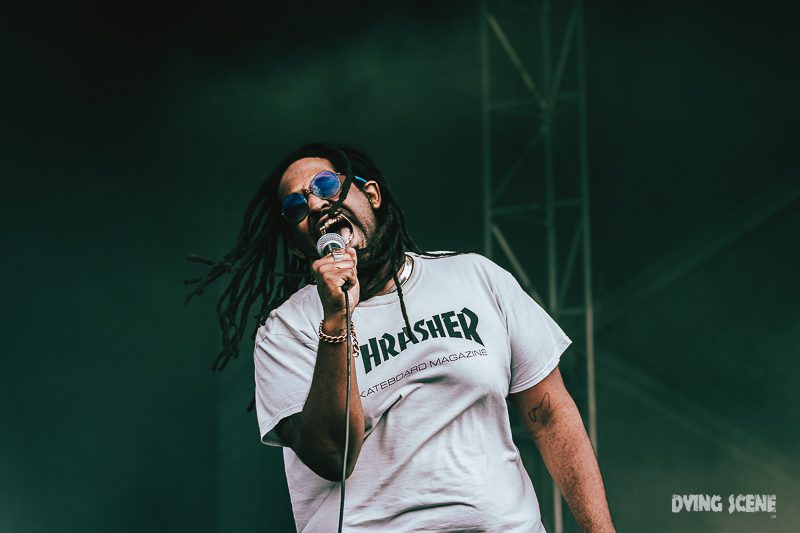
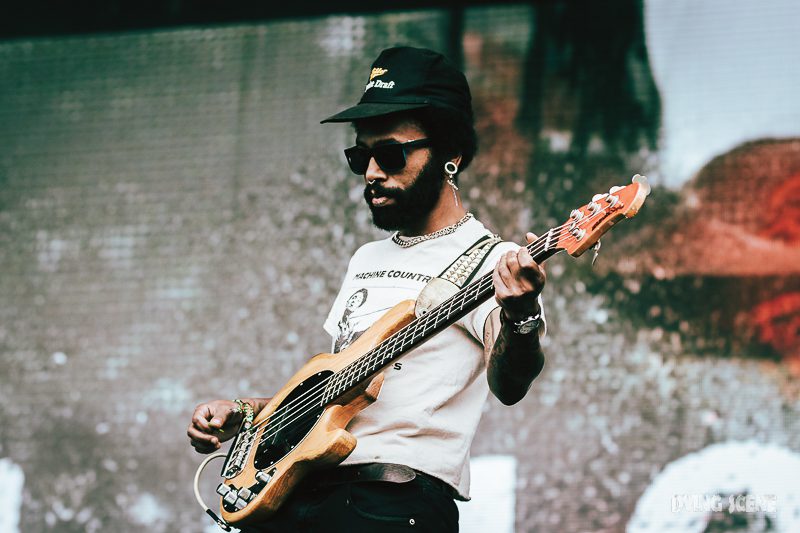


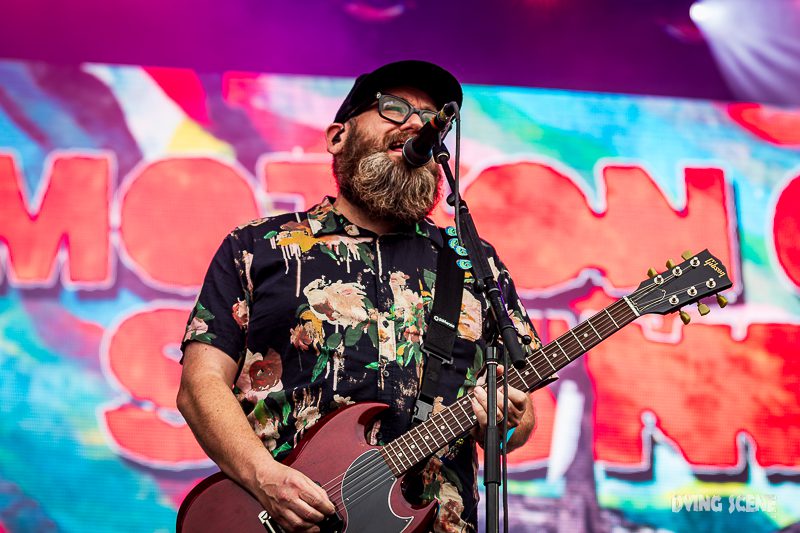
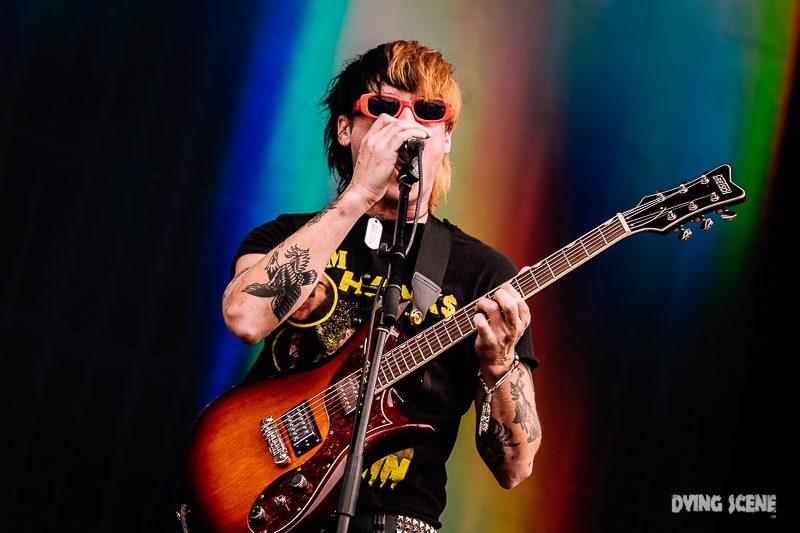
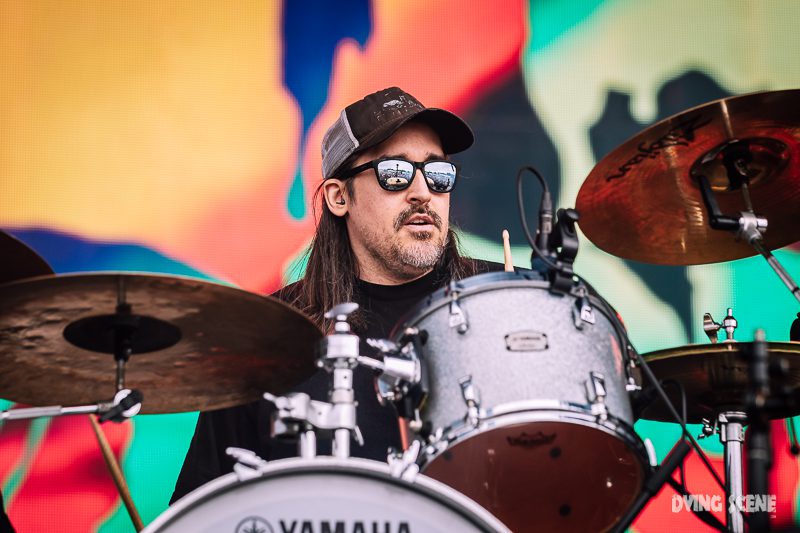
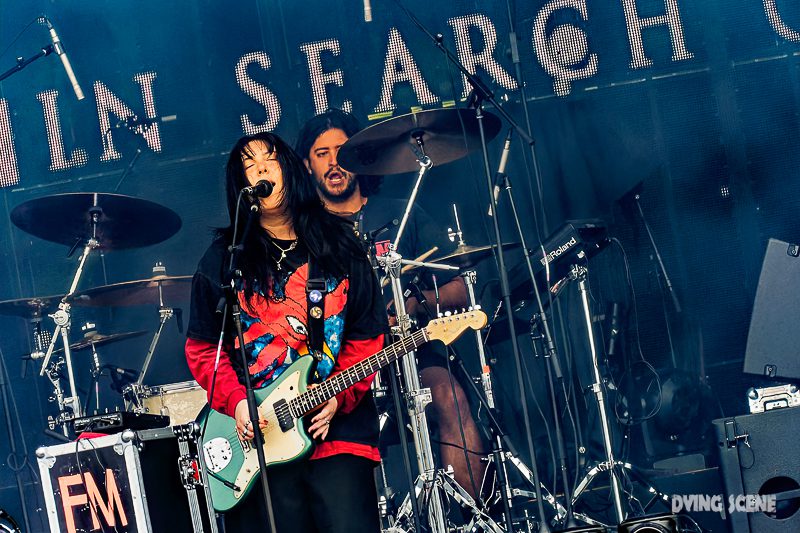
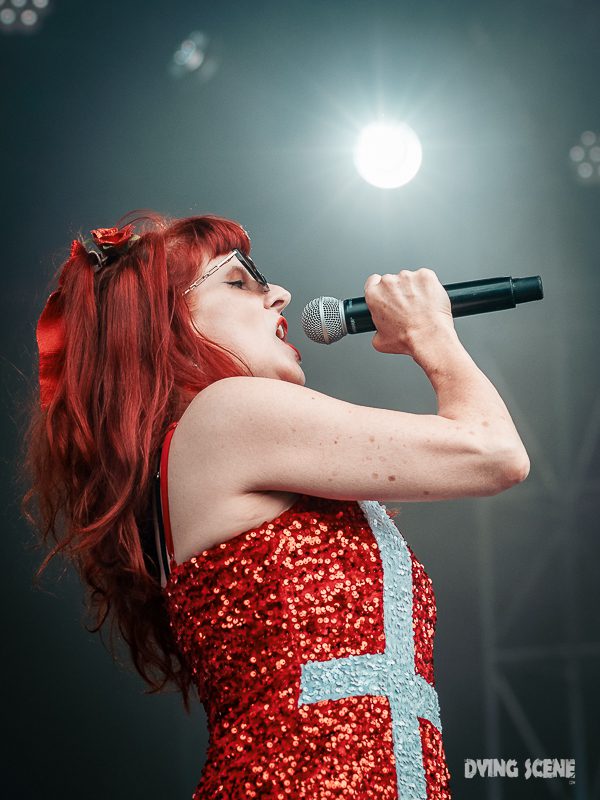
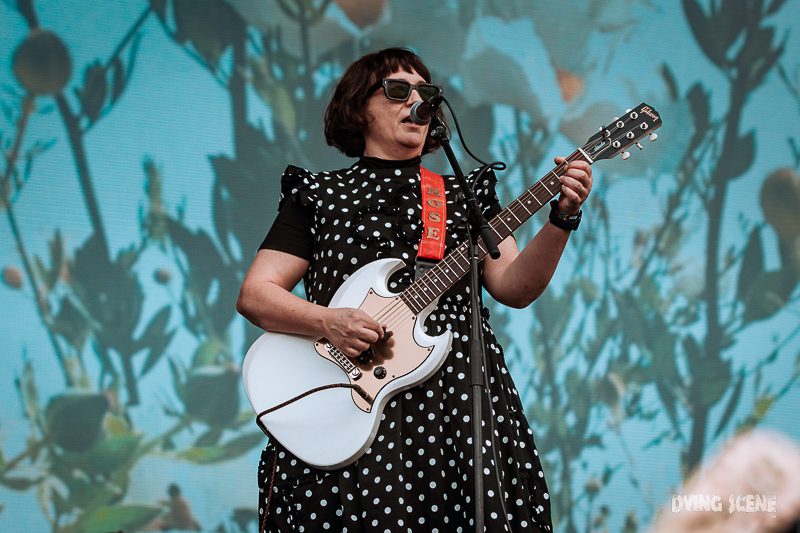
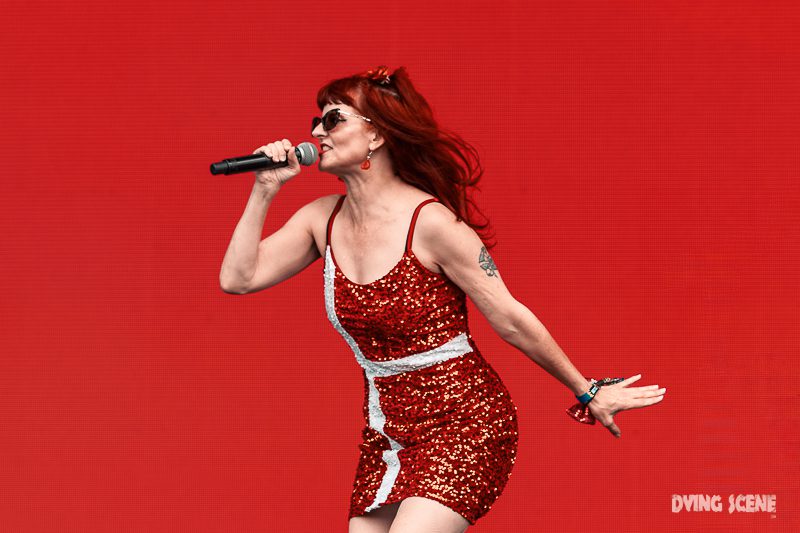
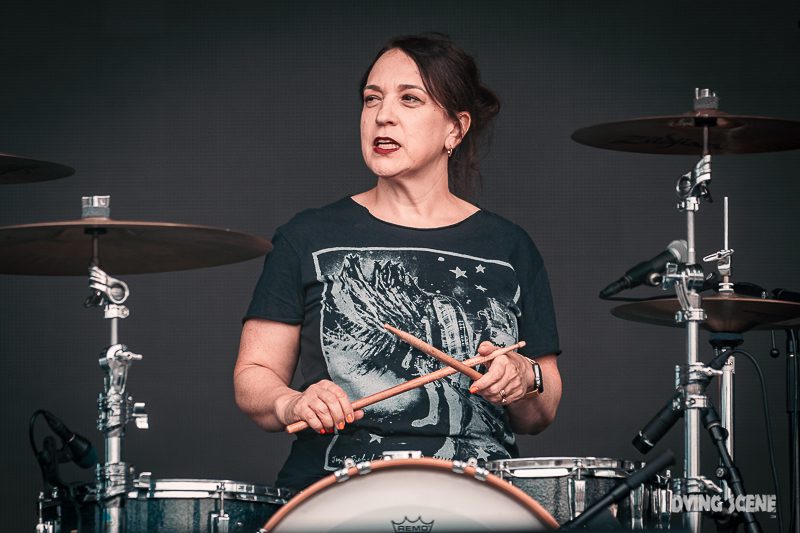
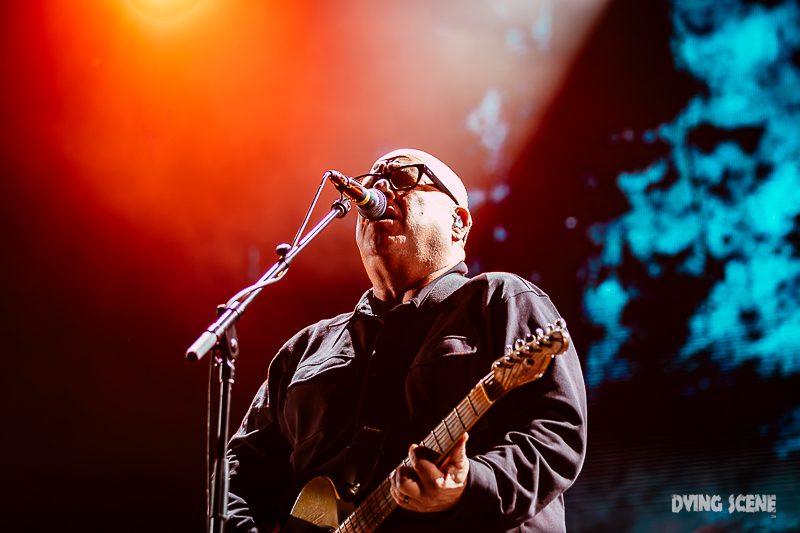
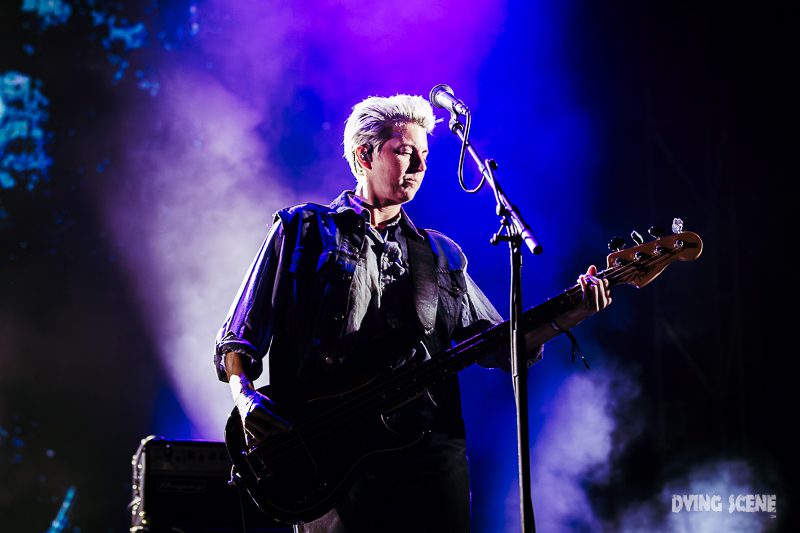

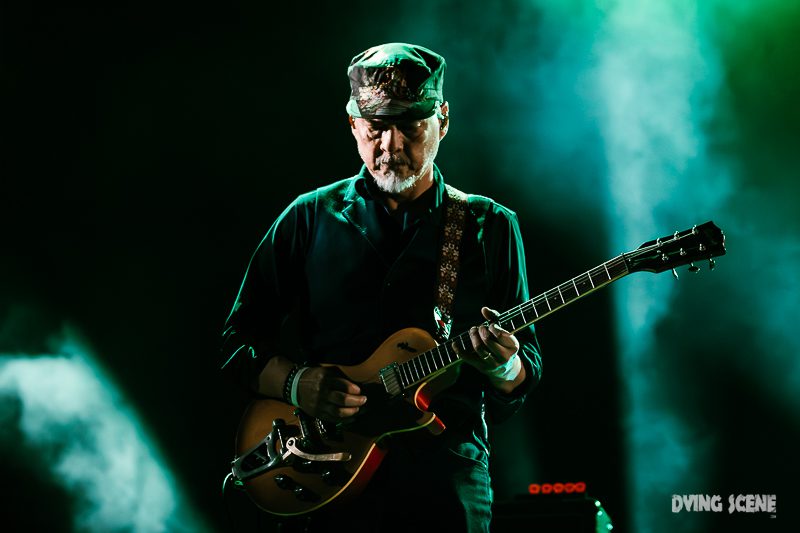
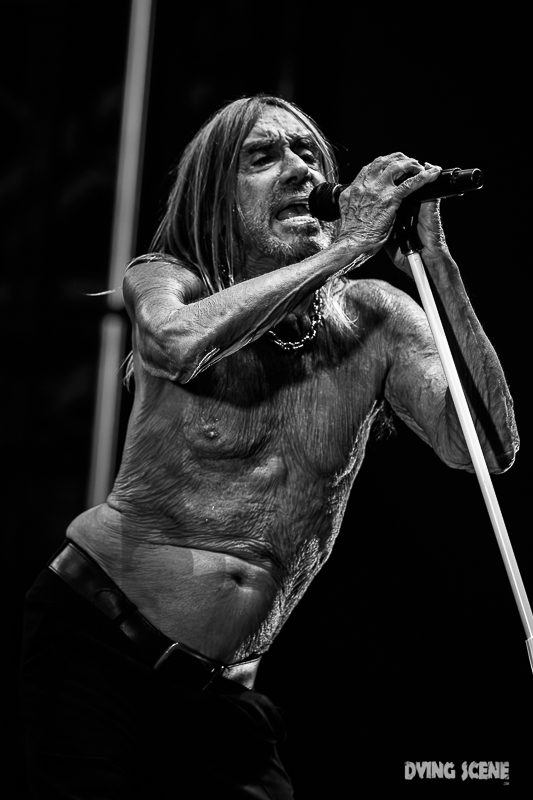
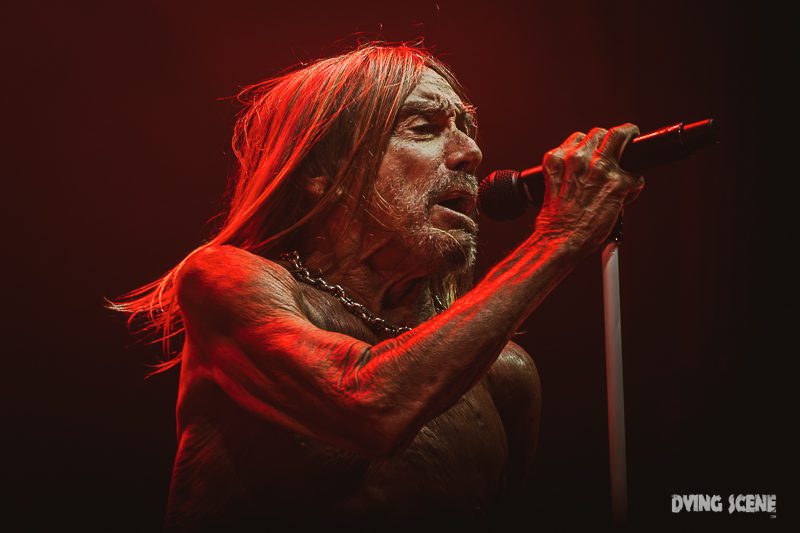
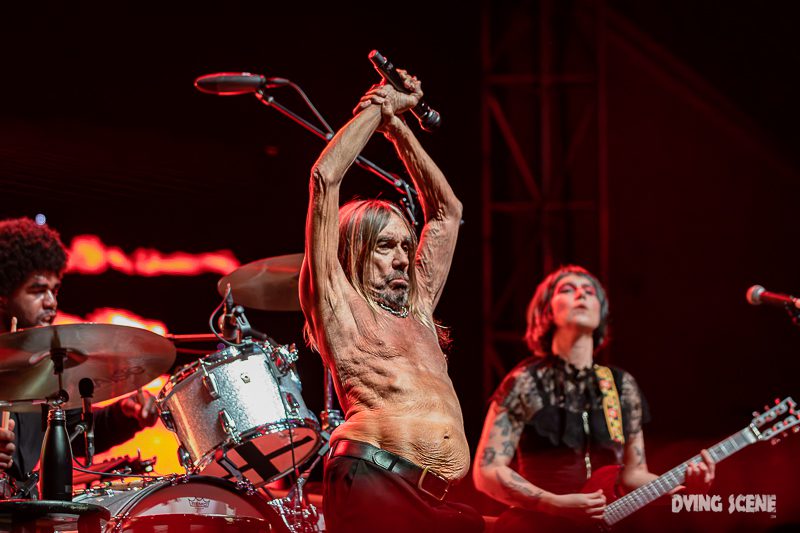
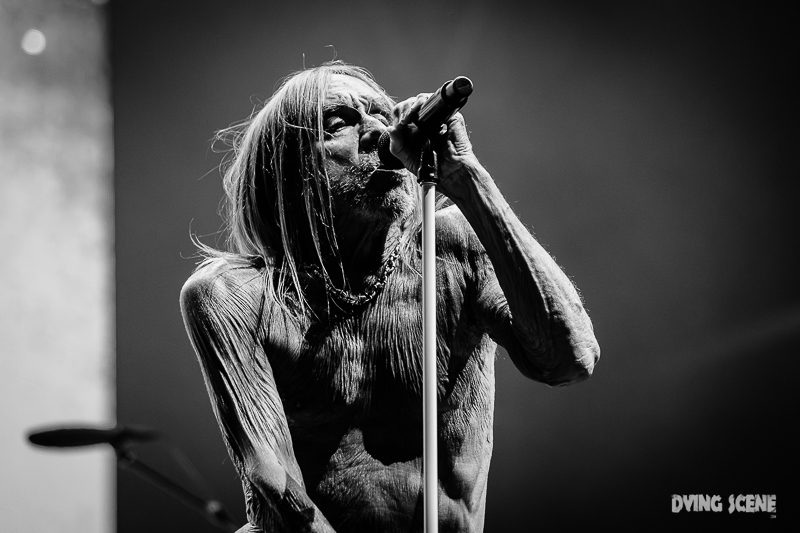
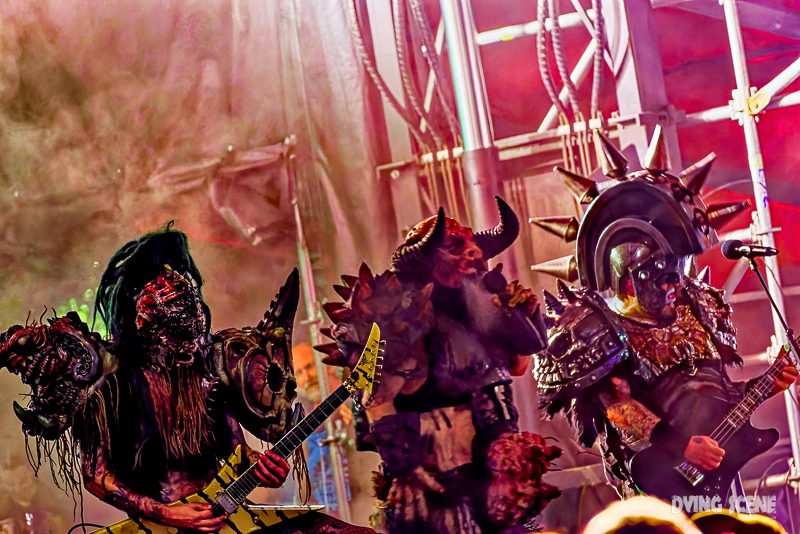
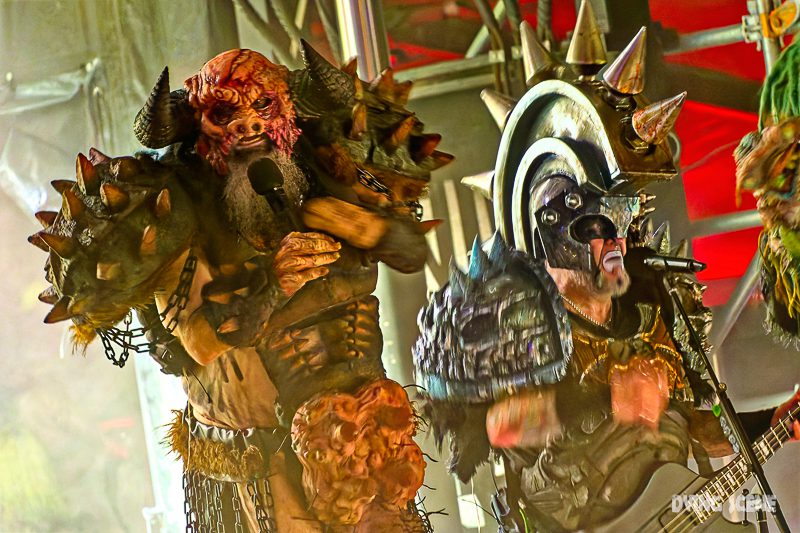
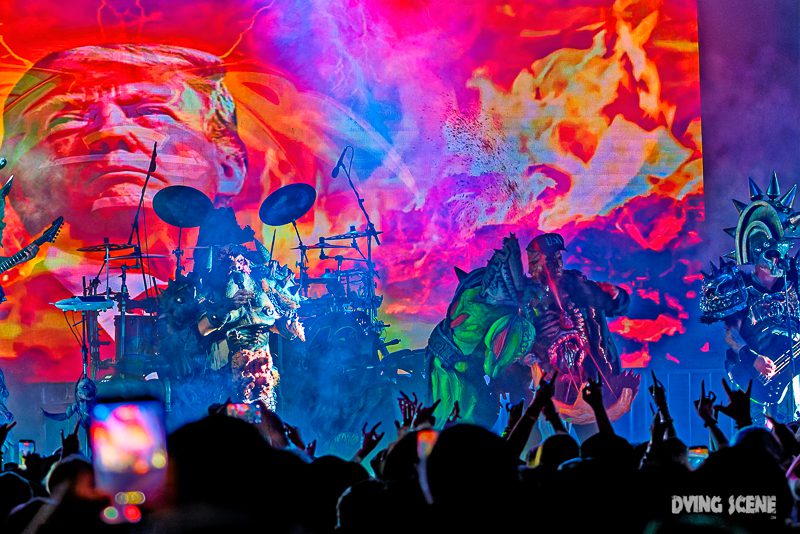
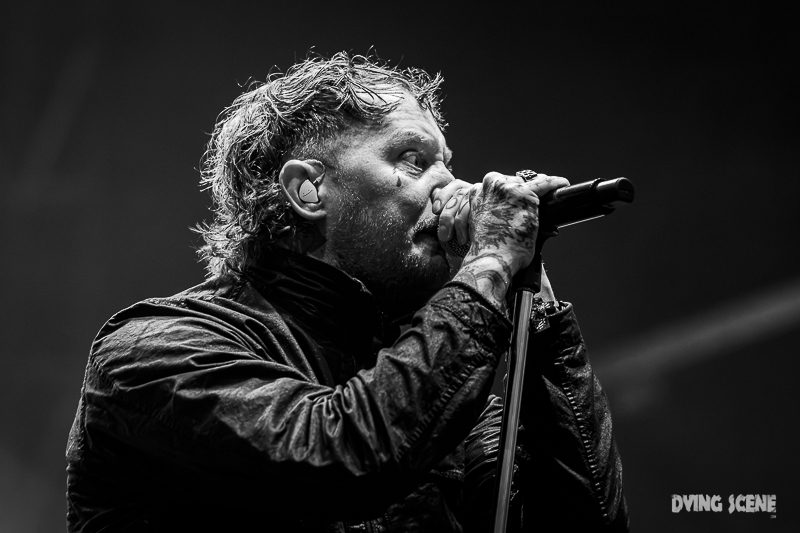
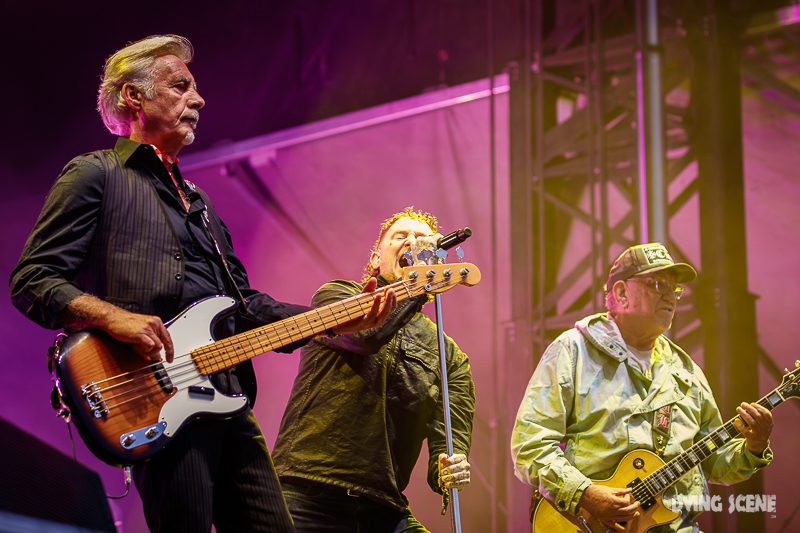
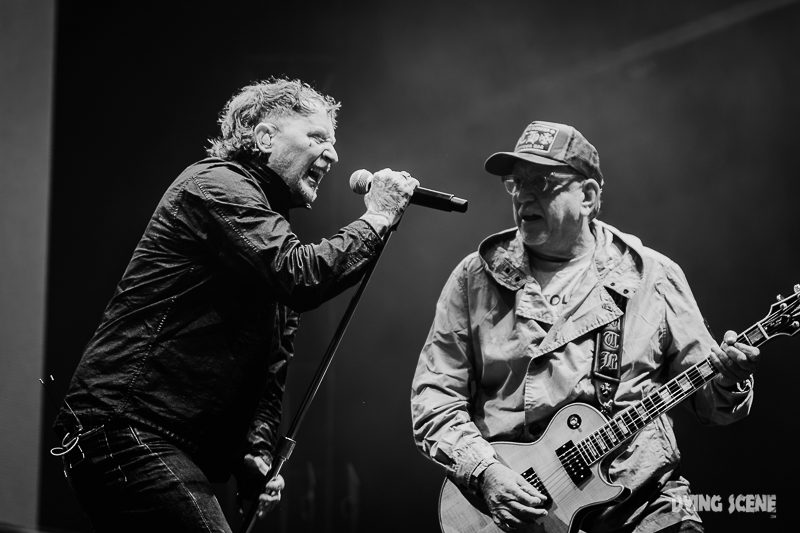
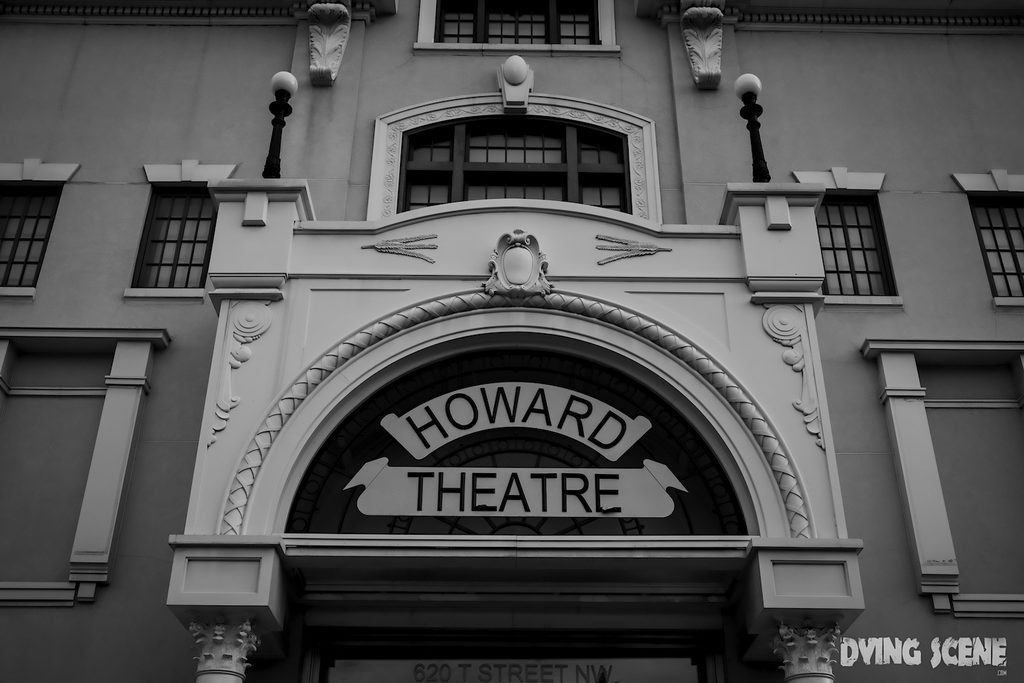
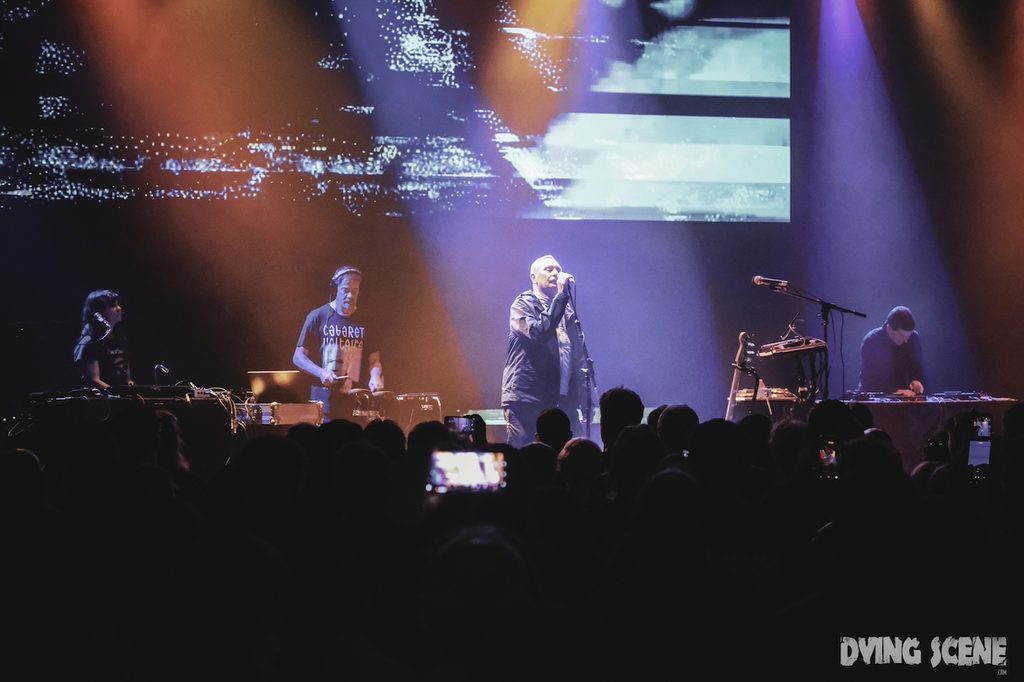
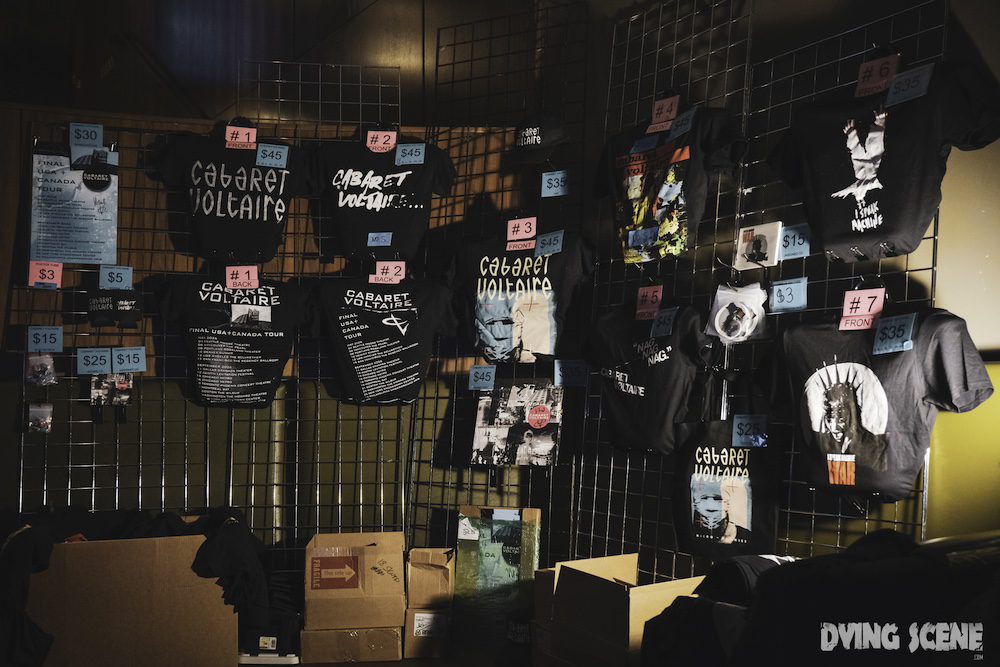
Jeff Neumann
Ripping 🤘