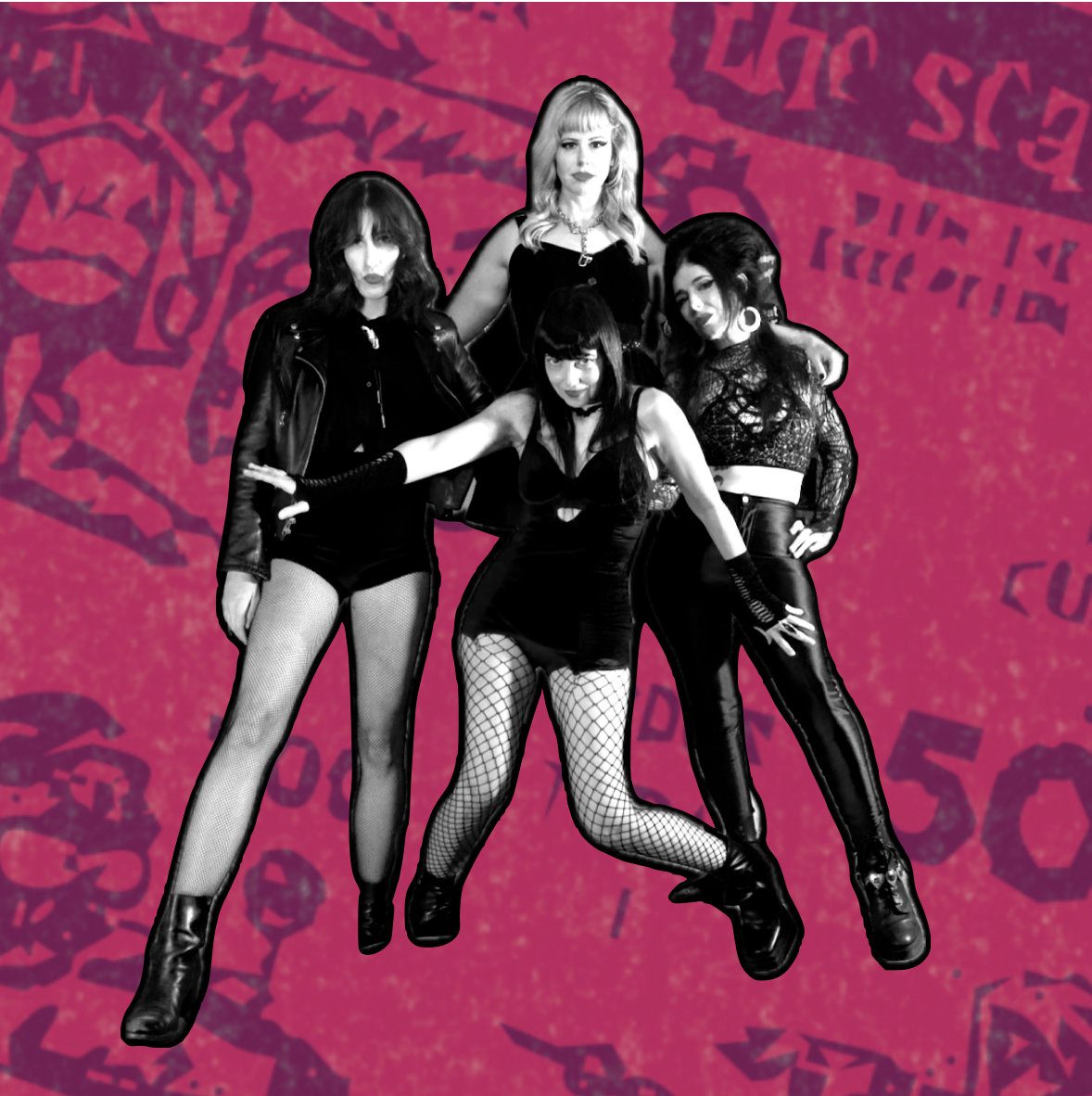
DS Interview: Nicole Laurenne on The Darts’ upcoming “Halloween Love Songs,” her journey to becoming a punk rock judge, her limitless musical passion and much more

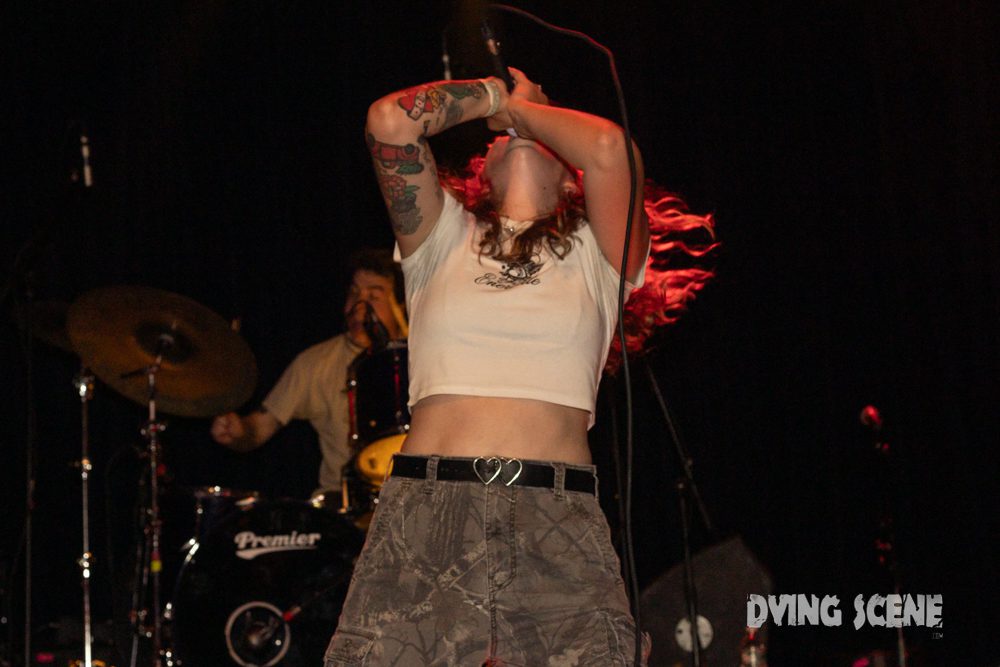
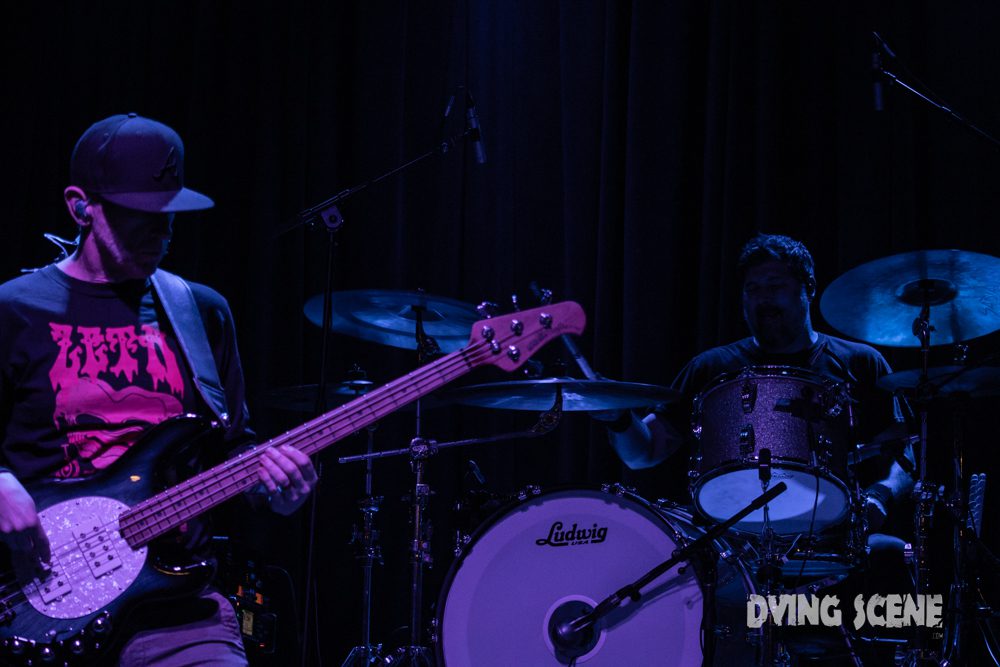
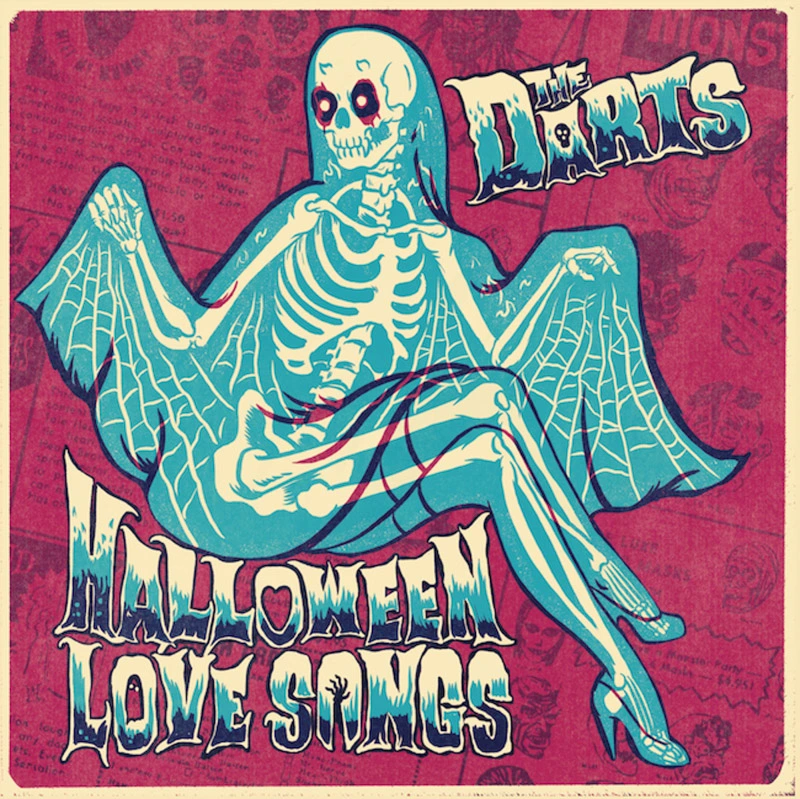
2026 is shaping up to be quite a busy year for Nicole Laurenne. By some metrics, it might be her busiest one yet. Laurenne’s primary band, the campy, gothy garage-punk four-piece The Darts, are due to put out their latest record, Halloween Love Songs, on March 3rd. It marks the band’s seventh studio full-length in […]

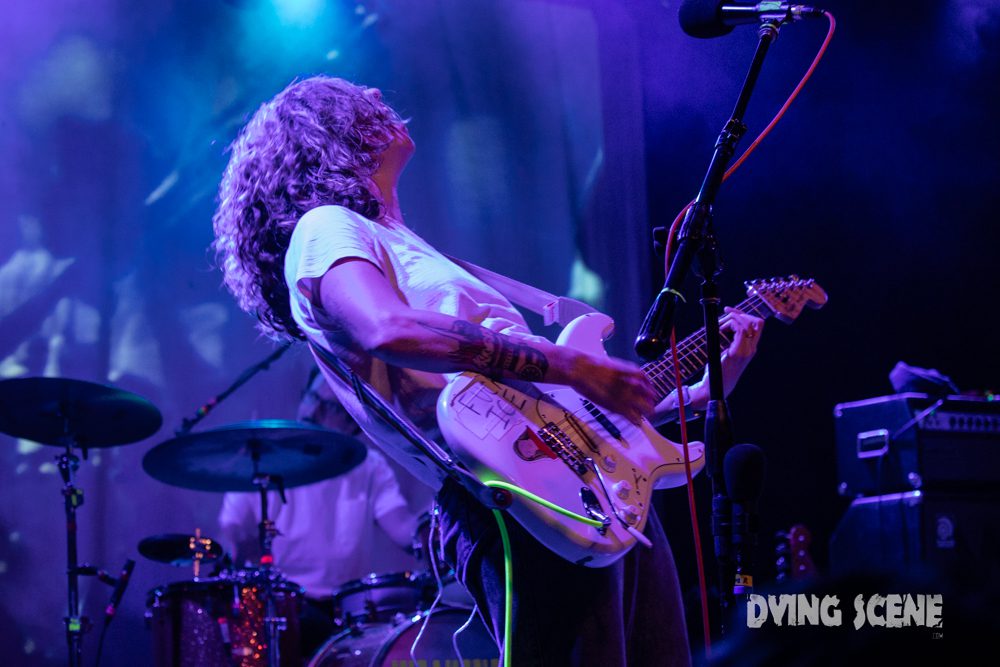
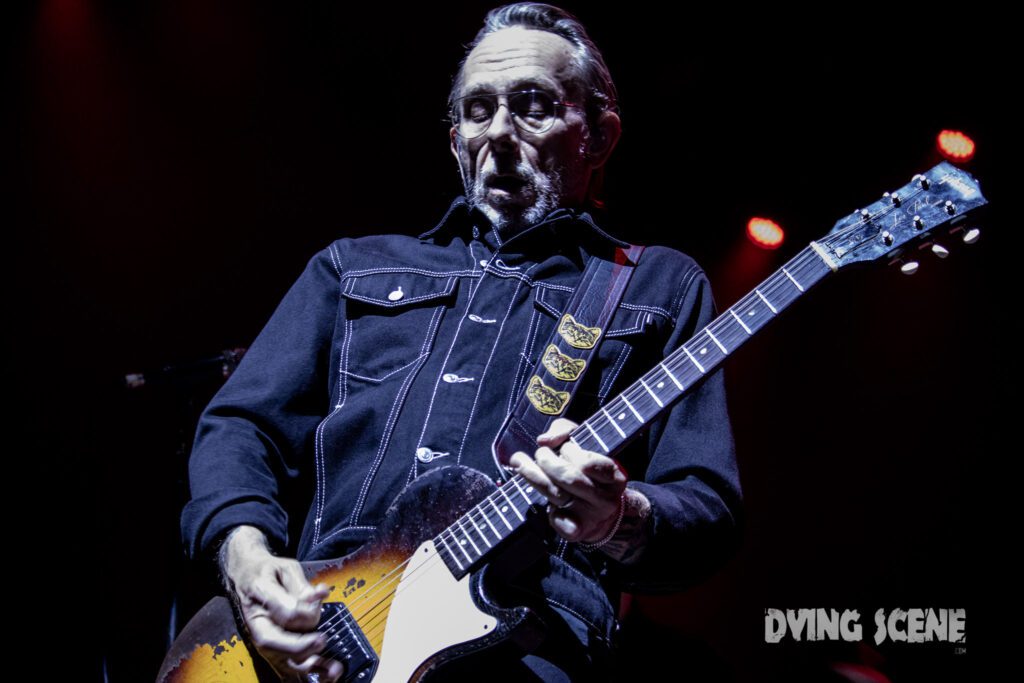
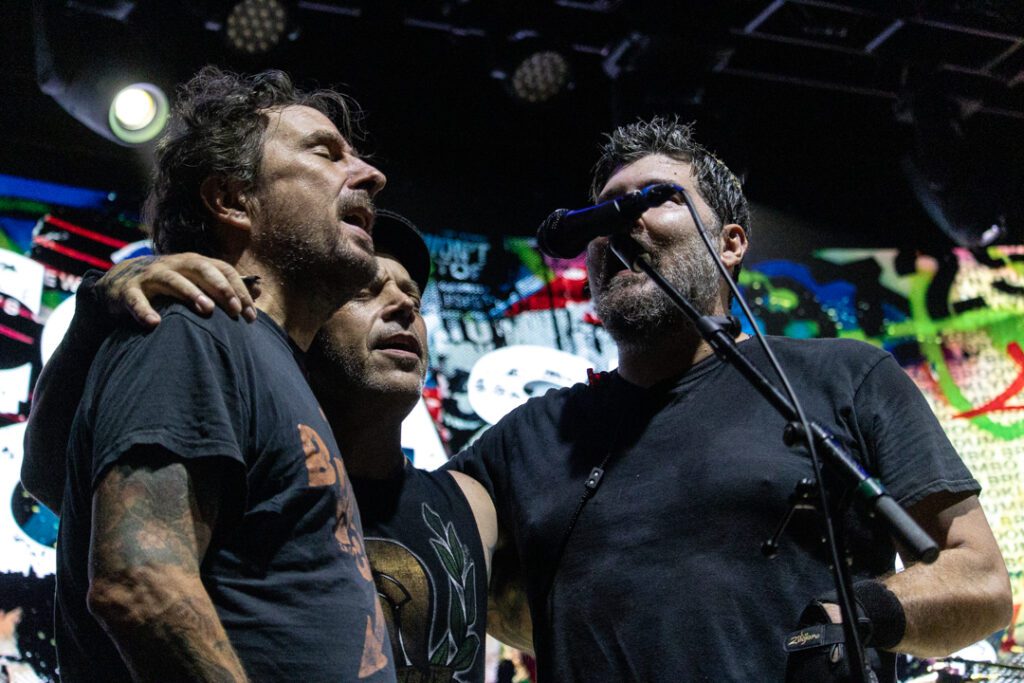
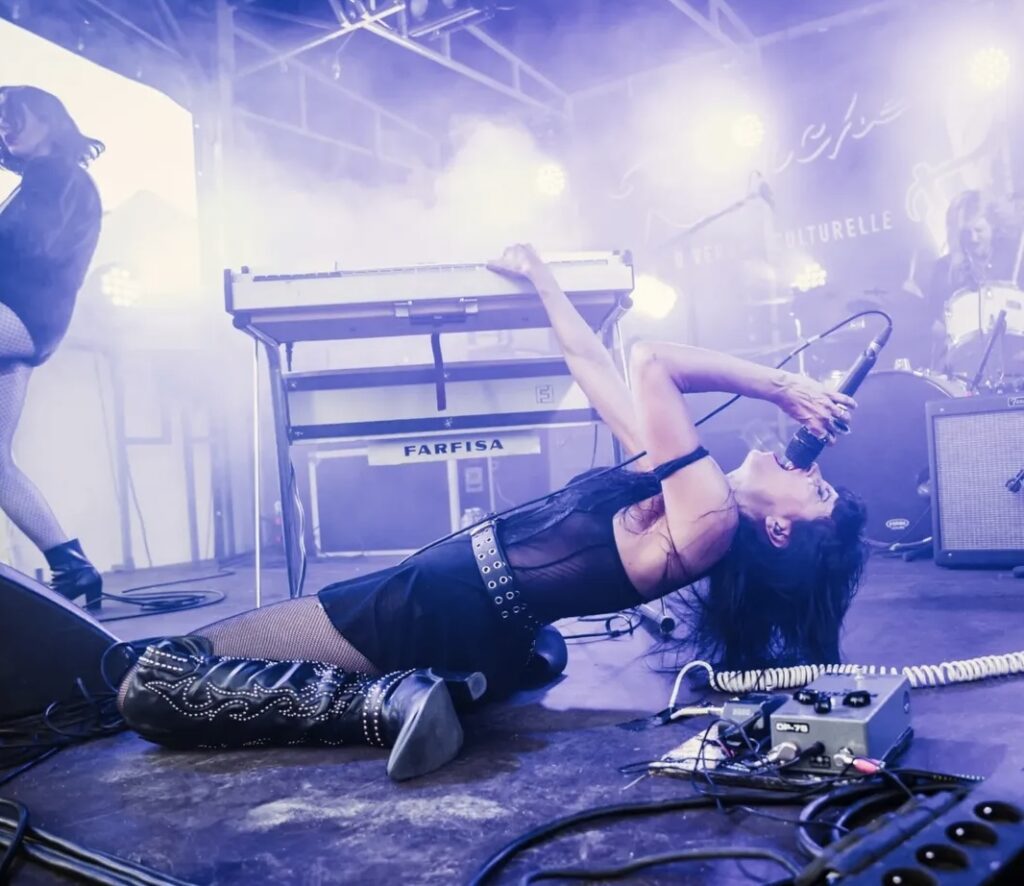
Photo of Nicole Laurenne by Jessica Calvo

2026 is shaping up to be quite a busy year for Nicole Laurenne. By some metrics, it might be her busiest one yet. Laurenne’s primary band, the campy, gothy garage-punk four-piece The Darts, are due to put out their latest record, Halloween Love Songs, on March 3rd. It marks the band’s seventh studio full-length in less than ten years (to go along with a few EPs as well…and yes, plans for number eight are already well underway). Meanwhile, Laurenne’s jazzy, loungey neo-soul side project Black Viiolet just put out a brand new full-length, Dark Blue, earlier this month. Most of the months of March and April and May and June and definitely July and into August and a little of September and then basically October through December will be dedicated to the life of a road dog, as both bands will make an exhausting slate of appearances across the US and across Europe (especially France!) and Australia and Japan for the balance of the coming year. 

And yet by other metrics, this is the ‘easy street’ portion of Laurenne’s life. This is what retirement looks like after close to three decades in the legal field, the lion’s share of which was spent as a municipal court judge in Gilbert, Arizona, during the time that that community was in the throes of becoming the fastest-growing municipality in the United States. Close to two decades of her time in the robe was also spent as a touring musician. Not full-time one, mind you, but about as full-time as you could get given the success of her early project, The Love Me Nots. Oh, and she was also a mom to twin daughters. The fact that Laurenne was a judge – a fact that she initially wanted to keep secret when starting smaller bands in Phoenix before quickly getting her cover blown at an early Love Me Nots gig twenty years ago that just so happened to be attended by a staffer from the Phoenix News Times – has been talked about in many places over the years. And while the “what” of the story is certainly fascinating, the “how” and the “why” are endlessly compelling.

We caught up with Laurenne from her newfound home in the Pacific Northwest – Tacoma, to be precise – in order to talk primarily about Halloween Love Songs. Centered on the theme that ‘every day can be Halloween,’ the album features a retooled version of the Darts lineup (Becca Davidson on guitar, Lindsay Scarey on bass and the return of Rikki Styxx behind the drumkit) and may just represent the band’s most fun and campy and best-sounding record to date. As a matter of course, the conversation steered into the deep musical curiosity that’s been a constant thread in her life. With varied and wide ranging experinces venturing from her younger years as a classically trained pianist to becoming a member of the University of Michigan and an opera accompanist and part of a jazz trio to her first pop bands and her time in The Love Me Nots and now taking the reins out in front of both The Darts and Black Viiolet, Laurenne’s musical journey, while at times chaotic, has been in many ways a true stabilizing outlet.

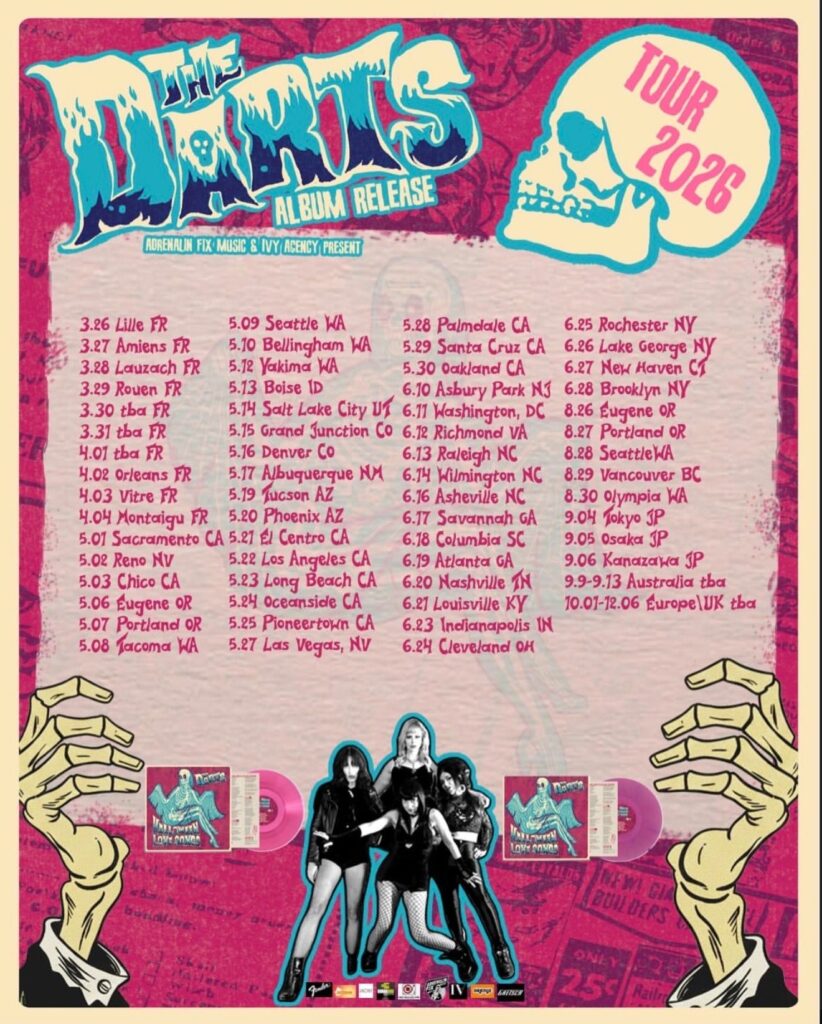
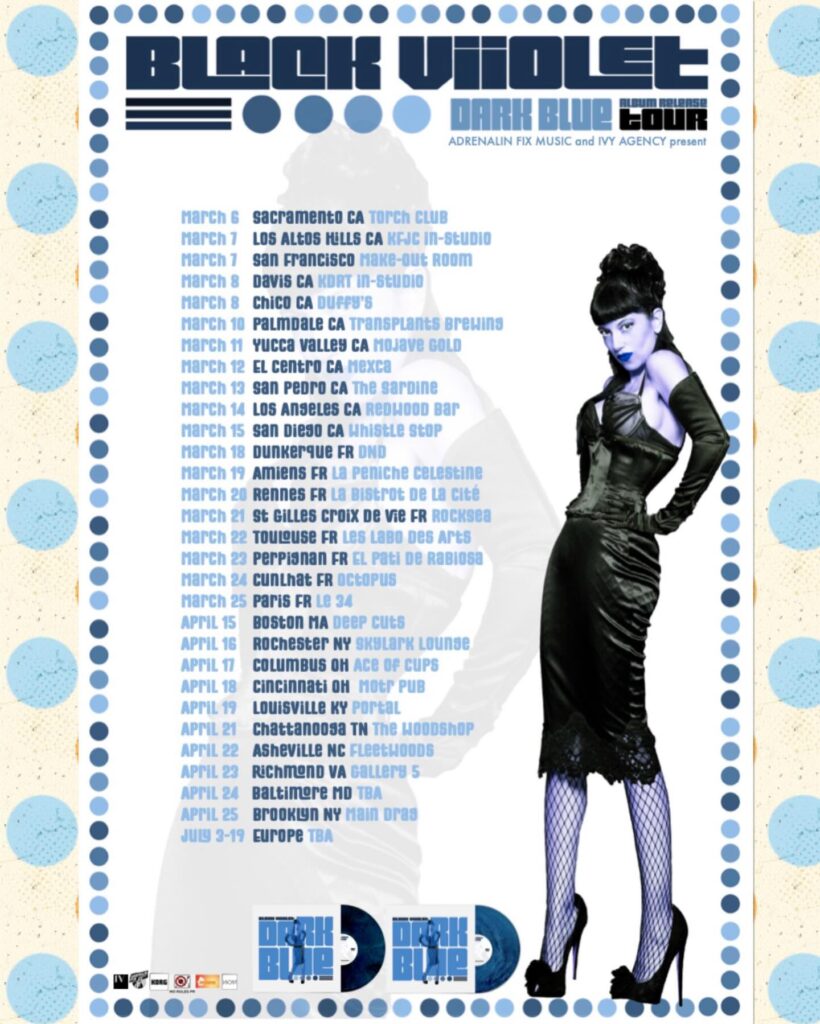
And so we of course discuss the kitschy fun sound and process that resulted in Halloween Love Songs and the build-up to what’s going to be an exciting and exhuasting year of touring. And we spend a lot of time putting this current period into it’s right contextual place, discussing the long and winding and fascinating journey from growing up in Chicago as the child of two incredibly gifted but not musically inclined – or musically interested, for that matter – parents, her start as a classically-trained musician her journey to Michigan for undergrad and Arizona for law school and somehow sorta backing into a career as a judge in a trailer court and then starting and maintaining a series of increasingly successful bands while still serving as a full-time judge AND a mom to twin daughters. It’s a super fun chat and we think you’ll dig it. You can order Black Viiolet’s Dark Blue now and still pre-order Halloween Love Songs, and here’s where you can catch both bands on tour in the coming months (like Medford, MA, in April!)
***The conversation below has been condensed for content and clarity. Yes, really.***

Dying Scene (Jay Stone): Nice to meet you! This is really cool. Where are you now? You’re in Seattle right? 

Nicole Laurenne (The Darts): I’m actually technically in Tacoma.

What beautiful country. As a 90s alternative kid, I had been wanting to go to Seattle for 35 years or whatever it was, until we finally went last year to visit some friends. I could have stayed (forever).

Oh my God, that’s exactly what I thought! When I was able to finally move where I wanted, my first choice was France and that fell apart because of some tax reasons. I was living in the desert in Phoenix for so long and I just hated the desert so much. I hated the weather. I grew up in Chicago, so desert stuff was not me. When it was finally time to move, I was like, you know, I’ve always loved the Seattle scene. Every time I tour here, I have a great time. It’s beautiful. There’s rain. There’s beaches. There’s cliffs. It’s beautiful. 

The people seem great. Like not just in the scene, but certainly the people in the scene.

It’s super not competitive or backstabby like a lot of cities I’ve been in. It’s like very community focused. Really unique place, if you ask me.

And so how long were you in Arizona for? Was that like law school and then like your whole professional career? 

Yeah, you get stuck. Because, you know, wherever you go to law school, you kind of make all your contacts. I actually not only made my professional contacts, but I got married and everything just snowballed into Arizona. And it was not what I intended at all, but that’s where it was. So, yeah, I was there, let’s see…from 1990 when I started law school until 2022. (*both laugh*)

You were in in Phoenix? Or the greater Phoenix area?

I was in Phoenix. I was living in downtown Phoenix for most of that time. And then towards the end, my job was on the outskirts in Gilbert, which is one of the suburbs. So I moved out there at the very end just for a year or two. And then that was it. 

And then Pacific Northwest. That’s really… that’s three real polar opposites; Chicago to Phoenix Arizona to Tacoma.

Although, you know, this feels to me a little more like the Chicago that I knew when I was growing up. It’s smaller here, but I don’t know…it just feels like culturally very diverse, musically and otherwise, you know? Super cosmopolitan. There’s people from all over the world here. It’s really unique; it’s very artsy in its own way, but it’s also got that whole Google, Amazon, Microsoft thing. 

Yeah, that is a little strange.

There’s like this giant tech bro scene, but there’s also this huge cultural scene going on simultaneously. And they live side by side and they even enmesh sometimes. I don’t know…it works here!

Let’s talk about the new record (Halloween Love Songs)! The new record is really, really fun. They’re all really, really fun. But the new record is really, really fun. Also…you write an awful lot. (*both laugh*)
I do!

Has that always been the thing or has that started more since retirement, too? 

No, no, no. I mean, I was in The Love Me Nots before The Darts. Maybe because I started late in life in this whole rock scene, but I always feel like I want to put out a record a year. That’s been my goal from the beginning. So when you think like that, I mean, I’ve pretty much done it, except for when I missed a year in Covid, and that was only because nobody was putting out records.

Who can blame you, right!

I had the songs! I’ve always written songs. Even when I was studying classical piano as a kid and everything, I was always writing stuff. It just comes out of me. It’s my therapy. It’s what I do. It’s my favorite thing to do, and so I’m always doing it. I have just loads of lyrics stored away and loads of riffs stored away and partial songs and a million things, so when it comes time to put a record together, I just kind of pull it from all my ideas and start assembling and editing and creating something new.

How long did it take you to write this record? Is this all stuff that was written new for this or is it all like do you have so many ideas that they’ve just been percolating for years? 

I got the idea to write a Halloween themed record in Summer 2024, when I was doing an interview with Rock & Folk in Paris. The journalist and I were like, “there just aren’t enough Halloween theme songs. We can’t just have ‘Monster Mash,’ there has to be more!”

Yeah, there’s that “This Is Halloween” song, and then that’s it! (*both laugh*)

Yeah! I walked away from that interview like “I should really get on this.” And from that day, I started thinking about these songs and they all quickly wrote themselves. The real cherry on top was when I had to revamp the lineup for touring. Lindsay Scarey, who’s also from Seattle, is my new bassist. When she came on board, she didn’t even know I was writing a Halloween-themed record, but she’s also a great songwriter. She wrote in her last band, too. And she said, ‘I have a song idea. Maybe you can do something with it.’ It was called “Phantom Creep.” And I was like, “oh, my God, this fits in perfectly with my band!” And so I revamped the song. And then we decided we wanted to have a song that had a dance that goes with it that everybody could do. And so she worked on the dance. And I don’t know. So, yeah, that song came together in about a second. (*both laugh*) But yeah, all this stuff was written since Summer 2024. So less than a year.

I mean, it’s in your normal wheelhouse, except that it’s all like sort of specifically Halloween theme songs. I can imagine that that’s a fun process. Like once that once that snowball starts going at the top of the mountain… 

Oh my God! Writing a record with a theme is really fun because immediately you start with a concept like, ‘oh, I’m going to write a song about zombies’ and it’s going to be about how you hate your day job because you feel like a zombie there. And now I’m going to write a song about vampires, but they’re going to be in love and I’m going to write about that, you know? And so every song quickly had a story when you started thinking about monsters. They are very kitschy, which is also very easy to write because it’s thematic, you know? As I started writing these songs, I realized that there were those monstery, kitschy songs that are Halloween-ish, but there’s also this, you know, late night, knock down all the mailboxes, light everything on fire side of Halloween.

Yeah, the mischief night stuff. 

Yeah, right! The darker part of it, the bonfire in the middle of the night kind of thing. And there were songs I was writing that fit into that theme, even though they might not be Halloween songs like the song we’re releasing tomorrow is called “Apocalypse.” And that came to mind, not at all about Halloween. I saw the Apocalypse Tapestry in France. I don’t know if you know about this. It’s from medieval times.

I don’t. But where is it? We’re going to France this summer!

Oh I’m so glad! That’s awesome. Well, the tapestry is in Angers. And Angers is also cool because it’s where the the people put together the Levitation festival in France. It’s a really big music city. But there’s a big castle there. And on display inside the castle is the Apocalypse Tapestry. It was made by women back in medieval times. And it is so huge! It goes around the walls of this entire giant room. And they’ve restored it. It’s in perfect shape. It’s really colorful. It’s two tapestries. The top tapestry tells you the gods’ perspective on the apocalypse. They actually are planning it. And they’re trying to, you know, take out the bad guys and start fresh. And they’re all happy. And then the bottom is all the death and destruction and the kings going down and all this stuff that’s happening to the humans. It’s the coolest thing. And I walked out of there like, “oh, my God, I’m writing a song about apocalypse! This is great!” And part of it is the gods’ perspective, which is like, “yay, let’s start over. This is a mess.” And the other part of it… you know, royalty was big back then. And there was a lot in the bottom tapestry of kings and queens being destroyed by the gods. And as I was walking out, I wrote the line “There’s no kings.” I wrote that line. It just stuck out to me. I put it in the song in 2024. It was out in the demo. And then we recorded the record. And then all of a sudden…

It becomes a movement!

Yeah, right! Right! This is perfect! It’s perfect! Everybody understands it!


Right! Wow. I’ll have to look into how far that is from the city and how to get there. That would be cool to see.

There’s a train that goes out there. I think it takes about an hour and a half. Black Viiolet also recorded in near Angers in the Loire Valley. That’s where we did our recording for this last record with at Black Box Studio, which is where Dry Cleaning and The Kills and all these bands recorded. It’s an amazing place. I’d always wanted to go. It was a dream. And so, yeah, my half my band took a train from the Paris airport out there. 

So why France? I mean, is it just a country that you’ve fallen in love with? Obviously, it seems like the bands do well there. 

There’s really one big reason, but it led to two reasons. Back in the day, I just wanted to tour Europe and the Love Me Nots weren’t really anything yet. I just whipped out a credit card and I was like, “I’m just booking shows. I don’t care if anybody shows up. I’m going to once in my life tour Europe!” And we went and we played in Paris among other places and a record label guy wrote to me an hour or two before the show and said, “hey, I’m from this label in the south of France and I want to come see your show. Is that OK?” And I’m like,”hell yeah, that’s OK!” (*laughs*) He ended up signing us that night to a great label called Bad Reputation. It doesn’t exist anymore, but that signing led to the biggest tours, the front page of Rolling Stone, a million things came from that night of that signing. And so when The Darts started, we already had this super solid French thing. The French people have always liked my music for some reason. They always responded well to it, so when The Darts came along, it was like those fans just sort of hopped on board. And in the meantime, since we had fans there, one of the people we knew through the grapevine was this agent in Bordeaux. Actually, outside of Bordeaux in the vineyards. Ludo from Adrenalin Fix Records. He took on The Darts booking for international things, and he’s like my brother now. I mean, he’s been booking us and managing us ever since. And I think when your agent is in France, you end up going to France a lot because that’s where all the contacts are. But also France is really unique musically because the government…some of the governments in other countries in Europe do this, too…but in France, they give you a grant, if you can show that you’ve worked in the arts a certain number of hours per year, it’s called intermittence. If you can prove that that you’ve done these hours, you get money from the government to do the arts. 

Imagine that!

It’s insane! And so they have venues, beautiful venues. You can’t even get your head around how beautiful these venues are. Huge stages, lights, production, hospitality you can’t even fathom. And all these people doing stage work because they want their hours. They don’t even have to make any money necessarily, but they’re under contract. So you have the farmer and this guy and that guy all running the lights. And you’ll have this dude making dinner, bringing it. And, you know, this guy booking the show. And it’s like the most amazing experience because their hearts are so in it and they’ve learned how to do everything perfectly. And they just like to host bands. This is throughout the entire country. It’s so unique. Some of the best, best venues I’ve ever played are these community run venues.

How much touring could you do as an active judge? Like how much time did how much time did you spend…

Not as much as I wanted!

Yeah, right! 

You know, when The Love Me Nots thing started, I had been a judge only for, I don’t know, five years or six years or something like that. I didn’t have a lot of the vacation time stored up yet. I had little kids. My twins were still young. I needed time with them. It was rough. And The Love Me Nots were getting these huge offers from everywhere to do big festivals and all this stuff. Luckily, I mean, I was making money…everyone joked that I was only a judge to pay for the music but it was kind of true. (*both laugh*)

There’s nothing wrong with that.

I mean, it’s what I really wanted to do from day one. And I was able to do it this way.  I would save up all my personal time that I had available. If you looked at our tour schedule, you could figure out that we toured on these long weekends where I had to build an extra day or two. And then I would tack on my ten days of the vacation on top of that. And then I would do these long weekends where I would take a sick day or a vacation day or whatever they would let me do throughout the whole year. And when you put the tour poster together, it looked like a whole bunch of dates all over the world. But when you break it down, it was like long weekend, long weekend, long weekend, Thanksgiving, you know? (*laughs*) We made it work. We had to really pick and choose to make the money. We didn’t break even because we had to tour like that, but it was worth it to me. And it was great. And the band was incredible. And when The Darts started touring, same thing. I made it work. My PT hours were increasing because with the government, the longer you’re there, the more you get. And my kids were older. I never really used a sick day unless I was dying or things like that. I had a bout with breast cancer. I had a lot of things also happen where I needed FMLA leave and all these things. It was a lot going on. But when you need to do it, you do it. And I needed to do this or lose my mind in my life. It was like a dream every time we headed out. And there were many, many times my flight from Paris would land at 630 a.m. at the Phoenix airport, and I would literally Uber with all my luggage to court. (*both laugh*) With my eyeliner still on, you know, and then throw on my robe, go do court and then go home and sleep for the 12 hours. Every tour was like that because I had to milk every bit that I could. And I took both jobs really seriously. So it was a lot.

On paper, that sounds like it’s crazy, right? And if you talk to average Joe then they say, “you must be nuts to do that,” except that I’m sure at some point, like you said, sort of before, it’s a necessity to you. Like you have to do it.

I mean, it’s a matter of my own mental health to be able to do what I love. I think that’s true of most people. If you’re not doing something in your life that just gets you super charged up, then what are you doing? What’s it all for? I’m fine with sitting on the bench doing a hundred guilty plea proceedings a day, or a six-day-long jury trial or whatever, and listening to the same DUI testimony over and over and over. I’m fine with that, if I know the reward is coming, you know? And to me, it’s not about the paycheck, the reward was the tour or the recording or the press interview or even just the dumb little things that I just love so much. So it was worth every second of it. Then when it came time to be able to retire, luckily I was with the government from the hour I started working (*both laugh*) so retirement came early. I made my points. And the minute that happened…I mean, my pension kicked in at noon on September 29th and by 3 p.m. I was on a plane to Europe! (*laughs*)

That’s amazing. That’s awesome. You said kind of from the beginning that this was always sort of the thing you wanted to do. Obviously, the law pays the bills, but when did that really become a thing where you were determined to be a professional musician too? Like, was it pre-law school? I guest spoke in my kid’s justice and criminology class today, and I talked about like the decisions you make to pay the bills and the decisions you make to keep the creative and the the mental health side like going for you, which is why I got into the whole punk rock thing. But I knew I was never going to make money doing it. But like, I can’t ever not do it. Is that kind of the same sort of mentality? 

Pretty much. My mother’s from India. She’s very driven. She’s a physicist. And my dad, who died a couple of years ago, was also a very high-level scientist. 

You couldn’t just tell them “I’m going to be a punk rocker!” 

Not only that, they did not and still don’t really get music. It’s not part of their world. I hate to say it this way, but they really don’t see the value in it. And they don’t love it. They don’t get it. And so to them, when I started gravitating as a tiny child to the little piano that they had, they were like, “oh, that’s cute.” And I think my mom, when I started getting really into it and started competing in classical piano competitions as a kid, she’s really competitive, so she got it in that side of it. “Oh, it’s fun to bring the trophies home!” But she didn’t understand why I wanted to be the drum major of my marching band or play the piccolo or write goofy little songs in between my Beethoven stuff, you know? And so when it came time to go to college, she actually drove me to the University of Michigan for an audition for the music school for a scholarship. I had already played an audition with the Chicago Symphony. I’d done a lot of really big things, so I thought I was a shoo-in. And they offered me a partial scholarship! But in the end, my mom was like, “you can’t do music. That makes no sense. Why would we pay for tuition and have you go to this great school when you’re going to study music? If you’re going to do that, I won’t even send you to college.” The only other thing I really liked was deviant psychology. (*both laugh*) I took as many psychology classes as I could, and you asked me about undergrad and all that. I really didn’t have the time to keep my classical chops up because that takes hours. But I was still paying some of the bills by accompanying the opera students at the music school. People don’t realize this, but opera students need a piano player for all their lessons and rehearsing and everything because they need the music. They would hire pianists, so for five bucks an hour or whatever, I would go in and play all weekend with the opera students. And then for the first time ever in my life, somebody asked me to play in a rock band. It was one of my marching band cohorts. I was like, “you know, I write these crazy little pop songs, but I don’t really know anything about playing pop music.” And we started a little band…

This is at Michigan?

This is at Michigan. And I’m still in touch with both of them, actually. They both come to my shows. 

That’s awesome.

They’re amazing people. But we started this crappy little band that played like at the Flint Michigan Festival of the Trees. You know, things like that. (*both laugh*)

Yes!!

Yeah!! Great, great, great shows like that. But it was my first dabble into pop music, and it was really intoxicating. It was really fun. 

Were you out front, too? 

I was playing keyboards and singing! And I didn’t really know how to sing, but I was kind of just faking it and having a good time with it and whatever. There were no stakes involved.

It’s the Flint Michigan Festival of the Trees. I’m sure you were just fine. (*both laugh*) 

It was the Flint, Michigan, and the trees were pretty and the guys were cool, so there. And they’re still my friends, so it was worth it. (*both laugh*) So after I graduated from Michigan, I was like, “okay, music!” And my mom was like, “no, grad school!

We’ve talked about this!” (*both laugh*)

I’m like, “grad school? What am I gonna do? I don’t like anything!” And she was like, “well, you like this weird psychology. How about law?” And I’m like, okay, I could probably do criminal law. I could see, you know, there’s a lot of injustice. Actually, I did my undergrad psychology thesis on women’s prisons outside of Detroit. I spent a lot of time there. I saw a lot and I was like, there’s so much I saw, I could be a public defender and probably feel like I was helping people and would feel like I could handle this job. So that was my goal. I went to law school, got a full ride at U of A down in Tucson. That’s how I ended up in the desert. And never intended to go there, but there I was. And while I was in law school, even less time now for music. Now I can’t even accompany the opera students anymore because then even that takes practice. So my law school roommate happened to be a really good singer. And we started talking and she was like, “we should do a jazz combo. We could play in the resorts here and make bank and only do it on the weekends.” And I’m like, “Jazz? Jazz must be easy compared to classical. So yeah, let’s do it!” We found an upright bass player and I played piano and she sang. And I learned for the first time in my life, all these jazz standards. And I wasn’t really good at improvising, but you could give me sheet music and I could improvise off of that, because I have a classical brain. I could make that work. And so we played in all the resorts, like the nice resorts outside of Tucson. Made a ton of money, played Friday night, Saturday night and Sunday brunch. And celebrities would come in and stay at the resorts. It was really fun! And I learned a whole lot about jazz for the first time. And so that was law school. Graduated from law school and now I’m a lawyer. I’m a prosecutor, which I didn’t want to be, but it was the only job available in a court that’s literally in a trailer (*laughs*) in the desert outside of Phoenix. It was the only job I could get because I did so badly in law school. (*both laugh*)

Oh no!!

And this tiny little trailer court was right near where they put the Intel headquarters and it blew up! And so this tiny town became like, literally the fastest growing town in the nation! And the judge, who wasn’t even a law-trained judge, he was an appointed judge, but he was a teacher back in the past. And he was like, “oh my God, I need another judge! Like now! And we can’t pay you anything because we’re still in a trailer! Do you want the job? Because nobody else wants this crappy job!” And I’m like, “I’ll take it!” I’d never get a chance to be a judge again. I’m like, “this is amazing!” 

So you’re like fresh out of law school, essentially?

I was five years out. 

That’s nuts.

And I was working in this trailer, seeing the same judge every day, day in and day out. We would just do cases every day. There’s no way in a million years I would ever become a judge, except for happenstance and this weird situation. And it stuck. The town grew. Pretty soon we had a courthouse. We had all these judges. I was teaching ethics courses for judges. By the way, I was teaching ethics courses because I had to juggle this punk rock life. And they thought that was fascinating. And so all the ethics courses were hiring me to do that. It was funny. And in the meantime, I have even less time for music. So even the jazz fell by the wayside and now I’m playing rock and punk rock and covers and screaming into a microphone and playing three chords because it’s easy. 

And you don’t really have to practice!

I did not have to practice at all. And I mean, I loved practicing, but I didn’t have the time. And then I was pregnant and it was a whole long story there, but I was pregnant by somebody I was in this cover band with. And he was also a lawyer and we got married because we were pregnant and we raised twins. And then we started a band that was all originals. For the first time ever, I’m playing in a band where I’m playing my own originals around Phoenix. It was called Blue Fur. It was named after all the blue Muppets. 

Oh, funny.

And we just played. We were all lawyers in the band pretty much because that’s who we hung out with. There’s a lot of great musicians who are lawyers, by the way. I think the songs I was writing edged towards this Blondie kind of new wave sound. And it took off! And we started playing everywhere. We started playing constantly. They weren’t big shows, but we were playing all the time, all around the Arizona area. And the best part was I was writing songs and I was singing and I was learning how to sing. I was learning what worked and what didn’t work. And we built a little recording studio and I was learning what worked and didn’t work there. And I learned so much. And finally, one day at one of our little shows where there were two people in the audience, a guy walked up to me and said, “hey, I want to start a band and I want you to front it.” And I’m like, “oh yeah, right. Who are you?” I look him up and he’s Michael Johnny Walker, who was like, for Arizona standards, a pretty famous guitar player.

Yeah, right, right. Phenomenal guitar player. 

Phenomenal guitar player! And we started The Love Me Nots together. And that’s how that all took off. And for the first time in my life, I had a job that could pay for a great band that could tour everywhere. I could write all my own songs. He was helping to write too, obviously. I got divorced, I married him. We toured everywhere, we did everything. It was like this crazy, crazy life. It was a double life, for sure. I would go to court and I kid you not, one morning, I was talking to some defendant on a little shoplifting thing or whatever. And he goes, “judge, can we go off the record?” And I’m like, “yeah.” He goes, “homie, I was at your show last night! That freaking ruled!” I’m like, “oh my God, now I gotta recuse myself!” (*both laugh*)

I have seen that written up. I forget where, in doing research for this, I have seen a news story from somewhere in Maricopa or whatever that references that. That’s amazing. 

Yeah, it happens. I tried to keep it underground. I tried to not let people know. When The Love Me Nots first broke, at our very first live show ever, there happened to be nobody there except a reporter from the Phoenix New Times who loved it and put us on the cover of the New Times the next week. Big picture. And I didn’t want my court, or especially the lawyers appearing in front of me to know that I was in this rock band. I wanted to keep it really separate if I could, but I didn’t expect my bands to really go anywhere either. And sure enough, the presiding judge walks in with a copy of it, puts it on my desk and says, “the city council’s gonna have a problem with this.” And I’m like, “why?” He goes,”look at your outfit. You’re wearing a go-go dress, a mini dress and go-go boots. Is this the kind of dignified thing they wanna portray when people come before you as a judge?” And I said, “well, two thoughts on that. First of all, my mom made that dress. It’s very 60s and it was very popular in the 60s. And I feel it would be very dignified if you were in the 60s. And secondly, if I was an Olympic swimmer, I would be on the cover in a swimsuit with my gold medal and you wouldn’t have any problem with that. This is just a different field. And it’s the same kind of success in my mind.” And he kind of (*shrugged*) and he kind of took the thing and walked away and never heard another word. And 10 years later, the court is retweeting my band tweets and saying, ‘we’re not your grandfather’s court!” (*both laugh*) We understood each other, things changed, but we all had to learn how to do it. 

Who looks at it weirder, the judges and the people inside the courthouse that you are this secret punk rocker or the punk rock people who are like, “wait, you’re a judge? How does that work?” 

Punk rockers definitely. It catches them way more off guard because like I was saying, a lot of lawyers are musicians. They play in bands. A lot of them are frustrated musicians and they wish they, like me, followed that path instead. And lawyers, I think, tend to be, for the most part, pretty educated, pretty cultured in some ways. And they’ve had a lot of exposure to all styles of music and they’re collectors. I don’t know, they’re very intense people. And if they’re musicians, they’re very intense about it. So they’re not technically surprised. They’re stoked and they’re a little maybe like, “how do you make this work? Because we wish we were doing that too!” But they’re not necessarily surprised. I think for the punk rock community, it was a double-edged sword. In a way, they’re impressed. In a way, they’re freaking terrified because the law is right there! You know what goes on in the bathrooms and you know what goes on all over the punk rock community. It is very anti, and to be an authority figure in an anti-authority environment is a little scary for everybody. And I think once they heard the music and they got to know me, the Phoenix scene very quickly came around and everybody was cool with it. In fact, over the years, I’ve looked over contracts for fellow musicians. I’ve referred them to lawyers when they need help. There’s a whole symbiotic relationship between law and punk that actually is there.  (*both laugh*) You just don’t see it. So yeah, it’s still a surprise to me that I somehow made it work and made it to retirement without anything exploding. Thank God. 

And now you can be on the road! Looking at the tour flyers, both for The Darts and for Black Viiolet, you are making up for lost time.

I really am. 

And why not? You deserve to! 

First of all, there’s nothing else I want to do. And as long as there’s people that want to listen, I’ll go and I’ll figure it out. I have great agents on both continents and they’re making it work. And even like today, for some reason, Black Viiolet couldn’t find a show in Columbus in April. We were having so much trouble. It’s Record Store Day. A lot of the venues are closed. There’s a lot of reasons. But we were having trouble, trouble, trouble. And I thought, you know what? The band’s just not good enough. We’re just not big enough yet. We’re just getting started. And then like today, I find out that he was able to book like one of the coolest clubs in Columbus. They finally came through for Black Viiolet! And so as long as people want it, oh my God, that’s cherry on top. I never take that for granted. You write a song and somebody actually wants to hear it? That’s still unfathomable to me because of all the time it took to get here. Maybe my parents got that in my head a little bit. Like who would ever want to listen to music? But people are listening and they’re buying and our pre-orders sold out in a day, in an hour!

I saw, that’s amazing!

Crazy stuff is happening. And it’s so cool. I don’t take it for granted. In fact, I just want to do it as much as I possibly can until I drop dead.

Til the wheels fall off, right? 

Yeah, that’s fine. If I drop dead doing this, then I win. (*laughs*)

Do you think that if you had stayed with the Beethoven side or whatever, like the classical piano, that your mom especially would have gotten it at some level? But then when you get into rock and roll and then when you get into like, horror, goth, punk and whatever, she’s like, ‘what the fuck?’

Oh, yes she is. Yeah, I mean, a lot of interviewers ask me, ‘what’s the first concert you ever went to?’ And I have to say it was the Boston Pops at the Chicago Public Library when I was five.

Oh, hell yeah!

And that was what my mom took us to because it was great, it was free, it was at the library. It was classical, but it was fun classical. And yeah, to say that your daughter is a musician with the Chicago Symphony or playing at the Met this weekend, that’s something that her world and the people she hangs with can appreciate. And it’s not scary; it’s dignified. When she first came to the Yucca Tap Room in Tempe, Arizona, to watch me play, she pulled me aside and said, “Nicole, these people have tattoos.” (*both laugh*) And I’m like, ‘they have tattoos on their face, mom! Look! This is great.” And she’s like “why is it so loud?” My God, it was this completely foreign environment for her and my dad. But to their credit, they babysat a lot while I was out there on tour. I got a lot of lectures, but I also, in the end, got the support I need. Now it’s really spun around. My mom really does get it, I think, and loves to host my bands when I’m in the Bay Area. And now she has become the vinyl warehouse for me, since I don’t have a room in my little place in Seattle. Her dining room in Sacramento is now full from the floor to the ceiling with boxes of records waiting to go to the distributors. (*both laugh*) She’s become a record dealer. 

I love stories like that. That’s awesome. Let’s get back to Halloween Love Songs. The album comes out March 3rd, which I think is amazing that it doesn’t come out around Halloween. It doesn’t have to come out around Halloween. 

No, every day is Halloween!

Exactly! That music, it plays all the time. It’ll be especially playful at Halloween time, but it’s a really great record as a standalone record. It just happens to be called Halloween Love Songs.

Because that’s the theme; that’s the idea. But there’s so much more to the idea of Halloween than running around with a pumpkin trick-or-treat basket. 

I say that as, like, the desk that I do these calls from is stacked with skulls and we have more skulls. (*both laugh*) My wife’s birthday is at the end of October, and so she’s a Halloween kid. And so we just leave the Halloween stuff up all the time pretty much. And my daughter’s an early January baby, so she likes Christmas. So we end up with like, Christmas decorations on the Day of the Dead skeletons and stuff like that. We have to do both. It’s awesome. 

Amazing! I love that! Maybe that’s the next theme.

Exactly, yeah. If every day is Halloween, right, Christmas can be Halloween, and 4th of July can be Halloween. (*both laugh*) 

Also for some reason, the rhythm ever since the Love Me Nots was to record in September, release in the spring. That timing seems to work really well. And I think it’s because September is kind of the end of the summer tour period. And there’s a little gap in time there where we have time to record. Usually I’m writing the whole time in the van so that by the time September hits, we’re ready. And it takes about that amount of time from the time it’s recorded to get it mastered and pressed and promoted and then have the release date be in the spring. And then the tour starts again for the summer. So that rhythm actually does make a lot of sense. It’s been what every one of my bands has ever done. 

This record also sounds really good. It sounds leveled up production wise. And I don’t mean that it’s overproduced, like it’s not shiny and polished necessarily. But I had it on at the gym the other day and then at the grocery store after the gym the other day and I was thinking, in my headphones, like this album sounds awesome. 

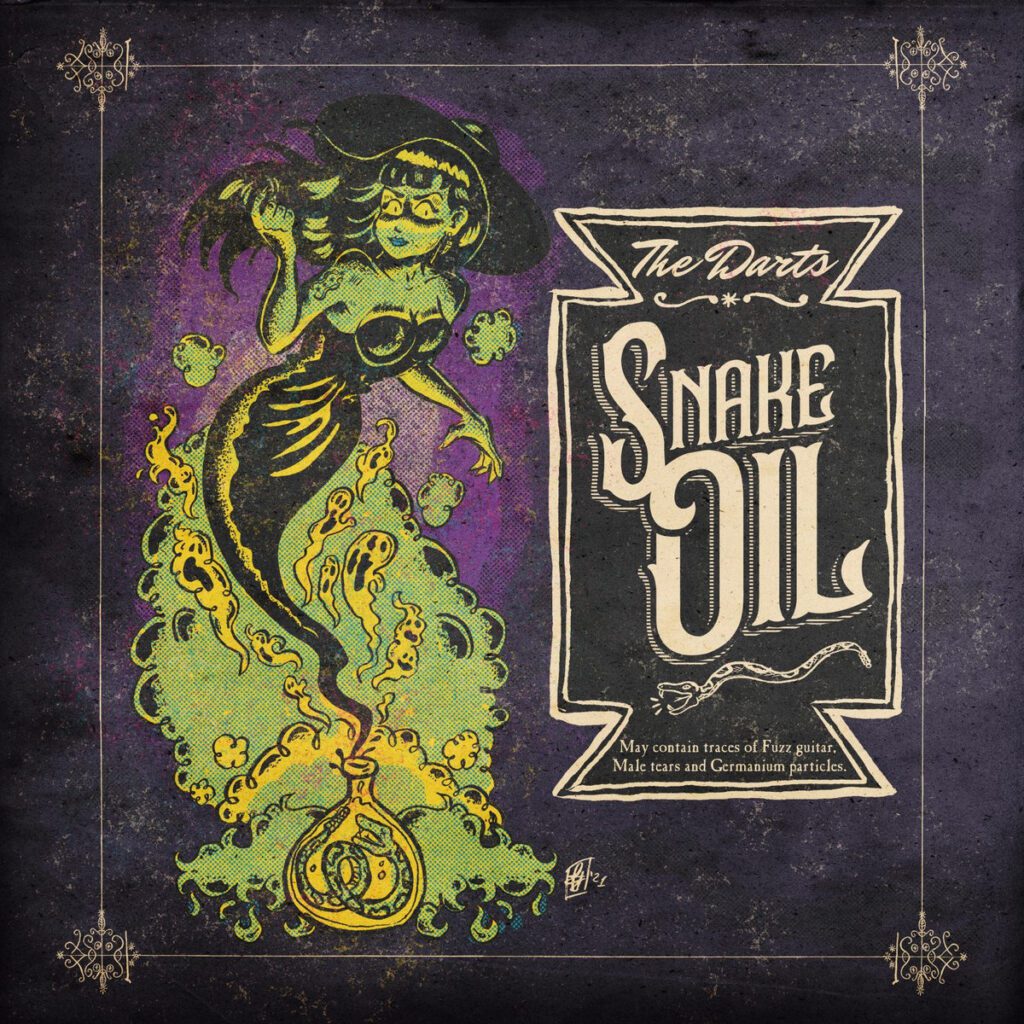
Oh, I’m so happy to hear that! Oh my gosh, so happy to hear that! We went back to Mark Rains in LA, which is where we did Boomerang. With Boomerang, I was with the older lineup of the band. And our whole goal after making Snake Oil, the one before that…Snake Oil was co-produced by Jello Biafra and Bob Hoag. 

Just some guy. 

Just some guy, yeah. That great guy. But what he is, is extremely intense. Not a surprise. And so making a record with Jello Biafra and Bob Hoag almost broke our brains because it was like so much information and advice and ideas and it got richer and bigger. There were 126 guitar tracks on Snake Oil. 
Good Lord.

I mean, that’s the level of, I don’t know, the OCD level that it reached with two producers that are that intense, thrilled to work together for the first time and making a masterpiece. And it is a masterpiece. It’s wonderful. It’s incredible. But coming out of that, we were really ready to just do something raw and just go back in. And I was also ready for just a new take on the music’s sound because we had done every record of my life with Bob Hoag in Phoenix up to that point. And I was like, “I just want to see what else is out there.” One of my favorite records of all time that got me through a really rough spot in my life was Death Valley Girls’ Glow in the Dark from back in the day. And I played that record until it was falling apart. And so I went back and looked at who produced it, and it was this guy, Mark Rains from Station House Studio in LA, who I didn’t really know much about. Did a deep dive into that and found out he’d done all these great things. From Marilyn Manson to Tanya Tucker, he’s done every style of music brilliantly. Grammys, the whole thing. And I was like, well, I mean, at the time, my old drummer, Rikki, was in Death Valley Girls, so he probably knows who I am. He immediately said yes. And he was like, “I have this time slot free.” And I’m like, “that’s our time slot too. This is our one chance. Let’s get in there and do it!” So, and I was like, “we don’t want you to do anything. Here’s my demos.” A lot of people don’t know this…when I write a song, I write it on GarageBand on my laptop as I’m writing. So I write the bass line. I add fuzz that I like. I write the drum part. I put in the fills where I like them. And I add the right overdrive and I do all this stuff. And then I do the guitar line and I add a second guitar. And by the time the demo’s done, it basically sounds like almost a produced version, except those instruments are fake. 

Basically I know all the effects I want. I know all the backing vocals and everything’s ready to go. I do this with every album, but I gave these demos to Mark and I’m like, “the band agrees. We just want this record to sound like the demo. If you’ll just sit back and let us take the reins, we can do this.” And he was like, “no problem!” Really cool of him, by the way. And he did. He just laid back and I was like, “can you add some, you know, space echo to this?” And he was like, “I gotcha.” He’d just add his little magic. I did all my vocals in one day for the whole record. And I walked in that day and he had a candle lit and the lights were low, and he had this chain of microphones, a Neumann over here, a weird little mic over here, a 58. And they were all in front of me so I could sing them on. Bob did like some of that stuff in Phoenix too, but it was just like he already knew. 

Yeah, he got it. 

Mark knew what needed to happen without even talking about it. And it just so easy. So after that experience, when it came time to do Halloween Love Songs and Rikki is back in the band now, that was just a no brainer to go back to Mark for sure. 

Did you do anything differently this time in the studio than the last time? Or was it kind of like, “if it doesn’t, if it ain’t broke, don’t fix it”? 

The big difference was the musicians. 

Okay.

Different lineup. And they play differently. They hit differently. Poor Becca, my guitar player. We had been on tour all summer when we went into the studio. Becca had a family tragedy at the very beginning of the tour, but wanted to do the tour anyway, to her credit. Super strong human being here. And she went on this long tour and came back and immediately had to go to a funeral back at home because that was the only time they were able to do it when she was there. Horrible experience for her. And then we started recording because it was our only time off. And she didn’t have time to prepare like she likes to. She’s a little bit different than my past guitar players in that she’s a very thoughtful guitar player. She thinks about what she’s doing more than any punk rocker I’ve ever known. She comes out of the Spindrift mindset where they spend a lot of time and there’s a lot of whammy bar and there’s a lot of nuance. And I love that about her. It’s not the way I think because I’m just like, “oh, let’s get it done, let’s trash it up.” What she brings to the table is this really cool nuance that we’ve never had before; this texture of a spaghetti western style with a Darts riff. And I think what you’re hearing a lot of is the way she plays that guitar. It’s not slammy and trashy like I maybe would have written it, which sometimes overshadows the rest of the production. 

Oh, totally. Yeah, I can see that.

It just eats up a lot of space in your ear, right? You can’t even hear some of the vocals sometimes in some of the old records unless the vocals are equally distorted. And there’s a lot, you have to work around that kind of distortion, which I love. But when you have Becca, there’s space all of a sudden. You can hear the percussion, you can hear the background vocals. Mark can do a little more magic with things. We added some trashy guitar riffs underneath, like a layer of rhythm guitar, for example, that had fuzz on it in the chorus or whatever, but it’s panned and it’s at a low level. And so it doesn’t take over anymore. And this is a big difference live too, there’s a little more space in the sound on stage. Rikki also hits differently than my other drummers have. A lot of people don’t know this, when she’s even playing live, she plays to a click. And unlike a lot of punk drummers that I’ve played with, when you’re playing live, the adrenaline goes and you start picking up those tempos and everybody starts going crazy. And it’s fun. It’s really fun. A lot of energy. Rikki keeps it where it’s supposed to be and we have to match her. And what that brings is a lot of force and power. You know, when this lineup hits, it hits you like a black metal hit, you know, it’s like. 

Right. It’s not like a buzz saw all the time. 

Yeah it’s like, you know, Godzilla stomping. And so you’re hearing that too, that she plays these parts differently than my other past drummers have. And granted, she was on the band in their early records, but I don’t think she was as powerful then as she is now. She’s done a whole lot of years of hard touring with Death Valley Girls and a lot of other bands while she was away from the Darts and she came back powerful. So yeah, she plays differently too. Lindsay’s bass parts are incredible. Lindsay’s the kind of person that you give her a song to learn and she’ll start learning it that day, even if we’re not recording for a year. (*both laugh*) And so she lives with these songs and really she owns these songs by the time we’re ready to get into the studio. 

As a failed bass player myself, I tend to sort of lock into that. I definitely locked into her sound on this record. Her sound is really cool. 

It’s really cool! I mean, I know Mark’s chain and I know he’s sending their signals through pretty much the same signal path that he was with the last lineup, but it comes out sounding different because the way you hit your string is different. 

The way you attack it, yeah, right. 

There’s a lot that’s going on, especially Becca is very different from the past, but even Lindsay, just the way there’s a playfulness in the way that she plays, just there’s a fun.

Yeah, fun is the word I would use. There’s real like fun grooves, I think between them, especially…

The power of Rikki with the fun of Lindsay is a really interesting rhythm section. It’s got a joy to it, but it’s hitting you in the face. (*both laugh*) A joyous hit in the face. 

And you want another one and another one.

I want another one. Give me more. (*both laugh*)

This lineup is pretty locked into like just being road dogs? 

Yes. They were brought on board because they’re road dogs. Kind of the issue with the last lineup was families, jobs. I had three guitar players in one summer because we were doing that much touring and everybody had jobs, families. And we had to keep pushing. It was hard. And being on the road, it makes you grumpy. It makes you tired. It makes you fussy. It doesn’t pay. There’s a lot of things that are really, really hard about the road. It’s just not for everybody. And this lineup is just, they’re professional road warriors. That’s what they do. They expect it. They know what’s coming. They all have their camping towel packed already. They know what’s going to happen. So it made it very easy for me to go, “okay, so our Europe tour in the fall begins on October 6th and ends on December 6th. Are you guys up for it?” And they’re like, “we’re good to go. No problem.”

Now, the only catch to that though, is this one year in 2026, Rikki has decided to go back to being a teacher, which she always did back in the early days too. She quit to write a book for a while and do some other things that gave her a little more freedom. But she’s going back into the classroom starting in the fall. And some other things are happening in her life that are making it a little bit tricky, so she has to step out of some of the tours. And luckily, even last year when this happened, we had Heather Thomas from Nashville step in. And Heather Thomas was actually a Seattleite originally, which is how I got to know her name. But she’s based in Nashville and she’s a session drummer professionally. Incredible drummer. I gave her the songs for our last tour and then didn’t really hear from her for a long time. I was like “are you going to be ready? I don’t really know you?” And she was like “don’t worry,” and everyone who knows her was like “don’t worry.” So she showed up…we met her for the first time in Marseilles, France. Our flight had landed late. We got to this record store with an entire crowd lined up around the block to get in. We had one minute to set up, brand new drummer, didn’t know anything about her.

Never, ever played together?

Not a single note. She sat down with her little page of tiny notes and just killed every single song. We sold so much merch that first show, it was ridiculous. She’s INCREDIBLE. And she’s a pro. She used to teach at Seattle Drum School. She approaches the learning of a song in a very academic way. She writes out the parts. Kind of like me with a classical background, she learns the same way. She’s going to be doing a ton of dates and probably recording with us too. It’s going to be a fun year with some fun people!

Those real professional musicians have brains that work in ways that my mind can’t fathom. 

They have to! I mean, I’ll take Lindsay as an example, who probably never thought she would get the call to go on tour professionally. But in the back of her mind, she always kind of hoped that call would come. And now that it’s come, she has learned how to learn a song fast. She’s learned how to pack quickly. She’s learned how to, you know, book all the flights in two seconds, because she wants it more than anything. You figure it out, you know? And plus, it’s not rocket science, it’s punk rock. (*both laugh*)

Right, but there is something to making it sound good and cool and authentic, and not too professional. And I think that sometimes like professional musicians have to know when to pull back a little bit, right? And when to let the the chaos of the moment be the chaos of the moment, not be like, too perfect and whatever.

Exactly. I think the more you play live, the more you learn to work in chaos effectively. It’s just like, it’s just like what we did in the criminal justice system. When things are insane…I’ve got this homeless guy yelling at that drug addict and my corrections officer is losing his mind and everybody’s screaming, that’s kind of where we all excel.

Yeah, right. Exactly. (*both laugh*)

Yeah, that’s when I can take the microphone and say, everybody calm down. You do that. We all do that. That’s what we do. And it’s the same exact thing for a live musician who plays a lot. When the crowds go on bananas, and everything’s broken, and your pedals not working. This just happened in Hawaii, where half of our gear got left in the van, and the show was about to start, we didn’t even realize it. And we had to find like a pedal board t literally a pedal board with pedals on it – that would make sense to our band, right? Even cables for the guitar, we had to find everything in like five minutes. And somebody was just like, here you go. And we’re like, we plugged it in. And it was like, oh, they happen to have the right gear. And we played a great show, you know?  Sometimes  we’re learning that chaos works to our advantage. 

Yeah, sometimes when everything’s on fire all the time, there can be a sense of calm. 

Sometimes when it’s all on fire, you get warmer! (*both laugh*)

Yeah, right, right. There can be some sort of like a calm in it, right? You know that you have to figure it out, so you just figure it out. 

Yeah, you become very quietly focused when everybody’s panicked around you. Especially in the rock world, that kind of almost makes sense to me because you’re used to people screaming in your face all the time, right? I mean, if you can play a guitar, and sing and crowd surf all at the same time, you can kind of do anything because that’s like the most unpredictable moment of your life right there. If you can keep that going, you can kind of handle anything. (*both laugh*)

That’s the stuff that made me want to just be like a journalist and not like…

 I thought you were gonna say a musician!

No, no! Even going to punk rock shows from an early age and being like, you know what? I don’t feel like breaking my guitar because I crowd surfed and somebody kicked me in the head and I’m bleeding from the ear like, I’m okay to take pictures. Like, I’ll learn how to do photography. I’ll learn how to write and interview bands like…

I’m so glad because somebody has to do that too. That also is a dying art in a lot of ways. And it thank God there are people like you who do want to document it because we’ll lose it forever, otherwise. 

Yeah. And I like, I dread the day that there really are no places left. I mean, I think enough, enough places will open up wherever in suburbia, like, like Deep Cuts (in Medford, MA), shout out to Deep Cuts. Places like that will be able to keep the machine going. Like that it’s whatever, it’s punk rock, it’s rock and roll. It’s always going to morph and be something else and like shift around and…

it will go into the record stores and then it’ll go into the libraries and it’ll go into the basements and it’ll come back up and it’ll be at the coffee shop again and then it’ll be back in the dive bar and then it’ll be in the big venues. And it’ll be the waves. I’ll tell you, talking about PNW, I mean, just like you were saying, Seattle is so rich with this history here. Everybody you meet, even the young people, it seems like saw a lot of it, you know, they were here for a lot of that stuff. And they, I mean, KEXP, they’re all very entrenched in the history way more than a lot of cities I’ve been in. There’s something in the water here. I’m telling you, it’s really special.

There’s something sort of like mystical being. I don’t feel like that’s a thing that we just sort of create like in our brains, but it does feel like there’s something there, whether it’s in the water or the air or the mist or the mountains or whatever. 

Or I could get a little more science-y on you and say, maybe there were some people here who just had it in their blood to be great musicians and people learned from each other and kept the tradition going and grew it. Because I’ll bet you all those nineties kids were influenced by those sixties kids. 

Yeah. Oh, totally. 

Right. So it’s a tradition you pass down. I was just talking to somebody about this in Hawaii, that you really don’t learn to love to play live music I don’t think unless you’re going to live music and you’re seeing it live. That’s when you really fall in love with it, when it hits you in the chest. Right?? And so they got to see it here. They got to see the really good stuff here from an early age. And I think that influenced just way more people than we ever would have guessed in this area.

I wonder too, if there’s something, and you mentioned Hawaii and the Pacific Northwest, and I wonder if there’s something too, in the Native American culture that is sort of like the thread in both of those places really. The way that they tell stories and the way they preserve stories and not that it’s necessarily a large or really any Native community in the rock scene necessarily in the Pacific Northwest. But I almost feel like the importance of the culture and the importance of the storytelling and the importance of like the art itself. There’s an interesting sociological thread there that I didn’t think about until two minutes ago. 

Yeah, you’re absolutely right. I will say this, though, in Hawaii, where we played last week, the kids came out and we played a lot of, they were almost all all-ages shows, they came out in droves. Face paint, goth hair, mohawks. It was like the time of their lives because they were saying that not a lot of bands come out there. The chance to see and experience a great live show at the underground punk level is really hard. You might have to go to Honolulu to see a big star to see what they see in Seattle every single day, where the club is hopping still. That doesn’t exist in Hawaii. And so it was a huge night and a huge event where everybody on that side of the island would come to this one little show in this record store and go nuts because it was their one opportunity. And yeah, they’ll probably talk about it. The promoter there is who I was talking to it about. He said it’s really sad because the kids that come up here don’t get to see stuff and they don’t really they don’t really get to see what a great guitar player sounds like when they’re just right in their face on a small stage. They don’t get to look at their pedal boards.

You don’t get that spark. Yeah.

Yeah. You don’t get to see how how you can do it yourself. You know, they see the big stars, but they don’t see the grassroots level punk. 

The stuff that makes you realize that you can do it.That’s what got us all to pick up a guitar or whatever when we were 12, because you like “I don’t have to be Yngwie Malmsteen.”

(*laughs*) Please don’t be!!

I know, right? Like “I can be Billie Joe Armstrong.”  I don’t have to be Joe Satriani or Steve Vai. Like that shit turned me off from a young age. But then like but I could be like, I don’t know, Mark Lanegan from Screaming Trees 

Or like I could play like the Sonics. No problem. You know, trash it up. And these kids, you could really see a light bulb go off in the middle of the mosh pits. You can see it happening. I was just telling a story to an interviewer last week. She said, “what was your favorite moment in Hawaii?” And I was like, we got done playing in Maui at this little record store. It was packed to the gills. And this girl came to me. I saw her in the front row the whole night. She was goth to the nines. And she’s dancing every song. And she was with all her friends having a great time. We were like, “this is amazing!” First of all, it’s amazing to see girls at the shows. 

Yeah, totally. 

Shewas waiting in the long merch line, and she finally came up and she said, “would you guys sign my face?” which a lot of people were doing. So we signed her face. And then she’s walking away. She goes, “I have no money for any merch. I’m really sorry, but thank you for a great show!” She walks away, turns around with our signatures all over her face and goes, “I’m starting a band!!”

Hell yeah! That’s awesome!

That’s what it’s all about. I mean, that’s what should get us all so stoked up.

That’s that’s what keeps you going, because touring to Hawaii is ambitious. Like that’s a lot of work. Sure, you’re in Hawaii, but that’s a ton of work.

It’s so much work because you have to fly from island to island, so you can’t just throw your stuff in the van. You’ve got to repack it for a flight again the next day. It’s so much of a hassle. And it was an expensive undertaking that, you know, there’s not a lot of population there. And we did well. We did as well as we could have financially. But it’s rough, you know, and we did it for the exposure. And that’s it was worth it for those kids. It was worth it. 

Hopefully that kid does start a band. Hopefully all those kids that you signed faces and arms of do. 

All the new Hawaiian garage bands! Bring it!
Post a Comment

Your email address will not be published. Required fields are marked *

DS Song Premiere: Philly’s King Slender debut “Bare Ends” from upcoming record “There Is Your Image In Light”

Happy Hump Day, comrades! For the first time in what seems like forever, we get to bring you some brand new music to get your day going. Today, we’re stoked to bring you a track called “Bare Ends.” It comes to us from Philadelphia post-hardcore band King Slender. Here’s what the band has to say […]

Happy Hump Day, comrades!

For the first time in what seems like forever, we get to bring you some brand new music to get your day going. Today, we’re stoked to bring you a track called “Bare Ends.” It comes to us from Philadelphia post-hardcore band King Slender. Here’s what the band has to say about the track:

“It’s a mid tempoed emo hardcore jam that stabs from different angles, settling in the chorus to anthem the feeling of being worn to the last possible point. Seeing yourself in that state and living with it, like a passenger along for the ride, is the notion the song howls at while acknowledging what it is to resign to it. Our very talented friend, Kevin Morris (Orphan Donor, Full of Hell), was kind enough to lend horns to the track.”

“Bare Ends” appears on King Slender’s forthcoming full-length, There Is Your Image In Light, which is due out February 27th on Tor Johnson Records, who will have their own exclusive green/black ripple variant. Slow Down and Dancing Rabbit in the EU have clear/green/black splatter and clear/green cloudy versions. You can also find them at Immigrant Sun and Oliver Glenn and Far From Home. Collect them all!

Oh, and check out “Bare Ends” down below!

Post a Comment

Your email address will not be published. Required fields are marked *

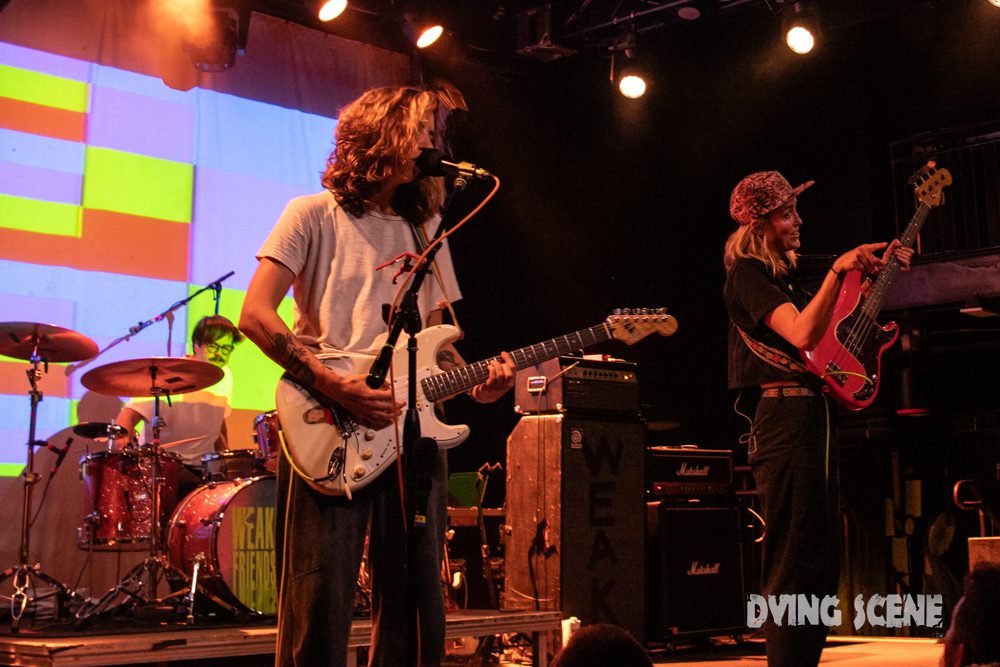
DS Show Review and Photo Gallery: Weakened Friends make triumphant Boston area return with help from PINKLIDS and Nova One (Sinclair – Cambridge, 11/20/25)

Portland, Maine’s Weakened Friends released one of the best albums of 2025, Feels Like Hell, back in October, and in mid-November, they finally brought their record-release tour to the Sinclair in Cambridge’s Harvard Square, a bit of a triumphant return to their adopted hometown area. The evening was kicked off by the upstart PINKLIDS. If […]

Portland, Maine’s Weakened Friends released one of the best albums of 2025, Feels Like Hell, back in October, and in mid-November, they finally brought their record-release tour to the Sinclair in Cambridge’s Harvard Square, a bit of a triumphant return to their adopted hometown area.


The evening was kicked off by the upstart PINKLIDS. If I’m being honest, I’d not heard or heard of PINKLIDS until seeing the lineup for this show. If I’m still being honest, I’m super glad I’ve now heard of them. Hailing from the Cape Cod gateway town of Wareham, Massachusetts, PINKLIDS are probably the coolest new band that I’ve seen in quite some time. Years, anyway. Boiling PINKLIDS down to one specific sound is a bit of a fool’s errand, but it’s safe to say that the band would have fit in nicely in the post-punk playground that was the Lower East Side decades ago. There are healthy doses of post-punk and surf rock and maybe even Stray Cats-style rockabilly. Like if Fugazi were an art-rock band in a Tarantino movie. Angular riffs and frequent tempo changes abound, and vocalist Amber Lawson commands the whole thing with unbridled camp and confidence.


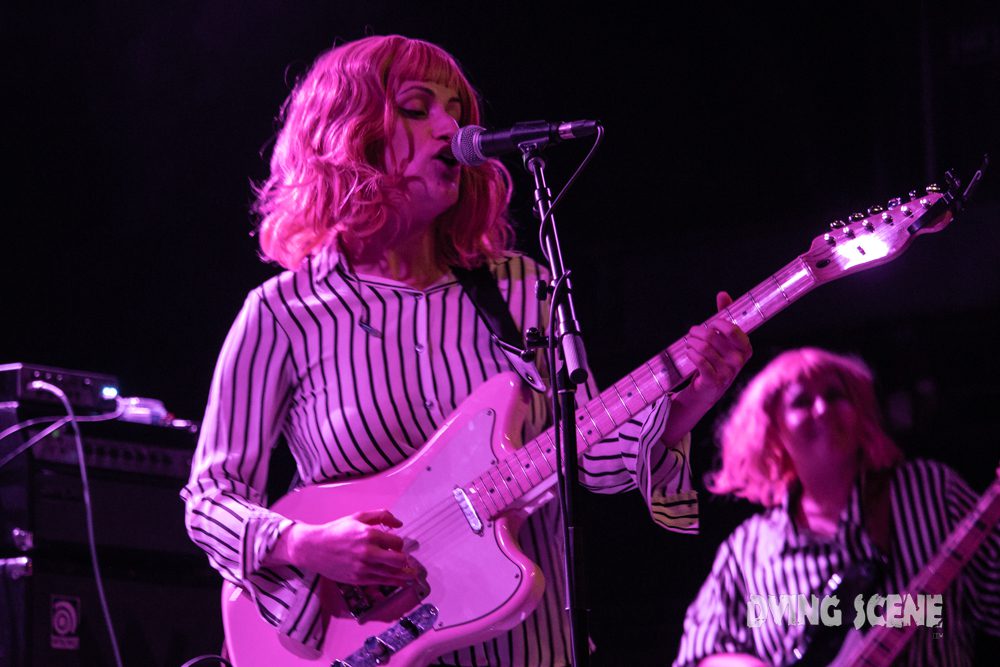
Occupying the direct support spot on this show were Weakend Friends’ tourmates on this run, Nova One. Nove One are yet another band that I’m ashamed to say I wasn’t previously familiar with and am proud to say that I now am familiar with. The brainchild of Roz Raskin, Nove One is very much a concept band, a feminine-presenting yet genderfluid, retro-futuristic style and sound that evokes a sort-of late-60’s girl group vibe. Think like a group of Ronnie Spector’s with matching pink wigs and vertically-striped black-and-white blouses, in a dream pop/alternative band. “pick my petals” and set-closer “you were right” were personal favorites.


Weakened Friends hit the stage at 9:30pm and instantly launched into the one-two punch of “Not For Nothing” and “NPC” from the wonderful Feels Like Hell. The Portland-based trio – Sonia Sturino on vocals and guitar, Annie Hoffman on bass and backing vocals, Adam Hand on drums – have solidified into a powerful live force over the better part of the last decade. We’ve seen them in a variety of settings over the years – opening slots at the now-defunct Great Scott (R.I.P.), in-store acoustic performances at record stores, etc. – and it’s fun to see them now, having levelled up in every conceivable way while still maintaining the rawness and intensity of the earlier days. The light and video shows and adding layers of pre-recorded instrumentation bring a certain increased gravity to the occasion. Earlier songs like trio of “Main Bitch” and “Waste” and “Common Blah” which were performed in a mini set for the old heards translate immaculately to the bigger stage and the increased production. Given that it was an album-release show of sorts, the band blazed through ten of Feels Like Hell‘s dozen tracks, including the cover of Natalie Imbruglia’s cover of Ednaswap’s “Torn,” which was prefaced by a callout to all of the children of the 90s and to the elders of the 80s which, as a person born in 1979, made me feel some type of way (read as: geriatric).


Hoffman bounces endlessly around the stage for the duration of the set, her smile and infectious energy serving as contrast to Sturino’s growling guitars and full-throated lyrics that deal heavily and self-doubt and apathy and anhedonia. There’s a raw angst and a sense of unbridled aggression in a Weakened Friends set circa 2025 that would have fit right in Seattle (or at least Northampton MA) thirty years ago. It’s no wonder the band caught the attention of Jack White and opened at a few shows earlier this year. And with the added production, there’s the sense that we’ll soon be able to say that we were lucky to catch Weakened Friends headlining in a room as small as the 525-capacity Sinclair.

I felt at the time and still feel a week removed from the event that this particular show was one of the best – if not the very best – that I saw this year. Check out more pictures in the galleries below!


Post a Comment

Your email address will not be published. Required fields are marked *

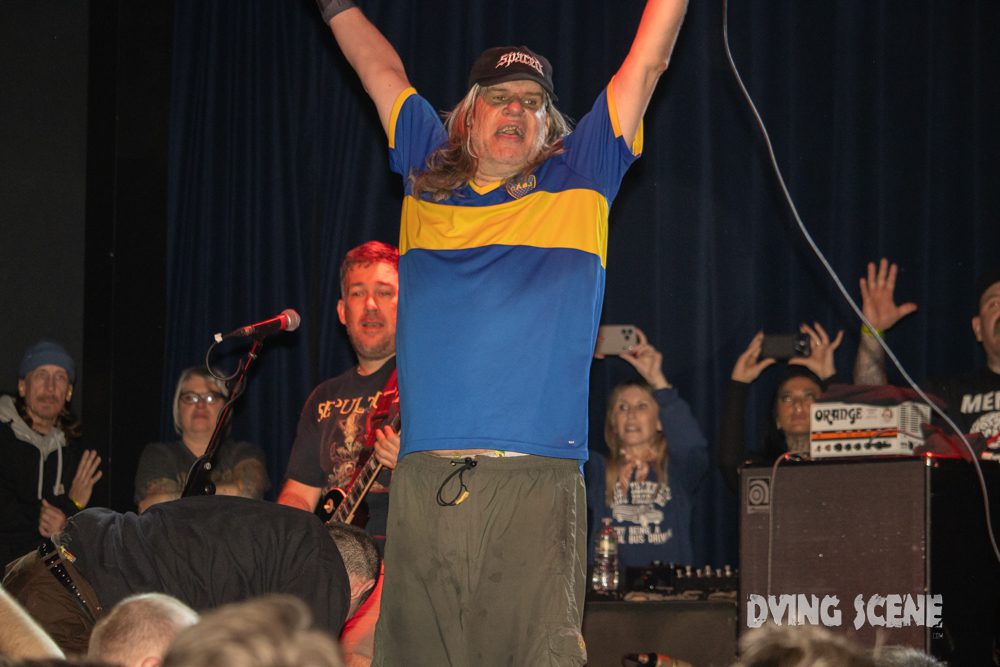
DS Photo Galley and Show Review: Bane, Hot Water Music and Spaced – Providence RI (11/14/25)

Fete Music Hall in Providence, Rhode Island, was the setting as Bane and Hot Water Music brought their recent co-headlining tour to a close. It’s a no-frills, no barricade venue consisting of mostly black-painted brick and concrete, located in the gritty-even-for-Providence Olneyville section of town, in many ways the perfect setting for a pair of […]

Fete Music Hall in Providence, Rhode Island, was the setting as Bane and Hot Water Music brought their recent co-headlining tour to a close. It’s a no-frills, no barricade venue consisting of mostly black-painted brick and concrete, located in the gritty-even-for-Providence Olneyville section of town, in many ways the perfect setting for a pair of hardcore and melodic hardcore titans to wind down ehat was, by all accounts, an epic two-week run.


Kicking things off on this run as they did on each night of the tour was none other than Spaced. The upstart Buffalo five-piece experienced an obscenely untimely transmission-related meltdown on the tour’s opening night, but managed to scrape things together enough to bring their blistering, two-step heavy brand of hardcore to the masses. I can’t speak to the rest of the tour, but on this particular night, the band’s set was super well-received, as the constant ball of energy that is vocalist Lexi Reyngoudt constantly danced and paced the width of the stage and encouraged the early-arriving crowd to match the band’s intensity.


Hot Water Music occupied the middle slot on the three-band bill, but this was not a typical opening gig, as the band plowed through sixteen songs over the course of an hour. In a weird coincidence, I’m relatively certain that every time I’d seen the iteration of Hot Water Music that includes Chris Cresswell in the lineup, the set has started with either “Remedy” or “Trusty Chords,” so it was nice getting “Drag My Body” in the leadoff spot on this night. The set that followed did an admirable job of spanning the bulk of the genre-defining band’s catalog; recent tracks like “After The Impossible” and “Menace” have worked their way seemlessly into a set that also includes longtime favorites like “Choked And Separated” and “Rooftops” and “Free Radio Gainesville.” “I Was On A Mountain” and “Turn The Dial” were personal favorites, and closing the set with “Remedy” into “Trusty Chords” is a pretty epic way to bring things to a close.

The aforementioned Cresswell has served as a tremendous sparkplug for the longtime road dogs over the last eight years (editor’s note…seriously? It’s been eight years already?!?). I forget who referred to Jason Black and George Rebelo as Hot Water Music’s cheat code – Brian McTernan maybe? – but that remains a perfect way to explain their presence in the band and the scene. They’ve been operating as two sides of the same musical brain for decades at this point and remain as locked in a driving force as ever. And Chuck Ragan at stage right is…well…Chuck Ragan. He’s as inimitable as ever, and seems to have benefited the most from the spark that Cresswell has brought to the band, as he continues to push himself and his voice to what approaches transcendent levels.

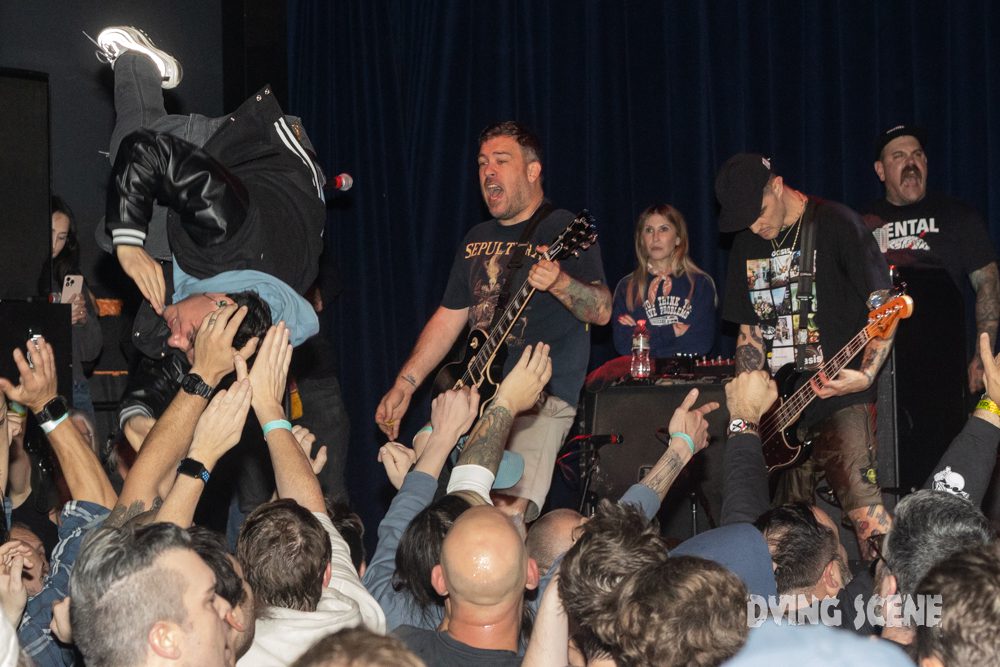
Bane’s set was preceded by an unexpectedly long break as the band and venue tag-teamed to work through some frustrating sound and technical difficulties. But when they finally ripped into the opening notes of “Count Me Out,” they more than made up for lost time. There’s a bit of an emotional and musical floodgate that opens up when Bane plays a show. For a generation now, at least in the Northeast, the band have had the sort of label-eschewing crossover success that bands like Militarie Gun and Knocked Loose and obviously Turnstile have enjoyed in recent years. Bane is a force, a unifying staple that only seems to get more important as the years go by. There’s always a blurred line between band and crowd at a Bane show, as demonstrated by the constant barrage of multi-generational stage crashers and head-walkers that did not stop for the duration of the band’s eleven-song set (and sometimes didn’t stop even in the breakdowns between songs). “Can We Start Again” and “Wrong Planet” were particular crowd-pleasers, while “Swan Song” was a personal favorite. It seemed like the crowd could very much have kept going by the time the house lights came up after “Calling Hours.”

Check out a bunch more pictures from the evening’s festivities below!

Post a Comment

Your email address will not be published. Required fields are marked *

DS Interview: Michael McLaughlin on his new book “Lightning In A Bottle – A Love Letter To Asbury Lanes”

The punk rock and underground and DIY music worlds are littered with the remains of once-iconic venues. Venues that achieve legendary status because of the scenes that they created and fostered and nurtured. Venues that became iconic to the punk and underground and DIY worlds in the same way that Radio City Music Hall or […]

The punk rock and underground and DIY music worlds are littered with the remains of once-iconic venues. Venues that achieve legendary status because of the scenes that they created and fostered and nurtured. Venues that became iconic to the punk and underground and DIY worlds in the same way that Radio City Music Hall or Madison Square Garden or The Fillmore or the Ryman Auditorium became iconic in different places and times. Venues that grew organically in out-of-the-way, pre-gentrified areas, before the creep of the Live Nations and Ticketmasters and venture capital-backed land developers could figure out a way to strangle every last conceivable dollar from an area before turning it into a high-end clothing store or hotel or upscale casual chain restaurant. 

Between the Convention Hall and the Upstage and the Paramount and The Stone Pony – which has somehow managed to hold fast on the ever-changing Boardwalk for more than fifty years, Asbury Park, New Jersey, has been no stranger to those sorts of venues over the years. Asbury-at-large sort of exemplifies that idea itself; a sort of out-of-the-way spot, perpetually down on its collective luck yet somehow persevering in greater-than0the0sum-of-it-parts fashion thanks to a group of dedicated folks who were either too stubborn or too foolish to leave. And perhaps no place better exemplifies what Asbury Park was and what Asbury Park is becoming better than the iconic Asbury Lanes.

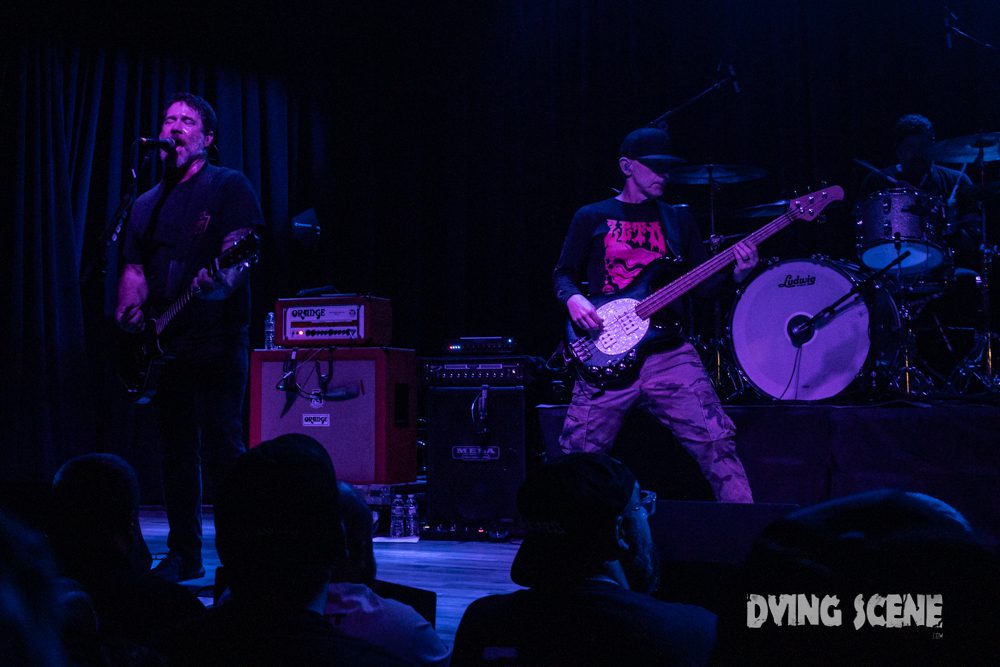
For the uninitiated, the Asbury Lanes was – and I suppose still is – exactly what it sounds like. It was a 1960s-era bowling alley that made it trough the decades with surprisingly few updates. In the early 2000s, it also started to double as a music venue catering to local and national touring punk rock bands for about a dozen years. The Revival Tour stopped there and Dave Hause and The Loved Ones and Hot Water Music and The Menzingers and The Flatliners and the Gimme Gimmes and Agnostic Front and Sick Of It All and of course the Souls and Lagwagon and Tim Barry are but a small fraction of the names that passed through. Many of them passed through more than once, largely due to the people who ran the place and went to the shows making it feel like whom. What the nearby Stone Pony was to the traditional rock-and-roll world of the generation before ours, the Lanes became to the punk rock kids. Here…see for yourself…


One of the more regular faces at the Lanes for the bulk of its history was that of Mike McLaughlin. If you went to the Lanes between 2005 and 2015 and you don’t recognize McLaughlin’s face, that’s probably due to the fact that it was behind a camera. Over the course of a decade, McLaughlin became the venue’s unofficial house photographer, shooting upwards of 270 separate bands, many of them more than once. For McLaughlin, it all started as a seemingly run-of-the-mill assignment. “I got a call from the Newark Star-Ledger, which is the biggest daily paper in New Jersey, that there was going to be a car show with some bands at this old bowling alley in Asbury. And I knew Asbury well, I lived next door in Ocean Grove for many years,” he explains. “I knew the bowling alley. I had photographed that strip of old buildings at night, but I didn’t know anything was going on there.” McLaughlin figured it would be a routine outing; snap a couple of pictures of a few vintage hot rods, maybe grab a picture of a band or two, and head back home. Fate, it seems, had other ideas. “I go inside and Sasquatch And The Sick-A-Billys are playing. I walked in and the old Lanes looked like a 1960s bowling alley, but from like out of the Jetsons. So it was this like retro look, but also this futuristic look. And then there’s this rockabilly band with some people dressed up like they were at a sock hop and it was just like, “what the fuck is going on? This is the most amazing thing in the world!”

Little by little, McLaughlin ingrained himself as a fixture at the Lanes. Due to the nature of the venue and the scene – and due to McLaughlin’s own history as a photojournalist – his pictures began to focus less on the traditional elements of a concert photo and more of a documentarian vibe. With the venue’s minimal stage and rudimentary lighting and nary a traditional photo pit barricade in site, there was little to separate artist from crowd, both physically and aesthetically. This lends itself to the utilitarian idea that what inspired so many people to drift to the punk rock world in the first place was the idea that it’s our scene; a scene made up by us and for us and with little pretense or faade or gimmick. In fact, a flip through a decade’s worth of pictures reveals many of the same faces both in the crowd and, at times, on the stage in performances of their own.

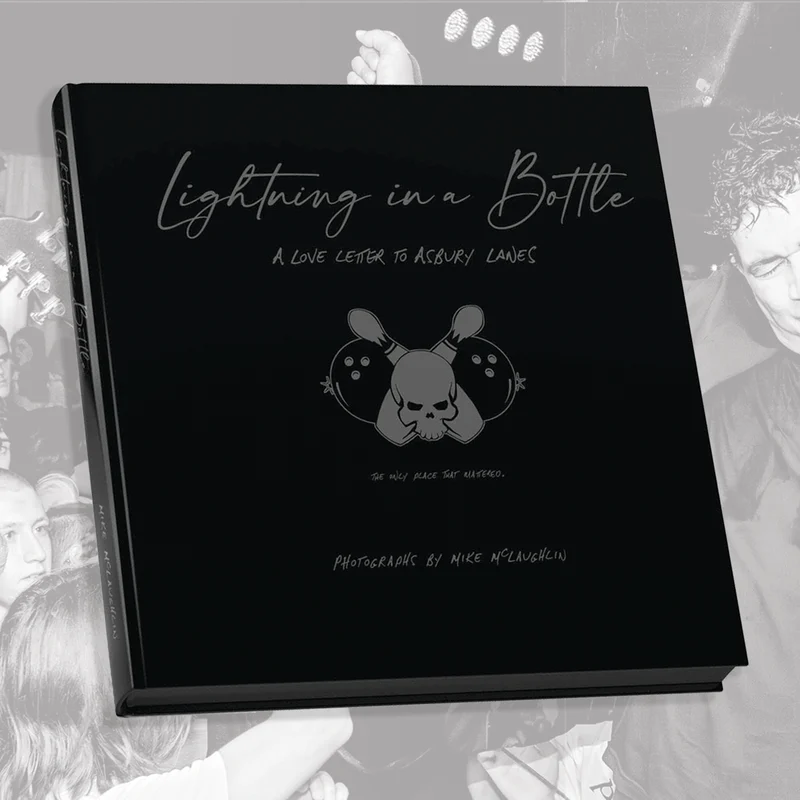
The Lanes closed in 2015. It got a massive update and facelift as part of a multi-billion dollar real estate investment in the Asbury Park Boardwalk revitalization, and it has reopened under the same name and same basic idea (part bowling alley, part concert venue) but it’s not the same Lanes. Thankfully, not only was McLaughlin there to cover the bulk of the venue’s iconic heyday, his work is now slated to appear in hardcover, physical format. Entitled Lightning In A Bottle: A Love Letter to Asbury Lanes, McLaughlin has put together a massive collection of shots capturing the history of the Lanes and its people. The 400-page tome is due out next month via Mt Crushmore Records, and it presents less as a traditional photo book and more as an artifact; a venue yearbook, if you will. That is, as you’d imagine, entirely by design.

I’m a stubborn son of a bitch when I get an idea in my head,” laughs McLaughlin. “It was something that I had from early on was I wanted it to be kind of everybody’s book. When I was arguing that this isn’t a photo book, part of that argument was this isn’t Mike McLaughlin’s photography book, like it wasn’t about me, I wanted to do this for everyone who ever experienced it. And so I wanted them to be a part of it. So having everyone handwrite their memories was hugely important to me. Looking through the photos, I see faces that I haven’t seen or been in touch with since before it closed. And I still would be looking, you know, like looking through a yearbook, like, “oh, man, I love that guy!

McLaughlin spends much of his time overseas nowadays; he recently finished his Masters and is teaching photography in Florence, Italy. But he’ll be back in Asbury for the official launch of Lightning In A Bottle next month, at a book signing/print sale at the Parlor Gallery on Cookman Avenue. With any luck, it’ll feel like a high school reunion of sorts, with folks who attended any of the hundreds of shows that took place at the Lanes laughing and reminiscing and storytelling. Whether you went to the old Lanes or not (like yours truly), Lightning In A Bottle is a tremendous and worthy addition to anyone’s library. Authentic and non-Disneyfied venues like the old Lanes are increasingly few and far between and works like Lightning In A Bottle are important time capsules of what truly make them – and the collective scene as a whole – not only special but truly necessary. The book is available for pre-order as we speak. Get yours, and check out our fun chat with Mike McLaughlin below. Kindred spirits for sure, we talk all about his photography journey and his history at The Lanes and what’s becoming of Asbury and much more!

*Editor’s Note: The following conversation has been edited and condensed for conent and clarity. Yes, really.*

Dying Scene (Jay Stone): When (mutual friend) Jared (Hart) told me about this book, my first thought was “oh, hell yeah, that’s really cool.” I’m from the greater Boston area. I am not a Jersey guy, but I’ve known Jerry and some of his crew for probably twelve or thirteen years now, something like that, through The Scandals and from him coming up here all the time. And then (my wife and I) started going down to Jersey a couple times a year. Between Asbury and Garwood, where Crossroads is. And it’s sort of become like a second home since we started going down, which was maybe in like 2016. So that means we just missed the old Lanes. And so it was fun to look through this book, because it captures so many people I know and shows I know of, and is such a great look at a unique place. 

(Michael McLaughlin): Thanks. That was the hope!

So what I guess is a good place to start, and you do talk about it a little bit in the book, but I like the story of your sort of introduction to the Lanes and how you sort of stumbled upon it and then like fell in love with it, as seemingly everybody who went there did.

Well, for me, I mean, I had been shooting music for a long time; since the mid-90s. Both for myself having just friends in bands, and I was a photojournalist for a bunch of different newspapers and magazines. I would always get gigs to go shoot shows at PNC Arts Center, Madison Square Garden or whatever, and then local club stuff, too. But at that point, I stumbled upon (The Asbury Lanes) in 2005. It had been going since 2004…not really on and off, but like, it wasn’t a regular thing in 2004, like where, you know, every Friday, Saturday or whatever, they had shows. That kind of started in 2005. And I got a call from the Newark Star-Ledger, which is the biggest daily paper in New Jersey, that there was going to be a car show with some bands at this old bowling alley in Asbury. And I knew Asbury well, I lived next door in Ocean Grove for many years. So I knew the bowling alley. I had photographed it at night, like that strip of the old buildings, you know, but I didn’t know anything was going on there. So in my mind, I had shot so many car shows for newspapers…like, they would do a little feature because this town was having a car show. Now, I’m an A to B guy as far as cars go. Like, I need a car to get me from A to B. You know, when I was a teenager, I wanted a ‘70 Chevelle SS, you know? Beyond that, like, I don’t know shit about cars (*both laugh*)

So car shows were just like, “alright, find a cool photo.” And yeah, I rolled up and there’s all these like, you know, chopped up hot rods out, out on the sidewalk and on the street. And I go inside and Sasquatch And The Sick-A-Billys are playing. I don’t know if you know Sasquatch, but I think I said it in the book, they’re like rockabilly or punkabilly or, you know, punk rockabilly or depending on your point of view. But I walked in and the old Lanes looked like a 1960s bowling alley, but from like out of the Jetsons. So it was this like retro look, but also this futuristic look. And then there’s this rockabilly band with some people dressed up like they were at a sock hop and it was just like, “what the fuck is going on? (*both laugh*) This is the most amazing thing in the world,” you know? I met a bunch of the people and that very first day while I was there shooting it for the assignment, I was thinking, “you know, I’ve been to dozens of bowling alleys in my life. I’ve done God knows how many car shows, I’d shot God knows how many music venues at that point. And none of it was this, you know? Literally that first day something inside of me was like, “I’m home,” you know? Yeah. You know, it was like, I found my tribe. That’s kind of how it always felt.

Right. I feel like a lot of the folks from Jersey are sort of kindred spirits with the people from the Boston area. Like it feels like I knew immediately from meeting Jared or the Souls or Dave Hause (editor’s note: yes, I know Dave is from Philly, but he’s also all over this book) like those are our people. Like you’re from five or six hours away or whatever, but like, we’re all talking the same language, walking the same footsteps. 

Yeah! So I got to tell you a quick, funny story. So I’m living in Florence, Italy, right now. So I’d been doing photography professionally for years. I always wanted to teach, but didn’t have a master’s degree, so I’d just dismiss it. Like “oh, I’m 56 years old. I’m not going back to school.” So two years ago I decided, “well, fuck it.” I gave up my business, moved here and I just finished my master’s degree. And now I’m a professor. I’m a professor of photography here. 

That’s awesome! Congratulations!

Thank you. Thank you. But this relates to the Boston/New Jersey thing, because you’re absolutely right. Boston and New Jersey are definitely kindred. But I was here and I was doing a photo workshop someplace and the place was like a photo studio, you know? And a person who worked at the studio come walking through and I looked at him and it was just, there was nothing particular, but the way that, with the way they were dressed, the, you know, the hair, I literally looked at him and I went, “those look like my people.” The next day, the guy comes walking in and he has a shirt on IT X HC. 

Oh, funny!

And I literally was like, “what the fuck?” I start talking to him, and on the back of his shirt is like a big circle that says “Italia hardcore.” And I’m like, “dude, if you remember where you got that shirt from, let me know. I’d love to get one.” He comes back after lunch with a shirt for me. He made the shirt. He does Venezia Hardcore in Venice. 

Oh, wow!!

You can always spot your tribe. 

Yeah, absolutely. Absolutely. That’s amazing. So are you going to stick in Italy for what? Are you based there now essentially? 

Well, right now, yes. Everyone keeps asking me like, “oh, so you’re staying for good?” I’m at a point in my life where I don’t need or want a five-year plan. I’ve got one-year plans. You know, it’s like I’m staying for a year. Towards the end of that, I’ll decide if I stay for another. Towards the end of that, I’ll decide if I stay for another. (*both laugh*) You know, I’m enjoying the hell out of the experience. I feel like school was a great experience here and I love Florence, but I would have been an idiot to pass up the opportunity to teach here and have that experience…

Oh, yeah, absolutely.

…and to like just come home straight when I was done with school. So it’s like, yeah, I figured I’ll give it a shot and see how it goes. 

Were you doing the photojournalism thing and then shooting like rock shows, punk shows or whatever? Or did you start shooting shows and then like expand from there? Shooting punk rock shows doesn’t pay shit, so clearly.

No, no, no. Yeah, no. I started photography in a really weird way. I started off basically doing documentary photography my senior year in college, but I didn’t take any classes in photography in school. I accidentally stumbled into it, which is, which is a wild story. I don’t know that it fits this whole narrative. But I did have a friend of mine in college who was in a punk band based in Harrisburg PA. I went to school in Baltimore, I used to go up with him on the weekends and I’d shoot his band in Harrisburg and then Lancaster, um, they would do, they would do some shows. So I was doing a bit of that. I mean, it’s funny cause The Bouncing Souls, who are (now) good friends of mine, they were one of the first bands I ever shot. I snuck in. I wasn’t actually a photographer really at that point, but I faked a press pass so I could get into the Descendents show in 1996 at The Stone Pony.

Oh, funny!

You know, it was before cell phones or the internet. So I rolled up and they’re like, “Oh, sorry, you’re not on the list.” And I was like, Oh, “hold on, let me go find a pay phone and I’ll call them and see what went wrong.” And they’re like, “go ahead. Don’t worry about it, just go ahead.” (*both laugh*) I totally bullshitted my way. I didn’t know them at the time, but I took some shots of the opening bands just to check my flash and whatever. And the opening band turned out to be The Bouncing Souls. 

That’s awesome. Did you like fall in love with that sort of like documenting the scene? Is that sort of the motivation? 

Yeah. I got into photography late in life because when I fell into it, I was around 25 or 26, you know ? I wasn’t one of those people that they’re like, “yeah, my grandfather got my first camera when I was six,” right?

Right. Right. 

I had been doing art, you know, painting, sculpture, graphic design stuff since I was a kid, but literally from about three or four years old, music was my passion. You know, I tried playing, I tried, you know, I played guitar when I was younger and drums, and I sucked. I was never good. But music was always my number one passion in my life. And then I picked up a camera and the two of them have been riding side by side ever since. 

So this is exactly my story. 

Yeah?

Yeah, that is exactly my story.

So shooting music was a no-brainer for me, you know? I don’t know how you got started shooting, but I was shooting for newspapers a lot, and I was bored out of my mind, kind of with my own photos. Because they were, they were very much like the vertical shot of a singer, you know? Or like a vertical shot of a guitar player but this hand is cut off. They always wanted to ship vertical for whatever reason. And I had hit a point where I literally felt like I was in a rut with that stuff, you know, specifically music. And I needed to find a way like I’ve every couple of years, two or three years, I would try to break my own habits. You know, like I would force myself for six months only shoot with a 20 millimeter lens, you know?

Yeah!

I mean, even if I was shooting a football game, like, how do you do that? Just to get out of the habit of zooming all the time or whatever. And so I needed to shake that up. And that was, ironically, when I found the Lanes after that first day for the newspaper, that same month, the Bouncing Souls were playing. Now I had not seen them since 1996 when I shot them, because I moved to Arizona for most of the 90s after college. So here I am back to Bouncing Souls are playing. And that was the first show. The first show that I shot them is in the book. That was, I went in there consciously, like, “I’m going to try to do something different, you know, to shoot it differently.” And the way it came out was that from then on, I’ve shot music the same way I shoot documentary photography, because to me it is.  I’m not looking for one photo of the singer, one photo of the guitarist. I’m trying to tell the story of this show. 

Right!

You know, so that means the crowd, the crowd interaction with the bands, the bands interaction with each other, the after party, the whatever, you know? If I can get backstage, awesome. But it’s about telling this whole story. And it’s a big part of why I did the book the way I did, because I had a couple of professors that were kind of advising me when I was designing it, and they were like, “no, a photo book should be like this.” I’m like, “but this is not a photo book!” 

(*both laugh*) Right! Right! No, it’s definitely not. Like, I mean, it is a book with a lot of photography in it, but it’s not, it’s not a photo book. It’s a story book. There’s a narrative. 

Thank you. I spent almost two years designing the book, putting it together. My goal was to make it a photo book, a punk zine, a yearbook – a high school yearbook, and a family album. That’s why there’s so many photos of each band instead of one photo of the band, because for me, it’s a story of that show. 

Yeah. And I think that like the way that we have sort of run concert photography with Dying Scene, most of the people that have shot for us regularly over the years sort of have a similar view, right? Like they sort of, you’re not just trying to get the best picture of the guitar player doing a kick or whatever. And like, whatever, that’s cool. But there is something different about, I think, shooting punk rock shows than there is about shooting arena rock shows or shooting singer-songwriter shows. Like it’s a different thing. 

100%

Punk shows, hardcore shows, barricade-free shows – which the Lanes were – the audience and the stage are all one thing. It’s not jus the band on the stage and lights flashing, it’s like being in the middle of the ocean shooting pictures of everything around you. 

Yeah. Well, it’s funny because I’ve shot the big arena shows and I’ve shot the others and I’ve gotten some good stuff. It depends on the show, but, I mean, essentially you and every other photographer are marched in and you’re all standing in a group with the exact same angle and, and the lighting. I mean, as shitty as lighting is at hardcore shows and stuff, that’s where you get to be creative, because the lighting guy is doing the lighting at a stadium show, so you’re all essentially getting the same shot. It’s three songs and you’re out. At the singer-songwriter shows – and this isn’t a knock, because I love listening to it, but from a photographic perspective, you’ve got someone standing at a guitar singing. It’s like, “okay, there’s one shot. There’s one shot. Let’s do a wide shot. I’m done. What the fuck else can I do with it?” Whereas punk show, dear God, like I could have filled every one of those pages in the book with a hundred photos from the show. 

Oh, sure. Yeah.

The hardest part of me was like, which crowd surfing and stage diving shots do I edit out? (*both laugh*)

Yeah. Right. Right. It’s funny, speaking of Jared – and part of me wishes I was in Jersey tonight, because he’s doing the thing at Crossroads – but we usually go down to see him there at least once a year when he plays with Ben Nichols. I think we’ve been six or seven years now, and I tend to stand in the same spot, because I’m 6’1”, so when there’s no barricade, I don’t want to stand right in the middle, because I try not to be an asshole. So I get my spot at stage left, then it fills in. And there are definitely times when I look through pictures and think “I have the same picture of Ben making the same face in the same spot like…seven years in a row.” (*both laugh). And I love it and will continue to do it, but it doesn’t always tell the same story that, like, a Hot Water Music or a Bouncing Souls show does there.

Oh no, you’re totally right!

How quickly did you ingrain yourself into the scene at the Lanes? What was that process? Were you just like, “Hey, I’m here and I’m not leaving. I’m your new photographer guy”?

No, no, no. So, it’s funny. I get a kick out of this, ‘cause most people would know me, if I say this, they’re all like, “what?” I’m very introverted and very shy, and really a social idiot. Like if I have, if I have a camera, I’m good. You know?

1000% I’ve always said, it’s my security blanket. 

Yeah. Like, when I have the camera, like that’s my room and that’s my stage. If I don’t have the camera, I’m the guy holding up the back wall, you know? The other thing when I first came into Lanes, there was a bunch of people that would take pictures there, and a few of them I knew, and they were already friends with the people who started the Lanes. And I was a new guy. And the last thing I wanted to do was step on toes, you know? You know how sometimes photographers can be territorial…

…oh sure!

I didn’t want that. I certainly would never go in like gangbusters, you know? And it’s funny cause this is a, you know, ‘old man shouting at clouds’ moment, ‘cause I see a lot of the younger people today do this shit, but like, I would never walk into a venue without asking, like, “is there a house photographer?” And, if so, I would introduce myself and ‘Hey, let me know kind of the etiquette or where I should be and make sure that I’m not in your way.’ Like I always would do that. Because I shot at God knows how many venues. I was never like “I’m press, fuck you.” Like I was always like, “Hey, this is your house, you know? I’m a guest here.” That sort of thing. Um, and so it took a while. I mean, I still shot (at the Lanes), but I shot kind of timidly, I guess. I mean, I don’t know how obvious it is…you’re a photographer, so it might be obvious to you, but if you actually go through the whole book, you can see the evolution of my style…and also skill (*both laugh*) You can also see that. You can also see probably the evolution of how comfortable I was. 

Yeah. That sounds right. 

Cause early on, I didn’t want to be in anyone’s way and I didn’t want to make assumptions and I didn’t, and I certainly didn’t want to step on the toes of the other photographers that I knew who were there first, you know? It just kind of grew over time. And then, you know, some people stopped hanging out there, you know, whatever. It just kind of grew. And I mean, it depends on who you talk to. I’ve always said that I was the unofficial house photographer. 

Yeah. Yeah. Right. 

I mean, there was nothing official about the Lanes anyway (*both laugh*). So, you know, but some people say I was the house photographer. I was like “I don’t know, there were lots of other photographers, I was just the one that, you know, could get away with a lot, you know? Also because I knew most of the bands, you know? Like, if it was a Souls show or, I mean, a lot of like the Jersey hardcore bands, you know, I would, I’d be on the side of the stage and I would see a shot in my head, like, “oh, that’d be really cool from that side.” But the crowd is packed. So I would just like, I would just give a look and (*nods*) and I’d run across the stage, you know? Or I’d climb in under the drum kit because I want to get a cool angle. Fortunately I had that kind of relationships and reputation where I could just give the drummer like a look. I have a lot of shots like that where I would literally during a show kind of climb under the drum kit and shoot up through the cymbals sort of.

Oh, that’s funny. Yeah. I’ve never even thought of that.

Yeah. Like I would just see the shot in my head, you know, like as it was happening. I’ve always said that I try to, if it’s a band I’ve never seen before, I would not take a picture for the first two, three songs or so, because I needed to learn. I needed to learn their rhythm, and I don’t mean musically. I mean, how they moved, how they interacted with the crowd, you know? And get used to that. But because of that, like watching that, I would start to see shots in my head, like, “oh, this, he’s going to move over here.” 

Yeah. Right. Right. 

You know? I mean this wasn’t at the Lanes, but there was one time the Souls were doing Stoked For Summer at the Stone Pony.

I’ve shot that a couple times.

Yeah. So we might have run into each other. I haven’t shot in the last few years because I haven’t been around, but yeah, 

I haven’t shot it since before COVID, but yeah. 

Okay, yeah. I shot it every year before that, so then we definitely ran into each other. But there was one year I was standing on the stage and I’m shooting crowd surfers and I’m watching as someone comes and all these hands come up to him. I’m like, “oh, that’d be a sick fucking shot.” So I pre-focused the lens for a certain distance. I wrapped the strap around my hand and I ran from the back of the stage and launched out into the crowd. And I was in my fifties, my early fifties.

Jesus…

Yeah! I launched out into the crowd with the camera and I shot the whole way down, all these hands coming up into the lens. 

That’s…wow. (*both laugh*) I would not have the confidence to do that. Good grief. 

That was the last time. Cause I literally like, they carried me back and the bouncers brought me down. And I think I like bumped my back on the barricade and I was just like, “yeah, I’m too, I’m too fucking old for this. (*both laugh*). Good shot though!

How many shows do you figure you shot at the Lanes? Are you anal like me and keep track of every show that you shoot? 

I mean, I have the photos from every show! That’s my memory. As my memory goes, I’m just like “oh, when was that?” and just look up the photos.  Some of them I shot multiple times, so I haven’t gone through for an exact number, but I think it was around 270 bands.

Wow!

And it’s funny cause doing the book was the first time I was realizing how many I missed. Because I had a full-time job and I was shooting in New York City, so a lot of times I just couldn’t get home in time. Or, you know, I missed the openers and the openers then blew up. The amount of shows that I missed was insane, but I think I shot around 270 bands.

Wow. That’s amazing. 

Yeah. When I started editing for the book, it was roughly around a hundred thousand photos that I had to cull down.

Wow…Yeah. I see why it took a couple of years. 

Yeah! (*both laugh*)

As somebody who was there for the duration, essentially, of the Lanes being “The Lanes,” how early and/or late in the process did you realize, like, this is going to go away? Like, this is, like, because of Asbury and changing the way that Asbury itself was changing – and is still changing – like, at what point were you like, oh, this isn’t going to last forever? 

Um, I don’t know that I accepted it until very close to the end. But probably around 2013-ish – so like a couple years before (the end) – the talk of eminent domain was becoming more real. I could be wrong on the year when it was taken over, but so from 2004 to let’s call it 2013 – the Lanes was owned by the original family who owned it from back in the 1960s. And it was around then that it got bought by a local real estate guy, who my understanding of it was he bought it…so I don’t know how it works in Boston, but in New Jersey, there’s a limited number of liquor licenses. 

Yes. Exactly.

And they cost an absolute fortune. And it’s like, (just because) you build a bar, doesn’t mean shit, you can’t have a liquor license, because only so many exist. So he had gotten another place in town, bought the land so they could transfer the liquor license. But when he took it over, it was like, “oh, okay, I’m gonna update this. And I’m gonna do this.” And it was the first time ever that there were bouncers there. Like, juiced up steroid bouncers, like, you know, with necks like this. Then somebody starts moshing and they go grab the kid. And it was like, like, we were the security before. A bunch of kids grew up in mosh pits, we’re the security. And that just meant looking and laughing and jumping in. 

Yeah, right, right. And picking each other up when you fell down.

Right. Yeah, yeah. Taking care of each other. And that’s when they built a new stage, which drove me crazy, because it was like, I had dialed in shooting at the Lanes you know, now you change all my sightlines and all the angles. (*both laugh*) That was, I think, when I realized when he took it over, and it was like new ownership, and a lot of things got changed, that I realized, like, yeah, this is, we’re getting near the end. Even at that point, like, it was still fantastic because of the people, but it wasn’t what it was. And then it got flipped again, or new management again…I never knew the inner workings. I never really wanted to, you know, know how the sausage was made. 

Yeah, right. 

There was a lot of changes over that time. And I’ve never been the guy…I mean, I hope that I was never perceived as that guy. But I’ve never been the guy that walks in and was like, “don’t you know who I am?” Yeah. But after, you know, almost 10 years of being the house photographer, being the regular, you know, because I’ve always called it my living room, I would walk in, and somebody would stop me at the door and ask for my ID and ask for a cover charge. And I’d literally be like “uh, I’m not, I’m not sure what to do here without going, don’t you know who I am?” (*both laugh*)

Yeah, right.

I’m gonna look like an asshole! Like, “no, no, I’m the house photographer. I’m here to shoot the show.” So yeah, it was weird. There’s just, you know, new people working there, new people running it. There were definitely some changes. 

Have you been to the new Lanes? Are you one of the people – which I totally understand – that like, that won’t go on principle? 

Um, it’s partly on principle. It’s partly because I think it would probably break my heart. You know, I’m not opposed to whatever it is. I mean, I’ve been to many, many clubs over the years that are what it is now. My biggest gripe was they just should have changed the fucking name. You know? It’s not the Asbury Lanes. But they’ve used that and they’ve glommed on to the history when they had nothing to do with the history. They wiped out the history and then use it to market themselves. 

Like I said, I’ve been to the new Lanes, but I never went to a show at the old one. As I went in (to the new Lanes) I stood there trying to put myself in the old place. Trying to envision where the stage was and what the vibe was. And the new one definitely seems…I don’t know if gentrified is the right word…

Disneyfied. 

Yeah, yeah, for sure!

That’s what I say.

Yeah, it’s like…”I feel like I should be sticking to the floor here. I feel like there should be a hole in the roof there. I feel like the lighting shouldn’t be this awesome at a bowling alley venue, you know?

Yeah, it’s like going around saying you’ve been to CBGB when you hit the one in Newark Airport. (*both laugh*) But by the same token, and you know, I have my personal thoughts on a new Lanes. I’m not a gatekeeper. So like plenty of my friends have been there. I don’t care. I don’t judge. I don’t even know who’s running it. So like, I don’t have anything against them. I have something against the idea of the gentrification of the place. But I don’t know, good on them that they’re still doing music, you know?

The crew of people that you were friendly with, and essentially became like family from the Lanes…are they all people that have kept in touch, like outside the Lanes?

A lot of them. A lot of them I do still keep in touch with. Fortunately, in the process of the book, I got back in touch with a lot. Because that was one of the fun things. I’m a stubborn son of a bitch when I get an idea in my head. And it was something that I had from early on was I wanted it to be kind of everybody’s book. You know, because when I was arguing that this isn’t a photo book, part of that argument was this isn’t Mike McLaughlin‘s photography book, like it wasn’t about me, I wanted to do this for everyone who ever experienced it. And so I wanted them to be a part of it. So having everyone handwrite their memories was hugely important to me. And I would have some people that would like, type something up, and I’d email them back and I’d be like, “No, fucking write it by hand, take a picture of it and send it back.” You know, I want it to be that. That was a big part of it. And it was great getting back in touch with a lot of people. I mean, looking through the photos, I see faces that I haven’t seen or been in touch with since before it closed. And I still would be looking, you know, like looking through a yearbook, like, “oh, man, I love that guy!” Like, you know? So yeah, I mean, I’m hoping a lot of people come to the opening, the gallery opening for it. So because I would love to see so many people that I haven’t, but a lot of us have kept in touch. 

I always tell people, I’m not a photographer. I’m somebody who takes pictures because I don’t like I never quite understood the machinations behind photography. People have tried to teach me f-stops. And what like I don’t like my brain doesn’t compute. It doesn’t work that way. And you might as well be teaching me Greek. But so I’m somebody who takes pictures at shows; There are many people who do it much better than I do. And a bunch of years ago, I saw somebody at a show at a little shithole dive bar that I love in Boston. And I told him I might start dialing back on shooting because I’m getting old and whatever. And he looked at me like I had just kicked his dog. Like, “what do you mean you’re going to not do this anymore? Like who’s going to take who’s going to document this stuff? Who’s going to like who’s going to show like proof that we’re doing this like that there is a scene here?” And like, that is exactly what this book is like. (The Lanes) was such an important place and time and like moment in the scene. There aren’t very many places like that around the country, certainly now. It’s such an important, I think, thing to document and chronicle. And I’m so glad that as somebody who didn’t go to this to the Lanes, but who knows a lot of the people who did, like, I’m so glad that this book exists.

Thank you. Thank you so much. That means the world. And it’s funny, because this is going to be me being curmudgeonly, but when I was doing the book, a bunch of people, you know, were like, “well, yeah, this is okay for all the people that know the place, but like, what are you going to do for a wider audience?” And I was like, “I don’t give a fuck about a wider audience!” (*both laugh*) Like, if someone loves music, like you. You had never been there and you’re from Boston, like Oh my God, thank you. I’m so grateful. But I’m not doing this to make money. I’m not doing this to get famous. I’m doing this so that there is that chronicle for the people who live there, you know? If somebody else loves it, that’s awesome.

Yeah. I mean, like, CBGBs, The Lanes had this sort of hallowed ground status. And so few of those places still exist with the level of importance that I think the Lanes had. I mean, the Stone Pony is pretty awesome too. But the Lanes was such a microcosm of both the scene and of Asbury on a larger scale. So I’m glad that somebody was there to capture it and like, show us all. It’s really cool. You did a great job.

Thank you. Thank you. That really means a lot. I do appreciate that.

Post a Comment

Your email address will not be published. Required fields are marked *

DS Show Review: Circuit Breaker – Cambridge w/The Pietasters, The Kilograms, Doped Up Dollies and more!

If you’ve been reading DS for a while, you’ll know that I count myself amongst those who got into the punk and ska scenes of the Boston area in the mid-1990s. Part of what drew a countless number of us to the scene was the anti-racist, anti-fascist messaging and the way kids from all walks […]

If you’ve been reading DS for a while, you’ll know that I count myself amongst those who got into the punk and ska scenes of the Boston area in the mid-1990s. Part of what drew a countless number of us to the scene was the anti-racist, anti-fascist messaging and the way kids from all walks of life could revel together in the chaos, picking each other up when we fell along the way. It’s a little bit of “old man yells at cloud” to lament that the scene has changed so much over the years, but thanks to the good folks at Riot Squad Media – the same crew who brings you the wonderful Camp Punksylvania every summer – there’s a new throwback game in town. It’s called Circuit Breaker, and it’s basically a series of jam-packed, barn-burner shows in and around the Northeast that feature a fine mix of ska and melodic punk bands that serve to give the DIY community a shot in the arm and light – or relight – the way for punks of all ages to keep coming together.

The – dare I say legendary? – downstairs at the Middle East in Cambridge, Massachusetts’s Central Square was the setting for the maiden voyage of Circuit Breaker. The Middle East – both downstairs and upstairs – is a venue that it felt like I practically lived at for a time, especially during college. I hadn’t been to the larger, downstairs venue since a few years pre-Covid, but before even hitting the bottom of the stairs, it was evident that very little had changed. The low-ceilinged, dimly-lit, no-frills venue was the site of many dozens of punk and ska shows that essentially molded my formative music-loving brain in the mid-late 90s, and seeing Big D and The Kids’ Table frontman David McWane on stage immediately brought me back to that place and time.

There were seven bands on the bill for Circuit Breaker which, for a show with set times that kicked off at around 7pm (6:55pm if we’re being totally accurate), seems bananas and seemed destined at least in my mind to go way over time. In the interest of full disclosure, life obligations and parking kept yours truly from getting to the venue until the 8 o’clock hour, which sadly meant missing sets from Niagara Falls’ Working Class Stiffs and Reading PA’s The What Nows and catching about half of McWane’s alter ego band, Cuidado.

We were there, however, for Dayton, Ohio’s The Raging Nathans. Much to the chagrin of a handful of DS staffers, yours truly had never seen the Nathans prior to this show. That was clearly a mistake on my part, I freely admit. The Nathans rule. With little time to waste in order to help the mammoth lineup keep a tight schedule, the band got right to work with a tight, high-powered set that featured a healthy dose of tracks from their latest full-length, May’s Room For One More (Rad Girlfriend Records).


Next up were The Doped Up Dollies. The Dollies are another brainchild of Big D’s David McWane, but this one finds McWane in the background, mostly on percussion and backing vocals duties. Instead, DupD are fronted by the ultra-talented trio of Brie McWane, Sirae Richardson (pictured right) and Erin MacKenzie, who combine to bring a fun, high-energy soul to their unique double-dutch reggae sound. Their nine-song set kicked off the PMA-infused anthem “Make Your Own Sunshine,” and had the crowd dancing in the pit from the first notes. The McWane/Richardson/MacKenzi trio might be backed by – at my count – an eight-piece band, but their interplay and doo-wop harmonies are very much the engine that keeps it moving, highlighted as always by their interplay on earworms like “Be Free” and “Black Cat.”


The penultimate spot on the bill belonged to a band that is perhaps my favorite new band of the last couple of years, The Kilograms. The band kicked things off with “No Reaction,” a song that appeared on co-frontman Joe Gittleman’s 2024 solo album, Hold Up. After a quick mid-set guitar change to swap out a finicky Telecaster, KG’s co-frontman Sammy Kay took over lead vocal duties on the danceable “Every Street.” This was followed by early single “I Swear” and then a set that leaned heavily on the band’s debut full-length, Beliefs & Thieves, with a slow-burn cover of the Gittleman-penned classic “Lean On Sheena” thrown in for good measure. Guitarist J Duckworth and keyboardist Craig Gorsline serve as spark plugs, constantly rocking and dancing on stage and encouraging the audience to do the same. Extra-special props to fill-in drummer Alex Brander, who was behind the kit for the third time in four sets after also appearing in Cuidado and the Dollies. The band closed their set with a super fun rendition of another Gittleman-penned solo track, “Glimmer.”


Which brings us to the evening’s headliners, none other than The Pietasters. In a fun and playful moment, the Baltimore ska vets started their set with their own rendition of Gittleman’s “Glimmer,” much as they did on the split 7-inch they released together last year. The very first time I saw the Pietasters – nearly 29 years prior to this show – they shared the stage with Gittleman’s old band, so it was a fun full-circle moment for me to catch them sharing a legendary Boston-area venue again. As an added bonus, Gittleman’s old bandmate, Chris Rhodes, was a trombone-wielding Pietaster for the night! After “Glimmer,” the band made their way through another fun and soulful set that was heavy on tracks from their sophomore album (and my favorite one), 1995’s Oolooloo.


All in all, it was really a brilliant evening filled with connection and positivity, the kind of things that prompted so many of us to gravitate to this scene decades ago. In an increasingly dark and negative world, it’s so important to have evenings like this filled with people shining light in the darkness, standing up for the trans kids and immigrants and the working class who are continually trampled on in newer and more horrifying ways. Have a look at a bunch more pictures from the fun and festive evening down below. And make sure to follow the Riot Squad Media crew on social media to keep an eye on where you can find Circuit Breaker popping up next (like Scranton Skaliday’s throwdown in PA next month)!


Post a Comment

Your email address will not be published. Required fields are marked *

DS Interview: Chatting with Brian Baker (Bad Religion, Minor Threat, Dag Nasty, so many more) about his new photography book, “The Road”

Once upon a time, Brian Baker played bass in Minor Threat. He then played guitar in Minor Threat and then went back to bass again and that band broke up but not before completely changing the musical landscape for the next several generations. In the meantime, Baker went on to play guitar for Samhain for […]

Once upon a time, Brian Baker played bass in Minor Threat. He then played guitar in Minor Threat and then went back to bass again and that band broke up but not before completely changing the musical landscape for the next several generations. In the meantime, Baker went on to play guitar for Samhain for like a fortnight and was in Government Issue for a little longer and then started Dag Nasty and he went kinda metal in Junkyard and he almost went college radio with REM but instead he came back to the punk rock world by joining Bad Religion when Brett Gurewitz left. Brett of course came back, but Baker stuck around and has for three-plus decades now. (He’s also shredded for bands like Fake Names and Beach Rats and more that I’m sure I’m forgetting. Foxhall Stacks maybe?) Anyway, it’s Bad Religion that has afforded Baker the opportunity to travel the world a few times over. For the last fifteen or so of those years, Baker – like the majority of us – has been accompanied by his cell phone. In his case, it’s an iPhone. Not a fancy iPhone, mind you, but whatever one gets the job done; the job usually of sending texts and taking pictures to mark various interesting places and locations and images.

Fast-forward to November 4th of this year and we find ourselves at the release of The Road (Akashic Books). The book is a collection of a hundred or so of the iPhone images Baker has captured over the years, mostly presented without context. This creates the effect of encouraging the viewer to tell their own story as to what that particular sign was saying, or where that particular building is, or why that particular doll’s eyes look so blank and creepy. As Baker tells it, the goal was never even remotely to have a physical, tangible display of his cell phone pictures. At first, the goal wasn’t even to share them outside the small circle that was their intended recipients. “Initially, I wasn’t even ‘taking pictures,” he explains. “I was just sending a visual text basically, because it’s easier to sent a picture than a text. Half (of this book) is so completely uncontrived that it’s just pictures I was taking to text to someone to tell them where I am. “Where are you?”Oh, I’m here at the graveyard.” Twenty years later, you go, “well that was a pretty cool picture,” when I was really just trying to tell (Bad Religion bassist Jay) Bentley where I was.”

Eventually, Baker did start to pepper some of his interesting travel pictures on his Instagram page, sprinkled in amongst the Bad Religion/Fake Names/Beach Rats promo flyers and New York Mets fanposts and his delightful “One Guitar In One Minute” series where he – you guessed it – tells the story of one of his guitars in one minute (give or take). It took the repeated insistence of his wife, Victoria, to get Baker to even consider that people might enjoy and even buy a collection of his pictures in book form. It turns out there are more than a few similarities between the way this book came together and the way the first Minor Threat foray into recorded music came to be. “I know that there would have been no Minor Threat records if we hadn’t run into a guy named Don Zientara, who had built his own studio and knew how to record music…sort of,” states Baker. Minor Threat’s Ian Mackaye and Jeff Turner had also famously already started the now iconic Dischord Records, so they already had a label and distribution in house.

And so sure, Baker’s wife was supportive, sure, but as the co-founder and director of Transformer, a long-running visual arts non-profit in Washington DC, Victoria also knows more than a thing or two about the subject matter. She also knew some people who could help make it happen. Enter Jennifer Sakai, book designer and Board President at Transformer.  “My wife had said “Hey, Jennifer, you know, you should check out Brian’s Instagram page.” And Jennifer, on her own, made a mock-up just using pictures from my Instagram page and emailed it to me. And I was like, “whoa!” And this is the early stages. It’s not what you’re holding now. But it was just…I had never even thought about it in that way. And most of those pictures aren’t in the finished product, she was using them as placeholders. And I was like, “Jesus, that’s so cool.”

Photo by the author, Boston MA 2014

When it came time to actually commit to producing a physical book and distributing it to the world, Baker also didn’t have to look very far; his former Washington DC elementary schoolmate and current Fake Names bandmate/bassist Johnny Temple (Girls Against Boys, etc.) also happens to be the same Johnny Temple who founded Brooklyn-based Akashic Books in the late 1990s. “I showed it to him, and I said, “Do you think this is something you’d want to put out?” And he went, “absolutely. I’d love to put it out,” Baker explains. “And that was it. That’s the contract. It’s very, you know, it’s very punk. Akashic is kind of very Dischord-y. They just do what they feel like. There’s no contract, really. It’s just like, “we’ll split the profits 50/50 if there are any, and most of the time there aren’t.”

Once the idea to create a book had solidified, Baker et al got to work determining which photos would actually make the cut for the project. To make life easier, a couple of guardrails were put in place: they had to be cell phone pictures, and they had to be pictures that Baker himself actually took. You don’t have to extend beyond the very first image in the book to see how sometimes that meant there had to be a little creativity involved. “So the first picture in the book is a picture I took in 1975 with a Kodak camera that I’d have to look up,” (editor’s note: we think it was an Instamatic, which is not unlike yours truly’s own first camera that I snuck into the 1997 Warped Tour) he explains. “And I took that picture of my first guitar (a 1965 Epiphone Olympic if you’re keeping score at home) and amp…and then of course, I took a picture of that picture with my iPhone.

Photo by the author, Boston MA 2019

Baker and I talked at length about the how the path from becoming a punk rock guitar player first and eventually a bona fide punk rock musician runs parallel to the path that runs between an amateur photo taker and an avid photography enthusiast (if not an actual bona fide photographer). “I have no technical knowledge. And I never really never aspired to any. It’s just, you know, it’s just kind of an accident. I have to say much like it’s punk rock,” says Baker. “It’s very punk. Like, I was accidentally in a punk band. I didn’t play bass until I joined (Minor Threat) as a bass player.” Philosophically, it’s similar to the approach he’s taken with photography.

Lest you expect that there’ll be a “One Camera In One Minute” series to come someday, Baker assures us that he is not, in fact a camera guy. “I aspired to be a camera guy,” he explains. “I remember that (first) camera and I found maybe 50 pictures that I took from ages nine through 12 with that camera, but like everything, it just didn’t stick because it was this whole “I’m going to go bring the camera with me and take pictures” thing, and that’s a whole different thing than what this book is.” This was followed by another attempt twenty-odd years later, around the time of joining Bad Religion. “Greg Graffin has been a photographer, most of his life and and is he’s a great photographer. He does a lot of landscape stuff. And he has really nice cameras. He bought me my first – and only – real camera. He bought me a Pentax of some stripe, you know, a professional or semi professional grade, 35 millimeter camera and a couple of lenses when I joined Bad Religion. I thought it was nice, because it’s the first time I’m gonna have a lot of things to take pictures of, because I’m now in this band that is traveling the world on a level that I had never been on. And again, I made a good effort. But I, you know, after about a year, I just didn’t take any more pictures.”

Something did start to change a few years ago, after Baker had gotten into the habit of taking and posting pictures on social media. A few years before the book idea was generated, Baker began the habit of not walking by things that were calling to be photographed. “Something I did up until about 2022, that I would see something cool, and I wouldn’t bother to stop walking and take my phone out of my pocket and take a picture of it. And then sometimes something would be so good, I’d walk three blocks and go, “you really have to go back and take a picture of that,” of whatever the fuck it was. And I realized that this was a healthy thing to do. And whether it’s a part of dealing with my OCD, or spending time during the day, or whatever, I started to consciously not walk by photographs. Doesn’t mean they were good. It’s just never letting opportunities go away.

To try to define Baker’s eye for photography – and his ear for writing guitar hooks – is to strip some of the magic away from the process itself. Whether they’re pictures of guitars or road signs or gravestones or old plaster masks, there’s something compelling in each and every photo chosen for the book. They tell a story, sure, although what that story is depends largely on the viewer. You can check out our full interview below, where we talk a lot more about the comparisons between punk rock guitar playing and taking compelling pictures, and even more about how the book came together. You can also still-pre-order the book through Akashic (or most places you find books), and if you’re lucky, you can catch Baker in a short run of book talks with Johnny Temple in Ridgewood, NJ on 11/3, with Walter Schreifels at Rough Trade Below on 11/5, with Ian MacKaye at the MLK Memorial Library in DC on 11/9, with Tony Pence at the Enoch Pratt Free Library in Baltimore on 11/10, and at the Asbury Book Cooperative in Asbury Park on 11/15. Who knows…maybe there’ll be a Boston area date down the road!

Photo by the author, Boston, MA 2024

**Editor’s Note: The following transcript was edited and condensed for content and clarity’s sake. Yes, really***

Dying Scene (Jay Stone): So thank you for doing this. I have said many times here and other places and to most people that have asked ever that Bad Religion and Minor Threat were definitely my gateway drugs into the world of punk rock. And Bad Religion’s Gray Race tour was my first punk rock show as a wee little high schooler. And so…this has all been your fault.

Brian Baker: Guilty.

I have said that to you. I’ve said it to Jay (Bentley), I have said it to Greg (Graffin); like anybody that asked that Bad Religion and Minor Threat were my gateway drugs into whatever was punk rock. That is when everything in my head went, “oh, this is different. And this is my thing. This is not my dad’s music. This is not like my generation’s version of my dad’s music. This is like this is my thing. These are my people.” It’s been that way for however many years now. So I genuinely appreciate getting to talk to you guys specifically.

Well thank you! It’s been, god, 30 years now? Something like that? 31?  

Yeah. My first punk rock show was the Gray Race tour in Boston. So that was April of ’96.

April ’96. 

Okay, so almost 30 years ago, which is bananas. Bananas. And it’s really cool to get to talk to you about something other than guitar playing. Because this is I really enjoyed this book. I will hold it up. Not that anybody’s going to see this. I have all my notes in the book already. Like, I love it. This is really fun. It’s a really fun book.

Great. You know, like so many things, I never really set out like “I’m gonna make a book,” you know? It just kind of happened. And the way it turned out, I’m so pleased with it. I don’t really have a rap for this book, because I’m not a book person. But what I know is that there would have been no Minor Threat records if we hadn’t run into a guy named Don Zientara, who had built his own studio and knew how to record music…sort of. (*both laugh*) He had this expertise that was completely foreign to us. And in much like with this book, Jennifer Sakai, who is the woman who put it made a book out of my pictures. And she established this narrative that goes through the book. And it was her skill. I was like, “well, who would want to see this?” Because a lot of these pictures are just from my phone, or they’re so low resolution, they would never work. And it didn’t occur to me that someone who does this professionally would be like, “Oh, no, no, I can make this stuff look great! And we can do this kind of paper… She just turned it from, you know, kind of a weird file of stuff into something that’s really cool to hold and look through. And it kind of has a story. And I’m just so grateful, and I could not have done it if it were not for her. 

You’ve been touring the world essentially for four or five decades. I’ve known you as a gear guy, guitar-wise and amp-wise. Were you ever like the camera guy on the road? Or did this really just start like with the iPhone? 

I aspired to be a camera guy. And the first picture in the book, the first picture in the book is my first way to skirt the “I took every picture on my phone” rule. Okay, so the first picture in the book is a picture I took in 1975 with a Kodak camera that I’d have to look up. It’s not a Brownie, but it was maybe called an Instamatic? I think if your parents were getting you like a very cheap starter camera. Like I don’t even think it had a focus. I think it was just a, you know, pinhole, you know, for the for lack of a better term. And I took that picture of my first guitar and amp. And then of course, I took a picture of that picture with my iPhone… 

Oh, I wondered about that.

Yeah, yeah. With my iPhone three or whatever it was. So it qualified as right from my phone. So I remember that camera and I found maybe 50 pictures that I took from ages nine through 12 with that camera, but like everything, it just didn’t stick because it was this whole “I’m going to go bring the camera with me and take pictures” thing, and that’s a whole different thing than what this book is. This book, half of it is so completely uncontrived that it’s just pictures I was taking to text to someone to tell them where I am.

Yeah, right. 

“Where are you?” “Oh, I’m here at the graveyard.” And then 20 years later, you go, “well, that was a pretty cool picture.” I was just trying to tell Bentley where I was. (*both laugh*)

 Right. 

So, so and with the camera stuff, I had tried in, in Junkyard, I had a video camera that I thought, okay, “well, if I have a video camera, I’ll use it more” or something. And again, like now I’ve got, you know, three 90-minute cassettes of just nothing really important. Like it just became a chore to use the tool. And Greg Graffin…when I joined Bad Religion, Greg Graffin has been a photographer, most of his life and he’s a great photographer. He does a lot of landscape stuff. And he has really nice cameras. He bought me my first – and only – real camera. He bought me a Pentax of some stripe, you know, a professional or semi professional grade, 35 millimeter camera and a couple of lenses when I joined Bad Religion, and I think it was also nice, because it’s the first time I’m gonna have a lot of things to take pictures of, because I’m now in this band that is traveling the world on a level that I had never been on. And again, I made a good effort. But I, you know, after about a year, I just didn’t take any more pictures. And I think it just never became like musical equipment, where I got passionate about the equipment itself, or kept developing. It just never took. And it was only when I had a camera on me at all times, that with that convenience, I started to take pictures of things. And as I just said, like, and initially, I wasn’t even taking pictures, I was, I was just sending, it was like a, you know, a visual text, basically, because it’s easier to send a picture than a text. 

So at some level, it seems like I have wrangled with this myself over the years, as somebody who’s taken 10s of 1000s of pictures at concerts, I always shy away from calling myself a photographer, because I think that a photographer means two things: A)that you know what you’re doing; and B) that it’s almost a professional thing, right? Like, like, like, you’re booking, I don’t know, it may and I’ve had people tell me, “No, you’re a photographer.” But like, I have always viewed it as a hobby. I don’t get paid to be a concert photographer, or whatever. I do it because I love it. And because I’m awkward, so I need to something to do with my hands. (*laughs*) 

But the terminology is the same as the difference between saying that you’re a musician or a guitar player. 

Yeah, right!

And like, I was a guitar player for a very long time. I’ve only been a musician recently. (*both laugh*) But I understand exactly. I don’t think of myself as a photographer. Pictures are great, I love good photography. It’s fun. Photography is great. But I’m yeah, I don’t know, maybe an enthusiast or practitioner. Not, you know, an actual photographer.

Yeah. And so I wondered if you had ever gotten more into it – I don’t want to say professionally –  but like learning photography, learning f-stops.

No!!

I have had people try to teach me that, and I always say “you might as well be speaking Klingon. It does not resonate with me. I don’t understand.” 

Yeah, I don’t have any of that. I have no technical knowledge. And I never really never aspired to any. It’s just, you know, it’s just kind of an accident. I have to say much like it’s punk rock. 

I was just gonna say it’s punk rock. 

Yeah, it’s very punk because it’s the same thing…like, I was accidentally in a punk band. I didn’t, you know, I didn’t play bass before in my life. Until I joined a band as a bass player. I’ve never played one before. 

Right!

So, you know, why can’t I be a photographer? 

Right, exactly. When did you realize that not only do I have a folder of 20,000 pictures in it, or whatever, but like, how does that morph into becoming an actual tangible thing? 

Sure!

Well, it was a couple of things. My wife runs a visual arts nonprofit, and with a gallery space in DC called Transformer. And basically, she has been a curator and on the hunt for emerging artists. She has this great eye. And that’s what she does. She’s an art person. And she had told me for a long time, “you know, I think people would buy your pictures. I think that people that these are you have great photographs.” And I went from “you’re out of your mind” to “Yeah, but who cares, you know? That’s what Instagram is for.” I just never took it very seriously. But she was very encouraging. And then I think the real, the real linchpin here was the combination of things. Jennifer Sakai, who, as I said, was the book designer, she is on the board of directors at my wife’s nonprofit. So my wife, you know, had said, “Hey, Jennifer, you know, you should check out Brian’s Instagram page.” And Jennifer, on her own, made a mock-up just using pictures from my Instagram page and emailed it to me. And I was like, “whoa!” And this is the early stages. It’s not what you’re holding now. But it was just…I had never even thought about it in that way. And most of those pictures aren’t in the finished product, she was using them as placeholders. And I was like, “Jesus, that’s so cool.” At this point, this is maybe two or three years ago, where I’m like, kind of a grown-up now. (*both laugh*) I’m a man in his 50s. It’s like, “why the fuck not? Why not?” And then the convenience and the joy is that the bass player in my band Fake Names is Johnny Temple, and he is the founder of Akashic, the publishing company. And he has put out hundreds of books and he has put out books of photographs. 

I showed it to him, and I said, “Do you think this is something you’d want to put out?” And he went, “absolutely. I’d love to put it out.” And that was it. That’s the contract. It’s very, you know, it’s very punk. Akashic is kind of very Dischord-y. They just do what they feel like. There’s no contract, really. It’s just like, “we’ll split the profits 50/50 if there are any, and most of the time there aren’t.” I’ve learned that a lot of times, and John doesn’t give a shit because he loves books. And it was just perfect , it just all happened like that. And I’m like, “okay, well, now I’ve gone in two weeks from not having anything to this potential project.” I just leaned into it. And I was like, “yeah, let’s do it. It’d be fun.” 

I will say as a plug for Akashic, they have been wonderful to work with, for this and for a variety of other things. We have a contributor, Forrest, who’s based out in Orange County. And he’s a book guy. And so he does all sorts of book reviews and interviews, and I think he’s lined a few things up with Akashic. They’re wonderful to work with. That’s a good group.

Yeah, they’re awesome. I could I could definitely do worse. 

So then does it become overwhelming to narrow down what you actually had in, let’s say, the folder on your iPhones? And like, what makes a good picture? And what makes a picture make the cut for the book? 

Well, the first thing I had to do is make sure that everything was something I actually took, and wasn’t a screenshot, or forwarded to me from somebody else. All of this stuff is cell phone, but like, a lot of it didn’t have tracers on it. The older stuff in the book, I can’t just open it up and say, “see, November 2009, iPhone 3.” It doesn’t have any language on it at all, so I had to do enough research to make sure that nothing in the book is something I didn’t actually take myself. So that was the fundamental part. I thought “I have to have some guardrail here. So it has to be from when I first got a camera phone,” which happened to be that iPhone. I wasn’t brand loyal. It just was, that’s the one I had. And so once that was done, I recognized that Jennifer knew what the fuck she was doing. And there were photos in there that I may not have picked. But when I saw the way she was using them to talk, to create a narrative… I did not initially understand the flow of this entire piece, I was still looking at “oh, cool picture of me with Bruce Dickinson! Oh, wait, I didn’t take that.” I mean, all of that stuff. And so, I didn’t just nitpick. I mean, I just made some swaps after I started to really understand her vision. I swapped some things out with that in mind. And I think one of the benefits of this is because it’s stuff I took, it isn’t what what, you know, “hey, it’s the rock book from Brian Baker!”

Totally.

“It’s like, it’s not, you know, “here’s an enormous crowd in Barcelona! Here’s me and Axl Rose! Here’s me and Dave Grohl!” It’s none of that, because I didn’t do any of it. The people who do show up in it with me is because I’m holding the camera. 

I was gonna say there are very few selfies, there are a few pictures of you. There’s the one on the bicycle, but there are very few other selfies. So it’s a book by Brian Baker on the road, but it’s not just a book of you. 

I do recall cutting down on some of the selfies.  I didn’t want them to be too many of them. But I also understood what Jennifer did. The way she used them was cool. And also, I mean, if you have a picture of yourself and Vinny Stigma, that’s as good as the picture that I have of me and Vinny Stigma…(*both laugh*) And by “good” I mean how cool Stigma looks…(*both laugh*) You put it in the book. It’s fucking Stigma!

Right! Right!

I have one of Roger (Miret) too. I can’t wait till book two because I have got a shot from that same day with Roger that’s awesome too, but I couldn’t, you know, I couldn’t go full on East Coast. I have to respect the whole country. 

I have taken only a handful of selfies with music people over the years because I like to just be in the background or whatever. But one of my favorite pictures …and I printed it out for this occasion, and it would be in my book if I ever did a book… is you and I in Providence, Rhode Island at an outdoor festival in 2019. I say that we were wearing the same shoes and said “oh, can we take a picture?” 

Photo by the author, Providence RI 2019

I remember this!

It’s one of my favorite pictures. I love it. And especially because three people know what it is, you, me and my wife (*both laugh*).

Yeah, that’s great. That would have made it into the book for sure. 

And like, to me, it tells a story. And it’s a story that three people remember. I love it. Yeah, that will go in the book someday, which…

Well I know a guy with a publishing house… (*both laugh*)

Yeah, it just seems so daunting. Like trying to wrap my head around you going through pictures and figuring out “yes, no, maybe; yes, no, maybe.” It seems overwhelming to me. And to me, that would be enough to be like, “you know, I don’t want to do it.” Did you have those moments, or was it just like, full steam ahead once you did it? 

Well, I think I’m not going through this because I hadn’t been taking pictures purposely, really, for a very long time. I really didn’t have to sort through 20,000 images. Let’s face it, I probably had to sort through 2000. And half of them immediately, were not going to be right, because they just weren’t. They didn’t even fit the criteria. So it wasn’t that big a deal. I also just have favorites. I don’t know. I mean, I guess that I’ve been told by people who have gotten the book who are like “Oh, I didn’t know you took pictures; you have a really good eye.” And I was like, “Well, I don’t even know what that means. But thank you.” And I think it just means that I look at a picture and go, I like that one better. And that’s it. And I just say that one’s better. I don’t know why it’s better. I don’t know what makes it better. Again, I’m just a, you know, just a kid with a phone, to oversimplify it a little. It’s just a feeling I get. It’s the same feeling when I’m writing a Dag Nasty song. It’s like you have three riffs…“does this one work? Is this good? No, but this one’s good. Well, that’s gonna be the riff, and that’s just how it is.” 

Yeah. And I appreciate that. I do think that you have a good eye. And yet I’ve never necessarily known how to quantify what a good eye is. And I think that when you try to start quantifying what a good eye is, like, you lose some of the magic.

So maybe this all links to playing guitar, and maybe punk guitar specifically, because there’s so little structure involved with it. I’m sure there’s more expressive, ruleless versions of guitar than within the punk genre, because it does tend to have its own guardrails, but nevertheless, being a self-taught or not trained musician, and yet this stuff comes out. I mean, like, you think anyone told Bob Mould how to play guitar? I don’t think so. But how unbelievably beautiful and Bob Mould his guitar playing is, it’s just immediately identifiable. That’s just a thing; an intangible. And I think this is what an eye might be with a photographer. It’s just something. It just happens. You just know.

Are all of these pictures from prior to when you made the decision to put the book out? Or were any of these pictures taken let’s say since two years ago or whatever? 

That’s a great question. And should actually prepare because I’m going to do a number of these conversations. The only one I’m aware of – and it’s because I’ve had to talk about it – is there is a picture of a stack of Les Paul Juniors. I know that I took that because I knew that I was doing a book. It’s a picture of Johnny Two Bags and my and Mike Dimkich’s guitars from the Bad Religion/Social Distortion tour from the summer of 2024. 

I took a lot of pictures of those guitars on stage.

Right. And so I knew I had this book in in the works. I don’t remember exactly what the status was, but I know that when I when I found out that we were going to tour with Social Distortion,  independent of the book, I’m like, “Oh, my God, I finally get to take a picture of all these guitars together.” Because I’m great friends with Johnny, and he has these beautiful instruments. It’s like, this is gonna be so cool. We’re gonna have all these vintage guitars together that are also punk vintage; like fucked up vintage guitars. And I must have taken 30 pictures that wound up being that. I mean, it was like the third day of the tour. And (in the picture) these guitars are all stacked up on a shipping pallet. There was a shipping pallet like by where the trucks were loading. And I’m like, “Oh, that would be really cool.” And I’m just like, “let’s go.” I found Johnny and Mike and was like, “grab your guitars and just go” and I took that picture. The inside of one of the semis was empty, because they loaded all the gear out of it, and so I kind of made it look like the guitars were just sort of thrown down in the semi. I did a lot of different setups, maybe three or four different setups, and that’s the one I wound up keeping. And I just I think it’s my favorite picture in the book. And also, because it’s so cool. It’s Johnny and Mike.

Yeah, it’s awesome. I mean, it makes me nervous as a pretend guitar aficionado, like, “Oh, that makes me nervous. That’s so much so much awesome gear.”

But they’re just tools. And also, it’s not like I threw them there. I gently put them down.

No but it looks like they’re just toothpicks that fell on the floor. But I did wonder that if knowing that there’s a book coming, I’m assuming you have still taken pictures, even though all of these pictures were submitted, but does that change what you take pictures of? 

No.

And it hasn’t changed the way your brain works that way? 

No, it hasn’t. But because I think that I had made a change, and this is definitely prior…for the purposes of this discussion, let’s just say that I knew that there was going to be a book out in the beginning of 2024. I don’t recall, but let’s just say that that’s when I finally started to talk about doing it. Well, I know that for a couple of years prior to that, I consciously had started making myself not walk by photographs. And this is something I did up until about 2022, that I would see something cool, and I wouldn’t bother to stop walking and take my phone out of my pocket and take a picture of it. And then sometimes something would be so good, I’d walk three blocks and go, “you really have to go back and take a picture of that,” of whatever the fuck it was. And I realized that this was a healthy thing to do. And whether it’s a part of just, you know, dealing with my OCD, or spending time during the day, or whatever, I started to consciously not walk by photographs. Doesn’t mean they were good. It’s just never letting opportunities go away. And so that was definitely happening long before Jennifer made a mock-up of my Instagram page. But it wasn’t for my Instagram page. I’ve never really thought of that as like…I’m not a social media maven. I don’t have a brand. That page has never been like, “this is my ticket out of here, man!” (*both laugh*) Like, “Hey, Graffin, man, I don’t need your fancy words!” (*both laugh*) That was always just sort of like a communication device. Again, I just never really took it seriously. So I wasn’t amassing stuff for public consumption is what I’m saying. I just took pictures anyway. But for a few years prior to deciding to do this book, I was trying to not miss anything for whatever that’s worth. 

Maybe that’s where the switch flips from “somebody who takes pictures” to “somebody who’s a photographer,” right? 

Possibly.

Maybe that decision is like the circuitry rewiring. 

It could be. And that’s true. Maybe it’s when you’re playing guitar and then one day you start to make up your own songs. 

Yeah, right. 

And you’re like, “oh, I should remember that riff.” I mean, I just see so many parallels in the way I learned to be a guitar player and then a musician with this photography thing. With photography, I’m still in the stage where I’m like in the band after Minor Threat (*both laugh*). Like I’m in like Government Issue as a photographer. Like maybe I’m going to be in Samhain for two weeks right about now, you know, in my personal timeline. (*both laugh*)

This hasn’t made you want to invest in like a fancy Sony mirrorless camera to do another version of this? 

I don’t know. You know, I have no desire to get another camera or another phone. And my phone, my current phone, is the iPhone 13 Mini because they’re so easy. And I know now that it’s old enough where it’s starting to like do weird things and you can’t buy them anymore. Again, I’m not a phone person, so I’ve never been like “the next phone’s out!” It’s like I get a new one when the old one, when this technology will no longer let me us it. 

You and me both.

Yeah, exactly. So I know the next one I get, the camera is going to be way better. But since I don’t really manipulate, like I don’t know what that means. I’m not going out to look for a film camera or a, you know, a good digital camera. Like I can’t even… I can’t. 

It’s too much, as somebody who pretends to be a photographer. It’s too much. 

It’s too much. And I’d never use it, you know? 

Yeah. And then it becomes a thing, and then you’re conscious about it. 

Here’s how little I’m helping myself as a photographer…This is great. I went to a Mets game with Glen E. Friedman, who I’ve known forever, about just before there was a physical copy of the book. And I went to the Mets game with Glen. We watched a baseball game. It takes a long time to watch a baseball game.

Less than it used to. But yes, it does. 

Right. And I was going home. I think we blew it out. We were winning and I left in probably like the eighth inning. And on the way home, I realized that not only had I not mentioned to Glen that I had made a photo book, but I had not asked Glenn about taking pictures. I was sitting next to my favorite punk photographer…(*both laugh*)…Who is insanely talented. I didn’t ask him one question. (*both laugh*) I mean, next time I hang out with Glenn, I’m going to pepper him with shit.. But that’s how detached I am from being like a quote photographer is I had this incredible opportunity. It’s like going to dinner with Eddie Van Halen. “And what strings do you use?” Like, I just didn’t. I was so dumb. Not going to miss that again. 

I was going to say, I wonder if he appreciates that, because I’m sure everybody talks to him about being a photographer. 

Yeah, but he’s cool.

I think if you’re buddies…

Yeah. Yeah. I think he’d be cool. I wish I told him that I had a book. I haven’t even sent him one, actually. I should probably. 

So there are a couple of pictures in the book that I wanted to talk about. One of my favorites, because I have almost an identical picture, is Bruce’s ’52 Nocaster or whatever.

Yeah. Yeah. 

In Freehold. I love that. And I didn’t know it was there the time that I saw it. And as a person who historically has gone to Asbury Park for music and like whose parents are still dyed-in-the-wool Springsteen fans, I didn’t know that guitar was there. And I was like, oh, my God. 

And I didn’t know it was there. And I’d lived here for probably four years. And then I found out that it’s on 10th Avenue. 

Yeah.

And it’s like “oh, of course it is. The Freeze Out.”

Right. Yeah.

Because I’m not really very versed in Springsteen. But of course, now that I’ve lived in…well, I live in Neptune, but we just call Asbury Park.

Right, it’s close enough. 

It’s kind of like you being in Boston, you know? 

Exactly.

So being in Asbury Park for eight years, of course, I feel that I am very remiss in my duties; my Springsteen knowledge. But I just haven’t, you know…saxophones, you know? (*both laugh*) I like punk. 

I get it. I get it. To me, it was the synthesizer, the keys, like in the Born In The USA era. I did this podcast recently where they have you pick four records from essentially each quarter of your life. What was the defining record from that quarter? And for me, the first quarter of my life, the first I called it the first 11 years, was Born In The USA, because that album was on all the time in my house. My parents went to Giant Stadium to see Springsteen on that tour. It was huge. And I have tried to listen to it in years since and I don’t really like it at all. I don’t like production on it, I don’t like the keyboard. “Born In The USA” would be such a good song if it didn’t have that ham-fisted (*hums synth line*) in it. Like, it’s so I can’t listen to it. 

Good lyrics. 

Sure.

You know, I mean, I just look at it that way. Like, I can’t really listen to it either. But I get why it’s good. And I’m glad it’s out there. It’s like Dylan for me, or probably Geddy Lee for people, except for, you know, maybe I wouldn’t relate. (*both laugh*)

I love Geddy Lee myself.

Yeah, you know what I mean? But (Bruce) is a very nice man, and he does great stuff for the community. And, you know, he’s not taking any shit. I like that, too.

I love it. Yeah, I love it. There are a lot of pictures in here of busts of…

Right! I collect busts.

Oh, really? 

I collect busts, but I didn’t realize I collected busts until I just happened to have a lot of them. And now I know I collect them. And that means that, you know, with like the cutoff is like 100 bucks. I just think they’re cool. I don’t know. Maybe it’s because of DC, growing up in DC, that kind of, you know, retro Greco thing. I mean, looking at right now talking to you, I have a bust of Teddy Roosevelt.

Oh, funny. 

Sitting right next to my computer. And I mean, you could do worse for presidents.

Yeah, absolutely. 

He had something going on, but he’s like many of them, a product of their time. (*both laugh*) But yeah, and so there are a lot of pictures of graveyards and busts and stuff. I just my eyes just love it. I just love them. 

Yeah, there’s something compelling about a lot of them. And there’s one, I didn’t put a sticky on that one, but it almost looks like somebody’s death mask, right? That had been painted some and I forget, I feel like it’s towards the beginning. So I’ll flip and talk and stall…but I don’t think it was a death mask, but it’s sort of like that. I’ve always been sort of drawn to that sort of imagery myself.

That mask that you’re talking about is made of plaster. I have had that piece, probably 30 or 40 years. I bought it at a thrift store or yard sale. And I don’t know what its purpose was, you know, like theater kids practice or something. It was just some… I don’t know what it was. Obviously amateur. I don’t think it’s supposed to be artwork. I think it might have been from some kind of production.

It’s like vaguely John Waters looking. 

Yeah! I just found it and I’ve just kind of carted around, you know? It used to be in like my room at the group house and eventually made it all the way to my grown-up house in the garage. Does it have glasses on it? Because …

I don’t feel like it does. No, it is not wearing glasses. 

Okay, in real life it does, because the glasses that are on it are my old glasses from Minor Threat.

Oh, funny! So the glasses aren’t supposed to go with it. 

No.

That’s funny. Yeah, I like that. I like, I like your eye. And I like that all these pictures were taken just as a means of capturing images that were cool to you without the point of a book behind it. Because it really seems like authentic and punk rock that way. This is it’s really fun to go back and look at. Yeah, I don’t always say that about photography books. 

Yeah, well, great. I’m really glad. And I kind of agree with you. It’s like, I just don’t. I don’t know if I’m allowed to say it. But it is authentic in punk rock. Because it’s just completely not contrived. And it was for no purpose other than to exist. Yeah it’s just cool, and I’m so grateful that I had some friends who could help me and make it into something because, again, there’d be none of these early punk records if there weren’t people who were like, “hey, I’m interested in recording music.” You know, where would people be? 

Right! Thank you for doing this.

My pleasure. My pleasure. 

I have seen the list of people that you’re chatting with. Walt and Ian and Damian and Brett Gurewitz, and to pretend I’m even tangentially in that class is good for my ego. 

So you’re not just tangentially in that class, you’re in that class!

Post a Comment

Your email address will not be published. Required fields are marked *

DS Exclusive: Baltimore’s Underlined Passages unveil video for “Heywood Floyd” from upcoming “The Accelerationists” full-length

Baltimore indie rockers Underlined Passages are back with a brand new, eight song album. It’s called The Accelerationists, and the band hooked up with the iconic J Robbins to do the honors. Here’s what the band had to say about the album: The record’s influences include the failed futurism of The Long Boom and the stark realism of […]

Baltimore indie rockers Underlined Passages are back with a brand new, eight song album. It’s called The Accelerationists, and the band hooked up with the iconic J Robbins to do the honors. Here’s what the band had to say about the album:

The record’s influences include the failed futurism of The Long Boom and the stark realism of Adam Curtis’ HyperNormalisation. These references shape the tone, but the songs remain deeply personal. Tracks like “Endsong,” “Heywood Floyd,” and “Remainder” reflect both societal pressure and the private cost of acceleration. The cover of “La Dolly Vita (Cresyl Mix)” offers a link to the 1990s underground that shaped the band’s identity, while new originals like “Flaxxon” and “Somelin” expand their range with restraint and defiance.

The Accelerationists is due out October 17th on Mint 400 Records. To whet your appetite, we’re stoked to bring you the video for lead single – the aforementioned “Heywood Floyd” – down below! Check it!

Post a Comment

Your email address will not be published. Required fields are marked *

DS Photo Gallery: Bouncing Souls, H2O, Smoking Popes and JER kick off E.C.F.U. tour in Boston (9/18/25)

Back at the close of the 1990s, recent Epitaph Records signees Bouncing Souls and H2O teamed up for a run of dates that the former affectionately referred to as the East Coast Fuck U! tour. More than a quarter-century later both bands have changed record labels and drummers (Souls’ Shal Khichi was replaced by Mike […]

Back at the close of the 1990s, recent Epitaph Records signees Bouncing Souls and H2O teamed up for a run of dates that the former affectionately referred to as the East Coast Fuck U! tour. More than a quarter-century later both bands have changed record labels and drummers (Souls’ Shal Khichi was replaced by Mike McDermott in 2000 and then by Hot Water Music’s George Rebelo in 2013; H2O frontman Toby Morse’s son Max took over drum duties for his pops’s band from Todd Friend a couple years back) – the two powerhouse punk and hardcore stalwarts teamed up for another go at it. The 2025 version of the East Coast! Fuck You! tour was broken into four legs spread out over the bulk of the year, with the Northeast run setting things off in Boston on 9/18/25. Along for the ride on this leg of the tour were Chicago icons Smoking Popes and the comparative upstart, high-energy ska-punk machine that is JER. The result was a celebration that even though the bands in the collective lineup have been plying their punk rock wares for over a combined century, they can still unite to pull off one of the most fun and intense nights of the show-going year.

JER – the band – kicked the evening off at Boston’s 1000-capacity Royale nightclub at 7pm sharp. JER – the band’s leader, perhaps best known for their trombone duties in We Are The Union or, more likely, for Skatune Network – commented early in the set that this marked the first time that the current JER touring lineup (which includes Emily Williams and Ricky Weber and Esteban Flores and Elwood Bond) had played together, though you’d never know it given how tightly they wove through a setlist that included bangers like “Bothered” and “Silence Is Violence” and personal favorite “Tryin, I Really Am.”

Speaking of bands with fairly new lineups, Smoking Popes were next out of the chute. Longtime bandleader Josh Caterer was joined on this run by Ruben Baird on bass and Jack Sibilski on guitar as he has been for the last several years since his brothers Matt and Eli opted out of large-scale touring. Longtime Popes drummer Mike Felumlee also sat out this run of shows, meaning that some time Josh Caterer collaborator John Perrin was manning the kit for the time being. I suppose it says something about the strength of the lineup when a band as esteemed as the Popes are allotted a thirty-minute, second-of-four spot on the bill, so they wasted no time in making their mark on the evening. The new-look quartet ripped into “Golden Moment” from this year’s Lovely Stuff to set the tone for their set, and never really let off the accelerator for the duration of their eight-song set. “Welcome To Janesville” from 2008’s Stay Down was a pleasant surprise, as was what I think was the live debut of my personal favorite Lovely Stuff track, “Never Gonna Break.”

Everyone’s favorite purveyors of hardcore PMA, H2O, occupied the direct support slot. I’ve said a bunch of times on this site that I’ve never been much of “a hardcore kid,” but I’ve always had a soft spot for H2O’s sense of melody and, of course, PMA. The band kicked things off with an Ozzyfied rendition of their anthemic “5 Yr Plan” that brought the first of many crowd surfers to the front of the barricade-less pit. Now in that situation, one’s only real choice is to get up on stage, rock out for a second or two, and stage dive back into the abyss. It’s worth mentioning I suppose that a good number of attendees at a Bouncing Souls/H2O/Smoking Popes show circa 2025 – myself very much included – are well above what would have been their prime fighting weights had the same tour occurred in 1997, so this made for more than a handful of awkward half-leaps into a portion of the crowd that didn’t seem overly willing andor able to catch their plus-sized show-going brethren. Perhaps many of us should start taking fitness lessons from longtime H2O bassist Adam Blake. Anyway, the band stayed pretty much to the hits, plowing through a dozen songs that came mostly from their early self-titled-Thicker Than Water – F.T.T.W. run of records. This was very much a set for the old heads to revel in the camaraderie and the community that come with the territory in an H2O set, especially in their old northeast stomping grounds.

Which brings us to the band of the hour, the incomparable Bouncing Souls. I know I’ve said it a ton on these pages over the last decade, but I genuinely feel like the Souls continue to get not only better and better, but more and more important in the annals of punk rock history. They continue to set an example not only to the younger generations but to their peers about how you can continue to grow as a band and navigate the tumultuous waters of the 21st-century music industry while still staying vital and not losing so much as a mile per hour off your musical fastball (ankle injuries be damned). “Hopeless Romantic” kicked things off in epic fashion, instantly building off the frenzy that H2O really got started with their set. The barrage continued with “E.C.F.U.” and “Manthem,” the latter of which prompted frontman Greg Attonito to give the crowd a reminder that when jumping from the stage into the crowd, it’s best to do so to an area of the crowd in which there’s a crowd to actually catch you.

Souls’s guitarist Pete Steinkopf played most of the set propped against a chair, his right leg in a walking boot after a recent injury – not unlike Attonito’s own soccer injury that had him similarly booted up late last year, through and including the Souls’ epic Home For The Holidays run. The rhythm section of Bryan Keinlen and George Rebelo remain as locked in as ever, keeping the engine pinned full-steam-ahead without careening things out of control. The twenty-five-song set included a great mix from across the band’s three-plus decade career, including new tracks “United” and “Power,” the latter of which wouldn’t be officially released for streaming purposes until the following day. (Also, fun fact, I think yours truly appears ever-so-briefly in the “United” video…see if you can spot me!) What I guess we’d call the main set closed with “The Freaks, Nerds and Romantics,” but instead of taking an encore, Attonito grabbed the acoustic guitar for a rendition of “Ghosts On The Boardwalk” before being rejoined by the rest of the crew midway through “Ship In A Bottle.” The crowd-favorite anthems “True Believers” and “Gone” brought the evening to a close in singalong fashion, once again proving the point that with a little love and unity, we can collectively find some light in the ever-increasing darkness.

Check out some more pics below!


Post a Comment

Your email address will not be published. Required fields are marked *

DS Album Review: Black Guy Fawkes reaches new songwriting heights on “The Misery Suite”

Ian Robinson – the artist better known as Black Guy Fawkes – is back with a brand new record, The Misery Suite. Due out next Friday (September 19th) on Asbestos Records, The Misery Suite marks Robinson’s latest full-length under the Black Guy Fawkes moniker. It’s chock-full of guest appearances by heavy hitting familiar names like […]

Ian Robinson – the artist better known as Black Guy Fawkes – is back with a brand new record, The Misery Suite. Due out next Friday (September 19th) on Asbestos Records, The Misery Suite marks Robinson’s latest full-length under the Black Guy Fawkes moniker. It’s chock-full of guest appearances by heavy hitting familiar names like Angelo Moore and Dave Hause and Linh Le and Kayleigh Goldsworthy and Ian “The Punk Cellist” Legge and many more. Most importantly, however, the album finds Robinson sharpening his claws to finer points than ever before, bringing his songwriting to new heights. 

To hear Robinson tell it in the literature that accompanied early announcements of the album, The Misery Suite draws its name from the room that Robinson used as a space for both “brooding” and for engaging in therapy sessions. Engaging in therapy was a new endeavor for Robinson in early 2023, and it very much informs both the process that crafted the record, and the outcome of the record itself in ways that are hugely beneficial to both the art and the artist.

The Misery Suite begins with the tick-tocking of an analog clock. It’s a fitting introduction to album-opener “Beginning Of The End.” Based on the listener’s headspace, the clock plays as either warning that we’re running out of time, or as the predecessor to an alarm, a pending wake-up call that’s about to jolt you into action. Set over a simple four/four alternating chord pattern, the verses and the first of many anthemic choruses on “Beginning Of The End” have us wondering; has a lifestyle of bad choices and mistakes and missteps and transgressions has doomed us to oblivion? Or, perhaps, is there a point to all of this; a way to pull ourselves out of a tailspin with sights set on a redemptive arc. Therein lies the journey we’re about to embark on over the course of the next nine tracks.

This existential struggle is at the core of the album’s recurring theme. “Cause For Alarm” is full of the type of fear, doubt and insecurity that lead many people to a breaking point, or at least to a decision point. “I think I’m breaking down/Cuz I don’t know fucking how to make this lifestyle work” is the type of reflection that can push one to find help, or to make perhaps a more nefarious jump into the abyss of their choosing. “Fear Of Faith,” featuring the incomparable human dynamo that is Linh Le (Bad Cop Bad Cop), is the first big car-crash of a punk rock song. Set over a shuffling tempo, it finds Robinson – and Le – and really, all of us, asking the difficult questions about where exactly we’re supposed to turn for guidance and hope if there is no sign that traditional measures have worked in the past. “The rosary and all its beads// won’t help me get my wants and needs…there’s no sign that this cross will help me get back all I’ve lost” is a sign that maybe we’re not necessarily in this struggle alone, but that we’re going to have to search a little farther and wider for strength. It’s also chock-full of the kinds of brilliant and layered harmonies that have been one of Bad Cop’s calling cards for a decade now.

“Little Black Storm Clout” is a mid-tempo story of alienation and abandonment with a gigantic sing-along, where we all, sweaty arms linked in basement punk show camaraderie, shout along at the top of our collective lungs, wondering what we’ll have to do to be accepted for who – and how – we are. “Disposable” brings Side A of The Misery Suite to a close in tender, acoustic-driven fashion, and features our first of two back-to-back Punk Cellist appearances. It’s a somber track with an almost hypnotic recurring guitar melody, and it once again laments feeling like a castoff, like an outcast who’s been left behind by friends or family or society or all of the above.

“Water & Wine” starts off Side B with a bit of hope. It’s the first real moment of change; the first real moment that the reflection and negative self-talk we might have engaged in in Side A has a counter-balance. “You’re not alone, you’re just misplaced…don’t forget, you’re unforgettable.” It’s got another big singalong outro, which creates the realization that those moments that we’ve spent together in those sweaty punk rock rooms are the thread, the something bigger that unites us, the collective that can help us realize we’re not alone. “Racial Battle Fatigue” is another car crash of a song with a giant, wailing guitar woven in and out, though it’s also the first track that probably qualifies as traditional “folk punk” in the truest sense of the term. It’s a razor-sharp dart aimed directly at the forces in this country that continue to treat minorities as other, as second-class citizens, and as needing to act or think or perform in a certain type of deferential way in order to be something close to accepted. “Glass Houses” might be the album’s high-water mark. Featuring writing – and soaring vocals – from Lauren Kashan (ex-Sharptooth) it’s a massive, stadium-filling rock track with super tight percussion, a slow, chunky breakdown, and Ian’s blood-curdling wail in the bridge. It makes this semi-reformed ex-nu-metal kid’s heart happy. “This Radio” is more of a traditional pop-inspired rock song, the perfect place to feature guest vocals by the great Dave Hause. Dedicated to “the punks, the freaks, the in-betweens,” it continues the redemptive arc in a manner that is so familiar to many a listener; finding solace in music. Finding inspiration to just keep going, to maybe not be perfect but to at least make progress in a way that buys you some time.

“Spotlight” brings the album to a close in a manner that…well, if “Glass Houses” isn’t the high-water mark it’s only because “Spotlight” is. It starts out solo and acoustic before kicking in a massive, Midwest emo riff-inspired verse. Lyrically, it’s a bit of a tale of the struggle that is therapy. “It’s so hard to hold a spotlight on things that keep you up at night.” The album and the process and the journey are not for the faint of heart. The work is hard and it’s messy but it’s cathartic and ultimately freeing. The kind of narrative that only comes when we’re razor sharp in our focus and not afraid to call out bullshit, even when that bullshit comes from elsewhere in the scene or, as is especially the case on The Misery Suite, from the reflections when we look in the mirror.

Post a Comment

Your email address will not be published. Required fields are marked *