Happy Tuesday, comrades! We’ve got some more new music to bring to you today, and this time it comes to you from one of my favorite cities on earth…Boston, Massachusetts! The band is called Pimmer, and it was initially the brainchild of frontman Sanford Schaffer. Schaffer enlisted the help of a couple of esteemed Berklee […]
Happy Tuesday, comrades!
We’ve got some more new music to bring to you today, and this time it comes to you from one of my favorite cities on earth…Boston, Massachusetts!
The band is called Pimmer, and it was initially the brainchild of frontman Sanford Schaffer. Schaffer enlisted the help of a couple of esteemed Berklee alum, Jack Rooks and Izzy Davis, to round out the lineup, and they’re planning on releasing a full-length, I Wish I Could Care, in the not-so-distant future. Today, they’re bringing you the album’s second single, “Things We Did For Fun,” and we get to bring it to you first. Check it out, and stay tuned for more from Pimmer, because they’re already working on a brand-new EP!
It was a double-whammy night for the punkers of a certain age a week ago Thursday when a two-headed monster of beloved Midwestern-area bands – Smoking Popes and Off With Their Heads – brought their tour of full-album sets to the northeast for a stop in the metro Boston area. The tour marks the fifteenth […]
It was a double-whammy night for the punkers of a certain age a week ago Thursday when a two-headed monster of beloved Midwestern-area bands – Smoking Popes and Off With Their Heads – brought their tour of full-album sets to the northeast for a stop in the metro Boston area. The tour marks the fifteenth anniversary of the release of the OWTH staple In Desolation and the thirtieth (?!?) of the Popes’ classic Born To Quit, and so it was a perfect time to double up on the back pain medication and head out into the monsoon that spent a full day bludgeoning the area for some punk rocking good fun on a week night.
Located in the metro Boston suburb of Somerville, the venue – Arts At The Armory – is essentially exactly what it sounds like: the old drill shed of a 122-year-old armory that was an active National Guard outpost through the 1970s and now serves as a unique multi-purpose arts and education space in the vibrant community just a few miles from the center of Boston. It’s the kind of place that, depending on the day of the week and the time of day, hosts farmers markets and poetry slams and a regular Joe Strummer-inspired ukulele slam and speed-dating for the polyamory-curious (yes, really). Oh, and punk shows! In some ways, the building’s history and its utilization as a repurposed space for creating art and community might be perfectly symbolic of the community of Somerville as a whole, tightly packed and tightly-knit and ever-changing, from old multicultural blue-collar urban factory center to newer multicultural hub of education and art and innovation. Maybe that’s a not-fully-formed think-piece for another time… In any event, it really is a great spot for a show. Sure, parking sucks (especially in the driving rain), but it’s a big open room with great sightlines and much-better-than-expected sound and lighting and a full video screen behind the stage. It was yours truly’s first time, and it certainly won’t be the last.
ANYWAY, the two-band bill meant that OWTH took the stage at the old punker-friendly time of 7:30pm (seriously!). The three-piece – the inimitable Ryan Young on guitars and vocals, Kevin Rotter on bass, and the return of longtime drummer Ryan Fischer on, well, on drums – ripped into “Jackie Lee” from 2006’s Hospitals to kick things off. The band chose to forgo the traditional band-logo artwork backdrop and instead utilized the video screen to advertise a pretty sweet deal on twin lobster rolls from D’Angelo for the duration of their set, albeit a deal from seven years ago. (Side note – Romaine lettuce doesn’t belong on a lobster roll, but I suppose if you’re in New England and you’ve opted to get your lobster rolls from D’Angelo, you’ve long since thrown caution to the wind.) After a few more crowd favorites, it was into the business at hand, celebrating In Desolation cover-to-cover. Ryan made a few comments about how In Desolation is the album nobody actually likes, which may have just been Young taking the piss as he is wont to do. In fact I hope it was him taking the piss, in no small part because In Desolation is probably my favorite OWTH record. Its raw emotion holds up extraordinarily well after a decade-and-a-half, “Just Breathe” and “Old Man” and obviously “Clear The Air” especially. Young has obviously had time and distance between the events that went into the album’s writing, but from a performance standpoint, the material is as haunting as ever and Young channels every bit of the same visceral reaction night in and night out. It’s a lesson in startling intensity, balanced with plenty of inter-song banter (and lobster rolls) to keep things from overdosing on bleakness.
Then, around about 8:30pm, it was time for the headliners to take the stage (accompanied by an actual Smoking Popes backdrop). The foursome – frontman Josh Caterer and longtime drummer Mike Felumlee accompanied by touring bandmates Reuben Baird on bass and Jack Sibilski on guitar at stage right and stage left respectively – ripped into “Golden Moment” to kick off their portion of the festivities. The lead single from their latest album, last month’s Lovely Things, is a perfect, uptempo shredder that sets a pitch-perfect tone for what’s to come. Then it was on to the matter at hand, Born To Quit start-to-finish. The band released an updated and recorded live-in-studio version of Born To Quit last year – here’s our interview with Josh about it – and it’s fair to say that both that version (which included lifelong Popes Matt and Eli Caterer on their traditional bass and guitar duties) and this version demonstrate that the album itself has legs. It’s songs of falling in and out of love (sometimes in back-to-back songs, a la “Mrs. You & Me” and “Just Broke Up”) performed with such sincerity and earnestness that they belie the sometimes juvenile nature of many of the similarly themed albums written by the Popes pop-punk scenemates of the early and mid 1990s.
When Caterer and I chatted about the new album a month or so ago, I made an off-hand comment about how for some of us for whom organized religion had fallen out of favor, we replaced that sort of connection and worship for lack of a better word with live music. I don’t necessarily mean to suggest that seeing the Smoking Popes live circa 2025 is a religious experience…but it’s not far off. The band is tight as a drum live, anchored by the lockstep connection between the rhythm section. The stretched out length of the headlining set (compared to the last time we shot the Popes, on their opening slot supporting Get Up Kids last year) gave Caterer and Sibilski the space to constantly take turns trading lead guitar licks, with Sibilski maintaining a sense of constant motion on his half of the stage, endlessly jumping, head-banging, and perfecting his Townshend-esque windmill. We’ve spoken before on these pages about Caterer’s ability to write songs of love and heartbreak in a way that still holds up over the decades without turning sappy (at best) or overly cringey (at worst). That’s certainly true on record, but it’s especially on display in a live setting whether on classics like “Need You Around” and “Megan” or on more recent jams like “Madison” and the post-Lovely Stuff anthem “Allegiance.” The Popes brought the evening to a close with a full-crowd singalong version of their 1997 classic “I Know You Love Me” that found Caterer shedding himself of his gorgeous sunburst Coronado II (which somehow sounds even better than it looks, which is a high bar) and singing with the crowd from the front of the stage. It felt perfect; a cathartic, revivalist moment acknowledging that we’re all in this fight together and that if we stay pulling in the same direction in the face of all the bullshit and focus on love and community, we just might be alright.
Flip through our IG galleries for more shots from the evening below!
If I can be allowed a moment of self-indulgence before we begin this story, allow me to peel back the curtain on the process of creating a feature story here at Dying Scene HQ. Most times when you book an interview – even for a fly-by-the-seat-of-your-pants operation like Dying Scene – things tend to go […]
“My whole life has been a trip since I met these guys.” – Ceschi Ramos (L) on his relationship w/fellow Codefendants Fat Mike (C) and Sam King (R) – Photo by Nic Hampshire. Cover photo by Sean Carlton Jones
If I can be allowed a moment of self-indulgence before we begin this story, allow me to peel back the curtain on the process of creating a feature story here at Dying Scene HQ. Most times when you book an interview – even for a fly-by-the-seat-of-your-pants operation like Dying Scene – things tend to go generally according to plan, occasional technical glitches notwithstanding. You pick your preferred method of communication, find a place where you’re relatively free of interruptions, make the scheduled call, exchange pleasantries, and get down to business, largely sticking to your predetermined bullet point questions, leaving room for the conversation to wanted and twist and turn in ways you maybe didn’t foresee along the way. Then, you exchange thank yous and joke about how long it’s going to take to transcribe and you wrap it up and begin work on the actual story. But then there are those times that the plan shifts on you right from the jump and it turns into something cool and wonderful in ways you hadn’t expected and makes the story better than you’d hoped and it was no fault of your own. Such was the story of the trip we took here…
The plan here was to chat with Ceschi Ramos, who alongside Sam King (Get Dead) and obviously Fat Mike (NOFX, etc) makes up the three-headed songwriting monster that is Codefendants. Yours truly has interviewed both Sam and Mike on a few occasions, but had never had the chance to chop it up with Ramos, who in addition to his spot in Codefendants has been an extraordinarily unique singer and songwriter and storyteller in the acoustic folk punk indie hip hop crossover world, if that’s a thing. He’s also from the state of Connecticut, and while my interview career at DS is well into its stubborn teenage years at this point, and while Connecticut is the state I’ve spent far-and-away the most time in without actually living there, a quick check at my list reveals that I’ve never actually chatted on the books with someone from the Constitution and/or Nutmeg State. The plan – at least in my head – was to chat about the new standalone Codefendants single, “Right Wrong Man,” and about their upcoming gigs at Punk Rock Bowling and the Punk Rock Museum in Vegas and Rhyme Fest in LA and probably a little about the New Haven music scene (shut up, it’s a real thing).
And so imagine my surprise when Ceschi’s camera jumped to life and revealed not only his face, but those of Sam and Mike over his right shoulder. As it turns out, Codefendants were actively working on new music, and so we connected with Ceschi and friends from Fat Mike’s recording studio in the middle of a session for what will become the group’s second full-length. We can’t tell you many spoilers, although we can tell you that there is another track that features legendary rapper The D.O.C. in a bigger role than he had on “Fast Ones.” And while the album isn’t in the can yet, we can tell you that the aforementioned single/video “Right Wrong Man” won’t be on it. “The new single is a song that we’re dropping off the album cause we didn’t think it was good enough for the album,” Mike explains. “I just think the other songs are better,” adds Ceschi, “(but) the video was my most fun video moment for me. It’s a lot of fun. And I love working with INDECLINE.“
Codefendants’ previous full-length, 2023’s This Is Crime Wave, and the stand-alone singles like “Living Las Vegas” and “Counting Back From 13” have been self-described as “genre-fluid,” and that trend continues on both “Right Wrong Man” and the still-to-be-completed upcoming full-length, though Mike quips “it’s (called) riot pop. It’s a new genre.” “It sounds like if Gorillaz had more balls…or drug problems,” jokes Ceschi.
Ceschi Ramos performing with Codefendants, Somerville, MA
Much of that genre fluidity has been by design, with none of the band’s members being too eager to recreate sounds they’ve already used in other projects. “When we first started the project, Mike was REALLY adamant about not sounding too punk rock,” Ceschi explains. “We had what I think were some really great punk rock songs that he totally canned because “oh that one’s got too fast a beat” you know?”Just now we’re entertaining hardcore again.” And it wasn’t just NOFX sounds that the band are careful to not recreate. “Sam and I wrote this song, and it felt too much like a Get Dead song, so we canned that one as well…it might actually be a Get Dead song now!“
Mike and Sam and Ceschi have close to three-quarters of a century of combined songwriting experience between them in their prior projects, but that doesn’t mean the collaborative process in this project has been easy, particularly when it comes to lyrics. “I’ve never been in a project with two great songwriters,” explains Mike. “We all have to be happy with something. We all have to love it before we release it, and it really works that way.” “We’re all really good friends and trust each other too,” adds Ceschi. “We’ll shout out edits. Sometimes it’s chaotic, sometimes people fucking run out of the studio!“
The bond that has been formed between the three might be publically centered on music and creation, but it’s a marriage that’s helped shepherd them each through some difficult personal times. When work started on new material a couple of years back, “I think we were all kind of depressed or going through our shit,” says Ceschi. “I was,” adds Mike. Even the band’s origin story dates back to some trying personal times that coincided with peak pandemic lockdowns. As Ceschi explains it: “I flew from Puerto Rico where my family’s from and Sam was just on his shit and he was just going through a divorce and he’s like, “come out to L.A. I got a session” and I couldn’t have guessed that it would have led to what it led to. But it’s changed my entire life and I’m very grateful.” “Changed my life too,” Mike adds later.
And while any relationship formed during and after trauma and personal hardships can be a tumultuous one – “this band is going to end tragically,” jokes Mike – it’s also capable of creating some beautiful and surreal and compelling moments. “That tour with NOFX was an unbelievable privilege,” states Ceschi. “I have been doing this for 20 years DIY, running my own label. I feel like I grinded my way to some attention, but it took a lot of teeth-pulling to get where I was. And the fact that I can now play to 10 or 20 thousand people at a show…past age 40…is unheard of, you know?“
A quick search through the back end of the DS Archives (don’t try it on the front end – it’s broken because this site is super wonky, but that’s punk rock baby!) reveals pages and pages of stories featuring Sam’s work in Get Dead and obviously Fatty’s work in NOFX and obviously in helping to build and maintain the punk rock scene over the course of several decades with Fat Wreck Chords. But it also reveals that we’ve been woefully behind covering Ceschi’s career, which has been lengthy and genre-fluid in its own right. Ceschi moved from Berkeley to southern Connecticut early in his teenage years and quickly enmeshed himself in a burgeoning scene that centered on places like the Tune Inn in New Haven. In the annals of rock history, New Haven specifically and Connecticut in general tend to be overlooked due to their relative location wedged as a drive-thru between the Boston and New York markets, but maybe for that reason it became a bit of a unique and diverse gem of a scene. “New Haven had a huge hardcore and ska scene,” Ceschi explains. “Probably the most well-known band from New Haven from the ska scene was Spring Heeled Jack. I also saw the birth of Hatebreed. I saw the birth of a hardcore scene that was one of the biggest hardcore scenes in the nation.” And no, that’s not hyperbole. “Being there at the time, we were on fire. Everybody was there. In fact, I listened to an interview with Madball – and it’s funny, because we’re actually opening for Madball in Italy – and they were like “yeah, Connecticut was actually a bigger scene for us than New York.”
As indicated above, Ceschi’s solo career doesn’t really fit in with a particular genre, unless folk-punk-progressive-hip-hop-latin-art-collective is a genre. As such, he started his own record label, Fake Four, in the mid-00s as a way to release music for he and his brother and their friends and crew who were navigating in similar underground spaces. “I’ve run a record label since 2008 because of necessity,” says Ceschi. “And in meeting Mike, it’s just kind of like my, I had a big brother moment with him where it’s literally the same shit I did, but he just did it on the biggest scale possible, you know?“
Speaking of some of the biggest scales possible, Codefendants are playing Punk Rock Bowling TOMORROW (Sunday 5/25) at 4:10PM on the Monster Party Stage. The single release party for “Right Wrong Man” will take place at the Punk Rock Museum on Tuesday the 27th, and will feature Sam and Ceschi giving a guided tour, then playing a set in the Pennywise garage with Zeta as their backing band (minus Dani – details on that below). Next on the docket after the Vegas festivities is an appearance with the legendary D.O.C. at Rhyme Fest at the LA Coliseum on August 16th. Tickets here. Fire up the “Right Wrong Man” video and check out our full wide-ranging conversation with Ceschi (and surprise appearances by Sam and Fat Mike) below!
***The interview below has been edited and condensed for content and clarity. Yes, really. ***
Dying Scene (Jay Stone): Thanks for doing this. This is awesome. I didn’t know all of you were there together.
Ceschi Ramos: We didn’t know that it was going to happen either.
This is pretty awesome.
Fat Mike: It is awesome. We just finished a song and we’re almost finished another song. And boy are these guys drunk. They don’t do cocaine like me, so they can just get drunk.
Sam King: I wear long sleeves now. (*all laugh*)
Fat Mike: Alright, what do you want?
Well let me start by saying thanks to all of you because this is pretty rad and unexpected. I thought I was just going to have Ceschi and we’d talk about Connecticut and shit.
Ceschi: We can do that!
So you’re writing actively. You’re quite literally in the studio as we speak. Like almost finished with Crime Wave Two Electric Boogaloo or whatever we’ll call it?
Ceschi: The Next Album.
Fat Mike: It’s riot pop. It’s a new genre.
Ceschi: Every album is a new genre.
Fat Mike: We’re actually working on lyrics together, which is really nice.
How does that work? How do you guys write, just in studio? Do you bring ideas to each other or do you just kind of riff? How does that whole thing work?
Fat Mike: Well the thing is, I don’t like doing that at all.
Right!
Fat Mike: I just fucking write my lyrics.
Ceschi: This guy was a dictator before. I had to be like “Yo, stop! Stop editing my lyrics!”
Fat Mike: Eric Melvin has a song called “Riot.” He sings “Riot!…Riot!…Riot!…” He sounds like a fucking frog. (*all laugh*)
Ceschi: Are you saying this because you’re not involved in writing his lyrics? (*laughs*)
Fat Mike: I’ve never been in a project with two great songwriters, and we get the best. We all have to be happy with something. We all have to love it before we release it, and it really works that way. We have this song “The Fix,” and I wrote all these lyrics and they’re like “nah…nah…I’m not singing that. You can sing it, Mike, but I ain’t singing that.” And I’m not a singer in the band, so it gets frustrating, but today it’s been working so well.
Ceschi: Yeah, we’re all lead singers in our own rights, so it’s a little bit challenging for us to have this group, but we’re all really good friends and trust each other too, so we write together. Sometimes we bring ideas to the table and it gets edited in the studio. I mean, Marcel too (*waves*) Marcel has been recording a lot of our new album, and he sees it. He sees us editing together. We’ll shout out edits. Sometimes it’s chaotic. Sometimes people fucking run out of the studio.
Fat Mike: It’s ridiculous. We’ve been working on this record for two years.
Ceschi: Yeah. We used to, and so it started when we lived together at this mansion in Las Vegas that Mike rented kind of, we were all, we were all going through splits at the time with our partners, and we ended up in this big ass house together. I think we were all kind of depressed or going through our shit.
Fat Mike: I was.
Ceschi: Yeah, I was too.
Fat Mike: And Sam beat up my fucking vacuum cleaner.
Ceschi: We had a lot of interesting nights there.
Fat Mike: It was racist because my vacuum cleaner was black. And a robot. So I’m clearly a plantation owner. (*all laugh*)
Ceschi: Sam’s white rage, you know? I was trying to explain to him how Irish people weren’t even white when they first came here.
A hundred percent right.
Ceschi: Oh I know, that was what I studied in school I was a cultural studies major.
Yeah, but that’s a weird conversation to have…
Ceschi: It’s a very difficult thing for people to wrap their heads around, the origins of whiteness, but I studied that shit in university and I mean, like I was trying to explain that to Sam, he got so frustrated, he kicked a Roomba across the fucking hallway.
Well, I mean, it’s a good thing you guys have writing to fall back on in living in a situation like that, because that could have gone like…like the fact that you had a positive outlet is good because even with the positive outlet, you were shooting shotguns into doors and kicking the vacuum. So it’s a good thing you have music because that could have like ended tragically, the three of you being depressed and coming out of relationships, living in pretty close quarters…
Fat Mike: This band is going to end tragically. (*all laugh*) Don’t fucking..
Ceschi: … that might be why we’re going to be the biggest band. I mean, it’s definitely going to be the biggest band in my life. It’s just going to end tragically.
Fat Mike: What’s your name?
My name’s Jay.
Fat Mike: Hi Jay. What’s your last name?
Stone.
Fat Mike: Oh, I like people with two-syllable full names. Jay Stone. You know? It’s easy to say. I bet people call you that. They use both your names.
They call me Jay Stone, yeah. It just becomes one word, it’s easier that way.
Ceschi: It’s like an actor’s name. That’s a strong name.
Fat Mike: It’s a strong name. Jay Stone. So Jay Stone, have you heard this new record yet?
Um, no, it’s not even done yet! I heard the new single. The new single’s cool.
Fat Mike: You know that the new single is a song that we’re dropping off the album cause we didn’t think it was good enough for the album.
Is that right? I’m well, I wondered why that came out, but then there’s like no word of an album.
Fat Mike: We didn’t want to give them a good song off the album. So we gave this song that we all planned on dropping. (*both laugh*)
Ceschi: It’s kind of grown on me though.
And what do you not like about it?
Ceschi: I like it now.
Fat Mike: The other songs are better, that’s the only thing.
Ceschi: I just think the other songs are better.
That’s fair.
Ceschi: And the video might’ve been one of the most…that was my most fun video moment for me. It’s a lot of fun. And I love working with InDecline.
The InDecline guys are awesome. That crew is awesome.
Ceschi (*sits down solo on couch*): Ask me some real questions now, man. (*both laugh*)
This is a…this is a trip already.
Ceschi: My life has become an absolute trip since I met these guys. (*laughs*)
I can only imagine. And so actually that’s one of the things I wanted to talk about. Like you’ve been around for a long time by yourself and obviously Codefendant’s been around for a few years, but for somebody who’s been around for a while, do you still get moments that like, holy shit, this is my life? Like, and I ask, I ask you because like, even just the limited shows that are coming up for Codefendants is like Punk Rock Bowling, then the release party and the tour at Punk Rock Museum and then like Rhyme Fest with The D.O.C. and Onyx and Dilated Peoples…
Ceschi: And then it’s like Europe with the Refused and Madballs.
That’s fucking rad. Like, isn’t it? I mean, that’s still a thing for you, these “pinch me” moments or whatever?
Ceschi: All the time, man. That tour with NOFX was just an unbelievable privilege, you know what I mean? I have been doing it 20 years DIY, running my own label. I feel like I grinded my way to some attention, but it was like, it took a lot of teeth pulling to get where I was. And the fact that I can now play to 10 to 20,000 people at a show…at past age 40, it’s like, it’s unheard of, you know?
It’s pretty fucking awesome. And I have to say, like, at some level, I have to say thank you to you guys collectively, because I’ve been doing this thing with Dying Scene for a long time.I’ve been in and around the punk rock scene for a long time. And I get bored all the time. And like, cause things just sound stale, and I end up listening to the same eight bands I’ve listened to forever. And then I remember hearing about this Codefendants project first coming together, because I’ve been a fan of Mike’s forever and yours for a long time and Sam’s forever through Get Dead and I remember thinking, “well, how the fuck is that going to work? Like that sort of amalgamation…” and then hearing it, I was like, “oh, this is awesome.” And it like reignited that sort of like thing in me. So I thank you guys for that, man.
Ceschi: That’s really, really kind. I think it works because we’re actually friends. We actually respect one another and we could actually yell at one another and kind of like, you know what I mean?
Fat Mike: Like I was yelling the other day and I came back like 30 seconds later and I apologized and I realized what a dick I was being.
Ceschi: Cause I was living with one of my lyrics. I really liked one of my lyrics and I, you know, I’m in a song. I think I’m a pretty, pretty decent songwriter and I think Mike’s a very great songwriter. And I think Sam is too.
Fat Mike: We had other lyrics that we worked on together. And I had this guy sing harmonies on it and it’s like Simon and Garfunkel, and I worked so long on it that I was attached to how hard I worked on it. And when he told me how important his lyrics were to him, it took me a few minutes to realize, “yeah, wait a second, this is important to Ceschi.”
Ceschi: It was a good moment of like camaraderie…
Fat Mike: and humility for me.
Ceschi: And yeah, ’cause Mike’s the boss, you know what I mean? Like this motherfucker built a DIY empire, you know what I mean? That’s the way I talk about it. I think Mike is the biggest DIY artist of all time.
Yeah, I could agree with that.
Ceschi: You know, it’s the same shit we’ve all done. I’ve run a record label since 2008 because of necessity. A hip-hop label called Fake Four. And in meeting Mike, it’s just kind of like my, I had a big brother moment with him where it’s literally the same shit I did, but he just did it on the biggest scale possible, you know? It’s amazing. Even these festivals, Mike said “fuck off Live Nation.” Mike told a lot of people to fuck off because he wanted to do it his own way. And that’s what the last NOFX tour was. It was his way. It was like it was an entire team of people that he had known for sometimes like 30-plus years. And it’s it’s incredible to be included in that world. And I feel I’m super grateful. And to answer your original question, I’m constantly, I’m constantly in these states of like, “what the fuck is my life now?” Like my personal life in many ways has completely imploded, but it’s all worth it because it’s sort of like this marriage to music that I never thought (would happen). I was very ready to quit music and get a regular job, be a teacher again or something, maybe go back to school, you know? Very close. I’m going to get out of here because you guys are working on this song.
You had known Sam before knowing Mike, but then like how long after meeting them, did you realize that like, “oh, this could actually be a thing? Like put our egos aside because that’s a thing, right? Let’s put our egos aside and do this actual like project.
Ceschi: I think it was just the first sessions with Sam, just Sam and I. Sam kind of filled some void in my life, and I think I feel some void in his when we first met. We had recently lost some of our best friends. You know, I lost like 10 friends – like my best friends since childhood – in the span of a couple of years, right? He did, too. He lost some of the closest people. I think that connection, we feel that for each other. And we were also kind of like I think a lot of the theme of this new album is that we’re lifers. This is our marriage. You know, I’m actually going through a divorce right now, like an actual divorce. I think it’s solidified this whole thing of being lifers for music. Whatever this job is (*both laugh*). I think I think my connection with Sam, I think being around Mike, Sam and Mike are such good friends. We were writing a lot of the stuff at Mike’s house, even when before Mike was involved. I remember writing, sitting in Mike’s tennis court. Mike was inside recording like NOFX stuff. I specifically remember him recording that song “I’m A Rat,” which is one of the newer NOFX records. And we’re hearing him sing that. And we had to walk away from the studio because we were being too loud, writing the song “Suicide by Pigs.” We finished that shit in like Mike’s tennis court sitting on the floor, you know, and Mike started noticing and then we brought him like three demos and he’s like, “wait, I want to be involved with this. This is like this is special.”
Was that intimidating? Having somebody like Mike, who is obviously a legend in DIY, a legend in punk rock, but he’s very much his own like songwriter, too. So is that like did that become like an intimidating thing or was it just kind of natural because you were friends?
Ceschi: Yeah, you know, the thing is, even though I’ve known NOFX’s music since I was about 13 years old…
Like all of us…
Ceschi: Right! I’ve met a lot of famous people. And I kind of just treat them all as artists, right? Like my equal. Like, I met Christina Ricci recently, right? I looked at her as another artist that I respect. You know what I mean? That I wanted to talk to. I met Morrissey oddly. You know, Mike was my friend first in a way, and we didn’t even think about making music together. And when he got involved, I knew that it would make the whole thing bigger. But we were willing to do it even if Mike wasn’t involved. We were willing to fucking grind this shit DIY and like, you know, put it through our outlets and Fake Four and whatever. His involvement changed the whole trajectory, right? It made it all more important or whatever. But the best part of it was actually this camaraderie that was built like this. I remember like just late nights at his studio in Sherman Oaks and writing songs together. I hadn’t done that so long, I was a solo artist for so long.
I stopped thinking about fame and I really don’t entertain fame very much. I understand the farce of it all. So, of course, I respect him very much. But it was like he was just another artist equal to us. And yeah, I think all three of us maybe checked each other’s egos at times. But that was really good for all of us. And, you know, so I should say this was like a lockdown time.
Like there was still deep, deep pandemic when we all met and started this band. I shouldn’t have flown to L.A. when I did. (*both laugh*) I flew from Puerto Rico where my family’s from and Sam was just on his shit and he was just going through a divorce and he’s like, “come out to L.A. I got a session” and I couldn’t have guessed that it would have led to what it led to. But it’s changed my entire life and I’m very grateful.
Fat Mike: (*walks through the background*) Changed my life!
Ceschi: I mean, I think we’re like very close friends and like that’s really the most important part of it all. You think that I saw a lot of… honestly, Mike is such a legend, and maybe this is some inside baseball shit…I guess from afar I came in and I saw a lot of people that were just leeching off him and kind of doing fake jobs. This is what it’s like to have like a hundred employees. It’s like, “what does that guy do? This guy is lazy. This guy is terrible at his job.” Like I wasn’t saying these things. I was just noticing. I was like, and I’m proud of him. I’m actually proud of him for retiring. NOFX caused him a lot of stress. You know what I mean?
Like anything, it becomes a business, right? Like, it can be DIY still, but the bigger…
Ceschi: But that’s still like… there were 20,000 people in Montreal, 20,000. We played the 15,000 people in Los Angeles. I mean, NOFX sold over a million dollars in merch on the final shows alone.
That’s crazy.
Ceschi: It’s beyond just “the business.” It’s stressful.
Yeah, right.
Ceschi: The more money’s involved, you know…
Right! More money, more problems, right?
Ceschi: But yeah, I saw it. I saw the stress and I care about him. So I was like, “fuck, dude, you do this for so many people and so many people don’t appreciate it.” Like any boss. I’ve been a boss, too. You know, unfortunately, it’s kind of like I fell into that position. I call myself an anti-boss because of my politics and whatever. But that is like I’ve fallen into that position where I’m the person helping people pay for their kids, working on it still and shit. It’s a weird position to be in. It’s stressful.
That’s why I don’t do it anymore. Right.
Ceschi: So for him, it’s that times a hundred? Like, damn, bro. So I was very aware of that coming into it. And yeah, I don’t know. I don’t even know where this conversation started. (*both laugh*)
I don’t either. But it’s going in a good place, I think. So I was actually looking at my list. I’ve done, I don’t know, a few hundred interviews now for this thing, but I don’t think I have ever interviewed anybody who hailed from my wife’s home state of Connecticut. (*both laugh*) She grew up not far from New Haven. Her dad still lives not far from New Haven.
Ceschi: Oh where?
He lives in Milford now. She grew up in New Britain.
Ceschi: I have a lot of friends from Milford.
Yeah, it’s an interesting place. New Haven’s an interesting place. Having spent some time in that area, like the haves and the have-nots all live really sort of close together, like on top of each other. And like, even just the campus of Yale is both ends of the spectrum in the same place. But I’m sort of curious, like like what the scene was like growing up in Connecticut and like whether a folk punk scene or a punk rock scene or a hip hop scene…was it all of the above, or was it sort of siloed?
Ceschi: OK, so we’re probably from similar eras. I moved from Berkeley, California to New Haven when I was thirteen. So, man, I got to say it was a very exciting time in New Haven. New Haven had a huge hardcore and ska scene.
I was going to say they had a big ska scene.
Ceschi: Yeah. So probably the most well-known band from New Haven from the ska scene was a band called Spring Heeled Jack.
One of my favorite bands of all time.
Ceschi: Yeah! I’m friends with all of those guys. And in fact, like J.R. from fucking from Less Than Jake still lives in Connecticut.
He will always be J.R. from Spring Heeled Jack. Like he’s been in Less Than Jake for 20 years or whatever, but he will always be J.R. from Spring Heel…Chris Rhodes will always be Chris Rhodes from Spring Heel.
Ceschi: You know, all those guys, Rick, Mike Pellegrino. Like I know Tyler, who ended up joining…
Both: Rest in Peace.
Ceschi: Yeah…he ended up joining, you know, Real Big Fish, I believe he was in there for a while. You know, these are characters, elders of mine that I looked up to. Also, I saw the birth of Hatebreed, you know? I saw the birth of a hardcore scene that was one of the biggest hardcore scenes in the nation, I’m pretty sure. You know, the first person to ever record my music was a member of 100 Demons. You know, my cousin, who is 10 years older than me, he was in a band that was managed by the management of Rage Against the Machine. And they were a band called Gargantua Soul. And they played like the New Haven Coliseum with At The Drive In and Gang Starr and Rage. You know, like they did Woodstock 99. The 90s in New Haven was really an amazing time. And there was a venue called the Tune-Inn that was like our main spot.
I would go to shows with my now-wife there. One of our first shows together was a Big D and the Kids Table show with like Thumper and Sgt. Skagnetti.
Ceschi: Oh, Sgt. Skagnetti! Those guys are my boys. They’re like fans of my solo music, and I’ve opened for them. And past the point, I probably should be opening for them. You know what I mean? Just out of respect to them.
Like, right, right, right. Yeah, that’s so funny. One of the first things my wife and I ever did when we were dating, like 20, no, almost 30 years ago was a show in Tune-Inn.
Ceschi: No way. I’m talking to a person who actually knows what the Tune-Inn is. That’s awesome.
Oh, hell yeah. Didn’t they have like a fence down the middle, where like the under 21 people were on one side and 21 plus or the drinking people were on the other?
Ceschi: That happened later. They didn’t introduce alcohol to the Tune Inn for years and years. That was like late 90s. Before that, it was all ages and there was no alcohol.
Oh, wow.
Ceschi: And it was just like us, like smoking cigarettes until I became straight edge (*both laugh*) and just fucking beating each other up. I remember some of my most. This is funny now, but I think some of the most exciting shows were like, 25 Ta Life. 25 Ta Life at that time was so exciting. He would bring like a whole flea market of fucking underground gear. And then I think I saw Candiria there for the first time. That totally changed the trajectory of my music. Candiria was this band, I don’t know if you ever heard of those guys. They fell into the hardcore scene, but they were a metal band who played like jazz fusion. So this is before Dillinger Escape Plan and all that. I think they were quite influential to them. I think they must have been quite influential and an influence on Dillinger Escape Plan, in fact. So they were like crazy musicians. I saw them in like ninety-five, ninety-six for the first time. I went to any show I could at that at that venue. It was it was just my. I went every weekend, no matter what the event. I remember going to shows there that were bad, that were like indie rock bands that three people would show up or five people. I just went no matter what.
Is that where some of like the seed was planted? Like “I could do this!” Whether it was punk rock or hip hop or whatever.
Ceschi: No, that was my cousin. My cousin Opus. He’s the drummer of Cro-Mags right now. He’s been a thrash and punk drummer since he was 16 and he’s 10 years older than me. So it was just watching him doing it. Honestly…I’ll be honest. Opus was a weed dealer and a drummer. And I did all those things, too. (*laughs*) I went to fucking prison for weed. I think he went too. I think he caught a case for that, too, honestly. It’s so silly sounding now.
Isn’t wild to tell younger kids today that like you could do legit prison time for weed? Like you could do numbers…
Ceschi: It’s crazy. I’ve had friends that did five, six years for weed. Like federal. It’s insane.
Yeah, right. It’s insane.
Ceschi: And at the time that it happened, it was insane.
Yeah, right, right.
Ceschi: I was very aware of the fact that it was a really dumb law that I was going under for. So, yeah, it’s so cool to me that, you know, about this place. Did you ever know? I loved a band called Jiker that was based out of New Haven. They were like a skate-punk ska band. They had they were just fast skate punk. But like with horns. They were one of my favorite bands. All of them. And the thing is, Fernando, who ran the Tune Inn, he had a record label and he had a little record store in the Tune Inn.
Yeah, right, right, right, right.
Ceschi: Yeah. And a lot of those bands. In fact, the band called Blind Justice…the singer of Blind Justice, Kris Keyes, was another huge influence on me, and he became the singer of my cousin’s band Gargantua Soul. So there was just… there’s a lot of that. The guitarist of Dismay, which was a hardcore band out of New Haven, became the guitarist of Gargantua Soul. One of my best friends, Viquel James from Blind Justice, you know, went on some of my first tours. He was Talib Kweli’s guitarist as well.
Yeah, yeah, yeah.
Ceschi: You know, it was just a lot of like elders. These guys are like a lot of my buddies, they’re like almost 10 years older than me, you know, so.
I think that scene doesn’t get enough credit for…
Ceschi: At the time, though…being there at the time, we were on fire. Everybody was there. In fact, I listened to an interview with Madball. And it’s funny because we’re actually opening for Madball in Italy. But like. Which…my childhood shit is flipping over that. But I listened to an interview and they were like, yeah, “Connecticut was actually a bigger scene for us than New York.”
Interesting. Yeah. Interesting.
Ceschi: It makes a lot of sense when I think about my friends who came out of Connecticut: With Honor, all the Stillborn shit, 100 Demons, Hatebreed, you know.
Yeah, I feel like Connecticut and Jersey, like at least for me and my music became like like more influential than even than a lot of the Boston scene was. And I grew up like half an hour from Boston.
Ceschi: But I remember some cool bands from Boston. I remember that band. I like that band Tree.
Yeah, Tree was all right. Yeah.
Ceschi: And eventually I was in a band called Dead by Wednesday and we played we played Massachusetts a lot. Yeah. And we played all over. New Bedford to Boston. Yeah, I can go on and on about that.
Yeah, right. Do you think that the fact that the scene was as vital and as varied as it was at the time – you guys have mentioned Codefendants as being “genre fluid”…
Ceschi: Haha, yeah, Mike said that. I would never have said it like that … (*both laugh*)
Yeah, but it makes sense!
Ceschi: Oh it does! It is true.
Even internally, you had this career in the folk punk scene, Mike was obviously NOFX, Sam, our people probably know most from Get Dead of course, but his roots are 100% hip hop.
Ceschi: Straight up. That’s another crazy connection. His entire crew from San Francisco is people I’ve known for twenty years. I just never met Sam during that time, but I know literally everyone else from his group.
That’s really weird.
Ceschi: I met them because of touring in Europe too. And like, Derek Weisberg, who did the cover for one of my albums, he knew about Sam years before I did. It’s crazy (*laughs*)
You met when you were supposed to meet, right? Like, maybe Codefendants wouldn’t be Codefendants if you had met in 2004 versus 2020 or whatever, right? Whether you believe in that shit or not, maybe it happens for a reason.
Ceschi: Oh it very much feels like that. It’s one of those moments in life that is still surreal to me, man. All the time. I keep experiencing shit that blows my mind.
That’s awesome, and I like that as someone who is a fan of yours and roots for you. I think that what you’re doing is different enough. Like, when it comes to writing new music, you’re not writing a new NOFX song, you’re not writing Ceschi songs, you’re not writing Get Dead songs, so I’m sorta curious how that process even starts, and can you call each other on like “no, that sounds too much like this old song” or whatever.
Ceschi: I think when we first started the project, Mike was REALLY adamant about not sounding too punk rock. We had what I think were some really great punk rock songs that he totally canned because “oh that one’s got too fast a beat” you know? Just now we’re entertaining hardcore again. We were just listening to Bad Brains in the studio thinking about how we could do like a two-step beat. We’re just entertaining this stuff now because he wanted to get so far away from what he was known for. Luckily most of the things we were bringing to the table were pretty far from the things he was known for. But I remember bringing a fast punk song to the table, and they threw it on the B-Side of a ten-inch. I thought that song was pretty damn good, but because it was a fast punk song – it was like a Jawbreaker kind of vibe – he was like “absolutely not. It’s too punk.” (*both laugh*) And we were just talking about this, Sam and I wrote this song – Sam wrote most of it, I think I wrote the guitar. And it felt too much like a Get Dead song, so we canned that one as well, and it might actually be a Get Dead song now. It’s a super good song, it just didn’t fit with the vibe that we were going for. This new album is almost like if Gorillaz had more balls or something. (*both laugh*) Like if Gorillaz all had drug problems. (*both laugh*)
When you’re writing new music, do you have to figure out how you’re going to be able to pull this stuff off when you’re playing live? Because sometimes it’s you and Sam, sometimes it’s you and Zeta, sometimes it’s you and the Get Dead guys? Do you talk about that stuff when you’re writing or is it just like “fuck it, we’ll figure it out later”?
Ceschi: We’re normally like “Fuck it,” but that’s changed a bit on the new album. We have a few songs that I don’t think we’re going to be able to do live, which is going to be a bummer to some people because one song in particular is a song where The D.O.C. is the prominent voice on the song. He’s got hte biggest verses, it’s one of the best songs on the album, and it’s him! We’re going to be able to do it at Rhyme Fest because he’s coming out for that, but we won’t be able to really play that one live and it’s kind of a bummer. I’m not going to go up there and imitate The D.O.C. I’ll go up there and imitate Mike because Mike’s a closer friend of mine. (*both laugh*) “That’s right, right where it all went wrong!” (*both laugh*)
And Mike certainly wouldn’t mind you taking the piss out of him for doing that.
Ceschi: Yeah, we were just talking about that. But The D.O.C. wouldn’t be possible. It’s not authentic. You can’t mimic that voice. With “Fast Ones,” he’s the last verse, so it’s a little easier. With this one, there’s multiple verses in between our verses. But that’s one of the only songs that’s like that, and hopefully people like the other songs too. (*both laugh*) I think they’re pretty good too.
You’ve all but wound down playing shows solo and wrapped up the solo discography as Ceschi. Do you mind commenting on why? Does it feel like the solo project has run its course, or is it a desire to go all in on Codefendants going forward?
Ceschi: You know…..I never really came into music hoping to be a solo act. It was something that happened naturally because it was an economical choice for touring, recording etc. It never would have been my number 1 choice to be the guy alone on stage that everyone stares at and analyzes. Yet, that’s kind of the thing people knew me for even though I had been in 3 other bands. I like the idea of wrapping up a discography after 20 years – proud of the work I’ve done without compromising my artistic integrity ever. To be honest I think more artists should do that. We are in an era where churning out music like a machine is what tech companies want us to do. People do throw away art to keep their monthly listener counts high. fuck all that noise. Yes, Codefendants is something I’m fully going for. Perhaps my last major hurrah.
In both your solo music and with Codefendants, you’ve been very honest about some of the struggles you go through – depression, trauma dumping, etc. And really, Sam and Mike are similar). The line in “Right Wrong Man” about being a “self-saboteur since the day (you) were born” as a recent example. When you’re vulnerable like that, I’m sure you’re no stranger to fans approaching you about how much a song resonated with them, and telling you about their own struggles. Is that a thing that you get used to and does that ever get uncomfortable having to be a sort of therapist to people?
Ceschi: Talking to Sam about this recently… I realize I never made music for money or girls or social clout or whatever….it was my only form of therapy as a juvenile delinquent dealing with a difficult childhood, depression, etc. I think we want to be voices for the voiceless – write words clearly for people who don’t have that same outlet of expression. Still, it’s absolutely challenging to be looked at as a therapist or even a best friend to strangers who just know me from my music. People come at me like they’ve known me for years when we’ve never met. That’ll always be a trip.
Last time I saw you up in this neck of the woods – at the Crystal Ballroom in Somerville – was one of the cooler shows I’ve bene to in a long time, in part because the lineup had Ian “the punk cellist” on it and because Ian and Zeta and Myles “beatbox poet” all hopped on stage with you at different points. It felt loose and artistic and inspiring. In an ideal world, is that like a perfect example of what a Codefendants should be for you (because I feel like it was for me)? (Side note: it makes me happy to see Zeta play w/you guys. That band is ferocious and they don’t get enough credit. I saw them up here a few years back at free afternoon Labor Day celebration in a local park and it was one of the most cathartic sets I’ve seen in a long time.)
Ceschi: That was a really fun night ! Yes. I think we’d love to have that element at Codefendants shows more often. We’re even doing stuff like that at some big festivals. At the final NoFX show in San Pedro we had Zeta, The D.O.C., Stacey Dee & N8NoFace all up on stage with us. All codefendants in their own right. We see This Is Crime Wave as a growing movement of like minded artists that’s just spearheaded by Codefendants. And, yes, Zeta is one of the greatest live bands of all time in my opinion. It’s been an incredible honor to work with those brothers. Sadly, Dani has been forced to leave the United States – but we hope to all join forces again.
When last we spoke with Smoking Popes frontman Josh Caterer toward the end of 2024, the band were in the midst of what would ultimately be one of their busiest touring years in over a decade (and maybe closer to two). We spoke mostly about the unique re-recording of the band’s seminal 1994/1995 full-length Born […]
When last we spoke with Smoking Popes frontman Josh Caterer toward the end of 2024, the band were in the midst of what would ultimately be one of their busiest touring years in over a decade (and maybe closer to two). We spoke mostly about the unique re-recording of the band’s seminal 1994/1995 full-length Born To Quit which was released last year and about the changes in touring over a career that has spanned three full decades. But there were also tidbits in there about an as-yet-to-be-revealed new full-length record. The record was already in the can and was, as is so often the case, just patiently waiting for a release date.
Fast forward six months, and the release date for that then-untitled record is now upon us. The record, of course, is called Lovely Stuff, and it marks the band’s first full-length since 2018’s Into The Agony. On paper, it’s the longest break between full-length albums in the band’s thirty-plus-year career, which is a bit noteworthy given that the band were broken up from late 1998 until early 2005 (for the uninitiated, the band self-released their covers album The Party’s Over mid-breakup in 2003, five years after it was initially recorded). This time, the band never really went away, staying active on the road and in writing and recording music for a variety of projects as time allowed. But we also had a pesky little pandemic in the middle of this most recent break in released music, causing plans to change and change and assumedly change again. But according to the Popes’ frontman and principal songwriter Josh Caterer, the formation for what would eventually become the follow-up to Into The Agony found its genesis from a bit of a unique starting point.
“I was commissioned to write a song for an independent film that has yet to be made,” he explains rather candidly. A friend put Caterer in contact with the director of the film, and the as-yet-unnamed director gave Caterer a loose framework of what he was looking for. “He didn’t give me specific lines or phrases to use,” Caterer explains, stating instead that he was given the loose framework that the movie’s main character has a series of obstacles to overcome in her life and the rough narrative arc that might involve. The rest was left to Caterer, who is of course no stranger to writing songs about pain and anguish and loss and heartache. “The protagonist of the song,” he explains” is determined to not be overcome by darkness, and is determined to not give up. There’s a ferocity in this person that is like “I’m not going to surrender to my circumstances, no matter how bleak they might be.”
Caterer found himself inspired not only by the core of the character of the song, but by the unique nature of the process of crafting the song itself. Because while Caterer has a long history of creating characters and carving a narrative and a set of experiences for them, the characters are all created by him, and thus contain bits and pieces of his real-life experiences. This process – which resulted in the Lovely Stuff track “Never Gonna Break” – meant creating a story from someone else’s character’s story. “I was really inspired by the process of connecting with that part of being a person. The way that that sentiment was expressed in that song really inspired me to keep writing.”
It is fair and not hyperbolic to say that Lovely Stuff contains some of the band’s best material to date, a statement that is not made lightly by any stretch. Few and far between are the bands who’ve been able to successfully navigate the terrain in what I guess is the pop-punk end of the musical landscape for more than three decades, and especially to do so in a way that doesn’t come across as stale or repetitive or, dare I say, cringy. Caterer is conscious of maintaining a fresh perspective on songwriting as a songwriter as he grows as a person. “It should be an ongoing, interesting experience to kind of figure out what’s really driving you in life,” he explains, continuing that “some people seem like they get to a point where they’re just not wrestling with those questions anymore. And that’s a little frightening. I think we always should be.”
That initial burst of inspiration that spawned “Never Gonna Break” also spawned other new tracks, like lead single and already crowd-favorite “Golden Moment.” Other new tracks like “Madison” made their way into the band’s setlist as far back as 2023, part of what has been the band’s busiest touring calendar in decades. Allow me to insert myself into the story briefly by confirming that the live edition of the Smoking Popes circa 2024 sound as vital and important as they ever have, and that remains true from both sides of the stage even three-plus decades into the experience. “The live show is a chance for everybody in the room – artists and audience – to kind of share a relationship with the music,” Caterer tells. “These songs have a place in your life, and they mean something to you. That can all be mutually expressed and shared communally at a show, and it’s a beautiful thing.”
As was the case on previous Popes albums like Born To Quit, much of the new record was written and recorded in small, sometimes two-song batches. As writing continued, Caterer not only drew collaboration from feature-film makers, but found himself co-writing punk rock songs for the first time. A scan of the liner notes shows co-writing credits given to Caterer’s bandmate Mike Felumlee, and his wife, Stefanie. The former track, the acoustic-driven “You Will Always Have My Heart,” was a bit of a peculiar co-write, as it originally stemmed from a Felumlee solo song from two decades ago. The original version was entitled “The Drive Home,” and appeared on Felumlee’s solo record 64 Hours. Caterer fell in love with the song, reworked a few parts, added his own lyrics, and ran the new version by Felumlee. While inspired by the original song, it was different enough to warrant a name of its own as a Smoking Popes track. The latter song, the Stefanie Caterer co-penned “Fox River Dream,” was a bit more of a traditional co-write, where Josh got the process started, showed it to his wife – a writer in her own right – and incorporated some of her ideas. It was a bit of a new experience for Caterer. “I have a pretty strict internal editor” he states. “I feel like it’s cool to push yourself out of your comfort zone sometimes and collaborate with people in a way that makes you feel a little bit vulnerable. I think the thing that I don’t like about co-writing is you have to show people your process and you have to show people things before you’re done with them.”
And then, of course, there’s the album’s cover, the Wizard Of Oz classic “Over The Rainbow.” Made famous in its original version by the incomparable Judy Garland, the song perfectly encapsulates the overarching themes of the album, which involve finding light and resolve in the darkness and turmoil we’re all prone to experiencing. Caterer and the Popes are no strangers to incorporating Judy Garland’s work into their oeuvre – Into The Agony even had an unrequited love ode to Garland herself – but for many years were a little gunshy about attempting the iconic “Over The Rainbow.” “She is, it could be argued, the greatest singer of all time, and so it’s like you’re going to try to climb in the ring with Judy and you feel like your contribution to that song is going to be valid up against hers?” he laughs. “I’ve always been kind of sheepish about doing that – and I still am – but I just kind of developed a different perspective on it where I’m not trying to compete, it’s more of just an homage to the song. It really did feel like there was something written into this song that was perfect thematically and tonally for this album.”
Astute observers will note that the Popes have continued to release new material that isn’t even on Lovely Stuff. The track “Allegiance” was penned late last year and was released early this year as a unique, standalone track that is weighty enough to exist all on its own. It’s yet another track that came together in somewhat atypical fashion. “I wrote that song really quickly, two days after the election,” explains Caterer. Normally one to take his fair share of time parsing over lyrics and song structure, this song was written much more spur-of-the-moment. “I don’t even know how to describe how I felt at that time. I was filled with overwhelming emotions: rage and disgust, and I just had to get it out,” says Caterer. “That’s one of these times when I just picked up the guitar and just or of tried not to overthink it.”
While many – and I’d assume the overwhelming majority – of us were (and still are) feeling similar feelings of rage and despair and disgust about the election results, the feelings cut especially deep for Caterer, who has long since very publicly lived a life of faith and worship, only to see much of that belief system co-opted by a political party as a sinister means to an even more sinister end. “I feel like probably my own personal motivation for feeling like I need to say that has to do with the fact that people know I’m a Christian, so a lot of folks probably assume that I’m also a Republican and that I probably voted for Trump. The thought makes me sick that there would be anybody out there mistakenly assuming that I voted for this monstrosity.” And so, as a means of providing his own personal light in the darkness, Caterer did what he knows best. “I know that it’s possible to feel hopeless and like there’s nothing I can do, but I know there is one thing I can do: I can write a song.”
Head below to check out our full and wide-ranging interview with Josh Caterer. We caught up on the eve of Good Friday, arguably the busiest and most important time of year for those who live and work in the Christian faith. From a deep dive on his songwriting process to his last Easter season working as a worship pastor (at least for now) to what it means to be in a touring rock band in the year 2025 amidst all of the horrors we’re bombarded with every day, it is a lengthy and dare we say compelling read due to Caterer’s ever-so-thoughtful answers. (*Editor’s note: Josh was already one of my favorite brains to pick in this little corner of the world before this interview, but that sentiment was only strengthened here.*) Oh and also find out where you can catch the Popes on tour this Spring. They’ll look a little different than in the photo below; Josh’s brothers Eli and Matt have hit the “Pause” button on touring, so he and Felumlee will be joined once again by Reuben Baird (bass) and Jack Sibilski (guitar). They’re playing Born To Quit in its entirety and they’re playing alongside Off With Their Heads, who will be playing In Desolation in full as well. It’ll be a party.
***The following chat has been edited and condensed for content and clarity. Yes, really.***
Josh Caterer (Smoking Popes): Jason!
Jay Stone (Dying Scene): Mr. Caterer, how are you, sir?
Not bad. How are you doing?
I’m well. The sun is finally shining, so I’m well.
Good, yeah. It’s amazing what a difference that makes in your emotional well-being.
It really is. It was dark and cold and rainy for what seemed like months, but was really only probably four days. But the sun’s out, things are blooming now. It’s spring in Massachusetts. It’s good, we’re good.
Excellent.
How are you? How are you? How’s the new year? How’s the Easter season treating you? This is a busy week. I know with touring coming up and Holy Week this week, it’s a lot.
It’s a lot. And, you know, starting tomorrow, things are going to be crazy. I’m leading worship at two Good Friday services and a total of six Easter services, two on Saturday and four on Sunday. So it’s going to be kind of intense. But today is just a down day to rest and get ready for that. So it was a good day to have a little conversation with you.
Yeah, I appreciate that. I appreciate you fitting me into that schedule.
Yeah, it is. And it’s going to be my last Easter as a worship pastor.
Oh, really?
Yeah. I have given notice at this church. And I mean, that’s a long story…There’s a lot that I could say about it, but I think I could put it sort of all under this heading is that I have been doing, like, I’ve worked at churches for the last 24 years in some capacity, either as a worship director or a worship pastor. And I’m just kind of burned out on it. And particularly at this church that I’ve been at for the last six years, I just have been feeling over the past few years that this isn’t a good fit. Which makes it weird to work there. If you stay in that situation, it sort of starts to make you feel like there’s a deep spiritual compromise happening.
Yeah, right, right.
Which is not healthy. And so I finally decided to just not work there anymore. And to not work at churches, at least for the foreseeable future. My wife and I are excited about going to a church that I don’t work at. It’ll just be a simpler and more pure way of being involved in church.
Do you feel that a church would want, like, because they know that you’ve been a worship director, there’s always going to be that pull to, hey, we need somebody to fill XYZ role.
I feel like I would serve as a volunteer on a worship team. I would happily do that, as long as I was not the guy in charge of it. And I’m not doing that as my living.
That’s obviously a hard decision, but it sounds like the right one. And especially for that sort of spiritual compromise to come in what’s supposed to be a place of worship, and is a place of worship, but that’s a tough place to have a spiritual compromise.
It is. It is. And I’m sort of looking forward to sort of returning to, like, you know, when I became a Christian, however many years ago it was now. I started playing music at church just out of an act of worship of God. Like, I just wanted to do it. And it’ll be cool to get back to that. It’ll feel nice.
Yeah, when you don’t rely on it for a paycheck, it’s wonderful how freeing it can be. Which I’m sure is probably true of music at some level, right? Like with you guys, if music isn’t your sole paycheck, then it becomes a little, I would assume, more enjoyable.
Yeah, it’s hard to make a full-time living out of being a musician for a variety of reasons, one of which is that you end up feeling like you have to fill your time with a musical activity that you can monetize, even if it’s not exactly what you would prefer to be doing musically. So there’s always some degree of compromise in it, if you’re doing something as a living. And that’s not to say that everybody who works at a church is compromising. I know people who are pastors in churches, and they’re great, and they feel passionate about it, and they feel called to it. Like, that’s what they’re supposed to be doing, and they’re called to the specific church that they’re at, so they feel like they’re in the right place. I’ve always felt like serving in a church is something that I enjoy doing, but my real musical passion is the Smoking Popes. So working at a church, to some degree, is just a job, which makes it weird for me. I shouldn’t be doing that that way. Man, we got right into it. (*both laugh*)
Yeah! Congratulations on life stuff, but congratulations on Lovely Stuff. What a damn fine record you have made.
Thank you. I appreciate that.
And I was thinking about this as I was listening to it, I don’t know, maybe last week. You’re supposed to think that everything that you do is the best thing that you’ve done and whatever, but at some level it does feel like that. It feels like this is. It also feels like I have grown with the Smoking Popes. And it doesn’t always track that a band’s musical career sort of progresses and mirrors some of the things that you’re going through yourself. Some bands you’ll find at a particular point and they’ll always be a “high school band” or a “college band” for you. But I feel like I have grown alongside the Smoking Popes. And so each album that you put out and each time that we talk, there’s like a new appreciation for what you do.
I think I know what you mean, because I have felt that in my life, and it’s this strange kind of communal or connective power of music and of art. I mean, when an artist creates something, on the one hand, it’s very personal. It’s just them expressing themselves. But once they put it out into the world, it connects people to the artist, and it connects people to each other through mutual appreciation of that piece of work, whatever it is. And it connects the artist to the world at large. And this is something I appreciate more and more, the older I get, the more we do this, is the way that releasing recorded music and playing shows kind of are interwoven in this way where the live show is like a chance for everybody in the room – artists and audience – to kind of share an experience of having a relationship with the music, whether you’ve created it, or whether you’re just listening to it. These songs have a place in your life, and they mean something to you. And that can all be mutually kind of expressed and shared communally at a show, and it’s a beautiful thing.
Yeah, and I grew up in the Catholic Church, which for a lot of people in your mid-40s means that you no longer go to the Catholic Church. (*both laugh*) But I have long thought that for myself, the music community and live music, live shows, whatever, that was sort of my version, and a lot of people that I knows version of worship, or a version of church, or a version of communal celebration. The music was our church. The live shows, whether they were in basements or stadiums, that’s our form of coming together and celebrating together in worship.
There are definitely similarities between going to a show and going to church, and it definitely is something that contains a transcendent element. Music can do that in a way that’s even hard to define. It connects emotionally with people in a way that feels cathartic, and it feels like you’re plugged into something bigger than you, which is definitely what’s happening when you’re at church. I don’t really think that live music is a truly satisfying substitute for having a relationship with God. But it does scratch certain itches that are very important.
This is the longest, I think, that the Popes have gone between studio albums, which seems weird on paper, because it doesn’t feel like you went away for the last seven years. Into The Agony seven years ago, six and a half years ago, something like that.
Yeah, it came out in 2018.
That’s wild. But like I said, it doesn’t seem like you went away. Obviously life happened in between there, and COVID and whatever happened in between there, so that skews a lot of people’s release histories.
Now that you mention it, it’s true, but there’s a strange caveat to that, which is that we were broken up for seven years between 1998 and 2005. And so we weren’t creating any new music during that time. But I guess we did release an album a couple of years into the breakup, which ended up shortening the time between releases. And so that creates an illusion of activity when there wasn’t really any. And in this case, even though we’ve released the new album in 2025, we started releasing singles from the album a couple years ago.
Was it that long ago?
Yeah, I think “Madison” was released as a single two years ago.
Oh, wow. I know you were playing live last year.
Yeah, “Allegiance” actually came out in January of this year. “Golden Moment,” 2024. “Madison” was in 2023. And “Don’t You Want Me” was in 2023 also. We considered putting that on the album. But then we recorded “Over the Rainbow,” and we didn’t want to have two covers.
Well, so let’s talk about “Over the Rainbow,” because what a perfect way to sum up the album, I think sonically and more importantly, thematically. So I guess, where did the decision to record “Over the Rainbow” come in? Because I could see a situation where you had that song like in your brain, like it’s been in all of our brains for probably since the first time we saw Wizard of Oz. But thematically, so much of the album sort of relates to that. Did that dawn on you at the beginning of the process, or at the end of the process, that that song just fit so perfectly?
I think toward the end of the process. It’s a song that we started playing on tour last year. At some of the shows, we would come out and do “Over the Rainbow” as an encore. And it was surprising to us that we hadn’t done that before.
Yeah, it was surprising to me.
It seems like such a no-brainer. Having done “Pure Imagination” so many years back, you would think that we would be looking for those kind of songs to keep sprinkling throughout our catalog. There aren’t a million songs that are like “Over the Rainbow” because it’s not only a show tune, but it’s like a certain kind of show tune. It’s a show tune that has a certain kind of yearning, transcendent quality to it. But it’s also a show tune that is not associated with Broadway as much as it is with film. So I think if I’m to be honest, I’ve always kind of avoided “Over The Rainbow” because I was intimidated by Judy Garland’s version of it. And I’ve done her songs before. We did an album that had “Zing Went The Strings Of My Heart” on it.
That was almost my wedding song, by the way.
Oh, nice. But there’s something about “Over the Rainbow” that is so closely associated with Judy. She owns the song, no matter who covers it. And I know there have been a lot of versions of it, but she owns it and every version of it will be compared to her version of it. And she is, it could be argued, the greatest singer of all time. I would put her in that category. And so it’s like you’re going to try to climb in the ring with Judy and you feel like your contribution to that song is going to be valid up against hers? (*both laugh*) I just think I’ve always been kind of sheepish about doing that. And still am! But I just developed a different perspective on it where I’m not trying to compete, it’s more of just an homage to the song. It really did feel like there was something written into this song that was perfect thematically and tonally for this album. And, you know, if I feel like I can’t compare to Judy! (*both laugh*)
Yeah, right. You’re not going to get closer to Judy, right?
Yeah! (*both laugh*)
And to know that that song was written for her, too, and for that specific scene in the movie. I feel like I read something like the guy who wrote it, Yip Harburg, I think, he wrote it like on the side of the road. He was struggling with needing something for that Kansas scene in the movie and just like pulled over on the side of the road while his wife was driving and wrote it out in front of like Grauman’s Chinese Theatre or something like that. For some reason, that song came to him. One of those classic examples of like the song came to you in five minutes but you had really been working on it or thinking about it forever. But yeah, I feel like tonally that song perfectly encapsulates the album. The album is obviously called Lovely Stuff. And at least to me, there’s an awful lot of focusing on like the light in the darkness and focusing on like the good memories and the positive and that, like, this is all fleeting, so let’s focus on love and lightness and things like that. And that’s exactly what that song was written for. It’s exactly like where it fits in the movie. Like, that’s a perfect choice.
Yeah, it is.
Is that a fair read of the album and sort of what you were going through and going for, lyrically especially? Not to peel back the curtain too much, because I like when people have their own stories of what the album means to them, but to me, it sounded like, “boy, this is a bright album. The album cover is like, is bright and rainbowy. Jennie (Cotterill) did an an awesome job, as she always does. And then listening to it, it’s like, well, there’s still some darkness here. But then it’s also like we’re going to focus on the cracks, like where the light gets in.”
Well, I’ll tell you how this album started. I was commissioned to write a song for an independent film that has yet to be made. And I don’t know if I’m at liberty to discuss the details of it. But I had a conversation with the director of this movie. Some friends of mine put me in touch with the director and he sort of shared with me some ideas that he had about the main character. It’s about a young woman who is struggling with some stuff and wants to kind of overcome certain obstacles in her life. And he sort of described to me the trajectory that he saw her taking and just said, “OK, let this serve as kind of like (a guide).” He didn’t give me specific lines or phrases or anything to use or any specific parameters of what the song would be. He just talked to me about the narrative journey of the main character and said, “OK, now that you know that, whatever you come up with is good. Just sort of like write something that seems to go along with that.” And the song that I came up with was “Never Gonna Break.”
I love that song.
Thank you! Yeah, it was an interesting challenge for me as a songwriter. I hadn’t done that before where I was commissioned to write something about a specific character in a film. And so I sort of had to get into the headspace of the person that he had kind of painted a mental picture of for me and in ways that I could relate to, because, you know, there were things there that sort of reminded me of elements of my own life, especially when I was starting out as a younger musician. And so I ended up writing that song. And there is a quality to the song that really acknowledges the darkness around us. But the protagonist of the song is determined not to be overcome by that darkness and determined not to give up. And there’s like a ferocity in this person that is like, “I’m not going to surrender to my circumstances, no matter how bleak they might be. I’m going to go somewhere and I’m going to accomplish some things. And I’m going to kind of believe in my own ability to do that.” And I was really inspired by the process of connecting with that part of being a person. The way that that sentiment was expressed in that song really inspired me to keep writing.
And I do feel like a few of the other songs on the album flowed out of that song. And I was plugged into the same outlet to produce some of the other songs on that album, like, for example, the first song, “Golden Moment,” I think has a bit of that sentiment in it. And I feel like “Never Gonna Break” was sort of like the seed from which the entire album grew. And now looking back on it, listening to these songs as a complete collection, it does seem like there are strands of positivity and hope running through this album that haven’t been as evident on other albums of ours. And that’s kind of cool. I’m enjoying that. And that also pertains to maybe it’s a stage of life for me, you know, having turned 50. I started to think about time and mortality in a new way. Like there’s a finite amount of viable time in front of me.
Right!
And what I find in the face of that is that I have a certain determination to maximize that time and to use it for that which is important to me.
I think that more eloquently sort of sums up the thought that I had when we started this conversation about that I feel like I have grown with the band. I was thinking about the idea of sort of love songs and writing love songs and what that sentiment even means at different stages of your life. Like, what love even means when you’re in your 20s writing a song or listening to music versus in your 30s versus in your 40s and versus when you have children and like how much that changes the equation and how difficult it can be. This is not to take a shot at other songwriters, but I think it is difficult for other songwriters to sort of move through that space eloquently, if that makes sense. Like there are obviously there are songs, bands, whatever that we listen to when we’re 14, 15, 17 and that music is still good when you’re 14, 15, 17, but it’s different for those people to write songs when they’re in their 40s or 50s now if they haven’t sort of matured along and if their fans haven’t matured along with them. I think that the way you put it, as you would imagine, is more eloquent than I would fumble through it. (*laughs*)
There is something about the kind of yearning that you have when you’re young that really serves as fertile ground for artistic expression. So the key then is how do you keep tilling that ground as you move forward in life? Because you don’t want to fall into certain traps. You don’t want to like be 55 years old, still writing teenage love songs.
Yeah, right.
But you also don’t want to completely let go of that fire that was burning and whatever was inspiring that sense of longing. Because when you’re young, you have this yearning about life and you’re convinced that if you just hook up with the right person, that’s going to answer all those questions and solve all those problems. You later discover that it doesn’t. But the key is to sort of look at that fire and that yearning and see what it is. And maybe it’s not entirely ever satisfied by one thing; it’s a growing collection of things that kind of address that issue. Or maybe it’s something bigger than you thought you were looking for. So it should be an ongoing, interesting experience to kind of figure out what’s really driving you in life. I don’t know, some people seem like they get to a point where they’re just not wrestling with those questions anymore. And that’s a little frightening. I think we always should be.
Oh, I agree with you. Yeah, I agree with you. There was something you just said about “Never Gonna Break,” and trying to get in the headspace of a character that somebody else created as an exercise. But I wonder like when you write, obviously, there are threads of your own life, even if you’re not necessarily writing everything in first person has happened to Josh Caterer. But when you write songs yourself, do you craft a character in your head and then put them in these situations and write from that?
I often do that, yeah.
That’s interesting.
It usually is some version of myself. I create a character that has elements of me in it. It has to be someone that I can relate to, who I can understand emotionally, so that I know their heart and I know where they’re coming from, even though they might have a different set of circumstances than me.
But it could be like if you had zigged instead of zagged one day, this is where that person ends up versus where you ended up. But it still started out as you.
Exactly. I think if you have any maturity, you will recognize that you can’t really look down on anybody in this world because you were maybe a few decisions away from ending up just like them or however they are.
I have to tell you, I work in public health now, but for many, many years I taught groups in an alternative sentencing program, for people who are on probation or parole. I have not been on probation or parole myself, and so I have said a thousand times in front of both groups and in professional conferences, that one of the ways that you build a rapport with your clients, if you have never walked specifically in their shoes, is to remember that if a couple nights or one night in particular in your life had gone a little bit differently, then you’re sitting on the other side of the table in the crowd instead of being the one teaching the class. I have said that a thousand times, so for the fact that you just said that, that is very self-reassuring to me.
Sometimes songwriting is like, well, what if I had made a couple of those decisions differently? What if I got caught?
What if I didn’t run fast enough? What if I wasn’t like a middle-class white kid, truthfully?
What if my circumstances were a little more desperate than they seem to be right now? There’s part of that even in imagining yourself to be a younger person or a single person rather than a married person or someone who’s kind of trapped in a relationship that’s different and more difficult; more extreme than any relationship that I’ve actually been in, but I could feel the potential of being there. Some of the first songs I ever wrote for the Smoking Popes were songs that had this kind of extremist approach to romantic love. I think technically the first Smoking Popes song – the first song on the very first EP that the Popes ever put out was a song called “Sandra,” which is about a person who is stalking Sandra Bernhardt.
Oh, right, right, right.
And at that time I was watching a lot of Martin Scorsese movies. So, I was kind of taking elements of Taxi Driver and The King of Comedy and like wrapping them together and really imagining myself stalking another person and like, you know, parking outside their house, monitoring all their activities and keeping track of what they do and, you know, trying to furtively take photographs of them and all that. And I never did that (in real life)
Oh, no? You didn’t? (*both laugh*)
I had to recognize that there was a part of me that would definitely have considered following through on that. I almost did just for artistic purposes. I was like, “well, maybe I should try stalking someone.”
That’s dark. (*both laugh*)
I’m glad that I didn’t.
Yeah, right.
I can think of a couple other artists who kind of seem to explore these things. I feel like the work of David Lynch, for example, is like, from what I know about him personally, he wasn’t that dark in real life, but his films certainly were.
Oh, sure. I have had a similar conversation, actually a couple of times, with Brendan Kelly, your fellow Chicago area person, about how, like, the thing we do with songwriters where, because they’re, especially if they’re the one singing the song that they’re writing, that, like, we assume that it’s always first person. Brendan has written some really dark stuff, especially with The Wandering Birds. And he’s like, “I clearly don’t have, like, dead hobos under the front porch of my house. Like, that’s clearly something I have never done.” (*both laugh*) But we put this weird thing on songwriters, lke, they’re writing these things first person so it must be about them, but we don’t put that same sort of thing on film writers or directors. Like, we clearly know that David Lynch wasn’t writing documentaries, so why do we do that to songwriters sometimes? I don’t know…that’s an aside.
I don’t know. It’s a good question. A lot of songs are written in first person. And I think there’s something about the format that invites the listener to participate in it in a first person way. Like, if you hear a song, you sing along the lyrics, and then you feel like they’re coming from you. And when you’re singing a song, you feel like it’s supposed to be an expression of how you feel when you’re singing it. And so I think you experience music in a different way than you do the other.
Whereas you don’t put yourself in the first person of, like, Mulholland Drive or whatever.
Exactly.
That’s a good perspective. I don’t know why I never quite dawned on me that way. That’s a good perspective.
I’ve never thought about it either. Spitballing here. (*both laugh*)
No, that worked! But I do also wonder, and I have asked actually numerous songwriters this over the years because it’s a thing that I’m fascinated by, in the ability to write a song that is either a song of unrequited love or a breakup song or a heartbreak song, things like that, when it is not pertinent to your situation right now. And so I was fascinated to see that “Fox River Dream,” – which obviously talks about love lost and choosing to remember what was versus how things ended up – was co-written by your wife. I think that’s awesome. Because I think that that’s an interesting needle to thread sometimes as a songwriter, to write a song about heartbreak and love lost or unrequited love if you’re in a happy and committed relationship and how awkward it can be at times for your partner, your spouse, and how much you have to fill them in ahead of time. Like, “hey, you’re going to hear a song. It’s not about you, I promise.” So it’s cool that “Fox River Dream” was co-written by your wife. Is that math that you have to do in your head sometimes if you’re writing a song? Do you have to say, “no, this song isn’t about us? You’re not the unrequited love. We’re good.”
Well, she kind of knows. She is a writer herself. And so she understands the parameters of creating characters and finding inspiration to write that isn’t autobiographical. That probably helps. And several of the songs that I’ve written are about her. And I think she’s developed a kind of sixth sense in order to tell, “ah, here’s another one about me.” So she can discern those from the ones that are not about her.
Right.
In the case of “Fox River Dream,” I think I had written the chorus. And I had a melody. So I had lyrics for the chorus. And I had a melody for the verses. And I may have had one or two lines for the first verse. And the rest of it, I just played it for her. And I hummed her the melody that I had in mind. And I said, “what do you think? When you hear this, what does it inspire in you?” And I didn’t have a conversation with her about motivation or who the people were that were supposed to be involved in it. I just said, “here’s what I got. See if you can come up with any lyrics for it.” She ended up writing a couple of stanzas of poetry inspired by what I had played for her. And I grabbed some of those lines and put them into the second verse of the song. I don’t know if this is going to ruin it, showing people how the sausage is made. (*both laugh*) In this case, the first verse ended up being written entirely by me. And the second verse is collaborative. And I think there are three or four lines in there that I took from her writing that she had given me for this song. But then I finished verse one, and she was like, “man, if I had known that you were going to reference Jeff Goldblum in there, I would have written some different stuff.” (*both laugh*) “I just didn’t know you were going to talk about The Walking Dead and The Fly.” I was like, “well, too late! I like what you wrote, so I’m going to keep it.” (*both laugh*)
That’s funny. And how was that process? Is that the first time you had written or that you have lyrics that were written with somebody else? I can’t think, top of my head, of another one.
Let me think. I think for The Popes, it is the first time I’ve done that. I have co-written songs with people for church. I’ve been involved in a lot of collaborative songwriting situations with people. Worship songwriters do that a lot. I’ve never been entirely comfortable with it, but I’ve tried. I feel like it’s cool to push yourself out of your comfort zone sometimes and collaborate with people in a way that makes you feel a little bit vulnerable. I think the thing that I don’t like about co-writing is you have to show people your process and you have to show people things before you’re done with them. I have a pretty strict internal editor. By the time the public hears a song, I have gone over these lyrics with a fine-tooth comb countless times and I have rooted out every single word that I didn’t want there. It looks vastly different than whatever I was coming up with off the top of my head when I was first writing it. You have to trust somebody enough to show them. I’ve had this where I’ve tried to write a song with somebody and the thing that I come up with off the top of my head really sucks, and if it was just me, I could have found something in there that I could have refined it and polished it and turned it into something. But when I first do it in front of somebody else, I’m like, “this sucks, and now this person is convinced that my entire songwriting ability is a hoax.” (*both laugh*) Either I didn’t really write those songs or I’m washed up now. Whatever I had is gone and now I just write crap.
And then add to that layer the fact that you co-wrote with your wife. That’s got to be an interesting dynamic too that’s different than if you’re co-writing with your brother or another songwriter or a hired gun or whatever.
Right. The sort of collaborative songwriting that I’ve done in worship situations has been like multiple people sitting in a room with a guitar. Like, “let’s just hammer this out right now.” But that’s not how I would choose to co-write. The way that I did this with Stef is like I had written something when I was by myself and it just wasn’t finished. But I played it for her and then she sort of went off and days later she showed me some lyrics that she had written. So it’s still a sort of private affair to be writing. You’re taking something that somebody else wrote by themselves and you’re fleshing it out. And that’s the way that it has worked with some of the co-writes that I’ve done in the band. There’s another song on the album called “You Will Always Have My Heart.” It’s listed as being co-written by me and Mike Felumlee, our drummer. But what that means is that he wrote a song that he actually released years ago on one of his solo albums. It’s a song called “The Drive Home.” And I heard that song and just fell in love with it. Some of the lyrics in it inspired me to think about certain specific experiences that I had had. So what I did is I kept the first couple of lines from his version of it, and from there I just wrote a new set of lyrics and I changed the chorus. So the chords and melody in the verses are exactly what he wrote with 85% new lyrics in the verses. And then I completely changed the chorus. So again, it’s something that he wrote by himself a long time ago. And then I took that and added to it by myself. So it’s not like at any point he and I were sitting down together trying to decide anything.
Did you tell him you were doing that? Or did you present it to him afterwards?
I presented it to him afterwards and I just said, “what do you think of this? Do you like it? And are you upset that I changed your song?”
Yeah, right, right.
And he said, “no, this is great.” And for a minute there, the idea was to turn it into an uptempo, fast, punky song. Because his version, if you listen to the drive home off of his album, it sounds like a smoking punk song with guitars and drums. That’s what we were going to do with it. But I sent him this acoustic demo of my new arrangement of it. And the more we listened to it, we just sort of mutually agreed that this has a nice quality as an acoustic song. And then it was Mike’s idea to try to put some strings on it. And also for a while we were still calling it “The Drive Home.” But then as we got closer to finalizing the album, I was like, “Mike, I feel like this is different enough from your original version of the song that we should change the name of it. Like your song and this song can coexist in the world. They’re not the same, they’re distant cousins of each other.”
Yeah, and it might be confusing for people that were familiar with Mike’s.
Exactly. So that’s what we did. Collaboration is interesting. Even if I had to sit down in a room with somebody and write a song, I still think every so often, I’d be like, give me 10 minutes and I would go downstairs. I would need to be by myself. I heard this story about The Doors. Stop me if you’ve heard this one.
I probably haven’t, because I don’t like The Doors.
Oh, you’re one of those Doors haters?
I’m one of those Doors haters. I went through a phase when I was 14, and later I was like “Oh, no, wait, I don’t think Jim Morrison was a poet, I think he was just a drunk asshole.” And yes, you can be both, I understand that.
Okay, yeah, a lot of people are both.
Yeah, for sure.
No, it was the story of Robbie Krieger. I heard a little interview with him and he was saying that they were at band practice one week and they all decided, “okay, everybody write a song this week and bring it back next week.” And next week, Robbie Krieger showed up with “Light My Fire.” But he only had one verse, which is, “You know that it would be untrue. You know that I would be a liar // If I was to say to you, girl, we couldn’t get much higher. Come on baby, light my fire.” That’s what he had. And so he shows that to the band and they all thought it was pretty good, but they needed a second verse. So he says that Jim Morrison said, “okay, give me a minute.” And he left the room and he was gone for about 10 minutes. And then he came back in and he said, “okay, here’s what I got. ‘The time to hesitate is through, no time to wallow in the mire // Try now, we can only lose and our love become a funeral pyre.” And Robbie goes, “so I said to him, well, it’s a little dark, Jim, but okay, let’s try it.” (*both laugh*)
That’s funny.
I love that story, especially because Jim Morrison, he couldn’t have done that in the room with other people. He just had to go off by himself for a few minutes. There’s something very private. It’s almost like a bodily function or something that you can’t really show people is when you’re writing lyrics.
Do you think it would change if you were forced to be in a room with somebody like passing around an acoustic guitar or whatever? Would that be how you write or do you write all sorts of different ways, so that being in a room trying to actually physically write with somebody in and of itself is like foreign, right?
Oh, it depends. Different ways. It’s interesting that you said that when “Over the Rainbow” was written, he was in a car and he pulled over because I’ve definitely had that happen where I’m driving along. And there’s something about driving, looking out the window and thinking and you’re getting all meditative and contemplative. I’ve written a lot of lyrics that way. I wrote “Need You Around” that way. I was driving in my car listening to Frank Sinatra on cassette. And I just, I was in the zone, I just pushed stop on the cassette and started singing to myself and came up with “Need You Around” and then I drove home and put chords to it.
I was going to say, so what was the process back then? Because now everybody has an iPhone or a smartphone, whatever, and you have a voice notes app and if you get those moments of inspiration, it’s probably second nature to people now to just hit the voice notes app and record whatever you have and then go back to it. But what was the process before cell phones?
The only thing about that that has changed is that now if you record it on your voice app, then you can forget about it because you know it’s there. It used to be, if you had something going in your mind, you had to keep it going until you could get home, or you could get somewhere where you could write it down or you could get to your little dictaphone or whatever. So you had to be like, “all right, don’t talk to me and don’t go anywhere where there’s music playing or I’m going to lose it. I’m going to lose the thread.”
That’s funny. I realize we’re at like the hour mark right now, which seems like it’s been quick, but I did want to talk about “Allegiance” because I love that song. I find that song so incredibly… inspirational I guess is probably the best word for it. Particularly for this point in time and what we’re going through. And so I sort of said before that the album itself is a lot of trying to find light in the darkness. A lot of that is interpersonal relationships. But “Allegiance” does that sort of on a bigger level. I love that song. I see why it wasn’t included on the album because like it’s a little more macro versus micro, I guess. But I guess, where did that song come from?
I wrote that song really quickly, two days after the election.
Wow. That tracks, yeah.
Usually when I write a song, I’ll write the music quickly and then it’ll take me weeks to hone the lyrics and change them and rework them. But in this case, I wrote that song on November 7th. I don’t even know how to describe how I felt at that time. I was filled with a lot of overwhelming emotions: rage, disgust. And I just had to get it out. And that’s one of these times when I just picked up the guitar and just sort of tried not to overthink it, just get it out there. And by that time, the rest of the album was written and recorded and mixed and mastered. So I guess technically we could have added another song, but we would have had to jump through a couple of hoops to add it. And we already had 10 songs, so it would have made it an 11 song album. And it was just like, “this feels like a different thing. It feels like the album’s already done.”
A thousand percent, yep.
And this is its own entity. So that day I recorded an acoustic demo and I sent it to Mike. And I was like, “I don’t know if we want to do anything with this, but I just wrote this song.” And he was like, “I love it and we should record it as soon as possible.” So we set up a studio session for a week and a half later and went in and tracked it. I called Jamie Woolford, who had mixed our album, and said, “hey, we got another song. Can you mix it real quick for us?” He was like, “yep.” And I don’t know. It felt like it was one of those things where I was just so upset and horrified at the prospect of what was going to be unfolding as a result of this election that I needed to, like before any of that stuff even started to happen, I felt like I need to make this proclamation that I’m not on board with any of this.
Yeah, right.
And I feel like probably my own personal motivation for feeling like I need to say that has to do with the fact that people know I’m a Christian.
Yeah.
So a lot of folks probably assume that I’m also a Republican and that I probably voted for Trump. That thought makes me sick. The thought that there would be anybody out there mistakenly assuming that I voted for this monstrosity. I have to set the record straight. Let the record show I did not vote for this man. I never voted for him once.
Right.
I had three opportunities to vote for him, and I voted against him all three times.
Right. And it is sad. It’s a sad reflection of how that particular party has co-opted not even just religion in general, but especially has co-opted Christianity, has co-opted the evangelical wing of Christianity. It’s sad.
It is sad, and it’s very, very upsetting to me. I feel like, I don’t know, this is a tricky comparison to make. I’m not actually trying to compare myself to Jesus Christ.
Right, right, right, right, right.
Because I fall short on every level. (*both laugh*)
Yeah, right.
But I feel like that thing that motivated Jesus to flip over the tables of the money changers in the temple, he was angry about something specific there. He was angry that people were coming in and trying to take advantage of God’s people.
Right.
And that is the exact sense of anger and outrage that I felt when Trump got re-elected. I was like, “this has happened because Christians in America have been targeted by decades of propaganda from the political right wing.” So, because the people that I know, like my experience of going to churches where the majority of people who attend these churches that I’ve been a part of voted for Trump. But I know these people. It’s not that they’re horrible people. It’s not that they’re racists. It’s not that they are hateful bigots. It’s that they have been conditioned to believe that they are under attack. And that all that we hold dear is under attack. They’re all listening to these voices, these right-wing voices that tell them every day over and over, “the left is trying to destroy families. The left is trying to destroy our freedoms. The left is trying to destroy this country. And the left is trying to destroy the Christian faith…”
Right.
“…and they’re coming for our children.” And that’s like all these things where you just have this like perpetual fight or flight response that is being activated in people so that they become genuinely convinced over time that voting for Donald Trump is like the good and right thing to do. And that is so deeply ingrained in them that I cannot, through argumentation, make them see otherwise.
Right, right, right.
Even though it seems like obvious hypocrisy to anyone outside of the sphere of influence of like right wing media. Like the entire rest of the world looks at that and is like, “how can you follow Jesus and support Donald Trump?” Those two things are polar opposites.
Right, they are a Venn diagram that doesn’t overlap.
There’s no overlap! It’s sort of like, I don’t know, have you ever tried to talk to someone who was like, had actually been brainwashed?
Yeah, yeah. There’s a writer, he’s a national writer, but he’s from here, Luke O’Neill, who has written a couple of books and this may be in one of his books, but he wrote a big long article about essentially like losing your parents to the cult. It was sort of a little bit pre-Trump, I think was the origins, but at least the Fox News sort of thing. And losing a loved one to that being brainwashed and that there is no sense of like reason or rationale or conversation that you can have with them. It is quite literally the same as being like brainwashed, like whether in a cult or however.
It’s really upsetting to me because I feel like a lot of the people around me in church world have been subjected to this. And these are wonderful, loving people. Just who, when it comes to politics and specifically the relationship between faith and politics, they have been systematically just programmed to hold religious beliefs and political beliefs that are completely contradictory to each other. And there’s an elaborate web of like justification that they have built up in their minds as to how both of those things can coexist.
Yeah, right.
I don’t even know what to do about it.
Yeah, I mean, it’s demoralizing in the both figurative and I guess literal definitions of that word, right? Like it’s a lot. It’s a lot. And I don’t know how we combat it. I mean, like what it takes for light to dawn on Marblehead and for folks to realize that they’ve been brainwashed, like being in a cult or whatever. There’s no one right answer, but I think the only way out is through, right? And focusing on the good and the positive and the love, as naive as it can sound sometimes, focusing on the love and the positivity and the communication between us and the relationships. I think that’s the only way we pull out of the tailspin. But I use songs like “Allegiance” as sort of like a way to pull myself out of my tailspin. Like I said earlier, I work in public health and public health is being run by RFK Effing Jr. right now. And so every day is having to combat like pulling yourself out of a tailspin because, like, what new fresh horrors are we going to have come down the pike today?
Right. And I feel like we are all of us being subjected to this psychological and emotional endurance test where every day there are things happening that we should be outraged about. But if you’re outraged afresh every day, you just become exhausted. And you get to this point where you’re like, “you know what, I just can’t do it anymore.” And so you check out and you’re like, “you know what, I don’t care anymore.” But then they’ve won. So if you’re not outraged and you’re not paying attention anymore, they’ve won. But if you’re constantly paying attention, then they’ve won also because you’re so frazzled about it that you can’t really function. There’s got to be some in between where it’s like, “OK, we see what’s going on. We’re tracking it. We’re not responding emotionally to everything. And we know that what’s happening here is that they’re flooding the zone.” I’ve heard that expression a lot lately.
Yeah, that’s the Steve Bannon playbook. Everything, everywhere, all at once, knowing that not everything’s going to stick, but you at least create enough chaos that something will get through.
Right. And so it causes us, the rest of us to go, OK, well, are we supposed to respond to everything? Or are we supposed to stop responding to any of it? Are there people out there who are responding to all of it? Because it seems like any attack on due process or any attack on the law or the Constitution, all of it should be addressed. I don’t have to personally be outraged about it. But I am sort of like paying attention to the people who are supposed to be responding to that and trying to support, you know, the Bernies and the AOCs of the world.
Yeah, right, right. Yeah, I think I find myself being outraged by all of it. But at the same time, knowing that some of that isn’t for me to deal with. I have to focus on the things that I can do to make my little world, my little community better. Because somebody has to, right? So if you’re in a position to do that, why not you?
Right. And I think that’s kind of part of the reason why I wrote “Allegiance.” Because I knew that it’s possible to feel hopeless and like there’s nothing I can do. But I know there’s one thing I can do. I can write a song.
Yeah, yeah, yeah. Right.
And I can put that out there into the world. And so if that’s what I can do, that’s what I’m going to do. And so I think that’s true of anybody. Maybe you can’t single-handedly change the situation, but there’s going to be one thing that you can do. Whatever that is, you should do it. Maybe you’re going to send 50 bucks to the ACLU. Or you’re going to go to a demonstration. Or you’re going to sign a petition. Or you’re going to put in a phone call to your congressperson or something. You’re still going to do one thing. And maybe you’ll do more things in the future. But I just started by saying, you know what? I do have a voice. And I’m going to raise it to say “no to Donald Trump.”
Yeah, right, right. I’m glad you did. I’m glad you wrote that. I’m glad you’ve written dozens of songs. But I’m glad you wrote that song. That song means, like, it’s one of those sort of, like, keeps your barometer on true north when you kind of get stuck in the mire sometimes.
Anaheim’s The Jack Knives are back! The foursome recently spent some time in Asbury Park working with the one-and-only Pete Steinkopf, and the result is probably their tightest and most focused work to date – though given that they worked with Pete at Little Eden, you’d expect nothing less. The new album is called Into […]
The foursome recently spent some time in Asbury Park working with the one-and-only Pete Steinkopf, and the result is probably their tightest and most focused work to date – though given that they worked with Pete at Little Eden, you’d expect nothing less.
The new album is called Into The Night and it’s out May 2nd on digital platforms, and you can check out the lead video, “Kill Me First,” below!
The Jack Knives will make key festival appearances this summer, including: Punk Rock Bowling’s 25th Anniversary — a special club show appearance with Hot Water Music Hoochenanny Whiskey and Music Festival in Rochester, NY — sharing the stage with Joan Jett and The Blackhearts. In an effort to reward their loyal fanbase, Into the Night has been exclusively available on vinyl for the past three months ahead of the digital release.
I feel like every time I do a Dropkick Murphys St. Patrick’s Day Boston show, I tell myself it might be the last year I do it, because it’s a lot. It’s always near Fenway so parking is a bit of a nightmare and it’s always just A) so many people in general and B) […]
I feel like every time I do a Dropkick Murphys St. Patrick’s Day Boston show, I tell myself it might be the last year I do it, because it’s a lot. It’s always near Fenway so parking is a bit of a nightmare and it’s always just A) so many people in general and B) so many people ossified on green beer and Jameson and the older I get, the less that’s my thing. I mean, I come from a Boston Irish family…but I’m not THAT Boston Irish if you catch my drift. But then, something happens that inevitably pulls me back in and reminds me A) why I still love going to shows and B) why Boston can be the best place in the world for a few days. You see, Dropkick Murphys St. Patrick’s Day runs feel like – well, they feel like a homecoming weekend of sorts. This weekend, I saw people I hadn’t seen since last St. Paddy’s Day, or the St. Paddy’s before that even. And I saw people from around the country (and Canada, which I guess will be part of this country before long if a certain orange puppet gets his way) and introduced old friends to other old friends and watched them become new friends, united by the common language that is punk rock.
Wait, sorry, this is supposed to be a show review and photo gallery, not a cultural thinkpiece or whatever that was. Mea culpa. ANYWAY, part of the reason that I jumped at the chance to make my way to Lansdowne Street for another year’s festivities was that the lineup for this particular weekend was insane. I’ve told people before that the last year that I went to a Mighty Mighty Bosstones (RIP) HomeTown Throwdown was for a lineup that featured opening sets from Flogging Molly and Avail and these very Dropkick Murphys and that the lineup couldn’t get better so I had to go out on top. If I never go back to a Dropkick St. Patrick’s show, I’ll have gone out on top there too, as the Sunday lineup included local favorites Rebuilder and the legendary Hot Water Music and Bouncing Souls performing opening duties. That lineup is bananas (not that the other nights weren’t also amazing lineups, with The Kilograms and The Menzingers and Cody Nilsen also helping to burn the neighborhood down over the course of four nights).
Rebuilder in the leadoff position was a particularly special moment. The band have been one of the finest punk rock bands in the city’s underground for over a decade at this point – and co-frontman Sal Ellington and bassist Daniel Carswell have been familiar faces to anyone who’s been in the MGM merch lines since the venue opened – so to have them occupy the bright lights at center stage was an awesome moment. The band – which also features co-frontman Craig Stanton on guitar and vocals and Brandon Phillips on drums and, in a return appearance for the big day, Patrick Hanlin on keys – kicked their set off with “Mile or an Inch” from 2017’s Sounds From The Massachusetts Turnpike, and blazed through a half-hour set that primed the surprisingly early-arriving crowd for the festivities to followed. I’ve seen close to two-dozen Rebuilder shows in venues of all shapes and sizes at this point, and while many of those venues have been of the sweaty, dive-bar variety, they more than showed that they belong on stage with a bunch of career heavyweights in a 5000-cap room.
Hot Water Music were in the two spot, and boy it says something about the quality of your lineup if Hot Water Music gets a half-hour set as second of four on a bill. The foursome ripped through “Remedy” to start the set in high-energy fashion and never really took their foot off the collective gas pedals. The iconic cheat code of a rhythm section that is Jason Black and George Rebelo pushed the tempo from their spot at stage center creating space for Chuck Ragan and Chris Cresswell to soar and wail through the set’s nine songs. I wasn’t quite sure how they’d be able to make a thirty-minute set seem representative of their thirty-year career, but it turns out that following “Remedy” with “Menace,” “Flight and a Crash,” “After The Impossible,” “Turn The Dial,” “Wayfarer,” “Burn Forever,” “Drag My Body” and, of course, “Trusty Chords” does a pretty good job of that. The latter song especially, turned into the first of what would be many full-venue singalongs, with most of the band even cutting out of the last chorus, letting the audience lead the charge before kicking back in in full force. Ragan seemed particularly amped up, at multiple points looking like he was trying to stomp a hole in the floor.
Accompanied by their longtime walk-up song “Don’t You Forget About Me,” the almighty Souls batted third and set themselves a high bar by jumping right into crowd favorite “Hopeless Romantic.” Much like Hot Water Music, the Souls have been headlining stages around the world for decades at this point, so they seem to be of a similar opinion that when occupying a comparatively abbreviated opening spot, there’s no time for messing around or exchanging pleasantries, and it is better to just get down to business. Probably doesn’t hurt that they also have George Rebelo behind the drum kit to keep the needle pinned. I know I’ve mentioned it a few times on these pages in recent years, but I genuinely think that the Souls sound as good or better now than they ever have. Greg Attonito’s voice is probably stronger now than it was three decades ago, and now that he’s recovered from the broken ankle that had him booted-up last time we caught them, he’s a ball of constant motion at center stage. And Pete and Bryan are – well – Pete and Bryan. They’re a package deal, left and right brain at this point, effortlessly creating high-energy melody after high-energy melody in a way that fills out the sound on a live stage more than you’d expect from merely a single guitar and bass. Highlight’s from the band’s fifteen-song, forty-five minute set included “That Song,” The Ballad of Johnny X,” “Gone,” and of course given the location, “East Coast! Fuck You!” The links between the HWM and Souls camps go back decades – long before Rebelo started doing double-duty – and in honor of that, Ragan made a return to the stage to join the Souls on gang vocals during set-closer “True Believers.”
And of course, that means Dropkick Murphys batted clean-up in this Murderer’s Row of a lineup. Wait, sorry, that’s a Yankees reference. Whatever, the Red Sox don’t have a similarly-named team. I mean yeah, the Morgan Magic lineup was fun, but Boggs and Barrett and Evans and Greenwell wasn’t exactly Ruth and Gehrig and Meusel and Lazzeri. I’m gonna regret this section text time I walk through Quincy Center, aren’t I… ANYWAY, accompanied by somber tones of the Chieftains/Sinead O’Connor classic “The Foggy Dew,” Ken Casey led his squad onto the stage and stormed into high-octane singalong renditions of “The Lonesome Boatman,” “The Boys Are Back” and “Middle Finger” before so much as taking a breath. Oh, who am I kidding…it’s St. Patrick’s Day weekend in Boston – every song the Dropkicks play is a singalong.
Casey spent the bulk of the ninety-minute set in a state of constant motion, pacing the length of the stage and making endless trips atop the barricade to whip the devoted into a full-throated frenzy. Tim Brennan and James Lynch hold down stage right and stage left respectively, the latter baring likeness to a punk rock Keith Richards (the one from the Stones, not the one from the Bruisers – he’s already punk rock!). It seemed like every time I looked up from the spot I was wedged in in the photo pit, Jeff DeRosa (guitar/mandolin) and Kevin Rheault (bass) had switched places, which actually came in handy given the limited elbow room in the scaled-down pit. As per usual, Matt Kelly maintained as steady a backbeat as you’ll find in the business from his perch at the rear of the stage, flanked by the band’s most recent piper, Campbell Webster. The setlist on this night drew predominantly from the earlier portions of the Dropkicks’ career, with songs from Do Or Die, Blackout and The Warrior’s Code making up close to half the set. It feels like it was during the Red Sox “Tessie” inspired run during the 2004 playoffs that there started to become a multigenerational feel at local Dropkicks shows, but it never really gets old seeing people across a forty or fifty-year age spectrum belt out the lyrics to songs like “The Fields Of Athenry” or “The State Of Massachusetts” in unison, arm-in-arm.
The Dropkicks found themselves at the center of media attention for what seems like the dozenth time in their near-thirty-year career for making pro-Union, anti-fascist commentary at a recent show. It baffles the mind that there are people who were somehow clueless as to where the band stood politically and who somehow find themselves bewildered that their for democracy and for the American worker and against things like Nazis and dictators, but then again, it’s 2025, so there are a lot of things that baffle me. This weekend found yet another on-stage confrontation with a MAGA-hatted showgoer. You do have to wonder if people make such style choices at a show like this hoping they’ll be singled out from the stage, which seems weird, but we know that proverbial shoe certainly fits.
The four bands on this bill – and really all of the other bands on the bills across the four-night, two-venue run – made for an epic event, and I don’t say that lightly. If it was my last Dropkick’s St. Patrick’s Day show – and I’m not assuming it will be – then I definitely went out on top with a lineup that was second to none and an evening full of performances that were poignant, cathartic, and representative of why this little corner of the music scene (and probably this little corner of the country) is just the best. It was like Homecoming Week for punks from across the land to come together amidst the growing chaos in the outside world to reinforce that we’re all in it together and that there are some people out there – like Rebuilder and Hot Water Music and the Souls and the Dropkick Murphys – fighting the good fight. Check out more pics in the galleries below – and probably stay tuned for more Dropkicks coverage in the coming months!
He was my brother’s favorite player growing up. I remember telling one of my fall ball coaches that and he said “great player to have as your favorite if you don’t care about the fundamentals of playing outfield.”
In what has rather selfishly become one of my favorite show-going events of the year lately, Michael Shannon and Jason Narducy and a cast of supremely talented friends brought their touring REM tribute show to Boston’s Royale nightclub. It’s an idea that really took root close to a decade ago, when Shannon and Narducy started enlisting […]
In what has rather selfishly become one of my favorite show-going events of the year lately, Michael Shannon and Jason Narducy and a cast of supremely talented friends brought their touring REM tribute show to Boston’s Royale nightclub. It’s an idea that really took root close to a decade ago, when Shannon and Narducy started enlisting a few friends to do a handful of one-off shows covering albums they considered staples: Modern Lovers and The Smiths and Neil Young records for example. In 2023, they honored the 40th anniversary of Chicago’s Metro and the 40th anniversary of REM’s Murmur, and it went so well they took the act on the road the following year, adding songs from the Georgia legends’ Chronic Town and Reckoning and a few others to round out a full evening’s set.
Thanks to the success of that run last year – and thanks to the 40th anniversary of REM’s Fables Of The Reconstruction happening this year – the band hopped in the van (proverbially, I think) again for a run of dates that brought them to Boston’s Royale nightclub. The venue – which was previously known as The Roxy, which Narducy played back in 1997 with his old band Verbow – is roughly twice as large as the Sinclair, which was the local stop they sold out on the Murmur run. The larger venue brought with it an expanded venue and a band that was firing on all proverbial cylinders.
Shannon and Narducy and friends (on this run, the “and friends” consist of Narducy’s fellow Bob Mould rhythm mate Jon Wurster on drums, Dag Juhlin on lead guitar, Wilco’s John Stirratt on bass, Vijay Tellis-Nayak on keys) wasted no time diving into the evening’s main event, REM’s 1985 album Fables Of The Reconstruction. Fables is a bit of a weirdly-remembered album. Serving as the legendary band’s third studio full-length, it was also a bit of a transitionary album that still held onto some of the “college rock” sound that made them early 80s critical darlings, but started to dip their toes in waters that were a bit more experimental. It’s an album that I think is received much more fondly in hindsight than it was upon its initial release, but then again, I was 6 when it came out, so what do I know…
ANYWAY, as I was saying, Shannon and Narducy and crew wasted no time, diving right into Fables… opener “Feeling Gravity’s Pull” and proceeded to blitz through the entire album in virtuosic fashion. The band sounded razor-sharp. The addition of keys and a second guitar player gave this lineup the ability to stretch out a little and add a few more textures than the four-piece touring machine that REM was able to in the early-mid 80s heyday. This doesn’t change the core feeling of the songs that so many hold so close to their respective parts, just fills and brightens out the sound. Shannon, for his part, channeled a good deal of Michael Stipe’s stage presence without doing a straight impression. Stipe was a one-of-a-kind ball of energy on stage, especially in the earlier years, and Shannon does a good job of mimicking the energy while not simply aping the entire “thing.” As a critically-acclaimed actor, I wonder if Shannon finds it more important to channel the performance of Stipe himself or his poetic words and the characters they told stories of. Someone should interview him about that; Michael, have your people call my people.
It’s an interesting thing, because it feels cheap to call Shannon and Narducy and Friends a cover band, although I suppose to the letter of the law, that’s what they are. Maybe that’s just semantics – although in the case of two of the Herculean set’s songs, they were technically not covering REM songs, but covering songs that REM were known to dip into in their live show in the early years – Velvet Underground’s “Femme Fatale” and Aerosmiths “Toys In The Attic.” But it didn’t FEEL like watching a cover band, like a group of weekend warriors living out their alternative rock glory days by starting a band called like Dirty Deeds or Stone Temple Posers or something, giving dive bar performances that are equal part messy garage band practice and Halloween costume audition. Instead, it feels like a group of monstrously talented musicians giving life to the songs created four decades ago by one of America’s most iconic bands. They genuinely do the songs justice, and the night is a bit of a marathon; the Boston stop found them hitting thirty-three songs on the setlist; I think DC reached thirty-seven. And yes, the project has been given the blessing of Stipe, Buck, Mills and Barry, who’ve been known to pop up on occasion at gigs and join the group for a massive homage to their iconic work. There were no original REM members in the room on this evening BUT Ingrid Schorr was in the building, and astute REM fans will recognize her as the muse behind the Mills-penned “(Don’t Go Back To) Rockville” which was, on this night, performed in her honor. Also, the stripped-down version of Reckoning’s “So. Central Rain” that Shannon and Narducy played as a duo to kick off the evening’s third set was goose-bump inducing.
Like last year, the multi-talented Dave Hill (Dave, from before…Dave Hill from showbiz, ringleader of the Dangerous Snakes Who Hate Bullshit) kicked off the evening’s festivities in fine fashion. I generally hesitate to review comedy sets in too much detail at the risk of spoiling the bit, but this is also the social media age, and so you probably know the bit already. If you’ve not taken in the Dave Hill live experience in person, it’s equal parts comedy show and blistering guitar performance art. Like a heavy metal late-stage Elvis, Hill barrelled onto the stage in a full one-piece jumpsuit adorned with flames and wolves and snakes and all other sorts of badassery. From there, it was a barrage of tasty riffs – part of Danzig’s “Mother”! A little bit of “Free Bird”! A cursory “Eruption” appearance! – on his sweet Flying V. For a while, he was joined on stage by a bit of a jazz trio (drums and bass and keys) as he regaled the audience with regionally specific pickup lines that would only work in the greater Boston area (shout out to South Station and the abandoned Medfield State psychiatric Hospital) before diving into set-closer “I Was In A Fight.” If you were at last year’s Murmur show, Hill’s set was pretty similar in tone and context, but his individual performance and stage antics make each night a little unique.
Check out a bunch more pics from the evening below, and stay tuned…word on the street is that Shannon and Narducy and Friends will be out on the road in 2026 to mark the 40th anniversary of Life’s Rich Pageant. (And really, Michael, let’s chat!)
In the worlds of substance use prevention and treatment – and public health in a broader sense – it wasn’t all that long ago that the term “harm reduction” was considered taboo in many circles. I can attest to that firsthand, as I was one of those people who was biased against it after years […]
In the worlds of substance use prevention and treatment – and public health in a broader sense – it wasn’t all that long ago that the term “harm reduction” was considered taboo in many circles. I can attest to that firsthand, as I was one of those people who was biased against it after years of working in abstinence-based programs like residential addiction treatment or alternative sentencing day treatment for people on probation and parole. And that stands to reason; in a residential setting, continued alcohol/drug use jeopardizes the safety and well-being of the milieu as a whole. In a court-ordered program for folks on probation and/or parole, obviously failing a drug test tends to result in your freedom being revoked, at least temporarily. And this is in a stereotypically progressive place like Massachusetts.
Perhaps I should back up. For the uninitiated, the concept of “harm reduction” in the substance use world involves a move away from an abstinence-based framework, and instead involves meeting people where they are at. It means trying to reduce the negative consequences of substance use – whatever those consequences might be. It’s tailored to the individual needs of the person and their community and seeks to minimize the stigma that is generally associated with the use of licit and illicit drugs without minimizing the harms and dangers of using those substances. It seeks to keep people alive and as well as they can be. Why are we talking about this on a punk rock website? Well, for a couple of reasons. First and foremost, the harm reduction community existed for a lot of years in the shadows. In the streets. In parking lots and alleyways frequented by illicit drug users. In fact, in many places, it still exists that way given the taboo nature of the subject matter. At the core, it’s been a grassroots coalition of people working in a textbook DIY capacity, looking out for their brothers and sisters and doing so without prejudice or judgment. Sounds like the core ethos of “punk rock” in my book.
More specifically, we’re talking about it here as a means to highlight a great charity that’s working on continuing the principles of harm reduction work and bringing them directly into our scene. Meet Travis Williams, founder of an organization called Safe Scene NJ. Williams has been involved in the DIY punk scene in the Garden State for close to a quarter-century at this point. It’s a scene that remains as vital as it ever has during a time when many of its corresponding scenes around the country have been gentrified out of existence. It’s a world that, like many others, has also seen its fair share of the ravages of the opioid epidemic that started to balloon with the rise of OxyContin in the early ‘00s and exploded with the rise of fentanyl in the last decade. “I’ve probably in my direct friend group, I had four or five people die within like a year of graduating high school,” Williams explains. While Williams reports he was mainly a drinker, he also did his share of dabbling in other substances for a time – though he’s now been free from everything for five years.
It’s that dabbling that has helped fuel the rise in overdoses over the last handful of years, as the potency and contamination of the drug supply has rendered casual users increasingly susceptible to accidental overdose, and those overdoses resulting from the use of stronger substances have resulted in a skyrocketing number of accidental deaths. Says Williams, “I think now there’s a lot of casual drug use, which is honestly just as dangerous or even more dangerous, you know what I mean? Like somebody who uses drugs, they know they’re high and they know when something’s off, you know? Somebody who doesn’t and they’re just like a recreational, like pick a bag up on the weekend or whatever, you know, they don’t have the tolerance. They don’t have the knowledge. I think there’s a lot of that going on now.” Enter the world of harm reduction. Williams started by volunteering with a larger organization that frequented a large number of larger, prominent shows. And while that was a great experience, it seemed like something was missing in the smaller, vibrant corners of the scene. “The casual listeners that are coming to bigger venues, a lot of them travel, it’s not your locals and the people that are in the scene.” He adds “I checked out some street outreach stuff and kind of found a middle ground where we could focus on the people that are in our core scene in New Jersey, who are out hitting shows every weekend…I just kind of wanted to like, move back into the roots of where I came from.” It was from those roots that Safe Scene NJ grew.
Nowadays, you can find Williams and crew set up at all manner of punk and hardcore shows across New Jersey, handing out Narcan, fentanyl/xylazine test strips, mental health resources, and more. More often than not, bands and clubs are generally supportive of the group setting up a table and giving out resources at shows, though sometimes it does make for pointed conversations. “I’ve said it a bunch. “I go to a lot of shows; somebody’s doing coke in your bathroom. There’s no way around it, you know? Would you rather that person use a test strip, or do you want to find out the hard way?” The longer he’s around and the more shows he goes too, Williams has seen the scene itself become much more supportive. Of course, it helps having a band like the Bouncing Souls cosign what you’re doing, as the band and Safe Scene NJ recently collaborated on a fundraiser t-shirt. “That was really cool. I think we’re going to try to do more, because there’s a lot of artists who do support what we do,” Williams explains. “Whatever t-shirts and stuff that we sell help. So collabs help, and they make us a little more recognizable, so if the Bouncing Souls want to jump on a shirt with us, awesome. Plus, it’s a really cool shirt too!“
Check out our full chat below, all about Travis’s story coming up in the iconic New Jersey punk scene, and the ways that Safe Scene NJ and other organizations like it are working to make the scene and the state safer. “It’s like a weird underground network of harm reduction groups, and just a bunch of like punk rock kids that, you know, want to look out for people in their scene.” You can also check out more info on Safe Scene NJ if you’re in the Garden State. If not, you can check out the National Harm Reduction Coalition to find out what’s available in your area (like if you’re north of Boston, check out Healthy Streets)!
Dying Scene (Jay Stone): I’m trying to figure the best place to start in talking about SafeScene, and I guess maybe for the folks that don’t know, fill them in a little bit about Safe Scene New Jersey and how this, like the sort of origin of it over the last year. It’s been like six months to a year or so basically, right?
Safe Scene NJ (Travis Williams): Yeah, yeah. So I volunteered with another group, and I liked it. Hitting bigger shows is cool. And like, I’m still down to do that. Like I jumped on an Underoath show or whatever. But New Jersey has a huge VFW and basement scene. That’s where I grew up at, going to these smaller shows and checking out new bands. The casual listeners that are coming to bigger venues, you know, a lot of them travel, it’s not your locals and like the people that are in (the scene). So when I was a kid, you know, 25 years ago, first time going to shows, nobody was doing what we’re doing now; you know, like, handing out mental health resources, or, you know, overdose reversal drugs, or test strips. We were all just fending for ourselves. So like, I liked what this bigger organization was doing. And then I checked out some street outreach stuff and kind of found a middle ground where we could focus on, you know, the people that are in our core scene and around New Jersey that, you know, they’re hitting shows every weekend. And, you know, whether they’re people who use drugs or not, everybody’s affected by it. So it’s just a great chance to like oversaturate New Jersey with tools and resources so that less people die, get hurt, whatever, you know? So yeah, I just kind of wanted to like, move back into the roots of where I came from.
You grew up in New Jersey, yeah?
Yeah, yeah.
Like Central Jersey? Which I know some people say Central Jersey isn’t a thing, except for the people that live in Central Jersey.
It’s a thing, it’s a thing.
Of course it is.
But yeah, literally like, dead center on the shore. So like, you know, 30 minutes north of Asbury Park. When I was a kid, there were shows everywhere. You just go to, you know, a VFW or whatever, a church. It was a cool spot to be. We had really cool venues within like, 20-25 minutes of us. Chrome, Birch Hill, we had, you know, everything in Asbury, the Lanes. You know, we pretty much had it all as far as a scene goes.
I feel like as much as any place in the Northeast, really, especially for the last, like you said, 25 years, that sort of tracks with me. As much as anywhere else that I’m familiar with, that scene exists in New Jersey. Like, I’m from New Hampshire. Sort of like 45-ish minutes outside of Boston is where I grew up. And we had a little bit of like the remnants of the Elks Lodge clubs, the VFW clubs, shows like that. But because I’m a few years older than you, as the mid to late 90s approached, a lot of that stuff went away in the Greater Boston area. But I feel like in Jersey, that is still very much a thing.
Yeah, I mean, we’ll throw a show anywhere we can, you know? I mean, we still have New Brunswick. Somehow that city just…every new college generation or whatever, they just rename the houses…
Is that what it is, like mostly Rutgers kids, basically, that keep that scene sort of going?
Yeah, and it’s wild. Like, I did a basement show there recently, and they had, you know, touring bands – small touring bands, but still touring bands – come through and play. And it was during winter break, so there wasn’t a lot of people around, and it was still a packed basement, you know?
I want to go to a show like that again. It’s been so long. Like, I mean, even here, so we’ve had, especially since COVID, even the smaller clubs that would attract essentially like our version of those shows, places like O’Brien’s in Allston and whatever. That’s really like the last holdover from that era, like the hundred capacity maybe, dive bar shithole kind of place. Otherwise that doesn’t exist in Boston anymore, a city that has such a music history and has music colleges and whatever. But because of gentrification and all that, like it doesn’t exist in the city anymore. And we went through a whole thing with the cops, like infiltrating message boards and whatever to find out where all the basement shows were. And part of me misses those days. Part of me is also like, “I’m 45. I don’t need to go to a crazy ass basement show.”
But we still have places like the Meatlocker. I mean, I don’t know how it’s still going. And I don’t know how, like, you know…It’s a bring your own kind of place, it’s a basement under, I think, an Italian restaurant.
Oh, wow.
So like last seating is like eight o’clock and music starts at nine underneath. (*both laugh*)
Is the scene essentially the same as it has been since your younger years? Is it the same sort of punk rock, hardcore roots like it always has been?
I don’t know. It’s weird because like, we had a really broad range of music, you know, in the early 2000s. And there’s like a goth scene that like they have shows at a house in the woods in the sticks…
Really?
Like when I thought we had everything in, you know, the early 2000s, like there’s EVERYTHING going on right now.
Wow. That’s really cool.
So like if you know where to look, you could find it, you know?
Yeah, yeah, yeah. That’s really cool. And it’s really sort of inspiring because you I always feel like the younger generation doesn’t quite care about music the same way that some of us – I hate to call myself an older person because I don’t feel that way – but the way that some of us older people do, right? I think about this a lot because I live in suburbia, but it’s still within 10 minutes or 20 minutes of Boston. You can’t walk through the neighborhood and hear like bands practicing in garages. And I feel like that was such a thing like early 90s, mid 90s, late 90s when I was growing up. There were always kids playing guitars in garages and basements and the one drummer that everybody had because nobody else could find a good enough drummer whose parents were like cool with them playing drums. I feel like that doesn’t happen here. And maybe that’s just exclusive to where I live. But so it’s good that scenes like that still exist.
Yeah. I mean, honestly, probably if you dive hard enough, you’re still going to find it. And like the reality is I’ve talked to a lot of people about it because, you know, I hit as many shows as I can, you know, with a family and young kids and stuff like that. There’s a lot of young kids out there making great, amazing music. I was talking to my buddy Benny about it. We were at a show in a log cabin in Tom’s River. Infest came out from California, like, you know, powerviolence, hardcore from the 80s and 90s and played a set. But these young kids, like they’re still in high school, like 16, 17. And they’re so far beyond like in talent from where we were, you know, in our teens. But like I think the thing is, like, there’s no boundaries in music anymore.
That’s true.
Like, you know, when I was in like middle school, like you were either into punk or hip hop or, you know, maybe you’d get lucky and get like an E-Town Concrete that like kind of crossed over so you could like feel out that scene. But like these kids, you know, they’re listening to whatever they want and they’re taking influence from everybody and everywhere. And like they’re just locking in and just turning out INCREDIBLE music.
That’s awesome. Because my kid is a junior in high school. And so I’d sort of think about like the people in her circle and her peers and the boys at school who traditionally are the ones playing in bands. And like, there’s nothing. We used to have Battle of the Bands at school all the time or at like the Knights of Columbus or whatever. And I was saying a few years ago, “are you guys going to have like a Battle of the Bands now that COVID is over and you can do things at school again?” She’s like, “I don’t know what you’re talking about.” Seems like everybody just plays hockey and basketball.
Yeah, I’ve seen some like Battle of the Bands kind of gigs coming up, but it’s a lot of like college-age stuff, you know, and it’s people like organizing on their own. But we also don’t have like the Warped Tour, Battle of the Bands, you know, where you’re playing at the Stone Pony at a matinee, you know? Like that happened, it’s cool, but it’s not around anymore. Everybody got tired of that, like pay-to-play thing and hustling your friends for tickets and that kind of thing, too. So I just think it went in a way different direction. But like even my nephew is like an unbelievable musician and he’s happy with just like doing videos online, you know, writing riffs and like teaching people how to play and stuff like that.
We need those kids, too! We definitely need those kids, too! You mentioned that obviously when you were coming up, there was nobody handing out like harm reduction tools and whatever at shows. There definitely was not up here when I was going to shows. I think the most you would get for handouts really at any sort of shows was like Food Not Bombs stuff or Anti-Racist Action stuff, because we had a problem with the skinheads like a lot of places did. So then we had a like an anti-skinhead movement, especially around like Bosstones shows and that whole crew. And that was the extent of the activism and outreach really, I guess, until Dropkicks came along. But how embedded in the scene did hardcore drugs become in Jersey? And I ask because I think about this a lot because I have worked in and around like behavioral health substance use treatment, et cetera, for 20-ish years now. And I’m so thankful that I grew up like five years before all the OC. stuff came around. Which just like decimated like white suburbia, which is obviously like that’s why people started to care about it, because once it became a thing that infested white upper-middle-class suburbia, people were like, “Well, this is bad.” But obviously it had been a problem for a long time. But I consider myself thankful, lucky that I grew up just a little too early for that scene because the age bracket, like five, six years younger than me, just got decimated up here, I’m sure down there, too. But so how embedded in the scene did that world become?
So, I mean, obviously, when you’re in it, you’re kind of blind to it, right? Like, you know your friends are falling off or whatever. And like I’m right in that age bracket where I’m a little bit younger than you. So like I’ve probably in my direct friend group, I had four or five people die within like a year of graduating high school.
Wow.
You know, and it got bad. It’s weird. So like, you know, when I was younger, people were like hooked in it and they were on it and whatever. I think now there’s a lot of casual drug use, which is honestly just as dangerous or even more dangerous, you know what I mean? Like somebody who uses drugs, they know they’re high and they know when something’s off, you know? Somebody who doesn’t and they’re just like a recreational, like pick a bag up on the weekend or whatever, you know, they don’t have the tolerance. They don’t have the knowledge. I think there’s a lot of that going on now. But it did get really, really bad. And I mean, full transparency, like I was in it, you know? I’m five years right now without anything.
Hell yeah! Right on. Congratulations.
And, you know, it was definitely way more accessible than anything else. You know, just as easily accessible as beer or whatever or weed. If you want it, you can get it.
Yeah.
You know, I grew up in a town like I could go to my neighbor’s house and be like, “Yo, what can we do?” It was there. Honestly, any neighbor’s house and anybody on the block. And even like kids, you know? I want to say I don’t mean kids but like, you know, people my age. They were hustling. And it wasn’t just my town. It was adjacent towns and it spread out. And even the towns were like people had more money or whatever. It was there. It was just a little more quiet.
Is that like when you when you got clean, is that sort of like the beginning of the like the fentanyl era really sort of taking over? Does that kind of line up?
Yeah. I drank way too much, which, you know, turned into other things. But I was more like a recreational user as far as any sort of other substance goes. But like, I’m glad I stopped when I did, because that was like the boom. I mean, you remember, we were seeing it right around 2019, 2020. It was just everywhere. And there were no protocols. There was no accessibility to testing and stuff like that, so people were just kind of winging it.
Oh, it was taboo! I feel like up until very recently, even to have Narcan at places was. Because I worked at a program that was like an alternative sentencing program for people that were on probation and parole. And for a while, we weren’t allowed to have Narcan in the building. The court and the sheriff’s department didn’t want us to have Narcan in the building. Mind you, I worked in a city in northern Massachusetts where the fentanyl problem was so bad that it was on the front page of the New York Times about it being the epicenter for fentanyl regionally. Like above-the-fold, Sunday New York Times. That’s how bad it was. And we couldn’t have Narcan – the precursor to Narcan, the old school one that you had to like assemble together, before the nasal spray. We had a place that would give it to us. So we’d have to go like meet them in the parking lot and get like a bag and bring it in the building in like a brown bag. We’re like, “this is so fucked up…having to go meet somebody to get your bag in the parking lot and smuggle it into the building. So I’m glad, but it is wild to me how that has changed. I don’t know if it’s been, I guess, the last five years, like really since COVID, whatever, is kind of where I set the marker. But it’s amazing to me how far we have come with that.
Yeah, I mean, but honestly, like I have like friends that do harm reduction in other states and all around the country and stuff. And like, there’s still spots where like a xylazine test strip is contraband.
Yeah!
You know? Are you fucking joking? Like you’re making it illegal to just be able to test a substance to save somebody’s life. Like, they’re oppressing right there.
Right.
So, you know… it’s unreal.
Harm reduction, I mean, obviously has come a long way from whatever, 10 years ago. But what’s the sort of prevailing attitude towards harm reduction in Jersey? People are pretty much on board with the concept in most places?
I mean, there’s some venues that are still a little leery about it, just because they have outdated information or, you know, they’re run by a parent company that’s international and they have their rules and whatever. But I mean, like overall in the state, New Jersey really tries to push harm reduction. Like I’m sponsored by the Department of Health on the Narcan side, so that helps a lot. But just to keep the legality of like harm reduction, they still follow AIDS prevention protocol. So, like, unless you’re doing syringe exchange and stuff like that, you can’t actually be a harm reduction group.
Oh, really? Oh, interesting.
So like the blanket idea in New Jersey is that unless you’re doing bloodborne pathogen or, you know, AIDS reduction, you’re not a harm reduction group.
Interesting. Interesting. So then what I guess, what are you? What do they consider you?
So I do offer syringe exchange, safer smoking, injection alternatives, stuff like that. Not at shows because, you know, there’s a level of trust with the venues where, you know.
Giving out Narcan is one thing…
Yeah, yeah, but giving out syringes and then pipes and stuff like that…(*both laugh*). You know, I get it. But on like the street outreach side, we do that. So, yeah, technically, we’d be considered a harm-reduction group. I actually had to blanket under another group for a little bit until I think the 27th, then I actually get like an approval from the state to be like a harm reduction group.
Yeah, that’s cool.
But there was some like weird stuff because we don’t have a physical location, so it was hard for them to classify us.
Oh, interesting.
They don’t have a true classification for somebody who’s specifically mobile. So they might have like classified me as a vending machine. (*both laugh*)
Which, by the way, do you guys have those? Do you have the places that do Narcan vending machines now?
There’s one in New Brunswick. I think there’s one in Elizabeth. They’re starting to pop up. Not like not like the newspaper box ones like that. You know, like it looks like a like a hospital sort of vending machine or a hospital snack machine. But they also have Narcan, test strips, syringes, you know? So, like I said, New Jersey’s really, really into access on that stuff, which is really great.
Yeah, which is sort of why I’m surprised that they didn’t have a way to classify mobile outreach like that, because I feel like that was such the thing for a long time. Like that was that was the way a lot of places had to operate almost under cover of night. Like there’s an agency that I have worked sort of overlapping with for a long time here in a local community, that especially during COVID, they were operating out of the back of a U-Haul truck.
Yeah, yeah.
…in random parking lots, which is kind of what you have to do.
I just bought a van. Like a 2002 Astro that’s like half converted. So it’s like half passenger, half utility. And like, I mean, that’s how we’re going to do it for now. Hopefully once we get the approval, the State dumps a ton money – literally all the recovery funds go to what they classify as harm reduction. People doing, you know, syringe exchange and stuff like that…
Like the opioid remediation funds and stuff like that?
Yeah! So hopefully once I get approved next week, we can like pull some funds out of there. Right now, we operate on like literally the tightest budget, you know, and we make it work. But like to be able to set up at more shows or do more street outreach or even have like a physical, third space location would be so rad. Because like, you know, a place to train people that isn’t, you know, a library or whatever. Or just like, a place to host a fundraiser, you know? Like right now we’re starting to throw together some fundraiser shows, which is cool. And we’re working with some bands to do some fundraising and spread awareness, get the name out there, help some other social justice groups and stuff too. But being able to bring people to your doorstep and show them what you do would be like a really great opportunity.
I feel like it would. Yeah, I feel like it would. I feel like there’s always going to be a need for it.And I feel like the more that places do to reduce, I guess stigma is the word that we usually use, but the more that people do to reduce stigma and improve accessibility, you start to treat it like it’s an actual public health thing and not like an us versus them, war on drugs thing.
We lost the war on drugs. We’re never going to fucking win it.
Yeah.
I mean, like harm reduction groups, there’s probably like 40 in New Jersey, something like that.
Wow!
And like they take the burden off the public health, you know what I mean? Like literally, there’s numbers you can look at research. It’s fucking there.
Right.
You know, and honestly, I’m not standing in the freezing cold on a Sunday handing stuff out like for nothing…I’m doing it because I care and because it helps. Like, yeah, you know?
You don’t get into this world for the paycheck.
No, no, no. It makes a difference. You know, even if it’s a small difference, that small difference turns into a little bigger and a little bigger and a little bigger, you know?
Have you had people from other places like outside Jersey reach out? Because I could envision people from other scenes, people from other places sort of hit you up to get ideas about how they can set up their own sort of version of it or how to approach even even have those conversations with local public health people in places where it’s a little more taboo.
So, yeah, there’s a couple of groups that like we kind of all started at the same time, so we do a lot of bouncing ideas off of each other and like feeling out what works. It also turned into a network to, like, share information, like, what new additives or adulterants are in the street supply? Like, if I know somebody sees something in Philly, I know that shit’s coming to Trenton and then I know it’s coming up north. And, you know, it’s like a weird underground network of harm reduction groups, and just a bunch of like punk rock kids that, you know, want to look out for people in their scene. And it’s cool. As far as like groups in other places, though, I’ve had people, you know, suggest, opening up some stuff in other states, but I don’t know their legalities, you know? I’ve done a ton of research about what we could and couldn’t do, how we could do things that maybe we weren’t supposed to do but needed to do, ways that we could work around issues…
Easier to get forgiveness than permission sometimes, right?
Yeah, it’s easier to do the right thing than to sit down and do nothing. If anybody out there wants to get into it, you’ve got to dig deep and reach out to your local public health organization or advocacy groups that are out there in the area. See what the need is, see what the gaps are. I don’t want to say you have to just dive in, but you really have to go full bore into it.
You’ve got to do the work.
Yeah, you’ve got to do the work. Sure, you can get a few boxes of Narcan and set up at a show, but when it comes down to it, you’ve got to be able to talk to people about it. You’ve got to show people how to use it.
Yeah, and how to explain to venues that it’s a good thing for them to have you there; that it doesn’t cast you in a negative light if they have drug testing strips at their venue. That it’s actually a good thing.
Listen, I’ve said it a bunch. “I go to a lot of shows; somebody’s doing coke in your bathroom. There’s no way around it, you know? Would you rather that person use a test strip, or do you want to find out the hard way?”
Sure, or even like someone took an Adderall or a Xanax or something, because of how easy it is to press god knows what into pill form now.
Yeah, I could go onto Temu right now and buy a pill press. You want something that looks like Xanax? I got you. (*both laugh*)
That, plus Fentanyl and Xylazine the last few years is really what changed the game, isn’t it? Because forever it was the cartels controlling it, and you could really only get presses in Mexico or like Denmark. The fact that you can get your own pull press now changed the whole landscape. Because if you don’t know what you’re taking, but your friend takes Adderall and especially now with the Adderall shortage, and your friend says “here, take one of mine” and it would be nice if the thing they gave you was actually Adderall, and the only way to tell is by testing for what else it could be. It seems so simple.
It does. It does. And I’ve had some run-ins with venues and they’re like “you can’t!” and I had to play the card and be like “One, show me the law that says I can’t. And, listen, you’ve got a bar right next to where I want to set up. Why shouldn’t this be as accessible as a beer or a shot or a glass of wine, because I know you didn’t check every fucking boot in here. Somebody’s got shit in here.”
And maybe the people who work there. Heaven forbid we have that conversation…
Right! Maybe. And in New Jersey, the hardest part I’ve run into is obviously if a venue wants me there, great. But it comes down to artists. So I spend a lot of time talking to artist management or artists directly. I don’t want to scare them into letting me set up at their shows. People say “no.” But hopefully the next time they come around in eight months or a year or whatever, or they talk to their friends or see something online, maybe they’ll want us around next time.
I feel like it can’t hurt having a collab shirt with the Souls too. I feel like they’re the godfathers of the whole New Jersey thing, so having them vouch for you I feel like must help.
Yeah, that was really cool. I think we’re going to try to do more, because there’s a lot of artists who do support what we do. It helps, because we don’t take grants, we are 100% public funded through donations. Whatever t-shirts and stuff that we sell help. So collabs help, and they make us a little more recognizable, so if the Bouncing Souls want to jump on a shirt with us, awesome. Plus, it’s a really cool shirt too.
It really is. I can’t wait for mine to come in.
Yeah, Josh from School Drugs has helped me with pretty much every shirt we’ve done, and he knocks it out of the park every time.
He’s so great. I can’t remember if he and I have ever actually met in person, but we’ve certainly communicated a bunch and obviously know a lot of the same people. I feel like half my friend group at this point has ties to the Jersey punk scene, and everyone knows and loves Josh. He’s super talented.
There’s so many Jersey punks, you can’t avoid us! (*both laugh*)
(*all photo credits: Nick Hebditch. Cover Art: Timmy Tanker*) When Boston-area punk rock singer/songwriting legend Lenny Lashley releases his fourth solo studio record in the not-so-distant future, he’ll be doing it so in a manner that is both new to him and is, in the grand scheme of things a bit peculiar and revolutionary. Although, […]
When Boston-area punk rock singer/songwriting legend Lenny Lashley releases his fourth solo studio record in the not-so-distant future, he’ll be doing it so in a manner that is both new to him and is, in the grand scheme of things a bit peculiar and revolutionary. Although, given the trajectory of Lashley’s career to date, perhaps “peculiar” and “revolutionary” are exactly what we should expect. Barring any unforeseen technical glitches, Lashley – who not-so-coincidentally turns 60 this weekend – plans to make his new record, Pray For Death, available digitally for as close to free as is allowed. Physical copies will also, hopefully, be available for pre-order from Lashley himself in a manner that helps ensure that he makes no profit from the record; pre-order costs will be transparently capped at whatever the cost of production and shipping for the individual record was. Short of driving to your house and hand-delivering a burned CD to your mailbox, it’s about the closest thing you can get to a DIY release in the modern era, and Lashley wouldn’t have it any other way. That all is the “who” and the “what” and the “when” and the “how” of the story. The “why” takes a little explaining, so let’s back up.
Lashley initially rose to musical prominence in the Boston scene during his time fronting iconic, rabble-rousing punk rock band Darkbuster, and later, his countrified side project Lenny And The Piss Poor Boys. In 2011, he put out his first release under the moniker Lenny Lashley’s Gang Of One, a self-titled seven-inch on Asbury Park’s Holdfast Records. Save for his stint in Street Dogs prior to their hiatus, the Gang Of One project has been home to all of Lashley’s work since then, and has found him working with a wide variety of friends and fellow musicians and playing in lineups of numerous shapes and sizes. The initial 2011 self-titled seven-inch record was followed by his debut full-length, Illuminator, in 2013 and All Are Welcome in 2019, both of which were released by Pirates Press. After a parting of the ways there, 2022’s Five Great Egrets was released by Omerta/Durty Mick Records.
Chronologically speaking, that brings us to Pray For Death, Lashley’s fourth Gang Of One full-length, whose release remains imminent (hit him up on Instagram if you want it early though). As he has done on each Gang Of One release to date, Lashley once again collaborated with producer extraordinaire (and Bouncing Soul) Pete Steinkopf. “It’s almost at the point where I don’t think I’d feel comfortable working with anybody else now,” Lashley explains. Their working relationship began in 2011 after an introduction from Holdfast Records owner Joe Koukos. In addition to the store and record label he operated in Asbury Park under the Holdfast name, Koukos had been a staple in the local scene from his time working at the Stone Pony and Club Deep, and had booked Darkbuster at the latter establishment a few times. “Eventually, when (Koukos) found out I was doing this stuff,” says Lashley, “he said ‘Hey, I can put you in touch and we can do a seven-inch with Pete‘.” The pair hit it off virtually instantaneously: “I think it took all of fifteen seconds for me to ask if he wanted to do a full record.”
While much of the previous recording that Lashley and Steinkopf have collaborated on took place on the latter’s home turf at Little Eden Studios in Asbury Park, Pray For Death was recorded at Somerville, Massachusetts’ Q Division Studio. For the project, Lashley called in a few longtime Boston area musician friends, many of him he met during his days tending bar at the legendary Midway Cafe. Chuck Hargreaves (Field Day) engineered the project. Andrew Stern and Cody Nilsen man the electric guitar and pedal steel duties. Sam Gelston plays drums. John Sheerhan (who played in a band called The Spitzz with Victoria and Tom from Showcase Showdown!!!) played bass. Tom West played the keys and the accordion. Jared Sims led the horns. New Jersey heavyweights Jared Hart (Mercy Union) and Doug Zambon (The Vansaders) and some guy called (*checks notes*) Brian Fallon helped with backing vocals. Stylistically, it’s very much a “Lenny Lashley record,” meaning that it draws influences and textures from a pretty wide palette, albeit maybe not quite as wide as the palette on Five Great Egrets. “From the get-go with this album sonically, I suggested to Pete that we chase the idea of Damn The Torpedos by Tom Petty,” he explains. “That was such a once-in-a-musical-history type of recording, I don’t know if you’ve ever seen any of the history of that and what it entailed. So sonically, we tried to chase a little bit of that dragon. Not that we were making Damn The Torpedos, but we recorded everything in a live-ish way, and we went for takes. That’s kind of not done a lot that way anymore.“
The resulting nine songs that make up Pray For Death are among the most honest and well-thought-out of his career, which is saying something. Part of that is due to Lashley having much more time to solidify his ideas before going into the studio. “When I went in to record Illuminator, a few of the songs were really raw,” Lashley chuckles. “Matter of fact, I remember that (Michael) McDermott (The Kilograms, Joan Jett, ex-Bouncing Souls) did drums on “Hooligans,” and Pete asked me to play it for him on acoustic guitar, and McDermott sorta shot me a look because I couldn’t even play it at that point.” This time around, the songs were generally much more polished going into the studio. That, coupled with the caliber of the musicians he compiled, made for what Lashley refers to as the “most magical musical time of (his) life.” One track, “One Shot Down,” started as a rough sketch and was essentially composed real-time in the studio. Two other tracks, “Hate Anymore” and the John Lennon cover “Working Class Hero,” were recorded live in-studio in one take with no overdubs, with Lashley both singing and playing guitar simultaneously, something he’d never done before. “(That) probably would never occur if I hadn’t had quite a bit of time to get myself up to speed. The other guys are competent musicians, I’m a bit of a third wheel, you know?” he jokes.
Eschewing the traditional label distribution models that he’s used in the past, Lashley is going completely on his own for distribution on Pray For Death, virtually ensuring – by design – that he makes no profit from the record, though he jokes that “in my short span of twelve years of doing my own releases, (profit) has been negated to zero anyway.” In part, this takes some of the worry about expectations or being beholden to outside influences away, relying instead on the word-of-mouth support of the fanbase he’s cultivated over the last few decades. It also has to do with the wisdom that comes after achieving more than nine years of sobriety at this point, and after years of chasing the proverbial carrot that the music industry – even in the punk rock scene – tends to always promise but so infrequently deliver. “I’ve been chasing my tail and this idea that music is going to provide some type of lottery ticket for me down the road or some type of accolades,” he explains. “I’m much more comfortable being present with what I have and being grateful for what I have now…I can be okay with just the way it is.”
Check out our chat below, which covers all of this and more in great detail. It’s been somewhat edited and condensed for content and clarity’s sake. And stay tuned for where and when you can actually get your ears on a copy of Pray For Death – or just check in with Lenny on Instagram!
Dying Scene (Jay Stone): I tend to start every interview this way, but congrats on the new record! I feel like somebody commented online that they had heard either all or parts of the new record, I forget who it was, but they made a comment that “Lenny Lashley fans will like this.” Like, if you liked Illuminator, if you liked All Are Welcome, you’ll like this record. And I think that’s entirely accurate. Lenny Lashley fans are going to dig this one.
Yeah, I hope so. I mean, they’ve been the sole source of support throughout the whole process anyway.
You mentioned that you’re giving it away, essentially. Not to fast forward to the release of the record right at the beginning, but you mentioned that you’re essentially giving the new record away, or as close to giving it away as you can?
Yeah, you’re beholden to some sort of charge with the distro and the digital release system. There’s no viable way to just give it away. However, the way that it’s set up through the digital distributor, there is a lowest amount they’ll let you charge, so that’s the only option really in that department. My goal throughout, as far as physical copies of it, is to hopefully have people contribute to the manufacturing and shipping costs. In other words, no potential profit which, I mean, in my short span of twelve years of doing my own releases has been negated to zero anyway (*both laugh*). It was just a way to give it less pressure and not have to worry about any expectations about recouping anything on my part, you know?
So, there will be physical copies of it?
Yeah, I have yet to determine how many there will be. When it is finally released in the digital realm, my hope is to then announce a pre-order and see how many people are into getting a physical copy of the record. Because the manufacturers want the cash upfront, I’ll have to have people that are willing to come on board with that so I have a basic amount of how many. I’m hoping between three- and five-hundred, because I think three (hundred) is like a minimum pressing. So then, if you get the three hundred, they give you a significant discount to get to the five hundred option, so maybe I’ll be able to swing some money out of pocket to kick it up so I’ll be able to have five hundred copies. Then people can order them from me, you know, pay for the cost to make the record and ship the record. I want to be transparent about that and show people the invoices from the manufacturer about what it costs to make and ship media through the Postal Service or whatever, you know?
So, sort of like a Kickstarter thing, but just without the mechanism of using Kickstarter, and just essentially trying to do it yourself?
Yeah, right, exactly. The thing is, for me personally – and not to come from a place of sour grapes or contempt or anything – but the idea is to connect directly with the people that are interested in the music and take the middle people out. In fact, I saw a thing the other day from Kay Hanley of Letters To Cleo. She had a little Instagram thing and she was talking about the record industry. She was really talking about more of the major labels and how they’re not geared really to help out new artists. Now, for a number of years, who knows who they’ve really been geared to help out – but her point was that all of these people who are trying to make it in the music business or whatever, they don’t have a real viable way to make a living. They’re beholden to whatever crumbs they can get from these guys, you know? It doesn’t bother me anymore, it just is what it is. So for me personally, as a musician or an artist or whatever you want to call it, it’s empowering to run it the way I’ve always managed to run things, you know?
That just seems like a lot. I mean, knowing just sort of peripherally, and obviously I have never released music, so I don’t know all the details of how that works, but that, like, that just seems like such an overwhelming thing from where I sit, that I sort of get why people either stop making music, or just let the label deal with it, if you have a small label, because it just seems, like, daunting to try to take on. So, I give you all sorts of props for doing it this way.
Yeah, it’s really a matter of getting your ducks in a row as far as manufacturing goes and all that kind of stuff and then being diligent about who’s ordering stuff. It’s just taking notes really, and you do that quite a bit, Jason. I’m not really good at it myself. But the point is, the whole process has been pretty enlightening in that regard. And that’s not to diss anybody from any scope of the businesses that I’ve been lucky enough to work with in the past. This is much more me getting to have the last word on what things are from the album art to the content to whatever. There’s no middle person in there giving me an opinion on things, except for Pete (Steinkopf), who did the role well as a producer. And the other guys who were in the band or whatever. That’s as far as any critique goes prior to making anything, you know?
Was that always the plan when it came time to record album…four? This is technically the fourth full-length Lenny Lashley’s Gang Of One record, right?
This would be the fourth, yeah.
When it was time to write for this record, was it always the goal to do it yourself this time, or did that come together as you were writing it or pulling it together?
It wasn’t really. After not being with Pirates Press anymore after the second record and into the third record or whatever, Dirty Mick at Omerta was nice enough to help me get the Egrets record out. And he did that as a sort of family favor sort of thing, it wasn’t a profitable venture for them really, in the end. It was really just something where Mick had some experience from a previous record label that he had and he had some connections with Revelation, who was able to do some distro, and the Coretex people. He’s a friend and somebody I’ve known for a long time and basically had full support of regardless of what the content of the record was, you know? And that was important to me. You’re into music as much as I am, when you read things from a guy like Tom Petty or a guy like Frank Zappa, it’s always difficult broaching a higher-up in a situation like that and what their views are on what an artist is trying to do, you know what I mean?
You mentioned working with Pete again. Did Pete do all four records? He did Illuminator, right?
Yeah, he did Illuminator, and the first thing he helped me out with was a little three-song seven-inch that he helped me out with, and that was through a mutual friend, Joe Koukos, who had a record store down there in Asbury, Hold Fast Records.
Oh sure, that was a great spot.
So Joe, knowing those guys and being a staple in the Asbury Park scene – because he had worked at the Stone Pony for years, and Club Deep for three or four years before that. He had had Darkbuster down there at Club Deep, and eventually when he found out I was kinda doing this stuff, he said “hey, I can put you in touch and we can do a seven-inch with Pete” and then I think it took all of fifteen seconds for me to ask if he wanted to do a full record.
Yeah, of course. Pete’s the best.
I’ve been very fortunate. It’s almost at the point where I don’t think I’d feel comfortable working with anybody else now, you know?
Yeah yeah yeah. What’s his role in the process? Do you go to him with completed ideas? Or is your relationship the kind where you can go to him with a sonic idea and then go to him like for advice like “Should we do this? Should we do this instead?” Because there’s a bunch of cool sort of textures and different sonic themes, musical themes, on the record. How much of that is your vision or Pete’s vision or both of you together?
For this particular one, there was like a year or something in between. I had been writing and working on stuff, so a lot of things were quite a bit more developed than in the past, you know? When I went in to record Illuminator with him, a few of the songs were really raw. Matter of fact, I remember that (Michael) McDermott (The Kilograms, Joan Jett, ex-Bouncing Souls) did drums on “Hooligans,” and Pete asked me to play it for him on acoustic guitar, and McDermott sorta shot me a look because I couldn’t even play it at that point (*both laugh*). He was like “go upstairs to Kate’s kitchen and try to get it together a little bit.” This one had a little bit more time for me to develop things at home and try to work on my vocal range. Pete is a super encourager of when an idea is flowing. He did have some tweaks or ideas about extending a break or doing a chord break here or little things like that that give things a little bit more body in the whole. I’ve learned to trust him. He’s such a good producer that if he suggests something, he wants what’s best for the song. Even if it’s out of my comfort zone, I defer to his judgement.
It’s funny, before this, one of the last interviews that I did was with Sammy Kay, who has recorded like twelve projects with Pete now, between splits and seven-inches and full lengths and whatever. And he says almost the exact same thing about having the trust in his vision that you were just talking about.
It’s funny because I’ve developed, over the years, a real respect for the things I’m doing musically. I feel really lucky to be able to make music, even if it’s self-funded, but just the fact that people want to listen to it occasionally. Pete really gets the gravity of that stuff. I remember after a long day of work on that first record, Pete would say “well, this is forever. This is going to be forever.” So that kind of changed my perspective on mailing something in. It’s a tremendous amount of effort and resolve to get something done the way that I want to get it done.
When you write at home, if you’re sending him demos, let’s say, or even just when you’re writing at home in general, are you, I mean, for somebody who plays so many shows as a literal gang of one, right? Like, there’s a lot of different sounds. You’ve always got horns. You’ve always got, like, pedal steel, especially lately. Like, how much of that comes from, like, do you write that stuff in your head or do you demo stuff like that while you’re writing as well? Or do you wait until you kind of have the song fleshed out in the studio with Pete to figure out what to add to it?
It kind of depends on what would serve the song. Luckily enough, the group of folks that I’ve worked with are super talented. Cody Nilsen, who’s been phenomenal as a pedal steel guy, is someone I’ve done a bunch of shows with just him and me. It’s a very unique sort of sound that it brings to the country-er sounding stuff. So automatically, I know that that should be a voice that’s in there, and Cody is so intuitive about what to put down. He doesn’t need a tremendous amount of coaching or whatever.
He’s so good. I’ve seen the two of you together a few times. He’s so great.
It’s mind-blowing to me to be in the type of position like Cody or like Andrew Stern. They are both phenomenal guitar players that can translate what they have in their brain to their fingers and they can play it instantaneously. It’s like alien shit, you know? (*both laugh*)
And to be able to sort of know what you’re going for, probably without you playing it for them all the way through. Like, you could start playing them a song and they know what to do while they’re hearing it, basically. Even though they haven’t played it yet and they didn’t write the song.
It’s a real strange talent that folks like that have. Tim Brennan of the Dropkicks is very intuitive like that. So the one song that has the horns on it on the new record, “Devil Behind The Wheel,” I had worked with those guys before. I had them do some stuff on the previous record, so I knew that they had it in their wheelhouse. I did give them a little direction, because there was a line that I had in my head. They had a more elaborate part worked up, and when Pete heard it, he said “well, maybe we can scale it down a little bit” because he didn’t want it to step on some of those beautiful organ lines. I just kinda deferred to Pete. He knows enough to tease people into some ideas and not totally just standing on a table, jumping up and down and beating it into the ground. I’m a ‘beat a dead horse’ kind of person, so I appreciate that. (*both laugh*)
So who else plays on the record? Obviously Cody and Andrew, but who else plays on the record this time, because I want to make sure those people get their flowers too.
The guy who played the drums is a buddy of mine, Sam Gelston. He worked with me at the Midway (Cafe) for a bunch of years. Super talented all-around musician. Plays guitar and sings and is a really good drummer, unbeknownst to me. I didn’t realize he was as good of a drummer as he is. A buddy John Sheeran played bass. I’m going to space it on some of the bands he’s been in, but he was in The Spitzz with Tom and Victoria from Showcase Showdown. He’s been around forever and I’ve always kinda known him but never had gotten a chance to get to make music with him. He does a lot of stuff with Andrew Stern, who I also developed a relationship with through the Midway. He was coming in and playing a lot of Wednesday night gigs there when I was tending bar, so we got to be friends. Andrew suggested “oh, we should do something together at some point!” And then on organ is a guy Tom West, who is just like the coolest old cat ever. He’s done stuff with Peter Wolf from J. Giles Band and fills in with a bunch of other folks. I had met him too from coming in the Midway. It’s kind of mind-blowing that all of the people that I had watched doing other projects and was in awe of wound up being a part of this. And also Jared Hart did some background vocals. And (Doug Zambon) who is so nice, did some other background vocals. He did a bunch of stuff on the previous record too. And also, a real big surprise is Brian Fallon from Gaslight Anthem. I had been back and forth with him a little bit on Instagram, messaging about how much I loved the solo stuff that he had recently done. The common denominator was Ted Hutt, who has done a bunch of stuff with Dropkicks and did The ‘59 Sound with those guys. But that solo stuff from Brian really, really struck me more than the Gaslight stuff, you know what I mean? I reached out to him and conveyed that and on one song, I actually heard his voice in my head. I’d listen to his solo records so much that it must have subconsciously seeped in and I heard his voice, you know? I just asked and he said “sure, I’d love to do it!” That was a real mind-blowing thing. He’s such a nice guy to do something like that, you know?”
What song does he do backup vocals on? Is that “Mrs. Breeze”?
Yeah, “Mrs. Breeze.” He actually starts the song. It’s his vocal from the get-go.
Yeah, yeah, yeah. That totally didn’t dawn on me. I mean, I actually wrote in my notes to the song “who’s doing the other vocal here?” So it’s funny that I’ve been listening to him for 20 years and didn’t register that that was his voice.
It’s funny because Pete had him over and they did that at Little Eden. And Pete said “you guys have such a similar tonality, it sounds really good with you guys singing together.”
It does, yeah.
Brian really bought into the whole thing. There’s the whole call-and-response part on the bridge, and he just took the ball and ran with it. It just brings so much to the song. At the end, he’s singing with me. I sing a line and he sings a line and we sing it together on the last line. I’m just so pleased with how it came out.
Yeah, I almost wondered if I was just hearing like… because I was listening to it in my car and my 10-year-old Honda Accord doesn’t have the best stereo system in it. But I was like, oh, I wonder if I’m just hearing like left channel, right channel as the different voices. So it’s interesting that that’s Brian. I love that song, by the way. I was making a list and trying to prioritize the songs that I wanted to talk about. And I think that one might be my favorite one on the record. I’m not entirely sure…
Here’s a thing that I’ve come to terms with over the years, Jason. I write on a really emotional level. It doesn’t fit in with a lot of the criteria in the music business because it’s kind of depressing, sad-ish stuff, you know what I mean? I’ve always gravitated toward that stuff even since I Was a kid and listening to the AM Radio. With that one, there’s an obvious nod to classic rock, like “Call Me The Breeze” by Lynyrd Skynyrd. The tale of eating orange sunshine, those are my teenage years. That was high school, you know? Popping kegs and eating acid or whatever. I don’t know how relatable that is to the younger generation, but the emotion I think comes through. It’s about a lost kid or a kid that just gets swept up and away from their parents.
I thought from like the first line of the song, it’s sort of like retelling the Petty song, “Mary Jane’s Last Dance.” Because “the Indiana Boys and the Indiana nights.” I was like, oh, it’s interesting to think about this as like the same character, but from like if things went a little more sideways.
It’s so funny that you mention Petty, because last night, when we were rehearsing, we did “Gone World,” and Andrew said “That feels like a Traveling Wilbury’s tune” and until he said that, I didn’t quite get that, but from the get-go with this album sonically, I suggested to Pete that we chase the idea of Damn The Torpedos by Tom Petty. That was such a once-in-a-musical-history type of recording, I don’t know if you’ve ever seen any of the history of that and what it entailed. So sonically, we tried to chase a little bit of that dragon. Not that we were making Damn The Torpedos, but we recorded everything in a live-ish way, and we went for takes. That’s kind of not done a lot that way anymore.
No, I think because of like digital music and the way that like people will just take 40, 50 takes and like make sure you nail a part and whatever. So I think one of the things that that sort of recording style has gotten people into bad habits around, like just record a bunch of takes of it rather than the old-fashioned, like get you all in a room and play the damn song together. Because that’s like… Those are the records that translate the best, I think, to a live show anyway, right? Because that’s essentially what we’re going to hear.
Ideally that certainly is a thing. It’s a little bit of a tightrope walk, but the spontaneity and the magical, unquantifiable moments don’t happen if it’s all pre-determined. That’s how we did “One Shot Down.” That was pretty much just a sketch of a verse and we worked it all out right there. Nick Hebditch did a video of the whole experience in there and at some point in my life, I can’t wait to watch that, because you can kinda see the whole thing transpiring. Me explaining it to the guys and Andrew picking up a twelve-string and everybody working it out, and the next thing you know, we’re ripping through a take. It was pretty magical, you know?
That’s awesome. I mean as necessary as it is for people to write and record sometimes digitally and by themselves and whatever, you’re right about that sort of studio magic thing, which I hope never goes away.
I defer to Rick Rubin’s sort of methodology, that everything is a tool in the box. And don’t really ever say no to anything. But this particular record was really the most magical musical time of my life. Two of the songs on the record were first takes, all the way through from start to finish. And that’s with me singing and playing guitar, and I’ve never done that in my life. I always go back and track a vocal as a separate thing.
Which two? I’m curious about that. I mean, you sort of mentioned “One Shot Down” but…
So that one was worked out in the studio. Every song was done full takes, but first, complete takes without having to go back was “Working Class Hero,” the Lennon cover. Pete heard that one the first pass through with me singing it and playing it and said “well, dude, I just got some goosebumps. You don’t need to do that one again.” And then the closing track, “Hate Anymore,” was done all in one pass too. It was me playing guitar and singing and the band playing and it was one take and that was it.
Wow. That’s really impressive.
It probably would never occur if I hadn’t had quite a bit of time to get myself up to speed. The other guys are competent musicians, I’m a bit of a third wheel, you know? (*both laugh*)
They’re your songs but you have to catch up. (*both laugh*)
It took me a year to get to be able to play the stuff good enough to record. I’ve never had that luxury going into the studio. I’m always learning on the fly and a little bit behind the curve with everybody.
When did you start writing for this one? Do you essentially just write straight along and then when you have a batch done you make a record?
Generally I’m always writing or getting ideas, and if I’m lucky some things seem totally close to where they should be. Other things I’ll just kinda bank and won’t hammer them out too much until it’s time to pull a record together, you know? I like to keep ideas that are fresh. Sometimes things go by the wayside and you hear them again three months later or a year later and you’re like “What the heck was I thinking on that one?” you know? (*both laugh*)
Fallon, to go back to him for a minute, I remember during Covid he was doing a songwriter Instagram podcast sort of thing, and he and another writer would go back and forth and play songs, and one of the things he talked about all the time was “just write all of it.” Don’t worry about what it is, just write all of it, you’re going to throw out most of it, but then you can look back at it and you might find some line or some chord progression in there to build on if you just keep going.
Years ago, I read a book called The Artist’s Way. Coppola’s wife I think wrote it. (*editor’s note: it was Julia Coleman, Martin Scorcese’s wife) That was like “when you get up in the morning, don’t think, just put the pen to paper and write.” It was designed to help eliminate some kind of writer’s block. Editing is such a big thing. But that being said, it is nice when you can catch lightning in a bottle where the whole thing just writes itself. A lot of people argue that those are the best ones. I don’t know. I think those are the lucky ones, but the best ones can require a little more effort, you know?
Do you like the songs where you’re telling your story more first person, or the songs where you’re telling a character’s story? A song like “Mrs. Breeze,” for example. Do you like one exercise more than the other?
It’s really, to be honest, when I look at it introspectively, aspects of it are really all me anyway, you know? Like the line in that song “Mama, don’t you worry ‘bout me,” is really kinda trying to make amends to my mother, because I put her through a lot of hell when I was a kid. Fortunately we got to see the other side where hopefully she doesn’t worry about me anymore. But I was a troubled kid. A troubled not even kid, a troubled adult. I must have caused her a lot of anxiety over the years. So there’s always a little bit of a personal thing. It’s much easier to build characters around it because it doesn’t hurt as bad, you know? It’s nice to tell a story in the Springsteen fashion. That was a great thing that I picked up from him years ago, that “the big secret is I made it all up!” And he didn’t make it all up. I don’t believe that’s true. If you listen to his stuff, you believe that it was him because he believed that it was him when he was writing it, you know?
He had the ability to be an empath enough that he could observe what was going on around him and tap into the emotions that other people were feeling and relate to them. So it maybe didn’t happen to HIM, but it did happen and it certainly happened around him.
He had the gift to be able to convey that to the listener. Like when you listen to “Factory,” there’s no way you could tell me he wasn’t getting up in the morning walking to the factory, or walking home at the end of the night with death in his eyes, you know?
That’s a thing that we give songwriters like Springsteen shit for but we don’t really do that in other artforms? Like we don’t do that in film, we don’t do that in painting or sculpture. You don’t assume that Francis Ford Coppola or Marlon Brando went through the things that they were putting on the screen, they weren’t documentaries, you know.
The music scene is pretty savage about the vetting process, yeah. And I don’t get it, really. I’m a Gram Parsons kind of guy – good music is good music, you don’t have to classify it or prove that you like Taylor Swift by reciting every song that she ever wrote. Or the Circle Jerks or whoever. And maybe that’s the 60-year-old in me too. I don’t feel like I have to justify anything. If I like it I like it and if I don’t, I don’t.
Yeah, and I think that punk rock especially has had so much gatekeeping involved historically. What is punk, what isn’t punk, who sold out, whatever…who gives a shit, if you like the music, you like the music.
You want to talk about the big lie, there’s a big lie. Punk rock was supposed to be all inviting. I really defer to that thing about making music that speaks to you. That’s a Bowie thing. Make music for yourself, and if people happen to like it, that’s cool.
I haven’t seen the cover art for the record yet, but I saw the video for “Gone World,” that Lewis Rossignol did, who did the Egrets record. I love him. That came out so great.
Yeah, he’s awesome.
And it’s a weird thing to say that about somebody who paints the way that he paints.
Yeah, he gets a lot of hate for the childlike way he paints. It really speaks to me too. Yeah, he did that video, and it came out so good. The album art was done by an artist who goes by Timmy Tanker. He does woodblock stuff. He did a design for me a number of years ago. I find a lot of people through social media or mutual friends or whatever. If something speaks to me, I’ll usually beg them to do something for me. So a bunch of years ago, I begged him to do a shirt design, and as is often the case, not everybody is always as enthralled with some stuff as I am. Some people are Renoir guys, some people are Van Gogh guys.I really always appreciate Tim’s style and his honesty and the place of emotion that comes from the stuff that he does, so with the Pray For Death title, it’s a little doom-and-gloomish, so he seemed like the obvious choice, you know?
I hope that the pre-order thing goes well, because I’m excited for people to hear it and I’m always excited for it to be a real, physical thing. It’s a super fun record. It’s a Lenny record.
Yeah, I hope so. I think there’s some variety. And to put my professional musician hat on, the plan is to not repress it or anything. The industry in a large scale has developed a commodity sort of ideology, with short runs of different colors and variants. There’s nothing wrong with that, it seems like a great trend for people who are collectors, but this will be all black, one pressing of however many it is. I don’t plan to press it again. Kind of like the Piss Poor Boys thing years ago. You get in where you get in, otherwise pay a tremendous amount down the road on Discogs or whatever. I feel like it should have a finite kind of thing about it.
I can appreciate that. I get that people are collectors, but for me personally, I think it’s a little weird to chase down like 40 different variants of the same record. I think that music was meant to be listened to, so I’m not a “collector” like that. I love Born To Run, but I don’t need fifteen copies of Born To Run, you know?
And I’m guilty of it a little bit too. The supply and demand thing has always struck me a little funny insofar as commerce. We’re so lied to as a people generally, and I tried to make an example of it when Illuminator was out, with the gold records. If you look at DeBeers, the diamond company, and you look at the value that the world places on diamonds…if DeBeers just opened the doors to their warehouses and flooded the world with their stockpile of diamonds, the value of a diamond would be like a glass marble, right? It’s basically a smoke-and-mirrors kind of thing. It’s the way a lot of the world is now, and I don’t want to be someone who goes down in history as someone who was smoke-and-mirrors.
Oh I don’t think there’s anybody who would accuse Lenny Lashley of being smoke and mirrors. (*both laugh*) I can stand on that. I know you, and the other people I know who know you I can guarantee would never accuse Lenny Lashley of being smoke and mirrors.
That’s something that makes me feel good.
And we laugh, but I do mean that genuinely. The amount of people that will comment when I have my Lenny’s Gang Of One hoodie from time to time, that they “Love Lenny, he’s such a good dude.” Whether they’re in the music scene or not.
It’s not lost on me. I really love that other people, especially peers, appreciate it. I would be lying if I said that that stuff wasn’t important. Because when people like Pete or Brian (Fallon) in the industry can say they appreciate it and get a little bit real, it’s encouraging to know that maybe I’m not far off the right track with what I do.
That stuff helps, right, with the imposter syndrome stuff that we’ve talked about before? Like knowing that someone like Chuck Ragan is a big fan. Tim Barry…
Yeah, and there could probably be a list, but thing about it is, I’m a recovering drug addict and recovering alcoholic, right? The internal stuff, it does make me feel good. But there’s never really enough for that, somewhere deep in my psyche. So to just be okay with who I am now, that’s been a real transformative part of this process and this particular record, you know what I mean? Therein – like the Lennon song says – it’s okay to just be not chasing my tail for some sort of bigger success. It’s the King Midas thing, you know? Be careful what you wish for, because if everything you touch turns to gold, then everything you eat is gold. There are no long-term emotional benefits from that, you know?
I think the first time you and I talked like this was back for Illuminator, maybe just before it came out. Do you think we’d be having that sort of conversation and you would have that sort of insight back then?
Absolutely not. No fucking way. I’ve been chasing my tail and, if I’m being totally honest with you – this idea that music is going to provide some type of lottery ticket for me down the road or some type of accolades. I’m much more comfortable being present with what I have and being grateful for what I have now. It’s night and day compared to how I was back then. It’s not illusory, it’s not always how I want it to be, but it’s better than I deserve most of the time. And that goes into the recovery piece, you know? And some Buddhism and some other spirituality that’s crept into my life. I can be okay with just the way it is.
When Tim Hause put out his debut album, TIM, a couple of years ago on Blood Harmony Records, the label that he shares with his older brother Dave, it served as a bit of a watershed moment in the careers of both Hause brothers. While the album was written largely as a collaborative effort, Dave […]
When Tim Hause put out his debut album, TIM, a couple of years ago on Blood Harmony Records, the label that he shares with his older brother Dave, it served as a bit of a watershed moment in the careers of both Hause brothers. While the album was written largely as a collaborative effort, Dave was largely not present for the sessions, as Tim recorded it with Will Hoge in Nashville. As Tim explained it when we caught up last week, “(Dave) wasn’t there for the first one because I felt like I had to sort of like earn my stripes on my own or whatever. And it was kind of a bummer, but I’m glad that we did it that way now.“
When it was time to record TIM‘s follow-up, the younger Hause brought big brother back into not only the writing but the production and recording folds as well. “Dave sort of was like a co-producer on this one,” Tim states. “It was awesome to have him involved.” Going into round two, Hause knew he wanted to make a higher-octane record than he did for his debut record. The brothers Hause returned to Nashville to work with their “Southern cousin” Will Hoge again, as they had on TIM as well as on Dave’s Blood Harmony and Drive It Like It’s Stolen. Hoge’s sonic bread-and-butter might be more traditional Nashville-style Americana, but at his heart, he’s still a rock and roller, meaning he had just the right ideas on how to approach Hause’s souped-up sophomore effort. “I said to Will ‘I want to turn the gain up. I want it to be a rock and roll,” Hause explains, citing touchstones like Green Day and Jimmy Eay World and Weezer’s Blue Album as the sonic divining rods he wanted to employ. “Will was like “I know just what to do!” So, it turns out, did the elder Hause brother.
Tim and Dave Hause, Shirley, MA – November 2024 (Photo by the author)
“We made the record in Nashville,” he explains, “but it wasn’t the kind of usual suspects that played on it.” Independent from one another, Dave and Will, it turns out, both had the same drummer in mind to serve as the backbone to the musical structure they were building: none other than Atom Willard. Willard has long been known as the heavy hitter behind such bands as Rocket From The Crypt and Against Me! and, more recently, Alkaline Trio, a band that happens to be one of both Hause brothers’ lifelong favorites. “Atom has this energy in the room with anyone,” Hause reports, adding that it “doesn’t matter how high the stature of the session player is. When he’s in the room and you’re playing guitar with him, you are fired up. All the guys light up when they hear those drums.” Chief among those other guys in the room was another familiar face from the annals of recent punk rock history, Willard’s Alkaline Trio rhythm section comrade Dan Andriano. Daunting as it might have been to have two-thirds of one of your favorite bands in the studio giving life to the songs you created, Tim insists that the familiarity he’d already had with Andriano especially helped that dissipate. Not only has Andriano been one of Dave Hause’s good buddies and occasional bandmates (see: The Falcon) over the years, Tim’s been in that circle for a time as well. “We did a tour with Dan (a few years ago,” he explains. “I played keys with him, sang with him and played some guitar, and so over the years, (we’ve spent) a good amount of time together and have a friendship.”
Rounding out record two’s sound are the two-headed guitar attack of Nathan Keeterle and Kyle Cook. The former is a Tennessee-based guitar wunderkind who, despite still being in his twenties, has played on records by the likes of Darius Rucker and Chris Shiflett and Jelly Roll, which I’m told is a big deal. The latter is, well, he’s from Matchbox Twenty, a band that certainly knows a thing or two about guitar-oriented rock. Hause went into the project with a profound confidence in the material he’d written, a necessary part of the process always, but especially when you’re going in the studio with such a group of heavy hitters. “I gave them a lot of runway because I had a tremendous amount of trust in the whole system,” he says. “It all came out so much better than even I really anticipated.”
The fruits of their collective labors will be borne this Friday – Valentine’s Day – in the form of Pre-Existing Conditions, the junior Hause’s sophomore record that consists of ten tracks that are raw, honest, compelling…and very much rock-and-roll. Much as the senior Hause’s sophomore record Devour did to his stellar debut record Resolutions a dozen years ago, Pre-Existing Conditions raises and resets the bar that TIM initially set two years ago. Yes, I’m positively comparing Pre-Existing Conditions to Devour, and if you know me well, that’s about the highest of praise I can give a record.
But I digress. Pre-Existing Conditions starts with “Here In The Bluelight,” “Make It Take It” and “No Call No Show,” a trio of songs that find Hause turning his songwriting mirror inwards, focusing his pen on some of the fears, doubts and insecurities he’s built up over the years and how they manifest themselves in daily life. Then comes “Tyrannosaurus Rx,” a song that starts to delve more into the struggle of the pre-existing conditions that give the album its title and central theme, albeit in somewhat of a playful fashion. At its core, the song is about the push-and-pull relationship that many people have with their care providers, particularly those in the mental health treatment world.
“When I play the song live,” Hause explains, “I usually say “oh it’s about, it’s about a crappy psychiatrist. My psychiatrist is great, but this is about a crappy one who all he wants to do is (up your meds) and that’s really not how mine is!” Still, it reflects the internal struggle that many folks have when hearing even the best of practitioners advise you to increase the amount of medication you’re taking for fear of feeling, well, for fear of feeling “crazy.” Hause explains rather candidly that he was diagnosed with Bipolar II disorder close to a decade ago after a hospital stay that was the inspiration for Pre-Existing Condition‘s cover art. “I was in a really bad way,” he states, adding “I just kind of lost my mind. I was hallucinating, and I didn’t sleep for days and days.” Hause credits his devoted family and tight circle of friends for closing ranks and helping him get the help that he needed. Although, in what seems to be typical Hausian fashion, there’s a bit of dark humor behind his condition. He explains: “It’s funny because in health class, when we did the mental health unit…I had a particular aversion to (bipolar disorder). I thought that that would be like hell…and fast forward all those years later, it turned out it was!“
That dark humor has helped Hause through what seems to be an extraordinary number of catastrophic deaths and losses in his three decades on the planet, starting with his mother when he was only eleven years old, a time that was chronicled on the soul-crushingly heavy TIM track “4000 Days.” The grim reaper shows his ugly, hooded head again on Pre-Existing Conditions on songs like “Summerkiss,” which could be interpreted as being about the loss of a relationship or the loss of a family friend. Though it was admittedly inspired by the latter, “I had the self-consciousness about making (another) song about death,” he tells, “so I thought maybe I can tie in like a summer love as well and have it be sort of ambiguous.”
Then there’s the semi-tongue-in-cheek “Fear Ate My Faith,” a personal favorite, that deals head-on with not only feeling like a harbinger of death, but with the cold reality that being the youngest child in a family of five presents the very real likelihood that one day, he’ll be the only one left. “I sent that to my family and was like ‘Hey, I’m going to kind of joke about you guys dying before me. I just don’t want you to be surprised about it‘,” he laughs. “They’ve called me an emotional assassin at times, so I know that I have to kind of prep people for that.“
Which brings us, of course, we have album-closer “Catacomb (Only In Dreams)” – a track that tells the story of the loss of Tim’s lifelong best buddy Shane. If you’ll recall from our chat a couple of years ago, Shane’s house essentially became Tim’s second home after his mom passed away twenty years ago, a place he’d go to hang out and find a home-cooked meal while his dad worked to find normalcy after the loss of the family’s emotional epicenter. Fast-forward a decade, and Shane’s life met a tragic end when he accidentally drowned in Philadelphia’s Schuylkill River after a night of traditional Thanksgiving Eve revelry. Shane would essentially vanish without an initial trace, leaving Shane’s mom to reach out to Tim right as he was sitting down to celebrate the holiday with his family. “I was just sitting down to my Thanksgiving dinner. And I got a text from her saying, ‘Hey, have you seen Shane? Did he crash at your place last night?’ And my heart just sank,” he explains. “I think that some of the losses that I’d been through, especially my mom, have kind of colored my perspective on life. And I kind of just knew that something was terribly wrong. If he wasn’t at Thanksgiving dinner, it’s like, “oh, shit, something is going sideways.”
It would take more than five weeks for authorities to recover Shane’s body from the icy December waters of the Schuylkill. It would take incalculably longer to process Shane’s death in a productive way. One such start was helping with the Philly-based A Piece Of Shane Foundation, a charity geared toward raising money for artists in need. “For instance, there’s a school whose music program had a fire and all their music equipment got burned up,” he explains, “so we gave them a grant.” (Shane’s mom is the president of the charity; Tim sits on the board.)
Tim at Faces in Malden, MA – April 2024 (Photo by the author)
Another way was through the “Catacomb” track that brings the album to a close. It’s a bit of an on-the-nose retelling of Tim’s way of receiving the news that Shane was missing, the horror story their lives became during the month-plus-long search for him, and picking up the pieces once he was laid to rest. The track was recorded live in the studio with Hoge at the helm, prior to Hause explaining the song’s background to the performers. After tracking, one-by-one, the players returned from the studio room to the control room. “Atom sat down next to me and was like ‘Wow, that is some potent song,'” he reports. “I told him the story and he said ‘Oh my God!…I’m going to go back in, I want one more take.” That second take and all of its immense weight and goosebump-inducing gravity is the one you hear on the record. “That was just such an amazing example of there being some type of magic pixie dust in the air.“
To mark the release of Pre-Existing Conditions, Tim has put together a rock and roll band that’ll play a few celebratory dates in the Northeast this week: Malden MA on Thursday, Brooklyn on Friday, Philly on Saturday and Asbury Park on Sunday. It’s different than the band you hear on the album: Luke Preston (who plays bass in Dave Hause and the Mermaid) handles lead guitar, Nick Jorgensen from Mercy Union plays bass, while drumming duties are handled by Francis Valentino, who has most notably played for – checks notes – David Lee Roth. The band will also appear in full form at this year’s Sing Us Home Festival, the third installment of the weekend-long concert series the Hause brothers throw in their hometown of Philadelphia. This year, in addition to appearances from both Hause’s, headliners include the likes of Frank Turner and the almighty Bouncing Souls, a full circle moment for Tim Hause, as his first appearance on a record is the version of “Manthem” on the Souls 2005 live double album. There’ll undoubtedly be more solo shows and duo shows with Dave, but given the nature of the album itself, if you live in or around one of those areas, you deserve it to hear the songs celebrated in full, amped-up fashion. Until then, fire up Pre-Existing Conditions (if you ordered it from the Hauses themselves, you’ve certainly already got your copy), and check out our full and incredibly honest and in-depth interview below.
(*NOTE: The interview below has been edited and condensed for content and clarity. Yes, really.*)
Dying Scene (Jay Stone): So congrats on the record. Congrats on Pre-Existing Conditions. I really, really like this record. I mean, I really liked Tim a lot obviously…but I really, really like this record. I have been listening to it kind of just on repeat.
Tim Hause: Awesome. Yeah, I’m really proud of it. It seems like a jump for me. It feels like a level-up. And not to take anything away from record one. Everybody’s got to make a record one, and I’m proud of the way that one happened. But just pretty much every facet of how this one was done, I’m just really proud of and really pumped for everybody to be able to hear it in its entirety.
I was going to say that it felt like a level-up, but then I almost wondered…I was like, “wait, is that sort of a backhanded compliment?” I don’t really know. Because the first record is great. But yeah, it seems like everything just sounds better.
Yeah, yeah. No, it doesn’t (seem like a backhanded compliment). I don’t take it that way. I always think that in life, if you’re not trying to level up, then you’re probably backsliding, which I’ve certainly been guilty of in various realms of life. But I mean, in terms of career, you hope that you’re always, you know, moving forward and improving and getting better and honing the craft. But yeah, what an experience. It was great. We made the record in Nashville, but it wasn’t the kind of usual suspects that played on it. There was there was a dose of that. There was this guy, Nathan Keeterle who I think the secret is sort of out around town, but I think he’s twenty-eight or twenty-nine.
Really?
I mean, we had Tom Bukovac play on a couple of records, and he’s kind of like known as “the guy” in Nashville. You know, I think he played with like Willie Nelson. He only really does shows of that caliber at this point because he’s so busy with his YouTube channel, which he calls himself Uncle Larry. I don’t know if you’re familiar with that.
Yeah, yeah!
And then he does really high-profile live gigs. And to be quite honest, I think Tom is in kind of a league of his own. But Nathan…Nathan might be in that league or he’s knocking on the door. I mean, he’s amazing.
I heard someone else refer to him almost in those exact words. It was Chris Shifflett, I think, because I think he played on one of Shiflett’s sort of country or sort of Americana albums. And I didn’t realize the kid was only like twenty-seven or twenty-eight. That’s wild.
He played on a Shifflett record?
He played on like a Jelly Roll record or something like that, too.
Yeah, yeah.
He played on I think it was the most recent Shifflett record (Lost At Sea) because he’s kind of gone the Americana way recently. I heard Shifflett, I think, in some press article say something about that he didn’t really play guitar much himself on the record because Nathan and I think there was somebody else that played with him too (*editor’s note: the other person was Tom Bukovac. Duh.*) Like they were just so good. And I think Nathan was playing slide as well, especially and like they were just hitting home run after home run that Shifflett – for a guitar guy to be like, yeah, “I don’t really need to play here.” It’s pretty awesome.
It’s amazing. I mean, he is unbelievable. And I guess, well, that shows how little I know about the music industry, that I don’t even realize that the secret has been out. I know it’s some big gigs, but yeah, the Jelly Roll thing is that’s a huge, huge deal. And yeah, I mean, he’s just amazing. He’s like …he’s like a Martian being here to play guitar. (*both laugh*)
Is he from Nashville? Do you know? Or does he just do the thing?
Yeah, I think he’s maybe not from Nashville, but he’s from Tennessee. Maybe like a suburb or something like that. I mean, he’s just unbelievable. Amazing guy. And it was cool because, you know, it’s the same kind of effect that I went into this with. I said to Will: “I want to turn the gain up. I want it to be rock and roll.” I gave him touchstones like Jimmy Eat World or Green Day or Weezer. Like, Weezer’s Blue Album is a really meaningful record to me. And those were kind of like the sonic fields that I wanted to be kind of foraging in. And he was like, “I know just what to do.” And, you know, Dave sort of was like a co-producer on this one. He wasn’t there for the first one because I felt like I had to sort of like earn my stripes on my own or whatever. And it was kind of a bummer, but I’m glad that we did it that way now. And then it was awesome to have him involved. And they both cast Atom Willard as the drummer without knowing that the other one had cast him as the drummer.
Oh that’s funny!
Yeah. So that was really cool. And then and Dan (Andriano). So to have like two-thirds of Alkaline Trio, which is just one of my all-time favorite bands, to be playing on it, that was really special. And Atom has this energy in the room with anyone. It doesn’t matter how high, you know, the stature is of the session player. Like when he’s in the room and you’re playing guitar in the room with him, you are fired up. You are pumped. And it’s just like there’s an infectious sort of thing that goes around in that room. And you could see it, see all the guys light up when they hear those drums. Yeah, it was great.
And he plays so heavy. It’s like you have to be sort of sucked into it. It’s going to raise…you talk about raise the gain on the record, but it’s going to like raise the level of everybody because you have to like keep up with him.
Yeah, yeah! But you know what’s wild is that it’s so loud, but it’s not overloading any of the microphones or anything, which is why because like the power is there, but it’s not so much attack that like the recording itself, like the engineering part of it struggles.
Yeah, yeah, yeah.
It’s amazing.
Is that sort of a pinch-me moment? Because we’ve talked before about Alkaline Trio being like one of those signpost bands for you, at least in punk rock. Is that sort of a pinch-me moment to have two-thirds of them in the studio playing your songs?
Yes, I’d say yes and no. I mean, yes, because yes more of like the reflection and looking back, but no, because I went in really confident with the songs. And, you know, we did a tour with Dan and I played with Dan. I played keys with him, sang with him and played some guitar. And so over the years, just spending a good amount of time together and, you know, having a friendship has kind of like not totally made that that feeling dissipate, but it’s kind of just become normal in a way. But in the reflection, it’s definitely been like, “wow!” for sure, the pinch-me thing is there.
And that’s before even mentioning Kyle Cook from Matchbox 20? Like of all random things that have come up.
I mean, Kyle is fantastic. And that was so cool because, you know, sometimes these like guitar players can be snooty about their boutique pedals.
Oh, yeah.
And Kyle came in and like every pedal on his board was like a Boss pedal and he made them sound amazing. Like some people, some guitarists will kind of thumb their nose at those (sorts of pedals) and like they’ll kind of be uppity about it. And he just came in with those and he crushed it. I mean, there’s some of this stuff. I had a couple people tell me that one song in particular, “A Wake,” was one of their favorite vibes, like guitar vibes that they’ve heard.
Absolutely. Yeah, that’s on my list.
Yeah, and that was like all him. I kind of directed him a little bit because I kind of like I wanted to have some certain thematic things that were references to the person that it’s about. And once I said those things, he immediately knew where to take it and just was like unleashed. And it just it all kind of like fell into place really, really quickly. It was awesome.
Is what we hear close to what you had in your brain or your demo versions of these songs? Like did you give those guys a lot of runway in the studio or did you kind of like paint by numbers it?
Yeah, these came out in my mind, the way that I envisioned them. They actually came out better than I envisioned any of them, and I think that that’s a really rare, rare thing. Like, however many records I’ve made now, is it like nine or 10 or something? I’m in that area. I’m almost at double digits. Maybe I’m at nine. And like, it just is not an easy thing. You have something in your head; you have a picture of what you want the song to be. And, you know, a lot of times it changes. A lot of times, like, it’s scary to put a demo down because you realize what the song isn’t. You have these ideas for what it could be, and it just misses the mark. And, you know, you hear it back, and you’re like, “oh, shit…Now I’ll do it again. And now I’ll do it again.” You’re just slowly rolling the boulder uphill. And with this one, I just gave them a lot of runway because I had a tremendous amount of trust in the whole team. And then it just all came out so much better than I really anticipated. And really, that’s true of every facet of the record, the way that the cover came together. It was just so cool. I’m so happy with it and so pumped.
Yeah, there are a bunch of songs I wanted to talk about. As I go through the list, I tend to make notes and then I’m like, “man, I feel like I want to talk about all of these songs!” Because there’s so many cool things and cool little notes, cool little like that echoey sort of vocal and guitar sound on “A Wake” is like unexpected. It’s really fun. “Fear Ate My Faith” is such a cool song. “Catacomb”, like that song kicks me in the stomach every time I hear it.
Yeah, that one, there’s a really cool story with that one. I don’t know how much I’ve spoken to you about this, but in 2014, the day before Thanksgiving, I just turned 21. And you know, everybody comes back home from college or whatever. And my best friend growing up, he lived across the street from me. So when my mom died – I was 11 when she died – and you know, my dad was kind of reeling. (The Hause) parents had more of the old school, like gender role thing going on. They both worked, my dad was a breadwinner and like my mom kind of handled everything else. She was like sort of the liaison between him and us in a way and like really the emotional epicenter of the family. And then when she died, (my best friend Shane’s) house would be where I would go to get like a home-cooked meal. And I still have a really wonderful and special relationship with his mom. She’s the president of a board that we’re on together. It’s called A Piece of Shane Foundation. They were at Sing Us Home last year and they’ll be there again this year. We raise money and we do all these fundraisers and stuff for artists in need. Like, for instance, there’s a school whose music program had a fire at the school and all their music equipment got burned up. And so we like we gave them a grant. And so we pay like if somebody’s gear got stolen from a van, like we’d swoop in and, you know, you could either apply or someone on the board would be like “hey, this scenario happened, can we jump in and help out?”
That’s so great. That’s awesome.
But anyway, like I would go over there for like a home-cooked meal. That was like sort of my second family. They took wonderful care of me, like especially after my mom died. And so fast forward 10 years later. He and I were best buddies. He was home (from school) and went out for a night of drinking, as everybody does the night before Thanksgiving. It’s like the big party night. And I got a text from (his mom) on Thanksgiving. Like I was just sitting down to my Thanksgiving dinner. And I got a text from her saying, “hey, have you seen Shane? Did he crash at your place last night?” And my heart just sank. I think that some of the losses that I’d been through, especially my mom, have kind of colored my perspective on life. And I kind of just knew that something was terribly wrong. If he wasn’t at Thanksgiving dinner, it’s like, “oh, shit, something is going sideways.” And, you know, fast forward 38 days, he was missing and there was no trace of him.
I think he must have like gone to the river to take a leak or something. And it was like right around the time that the bar closed and he was not seen. And there was no footage of him for a long time. It took weeks to uncover, like there was a bit of footage where you could kind of make out that it was him moving towards the river. And it took a volunteer dive team going in and pulling him out. And that was like, you know, after 38 days or whatever it was, 36 or 38 or something. I think it was 38. After that amount of time, that’s kind of the best you could hope for because if he is still alive, he’s not going to be in good shape. He’ll be kidnapped or something. Your brain starts to do all this stuff. But it was like our lives became a horror show, you know? The stuff that you see on HBO or in the movies or something, our lives became that. We’re hanging up missing person posters all over. It was really a horrific time.
And it was weird because, you know, Scott Hutchison, I think I’ve talked to you about him, but he kind of died in a similar fashion. He took his own life but it was very triggering when that happened because there was a similar image of him moving towards the water.
Yeah, yeah, yeah. I remember that. Yeah.
And it was so…it just harkened back immediately to the image of Shane moving towards the water, and I just couldn’t. And it was some years later, but it was like, breathtaking when I saw that image, because I’m like, “oh, my God, that’s an insane parallel to my friend.” And so what happened with the song was, you know, we the guys were tracking it, you know, the full band take of the song in the studio. And they came back into the control room and like sort of one by one, they were like, “man, that is some song, dude. Holy shit.” And Atom, he sat down next to me. And maybe he was the last one to say it, or they kind of came in one by one and didn’t know that the other one had said the same kind of thing. And he sat down next to me and he was like, “wow, that is some potent song.” And I said, “yeah, man, I don’t I want to tell you what it’s about without trying to, you know, drag the mood down, because I know it’s kind of a downer to bring this up, but I think it’s meaningful for you to know.” And I told him the story and he said, “oh, my God!” And he just said that they thought that they had the take and he was like, “I’m going to go back in, I want another take.” And after I told him that story, he went back in with one more take. And then that was the one.” And that was just such an amazing, like, example of there being some type of magic pixie dust in the air. That he heard that, was able to like internalize it and then emote it on the drums after hearing that, was just such a special thing. I’ll never forget that five-minute sequence of events where I told him that story and then he just went back in and crushed it. It was just… it was awesome.
Actually, somewhat surprised to hear that that’s how it came together, because that sound like that song has such a powerful sound to it that it almost sounds like you recorded it all together on the floor in the studio and maybe put vocals in afterwards. But especially like that at the end.
Oh yeah, we did. That’s how it was. That’s how it did happen. They all got it. Once they heard the story, they all said “we’re taking another we’re taking another pass at it.” Which is just so cool. So, so, so cool.
Yeah, that song gives me goosebumps. I mean, I knew the story. I remember when that happened just from me…I guess we actually knew each other back then, 12 years, 11 years ago, whatever it was. But I remember when that happened. And I think we’ve talked about it at some point along the line. And as you know, probably from when we saw you out in Shirley last year, that my wife’s mom passed away the Thanksgiving before last. So obviously that night had a lot of emotion in it, and then hearing that some and “Summer Kiss” – which is obviously about something different but the theme is the same. She texted me the other day something like “well, I’m crying on the train, thanks Tim”!
Oh, that’s awesome.
Like in a good way, right?
Yeah, yeah. That one is sort of like, I think that every now and then, you know, there’s been so many deaths in my life. And I think that every now and then I’ll go to write, and that’s kind of a natural lean. And I’ll get self-conscious about it, because I’m like, I don’t want to just be the death guy. Like, I don’t want to only write songs about this, but it is. So with that one in mind, our friend Lindsay Summer, who passed in November as well, in a freak kind of capacity, a couple years back. Dave had to leave a tour.
Yeah, when you were here.
Yeah, it was that time. So like last time when you when you guys came to see us, that was sort of like an exorcism of sorts for me, because it was like a gauntlet the time before to get through emotionally. Without my brother, my heart was kind of elsewhere. So that was really meaningful to come back to Shirley and come back with him and having grown since then and whatever. But yeah, this past September was 20 years since my mom died. And then this past November was 10 years since Shane went missing. And so that was that was intensely on my mind this November. And then, you know, obviously, like the Lindsay thing always comes up. But, you know, “Summerkiss” is a song I’m really proud of. I think I had the self-consciousness about making a song about death. So I thought maybe I can tie in like a summer love as well and have it be sort of ambiguous. Is it about death?
It seems like there’s a double meaning there, yeah.
Yeah, and sometimes you have that kind of grandiose, you have a grandiose kind of goal in mind for a song and you wonder like, OK, can I actually pull this off and serve both masters? Make it so I’m landing the plane on both of these metaphors? And it doesn’t always happen. And when it does, it’s a really good feeling. And for that song, I’m really proud of it because I think I think I was able to do that.
You even sort of joke about the and maybe joke is the wrong word, but on “Fear Ate My Faith,” you make reference to being the “kid who walks through the valley of the shadow of death.” You sort of – tongue in cheek, maybe – but refer to yourself sort of that way. And we have talked about that before. So hearing that line initially, I was like, “oh, I know exactly what he’s going for here.”
Yeah, there were a couple songs that I had to send around and give trigger warnings to people, and that was one of them.
Yeah I can imagine.
I sent that to family, and I was like, “hey, I’m going to kind of joke about like you guys dying before me. I just don’t want you to be surprised about it.” I said, “it’s kind of a joke. It’s kind of tongue in cheek and also kind of not.”
And you’re also the youngest of five. So, I mean, natural progression of things. That’s what happens.
Yeah, right. In their minds, that’s how they hope it goes, too. So I’m not really talking out of school, but I was like “I just wanted to let you know that.” They all kind of laughed about it. They’ve called me an emotional assassin at times. So I know that I have to kind of prep people for that. And that’s how I was with the song about Shane. I sent it to his mom and I sent her the words, had a conversation about it and just said, “hey, look, I know that this is really going to be a tough one to listen to because it’s going back to that time that was just so dark.” I knew I needed to write the song. I actually had the song before record one, and I just didn’t feel like it was time. And I’m so glad that I waited, because now it’s you know, I told you the Atom story, but also having it be around the ten-year mark, that’s a landmark anniversary.
Did the song change at all? Where you had a couple extra years to think about it after you wrote it, did the tone change at all, or is it pretty much the way you wrote it?
It’s pretty much the way that I wrote it. I think there’s a couple things that changed and then also I was more confident and self-assured with some of the lines I was questioning. Before, there were a couple things where I was like “can I say this? Can I sing this and can I do it convincingly?” Having the experience of making the first record and then having the experience of going out and playing all those songs live, it’s a very vulnerable job that we do. You’re kind of baring your soul to people right in front of them. Having more shows and more repetitions under my belt got me to the place where I could deliver the vocal the way that it needed to be delivered. I was really proud of that.
You should be. There are so many feelings on this record. I know at one of the more recent shows, I said to either my wife or maybe my daughter, that watching you play the last couple of times by yourself, your vocals have sort of gone to a different gear I think. There’s a different sort of rawness in your vocals now that gives so much meaning and depth to a lot of the songs. Songs that are already crazy deep anyway. Like, you’re not exactly writing about tiptoeing through the tulips. You really dig into a lot of the vocals I think more than on the first record.
Yeah, for sure. That was something that was really cool, because on record one, it was kind of a vocal boot camp in a way. There were times when the engineer and Will, that duo, were really pushing me. They were like “no, it’s not right. No, it’s not right. No, it’s not right.” Over and over and over again. It was awesome in the long run. It sucked in the moment but it was awesome in the long run. That was one of the things that Will said on this record, he was like “man, you have just leveled up with the vocals on this record, that it took you a fraction of the time to do them and they were better than what you had on record one.” I think that one of the songs that he said he was most proud of me for was “A Wake.” It’s so meaningful to have a guy who you respect and look up to share that. We might be buddies and sort of like brothers in a way, but it hits different. I have full faith in Will and I really, really look up to him as a songwriter, as a guy, the way that he carries himself in life, the way he carries himself as a dad. He’s an awesome guy and someone you’d want to model your life after. When he says something like that, it does really matter to me. It’s really impactful.
He’s one of the good ones, for sure. He’s one of my all-around favorites. One of the other songs I wanted to pick your brain about is “Tyrannosaurus Rx.” Obviously there’s the image on the shirts which is great, but I’m wondering if you could talk about the imagery and the story behind that song, because it’s really interesting and honest.
I think I had a snippet in my notebook that said like “Tyrannosaurus Rex” and then I thought that, “oh if I delete the e in there then it’s like Rx. Oh, that’s kind of interesting” and then I was also having a back and forth with my psychiatrist about, you know, he kind of recommends that I go up in the dose and I’m very resistant to it, even though I’ve actually gone through with it and been better off for it. So I don’t like to throw him under the bus, but I try to go as little as I need to have a healthy and happy life. Or maybe not happy but content. I don’t know what happiness really is. I think maybe happiness is kind of fleeting or something. But anyway, this is an ongoing sort of conversation that he and I have. He’s kind of like, “well, with your condition and your metabolism and whatever, you really could go up in your dose” and I kind of always am like “no.”
It’s the eternal struggle, right?
Yeah, which is funny, I don’t know exactly why. I think maybe there’s a little pride there or something or I don’t know what it is but I went through with it and you know, it turns out he was right. But, it’s a better song if he’s wrong! (*both laugh*)
Oh absolutely!
If I’ve got an axe to grind with him it’s better off so I usually when I play the song live, I usually say “oh it’s about, it’s about a crappy psychiatrist, my psychiatrist is great, but this is about a crappy one who all he wants to do is (up your meds) and that’s really not how mine is!” He’s really great at his job and he works with me and we have a great relationship but yeah, I just, I think I maybe I was like frustrated and thought I could write about this frustration and this kind of push-pull between us and I could couch it in this sort of like, you know, accusative way or whatever.
Yeah, that’s that eternal struggle. I think what’s different between behavioral health – mental health- and physical health is usually like if your primary doctor tells you to go up on your Coumadin or whatever, like your blood thinners, you’re like “well okay, he knows better than me” but then when it comes to behavioral health stuff or addiction medicine, we’re always like “no, no no!” Whether it’s because of like the idea of being labeled as ‘crazy’ or whatever…I mean when you boil it down, that’s what people still think. Like, we can reduce the stigma all we want to but people still boil it down to “crazy” and you start to thinking “no, it’s fine, I can do this on my own…”
You know it’s funny because there’s always that thought of like “am I crazy?” The answer is yes but you know, so is everybody else.
(*both laugh*) Yeah, right.
I guess the caveat and I think that my philosophy on the whole thing, and mental health in this day and age is that you know we’ve just made so many advances technologically speaking and this sort of technological revolution that we’re in, we have no idea what it’s doing to our brains yet. And clearly we haven’t evolved with the rate at which we’re progressing and so I think that there’s this divide between the reality we live in and our evolutionary trajectory. I think that so much of the time so many people I know really should try being medicated. I know it doesn’t work for everybody and I know that everyone has their own journey and path with that, but I think that right now in this weird window that we’re in where we’re doing this kind of foray into AI realm, on an evolutionary level it’s so far beyond what we’re wired for, so we’re gonna have to take a long time to catch up. I don’t think we’ve we’re there yet.
Feels like the more we learn specifically about brain chemistry…I mean that’s been at least peripherally the field I’ve worked in day-job-wise for 20 years now… I feel like brain chemistry wise we’re so, like… there’s a Don Henley song with a lyric like “the more I know, the less I understand.” (*both laugh*) Like, the more we learn about sort of how the brain works we realize like “oh shit like we don’t really know how the brain works but now we don’t know all these different things!” We unlock enough to realize that oh we’ve only kind of scratched the surface, right? And so even with medications you’re like “well what class of medications am I going to be on? Is my thing depression or is it depression masked as something else? Is it attention deficit disorder or is it anxiety or is it some combination of all of them?” And then you get to feeling like a pincushion. Like, there’s a lot of anxiety with day-to-day life in general but then add to that trying to deal with and dig into your own shit… You write about yourself pretty honestly. When you started writing songs, was that a conscious thing, that like “this is an outlet for me, I need to write about this shit.”? Because some the way that I hear your lyrics is almost … I don’t want to say journals because they don’t listen like journal entries, but there’s definitely like some processing going on in the lyrics to your songs. You’re almost like working through the issues that you’re writing about in the music, if that makes sense.
For sure, yeah. I mean, I’ll just put it right out there and be very open with it. I haven’t veiled it enough in the writing to, like, dodge it. I’m pretty open. Like in “Fit To Be Tied” or “Tyrannosaurus Rx” I’m pretty openly like going into a manic realm. I’ve been diagnosed with bipolar disorder – bipolar 2 – and like we were talking about this psychotic thing I had, the medicine that I take for that part of my brain is an antipsychotic which definitely it comes with … I don’t know if it’s a stigma, it’s just like when you know that that’s the class of medication, there definitely is like “Oh shit well, if I’m on an anti-psychotic what does that mean?” And it’s like “well, it’s kind of just an umbrella category, it doesn’t mean you’re psychotic.” But, it also means that you could be, you know? But then it’s like “what does psychotic even mean?” and then there’s that whole negative connotation. But yeah I’d say like you know that’s a part of my “pre-existing conditions.” That’s why I have the hospital bracelet on and I’ve got the thumbs up (on the cover). It’s like “hey I have this but you know, I have a pretty great life too!” Part of my makeup is that sort of struggle and who knows, we don’t really know how that happens. We don’t you know for instance if we took out some of the tragic things like if my mom hadn’t died or if my buddy didn’t go missing or whatever; if you take out any of those pieces in the Jenga tower or whatever, maybe it doesn’t fall down. But those pieces WERE taken out and it DID fall down and I lost my shit and then I sort of had to work back up. And thank god for my family and my friends in my circle because I was in a really bad way. I was like 22, 23, something like that and I kind of just lost my mind. I was like hallucinating and I couldn’t sleep. I didn’t sleep for days and days and days. It’s funny because in health class, when I did the mental health unit, I particularly had a thing with bipolar disorder. That was a part of the unit in health class in 10th grade or whatever it was, the teacher was doing the percentages and he said “you’re in a class of this size there’s a chance that one of you is going to have this or two of you are going to have that” and he went down through all the different disorders. With the others, I thought I could figure those out, but that one I really hope I don’t come down with was bipolar disorder.
Oh that’s really interesting!
Yeah, I remember it being that I had a particular aversion to that. I thought that that would be like hell and certainly, you know, fast-forward all those years later and it turned out it was hell! (*both laugh*) I think that manic depression if you want to call it that, or bipolar disorder, it’s got a long history in rock and roll and it’s got a long history with artists and I think there’s something about a brain that goes that far to both extremes. I think that in a certain manic state or in a depressive state, you’re kind of aware of certain frequencies that if you’re in your right mind, you’re not aware of otherwise. I know that maybe sounds a little woo-woo or whatever, but it’s just true. Actually that’s where the lyric “if I can’t get out of this ditch / I better make a home of it” came from.
Oh interesting. That makes total sense, yeah!
I think that you’re in such a state and your feelings become all that you can see, and it does kind of lend itself to songwriting in a way. I think that’s why this record has “Tyrannosaurus Rx” as a lynchpin for that part of things. And then a lot of the other songs are about certain deaths or events but they all have that throughline. “Who Let The Dog Out” has the same kind of thing where it’s more depressive but then there’s a little kind of sparkle of crazy in there too. Actually that’s a true story with the squirrels. We had squirrels living in our old house and they were driving me crazy. That’s the way that I’ve been able to process things and it’s been a great outlet. And it’s also that music is a safe place for me to let that part of my personality out. I think that in the aftermath of being diagnosed or whatever, I think that I like to have things a certain way and I like to keep myself under control. I think a lot of people that know me well, when they find out that I have (bipolar disorder), they are very surprised because I’m pretty even-keeled. And both things can be true. I think that’s when you’re dedicated to treatment and wellness and really taking it seriously and not fucking around with “oh I’m not going to take my meds” or any of this kind of heroic bullshit or whatever. And I get that there’s tendencies. I have those tendencies too but I’ve just been really hyper-committed to staying well and honestly, it’s a lot. Our health care system is such a labyrinth and especially when you’re at your worst, to try to figure that out just makes you crazier, so I really do all I can do and by the grace of God or whoever, I’m like so thankful that I have my family. I don’t think I would have made it through that time without them, you know? It was awful, but yeah they were able to kind of like circle the wagons as a family and, you know, took the necessary steps and I’ve had a really healthy, pretty successful life ever since, you know? Some people don’t get a diagnosis until later. Like, I’m 31 now and over the last like 10 years or so, if not for having that diagnosis…It was tough to go through and you’re wondering like “oh, is that who I am? Who am I?” There’s a lot of identity stuff that happens but ultimately, you’re still you no matter what the diagnosis is. Now you just have more tools to know how to be. Mental health is such a finicky thing and there’s all the societal attachment to it or whatever, and it makes it difficult to see clearly. What’s also nutty about a musician’s life is that it’s pretty much bipolar. (*both laugh*) Like with touring, for example. Because we have the label and the festival and all this other stuff, it’s like we’re always changing hats. Your performance thing is really only just for that hour, and the rest of the time, you know, you’re a driver or you’re a merch seller or there’s all different kinds of things and that almost is bipolar by nature.
I kind of wonder if that makes it easier for you to adapt to that lifestyle in some way because your brain kind of wants to anyway…
Well that’s the thing is like, in some weird way, I almost view it as a superpower because I’m able to do things that certain…like when I tell people about the nuts and bolts of travel and when I tell people about staying up for however many hours or not getting any sleep or whatever the case is, when I tell people that don’t live that way about that, they are like “ohhh…” because they have a completely different assessment of what they think a touring lifestyle is. And then when you tell them, they’re like “oh there’s no way I could do that.” I think that in some weird way the brain chemistry allows me to thrive in that. But I mean it’s kind of unclear. This is an ongoing discussion with the therapist (*both laugh*)
I can imagine, yeah.
It’s like something we’re working through actively; is this exacerbating my life and my struggles every time”
But I wonder if you had tried to have a nine-to-five cubicle farm job, if your brain would allow you to even do that? But then I guess it becomes chicken or the egg, like “does my brain allow me to tour or does touring allow me to have the brain that I have?”
Right, exactly. Yeah I’ll get twisted up in a pretzel thinking about it.
People talk about – as I sort of did – the way that your lyrics are shaped by the mental health issues that you are dealing with, but sonically or musically, when you’re writing does whatever sort of part of the cycle, for lack of a better word, that you’re in…does that change how you write music? Like do you find that you write more up-tempo or down-tempo or odd time signature music based on what’s going on for you?
I think so. I also think that it is dependent on whatever the idea is, and so for a song like “Tyrannosaurus Rx,” I wanted it to sound unhinged. I think, you know, mission complete. It sounds unhinged. If you listen closely to some of the stuff that Dave is doing vocally, he went full – like, this is a derogatory term and I probably shouldn’t say it – but he went full loony bin. I feel like I can say that because I’ve been there. (*both laugh*) But like he went fully crazed..
And you can hear it especially when you listen on headphones.
Yeah yeah! He’s doing all kinds of shit and sound effects and it sounds like he’s running up the walls, and that was the desired effect. So I think that there’s an inextricable link between the two but it also is really dependent on whatever the topic of the song is. I don’t want to be like sort of enslaved to either thing, but yeah I think it absolutely comes out. “Who Let The Dog Out” is for sure a period of depression and working through depression, and I guess, yeah the instrumentation is sort of led by whatever I think the song needs. In that case, that’s what I felt like it needed.
So that means you tend to be like a lyric-first songwriter? Or I guess an ‘idea for a lyric’ first songwriter?
I think that that’s what really gives the weight to any idea; any melodic idea. I feel like I can kind of just, even on the spot, come up with a melody that is compelling, but to me, it’s not worthy yet until there’s like an idea attached to it. It definitely has happened the opposite way, where I have a great melody and then like I’m searching for whatever will give it its real due; which is like yeah the idea that attaches to it. So yeah it happens for me in any type of way. There’s been all kinds of different ways that I’ve kind of stumbled into songs. Melody can happen first, but I feel like it doesn’t really get its wings until there’s like a thought behind it that makes sense
I believe you told me this but you’re playing the upcoming run of shows – the album release shows – as a full band?
Yeah, full band
That’s got to be exciting. Have you done the full band thing?
No, not really. I only did it on one show. It was the first year of Sing Us Home, and to be quite honest, record one with a full band was awesome, but this record is a full band record.
It’s a rock and roll record.
Yeah! And it’s great Luke (Preston) is one of my best buds. He’s going to be playing lead guitar which is really exciting, because, you know, he’s played bass in The Mermaid but he’s just an amazing guitar player too and really talented performer. So he’s going to be on lead guitar and then Nick Jorgensen from Mercy Union is going to play bass.
I love Nick!
Yeah, I love Nick. Doing that tour in the UK was so fun and I just bonded with those guys.
He’s such a good kid. Like, I’ve known Jerry forever, I’ve known Rocky not quite as long as Jerry but I’ve known Rocky for a while, but a couple of the last times that Mercy Union came up here or even when we’ve gone to Jersey, getting to talk to Nick more has been great. He’s such a good human, it seems.
He really is. And just has like the right kind of energy that you want in the in the car or in the van. So yeah, Luke and Nick and then Francis Valentino who drums for David Lee Roth is going to be playing drums.
Oh, some little guy named David Lee Roth.
(*both laugh*) Yeah, that guy! It’s gonna be cool. I’m really excited. We just we have one rehearsal and then we’re gonna just rip it and and see what happens. I’m really really looking forward to it. It’s gonna be fun. I hope that people show up. I mean first time headlining in places that aren’t your home, it’s kind of like “we’ll see.” It’s an experiment in a way, but you know I wanted to celebrate the album coming out with a rock band.
It needs it.
Yeah and I just think like…I’m able to deliver the material in a solo capacity too, but just for this, this is the celebration of it coming out like I better come correct with a band. So yeah, we’ll have this band together for these dates and then for Sing Us Home as well.
Oh awesome!
Yeah!
That’s really great. I’m excited for you. I’m excited for people to dig into this record and I hope to give it a chance because it’s really, really good. Like, you did good man.
Thanks, man. Yeah I’m really proud of it. It’s funny, we did like a little bit of a radio campaign with this one and it’s like, I don’t even know what any of this means, but like there’s been certain reports that have come back and songs are kind of sticking at certain stations, which is really cool, you know?
What songs do you give them, the singles basically?
Yeah we give them the singles. We give them “Make It Take It,” “No Call, No Show” and “Summerkiss” I believe. And maybe “Fear Ate My Faith” went to some heavier playlists and such, streaming and stuff. It’s been really exciting. I’m not sure what to think. It was funny because having Kyle with us at the studio, he sort of told us what happened with Matchbox 20. I don’t think it happens these days now, but he said it was exciting to sort of see some of the radio reports because basically like, there was one station in I think Alabama that latched on to to a song of theirs. Maybe it was “3 AM” or something but there was a song that they were working and it didn’t go over well and then like a certain station – I’m probably butchering the story – but like a certain station picked a different song and like it just lit up that station and then it was like wildfire and then they became Matchbox 20. Radio doesn’t work that way anymore but it was kind of like “oh this is cool, like who knows if one day I go to some of these kind of like bizarre places where it’s kind of connected; like if there’s a following there or something.
Like being big in Japan…
Yeah, right
Like people like Dave doing okay in Germany, you know? It’s bizarre. It will never make sense to me who gets popular like grand scheme of things but especially who gets popular in certain markets. It’s always fascinating to me.
It is, yeah. There’s no rhyme or reason to it, and we drive ourselves crazy trying to attach rhyme and reason to it.

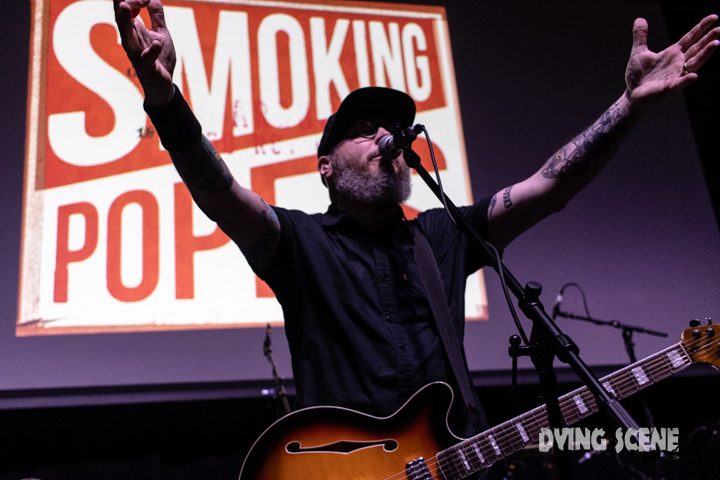
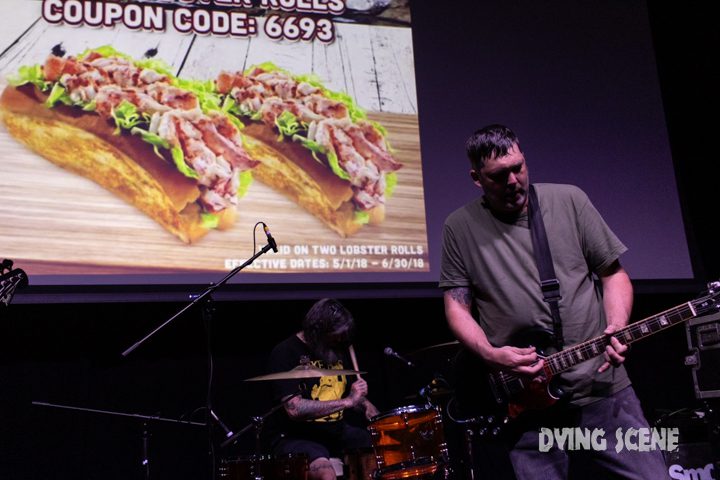
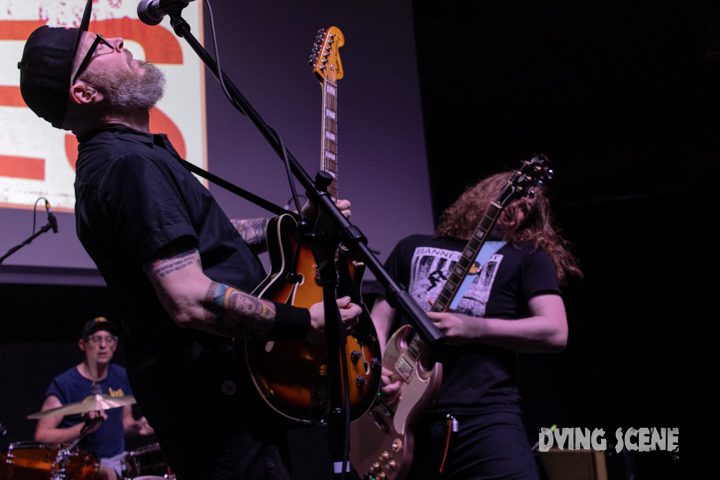
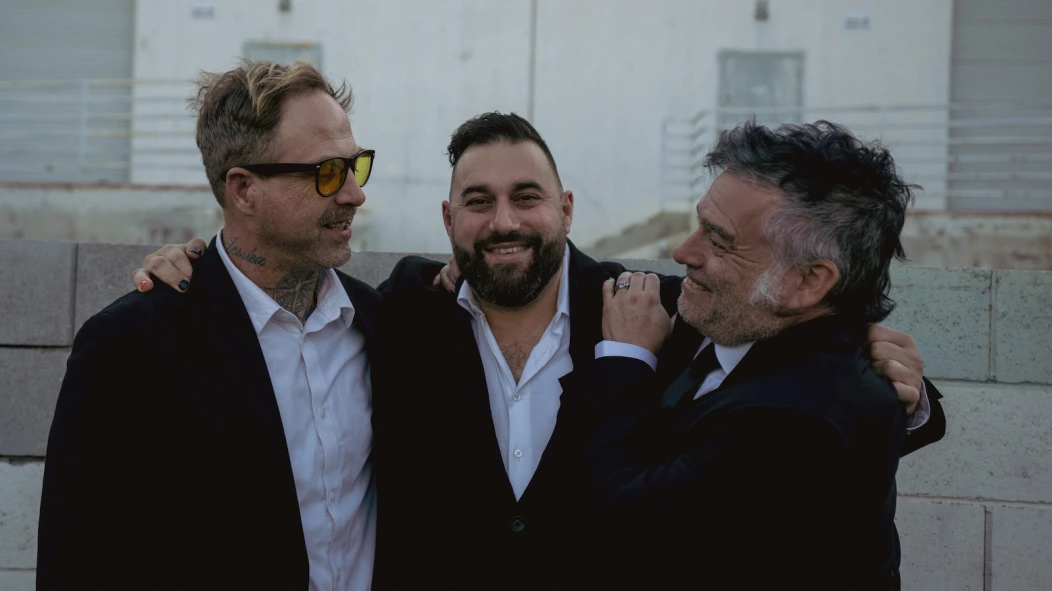

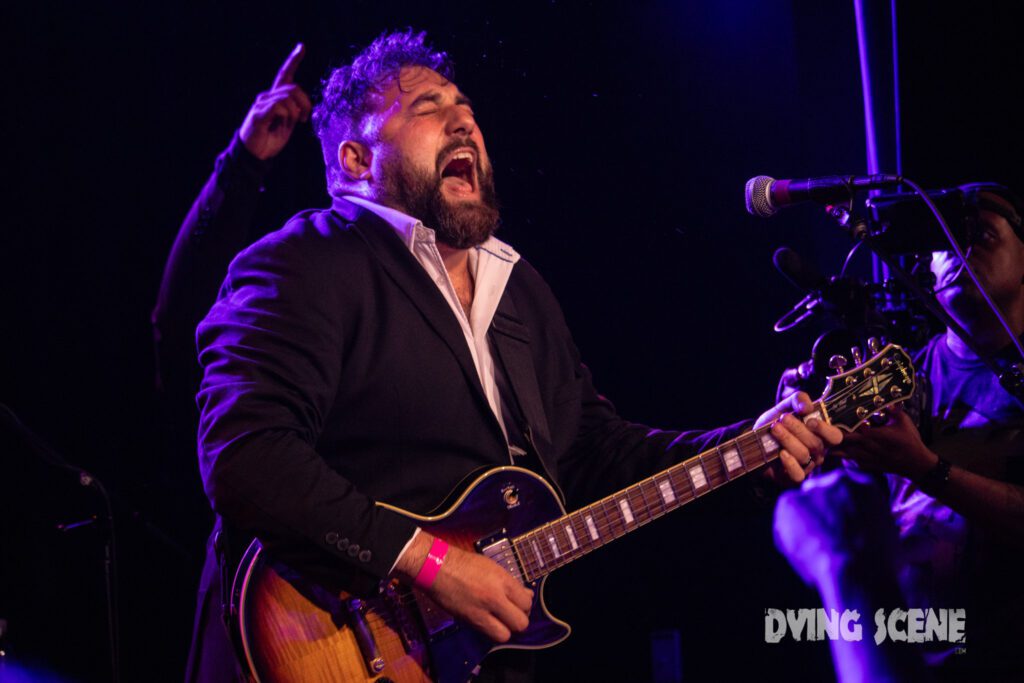
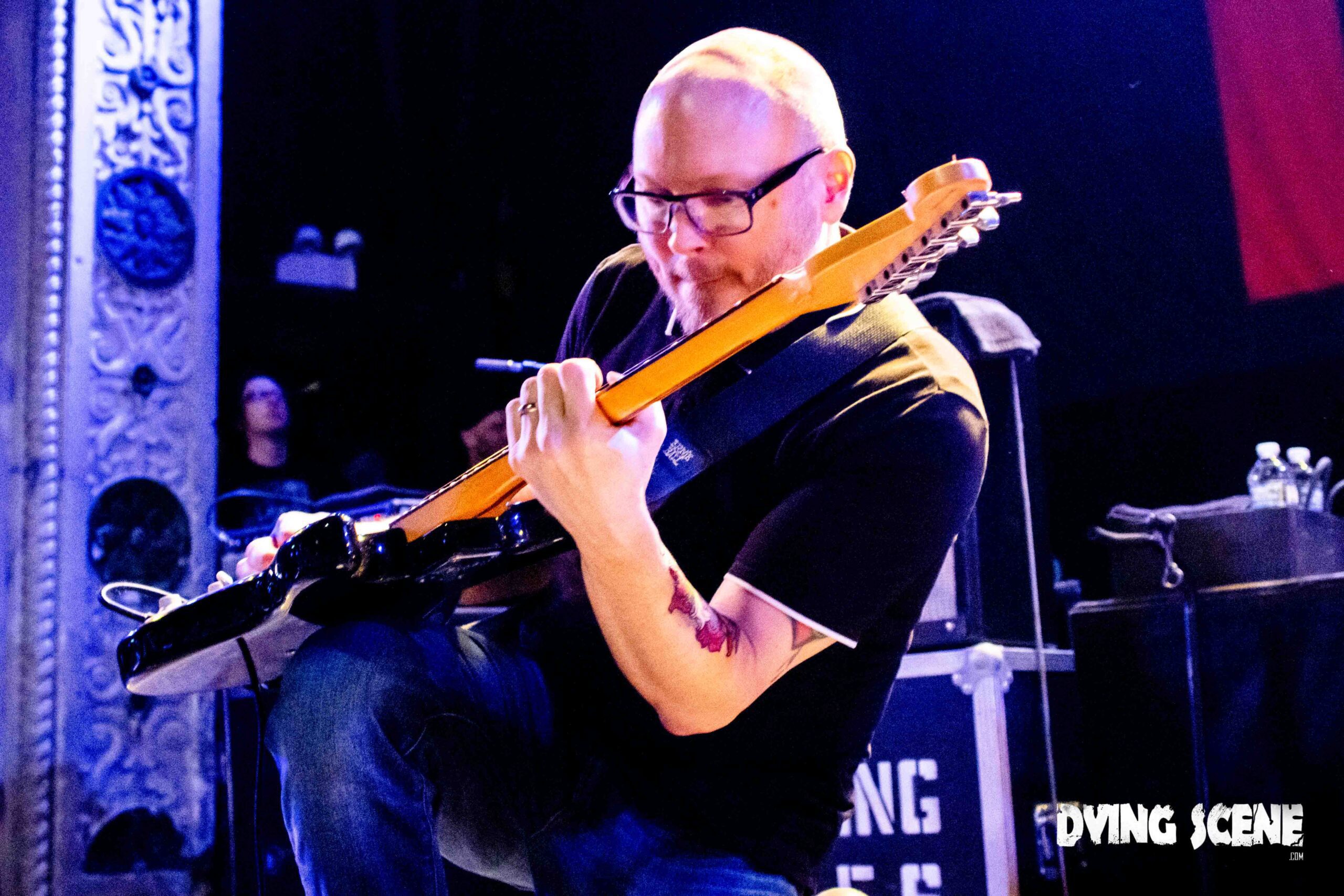
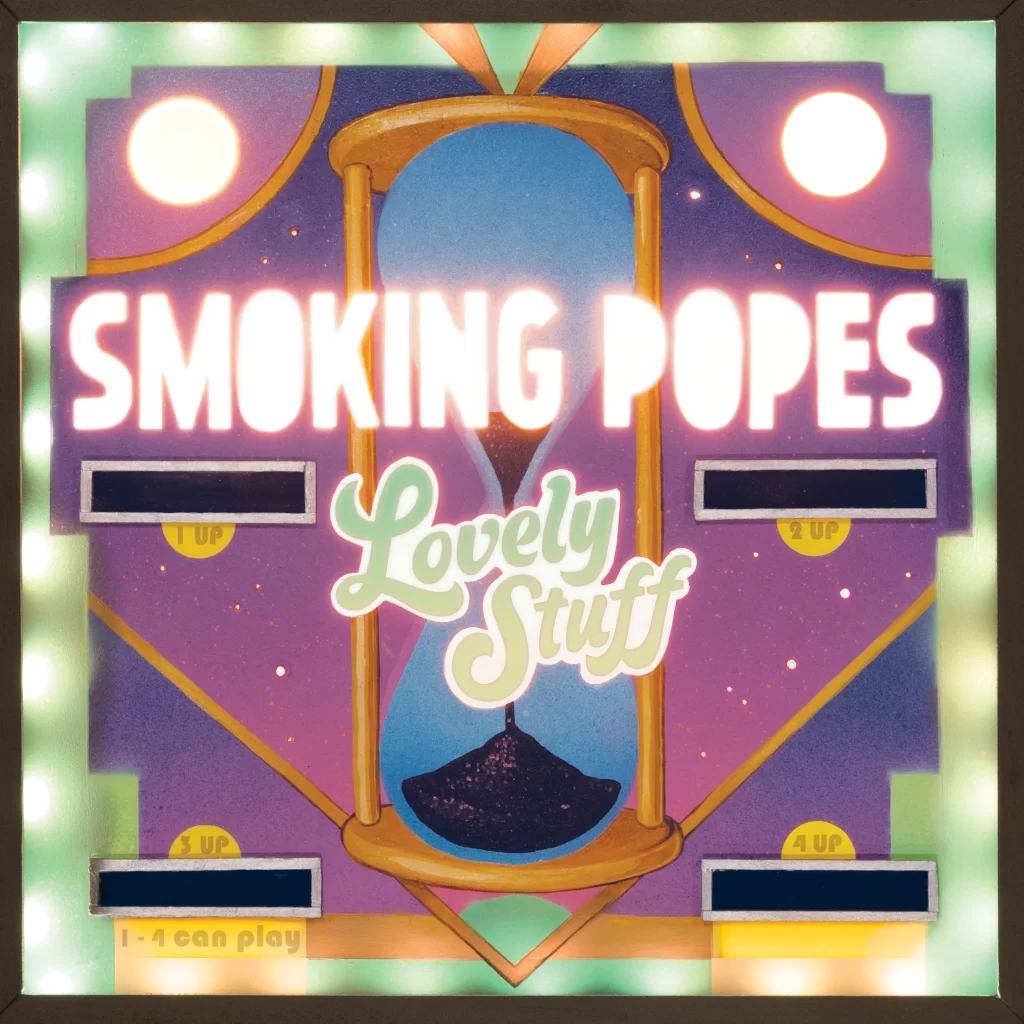
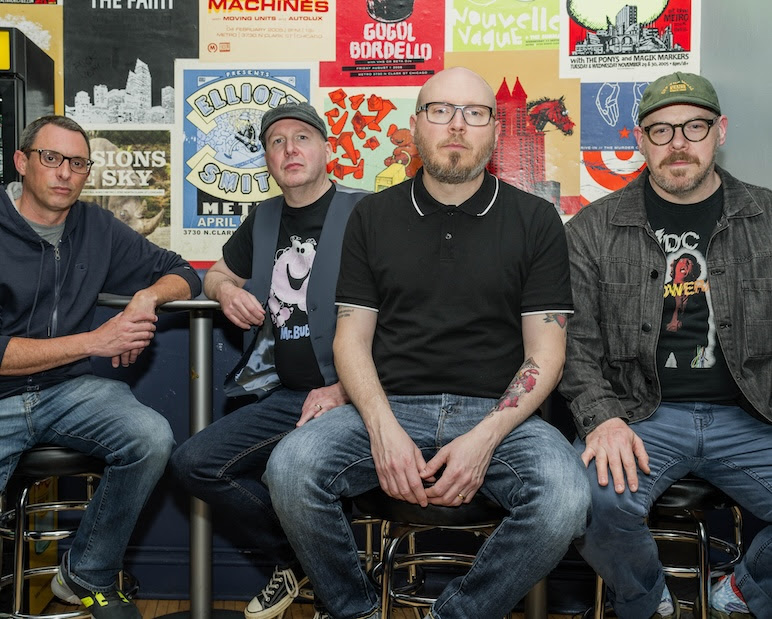

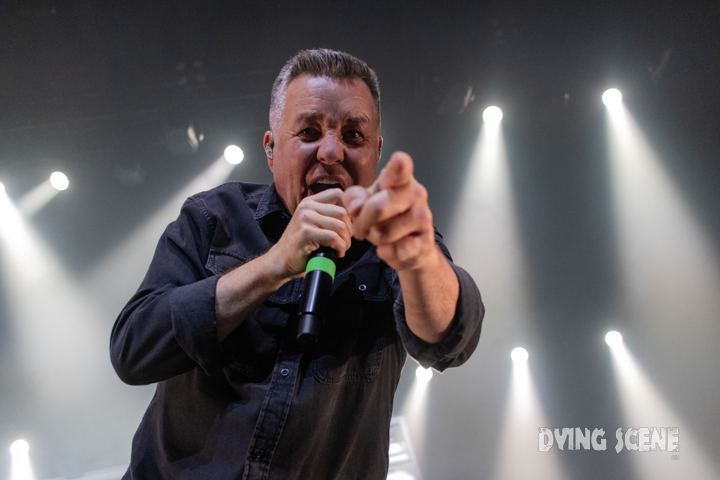
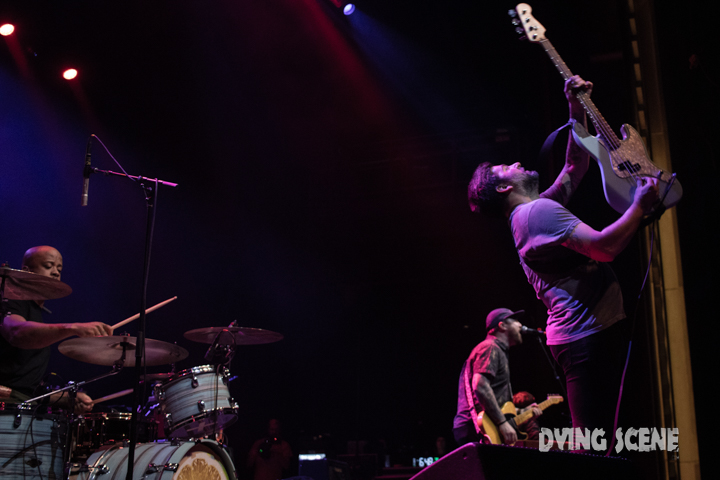
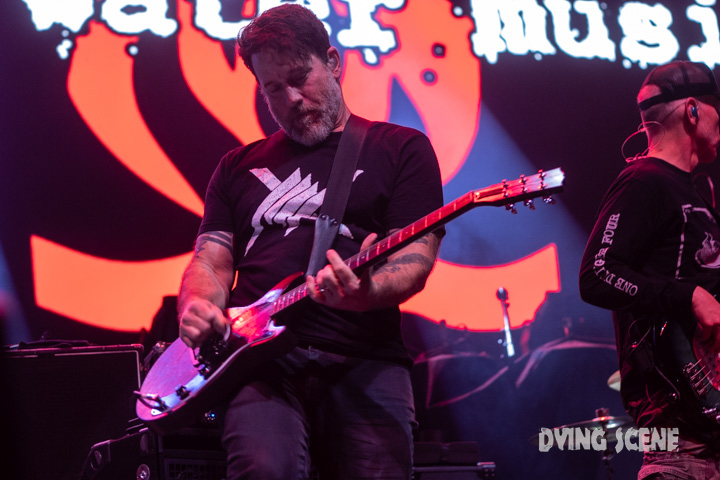
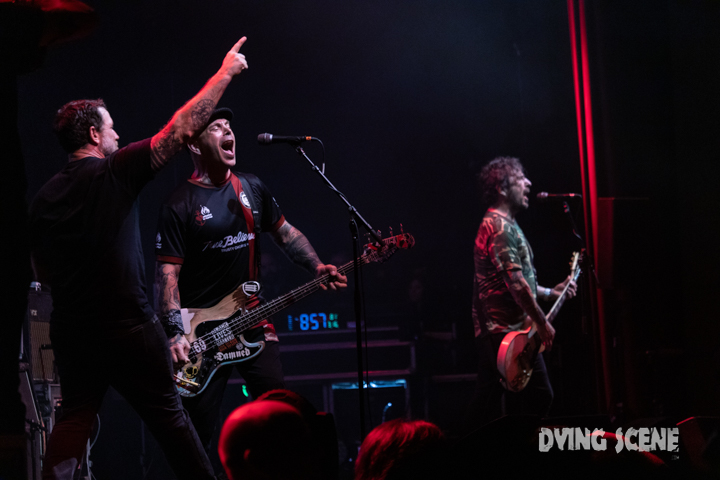
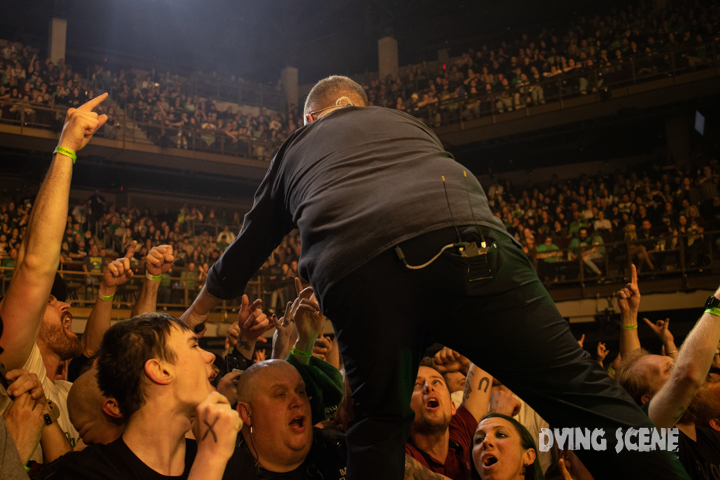
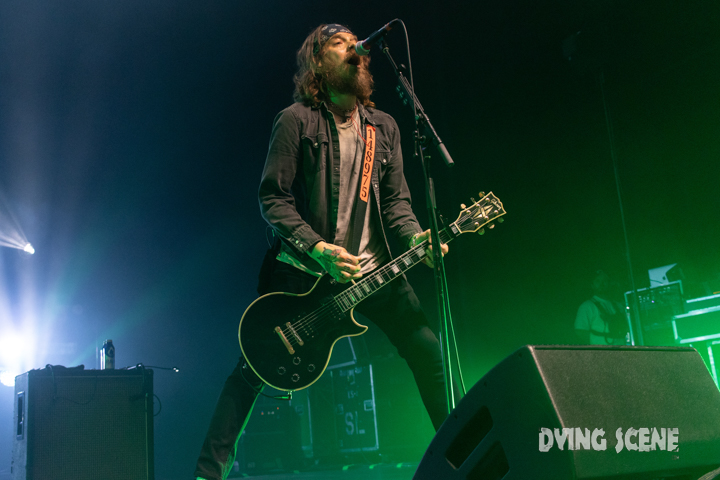
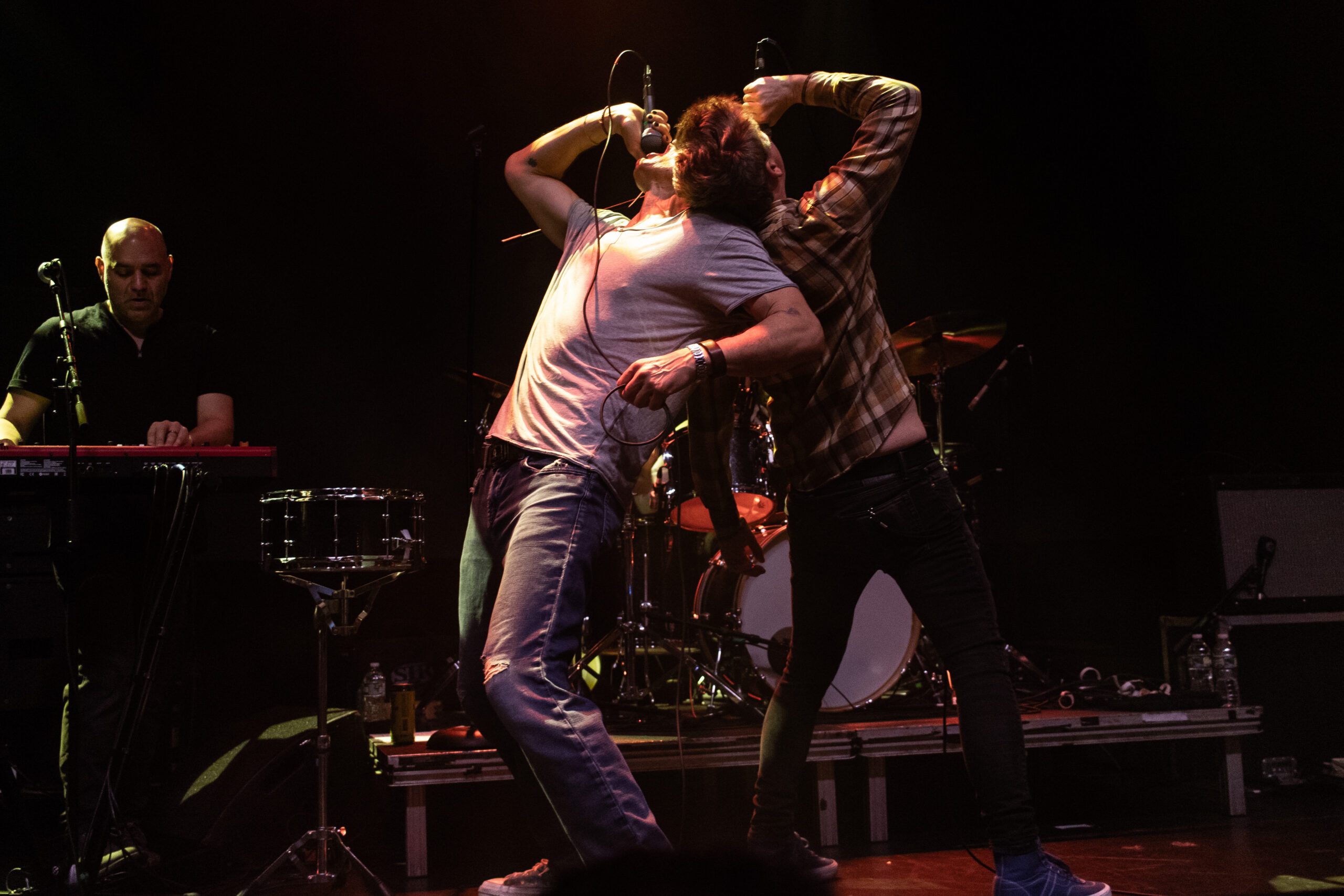
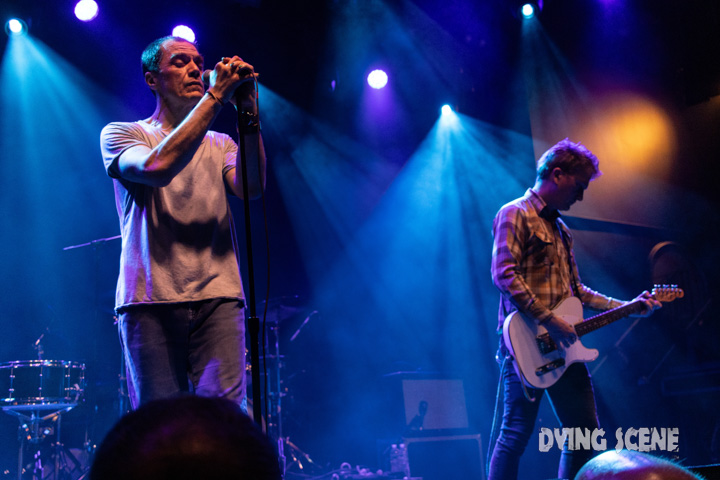
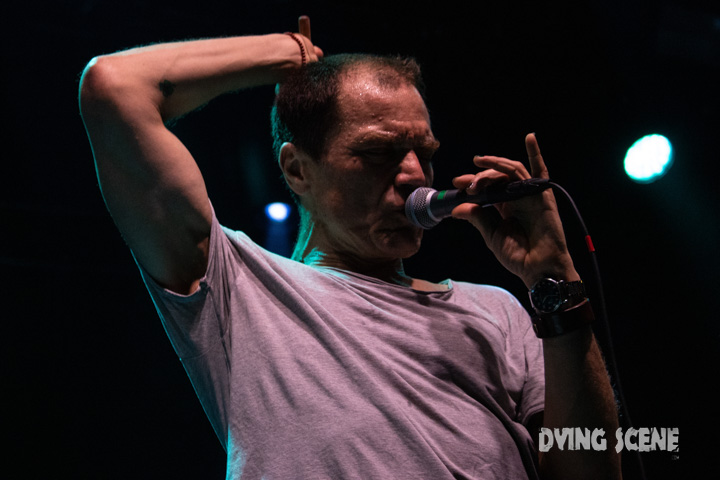
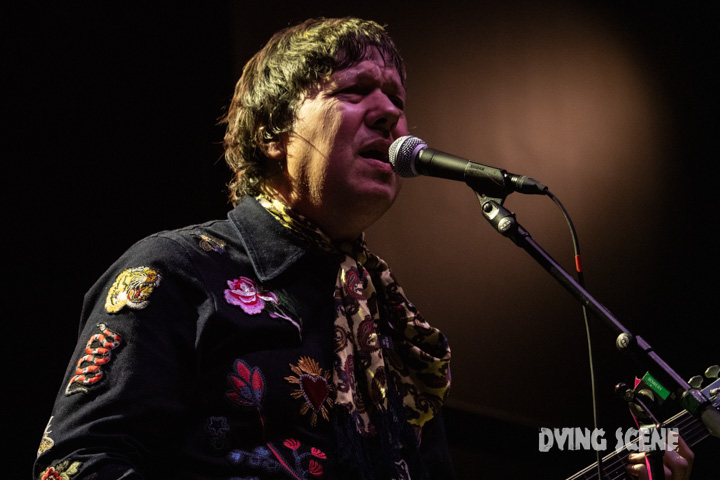


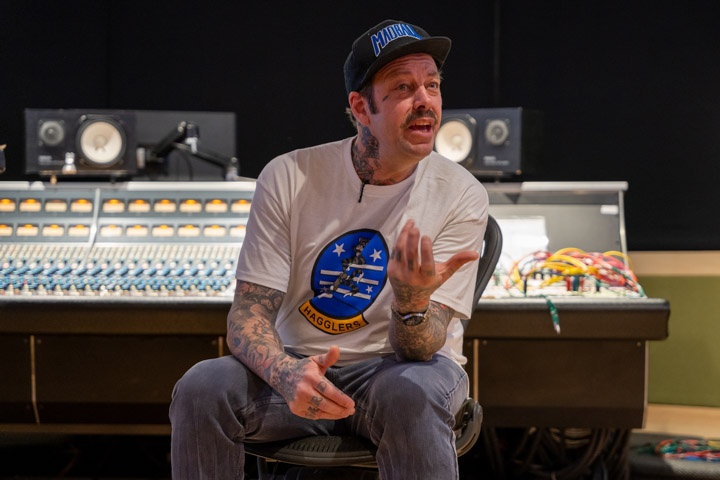
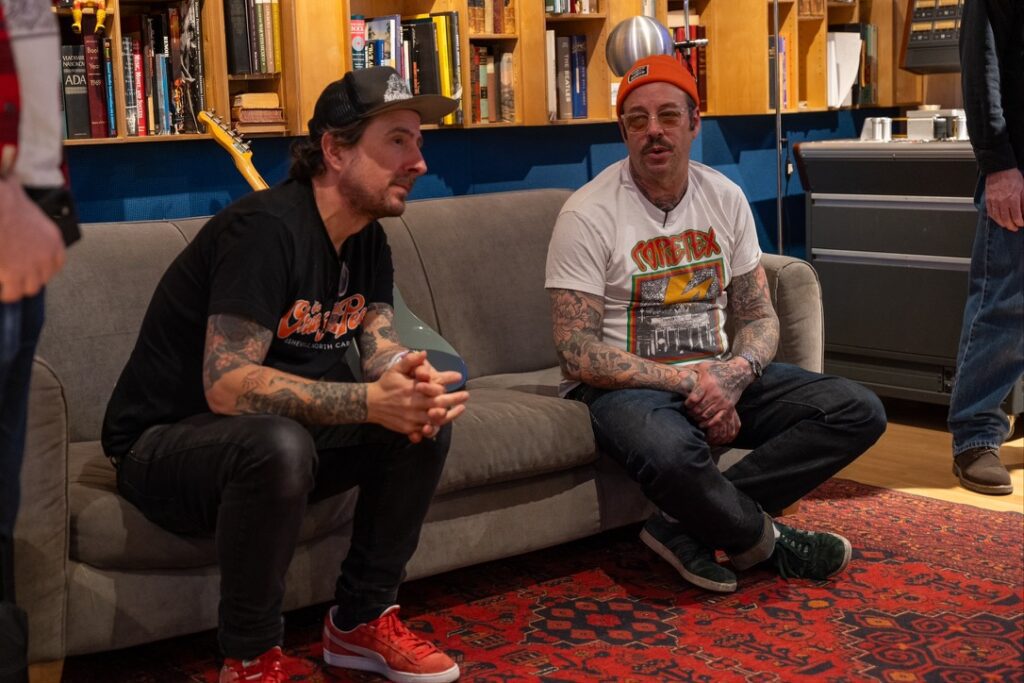
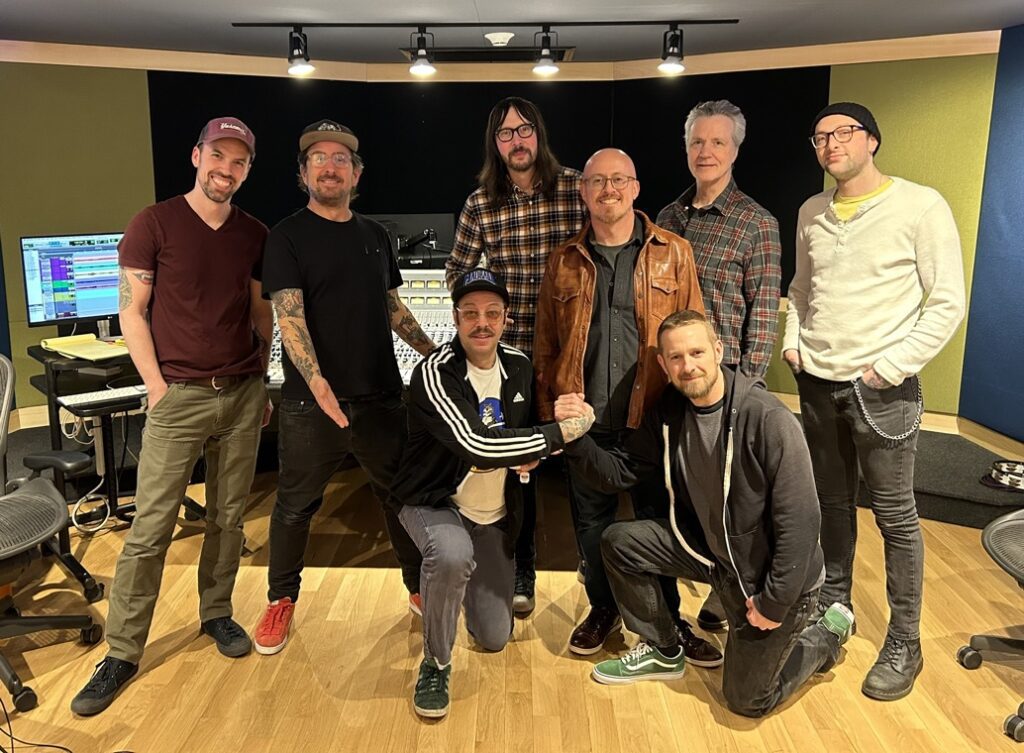

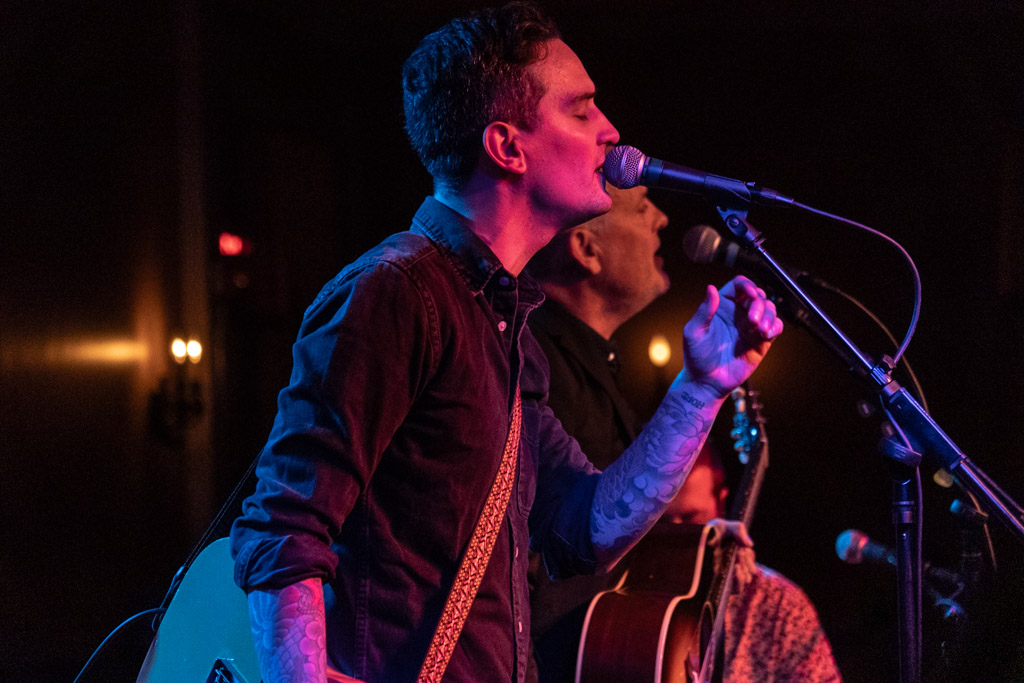
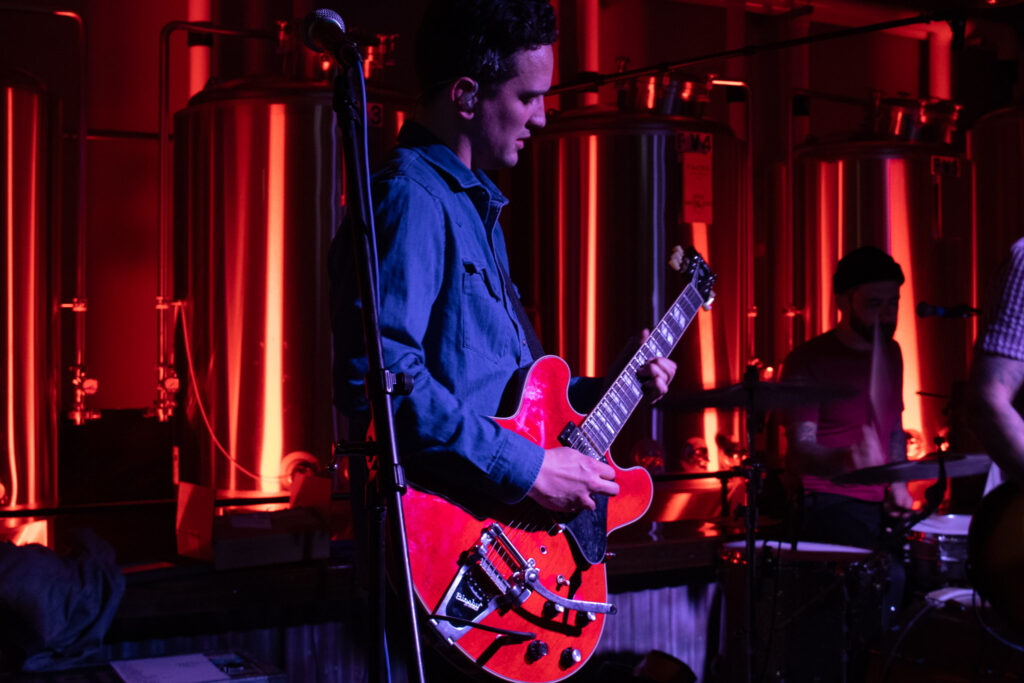
Warren Cohen
A Mike Greenwell reference in a punk rock show review! I’m glad to be alive to read it.
jaystone
He was my brother’s favorite player growing up. I remember telling one of my fall ball coaches that and he said “great player to have as your favorite if you don’t care about the fundamentals of playing outfield.”