If you like blazing fast melodic punk, Montreal’s Dead Alright needs to be on your radar. This brand new band is fronted by Brand New Lungs singer Louis-Charles Berthiaume. They just released their debut single and it’s a true ripper. Check out “Smoke & Mirrors” below and stay tuned for more to come from these […]
If you like blazing fast melodic punk, Montreal’s Dead Alright needs to be on your radar. This brand new band is fronted by Brand New Lungs singer Louis-Charles Berthiaume. They just released their debut single and it’s a true ripper.
Check out “Smoke & Mirrors” below and stay tuned for more to come from these guys. The band plans on releasing a new song every month until their debut album is complete. Following them on Spotify will probably be the easiest way to keep up.
If this is the first time you’re hearing about Orange County, CA’s Dropcase, you’re not alone. I decided to check these guys out when I saw their new single pop up on Punk Rock Radar, and I was not disappointed. In fact, I was pretty fuckin’ impressed by the unique fusion of ska and hardcore […]
If this is the first time you’re hearing about Orange County, CA’s Dropcase, you’re not alone. I decided to check these guys out when I saw their new single pop up on Punk Rock Radar, and I was not disappointed. In fact, I was pretty fuckin’ impressed by the unique fusion of ska and hardcore on “Accelerated” (that’s the name of the new song 😉). This shit’s really cool; check it out below.
I reached out to the band for some more info and learned that this song will be on a full-length album they’re currently working on. We’ll keep you posted as we learn more about that. For now, they’ve got a bunch of singles and an EP you can listen to on Spotify if you’re as impressed by “Accelerated” as I was.
French pop-punk band Topsy Turvy’s just released their new album It Can’t Be Easy. If you’re into early 2000’s Drive-Thru Records style pop-punk, these guys are right up your alley. Give the album a listen below and get it on vinyl or CD here. It Can’t Be Easy comes over a decade after the band’s […]
French pop-punk band Topsy Turvy’s just released their new album It Can’t Be Easy. If you’re into early 2000’s Drive-Thru Records style pop-punk, these guys are right up your alley. Give the album a listen below and get it on vinyl or CD here.
Reno punks Boss’ Daughter are streaming a new song called “Away”, taken from their upcoming album Bouts With Bummers. Check that shit out below! The band’s touring California right now, too, so check out those dates while you’re listening to the new song. Bouts With Bummers is due out February 10th on SBÄM Records. Boss’ […]
Reno punks Boss’ Daughter are streaming a new song called “Away”, taken from their upcoming album Bouts With Bummers. Check that shit out below! The band’s touring California right now, too, so check out those dates while you’re listening to the new song.
Bouts With Bummers is due out February 10th on SBÄM Records. Boss’ Daughter last released their debut album Songs Are Songs in 2015.
Boss’ Daughter 2023 Cali dates:
Jan 14 – Crockett @ Toot’s Tavern Jan 15 – Eureka @ Siren’s Song Tavern Jan 16 – Anderson @ Firehouse Lounge Jan 17 – Nevada City @ Ribald Brewery Jan 18 – Sacrament @ The Colony Jan 19 – Santa Cruz @ The Blue Lagoon Jan 20 – Pacifica @ Winter’s Tavern Jan 21 – Berkeley @ 924 Gilman
The Arrivals and The Brokedowns helped a jampacked Reggie’s Rock Club crowd close out 2022 and ring in the new year. They were supported by Time Thieves, and a collective of musicians calling themselves C.O.M.A. for this specific event. There was sparkling wine, goofy New Year’s swag on fans, terrific performances, and a bit of […]
The Arrivals and The Brokedowns helped a jampacked Reggie’s Rock Club crowd close out 2022 and ring in the new year. They were supported by Time Thieves, and a collective of musicians calling themselves C.O.M.A. for this specific event. There was sparkling wine, goofy New Year’s swag on fans, terrific performances, and a bit of Auld Lang Syne.
The Arrivals is a pretty good band name to have as a headliner for welcoming the arrival of the New Year. Of course, the Chicago quartet, comprised of “Little Dave” Merriman, Isaac Thotz, Patrick Costello, and Ronni Dicola is not good in name only. In fact, they are pretty damn good and have been for a long time.
Merriman and his wife Lyndsey Anne Wollenberg-Merriman welcomed their first child, a daughter named Josephine, earlier in the year so 2022 was already one for his memory books. He told me post-show:
“It was the best one [year] yet“
The Arrivals helped add another entry in the memory books for those in attendance as well. Merriman described the event:
“The show was a hell of a lot of fun and all the bands were great.”
Leading the crowd with Auld Lang Syne as the clock struck midnight, the band then launched into a set including, “Two Years,” “I’m Sorry For Saying I’m Sorry,” “The Ballad Of Lon Stokes,” “Elise,” and “Last Lullaby.”
Chicago’s The Brokedowns finished their set shortly before the midnight hour, meaning they were the last band to play Reggie’s in 2022. So it was especially important that the band members Jon Balun, Kris Megyery, Eric Grossmann, and Mustafa Daka make it an unforgettable performance. They Brokedowns delivered with a frenzied set which included “Wizard Symptoms,” “I’m A Ritual,” “Life Is A Breeze,” “Pardon The Light,” and “Born On The Bayou Too.”
Mustafa Daka reflected on the show, not quite a fortnight later, and the meaning it held for him:
“The NYE show was very special to me because we all loved The Arrivals for more than 20 years and have lots of great memories touring with them and watching them play amazing sets night after night, especially at Fest! And all the bands were amazing and we’re all friends and friendly, it was a blast! To start the early hours of 2023 playing a show like that and with all the people there, I’m hoping for a year of fun and creativity! And travel!”
C.O.M.A. (Christy, Orion, Monica, and Austin) is actually a collective of two solo singers, Monica LaPlante, and Christy Costello, and their bandmates in Extraterrestrials, Orion Treon and Austin Cecil. All three acts are from Minneapolis and play in each other’s bands.
For their set, the musicians rotated the three identities, and in the combinations, performed “VCR Guy” (Extraterrestrials), “Compression” (Monica LaPlante), “Uranium Baby” (Christy Costello), among others. It was a unique and fun way to introduce themselves to Chicago.
Time Thieves is from Chicago and is comprised of Jonathan Pool, Tim Reynolds, Annie Saunders, and Mike Oberlin. The band played a more than solid set which included “Road,” “Night,” Message,” “Flicker Of Light,” and a lovely cover of the INXS classic “Don’t Change.” It was an enjoyable start to a night meant to mark the end of the year.
Greetings, fellow degenerates! Welcome to the latest installment of the Dying Scene Record Radar. If it’s your first time here, thank you for joining us! This is a weekly column where we cover all things punk rock vinyl; new releases, reissues… you name it, we’ve probably got it. So kick off your shoes, pull up […]
Greetings, fellow degenerates! Welcome to the latest installment of the Dying Scene Record Radar. If it’s your first time here, thank you for joining us! This is a weekly column where we cover all things punk rock vinyl; new releases, reissues… you name it, we’ve probably got it. So kick off your shoes, pull up a chair, crack open a cold one, and break out those wallets, because it’s go time. Let’s get into it!
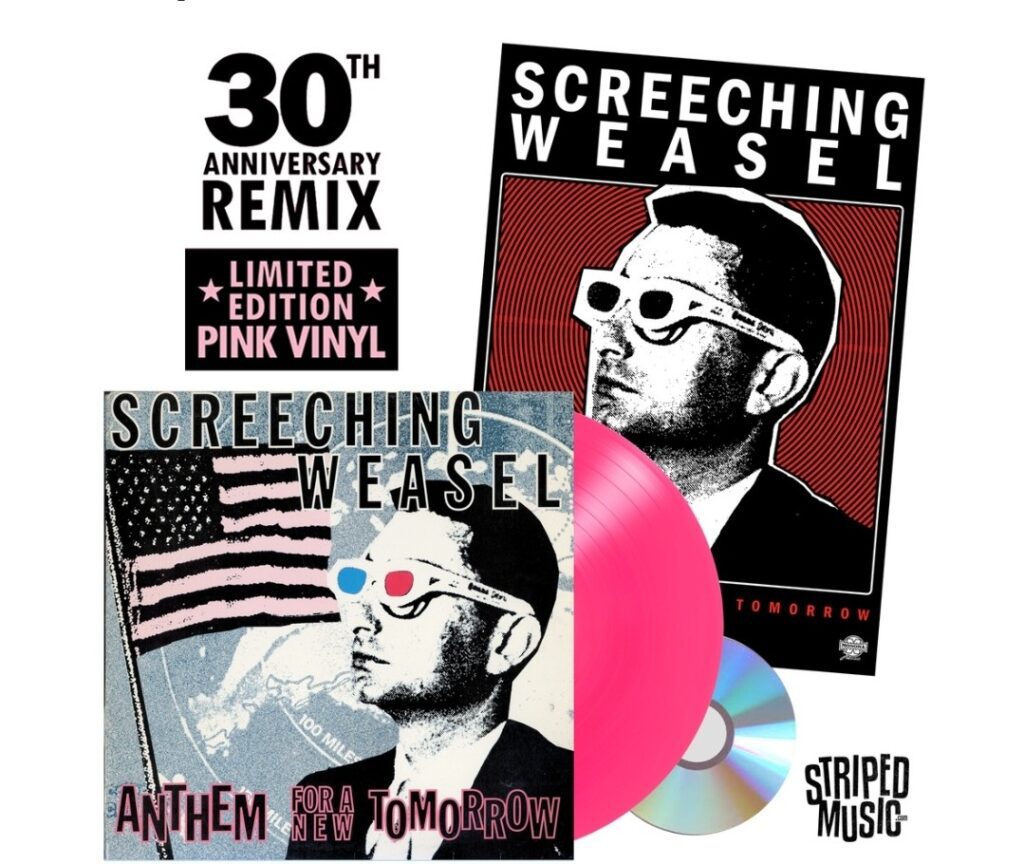
In case you missed our story about it earlier this week, my favorite Screeching Weasel record Anthem For A New Tomorrow is getting a 30th Anniversary reissue. Italy’s Striped Music is pressing the record on pink vinyl (limited to 500 copies). All copies come with a poster and CD; pre-order here. If you just want the compact disc 💿 for some reason (I mean, it does have bonus tracks!), you can buy it here.
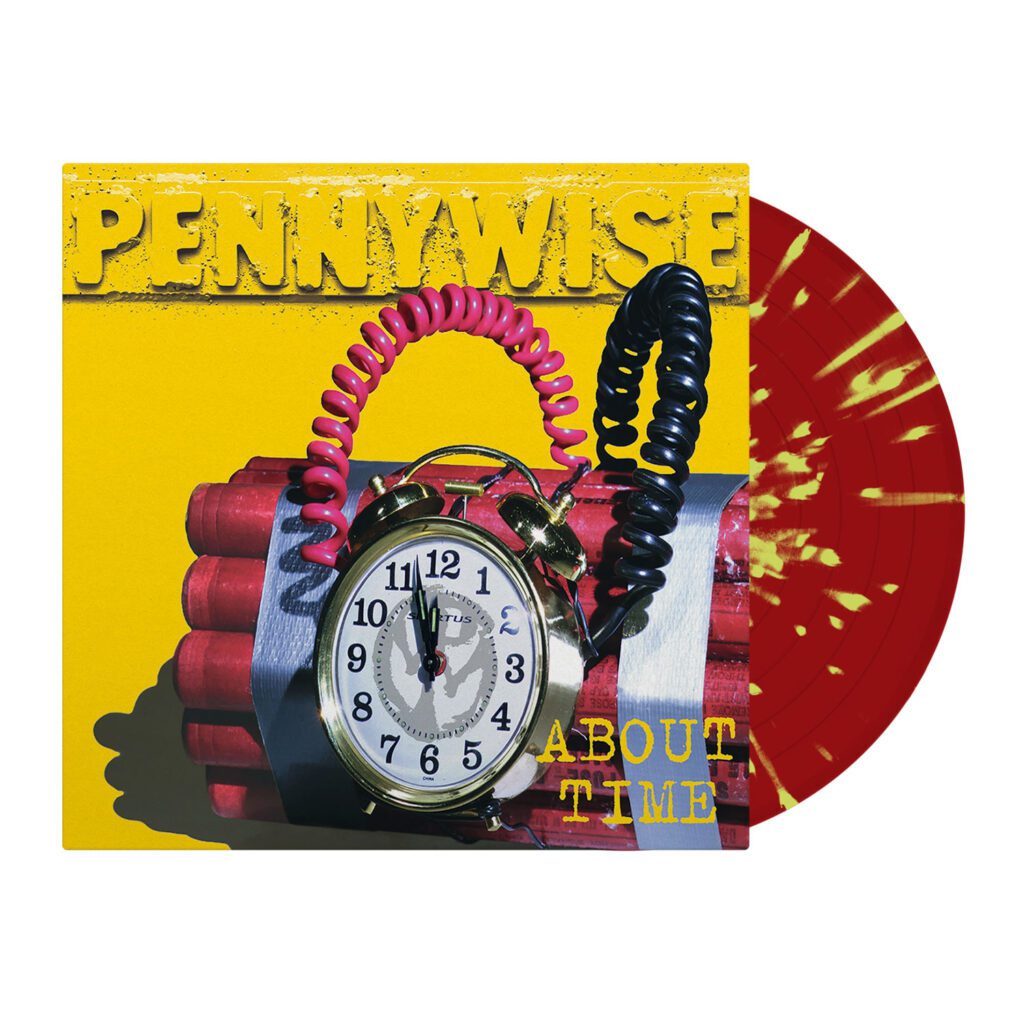
Another one to file under “new pressing of an old record” is this new “Apple/Lemon” color variant (1,000 copies btw) of Pennywise‘s About Time. This LP came back in print a few years ago and Epitaph‘s been milking the fuck out of these variants ever since. But that’s cool, it’s a great album! Get your copy here.
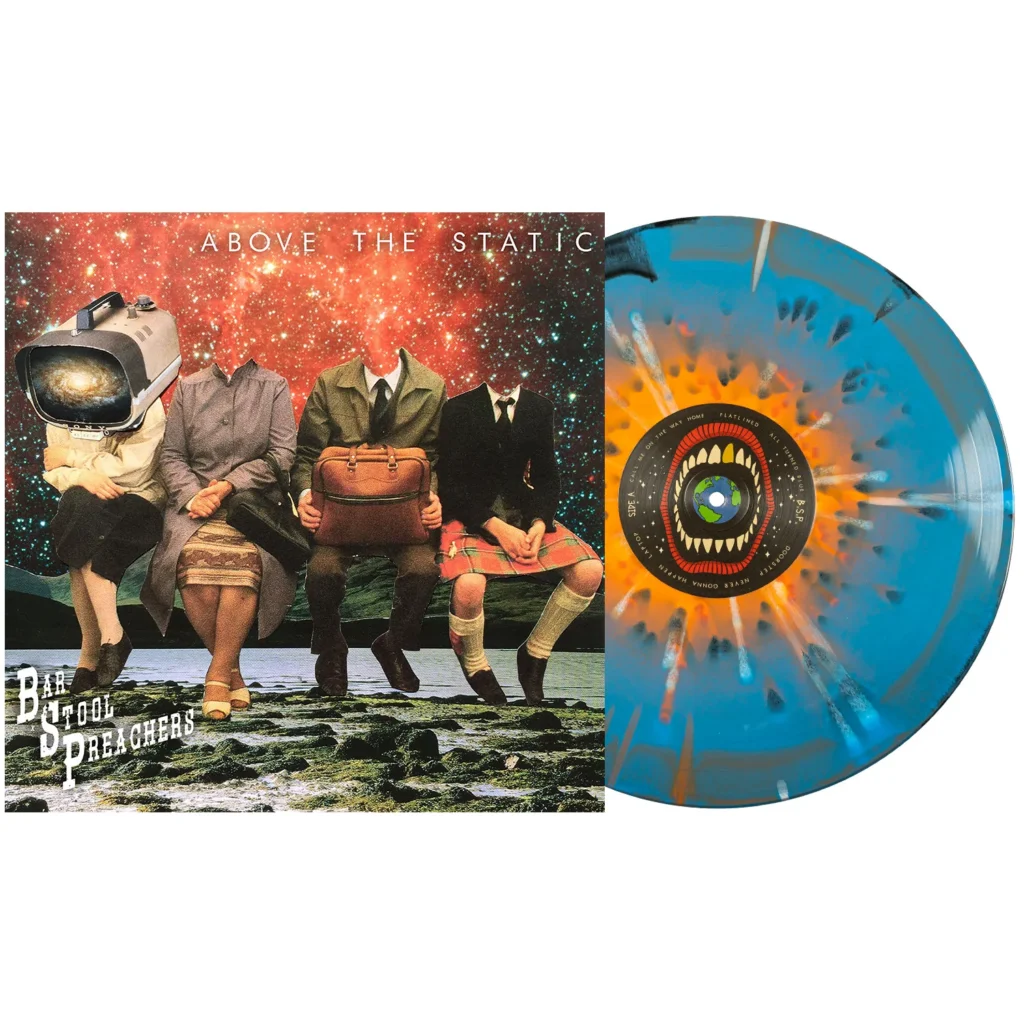
How about some new music? We like new music, right guys? The Bar Stool Preachers have a new album called Above the Static due out March 31st on Pure Noise Records. Check out their music video for the latest single below and pre-order the LP here (they’ve got a bunch of cool color variants for those of you who are into that kinda thing (I’m into that kinda thing)).
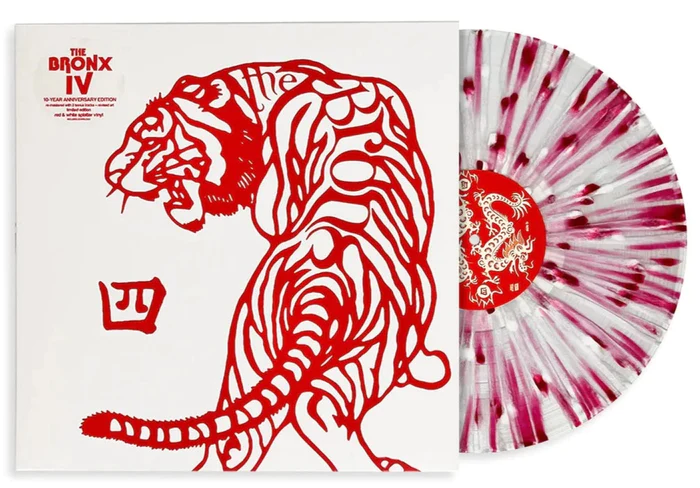
Back to new plastic with old music etched into it…The Bronx‘s IV is back in print for the first time since its initial release in 2013. The variant in the picture appearing on your computer monitor (or the screen of your cellular device) is limited to 500 copies and can be obtained for fungible currency here. Go get ’em, tiger!
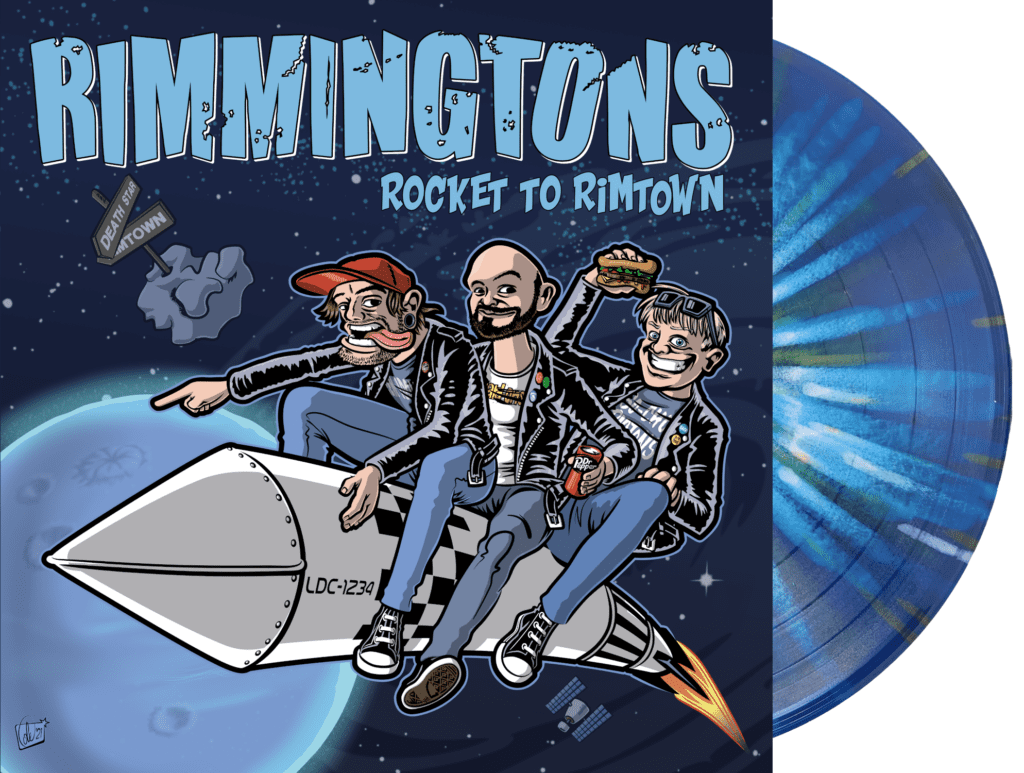
Oh shit! More new music! Ramones-worshiping Australian pop-punks the Rimmingtons are releasing their debut album Rocket to Rimtown February 6th on Hey Pizza! Records. Check out a few tracks below and pre-order the LP here (US 🗽) or here (AUS 🦘).
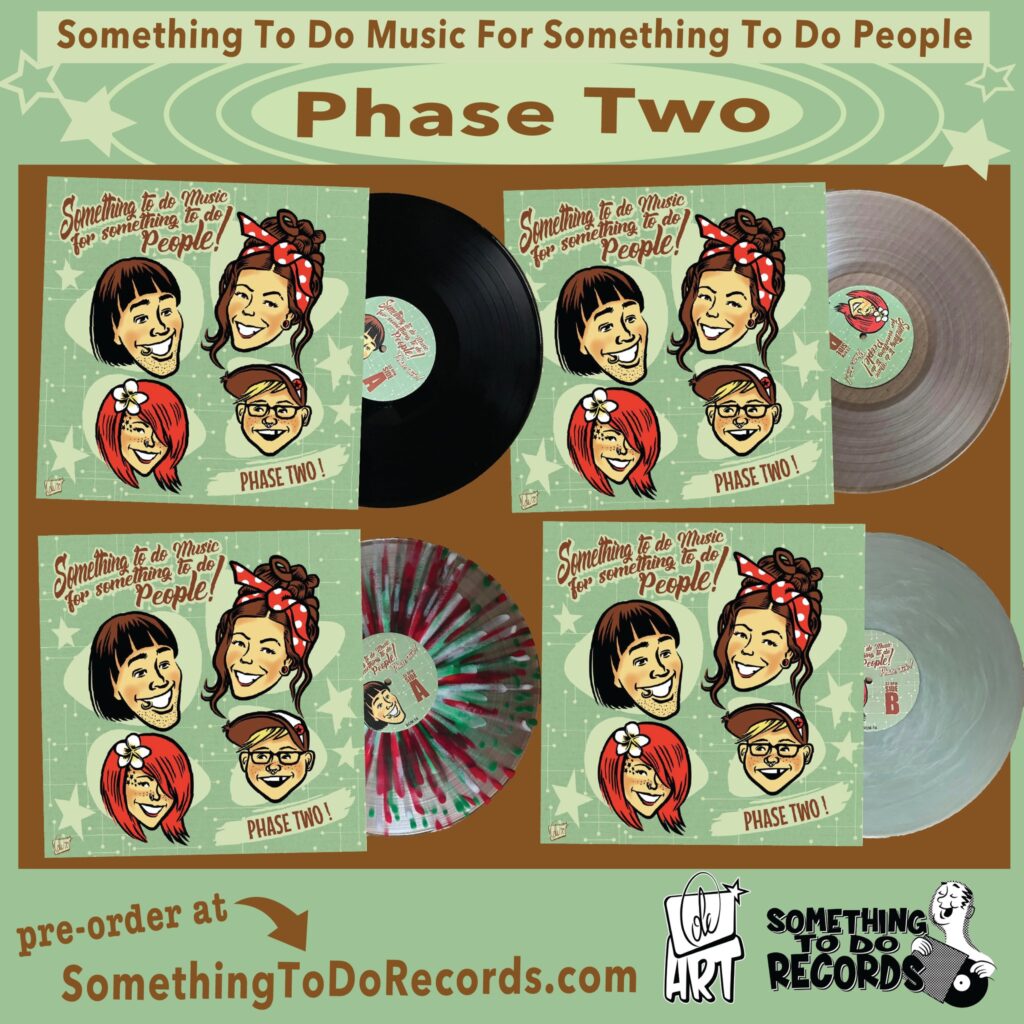
Rounding out the column this week is Something To Do Records with a new compilation featuring 15 awesome pop-punk bands, including the Budweisers, Goin’ Places, the Travoltas and many more (12 more to be exact 😉). You can pre-order this killer LP here.
And that’s all, folks! Another Record Radar in the books. As always, thank you for tuning in. If there’s anything we missed (highly likely), or if you want to let everyone know about a new/upcoming vinyl release you’re excited about, leave us a comment below, or send us a message on Facebook or Instagram, and we’ll look into it. Enjoy your weekend, and don’t blow too much money on spinny discs. See ya next week!
Wanna catch up on all of our Record Radar posts? Click here and you’ll be taken to a page with all the past entries in the column. Magic!
The brothers Hause have been no strangers to the pages at Dying Scene over the course of the last decade. The bulk of that coverage has been dedicated to older brother Dave. After hitting the indefinite pause button on his beloved band The Loved Ones, Dave launched his own career as a solo artist a […]
The brothers Hause have been no strangers to the pages at Dying Scene over the course of the last decade. The bulk of that coverage has been dedicated to older brother Dave. After hitting the indefinite pause button on his beloved band The Loved Ones, Dave launched his own career as a solo artist a dozen or so years ago, right around the time this website launched, giving us essentially a front-row seat to his growth and maturity as an artist. One of the benefits of embarking on a solo career is that it’s given Dave the opportunity to spend more time with Tim, his kid brother.
If you’ve paid even the littlest bit of attention to the elder Hause’s career since the touring cycle for his second solo album, Devour, you’ve no doubt noticed that he’s been figuratively attached at the hip to his younger brother. Because of the fifteen-year age gap between them (Dave is the eldest of the five Hause siblings, Tim the youngest) Dave did the bulk of his growing up without having a little brother, while Tim did the bulk of his having an older brother who, when he wasn’t swinging hammers, was busy working as a touring member of the punk rock scene.
Tim’s first real exposure to the world of being a professional musician started essentially as an experiment, joining Dave on that 70-date marathon Devour jaunt through the US and Canada, filling out the live sound with harmonies and guitar and helping to set up and tear down merch displays after the show. “The first two weeks of that tour, I hated,” Hause jokes. “I thought that anyone who would choose that life, was insane.” It’s important to point out that when that tour kicked off, Hause the Younger was the ripe old age of twenty, not able to legally drink at the vast majority of venues they stopped at. “Over the course of that tour, I started to really love it (though)!”
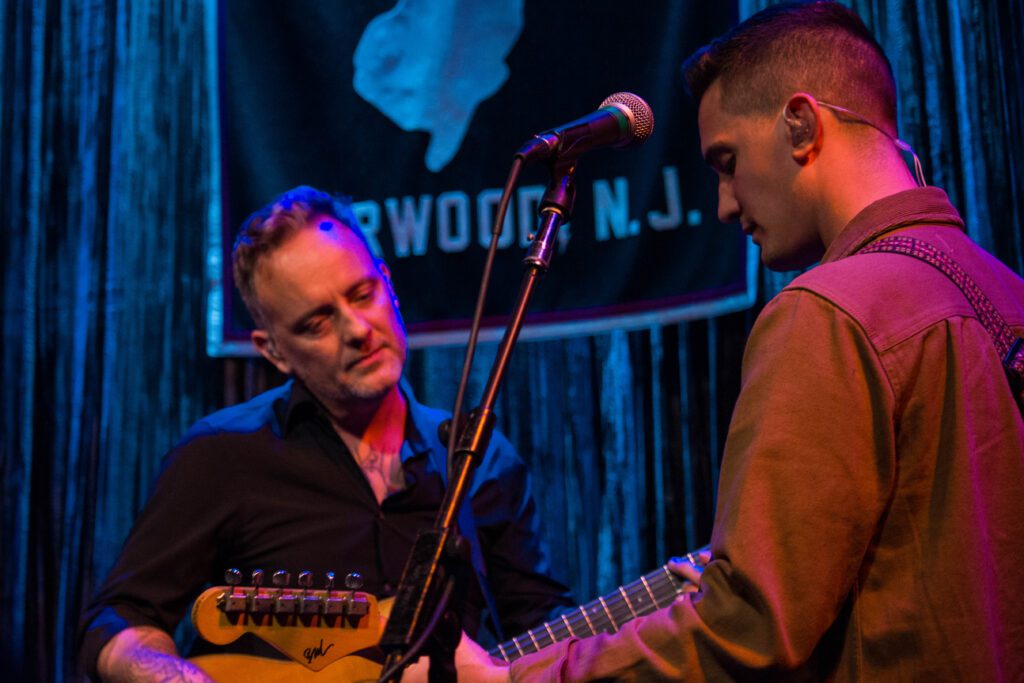
Tim Hause at Shalin Liu Performance Center, Rockport, MA (Photo: Jay Stone)
As time progressed, Tim increased his role in what would eventually become the family business. While always a touring partner, he began contributing to the writing process on Bury Me In Philly, the 2017 follow-up to Dave’s Devour. “(BMIP) was kind of my intern, new kid record,” Hause jokes. “I think the first song that we wrote that ended up going on to a record was “The Flinch.” I remember having the idea “I ain’t flinching anymore” as a line from my notebook. I loved it going onto the record; that was a huge deal for me.” Tim didn’t just influence a couple of songs on the album lyrically and musically, he had a role in shaping the album’s whole sonic vision.
It’s part of the natural evolution of things for the big brother in this or any situation to pass influence down to the little brother. In the case of the Hause family, Dave was instrumental not only in the music Tim would grow up with – more on that in a minute – but in showing him the music industry ropes: how to exist on the road and structure a setlist and create dramatic tension with an audience and how to develop and stay in the pocket and on and on. Though sometimes big brothers are reluctant to admit it, however, sometimes the little brother’s influence and teachings can be just as potent.
When Dave and I connected for an interview in the press cycle for Bury Me In Philly, he spoke of how Tim’s lack of punk rock guilt and his well-beyond-his-years wisdom got Dave to punch through some periods of writer’s block and focus on working through what he was going through at the time. When I asked Tim about how he’d characterize his influence on his decade-and-a-half older brother, after an initial pause and attempted deflection, he answered in a way that was a pitch-perfect match for Dave’s answer six years ago. “I think that it broadened the sphere of what he thought he should do,” he explains. “He was like “what do I write about? What do I write about?” and I was like “the thing that you’re on about right now is the fact that you live in California now and have this strange relationship with the place that you’re from.” That kind of was a light bulb moment for him, and it’s one of the things that jump-started the whole process and that whole session.” Tim’s vision helped free his older brother from the constraints that can sometimes be placed on a songwriter who spent as much time as Dave did in the punk rock community. To paraphrase Craig Finn, we in the punk rock scene said there weren’t any rules, but goddamn there are so many rules. “I think the continued “hey this doesn’t have to be punk, this doesn’t have to fit in whatever box.” Having that person on your shoulder just going “do it! Go! Go! Do it!” I think is a huge help.”
While he has remained a constant road partner, whether the brothers toured as a duo or as part of a larger band – Dave Hause and the Mermaid – that’s consisted of a rotating cast of incredibly talented musicians, Tim’s status as a writer and contributor increased to essentially 50/50 by the time of Dave’s 2019 release, Kick. Tim was writing so much by Kick, in fact, that it’s where the seeds of his wanting to someday put out his own record under his own moniker started to really establish their roots, due in no small part to that album’s inclusion of the song “The Ditch.” “That kernel was something I came up with and brought to the table,” he explains. “That was the first song that I wrote on that made me go “I don’t know if I can give this one up.” While Tim is ultimately happy at how the song turned out and that it was included – with ample and continued credit from Dave, he also points out that “that was the moment where I was like ‘yeah, I have to make my own record someday.”
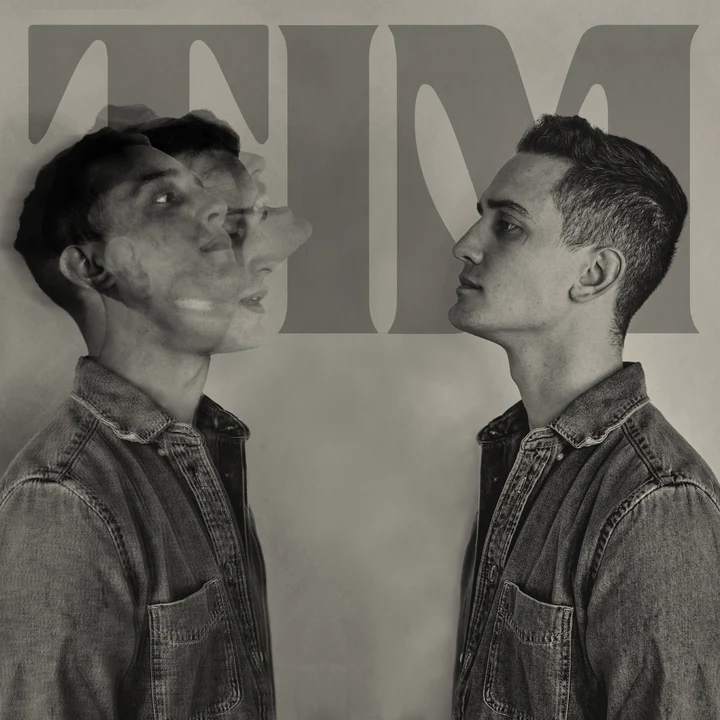
The brothers would go on to put out another album – 2021’s aptly-named Blood Harmony – under Dave’s name, an album that would also mark the first full-length release of their jointly-founded Blood Harmony Records, which will serve as their very own, in-house DIY record label for the future. And now, it’s Tim’s turn. January 13 marks the official release date of TIM, the younger Hause’s debut full-length record under his own name. While he’s been a part of a handful of releases at this point and while he and Dave co-wrote all the songs as they did on Kick and Blood Harmony, having his own name on the album jacket changes the stakes for Tim on multiple levels. “There’s a different level of ownership” for work released under his own name, he explains, adding that there is also “a different level of appreciation for everything Dave has done and that goes for the work he did prior to me jumping on board and the work that we’ve done since.”
TIM was a labor of love that, if we’re being honest, can find threads that extend back well before “The Ditch” made it onto Dave’s record. Tim astutely points out “they say that your first record took however many years you’ve been alive to make it, and I’d say that’s definitely the case with this.“ Tim’s musical ambitions began when he was still early in grade school. “I started playing guitar when I was probably seven or eight,” Tim explains. “When I was ten years old, (Bouncing Souls) played I think two or three nights at the Troc (editor’s note: The Trocadero in Philadelphia) and all of them were sold out. The Loved Ones played their first show I think ever opening up for them, and they brought me out to play “Manthem” and that was my intro to all of those people. They ended up putting that on their live record.” While Tim would shift his entertainment goals to concentrate more on theater throughout his high school years, good old-fashioned rock-and-roll was too far in the background. “You know in a perfect world,” Tim states, “I would have been old enough to be in The Loved Ones, and we would have called our thing The Loved Ones, and it would have been two brothers…but that’s not the world we live in. There’s a fifteen-year gap, I was busy being in high school!“
Tim at Crossroads in Garwood, NJ. (Photo by Jay Stone)
By the age of twenty-two, however, Tim had a landmark moment that would ultimately solidify his decision to jump headlong into the waters of life as a professional musician. By that point, he’d graduated high school, dabbled with studies at Temple University, lost a very dear friend in a tragic accident, and he’d spent some time in that exploratory phase making and playing music with Dave. Then came a ground-breaking realization. “I was eleven when my mom died,” Tim explains. “When I turned 22, it was a watershed moment in the grief process and the life process, because it marked the moment that I had spent more time on earth without her than I had with her.”
It’s perhaps at this point that I should back up a bit. If you’re familiar with the Hause family’s musical journey, you’re no doubt aware that Dave and Tim’s mom passed away back in 2004, succumbing to a fierce battle with cancer. Echoes of that time have popped up in Dave’s solo work (see “Autism Vaccine Blues”), and The Loved Ones’s debut album Keep Your Heart essentially served as Dave way of processing the incredible range of emotions prompted by his mom’s passing. As gut-wrenching as it is to lose a parent in your mid-twenties as Dave was when their mom passed away, it’s another level of heart-break to have it happen when you’re eleven and still have so many formative childhood years and experiences left in front of you.
And so the realization that, at 22, he had now spent more time on this planet without his mom’s physical presence than he had with it inspired what would become the song “4000 Days,” a song that serves as the emotional high-water mark on TIM, an album that is certainly full of its fair share of emotional moments. “That (realization) was the initial kernel of “4000 Days” as the first thing that I remember writing, and I know that for a fact because that was such a profound marker in my life.” Since the song’s debut as a single in the lead-up up to the official release of the album, it’s not the song that has garnered the most plays on the various streaming platforms – that honor belongs to the anthemic “High Hopes” – it’s a song that has warranted far-and-away the most overwhelming listener response. “4000 Days” blew every song before and every song after out of the water in terms of people reaching out through DMs and messages and email and everything, to be like “hey, I related to that so much.” People have been telling me their stories, thanking me for it. That has been far and away the most connecting part of the release process. It’s definitely affirming and validating and exciting.It was tough to make and I’m so glad we did it. I made sure to give my sisters trigger warnings when I sent them the song first. And my dad.”
Dave (L) and Tim (R) Hause, Crossroads – Garwood NJ (Photo: Jay Stone)
Tim’s older brother didn’t need trigger warnings, obviously, as he was there for the writing and pre-production process for “4000 Days” as well as for the rest of the songs on TIM. Just as Tim served as the “Go! Go! Do It!” voice on Dave’s shoulder, particularly during the BMIP sessions, Dave returned the favor for TIM. “Having him on my shoulder telling me to do all that stuff is I think the most valuable asset. Just “hey, feel free to just do you and be as fearlessly ferocious as you need to be with your own art.” But when it came time to put the album on wax, big brother took a step back. Were they to record Tim’s solo record in the same manner that they’d recorded Dave’s last few records, there’s the very real possibility that they could have fallen into similar patterns. “I didn’t want it to be “Dave Hause Light” you know? I didn’t want it to be “The Little Brother Record” or whatever. And I’m sure to some people it will be that. We’re inextricably linked in that way, but we tried to deviate as much as we could” he explains.
Instead, Tim returned to Nashville to team up again with the great Will Hoge, who manned the producer’s chair just as he did on Blood Harmony. Hoge has been a seamless fit into the Hause brother’s working process – they jokingly refer to him as their Southern brother. For this process, he assembled an Avengers-like cast of Nashville heavy hitters to lend their unique sonic textures to the Tim Hause musical landscape. “The guy who came up with a lot of the atmosphere on my record was Josh Grange. He was in Sheryl Crow’s band. Chris Griffiths who played bass on it is in Will’s band. He’s awesome. Dean Anshutz played drums on most of it, and he’s from Red Wanting Blue (and Jessey Dayton’s band). And the other drummer was Matt Billingslea, and he’s Taylor Swift’s drummer. He played on “Fit To Be Tied.”
The result is a record that is quintessentially Tim Hause. It’s very much a rock and roll record, drawing sonic influences from the various phases of Tim’s upbringing, influences that obviously range from the Beatles and Patty Griffin to The National and Gaslight Anthem. “But the overarching thing is, you know, some kind of mix of Tom Petty and Frightened Rabbit. I think the nuanced, idiosyncrasies of both of those while making evergreen, universal songs that are sorta simple…that’s the pinnacle for me.” Lyrically and thematically, it’s also an incredibly meaningful record. “I mean, calling the record TIM was a pretty clear indicator that this was a really personal record, that it was going to deal with many of the pillars in my life.” It’s an unflinching reflection on some of the watershed connections and relationships in his life. It’s very much centered on love (particularly for his wife Madeline) and on loss and on the complex emotional prism that the human condition creates. “The goal (for Dave and I) is to write from our own perspectives, and write (songs) to be universal and evergreen and applicable to somebody else,” Tim points out. “If we make something that we spill a lot of our hearts into, then somebody will identify with it as well, because we’re not as alone as humans as we sometimes think that we are.”
Check out Tim’s album below via Spotify, or pick it up wherever you get your music. Here’s the link to get it directly from the Hause crew. Keep scrolling to read our full Q&A. Lots of insight into Tim’s musical upbringing and his family and a series of heart-breaking losses he’s suffered. Full disclosure: I’ve obviously been pretty vocally in the Dave Hause cheering section for a decade now, and the two brothers are, and should be, inextricably linked, so we talk a lot about their wonderful personal and professional relationships and how they’ll continue to support and collaborate and bring out the best in each other going forward. We also spend quite a bit of time extolling the virtues of Will Hoge and Scott Hutchison. Tim is very much a wise and insightful and gracious human – well beyond what his twenty-nine years on this planet would indicate – and we’re lucky to have his voice added to the mix.
(**Believe it or not, the following Q&A has been condensed for content and clarity reasons.**)
Dying Scene (Jay Stone): So I guess we’ll start with this: congratulations on the record. It’s the first record under your own name, which is a really cool thing. Obviously, you’ve been writing songs for a while now, but how does it feel like there are physical copies of it now and people can hear it for themselves? How does it feel now that it’s a real thing?
Tim Hause: It feels totally exciting and amazing, and then also it feels already normal.
Does it feel different now than it does for one of Dave’s albums or like how Kick just said Hause on the cover?
For sure. For sure, absolutely. There’s a different level of ownership and there’s a different level of appreciation for everything Dave has done. And that goes for the work he did prior to me jumping on board and the work that we’ve done since. There’s a different level of artistic ferocity that you need to even get an album created, and he by nature is a more fierce person, and we have this push and pull between us that makes for a good team. But it definitely feels different and it feels like a monkey off my back. It was something that I always wanted to do, and I never really knew how to get it done. And then, not only did I get it done, but I got it done in Nashville, The Music City, with some of the premiere players in the world. And I haven’t spoken at all about the players on it – I’m not really good at smelling myself publicly – on Twitter and Instagram and social media, you have to pump up your own brand so to speak…I’m not good at that, and it’s probably a skill that I need to learn and get better at. But there were some serious heavy hitters that played on this. And so to get it made in Nashville, with a guy whose work I respect tremendously in Will Hoge, and to do it without Dave there. He didn’t come down to the session for a couple different reasons, and it was hard to not have him there, but also I’m so glad that he wasn’t in some ways…
Which is a weird thing to say (*both laugh*)
It is a weird thing to say, and I mean in the most non-disparaging way I could possibly mean it about my best friend and my partner and my brother. He’s my best buddy. But it just felt like it was something that I needed to take on on my own.
And I think that the album probably benefits from that, from having it be just you. I forget exactly when you came into the writing process of Dave’s solo stuff, but there are probably three full albums that have been released of that material at this point, so I can see where you might need to draw a line in the sand where even if you are creating this stuff together, these are the songs that are his voice, and these are the songs that are your voice. So I think it does probably benefit from that.
Yeah, I think so. And I think we try to make decisions from a production standpoint and from a key standpoint, and a vocal register standpoint, that would reflect the differences between us two. It’s definitely something that we went into the process being cognizant of. I didn’t want it to be “Dave Hause Light” you know? I didn’t want it to be “The Little Brother Record” or whatever. And I’m sure to some people it will be that. We’re inextricably linked in that way, but we tried to deviate as much as we could.
You know, it’s interesting to do research for interviews and to find that because I’ve talked with Dave so many times, a lot of the research I did for this chat was just stuff that I’ve already written before. But he and I spoke on that first tour that you came out with him on, the Devour tour, which turned out to be a 70-day tour, and I’d forgotten how Herculean that tour was. And you were, what, twenty at that point?
Yeah, that was 2014, so I would have been twenty years old. I remember being under age, because there was a place in Salt Lake City where I was pouring whiskey into people’s mouths from the stage. And Dave…we were drunk. We spent a lot of those nights drunk, which was really fun and really wild and the complete polar opposite of what things are like now. Backstage now, we have Bob Ross on the TV, we have a candle going, we have La Croix in the fridge, and we have peace and quiet as much as we can.
But you hadn’t really even been in bands at that point, right? Not even like dopey high school bands?
No, I played with my dad. So, the first time I was ever on stage was with the Bouncing Souls.
Whoa! Way to set the bar for yourself.
Yeah! So I’ve been chasing that dragon ever since! (*both laugh*) I was ten years old, and they played I think two or three nights at the Troc (editor’s note: The Trocadero in Philadelphia) and all of them were sold out. The Loved Ones played their first show I think ever opening up for them, and they brought me out to play “Manthem” and that was my intro to all of those people. I mean, I had known them before, as much as any adult would know a ten-year-old. It was like “oh, you’re Dave’s brother!” or “oh it’s so cool that you have Vans on!” or whatever the case was. (*both laugh*). So they brought me out, and it was so cool, and they ended up putting that on their live record.
Oh shit, yeah!
Yeah, that version of “Manthem” is the version that’s on the live record, and if you listen to the end of the song, you hear Greg say “The kid rocks!” and all this…and that was about me! (Editor’s note: Listen to it here!!)
Yes! That’s awesome! I had no idea, and I’ve heard that a hundred times!
That’s a pretty funny bit of Hause trivia.
When you say playing with them, were you playing guitar at that point or were you singing backup?
Yeah, I played guitar. I started playing guitar when I was probably seven or eight. I’d get really into it and then take my foot off the gas pedal and do something else for a while. In high school, my thing was I started acting in high school. I tried out for a play – a musical – and I got the lead, and that set off a series of okay I’m gonna do all of these productions that the high school does. So I wanted to be an actor. I always kinda knew I wanted to be in entertainment of some kind, then I went to (Temple University), kind of got disillusioned while I was there, didn’t know what exactly I was going for, didn’t exactly know how getting a degree would help with what I wanted to do, because I didn’t know what I wanted to do. Well, the fact is, I did know what I wanted to do, I just didn’t know how to make it happen. That might sound crazy as the younger brother of someone who has been successfully doing it, but it was more of an experiment than anything, for me to go out on the road with him. We talk about that from time to time, like “how did it even happen?” The first two weeks of that tour, I hated. I thought that anyone who would choose that life, was insane. Over the course of that tour, I started to really love it. I definitely had an itch to leave the town in Philadelphia that we’re from. So, we live in an area that is technically within the city limit, but it doesn’t feel like Center City. It’s a little more suburban, there’s grass and trees and stuff. I spent my first twenty years waiting to get out, scratching the itch a little bit with travel…and then now, my wife and I own a house in that very town that I couldn’t wait to get out of.
Of course you do! (*both laugh*)
I don’t have that itch anymore, it gets scratched by all of the touring that we do and the travel that we do. It’s a constant adventure, and it’s pretty awesome.
What were your influences musically during that time. You mentioned the Bouncing Souls obviously, so there was that part obviously, but with fifteen years between you and Dave, that’s almost like three different generations there when it comes to musical trends and how we consume music. So what were your influences when it came to writing music or even just playing music in your bedroom?
From a playing standpoint, like any little brother, I was getting stuff from my big brother. I was a huge fan of the Souls, a huge fan of Alkaline Trio, and I would gravitate towards them more than any of the other punk bands. I think that has to do with their melodic sensibilities and their songwriting. The craft in both of those acts is top-notch and has been for a long time. That was kind of my first real love. Between that, and we were a huge Beatles family, and Tom Petty. Those are the first four or so. Then, me and my best buddy who grew up across the street from me and unfortunately died in a tragic accident. He and I got into Weezer’s blue album. We wore out that CD, we listened to it when we were together, when we were apart, all the time. That was an early one too. I got really into hip-hop and rap. Countercultural figures and artists were always there. I went through a huge Queen phase, and that felt like kind of my own thing. No one else in my family really got into Queen like I did.
Well, you were into theater, so that sorta lines up.
Yeah, exactly! I saw one video of Freddie Mercury and Queen in Montreal doing “Bohemian Rhapsody,” and if you haven’t seen that video, you have to look it up. (*Editor’s note: I looked it up for you – find it here.)
I probably saw it twenty-five years ago.
Yeah, you probably did. That’s one of the finest pieces of live rock and roll that you can find. I watched that once and said “oh, I have to devour that.” (*both laugh*) I hate to say it now, but it’s always good to separate the art from the artist as much as you can: Kanye West was a huge filler of my ten-to-twenty-year-old listening phase.
College Dropout was a massive hit for a reason. That was unlike any other album that existed at that point.
Absolutely. And I always felt a sort of a kinship – not always –
Right, not the last half-decade or so.
Yeah, prior to him going really off the rails, which is really sad and unfortunate. But previously, I felt a kinship with him because he lost his mom too, and the loss of a parent, at any point but particularly with younger people … that’s a huge deal. So that kind of stood out for me. And then more recently, I got super into The National and Frightened Rabbit, in the last ten years or so. Those are some of my main touchstones, especially lyrically with Scott (Hutchison), I think you’d be hard-pressed to find a better lyricist than Scott.
Tragically so. I mean, some of his stuff was tough to listen to before, because of how real some of the emotions were. I’ve had conversations with your brother about things like that from his own catalog, where there are moments that are so real and you had to kind of pause for a minute after you heard them the first time because they were a little bit too heavy. And then in retrospect with Scott’s music, there are some songs I still can’t really listen to.
Yeah, it’s rough, because it’s one of those things that you hope that the person is able to exorcise those demons through their art, and you hope that that expression gives the person enough of a reprieve to keep what ended up happening to him from happening, but it doesn’t always work that way. That’s a really gnarly one. His lyrics and their music have been a huge, huge influence. And then, I got super into My Morning Jacket. That’s been another pillar in my musical life. But the overarching thing is, you know, some kind of mix of Tom Petty and Frightened Rabbit. I think the nuanced, idiosyncrasies of both of those while making evergreen, universal songs that are sorta simple…that’s the pinnacle for me. That’s the whole shooting match for me.
Were they influences in the way that you liked their music, or were they the ones who made you go “I want to do that!” or “I want to do my version of what that guy is doing”? Because I mean you can like Pearl Jam or Bouncing Souls or Kanye West, but that doesn’t mean you want to do what they’re doing. But then, that Petty “thing”…
Yeah, for sure. For sure. And then there’s also closer to our circle, there are influences too. I’ve always loved Gaslight (Anthem) and I’m buddies with all those guys and I love Brian and his work. I have a pretty wide net of influence and interest as far as music goes, but yeah, those are like the Mount Rushmore.
When did you start writing for yourself, rather than writing as a collaborator with your brother?
Um…I would say it’s probably in the first two years of touring. I remember jotting down things as early as the European leg of the Devour tour, which would have been summer of ‘14. So it’s been almost ten years of doing it. And actually, it’s funny, because you asked earlier what was the impetus for making my own record and my own songs…I think the first song that we wrote that ended up going on to a record was “The Flinch.” I remember having the idea “I ain’t flinching anymore” as a line from my notebook. I loved it going onto the record; that was a huge deal for me. I wrote a couple of the other songs with him, but it wasn’t 50/50 yet. That was kind of my intern, new kid record (*both laugh*) like “okay, let’s see if this thing works.” And it did. “The Flinch” ended up being one of the staples of that record. By Kick, it was 50/50, and I think the real kicker for me was “The Ditch” going on Dave’s record. That was the moment where I was like “yeah, I have to make my own record someday.” Who knows, maybe I’ll re-record that song at some point and put it on one of my records. I’m so glad that we put it on Kick, but it wasn’t easy for me to let that one go. That was the first song that I wrote on that made me go “I don’t know…I don’t know if I can give this one up. Maybe I should save it for this future record that I hope to make someday.” The giving of it made me go “yeah, I really have to do this.”
Does that create a certain amount of tension between you and Dave? And maybe tension is the wrong word to use, but at least a sort of creative tension where you have to bargain, like “okay, I’m going to keep this one for me, you take two of these for you…”
He’s super gracious about that, and he’s really, really the biggest ally I have outside of my wife. I think she and him are the two biggest preservers of my creative life force. So no, I wouldn’t say it created tensions between us. We’ve had talks, like when we started the sessions that ultimately led to Blood Harmony and TIM, he kind of was operating under the assumption that some of the songs that we were working on would be on his next record, and I quickly swatted that down and we got that sorted out and he was cool with it. It wasn’t without a little push, but he was willing to go “okay, if you insist that this one is going to be your thing, then go for it.” What I will say is not tension between us, but there was internal tension with the fact that I was writing for – so to speak – a guy whose name was THE name. You know in a perfect world, I would have been old enough to be in The Loved Ones, and we would have called our thing The Loved Ones, and it would have been two brothers…but that’s not the world we live in. There’s a fifteen-year gap, I was busy being in high school (*both laugh*). So the tension was that I’m writing songs and I’m really, really creatively involved. Like, “The Ditch,” that kernel was my own thing. It was something I came up with and brought it to the table and was kind of hesitant to do so and then when it ended up on the record, Dave was really good about giving me credit publicly as much as he could, but you can only go so far with that when ultimately people know that to be a Dave Hause song. When your name is on the ticket and the record and the whatever, that’s where people think it all comes from. And so, I think that created some tension within me in that I knew I had something to offer and I wanted to be recognized for what I was able to offer.
It’s obvious from the conversation so far that there is obviously some of Dave’s influence in your writing and in what you were exposed to through his scene when you were growing up. But I’m curious about what you see as your influence on Dave’s either songwriting or approach or the music he listens to, as someone fifteen years younger than he is.
That’s a good question. I would say…how do I answer this without sounding like a dick (*both laugh*)…I think that it broadened the sphere of what he thought he should do. And what I mean by that is there was some writer’s block that went into Bury Me In Philly. From my perspective, I was like “dude, you’ve got people coming out to your shows, I’ve been all over the country with you, I’ve been across the pond with you. People show up.” And he was like “what do I write about? What do I write about?” and I was like “the thing that you’re on about right now is the fact that you live in California now and have this strange relationship with the place that you’re from.” That kind of was a light bulb moment for him, and it’s one of the things that jump-started the whole process and that whole session. I think the continued “hey this doesn’t have to be punk, this doesn’t have to fit in whatever box.” Having that person on your shoulder just going “do it! Go! Go! Do it!” I think is a huge help. And now, knowing the experience I have from doing it on my own and having him on my shoulder telling me to do all that stuff is I think the most valuable asset. Just “hey, feel free to just do you and be as fearlessly ferocious as you need to be with your own art.”
I think that’s important. Say what you will about the punk rock community – and I guess this website that I co-own and have been helping to run for a dozen years is pretty firmly embedded in that (*both laugh*) – but it can be tough to get the intestinal fortitude to go outside those parameters of three chords and a Marshall stack and a Les Paul and that whole thing, and to realize that you don’t have to do that all the time.
And you know, there’s also the stage of “I’m a singer-songwriter but I’m a punk, let me play this acoustic guitar as if it were an electric and let me belt it out…” and yeah, you should do that, that can definitely be part of the thing. But you’re so capable of all these other things; incorporate as much of you and what you can do into this thing, and it’s going to be so much more multifaceted and deeper if you do that.” I think with this next Dave Hause record, it pushes even further into that realm, and what’s cool about it is that the fact that I did my own record I think gave Dave a little bit more creative freedom. And also, I took my hands off a little bit at least on the production side. we wrote all the songs together, just like on my record, they’re all 50/50, we finished all these songs together, he’s got fingerprints all over my record just like I have had on his records since Bury Me In Philly, but I think me doing my own thing enabled him on this last session to not have to say “what does Tim want to put on, I have to make room for Tim here…” and whatever the case was. I think it was cool to see him go into mad scientist mode, and it was awesome. I’m really excited about it.
I was hoping to talk a little about the differences in writing between the two of you. You guys both wrote in what I assume from knowing you and being a listener from a very intensely personal perspective. There isn’t a lot of character-based stuff really on either of your records, you’re writing more from your own perspectives. When it comes to writing either for Dave’s records or what becomes your records, how conscious are you of writing in your own voice versus writing in Dave’s voice, if that makes sense?
I’m a fan of his first, before I started working with him. And also being his brother and sharing DNA and our relationship, I felt like I had a good window into what he did best and how he wanted to present himself. And also my own ideas about how I thought he should present himself as a green person who didn’t know anything about the industry. And so I think that being a fan first enabled me to jump into the river and not send it in a totally different direction. I’m definitely aware of the fact that we have our own perspectives. I mean, calling the record TIM was a pretty clear indicator that this was a really personal record, that it was going to deal with many of the pillars in my life. I would say that there are probably three pillars that it’s about. The goal is to write from our own perspectives and write it to be universal and evergreen and applicable to somebody else. I hope that’s what ends up happening. I guess the idea is that if we make something that we spill a lot of our hearts into, then somebody will identify with it as well, because we’re not as alone as humans as we sometimes think that we are.
Do you find that that comes easier to you – writing music that is overtly personal. I mean, “4000 Days” is probably the most on-the-nose personal as you can get as a songwriter, but I think the remainder of the album is stuff that you were going through but that also translates in a universal way. Is that what feels best do you rather than trying to ‘creative write’ and build these sorts of characters?
It feels best…music, we use it as sort of our church in a lot of ways. It’s kind of the way that we tap into spirituality, it’s a therapeutic endeavor that also has a commercial bent to it, which can be really weird at times – negotiating that line – but yeah, it feels comfortable for the most part because it feels meaningful enough to sing when it’s a story about me. I would really like to get into more character-driven stuff in the future. I’d like to be able to branch out that way, but they say that your first record took however many years you’ve been alive to make it, and I’d say that’s definitely the case with this.
How far back to some of these seeds go?
The first line from “High Hopes” is the first line that I can think of. “Let’s go walking in the pouring rain/ before it turns to acid” must have been…I don’t even know how old I was. I remember exactly where I was when I was writing it. I was walking with my wife down to what was the first place we’d move into together. We weren’t married at that point…that would have been maybe when I was 22 or 23. That would have been the same year that Bury Me In Philly came out – I think that was ‘16.
That sounds right.
So it goes back that far. Actually, come to think of it…the real answer I just discovered. Here’s the real answer. I was eleven when my mom died. I had just turned eleven. When I turned 22, it was a huge, watershed moment in the grief process and the life process, because it marked the moment that I had spent more time on earth without her than I had with her. That was the initial kernel of “4000 Days” as the first thing that I remember writing, and I know that for a fact because that was such a profound marker in my life.
That sounds like it’s around the same time then as that line from “High Hopes,” so it seems like that’s when things really shifted into this direction.
Yeah, that’s when things really started percolating, back when I was 22. So it goes back a while.
Was it hard for you – and was it important for you – to put a song like “4000 Days” on the album, because it’s such an intensely personal and vulnerable song, and you’re writing about things that, if people are familiar with you and Dave, they’re familiar with the story – Dave essentially did an album based on his processing of that with The Loved Ones – but was it important for you and nerve-wracking for you to put that on the record?
For sure. I would say I’m more nervous to play it live than I was to put it on the record.
I can’t imagine having to play it live, to be honest with you.
I don’t know what to think about that. I have the record release show coming up on February 10th at World Cafe, and I don’t know how to skin that cat. It feels like I have to do it for a record release show, but there’s a part of me that really doesn’t want to do it. I’ve been no stranger to tears on stage. I’m okay with that for whatever reason. I think it’s a genuine mark of courage to be able to be okay with that in a public way. I’m okay if it goes that way. The friend of ours who passed during that November tour with Will, we played a couple songs at her service. And that was just brutal. So I’ve got some experience when there’s a tremendous weight in the room and there’s real gravity holding it together and trying to steel yourself so that you can deliver this piece of work you’re trying to deliver and then after you can kind of ease up and process what that was. But yeah, I wasn’t nervous to put it on there. I knew it was a good idea. It was a good enough idea to tattoo on myself. It was 4074 days, technically, because that’s the first thing that I got tattooed on my chest, was a piece with a couple of swallows holding a banner with the number of days on it. That was the first tattoo I got, and 4000 days sounds a lot better than “4074 days” so I had to take a little liberty with it.
That’s a hard song to listen to, and I say that as somebody who’s got both of his parents still with us – but that’s a hard song to listen to nevermind perform, but I can also see it being a song that doesn’t just get the waterworks going for you but for everyone in the crowd, because everyone has lost someone and had to watch someone pass away – mom, dad, grandma, brothers, whatever. That could be a real cathartic thing for everybody, and I think that that’s a sign that you nailed the sentiment that you were going for.
For sure. Lately, there’s been part of me that thinks that I might be some kind of angel of death. (*both laugh*) I lost my mom when I was eleven, I lost my best buddy (Shane) when I was twenty-two, and he went missing for thirty-six days. He was out with his friends the night before Thanksgiving…
Oh man, I remember this story, yeah.
Yeah, he got separated from his friends around closing time, and I think he went to take a leak by the river and got swept away. There was a bunch of rain that week and it got really cold, so the river was higher than it had ever been or whatever. He was found thirty-six days later.
That is horrifying.
Yeah. And then my best buddy in high school overdosed in 2020. So I’ve had a bunch of really, really, really close losses. And then over the last two months…the dad of my best bud Shane, he just passed. I was a pallbearer at Shane’s funeral, and then I was a pallbearer at his dad’s funeral like two weeks ago. Two weeks before that was Lindsay’s memorial that we flew out to California for and played a song at. And it just so happened that…you know, Thanksgiving week is always rough, because Wednesday is the day that Shane went missing, Thursday around Thanksgiving dinner time his mom called me and I just kinda knew as soon as she asked me that something was really wrong. Oddly enough, we flew out to California (this year) for Lindsay’s service on Black Friday, and the service was on Saturday, and that just so happened to be on my mom’s birthday.
Good grief, man. Wow.
So the last two months have been really, really difficult, and I’m back in that same place that I know so well, of grief. This last loss with Kevin, Shane’s dad, was really rough because of them being the family across the street. My dad was in a really, really bad way after my mom died, understandably, and he was sort of unable to do a lot of the normal functions of a parent, and they were the stand-in family. That was like where I would go to eat a meal that wasn’t Quizno’s. I’d go over there to have a family meal, you know? That’s where I’d escape. My mom died in hospice so after that, I just needed to be out of the house and his dad and his mom were like my stand-in second family. That was a really crushing blow just over the last couple months. So yeah, it’s a really hard song to think about playing, but I don’t think that we deal with death enough in our culture. I think we try to put it off and pretend it doesn’t happen, but it’s maybe the most universal part of human existence…birth and death and water, I guess, are the three biggest things, right? So if I’m not a stranger to it in my own life, I don’t want to be a stranger to it in my art, because the art that we make, fortunately, is an expression of our lives and hopefully it does connect with other people. Like you said, everybody knows somebody and if they don’t know they will someday. That sucks to say, but it’s just a fact. It was tough to make and I’m so glad we did it. I made sure to give my sisters trigger warnings when I sent them the song first. And my dad. Dave didn’t need any warning because he and I made it together.
Have you had feedback from people on the socials and whatnot about that song in particular and how you nailed it, and being told that you nailed a song like that, is that almost more validating than any other sort of feedback you can get about your art?
Absolutely! “High Hopes” was the first single we put out and that was sort of the leader in the clubhouse in terms of plays on different services and streams and whatever….so you would think the most-played song might get the most feedback online, and that’s just not the case at all. “4000 Days” blew every song before and every song after out of the water in terms of people reaching out though DMs and messages and email and everything, to be like “hey, I related to that so much.” People have been telling me their stories, thanking me for it. That has been far and away the most connecting part of the release process. It’s definitely affirming and validating and exciting.
It does open that door where people then put their thing on you, right? Because they know that you can relate to it, and it helps them through, but then it also means that you have to wear their thing now too, once they tell you their story.
Sure, there’s some emotional exhaustion that can come along with it, especially being out on tour. By the end of the day, when you’re putting everything together, even just getting to the show is a lot, especially when we go out to the merch (area) and you end up talking to people, it’s so awesome. The reason that we do it is to connect, but it can be emotionally exhausting, for sure. You just have to mind the shop; you have to stay on top of your own mental health. That’s part of the game, keeping things as in-check as you can. That song has been awesome (for that). There is an element of people putting it on you, but I kinda like that, you know? It’s such a signifier of connection that I enjoy it.
And it comes from a genuine place. Like I said, I think it’s indicative of the fact that you really nailed the sentiment. If you didn’t, people wouldn’t be opening up to you that way. I’m glad that song is on the record, for what that’s worth. I’ve talked to Dave in the past about his own sort of versions of processing that time in your lives, but that’s a very different thing to go through when you’re twenty-six versus when you’re ten or eleven.
Thank you!
I wanted to talk a little about working with Will (Hoge) again. Dave’s last record that people have heard was your first time working with Will and then you went back to Nashville for TIM and him for his next record. It seems like a match that I hadn’t even considered previously, and yet once it came about, it made perfect sense right away. The way all three of you not only write music but approach things and view the world, it seems like a perfect sort of symmetry. How did that really come about? You seem to have become fast friends.
It actually came about the same way you and I are talking right now, on Zoom. It was during the tail end of whatever that first or second wave was – there was Covid, but then it was looking like there was a window where it was safe enough to get together and make a record. It was kind of everybody’s first foray back into the studios in Nashville. For all of those guys, one of their first projects back if not their actual first project back was Blood Harmony. Alex (Fang), our manager, manages Will too, so that is the boring answer. We share a manager. But we met him on a Zoom, and it only took five minutes to get a bead on who is this guy, what’s he going to do for the record, and is he the right guy…and all of those questions were answered within what felt like seconds. At max, it was five minutes. It was one of those things like “wait…are you our family?” We joke about that we’re Southern and Yankee cousins, and it’s so true. There was an instant connection and an instant (realization) that this guy gets it. He’s done it a few times for himself. He’s thoughtful enough and mindful – his wife is a therapist, you know, which is always a good sign (*both laugh*) – and he’s got the mindfulness to think outside of his own scope and say “okay, what does this project need from me?” Immediately, it was a match made in heaven. It’s going to be hard someday in the future to not make a record with Will.
Probably for both of you. I think that it’s become a thing for him too.
Yeah for sure. It’s tough to think about that now. The cast of characters he put together for Blood Harmony was amazing. And then the guy who came up with a lot of the atmosphere on my record was Josh Grange. He was in Sheryl Crow’s band. He was huge on it. Chris Griffiths who played bass on it is in Will’s band. He’s awesome. Dean Anshutz played drums on most of it, and he’s from Red Wanting Blue. And the other drummer was Matt Billingslea, and he’s Taylor Swift’s drummer. He played on “Fit To Be Tied.”
Oh just some guy who plays with some obscure footnote in American music history named Taylor Swift. (*both laugh*)
That’s Will Hoge kind of in a nutshell. He’s the belle of every ball. There’s not a person who meets him who doesn’t immediately fall in love with him. He has that magic and that magnetism where people just think he’s the best. And he has that kind of pull in Nashville where he’s buddies with everybody and it’s for good reason. He’s just the best dude and he’s immensely talented.
I feel like he’s also representative of the good part that’s left of Nashville. I know he did the punch in/punch out songwriter thing in the corporate Nashville world, and I think at some level if you live there you probably have to at some point. But I think he’s become representative of the good part of Nashville that isn’t just corporate songwriting and the corporatization of “country music,” and I of course use air quotes around country music for a reason. He is one of the guys that is a real artist.
Through and through. And I think having had commercial success, the blessing and curse of that speaks to who he is. He’s still an artist, and he could have really shifted there, and he could have easily changed up his whole MO and done things differently and he didn’t. He got a taste of this unbelievable success and if anything it’s made him a better person.
I was just going to say, it seems like he’s come out of that better than before.
Yeah! That speaks to his character. He’s awesome.
I was painfully late in getting into Will Hoge, because I have this predisposition against modern Nashville country. The modern Music Row thing, I don’t like, so then if you know that someone has a song that’s on modern country radio, it’s like “well, skip that one.” I don’t even remember where I started paying attention but it was probably either through Social D or Lucero and I remember going “where the hell has this guy’s songwriting been my entire life??” Because, I’m not from there, and yet I feel like I get it.
He’s the real deal…and if we weren’t close enough before, that tour really put the punctuation mark on it.
You guys were tested and then kept getting tested. And you talk about a certain heaviness being over a show when you’re performing, those first couple of shows I was at in (Shirley) and Rockport, those were heavy shows. Dave’s absence was heavy, but the emotion behind it, and then the connection between you and Will, and then Will having his family there to surprise him, those were shows that were really unlike anything that I’ve seen.
They were unlike anything that I’ve been a part of too. It was such a cool format. Obviously, the most tragic thing was losing Lindsay, but there was also a tragic sense – much, much less gravity-wise, but we were looking forward to that tour for so long. I’m hoping that we’ll be able to pull it together again and to bring it everywhere on however many legs we can, because it works so well. If you get bored of a guy’s voice or a guy’s song or a guy’s playing, there’s gonna be another guy in five minutes who’s doing something different. If you’re not a fan of mine or of Dave’s or of Will’s, you probably will be at the end of it, but if you’re not, you have this built-in respite every couple minutes. As a person whose attention is hard to grab and keep, I can relate. I grew up in the restaurant industry so I always think of things from the perspective of what’s it going to be like for the customer, what’s it going to be like for the diner? What kind of service should I give that I would want to get? So that’s kind of how I approach show-going too; what type of show am I going to go out and see? That’s one that was so cool. Will was just so good during that whole thing. He could have easily gone and been like “alright kid, this isn’t what I signed up for. I signed up to do this co-headline bill with Dave Hause, and Dave Hause is gone. You’re gonna get thirty minutes and then I’m going to take over the rest of it. I’m headlining and we’ll do it the (normal) way.” On night one, I actually lobbied for that because I kinda freaked out a little bit. I was like “dude, I don’t know if I can do this tonight.” It was a long day, and the physical duty of splitting up all the work that Dave and I usually do between the merch and the stage and my heart being elsewhere with him and his family and (Dave’s wife) Natasha and the family out there in Cailfornia, I kinda freaked out an hour before stage, or half an hour before stage. I was out in the van and I called my wife and called Dave just in tears, and I said “I don’t know if I can do this. This is so heavy and so gnarly.” I got that out of my system and I came in and kinda said the same to Will, like “I don’t know man, we should maybe do this the old fashioned way, where I’ll go up and play thirty minutes.” And he was like, in a perfect part Ted Lasso, part Jedi fashion, completely like “those aren’t the droids you’re looking for” – “he was like we could do that…(*waves hand Obi Wan style*) but I think we should keep the spirit of this tour alive…” I think part of that was that he wanted to be up there to be able to catch me if I fell. He wanted the camaraderie and the familiar thing to be together as brothers going through this difficult thing was awesome. My actual brother wasn’t there, but I had my Southern brother there to fill that void and it was a huge, huge blessing. There’s not a better person that could have been out there for the shit to hit the fan in that way with than Will.
Not that you’d want to, but you couldn’t recreate those shows and the way they happened organically and didn’t go the way that anyone was expecting or thought that they would, but I think the vast majority of people that were at those shows came away tremendously impressed with you and how they went.
I’m hopeful that that’s how it came across.
It may not be reflected in snowglobe sales, but…
(*both laugh*) Yeah! It did feel at the end like a huge growth point for me, and I’ll be a better person and artist and all those things for having gone through it. It’s the hardest tour I’ve been on, and I’ve been on a ten-and-a-half weeker! (*both laugh*)
Canadian skate punk band Colorsfade caught my eye (or ear, I guess) with their 2018 debut album In Real Time, delivering riffy, metallic skate punk in the vein of bands like This Is A Standoff, Strung Out and Much The Same. When I found out these Quebecers had a new album on the way in […]
Canadian skate punk band Colorsfade caught my eye (or ear, I guess) with their 2018 debut album In Real Time, delivering riffy, metallic skate punk in the vein of bands like This Is A Standoff, Strung Out and Much The Same. When I found out these Quebecers had a new album on the way in 2023, I quickly penciled it in as one of my most anticipated releases of the year.
Built From The Wreckage is due out January 30th on People of Punk Rock Records, and if the killer singles they’ve released so far are any indication, I don’t think we’re in for a sophomore slump. Check ’em out below and head over here to pre-order the record.
Gainesville ska-punk veterans Less Than Jake have spent the last few weeks teasing big plans for 2023, and their latest Instagram post offers a glimpse of what those plans may be. The band posted a picture of Chris DeMakes tracking guitar at Roger Lima’s Moathouse Recording Studio with the caption “Taking care of business 2023 […]
Gainesville ska-punk veterans Less Than Jake have spent the last few weeks teasing big plans for 2023, and their latest Instagram post offers a glimpse of what those plans may be. The band posted a picture of Chris DeMakes tracking guitar at Roger Lima’s Moathouse Recording Studio with the caption “Taking care of business 2023 style… #turningknobs”.
Obviously, they don’t specify whether the project they’re working on is a new full-length album. For all we know it could be a new version of “We’re All Dudes” for a Good Burger remake (Please, God, no)! As always, we’ll keep our collective ear to the ground for more info.
Less Than Jake’s ninth studio album Silver Linings was released in 2020 through Pure Noise Records. Last year saw the release of a Deluxe Edition of the LP and a new single titled “Fat Mike’s On Drugs (Again)”.
Punk legends NOFX have added some US shows to their highly anticipated final tour. Currently announced dates include cities in California, Washington, Texas, Ohio, and Florida. The first stop in Austin, Texas is a two day affair that will see NOFX playing four full-length albums in their entirety. Other bands on the bill include Pennywise, […]
Punk legends NOFX have added some US shows to their highly anticipated final tour. Currently announced dates include cities in California, Washington, Texas, Ohio, and Florida.
The first stop in Austin, Texas is a two day affair that will see NOFX playing four full-length albums in their entirety. Other bands on the bill include Pennywise, the Circle Jerks, and Face to Face. Lineups for the other cities are TBA.
Tour dates and more info can be found here. Tickets go on sale Friday, January 13th at 10am Pacific / 1pm Eastern time.
Stay tuned as more dates are added to NOFX’s final tour.
2023 US Tour Dates:
4/22 & 23 – Austin, TX @ Carson Creek Ranch 5/13 – San Diego, CA @ Waterfront Park 6/24 & 25 – Columbus, OH @ Legend Valley 7/22 & 23 – Tacoma, WA @ LeMay 9/16 – San Francisco, CA @ Cow Palace 9/30 – St. Petersburg, FL @ Vinoy Park