From bands like Reel Big Fish to the Aquabats, Orange County has a tradition of producing some of the greatest American ska bands. Find a list of them and you’ll see a roster of talent. Even the bands that sold out and you now consider mediocre still have at least one solid album from beginning […]
From bands like Reel Big Fish to the Aquabats, Orange County has a tradition of producing some of the greatest American ska bands. Find a list of them and you’ll see a roster of talent. Even the bands that sold out and you now consider mediocre still have at least one solid album from beginning to end. While there are many unsung heroes from the scene, they all started somewhere. Chudson is another band to add to this list.
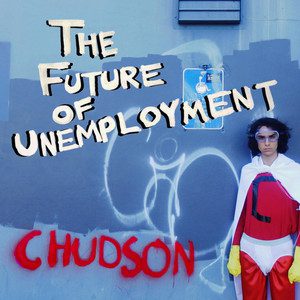
Chudson is a ska punk band from Newport Beach, California. Despite what you’ve heard about that particular area of Orange County, don’t let that affect your opinion of them. To quote another Orange County band, The Kids Are Alright, but really they’re more than alright. They’re pretty damn good, but you can judge for yourself by listening to their first full-length LP, The Future of Unemployment. Chudson brings nine tracks in twenty-two minutes of ska punk bliss, with songs that sound closer to 1990s ska punk than their contemporary peers.
What shines through the most in these songs is the love the members have for their music and the scene they are working hard to cultivate. Colin O’Connor, guitar player and songwriter of Chudson, was kind enough to share the origins of the band, some tour stories, and his attempts to rebuild the scene.
Dying Scene (Forrest Gaddis): How did Chudson start?
Colin O’Connor: Chudson was kind of like an amalgamation of a couple of other bands. I’ve been in bands since I was thirteen. I was always trying to make a band with someone new. We decided that what we were doing before wasn’t working, and we really wanted to hone in on one genre.
I had all these songs where I was playing lead lines on the guitar. They were cool, but then our friend who played trumpet was hanging out with us, and he started playing the lead lines. We’re like, “Yeah, this is what we’re going to do instead.” That was kind of how it started.
What’s the average age of the band?
I’m usually the oldest. I’m twenty. It really ranges. The bassist we just took on tour was sixteen. It really ranges. We’re kind of like a collective at this point, so there have been like fifteen members that have been going in and out. It’s just anybody who wants to do it.
That’s a good way to do that.Tell me about The Future of Unemployment.
It started out as we were just going to put out another EP, but then we wanted a full kind of experience. I feel like EPs don’t really give you that because by the time they’re over, you kind of want a little bit more. We have been really influenced by, like the Arrogant Sons of Bitches and anything Jeff (Rosenstock) related, anything Operation Ivy. We wanted an album with no brakes.
The name Future of Unemployment comes from us quitting our jobs to tour. That was kind of where our heads were at with this. We want to live our lives with no brakes. I think the vibe we were trying to capture with the album was that. We wanted to show people how we’re not taking a break. We’re just going to keep going.
It felt very much like My Superhero and The Impossibles.
I know both of them very well.
I wasn’t expecting to hear 1990s ska-punk from people your age. It was a great surprise. When I saw you in May, you guys closed with “Rock and Roll McDonald’s.” I was kids don’t like “Rock and Roll McDonald’s.”
The weird kids do.
How did you get introduced to these bands like The Impossibles? Were your parents into this type of music?
A little bit. They definitely helped me. My parents are really cool in that when I was growing up, they wanted to take me to as much live music as possible. They never forced anything on me. If I didn’t like something, they wouldn’t make me go see it. They would always take me to see genres that even they didn’t particularly like, but they just wanted me to experience it.
What kind of clicked with me was, I think it was either 2018 or 2019. I saw Streetlight Manifesto, Goldfinger, Real Big Fish, they’re definitely not my favorite ska bands. I didn’t really know anything about ska. Then on top of that, the audience like, there was a guy in a full checkerboard suit. I remember asking my dad, “Why the hell is he wearing that? It’s like ninety degrees out here.”
I Was just kind of hooked on ska when I saw that. In terms of like The Impossibles and all that stuff, I would attribute that to the internet. The internet has been really good for music discovery. Streaming platforms really screw over the artists, but the one thing they are good at is definitely music discovery. I just stumbled upon them. They’re probably the number one band in our rotation when we’re on tour. We hear little Star Wars references, and we fucking love Star Wars.
I saw that the last song is called “Watto’s Revenge.” I am not a Prequels fan. I’m that old curmudgeon that does not like them. Was George Lucas right? Does your generation love those prequels?
Personally, I’m not a huge Prequels guy. I like The Phantom Menace. Actually, I like Jar Jar. That’s a rare opinion. The other guys in my band love the Prequels; what we love is the alien designs, like the weird aliens in the Prequels. We watch it just to see Watto and Jar Jar and the Trade Federation because we love CGI and practical effects. That’s like our whole thing.
Our van had the Trade Federation, Watto, and the Cantina band; we would tape up the action figures on the mirror. After every show, we’d ask, “Where’s the closest comic book store?” Then we’d go get action figures after the show.
Is there a song off the album you would consider the single or do you just kind of present the record as a whole thing?
We put out two singles, “Frat Party” and “Headphone Splitter.” The reason those were the singles wasn’t because we thought they were the best or anything; it was because they were kind of done first and they were the easiest to make. Genuinely, all those songs got done and uploaded the day they were finished. The album got uploaded an hour after it was done. We work up to the last minute; that’s just how we do it.
If I were to choose one as a single, I would probably say “Drag Me Down.” That’s my favorite song on the album, but that was done last, so it wouldn’t have worked out.
It’s a really strong opener. Are you guys going to do any type of physical release of the record, or is it just digital for now?
Right now just digital; we’re probably going to do CDs pretty soon. We’re not sure if we’re going to make them or if we’re going to get them from a third party, because we’re all about DIY. We make all our merch ourselves, but we can’t make quality CDs. A lot of people have been asking for vinyl, but I don’t think we’re going to do vinyl for this.
I noticed everything seems very DIY. You guys seem like you’re just booking everything yourselves. I follow you guys on Instagram. It feels like you have a show every weekend. If you aren’t playing at a venue, you’re playing a party. I haven’t seen a band, for lack of a better term, whore themselves out as much. When you’re playing in a band, you should be whoring yourself out.
Absolutely.
As an elder punk, It’s very nice to see.
Thank you.
It seems that you guys were touring all summer. Where did you guys go?
I think we played in 18 states, but I might be wrong. I think the farthest east we went was either Alabama or Atlanta. Atlanta was the farthest east we went. We had to cancel that show because I was in the hospital. We went from Atlanta and went up to Seattle, and then back down. We played shows all along this stop. It was three and a half weeks.
Are you guys just sending emails or messaging Instagrams for any club that you can?
I do 90% of the booking. I send emails out, and I send texts out. If they don’t respond to my text, I text them again. Then I call them because I’m annoying like that. I want to do the show. We have a form that we send out to fans because we get a lot of people messaging us to come to this state, come to this place, come to this place. It’s nice to know that someone wants you to play there.
What I do is, when somebody does that, I have an automation that sends them a form that they can fill out. Where do you live? What are the other good bands and promoters there? Can we sleep on your floor? I look at all that. Okay, we have ten responses to play in Sacramento; we should definitely play in Sacramento. Then I make my calls or whatever. We don’t really like dealing with booking agents or anything. There’s not enough money to give a cut to someone, so I’d rather just handle it.
Do you have any so you have any crazy stories from touring or playing house parties?
Oh, man, we have a lot of both. Not necessarily funny. We got hooked on NBA Jam on tour, and for some reason, we couldn’t win a game. Me and our trumpet player Noah, we stayed up till 3 a.m. two different nights in two different states playing NBA Jam and couldn’t win. One time we were up till two in the morning. I’m like, “Dude, I’m so amped up. I’m not gonna be able to sleep.” He’s like, take this sleeping pill.
It turned out to be an antidepressant, and I reacted so badly to it. I passed out on the floor and I was screaming in the morning. I’ve never thrown up that much in my life. We go to the hospital. I’m there all day. We have to cancel the show. At the end, I’m like, “What happened? Is there anything I gotta do?”
Oh, no, you’re fine now.
We played a show the next day. I think.
I miss playing. I used to play in a ska punk band growing up called Donkey Punch, and content-wise, we shouldn’t be playing those songs anymore, most of them anyway.
I get it. We always talk like, like I can’t say some of these lyrics when I’m forty.
Can you give Chudsonman’s origin?
He came from the planet Chudson. He was looking for a band that could save the world, and he stumbled upon us. The real-life origin of Chudsonman is my cousin Hudson. We kind of named the band after him. He would always come to our shows and wanted to be part of the band, but he has no musical talent. We have tried so many times, but it’s not happening. So we’re like, you can be our hype man. It started where he would just hold up signs with the lyrics and dance around, which is pretty fun. That kind of evolved into him doing dances and leading the pit. On tour, we would get bored. We would go find something new for him to dress up in.
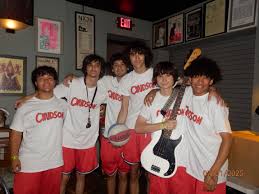
The first one was like a box. He would just dance in a box up there. Then the second day, we found a sheet and he was ghost Hudson. We all found matching shorts and wore Chudson shirts. We were the Chudson basketball team. He was doing tricks like the Harlem Globetrotters. He couldn’t actually do them, but he was trying his best. We saw Superman on tour and wanted to make our own super suit. We went to a bunch of different thrift stores, got a cape, and a bunch of shirts. Basically, all he does is heroic poses on stage. Then if he sees someone crowd killing, he’ll go up to them and say, “Heroes don’t crowd kill. Stop that immediately.”
We’re pretty big in our little friend group, even though we seem bigger than we are in the scene. People think we’re weird, and we don’t get invited to a lot of shows, but that’s fine.
That’s so weird. I’m going to date myself by saying this, but back in the day people would have loved that type of thing. I’m from Orange County, also. Do you get any pushback from being from Newport Beach or does nobody care anymore?
I don’t think I’ve ever gotten any pushback from that. We don’t particularly like Newport. We are the only band that does shows in Newport. We make jokes that we are the Newport Beach scene. My cousin Hudson’s house is on Google Maps as a venue. We’ve done many shows there. We’re very inclusive. We’re very straight edge. I think people give us a pass for that. We don’t seem like we’re Newport people when we talk to people. That’s what I was surprised about.
Our bands are also from all over. Our trumpet player is from Yorba Linda. We have horn players from the Inland Empire and in LA. I think it’s changed a lot. There’s not a lot of animosity, at least from our point of view. We try to be as inclusive as possible in any context we can. We’re also not super proud of being from Newport. It just happens to be a pretty city, but the people here are kind of assholes. That’s why we call ourselves OC ska punk. It’s generational, and it sounds better than Newport ska.
They’re some of the worst people I’ve met in my whole life. Their parents give them everything they want, and you’re like, what are they going to do when they get out of school?
Yeah, well, that’s kind of how the country got in the mess we’re in. Are you guys playing anytime soon?
We just played in Burbank. I’m booking for October right now. We’re not really doing anything for September. There aren’t really any all-ages venues that we can hit up anymore. Chain Reaction is really hard to book. Programme is really hard to book. I called a restaurant that was in Anaheim, asking if we could play there, and they said they’d get back to me.
We’re trying to build up new venues because there’s nowhere to play, and it’s getting really lame because we don’t like driving to LA or the Inland Empire to play. We want to play in OC. We want to build up the OC scene. Every show is a backyard show where everyone’s getting way too drunk and high. It’s not even fun for us anymore. I mean, we are genuinely the only band that does DIY shows in Newport Beach, maybe ever.
Dave Hause has had a good summer. Since he’s been off the road for the bulk of the calendar’s warmest quarter, one could argue that by some metrics, it’s been a comparatively quiet summer given his normal line of work. That said, the California transplant has been busy at home with his twin boys – […]
Since he’s been off the road for the bulk of the calendar’s warmest quarter, one could argue that by some metrics, it’s been a comparatively quiet summer given his normal line of work. That said, the California transplant has been busy at home with his twin boys – Harrison and Smith – doing all of the things that you do as a dad of kids who are about to enter first grade. Days filled with music and superheroes and lamenting the pending fall of democracy (in an age-appropriate way, naturally) and, if you’re a punk rock dad of a certain age, teaching them skateboarding. There are a lot of lessons to be taught – and learned – when trying to tutor the younger generation on the fine art of dropping in on a v-bowl or how to pull off your first ollie. This is particularly true when your audience is too young to know better or to be scared of the dangers inherent in barreling full-speed down a concrete ramp. Lessons about learning when to kick and when to push and when to coast; lessons in patience and resilience and balance and how to stay fearless and how to dodge obstacles and how to be determined and how to adapt to new and undulating terrain and especially how to fall in a way that minimizes disaster and keeps you motivated to not only not quit but to do better the next time and the time after that and the tome after that and so on.
As the boys will no doubt begin to understand as they grow up, those lessons that dad imparted through endless summer days down at the skate park are no doubt translatable to life that exists off of four polyurethane wheels. Those lessons are especially poignant when you’re a dad who is on the other side of forty and who has spent more than two decades making a living as a musician to the left of the dial; hauling gear, changing strings, living out of vans and suitcases, trying to continually write songs that are thoughtful and poignant and still catchy enough to be able to continue putting coins in the dual college fund tip jars.
On September 26th – the first Friday of fall – Hause will release his latest studio full-length. Entitled …And The Mermaid, the record marks the seventh of his solo career (we’re not counting the Hearses/Versus/Curses trio obviously – more on that later). But just as being the father to soon-to-be seven-year-old boys has found Hause returning to the skateboard-heavy roots of a past life, soon-to-be-released album seven follows a similar path. Rather than rest on the laurels that his last few Americana-tinged, singer/songwriter-heavy albums have provided, …And The Mermaid finds Hause more charged up and leaning back into an old familiar role: front man of a punk-rock-infused rock and roll band. “(This album) is the first one in a while that’s unabashedly rock and roll,” Hause explains. “I’m excited to play it live. I’m excited to put the band back out on the road.”
The idea of leaning into the high-energy, full-band rock and roll thing again stems from a few different places. One was falling in love with the band IDLES in recent years, and all of the passion and intensity that they bring. Two was introducing his boys to the world of punk rock through what I guess we’d call “classic” bands at this point like Green Day and Rancid and Bouncing Souls. And three, perhaps most poignantly, was from a conversation with friend and fellow punk rock songwriter Dan Andriano. The conversation came after Hause nudged Andriano into going to see a singer/songwriter who was coming to town. While Andriano enjoyed the show, his positive feedback came with a caveat to Hause: “If I see you make a show like that, I’m going to be bummed,” stated the Alkaline Trio bassist. As Hause tells it, Andriano elaborated: “You have a certain energy and a punk rock edge, even when you’re fingerpicking and playing quietly. That is so unique to you. Don’t lose that. Whatever you do, don’t lose that. Don’t have like a mild, chill show. That’s just not what I’m here for when it comes to you.”
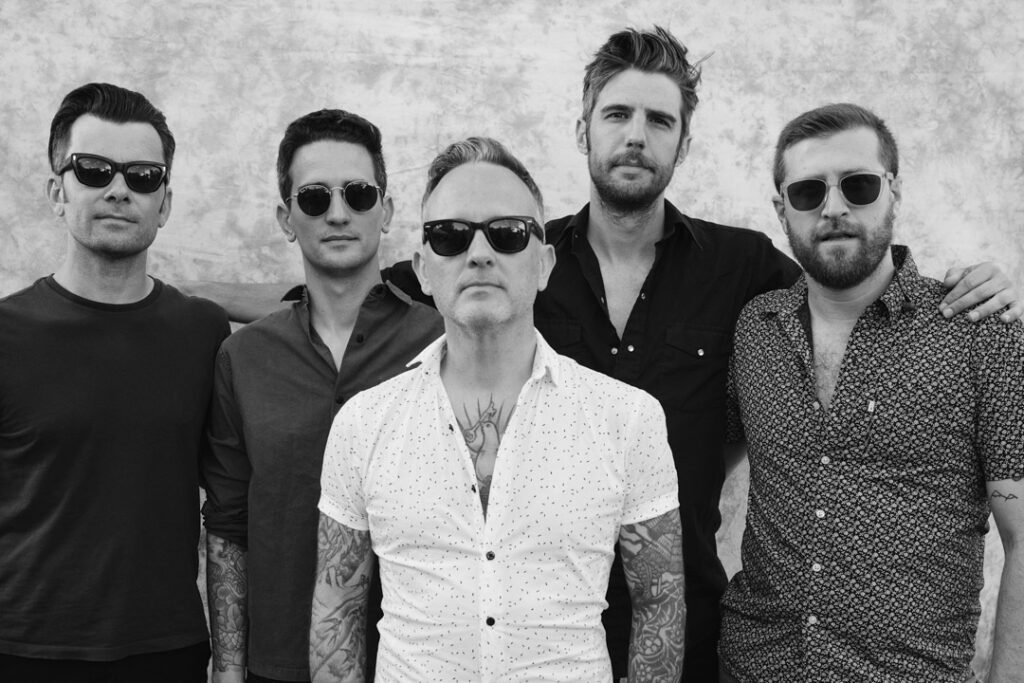
The Mermaid (L-R): Kevin Conroy, Tim Hause, Dave Hause, Luke Preston, Mark Masefield. Photo by Jesse DeFlorio
The aforementioned band that Hause will be firing up and putting back out on the road again, obviously, is better known as The Mermaid. When Hause started playing shows with a backing band years ago, the idea was effectively to compile a lineup of musician friends based on their need and availability; a rotating project that might produce a different show every time they came through your town. “I think that’s why it’s always been called the Mermaid,” he states. “It feels like an oasis; a mirage; something you see and you can almost touch and then it swims away.” That concept has changed a little bit in recent years. With few exceptions, the core of The Mermaid has calcified around Hause’s brother and longtime songwriting partner Tim on guitar, increasingtly frequent collaborators Mark Masefield on keys and Luke Preston on bass, and the incredibly versatile and always rock steady Kevin Conroy on drums. It’s a group that came together in the live format and developed a high-energy chemistry on the road. While Hause is no doubt aware of the positive chemistry the band has together on his own, some of that was solidified during a run of shows last year with the iconic Bouncing Souls. Hause was taken under the wing of the Souls crew decades ago at this point, and while he might be the elder statesman of the Mermaid crew, the tables turn when the Souls are around. The Souls – to Hause and his crew and the rest of us true believers – have been guiding lights for thirty years, in the way they write music and the way they operate both in the scene and in the world. “It’s sort of like they’re my big brothers, and here I was bringing my little brothers around. To see this band click with the Souls was cool,” he explains. “It was a great moment of the two worlds not just colliding, but coalescing. I think you can feel that on stage and you can feel that in the songs. There’s something really special about that.”
So when it came time to really bear down and write and ultimately record LP #7, who better to turn to than the band that he’d found himself fronting night in and night out in enjoyable and powerful fashion than his very own band. …And The Mermaid marks the first time that the quintet has recorded together, as Hause eschewed his more recent trend of recording in Nashville with talented studio musicians. Instead, the band made its way to Vancouver earlier this year for an epic recording session with Jesse Gander (Japandroids, Fire In The Radio, etc). “There’s some special alchemy that happens when you put a bunch of people in a room with a really adept engineer,” Hause reports. “I was like, ‘I don’t know what’s going to happen. Let’s just try to get as much good work done as we can.” And it opened up this channel that felt really good.” So good, in fact, that starting with the blistering, Clash-style rocker “Enough Hope,” the band ripped through four songs in the first day of recording. Not a bad way to start. “I just thought, ‘let’s go in there and cut as much material as we can,’ because I really believed in the band’s ability. We were a little unsure what it would be like because we’ve never done it, but man, did we just hit the ground running?” Save for a few odd vocal harmonies and overdubs here and there, most of the material was cut live on the floor in the studio together. Five guys in a room writing and recording up-tempo tracks fueled by an increasingly bright punk rock intensity.
The band took full advantage of their time together, building on the relationship they’d long-since been creating in the live show format and translating that into an energy and work ethic in the studio. All told, close to two dozen songs were tracked, well more than the ten that appear on …And The Mermaid. “There’s a little bit of a goal that started to come in because we were like, “well, we are pretty old. We’re all between thirty-one and forty-seven. We’ve been doing this a lont time, we should be able to rise to the occasion,” laughs Hause. Rise to the occasion they certainly did. The album kicks off with “Knife In The Mud,” an anthemic, horn-infused barn-burner of a song centered on a bombastic Conroy drum pattern and a singalong chorus that is somehow both triumphant battle cry and ominously bleak warning. The track was co-written by Preston, and Hause reports that the two of them had differing opinions on the track’s ultimate point of view. Regarding the cathartic chants of “We’re never gonna die!” that appear throughout the song, Preston was of the opinion that the line was a challenge. “He was like “I want it to be defiant!” And I was like, “well, I think of we’re never going to die as a threat. It’s a threat to the planet. It’s a threat to ourselves,” Hause explains. “He and I have totally different views on what the song even means, and I think the tension in those two ideas is what makes it pretty cool.”
From there, the album finds the band continuing to do what it does best as a unit and the Hause’s do best what they do as songwriters; pointed, sharp commentary and witty turns of phrase that point their swords both outward and inward. There are lead singles “Enough Hope” and “Look Alive” which are pointed looks at the world around us falling to shit in the wake of the billionaire oligarch class. There’s the four-on-the-floor singalong celebration of the trials and tribulations that bond a long-term group of compatriots for life that is “Cellmates.” The chaotic “Mockingbird Blues” and similarly themed “Revisionist History,” the tongue-in-cheek Boomer-ific ode to days gone by. There’s the Tom Thumb-meets-Dropkick Murphy-ish “Rumspringa,” which is a bit of a high-water mark in regards to strictly fun songs in the Hause oeuvre. “Those were sort of placeholder lyrics. They were sort of silly. They were sort of fun. And then I just was like, “why don’t we just sing that? Yeah, this is fun!” It doesn’t have to always be about, you know, the existential dread or these intense feelings,” he explains. There is the more mid-tempo “Yer Outta My Hair,” which tells of the need to finally end a relationship after years spent hoping the other person would get their life in order.
There’s also the first cover on a Dave Hause solo record. At first listen, the blood harmonies on “Bible Passages” seem like they were written not only by Hauses, but specifically for the Hauses to play in all as a duo in a haunted, centuries-old European church. In fact, the song wasn’t written by them at all, but by Rise Against’s Tim McIlrath. While he’s no-doubt known for writing stadium sized anthemic modern rock bangers, McIlrath, like Hause, is first and foremost a songwriter at heart. Hause explains: “I would always ask him, “what are you gonna do with that song?” “Oh, I don’t know. I don’t know.” And somewhere in there, he either said like, “you should cut it.” Or I said like, “well, what if I cut it?” He’s like, “go for it.” I can’t remember exactly how it went down, but you know, we admire one another. And I just think like that side of him is so special and sweet. And so it’s an honor to have that song on the record.“
And what Dave Hause album circa the 2020s would be complete without an ode to his growing boys. …And The Mermaid closes with “May Every Last Fever Break,” a tendersong about guiding the next generation through the early, developing years as best you can, holding on when you need to and knowing that you’re doing their best for the day the training wheels come off. “I can see (the world) through their eyes,” Hause explains. “I can try to make that my main job. Like, “hey, let’s show them the world, show them what’s great about it, show them what’s wrong about it, show them their own agency in changing it and molding it.” Though it’s a bit of a stylistic departure from the bulk of the rest of the album, all were in agreement that “May Every Last Fever Break” not only works on its own, but shines as a closer. “Tim cried when I played it for him, so I knew I was onto something. It’s really tender. Alex, our manager, said “It’s my favorite song on the record,” which I thought was so awesome to have a manager that’s not looking at the catchiest song as his favorite because obviously, his job is to monetize the project. I love that song, and I feel so lucky to be able to make it.”
To return to the skateboarding metaphor, there’ll be no time for coasting for the remainder of the year for Harrison and Smith’s dad. It’ll be all kicking and pushing as Hause gears up for a loud fall and winter and beyond. Full-band shows in his home state of Pennsylvania kick off album release month before Dave and Tim head to Canada for a run of shows with Joey Cape. Then a few shows down the West Coast before a run in continental Europe and the UK. Then it’s back to the East Coast in November, followed by a run opening for the almighty Bouncing Souls out west again to close out the year. Most of those shows are more of the stripped-down variety, which means it’ll be 2026 before most of us get to see The Mermaid performing …And The Mermaid. There’ll also be more new music to follow in what seems to be short order. “My goal is to have made 10 studio solo records by the time I’m 50. And I’m 47,” says Hause. “And by this I mean made and put out. I’m not counting those three Loved Ones things – Versus, Nurses and Hearses. So that means I got work to do! I think, you know, because my mom died at 49, if I make it that far, I feel like I can reassess and who knows… I better get rhyming!”You can find all of Dave’s tour dates here. You can also still pre-order …And The Mermaidstraight from the Hause brothers themselves via Blood Harmony Records. And you can listen to the first couple of singles below while you check out our full, extensive chat!
***Editor’s Note: The conversation below has been edited and condensed for content and clarity. Yes, really.***
Dying Scene (Jay Stone): So, my friend, I really love this record. Not that I’m ever nervous about a Dave Hause record because the bar is only going to go so low (*both laugh*). I have done it a couple times where I don’t know I feel like I get a feeling the first time I listened to something, even from the first couple of notes of the first song on the record, like, I was like, “Oh, I get it. I love it already.” I know that there are 9.75 songs left to go, but even from the start of “A Knife In The Mud” I was like “Yup…this is the album I need right now.”
Dave Hause: That’s great. I’m really excited about it. I’m excited to get back on that kind of horse, which is like, if we’re using that weird metaphor I just walked into, this is like a conquering horse, you know? It’s the first one in a while that’s like, unabashedly rock and roll it, and I’m excited to play it live. I’m excited to put the band back out on the road. I mean, it’s interesting, because what we’re doing is releasing the album, doing some touring as a trio, and as a duo, to kind of get the word out and let people kind of get used to the record. And then next year, we’ll tour as a full band, kind of all over, where we’re used to going. I’m super excited to do that. I’m also looking at the budgets and going like, “Whoa, it’s hard, it’s hard to move a lot of people around day after day.” But every time I do an interview or listen to any part of the record, just for reference, I’m reminded about our mission statement, which is “let’s take this thing out and do it in rock clubs,” which we haven’t done in a while.
When did the album sort of calcify around that, like, rock and roll sound? Was it a conscious decision from the writing process to make a more rock record, or did you realize that’s how it was turning out as you went?
There were a couple of things; a couple of pivotal things. There’s a songwriter that I really love, who I had been pushing on Dan Andriano. It’s like, “man, you got to listen to these records. You got to go see him.” This is a couple of years ago. And he went and he went to the show. I checked in with him, and he’s like, “I liked it. But if I see you make a show like that, I’m going to be bummed.” I was like, “what do you mean?” And he said “you have a certain energy and a punk rock edge, even when you’re fingerpicking and playing quietly. That is so unique to you. Don’t lose that. Whatever you do, don’t lose that. Don’t have like a mild, chill show. That’s just not what I’m here for when it comes to you.” And I said, “OK, cool.” I kind of filed that away. And as my kids have come more and more online, they gravitated naturally towards Green Day. My wife and I are big fans, so I’ve been playing Green Day for them, especially in anticipation of that tour coming through. We took the boys to see Green Day, and it just I was just as into it as they were. I was like, “wow, this is spectacular.” That’s one of my favorite bands. Rancid as well. And the boys were just so into it, so it’s been a rediscovery of that and playing a lot of Bouncing Souls for them. We had the Souls at our festival, so there was just a lot of gearing up in that direction. And then I really fell in love with IDLES a couple of years ago. A lot of people had been bothering me like, “hey, dude, this is going to be your band.” And I sort of actively avoided it because I thought if “I love this as much as everyone thinks I’m going to, I’m going to really want to do something more in that realm, and I don’t have that’s not within my purview right now.” At that point, we had been working hard on the festival. We had done a bunch of stuff that was more listening-roomy and singer/songwriter stuff. But it was those three things – getting the boys into a lot of punk rock, falling in love with IDLES and then also Dan’s sort of planting that seed a couple of years ago. Also, I just think at some point, doing a bunch of stuff in Nashville and playing with a lot of singer-songwriters that are outside of like the punk thing, I kind of proved to myself that I could do it and feel comfortable. Blood Harmony and Drive It Like It’s Stolen were accepted enough that I didn’t feel like I had as much to prove, in terms of like, “well, I’m going to actively avoid playing like super loud or fast or whatever.” And so in this, it was just like, “let me just be open to whatever the band and I want to do in the moment. We’ll record a ton of stuff and then we’ll just see what we have.” I think that was kind of the way it all coalesced.
Sort of like Dan said, you have always been, I think, even when doing solo stuff, you’re always a “front man.” Like you’re a singer, a brilliant songwriter, but you’re very much still a frontman. You have that ability, I think, whether it’s just you solo, or you and Tim in a stripped-down acoustic setting, you still have a way of commanding a crowd, getting out in front of the microphone, pulling people in towards you – it’s that sort of frontman magnetism that is so natural in a punk or rock band setting.
Yeah! And I think I appreciate that. And I think instead of being shy about it, I’m just more comfortable with that idea. As I go on, you know, I was a fan of Bryan Adams. I think even you go see Flogging Molly, Dave King has this thing about him, or David Lee Roth. There’s all these people that I can kind of reference that I truly am inspired by. And I do think like on some level, you’re always putting on a show. Someone paid to come see a show, and I think, you know, as much as you hew to sort of this punk rock or purity kind of way of delivering the material, you also want something transcendent. I think sometimes that’s like taking some weird quality in yourself that maybe isn’t always on display and amping it up in order to have everybody feel like we’re doing something a little bit more special than just gathering in a room. So I think that’s kind of what it is. But I’ve just been more willing to embrace and feel more comfortable with that. I also think that the further I go, the more you want to just be you. If you have the opportunity to share your own artistry with an audience, make it as close to being what you think is great and not, “well, maybe I should pull this other thing and try this.” You know, it’s always good to follow the muse, but for now, for this record, it was more just like, “let’s not overthink it.”
Did you have everything written before you went up to Vancouver – which is another thing I want to talk about after, the Vancouver thing. Did you have everything written or like skeletons of ideas…
We recorded like twenty-one or so songs in two weeks so…
Wasn’t there talk of a double record? Am I making that up? Maybe that was a conversation I had with Tim and he was hinting about it, but was there talk of a double record at some point?
I mean, there always is, right? And then you realize you’re living in 2025. (*both laugh*) I mean, for all intents and purposes, that’s what we did. We recorded a double record. And no, it wasn’t all done. It’s still not all done. And again, I think like on some level, the further I get, the more you go like, “well, let’s leave a little room for like Quincy Jones used to say in the recording process, like leave enough room for the Holy Spirit.” And obviously that’s got some strange, you know, Christian overtones. But I think that there’s something to it. In the modern age, you can essentially make a demo and have it sound almost exactly like it would sound, you know, if you went into a studio. There’s just so many tools at your disposal. And so having that power almost neutralizes that ability because you’re like, “Well, I could just do this at home. I can get these stems from Josh Freese’s drums.” And, you know, I think in that realm, knowing that there’s some special alchemy that happens when you put a bunch of people in a room with a really adept engineer, we were more open to the process. I was like, “I don’t know what’s going to happen. Let’s just try to get as much good work done as we can.” And it opened up this channel that felt really good. And so, yeah, you said you wanted to talk a bit about the Vancouver thing. That was amazing. I mean, Jesse Gander, I love his work. I love the sounds he gets. I like those Japandroids sounds quite a bit. The other stuff he’s done, I’ve always loved.
He did the last Fire In The Radio record, right?
Yes, yes, exactly. And that’s the link. So Jon Miller, who’s the songwriter for that band, has been friends with Jesse for a long time, and we’ve been friends here in Santa Barbara for 10 years now. He’s a wonderful guy. And he’s been saying, like, “You guys should work together. When you have a rock batch, you’ve got to work with Jesse.” And Jesse and I talked about it, and at first, it seemed cost-prohibitive because, you know, you can go to Nashville and it’s all kind of set up. You can have session guys come in and cut all day long and get a lot of work done in an efficient way. And this was more like, “well, we have to get everybody to Canada. We have to stay somewhere. We have to pay for the studio time. Like, it’s going to be a mountain when it comes to cost.” And Jesse was like, “Well, there’s a grant that the Canadian government or the British Colombian province offers that you would be perfect for because they want somebody who’s got an international fan base and will actually go out and play the record and the record will be heard, and they’ll subsidize it because it’s made here in Vancouver.” And that was true for like all these records back in the 80s and 90s. I think even like Aerosmith’s Pump was done there. And, you know, like there’s been a link to the Vancouver recording scene for a long time. So we ended up applying and we got the grant, and that defrayed a ton of the costs that would have prohibited our ability to go there and do it.
That’s amazing. Imagine when you actually pay attention to the arts and support the arts, right?
Yeah. You get hopefully inspiring work and you put people to work in your province. And yeah, I mean, we could digress on that.
Yeah, really.
But it was wonderful. And so now we have this link to Jesse and we’re able to see how it works and we were able to live out the dream of what a band does. But rather than do what a lot of bands do, which is like, “OK, let’s hone in on the nine most catchy songs or whatever,” it was “let’s go in there and cut as much material as we can,” because I really believed in the band’s ability. We were a little unsure what it would be like because we’ve never done it, but man, did we just hit the ground running? We cut “Enough Hope” first and we were done it in under two hours. It was like “OK, here’s how the song might go. Let’s mess with it a little. OK, try this. Try this.” And it was done. And so rather than take our foot off the gas, we applied pressure. We’re like, “let’s try to get two today.” And I think we got four that day or something crazy. (*both laugh*) And Jesse was pumped. He was game to work that way. He wasn’t super precious with like, “OK, well, let’s get it exactly whatever you would think of is perfect” because there is no perfect. We just kept working and working and working, and then closer to the end, when guys had to start going home, it became clear what the record was probably going to be, and we were able to hone in on stuff and then put some stuff that’s like, you know, either joke songs or stuff that was like less fleshed out or weirder. We were able to prioritize.
How live in the studio did you record? Because not that it sounds like a live record, and I don’t mean it that way, but there are times where like it sounds like you’re all in the room playing together. And there’s sort of mostly that like that Holy Spirit thing, I guess, that Quincy Jones was talking about, right? Like that sort of magic between the five of you?
That’s most of the record. I mean, even stuff you would think are obvious overdubs, like the beginning of “Cellmates,” where you hear that synthesizer come in, that was live in the room. Mark got that sound and arpeggiated it or whatever he did to get that, and we played right to that, and so we’re responding to that loop in real time. I don’t think we went back in and relayed in any overdub. There’s some obvious overdubs on the record. Obviously, you know, Tim didn’t sing the background vocals live. He probably could have actually, but we just didn’t set up for that. We just thought like, “oh, let’s try to get the basic tracks.” Most of what you hear is that band playing the songs, which is so fun. And I think there’s this like fantasy that all the Beatles would go in and they learn a song at nine a.m. and by noon they’d have it recorded. There’s a little bit of that goal that started to come in because we were like, “well, we are pretty old. We’re between like thirty-one and forty-seven. We’ve been doing this a long time, we should be able to kind of rise to the occasion.” And the confidence that builds when you get one down and they get another one down and you’re like, “oh, wait, maybe I’m not able to do all the stuff that like a Nashville guitar player could do, but maybe it sounds like me.” I can play like me in time and in tune. And so there was like a real confidence to start to build with the band as we took off in those first couple of days.
This iteration of the Mermaid is like the iteration of the Mermaid sort of going forward, yeah? Obviously we’ve talked before that the idea was sort of that there would be maybe moving parts, and people have rotated in and out at times, but like seems like once you had this five together, like it’s kind of changed from maybe that initial idea into ‘a band.’
That’s the hope and that’s also the fear, right? So you hope that that’s true. You hope that we can keep this together for as long as we possibly can, maybe till our older days. But the fear is like every other band, bands are really hard to maintain. It’s really hard for people to be able to commit, given the limits of financial security and so forth. I think that’s why it’s always been called the Mermaid, you know? It feels like an oasis, a mirage, something you see and you can almost touch and then it swims away. And I think now more than ever, I would love for this to be the group of people we make music with until we’re good and old. I have much less interest in going in with hired guns now that I see what this band is capable of. But I’m also a realist and unfortunately – to use the skateboard analogy – like I’ve taken slams when it comes to that.
Right.
And so, you know, hey, don’t hold it too tight and don’t be so loose that you that you don’t tell people how much you appreciate them. So it’s a balance.
Yeah. You can hear that the band really gels on this record. We could talk at length about the whole record but there are a few moments that highlight that, like in “Mockingbird Blues,” there’s that line about “…out here in the wilderness, it’s hard to find a friend like that.” The first time I listened to the record was in the car with driving to my wife’s dad’s house in Connecticut and she pointed out that there are times where you say “it’s hard to find a friend” and then you can hear Mark twinkling on the keys, or then there’s like a cool little bass run. You can sort of hear everyone in the band separately. It’s sort of this unifying thing, like “out here in the wilderness, it’s hard to find a friend, but I’ve got four of them right here.” I feel like that feeling really translated.
Yeah, I mean, that’s really true. It was fun to be out with the Bouncing Souls together on tour because that is one of those magic bands that I got to spend a lot of time with that really is fun to be around, and what you see on stage is the distillation of that relationship backstage. They get along and there’s a shorthand and it’s just a beautiful group of people. It’s sort of like they’re my big brothers and here I was bringing my little brothers around, and to see this band click with the Souls was cool. They kind of know Mark from doing sessions in Asbury Park and he lives down there in Bradley Beach. They obviously know Tim. Kevin worked for them, but Luke was the wildcard, and Luke got in there and became buds with them. And within a couple of days, the Souls are like, “Well, we’re having a pizza party with The Mermaid on the bus!” Or after the show they’d be like “come on, come hang out!” It was really fun to see that gel. There was a really funny moment where the Souls wanted us to sing sort of like a backup to Greg’s version of “Ghosts on the Boardwalk,” and we’re standing there in the wings ready to go on. And I had a denim jacket on, and it was dark, dark lighting, and Bryan Kienlen is like “you’re kind of looking like Bruce Springsteen right now.” And I was like,”oh, thanks, man!” Bruce is a handsome guy, and I kind of like, you know, feeling myself. And he goes, “current Bruce Springsteen, of course.” (*both laugh*)
Seventy-whatever-year old Bruce.
Yeah! And I was like, “oh, you had to do it, didn’t you?” And he starts cracking up. The band all falls out laughing. And he turns to the band and he goes, “you’re the little brothers, but the big brothers are here now.” (*both laugh*) And it was a great moment of like, you know, the two worlds kind of not just colliding, but coalescing. And so just to your point, it’s like having that friendship, having those bonds. I think you can you can feel that on stage and you can feel that in the songs. And there’s something really special about that.
Let’s get into subject matter on the record.
OK!
You know this. I’m a one-trick pony when it comes to Dave Hause records, because you know the esteem with which I hold Devour in. So this like this is very much an amalgamation of the guy who wrote Devour and the guy who wrote Kick. There are some interesting like grown-up, but overlapping themes from those records.
I think I might be the one-trick pony, man. (*both laugh*)
No! That will forever be my frame of reference for a lot of music, not just for yours. Like, that’s the album I’ve listened to most for the last 12 years, I think.
Amazing.
But there are times on this record where I will find myself singing along to it and getting goosebumps the way that I did to Devour the first couple of times I heard it. First time I heard “Autism Vaccine Blues” was at that Flogging Molly show in Boston 12 or 13 years ago now, which I think is the first time we met in person. I remember my brother and I looking at each other and just going “whoa…” That song gave me goosebumps and still tends to. And there are moments on this record that do the same thing. That’s happened, obviously, at other times in your catalog before. But even from the trumpet at the beginning of “Knife in the Mud”…I feel like we could talk for a while just about that trumpet line in a “Knife in the Mud” that comes back at the last song, because it sounds very much like a battle charge, but it also sounds very much like “Taps”…like a funeral procession. Which creates this feeling of “we’re either marching into battle…or we’re already dead. We’re already fucked.”
That’s the weird thing about that song. We’re making a documentary about this record, and we just got the cut about that song. So everybody was interviewed about the record, and Luke had a demo of that, you know, basically the guitar part and the trumpet, and he called it Olympics. As we were kicking around ideas for the lyric, he didn’t have a melody or a lyric and we were building it. He was like, “I want it to be defiant!” The line “we’re never going to die!” came out of that idea. And I was like, “well, I think of we’re never going to die as a threat.”
Right!
It’s a threat to the planet. It’s a threat to ourselves. So when you see this cut in the documentary, if it stays this way, he and I have totally different views on what the song even means. And I think the tension in those two ideas is what makes it pretty cool, because I don’t think that that’s necessarily the best thing, that we’re never gonna die. But also you’re left with this feeling like, well, what else is there? There’s a Father John Misty song that he put out some years ago where it was like, well, “all we have is this.” So there’s some, he comes to some conclusion like that, where it’s like, “this is how fucked up it all is, but this is what it is.”
Right, what’s the alternative?
Yeah. And I think that there’s a certain defiance in that, and there’s a certain amount of succumbing where you’re like, all right, it may not get better. And so I think the tension in that song is what makes it special. But I could tell, like Luke saw the cut and texted me, he’s like, “how do we have two totally different perspectives on a song we wrote together?”
I don’t know if you saw that Storytellers show or whatever it was, the VH1 show, but before Pearl Jam played “Alive,” Ed told a story about how he thought the “I’m still alive” line was meant as a curse. Like, “all this shit has collapsed around me, why do I still have to be alive to bear all of this” but then the crowd singing it for years turned that into a cathartic thing and lifted that curse.
Part of growing up is there is that tough couple decades of, “do I wanna be here? Why would I stay?” And then if you can get over a certain hump, you’re like, “Well, this is all there is and I’m lucky to get to see it. And I wanna stick around for as much of the pain as I can.” I mean, I just did an interview with Craig Finn for his podcast and he and I were talking about like, you got two options…you can either push the boulder up the hill or you get flattened by it. And those are your options.” And I would rather at least push, you know? Especially as you get older, because like the weddings and the firsts are all in the rearview, you know? Your first kiss and all that other, like that’s all so far behind. All those exciting things you’ve done. And so you’re left with like, well, “how do I derive meaning and purpose?” And that takes work.
That math has changed since the boys were born I’m assuming…
Totally, yeah.
I mean, it should, right?
Yeah, I mean, I think that’s part of it. Now I can see it through their eyes. I can try to make that my main job. Like, “hey, let’s show them the world, show them what’s great about it, show them what’s wrong about it, show them their own agency in changing it and molding it.” Yeah, I mean, that’s definitely, that purpose is a major shift for me.
Is the “waiting on vultures” line at the beginning of “Knife In The Mud” a callback to the vulture theme at the end of the last record? It’s fun that the first line of this record is an immediate callback to the last song on the last record.
I love it that you saw that.
Yeah, oh, right away. Well, to be fair, I knew it was a callback to the last record and I was pretty sure “The Vulture” was the last song on the last record but I did have to look to confirm that because I do have it on “shuffle” sometimes…
That’s right. Well, we also put out all those Loved Ones things too, so it’s confusing. You know, we need to relegate those to something other than full albums that we put out. But like on Spotify, it looks like we put out two or three records since Drive It Like It’s Stolen, which we haven’t. I mean, we have in theory, but you know, for those of us having this conversation, that is like the people who are most out into the work as it progresses, that’s old shit.
Yeah, right, right. Although it’s interesting to me, there are a lot of people now, I think, who have discovered The Loved Ones through Dave Hause and not the other way around. I think that that has shifted over the last, I don’t know, well, probably 10 years at this point, but like there are people who stumbled into The Loved Ones because of your solo career and worked backwards.
Well, The Loved Ones headlined the last day of Sing Us Home 2024, and it was a smaller crowd than The Mermaid. So it was-
That’s interesting.
Yeah, it’s just, it’s what happened. It was a goal to not get eaten by the earlier work. And it was a goal that I have achieved, which is not easy in punk rock. I mean, I’m sure Rancid still has to talk about Operation Ivy, you know? And they’re one of the greatest bands of all time. I think like to have that freedom is wonderful. And that’s what I wanted. I wanted it to feel free. I didn’t want to have to play old stuff just to keep people engaged. Now I feel like I’ve added that material to what the band or I can do whenever we want to rather than feeling like we have to. So it’s a wonderful treat to have had that sort of progress in that way.
My brother was not as into the depth of punk rock when as early as I was, but he’s a big fan of your solo work. So when I told him that we were talking again, he was like, “didn’t he just put out a new record? Like Nurses?” I was like, or Versus or Hearses, I forget which, whichever one came up on Spotify last. I was like, oh, hold up…you’re gonna have a little history lesson now.
Yeah, yeah. You know what’s interesting is we live in these bubbles in music. You write about music, you’re very attuned to what’s happening and what artists are doing. I’m making this stuff, so I’m very precious about it and so forth. But there’s something leveling about having to go to school functions with people who have kids your age and go, “I’m a musician.” And they go like, “anything I’ve ever heard?” And you go, “probably not.” (*both laugh*) And then they sort of inevitably wanna know more. They wanna follow. And then you get into this funny thing where you’re like, they’re like, what’s your latest record? And I’m like, well, it’s this thing called Versus, but it’s not a real record. And you’re like, oh my God, this is like so inside baseball. These people are just trying to get the kids dropped off on time and get to work. They’re not looking for a David Lynch style deep dive into all the meaning behind your work. They wanna know if that shit slaps and they can put it on after Benson Boone and go, hey, this is Smith and Harrison’s dad’s music. It’s a good reminder of like, fuck man, people in America specifically are very, very inundated with information. Don’t get so precious with the delivery system. So in a weird way, I’m trying to play to you or to like our two people who run the fan club, Susan and Manuela. I’m trying to play to you and those two, right? That’s the bullseye. But I’m also very aware of the other rings of people who are like, “look, I got about 20 minutes here. What do you got? Play me the catchiest shit.”
Right, right. Can I put this on my Peloton playlist or?
Yes. Well, with this record, the answer is yes. (*both laugh*)
Yeah, I think so. Especially the anthemic stuff. “Look Alive,” absolutely. There’s a sense too, it may be this is just me storytelling, but even the big anthemic rock and roll songs on this record have that like Jersey punk rock, like the Souls thing, right? Like the “yas” and the “woahs.” I forget if it was you or Fallon or somebody else I have seen live talk about that it’s such a Jersey thing…Jersey, Philly, whatever…that like there’s always gotta be “yas” and “woahs” in a song. Maybe it was Sammy Kay, I don’t know. But to me, that’s like pulling the audience – like pulling us – into The Mermaid in a sense, right? Like The Mermaid isn’t just four plus you, it’s like us, Susan, Manuela, the Rankers…that pulls us into part of it.
I think it’s important that songs get sung. And I also am well aware that I’m unpacking lots of stuff in the lyric, in the verses and in the bridges and often in the chorus. But I was raised in the church and I think you can get to it in the sermon but you gotta have spots where the “amens” are there. And I think it does make for a communal experience if you add that. I feel like that song “Cellmates” – there’s a lot of information coming at you and there is this reprieve in the “whoas” where we can all just sing and whatever that song might mean to you, you have an opportunity there, or in “Damn Personal” to like just sing along. It’s pretty simple. And so there’s something special and useful about that to me. They’re songs, you’re supposed to sing them.
That “Cellmates” song…it’s hard to find a favorite on the record because every time I put the record on I’m like, “oh yeah, this is my favorite song.” “Cellmates” comes on and I’m like, oh wait, no, this might be my favorite song on the record. And then “Look Alive” comes on and then “Mockingbird…” comes on. It’s like, we just keep going, hit after hit after hit. But that one especially, like I’d love the nod to the Hold Steady in there. “Pills and powders, baby, powders and pills.”
Yeah, yeah, we’ve been able to play together a bunch, whether it was with The Loved Ones, and then just in recent years, I’ve opened for them at various spots. Craig came and played our festival. There’s some overlap. And I think the cool thing about that community is they know when artists are huge fans of the Hold Steady. Like they know that like Frank Turner or me or whoever is like our Hold Steady boosters. We’re in the Unified Scene. And so they go like, oh, check it out. So I think that to me, it just really fit what I was singing about. We did lots of pills and took lots of powders. And so why not, if somebody has said it better and he’s a pal and he’s not gonna sue me, why not? He was pumped. He asked me about it when we did the interview and he was fired up.
Yeah I could see that!
It was interesting in that song because I think we had a better lyric than the one we used. It went, “you should have seen us at 22 like a stick and poke jail tattoo.” We were way out of line, crooked and wild, we were loose.” And we were making the song and I was pretty convinced on that line. And then Luke was like, “yeah, but look at those tattoos you have. They’re so bad on your leg.” And I was like, “well, those were Kienlen’s first tries at tattoos.” “Oh really?” “Oh yeah.” And he was like, “why don’t we do that like a prank?” And I was like, “well, I don’t think he’s gonna go for that. He’s a successful tattooer now. He’s really good. He owns a shop.” And so he was like, “well, ask him.” And I was like, “ah, it’s a weird thing to ask him via text.” So I played with the Souls in Anaheim or somewhere. And Bryan is one of these like genius artistic types where he’s so busy taking in his surroundings and he’s kind of like a wild card, but if you ask him a question about creativity, he locks in. And he was getting ready to go on stage. I think he had taken his tequila shot and he was like, “all right, I’m ready.” And I was like, “I don’t know if I’m gonna be here when you guys get off stage.” You know, he’s kind of annoyed. And I was like, “I just gotta run this by you.” And I gave him the two options. And I was like, “it’s not meant as a diss. It’s meant as like, I know you’re a successful tattooer with this wonderful shop that’s always booked. What do you think?” He goes, “I wanna be in that song, of course! And he was like, “I don’t have an ego about it. My first tattoos, they were first tattoos.” And so it was cool. I got his buy-in and then we went with that. I still like the other lines better, but I want my friend in there. Like, I love Bryan. Bryan Kienlen’s one of my favorite people on the planet, so.
Absolutely, yeah, same.
Yeah, so it was cool that he was down for it. He was like, oh, sure, put it in.
Yeah, the sentiment isn’t that he’s a sketchy tattoo artist. The sentiment is like, at 22, that’s what we were. We were all sketchy. We were learning as we went, right?
Right, right. And right, we were taking our skateboard slams. And he landed it. I mean, his shop is never not busy. So it worked out.
He did my True Believer tattoo at his little shop.
I love it, I love it. He’s such a beacon of light for how to live. He’s taught me more about like how to conduct myself as a person than most people. He’s just “go for it, figure it out. You’re gonna get punched in the mouth, keep going.” I just love that guy.
Yeah, that whole group, but he’s one of a kind. They really all are though, aren’t they?
Oh, absolutely, absolutely. I mean, they’ve been a beacon of light for me for… man…30 years. Yeah, they’re all wonderful. I mean, Pete, obviously I’ve made so much music with him. He was a cellmate, man. We go deep. We’ve been through a lot together. And then Greg too, like this is a very gracious person. The Souls did the festival and then Greg gave me a report on what he thought was the best parts of it, stuff that could have used work, whatever like that, which he didn’t have to do that. He could have just taken the money and ran. But he believed in it enough to keep doing more stuff like this. And maybe this thing didn’t work as well. I just love those guys so much.
I feel like my admiration and appreciation for them, like every year just sort of deepens. Like, I might get further from some of the early punk rock music that I listened to and kind of left behind. But that band, especially, my admiration and appreciation for them just keeps like every year just keeps getting stronger and stronger.
Luke, you know, he’s in Nashville. He’s a Nashville songwriter. And he also plays in Reliant K. And he gets hired to do gigs where country guys that are on the radio, like they ask him to play bass for a weekend. And so he sees a lot of pockets of the music industry. And we did that Souls tour. And he just was like, “This is the best. This is the best. This is the way you want your life to feel.” And it was good! It was like, it was affirming. Cause you never know, right? You think the grass might be greener in these pockets where it’s more successful or whatever. And Luke was like, “dude, the room is full. The room’s been full for them for 30 years. They have the best attitude. They have friends everywhere. It feels like a family reunion. Like this is the best it gets.” And that was such a cool thing to see to a newcomer.
Yeah, yeah, yeah. But he’s a newcomer who’s been around a little bit.
That’s right. Yeah. A newcomer to their world. Yeah, yeah, yeah.
“Bible Passages,” the Tim McIlrath song. That song sounds like it should have been written by and for you and Tim in like one of the haunted churches. Like that, that song sounds like I would imagine those shows sound. It seems like a perfect you and Tim song.
Yeah. Yeah, I’m excited about that one. I just feel like that was a song that should be in the world. And it’s so cool that he’s excited that we made it. It was funny. Even his manager emailed Alex (Fang, the Hause brothers’ manager). It was like, “This turned out great. Like we’re excited about this.” He’s just a wonderful songwriter. And I think a lot of times when you’re in punk bands and really big rock bands, it becomes about that. And you sometimes forget how great a songwriter, you know, Rage Against the Machine is, or, you know, you don’t think as much in those terms because it’s just not the way it’s delivered, but they’re great at writing songs. That’s really what they’re truly great at. They’re also great performers and they have a whole aesthetic and all that is true. But, you know, you hear that song “Violence” off of Wolves and it’s like just masterful songwriting. And so, yeah, I would always ask him, “What are you gonna do with that song?” “Oh, I don’t know. I don’t know.” And somewhere in there, he either said like, “you should cut it.” Or I said like, “well, what if I cut it?” He’s like, “go for it.” I can’t remember exactly how it went down, but you know, we admire one another. And I just think like that side of him is so special and sweet. And so it’s an honor to have that song on the record.
Is that a thing that you consciously think about or worry about when writing a rock record versus a more Americana songwriter record? You talk about that you kind of forget sometimes how good a songwriter Tim is because they make these big rock and roll songs and it’s about the theatrics of it. Is that a thing that you consciously think about when switching back to like the sort of punk rock part of your brain?
I didn’t, I just thought like, “let’s just go full energy.” I’m not as worried. I mean, I guess in some way, the construction of it, I’m still worried. Like we’re still going around and going, “what’s the best lyric? What’s the thing we want to say?” We did that, that kind of work, Tim and Luke and I, especially. I used to be more worried and now I’m just like, “I want this to be fun.” And I feel like, I mean, as fun as the Dave Hause record can be. (*both laugh*) Like, we’re still dealing with existential dread and the erosion of everything we thought we held dear. You know, we’re still in the deep end, but like, let’s splash a little. (*both laugh*)
Well, “Rumspringa” is a pretty fun song. That’s such a uniquely Pennsylvanian song too, by the way.
Yeah, well, with a German nod. That’s a Southern German word that means “to jump around.” So I knew about that. And obviously, you know about the Amish word for like when they’re allowed to go sow their wild oats. And I had that riff. It was a friend of mine, Mitchell, who helped me make Devour. That was his riff. And I had it sitting around, “oh, I gotta do something with Mitchell’s riff.” And those were sort of placeholder lyrics. They were sort of silly. They were sort of fun. And then I just was like, “why don’t we just sing that? Yeah, this is fun!” It doesn’t have to always be about, you know, the existential dread or these intense feelings. And it’s fun, you know? I mean, I love the Dropkick Murphys. I love to see them play. And some of their songs are just fun. And everybody’s having a great time. I mean, you know better than anyone. You’re a Massachusetts man. And so-
Talk about another band that I appreciate a lot more now than I did. And I’ve seen that band more times than I can count. I don’t wanna I have a weird relationship with the band, but there’s like that whole weird part of their fandom sometimes. Maybe that’s specific to up here, but like there’s a really weird portion of their fan base, which I think they’ve tried to eliminate. There was a weird section of their fanbase at shows that turned me off for a while, but I’ve enjoyed the hell out of the last half dozen years of Dropkick Murphys shows that I’ve gone to. And I’ve really developed more of an appreciation for that band, especially now with how public they’re being about like where they stand on everything.
Yeah, Ken is a treasure. He’s a punk rock treasure. He’s a born leader. And he’s leading the band and that fan base. In the right direction in terms of history and that is commendable.
And I think that it’s a conscious decision for him. Like, I really appreciate that because he could have not done that, right? Like-
I had a visceral reaction to a quote I saw. I saw him say, “you’re being conned by the most successful con man in history.” And I went, I’m not, I know he’s not. Cause I didn’t want to give that much credit to Trump, you know?
Yeah, right.
But then I sat and thought about it. I was like, why am I having this reaction? And I thought, wait a minute, he’s right. He’s leading the American people. You don’t really get much more influential than that.
Right.
And he is a con man. And so when it comes to cons, this is the biggest one in at least modern history. And I thought, “wow, Ken really nailed it on that one.” And yeah, he’s been incredible in terms of like what he’s willing to say, putting his ass out there on the line with fans that might, you know, if there’s a band that is walking that line with having fans on both sides of the political spectrum, it’s them. To their credit, you know? I think he speaks his heart. I think he’s just working class. He understands that most police officers and firefighters are working-class people. And, you know, I think he’s willing to say some things that a lot of people that are much more radically motivated would turn their noses up to. But then he’s also willing to go whole hog at the leader of the free world, which is these days not, it can be fairly terrifying to do so.
Yeah, that’s not necessarily a business decision.
No, Stephen Colbert and-
Yeah, and I think that he doesn’t get enough credit sometimes as a songwriter too.
I agree.
I think especially on the new record. The new record I enjoy more than any Dropkick record in years. Like, I really liked the Woody Guthrie records because they’re different. But in terms of an actual Dropkick Murphy’s record, I really liked this one more than I have that last probably half dozen. There’s some real emotional depth to it. And you don’t necessarily go into a Dropkick record thinking emotional depth because you’re used to “Shipping Up To Boston” and “Tessie” and “Mick Jones Nicked Me Pudding” or whatever the fuck, like that sort of fun thing, right?
Yeah, and good on them for having fun! Yeah, they don’t get enough credit in the songwriter world, but they do, but they are like a huge band. It’s great to see them pushing everything forward and not resting on their laurels. I love that whenever a band keeps taking chances, you got my vote.
Right! What other songs did I wanna pick your brain about? Oh, so without getting too in the weeds, a song like “You’re Out of My Hair,” clearly written about a specific person or whatever, but do you write knowing that the person that this is about is going to hear it? I’ve always wondered about that. If there’s a song that sounds like, and it’s not just with yours, but that sounds like there’s clearly a person in mind, do you write with the intention that the person’s going to hear it or do you not worry about that?
The rest of our band worried about that. (*both laugh*) And at different points encouraged me to pull a punch or two, knowing that the person would hear it and I didn’t (pull those punches).
Or is that like a Carly Simon, like you’re so vain, you think this song’s about you. Like, do you think that there are a dozen people out there that will think, “oh, this song’s about me?” Or do you think that the person who it’s about is gonna know?
I think the person will know. And I think a couple of people will think it’s about them, or will assume it’s about them. I think that’s a weird thing to straddle because you don’t ever want to hurt anyone intentionally…
Right.
…but also like pulling a punch seems weird because like, what’s the best thing for the song? The best thing for the song is to say what I said, I think.
The authenticity, right.
Yeah. And there’s references in that song that no one will get but that person and the guys in the room. I think that the verdict’s still out. I mean, I think as you get older and further into life, the tendency is to not be as sharp with some of those kinds of things, knowing that it could bring pain. But it’s not like publicly anyone’s gonna know that it’s about this specific person and then therefore that person would feel pain in that sort of public way, that like doxxing sort of way or whatever. I think they’ll be all right.
I think the authenticity of it, I think is what makes the song good.
I think in the end, to say you’re out of my hair, everybody knows what that means. Like, I don’t have to deal with you anymore, right? Everybody can relate to that. I’m like, I gotta get this person out of my hair. And then it’s just qualified right away. Like, I’m pretending I don’t care. I do care. It hurts. I miss this person. I love this person. I wish they could change. I wish I could make room for them in my life. And, you know, I’m a victim of somebody who believes way too long in the promise of somebody and what they’re capable of. And I hold out for people who I see the shine in. I see it and I go like, “well, if they just do this, they’re going to achieve some level of self-actualization.” And sometimes I just hang on too long. So I think in that sense, if the person hears it and is bummed, they’ll at least know I love them because I’m pretending I don’t care. I do care.
Right. That’s part of the recovery thing, right? Like knowing that maybe they fucked up ninety-nine times – to go back to the skateboarding thing again – maybe they fucked up ninety-nine times, but it’s the hundredth time of hearing the message, that is the time that it’s going to actually land.
I also think that, you know, the older I get, one of the things for me is like, I believe this person will get it together. But I also am OK if I’m not there to see it. I guess I’ve got to be done. I can wish you well, I can send my love, but we don’t have to interact all the time. I think that’s a hard lesson to learn. A hard thing to kind of go with. But I think it’s necessary sometimes. I mean, I got other things I got to do.
Switching gears a little. “Enough Hope.” What a great, great song. Is that the one that you said you wrote first?
No, that was what we cut first. That was the first one in that process. No, I had it pretty early on, but (originally) it was “enough rope,” and I was like, “I can’t sing that, that’s a Clash lyric.” And then Tim was like,”what about enough hope? They’ll hang themselves.” And I was like, “oh, that’s good. I wish I wrote that.”
Nice of him to donate it to you.
Oh, yeah. He’s very, very giving. No, the first song I wrote for the record was “Mockingbird.” At the time, I thought I was going to make like a Tom Waits-esque bash when I had that one. “Enough Hope” was a weird thing to put out first. I was sort of hedging the bet knowing we had “Look Alive” to follow it up with because it is bleak. It doesn’t sound bleak, but it is a bleak thing. Like “give them enough rope and they’ll hang themselves…” What do you do with that other than sit in it? I do think that was the cynical nature with which we were treated by the American political machinations. I mean, even the Kamala / Joe Biden thing, it was like, you know, Joe Biden drops out of the race or whatever, and he’s like, “oh, now you have to vote for this lady.”
Yeah, right.
Which I was fine to do, you know, because I know what the alternative was. But it did seem cynical.
Push the boulder or let it crush you.
Right. Right. Sure. So I can make that adjustment in my head. But I also knew…I don’t know if this is going to work and this isn’t really what you promised. It’s not really what we want. Whether you like her or not or like him or not, it seems cynical. It was like, “dude, you are not up for this. And you said you were going to be a one-term president. And now the cynicism and hubris with which you approach this…and we’re supposed to hang on this? Yeah, we hung. We hung, alright. Yeah, we fucked up! And then I mean, but that’s not to say anything of what it must feel like to be Elon Musk or Mark Zuckerberg and have the immense power of the billions and then to want more. “I want to influence public policy.” It’s like, man, fuck you. And so with that, you know, I just think like we can all agree on “fuck billionaires.” What’s there for you that we like? We like Taylor Swift. We like Bruce Springsteen and we like Jay-Z, I guess. But like. Other than that, fuck ‘em! (*both laugh*)
Is it tough writing a song like that from that perspective? Not that you necessarily put yourself in the shoes of a billionaire or whatever, but like you sort of write from the other perspective in that sort of “Stockholm Syndrome” way…to go back to my one-trick pony thing.
Yeah, you go to what it feels like to bully. You know, like, it’s gross, but we can all access that. We’re human, you know? Like, what would it feel like to have ultimate power and completely divorce yourself from your humanity and empathy? You’d laugh at people who can’t make the rent checks.
Yeah, right.
It’s disgusting, but if you put yourself into that monstrous headspace, you can see that complete distance between your reality and someone else’s.
The record ends on maybe the sweetest song – or at least one of the top five sweetest songs in the Dave Hause catalog – “May Every Last Fever Break.” What a gorgeous little tune.
Thank you. I had an old friend say it was so sad they almost had to turn it off. And I said, “it’s a love letter to my sons.” This is an old friend who’s a hardcore guy. And he wasn’t paying attention to the lyric, it just sounded sad. And I was like, “all right, well, thanks for nothing.” (both laugh*) But Tim cried when I played it for him. so I knew I was onto something. Yeah, it’s really tender. Alex, our manager, said “it’s my favorite song on the record,” which I thought was so awesome to have a manager that’s not looking at the catchiest song as his favorite because obviously, his job is to monetize the project. I love that song, and I feel so lucky to be able to make it. And we played it the second day of Sing Us Home and my father-in-law was there. He’s the boys’ grandpa on my wife’s side. He was like, “Hey, that last song, people around me were crying.” It really felt that he was like, “I could feel all the feels” and I was like, “Whoa!” He’s like a retired firefighter, California guy. Works the land. He’s a wonderful dude, but he’s not necessarily gonna cry at a movie or whatever. And so to have him engaged in that way was really touching. I love how that turned out. And hopefully the fans love it enough that we could like end the show with it. It’d be really fun.
Oh, absolutely. I think it’s a good end to that record. Like it’s very much a rock and roll record, obviously. But that’s such like a like a, I don’t know if like a soft landing for the record is such like, like a like a perfect little way to end the record.
Thanks, man.
Like, “I’m still a songwriter, damn it! (*both laugh*) I’m not just a punk rock frontman! I’m also like I can write that.”
Well, it’s really more I’m just the dad who’s well aware of my own limitations. And hopefully I’m writing something that people can relate to if they’re parents. Or even if they’re not like, we are wishing against all odds that there’ll be a California out there or a utopia of some kind that isn’t going to get waterlogged by climate change or set on fire. And I think increasingly, it doesn’t feel like there will be, but we are hoping for that. There were two instances that inform that song. One was the second year of Sing Us Home. It rained for 48 straight hours. We were losing money. And it was scary. The Mermaid played and I had to drive my wife and kids back to the Airbnb because they were kind of coming unglued. And my son Smith is really empathic. He was like, “Dad, I’m proud of you.” And it was little kid, you know, five years old or whatever..and he’s holding my hand as I was driving. And I was like, “I gotta let go but only so I can steer buddy!” And so I go “Shit, I gotta put that down.” And so there was that “hold your hand, but I gotta get us into the clear” kind of thing came after that. But then also my son Harrison…with twins, you got to at least come up with two songs or two ideas…(*both laugh*) And Harrison later got sick. He had one of those fevers that freaks you out, and you can do nothing but hold them. You know that feeling, man! Your kid gets a fever and the world starts to just completely cave in. So those two things were what drove me, you know, through most of the song and then “may every last fever break.” I guess I just got that in a clutch moment as I finished up. I needed a postscript or a final thing to say and I don’t know, it just kind of blew in. It felt like I was kind of channeling, which is always a good feeling.
Yeah, just like the instrumentation sort of pulling out and it just ending on that note, and then circling back to the trumpet from the first song…what a perfect way to link the whole thing together.
Yeah, that was an accident.
Oh, really?
Yeah, I had it sequenced, and was listening in that sequence. And the song ended with “may every last fever break” and then this record started over. And the trumpet hit and I was like, “Oh, wait, it’s gotta do that.” I called Jesse and was like, “Hey, this just happened as I was listening to make sure that the spacing was right and all that stuff. Can we add that?” And he was like, “Oh, great idea.” It bookends it and brings back that idea that you said where it’s like, it’s a little bit of the Olympics, and it’s a little bit of Taps with that trumpet line. And then in the end there, you feel like it’s a slightly preemptive, sad way to wrap things up.
Yeah. And then when it immediately starts over again, it sort of informs the whole record that way. Listening to it the second time is very different than listening to it the first time. And I don’t know if it would have been as noticeable that way if there wasn’t just that little bit of the trumpet fade at the end to add an interesting context to listening the second time.
Thanks, man. I thought so. I’m always glad when those things connect with anybody because a lot of times you’re in the business of promoting the record and you’re like, “Hey, I have this song, Enough Hope” or “I have this song Look Alive, please stream it.” And that part is necessary. It’s part of the process of like, making people aware of what you’re doing. But the real goal and passion and all this is that more nuanced and subtle story you’re trying to tell.
You’re always going to be a guy that writes a record, right? Like, l know the trend has been to write singles and whatever, but like, you’re going to be a guy who writes records, which I love and appreciate.
I think so. I mean, my goal, which I don’t think I’ve said out loud, but better to say it here than anywhere. My goal is to have made 10 studio solo records by the time I’m 50. And I’m 47. And by this I mean made and put out. I’m not counting those three Loved Ones things, Versus, Nurses and Hearses. So 10 full-length studio albums at the time I’m 50. So that means I got work to do! *both laugh*) I think, you know, because my mom died at 49, if I make it that far, I feel like I can reassess and who knows, I might just make singles after that. But I feel like that is a mountain I’m trying to climb. And I’m afraid because now I just said it out loud.
Now it’s in the universe, so you have to materialize, right?
I hope so. Yeah, I better get rhyming. (*both laugh*)
This is what you would is number seven, but you said eight is kind of mostly in the bag, right? Or at least you have a bunch of songs written.
I don’t know, I got a wild hair to do something else. I have those songs recorded and in the vault. But now I’ve got this other plan that just developed.
Now you’re gonna do the Tom Waits-esque record?
No, I don’t know. I’m feeling pretty punk.
Good!
So maybe even further. (*both laugh*) At least that’s what’s compelling me right now. I called Luke the other day and I was like, “let’s go full bore.” And he was like, “Okay, I’m game.” You know, we’ll see what Tim says. Tim usually will be the guy going like, “it needs a chorus.” And he’s right.
It’s Four Records Friday! Today, starts a new podcast at Dying Scene, Four Records. Join hosts, Karina Rae Selvig and Forrest Gaddis as they talk to their guests about the records that meant the most to them at four different times in their lives: from ages 0-10, teenage to early twenties, mid-twenties to early thirties, […]
It’s Four Records Friday! Today, starts a new podcast at Dying Scene, Four Records. Join hosts, Karina Rae Selvig and Forrest Gaddis as they talk to their guests about the records that meant the most to them at four different times in their lives: from ages 0-10, teenage to early twenties, mid-twenties to early thirties, and within the last fiveish years.
In our first episode we go over our hosts, Karina Rae Selvig and Forrest Gaddis’s four records. Links below:
Sleep Pod Two’s debut EP has been a long time coming. Mostly consisting of friendships formed over the last thirty-plus years, Sleep Pod Two formed in 2023. Each of the members has a common link with the band, Gameface. While guitarist and vocalist Chris Whyte (Cheswick, One Hundred Words For Snow) and drummer Wal Rashidi […]
Sleep Pod Two’s debut EP has been a long time coming. Mostly consisting of friendships formed over the last thirty-plus years, Sleep Pod Two formed in 2023. Each of the members has a common link with the band, Gameface. While guitarist and vocalist Chris Whyte (Cheswick, One Hundred Words For Snow) and drummer Wal Rashidi (Jr. Juggernaut, For Closure) have been fans of the band for years, Sleep Pod Two features Todd Trout and Guy Julian of Gameface to round out guitar and bass, respectively. While Sleep Pod Two has been demoing songs since 2023, health issues delayed any proper release until now.
The Rehearse Your Future EP thematically takes us on a familiar journey, addressing life, mental health, and those who help us along the way. The opening track, “All That We Have (Is Each Other),” speaks to those moments in life when the world has you down, but whether you feel like it or not, your support system is there to pick you up. “Rehearse Your Future” reflects on how, despite our best efforts to prepare for life, we inevitably lose something in the details. The closing track, “Concealer,” addresses self-esteem and control issues in a relationship and the ways people try to hide them.
Musically, the album is fantastic. Todd and Chris’s guitars are melodic and create the perfect mood for their positively charged punk rock. Guy’s bass does more than give these songs their low end, and Wal’s drumming is solid. It doesn’t take long to fall in love with these songs, with “Concealer” seemingly being the band running on all four cylinders. Sleep Pod Two drops their new EP, Rehearse Your Future, on Mindpower Records. This three-song EP gives a taste of what to expect in the near future. Below, Chris, Todd, Guy, and Waleed speak about the road to Rehearse Your Future and what’s ahead.
How did Sleep Pod Two come together?
Todd: After the pandemic, I was in a ten-month CEO coaching program, and they spent a lot of time breaking me down; my likes, dislikes, what makes me tick, etc. Music, specifically writing songs and playing live was high on my list. With Gameface playing a few times a year, I was not doing music weekly. The CEO coaching program simply said, “Why aren’t you?”. It was a simple moment and statement, but it really moved me forward.
I called Chris and we talked about what kind of songs we hope to write, but also about what kind of songs we could write as a new band. We could go after any sound that we wanted, or more specifically, wherever the writing took us. I had known Chris for a long time as our bands had played with each other in the past. My wife and I were working with his wife through our non-profit partnerships, so it was an easy fit. Chris reached out to Waleed, and I snagged Guy, and we were off to the races.
Waleed: Chris got in touch with me. I was already playing in a few bands (I still am). I couldn’t resist the opportunity to connect with Chris, Todd, and Guy, especially since they were all based close to where I work in Orange County. It was an easy drive to jam with them after work. I’ve known Chris for twenty-five years now. We were co-workers and I gigged with his previous band, and therefore already knew he was a terrific musician. I go even further back to the mid-1990s with Todd and Guy when I used to play gigs with their bands, Gameface and The Tank (plus the former Brown Lobster Tank). Sleep Pod Two is an incredibly sweet meeting of the minds.
Guy: Todd hit me up and said he wanted to form a new band with some like-minded people. He said he was already writing some songs with a dude named Chris and had a drummer lined up. He didn’t tell me it was Waleed, who I’ve known since the mid (early?) 1990s! Todd wanted to have a meeting where we all got together to make sure our personalities meshed well. They ended up meeting without me because I came down with COVID. I guess Todd convinced the others that I was a nice enough guy. The first time we practiced was the first time I met Chris. I’m still not sure if he likes me.
Chris: When I was in high school, the band that I saw perform the most was Gameface. They allowed us dorky, younger kids to hang around. They cared about us and encouraged our early forays into making music of our own. Right after college, I worked at a music magazine called Mean Street. My boss at that magazine was Wal. Fast forward 20 years, and my wife tells me that she is working with Todd on a partnership between Knott’s Berry Farm and the Boys & Girls Club. Todd is looking for a singer for a new band he wants to form. My wife suggested me. We want to recruit like-minded bandmates, ones that will make the creative process low-pressure, genuine, and fun. Todd asks Guy. I ask my old boss Wal. Unsurprisingly, they are utter pros musically. Even less surprising, they are kind, encouraging human beings, especially given my inexperience, having not played in a band for the past two decades.
Where does the name Sleep Pod Two come from?
Todd: From a very quick scene in the movie Stranger Than Fiction, but the meaning or visual behind it were our guitar cases covered in stickers from the 1990’s, duct tape, spray paint that had been lying “dormant” for so long and when we brought them out of “hibernation” it was similar to a sleep pod in the movies.
Chris: It’s a line said by Tony Hale’s character in Stranger Than Fiction. Todd used it for a song title, but I really liked it as a band name. It’s a great movie. There’s a Strat the same color as mine in it. In a way, it captures my being in musical hibernation for a long time.
What would you say is your biggest influence?
Todd: Too hard to narrow down, but I think 1990’s rock, pop punk feels obvious. Gameface styles for me, but all the other guys were and are in similar scene-type bands with similar sounds. To name drop some influences in my life, Cheap Trick, Big Drill Car, 7 Seconds, and a ton of 80s hair metal and pop bands.
Waleed: So hard to nail it down to one biggest influence. Personally speaking, I am a huge fan of power pop, alternative rock and melodic punk such as The Smithereens, Sugar/Husker Du/Bob Mould, The Replacements/Bash & Pop/Paul Westerberg, Buffalo Tom, Jawbreaker, I.R.S.-era R.E.M., ALL/Descendents, Big Drill Car, Samiam, Tommy Keene, 1990s-era Goo Goo Dolls, The Wipers, Armchair Martian, Smoking Popes, Psychedelic Furs, My Vitriol, Marshall Crenshaw and Alcohol Funnycar. I loved the 1990s-era Dr. Strange Records roster, which is how I discovered Todd via Gameface and Guy via The Tank.
Guy: Speaking for myself, I just love music. From Black Sabbath to Ricky Martin (that one song). If it has that ‘thing’ that catches your ear, I’ll listen to it. Some more direct influences are bands like Big Drill Car, Jane’s Addiction, 7 Seconds, and all the bands we grew up playing with.
Chris: Samiam, Bright Eyes, Jimmy Eat World, Jawbreaker, Fugazi, Sense Field, Thursday, Knapsack, Alkaline Trio, Cursive, Evergreen, Smashing Pumpkins, Faith No More, Living Colour
Does it feel harder or easier to start a new band at this age?
Todd: The writing aspect has been really easy and great, aligning schedules is always a challenge, and so much has changed as far as record labels to self-produced singles and streaming. That’s been a bit of a challenge for my comprehension. We are lucky that Waleed is so in tune with the ever-changing industry standards. We’re not completely in the dark.
Waleed: It’s not easy, but I embrace the challenge. It seemed much easier to be a small fish in a big pond back in the 1990s when I was in my teens and 20s. Today there is so much music to sift through, both masterful and marginal, that you really have to cut through sizable volumes of content to make even the tiniest of an impact.
Guy: Some stuff is easier. You know right away if the people in the room are people you can get along with well enough to make music as a band. That just comes from general life experience. But the harder part is juggling adult responsibilities and finding the time. Also, “… at this age” Oof! That one hurts.
Chris: Writing songs, much easier. Working around competing obligations, much harder.
All of you came from bands previously. Has everyone been playing consistently, or are some of you getting back into it after a time off from playing?
Todd: Haha Waleed is a CHAMPION, but I’ll let him speak for himself. For me, it’s been slow but steady. Gameface is still active, but at a slower pace than we’d probably all like. It has been great being able to write and have songs in the mix. So even if there have been gaps in our lives in playing, it hasn’t affected us in writing and having a ton of material.
Waleed: I’ve been playing consistently in bands since about 1992, with only a gap of no live performances around 2014-2015, as I was consumed with completing my doctoral dissertation. Even then, I’d still rehearse and record with friends every once in a while.
Guy: I don’t feel like I ever stopped playing; it was just some longer gaps in between shows. But it’s nice to have regular practices. That’s the best part.
Chris: I hadn’t been in a band since 2003. During our first couple of practices, I was using 20-year-old strings on my Strat. Surprisingly, they didn’t sound too bad. Over the years I was playing acoustic guitar, jamming on Taylor Swift and Lady Gaga songs with my daughter, and writing a few songs acoustically, including “Silence,” which is now a Sleep Pod Two song.
How do you feel your songwriting has changed in Sleep Pod Two in comparison to your previous bands?
Todd: I am VERY thankful to be playing with all three of these guys as they’re all so musically inclined and talented. I LOVE how Chris takes and shapes so many ideas and brings the songs and melodies to life. Waleed is a machine and has over 100 songs he’s written and recorded himself (vocals, guitar, bass, drums) and Guy is excellent at shaping the songs when we’re putting them together during rehearsals.
Waleed: I did (and do) not write many songs for my other bands, with the exception of Co-ed, for which I wrote nearly half of the material. I actually consider myself to be a songwriter first, performer second. Sleep Pod Two makes for a great songwriting outlet for me. I also really love being in bands where someone else brings in fully formed songs rather than the entire band jamming on a riff for an hour, hoping to develop a song from scratch via some collaborative attempt. I’m not a team player in that regard and I’m very glad there are other songwriters in this band!
Guy: This is where Waleed and I differ widely. I am all about the collaboration aspect of being in a band. People always put their spin on anything they are playing whether they mean to or not. Because isn’t that the point of playing with other people? The whole thing about being in a band with other people is the give and take of collaboration. If you don’t want other people to shape a song with you, then you might as well be a solo artist. The tension between my and Waleed’s philosophies works out okay in this band. For now, at least.
Chris: There is way more variety to the songwriting process now and way more songwriters, which I think makes the collection of songs we have more interesting. We all come with a different approach both musically and lyrically.
What’s next? More records or shows?
Todd: I expect us to record a lot more. A double album is not out of the realm of possibility, seriously. I hope to play these songs live and bring them to life for other people.
Waleed: I’m really aiming for us to complete a full-length LP sometime in the next year. I don’t think it’s an unrealistic goal. We have the songs, they are tight and ready to roll. It’s just a matter of blocking out chunks of our lives to put it all together and hoping there’s a label who’ll pick it up for release. I’d love to work with an outside producer and/or mixing engineer who can really take our performance and sound to a new level. Playing more shows is certainly on the docket, too.
Guy: Yes, more recording, more shows, more everything! More of us is always better than less of us. Right?
Chris: A full album is a top priority. We have the songs and even more warming up in the bullpen. More shows would also be great. Hit us up!
Don’t forget to listen to Rehearse Your Future, wherever you stream music, and for more Sleep Pod Two check out their song “Reason With A T” on the Now Or Never! Louder Together! Compilation from Louder Than Hate.
Stuart Fensom began playing under the My Druthers moniker in 2012, singing labor songs, outlaw country, and Irish rebel music to the good people of North Carolina, Connecticut, and Oregon. Though he shelved My Druthers in 2015, Fensom continued to perform sea shanties for a number of years, until he decided to dust off his […]
Stuart Fensom began playing under the My Druthers moniker in 2012, singing labor songs, outlaw country, and Irish rebel music to the good people of North Carolina, Connecticut, and Oregon. Though he shelved My Druthers in 2015, Fensom continued to perform sea shanties for a number of years, until he decided to dust off his old project in 2024 and make things official with an album. As any good sailor would, he called upon his oldest and most dependable musician friends from around the New England music scene to join him in his exciting new adventure, and just like that, My Druthers was reborn.
2025 saw the group trek their infectious energy to a myriad of Celtic, sea shanty, and maritime folk festivals, as well as pub sings and punk shows. It also saw them introduce their spirited debut album Comin Up 3’s, produced with Pete Steinkopf of the legendary Bouncing Souls. On Comin’ Up 3’s, My Druthers offers up their take on a series of classic sea shanties and rebel folk songs, reviving these timeless tunes with a healthy jolt of punk sound and attitude. Feisty and fierce, Comin’ Up 3’s will have you ready to raise a pint, throw your arm around your best buddy, and holler along to the timeless, poignant, and insatiably catchy tunes of My Druthers.
On Comin’ Up 3’s, My Druthers embrace the hearty and nostalgic sound of the folk and shanty genres across a collection of expertly crafted arrangements. One can imagine the group’s powerful, rasping voices shouting off the side of a ship into the salty maritime air or over the clanging din of a rowdy pub. Warm acoustic guitar and shimmering, plucky banjo glitter throughout several tracks on the album, topped by the lilting call or staccato pluck of a fiddle. A handful of sparing a cappella and percussion numbers, simple yet arresting, keep the record firmly grounded in its folk and shanty roots. The sound of fists merrily pounding out a beat against a table can he heard across several songs, a rich textural addition that evokes the unparallelled feeling of late nights at the neighborhood bar surrounded by cherished friends and excellent music. What can be heard loudest of all, however, is the sincere passion and enthusiasm that My Druthers’ have for their craft.
Over the record’s fifteen tracks, listeners are invited to fall headfirst into a wild and folkloric world from which emerges a vivid cast of characters, from the Cape’s mischievous, unclothed girls (no doubt sharing their fishbone combs with the women of “John Kanaka”) to the whisky-happy Johnny to the dependable mule trudging along the Erie Canal. We are transported to places drawn in colours more vivid still – the relentless pounding of a railroad spike and slow-fading repeats of “we’ll all from the railroad” on “Old Moke”invoke the endless drudgery of unforgiving railroad or shipyard labour, as does the chanting refrain on “Tilbury Town”. The record’s title track spirits the listener away to a dim, smoky tavern in which they might find themselves dancing and spinning with a mysterious stranger, hypnotized by sound of a seductive and melodic guitar riff. Up atop the tallest wave in the high seas, the eerie “Born Once, Die Twice” calls to mind a caravel of seafarers steering their ship through cold, churning waters, chanting shanties to boost morale and gird the crew against foul weather or nefarious pirates.
But folklore and fantasy are not all that Comin’ Up 3’s has to offer. True to the Irish rebel and folk tradition where music often reflected and directly engaged with the politics of its era, My Druthers meet the current politically charged moment with heart, conviction, and a dash of harmony, resulting in a collection of resistance anthems both defiant and joyful. Class struggle against the economic and political elite is evoked on rallying cry “Bring ‘Em Down” and closing track “The Soldier and the Sailor, and famed criminal and murderer Christopher Columbus is appropriately skewered on anticolonial anthem “Christopher”. “Fvck ‘em all”, the sardonic protest parody of WWI war song “Bless ‘Em All”, is a tune so perfectly infectious it’ll have you standing on a pub table hollering the lyrics at the top of your lungs, providing us all with a bit of necessary catharsis in an increasingly uncertain world.
This is a record that will make you yearn for adventure. With tunes both haunting and buoyant, this New England music collective’s dynamic debut wholly embodies the timeless rebel spirit of traditional Irish folk and sea shanties. It is a must-listen project for anyone interested in the genre, and those newer to the sound will find themselves drawn in by My Druther’s clever arrangements and honest, sincere music.
Comin’ Up 3’s is out now on all streaming platforms for your deck-swabbing, pint-clinking, first-pumping enjoyment. Make sure to keep an eye out for the group’s upcoming Bandcamp page, where the record will soon be made available on vinyl.
In 1973, Mark Mothersbaugh and Jerry Casale, along with their brothers (both named Bob), formed Devo. The band would go on to success in a multitude of different ways. Director Chris Smith of American Movie fame presents the band’s story with his documentary, Devo, released by Netflix. Is Smith’s recounting of the band’s history worthy […]
In 1973, Mark Mothersbaugh and Jerry Casale, along with their brothers (both named Bob), formed Devo. The band would go on to success in a multitude of different ways. Director Chris Smith of American Movie fame presents the band’s story with his documentary, Devo, released by Netflix. Is Smith’s recounting of the band’s history worthy of that pie in the sky?
Right off the bat, Chris Smith riffs on the artsy mashups of kitsch and culture the band has cultivated over the last fifty-plus years by splicing together video of the horrible moments in American history, Americana, and the country’s cultural contradictions that led to the creation of the band. While it’s not an unusual way to present a band’s story on film, it helps that Smith has access to a lot of the archival material shot by Devo throughout their career. Being a band led by two artists, Devo has always been a visual band. Despite postulating on their theory of de-evolution, their evolution of creating art is documented well.
Another great aspect was how it shows that art begets more art, especially pulling from all the influences around them. Starting as a political movement, the doc spends a good amount of time on Mark and Jerry’s enrollment at Kent State University along with what they were consuming to feed their minds. From their participation as protesters in the tragic Kent State shooting to the weird allegories of The Island of the Lost Souls, we get the strange origin of Devo’s worldview.
While always on the cusp, Devo was never fully considered punk rock. They more or less infiltrated pop culture to call out its degradation. After their breakthrough into mainstream culture is shown, the doc sort of skims through the band’s exploitation of it and American values. Devo’s mocking attitude never made it feel like they were selling out. However, underneath all of this strangeness was a message that still continues to be mistaken for novelty rather than satire. What most people never got is that the call was coming from inside the house, and by the time anybody noticed what they were doing, Devo was already sleeping on the couch.
The amount of sound bites and interviews Smith was able to compile from non-band footage is impressive; Not just the amount of footage, but the variety of it. The doc doesn’t release much new audio from the band, as they have released most of these early recordings and videos on their own. Smith’s presentation is fantastic and they’ve done a great job cleaning up the old footage of the band’s earlier work.
I was almost turned off by the documentary’s ninety-minute runtime cause I knew what would be cut. The first half covers the band’s origin at Kent State to their first TV appearance on SNL, which would more or less be considered their breakthrough. We get Devo’s rise to fame from their debut Are We Not Men? We Are Devo! to Oh, No! It’s Devo and about ten minutes of low moments after the failure of 1984’s Shout.
Not that I want to see anyone suffer, but I would have been more interested in another twenty or thirty minutes and seen the stories behind later ventures like Devo 2.0 and the band’s resurgence in the late 2000s. The pacing moves fast, and while a lot of information is thrown at you, it feels like some things were left behind. While the final act feels very compressed, it’s less a failure of the storytelling than it is fitting fifty years of a career into ninety minutes.
All in all, Chris Smith’s Devo documentary works on several levels. To quote the title of the band’s last album, this doc has Something For Everybody. Presenting Devo as an art group rather than a band and letting people in on their enigmatic concept may seem antithetical to their aesthetic, but after fifty years of presenting the evidence themselves maybe Devo’s theory of de-evolution is right. Devo is available for streaming on Netflix.
During the winter of 1995, I bought Rancid‘s …And Out Come the Wolves. It was one of the first punk rock albums I bought, but a funny thing happened at the record store. With Christmas money in hand, I went inside and immediately found it on an end cap. The rest of the world had […]
During the winter of 1995, I bought Rancid‘s …And Out Come the Wolves. It was one of the first punk rock albums I bought, but a funny thing happened at the record store. With Christmas money in hand, I went inside and immediately found it on an end cap. The rest of the world had also found Rancid, whose songs “Time Bomb” and “Ruby Soho” were getting radio play and airtime on MTV. When punk started trickling into MTV’s morning rotation, it piqued my interest. That’s not to say there weren’t other ways punk made its way through, but MTV was definitely one of the first.
I didn’t grow up in a necessarily religious household, but my mom was young enough to be sketchy about punk rock albums. Earlier, when I had bought Social Distortion’s Somewhere Between Heaven and Hell, I would write the lyrics to the second side track, “99 to Life,” in a notebook. They were concerned about the song’s content. To summarize the song: The narrator, in a fit of jealousy, had killed his wife with a knife, and the judge gave him 99 to life… in prison.
DId I want to kill anyone? No.
Had I already read worse things in Stephen King books? Yes.
Does this explain my love for noir films? Probably, but I digress.
I immediately recognized the homage to Minor Threat on the album’s cover, but I also read the track list of songs on the back of the album. I realized that there was no way my mom was going to let me keep this album. Even if there had been a Parental Advisory sticker on it, which there wasn’t. I had to find a decoy album that would take attention away from the album I actually wanted. I chose Alanis Morissette’s Jagged Little Pill, which did have a “Tipper Sticker” on it.
When I went to pay for my purchases, the clerk had to have been either confused at the spectrum of music I was buying or knew what was going on. The clerk was able to sell the Alanis Morissette album to me, as my mom had driven me to the record store. When I got home, I was told they would be keeping Jagged Little Pill, but I can keep …And Out Come The Wolves. I feigned protest, but eventually went and listened to the Rancid album in my room.
After Operation Ivy had called it quits in 1989, Tim and Matt started and then subsequently quit the Dance Hall Crashers for another ska punk band called Downfall with former OP IVY drummer Dave Mello, Pat Mello, and (fellow DHCer) Jason Hammon. Upon disbanding, Matt joined MDC with Tim as a roadie. As time went on and Tim was down and out with depression and alcohol problems, Matt suggested they start a band, and Rancid was formed in 1991. After releasing their self-titled record with Epitaph in 1993 to fantastic reviews, the band recruited Lars Frederiksen from the UK Subs to play guitar and released their next record, Let’s Go. The album contained the song “Salvation” and helped Rancid break through to radio airplay.
Released on August 22nd, 1995, …And Out Come the Wolves is Rancid’s third release in just as many years. If Let’s Go was able to benefit from the mid-1990s punk rock boom, …And Out Come The Wolves was able to capitalize on it. If “Salvation” was the primer for Rancid, the singles off of …And Out Come the Wolves are the band redlining the throttle. It’s with this album that the band caught its stride.
The first side of this album doesn’t miss a beat and opens with fan favorite, “Maxwell Murder.” Tim and Lars trade vocals back and forth, solidifying Rancid’s dynamic after testing the waters on their previous record. While there’s much debate about what the lyrics are about in this straightforward punk rock song, one thing that is clear on the track is Matt Freeman’s magnificent bass part. Matt Freeman’s bass lines stalk up and down the verses and choruses with ease throughout the whole album, but right out of the gate, this bass line is a one-man killing machine, slicing its way through an army. The term “peak” indicates a dip in quality, of which there has not been one throughout Rancid’s career. While the rest of the songs aren’t nearly as aggressive as “Maxwell Murder,” territory is clearly marked. This bass line throws down a gauntlet, setting a tone for the rest of the record.
This whole first side is just great song after great song. The album’s three singles, “Roots Radical,” “Time Bomb,” and “Ruby Soho” are great exercises in keeping your sound, but also making it more accessible for a mainstream audience. With the exception of “Maxwell Murder,” the rest of the album’s music sounds much more polished than the band’s previous outings, but lyrically keeps its edge. Whatever this world had presented Tim or Lars, it had taken them down some dark paths they had no qualms recounting. Yet, there was still room for a song with heart like “Ruby Soho.”
Whatever embargo Tim and Matt had on ska songs seems to have been lifted. Despite writing some of the greatest ska punk songs the genre had ever seen in Operation Ivy, Rancid’s first two albums leaned into punk rock and opted for a harder sound. Not that either Tim or Matt were slouches when it came to writing punk rock songs, either. The way their instruments melded together to create what they did continues to be this great thing. This is evident on the ska tracks from …And Out Come the Wolves: “Daly City Train,” “Old Friend,” and “Time Bomb.” “Time Bomb” brings everything we loved about Operation Ivy’s music with Tim Armstrong’s darker lyrics about the murder of a friend of the band (allegedly) by some members of the Hell’s Angels.
While “Time Bomb” would propel Rancid’s trajectory further, we’ve only scratched the surface of this album. One influence of this album is author, poet, and fellow punk rocker, Jim Carroll, and his book, The Basketball Diaries. I often feel that this book gets written off due to its association with the movie adaptation starring Leonardo DiCaprio, and myself being one of those people. Yet, after reading the book and its sequel, Forced Entries, you find the raw writings of someone adjacent to the New York punk rock scene. Carroll would go on to release albums under his own band, The Jim Carroll Band, which would have their own hit song, “People Who Died.” The first side of this album ends with “Daly City Train.” If that song isn’t about Jim Carroll, it’s very perpendicular to his struggles with addiction, which we can agree is definitely a theme on this album.
The back nine of this album isn’t chopped liver. We are again treated to another fantastic Matt Freeman bass line with the intro for “Journey to the End Of The East Bay,” Tim’s ode to Operation Ivy. It doesn’t seem like he had any doubt about the greatness of Operation Ivy, but it’s very clear there were some unresolved issues surrounding the band that really affected him. Whatever bitterness Tim held seems to be aired out in the song’s lyrics as he recounts the band’s rise and fall.
The last ska song on the album is “Old Friend,” a bouncier, poppier song that’s probably the lightest song on an album full of dark corners and shady characters, next to “Ruby Soho.” While this was a sound that Rancid would explore more on their next album, Life Won’t Wait, its inclusion here elevates an already great album. The song delves into Tim’s love of the road, but also the loneliness that sort of life brings. It’s wistful, but bittersweet chorus is one repeated line that recognizes how difficult it is to make a connection with someone.
The album title, …And Out Come The Wolves, is taken from a poem in Jim Carroll’s Basketball Diaries, which is recited during the breakdown in the song “Junkie Man.” To say the phrase has taken a life of its own would be an understatement. Parodies on its title have been used for everything from comics (Apollo City Comics’ …And Out Come The Comics) to Rancid tribute albums (…And Out Come The Lawsuits). It was recently announced that a movie taking place in the 1990s punk rock scene is using the title with Rancid’s blessing. Time will only tell if the movie will endure for as long as the album has.
…And Out Come The Wolves remains one of the best crossover punk rock albums of the 1990s. Rancid stayed true to their punk rock roots and it paid off for them. The album not only helped grow their fan base, but it also helped legitimize punk rock in the eyes and ears of many disbelievers. Despite its themes of murder, biker gangs, and junkies; its journey through addiction, recovery, and redemption hits much harder than a pop-rock album with a parental advisory sticker on it.
Next in PM Press’s reprints of the Cometbus zines is In China with Green Day. It documents Aaron Cometbus’s time with Green Day during their 21st Century Breakdown World Tour from January 12th through January 25th, 2010. While a little debauchery and exploration in a foreign land is definitely on the menu, it’s Aaron’s recounting […]
Next in PM Press’s reprints of the Cometbus zines is In China with Green Day. It documents Aaron Cometbus’s time with Green Day during their 21st Century Breakdown World Tour from January 12th through January 25th, 2010. While a little debauchery and exploration in a foreign land is definitely on the menu, it’s Aaron’s recounting of his experience with the early days of Green Day that shines through in these writings.
Aaron Cometbus does a great job setting the scene for his reason for being there. Mike Dirnt had invited him as long as he wrote about his time on tour with them. After agreeing, Cometbus reunites with Green Day after becoming distant from them since their breakthrough to the mainstream. At one point, Cometbus had been one of two roadies for Green Day twenty years prior to the writing of In China With Green Day. Recognizing that both himself and the band had changed in the last twenty years, he boards a plane for Thailand.
The title Green Day in China is a bit of a misnomer, as Cometbus follows the band throughout their first tour of Asia in at least a decade. Part travelogue, part memoir, Cometbus recounts his time with Green Day in those early years right before they broke into the mainstream. The tour allows Cometbus to catch up with each member of the band. This is an interesting cross-section of how success had changed his childhood friends before and after they hit it big. Cometbus is at times conflicted about the Green Day he knew and the Green Day they’ve become, but what is clear is Cometbus’s love for the band despite going against his aesthetic.
While Cometbus had been hired by the band’s original drummer, Al Sobrante (John Kiffmeyer), there is something of an early history of Green Day after his departure from the band. Cometbus recounts his time as their roadie and friend. It’s interesting to hear the history of the band told with those little details from someone who experienced it rather than some third-hand horseshit. As a seminal figure in punk zine culture, Cometbus brings a rare authenticity to his reflections on Green Day’s evolution from Gilman Street to stadiums.
There is also a sort of behind-the-scenes look at the inner workings of the well-oiled machine that is a Green Day tour. Cometbus recognizes that they are no longer the band that rolls out of bed in the afternoon before driving to the next venue anymore, and they run a somewhat tight ship when it comes to traveling. We also learn about the Big Three: Jason White, Jason Freese, and Jeff Matika, the touring members of Green Day, who back the band up in a multitude of ways when they’re on stage.
The portions of the book where Cometbus explores the countries the tour takes him through are equally fascinating. Whether it be a search for a book in a series he was looking for or to clear his head, the recalling of these details makes you feel like you’re there with him, but missing out just as much. A running bit was that Cometbus had bought a throwaway camera for the trip, and describes what the pictures would have been if they had developed properly. Of course, tour shenanigans are afoot, specifically involving an octopus and a sex club (separately). It’s not exactly A Hard Day’s Night, but it is interesting nonetheless.
Cometbus at one time described himself as a Green Day apologist, but mentions he had recently stopped being that about a year before going on this trek with the band. Yet, through his experiences with Green Day in the past and present time of the writing, he gives you an understanding of why Green Day became what they’ve become. There’s a really good story of reconnecting with your friends after growing apart, and even if time changes things on the surface, underneath a lot doesn’t change.
In China With Green Day is available from PM Press. You can purchase it and more of Aaron Cometbus’s writing here.
We’re far enough from the advent of punk rock that we have analyzed its relevance through books and documentaries, which have pointed out its influence on modern society. Yet, when your scene is built by kids and perceived degenerates, who gets to document the movement you are trying to create? When mainstream media is not […]
We’re far enough from the advent of punk rock that we have analyzed its relevance through books and documentaries, which have pointed out its influence on modern society. Yet, when your scene is built by kids and perceived degenerates, who gets to document the movement you are trying to create? When mainstream media is not interested in the art you create, but the chaos associated with it, you document it yourself.
One of the most vital forms of documentation were zines. A zine is a noncommercial and often homemade publication usually devoted to specialized and often unconventional subject matter. In this case, it was the punk rock bands in a geographical location. Howard Wuelfing started documenting the Washington DC punk rock scene in his zines; first locally with Descenes and later nationally with Discords. Both of these publications were vital to punk rock in a time where there was no social media, let alone the internet to distribute it. Their importance endures as documents of a burgeoning scene and a reference for the history of the genre.
Howard Wuelfing, along with his wife Amy Yates Wuelfing, has reprinted Descenes and Discords and is releasing it in a limited pressing through DiWulf Publishing. Capping the run at eight hundred copies, this reprint maintains the zine’s original size and includes bonus features like commentaries on each issue written by Wuelfing himself, a fold-out poster documenting the DC punk rock family tree, along with an interview with Ian MacKaye. If you’re a collector of all things punk, Descenes and Discords: An Anthology is a chance to own a piece of DIY history. Howard gave us some time to talk about this new collection and the Washington DC scene.
(Edited for Clairty)
I enjoyed this collection. It was really cool to kind of get some context. I remember hearing some of these stories as a kid. It was always kind of word of mouth. It was really neat when I got to Discords to see some of that stuff. What got you into writing? Who were you reading in high school that got you into writing?
I was primarily reading Creem Magazine, especially the dear departed Lester Bangs, who was my hero when I was a kid and we had a high school newspaper. I think it was good how often it came out; it could have been monthly. It was fairly frequent, like high school. I was writing for that. When I got to college, there was a daily paper there, and I was writing for that, and at a certain point, I became the arts editor. I wrote a lot and aspired to be a writer. As a matter of fact, I skipped law school to try and be a rock writer.
Is that what Descenes was? Were you trying to do that essentially?
No, I was already a rock writer. I mean, by that point I’d had a couple of things published in The Village Voice, a couple of things published in Creem Magazine, mainly goofy things that I would write up for them. I was writing for the regional entertainment monthly in DC, the Unicorn Times, and writing for them on a regular basis. I was writing for a thing in Philadelphia called Concert Magazine, which really was only regional, but one of the other writers was a guy named John Kalodner who then became a really big deal; an A&R guy who did lots of very mainstream things. He signed John Lennon to Geffen and signed Aerosmith, whose career was down the dumper at that point, and folks like that.
How did you get into the punk rock scene in DC? What band got you into it, or were you playing music?
I am from a place called Jersey City, which is between Newark and Manhattan. When I say between, I mean, there’s Newark, a river, Jersey City, a river, Manhattan. It’s like right there. That’s just something that I grew up with. Even when I went to college it was just to Rutgers, which is in New Brunswick, the center of New Jersey. I was just taking the New Jersey Transit from Trenton into Manhattan. You just went down to the bus station to the train station for about forty-five minutes.
People lived in New York City and taught at Rutgers. In fact, at a certain point, I had a teaching assistant in film, and he lived… I don’t know if he actually lived on 14th Street, but he lived in that area. We would argue during class about rock and roll. He would say, “Rock and Roll is dead.” And I’m like, “You’re an idiot.” What about all these great people like Slade, the New York Dolls, and the MC5?
“No, no, it’s all dead. But my friend has a great band. You should check them out.” It turned out that it was Richard Hell and the Voidoids, or maybe it was Television when Richard Hell was still in that band. Patti Smith came and played New Brunswick because her guitar player, Lenny Kaye, is from North Brunswick. So they played a little experimental theater place before they had a drummer. That to me was an eye-opener. Seeing the New York Dolls live was an eye-opener because people hated them and said they couldn’t play and stunk, but God, they were a great live band.
I mean, seeing Patti Smith was an eye-opener because it was just a sense of, like, anything being possible. It was so palpable. It’s just like, you didn’t know what she was going to do. It’s like anything could happen at any moment. It was just super, super exciting. Then I moved to DC, which had nothing like that. I’d go back home to visit my parents and say, “Let’s go to New York. I want to see the CBGB’s place.” Everyone talks about it. The neighborhood was different then.
I’ve read a few books on CBGBs. What’s the one they just reprinted a few months back?
Yes. That was a fantastic book. I’m from California, and I moved to Rochester for a few months and ventured into New York City, only got over there after it was gone. It was really interesting to see what it was like from how you hear the Ramones and Blondie describe it.
No, it was something. I mean, the first time I went there, I went with a friend from college who was a big fan of this; it was like the first reality show, An American Family. He was friends with one of the family, Lance Loud. We showed up there and there was Lance Loud, sort of just prone on a car outside of CBGB in like booty shorts and a tied-up shirt, just looking amazingly fabulous. We’d walk in and look at who was on the bill. I didn’t recognize any of these people. These various bands went on, and suddenly, like these four guys came out, and I’m like, wow, they all look like Iggy Pop. That’s kind of weird. They just played this amazingly fast, loud, great music, and it was the Ramones.
I go back to DC. I moved at the wrong time. A friend of mine, Gordon Fletcher, was one of the very few Black rock critics that there were. I met him when he was working at a record store, and we became friends. I’m trying to be a writer. He was a writer, and, I knew who he was. We’d hang out, and he called up one day and said, “Hey, there’s a punk rock show in DC. You want to go?”
That was a place called The Keg. We saw a band called Overkill, and maybe The Slickee Boys were on that bill. They were kind of this really weird, quirky garage rock band, playing super obscure, weird covers of things like Brute Force and weird shit like that. Just having that feeling that we want to be involved in this. Let’s support this stuff. I wound up playing that place because the Slickee Boys were supposed to get a residency. It’s going to be punk night, like a Tuesday or Wednesday, some horrible night of the week. They broke up, and I was in a band. We got offered that residency in their place and took it. I couldn’t tell you how long we did it for; every week, three or four sets a night.
Most of the people in those audiences were all forming bands or would form bands or were early punk supporters. You started getting that feeling of, like, “I’ve seen these people all the time.” That this is kind of a scene. Around the same time, there was a kind of a folk singer/songwriter club in DC called the Childe Harold. People like Bruce Springsteen and Emmylou Harris played there when they were coming up. I was working for the Unicorn Times as a paste-up artist and got to know the booker there. I said, “You should get some of these New York bands in, like the Ramones.” They booked the Ramones for a week.
They played a week in this tiny, tiny place that made CBGBs look huge. They were definitely loud. Another situation where I knew all the people at those shows. Almost all of them wound up in bands and things like that, but it was inspirational. At the same time this is happening, no one’s writing about it, not in DC and nowhere else. No one else cared about DC music. I mean, it was never a scene that anyone cared about in those days. Everyone had to leave DC to make it. Even when I was writing this paper, they didn’t want to write about the local bands. You know, I could write about English or national punk-oriented groups, but they didn’t really want to write about the local bands.
In New York, we’re hanging around, we’re going to shows, going to record stores. We’re picking up the few fanzines that existed, and New York had one called New York Rocker in those days, which was founded by a guy named Alan Betrock, who’s sadly passed away. I picked this thing up, and I’m realizing that almost all the articles in it are about New York bands that I’d never heard of before. I start realizing that most of the people writing the articles are in other New York bands. So I’m like, wow. So these guys are writing about each other, and I thought, well, that’s a great idea. They just put out their own magazine of that. It’s about New York rock bands. It’s written by New York rock musicians. I thought, well, we should do that. We should have that. And that’s where the idea came from.
The co-conspirators are all people who had no publishing experience, but we knew how to put things together. My first wife was working as a typesetter for a thing called The Chronicle of Higher Education. She knew how to input articles. You know, I was doing paste up at the Unicorn Times. Another guy who was one of the major forces in Descenes and Discords, Mark Jenkins, also worked at the Unicorn Times. We physically knew how to do this stuff. Also, because we were kind of doing it, we managed to use other people’s resources to make this stuff. We had a light box, an X-Acto knife, and layout paper. We just did it and found a place that printed periodicals for cheap. We would do small runs, like a thousand. We just started doing it.
I was looking through the book today, and I think it’s like issue number two of Descenes is kind of scrawled and sort of like a preface that I wrote. Basically, I just went through each one and then wrote my evaluation of it, which usually was an evaluation of how stupid I was being at the time. You’ll note that the title on this one is written in whiteout because we forgot to print a logo. We just had to do it on the fly or other things where it’s clear things are just handwritten because we were that far along in the pay stuff, and we didn’t have a chance to print out more stuff.
How did you recruit writers for each of the issues? I know you’re getting a lot of the people in bands in DC; were you getting friends to help you, too?
I did a lot of the writing. Mark Jenkins did a lot. My friend Jim Testa, who’s been running Jersey Beat for decades, now. He was the New York chief, meaning he mainly would cover DC bands when they played in New York. Some of these people, I don’t even know how they came across us. We put it out there, and people started looking us up. It’s one of the things that looking over all these issues is fascinating to me. The connections that were being made in the course of these things where there was no internet, there were no cell phones.
Everything was like looking in phone books, calling directory assistants, or looking in the back of fanzines and at the back of records. People used to put their information out there so you could find them. I mean, they still do, but now it’s like their URL, their Instagram page, or something. So, it was more physical stuff, and people made a point of seeking that out. Some of these things were shocking to me.
I remember when I was living in South Arlington and one day I got a phone call, and this guy got on the phone and said, “Hi, I’m in a band called the Nerves. We’rle trying to tour, and where can we play, like, in Washington, D.C., or Arlington?” And I’ll send you a record in the mail. I’m like, okay. I’ll get the records. One day I get a call, it’s like, “Hi, we’re calling from the L.A. area. We have a band, we’re called Black Flag, and we’re looking for some gigs, and, you know, what can you tell us?” And I’m thinking, like, how did they find me?
The phone number wasn’t published in the magazine, but people were doing research. People were looking to make connections. At a certain point over a number of years, they built up something that at one point they used to call Fanzine Nation: this whole network of fanzines all over the place. You had local clubs that really specialized in booking indie bands that were created because people were looking to connect. It wound up being a very vital, very active, and very effective network of all these people working together. They looked for each other, they found each other, they collected that information, they shared it, and it was great. You know, it was great up through Nirvana becoming a hit, and then it kind of fell apart.
Was it because all the bands were getting bigger and all those stories were going to bigger magazines, just kind of grasping onto all of that?
I sense that it was more because suddenly it seemed like this culture could make money. The big investors came in and bought up a lot of indie labels, either bought them outright or fifty percent stakes in them because they were hoping to find the next Nirvana. And when they didn’t deliver that within a year or two, they just folded them, and it all collapsed. Those people and labels were advertising in the fanzines. It was all interconnected. It was all intra-supportive. If you took any one big block of it out, the whole thing started to collapse.
That makes sense. Was there a set schedule, or were the issues released when you could, when you were able to get them out?
Descenes was published every couple of months, not at all at regular intervals. There were gaps of three to six months. Discords was published monthly, but had a smaller page count, twelve per issue, whereas Descenes was much larger. The first Descenes was in January 1979, and the last Discords was in January 1981. Like this two-year, two-year period. There were fourteen altogether: six Descenes and eight Discords.
Discords covered more scenes nationally. You had reports from all the other scenes coming together. Do you know if they were sending the same information to other zines in different areas, or was that kind of exclusive to you?
I don’t know that I ever saw another magazine that had so many scene reports back in those days. I think that at a certain point, Maximum Rocknroll would have scene reports. I think we’re the ones that really sort of focused on that idea or had that as a large part of it. Almost all the fan zines that existed at that point in time were covering the national scene. There’d be some favorite spots for local bands, but everyone was trying at a certain point to be national. It was a pretty small scene. People you’d never heard of would wind up knowing your name. I remember seeing Steve Albini writing some snarky column saying weird things about me, but that’s what he did. He was pretty big on taking a piss on everyone, or Tesco Vee lampooning me in a cartoon strip. I’m just like, how does this guy even know me? This is pretty weird.
At the time it just pissed me off. Looking back, it’s fascinating again that people really were following each other all over the place. It wasn’t easy. There was no internet, no cell phones. It’s astounding to realize that people would track all this information, put it all together, and then refer to it.
What do you feel was the best letter to the editor you received during that whole run?
Hmm. You know, that’s something I really studied hard over time. There were cool ones. I mean, there was one from Henry Rollins when he first got out to LA, and it was this letter home. He kind of said what it was like, “I’m happy to be sending this letter to you guys. It’s kind of like writing a letter to everyone back home. I hope you’re going to print this.”
I remember there was a letter from Scream saying, “We’re a new band from Suburban Virginia. We hope you’ll check us out and write about it someday.” They were all interesting because it shows that people were paying attention and that the stuff was having an impact. Sometimes, it was incredibly negative because we were very passionate and we had an agenda. We were trying to help create and nurture a creative community of musicians and fans who kind of respected each other, and supported each other. People who were not on board, I was pretty critical of and very vocal. They would hit back as well. They should have, you know, I was basically writing that people shouldn’t advertise in other local papers that didn’t support this music. I mean, it didn’t say that no one should support them.
I just said, if you’re into punk and new wave, you shouldn’t support this magazine or that magazine because they don’t cover you. You know, this is how you get their attention. And they, you know, they came out after me, and it’s fair enough. Then other people came out after them, and it was an interesting dialogue.
What do you feel your best work was out of all of these issues?
I think it was the issue of Discords with the Circle Jerks on the cover because we just started having all these insanely amazing and now sort of iconic people who were contributing to the magazine and sharing information that was new and fresh. It’s kind of astounding. People writing about their new band Hüsker Dü or Suicide Commandos and seeing the Boston Comm was taken over by Gerard Cosloy, who later would be one of the founders of Matador Records. At that point, none of that had happened. None of those associations were there; it’s just interesting people and good writers started writing for us.
Has this reprint been in the works for a while?
It just kind of came about in the last few years. Mainly the genesis of this was when my wife, Amy, who’s one of the founders of Diwulf, put together and published the Hard Times anthology. Hard Times was a New Jersey-based fanzine that she was a part of, and that one had an extra kick to it. There was actually an issue that they never put out and that anthology is the first time they ever published it. At that point I said, “We should do mine someday.” Then years and years went by doing other publishing projects. It went through stages. I mean, she did most of the heavy lifting, scanning all the old issues, which are not falling apart, but they’re pretty fragile and discolored. Some things were more messed up than others. I know we had to source the cover with The Minneapolis band, The Suburbs, who were actually the first band to release a record on Twin Tone Records. It had somehow gotten mangled, and so we just had to source, you know, another copy of that image, stick it in there, and sort of recreate it. It took a while to get that part done, and I was just waiting.
Finally, she’s like, “Okay, this is all scanned. You need to write an intro.” I looked at that and thought I’d like to write an intro for each issue. The thought process was what the goals were, what the strong points were, what the failings were, and kind of own up to all that stuff. Really sort of explains, “This is what we were thinking, and these things were right on. These things were incredibly wrong.” I would do an issue a day until I got them until they were all done nice. Then, at that point, Amy turns around and says, “Give me some blurbs for the back of this.” She goes, “Call Henry Rollins and Ian MacKaye.” Ten minutes later a blurb comes from Henry. Well, that was nice. Ian responds, “I don’t want to do a blurb; instead, let’s get on the phone and have a conversation. Let’s edit that and run that instead of a blurb.” That’s what we did.
I really appreciated that. I’m a big Minor Threat fan. They were the band that got me into wanting to play punk music. I really liked the conversation where it’s Ian talking about being a little punk rock kid and not knowing who the Velvet Underground is.
Throughout most of their high school years because I used to work at a store up in Rockville, Maryland called Yesterday and Today. The kids would shop there. They’d come in with their haircuts and their band names written in duct tape on the back of trench coats. They’d bring their demo tapes and ask, “Can we play your demo tape?” It was fun.
Did you still have a copy of each of the issues, or did you have to seek any of them out?
Had them all. Multiples on a couple, but not many. We actually did print a thousand of them, but we blew through them all. The point wasn’t to make something and then sit on it. We basically gave them away, but we put a cover price on them. I worked in record stores and I could see that free things sat on the floor by the front door. People would wipe their feet on them and they’d get wet. People didn’t really look at them. If you take these and sell them, that goes on the counter. It was just a marketing trick, but it did pay for itself. I mean, our version of punk rock ethos is that this should pay for itself. If it doesn’t, we’re not good enough to deserve to exist. We purloined most of the materials for making them, and the advertising paid for the printing. That’s what it did; there’s no profit, it was a wash, but we got rid of a thousand of each issue.
Do you think either of the zines helped shape the DC scene at all?
You can only really ask the other people who read it and see what they felt, but I got a sense that people were excited seeing that when they saw themselves being validated and written about; that was a charge and that was encouragement. It was also information you could read about all these other bands, especially if you’re a teenager. DC is a kind of a weird, sprawling place; it covers effectively three states. It’s the Virginia suburbs, it’s the Maryland suburbs, and it’s the District of Columbia. The mass transit is okay, but it’s not that great. It’s kind of rough for people to actually get around and see everything.
It’s just like you. You hear a Minor Threat record and think, “I can do that.” For a lot of people it’s like, “Oh, well, here’s a band and they played this place. Oh, that place is down the street. I could play this place. I should form a band. They’re putting out records. I can do that.” It’s that encouragement. It’s letting people see each other and realizing, “These are all just people. They’re just like me. They’re doing these things. I have that potential as well.” I think it did help that, thinking about this sort of socio-political agenda. What I think is pretty clear in this magazine is that we really did want there to be a functional community of people who supported each other.
I saw a bit of an interview with one of the guys from Scream on New York Hardcore Chronicles about Drew Stone saying that in New York there was a lot of inter-generational punk hostility. The guy from Scream was saying it wasn’t like that in DC. The older punks, when the younger punks came along, were interested. The younger punks didn’t think, “These are old, creepy people or has-beens.”
So punks form their own record labels to put out their music. They find home studios, and they don’t wait until they get enough money to be in a big studio. They book gigs in weird places if they can’t get into the regular places. The younger punks were watching the older ones and learning lessons from them and acknowledging that they were learning from them. They were being mentored by them, and at the same time, the older punks, as they were seeing and hearing this new music, were thinking, “This is really exciting.” You could see a review in Descenes about the Slickee Boys, or about Bad Brains when they were playing a basement somewhere. We were proud of that stuff.
At that point, when I saw Bad Brains open for The Damned, I probably wrote that up for Descenes or Discords. When I saw Minor Threat opening for The Damned, when they played in DC, that wound up in the Washington Post. We were proud of them. They were like, “This is the scene, and look at what these guys are doing.” We should all be proud, and when you think about punk rock in various places, you think about the breakout band or a couple of breakout bands. DC punk is a community. I think it resonated with a lot of people, and it kind of went down that way. I’m not saying it’s because we said it. Everyone else said yes.
I think we voiced something that other people felt but hadn’t really crystallized yet. Which is kind of what pop music does. That’s why typically the music you hear when you’re a teenager always sticks with you and hits the hardest, yeah, because it helps you voice thoughts you can’t, you’re not really making clear, yeah, but you can’t crystallize. That’s why it always sticks with you, not to say you don’t like other stuff, but it always hits the hardest, and I think it’s possible that this served that sort of a purpose.
I’m a trivia person, so I liked picking up the little details here and there. It’s just things that you’ve heard about for years that sound like bullshit, but then you find something like this to confirm. I had a good time with these.
I agree. I’m glad to get this out there because every once in a while, people will tell me about seeing them for sale at outrageous prices and in bad shape. The idea of putting this back out there again and nicely produced, it’s limited to eight hundred right now because they’re huge. We printed these things at the original size of these things. So when you’re seeing them in here, it’s heavy too. It’s more than two pounds. The postage sucks, but there you go. A lot of information just goes missing over time, and people forget about it and just get lost because it didn’t make it into the mainstream. It didn’t get really recorded. This stuff is culture, partially because of the unique way the DC punk scene developed. People have taken it seriously and made a point of preserving it.
Pick up Descenes and Discords: An Anthology through DiWulf Publishing, here. It’s a limited edition, and once they sell out, they’re gone.
Fronted by Adam Rabuck of Dirt Bike Annie, The Bacarrudas are parlaying their 2024 debut album Pool Party and Christmas single into a brand new Halloween EP “…Bleed out, Get pushed off a cliff, Sink to the bottom of a lake, and play a Halloween monster House Party!”. We’re stoked to bring you the exclusive […]
Fronted by Adam Rabuck of Dirt Bike Annie, The Bacarrudas are parlaying their 2024 debut album Pool Party and Christmas single into a brand new Halloween EP “…Bleed out, Get pushed off a cliff, Sink to the bottom of a lake, and play a Halloween monster House Party!”. We’re stoked to bring you the exclusive premiere of the lead single “Halloween Party” – check out the music video below!