If Jawbreaker wasn’t on the radar of record execs before 24 Hour Revenge Therapy, they were after it was released. The album has gone on to be a favorite of the bands for fans and critics alike. Yet, whatever status as darlings of the scene the band had was about to be compromised. Before the […]
If Jawbreaker wasn’t on the radar of record execs before 24 Hour Revenge Therapy, they were after it was released. The album has gone on to be a favorite of the bands for fans and critics alike. Yet, whatever status as darlings of the scene the band had was about to be compromised. Before the album’s release, the band would go on to get an opening spot for Nirvana’s US Tour. Nirvana was well past the point of being known as sellouts. It was only a matter of time before big music snatched up Jawbreaker.
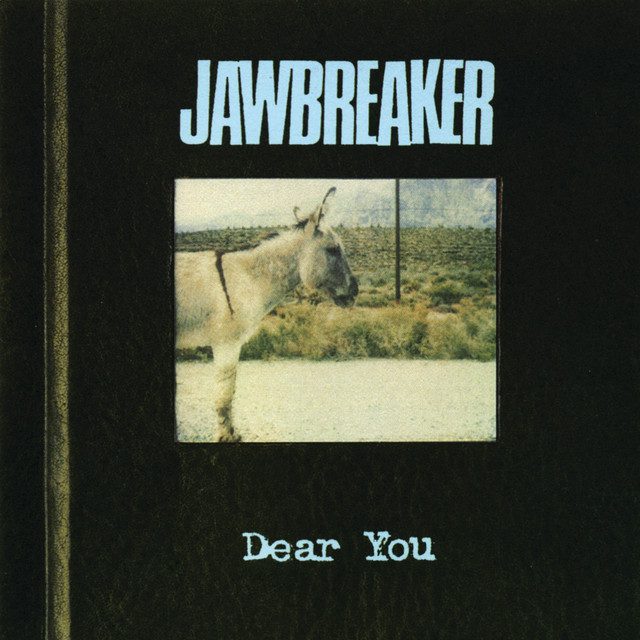
Jawbreaker’s success got them into meetings with a lot of big record labels. They eventually signed with DGC Records, who had signed Nirvana a few years earlier, but with that came a bit of a reform from the band in the way their music sounded. The guitar tone is cleaner, and so is Blake’s voice. Mostly gone were his gruff growls, almost as if he had needed a break from them. It’s no secret that Blake had throat surgery before recording 24 Hour Revenge Therapy, resulting in his singing voice going up a couple of octaves. Blake started writing songs to fit his vocals, and Dear You was the result. It’s something you can feel in the opening track, “Save Your Generation.” With lines like, “We’re killing each other by sleeping in,” the song is a plea to the slacker generation and being pessimistic about the world around you.
“I Love You So Much It’s Killing Us Both” is as close to an older Jawbreaker song as we get tempo-wise off Dear You, but it’s filtered through the band’s updated sound. Lyrically, the song follows what a lot of pop-punk songs about relationships cover: a kind of reluctant savior. The first line of the second verse states, “How could I save you when I couldn’t save a dime?” Essentially saying, “I can’t function like an adult, how can I save this relationship?” When I write these retrospectives, I always feel like I skimp out on how the band plays; really, it’s always solid. There’s no exception here. While tensions may have been boiling between Chris Bauermeister and Schwartzenbach, they’ve never felt more musically in tune with each other.
The first single off Dear You was “Fireman.” The song is Blake detailing dreams about an ex dying in a myriad of ways. Blake’s way of using imagery in this song is fantastic. The melodic riff used in the intro and between the verses seems to be a reset, like the narrator is waking up after each of these, and the riff puts him back into another of these dreams. The chorus and bridge seem to be the narrator acknowledging the dissociation and repressed emotions.
You can’t go into this album without talking about the song “Accident Prone.” This song, along with “Jet Black” and “Basilica,” feel like proto-Jets to Brazil songs. Slower, more meditative, and leaning closer to what would be considered emo than punk rock. The song seemingly is about being at the lowest point in the narrator’s life and the reflections of how they got there. The opening lyrics to each verse bring up an almost fight-or-flight response.
“What’s the furthest place from here?”
“What’s the closest you can come to an almost total wreck?”
”What’s the meanest you can be to the one you claim to love?”
Blake’s intro to the song on Jawbreaker’s Live 4/30/96 album talks about how the song is about a scary time the band had the previous year. Sometimes it only takes a small nugget of a feeling to get to that place. This isn’t the wordiest song, but it does cut hard, probably more than most songs in general.
It would be easy to dismiss “Bad Scene, Everyone’s Fault” as too poppy for Jawbreaker if it wasn’t such a great song. In an album that can be considered musically moody in some points, its bright guitars do stick out a bit. The song tells the story of running into a friend at a party who had recently been dumped by his girlfriend, but the girlfriend was in the other room with her new boyfriend. There’s also this dissection of what it’s like to be the old(er) guy at a party when you’re kind of over that scene. I’m not sure who chose the singles for this album, but this should have been one of them.
As a punk rocker and nerd, I always get stuck debating how I should spend my May 4th, celebrating Star Wars or Jawbreaker. I know, ideally, you can do both, but it’s still tough. That being said, “Sluttering (May 4th)” is hands down one of the best songs about the end of a relationship. It doesn’t fall into the immaturity that some songs did during this era, making either a joke or name-calling, but whoever these songs are about did Blake dirty. Each word of the last verse feels like a nail in a coffin, and each snare drum hit hammers them in place. Blake’s repeating of “If you hear this song a hundred times it still won’t be enough,” clings the sentiment to them.
“Boxcar” was rerecorded for Dear You, but it was not put on the record’s original release, one of the few instances where the band successfully avoided one of their already popular songs being included on their album. The recording was eventually put on an album of B-sides and non-album songs called Etc., released in 2002 and on its rerelease in 2004. This version of “Boxcar” matches the band’s reformed guitar tone, but is played nearly identically to its original version, which in a way describes the reunited band.
Despite initially being hated by fans, Dear You went on to be one of Jawbreaker’s most popular albums. If you’ve followed Blake’s career, it’s nowhere near the left turn that Jets to Brazil would end up being, which is, meant in the best way. On top of using the song title “Bad Scene, Everyone’s Fault” for a tribute record, “I Love You So Much It’s Killing Us Both” was used as a title for a book written by Mariah Stovall, which explores the codependent relationship between two women. The lyric, “What’s The Furthest Place From Here” is the title of a critically acclaimed comic book written by Matthew Rosenberg and drawn by Tyler Boss. “Accident Prone” itself has been covered by the likes of Hayley Williams of Paramore and others, but one of the best renditions of the song is Julien Baker’s piano-driven cover.
I think Jawbreaker would have evolved into what Jets to Brazil became. It’s kind of a shame that the band disintegrated not too long after Dear You was released. Schwarzenbach swore up and down that the band would never get back together, feeling he could not sing the songs anymore and not wanting to do a disservice to the fans, but we all know how that turned out. If you’ve been lucky enough to catch any of the shows since their 2017 reunion, then you know this hasn’t been the case. One of these tours has been specifically to tour Dear You. Fans want another record from the band, but I could see Blake’s hesitancy, given the reception of this album. His last official release was a Forgetters album in 2012. While it’s definitely Blake’s songwriting, it felt like a return to form with Jawbreaker.
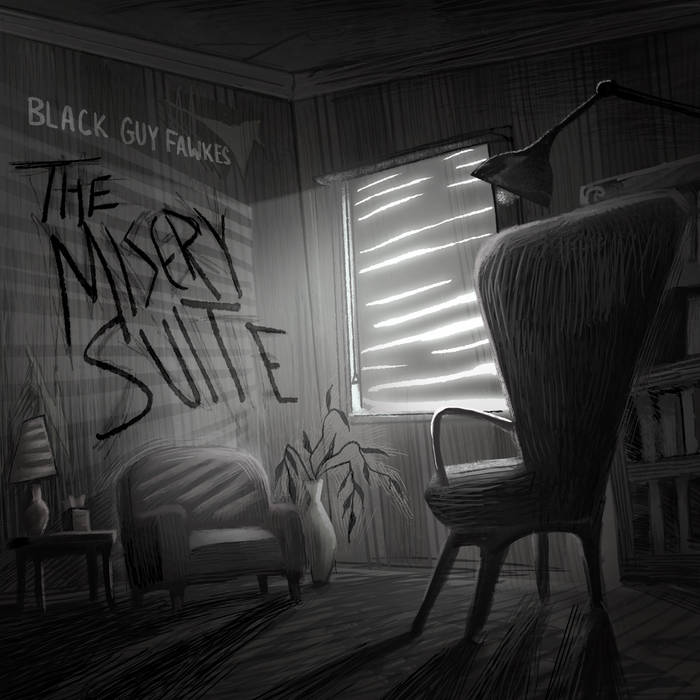
Ian Robinson – the artist better known as Black Guy Fawkes – is back with a brand new record, The Misery Suite. Due out next Friday (September 19th) on Asbestos Records, The Misery Suite marks Robinson’s latest full-length under the Black Guy Fawkes moniker. It’s chock-full of guest appearances by heavy hitting familiar names like […]
Ian Robinson – the artist better known as Black Guy Fawkes – is back with a brand new record, The Misery Suite. Due out next Friday (September 19th) on Asbestos Records, The Misery Suitemarks Robinson’s latest full-length under the Black Guy Fawkes moniker. It’s chock-full of guest appearances by heavy hitting familiar names like Angelo Moore and Dave Hause and Linh Le and Kayleigh Goldsworthy and Ian “The Punk Cellist” Legge and many more. Most importantly, however, the album finds Robinson sharpening his claws to finer points than ever before, bringing his songwriting to new heights.
To hear Robinson tell it in the literature that accompanied early announcements of the album, The Misery Suite draws its name from the room that Robinson used as a space for both “brooding” and for engaging in therapy sessions. Engaging in therapy was a new endeavor for Robinson in early 2023, and it very much informs both the process that crafted the record, and the outcome of the record itself in ways that are hugely beneficial to both the art and the artist.
The Misery Suite begins with the tick-tocking of an analog clock. It’s a fitting introduction to album-opener “Beginning Of The End.” Based on the listener’s headspace, the clock plays as either warning that we’re running out of time, or as the predecessor to an alarm, a pending wake-up call that’s about to jolt you into action. Set over a simple four/four alternating chord pattern, the verses and the first of many anthemic choruses on “Beginning Of The End” have us wondering; has a lifestyle of bad choices and mistakes and missteps and transgressions has doomed us to oblivion? Or, perhaps, is there a point to all of this; a way to pull ourselves out of a tailspin with sights set on a redemptive arc. Therein lies the journey we’re about to embark on over the course of the next nine tracks.
This existential struggle is at the core of the album’s recurring theme. “Cause For Alarm” is full of the type of fear, doubt and insecurity that lead many people to a breaking point, or at least to a decision point. “I think I’m breaking down/Cuz I don’t know fucking how to make this lifestyle work” is the type of reflection that can push one to find help, or to make perhaps a more nefarious jump into the abyss of their choosing. “Fear Of Faith,” featuring the incomparable human dynamo that is Linh Le (Bad Cop Bad Cop), is the first big car-crash of a punk rock song. Set over a shuffling tempo, it finds Robinson – and Le – and really, all of us, asking the difficult questions about where exactly we’re supposed to turn for guidance and hope if there is no sign that traditional measures have worked in the past. “The rosary and all its beads// won’t help me get my wants and needs…there’s no sign that this cross will help me get back all I’ve lost” is a sign that maybe we’re not necessarily in this struggle alone, but that we’re going to have to search a little farther and wider for strength. It’s also chock-full of the kinds of brilliant and layered harmonies that have been one of Bad Cop’s calling cards for a decade now.
“Little Black Storm Clout” is a mid-tempo story of alienation and abandonment with a gigantic sing-along, where we all, sweaty arms linked in basement punk show camaraderie, shout along at the top of our collective lungs, wondering what we’ll have to do to be accepted for who – and how – we are. “Disposable” brings Side A of The Misery Suite to a close in tender, acoustic-driven fashion, and features our first of two back-to-back Punk Cellist appearances. It’s a somber track with an almost hypnotic recurring guitar melody, and it once again laments feeling like a castoff, like an outcast who’s been left behind by friends or family or society or all of the above.
“Water & Wine” starts off Side B with a bit of hope. It’s the first real moment of change; the first real moment that the reflection and negative self-talk we might have engaged in in Side A has a counter-balance. “You’re not alone, you’re just misplaced…don’t forget, you’re unforgettable.” It’s got another big singalong outro, which creates the realization that those moments that we’ve spent together in those sweaty punk rock rooms are the thread, the something bigger that unites us, the collective that can help us realize we’re not alone. “Racial Battle Fatigue” is another car crash of a song with a giant, wailing guitar woven in and out, though it’s also the first track that probably qualifies as traditional “folk punk” in the truest sense of the term. It’s a razor-sharp dart aimed directly at the forces in this country that continue to treat minorities as other, as second-class citizens, and as needing to act or think or perform in a certain type of deferential way in order to be something close to accepted. “Glass Houses” might be the album’s high-water mark. Featuring writing – and soaring vocals – from Lauren Kashan (ex-Sharptooth) it’s a massive, stadium-filling rock track with super tight percussion, a slow, chunky breakdown, and Ian’s blood-curdling wail in the bridge. It makes this semi-reformed ex-nu-metal kid’s heart happy. “This Radio” is more of a traditional pop-inspired rock song, the perfect place to feature guest vocals by the great Dave Hause. Dedicated to “the punks, the freaks, the in-betweens,” it continues the redemptive arc in a manner that is so familiar to many a listener; finding solace in music. Finding inspiration to just keep going, to maybe not be perfect but to at least make progress in a way that buys you some time.
“Spotlight” brings the album to a close in a manner that…well, if “Glass Houses” isn’t the high-water mark it’s only because “Spotlight” is. It starts out solo and acoustic before kicking in a massive, Midwest emo riff-inspired verse. Lyrically, it’s a bit of a tale of the struggle that is therapy. “It’s so hard to hold a spotlight on things that keep you up at night.” The album and the process and the journey are not for the faint of heart. The work is hard and it’s messy but it’s cathartic and ultimately freeing. The kind of narrative that only comes when we’re razor sharp in our focus and not afraid to call out bullshit, even when that bullshit comes from elsewhere in the scene or, as is especially the case on The Misery Suite, from the reflections when we look in the mirror.
On 24 August 2025, the Ottobar hosted a night of post-punk and indie rock music. Hometown artists Twings, anocean, and Empris & The Gems were accompanied by Freezing Cold from New York City who joined the party for a great night. Twings is a darkwave band from Baltimore whose members include Charlie Hughes (vocals), Curt […]
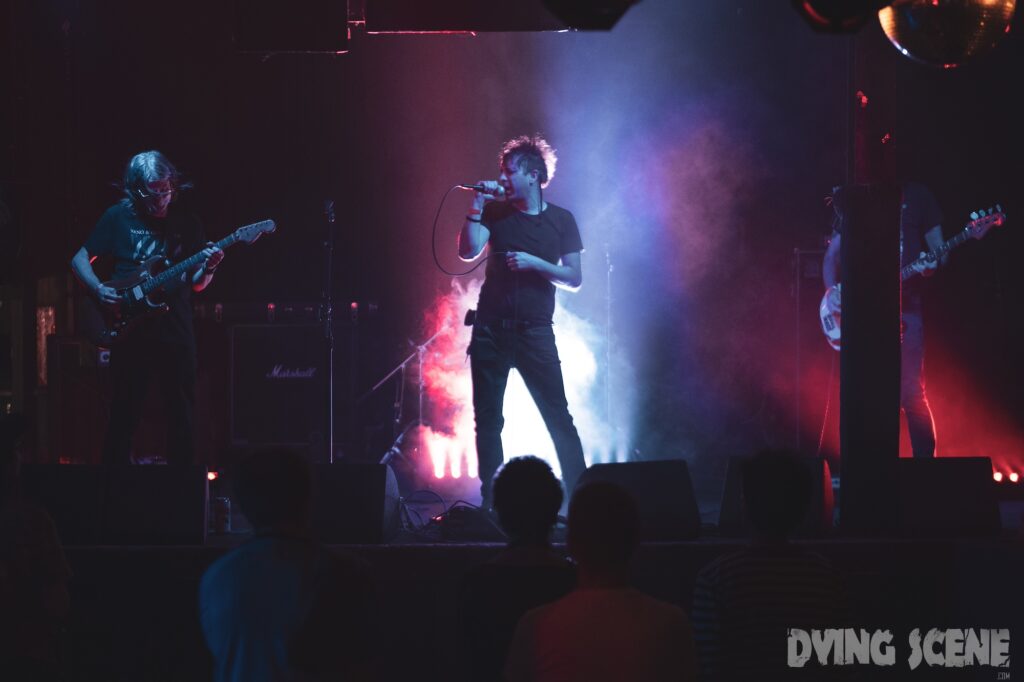
On 24 August 2025, the Ottobar hosted a night of post-punk and indie rock music. Hometown artists Twings, anocean, and Empris & The Gems were accompanied by Freezing Cold from New York City who joined the party for a great night.
Twings is a darkwave band from Baltimore whose members include Charlie Hughes (vocals), Curt Schmelz (bass), and Rob Girardi (guitar). Their sound is reminiscent of the 80’s post-punk that will keep you dancing through the night. Their new album There’s a Dark Sky out now. Follow them here.
Freezing Cold is a New York City-based indie rock post-punk band whose members include Jeff Cunningham (vocals/guitar), Leanne Butkovic (vocals/bass), and Angie Boyland (drums). This was their first show in Baltimore and the last stop on this tour, so it was great to share that experience with them. Listen to their new record, Treasure Pool, that was released on 1 August 2025. Follow them here.
anocean (lowercase) is a dreamy noise pop band right from Baltimore whose members include Anna Conner (vocals/guitar), Kyle Franta (vocals/guitar), Pete Ryan (drums), and Dave Mann (bass). The band offers a beautiful atmospheric sound that you will keep wanting more. Their EP, Climbing Walls, was released 1 November 2024. Follow them here.
Empris & The Gems is an indie rock band from Baltimore who opened the show. Empris (vocals/guitar), also known as Emily Priscilla, performed a solo set without the rest of her band. Their latest release, Three of Swords, was released on 30 May 2025. Be sure to find them here.
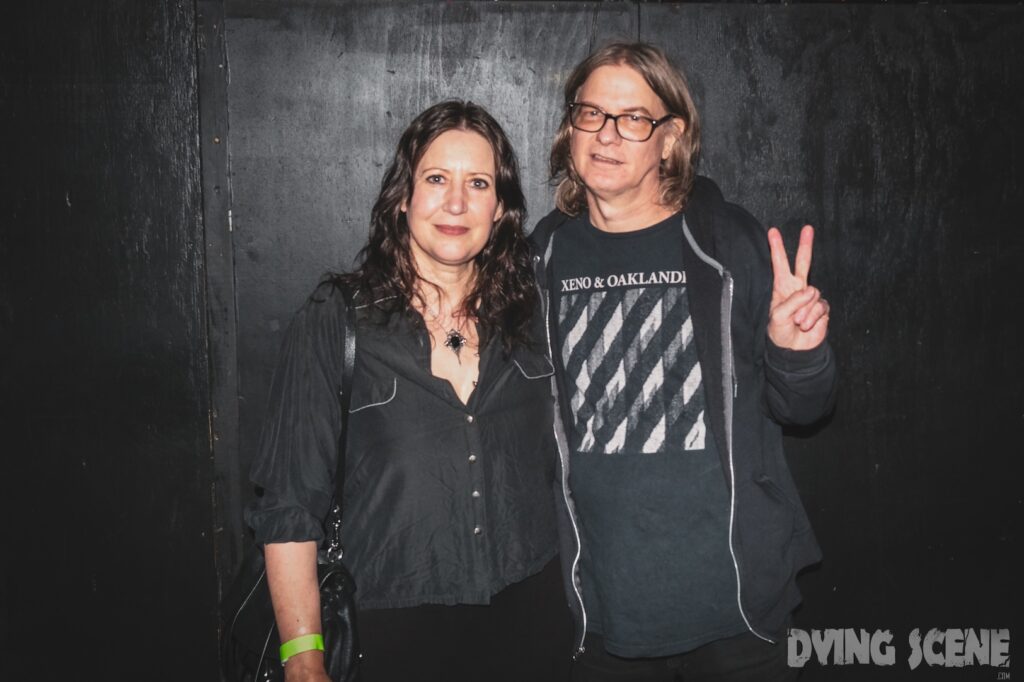
Rob J Girardi (guitarist for Twings) with his wife, Veronica Jay Clay hanging out at the show. I met them when their project, RjVj played at Simple Bar in Washington, DC on 18 January 2025. RjVj includes Girardi (guitar) and Clay (vocals/synth) album, Elixir, is scheduled for release on 19 September 2025. Follow them here.
Welcome to Four Records! This week Forrest talks to Dying Scene editor Anarchopunk. Anarchopunk’s Four Records: 0-10: Toy Dolls – “Dig That Groove Baby” Teenage: NOFX – “Punk In Drublic” Twenties: Against Me – “Reinventing Axl Rose” Recent Record: Propaghandi – “Victory Lap” Listen on Podbean Listen on YouTube Follow us Instagram Email: fourrecordspodcast@gmail.com Opening […]
Welcome to Four Records! This week Forrest talks to Dying Scene editor Anarchopunk.
After Jawbreaker’s tumultuous breakup in 1996, Blake Schwartzenbach moved to New York City. Trading one trio for another, Schwartzenbach recruited Jeremy Chatelain (Handsome) and Chris Daly (Texas is the Reason) and formed Jets to Brazil in 1997. This new band would go on to record and release their first album, Orange Rhyming Dictionary, in 1998. […]
After Jawbreaker’s tumultuous breakup in 1996, Blake Schwartzenbach moved to New York City. Trading one trio for another, Schwartzenbach recruited Jeremy Chatelain (Handsome) and Chris Daly (Texas is the Reason) and formed Jets to Brazil in 1997. This new band would go on to record and release their first album, Orange Rhyming Dictionary, in 1998. It’s strange that this album was as well received as it was, considering Jawbreaker’s foray into a cleaned-up sound with Dear You did not go over well with their fans. While Orange Rhyming Dictionary feels like its own thing, it definitely still has Jawbreaker in its system. That’s not necessarily a bad thing. This album, like many after a songwriter parts from a seminal band, is expected to have some DNA from the previous outlet.
Almost five years to do the day that Jawbreaker released Dear You, Jets to Brazil released their second album, Four Cornered Night. The album continues Schwartzenbach’s journey into a poppier sound which makes this a riskier album, but it does pay off. Jets to Brazil’s songs have this meditative quality to them, something that was established on Orange Rhyming Dictionary, and is explored much more thoroughly here. By this time, they had added a second guitarist, Brian Maryansky, to round out the band and give them a much fuller sound, but also gave Blake the chance to experiment more with other instruments.
The album opener, “You’re Having the Time of My Life,” shows this well. Its wavering opening riff makes you unsure of what is coming. There’s mystery in it through a build-up that gives way to some strums of the guitar that set everything straight, and goes into the first verse. Later the riff is repeated to transition us to other parts of the song. The guitar is brighter than most of the songs on Jets To Brazil’s previous album and definitely more than Jawbreaker’s catalogue. The chorus is one of the other shiny parts of this song. Not even because of its lyrics, which are some of Blake’s strongest, but with the use of bells as they emphasize the chords after the first line of the chorus. It’s a nice preview of the experimentation with instruments not of the norm on this type of album.
It’s so hard to parse Four Cornered Night down to a handful of tracks without it being too first-side-heavy. It’s perfect in its sequencing and there’s almost a Beatlesque quality to it, especially with “Air Traffic Control.” That guitar tone and riff feel like a slower take on the Fab Four’s “And Your Bird Can Sing” from 1966’s Revolver. Of all the lyricists that have come from punk rock, why Blake’s lyrics don’t get some sort of academic analysis is beyond me. If anyone knows their way around song composition, it’s him. While it wasn’t unusual to compare a relationship to a plane crash, Schwartzenbach’s expanded interpretation of the metaphor is one of the better examples of imagery used on this album.
There’s a good chunk of this album that features Blake on piano or keyboard. Unsurprisingly, he takes to them well. The keyboard intro on “One Summer Last Fall” is another surprise on this album, but Blake’s use of piano on “In The Summer You Really Know” shines and leads the song to being one of the strongest tracks on the album. The piano starts off very prominent and sounds like it’s mixed louder in the beginning, but gradually fades enough until it mixes in with the rest of the instruments, which includes a cello part played by Amy Domingues. Partway through, there’s a break of just Blake’s piano, but at some point, the piano subtly drops out.
If Blake Schwartzenbach has a country song it’s “Empty Picture Frame.” The first minute and a half of the song is just Blake and a guitar before the band joins him; it feels like it could be sung by Hank Williams. While Blake’s vocals and guitar keep with the quasi-honky tonking, the rest of the band comes in a bit shaky. A lot of this album feels like this, but not in a bad way. Sometimes unsure of the risks it takes, it’s almost as if Blake was crucified for experimenting with a softer and cleaner sound or something.
Schwartzenbach had been in New York for about three years when this album was released. “Your X-Rays Have Just Come Back from the Lab and We Think We Know What Your Problem Is,” seems to be about that exact thing. The imagery Blake uses to describe the city, some of its people, and how he’s dealt with them during his time there, paired with this almost upbeat song, gives the impression that NYC is a double-edged sword. While the sentiment isn’t necessarily unique, the observation through his lens surely is.
Everyone’s an artist with a pristine vision
A cellular intelligencer
With a fire in her kitchen
Too many chiefs on dope
And the rich don’t want to listen.
The album ends with “All Things Good And Nice.” The lyrics are written in couplets, two successive lines that rhyme and have the same metre. Blake spends five and a half minutes thanking everyone from his family to his bandmates and even his piano. If you weren’t convinced that Blake Schwartzenbach could write an album full of ballads and pop songs by the end of this album, then you probably never understood Blake to begin with.
Four Cornered Night is Blake Schwartzenbach at his most experimental. From the arrangements of the instruments used to Schwartzenbach’s reflective lyrics, this album feels like an exercise in how to progress as a songwriter. I don’t think he went out to make a post-punk/emo album via Brian Wilson, but it’s what came out. Proving, he’s not just one of punk’s best songwriters, but one of the best songwriters in general.
San Francisco punks Who Asked For This? released a bad ass new EP called Get Comfortable a few months ago and we’re stoked to bring you the music video for one of five tracks “Mental Health Day”. Check that shit out below and listen to the full EP right here. If you’re in the bay […]
San Francisco punks Who Asked For This? released a bad ass new EP called Get Comfortable a few months ago and we’re stoked to bring you the music video for one of five tracks “Mental Health Day”. Check that shit out below and listen to the full EP right here.
If you’re in the bay area, catch Who Asked For This? this Saturday, September 13th. They’re playing at O’Reilly’s Pub with Chino’s Burnin’, Watch This Drive, and Noise In The Room.
This premiere is brought to you in part by Punk Rock Radar. If you’d like your band’s music video to be premiered by Dying Scene and Punk Rock Radar, go here and follow these instructions. You’ll be on your way to previously unimagined levels of fame and fortune in no time.
One of the few bands I will drop everything to go see is Jawbreaker, this set reminded me why. Since reuniting in 2017, it seems the band gets together for a handful of shows, mostly in bigger cities. This tour announcement was no different. It didn’t seem like there was too much time between when […]
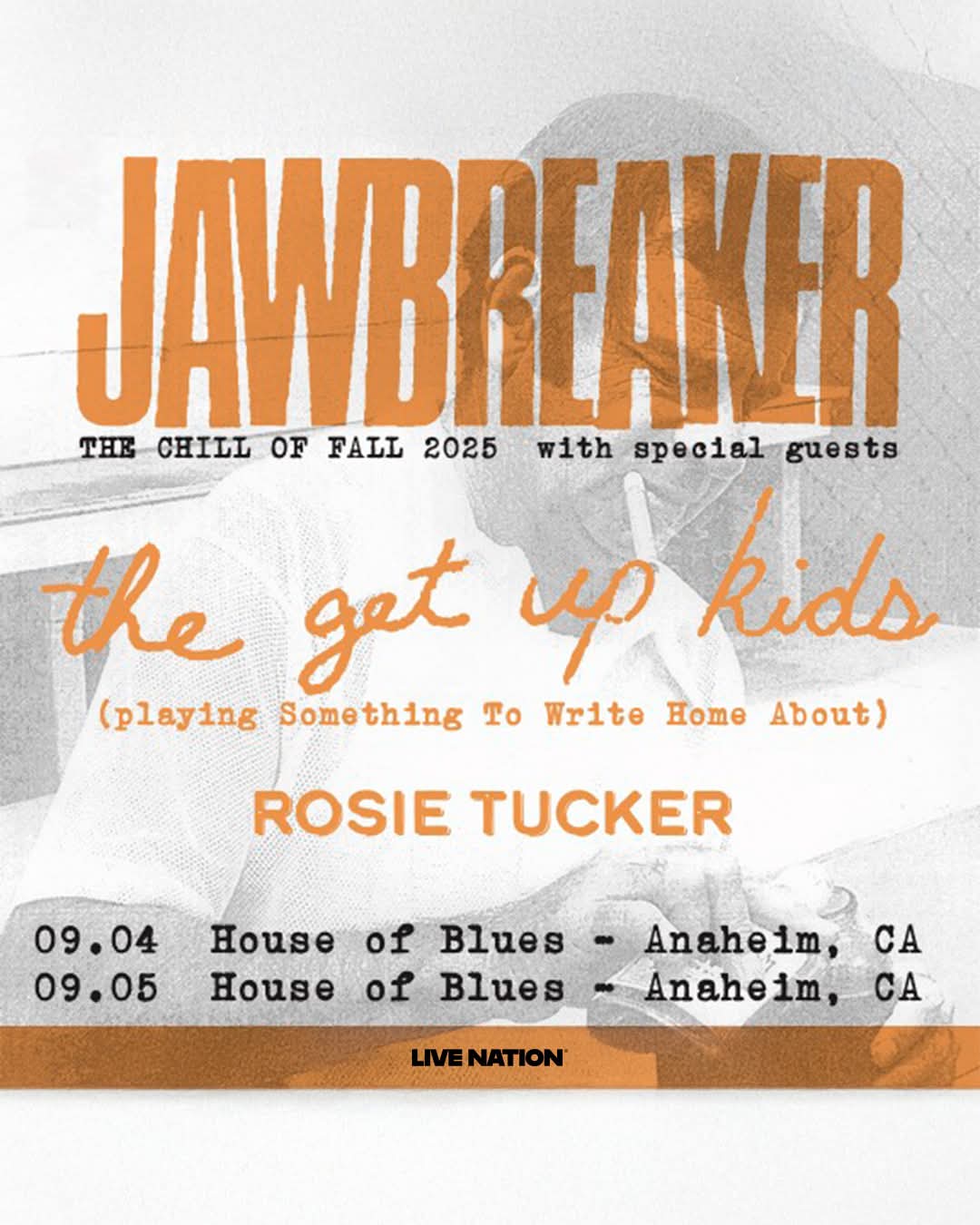
One of the few bands I will drop everything to go see is Jawbreaker, this set reminded me why. Since reuniting in 2017, it seems the band gets together for a handful of shows, mostly in bigger cities. This tour announcement was no different. It didn’t seem like there was too much time between when the tickets went on sale for their Chill of Fall 2025 tour and last night’s first show. It was nice not to drive out to Los Angeles to see them on a school night this time, even if they were playing the House of Blues Anaheim.
I have written about my disdain for it. The thought mostly remains the same this time around. I was expecting mostly an older crowd, but was happy to see some kids without parents who had forced kids to go with them. Not that there is anything wrong with that; I’m cut from that same cloth. I was able to get my merch relatively quickly and find a decent spot. I think it was sold out, but it wasn’t elbows to assholes, as it has been for other shows I have been to there. It was a much more enjoyable time than the last visit. Maybe it’s the type of people certain bands attract.
Singer/Songwriter Rosie Tucker opened the night. Tucker played a thirty-ish minute set with songs such as “Barbara Ann” and “Airport” from their 2021 album Sucker Supreme and the title track from their latest album, Utopia Now. Skilled at the guitar and writing lyrics, Tucker’s set was fun. Their clean guitar, paired with seemingly normal lyrics until you get to the meat of the song, was a fun addition to the night. Having not had a chance to listen to the full albums, it makes me wonder what some of these would sound like with a full band. Tucker had a lot of energy and a lot to say. They were just as excited for the night as we were.
Given that the opening act was just Rosie Tucker and a guitar, setup for The Get Up Kids was relatively quick. I’ve never given The Get Up Kids a fair chance. It’s not that I don’t like them. I like what I’ve heard, but it just never stuck. Many friends have put them on for me and something doesn’t strike for me. However, as I get older, I will revisit some bands I feel like I should like. The Get Up Kids are one of those bands, and Something to Write Home About is typically the album I dive into when I do. It helped that this time Matt Pryor and crew were playing it in full. The album itself is forty-five minutes long, it didn’t leave too much time for banter in between. The band made the unsurprising confession that they were also Jawbreaker fans, and that “Long Goodnight” was essentially the band’s take on one of their songs. The Get Up Kids have been on a twenty-fifth anniversary tour for Something to Write Home About for about a year and a half, while their playthrough of the album sounds very practiced, it is definitely not road-weary.
Finally, it was time for the main event. The last time I saw Jawbreaker was from the balcony at a much bigger venue; this time, I made sure I would be closer. When the lights went out, the band came out to the theme of the 1979 film, The Warriors, which I believe they did on their last tour as well. Blake came out clad in a black jumpsuit and introduced the band as Jawbreaker from America and then tore into the Dear You track, “I Love You So Much It’s Killing Us Both.” Despite the thirtieth anniversary of Dear You being a week away from this performance, the setlist wasn’t heavy on songs from the album. Jawbreaker managed to fit in a good mix of songs from 24 Hour Revenge Therapy, and a couple of deeper cuts with “Fine Day” from Unfun and “Parabola” from Bivouac. Jawbreaker had teased fans on Instagram about a week ago with the band rehearsing what seemed to be a new song. That ended up being “Invisible.” The song to me feels closer to Blake’s later ventures with Jets to Brazil carrying that melodic melancholy with Jawbreaker rawness. It continues what Forgetters was doing by bridging the gap between Jets and Jawbreaker. It’s undoubtedly another Schwartzenbach masterpiece.
I’ve never seen a bad show from Jawbreaker, but their sets are never longer than about an hour. I’m always left wanting more. You never get to hear everything you want, but you’re never left unsatisfied. It’s never more than a ten-to twelve-song set. Everyone knows the number of great Jawbreaker songs is greater than that. Maybe it’s the band’s way of keeping all of this special. Blake started the set with something he had heard at a Cap’n Jazz show he had recently been to: “The world is horrible, but let’s have a good hour.” That’s exactly what this was.
It’s a crime Jawbreaker doesn’t tour as much as they should. If there is one band to put on a pedestal, it’s them. Chris Bauermeister and Adam Pfahler are still the steadiest rhythm section in punk/emo/pop punk/whatever box you need to put Jawbreaker into, and Mitch Hobbs’ second guitar is just the right amount needed to make a three-piece band that always sounded full to begin with more complete. Sadly, Schwartzenbach seems to keep the ratio of overall career albums to later career shows narrow. While it’s less doubtful that the band won’t play again, it’s the hope that the band won’t leave us hungry for too long.
It gets pretty busy here at Dying Scene and sometimes we forget that we have cool things like our Band Spotlight segment where we highlight lesser known, emerging bands that our readers need to know about. Then a band like Circa 40 comes along and they’re so fucking good that it reminds us that we […]
It gets pretty busy here at Dying Scene and sometimes we forget that we have cool things like our Band Spotlight segment where we highlight lesser known, emerging bands that our readers need to know about. Then a band like Circa 40 comes along and they’re so fucking good that it reminds us that we haven’t done a new spotlight in almost a year and that we need to get off of our lazy asses and remedy that. So, here we go!
We couldn’t find much info about these Seattle based emo kids, most likely just because they’re a relatively new band. However, we do know that their debut, self titled album hits harder than Don Jr. hitting a crack pipe. Even if you’re not a fan of emo/screamo, you need to give this one a spin. As expected, the poetic lyrics and screeching, raspy vocals oozing with emotion are present but the musicality is on a different level, especially for a younger band and even more so for a band in this sub-genre which isn’t always known for being polished. There is a level of maturity there that usually takes a couple years to attain. Clever, tinny guitar riffs squeezed into spots you wouldn’t expect, drums that drive the songs and almost take lead on some tracks and hooks that live in your brain like a pork tapeworm larvae, there’s a ton of talent on display.
We are uber excited to hear more from these PNW punks over the next few years!
Phoenix, Arizona hardcore punk band Overstand is gearing up for the release of their debut album Take Control, due out October 3rd on Stomping Ground Records. Their brand new single “Short Fuse State” features a special guest appearance from Puerto Rican Myke (Skarhead, District 9) and we’re stoked to host the exclusive premiere of the […]
Phoenix, Arizona hardcore punk band Overstand is gearing up for the release of their debut album Take Control, due out October 3rd on Stomping Ground Records. Their brand new single “Short Fuse State” features a special guest appearance from Puerto Rican Myke (Skarhead, District 9) and we’re stoked to host the exclusive premiere of the music video. Check that shit out below.
With former members of Warzone, Roger Miret and The Disasters, Vision, District 9, Casket Life, and North Side Kings in the ranks, Overstand has quickly become a name to watch, both in the states and abroad. They’ve torn up stages alongside Sheer Terror, Ignite, The Dwarves, Death by Stereo, Manic Hispanic, Kill Your Idols, and more, as well as holding their own at festivals like Within These Walls.
Overstand isn’t interested in nostalgia or posturing — they’re here to Take Control, and their new material makes that abundantly clear. Brutal, focused, and burning with intent, this is hardcore done right. Pre-order their new album on limited edition colored vinyl right here.
When I first started doing interviews for Dying Scene, one of our editors, Jay Stone, gave me some advice: Whatever you do, don’t be like Chris Farley interviewing Paul McCartney on Saturday Night Live. If you don’t know what I’m talking about, please watch the video below. I would like to think I don’t do […]
When I first started doing interviews for Dying Scene, one of our editors, Jay Stone, gave me some advice: Whatever you do, don’t be like Chris Farley interviewing Paul McCartney on Saturday Night Live. If you don’t know what I’m talking about, please watch the video below.
I would like to think I don’t do that too much, but if high school me knew that at some point in the future I would get to have a conversation with Bill Stevenson about the Beatles, I probably would have retroactively shit my pants. To say I was nervous is an understatement, and if there was someone I’d get like that with, it’s definitely Bill Stevenson. Out of all the people I’ve interviewed, Bill Stevenson was definitely one of the coolest.
Bill is out promoting the re-release of the Descendents albums that had been locked away under SST, which obtained the rights from New Alliance Records when it became a subsidiary of the record label. The whole time fans were falling in love with their old albums, the Descendents weren’t seeing a dime. Eventually, what SST was running out of was time, as the records were subject to copyright reversion. While it sounds like a simple solution, the impression I get is that it wasn’t.
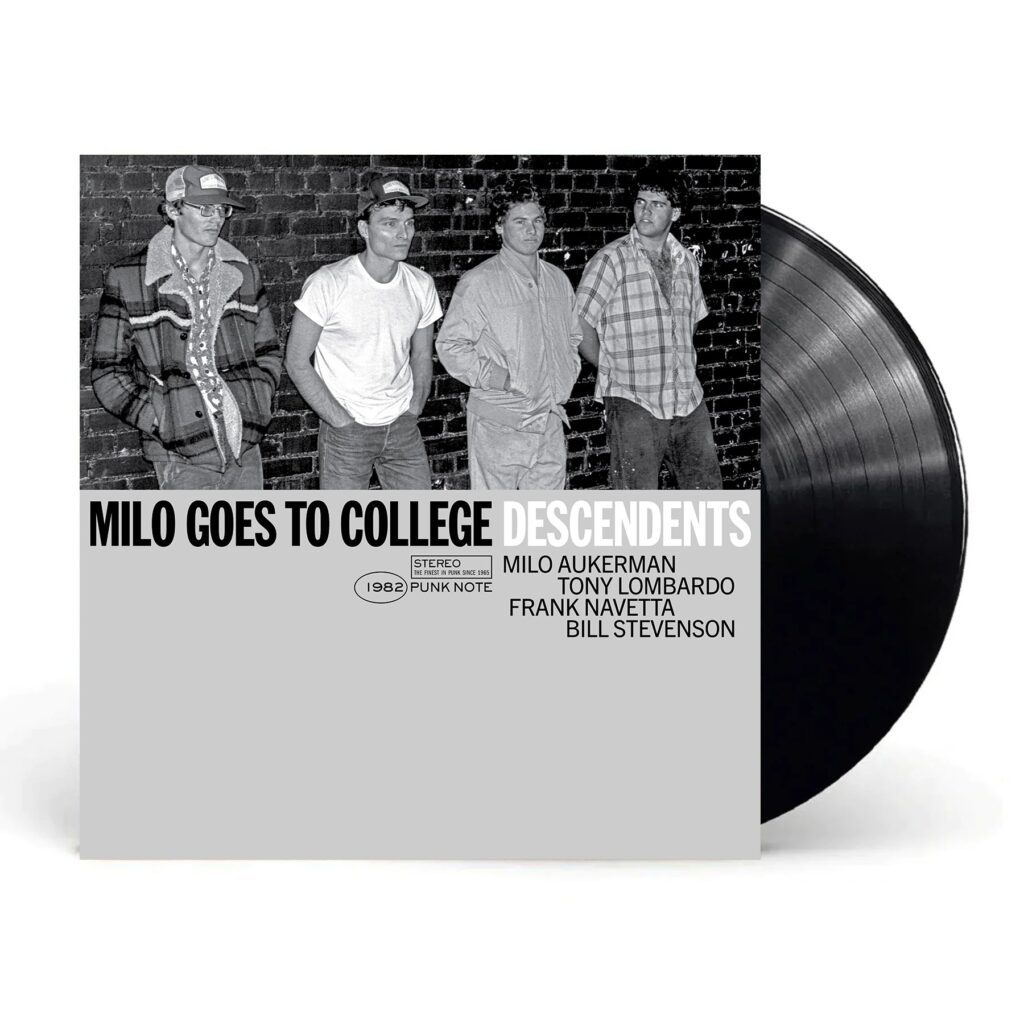
While it’s been a long time coming, the Descendents will start releasing their older albums on Org Music, starting with their first LP, Milo Goes to College. Below, Bill and I talk about these re-releases, some of the band’s influences, and the newer generations of music fans.
Dying Scene (Forrest Gaddis): I know that you are re-releasing the old records. Are you changing anything in the mix, or is it just like it sounded when we bought it before?
Bill Stevenson:These are re-releases we’re doing with Org Music. They’re just exact re-releases. The exact album that we all know and love.
Was there any temptation to go in there and fix anything, or were you just like, “Let’s not mess with a good thing?”
That might be part of a later thought. The precarious state of all those old records has not been available. I wanted to just get them out there in their true form. Then we’re also doing what Org does, a lot of releases where, in addition to the original version, they do these album covers that kind of look like an old Blue Note jazz album. We’re going to do versions of each record with that too, with this kind of real different-looking art, some liner notes in addition to the actual original legit version.
I know people are always asking for unreleased songs from the early years, but was 9th & Walnut essentially like what would have been those songs?
We do have a couple of unreleased songs from each of the various album recordings over the years. I assume there’ll be some kind of place for that. A lot of times, we thought that this one wasn’t good enough to be on the album. Well, what changed? Did that song get better over the years, or should it still not go on the album? I don’t know; maybe there’ll be a time and place for that. Maybe even just an album or two with various random unreleased stuff, or yeah, maybe an extended release of some of these. Some of the albums definitely have more B-sides than others do.
Growing up, I remember there was the Still Hungry bootleg that everybody had. I know that it had four unreleased songs. It’s awesome to hear that there’s more than we thought.
I’m not really familiar with all the bootleg variations. It’s sort of not in my interest to be. That’s just somebody making money off of something that I’ve worked for forty-seven years of my life, but I want to say the one you’re talking about is stuff from Enjoy. There were a lot of extra songs on Enjoy, like maybe six or seven extra songs. I think there were more extra songs on Enjoy than there were on some of the other records.
With any of the Descendents’ albums, do you think their impact on punk has shifted at all over time?
Hmm. Yeah. That’s a tough one. I mean, I’m still getting used to the whole, “you guys are like a seminal band or whatever.” I’m still getting used to that idea. We had our influences. So I don’t know what impact we will have had on culture in the long term. I know that when mall punk happened, there was definitely an uptick in people being interested in the Descendents.
I know that every time there’s a new melodic punk band that becomes popular, I notice people refer to the Descendents all the time. It’s hard for me to understand it. I feel like we’re just part of a continuum, sort of like a river. You know, the river goes along and picks up little sticks and branches, and insects land on the river and go downstream. Bands are constantly contributing to the river or taking water away from the river. We’re just kind of one of those molecules of water in the river, part of a big circle or a continuum.
I’ve been listening to you guys since Everything Sucks. You guys have been considered seminal for at least thirty years.
I don’t know. Seminal is, like, it’s cool, and all that. Like the Velvet Underground were very seminal, you know, but you wonder if you asked them, would they have rather been seminal or been well-known, famous, and made enough money to have a place to live or whatever. Which would they prefer? I like to think I like it. It’s cool to just be part of it all. We were so fortunate to just be in that late seventies LA punk scene. It was like magic. That really was like magic.
Like almost every night of the week, you could go out and, well, it would blow your mind. Like a typical show, you know, Weirdos, Go-Gos, Germs, and Fear, you know, five bucks. A hundred people there, two hundred. It was just so crazy to have all this music happening. And I mean, a lot of it too, some of the lesser-known bands, like The Plugz, The Suburban Lawns, The Crowd, The Last, The Alley Cats, The Bags, just all kinds. I mean, even Devo kind of came out of left field. There’s all kinds of cool music happening. It was crazy to just watch it all. You’d see bands that nobody has ever even heard of, and they were headlining the show. The two that come to mind are The Last and The Alley Cats. They each had their moment in LA where they were like top dog.
I remember trying to find Last albums after hearing the song, “Van.”
The Last were, in terms of songwriting, I feel like Joe Nolte, their main songwriter, really laid the blueprint in terms of how a well-written song should sound or what that feels like. I absolutely worshipped them when I was a kid.
Do you feel any of the albums are of the time, or do you think they still resonate with the newer generation of punk rock kids?
I mean, maybe some of them are both of those things. They’re of the time, and in theory, they still resonate. I think with music, if it’s honestly done and it’s genuine, it’s from a real personality, from the heart, however you want to say that. I think that kind of music can last through different phases. Well, now people are into ska, and now they’re into death metal, and now they’re into whatever they’re into. Now they’re into EDM and whatever. I think a real, well-written song, and that it’s got something behind it, I feel like that can be more timeless than, say, a genre can..
Do you think any of the songs from those older albums aged horribly?
Well, definitely, because at the end of the day, you’ve got to remember, you’re dealing with some white, suburban, sheltered, middle-class little dumbasses writing these lyrics. So, yeah, plus now it’s a whole new world that we live in. There’s all new slang for everything. Almost a new vocabulary in terms of what the younger generation is speaking on a regular basis. They don’t even use any of the same words we used to use. So yeah, totally.
Not a lot of people can say that their whole coming of age, their whole teenage years are all out there on display for people to just look at it, listen to it. Do you have a bunch of shit you did when you were a young dumbass and you’re hoping nobody sees it or hears it, right?
It’s easier for me if, when people ever ask me about any of our lyrics from the late seventies or early eighties when we were just teenage kids and we had our heads up our ass. We had absolutely no way of talking to girls or getting laid or anything. That wasn’t a possibility. Some of the stuff we wrote came from a kind of a weird, bitter chip on the shoulder sort of a place. If people ask me about it, I just say, “Look, I was a dumbass teenager. Weren’t you?”
That’s the thing people have brought up in the last five to ten years; that whole incel thing. When you’re a teen, you’re still learning. Like you were saying, all of this is recorded on albums that are legendary to a lot of people.
Okay. Now you’ll have to fill me in here. I don’t know enough about that word, “incel,” or how it ties in. I mean, maybe it’s not even worth explaining, but I am curious, I suppose.
It’s short for involuntarily celibate, which is what it refers to, and it’s just kind of the misogynistic, sexist guys who blame women for not being able to get laid. People feel some of the older Descendents’ songs, are Incel-y. “Pervert” would definitely be considered an incel-y song. I know you guys haven’t played “Pervert” in years.
So, like with “Pervert,” I mean, obviously, Milo’s kind of in character there, you know? Like he goes, “coochie, coochie, coo.”
I recognize that, but you guys shouldn’t be held to something that you wrote forty years ago, especially if you acknowledge you were dumb kids. ( I previously used “Pervert” as an example in an article about I Don’t Want To Grow Up.)
I think people seem to tolerate somebody being in character, making almost like a social commentary, or being in character. I think people tolerate that way more in books than they do in music. Yeah. Everything keeps changing. I think it’s good. We’re adding new words to the dictionary, and we’re making some of the old words taboo, and I guess life just goes on, right?
With the re-release of the back catalog, are you going to get some of the deeper cuts into the set lists?
We just kind of choose all the songs that we feel like playing. The songs that we rehearse and keep up to speed can be thrown into the song list or into the encore whenever we might want them. That repertoire is about sixty songs. It’s a bit more than just the fifteen greatest hits.
More than just Somery.
Yeah, there’s a lot to it, and then sometimes something will come out of the woodwork, like some band covered “Good, Good Things.” I don’t know the name of the band. (Note: The band was Drain.) Then all of a sudden it was like a ton of people at our show that only knew that song came to see us play that song, but we don’t always play that song. So lately we’ve been playing that song every show. Otherwise, a bunch of people would be bummed that they drove all that way if we didn’t play it.
I saw you guys in San Diego after things opened up after COVID, and I was excited to hear it.
Yeah. I don’t know what it is. In our set list, we always kind of thought in a given set list, we’d either play “Silly Girl” or “Good, Good Things.” They’re about the same person and kind of cousin songs, but now lately we’ve been playing both of them.
“Silly Girl” was the bigger song for my friends and me, but “Good, Good Things” grew on me as I got more listens into I Don’t Want To Grow Up.
It’s interesting when a song of yours gets really, really popular. Due to no effort of your own.
Would that be an example of a song that maybe got better over time?
That the song got better?
Not got better, but the perception of the song. Are there songs that you feel have aged better than other songs over time?
Oh, that’s a great thing to think about. Off the top of my head, I don’t really know. Honestly, I hate to just say, “I don’t know.” I love to see people’s interviews and sometimes just think, “I could never pull that off.” Let’s see, what’s one that they really love and then they didn’t use to really love?
I don’t know. I think some of them, we just shove them down their throats regardless. We always play “Van.” That’s not exactly a crowd pleaser, but we always play it anyway because we love it so much and it’s fun for us to play. It’s in those nines and sevens, all that weird timing. That’s fun for us, you know, because we’re up there, obviously, for the people that came to see us, but we’re also up there to have some fun. I think that when we’re up there having fun and just kind of doing what we want and doing it how we want it, I think people can really tell that and it makes them feel better.
Every time I’ve seen you guys, it’s been nothing but an amazing show.
To be honest, I’m grateful to just still be able to do it. You know, fifteen years ago, I had some real serious health problems. It almost killed me. I’m glad to be doing it. Plus, the older you get, you think about it and it’s like, when I’m taking my last breaths on my deathbed, who the hell do you think is going to be in that room with me? It’s going to be my guys. It’s going to be Karl and Stephen and Milo. Chad and Scott, that’s who it’s going to be. They’re my best friends in the whole world.
You’ve gone on to produce a lot of bands. Was recording Milo Goes to College what piqued your interest in producing records, or were you kind of looking to do it before?
Maybe the seedling of that goes back to me just having a curious mind with respect to music at a very early age. It was the same with the drums. When I was five, I would go in the kitchen and get all the pots and pans and the spatulas and the big soup ladles and the forks, knives, and whatever.
I’d lay that shit out all over the kitchen floor and play drums. It’s like I had an interest in it, even though I had no idea what I was doing. Then I feel like with the producing, the example I always use is, I’ve always been like a curious listener.
When I listen to a song, I’ll listen to the song the first couple of times, but then I immediately start listening to every little part of the song: all the drum parts, all the bass lines, the vocals, the backing vocals, the harmony vocals, the mix, and what kind of guitar tone was used. And I’ve always done this. I think way back to when I was thirteen and I got this album. It was called The Beatles Rarities. It’s a bunch of B-sides and unreleased stuff. There was the song, “Love Me Do“ on that, you know, “Love Me Do?”
Yeah. I’m a huge Beatles fan.
“Love Me Do” is on that. Every time I would listen to it, I would stop what I was doing and sit there. Without knowing exactly what was going on, I knew there was something wrong with it. I felt like it was that McCartney wasn’t playing the right notes or wasn’t playing in the right key or something. There was something off about the bass. Now, when I got a little older, I realized what it was. The bass is really, really out of tune on that record. It’s so sharp.
I mean, it is so sharp that it almost sounds like he’s playing the song in a half step higher key than the other guys. When I was young, I didn’t know what I was hearing, but I was hearing something that wasn’t right. It’s kind of like at a real young age, I’ve always had that kind of curious mind. I can be a pain in the ass with respect to dissecting a song and turning it inside out. What about the bridge? What if we go to C minor there instead of E flat or whatever it is?
I’ve always been curious that way, and with the sound, too. If I hear a record and I really fall in love with the sound of it, I will listen to that record endlessly for weeks and months because I’m obsessed with trying to know every little thing about it. Then at the same time, if the sound of the record doesn’t please me. It’s like poison to me. I hate it.
What’s the last record you obsessed over like that?
That’s a good question. Let’s see something really great-sounding. It might be some of those Luna albums or the New Pornographers. I mean, the easy one before that is those first three Billy Idol solo albums. Now, Generation X has been one of my all-time favorite bands, but sonically, I fell in love with those first three Billy Idol albums. I mean, I know every bass, guitar, drum, and vocal molecule on all of those records. I could play all of those songs on any instrument right now.
I’ll get into something and I’ll become just obsessed with the way it was mixed, something like, “OK, I’m not really a fan of this band at all. I’m not a fan of what they do,” but that very first Rage Against the Machine album. The mixing of that just strikes some kind of chord with me. It’s unbelievably powerful and just great and awesome. I don’t really like the band. I could never sit through a whole Rage Against the Machine album, but I like the way it sounds.
How fast are these releases going to come out for the other records?
I don’t know the exact cadence, but I feel like they’re going to come one after the other, maybe every four, five, or six weeks or something like that. Maybe I’m wrong about that. Maybe it’s not quite that quickly. I just wanted them out there because people are constantly talking to me, emailing me, saying they can’t find our stuff, and it’s just like, yeah, let’s get it all out there. I’m excited for these. Just too much of a pain in the ass to try to get that stuff from SST.
Was there a point where you gave up trying to get the tapes back at all?
Well, no, we got all those rights back. That’s what this is all about. We got all the rights back. It’s more just the waiting game. This is all based on what you’d call a copyright reversion. So, like, in a few, maybe in another year, we’ll start getting ALL stuff back, too.
Are you guys going to try to get some ALL shows going when you get those ALL records back?
We do ALL shows every once in a while. We just played in Tilsonburg, Canada, which is about a two-hour drive from Toronto. It’s near London, Ontario. We just played two shows up there. We play shows every once in a while: Punk Rock Bowling, Riot Fest, or The Fest in Gainesville. All of us are really good friends. We really should do more ALL shows. They’re fun.
I interviewed Chad a couple of months back, and he was telling me about that Buddies Fest. It sounded really cool.
It was fun. I had a great time.
What do you feel are the differences between playing an ALL show and a Descendents show?
The differences would be more on a song-to-song basis, not on a basis of which band name we happen to be using at the time. “I Wanna Be A Bear” is a really different experience than “Educated Idiot.” “World’s On Heroin” is a really different experience than “Van.” I played a little devil’s advocate there because if you try to stereotype what an ALL song is, “Van” would be an ALL song. If you were going to try to stereotype, “World’s On Heroin” would probably be a Descendents song. They’re not, because I don’t write for ALL or for Descendents. I just write, you know, we just write.
Did you have any songs on that Lemonheads album (self-titled, 2006)? I’m trying to think; it’s been a minute since I’ve gone back to listen to that.
Yeah, I wrote three: “Become the Enemy,” “Steve’s Boy,” and the chorus of “Let’s Just Laugh.”
That was a fun album.
Yeah, I love Evan. It was fun to do that. It was something different. I mean, looking back on it, I feel like it’s maybe too much Descendents with Evan singing. Maybe it’s too much that way. Maybe I should have played softer, or what are those things that those kinds of drummers use? What do they call it? They’re like, they make a kind of mellower tone. Are they called hot rods? I mean, it’s between a drumstick and brushes. It’s like if you took twenty chopsticks and you bundled them all together and you played the drums with that, that big bundle of chopsticks. Any drummer that reads this will know what I’m talking about.
I think all I was saying is that maybe Karl and I playing with Lemonheads, maybe, you know, a little too beefy or a little too muscular for that sort of, I hate to use the word college rock, but Evan’s got a, he’s got a genteel kind of a voice. He’s a natural baritone, and he’s got a smooth voice like butter.
Do you have a favorite song that you like playing from each of the bands ALL and Descendents?
I like playing some of the real weird ones like “Wienerschnitzel.” I mean, I have pride in “Wienerschnitzel” because there’s never been a song like that. You know, it’s like I kind of invented my own little weird genre there. I like playing “Van” and “Wienerschnitzel.” Those are probably my two favorites. “I Wanna Be a Bear” is really fun to play live.
With ALL, I like “Educated Idiot” a lot, and I like “Scary Sad” a lot. That’s a fun one. I like some of those real weird ones like “Greedy” and “I Want Out.” The ones that are like they’re impossible to figure out. There’s so many different time signatures that cannot be figured out.
Are you guys doing anything for the 30th anniversary of Everything Sucks? Do you know if Epitaph is doing anything?
We’ve been kind of talking about it. Maybe we could go do a handful of shows where we play the whole album through, but there’s a few things to me that signal the ship is going down. One of them is if somebody in a band writes a book, I feel like the story’s kind of over. Otherwise, they wouldn’t write the book yet. Same with a movie. With Filmage, I was like, let’s wait till we’re done. Then with that thing where it’s like, come see whatever band playing such and such album all the way through, I got a few thoughts on it.
One, I could probably name on one hand how many total albums in my collection that I think are really good all the way through, top to bottom. When bands play their whole album, a lot of times they’re lowering their quality level. They’re playing a bunch of songs that aren’t that good. They’re neglecting songs on other albums that are better than those songs they’re playing. I get that it’s kind of a time and a place thing and a mood thing. People can relive their whatever when the album came out, so it might be fun. I wouldn’t see us doing a whole tour of that, but if we did a handful of shows of that, it would be fun.
The only argument I can think of with playing the whole album thing is, I saw Elvis Costello do all of Imperial Bedroom, and it was fucking fantastic.
Yeah, I mean, we’ve done it a couple of times before. We’ve played Milo Goes to College all the way through a couple of times before. We did it at two different Riot Fests, like Riot Fest Chicago and then Riot Fest Denver. The other thing, too, Milo Goes to College is like nineteen minutes long. Then you basically play a whole show anyway.
Thank you very much for this. This was super awesome.
I appreciate you making time for us. I’m always kind of blown away that there are people out there who are still interested in what we do. It makes me feel happy. I get happy thinking that we can stoke a few people out.
Milo Goes to College reissue drops on 9/15/25. Preorders for both editions can be found here at Org Music.




Royal
“why Blake’s lyrics don’t get some sort of academic analysis is beyond me.” Hard seconding this. Get on it, professors!