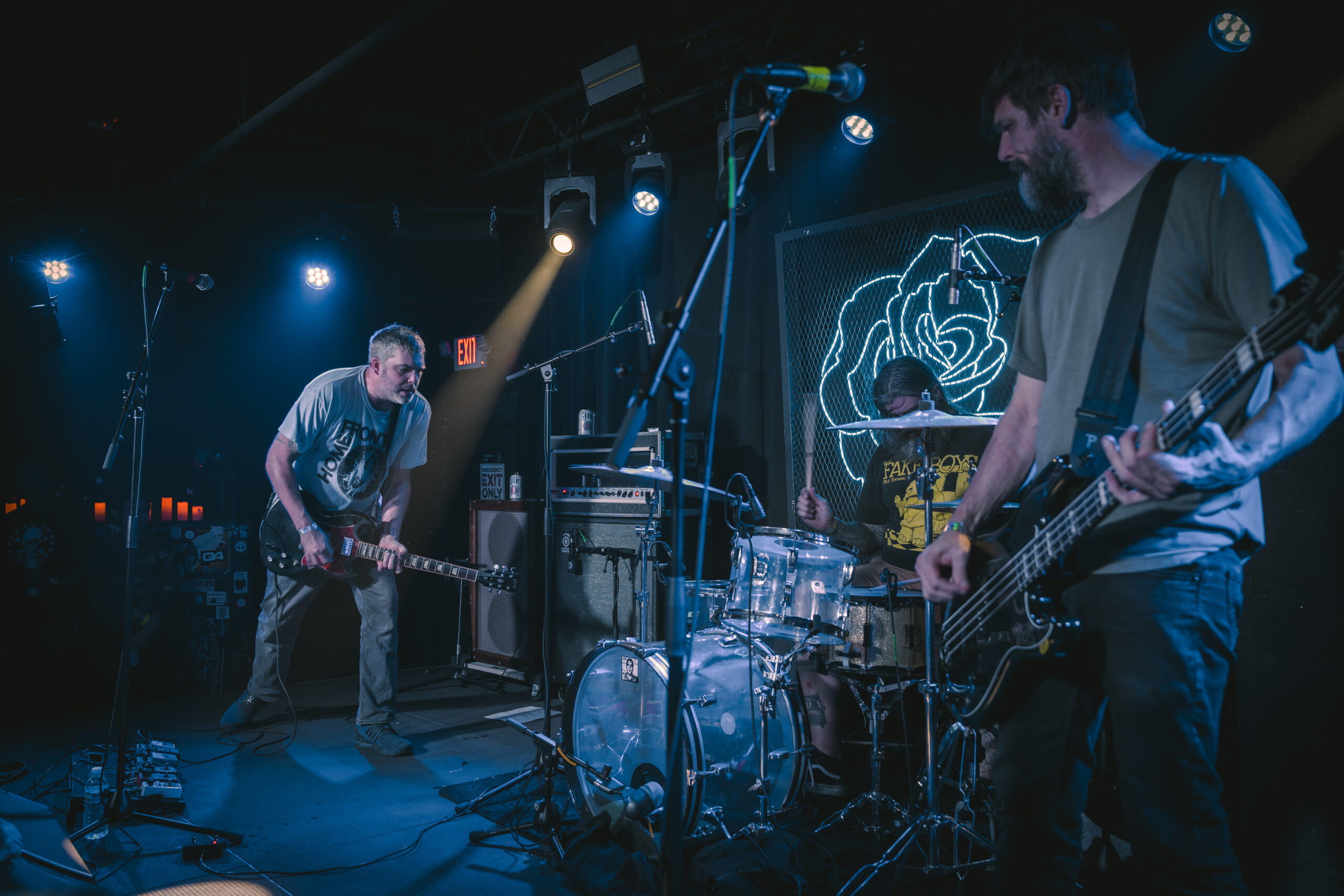
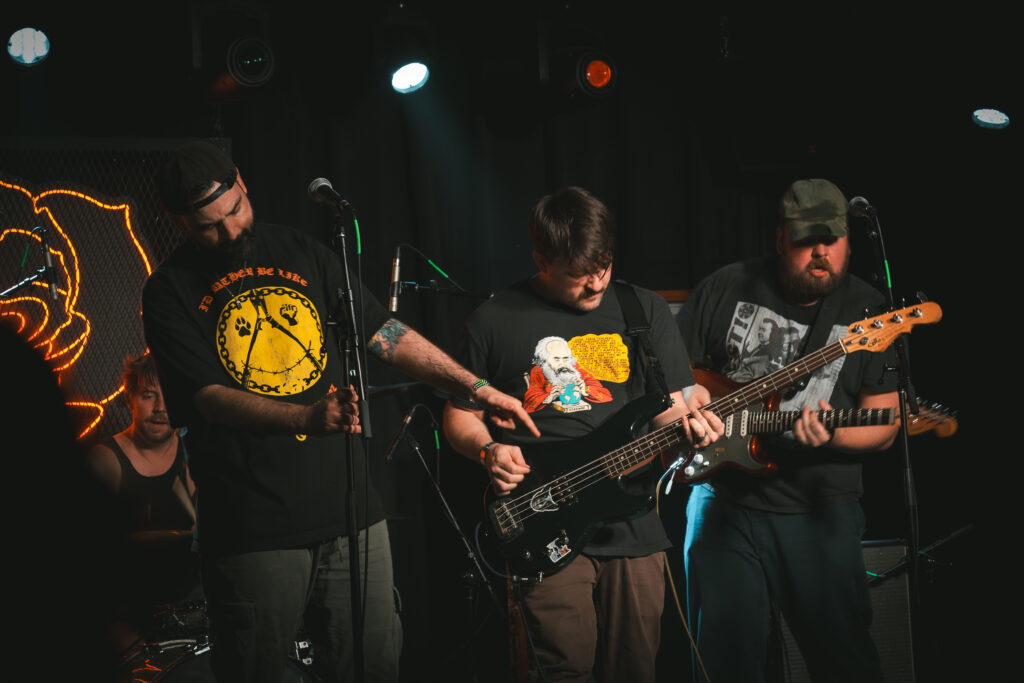
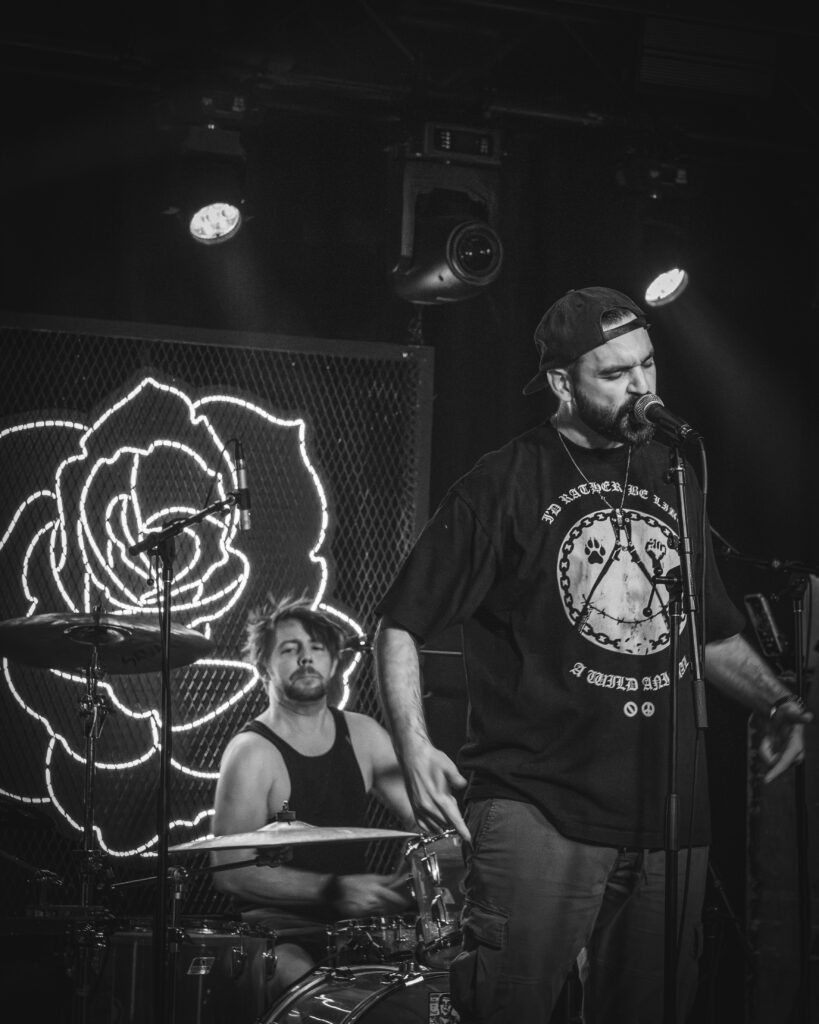
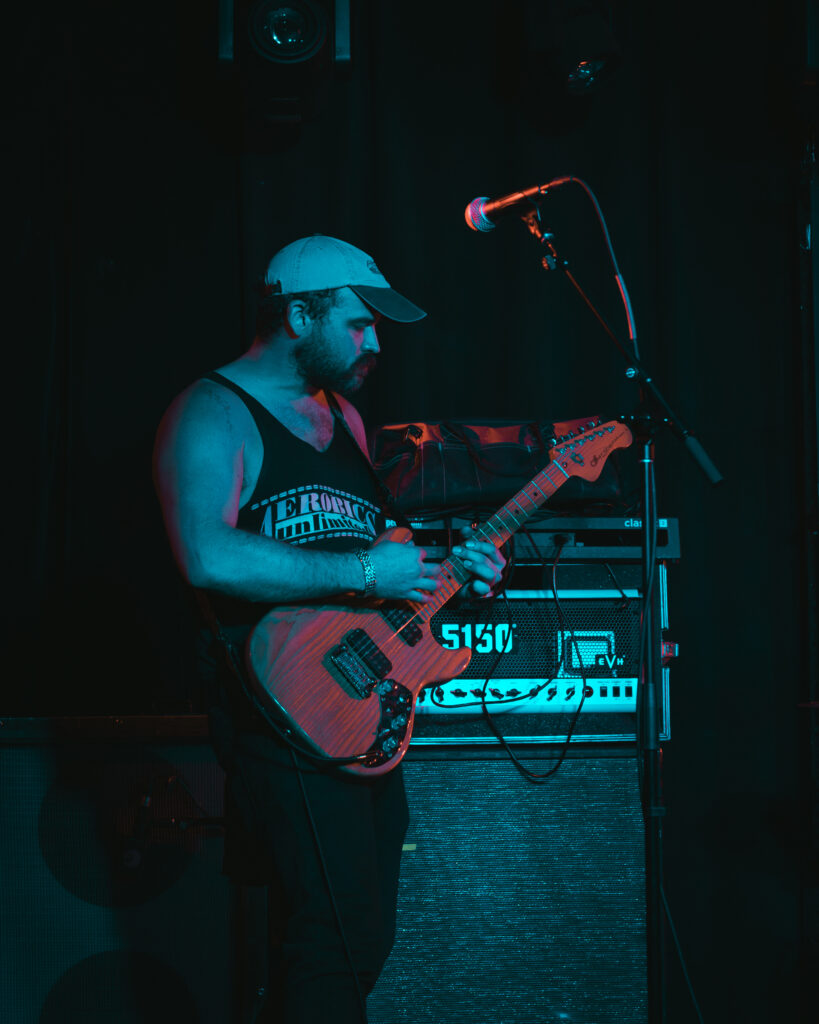
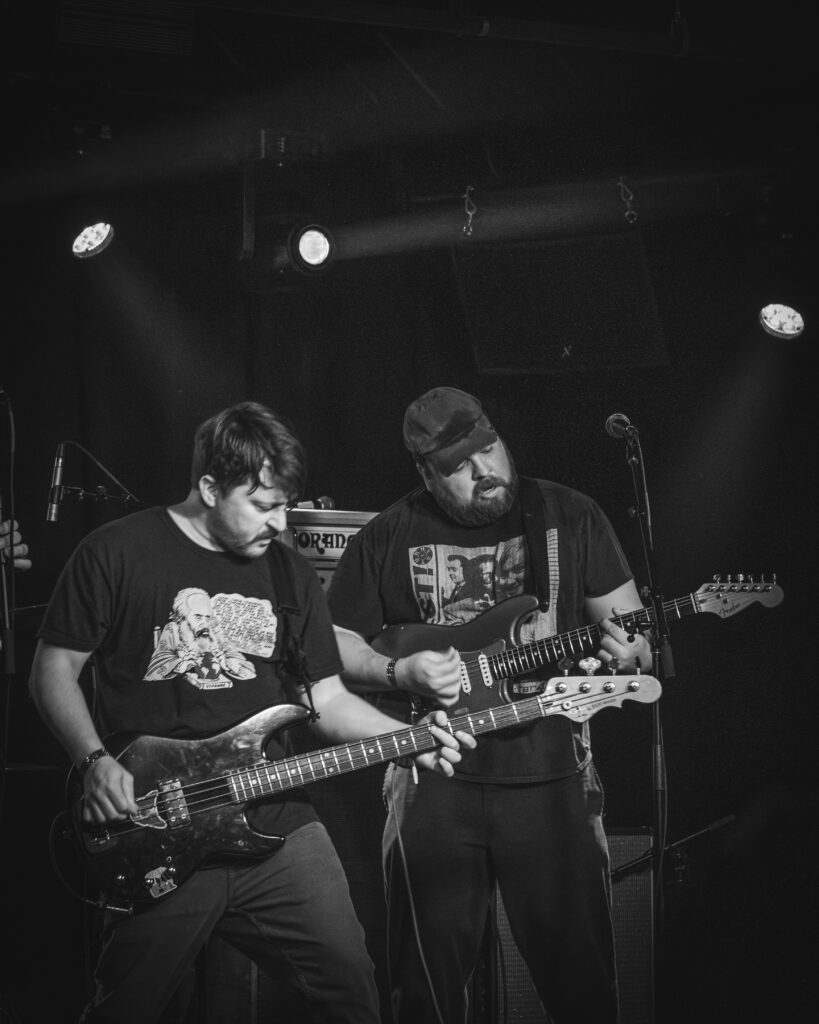
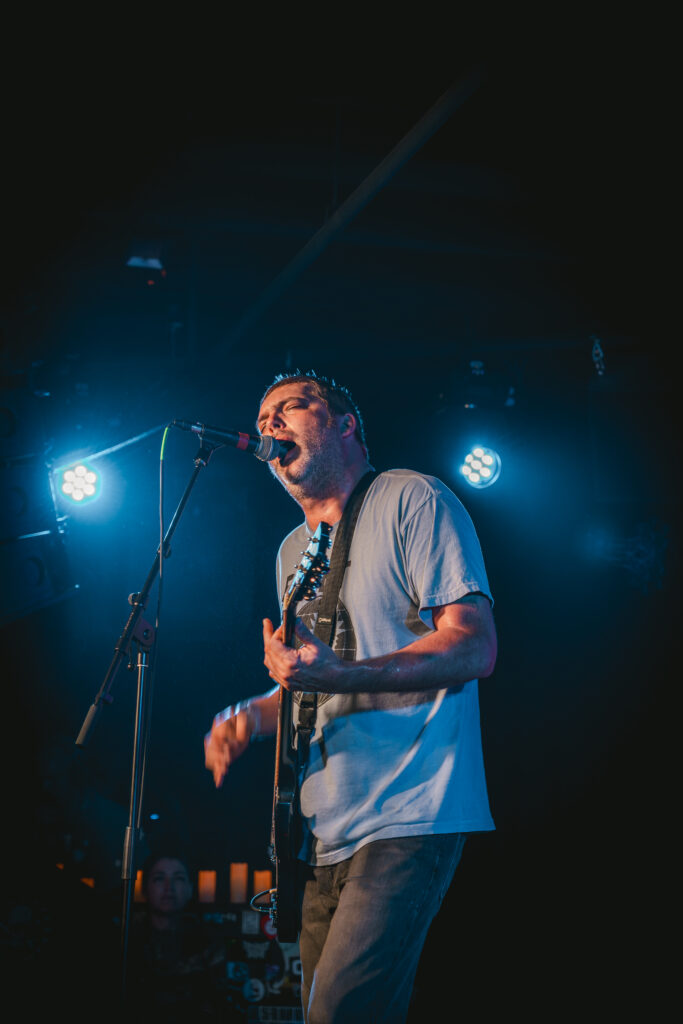
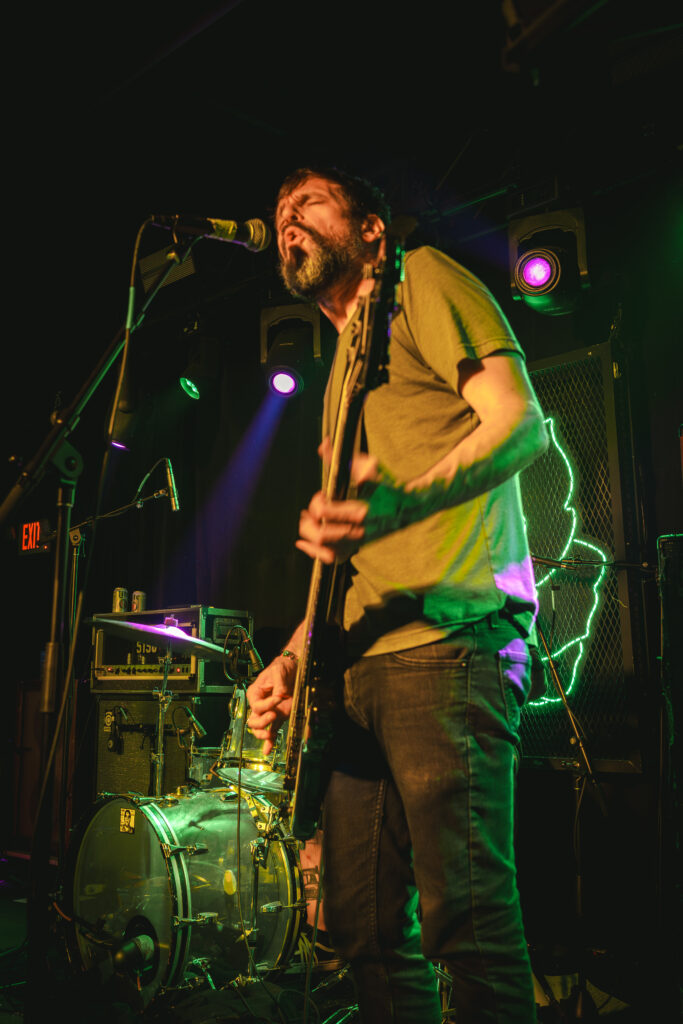
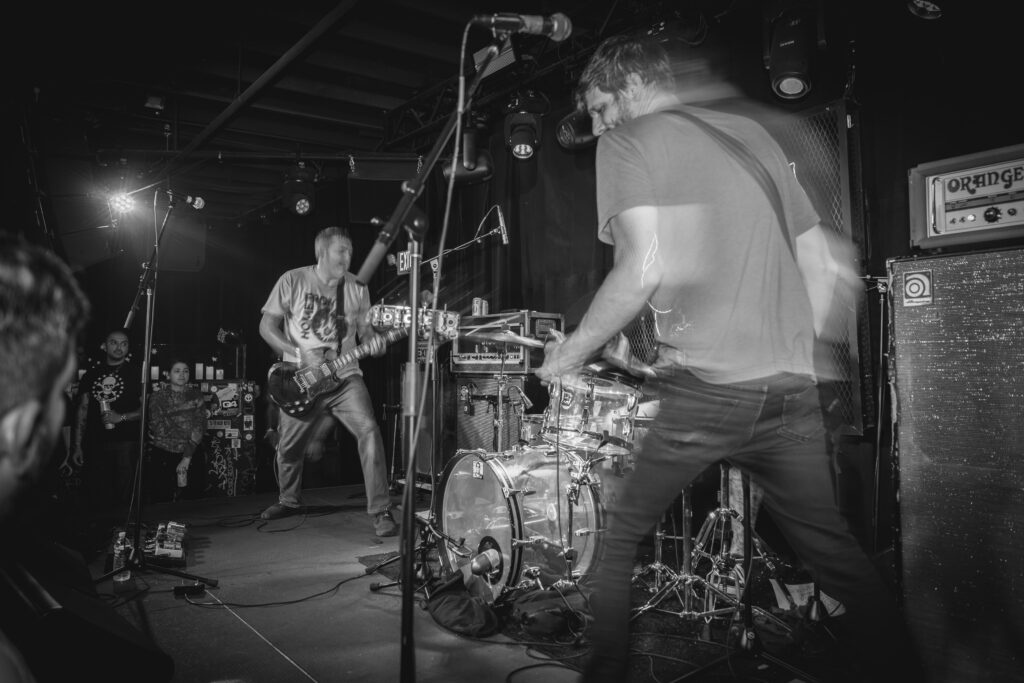
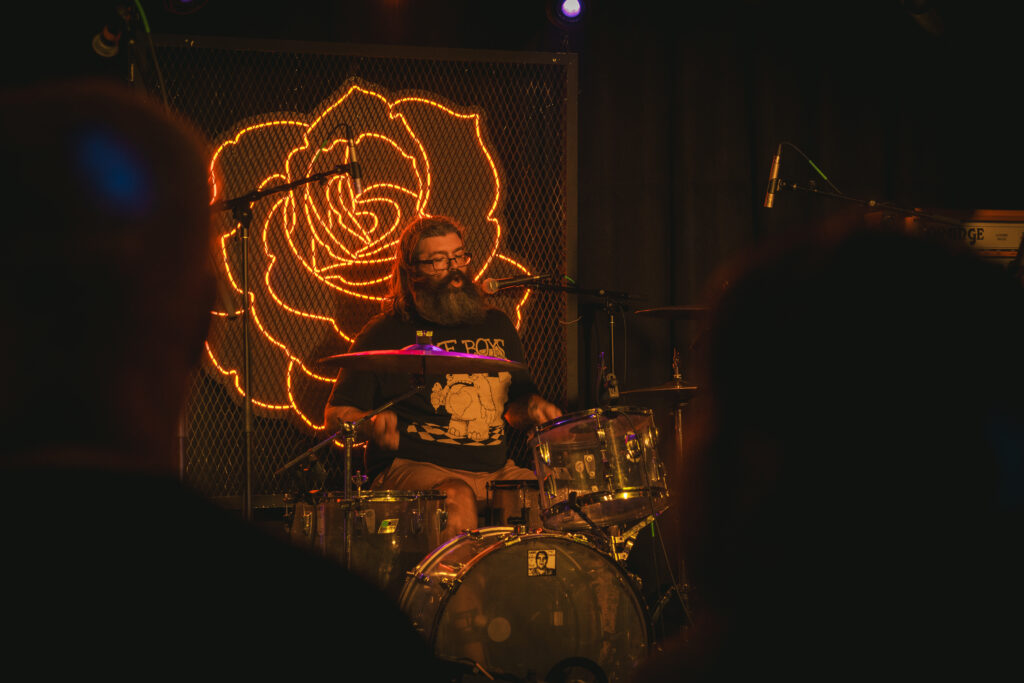
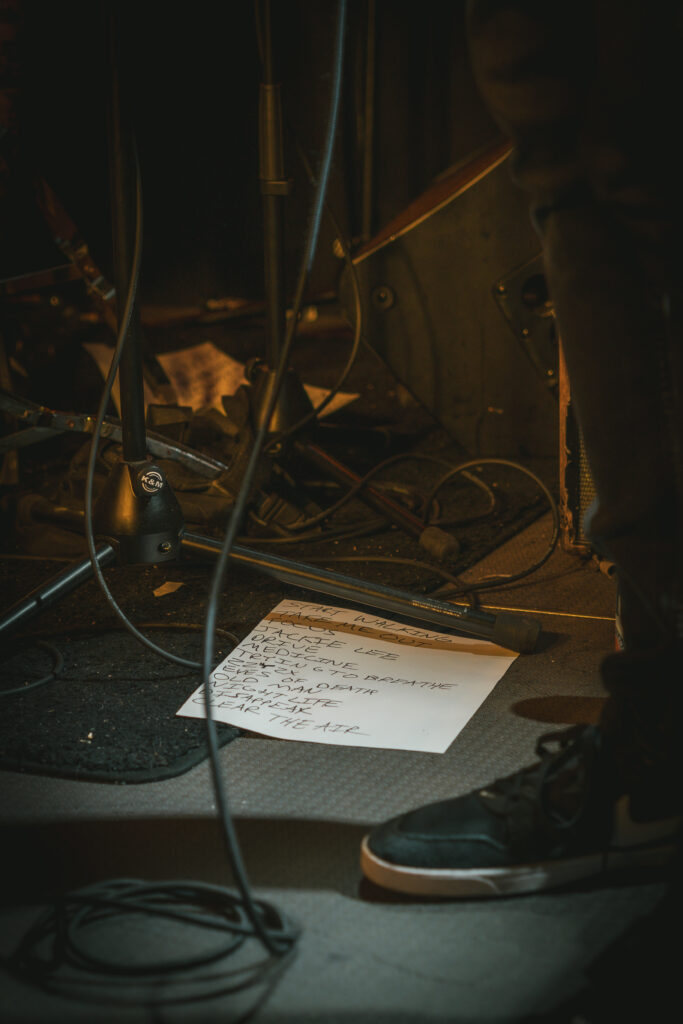
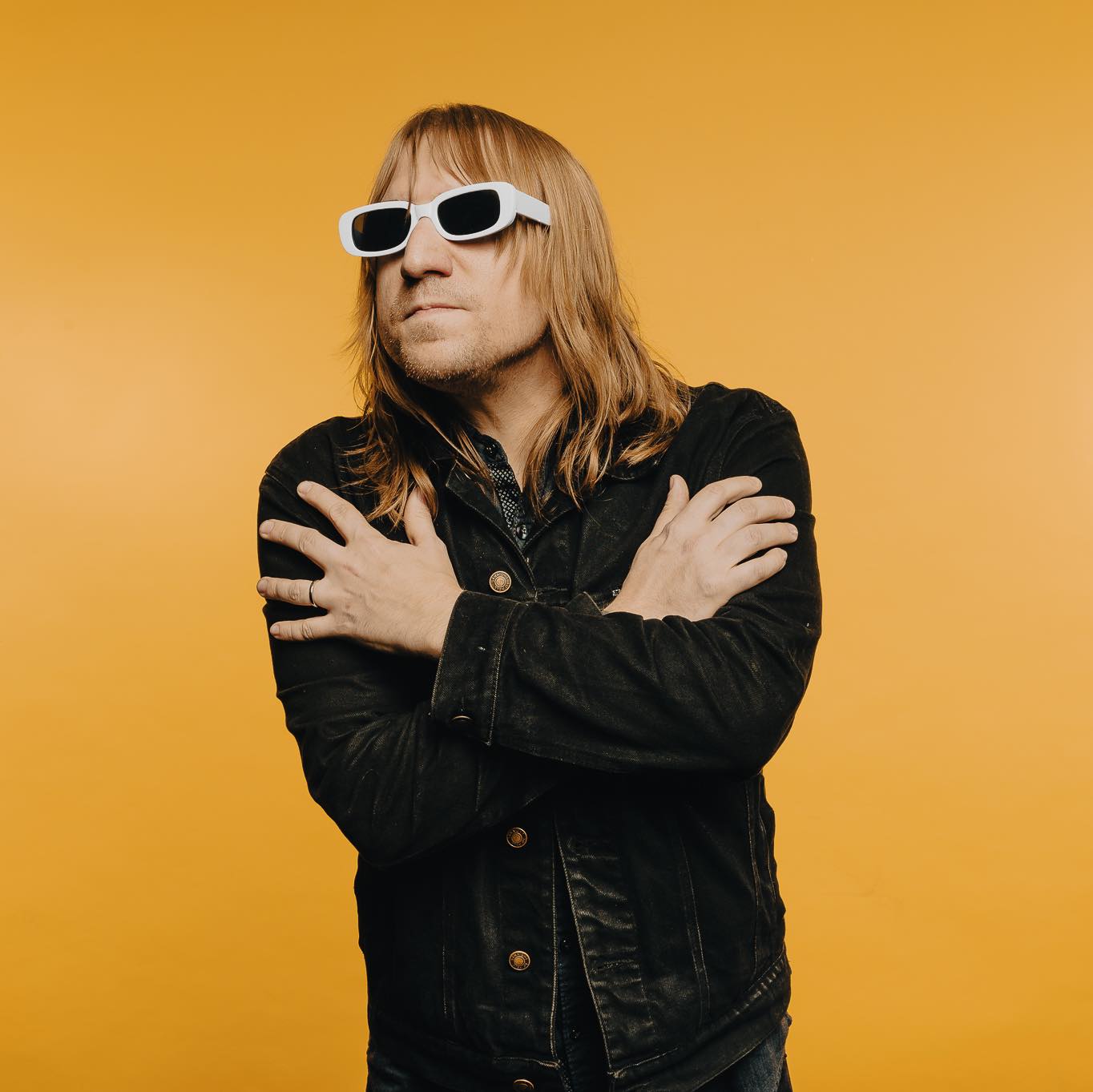
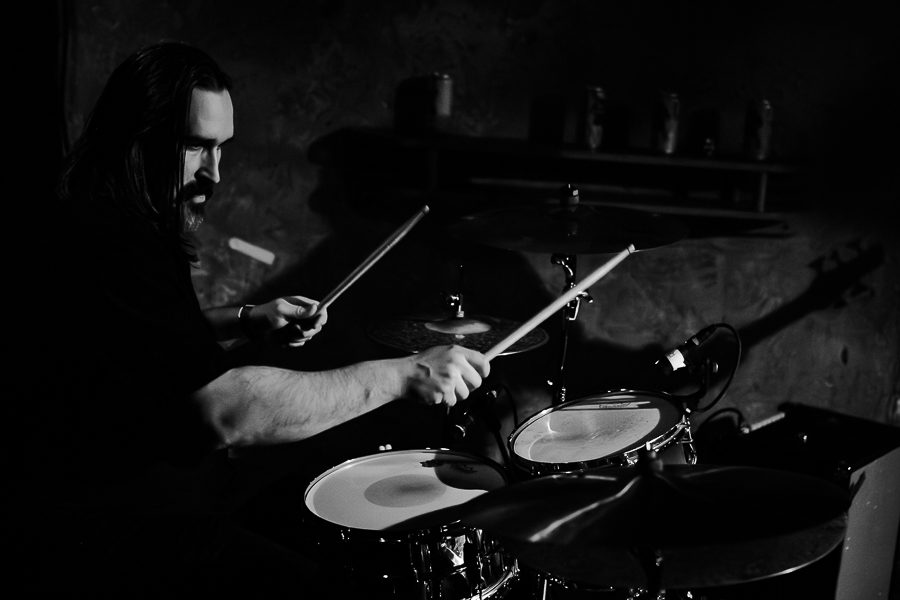
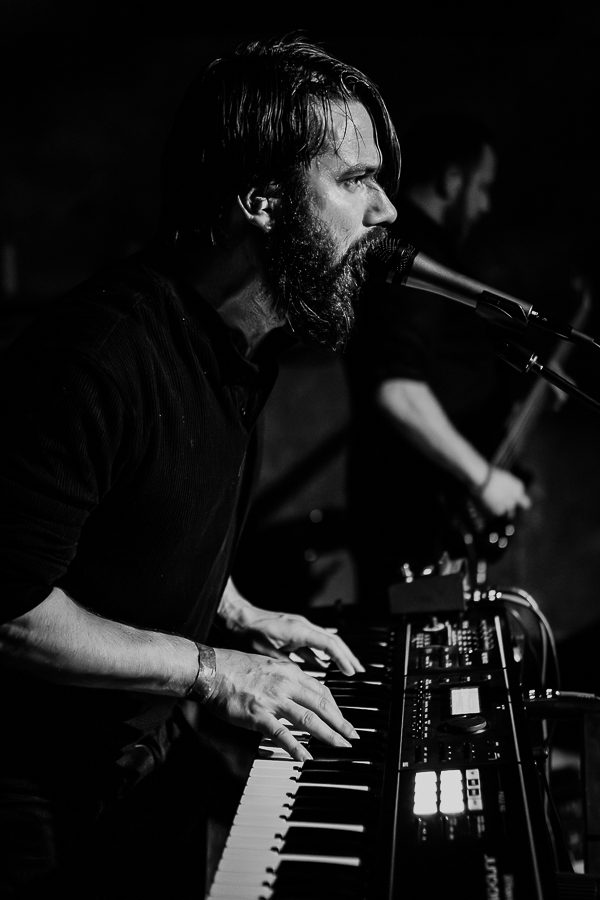
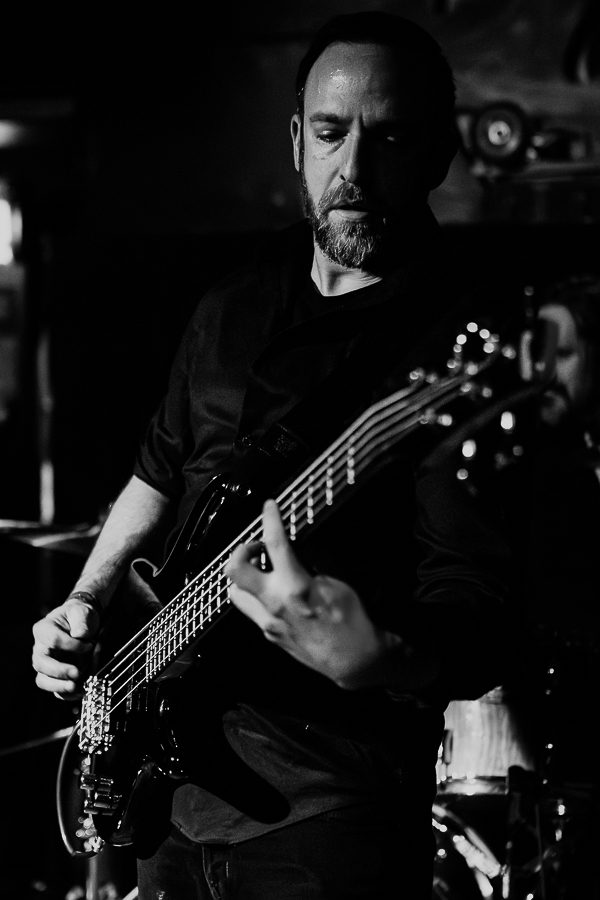
Off With Their Heads are currently on their “Burn It Down” Tour 2026, which brought them to Miami, Florida, for a stop at Las Rosas, where they delivered a set packed with fan favorites, joined by Dikembe as one of the tour’s supporting bands. Dikembe is one of the bands joining Off With Their Heads […]
Off With Their Heads are currently on their “Burn It Down” Tour 2026, which brought them to Miami, Florida, for a stop at Las Rosas, where they delivered a set packed with fan favorites, joined by Dikembe as one of the tour’s supporting bands.
Dikembe is one of the bands joining Off With Their Heads as a supporting act on their current tour.
Off With Their Heads made a stop in Miami during their recent 2026 tour, delivering the best of their catalog with the raw energy that defines them.
Their hard-hitting, introspective, honest, and deeply emotional lyrics connected with fans from the very first song, pulling in the crowd and making everyone in attendance fully embrace and enjoy the powerful performance the band delivered that night.
Welcome to Four Records! Each episode, we feature one guest as they go over four records at four different times in their life. This week, Forrest speaks with Andy Wylie, bassist for The Drowns and a Dying Scene contributor. The Drowns released a live album last year and are currently working on new music. While […]
Welcome to Four Records! Each episode, we feature one guest as they go over four records at four different times in their life. This week, Forrest speaks with Andy Wylie, bassist for The Drowns and a Dying Scene contributor. The Drowns released a live album last year and are currently working on new music. While you are waiting for that to be released, you can see them on tour:
3/7/26 – Seattle, WA Clock-Out Lounge w/ the Briefs
4/17/26 – Upstairs Cabaret Ltd. – Victoria, BC w/ the Casualties
4/18/26 – The Pearl – Vancouver, BC w/ the Casualties
4/19/26 – Jackknife Brewing – Kelowna, BC w/ the Casualties
4/21/26 – Dickens Pub – Calgary AB w/ the Casualties
4/24/26 – Black Cat Tavern – Saskatoon, SK w/ the Casualties
4/29/26 – The Garrison – Toronto, ON w/ the Casualties
4/30/26 – The 27 Club – Ottawa, ON w/ the Casualties
5/5/26 – Sonia Live Music Venue – Cambridge, MA w/ the Casualties
5/8/26 – First Unitarian Church – Philadelphia, PA w/ the Casualties
5/10/26 – Black Cat – Washington DC w/ the Casualties
5/12/26 – 1884 Lounge – Memphis, TN w/ the Casualties
5/14/26 – The Sanctuary Detroit, Hamtrack, MI w/ the Casualties
5/15/26 – Reggie’s Music Joint – Chicago, IL w/ the Casualties
5/16/26 – The Argo – Whitefish Bay, WI w/ the Casualties
As punk rock has evolved over the last thirty years, its influence has bled far beyond music. Punk rock’s DIY, community-driven spirit has found its way into academic, arts, sports, and countless other corners of life. Punk rock has always been about connection. While shows have been the traditional way of bringing people together, Mike […]
As punk rock has evolved over the last thirty years, its influence has bled far beyond music. Punk rock’s DIY, community-driven spirit has found its way into academic, arts, sports, and countless other corners of life. Punk rock has always been about connection. While shows have been the traditional way of bringing people together, Mike Felumlee (Smoking Popes) and his wife, Stephanie Wysocki have found a different way to build a scene by forming the Punk Rock Pinball Association.
Their goal is to help grow competitive pinball by making it fun for beginner and mid-level players, not just pros, while also helping members build new friendships. As you’ll read below, Mike and Stephanie are looking to expand the Punk Rock Pinball Association into new communities. If you’re interested in starting up a group in your own scene, stick around until the end of the interview for links and details on how to become a Scene Rep.
Dying Scene (Forrest Gaddis): Thank you very much for this interview. I had actually seen the Facebook group first. I’m not even in the area. I thought it was a group where people go and talk about pinball. I actually just joined a league myself out this way.
Mike Felumlee: Oh, cool.
My wife and I are a few weeks into it. I always wanted to try it, but scheduling wise it didn’t work out. Now that my littles aren’t little anymore, my wife and I can go and do this like once a week.
Stephanie Wysocki: Well, I’m glad to hear that you’re doing a league. How’s the league going?
It’s been good so far. I’m doing okay. It’s been years since I’ve played this much pinball. If I’m at an arcade, I always jump on a machine. I just haven’t played this much consistent pinball in years.
Stephanie Wysocki: That’s super cool. You’re the exact type of person who Mike and I started the podcast and Facebook group. As people’s kids get older and leave the house, and you’re kind of in this new stage of life, pinball is a really great thing to do with your partner or by yourself. If you’re just looking to meet new friends, we’ve found that pinball people are just a really welcoming bunch. You also tap into like-minded people and even people who aren’t like-minded. It’s a really cool way to engage with humans again. I feel like there’s a lack of that these days.
Mike and I moved down to Central Illinois, and we tried really hard to find our people or just some friends. It’s hard as adults, and we tried all kinds of weird things. When the Jaws pinball machine came out a couple of years ago, it’s my favorite movie. We’d been saying for years, “If there’s ever a Jaws pinball, we’re getting it.” So we did. It just basically opened up this whole new world of friendly, competitive pinball that we didn’t know existed. In the best way possible, it kind of changed our lives.
Mike Felumlee: Yeah, it’s kind of become our lives because we just started our Punk Rock Pinball HQ, which is like a club here in Bloomington. We have like twelve or thirteen of ours over there.
Stephanie Wysocki: We kind of started this collective, basically. It’s a bunch of our pinball friends. We’ve all contributed games to this space, and it’s our club/training facility. We all want to go to state next year. We host tournaments and leagues, and it’s kind of like a member, what do you call it?
Mike Felumlee: It’s like a private club where you have to be a member to enter. We have a monthly tournament where you can pay for a one-day membership to play. We’ve got a weekly league that’s all members. Six of us have keys. We have a Discord where we’ll post, “Hey, we’re going to be there tonight from like five to seven.” Then other people will show up and play together. So yeah, that’s been really fun. We started that at the end of November.
How did you get into pinball?
Stephanie Wysocki: Growing up, going to arcades or hanging out in small rock venues, there were always pinball machines around. And who doesn’t love pinball? The nostalgia of it was super strong for us. So, like I said, when Jaws came out, we got it. We also discovered that there was a bar here in Bloomington that had a handful of pinball machines and they were doing weekly tournaments.
I was really intimidated to go play a pinball tournament. Like, who am I to do this? I’m not a professional and don’t really practice. Mike and I went with low expectations, and we met some really awesome people. We started going every week and every month. Then we started going to other towns around here and joining other tournaments that were happening, and just really got bit hard by the pinball bug.
It’s that feeling of playing a game and knowing that you can do better. You just want to hit start again, but we weren’t good when we started. It wasn’t a huge group of people playing, maybe around ten, twelve people. We were at the bottom a lot. Mike is super competitive. I didn’t know that I had such a competitive spirit in myself as well, but I do.
We just kept going back for more. The cool thing about pinball, anywhere you meet friends, is no one’s going to let you win. So when you do beat somebody, it feels really good. You accomplished it because you fought hard and hit all the right shots.
My wife has social anxiety. The first week in the league, we were in the same group. Then later, she realized we wouldn’t be in the same group the next time. She did okay by herself. I was proud that she was able to come out of her shell a bit and play with other people.
Stephanie Wysocki: That’s very cool. I feel like 98% of the people you come in contact with playing pinball are super friendly. They will help you out. They’ll tell you what you’re trying to do. To know what you have to do is one thing, but to execute it is a totally different thing.
Mike Felumlee: I think pinball tournaments or leagues are really good for people with social anxiety because it gives you something to talk about. I have some social anxiety meeting new people. If you’re just out to dinner, what the hell do you talk about? If you’re in a pinball league, you can say, “Oh, what am I trying to do on this game?”
Now you’re talking about what you’re trying to do in the game. It’s a pretty easy way to interact with people, even if you’re introverted or have anxieties. It gives you common ground with this person you don’t know. We’re both trying to figure out what shots we’re trying to make in this game to score points.
As I’ve been playing more, I’ve found games that I’m better at than others. I prefer this machine over that machine. Rather than saying, “Oh, look, it’s Batman or The Simpsons,” I now play machines even if I’m not completely into the theme at all.
Stephanie Wysocki: Oh my gosh, totally. Like the themes. I’m not a fan of the Foo Fighters, but that game is super fun. It’s a really, really fun game to play.
I’m the same with Metallica, not a fan. I played it the other day in a league and I ended up winning that game. Out of all the machines.
Mike Felumlee: We’re not Led Zeppelin fans. I’m starting to like them more because we have the pinball machine and we really like that one. Before we became crazy about pinball, I wouldn’t have considered a Led Zeppelin pinball machine in my house. Then we played it at a handful of places and got a really good deal on it. So, like, yeah, we like Led Zeppelin now, I guess.
Was there a specific moment that led you guys to create the Punk Rock Pinball Association, or was it just something that naturally evolved?
Mike Felumlee: I started the group because I had visions in my head. I was inspired by Punk Rock Bowling. Decades ago, when I was briefly in Alkaline Trio, I got to participate in the Punk Rock Bowling tournament. I was in their band and on that team. I thought it was really super fun and cool. So I thought, “What if we did a punk rock pinball thing?”
I just started the group, and then we started doing the Punk Rock Pinball podcast, which is on our YouTube channel. I still want to do a big Punk Rock Pinball tournament that involves a lot of people in bands. It’s all people in bands and on record labels. You had Fat Wreck Chords there, and Epitaph, and a NOFX team, I think. That was my initial vision: let’s have a big thing where there’s a rock show and a pinball tournament with bands. I also wanted to have a leaderboard because of the ongoing leaderboard for the tournaments here. I’m like, why don’t we just do this where anybody in the country can sign up through our website, and they can host Punk Rock Pinball tournaments as well?
Hopefully, somebody in your area will start doing it. You can earn your punk rock pinball points and you can show up on our leaderboard. It’s just a fun way to see the history of how you’ve performed. Right now, it’s just a national leaderboard, but we’re going to break that down before too long, where we’ll have leaderboards for different areas. If you look at the IFPA, the International Flipper Pinball Association, the big sanctioning body of competitive pinball, they have statewide leaderboards and they have state championships in every state. I thought it would be cooler in a more punk way to do that more by scenes versus like a state.
You know how in punk rock, Chicago was Chicago, but we had our northwest suburb scene, and there was a western suburb scene. It kind of makes it a little bit more local. In the future, there’ll probably be a Southern California punk rock pinball scene. You can see where you rank in Southern California and you don’t have to worry about anybody else in the state. If there’s multiple scenes, like if big stuff starts happening in San Diego, maybe you’ll have a San Diego scene and an Orange County scene.
I want to break it down pretty granular, like that. So all these little scenes can have their own kind of championships and stuff like that. Eventually, do like a national championship where we do have a couple of big punk bands and a hundred-plus players, hopefully. That’s like the ultimate pie-in-the-sky vision.
Do you have any bands that participate in tournaments out your way?
Stephanie Wysocki: In April, we’ve got a thing.
Mike Felumlee: We have the band Off With Their Heads coming down to play a show here in Bloomington. Ryan does all of our merch. He prints all the punk rock pinball merchandise. We’re going to have a tournament at our HQ where people can pay to get into the tournament, which gives them a ticket to the show. Then they also get to play pinball against Off With Their Heads in a tournament. Toys That Kill is also playing that show.
That’s a good lineup.
Mike Felumlee: We’ve recently hooked Deanna from Sincere Engineer. She’s now like an avid pinball player. We had her come down to be on the podcast, and she did a little music session on our YouTube. On the podcast, she’s like, “I don’t like pinball that much. I don’t get it.” Then we had her play some games at the house and we showed her some games. It was midway through our second game on Cactus Canyon when she’s like, “I get it.”
Stephanie Wysocki: She’s so cute because now I don’t know, let’s say September, maybe she went to Europe and toured a little bit. She was posting pictures in the Facebook group of her playing pinball in different places in Europe. They’re on tour right now. I think they’re in Florida. They’re stopping everywhere and playing pinball, which is so cool. The vision is like we want to bring more people into pinball, and having those bands is certainly a cool way of helping us do that.
Mike Felumlee: Yeah, their singer, Jon, just came out last weekend. We had a big monthly tournament. He came and stayed at our house and played. We had a double header. So, I’m guessing the first Punk Rock Pinball National Championship will probably have to include performances by Sincere Engineer, the Dopamines, and Off With Their Heads, for sure. I haven’t really gotten going with tournaments where it’s like all people in bands playing in a tournament. I could, but we haven’t had the penetration I want amongst people in bands.
I’ve started figuring out how to get more involvement there because I know there’s guys in the Jeff Rosenstock band that play. There’s guys in the band Pup that play a lot. I just don’t know those guys. So, somehow we’ve got to get some of those bands involved to make it more of a band thing about it. Most people playing Punk Rock Pinball Association tournaments are just regular pinball players. I would very much like to have a band-only division. We’re probably going to need a little help on the PR side of that to get more recruitment.
Stephanie Wysockyi: Mike has been working really hard on our website along with a fellow from the Kansas City pinball scene named Nick Greenup. Nick has been kind of the brains behind bringing a lot of these leaderboards and stuff to life based on Mike’s vision. They’ve collaborated on it. But if you go to punkrockpinball.com, there is a page in there about the association. It has all the information on how to become a scene rep or a tournament director. It’s all right there.
How do you determine what’s an approved venue?
Mike Felumlee: If you go on the website, we do have guidelines if you’re hosting a Punk Rock Pinball Association event. It has to be open and inclusive to everyone. You can’t discriminate based on gender identity, race, sexual preference, or any of that. As long as it’s a safe and open space for everyone, then it’s pretty good with us. If we hear otherwise, we would yank that. There’s a link to a form on the website where anybody that wants to host an approved venue or tournament can fill out this form. It’s got some questions on there; they have to acknowledge that they’ve read and understand what our rules and guidelines are about. From there, once people fill out that form, I give them a login to the website, and then you’re free to go in and create your events, post them, submit your results, and get your people on the leaderboard.
You mentioned you’re trying to have this be like the Punk Rock Bowling of pinball, when you do the tournaments are you doing shows to coincide with the tournaments or is it just really just focusing on the pinball when you have your tournaments?
Mike Felumlee: The Punk Rock Pinball Association tournaments are mostly just pinball tournaments that would otherwise be IFPA sanctioned, or leagues are fine as well. You can also run an IFPA tournament with the Punk Rock Pinball Association at the same time, but we do have some gimmicks planned, like the event we’re doing with Off With Their Heads, which includes a tournament followed by a show. I play in the Smoking Popes, and we’re trying to do something in Arizona.
We’re playing at the Yucca Tap Room, which shares a space with the Electric Bat. It’s like our 35th-anniversary tour. During the day, there’ll be a Punk Rock Pinball tournament, and then at night, The Popes will have our show in the evening. So, wherever possible, I like to pair a Punk Rock Pinball tournament with a rock show. There aren’t a lot of venues or a lot of pinball places. They are usually at a brewery or an arcade. The Electric Bat happens to be the most ideal place.
It’s just awesome because there’s a huge opening, and you can see into the Electric Bat while you’re playing on the stage. You can see into the pinball area. There are two different businesses, but there’s a shared wall. It’s probably a fifteen-foot-wide doorway that’s just open so you can walk in and out between the Electric Bat and the Yucca Tap Room. For a punk rock show plus a pinball tournament, it’s probably the best place in the United States to have that happen.
What’s the hardest thing about running the Punk Rock Pinball Association?
Stephanie Wysocki: I would say there’s no roadmap for this. The IFPA is kind of like the MLB of pinball, and we’re really focused on fun, almost like a minor league to the IFPA. We’ve looked to them for some of the rules and how things are set up. They’ve been around for, I don’t know, I think a couple decades. They’ve been doing this for quite a while, but there’s no roadmap for this. We’re kind of figuring it out as we go and trying to be proactive in other ways regarding how we want to structure this and make it different. As far as challenges, I think it’s just that we don’t know what we don’t know, which is probably the biggest challenge; which is maybe not a challenge. Maybe that’s a positive, that we’re just kind of writing the rules as we go.
Mike Felumlee: I think as it gets bigger, a big challenge I foresee is that, for example, the IFPA has almost 200,000 players. We currently have about 500 players, and we’ve had about fifty tournaments in the last month and a half. We have about forty or fifty more scheduled, but if you look at the IFPA, there are probably 500 tournaments a day. This involves thousands of people from all different types of backgrounds who have all different types of expectations and needs. So inevitably, if enough of your tournaments happen, bad things might happen at one of them.
There was an IFPA event earlier in the year in North Carolina where some shit happened. Then you have to try to deal with that in a way that’s going to appease as many people as possible. I think we haven’t really had to deal with that yet, but I foresee that we will at some point. I think that’s going to probably be the hardest part, making tough decisions to please as many people in your community as you can, knowing that you’re not ever going to be able to please everybody.
How do you differ from the IFPA in terms of rules?
Mike Felumlee: Our scoring format is much simpler. There are two big differentiators. For one, IFPA has very specific tournament formats that you’re allowed to run. For instance, there’s a format called Amazing Race, where everybody starts on one machine, and if you score the lowest on that machine, you’re out. You go to the next, and whoever scores the lowest on any specific machine is out of the deal. The IFPA has decided that for 2026, if you have an Amazing Race tournament, it’s not worth as many IFPA points as a match play tournament.
Like we’re getting into the nitty-gritty of like only shit that pinball people are going to understand here. There are some really fun formats that the IFPA, for maybe justifiable reasons, kind of nerfed the scoring. Whereas with the Punk Rock Pinball tournament, the scoring is entirely based on how many people are playing in the event. If you have a hundred people in your tournament and you win it, you get a hundred PRPA points. The person that got 50th gets fifty PRPA points, and so on down the line.
It doesn’t matter for us because with the IFPA, the big factor is how many meaningful rounds were played, and the more meaningful rounds played, the more points it’s worth. It’s not dependent upon the number of players, but that’s part of it. They have a very complicated formula. Our formula basically says it doesn’t matter how many meaningful rounds you played. You could play five, you could play fifteen, you could play twenty. Your tournament’s worth the same amount of points, and it’s based on how many people played in the tournament.
Stephanie Wysocki: It’s really interesting because our leaderboard right now: the top three players are people from our scene, and it wasn’t like this for a while. It was a whole gaggle of people in Kansas City dominating the leaderboard. The gal who is at the top of the leaderboard right now is grinding any PRPA event within, I don’t know, probably eight hours. She’s driving to it and playing it. She’s a pretty solid player too. Is she the best player in our scene or any scene? No, but she’s grinding, and she grinded from the bottom quarter of the playfield all the way up to the top.
Mike Felumlee: She’s tied for first right now.
Stephanie Wysocki: So, the fellow that’s tied with her in first, he just went to the state finals. He’s a very, very good pinball player. She played nineteen events; he’s played eleven.
Mike Felumlee: There have been forty Punk Rock Pinball Association events so far, and she has played in nineteen out of the forty. That’s why she’s tied for first. She hasn’t won a single one. The way we constructed our point system, we wanted to really reward players that travel all over the place and are grinding to play the most. They’re hardcore, and people like that are what drive a competitive pinball community. You need these people that just show up all the time because the biggest challenge we all have is participation and getting more players. Pinball is such a tiny niche thing. We wanted a point structure that’s going to reward people that just go and play everywhere.
Stephanie Wysocki: Part of the reason we started this collective is that when you’re a pinball player, when you go out and play at different venues or locations, you’re kind of at the mercy of those locations. Having a healthy business, staying open, and having space for pinball. We’re about two hours south of Chicago and about two and a half hours from Indianapolis and St. Louis. We’re kind of in the middle of nowhere in a lot of ways. It’s a proper town, but there weren’t many places to play. One of our main locations closed, and we were driving an hour to go to another town to play with other people at a venue, and then that place closed too. We have a really special community that has been built here. We kind of took things into our own hands and started the collective for that very reason: it’s so fun to play with other people, and we took our destiny into our own hands.
What’s your favorite machine to play?
Mike Felumlee and Stephanie Wysocki:Jaws.
What’s your least favorite?
Mike Felumlee: Shrek.
Stephanie Wysocki: Shrek, yeah. It’s garbage.
Mike Felumlee: Yeah it sucks don’t bother. It’s the exact same machine as the Family Guy machine. I hate them both equally. I like the Family Guy theme better, but the game just to shoot is not fun.
Stephanie Wysocki: It’s not fun; it seems like it would be. The designer is my favorite pinball designer, Pat Lawler. I love him. He did Ripley’s, Funhouse, and Addams Family. Yes, but Shrek he shit the bed on.
Mike Felumlee: I mean he’s done many, many pinball machines they can’t all be hits. Look at songwriters, every song they write isn’t a hit.
Stephanie Wysocki: He has a lot of good ones but that one is garbage.
Mike Felumlee: My second favorite right now is probably (Star Wars) The Fall of the Empire. The designer of that one is John Borg, and he’s probably one of my favorites. He also did Metallica, Monsters, The Walking Dead, and Guardians of the Galaxy.
His machines are typically really fast and pretty challenging. Metallica plays fast, and there are lots of shots that will shoot the ball back at your face if you miss. I feel like a lot of his games have a similar feel to Metallica. Fall of the Empire and Guardians of the Galaxy all feel similar. I like the feel of those John Borg games.
For more information and to become a scene rep, contact Mike and Stephanie through the Punk Rock Pinball website.
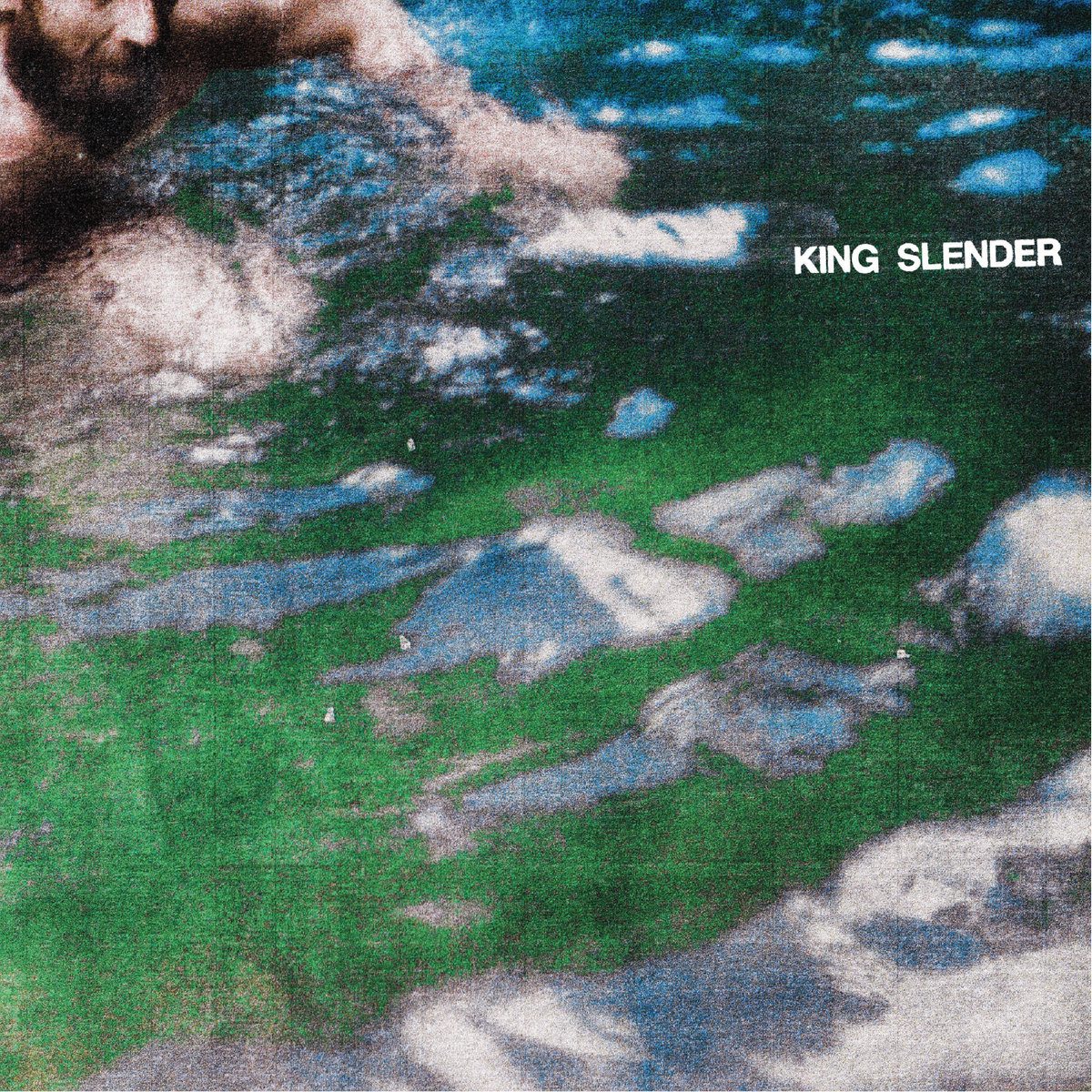
Happy Hump Day, comrades! For the first time in what seems like forever, we get to bring you some brand new music to get your day going. Today, we’re stoked to bring you a track called “Bare Ends.” It comes to us from Philadelphia post-hardcore band King Slender. Here’s what the band has to say […]
Happy Hump Day, comrades!
For the first time in what seems like forever, we get to bring you some brand new music to get your day going. Today, we’re stoked to bring you a track called “Bare Ends.” It comes to us from Philadelphia post-hardcore band King Slender. Here’s what the band has to say about the track:
“It’s a mid tempoed emo hardcore jam that stabs from different angles, settling in the chorus to anthem the feeling of being worn to the last possible point. Seeing yourself in that state and living with it, like a passenger along for the ride, is the notion the song howls at while acknowledging what it is to resign to it. Our very talented friend, Kevin Morris (Orphan Donor, Full of Hell), was kind enough to lend horns to the track.”
As small clubs close their doors around the country, breweries seem to be carrying the torch as venues for punk rock bands to play. One such company, Burning Bridges Brewing, has been putting on shows for smaller bands to play at its two locations in San Dimas and West Covina. Catering mostly to an older […]
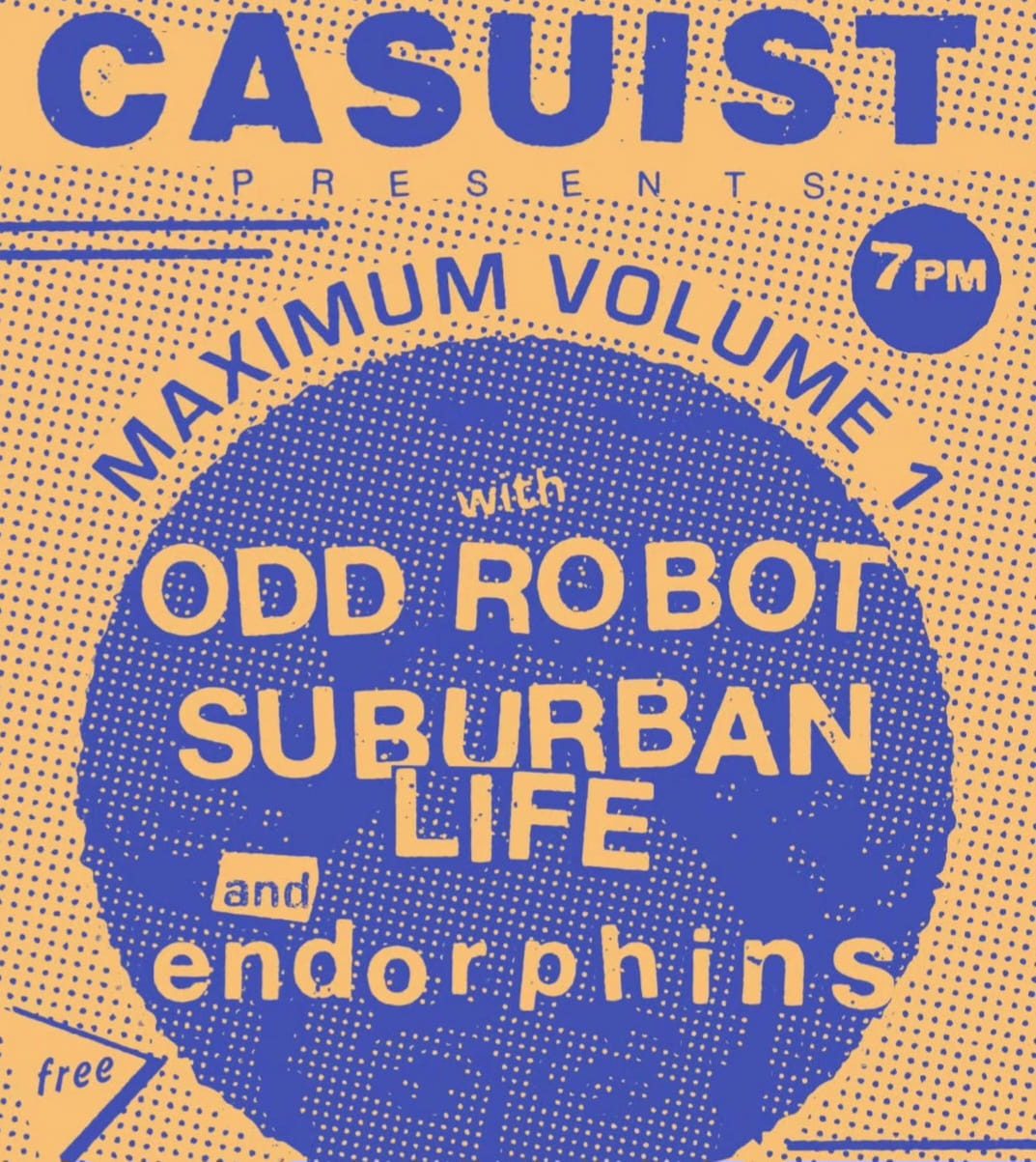
As small clubs close their doors around the country, breweries seem to be carrying the torch as venues for punk rock bands to play. One such company, Burning Bridges Brewing, has been putting on shows for smaller bands to play at its two locations in San Dimas and West Covina. Catering mostly to an older punk rock crowd, these shows harken back to the days of the 1990s when bands would play in small coffeehouses to a small niche crowd.
endorphins is a five-piece heavy indie rock band from Los Angeles featuring ex-members of Decent Criminals. The influence of Jawbreaker was ever-present with the band’s driving drums and riff-heavy bass lines. endorphins’ three guitars beefed up their sound at various moments, especially during their cover of “Attitude” by Bad Brains. However, the band did not play an overly aggressive set in general. They are definitely a band to keep an eye on.
Next was Suburban Life; their energetic set was a highlight of the night for me. Featuring former Gentlemen Prefer Blood vocalist Todd Smailes, Suburban Life felt like the best East Bay punk rock band to come from Los Angeles. So much so that their cover of Green Day’s “Geek Stink Breath” even had the original band’s haters bobbing their heads. I know you could throw a rock and hit a band that sounds like Jawbreaker nowadays, which would be a bad thing if most of these bands didn’t take the proper lessons from one of punk rock’s most talented trios. Suburban Life is no exception.
Featuring two-thirds of Suburban Life, Casuist played third. If you like your melodic punk with a touch of emo, this may be the band for you. Celebrating the release of their single, “Good Grief,” Casuist played songs that felt a little more serious than endorphins or Suburban Life, but still put on a good set full of fast, double-bass-pedaled punk rock. Good, loud, and profound is a great combination that suits them well.
Odd Robot closed out the night. The San Bernardino five-piece played a fun power-pop set including “Secondhand Noose,” “Schadenfreude,” and “You’re a Fucking Nightmare,” and their latest single, released last year, “Buddy.” While “Buddy” kind of puts the band in a different direction song-wise from their typical self-deprecating tone and incorporates an acoustic guitar and trumpet, it’s a direction I hope they lean into a little more in the future. This was my second time seeing Odd Robot, and they did not disappoint. Here’s hoping for more sets from them in the new year.
This was my second show at Burning Bridges Brewing in San Dimas, and I continue to be impressed with their setup despite its small size. While its seating is limited, its small size makes for great sets that take punk rock back to its DIY roots, just subbing breweries in for coffee shops. Still, shows like this are what are going to keep the scene alive until it becomes affordable for someone to run a small club again.
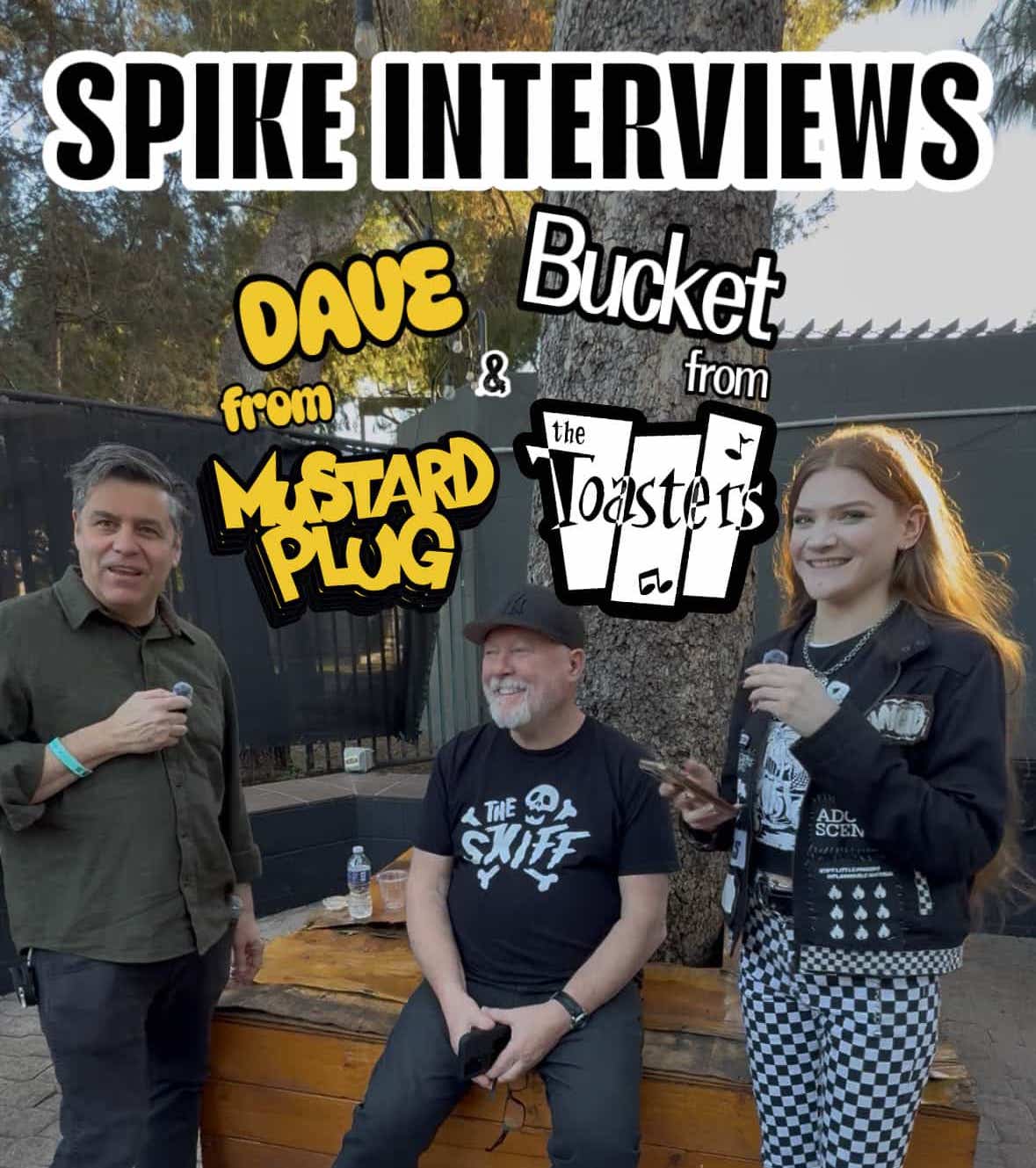
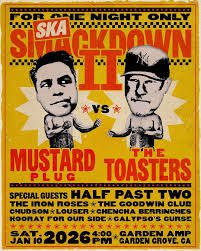
Mustard Plug held their second Ska Smackdown show at the GardenAmp in Garden Grove, California. This year, ska pioneers The Toasters joined them once again for a winter West Coast tour. With the two having a significant past there’s no doubt that they put on an unforgettable show. Frontmen Dave (Mustard Plug) and Bucket (The […]
Mustard Plug held their second Ska Smackdown show at the GardenAmp in Garden Grove, California. This year, ska pioneers The Toasters joined them once again for a winter West Coast tour. With the two having a significant past there’s no doubt that they put on an unforgettable show. Frontmen Dave (Mustard Plug) and Bucket (The Toasters) caught up with Spike at the smackdown, which featured an outstanding lineup of 10 bands. What started as a quick, lighthearted check-in turned into a heartfelt conversation about decades of sharing stages, DIY and political roots, and the family first mentality that has kept ska alive, even through an industry that was never built for it. In ska, “only winners, no losers.”
Dying Scene (Spike): What made you choose The Toasters for this years Ska Smackdown?
Dave: We’ve done a West Coast tour in like January/February going back for the last decade or something like that, and this is actually the second time we’ve done it (Ska Smackdown). We always try to get another bigger, co-headliner type band to do it with us, and we actually played with The Toasters right before COVID in 2020. That was an epic tour, so we were due to do it again. We always have a blast with them, they’re one of our favorite bands. One of the very first ska bands I ever saw, so they have always been inspirational.
Bucket: I first met Dave at the Club Soda in Kalamazoo, Michigan, in 1989 with The Busters. He showed up with his long hair and everything. Were you doing the radio show then?
Dave: Yeah, I was the music director of my college radio station and I was super into ska. So I met you there, and back then we used to have CMJ music marathons in New York City, right, and I don’t know if you remember this, but I thought Moon Records was like this huge thing…
Bucket: I had a little shop about the size of that toilet.
Dave: Yeah seriously, it was amazing. So I called you and I was like, hey can we get some records, and talked about how I was going to be in New York in a week, and you were like yeah! just come to this address. So I went to the address, like this 19 year old kid walking around Manhattan, or Lower East Side or whatever. I found it and I was like… this just looks like someones apartment! You had me come to your apartment, I remember that because your wife was there and you guys just had like a bookcase of records. It was the most amazing thing ever.
Do you remember the first show you played together?
Dave: I remember we played a couple shows at Rick’s Cafe. There was one in Lansing and one in Kalamazoo and I think we played both of those. It was probably ’92 or something like that. Back when he had Moon Records going, he was one of the first people to latch onto the song “Mr. Smiley”. He was like “Oh yeah this is great, we got to put this on the comp”, the Skarmageddon comp.
Bucket: That was a great comp. It’s amazing how many people I’ve talked to that have said those comps were what really provided them a portal to get into ska music in the first place. They were compilations of 2 or 3 discs with like 60 bands on there, pretty epic.
Dave: Yeah it was great. You could buy this one compilation, and at least know one song from every ska band in the United States pretty much. And the fact that you took the care to pick some of the best songs from each band, because a lot of people that do comps just want people to send whatever they have, and it can be really uneven, but that one was really good because he actually took the time to pick some of the very best songs.
Bucket: Yeah, we could very easily pick what we wanted. There wasn’t really anybody doing comps at that time, it got to a point where they felt like “too much”. I think we did three episodes and then we finally went up to three discs on Skarmaggedon 4, that was great.
Is there a specific city or state that you like to play in?
Bucket: Well I like coming out here because the weather’s nice. SoCal’s always had a really good ska scene, even back in the day. We played our first show in California in 1987 at Mabuhay Gardens, which was a Filipino restaurant in San Francisco. Then at night it wasn’t a restaurant anymore, they had a club there, like a soul club, and that was almost forty years ago now. California’s great but the ska incentive really moves around. Florida was really good for a second, Chicago has always had a big scene, it tends to move around. But now anywhere you go there’s a ska band, and it didn’t always used to be like that.
Do you see a difference in West vs. East Coast crowds?
Bucket: We get up earlier and we work harder on the East Coast. I think the bands on the West Coast have been a lot more traditional. Bands like Hepcat, See Spot, Ocean 11, all bands like that, and I think the bands on the East Coast have had a bit more of a hardcore edge. Certainly that was the case in New York because when we were coming up we were rehearsing in the same studio as Bad Brains, Cro-Mags, and Murphy’s Law for example. I think the gist is that is that people on the East Coast tend to be a bit more aggressive cause that’s how our lifestyle is.
What intertwines ska and politics so much?
Bucket: If you look back at where ska music came from in the early 60’s it was involved with the Jamaican’s gaining their independence from hundreds of years of British colonial rule, so that music was the backdrop for that. Then in England in the 70’s there was a whole 2 tone movement, which is really an anti racist movement featured around all the bands on the 2 tone label, which is black guys and white guys playing together. I think a certain part of that has kind of been lost in the states, but there are bands who have a political voice, which we definitely need a lot more of these days with all the nonsense going on.
Dave: It’s always kind of crazy when you have people online or whatever who are like “keep your politics out of your music”. I’m like, you have no idea what ska is, it’s history, or anything.
Bucket: Yeah keep your partying frat boy nonsense out of our social political scene, please. Ska has always been a social political thing, and in my mind there should be more of that and not less. People really listen to music as one thing you can agree on, whether you agree with people politically or not, so hopefully we can sway some of the lug nuts to come over to our side of the fancy.
What do you think is different about ska today compared to the past waves of it?
Bucket: I think I’d point toward the Bad Time Records phenomenon, which is a whole new way of approaching ska music. It’s a lot more punk, to my mind a little less ska. Equally so with what happened with ska punk in the late nineties, that was a bit of a curveball. Nobody really saw that coming. In fact, I turned down The Might Mighty Bosstones and Rancid from Moon Records. Oops!
How are you keeping up with the modern punk scene? Are there any bands that you’re into right now and want more people to know about?
Bucket: If I see or hear a band I like, I just try and take them on tour with us and hook them up with some gigs. That’s the best way to do it. You can’t send records to radio stations anymore and Spotify kind of sucks, so really the way to get people to listen to a band that you like is to put them on stage with you. Do it that way.
Dave: I can’t really speak for the punk scene because I’m not as hip to it as I used to be. I still love punk music, I just don’t know too many of the new bands. Unless they’re hyperlocal, like Rodeo Boys, kind of a breakout band out of Michigan. But in the ska scene and being able to tour and stuff, you see all these upcoming artists, and that’s kind of what I focus on as far as learning about new bands. Like Bucket said, we try to help them out, and it really is a family. That’s the cool thing about ska music, it’s always had a really great community about it. It’s one of the things that attracted me to ska in the early nineties because I had come from the ashes of midwest hardcore. In the eighties, I was going to all these hardcore punk shows because that’s what was there. Back in the day they were all friends, and would trade ideas, communicate, network and that sort of thing. Then that whole scene really fell apart in the late eighties, and then the ska scene was like this new fresh breath of air. I was really attracted to it because it did have the politics to it, it was danceable and fun, and a lot of other reasons. One thing that really stuck out to me was that it is like a network, a family, and that’s really stayed in a lot of ways as far as the ska underground, we all know each other.
Bucket: You’ll find that a lot of the bands that have been around for a long time are amenable to finding younger bands starting up and help them out, take them on tour, and give them advice. Be an uncle to them. The Toasters have always done that, and I think it’s one of the things that’s endemic in the scene. It makes it so it’s not every man for himself.
Dave: Bucket can take a lot of credit for that. He took us in when we were a little band and helped us out. He’s been like a role model in that way, and he’s responsible for a lot of third wave stuff and the philosophy behind it. He helped us out, and we help other bands out now that we’re a little bit bigger, and so it’s kind of injected into the scene.
Bucket: We really just made it into like a ‘do it yourself’ thing because it came pretty obvious to me early on that the music business and major labels weren’t interested at all in what we were doing and playing. I mean, they told me it was circus music when I went to CBS records in New York. So I realized that if we were to do this, we’d have to do it ourselves. So we just created a model of going on the road and doing your own merch, and marketing yourself. That’s been built up over the years and now everybody’s doing it, so it works.
Do you have any advice for ska bands trying to come up and make it in today’s industry?
Bucket: Play as many gigs as you possibly can. That’s the only thing that makes sense. Play as many gigs as you possibly can because your music now isn’t worth anything being diluted by Spotify and P2P sharing and stuff, so you can’t make money there. You have to put everything into your live performances and shows, and network with people like Dave and I, and other people like that. Make it work by using those kinds of resources. It was true in the eighties and it’s still true now.
How did you rack up this lineup today?
Bucket: We’ve known Half Past Two for a bit. The Goodwin Club, we played with them in San Diego last year. In fact, I turned them onto Dave Romano.
Dave: Yeah we actually played here a year ago with Voodoo Glow Skulls, and they played at that.
Bucket: It tends to be people either Mustard Plug or The Toasters know. You got to be in la familia.
And who do you think is going to win the smackdown?
Dave: We both won. We’re both winning. The crowd wins.
Bucket: Only winners, no losers. I wouldn’t hurt a hair on Dave’s head.
These two perfectly encapsulate what ska has always been about: staying driven, helping each other out, and being a family. Treating the scene like a community instead of a competition is what has kept The Toasters and Mustard Plug so great over the decades. If you haven’t seen them live yet, you need to fix that. You can find tour dates and everything else you need at thetoasters.band and mustardplug.com, and watch the full video to hear the conversation!
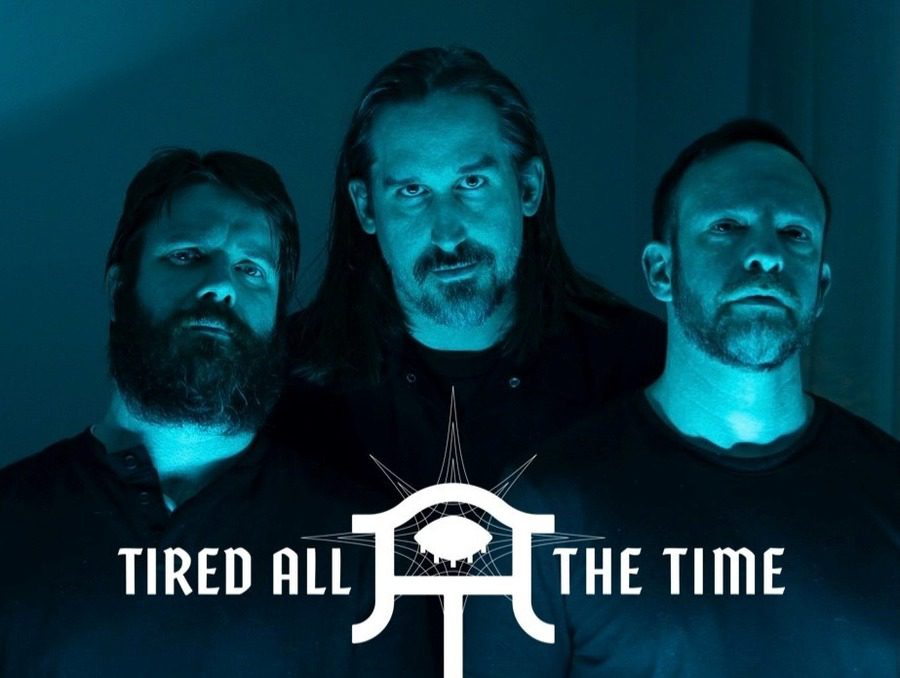
Dying Scene had the chance to talk with Edward Barakauskas of Teen Mortgage to talk about his other band, Tired all the Time, an alternative synth rock, post-punk trio from Washington, D.C. that just released their new LP SOMEWHERE ELSE on January 23rd. Check it out! Tired all the Time (TATT) formed in 2017 with their current […]
Dying Scene had the chance to talk with Edward Barakauskas of Teen Mortgage to talk about his other band, Tired all the Time, an alternative synth rock, post-punk trio from Washington, D.C. that just released their new LP SOMEWHERE ELSE on January 23rd. Check it out!
Tired all the Time (TATT) formed in 2017 with their current lineup consisting of Michael Talley (vocals/synth), Brian Miller (bass guitar), and Edward Barakauskas also of Teen Mortgage (drums). Their songs explore themes of existential stress, dystopian anxiety and social isolation juxtaposed with danceable melodies and tongue-in-cheek humor. While appropriating language and aesthetics from the corporate medical and pharmaceutical industries alongside the occult, they are known for extending their performances off stage by creating alternate reality art around them.
TATT has toured throughout the US and shared stages with notable acts such as FEEDER, MAN ON MAN (feat. Roddy Bottom of Faith No More), Empath, New Translations and Tigercub. Their album,BE WELL, garnered a Harmony Award for Best Music Video for “Bone Dry,” and received finalist nominations for the 2019 Washington Area Music Awards for Best Punk (Post-Punk) Band and Best Punk (Post-Punk) Album categories. Shortly after, the band was forced into a hard reset when they parted ways with founding member, Daniel Euphrat. In the following years, TATT chose to exclusively release singles while reimagining their identity as a trio. The next album, SOMEWHERE ELSE, is the opus of that stage of creative metamorphosis.
The album was self-produced by the band and mastered by Jesse Keeler (Death from Above 1979 / MSTRKRFT) and will be TATT’s vinyl debut on D.C.-based boutique label Scattered Records. Following the release TATT will have regional show dates including a release show at the Atlantic DC with a tour through the East Coast of the US this Spring.
SOMEWHERE ELSE explores the experience of existing in a society unraveling into a dystopian hellscape. Humans have unlocked technological pandoras box. Now we’re faced with staring at our empire collapsing at the hands of creations and our own flawed nature. Is there a better life on the other side or is our future or will we all go mad as it evolves into Lovecraftian proportions?
Dying Scene (Mary):What other bands would you say if someone likes would be into TATT?
TATT (Ed): We’ve drawn influence from bands like Interpol, IDLES, St. Vincent, Devo, Faith No More, Husker Du, Radiohead and The Mountain Goats. TATT originated as an absurdist satire of pop music and has continued to evolve into our current sound. We’ve never sought out particular bands we wanted to imitate but there are two lesser known bands I think we’ve converged on sonically. Mexican experimental rock group, Descartes A Kant, shares a similar tone of post-punk instrumentation embracing quirkier structures, timbres and noise. The other is MAN ON MAN, a project by partners Joey Holman and Roddy Bottom (Faith No More, Imperial Teen, Crickets, Nastie Band) that makes anthemic, gay proud, synth-heavy, indie rock.
Do you feel like there are any parallels between TATT and Teen Mortgage?
Tired all the Time and Teen Mortgage contain frequent lyrical anticapitalist and antifascist themes but conveyed in vastly different manner. Teen Mortgage leans more directly into anger and frustrations. TATT’s lyrics are more reflective of the spectrum of emotions we feel existing in modern society while holding hopes and fears towards the future.
How do your own experiences within the medical industry (you personally or TATT) play into your use of “language and aesthetics from the corporate medical and pharmaceutical industries alongside the occult”?
Each member held some level of occupation affiliated with these fields. I worked in emergency medicine, Mike works in mental health and Brian works in corporate settings. We are all experiencing reality in our own way. Thus we prefer our audience to form their own interpretation of the art. I won’t go too deep but I can provide some context on how these experiences informed us conceptually.
In the beginning, we were satirizing the absurdity of how industries project an image to the public that’s disingenuous to their nature. It’s like that feeling you get watching a commercial for a new drug or a bank that wants you to believe, “We care about you.” You know behind the mask beats the heart of an intangible entity that’s diluted the human experience down to a number. Mike referenced the concept “Capital has Agency,” summarized as “under the right conditions, a pile of money develops its own gravity and continues to grow, regardless of what values stand in its way.” It acts as an autonomous force shaping human behavior and relationships. Some of these rituals like conference calls, corporate speak, casual Friday and pizza parties resonate analogous to religious observance. This led us to connecting these patterns with the occult.
What can one expect from a TATT show?
TATT likes to bunk expectations and invite audiences into a showcase that’s both familiar and odd. As an emerging artist, we love performing for people that aren’t sure what to make from a guitar-less rock band. You’re still going to get all that raw punk energy but with danceable grooves, noise and dry humor. You might also get our vocalist giving you a crash course in Gray Goo Theory with slow blinking cats projecting behind him.
What’s working with Jesse Keeler like/what made you choose him to master SOMEWHERE ELSE?
Jesse and I became friends during the time Teen Mortgage had the honor of supporting Death From Above 1979 across several legs of their YOU’RE A WOMAN, I’M A MACHINE 20th anniversary tour. Death From Above 1979’s last record had been completely produced and recorded by the band itself, with Jesse having handled most of the mastering. Asking him to master our record made so much sense. The core of their instrumentation setup is essentially the same as TATT’s: bass, drums, vocals, synths and NO GUITAR. Of course the aspect of working with one of the band’s influences on the record was surreal but he really was the best person for the job. He returned the greatest glow up from mixing to mastering of any record I’ve worked on, specifically using some “psycho-acoustic” trick to highlight and balance the thick synth layers acting often as a lead instrument.
Last one…what kind of Lego set would be appropriate to build using your new record as the backing soundtrack?
I asked Mike for help on this one. He said, “There is an official lego kit for the Burj Khalifa, the world’s tallest structure located in Dubai. It’s been retired but is available for resale. Build it with the knowledge that this will be our world if we fail.” He offered an alternative to lego, “There’s also a model of The Motherland Calls. She commemorates the sacrifices made to defeat Hitler at the height of his cruelty and arrogance in Stalingrad.”
In 1982, a new all-girl garage punk rock band emerged from Los Angeles, founded by the late Paula Pierce. The Pandoras gained huge success and even became one of the first all female bands to be signed to a major label. More than 40 years later, her best friends Melanie Vammen, Sheri Weinstein, Karen Basset, […]
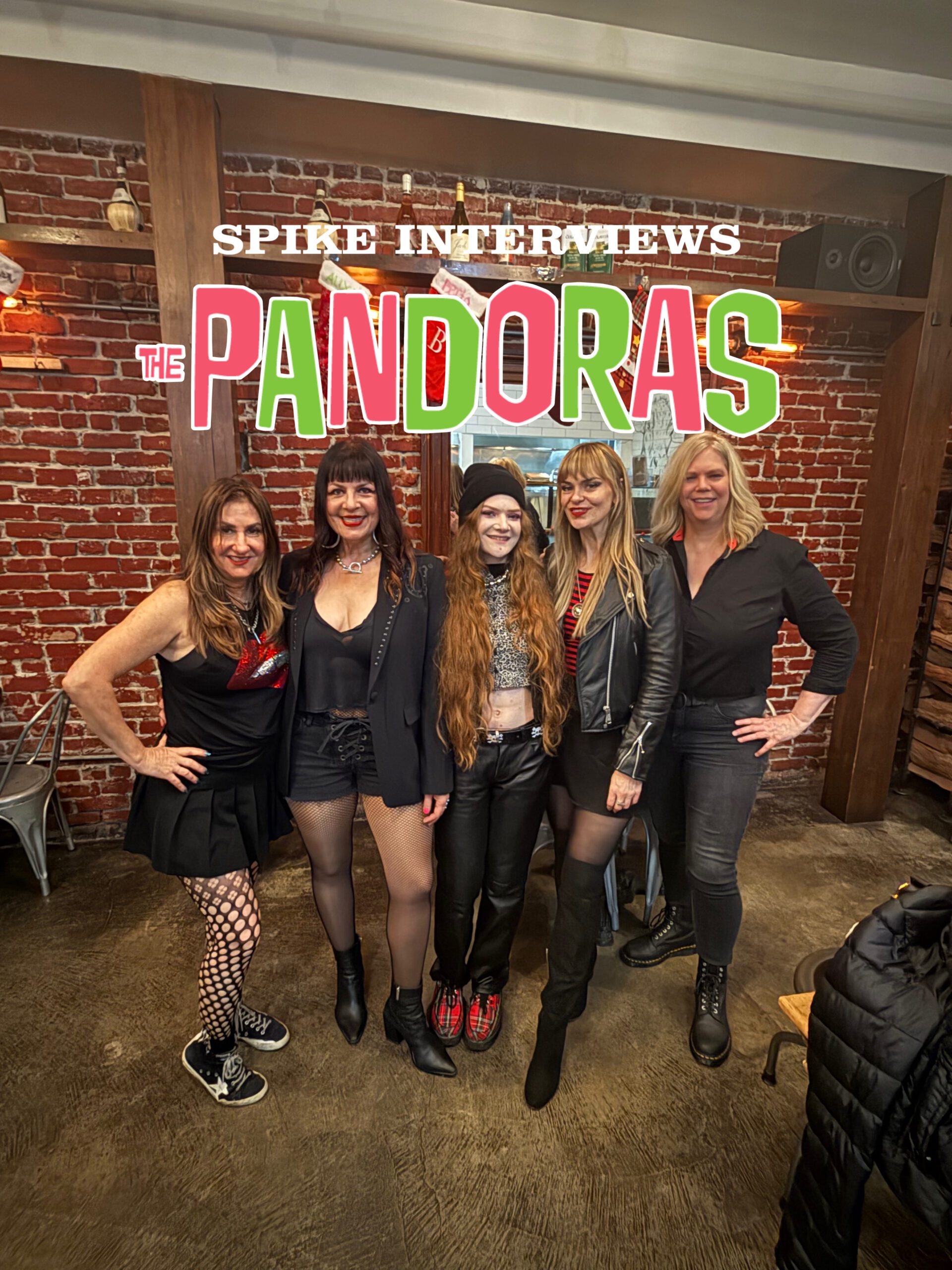
In 1982, a new all-girl garage punk rock band emerged from Los Angeles, founded by the late Paula Pierce. The Pandoras gained huge success and even became one of the first all female bands to be signed to a major label. More than 40 years later, her best friends Melanie Vammen, Sheri Weinstein, Karen Basset, and Natalie Grace Sweet continue carrying on her legacy and keeping the same energy that they’ve always had. I got to talk with them before their show at The Regent, and they reflected on special memories growing up together in the band, future plans, and why The Pandoras will always continue playing.
Dying Scene (Spike):I just want to thank you guys for everything you’ve given us throughout the years! Especially for women in the scene, you all are inspirational. You guys have faced lots of turmoil through the years, and have lost many members due to different things. Do you feel that your current line-up captures the true essence of The Pandoras?
Melanie: We are the music, we are the band, we recorded all the music. Paula (Pierce) and Kim (Shattuck) are our family. They’re our sisters, and the best friends in the whole world, we love and honor them. This is the music that we love, like I’ve played it my entire life. It’s so special that we still get to do this. We do it for us, we do it for them, and for everybody that loves our music.
Karen: As far as us carrying on the legacy of The Pandoras, we feel that as long as people want to come out and see us, we’re willing to come and play for them. We want to keep it going and we know Paula would love us doing this. We all got along great with her, she was wonderful. We became adults in this band so it’s pretty special.
Sheri: I agree. When Paula died, and Kim, it was the most horrific thing ever. They were our band sisters and our family. The fact that we still get to play all of Paula’s music and have fans out there singing the songs, it just means so much to all of us.
How significant was Rodney On The ROQ’s support for you guys in the early days?
Sheri: Huge. Huge. Before I was in the band I used to hear The Pandoras on KROQ all the time, so when I got the chance to be in the band it was kind of a dream come true because I was already a fan.
Melanie: Yeah, he played us first and he just kept playing us and it really caught on. Especially in Los Angeles at first, we played a lot of really amazing shows and tours. We got to tour with Nina Hagen and play with The Cramps and Iggy Pop, all kinds of cool people.
Karen: I remember being at home, because I was still living at home when I joined The Pandoras. Melanie and I got in the band and started recording right away, and one of the coolest memories that I have is hearing our recording played on Rodney’s show. I remember I had my little radio and I was tuned into his show, and he announced us and played our song. There is nothing like that. You will never experience that again, the first time is pretty darn special. Rodney was very important to us, obviously.
Tonight you get to play with another legendary band at their farewell show, TSOL.How does it feel to be on this lineup?
Melanie: Oh my god yes! Yes! We have played with them in the past years ago too. And The Zeros. It feels great.
Natalie: This is awesome, like this lineup is sick. I’m super excited. The Zeros are one of my favorite bands too. All of my friends from the East Coast are like “I can’t believe that’s one show”… I’m like “Yeah, just a Friday night in L.A. you know.”
In a few months you’ll be playing Little Steven’s Underground Garage Cruise. I’m sure you’re excited to play, but I want to know who you guys are excited to see?There’s so many awesome bands.
Sheri: Buzzcocks.
Big Star
Melanie: There’s so many. Our friends are Redd Kross of course. The Courettes, The Black Lips.
Natalie: The Ravonettes.
Melanie: Oh The Ravonettes! The Surfajettes.
Karen: Palmyra (Delran).
Melanie: Palmyra yes. Palmyra’s my bandmate. Karen and I played the cruise last year, it was amazing. It’s like nothing else. It’s and incredible and special thing to be apart of.
How do you think the garage rock and punk scene has changed throughout the years?
Melanie: As far as the garage scene, there’s a garage scene now. It’s really great. We’ve played with some of these bands, and it reminds me back when we were doing it. They sound like all the 60’s garage bands, it’s really good to see that’s still around. The punk scene, I was never in the early punk scene. That was more Paula’s time. She had a Darby Crash burn on her wrist and stuff like that. But I’m sure it’s changed somewhat, but it’s pretty amazing to see so many of the old bands that are still playing.
What advice can you give to a young punk girl like me trying to make it in today’s modern scene?
Karen: Join a band. No matter ho good you are, join a band. You will get better exponentially and immediately. You will have deadlines, rehearsals, people expecting you to show up knowing your songs. Just do it. Just join a band.
Sheri: When I got in the band, I had only been playing drums for like 3 years, and 2 of those years I was away at college. So it’s kind of like, just do it!
What can we expect from The Pandoras in the future?
Sheri: We’re going to Europe!
Melanie: Yup, we’re getting ready for our tour in May of Europe
Karen: And we just talked to somebody a few minutes ago about maybe going to Shanghai, China, and Japan. So that’s in the works. Mexico City again, we love Mexico City, our first time there was amazing.
Melanie: Yes, they are amazing. Just more touring and recording, all that fun stuff!
Stay updated with The Pandoras by following them on Instagram @thepandorasofficial. Check out our video interview!
Waverly Cayo spotlights local Chicago punk band YABAI — the new generation of hardcore.
YABAI: A versatile piece of Japanese slang meaning anything from “sick” to “WHOA!”, secondarily referred to as THE FUTURE OF CHICAGO PUNK!
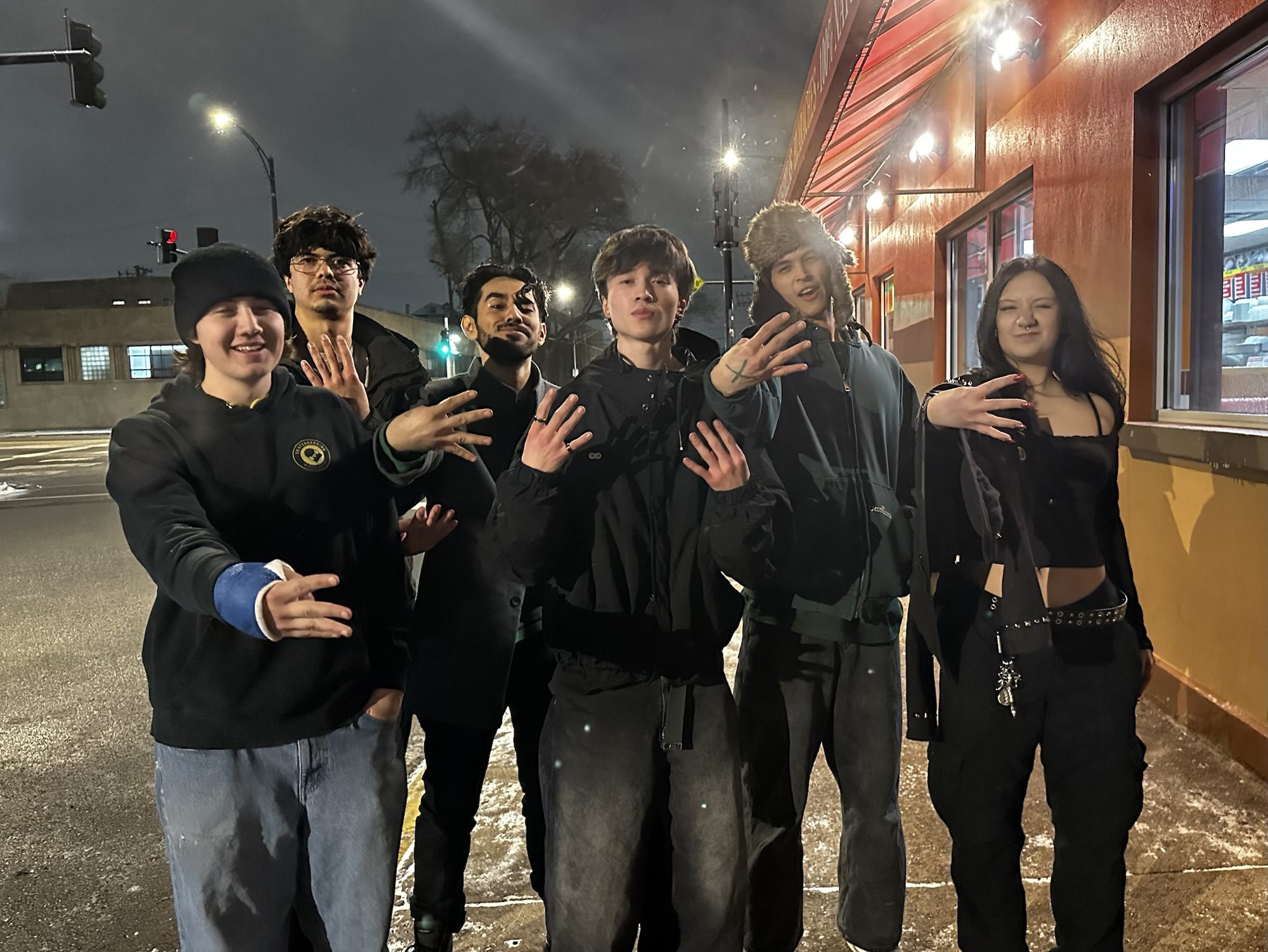
To the frequenters of the neighborhood scene, we know YABAI as the local punk band that makes self-proclaimed “evil music,” consisting of frontman Jesse Vasel, his brother Jaden Vasel on the drums, friends Austin Martinez and Elian Gonzalez both on guitar, and Mikey Marcuccelli on bass. What’s so much fun about YABAI is how apparent it was that we were all witnessing the future of the scene – spiky hair, killer style, and stage presence that could light a room on fire. YABAI’s music is hardcore, it’s punk, it’s quintessential rage. YABAI delivers, and the entire crowd responds: they mosh, they stomp, and they scream as loud as they can. This band is a wicked force of passion and young rage, and you are not going to want to miss being a part of the YABAI empire!
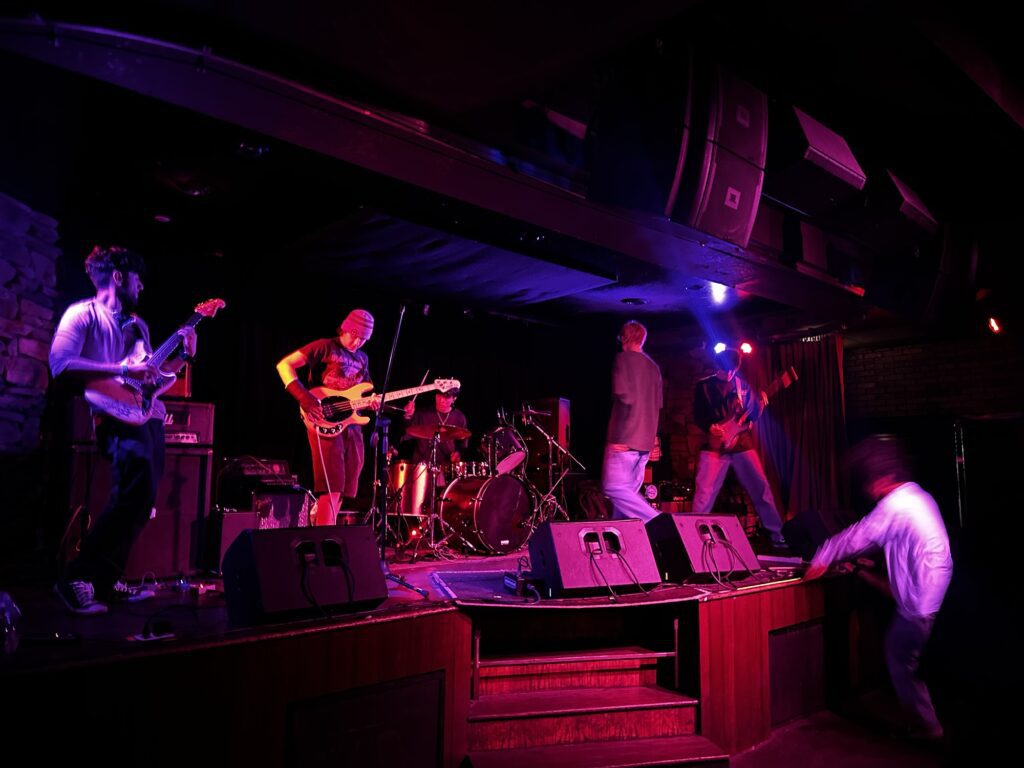
YABAI performing at the Cobra Lounge 1/8/26.
I got the chance to sit down with the members of YABAI to discuss Chicago punk, local chatter, and what YABAI means to them as musicians. When asked about what they want it to be like for new fans from different demographics, Jesse said, “We want to trick [non-punks] into thinking we’re like, not evil. Like really, really cool. Then they come to the show and see the chaos, and it’s like, oh, what the fuck? But then they like it. That’s what we want to happen, and that’s the goal of YABAI.”
YABAI is that in a nutshell! An unexpected meteorite of hardcore morals, vibes, and demeanor. These four come together to create something very special, something that thrives off the energy of a bunch of no-good kids going crazy in a dimly lit basement. *THAT* is what the Chicago scene is about, and as a fan, I couldn’t not talk about how crucial that is to the punk scene in our interview.
We discussed the state of Chicago’s DIY venues, noting that many of our favorite spots are closing, yet an equal number are thriving. One of the budding venues of the local scene is Casa Cafe – a casual Mexican restaurant that hosts local punk & hardcore bands. YABAI is one of many local projects that love and frequent Casa Cafe consistently.
“This shit is run by hardcore kids, for hardcore kids, and it’s just like a pure scene,” Jesse laughed. “These venue owners aren’t some outsiders, they’re just grown-up hardcore kids.”
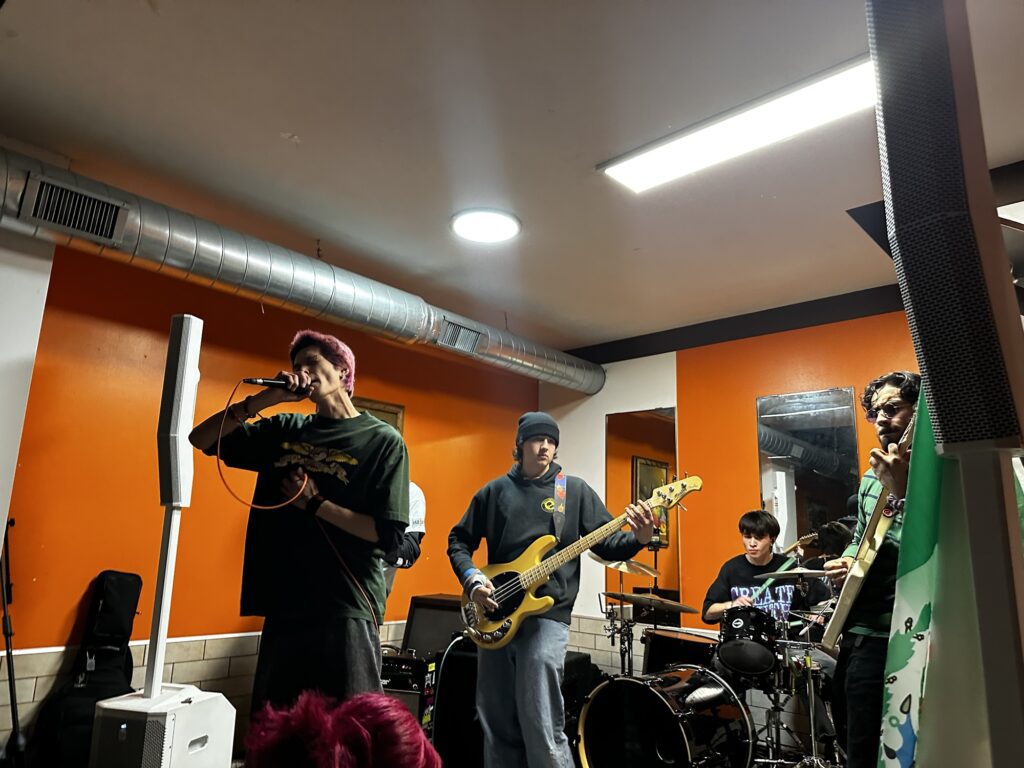
YABAI at Casa Cafe 1/17/26.
On a similar vein, the Vasel Brothers recently hosted a gig called “Divorce Dasher V” in their own Chicagoland home, featuring special performances from YABAI, as well as the debut of their new project, “Whelmed.” The YABAI boys keep the scene alive through their commitment to the music as well as their commitment to the community and its crucial message. YABAI is one of their many ways of keeping the music and the memo pure, alongside the opportunity to play with and in front of their family and friends. It’s clear that Jesse, Jaden, Austin, and Elian’s second priority is supporting the scene enough to keep other local bands engaged and passionate. They play alongside other acts, shouting when shouted at, and getting better off of the sheer motivation to be as good as the musicians around them. These hardcore kids are what keeps hardcore alive.
YABAI is currently reworking their Spotify, but they do have one available single, entitled “Swing Through“! You can check them out on Bandcamp for a bigger chunk of their music. For Chicagoland readers, they are also playing a show on February 7th at the WC Social Club! You can check out their Instagram @yabai_punk for more information.
It happened again. GardenAmp in Garden Grove, CA hosted Ska Smackdown 2. Featuring some of the best names in ska, ten bands performed between the venue’s Main Stage and smaller-sized Locker Room, treating the crowd to a night of energy, angst, and dancing in the pit. Behind the main stage sits the Locker Room, a […]
It happened again. GardenAmp in Garden Grove, CA hosted Ska Smackdown 2. Featuring some of the best names in ska, ten bands performed between the venue’s Main Stage and smaller-sized Locker Room, treating the crowd to a night of energy, angst, and dancing in the pit.
Behind the main stage sits the Locker Room, a smaller stage that feels like a dive bar, complete with a disco ball and bad decorations. This year’s lineup was so solid that the small space was always filled, and I only got to see the first band, Calypso’s Curse.
This eight-piece from Long Beach, CA, is led by two singers, Kimberly Sharon and Shane Reider. The amazing thing about ska is how many different variations of it there are; Calypso’s Curse was great at playing a good portion of them. Mixing ska, reggae, and rocksteady with a little bit of surf rock and indie, there was something for everybody. Sublime’s legacy left an indelible mark on the city of Long Beach, and the newer bands have done a great job carrying that torch.
It’s been a minute since I’ve seen the Goodwin Club, but it’s always a good time. Always the band to dress up in matching costumes, this year the theme was old ladies. Although they didn’t have as many horns joining them as last year, I believe they still had the largest horn section. Last year, lead singer Tami Demaree had caught a bad case of laryngitis right before the show, but she more than made up for it this year. I’ve never seen a bad set from the Goodwin Club, and tonight was no exception.
Next up was The Iron Roses, who had the most profound set of the night. They walked out to the song “The Day the Nazi Died,” like it was a national anthem to the scene; as it should be. With the crowd all fired up, co-lead vocalists Nat Gray and Becky Fontaine brought an explosive set full of angsty glory to Orange County, an area that could use it. Between class wars and chasing Nazis out of the scene, The Iron Roses should be a louder voice in the fight against… well, everything. Partway through the set, Becky gathered people who identified as women, queer, or trans to give a collective scream in a safe space. The Iron Roses closed out their set with “Screaming for a Change,” a song that more than applies to the current climate of our country.
This was my second time seeing Half Past Two this year, and it continues to not be a bad thing. Purple-haired singer Tara Hahn and crew played “Talk Is Killing Me,” “Curse the Universe,” and “Dominoes.” During “Dominoes,” Hahn brought out her daughter to help with the verses, and she did a fantastic job. In the middle of the set, they debuted a new song called “Nightmares of You.” It was a little darker than the other stuff I’ve heard them play, but it works and would be an interesting direction for them if they pursue it. Half Past Two ended the set as they did back in May when I saw them at Chain Reaction (R.I.P.) with a hardcore song. I said it then, and I’ll say it now: Tara Hahn could make a fantastic hardcore singer.
The main event for a lot of fans was this year’s inclusion of New York City’s the Toasters. Like most classic ska bands, the Toasters have had many members pass through, but are always led by guitarist and lead singer Robert Hingley. With a packed show comes short sets. Hingley and the Toasters were given forty minutes. They opened with “2Tone Army,” and the hits didn’t stop coming. Fishbone lead singer and sax player Angelo Moore came out appropriately for “Weekend in LA.” While not all of the bands acknowledged the state of our country, Hingley took it straight on by closing with Don’t Let the Bastards Grind You Down. A song that sadly still needs to be relevant nearly 30 years later.
Despite a long night for everyone, Mustard Plug showed up with a lot of energy. There wasn’t much change from the band’s set last year. They played most of their staples in a nearly identical set. However, their version of Fugazi’s “Waiting Room” is a cover that gets more and more fun each time I see it played live.8 The stage turned into absolute chaos in the best way as Mustard Plug brought all of the bands out to sing “Beer (Song)” and close the night.
It would do a disservice to the other bands that played in the Locker Room if I didn’t talk about them. I was to hear a few songs from the bands from outside the door if it was open, but in general, the small room was packed, and rightfully so. From the few songs I could hear and/or knew, if I was a previous fan of the band, the acts performing in the Locker Room deserved it. I would have liked to check out Hooray For Our Side, Chencha Berrinches, Louser, and Chudson, but another time.
I hoped for a second iteration of the Ska Smackdown, and I feel the same about a third. The ska scene out here right now is really in a great place. This is a great opportunity to check in with these bands, but also the friends I’ve made in the last couple of years. It’s a shame there aren’t many other venues that would entertain a show of this caliber. Given that the Locker Room was full for most of the show, its popularity only seems to be growing.