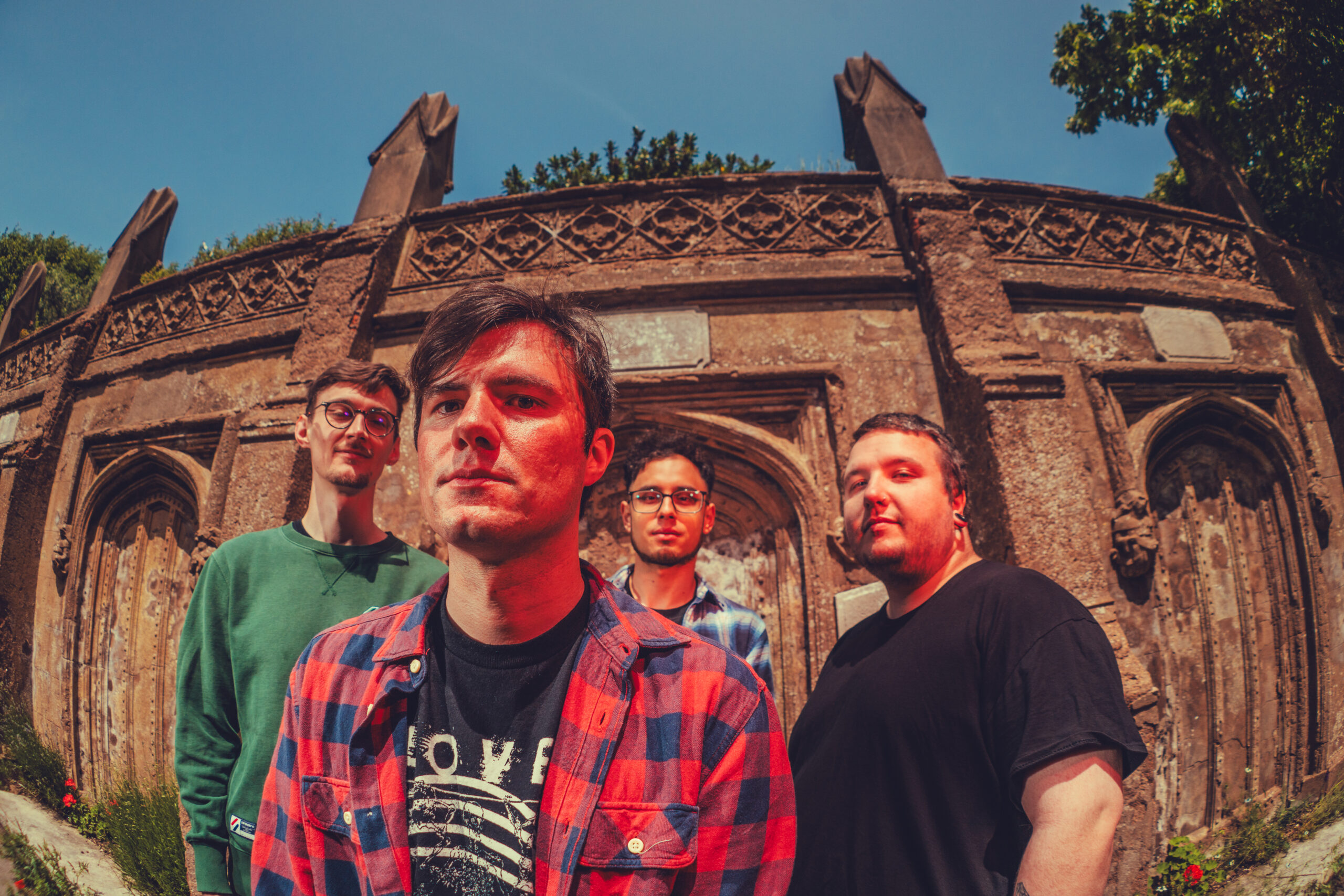
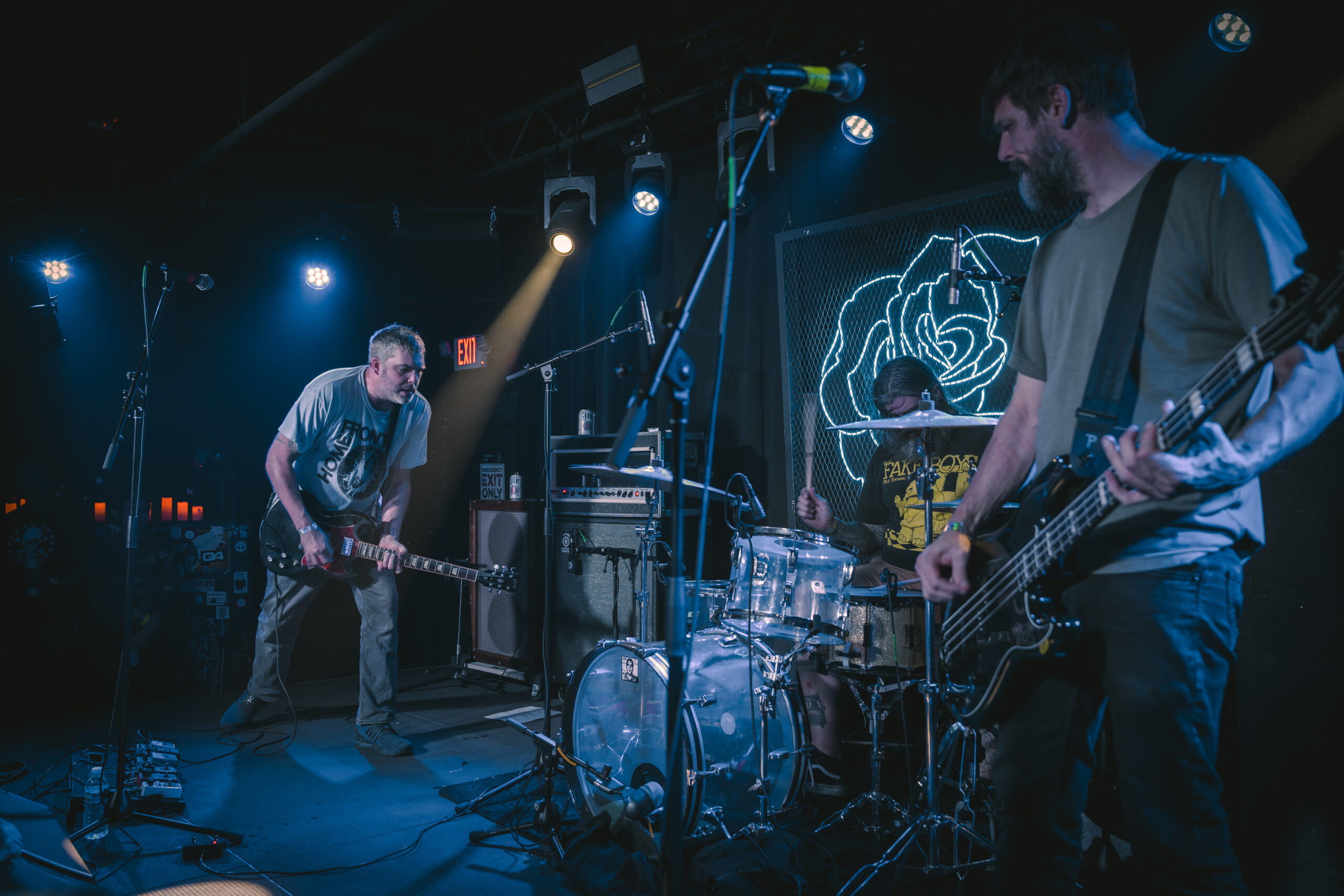
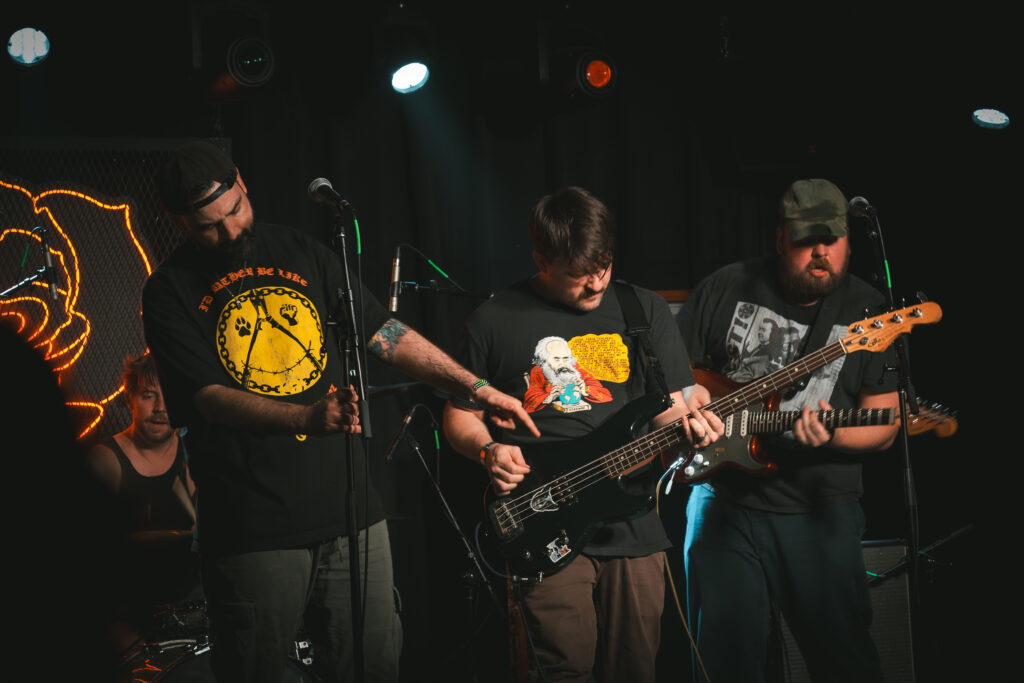
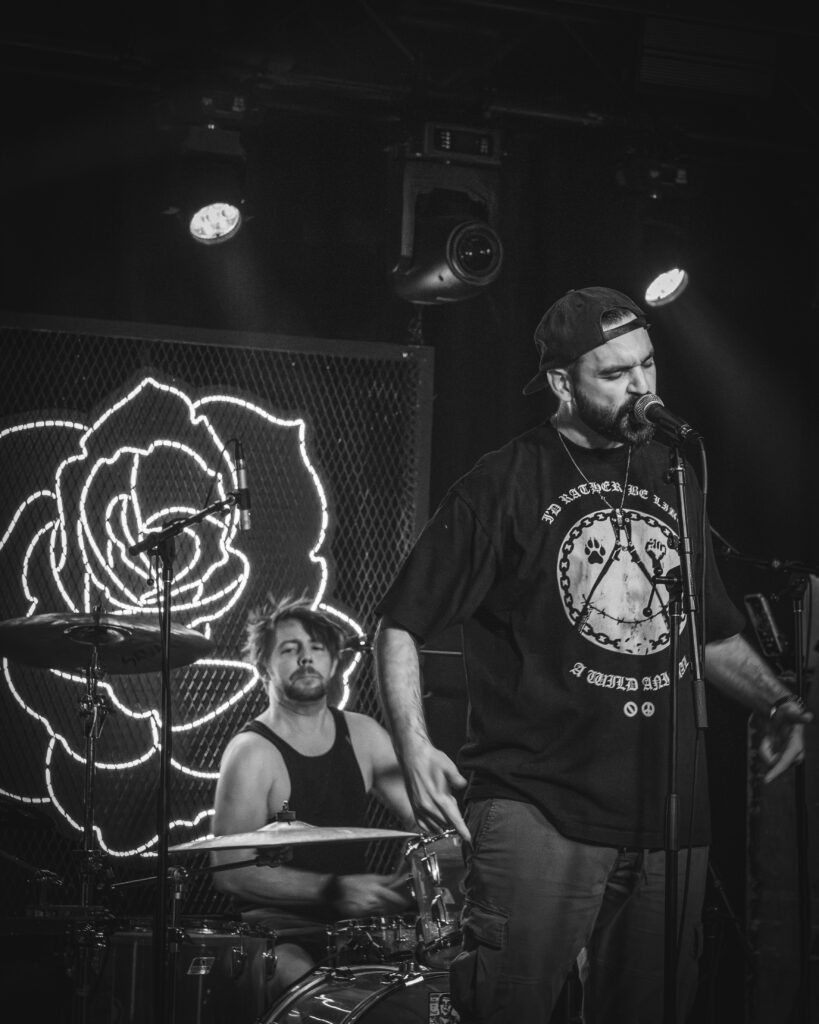
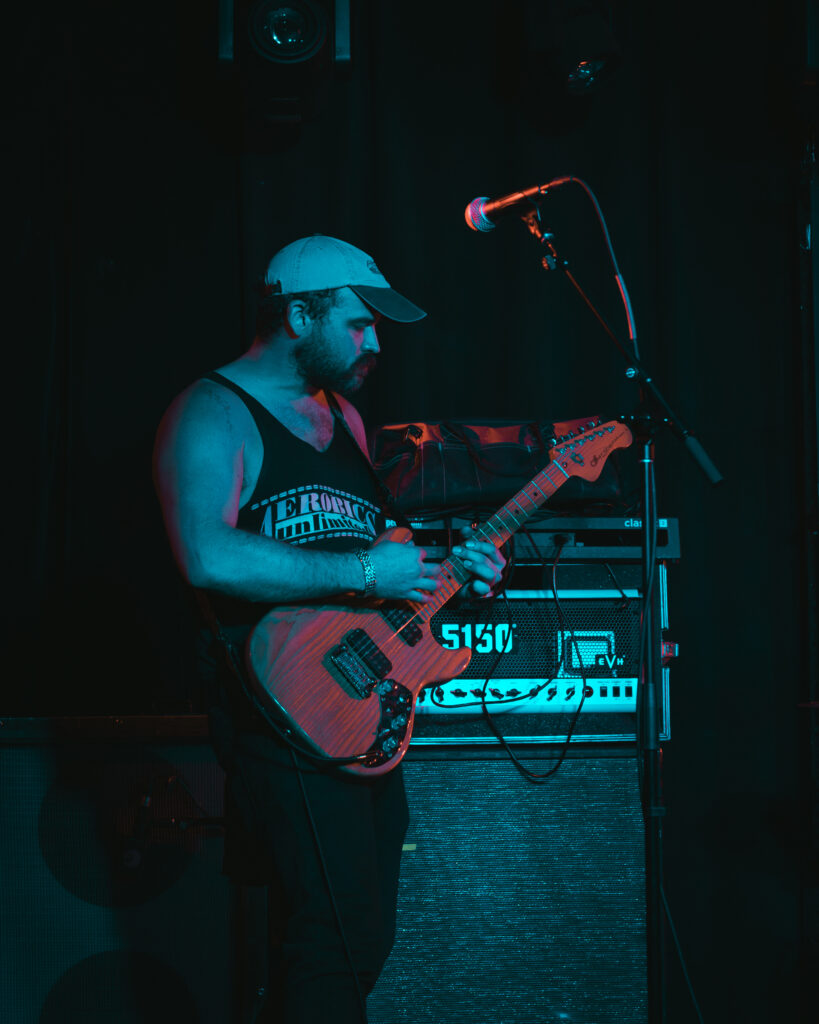
Mr. Radical, the four-piece hardcore punk band from Anaheim, CA., has recently released Promo! on January 23rd, 2026. I was excited when I came across Mr. Radical’s six‑song promo/EP on Bandcamp so today I’ll be diving in and reviewing it. Mr. Radical, comprised of Andrew Gonzales on vocals and guitar, Max Foster on guitar, Gavin […]
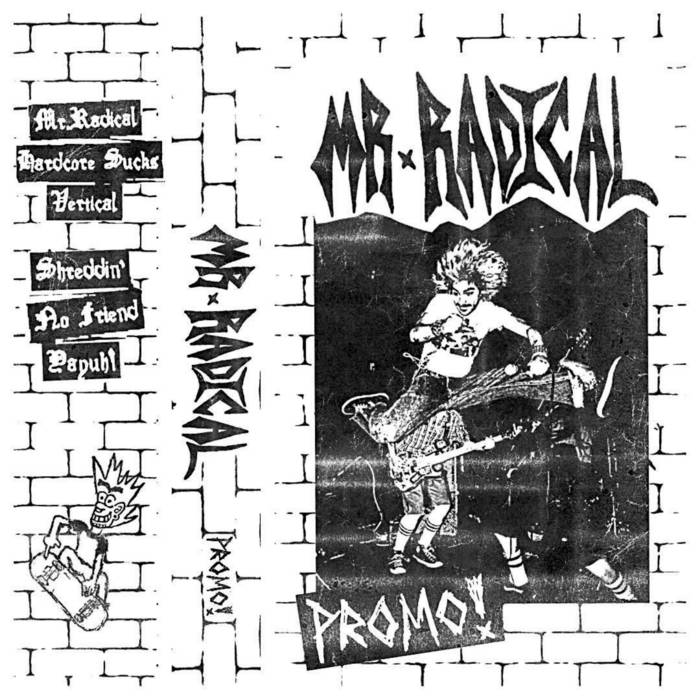
Mr. Radical, the four-piece hardcore punk band from Anaheim, CA., has recently released Promo! on January 23rd, 2026.
I was excited when I came across Mr. Radical’s six‑song promo/EP on Bandcamp so today I’ll be diving in and reviewing it.
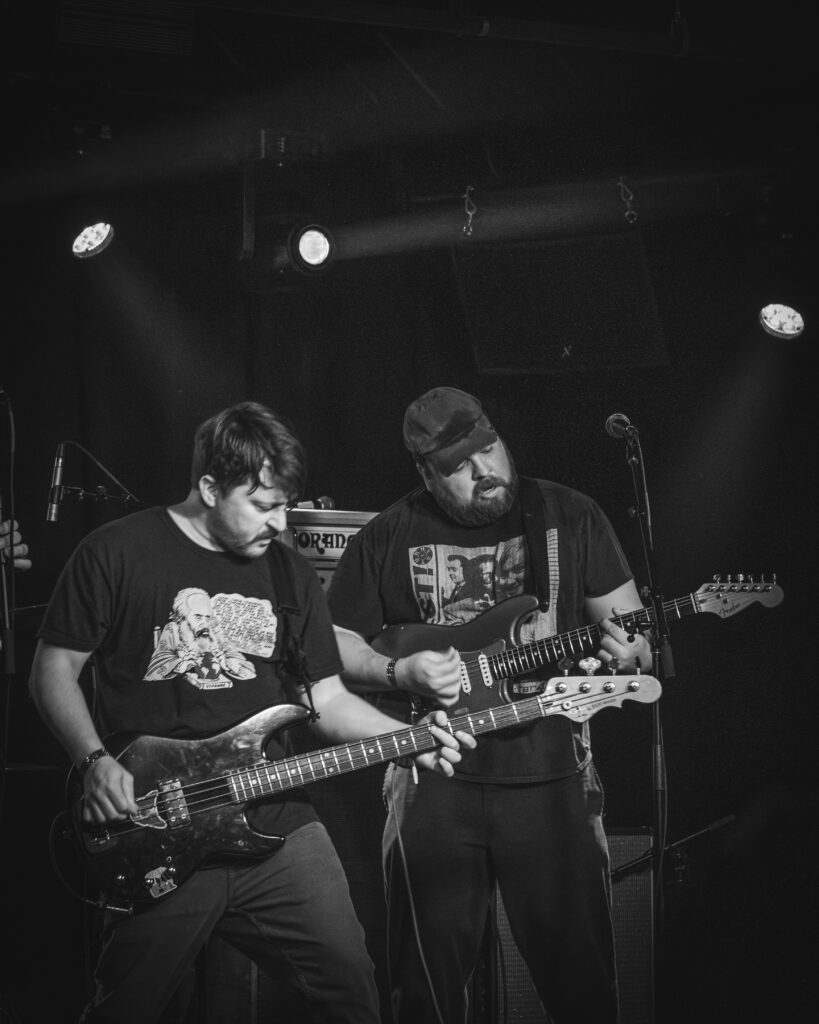
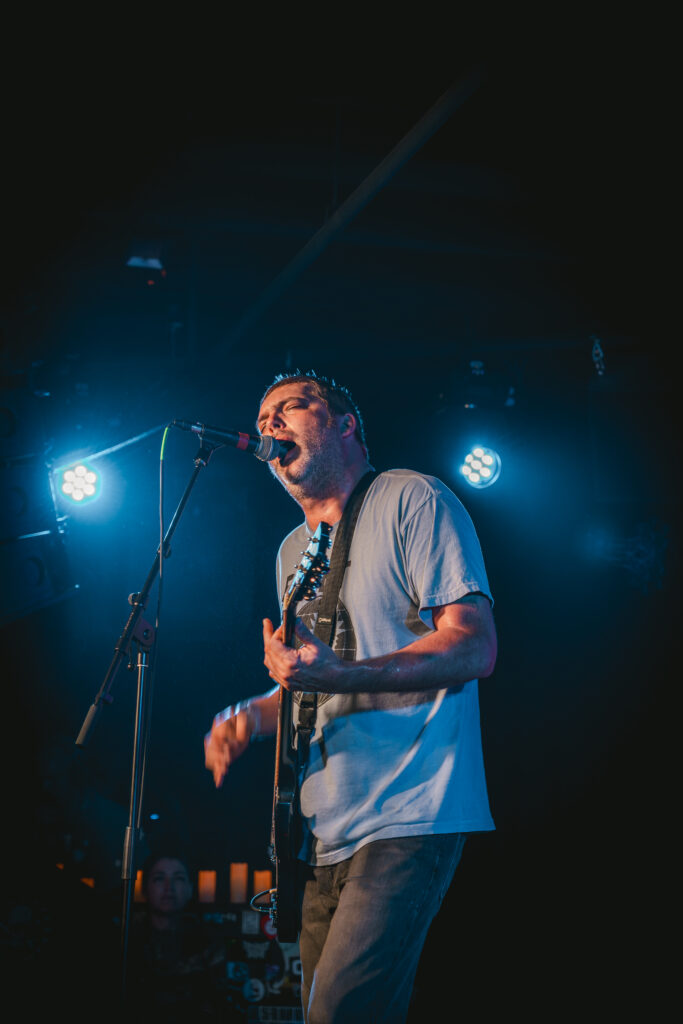
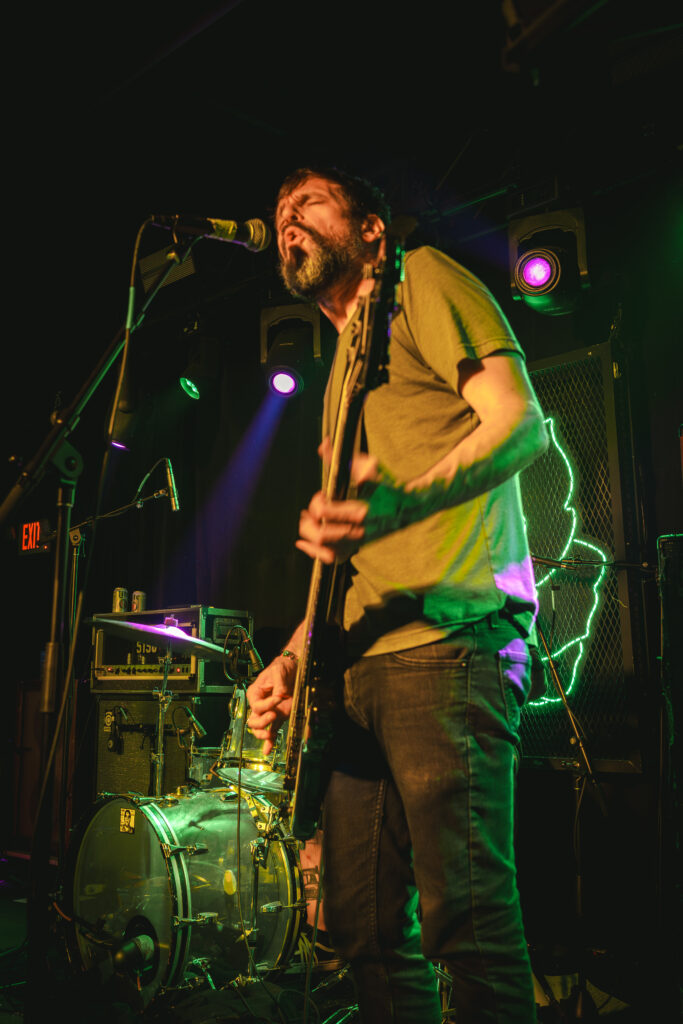
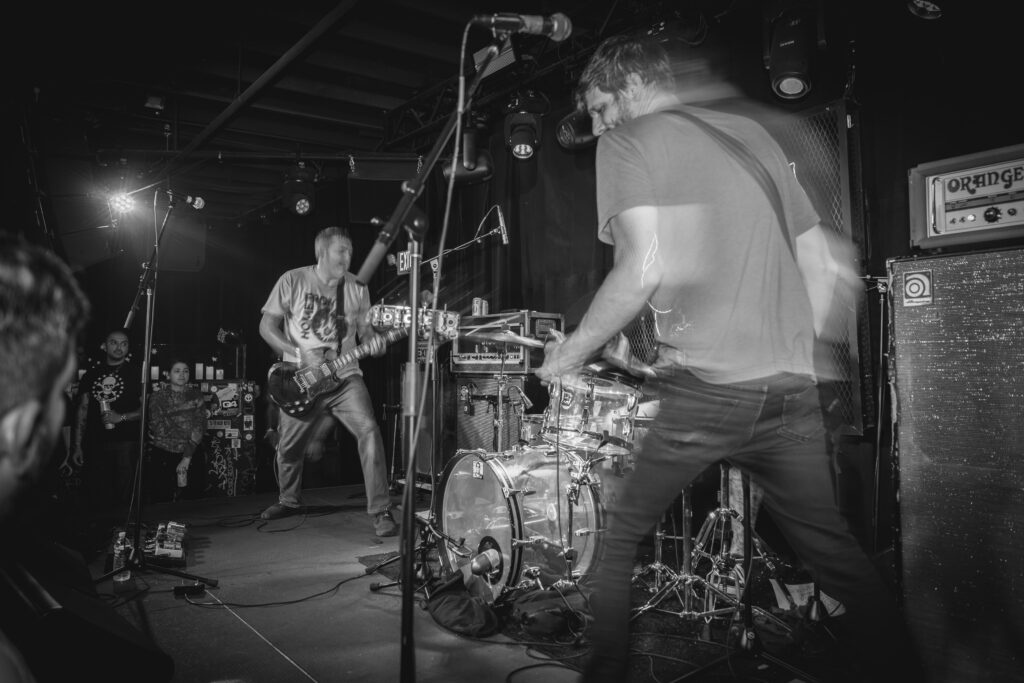
Mr. Radical, comprised of Andrew Gonzales on vocals and guitar, Max Foster on guitar, Gavin Smith on bass, and Chris Sigur on drums, are adding their touch to the energetic sounds that were pumped into Orange County in the 1980’s. Think of the blistering tempos of Black Flag, with a similar rawness to other hardcore punk bands from California like Holehog and Clit 45.
The EP, Promo!, packs six songs into eleven minutes – it’s fast‑paced, raw but cleanly recorded, and occasionally threaded with a skateboarding theme.
The vocals are awesome, a hardcore sound that you can understand, and the energy is contagious. Their bass is a standout for me as well, it’s very audible throughout the EP; especially in their intros and in transitions to breaks or outros. Their guitar riffs get your head nodding to their melodies, and the drums are spot on with tight fills during short transitions and variation in the choice of drums used in longer transitions.
Great changeups in songs that are mostly under two minutes.
Track 1, Mr. Radical, is an introduction to the band and EP. The guitar is frantic sounding, setting the tempo for the rest of the EP. The bass guitar is having fun walking the fret board. It’s an awesome song.
Track 2, Hardcore Sucks, has a mellow intro, followed by a drum roll, transitioning right back to the fast pace heard on track one. The intensity in the vocals draws you in.
Track 3, Vertical, has a catchy guitar that sways and pulls you, making you want to get in a slam pit. It has a nice combination of drums during a break in the song. This song goes along with their skateboarding theme.
Track 4 Shreddin‘, is my favorite track from the demo. It’s dynamic, with varying changes in speed. The bass guitar is busy on this one.
Track 5 No Friend, brings the angst, I really like the lyrics on this track. The guitar is awesome, and it feels like the bass riff and guitar are bouncing off each other.
Track 6, Yayuh, is a fun song, I think this is a definite crowd favorite.
I dig their sound and hope to hear and see more from them. Hopefully Dying Scene can catch up with Mr. Radical soon for some interview questions.
London-based melodic hardcore/emo four-piece Death of Youth are set to release their debut full-length album, Nothing Is The Same Anymore, on February 16, 2026. With roots in hardcore and influences ranging from Midwest emo to skramz, the group pulls from a range of sonic and thematic sources across the spectrum of punk to produce album that confronts […]
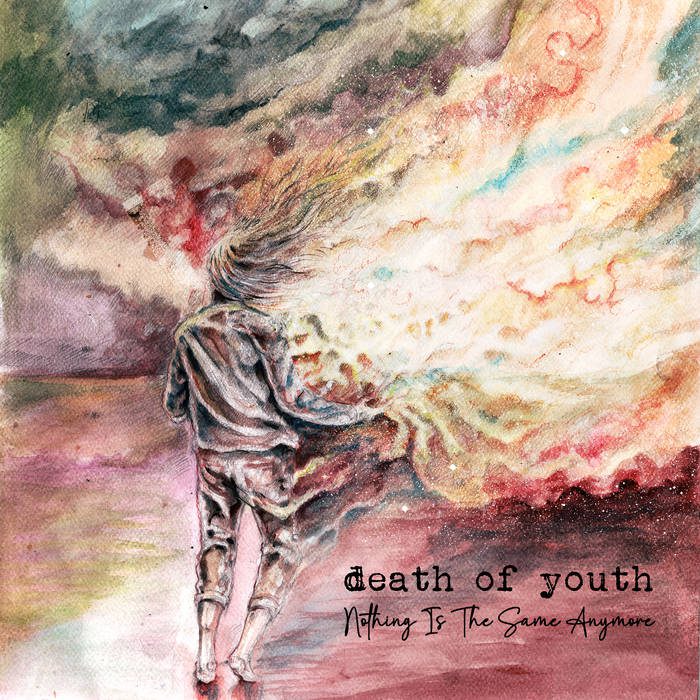
London-based melodic hardcore/emo four-piece Death of Youth are set to release their debut full-length album, Nothing Is The Same Anymore, on February 16, 2026. With roots in hardcore and influences ranging from Midwest emo to skramz, the group pulls from a range of sonic and thematic sources across the spectrum of punk to produce album that confronts the uncertainty, existentialism and political disquiet of modern life with insight, honesty, and heart.
The sound of waves hitting a shore that kick off opening track “Desensitized” provide the ideal landscape for a reflective album exploring the complex emotional issues of our time – one can picture themselves as the figure on the album’s cover, alone in a windswept place, resolutely forging a path ahead despite not quite being able to see. The waves give way to an explosion of raw, emotional sound and stirring lyrics; as frontman Rob David wails: “how many corpses will it take for us to hold ourselves accountable?” This album opener is one of unquestionable power, establishing Death of Youth from the get-go as ones to watch.
A much-needed anthem of resistance in fraught and troubling times, “Fix Your Heart or Die” stands firmly behind the message that “the right to exist shouldn’t be up for debate”, decrying the faux-righteous victim mentality of hateful bigots and reminding them that they will continue to remain on the wrong side of history. A pared-down bridge gives listeners time to reflect on this message before crescendoing in an epic halftime breakdown.
Rich with sophisticated rhythms and sonic texture, the equally politically driven “Bysdander” laments the modern-day tendency towards political disengagement and increased passivity in the face of violence, underscored by some excellent rhythmic work from drummer William Page. The bridge fades into a quiet, twinkly guitar and steady beat overlaid by snippets of President John F. Kennedy proselytizing about peace for all mankind during a 1963 commencement address at American University, before exploding into an absolute, final wall of sound. These elements combine to make “Bystander” one of the album’s standout tracks.
In Nothing is The Same Anymore, the political is personal as well as societal, with the former perhaps best epitomized on the record’s title track, all about healing from trauma and learning to make space for change.
Though the album’s overall sound can be most closely associated with screamo, even the staunchest pop-punk fanatics will find lots to love among the record’s nine tracks – “Rumination” takes off running with a driving, classic pop-punk beat that cruises to a slowdown, hammering home the song’s intensity. Foot-stomper “The Inverse of Patriotism” explodes right out of the gate with the kind of force and power that will have you head-banging until you get dizzy, and effortlessly catchy “Invertebrate” slows down just enough to demand: “where’s your fucking spine?” An excellent question in these times.
It is in this sense that Death of Youth knows how to keep screamo interesting; through variations in tempo and experiments in rhythmic heterogeneity, tracks stay dynamic and diverse, never yielding to the predictability and flatness that can sometimes plague punk’s less melodic subgenres. This sonic variety is perhaps best exemplified on “Performance Art” and it’s funky, offbeat bridge, as well as “Castle Rock”, a slower, pain-drenched jam that puts the “emo” squarely in screamo.
Cathartic, introspective, defiant and emotional, Death of Youth has crafted a tight debut album that, in a time of tractable apathy and weary disengagement, asks us not to look away, all while making space for the strength such action requires and acknowledging the disillusionment that often besieges us as we try to get there. Rounded out by a raw and impressive vocal performance from Rob David and stellar accompaniments from his bandmates, Nothing Is The Same Anymore is sure to please fans of Midwest emo, screamo and pop-punk alike.
Fans eager for more from the UK-based group can check out fellow DS contributors Forrest and Katrina’s interview with frontman Rob David on the records that defined his life (especially if you want to hear three punks discussing ABBA at length). Be sure to head over to Death of Youth’s Bandcamp to stream Nothing Is The Same Anymore or snag a copy of it on some gorgeous flame-orange vinyl.
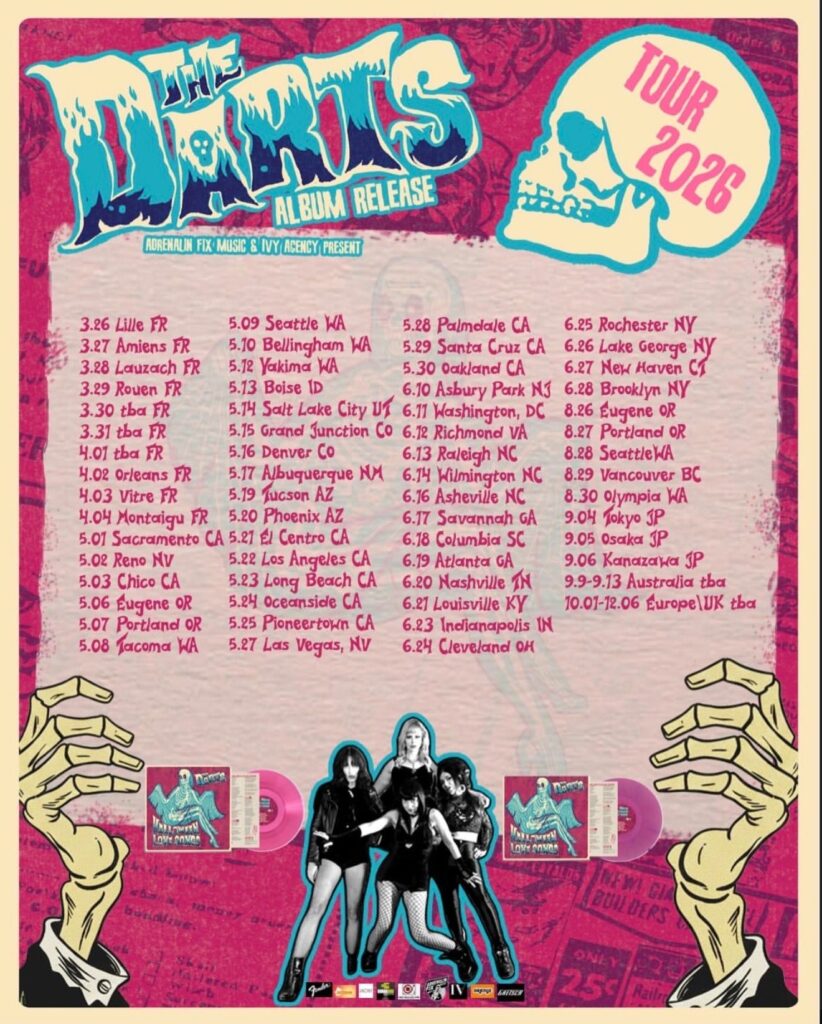
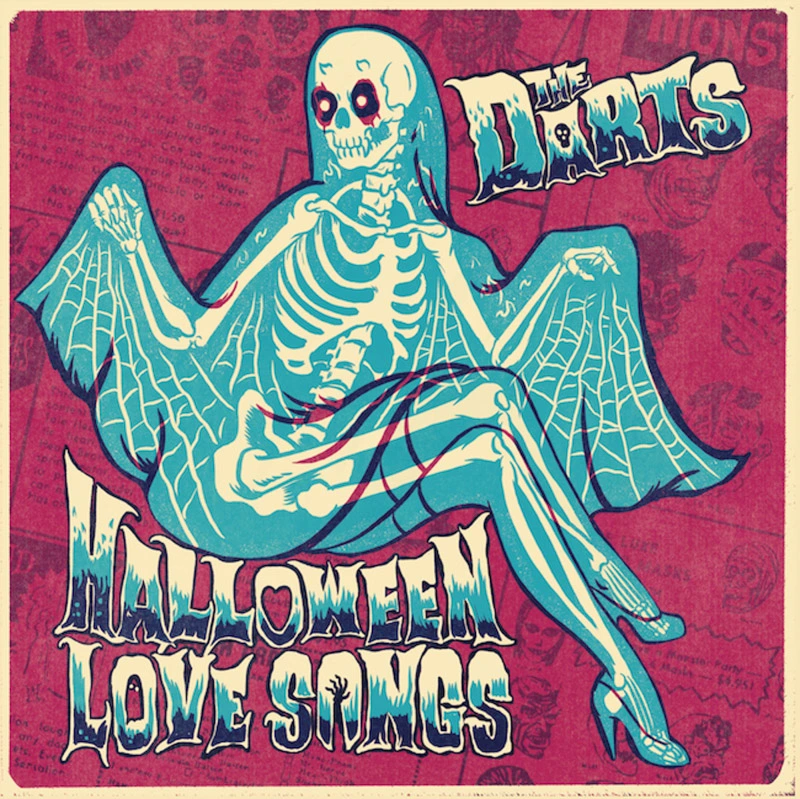
2026 is shaping up to be quite a busy year for Nicole Laurenne. By some metrics, it might be her busiest one yet. Laurenne’s primary band, the campy, gothy garage-punk four-piece The Darts, are due to put out their latest record, Halloween Love Songs, on March 3rd. It marks the band’s seventh studio full-length in […]
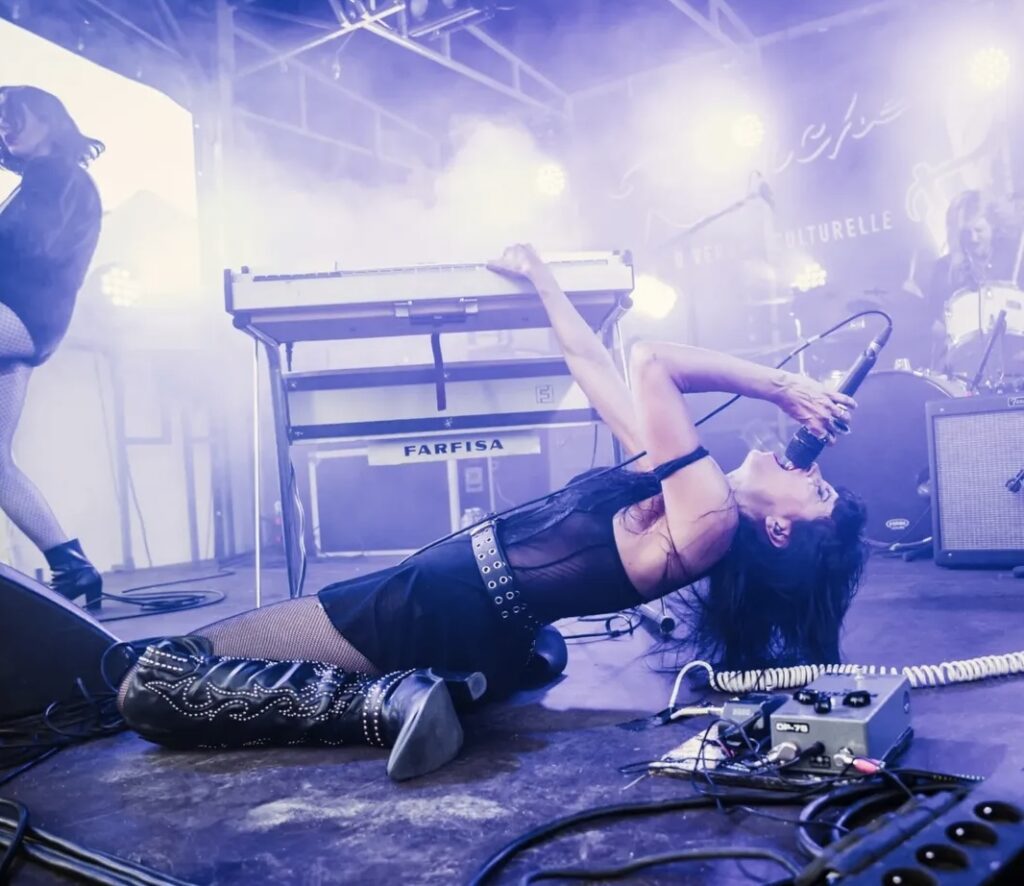
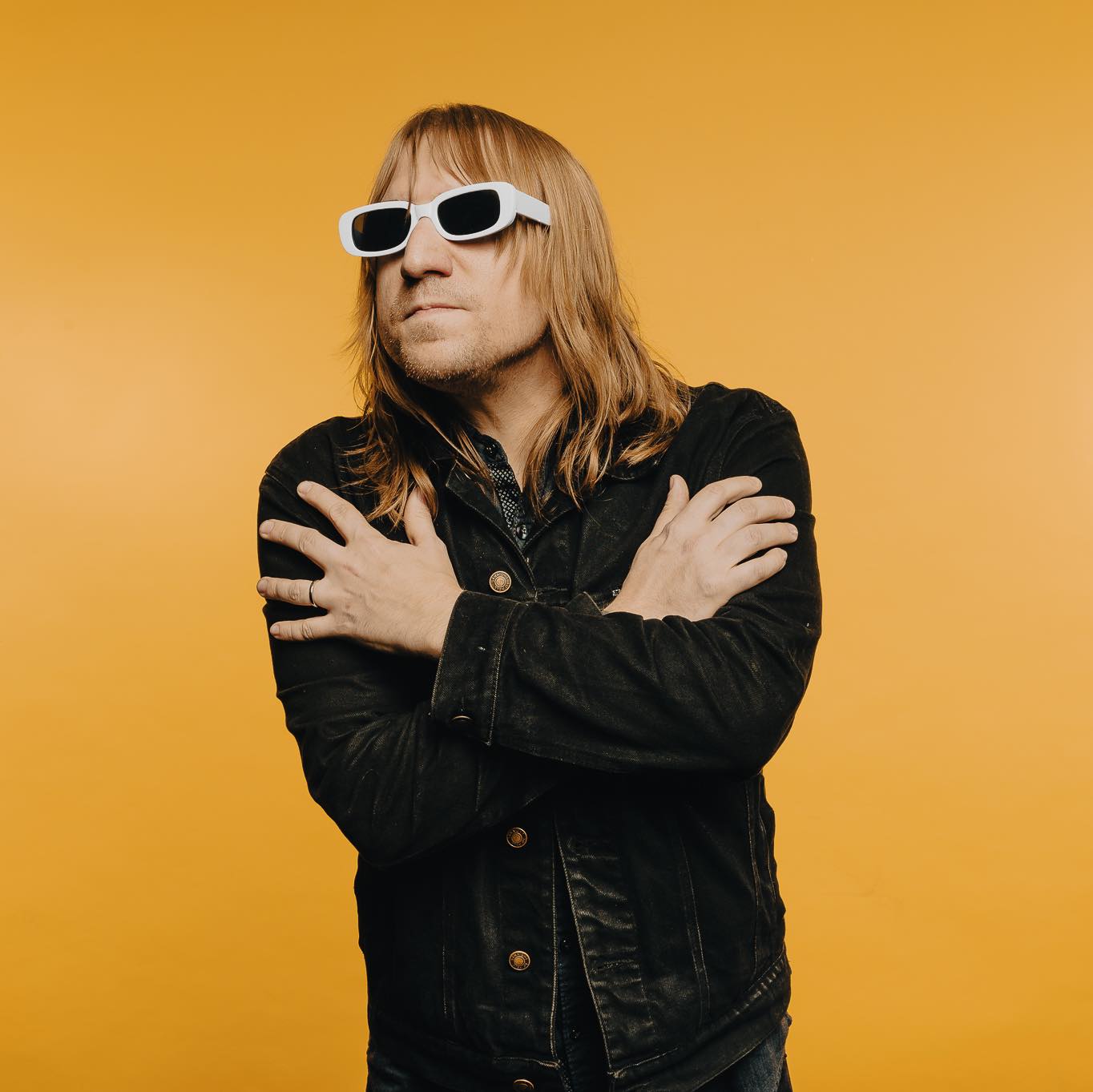
Photo of Nicole Laurenne by Jessica Calvo
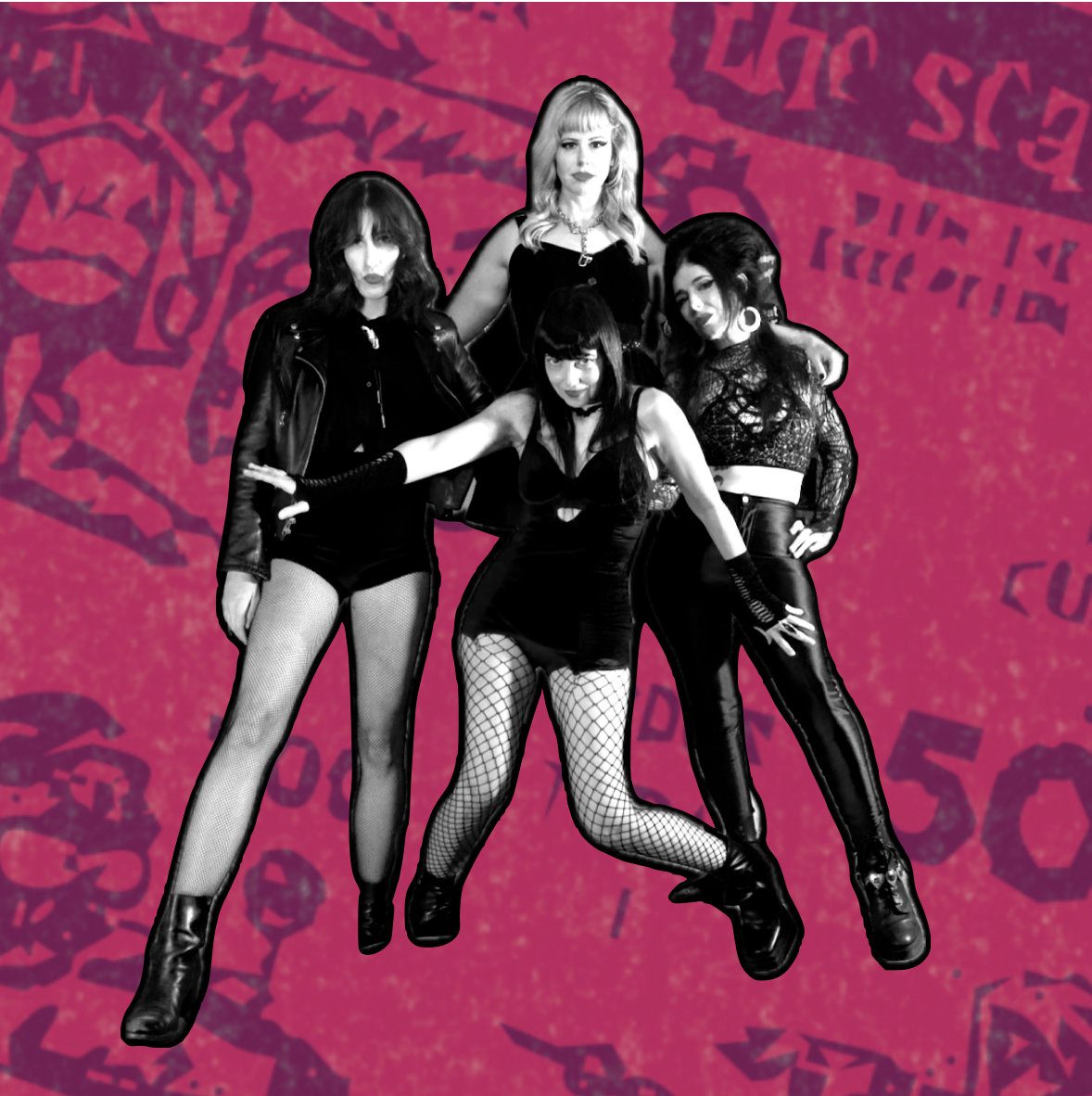
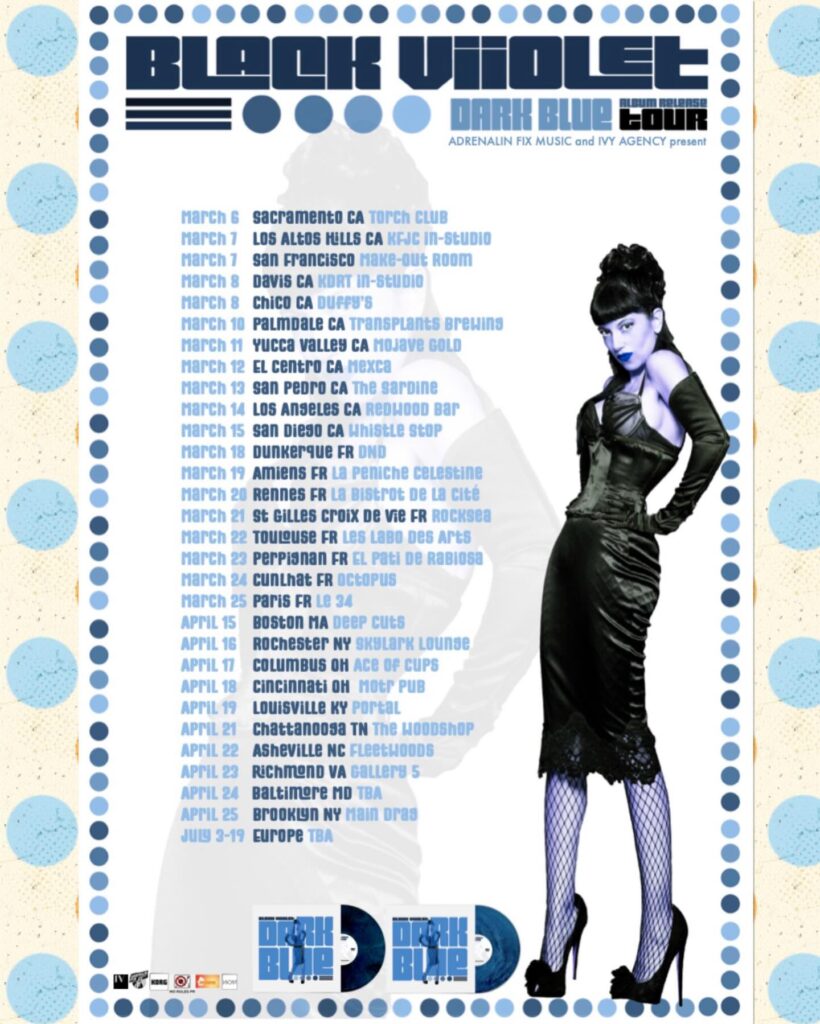
2026 is shaping up to be quite a busy year for Nicole Laurenne. By some metrics, it might be her busiest one yet. Laurenne’s primary band, the campy, gothy garage-punk four-piece The Darts, are due to put out their latest record, Halloween Love Songs, on March 3rd. It marks the band’s seventh studio full-length in less than ten years (to go along with a few EPs as well…and yes, plans for number eight are already well underway). Meanwhile, Laurenne’s jazzy, loungey neo-soul side project Black Viiolet just put out a brand new full-length, Dark Blue, earlier this month. Most of the months of March and April and May and June and definitely July and into August and a little of September and then basically October through December will be dedicated to the life of a road dog, as both bands will make an exhausting slate of appearances across the US and across Europe (especially France!) and Australia and Japan for the balance of the coming year.
And yet by other metrics, this is the ‘easy street’ portion of Laurenne’s life. This is what retirement looks like after close to three decades in the legal field, the lion’s share of which was spent as a municipal court judge in Gilbert, Arizona, during the time that that community was in the throes of becoming the fastest-growing municipality in the United States. Close to two decades of her time in the robe was also spent as a touring musician. Not full-time one, mind you, but about as full-time as you could get given the success of her early project, The Love Me Nots. Oh, and she was also a mom to twin daughters. The fact that Laurenne was a judge – a fact that she initially wanted to keep secret when starting smaller bands in Phoenix before quickly getting her cover blown at an early Love Me Nots gig twenty years ago that just so happened to be attended by a staffer from the Phoenix News Times – has been talked about in many places over the years. And while the “what” of the story is certainly fascinating, the “how” and the “why” are endlessly compelling.
We caught up with Laurenne from her newfound home in the Pacific Northwest – Tacoma, to be precise – in order to talk primarily about Halloween Love Songs. Centered on the theme that ‘every day can be Halloween,’ the album features a retooled version of the Darts lineup (Becca Davidson on guitar, Lindsay Scarey on bass and the return of Rikki Styxx behind the drumkit) and may just represent the band’s most fun and campy and best-sounding record to date. As a matter of course, the conversation steered into the deep musical curiosity that’s been a constant thread in her life. With varied and wide ranging experinces venturing from her younger years as a classically trained pianist to becoming a member of the University of Michigan and an opera accompanist and part of a jazz trio to her first pop bands and her time in The Love Me Nots and now taking the reins out in front of both The Darts and Black Viiolet, Laurenne’s musical journey, while at times chaotic, has been in many ways a true stabilizing outlet.
And so we of course discuss the kitschy fun sound and process that resulted in Halloween Love Songs and the build-up to what’s going to be an exciting and exhuasting year of touring. And we spend a lot of time putting this current period into it’s right contextual place, discussing the long and winding and fascinating journey from growing up in Chicago as the child of two incredibly gifted but not musically inclined – or musically interested, for that matter – parents, her start as a classically-trained musician her journey to Michigan for undergrad and Arizona for law school and somehow sorta backing into a career as a judge in a trailer court and then starting and maintaining a series of increasingly successful bands while still serving as a full-time judge AND a mom to twin daughters. It’s a super fun chat and we think you’ll dig it. You can order Black Viiolet’s Dark Blue now and still pre-order Halloween Love Songs, and here’s where you can catch both bands on tour in the coming months (like Medford, MA, in April!)
***The conversation below has been condensed for content and clarity. Yes, really.***
Dying Scene (Jay Stone): Nice to meet you! This is really cool. Where are you now? You’re in Seattle right?
Nicole Laurenne (The Darts): I’m actually technically in Tacoma.
What beautiful country. As a 90s alternative kid, I had been wanting to go to Seattle for 35 years or whatever it was, until we finally went last year to visit some friends. I could have stayed (forever).
Oh my God, that’s exactly what I thought! When I was able to finally move where I wanted, my first choice was France and that fell apart because of some tax reasons. I was living in the desert in Phoenix for so long and I just hated the desert so much. I hated the weather. I grew up in Chicago, so desert stuff was not me. When it was finally time to move, I was like, you know, I’ve always loved the Seattle scene. Every time I tour here, I have a great time. It’s beautiful. There’s rain. There’s beaches. There’s cliffs. It’s beautiful.
The people seem great. Like not just in the scene, but certainly the people in the scene.
It’s super not competitive or backstabby like a lot of cities I’ve been in. It’s like very community focused. Really unique place, if you ask me.
And so how long were you in Arizona for? Was that like law school and then like your whole professional career?
Yeah, you get stuck. Because, you know, wherever you go to law school, you kind of make all your contacts. I actually not only made my professional contacts, but I got married and everything just snowballed into Arizona. And it was not what I intended at all, but that’s where it was. So, yeah, I was there, let’s see…from 1990 when I started law school until 2022. (*both laugh*)
You were in in Phoenix? Or the greater Phoenix area?
I was in Phoenix. I was living in downtown Phoenix for most of that time. And then towards the end, my job was on the outskirts in Gilbert, which is one of the suburbs. So I moved out there at the very end just for a year or two. And then that was it.
And then Pacific Northwest. That’s really… that’s three real polar opposites; Chicago to Phoenix Arizona to Tacoma.
Although, you know, this feels to me a little more like the Chicago that I knew when I was growing up. It’s smaller here, but I don’t know…it just feels like culturally very diverse, musically and otherwise, you know? Super cosmopolitan. There’s people from all over the world here. It’s really unique; it’s very artsy in its own way, but it’s also got that whole Google, Amazon, Microsoft thing.
Yeah, that is a little strange.
There’s like this giant tech bro scene, but there’s also this huge cultural scene going on simultaneously. And they live side by side and they even enmesh sometimes. I don’t know…it works here!
Let’s talk about the new record (Halloween Love Songs)! The new record is really, really fun. They’re all really, really fun. But the new record is really, really fun. Also…you write an awful lot. (*both laugh*)
I do!
Has that always been the thing or has that started more since retirement, too?
No, no, no. I mean, I was in The Love Me Nots before The Darts. Maybe because I started late in life in this whole rock scene, but I always feel like I want to put out a record a year. That’s been my goal from the beginning. So when you think like that, I mean, I’ve pretty much done it, except for when I missed a year in Covid, and that was only because nobody was putting out records.
Who can blame you, right!
I had the songs! I’ve always written songs. Even when I was studying classical piano as a kid and everything, I was always writing stuff. It just comes out of me. It’s my therapy. It’s what I do. It’s my favorite thing to do, and so I’m always doing it. I have just loads of lyrics stored away and loads of riffs stored away and partial songs and a million things, so when it comes time to put a record together, I just kind of pull it from all my ideas and start assembling and editing and creating something new.
How long did it take you to write this record? Is this all stuff that was written new for this or is it all like do you have so many ideas that they’ve just been percolating for years?
I got the idea to write a Halloween themed record in Summer 2024, when I was doing an interview with Rock & Folk in Paris. The journalist and I were like, “there just aren’t enough Halloween theme songs. We can’t just have ‘Monster Mash,’ there has to be more!”
Yeah, there’s that “This Is Halloween” song, and then that’s it! (*both laugh*)
Yeah! I walked away from that interview like “I should really get on this.” And from that day, I started thinking about these songs and they all quickly wrote themselves. The real cherry on top was when I had to revamp the lineup for touring. Lindsay Scarey, who’s also from Seattle, is my new bassist. When she came on board, she didn’t even know I was writing a Halloween-themed record, but she’s also a great songwriter. She wrote in her last band, too. And she said, ‘I have a song idea. Maybe you can do something with it.’ It was called “Phantom Creep.” And I was like, “oh, my God, this fits in perfectly with my band!” And so I revamped the song. And then we decided we wanted to have a song that had a dance that goes with it that everybody could do. And so she worked on the dance. And I don’t know. So, yeah, that song came together in about a second. (*both laugh*) But yeah, all this stuff was written since Summer 2024. So less than a year.
I mean, it’s in your normal wheelhouse, except that it’s all like sort of specifically Halloween theme songs. I can imagine that that’s a fun process. Like once that once that snowball starts going at the top of the mountain…
Oh my God! Writing a record with a theme is really fun because immediately you start with a concept like, ‘oh, I’m going to write a song about zombies’ and it’s going to be about how you hate your day job because you feel like a zombie there. And now I’m going to write a song about vampires, but they’re going to be in love and I’m going to write about that, you know? And so every song quickly had a story when you started thinking about monsters. They are very kitschy, which is also very easy to write because it’s thematic, you know? As I started writing these songs, I realized that there were those monstery, kitschy songs that are Halloween-ish, but there’s also this, you know, late night, knock down all the mailboxes, light everything on fire side of Halloween.
Yeah, the mischief night stuff.
Yeah, right! The darker part of it, the bonfire in the middle of the night kind of thing. And there were songs I was writing that fit into that theme, even though they might not be Halloween songs like the song we’re releasing tomorrow is called “Apocalypse.” And that came to mind, not at all about Halloween. I saw the Apocalypse Tapestry in France. I don’t know if you know about this. It’s from medieval times.
I don’t. But where is it? We’re going to France this summer!
Oh I’m so glad! That’s awesome. Well, the tapestry is in Angers. And Angers is also cool because it’s where the the people put together the Levitation festival in France. It’s a really big music city. But there’s a big castle there. And on display inside the castle is the Apocalypse Tapestry. It was made by women back in medieval times. And it is so huge! It goes around the walls of this entire giant room. And they’ve restored it. It’s in perfect shape. It’s really colorful. It’s two tapestries. The top tapestry tells you the gods’ perspective on the apocalypse. They actually are planning it. And they’re trying to, you know, take out the bad guys and start fresh. And they’re all happy. And then the bottom is all the death and destruction and the kings going down and all this stuff that’s happening to the humans. It’s the coolest thing. And I walked out of there like, “oh, my God, I’m writing a song about apocalypse! This is great!” And part of it is the gods’ perspective, which is like, “yay, let’s start over. This is a mess.” And the other part of it… you know, royalty was big back then. And there was a lot in the bottom tapestry of kings and queens being destroyed by the gods. And as I was walking out, I wrote the line “There’s no kings.” I wrote that line. It just stuck out to me. I put it in the song in 2024. It was out in the demo. And then we recorded the record. And then all of a sudden…
It becomes a movement!
Yeah, right! Right! This is perfect! It’s perfect! Everybody understands it!
Right! Wow. I’ll have to look into how far that is from the city and how to get there. That would be cool to see.
There’s a train that goes out there. I think it takes about an hour and a half. Black Viiolet also recorded in near Angers in the Loire Valley. That’s where we did our recording for this last record with at Black Box Studio, which is where Dry Cleaning and The Kills and all these bands recorded. It’s an amazing place. I’d always wanted to go. It was a dream. And so, yeah, my half my band took a train from the Paris airport out there.
So why France? I mean, is it just a country that you’ve fallen in love with? Obviously, it seems like the bands do well there.
There’s really one big reason, but it led to two reasons. Back in the day, I just wanted to tour Europe and the Love Me Nots weren’t really anything yet. I just whipped out a credit card and I was like, “I’m just booking shows. I don’t care if anybody shows up. I’m going to once in my life tour Europe!” And we went and we played in Paris among other places and a record label guy wrote to me an hour or two before the show and said, “hey, I’m from this label in the south of France and I want to come see your show. Is that OK?” And I’m like,”hell yeah, that’s OK!” (*laughs*) He ended up signing us that night to a great label called Bad Reputation. It doesn’t exist anymore, but that signing led to the biggest tours, the front page of Rolling Stone, a million things came from that night of that signing. And so when The Darts started, we already had this super solid French thing. The French people have always liked my music for some reason. They always responded well to it, so when The Darts came along, it was like those fans just sort of hopped on board. And in the meantime, since we had fans there, one of the people we knew through the grapevine was this agent in Bordeaux. Actually, outside of Bordeaux in the vineyards. Ludo from Adrenalin Fix Records. He took on The Darts booking for international things, and he’s like my brother now. I mean, he’s been booking us and managing us ever since. And I think when your agent is in France, you end up going to France a lot because that’s where all the contacts are. But also France is really unique musically because the government…some of the governments in other countries in Europe do this, too…but in France, they give you a grant, if you can show that you’ve worked in the arts a certain number of hours per year, it’s called intermittence. If you can prove that that you’ve done these hours, you get money from the government to do the arts.
Imagine that!
It’s insane! And so they have venues, beautiful venues. You can’t even get your head around how beautiful these venues are. Huge stages, lights, production, hospitality you can’t even fathom. And all these people doing stage work because they want their hours. They don’t even have to make any money necessarily, but they’re under contract. So you have the farmer and this guy and that guy all running the lights. And you’ll have this dude making dinner, bringing it. And, you know, this guy booking the show. And it’s like the most amazing experience because their hearts are so in it and they’ve learned how to do everything perfectly. And they just like to host bands. This is throughout the entire country. It’s so unique. Some of the best, best venues I’ve ever played are these community run venues.
How much touring could you do as an active judge? Like how much time did how much time did you spend…
Not as much as I wanted!
Yeah, right!
You know, when The Love Me Nots thing started, I had been a judge only for, I don’t know, five years or six years or something like that. I didn’t have a lot of the vacation time stored up yet. I had little kids. My twins were still young. I needed time with them. It was rough. And The Love Me Nots were getting these huge offers from everywhere to do big festivals and all this stuff. Luckily, I mean, I was making money…everyone joked that I was only a judge to pay for the music but it was kind of true. (*both laugh*)
There’s nothing wrong with that.
I mean, it’s what I really wanted to do from day one. And I was able to do it this way. I would save up all my personal time that I had available. If you looked at our tour schedule, you could figure out that we toured on these long weekends where I had to build an extra day or two. And then I would tack on my ten days of the vacation on top of that. And then I would do these long weekends where I would take a sick day or a vacation day or whatever they would let me do throughout the whole year. And when you put the tour poster together, it looked like a whole bunch of dates all over the world. But when you break it down, it was like long weekend, long weekend, long weekend, Thanksgiving, you know? (*laughs*) We made it work. We had to really pick and choose to make the money. We didn’t break even because we had to tour like that, but it was worth it to me. And it was great. And the band was incredible. And when The Darts started touring, same thing. I made it work. My PT hours were increasing because with the government, the longer you’re there, the more you get. And my kids were older. I never really used a sick day unless I was dying or things like that. I had a bout with breast cancer. I had a lot of things also happen where I needed FMLA leave and all these things. It was a lot going on. But when you need to do it, you do it. And I needed to do this or lose my mind in my life. It was like a dream every time we headed out. And there were many, many times my flight from Paris would land at 630 a.m. at the Phoenix airport, and I would literally Uber with all my luggage to court. (*both laugh*) With my eyeliner still on, you know, and then throw on my robe, go do court and then go home and sleep for the 12 hours. Every tour was like that because I had to milk every bit that I could. And I took both jobs really seriously. So it was a lot.
On paper, that sounds like it’s crazy, right? And if you talk to average Joe then they say, “you must be nuts to do that,” except that I’m sure at some point, like you said, sort of before, it’s a necessity to you. Like you have to do it.
I mean, it’s a matter of my own mental health to be able to do what I love. I think that’s true of most people. If you’re not doing something in your life that just gets you super charged up, then what are you doing? What’s it all for? I’m fine with sitting on the bench doing a hundred guilty plea proceedings a day, or a six-day-long jury trial or whatever, and listening to the same DUI testimony over and over and over. I’m fine with that, if I know the reward is coming, you know? And to me, it’s not about the paycheck, the reward was the tour or the recording or the press interview or even just the dumb little things that I just love so much. So it was worth every second of it. Then when it came time to be able to retire, luckily I was with the government from the hour I started working (*both laugh*) so retirement came early. I made my points. And the minute that happened…I mean, my pension kicked in at noon on September 29th and by 3 p.m. I was on a plane to Europe! (*laughs*)
That’s amazing. That’s awesome. You said kind of from the beginning that this was always sort of the thing you wanted to do. Obviously, the law pays the bills, but when did that really become a thing where you were determined to be a professional musician too? Like, was it pre-law school? I guest spoke in my kid’s justice and criminology class today, and I talked about like the decisions you make to pay the bills and the decisions you make to keep the creative and the the mental health side like going for you, which is why I got into the whole punk rock thing. But I knew I was never going to make money doing it. But like, I can’t ever not do it. Is that kind of the same sort of mentality?
Pretty much. My mother’s from India. She’s very driven. She’s a physicist. And my dad, who died a couple of years ago, was also a very high-level scientist.
You couldn’t just tell them “I’m going to be a punk rocker!”
Not only that, they did not and still don’t really get music. It’s not part of their world. I hate to say it this way, but they really don’t see the value in it. And they don’t love it. They don’t get it. And so to them, when I started gravitating as a tiny child to the little piano that they had, they were like, “oh, that’s cute.” And I think my mom, when I started getting really into it and started competing in classical piano competitions as a kid, she’s really competitive, so she got it in that side of it. “Oh, it’s fun to bring the trophies home!” But she didn’t understand why I wanted to be the drum major of my marching band or play the piccolo or write goofy little songs in between my Beethoven stuff, you know? And so when it came time to go to college, she actually drove me to the University of Michigan for an audition for the music school for a scholarship. I had already played an audition with the Chicago Symphony. I’d done a lot of really big things, so I thought I was a shoo-in. And they offered me a partial scholarship! But in the end, my mom was like, “you can’t do music. That makes no sense. Why would we pay for tuition and have you go to this great school when you’re going to study music? If you’re going to do that, I won’t even send you to college.” The only other thing I really liked was deviant psychology. (*both laugh*) I took as many psychology classes as I could, and you asked me about undergrad and all that. I really didn’t have the time to keep my classical chops up because that takes hours. But I was still paying some of the bills by accompanying the opera students at the music school. People don’t realize this, but opera students need a piano player for all their lessons and rehearsing and everything because they need the music. They would hire pianists, so for five bucks an hour or whatever, I would go in and play all weekend with the opera students. And then for the first time ever in my life, somebody asked me to play in a rock band. It was one of my marching band cohorts. I was like, “you know, I write these crazy little pop songs, but I don’t really know anything about playing pop music.” And we started a little band…
This is at Michigan?
This is at Michigan. And I’m still in touch with both of them, actually. They both come to my shows.
That’s awesome.
They’re amazing people. But we started this crappy little band that played like at the Flint Michigan Festival of the Trees. You know, things like that. (*both laugh*)
Yes!!
Yeah!! Great, great, great shows like that. But it was my first dabble into pop music, and it was really intoxicating. It was really fun.
Were you out front, too?
I was playing keyboards and singing! And I didn’t really know how to sing, but I was kind of just faking it and having a good time with it and whatever. There were no stakes involved.
It’s the Flint Michigan Festival of the Trees. I’m sure you were just fine. (*both laugh*)
It was the Flint, Michigan, and the trees were pretty and the guys were cool, so there. And they’re still my friends, so it was worth it. (*both laugh*) So after I graduated from Michigan, I was like, “okay, music!” And my mom was like, “no, grad school!”
“We’ve talked about this!” (*both laugh*)
I’m like, “grad school? What am I gonna do? I don’t like anything!” And she was like, “well, you like this weird psychology. How about law?” And I’m like, okay, I could probably do criminal law. I could see, you know, there’s a lot of injustice. Actually, I did my undergrad psychology thesis on women’s prisons outside of Detroit. I spent a lot of time there. I saw a lot and I was like, there’s so much I saw, I could be a public defender and probably feel like I was helping people and would feel like I could handle this job. So that was my goal. I went to law school, got a full ride at U of A down in Tucson. That’s how I ended up in the desert. And never intended to go there, but there I was. And while I was in law school, even less time now for music. Now I can’t even accompany the opera students anymore because then even that takes practice. So my law school roommate happened to be a really good singer. And we started talking and she was like, “we should do a jazz combo. We could play in the resorts here and make bank and only do it on the weekends.” And I’m like, “Jazz? Jazz must be easy compared to classical. So yeah, let’s do it!” We found an upright bass player and I played piano and she sang. And I learned for the first time in my life, all these jazz standards. And I wasn’t really good at improvising, but you could give me sheet music and I could improvise off of that, because I have a classical brain. I could make that work. And so we played in all the resorts, like the nice resorts outside of Tucson. Made a ton of money, played Friday night, Saturday night and Sunday brunch. And celebrities would come in and stay at the resorts. It was really fun! And I learned a whole lot about jazz for the first time. And so that was law school. Graduated from law school and now I’m a lawyer. I’m a prosecutor, which I didn’t want to be, but it was the only job available in a court that’s literally in a trailer (*laughs*) in the desert outside of Phoenix. It was the only job I could get because I did so badly in law school. (*both laugh*)
Oh no!!
And this tiny little trailer court was right near where they put the Intel headquarters and it blew up! And so this tiny town became like, literally the fastest growing town in the nation! And the judge, who wasn’t even a law-trained judge, he was an appointed judge, but he was a teacher back in the past. And he was like, “oh my God, I need another judge! Like now! And we can’t pay you anything because we’re still in a trailer! Do you want the job? Because nobody else wants this crappy job!” And I’m like, “I’ll take it!” I’d never get a chance to be a judge again. I’m like, “this is amazing!”
So you’re like fresh out of law school, essentially?
I was five years out.
That’s nuts.
And I was working in this trailer, seeing the same judge every day, day in and day out. We would just do cases every day. There’s no way in a million years I would ever become a judge, except for happenstance and this weird situation. And it stuck. The town grew. Pretty soon we had a courthouse. We had all these judges. I was teaching ethics courses for judges. By the way, I was teaching ethics courses because I had to juggle this punk rock life. And they thought that was fascinating. And so all the ethics courses were hiring me to do that. It was funny. And in the meantime, I have even less time for music. So even the jazz fell by the wayside and now I’m playing rock and punk rock and covers and screaming into a microphone and playing three chords because it’s easy.
And you don’t really have to practice!
I did not have to practice at all. And I mean, I loved practicing, but I didn’t have the time. And then I was pregnant and it was a whole long story there, but I was pregnant by somebody I was in this cover band with. And he was also a lawyer and we got married because we were pregnant and we raised twins. And then we started a band that was all originals. For the first time ever, I’m playing in a band where I’m playing my own originals around Phoenix. It was called Blue Fur. It was named after all the blue Muppets.
Oh, funny.
And we just played. We were all lawyers in the band pretty much because that’s who we hung out with. There’s a lot of great musicians who are lawyers, by the way. I think the songs I was writing edged towards this Blondie kind of new wave sound. And it took off! And we started playing everywhere. We started playing constantly. They weren’t big shows, but we were playing all the time, all around the Arizona area. And the best part was I was writing songs and I was singing and I was learning how to sing. I was learning what worked and what didn’t work. And we built a little recording studio and I was learning what worked and didn’t work there. And I learned so much. And finally, one day at one of our little shows where there were two people in the audience, a guy walked up to me and said, “hey, I want to start a band and I want you to front it.” And I’m like, “oh yeah, right. Who are you?” I look him up and he’s Michael Johnny Walker, who was like, for Arizona standards, a pretty famous guitar player.
Yeah, right, right. Phenomenal guitar player.
Phenomenal guitar player! And we started The Love Me Nots together. And that’s how that all took off. And for the first time in my life, I had a job that could pay for a great band that could tour everywhere. I could write all my own songs. He was helping to write too, obviously. I got divorced, I married him. We toured everywhere, we did everything. It was like this crazy, crazy life. It was a double life, for sure. I would go to court and I kid you not, one morning, I was talking to some defendant on a little shoplifting thing or whatever. And he goes, “judge, can we go off the record?” And I’m like, “yeah.” He goes, “homie, I was at your show last night! That freaking ruled!” I’m like, “oh my God, now I gotta recuse myself!” (*both laugh*)
I have seen that written up. I forget where, in doing research for this, I have seen a news story from somewhere in Maricopa or whatever that references that. That’s amazing.
Yeah, it happens. I tried to keep it underground. I tried to not let people know. When The Love Me Nots first broke, at our very first live show ever, there happened to be nobody there except a reporter from the Phoenix New Times who loved it and put us on the cover of the New Times the next week. Big picture. And I didn’t want my court, or especially the lawyers appearing in front of me to know that I was in this rock band. I wanted to keep it really separate if I could, but I didn’t expect my bands to really go anywhere either. And sure enough, the presiding judge walks in with a copy of it, puts it on my desk and says, “the city council’s gonna have a problem with this.” And I’m like, “why?” He goes,”look at your outfit. You’re wearing a go-go dress, a mini dress and go-go boots. Is this the kind of dignified thing they wanna portray when people come before you as a judge?” And I said, “well, two thoughts on that. First of all, my mom made that dress. It’s very 60s and it was very popular in the 60s. And I feel it would be very dignified if you were in the 60s. And secondly, if I was an Olympic swimmer, I would be on the cover in a swimsuit with my gold medal and you wouldn’t have any problem with that. This is just a different field. And it’s the same kind of success in my mind.” And he kind of (*shrugged*) and he kind of took the thing and walked away and never heard another word. And 10 years later, the court is retweeting my band tweets and saying, ‘we’re not your grandfather’s court!” (*both laugh*) We understood each other, things changed, but we all had to learn how to do it.
Who looks at it weirder, the judges and the people inside the courthouse that you are this secret punk rocker or the punk rock people who are like, “wait, you’re a judge? How does that work?”
Punk rockers definitely. It catches them way more off guard because like I was saying, a lot of lawyers are musicians. They play in bands. A lot of them are frustrated musicians and they wish they, like me, followed that path instead. And lawyers, I think, tend to be, for the most part, pretty educated, pretty cultured in some ways. And they’ve had a lot of exposure to all styles of music and they’re collectors. I don’t know, they’re very intense people. And if they’re musicians, they’re very intense about it. So they’re not technically surprised. They’re stoked and they’re a little maybe like, “how do you make this work? Because we wish we were doing that too!” But they’re not necessarily surprised. I think for the punk rock community, it was a double-edged sword. In a way, they’re impressed. In a way, they’re freaking terrified because the law is right there! You know what goes on in the bathrooms and you know what goes on all over the punk rock community. It is very anti, and to be an authority figure in an anti-authority environment is a little scary for everybody. And I think once they heard the music and they got to know me, the Phoenix scene very quickly came around and everybody was cool with it. In fact, over the years, I’ve looked over contracts for fellow musicians. I’ve referred them to lawyers when they need help. There’s a whole symbiotic relationship between law and punk that actually is there. (*both laugh*) You just don’t see it. So yeah, it’s still a surprise to me that I somehow made it work and made it to retirement without anything exploding. Thank God.
And now you can be on the road! Looking at the tour flyers, both for The Darts and for Black Viiolet, you are making up for lost time.
I really am.
And why not? You deserve to!
First of all, there’s nothing else I want to do. And as long as there’s people that want to listen, I’ll go and I’ll figure it out. I have great agents on both continents and they’re making it work. And even like today, for some reason, Black Viiolet couldn’t find a show in Columbus in April. We were having so much trouble. It’s Record Store Day. A lot of the venues are closed. There’s a lot of reasons. But we were having trouble, trouble, trouble. And I thought, you know what? The band’s just not good enough. We’re just not big enough yet. We’re just getting started. And then like today, I find out that he was able to book like one of the coolest clubs in Columbus. They finally came through for Black Viiolet! And so as long as people want it, oh my God, that’s cherry on top. I never take that for granted. You write a song and somebody actually wants to hear it? That’s still unfathomable to me because of all the time it took to get here. Maybe my parents got that in my head a little bit. Like who would ever want to listen to music? But people are listening and they’re buying and our pre-orders sold out in a day, in an hour!
I saw, that’s amazing!
Crazy stuff is happening. And it’s so cool. I don’t take it for granted. In fact, I just want to do it as much as I possibly can until I drop dead.
Til the wheels fall off, right?
Yeah, that’s fine. If I drop dead doing this, then I win. (*laughs*)
Do you think that if you had stayed with the Beethoven side or whatever, like the classical piano, that your mom especially would have gotten it at some level? But then when you get into rock and roll and then when you get into like, horror, goth, punk and whatever, she’s like, ‘what the fuck?’
Oh, yes she is. Yeah, I mean, a lot of interviewers ask me, ‘what’s the first concert you ever went to?’ And I have to say it was the Boston Pops at the Chicago Public Library when I was five.
Oh, hell yeah!
And that was what my mom took us to because it was great, it was free, it was at the library. It was classical, but it was fun classical. And yeah, to say that your daughter is a musician with the Chicago Symphony or playing at the Met this weekend, that’s something that her world and the people she hangs with can appreciate. And it’s not scary; it’s dignified. When she first came to the Yucca Tap Room in Tempe, Arizona, to watch me play, she pulled me aside and said, “Nicole, these people have tattoos.” (*both laugh*) And I’m like, ‘they have tattoos on their face, mom! Look! This is great.” And she’s like “why is it so loud?” My God, it was this completely foreign environment for her and my dad. But to their credit, they babysat a lot while I was out there on tour. I got a lot of lectures, but I also, in the end, got the support I need. Now it’s really spun around. My mom really does get it, I think, and loves to host my bands when I’m in the Bay Area. And now she has become the vinyl warehouse for me, since I don’t have a room in my little place in Seattle. Her dining room in Sacramento is now full from the floor to the ceiling with boxes of records waiting to go to the distributors. (*both laugh*) She’s become a record dealer.
I love stories like that. That’s awesome. Let’s get back to Halloween Love Songs. The album comes out March 3rd, which I think is amazing that it doesn’t come out around Halloween. It doesn’t have to come out around Halloween.
No, every day is Halloween!
Exactly! That music, it plays all the time. It’ll be especially playful at Halloween time, but it’s a really great record as a standalone record. It just happens to be called Halloween Love Songs.
Because that’s the theme; that’s the idea. But there’s so much more to the idea of Halloween than running around with a pumpkin trick-or-treat basket.
I say that as, like, the desk that I do these calls from is stacked with skulls and we have more skulls. (*both laugh*) My wife’s birthday is at the end of October, and so she’s a Halloween kid. And so we just leave the Halloween stuff up all the time pretty much. And my daughter’s an early January baby, so she likes Christmas. So we end up with like, Christmas decorations on the Day of the Dead skeletons and stuff like that. We have to do both. It’s awesome.
Amazing! I love that! Maybe that’s the next theme.
Exactly, yeah. If every day is Halloween, right, Christmas can be Halloween, and 4th of July can be Halloween. (*both laugh*)
Also for some reason, the rhythm ever since the Love Me Nots was to record in September, release in the spring. That timing seems to work really well. And I think it’s because September is kind of the end of the summer tour period. And there’s a little gap in time there where we have time to record. Usually I’m writing the whole time in the van so that by the time September hits, we’re ready. And it takes about that amount of time from the time it’s recorded to get it mastered and pressed and promoted and then have the release date be in the spring. And then the tour starts again for the summer. So that rhythm actually does make a lot of sense. It’s been what every one of my bands has ever done.
This record also sounds really good. It sounds leveled up production wise. And I don’t mean that it’s overproduced, like it’s not shiny and polished necessarily. But I had it on at the gym the other day and then at the grocery store after the gym the other day and I was thinking, in my headphones, like this album sounds awesome.
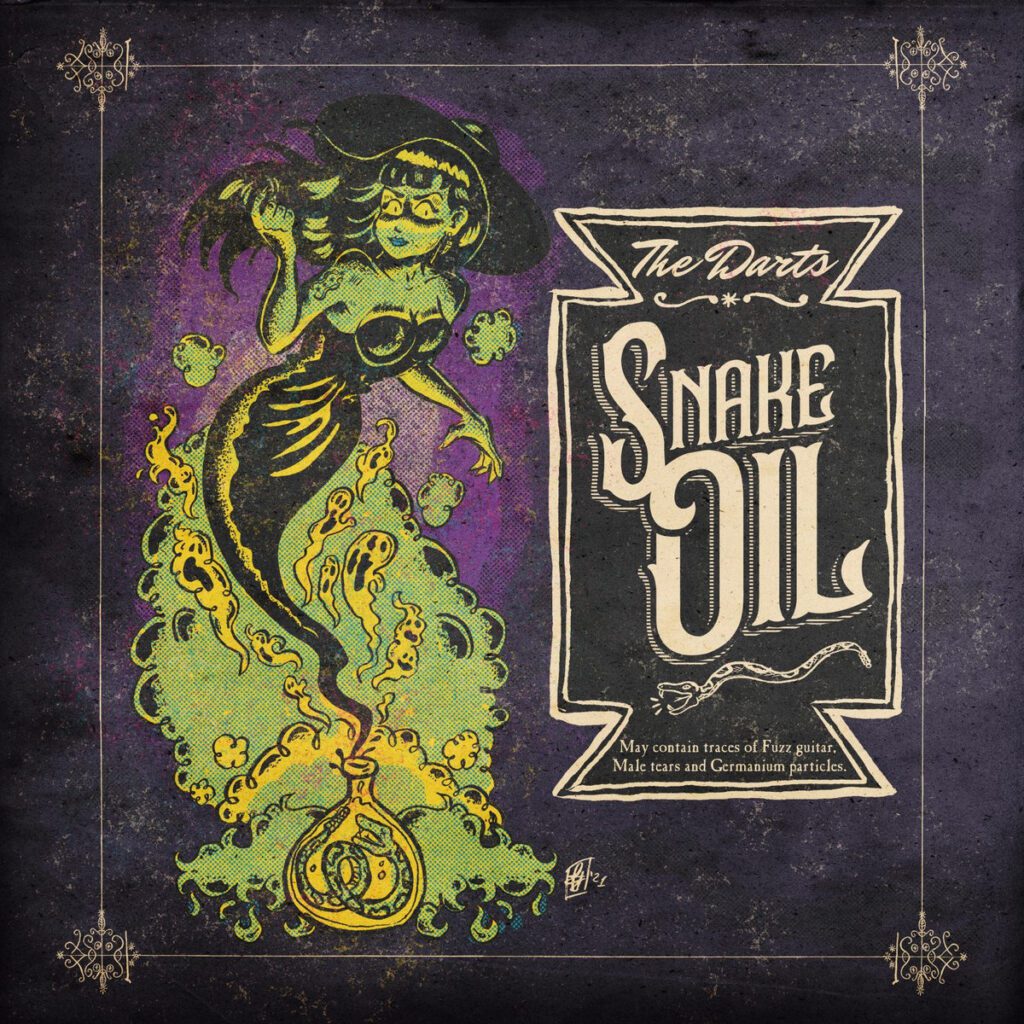
Oh, I’m so happy to hear that! Oh my gosh, so happy to hear that! We went back to Mark Rains in LA, which is where we did Boomerang. With Boomerang, I was with the older lineup of the band. And our whole goal after making Snake Oil, the one before that…Snake Oil was co-produced by Jello Biafra and Bob Hoag.
Just some guy.
Just some guy, yeah. That great guy. But what he is, is extremely intense. Not a surprise. And so making a record with Jello Biafra and Bob Hoag almost broke our brains because it was like so much information and advice and ideas and it got richer and bigger. There were 126 guitar tracks on Snake Oil.
Good Lord.
I mean, that’s the level of, I don’t know, the OCD level that it reached with two producers that are that intense, thrilled to work together for the first time and making a masterpiece. And it is a masterpiece. It’s wonderful. It’s incredible. But coming out of that, we were really ready to just do something raw and just go back in. And I was also ready for just a new take on the music’s sound because we had done every record of my life with Bob Hoag in Phoenix up to that point. And I was like, “I just want to see what else is out there.” One of my favorite records of all time that got me through a really rough spot in my life was Death Valley Girls’ Glow in the Dark from back in the day. And I played that record until it was falling apart. And so I went back and looked at who produced it, and it was this guy, Mark Rains from Station House Studio in LA, who I didn’t really know much about. Did a deep dive into that and found out he’d done all these great things. From Marilyn Manson to Tanya Tucker, he’s done every style of music brilliantly. Grammys, the whole thing. And I was like, well, I mean, at the time, my old drummer, Rikki, was in Death Valley Girls, so he probably knows who I am. He immediately said yes. And he was like, “I have this time slot free.” And I’m like, “that’s our time slot too. This is our one chance. Let’s get in there and do it!” So, and I was like, “we don’t want you to do anything. Here’s my demos.” A lot of people don’t know this…when I write a song, I write it on GarageBand on my laptop as I’m writing. So I write the bass line. I add fuzz that I like. I write the drum part. I put in the fills where I like them. And I add the right overdrive and I do all this stuff. And then I do the guitar line and I add a second guitar. And by the time the demo’s done, it basically sounds like almost a produced version, except those instruments are fake.
Basically I know all the effects I want. I know all the backing vocals and everything’s ready to go. I do this with every album, but I gave these demos to Mark and I’m like, “the band agrees. We just want this record to sound like the demo. If you’ll just sit back and let us take the reins, we can do this.” And he was like, “no problem!” Really cool of him, by the way. And he did. He just laid back and I was like, “can you add some, you know, space echo to this?” And he was like, “I gotcha.” He’d just add his little magic. I did all my vocals in one day for the whole record. And I walked in that day and he had a candle lit and the lights were low, and he had this chain of microphones, a Neumann over here, a weird little mic over here, a 58. And they were all in front of me so I could sing them on. Bob did like some of that stuff in Phoenix too, but it was just like he already knew.
Yeah, he got it.
Mark knew what needed to happen without even talking about it. And it just so easy. So after that experience, when it came time to do Halloween Love Songs and Rikki is back in the band now, that was just a no brainer to go back to Mark for sure.
Did you do anything differently this time in the studio than the last time? Or was it kind of like, “if it doesn’t, if it ain’t broke, don’t fix it”?
The big difference was the musicians.
Okay.
Different lineup. And they play differently. They hit differently. Poor Becca, my guitar player. We had been on tour all summer when we went into the studio. Becca had a family tragedy at the very beginning of the tour, but wanted to do the tour anyway, to her credit. Super strong human being here. And she went on this long tour and came back and immediately had to go to a funeral back at home because that was the only time they were able to do it when she was there. Horrible experience for her. And then we started recording because it was our only time off. And she didn’t have time to prepare like she likes to. She’s a little bit different than my past guitar players in that she’s a very thoughtful guitar player. She thinks about what she’s doing more than any punk rocker I’ve ever known. She comes out of the Spindrift mindset where they spend a lot of time and there’s a lot of whammy bar and there’s a lot of nuance. And I love that about her. It’s not the way I think because I’m just like, “oh, let’s get it done, let’s trash it up.” What she brings to the table is this really cool nuance that we’ve never had before; this texture of a spaghetti western style with a Darts riff. And I think what you’re hearing a lot of is the way she plays that guitar. It’s not slammy and trashy like I maybe would have written it, which sometimes overshadows the rest of the production.
Oh, totally. Yeah, I can see that.
It just eats up a lot of space in your ear, right? You can’t even hear some of the vocals sometimes in some of the old records unless the vocals are equally distorted. And there’s a lot, you have to work around that kind of distortion, which I love. But when you have Becca, there’s space all of a sudden. You can hear the percussion, you can hear the background vocals. Mark can do a little more magic with things. We added some trashy guitar riffs underneath, like a layer of rhythm guitar, for example, that had fuzz on it in the chorus or whatever, but it’s panned and it’s at a low level. And so it doesn’t take over anymore. And this is a big difference live too, there’s a little more space in the sound on stage. Rikki also hits differently than my other drummers have. A lot of people don’t know this, when she’s even playing live, she plays to a click. And unlike a lot of punk drummers that I’ve played with, when you’re playing live, the adrenaline goes and you start picking up those tempos and everybody starts going crazy. And it’s fun. It’s really fun. A lot of energy. Rikki keeps it where it’s supposed to be and we have to match her. And what that brings is a lot of force and power. You know, when this lineup hits, it hits you like a black metal hit, you know, it’s like.
Right. It’s not like a buzz saw all the time.
Yeah it’s like, you know, Godzilla stomping. And so you’re hearing that too, that she plays these parts differently than my other past drummers have. And granted, she was on the band in their early records, but I don’t think she was as powerful then as she is now. She’s done a whole lot of years of hard touring with Death Valley Girls and a lot of other bands while she was away from the Darts and she came back powerful. So yeah, she plays differently too. Lindsay’s bass parts are incredible. Lindsay’s the kind of person that you give her a song to learn and she’ll start learning it that day, even if we’re not recording for a year. (*both laugh*) And so she lives with these songs and really she owns these songs by the time we’re ready to get into the studio.
As a failed bass player myself, I tend to sort of lock into that. I definitely locked into her sound on this record. Her sound is really cool.
It’s really cool! I mean, I know Mark’s chain and I know he’s sending their signals through pretty much the same signal path that he was with the last lineup, but it comes out sounding different because the way you hit your string is different.
The way you attack it, yeah, right.
There’s a lot that’s going on, especially Becca is very different from the past, but even Lindsay, just the way there’s a playfulness in the way that she plays, just there’s a fun.
Yeah, fun is the word I would use. There’s real like fun grooves, I think between them, especially…
The power of Rikki with the fun of Lindsay is a really interesting rhythm section. It’s got a joy to it, but it’s hitting you in the face. (*both laugh*) A joyous hit in the face.
And you want another one and another one.
I want another one. Give me more. (*both laugh*)
This lineup is pretty locked into like just being road dogs?
Yes. They were brought on board because they’re road dogs. Kind of the issue with the last lineup was families, jobs. I had three guitar players in one summer because we were doing that much touring and everybody had jobs, families. And we had to keep pushing. It was hard. And being on the road, it makes you grumpy. It makes you tired. It makes you fussy. It doesn’t pay. There’s a lot of things that are really, really hard about the road. It’s just not for everybody. And this lineup is just, they’re professional road warriors. That’s what they do. They expect it. They know what’s coming. They all have their camping towel packed already. They know what’s going to happen. So it made it very easy for me to go, “okay, so our Europe tour in the fall begins on October 6th and ends on December 6th. Are you guys up for it?” And they’re like, “we’re good to go. No problem.”
Now, the only catch to that though, is this one year in 2026, Rikki has decided to go back to being a teacher, which she always did back in the early days too. She quit to write a book for a while and do some other things that gave her a little more freedom. But she’s going back into the classroom starting in the fall. And some other things are happening in her life that are making it a little bit tricky, so she has to step out of some of the tours. And luckily, even last year when this happened, we had Heather Thomas from Nashville step in. And Heather Thomas was actually a Seattleite originally, which is how I got to know her name. But she’s based in Nashville and she’s a session drummer professionally. Incredible drummer. I gave her the songs for our last tour and then didn’t really hear from her for a long time. I was like “are you going to be ready? I don’t really know you?” And she was like “don’t worry,” and everyone who knows her was like “don’t worry.” So she showed up…we met her for the first time in Marseilles, France. Our flight had landed late. We got to this record store with an entire crowd lined up around the block to get in. We had one minute to set up, brand new drummer, didn’t know anything about her.
Never, ever played together?
Not a single note. She sat down with her little page of tiny notes and just killed every single song. We sold so much merch that first show, it was ridiculous. She’s INCREDIBLE. And she’s a pro. She used to teach at Seattle Drum School. She approaches the learning of a song in a very academic way. She writes out the parts. Kind of like me with a classical background, she learns the same way. She’s going to be doing a ton of dates and probably recording with us too. It’s going to be a fun year with some fun people!
Those real professional musicians have brains that work in ways that my mind can’t fathom.
They have to! I mean, I’ll take Lindsay as an example, who probably never thought she would get the call to go on tour professionally. But in the back of her mind, she always kind of hoped that call would come. And now that it’s come, she has learned how to learn a song fast. She’s learned how to pack quickly. She’s learned how to, you know, book all the flights in two seconds, because she wants it more than anything. You figure it out, you know? And plus, it’s not rocket science, it’s punk rock. (*both laugh*)
Right, but there is something to making it sound good and cool and authentic, and not too professional. And I think that sometimes like professional musicians have to know when to pull back a little bit, right? And when to let the the chaos of the moment be the chaos of the moment, not be like, too perfect and whatever.
Exactly. I think the more you play live, the more you learn to work in chaos effectively. It’s just like, it’s just like what we did in the criminal justice system. When things are insane…I’ve got this homeless guy yelling at that drug addict and my corrections officer is losing his mind and everybody’s screaming, that’s kind of where we all excel.
Yeah, right. Exactly. (*both laugh*)
Yeah, that’s when I can take the microphone and say, everybody calm down. You do that. We all do that. That’s what we do. And it’s the same exact thing for a live musician who plays a lot. When the crowds go on bananas, and everything’s broken, and your pedals not working. This just happened in Hawaii, where half of our gear got left in the van, and the show was about to start, we didn’t even realize it. And we had to find like a pedal board t literally a pedal board with pedals on it – that would make sense to our band, right? Even cables for the guitar, we had to find everything in like five minutes. And somebody was just like, here you go. And we’re like, we plugged it in. And it was like, oh, they happen to have the right gear. And we played a great show, you know? Sometimes we’re learning that chaos works to our advantage.
Yeah, sometimes when everything’s on fire all the time, there can be a sense of calm.
Sometimes when it’s all on fire, you get warmer! (*both laugh*)
Yeah, right, right. There can be some sort of like a calm in it, right? You know that you have to figure it out, so you just figure it out.
Yeah, you become very quietly focused when everybody’s panicked around you. Especially in the rock world, that kind of almost makes sense to me because you’re used to people screaming in your face all the time, right? I mean, if you can play a guitar, and sing and crowd surf all at the same time, you can kind of do anything because that’s like the most unpredictable moment of your life right there. If you can keep that going, you can kind of handle anything. (*both laugh*)
That’s the stuff that made me want to just be like a journalist and not like…
I thought you were gonna say a musician!
No, no! Even going to punk rock shows from an early age and being like, you know what? I don’t feel like breaking my guitar because I crowd surfed and somebody kicked me in the head and I’m bleeding from the ear like, I’m okay to take pictures. Like, I’ll learn how to do photography. I’ll learn how to write and interview bands like…
I’m so glad because somebody has to do that too. That also is a dying art in a lot of ways. And it thank God there are people like you who do want to document it because we’ll lose it forever, otherwise.
Yeah. And I like, I dread the day that there really are no places left. I mean, I think enough, enough places will open up wherever in suburbia, like, like Deep Cuts (in Medford, MA), shout out to Deep Cuts. Places like that will be able to keep the machine going. Like that it’s whatever, it’s punk rock, it’s rock and roll. It’s always going to morph and be something else and like shift around and…
it will go into the record stores and then it’ll go into the libraries and it’ll go into the basements and it’ll come back up and it’ll be at the coffee shop again and then it’ll be back in the dive bar and then it’ll be in the big venues. And it’ll be the waves. I’ll tell you, talking about PNW, I mean, just like you were saying, Seattle is so rich with this history here. Everybody you meet, even the young people, it seems like saw a lot of it, you know, they were here for a lot of that stuff. And they, I mean, KEXP, they’re all very entrenched in the history way more than a lot of cities I’ve been in. There’s something in the water here. I’m telling you, it’s really special.
There’s something sort of like mystical being. I don’t feel like that’s a thing that we just sort of create like in our brains, but it does feel like there’s something there, whether it’s in the water or the air or the mist or the mountains or whatever.
Or I could get a little more science-y on you and say, maybe there were some people here who just had it in their blood to be great musicians and people learned from each other and kept the tradition going and grew it. Because I’ll bet you all those nineties kids were influenced by those sixties kids.
Yeah. Oh, totally.
Right. So it’s a tradition you pass down. I was just talking to somebody about this in Hawaii, that you really don’t learn to love to play live music I don’t think unless you’re going to live music and you’re seeing it live. That’s when you really fall in love with it, when it hits you in the chest. Right?? And so they got to see it here. They got to see the really good stuff here from an early age. And I think that influenced just way more people than we ever would have guessed in this area.
I wonder too, if there’s something, and you mentioned Hawaii and the Pacific Northwest, and I wonder if there’s something too, in the Native American culture that is sort of like the thread in both of those places really. The way that they tell stories and the way they preserve stories and not that it’s necessarily a large or really any Native community in the rock scene necessarily in the Pacific Northwest. But I almost feel like the importance of the culture and the importance of the storytelling and the importance of like the art itself. There’s an interesting sociological thread there that I didn’t think about until two minutes ago.
Yeah, you’re absolutely right. I will say this, though, in Hawaii, where we played last week, the kids came out and we played a lot of, they were almost all all-ages shows, they came out in droves. Face paint, goth hair, mohawks. It was like the time of their lives because they were saying that not a lot of bands come out there. The chance to see and experience a great live show at the underground punk level is really hard. You might have to go to Honolulu to see a big star to see what they see in Seattle every single day, where the club is hopping still. That doesn’t exist in Hawaii. And so it was a huge night and a huge event where everybody on that side of the island would come to this one little show in this record store and go nuts because it was their one opportunity. And yeah, they’ll probably talk about it. The promoter there is who I was talking to it about. He said it’s really sad because the kids that come up here don’t get to see stuff and they don’t really they don’t really get to see what a great guitar player sounds like when they’re just right in their face on a small stage. They don’t get to look at their pedal boards.
You don’t get that spark. Yeah.
Yeah. You don’t get to see how how you can do it yourself. You know, they see the big stars, but they don’t see the grassroots level punk.
The stuff that makes you realize that you can do it.That’s what got us all to pick up a guitar or whatever when we were 12, because you like “I don’t have to be Yngwie Malmsteen.”
(*laughs*) Please don’t be!!
I know, right? Like “I can be Billie Joe Armstrong.” I don’t have to be Joe Satriani or Steve Vai. Like that shit turned me off from a young age. But then like but I could be like, I don’t know, Mark Lanegan from Screaming Trees
Or like I could play like the Sonics. No problem. You know, trash it up. And these kids, you could really see a light bulb go off in the middle of the mosh pits. You can see it happening. I was just telling a story to an interviewer last week. She said, “what was your favorite moment in Hawaii?” And I was like, we got done playing in Maui at this little record store. It was packed to the gills. And this girl came to me. I saw her in the front row the whole night. She was goth to the nines. And she’s dancing every song. And she was with all her friends having a great time. We were like, “this is amazing!” First of all, it’s amazing to see girls at the shows.
Yeah, totally.
Shewas waiting in the long merch line, and she finally came up and she said, “would you guys sign my face?” which a lot of people were doing. So we signed her face. And then she’s walking away. She goes, “I have no money for any merch. I’m really sorry, but thank you for a great show!” She walks away, turns around with our signatures all over her face and goes, “I’m starting a band!!”
Hell yeah! That’s awesome!
That’s what it’s all about. I mean, that’s what should get us all so stoked up.
That’s that’s what keeps you going, because touring to Hawaii is ambitious. Like that’s a lot of work. Sure, you’re in Hawaii, but that’s a ton of work.
It’s so much work because you have to fly from island to island, so you can’t just throw your stuff in the van. You’ve got to repack it for a flight again the next day. It’s so much of a hassle. And it was an expensive undertaking that, you know, there’s not a lot of population there. And we did well. We did as well as we could have financially. But it’s rough, you know, and we did it for the exposure. And that’s it was worth it for those kids. It was worth it.
Hopefully that kid does start a band. Hopefully all those kids that you signed faces and arms of do.
Welcome to Four Records! Each episode, we feature one guest as they go over four records at four different times in their life. This week, Forrest and Karina speak with Death of Youth vocalist and song writer, Rob David. Their newest record, Nothing Is The Same Anymore, releases on 2/16/2026. The band has some shows […]
Welcome to Four Records! Each episode, we feature one guest as they go over four records at four different times in their life. This week, Forrest and Karina speak with Death of Youth vocalist and song writer, Rob David. Their newest record, Nothing Is The Same Anymore, releases on 2/16/2026. The band has some shows coming up, if you’re in the UK, go out to support.
Since the COVID-19 pandemic, it feels like the number of places for young bands to play is shrinking. Small venues where kids can cut their teeth while growing the scene and their sound aren’t as abundant as they once were. The Center for the Arts Eagle Rock has made space available for kids to do […]
Since the COVID-19 pandemic, it feels like the number of places for young bands to play is shrinking. Small venues where kids can cut their teeth while growing the scene and their sound aren’t as abundant as they once were. The Center for the Arts Eagle Rock has made space available for kids to do this very thing. Along with other types of more hands-on arts and crafts, the center is doing a lot for its community. However, these programs don’t always fund themselves. Some alumni of the center got together and put on a show to raise money for them.
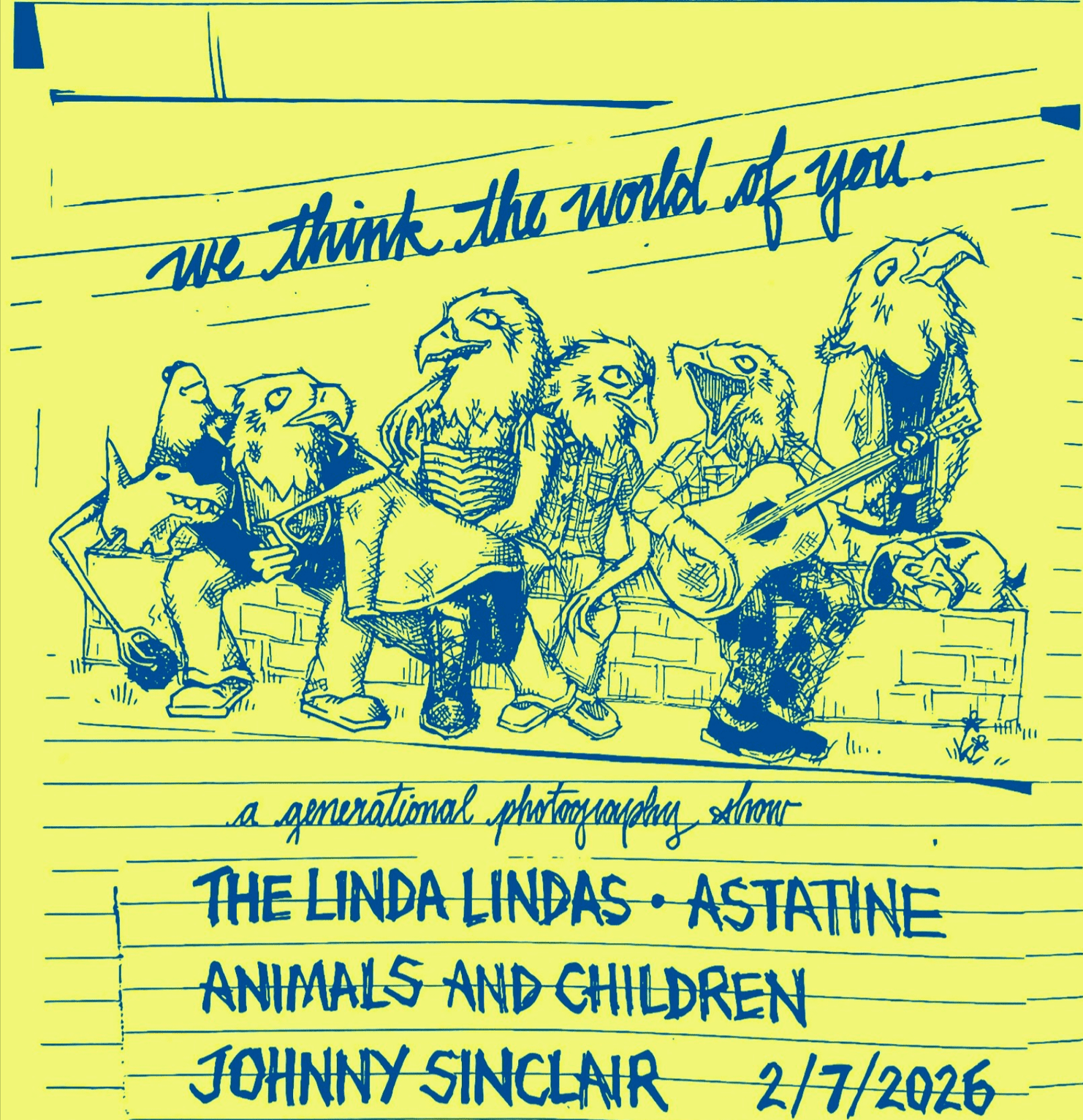
It was clear that the show was mostly put together by some of the older kids in the department. I mean that in the best way. It was an early show all-ages show with doors opening at five, which worked out well as it allowed time to check out the photography show they were putting on called “We Think The World of You: A Generational Photography Show.” Photographers from all around donated photos of bands to help raise funds for the Center for the Arts. Most of these had been taken at different venues all over Los Angeles. There were stills from photographers like Jasper Mann, Albert Licano, and Vicki Berndt that featured bands like The Misfits, Limp Wrist, Shonen Knife, and Devo. These were made available for purchase with money from the sale being split between the photographer and the Center for the Arts.
First up was Johnny Sinclair. Alone with just a harmonica and a guitar, Sinclair started by thanking the center for the show and stating that folk music and punk were the music of the people. He set the mood of his set with a couple of covers, “House of the Rising Sun” and Simon and Garfunkel’s “Homeward Bound,” and played them masterfully. Afterwards, he pivoted into his own songs, which fit in just fine with the classics he had selected to open his set with.
Next was Animals and Children, a three-piece punk rock band. While having the distinction of being the oldest band on the bill, Animals and Children put on an amazing set that was shreddy and riffy in all the right places. Most of their songs were under two minutes, with a good number even shorter. Their set was an amalgamation of what good punk has sounded like in the last twenty, twenty-five years. Lyrically, they touched on things like politics and mental health, and didn’t censor themselves despite the number of families in the room, especially during the song “Too Fucked to Fail.” They managed to fit in a great cover of the Descendents’ “Hope” with Eloise of the Linda Lindas on vocals. They’ve been around for a while. This was my first time seeing them, but I hope it’s not my last.
Third was a band called Astatine, a hardcore band from Eagle Rock featuring Eloise from the Linda Lindas on bass. Their set was mostly heavy in the first half, but the latter half of their set switched to more traditional punk rock songs. “This Is How It Starts” is a highlight of that back half of the set. They did a good job of being able to keep to their sound. They played a pretty damn good set, too. They closed their set with a cover of Andrew WK’s “Party Hard.”
The Linda Lindas came out angstier than usual, which isn’t surprising given the state of the world. They’ve always been a vocal force about the atrocities and injustices that plague marginalized people, of which there are plenty at this point. Being involved in the community, as they have proven to be countless times, these issues probably hit harder due to the political climate across the country. Song-wise, this was one of the better sets I’ve seen from them, but I’m sure the small setting helped. A good mix of songs from their catalog that were mostly hits, but also included their recently released cover of “California Sun.” While it was shorter than other sets, they put on a fantastic show like always.
The Linda Lindas acknowledged that they had played in the same room in February of 2020, right before COVID hit, and how it put on hold the shows the band had planned for the coming year. While it seems a lot of those dates were eventually made up, it’s also nice to look back on how far the band has come in that time. This was one of the best shows I’ve seen in a while, and that’s because of the heart put behind it.
For those interested in seeing the photography show at the Center for the Arts Eagle Rock, the photos are staying up for some time. You can email the center directly at info@cfaer.org to schedule a visit. In the next week or so, they will be putting out a gallery guide that will be shared online with the remaining photos. If you aren’t able to donate to the Center for the Arts Eagle Rock, please help your local scene keep places like these open in your communities.
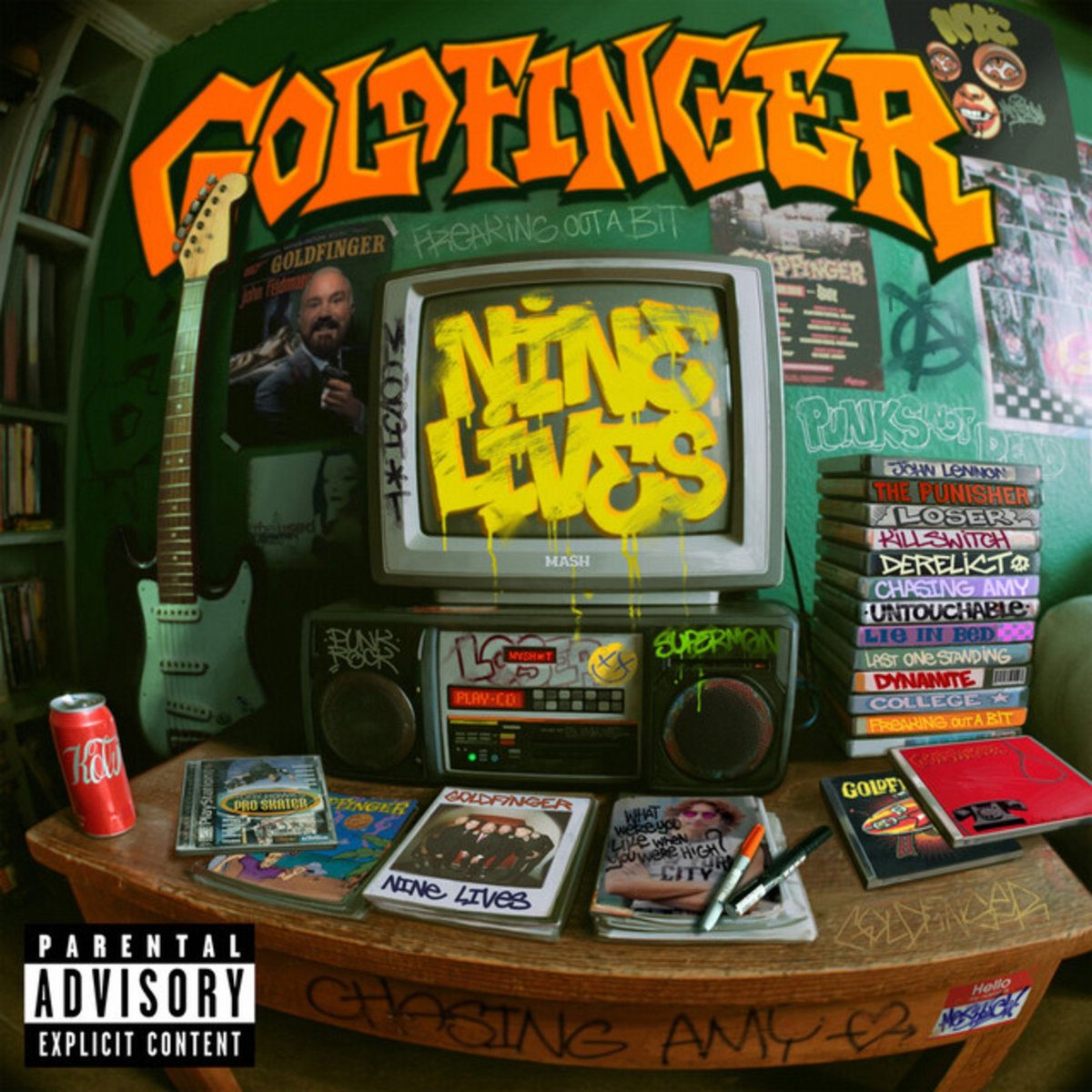
3rd Wave Ska legends Goldfinger return with their 9th album, NINE LIVES, where they take a chance at experimenting with their music for a record that ultimately can’t be labeled as a single genre. It’s got pop punk, skate punk, ska punk, and even hip hop! Each song is able to stick out on its […]
3rd Wave Ska legends Goldfinger return with their 9th album, NINE LIVES, where they take a chance at experimenting with their music for a record that ultimately can’t be labeled as a single genre. It’s got pop punk, skate punk, ska punk, and even hip hop! Each song is able to stick out on its own, despite sharing common lyrics of reminiscing and heartbreak (and all caps). Some listeners might not like the clean production of their newer work, but I argue that this is the sound the band wish they had when they first came out. The songs here may not have the same ska-driven sound of “Superman”, nor the political angst of “Get Up”, but what they do have are resonating lyrics and great vocals that don’t let you sit still for a second.
Opening is their single “CHASING AMY”, followed by the first of many collabs, “FREAKING OUT A BIT”, which features Mark Hoppus. Lyrics like “I’m not right, but I’m getting better” are resonating for those who wake up already filled with anxiety. The first ska song of the record comes next, “LAST ONE STANDING”, featuring Pennywise’s Jim Landberg. This and other ska songs (“DERELICT”; “LOSER”) lean towards that New Tone sound that uses less horns and bolder lyrics.
While the first 6 songs are indeed standouts and worth the listen, it’s the second half of songs that stood out to me much more. “UNTOUCHABLE” is the most experimental song on the record, featuring iann dior, a multi-platinum rapper who fits well with John Feldmann’s lyricism.
“THE PUNISHER”, as of writing this, is my favorite song off the album: John’s vocal talents are highlighted brightly here, the chorus part is super catchy, El Hefe from NOFX adds a sick guitar solo. Plus, I’m never opposed to a banjo being included.
The closing song is “COLLEGE”, and it stands out because 1. It’s the only song that all acoustic and 2. The lyrics on this one don’t involve romance nor thoughts on the past, but rather it’s a look in to the future. If John has a son, then I’d imagine this is dedicated to him.
Overall, Goldfinger’s approach on music has evolved since they broke out 30 years ago, and they’re not afraid to call on assistance from other established artists as I’m sure they will continue to experiment their sound. If you just went through a breakup, but don’t want to listen to anything slow, then this album might be it for you. Otherwise, it’s still a fun listen. The only real complaint I have is that there’s not enough ska!
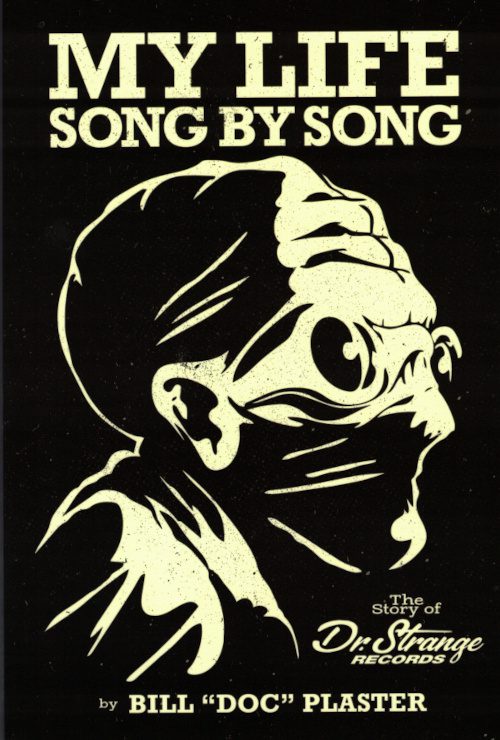
Bill “Doc” Plaster’s autobiographical book, My Life Song by Song – The Story of Dr. Strange Records, tells the story of his life and how he came to start and grow Dr. Strange Records: the biggest mail‑order distributor for punk music in the world, a record label since 1989, and a brick‑and‑mortar store in California […]
Bill “Doc” Plaster’s autobiographical book, My Life Song by Song – The Story of Dr. Strange Records, tells the story of his life and how he came to start and grow Dr. Strange Records: the biggest mail‑order distributor for punk music in the world, a record label since 1989, and a brick‑and‑mortar store in California that opened its doors in 1997.
I was excited to discover this book the last time I visited Dr. Strange Records, a small but notable punk record shop located in Alta Loma, CA. Excited because Dr. Strange has signed many notable bands over the years, like Face to Face, Guttermouth, Zoinks,The Freeze, Voodoo Glow Skulls, Sinkhole, and many others.
Punk rock and life philosophies – the book is, among many things, the SoCal punk scene of the ’80s and ’90s through the eyes of a truly knowledgeable and engaged devotee/icon. If you’re curious about what that world was like; its bands, its sound, and the people who shaped it, this is a great place to start. And if you want to learn about the personal challenges Bill faced to get where he is, this book is absolutely for you.
Like many autobiographies, Bill starts at the beginning, describing his childhood growing up in the late ’60s and early ’70s. He describes his move from Goleta, CA to Upland, CA, accompanied by photos of Bill with his childhood friends – some of whom he still talks to today.
Bill shares notable moments from his youth that either shaped who he is today or, at the very least, left a lasting impression on him – parents’ divorce, witnessing death, and other life trials that I won’t spoil.
He writes about partying in his teen years, relentless pranking among friends, discovering punk music and attending shows despite it being a much more violent scene in the ’80s. The book shares photos taken from Doc’s personal 35 mm camera of Dead Kennedys, Bad Brains, GBH, The Dickies, and others.
The book shares details about the inner workings of how the Dr. Strange mail‑order business, record shop, and record label came to be.
Overall, this is a great book with good insights and positive messages, and if you’re into punk music, even better.
Off With Their Heads are currently on their “Burn It Down” Tour 2026, which brought them to Miami, Florida, for a stop at Las Rosas, where they delivered a set packed with fan favorites, joined by Dikembe as one of the tour’s supporting bands. Dikembe is one of the bands joining Off With Their Heads […]
Off With Their Heads are currently on their “Burn It Down” Tour 2026, which brought them to Miami, Florida, for a stop at Las Rosas, where they delivered a set packed with fan favorites, joined by Dikembe as one of the tour’s supporting bands.
Dikembe is one of the bands joining Off With Their Heads as a supporting act on their current tour.
Off With Their Heads made a stop in Miami during their recent 2026 tour, delivering the best of their catalog with the raw energy that defines them.
Their hard-hitting, introspective, honest, and deeply emotional lyrics connected with fans from the very first song, pulling in the crowd and making everyone in attendance fully embrace and enjoy the powerful performance the band delivered that night.
Welcome to Four Records! Each episode, we feature one guest as they go over four records at four different times in their life. This week, Forrest speaks with Andy Wylie, bassist for The Drowns and a Dying Scene contributor. The Drowns released a live album last year and are currently working on new music. While […]
Welcome to Four Records! Each episode, we feature one guest as they go over four records at four different times in their life. This week, Forrest speaks with Andy Wylie, bassist for The Drowns and a Dying Scene contributor. The Drowns released a live album last year and are currently working on new music. While you are waiting for that to be released, you can see them on tour:
3/7/26 – Seattle, WA Clock-Out Lounge w/ the Briefs
4/17/26 – Upstairs Cabaret Ltd. – Victoria, BC w/ the Casualties
4/18/26 – The Pearl – Vancouver, BC w/ the Casualties
4/19/26 – Jackknife Brewing – Kelowna, BC w/ the Casualties
4/21/26 – Dickens Pub – Calgary AB w/ the Casualties
4/24/26 – Black Cat Tavern – Saskatoon, SK w/ the Casualties
4/29/26 – The Garrison – Toronto, ON w/ the Casualties
4/30/26 – The 27 Club – Ottawa, ON w/ the Casualties
5/5/26 – Sonia Live Music Venue – Cambridge, MA w/ the Casualties
5/8/26 – First Unitarian Church – Philadelphia, PA w/ the Casualties
5/10/26 – Black Cat – Washington DC w/ the Casualties
5/12/26 – 1884 Lounge – Memphis, TN w/ the Casualties
5/14/26 – The Sanctuary Detroit, Hamtrack, MI w/ the Casualties
5/15/26 – Reggie’s Music Joint – Chicago, IL w/ the Casualties
5/16/26 – The Argo – Whitefish Bay, WI w/ the Casualties
As punk rock has evolved over the last thirty years, its influence has bled far beyond music. Punk rock’s DIY, community-driven spirit has found its way into academic, arts, sports, and countless other corners of life. Punk rock has always been about connection. While shows have been the traditional way of bringing people together, Mike […]
As punk rock has evolved over the last thirty years, its influence has bled far beyond music. Punk rock’s DIY, community-driven spirit has found its way into academic, arts, sports, and countless other corners of life. Punk rock has always been about connection. While shows have been the traditional way of bringing people together, Mike Felumlee (Smoking Popes) and his wife, Stephanie Wysocki have found a different way to build a scene by forming the Punk Rock Pinball Association.
Their goal is to help grow competitive pinball by making it fun for beginner and mid-level players, not just pros, while also helping members build new friendships. As you’ll read below, Mike and Stephanie are looking to expand the Punk Rock Pinball Association into new communities. If you’re interested in starting up a group in your own scene, stick around until the end of the interview for links and details on how to become a Scene Rep.
Dying Scene (Forrest Gaddis): Thank you very much for this interview. I had actually seen the Facebook group first. I’m not even in the area. I thought it was a group where people go and talk about pinball. I actually just joined a league myself out this way.
Mike Felumlee: Oh, cool.
My wife and I are a few weeks into it. I always wanted to try it, but scheduling wise it didn’t work out. Now that my littles aren’t little anymore, my wife and I can go and do this like once a week.
Stephanie Wysocki: Well, I’m glad to hear that you’re doing a league. How’s the league going?
It’s been good so far. I’m doing okay. It’s been years since I’ve played this much pinball. If I’m at an arcade, I always jump on a machine. I just haven’t played this much consistent pinball in years.
Stephanie Wysocki: That’s super cool. You’re the exact type of person who Mike and I started the podcast and Facebook group. As people’s kids get older and leave the house, and you’re kind of in this new stage of life, pinball is a really great thing to do with your partner or by yourself. If you’re just looking to meet new friends, we’ve found that pinball people are just a really welcoming bunch. You also tap into like-minded people and even people who aren’t like-minded. It’s a really cool way to engage with humans again. I feel like there’s a lack of that these days.
Mike and I moved down to Central Illinois, and we tried really hard to find our people or just some friends. It’s hard as adults, and we tried all kinds of weird things. When the Jaws pinball machine came out a couple of years ago, it’s my favorite movie. We’d been saying for years, “If there’s ever a Jaws pinball, we’re getting it.” So we did. It just basically opened up this whole new world of friendly, competitive pinball that we didn’t know existed. In the best way possible, it kind of changed our lives.
Mike Felumlee: Yeah, it’s kind of become our lives because we just started our Punk Rock Pinball HQ, which is like a club here in Bloomington. We have like twelve or thirteen of ours over there.
Stephanie Wysocki: We kind of started this collective, basically. It’s a bunch of our pinball friends. We’ve all contributed games to this space, and it’s our club/training facility. We all want to go to state next year. We host tournaments and leagues, and it’s kind of like a member, what do you call it?
Mike Felumlee: It’s like a private club where you have to be a member to enter. We have a monthly tournament where you can pay for a one-day membership to play. We’ve got a weekly league that’s all members. Six of us have keys. We have a Discord where we’ll post, “Hey, we’re going to be there tonight from like five to seven.” Then other people will show up and play together. So yeah, that’s been really fun. We started that at the end of November.
How did you get into pinball?
Stephanie Wysocki: Growing up, going to arcades or hanging out in small rock venues, there were always pinball machines around. And who doesn’t love pinball? The nostalgia of it was super strong for us. So, like I said, when Jaws came out, we got it. We also discovered that there was a bar here in Bloomington that had a handful of pinball machines and they were doing weekly tournaments.
I was really intimidated to go play a pinball tournament. Like, who am I to do this? I’m not a professional and don’t really practice. Mike and I went with low expectations, and we met some really awesome people. We started going every week and every month. Then we started going to other towns around here and joining other tournaments that were happening, and just really got bit hard by the pinball bug.
It’s that feeling of playing a game and knowing that you can do better. You just want to hit start again, but we weren’t good when we started. It wasn’t a huge group of people playing, maybe around ten, twelve people. We were at the bottom a lot. Mike is super competitive. I didn’t know that I had such a competitive spirit in myself as well, but I do.
We just kept going back for more. The cool thing about pinball, anywhere you meet friends, is no one’s going to let you win. So when you do beat somebody, it feels really good. You accomplished it because you fought hard and hit all the right shots.
My wife has social anxiety. The first week in the league, we were in the same group. Then later, she realized we wouldn’t be in the same group the next time. She did okay by herself. I was proud that she was able to come out of her shell a bit and play with other people.
Stephanie Wysocki: That’s very cool. I feel like 98% of the people you come in contact with playing pinball are super friendly. They will help you out. They’ll tell you what you’re trying to do. To know what you have to do is one thing, but to execute it is a totally different thing.
Mike Felumlee: I think pinball tournaments or leagues are really good for people with social anxiety because it gives you something to talk about. I have some social anxiety meeting new people. If you’re just out to dinner, what the hell do you talk about? If you’re in a pinball league, you can say, “Oh, what am I trying to do on this game?”
Now you’re talking about what you’re trying to do in the game. It’s a pretty easy way to interact with people, even if you’re introverted or have anxieties. It gives you common ground with this person you don’t know. We’re both trying to figure out what shots we’re trying to make in this game to score points.
As I’ve been playing more, I’ve found games that I’m better at than others. I prefer this machine over that machine. Rather than saying, “Oh, look, it’s Batman or The Simpsons,” I now play machines even if I’m not completely into the theme at all.
Stephanie Wysocki: Oh my gosh, totally. Like the themes. I’m not a fan of the Foo Fighters, but that game is super fun. It’s a really, really fun game to play.
I’m the same with Metallica, not a fan. I played it the other day in a league and I ended up winning that game. Out of all the machines.
Mike Felumlee: We’re not Led Zeppelin fans. I’m starting to like them more because we have the pinball machine and we really like that one. Before we became crazy about pinball, I wouldn’t have considered a Led Zeppelin pinball machine in my house. Then we played it at a handful of places and got a really good deal on it. So, like, yeah, we like Led Zeppelin now, I guess.
Was there a specific moment that led you guys to create the Punk Rock Pinball Association, or was it just something that naturally evolved?
Mike Felumlee: I started the group because I had visions in my head. I was inspired by Punk Rock Bowling. Decades ago, when I was briefly in Alkaline Trio, I got to participate in the Punk Rock Bowling tournament. I was in their band and on that team. I thought it was really super fun and cool. So I thought, “What if we did a punk rock pinball thing?”
I just started the group, and then we started doing the Punk Rock Pinball podcast, which is on our YouTube channel. I still want to do a big Punk Rock Pinball tournament that involves a lot of people in bands. It’s all people in bands and on record labels. You had Fat Wreck Chords there, and Epitaph, and a NOFX team, I think. That was my initial vision: let’s have a big thing where there’s a rock show and a pinball tournament with bands. I also wanted to have a leaderboard because of the ongoing leaderboard for the tournaments here. I’m like, why don’t we just do this where anybody in the country can sign up through our website, and they can host Punk Rock Pinball tournaments as well?
Hopefully, somebody in your area will start doing it. You can earn your punk rock pinball points and you can show up on our leaderboard. It’s just a fun way to see the history of how you’ve performed. Right now, it’s just a national leaderboard, but we’re going to break that down before too long, where we’ll have leaderboards for different areas. If you look at the IFPA, the International Flipper Pinball Association, the big sanctioning body of competitive pinball, they have statewide leaderboards and they have state championships in every state. I thought it would be cooler in a more punk way to do that more by scenes versus like a state.
You know how in punk rock, Chicago was Chicago, but we had our northwest suburb scene, and there was a western suburb scene. It kind of makes it a little bit more local. In the future, there’ll probably be a Southern California punk rock pinball scene. You can see where you rank in Southern California and you don’t have to worry about anybody else in the state. If there’s multiple scenes, like if big stuff starts happening in San Diego, maybe you’ll have a San Diego scene and an Orange County scene.
I want to break it down pretty granular, like that. So all these little scenes can have their own kind of championships and stuff like that. Eventually, do like a national championship where we do have a couple of big punk bands and a hundred-plus players, hopefully. That’s like the ultimate pie-in-the-sky vision.
Do you have any bands that participate in tournaments out your way?
Stephanie Wysocki: In April, we’ve got a thing.
Mike Felumlee: We have the band Off With Their Heads coming down to play a show here in Bloomington. Ryan does all of our merch. He prints all the punk rock pinball merchandise. We’re going to have a tournament at our HQ where people can pay to get into the tournament, which gives them a ticket to the show. Then they also get to play pinball against Off With Their Heads in a tournament. Toys That Kill is also playing that show.
That’s a good lineup.
Mike Felumlee: We’ve recently hooked Deanna from Sincere Engineer. She’s now like an avid pinball player. We had her come down to be on the podcast, and she did a little music session on our YouTube. On the podcast, she’s like, “I don’t like pinball that much. I don’t get it.” Then we had her play some games at the house and we showed her some games. It was midway through our second game on Cactus Canyon when she’s like, “I get it.”
Stephanie Wysocki: She’s so cute because now I don’t know, let’s say September, maybe she went to Europe and toured a little bit. She was posting pictures in the Facebook group of her playing pinball in different places in Europe. They’re on tour right now. I think they’re in Florida. They’re stopping everywhere and playing pinball, which is so cool. The vision is like we want to bring more people into pinball, and having those bands is certainly a cool way of helping us do that.
Mike Felumlee: Yeah, their singer, Jon, just came out last weekend. We had a big monthly tournament. He came and stayed at our house and played. We had a double header. So, I’m guessing the first Punk Rock Pinball National Championship will probably have to include performances by Sincere Engineer, the Dopamines, and Off With Their Heads, for sure. I haven’t really gotten going with tournaments where it’s like all people in bands playing in a tournament. I could, but we haven’t had the penetration I want amongst people in bands.
I’ve started figuring out how to get more involvement there because I know there’s guys in the Jeff Rosenstock band that play. There’s guys in the band Pup that play a lot. I just don’t know those guys. So, somehow we’ve got to get some of those bands involved to make it more of a band thing about it. Most people playing Punk Rock Pinball Association tournaments are just regular pinball players. I would very much like to have a band-only division. We’re probably going to need a little help on the PR side of that to get more recruitment.
Stephanie Wysockyi: Mike has been working really hard on our website along with a fellow from the Kansas City pinball scene named Nick Greenup. Nick has been kind of the brains behind bringing a lot of these leaderboards and stuff to life based on Mike’s vision. They’ve collaborated on it. But if you go to punkrockpinball.com, there is a page in there about the association. It has all the information on how to become a scene rep or a tournament director. It’s all right there.
How do you determine what’s an approved venue?
Mike Felumlee: If you go on the website, we do have guidelines if you’re hosting a Punk Rock Pinball Association event. It has to be open and inclusive to everyone. You can’t discriminate based on gender identity, race, sexual preference, or any of that. As long as it’s a safe and open space for everyone, then it’s pretty good with us. If we hear otherwise, we would yank that. There’s a link to a form on the website where anybody that wants to host an approved venue or tournament can fill out this form. It’s got some questions on there; they have to acknowledge that they’ve read and understand what our rules and guidelines are about. From there, once people fill out that form, I give them a login to the website, and then you’re free to go in and create your events, post them, submit your results, and get your people on the leaderboard.
You mentioned you’re trying to have this be like the Punk Rock Bowling of pinball, when you do the tournaments are you doing shows to coincide with the tournaments or is it just really just focusing on the pinball when you have your tournaments?
Mike Felumlee: The Punk Rock Pinball Association tournaments are mostly just pinball tournaments that would otherwise be IFPA sanctioned, or leagues are fine as well. You can also run an IFPA tournament with the Punk Rock Pinball Association at the same time, but we do have some gimmicks planned, like the event we’re doing with Off With Their Heads, which includes a tournament followed by a show. I play in the Smoking Popes, and we’re trying to do something in Arizona.
We’re playing at the Yucca Tap Room, which shares a space with the Electric Bat. It’s like our 35th-anniversary tour. During the day, there’ll be a Punk Rock Pinball tournament, and then at night, The Popes will have our show in the evening. So, wherever possible, I like to pair a Punk Rock Pinball tournament with a rock show. There aren’t a lot of venues or a lot of pinball places. They are usually at a brewery or an arcade. The Electric Bat happens to be the most ideal place.
It’s just awesome because there’s a huge opening, and you can see into the Electric Bat while you’re playing on the stage. You can see into the pinball area. There are two different businesses, but there’s a shared wall. It’s probably a fifteen-foot-wide doorway that’s just open so you can walk in and out between the Electric Bat and the Yucca Tap Room. For a punk rock show plus a pinball tournament, it’s probably the best place in the United States to have that happen.
What’s the hardest thing about running the Punk Rock Pinball Association?
Stephanie Wysocki: I would say there’s no roadmap for this. The IFPA is kind of like the MLB of pinball, and we’re really focused on fun, almost like a minor league to the IFPA. We’ve looked to them for some of the rules and how things are set up. They’ve been around for, I don’t know, I think a couple decades. They’ve been doing this for quite a while, but there’s no roadmap for this. We’re kind of figuring it out as we go and trying to be proactive in other ways regarding how we want to structure this and make it different. As far as challenges, I think it’s just that we don’t know what we don’t know, which is probably the biggest challenge; which is maybe not a challenge. Maybe that’s a positive, that we’re just kind of writing the rules as we go.
Mike Felumlee: I think as it gets bigger, a big challenge I foresee is that, for example, the IFPA has almost 200,000 players. We currently have about 500 players, and we’ve had about fifty tournaments in the last month and a half. We have about forty or fifty more scheduled, but if you look at the IFPA, there are probably 500 tournaments a day. This involves thousands of people from all different types of backgrounds who have all different types of expectations and needs. So inevitably, if enough of your tournaments happen, bad things might happen at one of them.
There was an IFPA event earlier in the year in North Carolina where some shit happened. Then you have to try to deal with that in a way that’s going to appease as many people as possible. I think we haven’t really had to deal with that yet, but I foresee that we will at some point. I think that’s going to probably be the hardest part, making tough decisions to please as many people in your community as you can, knowing that you’re not ever going to be able to please everybody.
How do you differ from the IFPA in terms of rules?
Mike Felumlee: Our scoring format is much simpler. There are two big differentiators. For one, IFPA has very specific tournament formats that you’re allowed to run. For instance, there’s a format called Amazing Race, where everybody starts on one machine, and if you score the lowest on that machine, you’re out. You go to the next, and whoever scores the lowest on any specific machine is out of the deal. The IFPA has decided that for 2026, if you have an Amazing Race tournament, it’s not worth as many IFPA points as a match play tournament.
Like we’re getting into the nitty-gritty of like only shit that pinball people are going to understand here. There are some really fun formats that the IFPA, for maybe justifiable reasons, kind of nerfed the scoring. Whereas with the Punk Rock Pinball tournament, the scoring is entirely based on how many people are playing in the event. If you have a hundred people in your tournament and you win it, you get a hundred PRPA points. The person that got 50th gets fifty PRPA points, and so on down the line.
It doesn’t matter for us because with the IFPA, the big factor is how many meaningful rounds were played, and the more meaningful rounds played, the more points it’s worth. It’s not dependent upon the number of players, but that’s part of it. They have a very complicated formula. Our formula basically says it doesn’t matter how many meaningful rounds you played. You could play five, you could play fifteen, you could play twenty. Your tournament’s worth the same amount of points, and it’s based on how many people played in the tournament.
Stephanie Wysocki: It’s really interesting because our leaderboard right now: the top three players are people from our scene, and it wasn’t like this for a while. It was a whole gaggle of people in Kansas City dominating the leaderboard. The gal who is at the top of the leaderboard right now is grinding any PRPA event within, I don’t know, probably eight hours. She’s driving to it and playing it. She’s a pretty solid player too. Is she the best player in our scene or any scene? No, but she’s grinding, and she grinded from the bottom quarter of the playfield all the way up to the top.
Mike Felumlee: She’s tied for first right now.
Stephanie Wysocki: So, the fellow that’s tied with her in first, he just went to the state finals. He’s a very, very good pinball player. She played nineteen events; he’s played eleven.
Mike Felumlee: There have been forty Punk Rock Pinball Association events so far, and she has played in nineteen out of the forty. That’s why she’s tied for first. She hasn’t won a single one. The way we constructed our point system, we wanted to really reward players that travel all over the place and are grinding to play the most. They’re hardcore, and people like that are what drive a competitive pinball community. You need these people that just show up all the time because the biggest challenge we all have is participation and getting more players. Pinball is such a tiny niche thing. We wanted a point structure that’s going to reward people that just go and play everywhere.
Stephanie Wysocki: Part of the reason we started this collective is that when you’re a pinball player, when you go out and play at different venues or locations, you’re kind of at the mercy of those locations. Having a healthy business, staying open, and having space for pinball. We’re about two hours south of Chicago and about two and a half hours from Indianapolis and St. Louis. We’re kind of in the middle of nowhere in a lot of ways. It’s a proper town, but there weren’t many places to play. One of our main locations closed, and we were driving an hour to go to another town to play with other people at a venue, and then that place closed too. We have a really special community that has been built here. We kind of took things into our own hands and started the collective for that very reason: it’s so fun to play with other people, and we took our destiny into our own hands.
What’s your favorite machine to play?
Mike Felumlee and Stephanie Wysocki:Jaws.
What’s your least favorite?
Mike Felumlee: Shrek.
Stephanie Wysocki: Shrek, yeah. It’s garbage.
Mike Felumlee: Yeah it sucks don’t bother. It’s the exact same machine as the Family Guy machine. I hate them both equally. I like the Family Guy theme better, but the game just to shoot is not fun.
Stephanie Wysocki: It’s not fun; it seems like it would be. The designer is my favorite pinball designer, Pat Lawler. I love him. He did Ripley’s, Funhouse, and Addams Family. Yes, but Shrek he shit the bed on.
Mike Felumlee: I mean he’s done many, many pinball machines they can’t all be hits. Look at songwriters, every song they write isn’t a hit.
Stephanie Wysocki: He has a lot of good ones but that one is garbage.
Mike Felumlee: My second favorite right now is probably (Star Wars) The Fall of the Empire. The designer of that one is John Borg, and he’s probably one of my favorites. He also did Metallica, Monsters, The Walking Dead, and Guardians of the Galaxy.
His machines are typically really fast and pretty challenging. Metallica plays fast, and there are lots of shots that will shoot the ball back at your face if you miss. I feel like a lot of his games have a similar feel to Metallica. Fall of the Empire and Guardians of the Galaxy all feel similar. I like the feel of those John Borg games.
For more information and to become a scene rep, contact Mike and Stephanie through the Punk Rock Pinball website.