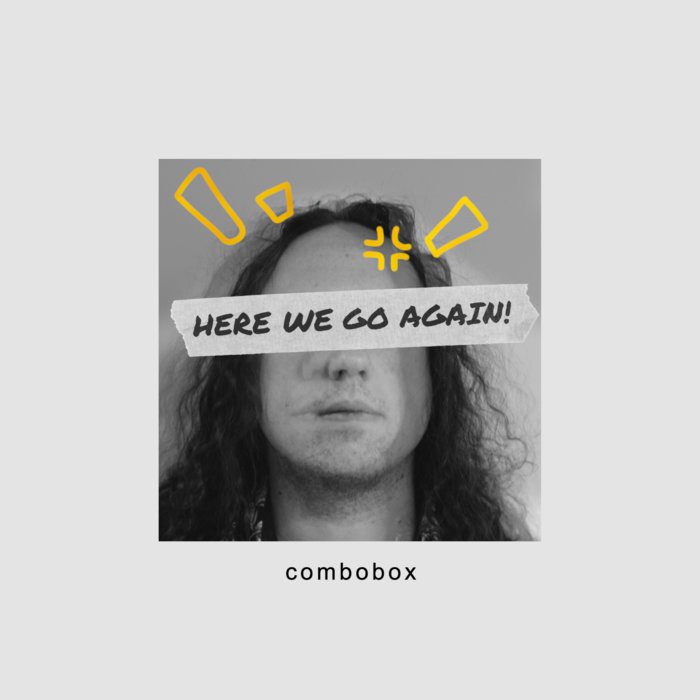
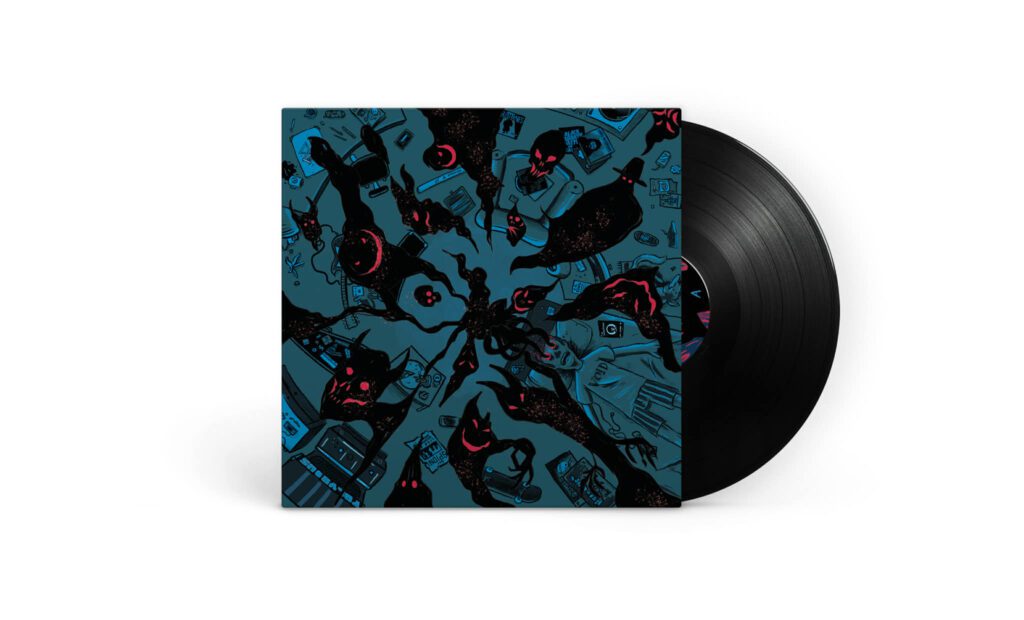
Portland, Oregon’s post-punk band Combobox is back with their latest EP, Here We Go Again! While it hasn’t been too long since their last EP, Oh No!, was released in July of last year, Combobox has cooked up an inventive batch of songs that help boost their sound while still sticking to their roots. Here […]
Portland, Oregon’s post-punk band Combobox is back with their latest EP, Here We Go Again! While it hasn’t been too long since their last EP, Oh No!, was released in July of last year, Combobox has cooked up an inventive batch of songs that help boost their sound while still sticking to their roots. Here We Go Again! has a much more urgent and darker tone, but still retains the humor that shone through on their first EP.
While lyrically these songs have the same snark as their previous EP, Combobox comes out much more aggressive and biting here. The music is faster on the first half, but also heavier and darker on the second half. “The Party” is a great start to the EP. It’s fast and catchy. The fun riffs from the first album are there, too. The breakdown of this song seems to pivot into Pixies territory with its clean surf-like guitars before speeding back up for an abrupt ending. The song structure stuck with me on this album.
The second track, “The Sermon,” is even faster and riffier than “The Party,” and works just as well. Musically, there is enough DNA from the last EP that it doesn’t sound too different, but it definitely moves their sound forward. Lyrically, these first two songs remind me of Jello Biafra and their way of making the narrator’s thoughts ridiculous until they’re poignant. On the surface, these lyrics are a little silly, but a closer look reveals much more to them.
“Meanwhile” and “The Road” are slower and heavier, but great nonetheless. “Meanwhile” is probably my favorite song off the album, starting off with a humorous exchange during a bank robbery gone awry because of an argument about face masks. Whether or not these songs follow the same narrator, each track feels like its own short story, a self-contained misadventure with its own stakes.
Combobox has done it again; they manage to squeeze in four fantastic songs into about ten minutes, leaving you clamoring for more. This EP is proof that Combobox isn’t just refining their sound; they’re expanding it. Their talent for writing music and biting lyrics shines through even more this time around. Their use of humor, commentary, and satire to point out the stupidities of the world is becoming a signature, not just a quirk. Pick up Combobox’s Here We Go Again! It is available digitally and on cassette from their Bandcamp.
Combobox has some shows coming up. Go and see them if you can:
3/6 – Portland, OR – Kenton Club (EP Release Party)
Popular culture is a weird thing for someone outside of your generation. The things we latched onto while coping with growing up and processing the perceived and presented world mostly make sense to you and your peers, but can befuddle someone outside your age range. Once we are transplanted into the world, it seems like […]
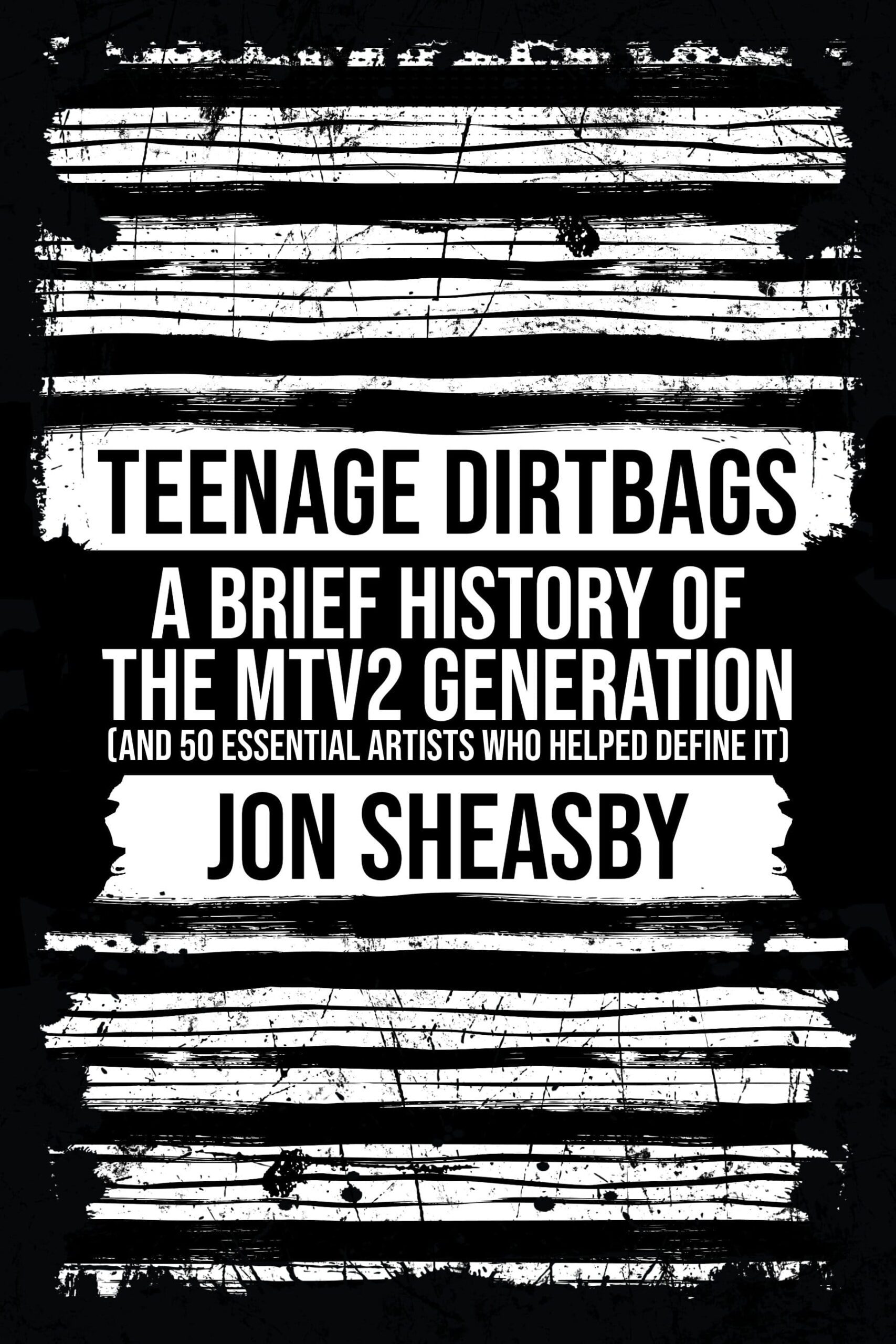
Popular culture is a weird thing for someone outside of your generation. The things we latched onto while coping with growing up and processing the perceived and presented world mostly make sense to you and your peers, but can befuddle someone outside your age range. Once we are transplanted into the world, it seems like it becomes a gauge to measure age and coolness. Analyzing the good and bad of the late 1990s to early 2000s, author Jon Sheasby brings us the highlights and lowlights of this era in his book, Teenage Dirtbags: A Brief History of the MTV2 Generation.
The late 1990s were an interesting time. While things were much less complicated and less tense than they are now, the seeds of these factors were planted over twenty years ago. Sheasby’s intro discusses the almost prophetic way Green Day’s American Idiot foreshadowed the direction of politics. This leads into a brief history of MTV and its eventual offspring, MTV2, and how shows like the Carson Daly-hosted Total Request Live (TRL for you cool kids) shaped music during this time.
Sheasby profiles some of the bigger acts of that time: Eminem, Marilyn Manson, and Blink-182. It also covers how each of these artists shaped pop culture in some way, whether it was Marilyn Manson’s attempts to shock the world or the influence of Nu-Metal and the ape-like douchebaggery that came from it. It’s interesting to look back at how things aged, whether good or bad, and consider if it was due to the initial criticisms given. Sheasby’s assessment can be a little glossed over, but it does mention that some documentaries provide more detail on some of these relics.
There are a few interviews with behind-the-scenes people, such as P.R. Brown, who was a music video director and graphic designer for some of the bigger names of the era. The interview with music biographer Joel McIver was interesting, as he talked about what it was like covering the new rock stars of that time. One thing I agree with and am learning is true is that the heavier the music, the nicer the person. These interviews give perspective but don’t add too much to the overall conversation.
The book seemingly takes inspiration from Chuck Klosterman’s books of essays on pop culture, except it’s zeroed in on this second generation of MTV artists trying to make their own mark for better or worse. Choosing this era will resonate with adults of a certain age and most sociology students, but it may not appeal to people outside those groups.
That being said, Sheasby’s writing is super accessible. Teenage Dirtbags: A Brief History of the MTV2 Generation is a quick read; it’s under two hundred pages and is a nice stroll down memory lane. Jon Sheasby’s takes are spot-on, even if they’re a bit scant. If you’re looking for a small window into the past, Jon Sheasby’s book is for you. Teenage Dirtbags: A Brief History of the MTV2 Generation is available at Tucker DS Press.
Hardcore punk rock bands sprouted up everywhere across the country in the early 1980s. While we celebrate the bands that broke through, we often overlook the smaller ones that were revered in their own region. One of those bands is Hated Youth. John Oliver Hodges, the guitarist for Hated Youth, has written a book about […]
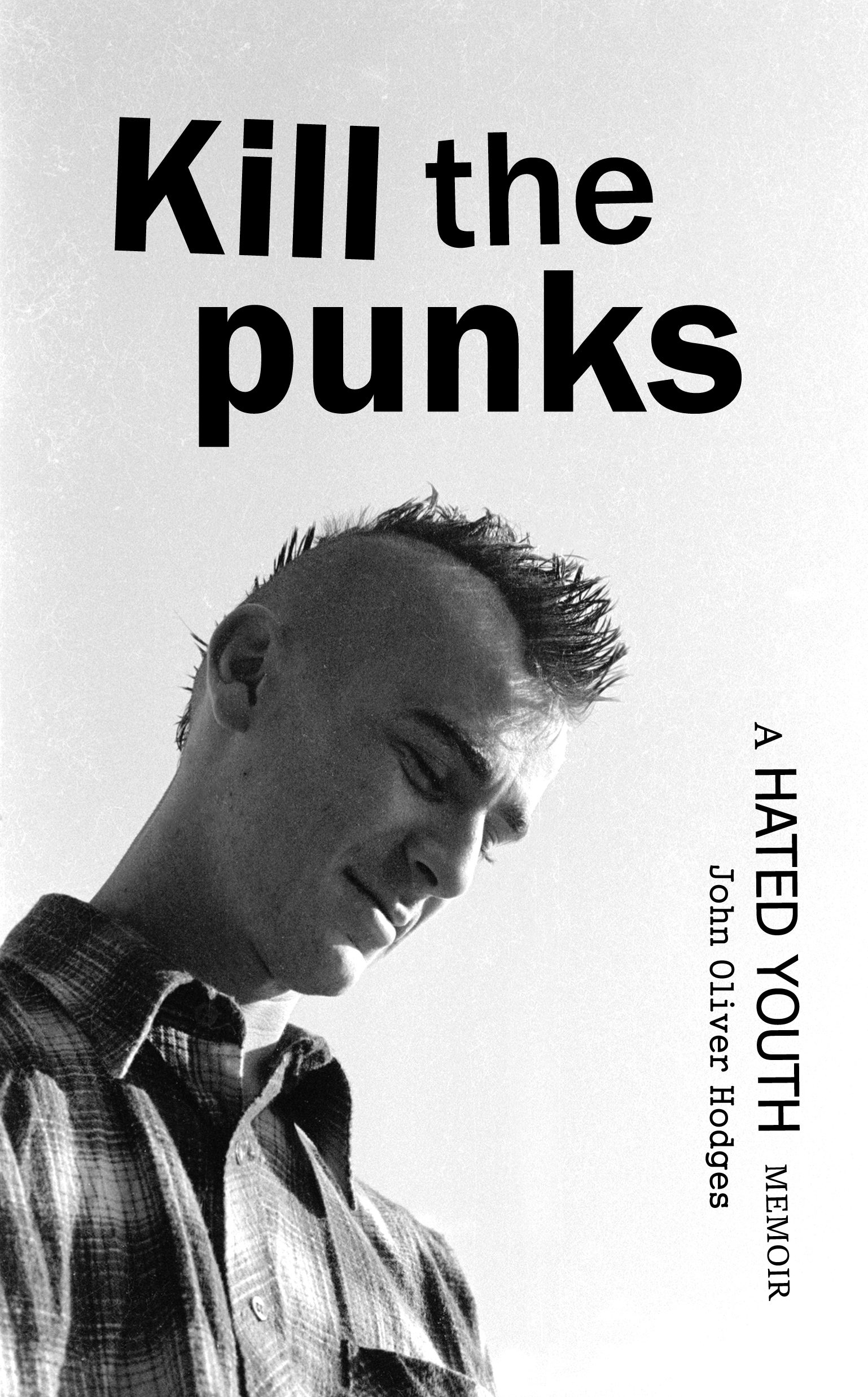
Hardcore punk rock bands sprouted up everywhere across the country in the early 1980s. While we celebrate the bands that broke through, we often overlook the smaller ones that were revered in their own region. One of those bands is Hated Youth. John Oliver Hodges, the guitarist for Hated Youth, has written a book about his experience in the band and growing up in Florida, titled Kill the Punks: A Hated Youth Memoir. Two hundred pages of mayhem, music, and memories guaranteed to make you laugh and squirm.
Hodges’s book leans into the “youth” of Hated Youth more than anything, and that’s where it finds its real pulse. While not as big as some of the bands worshipped at the punk rock altar, Hated Youth had their time in the sun. Hodges details his adolescence as a stoner-metal kid getting in trouble and being sent to the principal’s office. Eventually, he is sent to the School of Analytical Reasoning, a hippie high school, as Hodges would describe it. This is where he meets his future bandmate Eric and transforms into a mohawked punk rocker.
Adolescent mythology walks a fine line between the experimentation of extremes and the embracing of familiar norms. While his friendship with bass player Eric had flourished, John was sometimes a third wheel to Eric and his girlfriend Lucia as they pushed their own boundaries. These adventures, punctuated with multiple screenings of the movie The Road Warrior, give the book a cinematic and feral energy. Despite varying degrees of intensity, the activities aren’t so different from other generations of kids growing up.
A lot of stories recounting the origins of bands coming together start to fall into the same tropes. What makes them great is the presentation. Hodges’s writing is accessible. It moves fast and keeps the reader locked in. There were many times I didn’t want to put the book down. Hodges’ memories are super clear, and the story itself is compelling. While the band may be the catalyst, the real jolts come from the tales in between the shows.
At this point, many punk rockers have told their stories about how they got into punk. Each of these stories is different but shares the same emotional weight in terms of what it meant to them and how it shaped their lives. Hodges’ book still manages to stick out. Kill The Punks: A Hated Youth Memoir feels much more personal than other books about youth and punk rock. The writing is raw and feels closer to something like Henry Rollins’s Get in the Van. The advantage here is that Hodges has many more years of writing under his belt, and it shows.
As if the book wasn’t enough, you can see the Tallahassee Pioneers of Punk from March 5th to March 8th. The exhibition celebrating the underground scene will be on display at 621 Gallery. There will be sets from some bands of the Tallahassee scene playing at the Bark. Bands like Persian Gulf, Insect Fear, Hated Youth, Silly Wabbit, and Frankenfinger will all be playing sets.
In the meantime, you can get Kill The Punks: A Hated Youth Memoir by John Oliver Hodges in either paperback or ebook from Amazon.
Welcome to Four Records! Each episode, we feature one guest as they go over four records at four different times in their life. This week, Forrest speaks with Kyle Knight. Regular listeners of the podcast will know him as the Emotron. Kyle has a new band called Horse Breakfast. They are playing some shows in […]
Welcome to Four Records! Each episode, we feature one guest as they go over four records at four different times in their life. This week, Forrest speaks with Kyle Knight. Regular listeners of the podcast will know him as the Emotron. Kyle has a new band called Horse Breakfast. They are playing some shows in
Fri 03/13 – The Spaze – Columbia, SC
Sat 03/14 – Melon Barn – Greer, SC
Sun 03/15 – Fleetwoods – Asheville, NC
Sun 03/22 – Scrap Collective – Roanoke, VA
Tue 03/24 – Chapel of Bones – Raleigh, NC
Wed 03/25 – Alley Cat Records – Greenville, NC
Thu 03/26 – The Byrd Nest – Salisbury, NC
Fri 03/27 – The Milestone – Charlotte, NC
Sat 03/28 – “What For Fest” Pilot Light – Knoxville, TN
When ska had its time in the sun in the 1990s, a lot of bands emerged. From Reel Big Fish to the Mighty Mighty Bosstones to Buck-O-Nine, ska was back in a big way, getting airplay on modern rock radio for the first time in a decade. Ska had essentially disappeared from the radio when […]
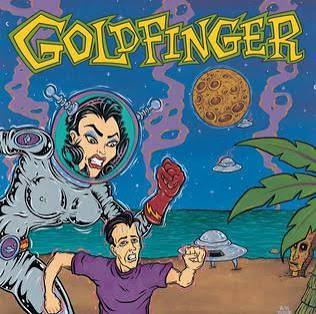
When ska had its time in the sun in the 1990s, a lot of bands emerged. From Reel Big Fish to the Mighty Mighty Bosstones to Buck-O-Nine, ska was back in a big way, getting airplay on modern rock radio for the first time in a decade. Ska had essentially disappeared from the radio when the Two Tone bands lost their luster or broke up, making the genre’s presence nil. While modern radio in the 1990s may have been cashing in on a fad, some kids cutting their teeth in music found a way of life. While I had made some exceptions for bands like Skankin’ Pickle and Suicide Machines, Goldfinger was a band I dragged my feet on, chalking them up to third-wave slop. This was an unfair sentiment from my youth that I’ve since reversed.
The more I went backward and listened to the earlier waves of ska, the more I became disconnected from what was being fed to me on the radio. Discovering bands like The Specials, The English Beat, and Operation Ivy instilled in me the conviction that this music was intended to address social issues, racism, and politics, with these themes at the forefront. As I heard more songs off their self-titled record, it didn’t take too long to give in. Once I purchased and listened to the record, I learned what I had been missing out on. While the lead single, “Here in Your Bedroom,” was a ska pop-punk song that featured many of the tropes that turned me off to third-wave, the record draws cues from a variety of other genres, including punk, metal, and even a touch of jazz.
This year, Goldfinger’s self-titled album celebrates its thirtieth anniversary. Guitar player Charlie Paulson was kind enough to talk to Dying Scene about the making of their self-titled record and its place in ska-punk history.
Dying Scene (Forrest Gaddis): Thank you for your time, Charlie.
Charlie Paulson: Of course. First of all, I have a question for you. Why this record?
Why this record? I love this record. I didn’t at first; it took me a minute to get into it. I just kept hearing more and more songs off it. I was a dumb punk rock kid who was like, “This isn’t punk rock. This isn’t ska.” I heard more. I was like, “Why am I being stupid about this?” I just ended up buying it and I had a whole summer where I listened to it.
Yeah, a lot of you were not alone in that appraisal.
How did the band form?
I knew Feldy from around Hollywood because he was in a band (The Electric Love Hogs) that me and a bunch of my friends would go see at the time in LA. Punk was sort of dormant; there wasn’t a whole lot happening that was exciting around that time, the early 90s. We had L7, Bad Religion. There wasn’t a whole lot beyond that. It was before alternative was happening, bands like Jane’s Addiction and Fishbone. Those were the bands that sort of took the place of punk rock. The Electric Love Hogs were not really that metal. They played shows with all those bands. They were a great live band. So I knew Feldy from that.
I worked for the band a couple of times and I crashed on his couch. That’s how we became friends. We talked a lot about how we loved The Buzzcocks, The Clash, and The Specials, and shit like that. When the Love Hogs sort of ran their course, I saw him out one day just hanging out. He asked, “Hey, I want you to hear something?”
I went out to his little fucking Dodge, this little fucking beater. He popped in a cassette and was playing me a bunch of like these little, it was just him and an acoustic guitar, playing these pop punk songs. I’m like, “That’s cool.” He looks at me and he’s like, “Well, would you want to do this?”
“What do you mean?” He asked, “Do you want to start a band?” He knew that I loved a lot of the same music that he did. That’s sort of how it started. We auditioned a couple of drummers who were terrible. Then I went on tour as a guitar tech on a Danzig tour. He wound up putting an early version of Goldfinger together with a different guitar player. While I was on tour, that guitar player overdosed and was in rehab.
When I got home from the tour, I knew that Feldy always had an insane work ethic. I knew he probably already had a bunch of shows booked and no guitar player. So I called him. I said, “Look, I will fill in for Steve while he’s in the hospital.” I did, and they didn’t want Steve back. That’s the very abridged version.
From those acoustic songs that Feldman had, to when you went to the studio, how long did it take for those to come together?
A couple of years. I mean, he probably first approached me in like ‘93. Then I joined the band a year later. I mean, it wasn’t a band. He still had commitments and shit with his other band.
He didn’t really put Goldfinger together for a year, maybe. It took him a while to find people. I would say a couple years from that first conversation we had to the release of the first record, that was three years.
Where did you guys record the album?
We did it at this studio in Santa Monica, right by the beach, called Media Ventures. I didn’t like it because it was really sterile. They recorded a lot of soundtracks there and things like that. They had never recorded a straight-up rock band. So, we got it at kind of a discount because they didn’t really know what they were doing. I didn’t like it because it was really clean. The walls were beige. It looked like a dentist’s office.
I remember saying that. The first day that we went in to start tracking drums, somebody brought in a bunch of Bob Marley and Sex Pistols posters. I appreciated the effort.
The record is raw, but it’s still kind of clean at the same time. Was that because of where you guys were recording it, or is that just the sound John Feldman had in his head?
That was part of it, but Feldy was also meticulous about it. He really wanted it to sound like a real album. He didn’t want it to sound like demos. I think we may have overcorrected a little bit. What’s really funny about that, though, is as anal as he was, that record is totally out of tune. If you sit down with a guitar and try to play along with that record, it’s gonna drive you crazy because it’s just not in tune. If you just listen to the album, it sounds fine. But when you try to play along with it with a tuned guitar, it is wildly out of tune.
You do what the pop-punk bands were doing, where you kind of have your jokey songs, but even those are presented with reverence.
Well, part of that was when I joined the band; we all sort of adapted to John’s work ethic. We rehearsed at least four hours a day, five days a week. I mean, we rehearsed, like, fucking crazy. We were super fucking tight. We did a Sno-Core kind of tour right before that record came out. In January and February, we were on the road with this hardcore band from New York called Dog Eat Dog and Ugly Kid Joe. So, by the time we wanted to track that record, we were fucking razor sharp.
And you hear it too.
Yeah, that’s part of why that record sounds like that. We were so fucking tight. I remember at the end of that tour, we came home and we played a show at the Whisky. My friends were like, “What the fuck?” It didn’t feel any different to us because we were doing it every night. Nothing tightens a band up like the road. We came home off that tour. The next day, we had a show at the Whisky. The day after that, we loaded into the studio to start tracking.
Were there any songs you fought hard for in terms of arrangement, tempo, or feel, or was it just all what Feldman had in his brain and he wanted it out?
Those first three records, Feldy would come in with the song, and it was about 80% there. Then the band would sort of beat it into shape, write our own parts, and all that sort of thing. The way we make records now is wildly different. Back then, it was very organic. You know what I mean? We had a shitty rehearsal room downtown. Feldy would come in, and he would say, “I have an idea, and I kind of want this feel.”
Then we would sort of build it around there. I wrote a lot. I wrote most of that song, “Answers.” I wrote part of “Nothing To Prove,” “Mable.” Those were definitely like band compositions. Feldy would come in with chords and melody and lyrics. Sometimes I wrote a lot of lyrics. The band would just sort of beat them into shape. When we’d go on the road, they would really kind of come into their own.
How many of these songs still survive the set?
Currently? It depends. Not enough. I wish we had played a lot more from the first couple records, but we still play “Here in Your Bedroom.” We still play “Mable.” We played “Mind’s Eye” a couple of times, and it kind of broke my heart because we hadn’t played it in years. We played it, and it’s just kind of like, I’m not sure how many people that still come see us were familiar with the song, which bummed me out. I mean, there are a lot of songs on that record I wish we still played. I wish we still played “Stay.” I really miss “Only A Day.” I really like to play “King For A Day.”
I hated it at the time because I thought it was too clean. I thought it was too polished. Now, I go back and listen to it, and it really just sounds like four dudes in a room. My punk and John’s punk were different. He came up on super poppy stuff. He loved the Buzzcocks, the Descendents, and the Adolescents Blue Album. Those sound like crazy punk rock records now. Back then, those bands were considered pop punk because they sang harmonies.
I remember people kind of thought they were the Beach Boys of punk. Bad Religion definitely took a heavy cue from them, especially, the Blue Album. Bad Religion with all their harmonies and their arrangements. By the time the ‘90s rolled around, the natural evolution of all the early pop punk that John was listening to turned into bands like NOFX and Green Day. That was sort of the trajectory that Feldy was on and what he sort of wanted to accomplish with that record.
My punk rock bands were Fear and X. We did have some common denominators. I also loved Bad Religion and the Adolescents, but I liked sort of nastier shit, you know what I mean? When we were making that record, I’m like, “This doesn’t sound anything like Black Flag.” I thought it was overproduced, but now I listen to it and it’s pretty fucking raw.
Were the first three albums on Mojo, or just the first two?
The first three. There was also, there was also an EP in there. We did Darrin’s Coconut Ass.
When you guys were recording it, did you have any idea that this would be a classic album for people?
Not at all. I mean, when Goldfinger started, I was crashing on Feldy’s couch. I was like this homeless squatter punk. I was living in squats off Hollywood Boulevard or crashing on people’s couches. When Goldfinger started, I was sleeping in a closet. Next thing I know, I’m in his studio and I’m making a fucking record.
It was very much, I can afford to feed myself. It was really funny when we started getting all the backlash about being major label sellouts, rock stars, and all this shit. For the first time in my life, I can afford to go have fucking eggs and bacon down the street from my house. My house being literally a closet in somebody’s guest house. People were like, “You fucking big time sellout.”
I’m like, “You can suck my fucking dick.”
As far as legacy, no. I just knew I could buy a new pair of Vans if I wanted them. That was it. I was so in the moment.
What do you think people misunderstand about that era of punk and ska in general?
That all the things that now get associated with punk won’t really stick. I don’t think Goldfinger was a punk band. I think we were a really tight pop band that had heavy punk and ska influences. I mean, we weren’t really blazing new territory. All our songs were about girls. It wasn’t like we were really challenging. I think the most punk Goldfinger ever was, we used to fight with cops and bouncers a lot. I mean, fight like winding up in the hospital because we would be sticking up for kids or that sort of thing. We were more punk in spirit than musically. Then when we got heavy into animal rights, that was pretty fun.
Dookie is not really a punk record to me. People refer to Bon Jovi as a metal band, you know, forty years later, and there’s nothing fucking metal about Bon Jovi. I think time has a weird way of like blurring those lines.
Everybody was like, “Oh, it’s a ska album.” There are like, four songs that are really ska songs.
There’s not even really a full on ska song on the record. There’s songs with ska parts.
Maybe you could probably get away with calling “Pictures” a ska song.
Even then it’s got that metal breakdown. Like I said, we have punk and ska influences. We also have metal influences. There’s a little bit of jazz on that record. I’m not splitting hairs at this point. If you want to call us a punk band, that’s fine.
What’s the most surprising way you’ve seen this album resonate with the newer generation?
We’re in a funny timeframe for us. When we go out and play shows, we still sell a lot of fucking tickets, but now it’s like you can tell our audience are people that were teenagers when that record came out. They’re in their forties and they’re bringing their kids. I’ll meet an eight-year-old kid who is learning how to play guitar to “Mind’s Eye” or “Mable.”
I mean, obviously, it’s an influence of their parents, but you know, that eight-year-old kid is still listening to that first record. In fact, we did a show, I don’t know, last year at some point. We always invite people up on stage during “Mable.” This kid, he was maybe twelve. He’s on stage and he’s pointing to my guitar. He goes, “Can I play?”
I’m like, “Do you know this?”
And he said, “Yes.” I just hung my guitar on this kid. He played Mable. It was awesome. I liked it. It’s kind of weird that there are a bunch of kids on stage with John singing a song about my dick. It’s certainly uncomfortable for me.
What felt bigger at the time: to have your first album released or to be asked to have “Superman” on the Tony Hawk game? I know “Superman” is not on this album, but what felt bigger?
The first album, for sure. That was life-changing for us. I was literally living in a closet at $80 a week. Then four months later, I’m in Times Square seeing my fucking album cover 10 feet in the air. That completely changed my entire fucking life. The Tony Hawk thing is funny because we were on a lot of soundtracks and video games. All the music supervisors in charge of finding music for films and TV shows were looking for the new, current thing. Bands like us, No Doubt, and The Offspring were on all the soundtracks, so we got asked to be on a video game.
We thought it was cool that it was Tony Hawk because we all skated; we didn’t really think anything of it. I was stoked that we were there with the Dead Kennedys; that meant a lot to me. I didn’t really think anything of it until we got to Europe later that year. We’re playing like 500 seater clubs, we kick into “Superman” and the place would go fucking nuts. At the time, “Superman” was just another song. We just throw it in the middle of the set and their going fucking ape shit for that song. We’re like, what the fuck is happening?It was because of Tony Hawk. So that song is our song. Now, that song is absolutely the thing we’ll be remembered for. Yeah, at the time, it was a slow burn. It did not take off at first. Yeah, it took a while.
Thanks, Charlie.
Goldfinger recently released their latest album, NINE LIVES, last month, and it’s fantastic. Check out Jacob’s review of it, here.
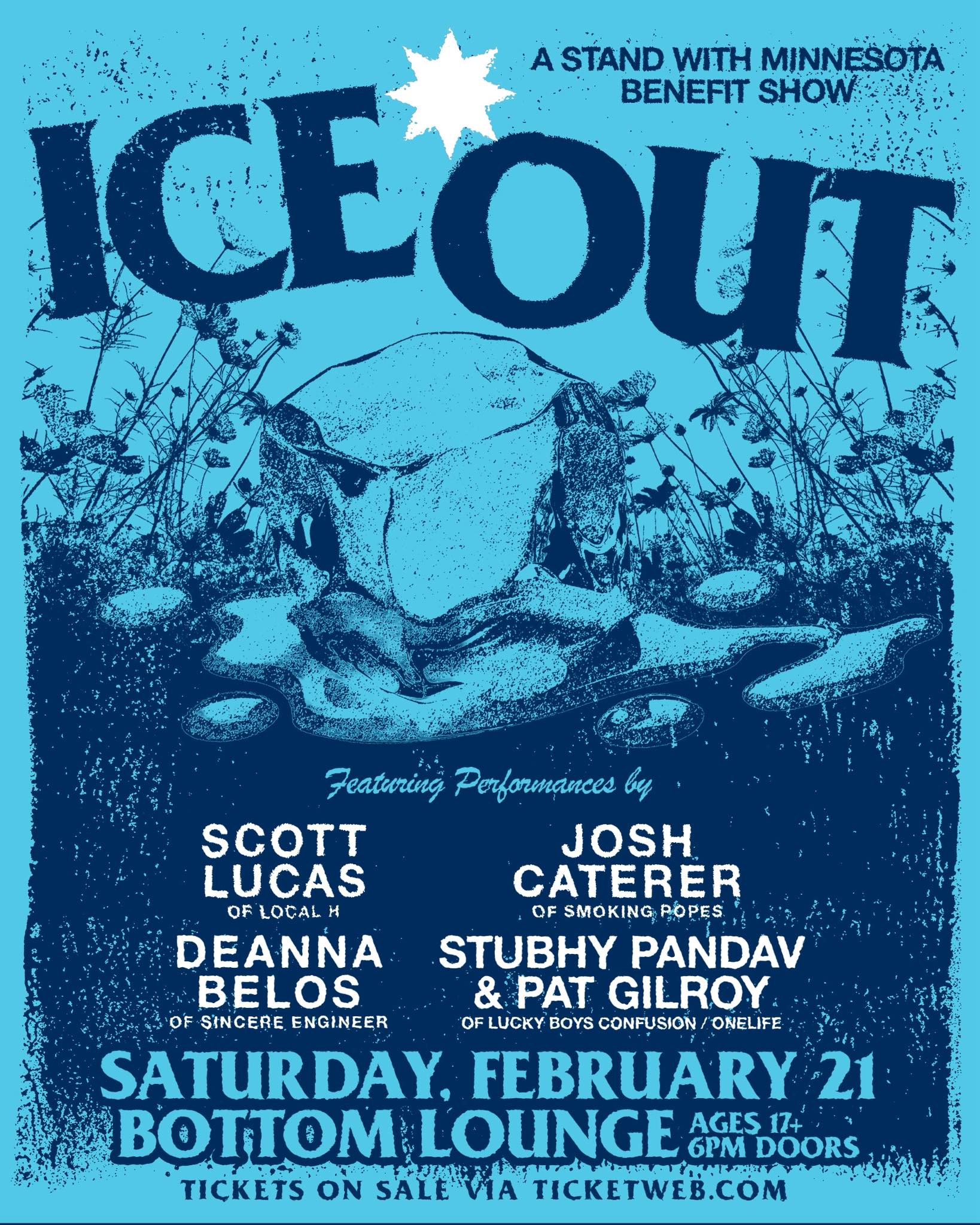
Photos by Meredith Goldberg Last Saturday, Chicago’s Bottom Lounge came alive with ICE OUT: a powerful showcase of Chicago’s vibrant music scene united in solidarity with Minnesota after the murder of Renée Good, a Minneapolis resident brutally murdered by an ICE agent in January 2026. The lineup featured local punk & rock legends, including Deanna […]
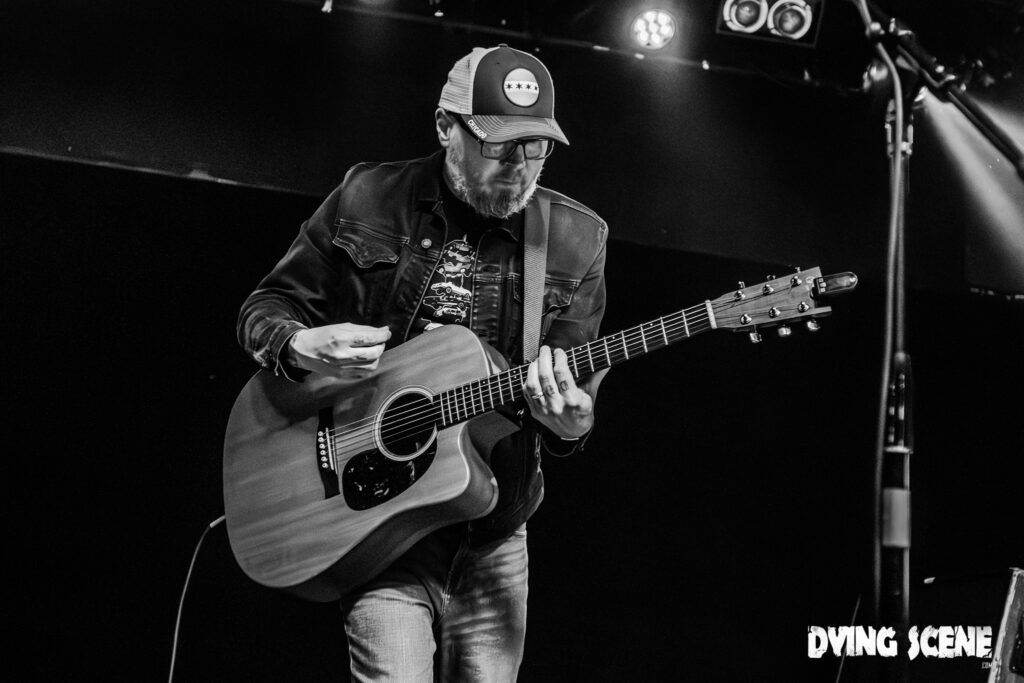
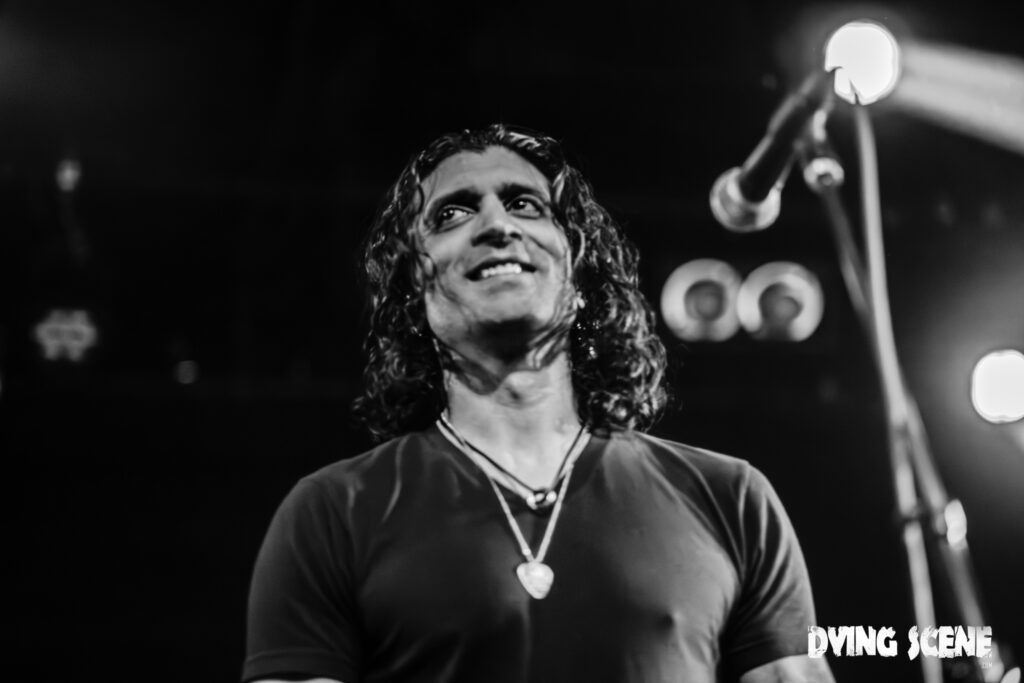
Last Saturday, Chicago’s Bottom Lounge came alive with ICE OUT: a powerful showcase of Chicago’s vibrant music scene united in solidarity with Minnesota after the murder of Renée Good, a Minneapolis resident brutally murdered by an ICE agent in January 2026. The lineup featured local punk & rock legends, including Deanna Belos of Sincere Engineer, Josh Caterer of the Smoking Popes, Scott Lucas of Local H and Stubhy Pandav / Pat Gilroy of Lucky Boys Confusion & OneLife.
I sat down with Deanna, Josh, and Stubhy to talk ICE before the benefit show, where we grew to share our thoughts about Chicago, rock music, and how the recent events in Minneapolis are a testament to how we must all come together in trying times.
Anti-ICE: Josh Caterer
When asked what the opportunity to play this show meant to them, Josh Caterer explained that standing in solidarity with Minneapolis felt like extending an arm to a Midwest neighbor. Something so horrible happening so nearby felt so personal, and this show was the amalgamation of all of those feelings.
During Trump’s first term, when “the wall” between the United States and Mexico became a huge part of his campaign, Caterer explained that it felt like our fights could only take place over the internet. Having events like these transpire in our Midwestern backyard felt so close, and they needed to do something about it. That’s why when the chance to play Bottom Lounge’s ICE OUT benefit show arose, Caterer immediately opted in.
Anti-ICE: Stubhy Pandav
Kaustubh “Stubhy” Pandav was alive with passion when speaking about his personal experiences with immigration in his family. He spoke about union, food, and the privilege of growing up in a community with such a vivacious cultural background to share with friends from outside cultures. But from those joys came triumph and hardship, dating back to his own father’s journey to America.
“My father was invited over after the Civil Rights Act passed in the 60s,” Pandav recounted. “What [the government] did was they cherry-picked people from China, India, and the Philippines, and those were the first people to come over. And my father was a part of that. So growing up in the 80s in all of this, it was real tough.” We spoke more. Pandav went on to say, “Back then, I remember there being a lot of ‘go back to your own country,’ and I remember thinking… ‘you fucking invited us’.”
Anti-ICE: Deanna Belos
I wondered if there was any hesitation or anxiety in accepting this opportunity, like the idea that social media comments might turn into real-life hate at this show, to which Belos said, “Honestly, saying yes was a no-brainer. I’m happy to do my part – our part – in something that feels more than just yelling online.”
I asked about the context of Belos, Caterer, and Pandav’s music in reference to the present, or ultimately, whether or not performing these songs that were written in the past became a different experience in the context of the current political and social climate. To which Caterer replied, in perhaps breaking news to the fans of the Smoking Popes (or at least to the room I was in), revealing that “Simmer Down” off of the 2016 EP Simmer Down (and their subsequent 2018 full-length Into The Agony) was written about the excitement surrounding Bernie Sanders’ campaign.
He went on to explain that he had never written a political song until that song was released, noting that the results of the 2016 election certainly played a part in his motivation. We spoke about how the 2016 presidential election changed the political climate entirely, eventually just snowballing into the calamity that ensues daily in the United States, including but not limited to the death of Renee Good.
Anti-ICE: Josh Caterer
“I never realized how much I love America, and how patriotic I felt until this guy came along and started trying to dismantle democracy.” Continuing, Caterer remarked, “We need to protect these precious freedoms. These are freedoms that have been fought for, and now we’ve handed the keys to a guy that’s going to try to burn them all down.” We all highlighted how liberating it was to see Chicago host so many protests about ICE, to which Belos, Caterer, and Pandav all spoke on how beautiful it is for people to come together and to share their voice nonviolently. These protests singlehandedly prove that change can be made peacefully but still loudly and prominently – an act that is attempting to be recreated at a show like ICE OUT.
Anti-ICE: Stubhy Pandav
Pandav expressed, “We’ve seen this shift to extreme madness; some people are always going to be extreme, but there are a lot of people here that we can convince with things like this.” Passionately said, Pandav stated, “Hopefully, people like us can inspire other people to change.”
Anti-ICE: Deanna Belos
A sound like Sincere Engineer’s allows fans to release their energy through the vessel of music, so I decided to ask Belos whether or not she feels like she channels that when performing songs like “Fireplace” or even “Overbite.” Belos explained, she loves to make something that’s an escape for people. She aims to create something that’s “life-affirming and communal”.
Caterer went on to add that he believes that one of the functions of their art is to give people a collective voice, something that is released once but is enjoyed millions of times over, giving a demographic of people a feeling. The amount of money raised from the ICE OUT show would be donated to help people in Minneapolis through these trying times, in an attempt to “encourage participation in a movement that is resistant to what we are seeing in the world right now,” in Caterer’s own words.
“This won’t be the last benefit show that we do for something. I hope that it’s the beginning of many efforts to do that.”
Looking back, it’s sometimes strange to call punk rock a phenomenon, but I think that’s a true statement for organic things. Rebellion and defiance have historically never gone out of style, but punk rock’s assault on the mainstream gave a voice to kids who didn’t have one before. Punk rock influence slowly started to build. […]
Looking back, it’s sometimes strange to call punk rock a phenomenon, but I think that’s a true statement for organic things. Rebellion and defiance have historically never gone out of style, but punk rock’s assault on the mainstream gave a voice to kids who didn’t have one before. Punk rock influence slowly started to build. First in New York, then in England, and outward from there. As scenes have been built, people tell their stories. A number of books and documentaries have been produced about these different scenes, nationally and abroad. While it adds more layers to punk rock’s narrative overall, these stories drip with local history. Hawaii is one of these regions with an untold punk rock past.
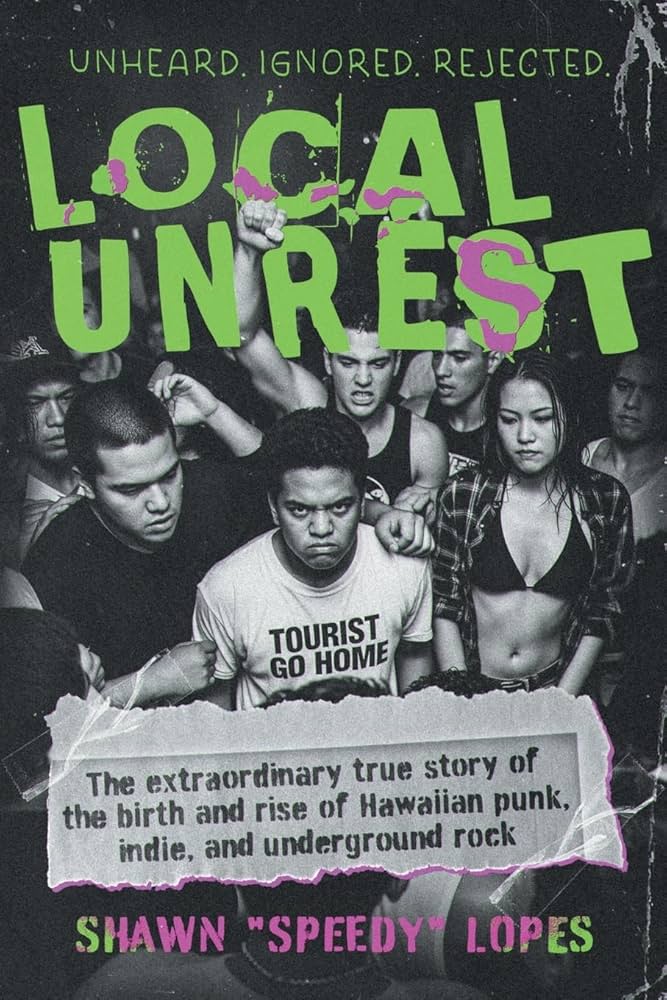
Shawn Lopes has written Local Unrest: The Extraordinary True Story of the Birth and Rise of Hawaiian Punk, Indie, and Underground Rock. An oral history of the underground music scene that was cultivated in the often ignored in fiftieth state. Sean’s book documents the roots from its beginning to around the year 2000. While it may be a surprising thing to learn that the development of Hawaii’s punk rock scene came together like a lot of the other that have been documented. The unsurprising part is that the music is just as good. Stick around after the interview to check out a playlist of some of these bands.
Dying Scene (Forrest Gaddis): My mom actually lived in Hawaii when she was a kid. She would tell me about concerts she went to out there. I think she left Hawaii like right as your book is starting.
Shawn Lopes: Oh, interesting. Okay. She probably went to the Crater Festivals at Diamond Head Crater.
I think she said her first show was the Rolling Stones. That would have been in 1973. A few years back, she went and saw Alice Cooper out here. She wanted to see when he was touring in the 1970s, but they wouldn’t let him into Hawaii because he had a snake in his show.
Wow. So she’s a big Alice Cooper fan.
She’s all over the place musically. She was into like the 1970s rock and stuff like that, but also was into new wave and ska, and some punk rock too. I kind of got that from her.
That must have been at the Blaisdell Arena, but at the time, they called it the HIC (Honolulu International Center.) It’s where Elvis had that big, gigantic concert that was broadcast live around the world at the same time. I remember because I was like a toddler when that happened.
One of my earliest memories is of my mom coming home from that concert. I was sleeping as she woke me up. Back in the day, they used to have tour programs of the act that you would see. I remember being like, maybe three years old, and she’d shown it to me. Then I kind of fell asleep, but it’s one of my earliest memories. Yeah, funny.
What drew you to document the punk rock and indie scene of Hawaii in Local Unrest?
I’m just a reader of music books, as I think you probably are, I had come across many, many books of different underground scenes from around the country. You know, I have books on the Minneapolis scene, the New York scene, the straight edge scene. A lot of these are done in that oral history format. I always thought that was a great format to be used in these books. I just thought, well, will someone ever write one about the scene that I grew up in? I knew in the back of my mind, the answer was probably no. I went ahead and started calling people, right? I’m contacting people on the internet, as well. Just to find out for myself, what were the origins of my scene?
Did you find that the entry point into the punk or indie scene was unconventional at all?
I think everybody has a different story about how they got into the scene. I kind of get into it on a personal basis, I think it was Chapter 14. I talk about how I got into the scene and got interested in it. I think everybody has a different take on how they get into it. In terms of people from Hawaii, I think it’s pretty fascinating and commendable how we’re here in the middle of the Pacific and remarkably on top of what was going on elsewhere in a time that preceded the internet.
We got our cues, like everybody else: magazines, TV, newspaper articles, records, and word of mouth like everyone else at the time. Looking back on it, I think it’s pretty remarkable how we were able to really stay on top of what was going on elsewhere. Despite the geographical hassle of being isolated thousands of miles away from everyone else.
It seems like the Hawaiian scene had the same timeline as Mainland Punk, but it was such a much more condensed space. What do you think caused that compression?
All of the above, pretty much. I think there’s always an element or a segment of society that is not satisfied with mainstream culture, or the status quo. People who are especially artistic will gravitate towards the unusual or anything that goes beyond the conventions of mainstream culture, right?
I think a lot of people are attracted to the punk scene and just oddball music in general, have that type of personality, and that sense of adventure. You have to have a sort of bold streak to embrace this music and be different from the people around you. You have to have that sense of investment. You kind of need a certain streak in your personality that seeks out things that are different or go beyond conventional culture.
Did you feel like the scene had erasor was it fluid because of the island environment?
As far as the book goes, I tried to do everything chronologically, or as close as possible. It starts out before punk rock happens. It starts with how rock and roll itself enters the islands, right in the 1950s. I do talk a little bit about the surf rock and garage rock that was going on in the 60s. That sort of leads into rock and roll in the 70s, and punk rock. There’s a timeline that I tried to keep. This book actually takes place for the most part between the 1970s, and maybe the year 2000. These are sort of the decades that I can recall in some parts as an elementary school kid in the 70s, and also as an active participant in the 80s and 90s.
Were there any, did any of the early like proto-punk or pre-punk influences ever make it to Hawaii? Did The Stooges or MC5 ever make it out there?
Those bands never made it out. Although there is a picture of one band from Japan called Gedo, that played at a music festival. And they do have some music that’s actually pretty heavy rock and you could consider proto-punk. You may not call them a proto-punk band because some of their music is pretty straight-ahead rock and roll. They did have some proto-punk tendencies.
How did the local identity intersect with the DIY and anti-establishment ethos?
I think living in Hawaii is in itself unique. We have our own culture, we have our own slang words, we have our own food, we have our own way of life, basically. As far as punk rock goes, I think a lot of kids who got into it early on sort of understood that we’re out in the middle of the Pacific and we won’t get a lot of concerts early on. So, a lot of kids in the early part of hardcore had no choice but to simply start bands of their own if they wanted to enjoy this music with their friends. We didn’t get a hardcore band in Hawaii until Agent Orange in maybe ‘82 or’ 83.
That’s a little bit late. Although, Talking Heads and B-52s might be counted in that conversation because they did come here in the late 70s. I understand that some people don’t consider them, quote unquote, punk rock so much as new wave. I think the perception of the term “punk rock” has changed over the years, particularly in the post-hardcore era. So, getting back to what I was talking about. I think a lot of local kids realized that there weren’t going to be a lot of hardcore punk bands coming to the islands early on in the early 80s. That was a big reason why a lot of kids just started their own bands was, “Hey, if bands aren’t going to come here, we’re going to start our own bands and we’re going to put on our own shows.” It’s that whole DIY sort of ethos that really set the stage for the scene in those days.
When mainland bands came through, were there any bands that left a big mark on the island?
I think kids were generally appreciative of any band that came through, so I would put, Agent Orange, Circle Jerks, Youth Brigade, and the Vandals in a special class as being the first hardcore bands to play in Hawaii. I think they were sort of pioneers in that way. I think they did have an influence on the kids that were forming bands in their bedrooms or garages. I would have to give them credit, for sure.
Was there a need for mainland bands to come through, or do you feel that the local ecosystem was pretty self-sustaining with what the scene was doing?
I think it would have been fine if none of those bands came through, but it sort of gives your scene a sense of legitimacy if you do have bands coming through your city. I think kids were excited to see hardcore bands and metal bands that were in the record collection come to town. It creates an extra sort of excitement around this music. You’re actually energized as a kid to see these bands live and up close, and it inspires you further to start your own band. I think in that sense, it was a huge thing to have these bands come through Honolulu.
Was there any type of apprehension or were you guys appreciative that they’re able to make it out?
I think the kids were absolutely stoked that a band that they knew from their record collection would actually appear live in Honolulu. I think it seemed like a godsend to them at the time. Agent Orange, Circle Jerks, what have you. Actually, I think if anything, the kids here just sort of felt almost embarrassed that they, in their minds, were kind of behind the times in the early 80s.
Mike Palm from Agent Orange had once stated in a local magazine that Honolulu was actually not behind the times at the time. I kind of mentioned this in the book. This club that they were playing at, 3-D Ballroom, was the first punk rock club in Hawaii. He said, this club could be in the middle of LA. If the kids go out to LA, they’ll see that their scene is just as legit as any other scene.
Why do you think there was that assumption that the Hawaiian scene was behind LA and New York and other cities on the mainland?
I think it’s just this sort of feeling that we have in the islands about being behind the times, especially pre-internet. We don’t get as many concerts because of our isolation. We don’t have as many bands coming through to play. All we got was what we could find in magazines or in books. I think that geographic isolation just sort of makes us feel like we’re not really a legitimate part of the U.S., a lot of times.
Was there a separation between rap and punk like there was on the mainland?
It depends on what era. I think by the time the 90s came around, I think everything was free-for-all. Everybody was into everything, but for sure in the early days, there were definitely different scenes.
I think that’s one thing you guys would be ahead on, everybody being just cool with everything in that way. I feel like in the last couple of generations, like the mid-2000s is when that came. Not including the rap-rock-Limp-Bizkit shit. I’m talking like listening to punk rock, rap, and a little bit of everything. Not trying to mash shit together.
Early on, there were definitely distinctly different scenes, not just in Hawaii, but elsewhere. The one thing I can say about the Hawaii scene is that it’s always been pretty inclusive. From the earliest days, you could have a ska band with a punk band with a folk band and nobody really cared. It was just exciting to hear music that was outside of the mainstream. Hawaii’s always kind of embraced that from its earliest days.
There’s no real elitism with regard to the music scenes here. I think everybody’s pretty welcoming to other styles of music and pretty accepting of new ideas. I think part of that is due to the fact that we’re very multicultural in Hawaii, as well. You have a huge American influence, you have a huge Asian influence, and you have Polynesian and Native Hawaiian aspects to our culture here. I think we’ve always been very much open to new ideas, to new people, to new cultures and sometimes even subcultures, you know?
There was never like this debate about the authenticity of who’s punk, who’s not. It was just everybody’s punk.
I think maybe early on, maybe in the early 80s. I think you had to really prove yourself. Am I fully metal? Am I fully punk? It wasn’t until maybe the mid 80s when the whole punk metal crossover happened that I think kids were starting to get open to the idea of music crossing over to different genres.
Were there bands that you tried to include or track down that you couldn’t or is it that small of a community that you were able to get most of the people from the scene?
By the time the 90s had rolled around, the scene had really exploded with the number of bands and venues. There were just so many bands that I never got to mention from specifically the 1990s. When you talk about the bands from the 70s and 80s, you could name several dozen bands. I pretty much got most of them or at least most of the ones that are spoken of to this day as the important bands. When the scene gets to about the 1990s, the mid 90s or so, there were just so many more bands that I was not able to contact all of them or speak to enough scenesters. I feel to really accurately represent that decade because I feel like the 90s itself could have been its own book.
Oh wow, it was that big.
By the time the 90s came around, what was underground at one time was not underground anymore. In the 80s, Metallica was sort of like a cult band. You never heard them on the radio, but they had great record sales and would just never be represented in the mainstream. When the 90s came around, I think record labels finally realized there were lots of indie bands that they can make money off of. I think that’s when music just sort of exploded. A lot of these bands that used to be quote-unquote underground bands were now almost part of the mainstream. The prevailing youth culture was one of an anti-mainstream sort of belief, you know?
Are any of the clubs mentioned in the book still open, or were there buildings repurposed for newer venues?
Most if not all of them are gone by this point. 3-D Ballroom, which was the first punk rock club, closed in 1984. Wave Waikiki, which opened just a month or two after 3-D, had a long life, and it was probably one of the most popular nightclubs in Hawaii, if not the most popular and well-known of the nightclubs in Hawaii. In the 90s, there were big venues like After Dark and Pink’s Garage, Those nightclubs are gone as well.
Were there any venues that you would consider anchor venues, like CBGBs or Gilman in Hawaii?
3-D and Wave Waikiki were sort of the main venues. Then in the 90s, After Dark would be a huge one, Pink’s Garage would be another one. They were much larger and could bring in headlining acts like Pearl Jam or Alice in Chains, bands of that caliber. Wave Waikiki was still around as well. They lasted up until the 2000s or so. Yeah, those would be probably the four main venues of the 80s and 90s, for sure.
Were there ever any burnout cycles where the scene almost died out?
Every scene has its ebbs and flows. It depends on who you talk to. I think some kids have felt disconnected from the scene at certain times, depending on different factors. Some of them will go away and then come back, and the scene will have changed. All the kids are gone that they knew, and it’s a whole bunch of new kids. Sometimes there are a bunch of bands and a bunch of venues. Other times, especially when the venues go out of business or close, the scene takes a big blow.
Did anybody’s interview reshape your understanding of the scene in ways you didn’t expect or maybe didn’t pick up on before?
Yeah, what really took me aback was just the amount of violence that would happen every once in a while. There were certain murders and shootings that would happen in the nightclub scene. You know the old saying is, “nothing good happens after midnight.” But I think anytime you mix alcohol with young people, you’re going to have issues. You’re going to have these incidents of violence, but I was really surprised with the amount of violence that actually occurred within our scene. I think chapter four speaks about how one nightclub owner was found bound and bludgeoned. There were a couple of accounts of shootings that happened or people who were murdered in front of nightclubs. That sort of thing really took me by surprise.
Is there a through line between the earlier punk bands and the musicians today in Hawaii?
No, I think I’ve always had this sort of belief that about every five years a new generation is spawned within the scene. A whole bunch of new kids come through and by the end of the five years or so, they’ve already gone off to college, they’ve gotten regular jobs, they’ve gotten married, or maybe gone to the military. Certain parts of certain eras of the scene seem foreign to the kids who come later.
There’s a little bit of crossover. You may know the guys who were in the scene two, three, or four years before you, but the people that were there like five, ten, or fifteen years before, you have almost no clue of. That’s just how it goes, especially when you’re young. You don’t really have that sense of history unless you’ve really looked for it.
Are there any misconceptions that people still have about Hawaii’s underground music culture?
I just don’t think people realize people just haven’t heard of the bands that have come out of Hawaii, and I don’t think people realize that there are bands that have made it even to the major label status.
You mentioned a couple of those in the book. I didn’t pick up that Lance Hahn was the same guy from J. Church until it’s mentioned in the book.
I think there are a lot of connections with people in Hawaii who go elsewhere and find success, but very few record labels were willing to take a chance on bands from out of Hawaii that were not willing to relocate and I think a lot of it has to do with the fact that pre-internet. It was a lot harder to keep track and keep tabs on bands who were out in the middle of the Pacific. They were sort of gun-shy about signing bands from Hawaii, but make no mistake, there were lots of bands that were talented enough to make it to either indie labels or major labels, but they weren’t willing to relocate to the Mainland. The examples of the bands that did make it to major labels, like Poi Dog Pondering and the Dambuilders, for example, they had to actually move to gain any kind of traction and that’s a theme that reappears in the book over and over.
If someone wanted to explore the scene now, where would they start?
Oh, the internet’s a great place. We didn’t have the internet back in the day, but I think there are several groups on Facebook or even Instagram that would help you find the venues, the record stores, the bands. I think Instagram’s a good tool, Facebook’s a good tool, and there are a bunch of bands and venues that I think people would enjoy here in Hawaii.
Do you think punk rock still serves the same purpose for young people in Hawaii today as it did before?
I hope so, right? I don’t know what it’s like to be 17, 18, or 19 today, but I would hope that it gives them the same sort of excitement that I got when I was that age. Just the sense that you’re discovering something that is outside the mainstream; something that’s underground and you can call your own. A scene that you could say helps establish your identity as an individual. Those are the things that I’ve carried with me throughout my life, so I would hope that those things ring true for young people today.
Do you think the next wave of punk in Hawaii will look more global, local, or somewhere in between?
I have no idea. I would hope that the kids who are making bands now find that same sort of enjoyment that I did when I was younger. With the advent of the internet, I understand that there are all types of influences out there.
Did documenting the scene change your relationship with Hawaii at all?
No, Hawaii’s always going to be my home. Part of the reason I wrote this book is so I can sort of tell the world or show the world that we exist, and we have music that’s worth listening to. We have a history that’s just as exciting and interesting and engaging as what I’ve read in some of the books that are out there on different scenes around the country and the world.
The one thing that really surprised me is how similar all these stories are from the different scenes from around the world. It starts with one or two bands, then a nightclub opens up or a venue opens up that allows these bands to play. The scene grows and then they sort of merge with other scenes. I saw a documentary on Chicago’s punk scene, and I’m like, wait, just in a different setting.
Were there any unconventional places that the bands played… backyard parties? I mean, I don’t think there are many basements in Hawaii.
I remember there was a state park here in the late 80s. It’s mainly a place for tourists, but there’d be metal bands, punk bands, and crossover bands in the late 80s that would play there, and it was a thing for a while. That was pretty cool because you kind of have a whole state park to yourself. Just you and a bunch of your wild teenage peers.
It’s kind of a Warped Tour.
In Chapter Two, I do talk about the Diamondhead Crater festivals that happened there before my time. We’re talking like the 1970s, but if you ever see pictures of Oahu or Waikiki Beach in the background, you’ll see Diamondhead Crater. It’s basically the most famous natural landmark on Oahu.
There used to be tons of bands that would play there every year, like major rock bands. I always thought that was such a fascinating place to hold a concert in this ancient crater that used to be an active volcano. It’s pretty cool that young people in the 1970s were able to enjoy that location as a venue.
Sean’s book, Local Unrest: The Extraordinary True Story of The Birth and Rise of Hawaiian Punk, Indie, and Underground Rock is available to purchase, here. Below you can find ten tracks from ten bands featured in Local Unrest to whet your appetite.
Screeching Weasel plays in Hawaii for the very first time in their long career this weekend. If any reader is here on vacation get tickets from 808shows.com
Mahalo Shawn Lopes for the interview and reading Local Unrest truly brought back some great memories and there’s so many stories.
Kudos to the bands that I’ve gotten to see and perform with. Not in any order:
Broken Man
M.U.G. (Mean Ugly Guys)
Tarrasque
Luau Guys
B.Y.K.
Optimum Fury
Social Ignorance
If Any
Last Chance
Pimp Brutality (Grain)
Ira Hayes
Tantra Monsters
Red Sessions
Freakhunt
Tweaked
Grapefruit
Hell Yeah Bowlers
Unit 101
Generic <— now relocated in Portland Oregon
Knumbskulls
Bangstick (Cooperstown)
Spurn
Mister Meaner
The Catalogs
Friend of the Family
Extra Stout
Omnicide
The Pugilist
Potluck
And many more bands I can’t think of at this moment.
Italian ramonescore favorites Proton Packs have a brand new record coming soon on Mom’s Basement Records & Striped Records! Visions From The Void is due out this coming Friday, February 27th and Dying Scene has an exclusive first look at the vinyl color variants you’ll be able to grab it on. Feast your eyes on […]
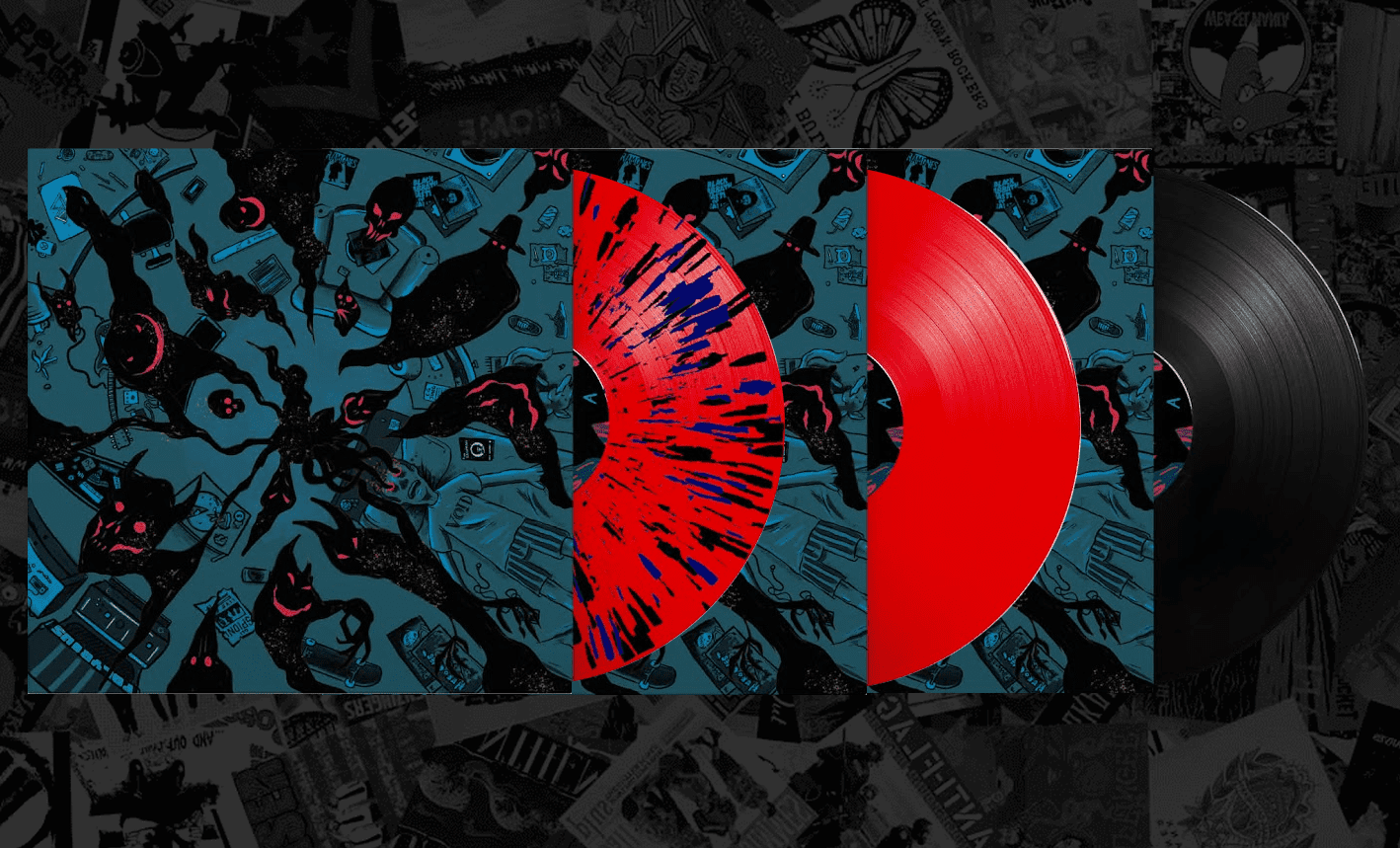
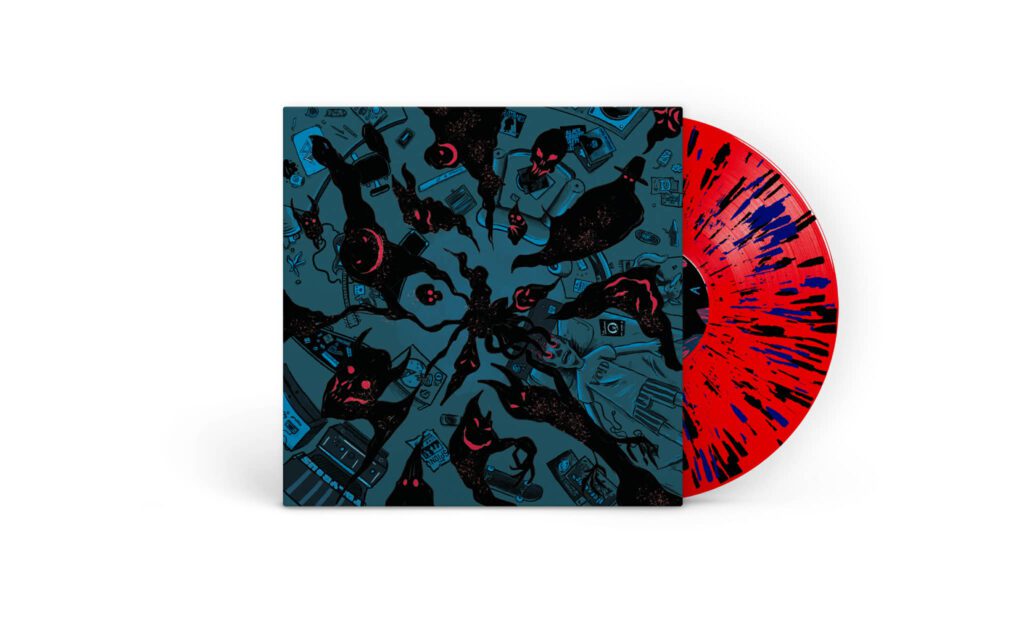
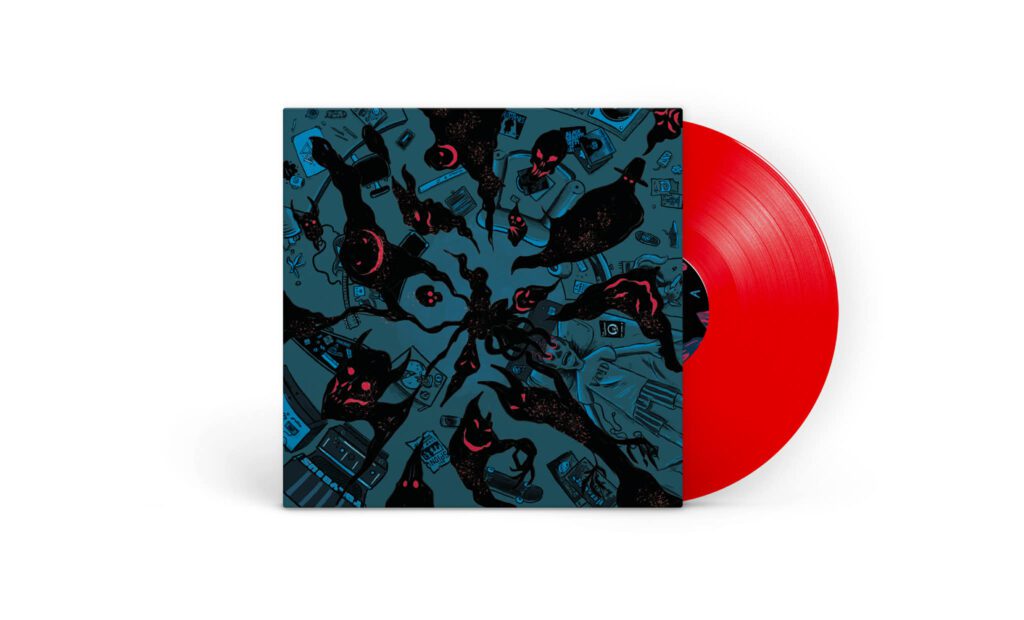
Italian ramonescore favorites Proton Packs have a brand new record coming soon on Mom’s Basement Records & Striped Records! Visions From The Void is due out this coming Friday, February 27th and Dying Scene has an exclusive first look at the vinyl color variants you’ll be able to grab it on.
Feast your eyes on those beauties – and check out a handful of singles from the record – down below and pre-order your copies here (US) and here (Europe).
When the world needed them most, they listened – no announcements, no singles, no preorders. On a random Tuesday morning Austin skacore group Hans Gruber And The Die Hards, known for their unexpectedly chaotic live performances, unexpectedly released their latest and chaotic full-length album “Or Hans Gruber And The Die Hards”. Not only was this […]
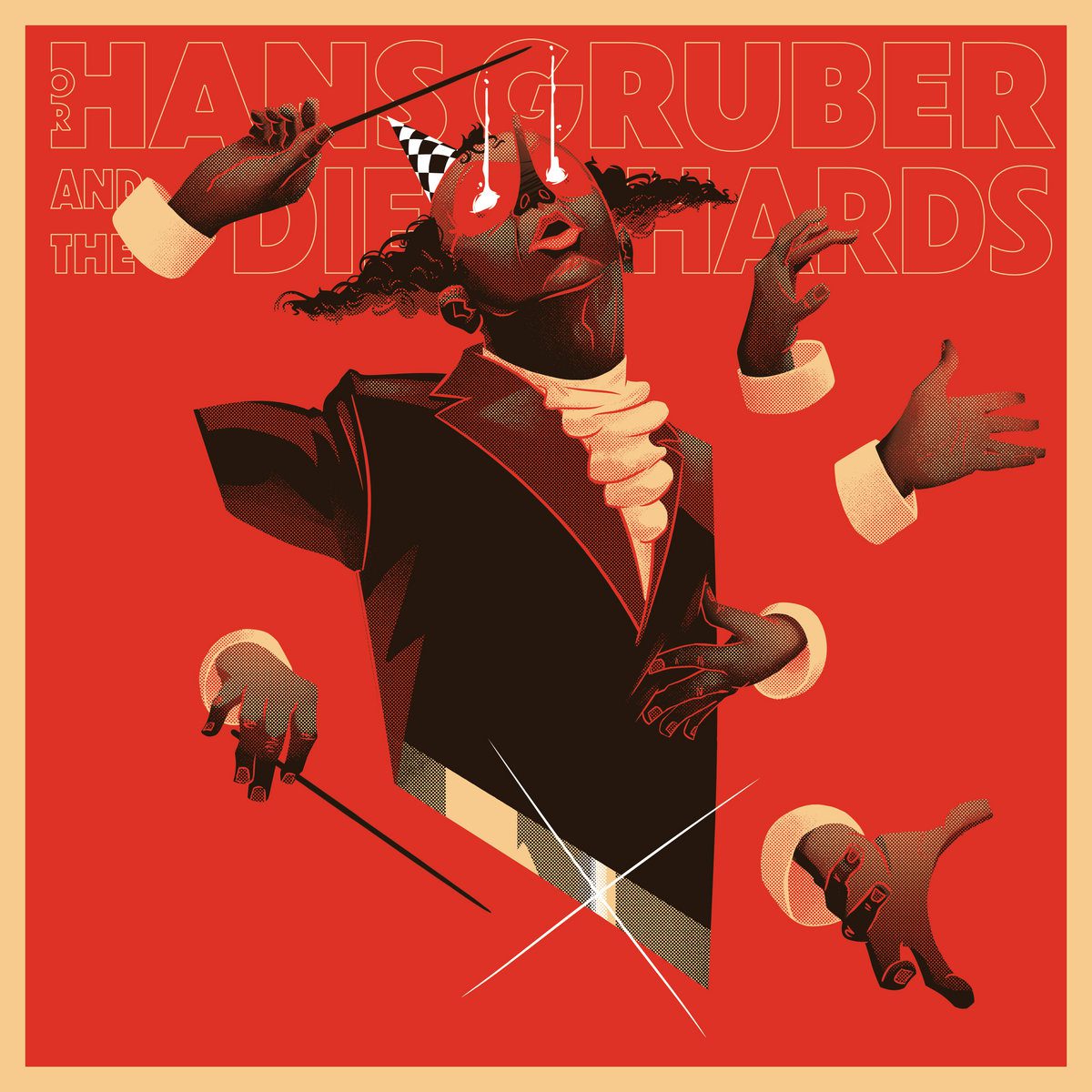
When the world needed them most, they listened – no announcements, no singles, no preorders. On a random Tuesday morning Austin skacore group Hans Gruber And The Die Hards, known for their unexpectedly chaotic live performances, unexpectedly released their latest and chaotic full-length album “Or Hans Gruber And The Die Hards”. Not only was this released independently while on tour, but the overall production is super clean, features an orchestra worth of instruments, and has some of the most relevant lyrics of today’s society hidden within a blend of ska, hardcore, cumbia, and punk. To call this just a ska punk album would not be enough. The image on the album cover is clear and yet has so much going on within it, which is exactly how I can describe the album as a whole. “Or Hans Gruber And The Die Hards” has more to offer than their previous LP (the album that introduced me to the band), and is highly recommended to give a listen as soon as possible.
“Everybody Wants To Be Oppressed” is the opening song, sounding most like the previous album, as if the band is transitioning us from “With A Vengeance” to the new album. It’s an uncensored commentary on today’s society that includes a critique on the privileged, a repeating theme through the album, being called out with lyrics like “it’s so hard being the majority, when history has made me the priority”. Another song that directly calls out is “Pay Your Tolls”, featuring folk punk band Doomscroll, which contrasts lives with the privileged and not so privileged: “Doesn’t matter how you struggle, miss a bill and you’re in trouble”.
One of my favorite songs features a band local to me, The Odd Advantage, in the song “One Day”, which talks about the dreams of the future that many are actively fighting for today, how “one day, the houses we build won’t be for the rich”. This song introduces cumbia that surprisingly makes up a good chunk of this album, also in songs “Chambacu” that has an awesome bass line and the perfect blend of ska/cumbia/punk, and closing song “Bed Bug Bailout”, which has the best use of instrumentals I’ve heard in any punk song.
Another song that stood out to me was “Throwdown”, sung solely by Rosey Armstrong. Although solo vocals from her are not unusual, she brought on a pop punk sound that isn’t common for the band, which was refreshing and added to the amalgamation of music well. She was also able to highlight her sick talents on the saxophone that I last heard when seeing them live almost a year ago. The chorus line on this song also reminded me of a chorus common in new ska bands like Kill Lincoln, Sad Snack, and Chudson that mimics the chorus in pop punk.
When you think about it, it’s really no surprise this album was released unannounced. That’s just the complete madness and random initiatives to be expected by Hans Gruber And The Die Hards. Songs like “Confirmation Bias” and “Trash Festers” show off their ska punk skills, while “Earplugs 4 Sale” and “It Gets Worse” prove that you shouldn’t limit a band to a single style. This album is not only fun, it’s relative. In a country currently full of turmoil and division, take comfort in bands like Hans Gruber that welcome diversity with open arms and horns.
This isn’t a band you can just listen to, in order to get the full Die Hards experience, you must see them live. I guarantee that you won’t sit still.
“Or Hans Gruber And The Die Hards” is available on Bandcamp.
The Queers returned to the Constellation Room in Santa Ana and brought along The Jack Trippers. Sunday nights rarely sell out at the Constellation Room, but by the time the Queers took the stage, the crowd was much livelier. While there were a handful of kids with their parents, the crowd was a good mix […]
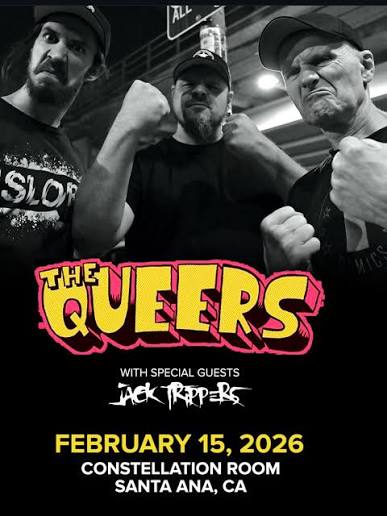
The Queers returned to the Constellation Room in Santa Ana and brought along The Jack Trippers. Sunday nights rarely sell out at the Constellation Room, but by the time the Queers took the stage, the crowd was much livelier. While there were a handful of kids with their parents, the crowd was a good mix of all age ranges who came to enjoy Joe Queer’s music.
The Jack Trippers are a four-piece band from California. The Jack Trippers played a high-energy set full of musical aggression and sass in their lyrics. Lead singer Manny “JackTrippers” Espindola carried the set, with a vocal delivery reminiscent of Jello Biafra fronting a trashy punk rock band. This was fitting as they closed with a “Kill the Poor” / “Nazi Punks Fuck Off” mash-up. Songs like “My Glasses” and “Borrowed Time” gave an old man punk feel to their set; self-aware, cranky, and catchy. The rest of the band didn’t slouch, though. Brian, Candy, and Chris’s guitar, bass, and drums wove a web of songs that captured the crowd’s attention and won them over by the end of their set. If you like old-school punk with age-appropriate lyrics, The Jack Trippers are for you.
In the last few years, Joe Queer has kept the band alive by circling the country either on their own tours or supporting bands like the Dickies and Greg Ginn’s latest incarnation of Black Flag. It hasn’t been uncommon to see the Queers come through town at least two or three times in the same year. Joe mentioned the lineup was in a bit of an influx because drummer Hoglog Rehab was sick. They had a fill-ind on drums and bass. After a couple of songs, Dwarves’ guitarist Ginger Fanculo joined the Queers on stage, with Joe moving to vocals. Given the addition of keyboard player Ron Ramone, there were five members of the Queers on stage.
While the Queers’ setlist doesn’t change too much, the energy they bring makes the familiar feel fresh. They were able to fit a good number of songs into their forty-five-minute set. Opting to play the hits rather than mixing it up a bit, the song choices, like most of their sets I’ve seen over the years, were very heavy with songs from their sophomore release, Love Songs for the Retarded, a 1990s punk rock masterpiece to this day. Although unsure if they could do it at first, they did a pretty good cover of the Ramones’ “Rockaway Beach.” Throwing in other hits like “See Ya Later, Fuckface,” “Punk Rock Girls,” and “Born To Do Dishes,” they closed appropriately with “Goodbye California.”
It doesn’t look like the Queers have any intention of slowing down. That’s not an excuse to put off seeing them; if anything, it’s a reminder that you shouldn’t. While a band with this much longevity has inevitably had most of its parts swapped out, the musicians that Joe Queer has gathered together hold their own. The band doesn’t miss a beat, and you shouldn’t miss them.
Hawaii fan
Screeching Weasel plays in Hawaii for the very first time in their long career this weekend. If any reader is here on vacation get tickets from 808shows.com
Rolan Dongon
Mahalo Shawn Lopes for the interview and reading Local Unrest truly brought back some great memories and there’s so many stories.
Kudos to the bands that I’ve gotten to see and perform with. Not in any order:
Broken Man
M.U.G. (Mean Ugly Guys)
Tarrasque
Luau Guys
B.Y.K.
Optimum Fury
Social Ignorance
If Any
Last Chance
Pimp Brutality (Grain)
Ira Hayes
Tantra Monsters
Red Sessions
Freakhunt
Tweaked
Grapefruit
Hell Yeah Bowlers
Unit 101
Generic <— now relocated in Portland Oregon
Knumbskulls
Bangstick (Cooperstown)
Spurn
Mister Meaner
The Catalogs
Friend of the Family
Extra Stout
Omnicide
The Pugilist
Potluck
And many more bands I can’t think of at this moment.