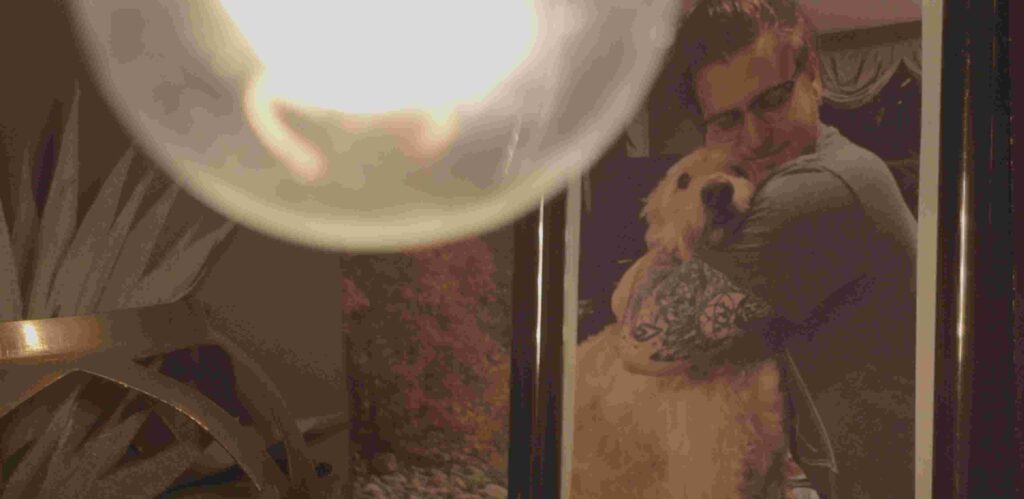
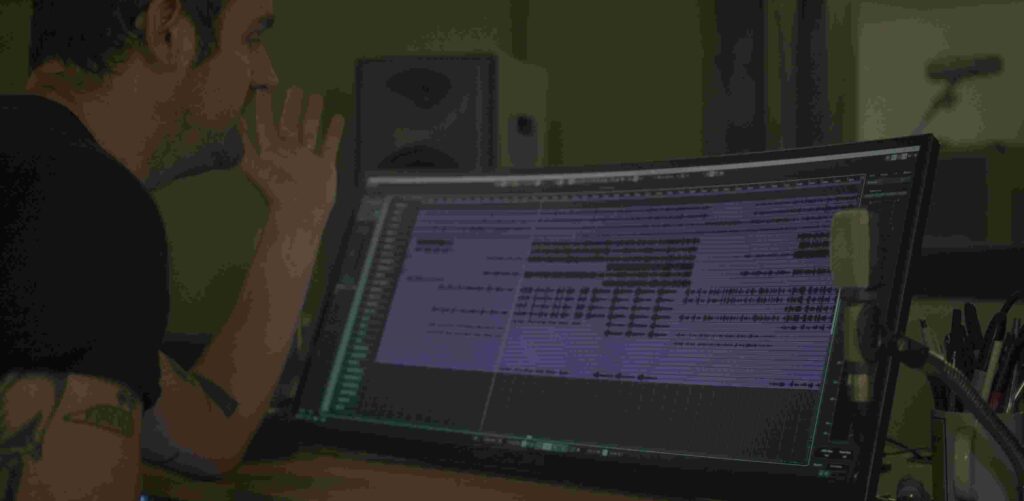
Tampa, FL pop-punk / emo / indie / electronic / whatever you wanna call them band Lychee Camp threw a house party and recorded a music video for their brand new single “Floating” a few weeks ago. Now your friends at Dying Scene are rolling out the red carpet for our exclusive premiere of that very […]
Tampa, FL pop-punk / emo / indie / electronic / whatever you wanna call them band Lychee Camp threw a house party and recorded a music video for their brand new single “Floating” a few weeks ago. Now your friends at Dying Scene are rolling out the red carpet for our exclusive premiere of that very music video! Check that shit out below.
Here’s some background on the song and video, courtesy of Lychee Camp frontman Joe Marquez:
“Floating” is our summer jam that you can sing along to and hopefully make great memories with while it’s on your playlist. When I wrote the lyrics, I aimed to capture the feeling of falling for someone and the rush of dopamine that comes with it. For the video, we wanted to keep it light and fun, without being too literal with the lyrics. Originally, Alex had this house party idea that evolved into our neighbor trying to have a party, but the guests end up at our band house by mistake and party with us instead. We got all our friends to help out, and it was a blast to make.
Check out more music from Lychee Camp on Spotify, grab some merch here, and follow them on their socials to stay up to date on upcoming shows, etc.
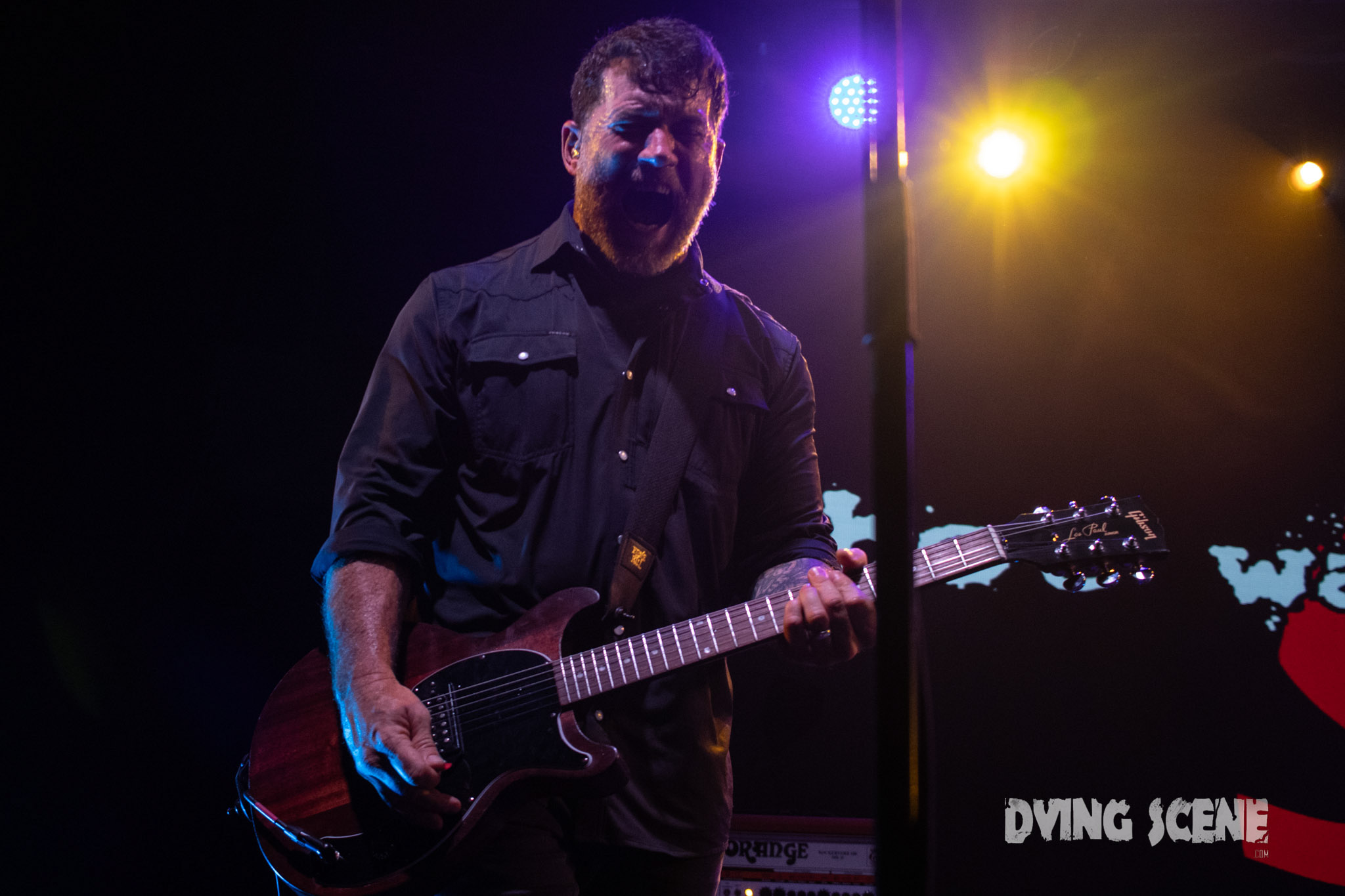
Attending 2024’s Sick New World Festival was one of the most exciting experiences of my adult life. It was an 80-degree day with a perfect lineup. What more can a fan ask for? The festival was extremely organized and well run. The bands seemed to be having the time of their lives. This clearly wasn’t just […]
Attending 2024’s Sick New World Festival was one of the most exciting experiences of my adult life. It was an 80-degree day with a perfect lineup. What more can a fan ask for? The festival was extremely organized and well run. The bands seemed to be having the time of their lives. This clearly wasn’t just another stop on the rock festival circuit. This felt monumentous. Every aspect of the day had a grandiose feel to it. Sick New World is (one of, if not) the best, punk rock and heavy metal festivals currently.
Most people compare Sick New World to its sister festival, When We Were Young. While yes, they are managed by the same team, take place at the exact location, and have very similar business styles, I believe they cannot be compared. When We Were Young is more based on nostalgia. It’s literally in the name. Most of the bands on that bill already had their heyday. The 2024 lineup is actually just bands playing all their older records in full. There is nothing wrong with this. The festival plays classic bands that serve a purpose in their community. There will always be a space for those bands, and When We Were Young will always continue to have the coolest lineup.
The key difference with Sick New Word is that these are all the bands that are making a splash in the community NOW. Bad Omens’ newest record, “The Death of Peace of Mind,” is not only their biggest but also one of the most successful rock albums of recent memory. Sleep Token have ascended into amphitheater headliner status, something extremely rare in this genre. The last rock artist to really start playing areas of this size was Rise Against in the early 2010s. Knocked Loose is slowly becoming the biggest hardcore punk band to ever exist, playing Coachella and getting mainstream attention. They’re the face of the genre right now. In a different scene, Lorna Shore has become the most well known deathcore band in history. Will Ramos is appearing on covers of Rocksound and getting talked about in Loudwire the same way they talk about Corey Taylor. Ice Nine Kills are currently opening support for Metallica and proving they’re also the future of metalcore music. Most of the bands on the bill, have had their most recent album be their most successful. It’s not nostalgia bait; it’s the heartbeat of heavy music today.
A highlight set that needs to be discussed is the carnage that was Bring Me The Horizon’s set. The band brought their A-game in a massive way. As someone who has consistently seen the band for over 10 years, their set at Sick New World was a moment in time. It felt like their entire career had been building to that show. The band had Babymetal appear for guest vocals on their song “Kingslayer,” and every single person was on their feet. Video screens featured an AI named Eve trying to destroy humankind between songs. It added flair and personality. I felt like I was living inside an action movie by moshing. I would fly out to Las Vegas just to see that single set again.
Knocked Loose was so intense there were four mosh pits all going off simultaneously. The guitar tones sounded exactly like they did on the studio albums. The band connected with the fans live in such a strong way. Everyone was pointing screaming lyrics at Bryan and the band was giving the energy right back at them. They brought Poppy out to play the live debut of “Suffocate”. Knocked Loose should be a household name at this point.
Ice Nine Kills also played their first show of 2024 at Sick New World. This being my 18th time seeing the band, it’s safe to say I was excited. It was astounding, as usual. The band had a massive inflatable Silence Killer behind them as they performed. During “Meat & Great,” they rolled out a chained Hannibal Lecter, and fans got to watch him escape. Spencer did his classic American Psycho during “Hip To Be Scared” when he murdered Paul on the breakdown. It was a spectacle, it was extremely heavy, and more than anything, it was unapologetically Ice Nine Kills.
The festival also needs to work on its entrance. It had a capacity of 80,000 with only 4 gates to get into the festival. I waited outside for an hour and a half before I was finally allowed in. It was a brutal experience. This can be easily remedied with more entrances. It can also be fixed by having entrances in different locations. Everyone had to enter in the same parking lot area behind Circus Circus Hotel. Another possible solution to this would be having doors open much earlier. The doors opened at 10:30 am, and the first artist started at 11:15. Spacing out the time when doors open may allow for a more gentle flow of people.
A critique we’ve seen a lot about Sick New World is that the band’s set times were too short. While we understand the frustration fans have, we firmly disagree. Did Lorna Shore only play “Sun // Eater” and the “Pain Remains” trilogy? Yes. But in the span of 2 hours, you have seen four headliner-sized bands for the price of one. If fans go choose to see the smaller artists on the Diablo and Siren stages, that turnaround is even faster. In 3 hours (from 6-9pm) fans could mosh out to Drain, Vein.Fm, Code Orange, Better Lovers, Static Dress, and Incendiary. That’s a bucket list lineup right there; it’s just the last quarter of your night at Sick New World Festival. I did not understood the vision until I saw it with my own two eyes. It’s a sacrifice for the length of the set in exchange for the volume of artists. If the lineup is as good as it was this year, that’s a worthy trade-off.
There were no wait times to get food or beer. The food was delicious, and the alcohol was strong. The festival merch line moved quickly and efficiently. The artist merch line had a two-hour wait, but if you flew to Las Vegas to buy band merch, reevaluate your life! There were four bands playing at the same time! Go crowdsurf or run around in a circle pit! The bands have merch online after the festival anyway.
Overall, the title says it best. Sick New World is Coachella for heavy music fans. It’s THE festival for anyone who grew up playing guitar and trying to learn to scream. It was a mass congregation of every hardcore punk fan in the world. At the festival, I ran into people from Brazil, Canada, and every part of the United States. Sick New World 2024 is in the history books.
Friday, May 10, 2024, found Hot Water Music bringing their triumphant 30-year anniversary to a stop at Boston’s 1000-capacity Royale theatre. Coincidentally, it also marked album release day for Vows, the band’s dynamic 10th studio album. The confluence of those events created a pretty great Venn diagram sweet spot that found the genre-defining five-piece sounding […]
Friday, May 10, 2024, found Hot Water Music bringing their triumphant 30-year anniversary to a stop at Boston’s 1000-capacity Royale theatre. Coincidentally, it also marked album release day for Vows, the band’s dynamic 10th studio album. The confluence of those events created a pretty great Venn diagram sweet spot that found the genre-defining five-piece sounding just as vital and authentic as ever.
I understand that it’s not exactly an earth-shattering revelation to disclose that Hot Water Music has been one of my favorite bands over the course of the last two decades – I am a mid-40s bearded white guy after all. Still, it’s important to note the influence that the band has had not only as a guiding light in this quadrant of the music world, but on my own personal life both inside and outside the last baker’s dozen years I’ve been doing the Dying Scene thing. It’s a level of importance that is palpable when you’re in the room when the band plays, even thirty years on and minus an original member. What’s also palpable is the level of respect and admiration that the band have for each other and for the crowd. Co-frontmen Chuck Ragan and Chris Cresswell made repeat references to how honored they were to be able to celebrate a lengthy career and a new album in front of a room full of friends, and Cresswell seems doubly-appreciative of his spot as a fan first and, for the last seven years, a band member. Of course, how can you not appreciate playing in a band with the “human cheat codes” that make up the rhythm section of Jason Black and George Rebelo.
As is basically standard operating procedure of late, Hot Water began their set with a blistering rendition of “Remedy,” the song that kicks off their landmark 2002 album Caution. This was followed quickly by “A Flight And A Crash” and “Jack Of All Trades,” a one-two-three punch that set a frenetically high bar for the evening. Because this was not only a thirtieth-anniversary tour but also an album release tour, one can imagine there was more than a little difficulty putting together a setlist that was appropriately reflective of the band’s career arc while obviously celebrating the new material. The next hour-and-a-half did a damn fine job of it, however. Vows was certainly well-represented by “Burn Forever,” “Menace” and “Remnants,” the latter of which contained a pause and restart while a crowd-goer who’d hit the deck was tended to. “Keep It Together” from 2004’s underrated The New What Next was a pleasant surprise that I feel hasn’t seen much love in the Cresswell era. Exister‘s two staples, “Drag My Body” and “State of Grace” were of course included, as were personal favorites “I Was On A Mountain” and “Alright For Now.” By the time the iconic “Trusty Chords” brought things to a close, the band had barreled through 20 songs in about as raw and real and life-affirming a manner as they ever have. Making and sharing music is not a responsibility that Hot Water Music take lightly, and to say that all four of the touring members leave it all on the stage night in and night out is to put it mildly, and I look forward to more nights like this as long as Chuck’s and Cresswell’s voices will allow.
Be Well kicked off the festivities early in the evening. A late add to the bill after the cancellation of their West Coast run with I Am The Avalanche and Grumpster, Be Well really are a perfect fit to help celebrate Hot Water’s 30th birthday given how intertwined frontman Brian McTernan has been with HWM for the last couple decades, having produced A Flight And A Crash (2001), Caution (2002), The New What Next (2004), Feel The Void (2022) and now Vows. (He also produced The Draft’s 2006 masterpiece In A Million Pieces.) The lineup was slightly retooled from the band’s previous runs through the Northeast; McTernan, Shane Johnson (drums) and Mike Schleibaum (lead guitar) maned their usual battle stations, while normal bass player Aaron Dalbec slid into perhaps his more identifiable role as guitar player (see Converge, Bane, etc) while newcomer Zach Crocket (who plays with Johnson in Richmond, Virginia hardcore band Beggars) assumed bass duties. Whatever the lineup, every time out finds Be Well solidifying their place as one of the most vital bands in the modern hardcore game, and I say that while fully acknowledging that I am very much “not a hardcore kid.” McTernan’s honest, earnest vocals and heart-wrenching storytelling are front-and-center, supported in full by the band’s strong concentration on thrashing, melodic tempos.
Off With Their Heads were up next. It had been a minute since I’d witnessed the full-band OWTH experience. Actually, it had been well more than a minute…maybe a decade? Maybe? On a tour with Alkaline Trio and Into It. Over It.? I should check my list. ANYWAY, I’d seen the OWTH acoustic revue a number of times, so it was gratifying to see that Ryan Young and friends (Kyle Manning on drums and Kevin Rotter on bass) have not lost a step off their plugged-in, punk rock set’s proverbial fastball. Kicking things off with “Let It All,” the band blistered through a nine-song set that was heavy on their last full band full-length, 2019’s Be Good. Set closer “Clear The Air” was as cathartic as ever and included a couple of local references (Billerica? Really?) for good measure.
Quicksand served as primary support on this night as they did for the duration of the tour. Speaking of bands who are naturals to open a Hot Water Music 30th anniversary run, Quicksand were also perfect not just sonically but because of frontman Walter Schreifels’ role as producer of Hot Water’s 1999 classic No Division, considered by many to be the first album that really found the band leveling up (as evidenced by it’s spot as one of the “album shows” the band did on its string of two-night stands on their 25th-anniversary tour a few years back). The trio (Schreifels on guitar and vocal duties, Sergio Vega on bass and Alan Cage behind the drumkit) hit the ground running with “Omission” from their own iconic record, 1993’s Slip, and tore through another thirteen-song set that included such staples as “Thorn In My Side” “Fazer” and “Dine Alone” before closing things out with a transcendent “Landmine Spring.” The band sounded as solid as ever, and the staircases that adorn the sides of the stage and lead to the backstage green rooms were adorned with members of the night’s other bands watching and singing along from the wings.
Happy Friday, comrades! Today’s DS Exclusive premiere comes to us all the way from one of my favorite places…Asbury Park, New Jersey! We’ve brought you music from AP bands like Yawn Mower and Bristler in the recent past, and today we’ve got Tide Bends for your listening pleasure. The band features Yawn Mower/Bristler’s Rudy Meier […]
Happy Friday, comrades!
Today’s DS Exclusive premiere comes to us all the way from one of my favorite places…Asbury Park, New Jersey! We’ve brought you music from AP bands like Yawn Mower and Bristler in the recent past, and today we’ve got Tide Bends for your listening pleasure. The band features Yawn Mower/Bristler’s Rudy Meier (guitars) teaming up with David Hough (vocals/guitar), Dan Nolan (drums) and MJ Hancock (bass) for a sound that is a fresh, modern, swamps of Jersey-inspired take on classic Madchester Britpop goodness.
Tide Bends’ Say Yeah EP is due out June 21st on Mint 400 Records, and you can check their new single, “Birthday,” today! Enjoy, and pre-save the EP while you’re at it!
Rhode Island pop-punk band Pavid Vermin‘s brand new record Brutality Is My Only Friend arrives tomorrow, May 24th on Memorable But Not Honorable Records. That’s tomorrow, though. Today we’re premiering the album’s title track! I highly recommend checking it out below. Brutality Is My Only Friend is getting an ultra limited vinyl release with 100 […]
Brutality Is My Only Friend is getting an ultra limited vinyl release with 100 copies on blood red colored wax. It’ll be available on the Memorable But Not Honorable webstore tomorrow, along with a bunch of other bad ass pop-punk releases you’ll wanna add to your cart before checking out.
This premiere is brought to you in part by Punk Rock Radar. If you’d like your band’s music video to be premiered by Dying Scene and Punk Rock Radar, go here and follow these instructions. You’ll be on your way to previously unimagined levels of fame and fortune in no time!
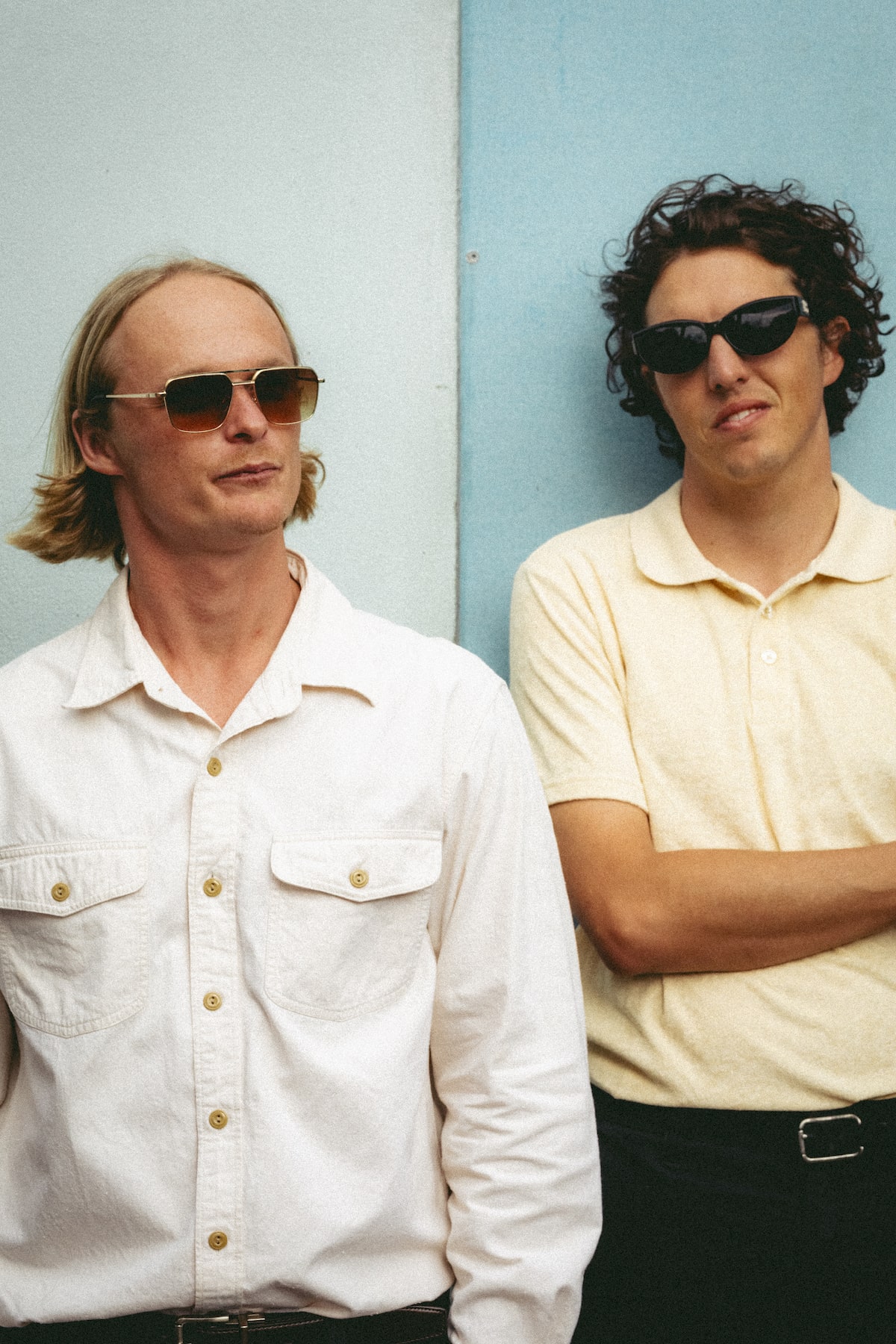
Hey there, friends! It’s been one hot minute since I last had the chance to sit down with a band hailing all the way from the sunny shores of Australia. Today, I’m beyond thrilled to introduce you to Hockey Dad, a dynamic duo straight out of Windang, New South Wales. Since its beginning in 2014, […]
Hey there, friends! It’s been one hot minute since I last had the chance to sit down with a band hailing all the way from the sunny shores of Australia. Today, I’m beyond thrilled to introduce you to Hockey Dad, a dynamic duo straight out of Windang, New South Wales.
Since its beginning in 2014, Hockey Dad has been making waves with their infectious tunes and energetic performances. I had the pleasure of talking with Zach from the band about their upcoming album, Rebuild Repeat, which is out on June 14th.
In our chat, Zach gives us a little sneak peek into the creative process of Rebuild Repeat, how it differs from some of the other albums, their upcoming tour – where they share the stage with Militarie Gun for four dates around Australia, and their fall EU/UK tour with Ocean Alley.
I hope you enjoy getting to know them as much as I have done!
DS: Hi, I’m Karina and congratulations on your upcoming release of Rebuild Repeat.
Hockey Dad: I’m Zach. Nice To meet you. Thank you, I appreciate it.
It’s out June 14th.
Right.
How does Rebuild Repeat differ from your previous work, both musically and theme-wise?
That’s probably a little softer in a lot of aspects. I think we wrote it in a slightly different way, more from an acoustic start. A lot of songs just started on acoustic and just like acoustic tonality. Compared to a lot of the older stuff, we started with a full band from the gecko, so a lot of these, I think, are a little more fragile, maybe. Fragile string arrangements and a softer sound throughout. And it sounds like it’s got a little bit of a melodic sound, almost like our first EP, and our first record kind of pushes back into that realm more so than the last two records we’ve done.
Oh, see, that’s interesting because I was listening to the first album, Boronia. And from the singles I’ve heard from Rebuild Repeat, they sound similar but still different. So, I get what you’re saying. It’s a throwback to the beginning for you.
Kind of. Yeah, I think so. I think the songs came pretty quickly, as well. We made it a point for these on this record. We were going to like to push through, not spend so much time on the ins and outs of the songs, just writing them. I think that was how we used to do it a long time ago as well. Everything was, you know, half an hour, an hour, and it was finished, and you’d leave it alone. So, we took more of that approach with this record again. And I think you can definitely hear it in the songs. They have a similar vibe, but I mean, obviously (were) recorded a little differently. We’ve changed; our sounds have changed a little bit. So, it’s like a throwback, but a fresh, fresh throwback.
The album title Rebuild Repeat suggests a cycle. Can you tell me about the concept behind the title and how it influenced the creative process of the album?
You hit it on the hip. It really is a cycle-based thing. The kind of simple version of it is, really. It’s an album cycle. Bands do an album cycle. We’re thinking of this as you know, this is our 4th record now. We’ve done this a few times. You make a record, and you release it; you do the tour, you make videos, and you go back, and you write another record, and you release that. ‘You Are Here’ again, and I really like coming back into the start of this, like the start of the writing and the recording process; you really do kind of start fresh. Destroy everything, rebuild from there, and sort of start again. And then you repeat the process. It’s kind of like the life of a band really for us.
Yeah, because the last time you released a song, it was in 2022. And then you released the first single for the upcoming album in 2023. I was surprised to look at the track list and saw that “T’s to Cross” wasn’t on it.
Oh, yeah, yeah, yeah. Typically, it’s like we have this song that we released in ’22 that we’ll put on as a bonus.
But when you listen to it, it sounds different from the singles you’ve released so far.
Yeah, definitely, yeah. “Ts to Cross” came from a time when we were really just recording in our locked down COVID kind of time. We recorded a bunch of stuff, and not a lot of it saw the light of day. So that was kind of in a different studio at a different time. So yeah, that song now, especially compared to the new record, which was all done roughly in the same time frame with the same people, had a whole different scope. So yeah, I don’t know if I don’t think we ever would have put it on the record. I don’t think it would have fit. I think we had enough ammunition with the newer stuff, and we really just wanted to push in that direction. So, it’s nice that single that, that single just kind of gave us something to do, gave us something to tour around during 2022. And yeah, now we move on.
Exactly. And I think you definitely show that you move on with the new album. But… One of the things that I enjoy hearing is some of the fun things that happen in the studio. Do you have any memorable experiences from when you were recording?
Ah. I think, yeah, we recorded in two or three different blocks over about six months, and we kind of did it in different studios every time. That’s because we had no real time to book a studio for an extended period, and it was cheaper this way. So, we kind of just moved around. And so, really, this record is from sort of like three different times. I’m just pushing into this one little record. I remember we were working in a studio close to home, and we had nothing really funny that I could think about. Usually, we’re just pretty relaxed and pretty chill in the studio. We had some cool names for some guitar amps we were using. We had a tiny little Amp called Danny DeVito, and then we had a huge guitar amp called Arnold Schwarzenegger, a bunch of stuff like that—just weird amp names.
There are always a few like phrases that kind of like stick phrases and in-jokes that stick while you’re making a record with the producer and stuff. I don’t know. We’re using things up a lot that that got thrown out. But that was it. I mean, most of the time, we were pretty relaxed and had a good time. We did it in the BMG studios up in Sydney, so there are like our publishers and our label. They’ve got a fantastic studio there now with artificial UV light. So, it looks like daytime in the studio. Anytime you can be inside, but it feels like you’re outside, kind of. So that was a nice touch from being in a studio all day. You actually have some sunlight and vitamin D, so that definitely made it. Maybe a little more relaxed, it probably comes out on the record as well.
From what I’ve heard so far, the album sounds very coherent. There’s a flow to the songs, and it doesn’t sound like you’re trying to be a different band from your roots. Which I think is nice because you have been in a band for 10 – 11 years now.
Yeah, ten years probably.
That’s a long time.
It is. I think that was kind of a driving force behind these new records. We really wanted to throw ourselves kind of back to the beginning to make kind of exciting again. I mean, the first record we did or the first EP, we were just so excited to be making music and making records. It’s so different. It’s so new. And you know, kind of, you get used to it, and you know, it becomes more work. It just becomes a regular thing. So, we really wanted to throw all that away and start really fresh and try and make another, you know, first record or something like that.
That’s probably why you sound so relaxed. Because the last album you released was in 2020, and apart from “T’s to Cross”, you did have a break, you could say.
Yeah. It was a forced break for a while. Which I think was probably good. We did a lot of writing during that break, but a lot of that stuff that was kind of where, like “T’s to Cross,” was made during that break. But a lot of the other stuff, we kind of just moved on. I mean, like, after sort of that COVID period almost like ended. It felt like those songs didn’t really make sense anymore. We needed a fresh start again to really just build up and create a new album from scratch. So, I think it was nice to really cut everything off from those last two years of just not doing a record and just waiting around. We kind of pull that away and started fresh again.
It does sound fresh. I mentioned I loved “Base Camp” and that it has those spring vibes to it. So, I was thinking, what’s the story behind “Base Camp?”
We did this like a little writing session. I think it was like the opening intro riff. We’re just mucking around. I think that came out first. During the whole process, we were aware of how corny it was; even the intro, everything, and the riff were pretty corny. It’s very poppy. I mean, we’re kind of in these two minds the whole time. It’s really corny, but it’s still. It’s just fun to play, and it still just works. So, we kind of almost just leaned more into it, like, OK, we’ll put the “da da’s” in there. You know, all the vocals in the intro, and we kind of pushed it as far as we can go. What we thought maybe was that corny. And I think it just works out because that spirit is kind of there. It’s not really trying to fake anything. And it’s just like it’s a bit pop-banger. It’s like 2 1/2 minutes. It’s just like in and out and done. And I think that was kind of just like a lot of the record ended up being made like that was, you know, a 10-second idea, like the riff. And we just pushed it out really fast and went with it. Just let it take over. And we got that feel with a lot of the songs, like on “Base Camp”. It’s just a happy, bouncy, springy song. It is, and I love that about it.
And now You’re going on tour in Australia in this, well, in your winter, but our summer, and then you’re going to Europe and the UK in September.
Yeah, that’s right. The Australian tours are going to be fun; we’re doing some of our biggest shows, really stepping it up and trying to make it a really good live show.
And yeah, to the UK and Europe with Ocean Alley, a couple of good friends of ours. That’ll be good. We were there, maybe this time last year. And sure, it would be nice to be back, and the weather should be pretty good. And then I think we’ll be coming back to the States later on in the year, as well before the end of the year.
Because I noticed that on three of the Australian dates, Militarie Gun would be joining you. Are you going to do a tour with them over in the States?
I mean, we would love to. That hasn’t been discussed or really organized yet, but yeah, we would love to. I think it would be great to hang out with them down here and show them Australia. Then, maybe they’ll come over and do it with us and be up for that because they’re a great band; I love those guys.
So, back to the album. How would you describe the evolution of your sound compared to the previous releases? Because now you mentioned that you go back to the sound on the first album. But, still, some things have changed because it’s not as rough.
I think it’s less guitar-driven. For sure, it’s like electric guitar-driven in the last two records. They were kind of like every song had at least probably three guitar tracks playing at the same time. You know? Really thick, thick guitars. That was kind of pulled back a lot for this record. It was a lot cleaner, with fewer guitars and just less guitar playing. Try to move more into using keys and synths and just playing guitar differently as well. Instead of just kind of the same thrashy thick wall of guitars that the last kind of records were like, I think that changed a lot of it. It definitely opened up the sound of the record and softened everything up. And it made room for more vocal, like, you know, about melodies and different interesting keys, parts, or whatever, you know, throughout the whole record. I think a lot of it’s probably got to do with the lack of thick guitars, like driving guitars through a lot of it. It’s more like pop guitar work and more than kind of like an indie-like grunge guitar sound compared to the last ones. It’s kind of just pop-like groove beats, more danceable beats than kind of a moshable beat, I would say.
Last question, OK, if you could have it…suppose there’s a dream collaboration, if you could have any collaborator on the album. Who would you have?
I don’t know. I will probably get somebody like Jeff Tweedy to come in and write a song. That’s kind of what I’ve been loving the last few years. I’ve fallen in love with Wilco and all that stuff. So, I would say Jeff Tweedy and Wilco, or even anyone from Wilco, just come in and show us how it’s actually done that would be.
Thank you so much for your time, Zach! It was nice meeting you.
Dallas punks Morocco will be releasing their new EP Shitheds tomorrow and we are premiering the whole fuckin thing today. Right here, right now, all 7 songs. Give ‘er a listen below and catch the band at one of their upcoming shows (dates also below). And if you like what you hear, be sure to pre-order […]
Dallas punks Morocco will be releasing their new EP Shitheds tomorrow and we are premiering the whole fuckin thing today. Right here, right now, all 7 songs. Give ‘er a listen below and catch the band at one of their upcoming shows (dates also below). And if you like what you hear, be sure to pre-order the EP on Bandcamp as well!
Shitheds is Morocco’s third EP and the first to feature bassist Bob Crash, who showcases some of his songwriting ability on tracks like “Livin’ in the City” and “Leftover Beer”. It was recorded throughout the fall and winter of 2023-2024 at Cluttered Desk except for the twelve string guitar on “Heaven is a Myth”, which was recorded at the local Guitar Center. The EP was mastered by Jack Conway at Enormous Door Mastering, who’s also worked with bands like FEAR, The Riverboat Gamblers, Frozen Soul, The Dickies, etc. etc. etc.
This premiere is brought to you in part by Punk Rock Radar. If you’d like your band’s music video to be premiered by Dying Scene and Punk Rock Radar, go here and follow these instructions. You’ll be on your way to previously unimagined levels of fame and fortune in no time!
Upcoming shows:
05/25 – Austin, TX @ King Bee 06/01 – Oak Cliff, TX @ Cash Advance 06/27 – Deep Ellum, TX @ Club Dada
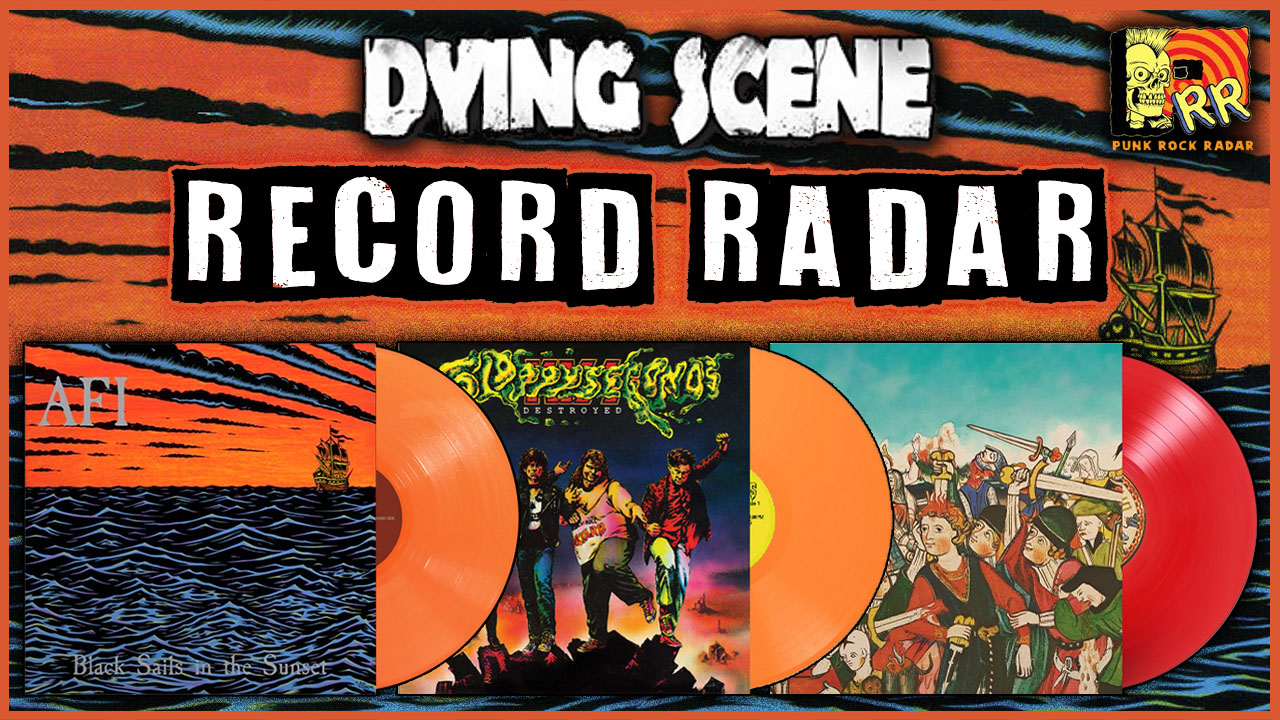
Greetings, and welcome to the Dying Scene Record Radar. If it’s your first time here, thank you for joining us! This is the weekly* column where we cover all things punk rock vinyl; new releases, reissues… you name it, we’ve probably got it. Kick off your shoes, pull up a chair, crack open a cold […]
Greetings, and welcome to the Dying Scene Record Radar. If it’s your first time here, thank you for joining us! This is the weekly* column where we cover all things punk rock vinyl; new releases, reissues… you name it, we’ve probably got it. Kick off your shoes, pull up a chair, crack open a cold one, and break out those wallets, because it’s go time. Let’s get into it!
Check out the video edition of this week’s Record Radar, presented by our friends at Punk Rock Radar:
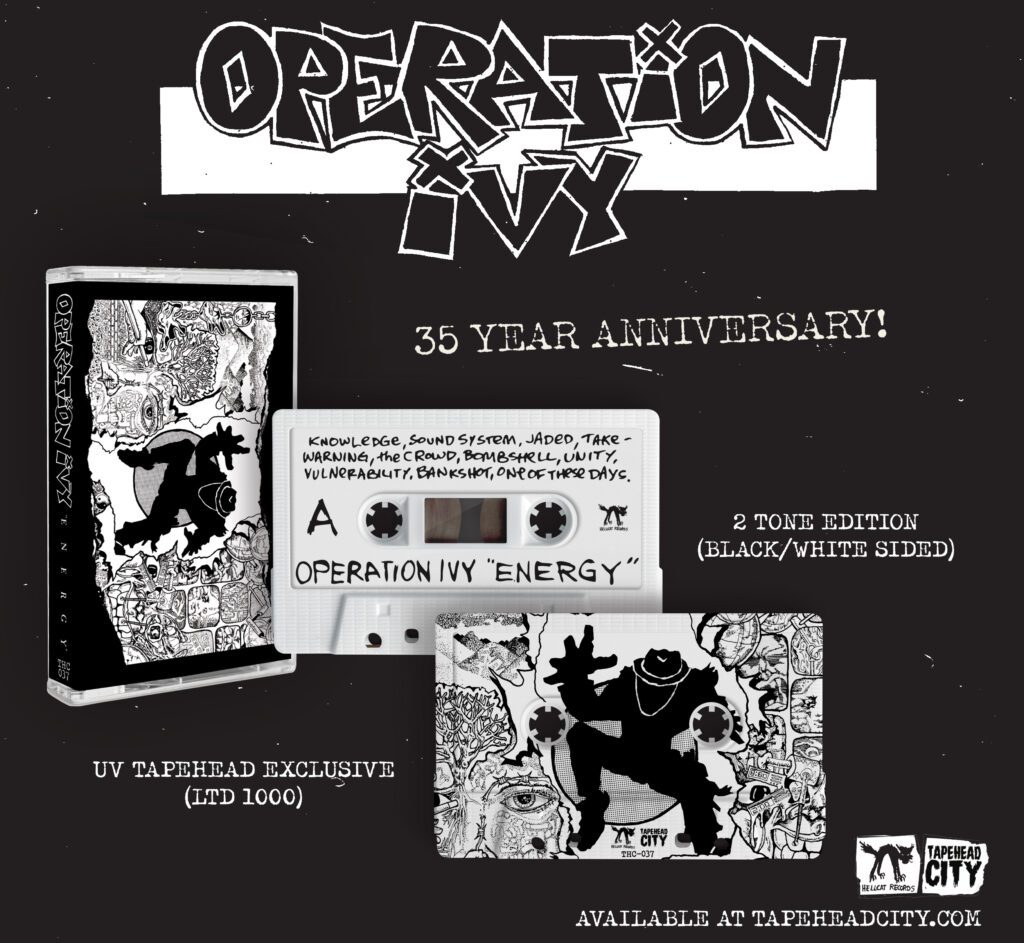
Cassette releases continue to infiltrate the Record Radar, and we’ve got a very special one batting leadoff this week! The friendly people at Tapehead City are partnering with Hellcat Records for this 35th anniversary cassette reissue of Operation Ivy’s Energy. This is the first time this has ever been reissued on the tiny, plastic, rectangular format.
Tapehead City owner Charlie Kaplan had this to say about the reissue: “Me and my friends grew playing in bands that would always cover Rancid and Opivy. These songs have been a part of me for so long. Working on this project was so much fun and such an honor. I really hope the fans are happy with the tapes. I think they came out great.”
There are two variants, limited to 1,000 copies each: a “2-Tone” tape made using scans of the original shell, and a “UV Edition” with an awesome all-over art print on the tape. You can pre-order both here, along with a fun Op Ivy x Tapehead City mashup shirt.
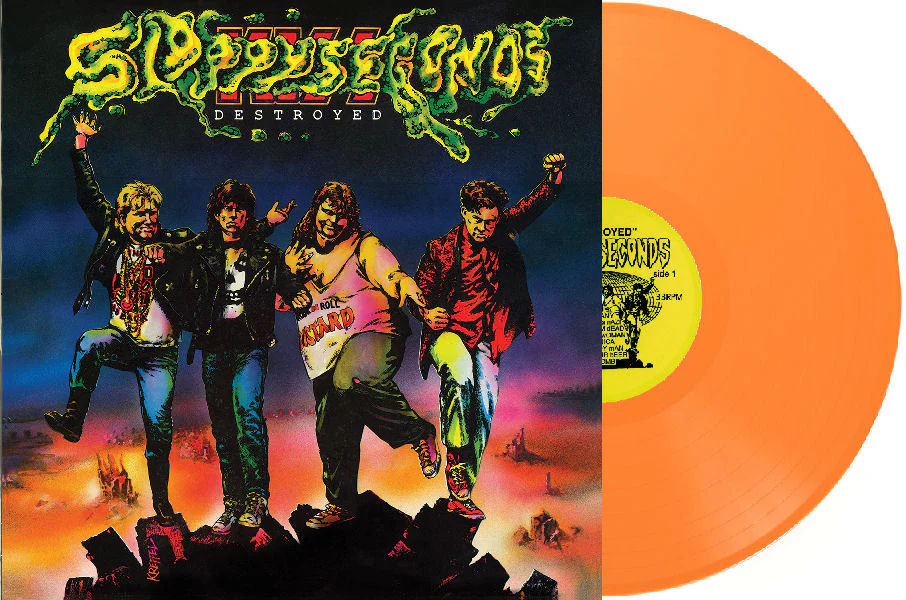
Here’s another bad ass 35th anniversary reissue, and this one’s on vinyl! Indianapolis junk rock pioneers Sloppy Seconds‘ classic debut album Destroyed is back in print for the first time in a long time, thanks to Puke ‘N’ Vomit Records. You can get it on coral (orange) and/or black wax right here.
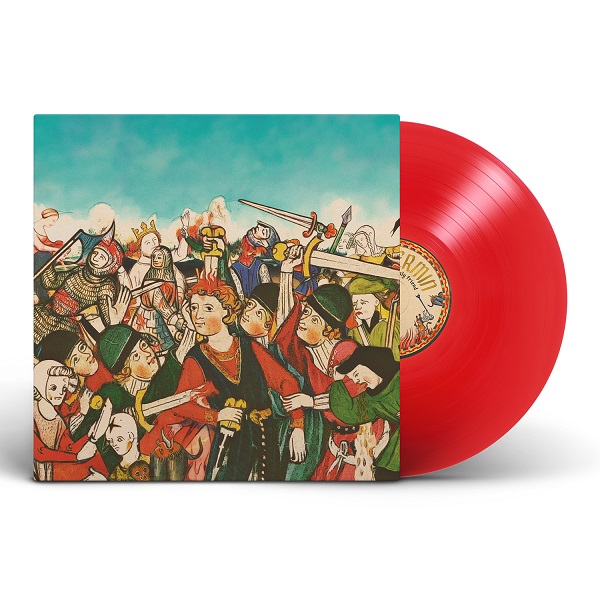
Up next, we’ve got a big batch of awesome new records coming very soon from our friends at Memorable But Not Honorable Records, the first of which is Rhode Island pop-punk band Pavid Vermin’s debut LP Brutality Is My Only Friend. It’s limited to 100 copies on blood red colored vinyl and will be available on their webstore this coming Friday, May 24th. Keep your eyes glued to Dying Scene the day before, I think we might be doing something cool!
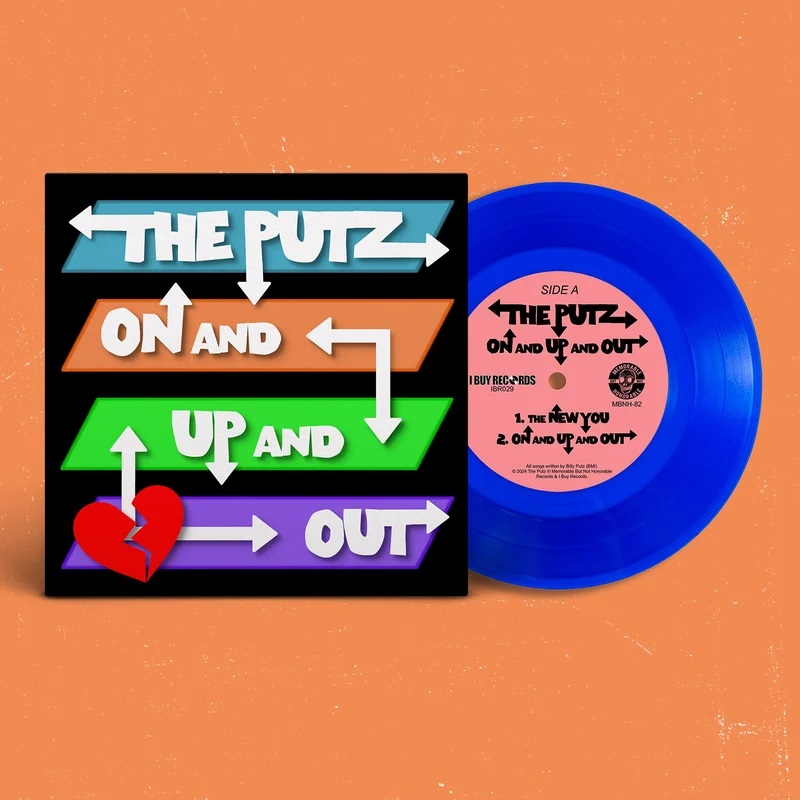
MBNH is also putting out a killer 7” featuring four brand new tracks from pop-punk favorites The Putz. On and Up and Out is limited to 200 copies on clear blue colored vinyl and is being co-released by I Buy Records in Italy. It’ll also be available to purchase from Memorable But Not Honorable Friday, May 24th.
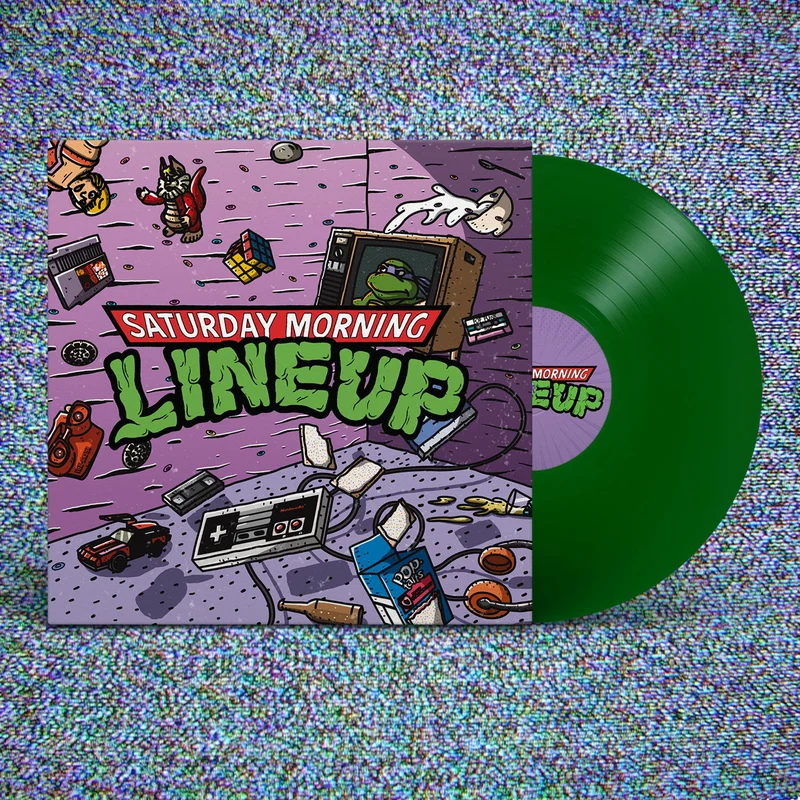
And last but certainly not least in Memorable But Not Honorable’s impressive release lineup is the 2nd pressing of their Saturday Morning Lineup compilation, limited to 100 copies on (Ninja Turtle?) green colored wax. This was originally released this time last year on white colored vinyl, which quickly sold out. It features covers of cartoon theme songs from The Putz, Zoanoids, Atomic Treehouse, Goin’ Places & many other great bands. You can buy it with your money from their webstore on – you guessed it – Friday, May 24th!
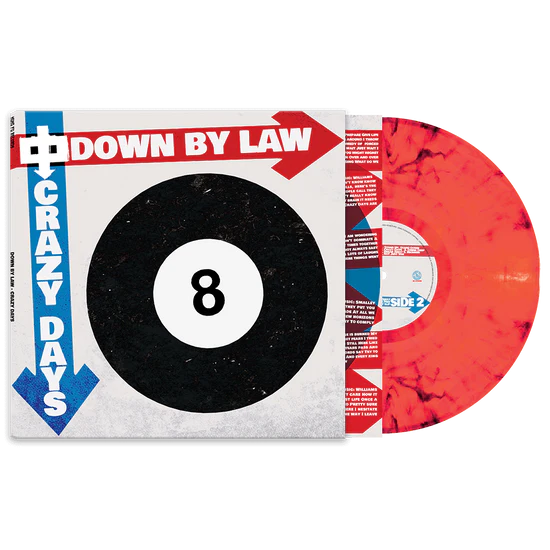
A few weeks agoDown By Law announced their new album Crazy Days, due out June 15th on Cleopatra Records, but at the time it was only available to pre-order on CD (otherwise known as compact disc but us in the trade). Now you can get it on beautiful red marble colored vinyl right here.
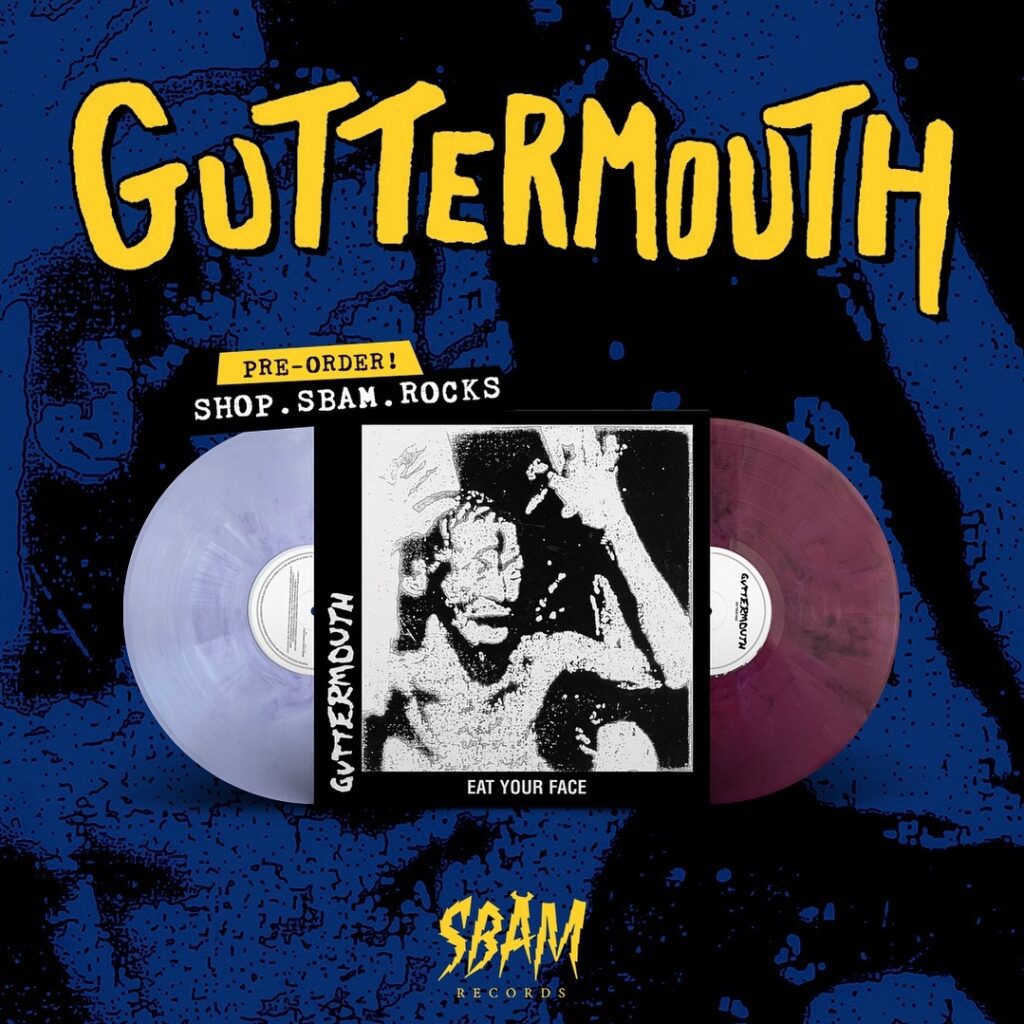
Guttermouth’s Eat Your Face turns 20 this year and to celebrate SBAM is releasing it on our treasured polyvinyl chloride music format for the very first time. There are two color variants, limited to 250 copies each allegedly. You can get them from any of SBAM’s regional webstores.
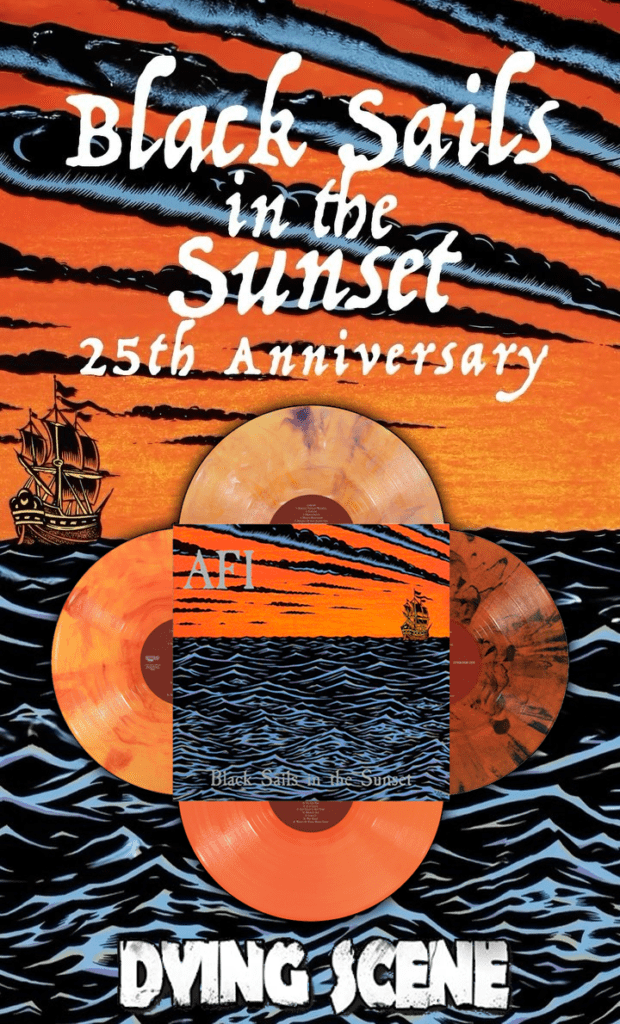
AFI’s 1999 classic Black Sails in the Sunset is getting a big time expanded reissue in honor of its 25th Anniversary. It’s due out July 19th and features bonus tracks in the previously unreleased “Weight of Words” and B-Side “Who Knew?”. This is being released on a handful of color variants but all but one of them sold out almost immediately. The one that’s still available to purchase is the Neon Orange retail variant, which you can get from Amazon and pretty much anywhere else (Amazon’s the cheapest though, of course).
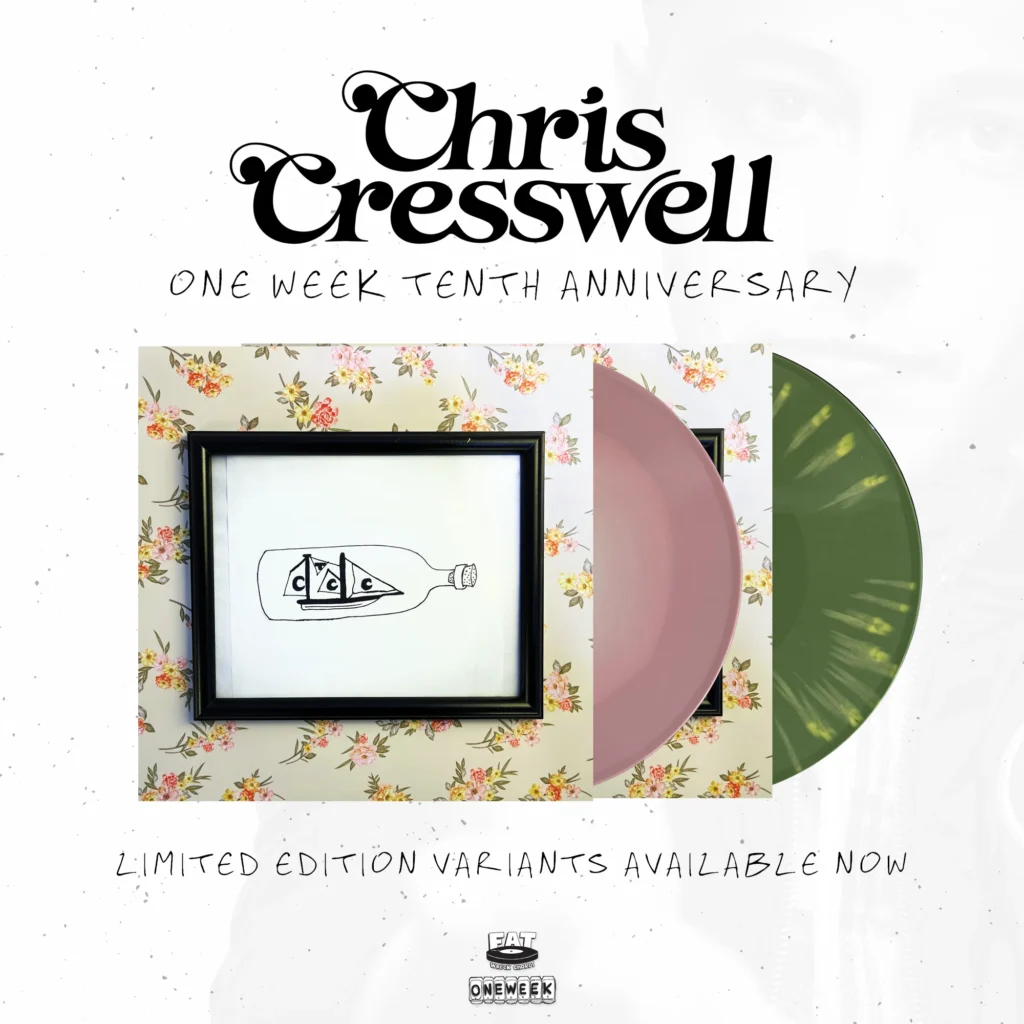
Another anniversary! Perhaps not quite as significant as Black Sails but worth mentioning nonetheless. It’s the 10th anniversary of The Flatliners frontman Chris Cresswell’s One Week Record, and Fat Wreck Chords has repressed it for the first time since its original release. There are two color variants to choose from: Pink/white vinyl (150 copies) and green w/ yellow splatter (250 copies). Or, I guess there were two color variants to choose from, because the pink one’s already sold out. The green w/ yellow splatter is still available from Fat Wreck’s European webstore.
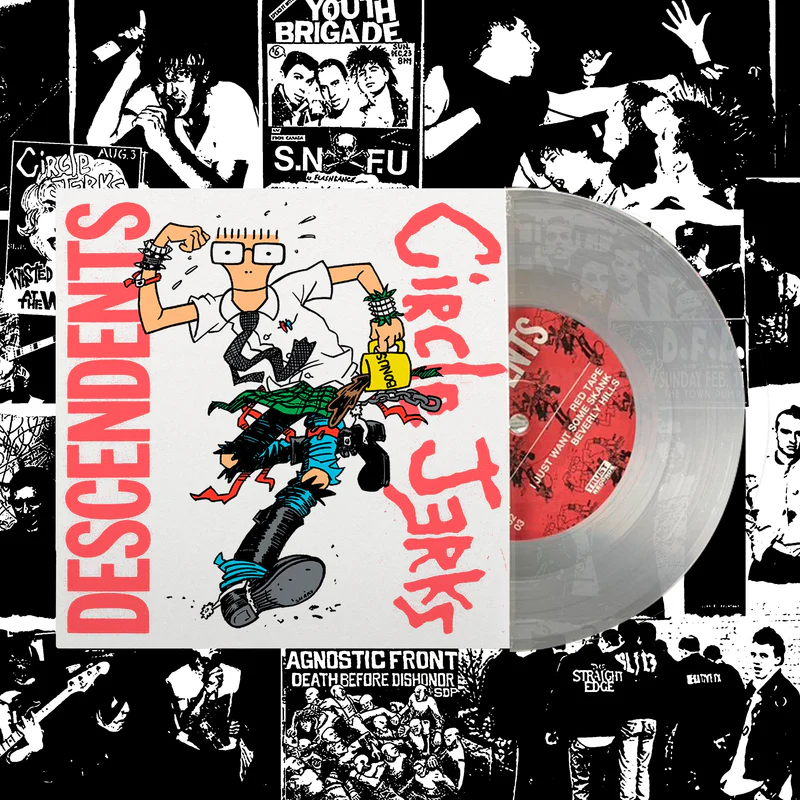
That Descendents / Circle Jerks split 7” finds itself on the Record Radar for the third time; perhaps that’s a new record? Anyway, I guess it’s noteworthy that a new European exclusive clear color variant has popped up. You can get it here. And in case you missed it last week, the red color variant (limited to 500 copies) is still available on the Descendents’ US store.
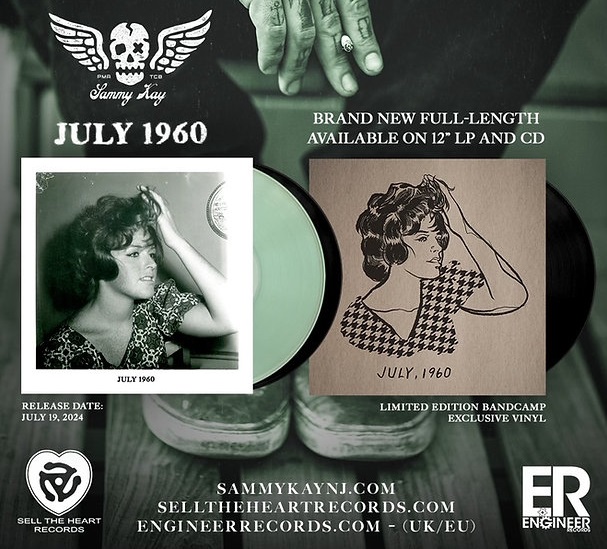
Sammy Kay’s got a new record called July 1960 due out on July 19th. It’s being co-released by Sell the Heart Records (US) and Engineer Records (UK) on Coke Bottle Clear and black wax. Mr. Kay has some copies with a special silkscreened jacket on his Bandcamp as well. Also available: CDs, shirts, etc!
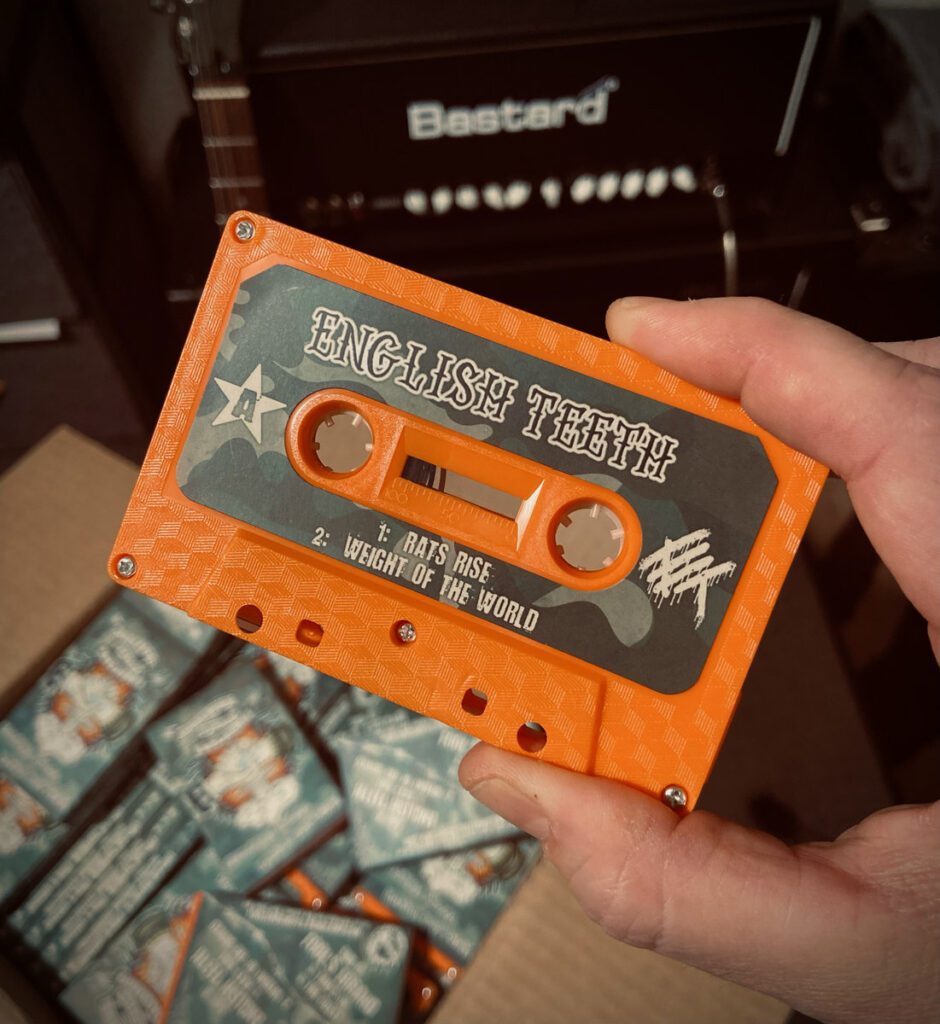
We started this week’s Record Radar with a cassette release, so why not wrap things up with another cassette release? Two street punk bands, Philadelphia’s English Teeth and Las Vegas’ Fool’s Errand, have a brand new split EP out now and you can get it on snazzy orange cassette right here. It’s only $1 but I know damn well they had to have paid more than that to make these so I’d implore you to pay a bit more than that. If cassettes aren’t your thing, digital download is an option as well!
Well, that’s all, folks. Another Record Radar in the books. As always, thank you for tuning in. If there’s anything we missed (highly likely), or if you want to let everyone know about a new/upcoming vinyl release you’re excited about, leave us a comment below, or send us a message on Facebook or Instagram, and we’ll look into it. Enjoy your weekend, and don’t blow too much money on spinny discs (or do, I’m not your father). See ya next time!
Wanna catch up on all of our Record Radar posts? Click here and you’ll be taken to a page with all the past entries in the column. Magic!
Austin, Texas pop-punk three piece Dropped Out has joined forces with the venerable Mom’s Basement Records for the release of their forthcoming album. The band’s follow-up to 2022’s Get Lost! is still months away, but today we’re giving you a sneak peak of what’s to come with “Cute Little Sheep”, the album’s stellar leadoff single! […]
Austin, Texas pop-punk three piece Dropped Out has joined forces with the venerable Mom’s Basement Records for the release of their forthcoming album. The band’s follow-up to 2022’s Get Lost! is still months away, but today we’re giving you a sneak peak of what’s to come with “Cute Little Sheep”, the album’s stellar leadoff single!
Check out the music video for the brand new track below, and of course stay tuned for more on Dropped Out album #4, due out later this year on Mom’s Basement Records. And for the time being, you can get their last record on colored vinyl, CD, and/or cassette right here! I advise you to check out their full back catalog on Bandcamp, too.
As always, this premiere is brought to you in part by Punk Rock Radar. If you’d like your band’s music video to be premiered by Dying Scene and Punk Rock Radar, go here and follow these instructions. You’ll be on your way to previously unimagined levels of fame and fortune in no time.
Don’t Forget to Leave, the brand new documentary depicting the life, creativity, and struggles of Boston hardcore and pop-punk legend Tim Landers, formerly of Transit and Cold Collective, officially premiered April 27 at First Congregational in Stoneham, MA. The film was directed by Bill Fulkerson and, although the story of Tim’s struggles was unknown at […]
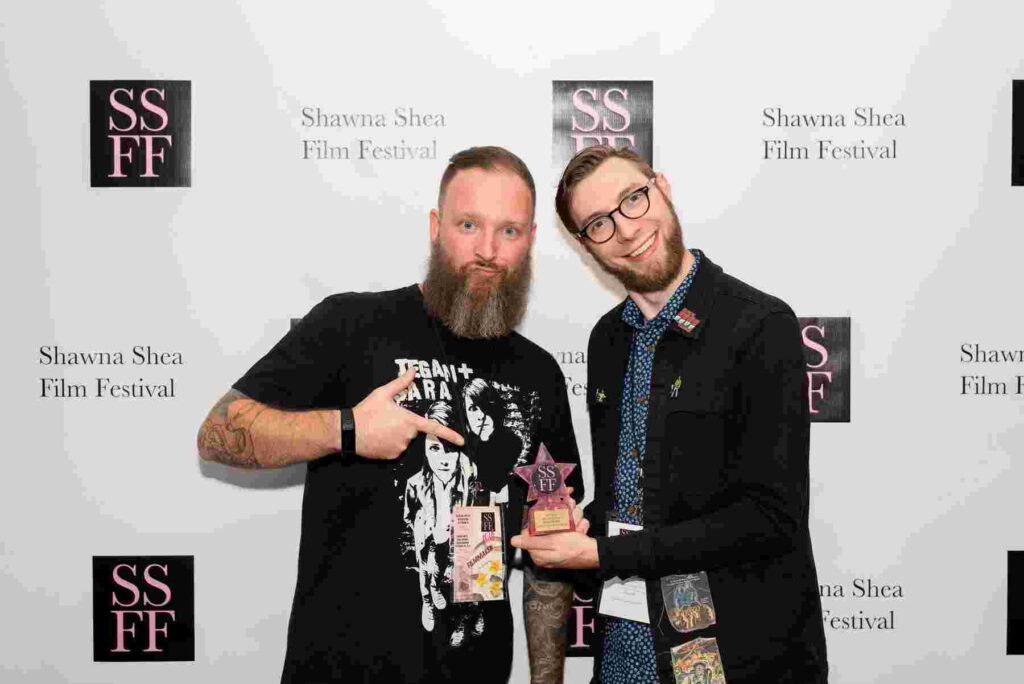
Director Bill Fulkerson (left) and Editor Kyle Kuchta (right) accepting an award at the Shawna Shea Film Festival
Don’t Forget to Leave, the brand new documentary depicting the life, creativity, and struggles of Boston hardcore and pop-punk legend Tim Landers, formerly of Transit and Cold Collective, officially premiered April 27 at First Congregational in Stoneham, MA. The film was directed by Bill Fulkerson and, although the story of Tim’s struggles was unknown at the time and have since come to light, Don’t Forget to Leave gives a brand new look into, not only what eventually caused an untimely death, but more importantly what made Landers such an extraordinary talent and person. Interviews from bandmates, family members, friends, and other, industry-specific specialists give a true inside perspective into the touring lifestyle and how it can open oneself up to addictions and struggles, a problem that has become far too common in the musician world.
Fulkerson is no rookie when it comes to documentaries, or even ones with the punk community in mind. 2020 saw the release of Safer Spaces, a film focused on Shawna Potter of War on Women and her fight against injustices within the punk scene. But Don’t Forget to Leave crossed into an entirely new realm for Fulkerson because of his personal connection to Landers and the Boston music scene.
“With the War on Women doc, I had met Shawna before and I knew her, but that was more of a respect thing, I respect what you’re doing, I would like to be able to share it with more people. But this was 100% a personal thing. So many of the people that are in the documentary are people that I’ve been friends with for like over 20 years,” said Fulkerson. “I can’t imagine having a connection with any other film I would ever make like this.”
When dealing with something as personal as the passing of a friend, family member, or band mate, the sensitivity of the subject matter can be somewhat of a hurdle in fully depicting a story of this nature. “We had a hard time getting people to commit to do interviews. Everyone was very suspect of us and what we were trying to do. Some of Tim’s family members were just like “it’s too raw, I can’t do it.” Some members of bands that he was in and people that he was also friends with that were in other bands were also very protective of their own stories and, didn’t necessarily want their story to become part of his story and things along those lines,” said Fulkerson.
The emotional struggle didn’t end with the conduction of interviews. Fulkerson also made mention of the crew’s difficulties in reliving a tragedy that was all too fresh in their lives. “It’s the single most difficult thing I’ve ever, ever worked on, but it’s also like been the most rewarding thing that I ever worked on because I was able to get to learn so much more about him through the interview process, talking to people that were with him at times that I wasn’t. But it was incredibly difficult, like I couldn’t edit. My production partner, Kyle, had to edit it.”
The outpouring of support that emerged from all corners of the music community following Landers’ death made the decision to make the documentary a speedy one. “Seeing how many people cared and how many people were genuinely devastated by the loss, we wanted to do this, not only for for Tim’s memory, but also for Tim’s family because Tim’s family is amazing. But we wanted to do it for all those people that were feeling that loss. I wish we got it done quicker.”
The documentary itself is split pretty evenly between portraying the hard-working, musician lifestyle that Landers had faced head-on, and how addiction and mental health struggles emerged to create a situation that was not only tortuous for Tim himself, but ultimately for everyone around him. A struggle that first emerged in the latter half of his time with Transit and continued throughout his Cold Collective years and beyond, Landers’ story unfortunately ends tragically while on the brink of sobriety. However, as devastating a situation as is outlined throughout the film, Fulkerson fully embraces the good that has come from making this, as well as the good that is still to come.
A photo of Landers from “Don’t Forget to Leave”
“First and foremost, [I want people] knowing that Tim was an amazing person, a gifted songwriter, an incredibly talented, great person… And also, if they didn’t know his music already, give his music a shot, take a listen to it.”
“But then there’s the other side of it too… I think it sucks that everybody knows somebody [that struggles with addiction], but Tim’s story is no different. I don’t feel like enough of those stories get told. One of the things we want to make sure is that if people see this film and they know somebody that’s struggling, that they know that people care about them and people want to be there for them.” said Fulkerson. “Tim was unable to defeat his demons, unfortunately, and that really sucks, but if somebody sees this and they identify that maybe somebody they know is having issues, struggling, they’re gonna check in, see how they’re doing, pay attention to the things that are going on if there’s behavior that they’re not sure if maybe this is an issue or not… it’s one of those where it’s a bummer, there’s nothing we can do about what’s happened in the past, but we can do our best to try to make sure it doesn’t happen again in the future.”
What really stuck out to me about this documentary was the lack of agenda that was being pushed, replaced instead by interviews and stories that were writing the script. The movie had ups and downs; at one instant, Landers is portrayed by his peers as this incredible songwriter, friend, and musician, then, not long after, addiction had taken its hold and Landers became seemingly unreliable, emotionless, and clearly addicted. As sad as it was to hear those closest to Landers talking about him in an unfavorable way, this truly shows the powers of addiction and doesn’t fictionalize a story that, I believe, will ultimately help a lot of people beat the struggles that grasped Tim.
What was most clear from the very beginning of the interview was that money was in no way the motive behind this film. With the hope of profits on the back-burner, I asked Fulkerson what would make this documentary a success in his eyes. Or had it already become one?
The making of Cold Collective’s “Weathervane”
“I consider it a success already because when we did a private friends and family screening, Tim’s dad Terry flew up to Massachusetts… We showed it to friends and family and at the end of the screening, I went up to kind of do my little Q&A thing and Terry just gets up on stage and gives me a huge hug and he’s like “you guys fucking killed it”. So no matter what happens from here on, that moment with him was worth the five years of struggle, worth every minute put in editing it, everything we had to do. So it’s a success to me no matter what because of that, because of what it means to his family to be able to have this now.”
“But the other side of that is, I want people to see it, every film festival that will take it, down the road when we get it on streaming, every person that wants to take a watch. I want people to remember him and people to listen to his music and fire it up on streaming. I just want Tim to be remembered and I want people to listen to his music and just realize how special of a person he was.”
The documentary ends in the most fitting way possible, with Cold Collective in the studio piecing together old demos of Tim’s and making a full-length out of what’s salvageable. What blew my mind was the songwriting quality that Landers had left behind in the form of numerous demos, as well the actual sound quality that was salvaged of Tim’s voice and guitars. Fulkerson closes the film with a documentation of an incredible memorial of Landers and an unbelievably kickass full-length that I’ll link below.
Check out the full interview transcription of my chat with Bill Fulkerson, as well as Weathervane, Cold Collective’s 2021 record comprised of Tim’s post-mortem demos turned full-band tracks. I’m incredibly thankful to have had the chance to sit down and hear firsthand about the tragic, yet joyous life of Tim Landers. Keep a close watch for local film festivals in your area and streaming platforms for the release of “Don’t Forget to Leave”.
(Editor’s note: The following has been edited and condensed for clarity’s sakebecause a good chunk of this interview was just two guys shooting the shit.)
Dying Scene (Nathan Kernell NastyNate): So congrats on this documentary. I really, I enjoyed it and I think it was really well done. I’ve noticed with some documentaries that you can kind of tell when the director is shaping a narrative and they’re trying to shape everything else around a story they’ve already got and I don’t think that was the case with yours at all.
Bill Fulkerson: Yeah, it definitely wasn’t.
I think a good testament to that is the ups and downs kind of during the documentary. I wasn’t super familiar with Tim Landers’ story and so you’re seeing his best and you’re also seeing his worst told by the people closest to him. Did you have any kind of idea where this story was going first or was it entirely shaped around the direction of the interviews?
I mean, we knew, unfortunately, how it was gonna end and we kind of knew like the beginnings, but it was kind of filling in all those pieces in the middle and, like I knew Tim so I knew his life. There were a lot of ups and downs so it wasn’t necessarily something we planned for. Like we weren’t like “oh yeah, we’re gonna like make it a roller coaster.” Like, but we definitely knew that there’s high points and there’s low points and all that’s important to telling the story. We wanted to make sure that we told the story as true as we could while, you know, still like not taking advantage of what was a very, you know, sensitive situation.
Was there any difficulty in getting people to open up at first because this was a very touchy subject and left people very vulnerable?
Very much so, yeah. We had a hard time getting people to commit to do interviews. Everyone was very suspect of us and what we were trying to do like, like you said earlier when we were talking about, you know, having an agenda. Like people figured, you know, people just assume “oh you’re making a documentary, you have an agenda.” We didn’t have an agenda. The agenda was to tell a story. So there’s a number of people we talked to that immediately were just like “I’m not interested.” You know, some of Tim’s family members were just like “it’s too raw, I can’t do it.” Some members of bands that he was in and people that he was also like friends with that were in other bands were also very protective of their own stories and, you know didn’t necessarily want their story to become part of his story and things along those lines. But at the end of the day, you know, we got a great group of people to sit down and talk to us and, for most people, they found it very cathartic to do interviews and to be able to talk about Tim and talk about their good times with him, talk about being able to miss him and all of that. So the people that, you know, did step up, which was a very courageous thing on their part, I don’t know if I could have done it, it worked really, really strongly to tell the story because people were able to get their love for him out. And also their sadness and things they wish they knew, and kind of the whole nine yards.
And I think that’s a great way to go about it. So I don’t know a lot about how documentary film-making works in comparison to normal film-making. Did you plot this out beforehand and then kind of shape it, change it along the way as the interviews go? Or how did this work?
Yeah, you definitely kind of try to make an idea of what you think the story is going to be. But I mean, any documentary I’ve ever worked on, what we thought we were starting with is never where we ended up at the end of the day when the project was finished. As information comes out of people and as people are really like telling their side of it, things pop up that you didn’t know about because you hadn’t heard that side. Some of these things you’re going to pursue, some of them you’re not like, we definitely came across stuff that we were like “Oh, we didn’t know that, but we don’t think that’s pertinent to what we’re telling here.” And then things will come up and we were like “Oh, tell us more about that. That’s not something we realized.” So we had an idea and we veered where we could and needed to. And then also pump the brakes on stuff that we felt might not necessarily be what people wanted or what we wanted to tell as part of the story.
So I know you said you personally knew Tim, correct?
Yeah. So I met Tim when he was really young. He was probably about 14 and I was in local bands and he was a young kid starting to get into local bands. And I had this hardcore band called Taken By Force. It was one of those bands where I was the only constant member and we would have a revolving door. People would come in and out depending on what was going on at the time. And we had not played for a little while and then we were putting it back together and Tim had liked another band that I was in and he wanted to play. I was definitely a number of years older than him because he was just a kid. And then he jammed with us one day because we needed a guitar player and the kid just fucking ripped. He knew all the songs before he came in and he just like started taking liberties with things, like super respectful knowing he was coming into somebody else’s project. But, even at that age, I could see like this kid’s fucking amazing. But that band never went anywhere because he was forming Transit at the exact same time and within a few months, their lineup’s solidified and they were off and running before we even had a chance to like record anything.
We kind of mentioned this being difficult for the people being interviewed. Was this difficult for you to make?
Yeah. So, there were a number of years with Tim, like Tim’s Transit years where I didn’t have a lot of connection with him and they were out on the road all the time. I was an adult now and was married, I had a kid and was doing the family thing and I had stopped playing music. Then a few years after Transit, he was out of Transit and he got together and created Cold Collective and ended up doing Cold Collective with my friend Gus, who’s one of my best friends, and Paul and Darren, who are also really good friends that I’ve known for years. And I started working with them, they had my son in their first music video. It was cool to like see him and learn all these things that he’s done and stuff. And then he started to struggle with his addictions, which was something most of us never knew he was struggling as bad as he was. Like the whole Transit thing happened and nobody really knew exactly what happened. There was one story that this person would tell them one story that this person would tell and there was never really a clear answer as to what actually happened. And nobody wanted to ask because it was a really touchy situation.
So he’s doing Cold Collective, he’s struggling, Gus had told me he was going to rehab and he’s had all these issues. We made a documentary a few years ago called “Survival of the Film Freaks”, which is a documentary about cult movies and kind of how technology and stuff comes into that. And I asked him if we could use a Cold Collective song in one of the video montages and he was all for it, he was really rad about it. So afterwards I was like “Hey, listen, let’s document the making of the next Cold Collective record.” And I knew he was coming out of rehab and I’m like “let’s make this documentary about how, through all your problems and your issues, like music is what your higher power is.” And that comes up in the documentary a couple of times. Then, you know, he ended up passing away. Like we had talked a weekend before he passed away and we were going to start this documentary short about him and that wasn’t able to happen. And so I decided fairly quickly that we wanted to make this documentary about him because Transit was a pretty big band, people cared about him. We saw the outpouring of support when he passed away at his services, all the different publications that posted stuff, and people were really upset to lose him. So the process of making it was extraordinarily difficult because I’d been able to rekindle this friendship with a dude that I hadn’t really seen a lot; it’s the single most difficult thing I’ve ever ever worked on, but it’s also like been the most rewarding thing that I ever worked on because I was able to get to learn so much more about him through the interview process, talking to people that were with him at times that I wasn’t. But it was incredibly difficult, like I couldn’t edit, my production partner, Kyle, had to edit it. I was like “I can’t continue to relive this stuff, it’s just too much.”
So you’ve done documentaries before that are kind of similar subject matter-wise to this, I’m thinking of the one with War on Women, what would you say makes this different from the others, the personal connection you’ve got here?
Yeah, absolutely, me being so connected to the story. With the War on Women doc, like, I had met Shawna before and I knew her, but that was more of a respect thing, I respect what you’re doing, I would like to be able to share it with more people. But this was 100% a personal thing. So many of the people that are in the documentary are people that I’ve been friends with for like over 20 years, like I’ve known Jay Maas for over 20 years. These guys are some of my best friends for forever at this point. So I was able to really kind of connect to it so much closer than anything else I’ve worked on. I can’t imagine having a connection with any other film I would ever make like this.
What was the timetable for this, from when you kind of decided you’re making this to how long filming took to kind of where we’re at now?
All right so Tim passed away in February of 2019. We pretty quickly, from that point, decided that we were going to do this. We didn’t make any type of announcement or anything for about a year, we locked down some interviews before ever announcing anything. The interview we did with Frank Turner was actually the first interview that we did. We sat with Will from The Story So Far that Summer and I filmed probably like 10 or so interviews in that first year before we ever made any type of announcement that we were going to do it. Then we launched an Indiegogo campaign in March of 2020. I’m not sure if that time period sounds familiar to anybody, but we launched a campaign and I think six days, if I’m not mistaken, after we launched the campaign, COVID hit, the world shut down and we were then kind of trying to figure out what to do. So we finished the campaign during COVID, we reached the goal we wanted to reach. We were able to get some of the equipment we wanted to get with it, but then we couldn’t do anything with it because we couldn’t go anywhere for, what ended up being what, like a year, year and a half. So it took another year, year and a half before we got going. We ended up cutting a bunch of stuff that we wanted to keep, a trip to go to Florida where we were going to meet with a number of people. We were going to go to California and meet with a number of people. So, we get through COVID, we finished the principal filming, and then we edited probably for another year or so. We had the score done, Gus, who’s in the film and also in Cold Collective, did the score under his musical project, OK DOK. We also worked with the Cold Collective guys while they were making the record, Weathervane, which is the record they made after Tim passed away. All in all, it took us almost five years to completely finish everything.
Okay, that was something I was curious about, how soon after his passing you were set on making this, it sounds like pretty soon.
Yeah, I was locked in man. Seeing how many people cared and how many people were genuinely devastated by the loss, we wanted to do this, not only for Tim’s memory, but also for Tim’s family because Tim’s family is amazing. But we wanted to do it for all those people that were feeling that loss. I wish we got it done quicker.
So something I wanted to touch on was, coming from my perspective, I had heard of Cold Collective and Transit, but I wasn’t super familiar. I knew the name Tim Landers and I remember his passing. But I was never super familiar with anything to do with his story or his music. And so seeing interviews from Frank Turner and from the guy from The Story So Far, like that was a cool bridge for people who may not be super familiar with him, but know these other names. It gave a good scope on how impactful this was.
So Frank and Tim had met a number of times through just like touring and playing different festivals and stuff. They weren’t like buddies or anything like that, but they knew each other. They had done that video that was taped at Bamboozle together where they played that Blink 182 cover. But he always knew what Tim had going on and Transit was on their skyrocket up when Frank was kind of just getting into doing what he was doing. Like that video of them helping Frank Turner out is hilarious to think about now because of how big Frank Turner has become since. Same thing with The Story So Far, if you go through the film and look at the flyers and stuff, like Transit’s headlining shows and A Story So Far is opening up for them. Like Man Overboard is opening up for them and Transit’s the headliner. And now all these bands have become like cultural pieces of that time period, they were all like obsessed with Transit, which is amazing to think about.
When I was thinking through this interview, thinking about if even if Frank didn’t know Tim at all, I think it was a great point of view to throw in there just because Frank Turner’s kind of doing the extreme, I just talked to a buddy today who mentioned he’s trying to break the record for most shows in a 24-hour period. And he’s doing his 50 states in 50 days thing again. I think it was a great perspective to throw in there kind of showing how hard that kind of lifestyle can be on your body and how it can really open up yourself to addictions.
45 minutes to an hour and just everything the guy said was gold. That’s one of the toughest things about when you do a documentary like this, like you sit with everybody and everybody does like an extended interview. Like with The Story So Far, I’ve got an hour of footage and we only ended up using like two, two and a half minutes of footage of them just because that was the stuff that worked best.
So the audio recordings you had of Tim, not the musical recordings, but where you had excerpts of him talking about why he does music, what did you have to choose from for those, did you have a large pool of recordings or was that kind of difficult to fit in there?
Actually, it’s funny because we think about how it is now and how now there’s a million and five podcasts and there’s a million blogs and a million vlogs, every magazine has a website, every newspaper has a website, there’s all these things. Everybody has a phone at a show now, but if you think back to 2008, 2009, that was really in its infancy so there wasn’t nearly the amount of media to pull from in terms of video interviews or audio interviews and the stuff that we did have to pull from, really the quality wasn’t that great. It was actually pretty difficult to find good stuff that wasn’t just fluff pieces about like the new Transit record. That video with Jesse Cannon, which we used a lot of audio from in the movie, his stuff was great. We’ve got a few really good podcasts that had a really good sound and Tim had done an interview with me for my podcast before or right after Cold Collective’s EP single that had come out after the first record. He came into the studio and played a few songs and we did an interview. So we got some good stuff there too, I wish that we had more. I had, you know, a kind of vision when we started like Tim’s voice basically narrating the film, but we just didn’t have enough to do it. But I’m really happy with what we did have and we were lucky to have what we did because in that time period we might have potentially not had anything.
Is there anything you hope for people to get from this film, whether it be about addiction or just understanding who Tim was and the type of person he was, was there anything you’re hoping people walk away with from this film?
A few things, actually. First and foremost, knowing that Tim was an amazing person, a gifted songwriter, an incredibly, talented great person, good family. He was a family guy, loved his parents, loved his brothers and sisters, loved his girlfriend, just that he was a great dude. And also, if they didn’t know his music already, give his music a shot, take a listen to it. I personally think the Cold Collective is some of the best. I genuinely feel that way because I think the songs were just amazing.
But then there’s the other side of it too where everybody knows somebody that has struggled with addiction in some form, whether it’s opioids, alcohol, mental health issues, like everybody knows somebody. I think it sucks that everybody knows somebody, but Tim’s story is no different. I don’t feel like enough of those stories get told. One of the things we want to make sure is that if people see this film and they know somebody that’s struggling, that they know that people care about them and people want to be there for them. Tim was unable to defeat his demons, unfortunately, and that really sucks, but if somebody sees this and they identify that maybe somebody they know is having issues, struggling, they’re gonna check in, see how they’re doing, pay attention to the things that are going on if there’s behavior that they’re not sure if maybe this is an issue or not. So we want to make sure, it kind of sounds corny to say we don’t want anybody else to have to go through this again, but it’s true like nobody wants to see anybody struggle and nobody wants to see anybody succumb to addiction. I think we’re all so hyper-aware of all of these things in the world now, but if you go back to 2008, like people didn’t talk about mental health the way they do now. I think if Tim potentially had that, maybe ten years ago as opposed to struggling for a number of years and then trying to overcome it, it could have been a different situation. So it’s one of those where it’s a bummer, there’s nothing we can do about what’s happened in the past, but we can do our best to try to make sure it doesn’t happen again in the future.
I totally agree, I think two of the most impactful parts of the film for me were, one, when it’s Tim’s dad’s talking and he kind of just brings up how he’s always kind of had a soft side for homeless people and people struggling because they’ve got parents, they’ve got brothers and sisters, and then, two, I think also having the mental health professional giving her thoughts on it, that was really valuable too.
So I was curious, with the record they ended up piecing together that kind of concluded the documentary, they touched on it a little bit, but how difficult was that? Just from the limited experience I have of recording, that seems impossible, getting that kind of professional quality from essentially demos.
It virtually was, but we were lucky. I shouldn’t say we, they were lucky, the Cold Collective members and Jay Maas who was the producer, they were lucky that Tim demoed everything a thousand times. He had tons of unreleased demos on his computer and he had all these different things he’d been working on and luckily they had been working on what that record was going to be in terms of what songs they wanted to include on it. And they also had a recording session in between one of his stints of rehab where they had kind of gotten, not finalized versions of songs, but like more finalized versions and so they had all those tracks and they had all his demos. Tim’s dad, Terry, let Paul, the drummer from Cold Collective, take Tim’s computer and they basically went through it. There’s a little bit of footage in the movie where they’re sitting around Jay’s console there and they basically took all the stuff that they thought they could use and kind of figured out what they wanted to do. Tim had different tracks for stuff, but we isolated the stuff we could use and then took out the stuff that we couldn’t. We had a lot of vocals and a lot of guitars of Tim’s and then basically the rest of the band kind of came in and recorded the guitar tracks and drums. It was a daunting process for sure and I’ve got like seven or eight hours of footage of them in the studio working on that record, which is only a fraction of the time they actually put into it.
That blew my mind hearing the quality, the vocal quality, that they were able to get from demos.
From talking to you, I can tell this isn’t a money thing, that that’s not the goal with this. What would make this a success to you from a reception standpoint, like is there something that could happen after this release that you would make you consider it a success? Or do you already consider it a success?
I consider it a success already because when we did a private friends and family screening, Tim’s dad Terry flew up to Massachusetts for it because they don’t actually live here anymore, they moved out of state. We showed it to friends and family and at the end of the screening, I went up to kind of do my little Q&A thing and Terry just gets up on stage and gives me a huge hug and he’s like “you guys fucking killed it”. So no matter what happens from here on, that moment with him was worth the five years of struggle, worth every minute put in editing it, everything we had to do. So it’s a success to me no matter what because of that, because of what it means to his family to be able to have this now. But the other side of that is, I want people to see it, every film festival that will take it, down the road when we get it on streaming, every person that wants to take a watch. I want people to remember him and people to listen to his music and fire it up on streaming. Maybe we get a swell, maybe Rise will repress the Transit records. I just want Tim to be remembered and I want people to listen to his music and just realize how special of a person he was.