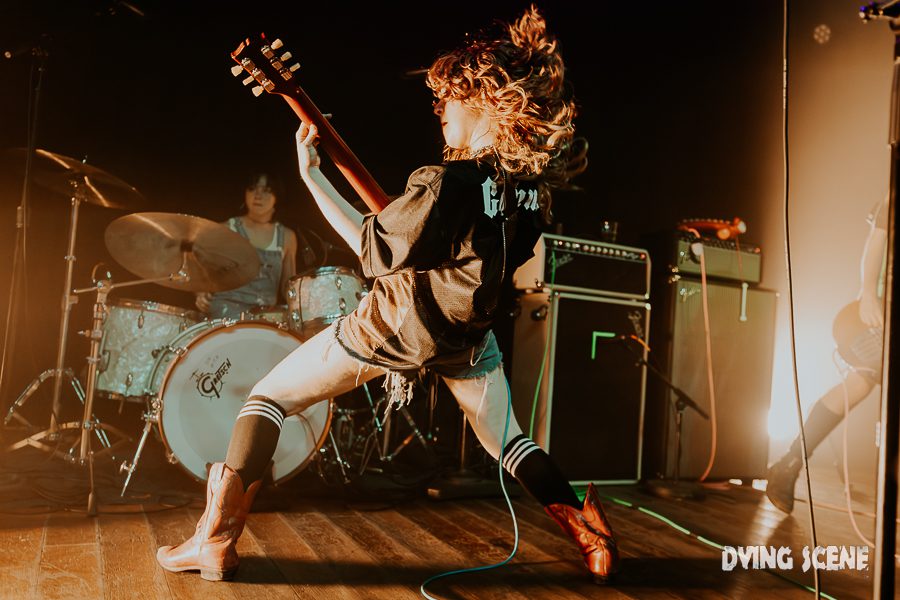
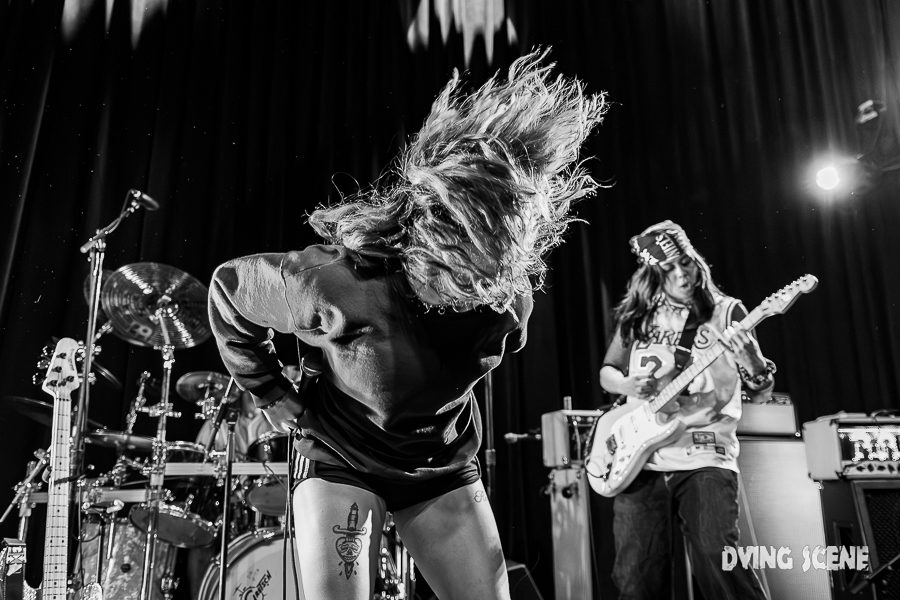
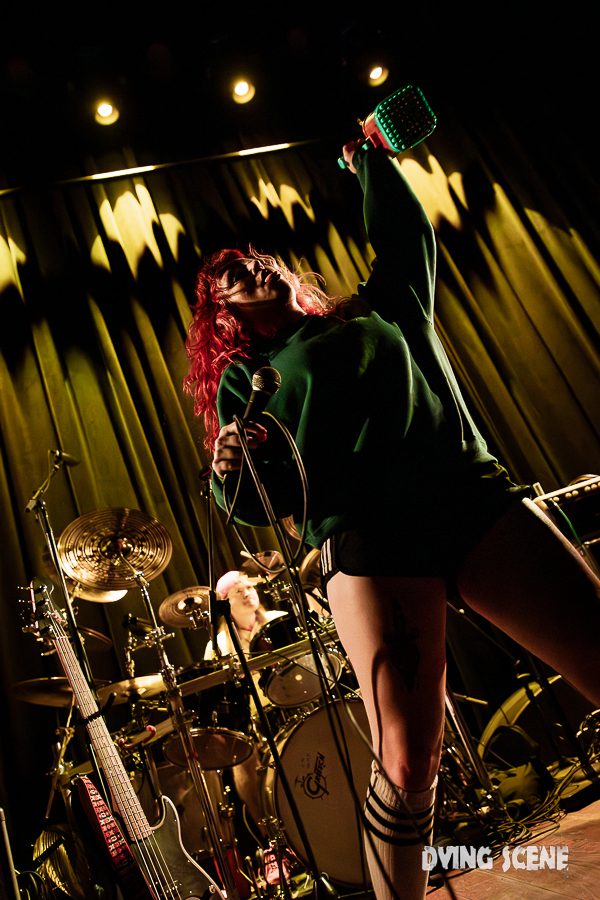
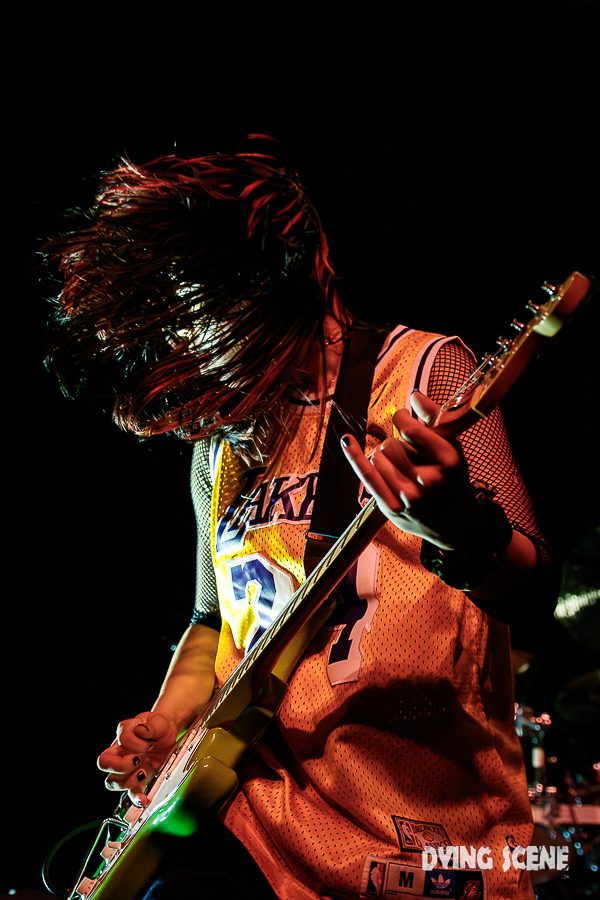
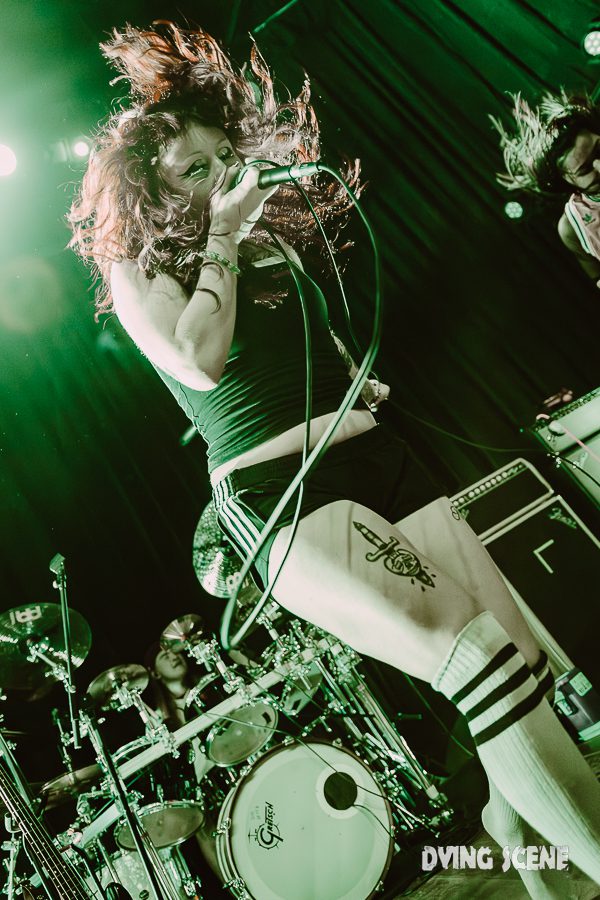
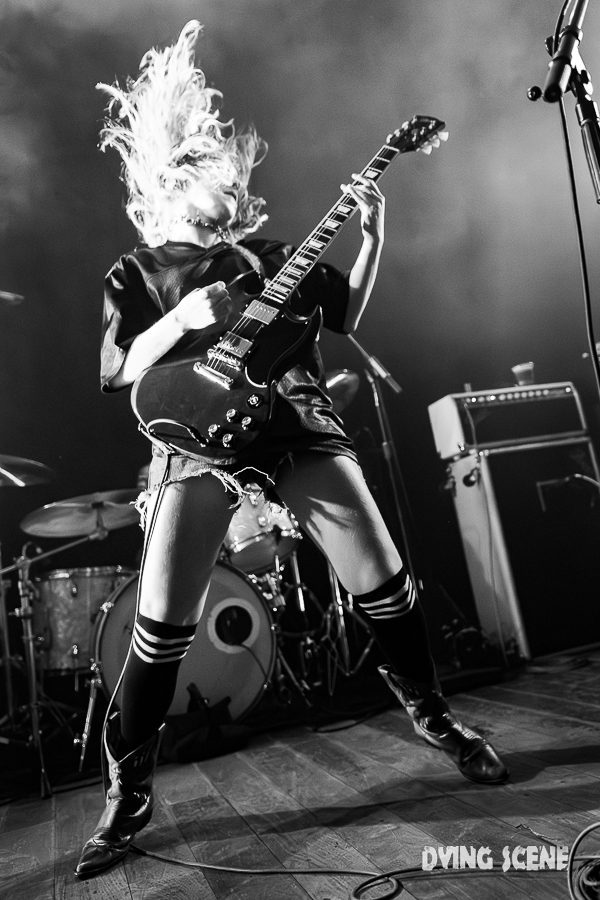
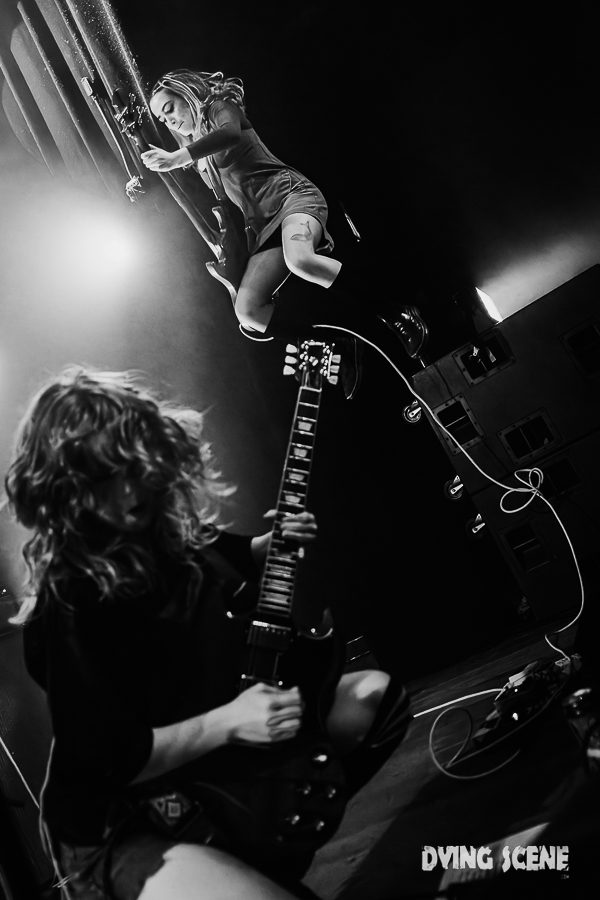
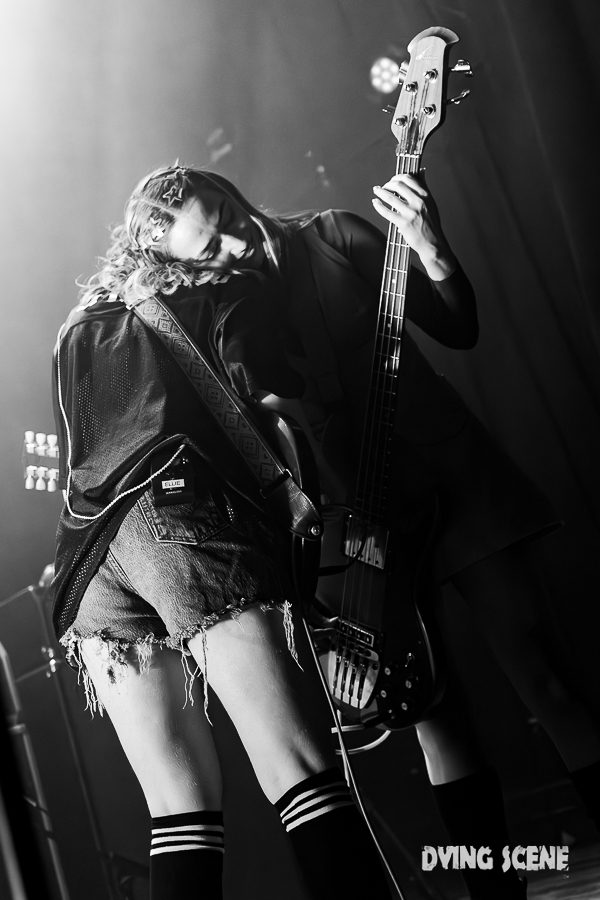
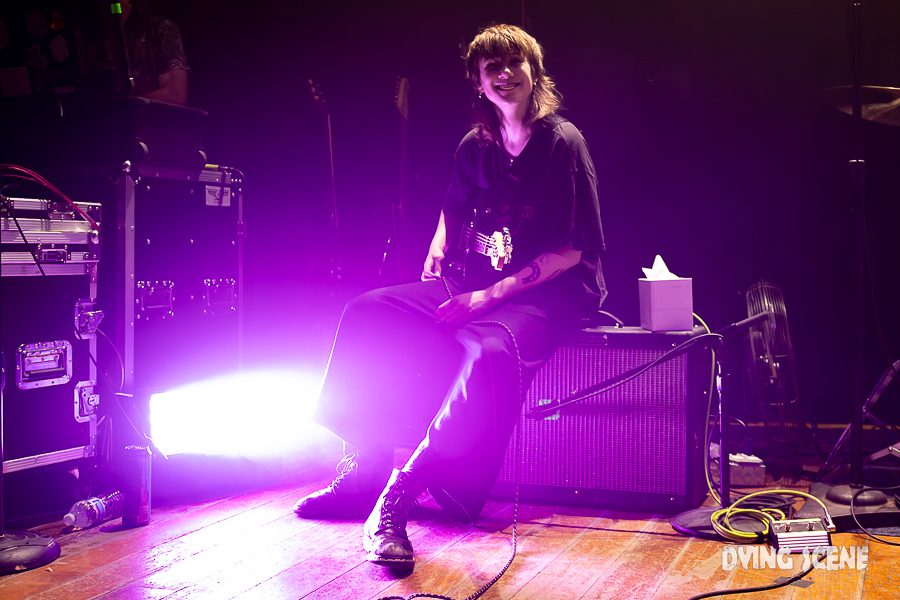
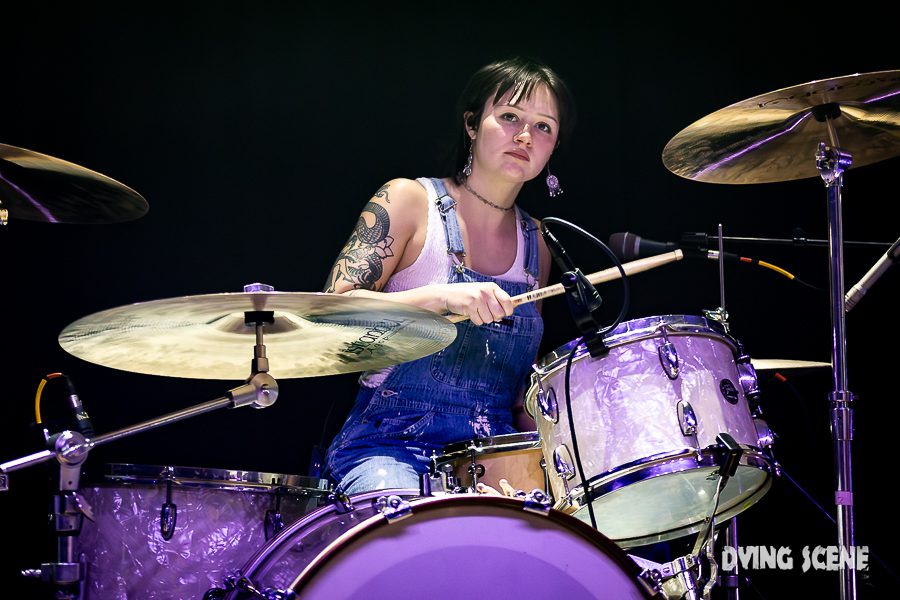
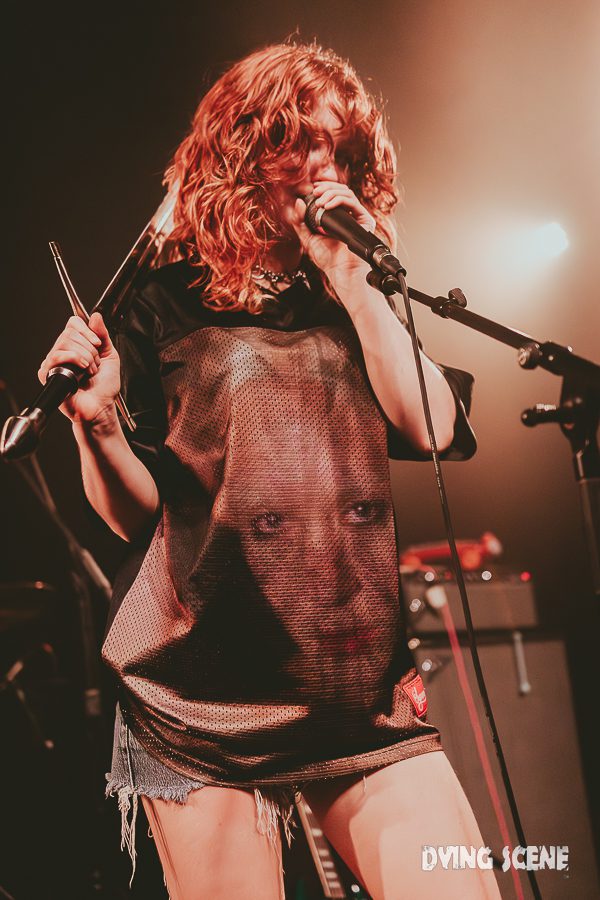
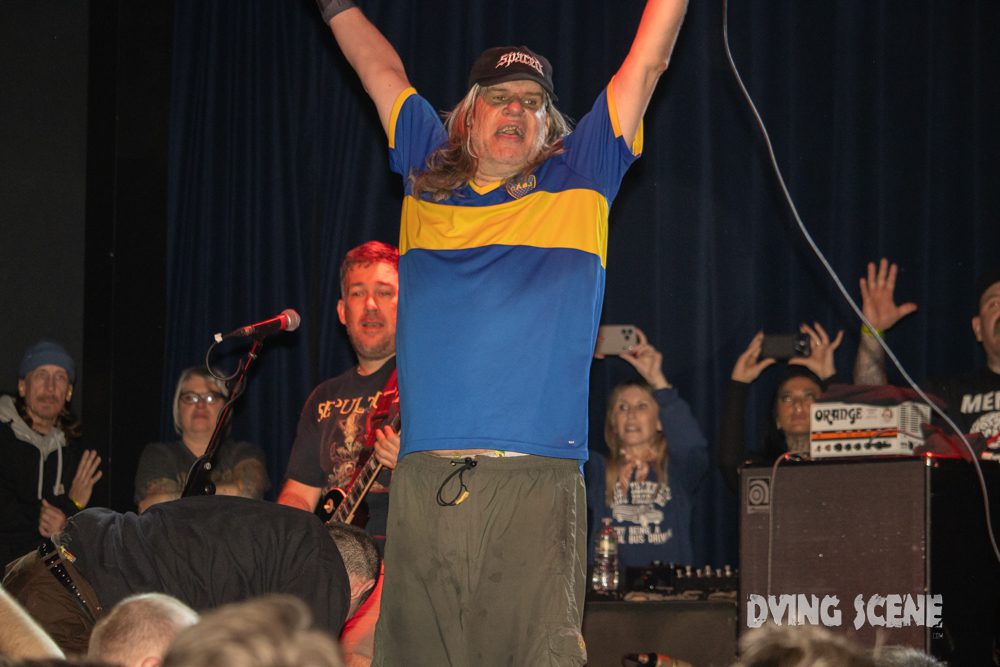
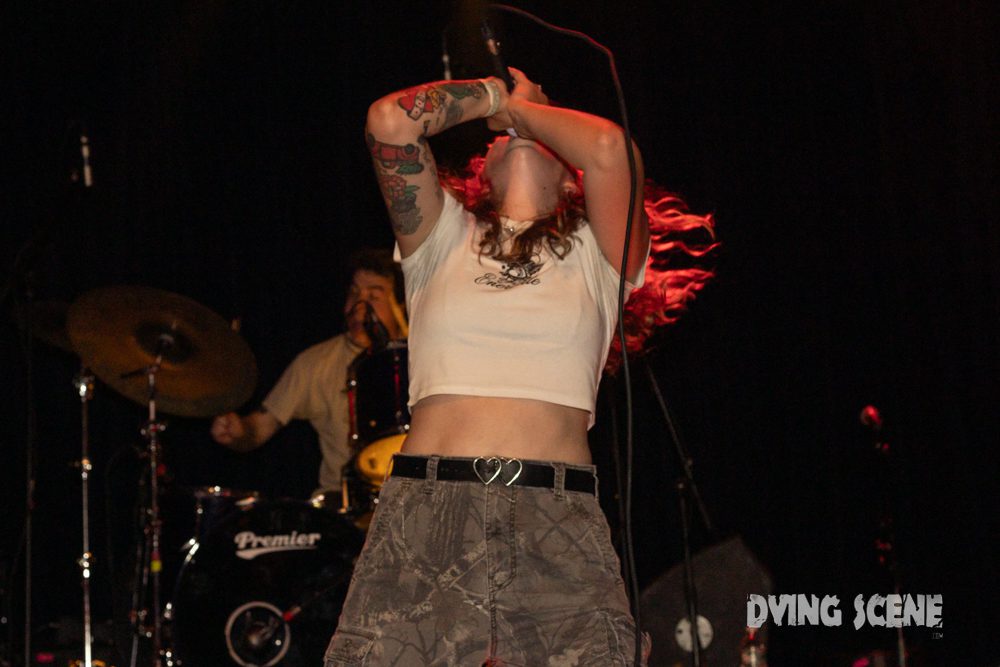
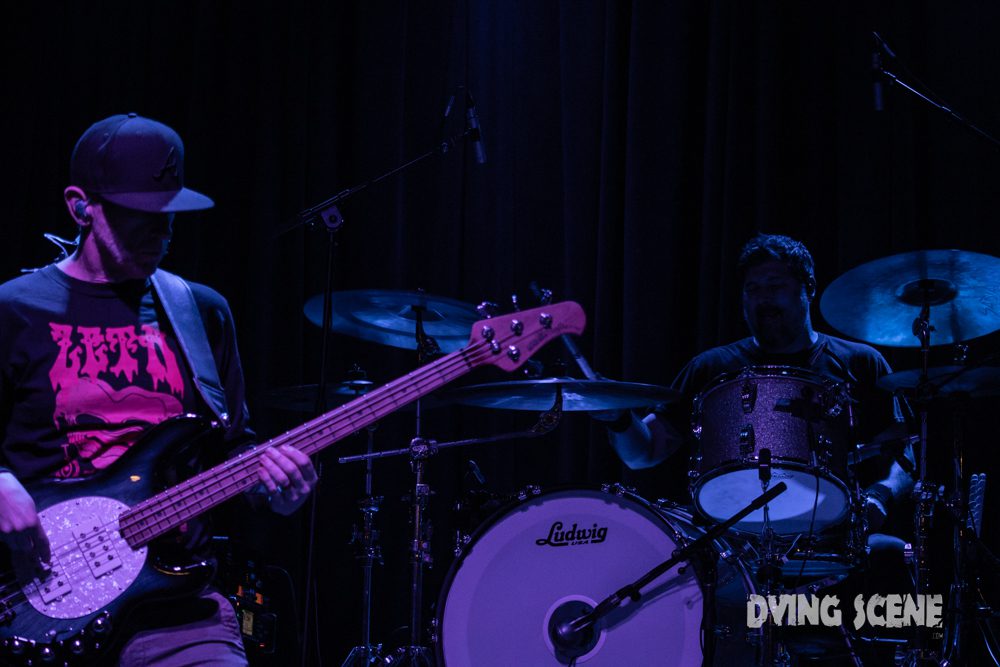
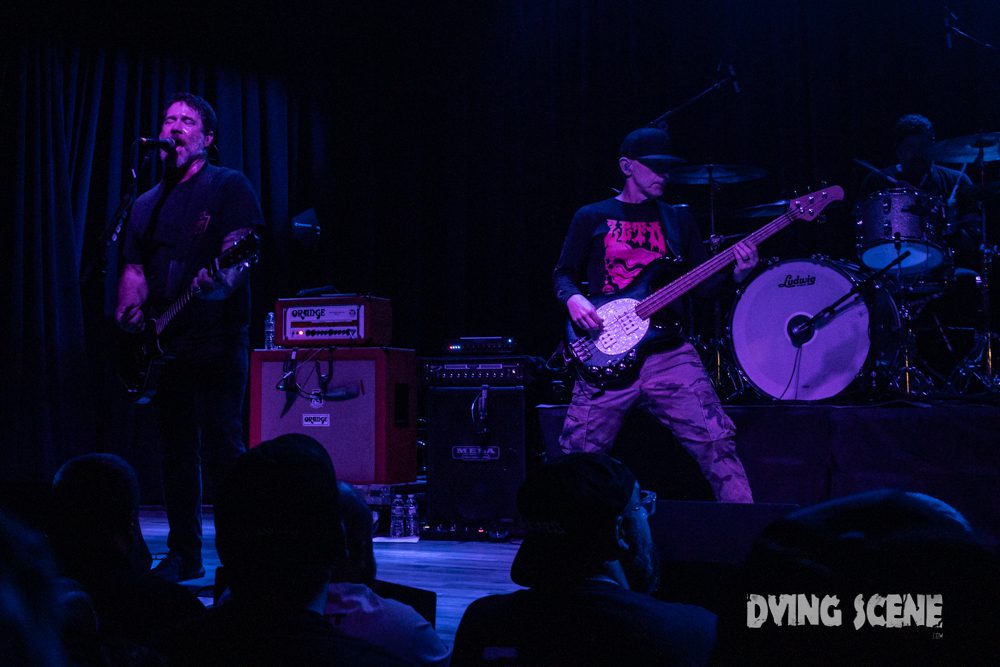
Babe Haven joined Die Spitz on their Something to Consume tour, a perfect pairing of fierce femme ferociousness and earsplitting aggressive punk rock (not to mention hair flips for DAYS). I last saw North Carolina’s Babe Haven in Chicago last April when they opened for English-duo Soft Play, and instantly fell in love with this […]
Babe Haven joined Die Spitz on their Something to Consume tour, a perfect pairing of fierce femme ferociousness and earsplitting aggressive punk rock (not to mention hair flips for DAYS).
I last saw North Carolina’s Babe Haven in Chicago last April when they opened for English-duo Soft Play, and instantly fell in love with this band. They have the perfect blend of punk, metal, and riot grrrl and a chaotic sassiness that cannot be matched.
Since their last Chicago stop at Schuba’s on May 31st, Die Spitz toured with the infamous Viagra Boys, had their own North American headlining tour, have another headlining tour scheduled in February 2026 in the EU/UK and have a slew of summer 2026 music festivals in the books.
The band shows no signs of slowing down as members climb onto speakers, jump into the crowd moshing and thrashing about on stage. Their full-throttle performances leave you begging for more…and with the powerhouse of an album Something to Consume, Die Spitz is just getting started.
<p>Props to Rian Johnson for turning lemons into lemonade: the man hears that Glass Onion was too preachy, then sets the next feature in the Knives Out series in a parish. It shouldn’t be surprising that he’s wound up here — his movies are puzzle boxes that JJ Abrams wishes he was talented enough to pen — but, as fun as these movies can be, it is somewhat frustrating to find us contractually back here again, when there once seemed […]</p>
<p>The post <a href="https://vanyaland.com/2025/11/26/wake-up-dead-man-review-knives-out-crucifixes-in/">‘Wake Up Dead Man’ Review: Knives out, crucifixes in</a> appeared first on <a href="https://vanyaland.com">Vanyaland</a>.</p>
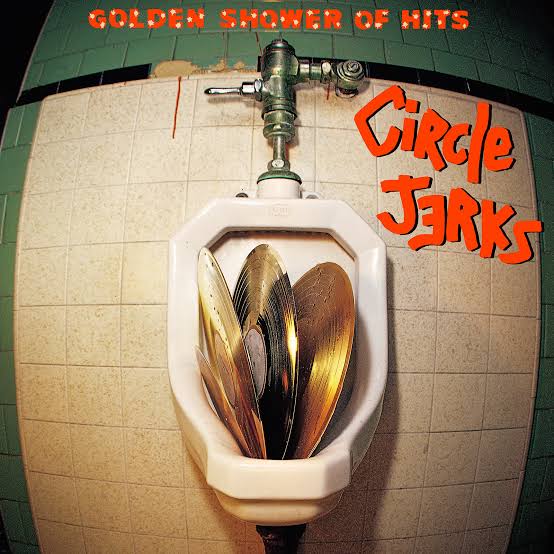
In the summer of 1983, the Circle Jerks released their third LP, Golden Shower of Hits. The album continued the band’s sarcastic but politically and socially blunt songwriting that gained them the notoriety of being one of the best punk rock bands to come out of Los Angeles. After re-releasing and cleaning up the first […]
In the summer of 1983, the Circle Jerks released their third LP, Golden Shower of Hits. The album continued the band’s sarcastic but politically and socially blunt songwriting that gained them the notoriety of being one of the best punk rock bands to come out of Los Angeles. After re-releasing and cleaning up the first two Circle Jerks records, Trust Records has reissued Golden Shower of Hits, and the results are spectacular.
Golden Showers‘ first side alone has so many classic songs on it. Opening with the short “In Your Eyes” is the closest thing we get to a Keith Morris breakup song. This is followed by the Lucky Lehrer and Greg Hetson-penned “Parade of the Horribles,” which leads to “Under The Gun.” While each of these songs doubles in length as we progress through them, they never lose their energy or bite.
While it may not be intentional, there has to be a bit of an ironic coincidence in re-releasing the album with the song, “When The Shit Hits The Fan” at this time in our country’s climate. Lately, it feels like the written-off warnings of punk rock lyricists and science fiction writers are becoming more and more true as time goes on. The second side opener, “Coup d’État,” also feels relevant at a time when extreme measures are being taken to change our country for the worse. It may have been written about another country forty years ago, but it’s relevant for ours today.
The one outlier on this album is “Rats of Reality,” a song that feels like it would almost fit better on the Circle Jerks’ next album, “Wonderful,” released in 1985. This Hetson and Roger Rogerson song delves a bit into metal territory, a sound Keith and Greg would experiment with more on their next record with Zander Schloss and Keith Clark. In general though, throw a rock at an album Greg Hetson played on, and you’ll find good riffs and power chords that moved punk rock guitar in the right direction.
I was surprised to learn that the only single released for this album was “Golden Showers of Hits” when there are so many great songs on it. Also known as “Jerks on 45,” the song itself is a parody of “Stars on 45,” a medley of popular songs mashed together. This version, of course, has Keith and crew’s spin on songs from the time: “Along Comes Mary,” “Close to You,” “Afternoon Delight,” “Having My Baby,” “Love Will Keep Us Together,” and “D-I-V-O-R-C-E.” These are songs that were mostly seen as bad pop music then and now.
It’s hard to tell where peak Circle Jerks begins and ends because their albums are all so solid. (Yes, even Wonderful.) The core group of Keith, Greg, and Roger wrote so many solid albums, but Roger left the band after Golden Showers was released Trust has been doing a great job with these reissues. If you are a fan of the band, don’t sleep on this release. You can order the Circle Jerks’ Golden Shower Of Hits deluxe reissue at Trust Records.
My Chemical Romance have announced the support acts for their upcoming shows in Europe and the UK. Echo and the Bunnymen, Sunny Day Real Estate, Interpol, Mogwai, Idlewild, Skunk Anansie, and Joan Jett will be joining them on select dates. This leg of the tour runs from June 30 to July 18. My Chemical Romance will be touring South America starting in January, South East Asia in April, and the US starting in August. Check out the updated dates below.
Mariachi El Bronx have released a video for their song “Forgive or Forget”. The song was released alongside the announcement of their upcoming album Mariachi El Bronx IV (out February 13 via ATO) in November. Mariachi El Bronx released Musica Muerta Vol. 1 and Vol. 2 in 2020. Check out the video below.
UK-based rockers Blanket have announced that they will be releasing a new album. It is called True Blue and will be out on January 16 via Adventure Cat Records. The album features 8 tracks, including their previously released singles “Bind” (which features Wayside), “Levitate”, and “Hole In My Head”. The band has also released a video for the title track. Blanket released their album Ceremonia in 2024. Check out the video and tracklist below.
Los Angeles-based indie punk band Buckets have released a video for their song “Naked”. The video was directed by Brandon Tasker and, along with the band, stars Isa Moon, Griffin Scanlan, and Alex Radanof. The song was released in August (we premiered it!) and is a standalone single. Buckets released their album Good Luck Bad Dog in 2023. Check out the video below.
Witch Fever have announced tour dates for the UK and Europe. The trek kicks off on March 12 in Nottingham, England and wraps up on April 30 in Belfort, France. Witch Fever released their album Feavereaten earlier this year. Check out the dates below.
Fete Music Hall in Providence, Rhode Island, was the setting as Bane and Hot Water Music brought their recent co-headlining tour to a close. It’s a no-frills, no barricade venue consisting of mostly black-painted brick and concrete, located in the gritty-even-for-Providence Olneyville section of town, in many ways the perfect setting for a pair of […]
Fete Music Hall in Providence, Rhode Island, was the setting as Bane and Hot Water Music brought their recent co-headlining tour to a close. It’s a no-frills, no barricade venue consisting of mostly black-painted brick and concrete, located in the gritty-even-for-Providence Olneyville section of town, in many ways the perfect setting for a pair of hardcore and melodic hardcore titans to wind down ehat was, by all accounts, an epic two-week run.
Kicking things off on this run as they did on each night of the tour was none other than Spaced. The upstart Buffalo five-piece experienced an obscenely untimely transmission-related meltdown on the tour’s opening night, but managed to scrape things together enough to bring their blistering, two-step heavy brand of hardcore to the masses. I can’t speak to the rest of the tour, but on this particular night, the band’s set was super well-received, as the constant ball of energy that is vocalist Lexi Reyngoudt constantly danced and paced the width of the stage and encouraged the early-arriving crowd to match the band’s intensity.
Hot Water Music occupied the middle slot on the three-band bill, but this was not a typical opening gig, as the band plowed through sixteen songs over the course of an hour. In a weird coincidence, I’m relatively certain that every time I’d seen the iteration of Hot Water Music that includes Chris Cresswell in the lineup, the set has started with either “Remedy” or “Trusty Chords,” so it was nice getting “Drag My Body” in the leadoff spot on this night. The set that followed did an admirable job of spanning the bulk of the genre-defining band’s catalog; recent tracks like “After The Impossible” and “Menace” have worked their way seemlessly into a set that also includes longtime favorites like “Choked And Separated” and “Rooftops” and “Free Radio Gainesville.” “I Was On A Mountain” and “Turn The Dial” were personal favorites, and closing the set with “Remedy” into “Trusty Chords” is a pretty epic way to bring things to a close.
The aforementioned Cresswell has served as a tremendous sparkplug for the longtime road dogs over the last eight years (editor’s note…seriously? It’s been eight years already?!?). I forget who referred to Jason Black and George Rebelo as Hot Water Music’s cheat code – Brian McTernan maybe? – but that remains a perfect way to explain their presence in the band and the scene. They’ve been operating as two sides of the same musical brain for decades at this point and remain as locked in a driving force as ever. And Chuck Ragan at stage right is…well…Chuck Ragan. He’s as inimitable as ever, and seems to have benefited the most from the spark that Cresswell has brought to the band, as he continues to push himself and his voice to what approaches transcendent levels.
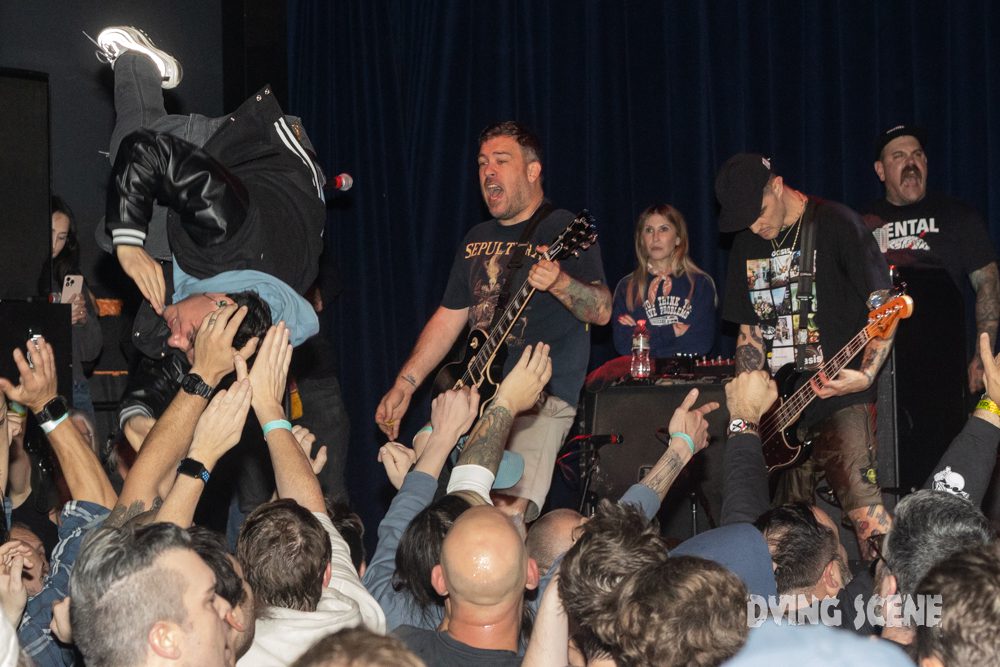
Bane’s set was preceded by an unexpectedly long break as the band and venue tag-teamed to work through some frustrating sound and technical difficulties. But when they finally ripped into the opening notes of “Count Me Out,” they more than made up for lost time. There’s a bit of an emotional and musical floodgate that opens up when Bane plays a show. For a generation now, at least in the Northeast, the band have had the sort of label-eschewing crossover success that bands like Militarie Gun and Knocked Loose and obviously Turnstile have enjoyed in recent years. Bane is a force, a unifying staple that only seems to get more important as the years go by. There’s always a blurred line between band and crowd at a Bane show, as demonstrated by the constant barrage of multi-generational stage crashers and head-walkers that did not stop for the duration of the band’s eleven-song set (and sometimes didn’t stop even in the breakdowns between songs). “Can We Start Again” and “Wrong Planet” were particular crowd-pleasers, while “Swan Song” was a personal favorite. It seemed like the crowd could very much have kept going by the time the house lights came up after “Calling Hours.”
Check out a bunch more pictures from the evening’s festivities below!
Florida Underground Fest have announced their sixth annual entry. Vicious Dreams, Wolf-Face, Debt Neglector, Gilliam carter and almost 100 other bands play. The fest is January 9-11 in Sanford, Florida. You can see the lineup below.