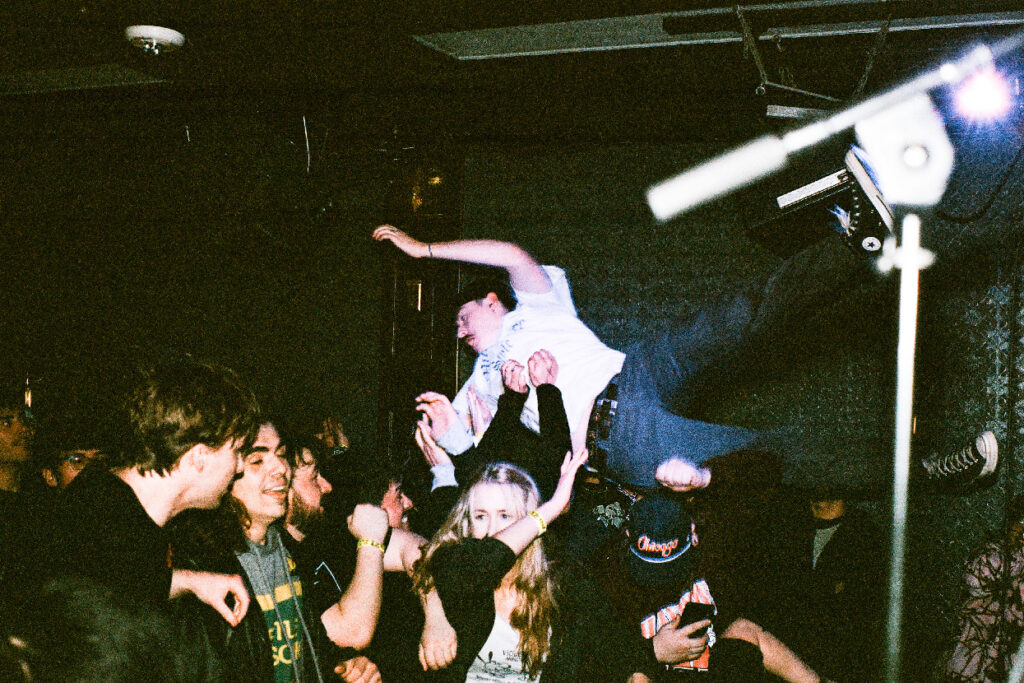
On August 8th, Zumiez, the infamous nationwide skateboarding & clothing brand, hosted a hardcore lineup of bands in Chicago’s Daley Plaza – featuring one band in particular, GODCHAIN: a household name in our community. GODCHAIN’s 4 members – drummer Kyle Clark, lead guitarist Luis Montanez, bass player Kyle Ritchey, and vocalist/rhythm guitarist Jacob Campos – […]
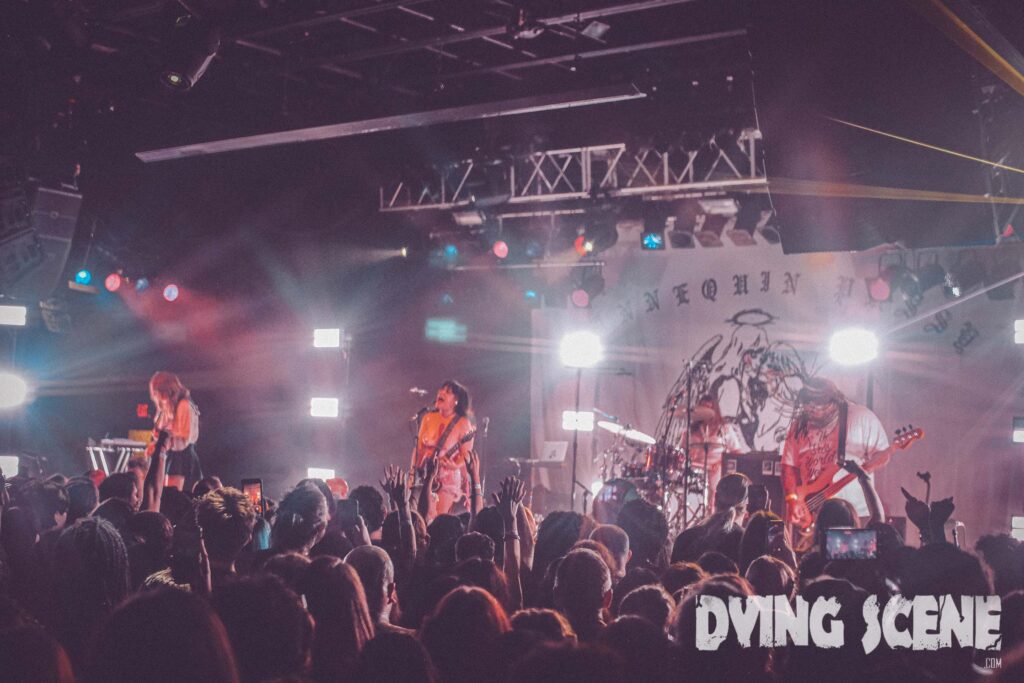
On August 8th, Zumiez, the infamous nationwide skateboarding & clothing brand, hosted a hardcore lineup of bands in Chicago’s Daley Plaza – featuring one band in particular, GODCHAIN: a household name in our community.
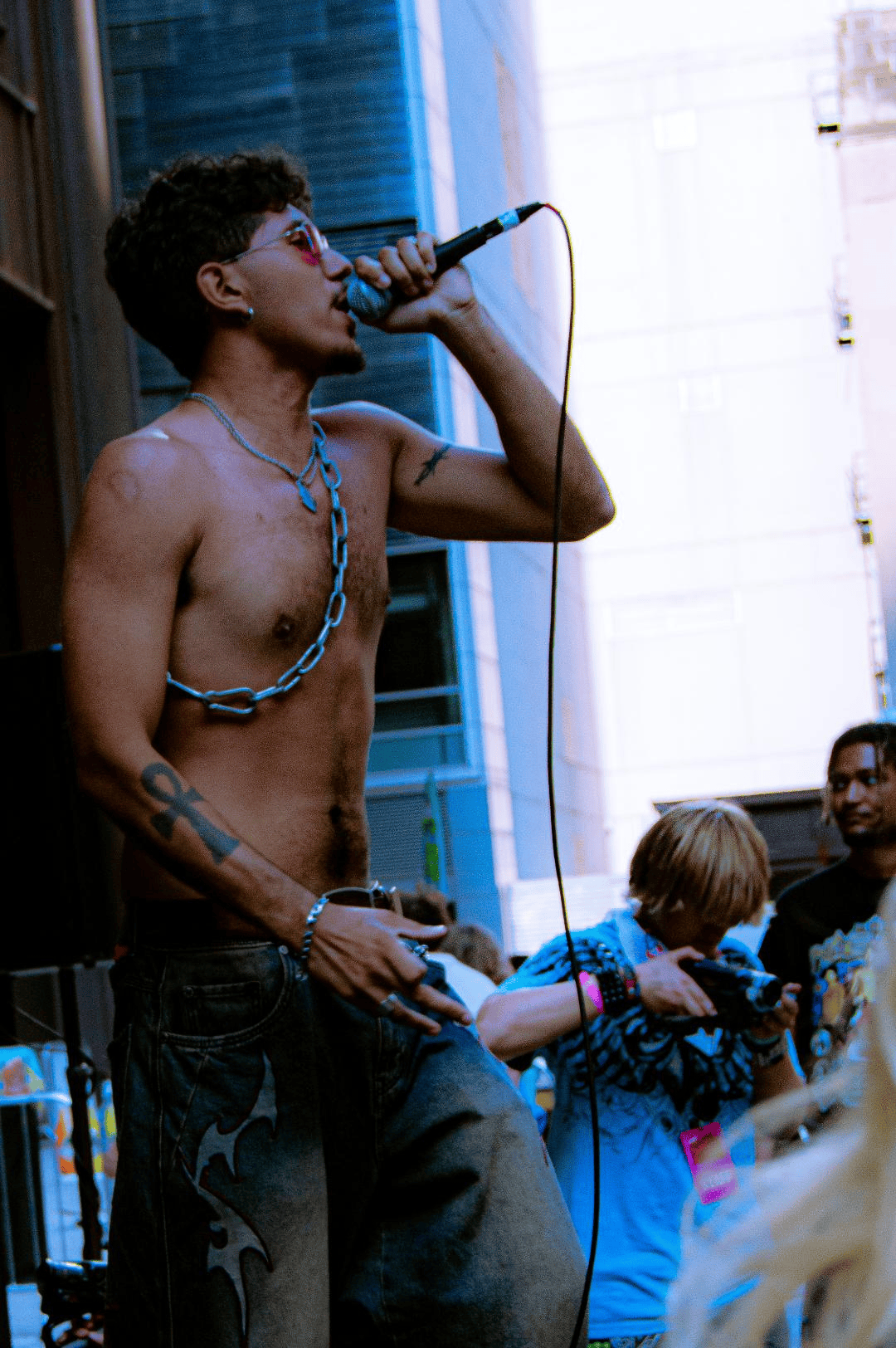
GODCHAIN’s 4 members – drummer Kyle Clark, lead guitarist Luis Montanez, bass player Kyle Ritchey, and vocalist/rhythm guitarist Jacob Campos – are staples of this scene. Loud, fierce, and unapologetic, they have gathered dozens of fans over the last year – to the point where they are so undeniably notable in the scene. Every show of theirs comes with a message, and one that has undoubtedly managed to span across the masses of Chicago. I mentioned this as my opener, and Campos led with this:
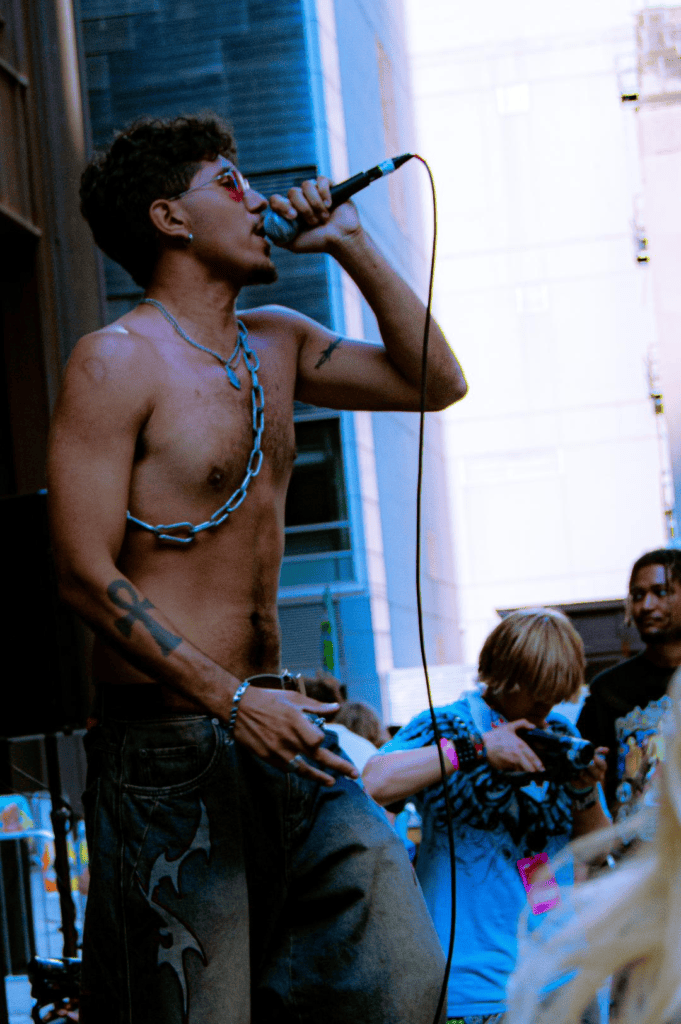
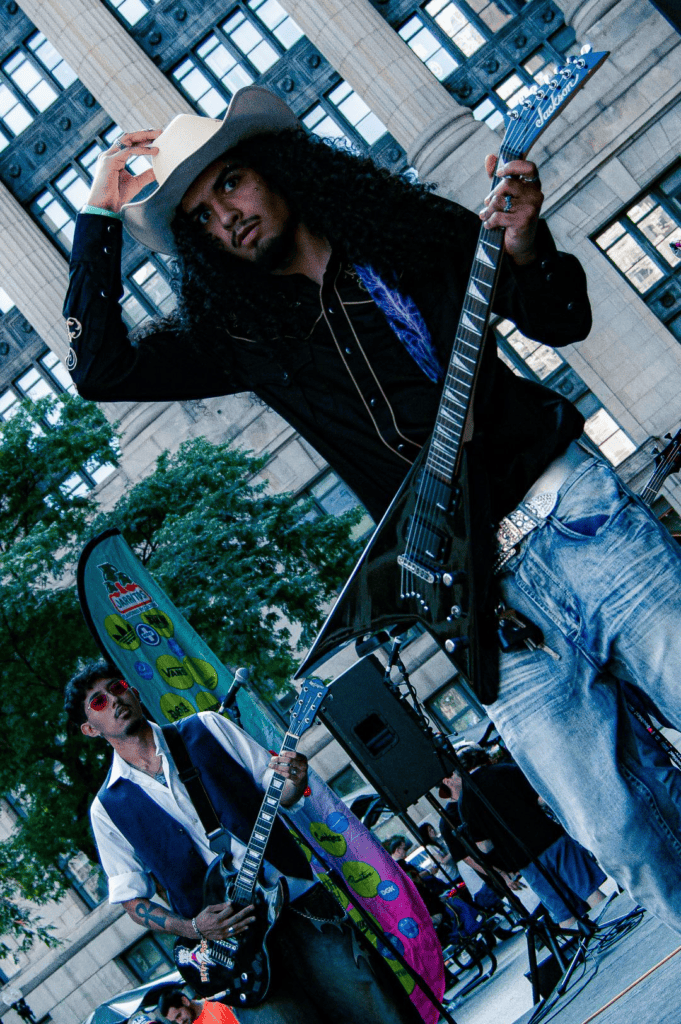
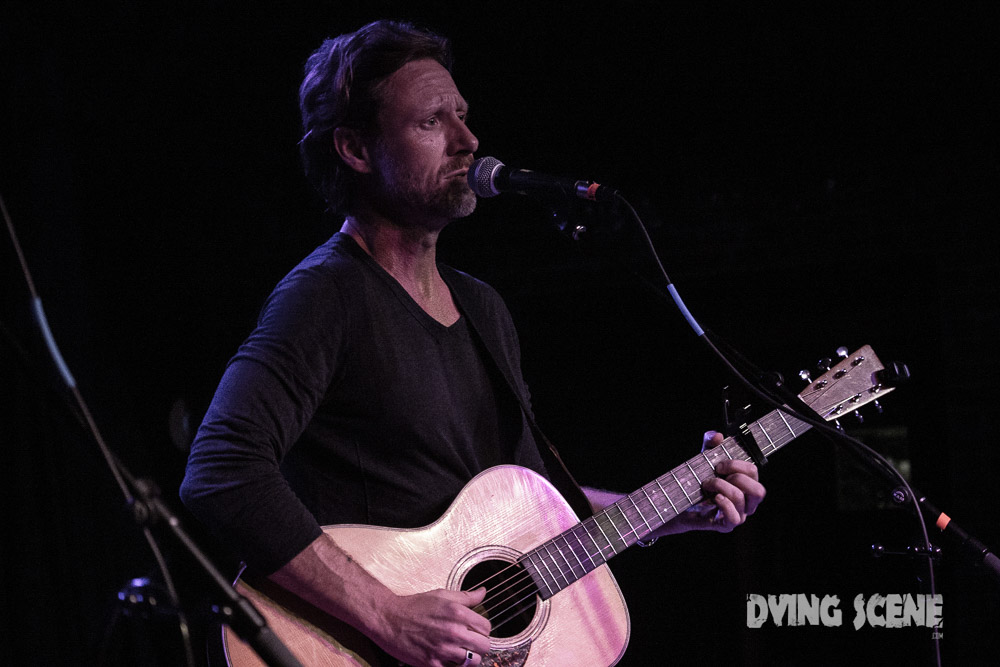
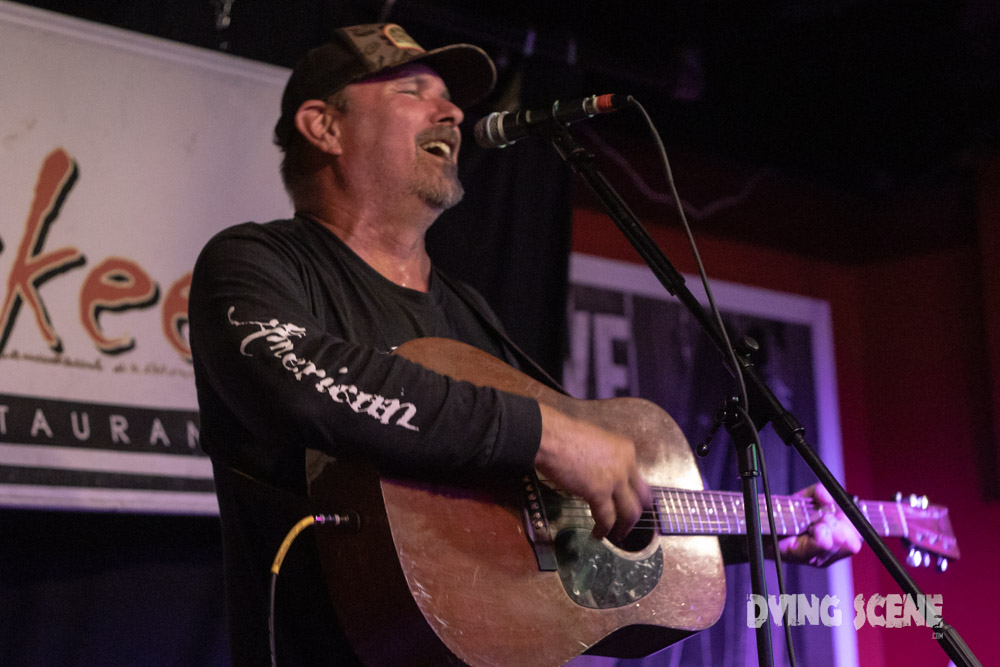
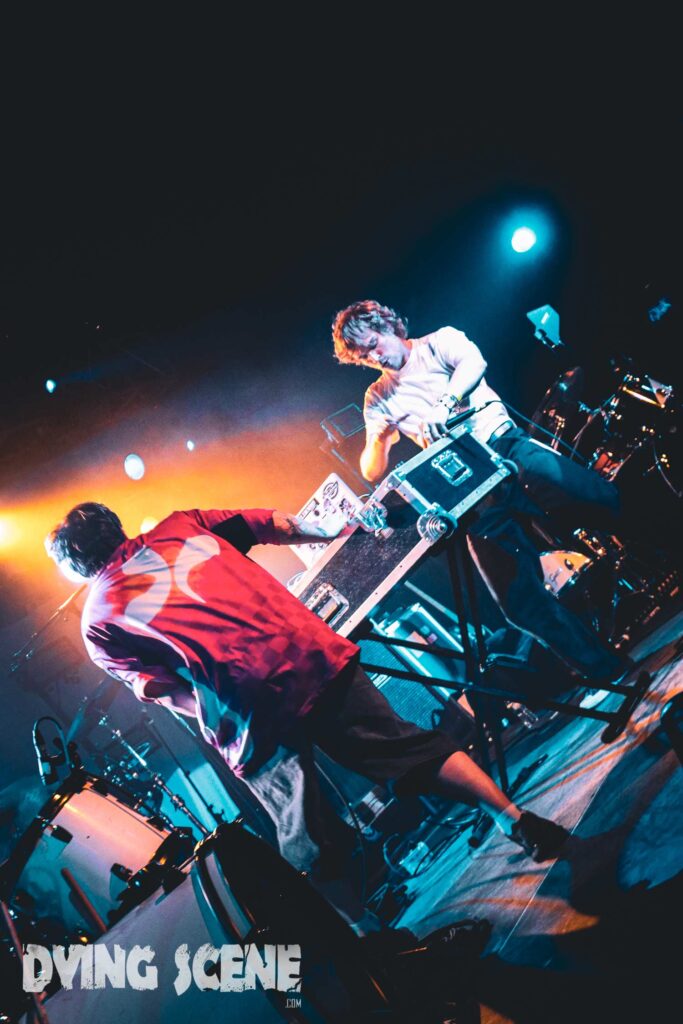
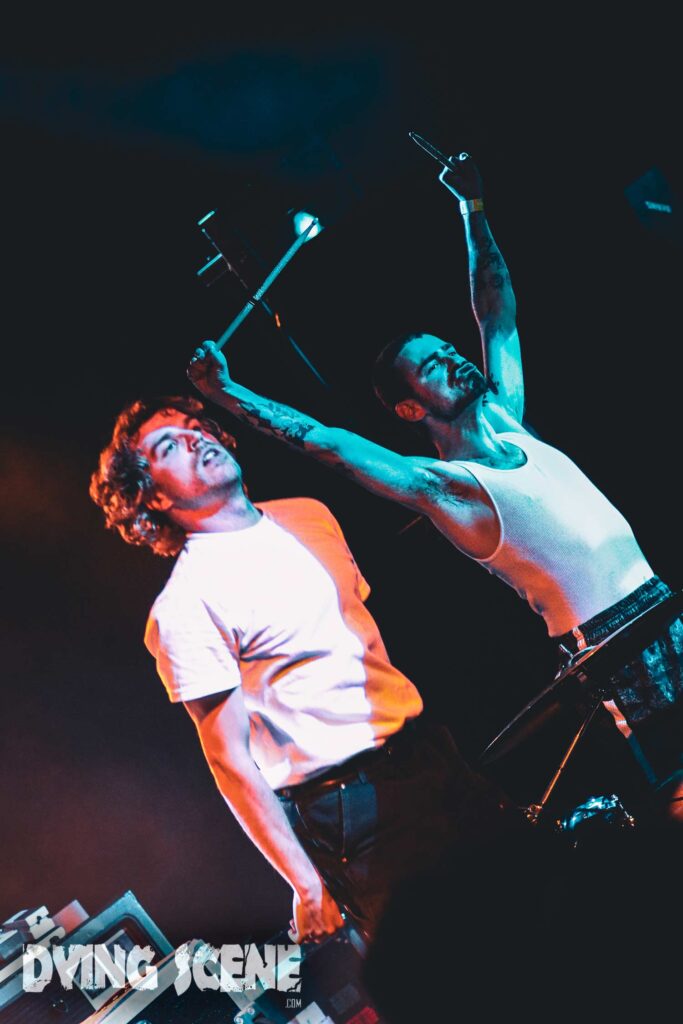
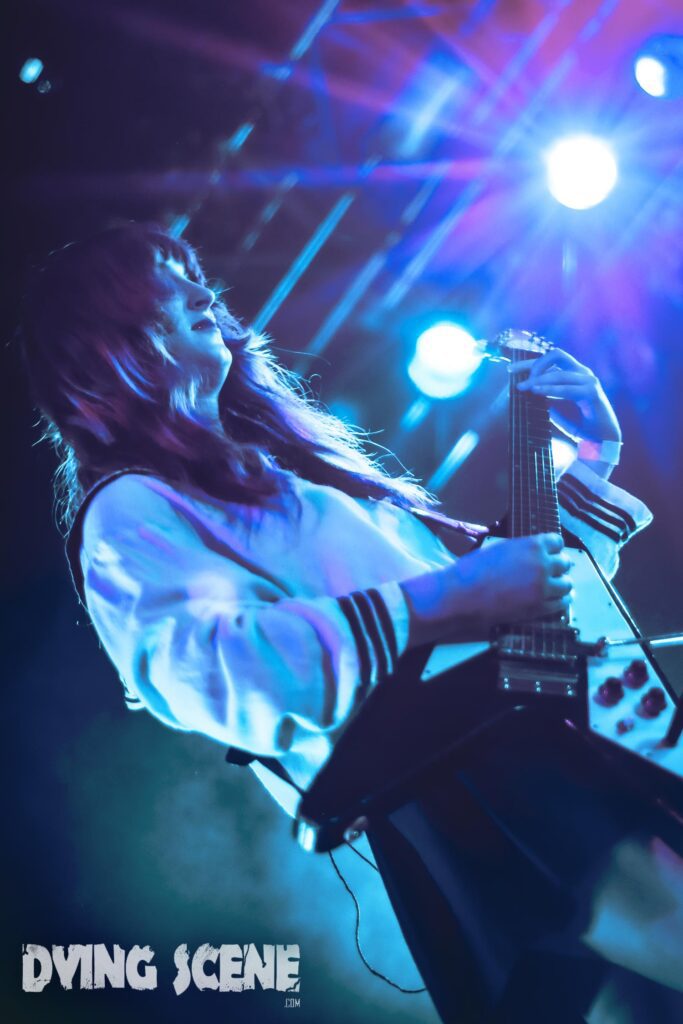
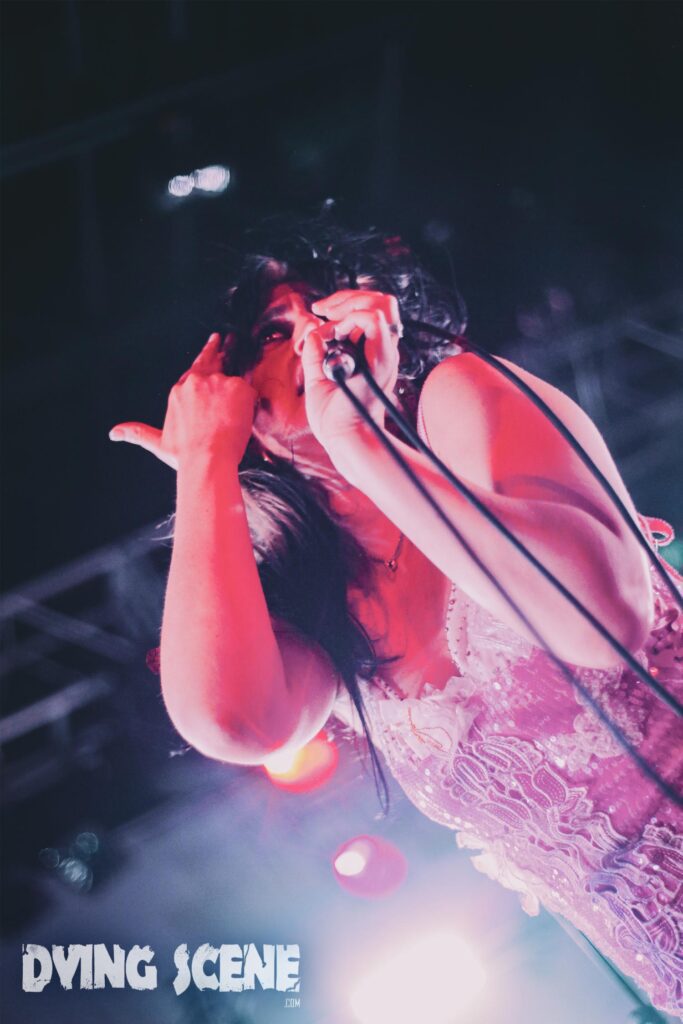
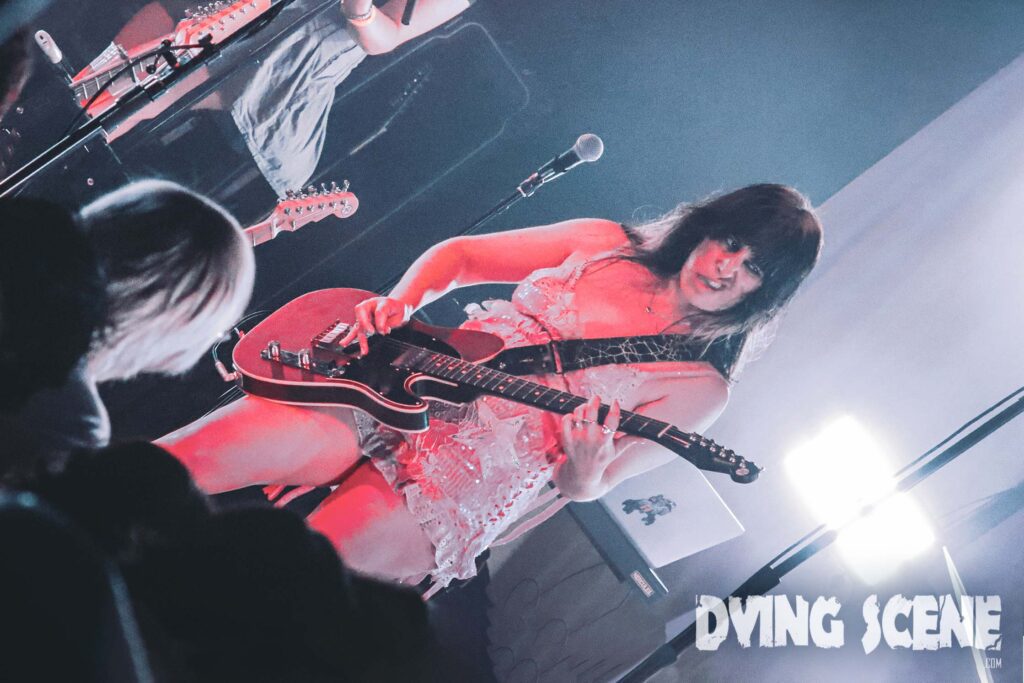
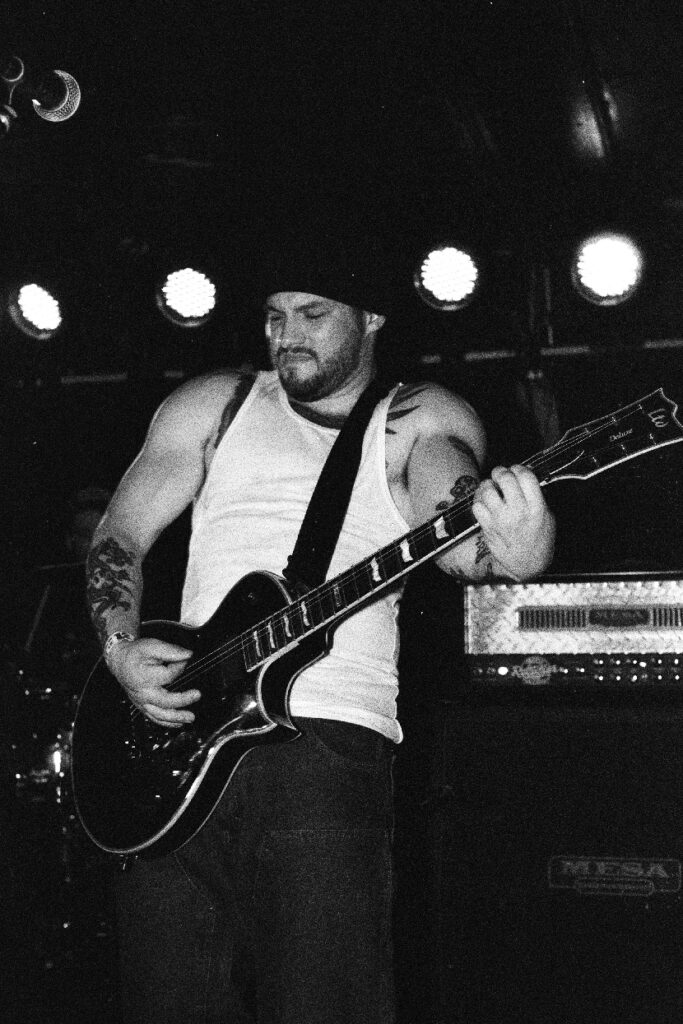
Campos at the Zumiez show on August 8th, 2026.
“I generally think of it as I like writing and I like performing, just politically charged,” he replied. “And it’s not always political. I wish it didn’t have to be. But generally, it’s, ‘I made this’. I made it for myself. If someone else likes it, beautiful, and if people want more of it, then I’m happy to write more.”
GODCHAIN has made a definite mark on the scene, from performing at DIY venues to skateparks to our very own, locally infamous hardcore venue Casa Cafe – a very popular vessel for the local music community. They are unapologetically metal, punk, and themselves. I asked where such a strong confidence in who they are and what music they make came from; Ritchey then chimed in next.
Kyle Ritchey, the bass player of GODCHAIN, recalled memories of his dad introducing him to ska punk – where icons like Goldfinger & Reel Big Fish were mentioned for having a huge impact on him growing up. The progression to creating GODCHAIN’s unique Chicago ‘heretic metal’ sound was natural for many of the members, as heavy metal, punk, and hardcore crept into their lives and consumed their music taste, for most, very early on. Campos and Montanez spoke about their experience growing up in households of color, Campos burning CDs and all blasting their favorite music – no matter the critique or the judgment. We spoke about the cultural phenomenon of families of color being against or conflicted about the widespread love for hardcore, then conversely, about how the new generation of punks are still big fans of their parents’ favorite music.
“I’ve kind of forced my family to accept it because they know they can’t not listen to it. But it was never, like, a case of, like, ‘turn that shit off,” Campos shared.
“My dad – all he liked listening to was soul music. So as a kid, if it wasn’t anything Mexican, it was James Brown. But then I moved to California when I was a kid – and over there is where my uncle introduced me to all this new stuff: my first introduction to Linkin Park, Metallica, Megadeth, Pantera.”
People of color; varieties of cultures up on stage – fiercely driven by the combination of their unshakable love for music and the craving to be loud, that is exactly what GODCHAIN is.
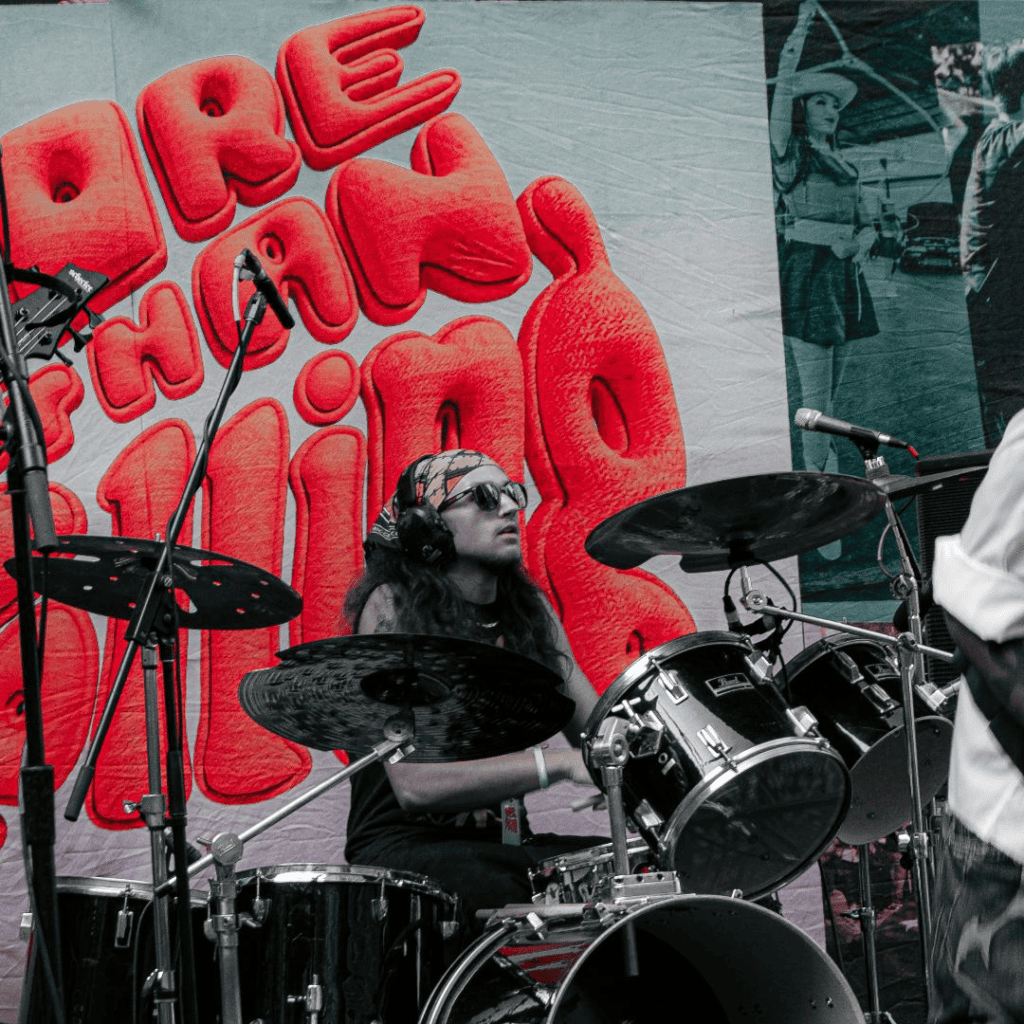
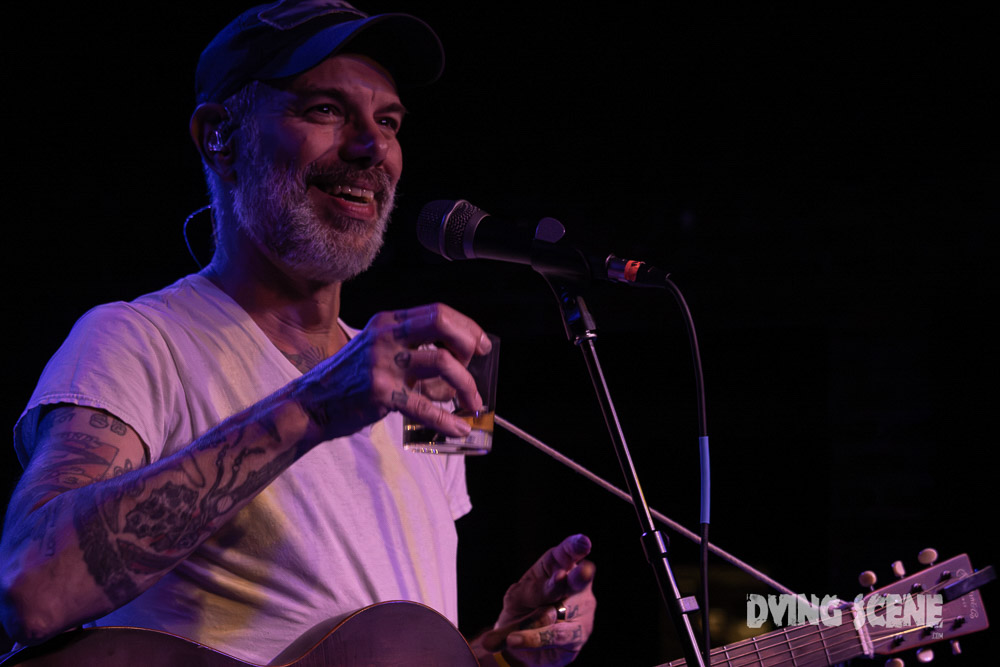
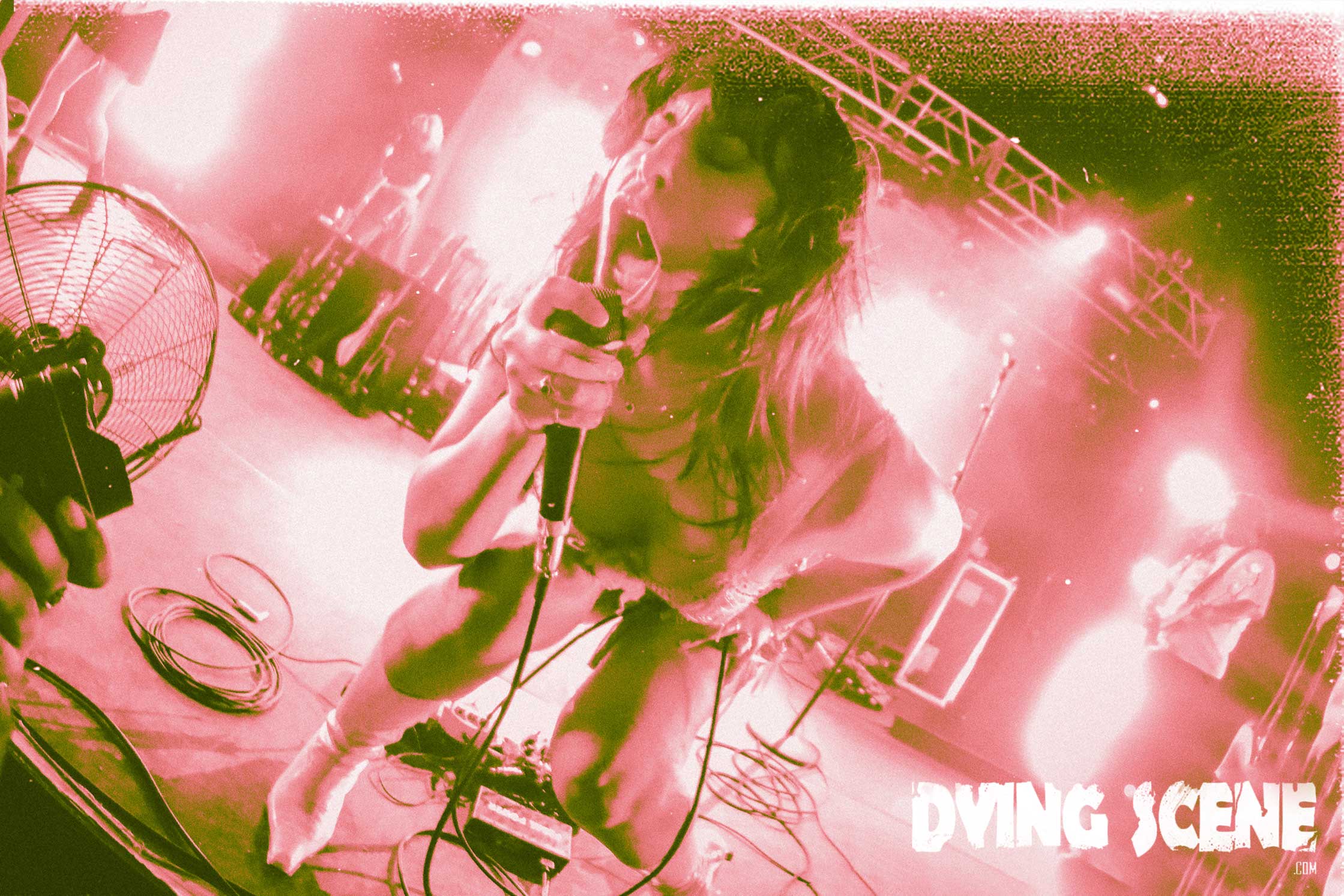
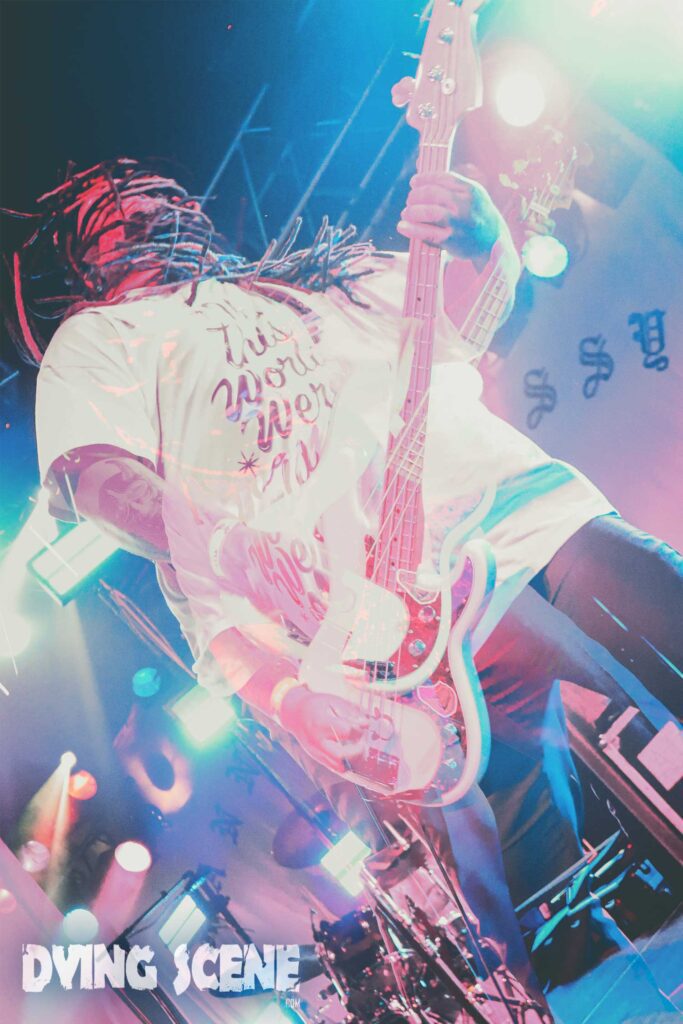
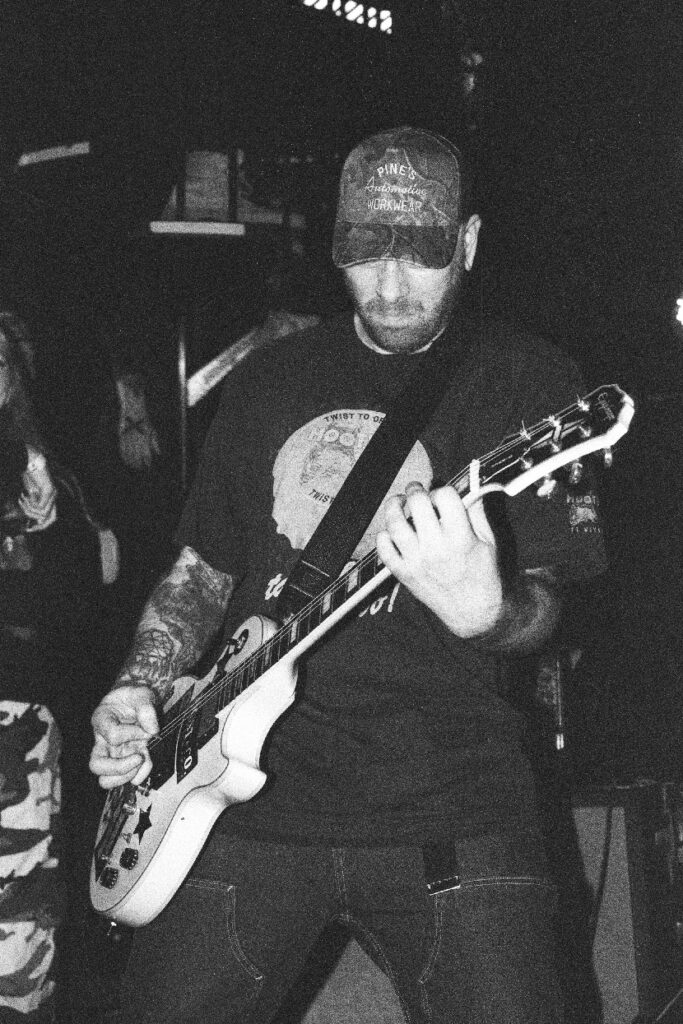
Clark at the Zumiez show on August 8th, 2026.
“Just because it’s already been said by other people you play with, doesn’t mean you shouldn’t say it anymore,” Campos noted. “You come to a GODCHAIN show, you’re going to see two brown men. You’re going to see a Mexican man singing and a Mexican man playing guitar. You’ll see a white man playing bass and a white man playing drums. And you see these people because we all were together on whatever it is we want to say.”
In a world so difficult to cope with sometimes, I asked about how the music helps or influences the emotions stirred up by global injustice.
“There’s so much screaming. To the point where you’re ‘screaming’ the message every time,” Montanez expressed. “Sometimes screaming, sometimes preaching, but every single time, we are persistent.”
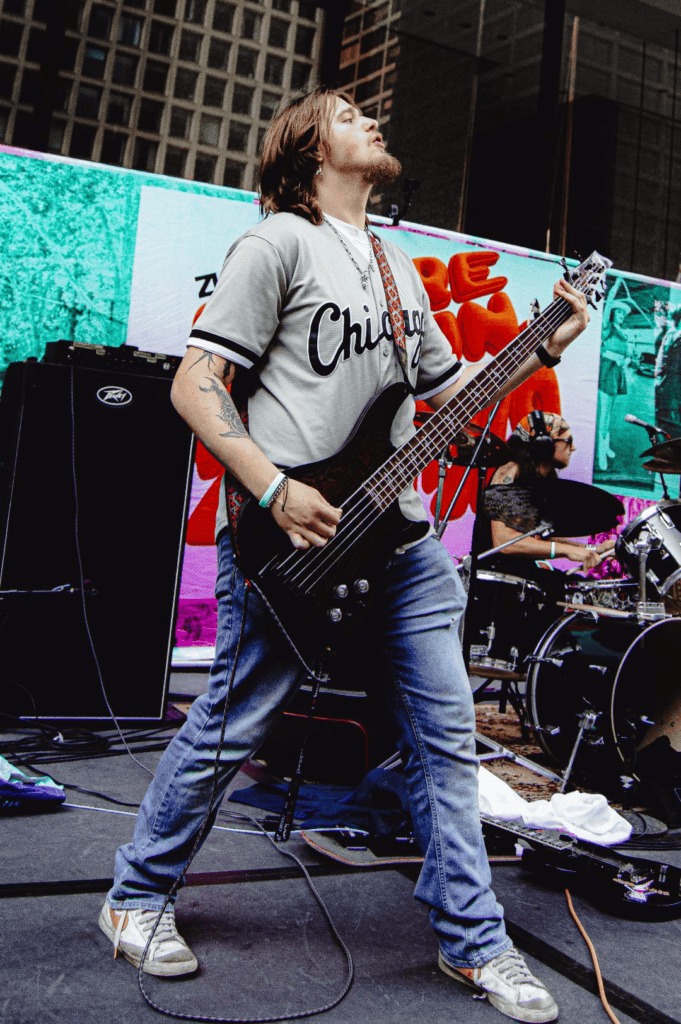
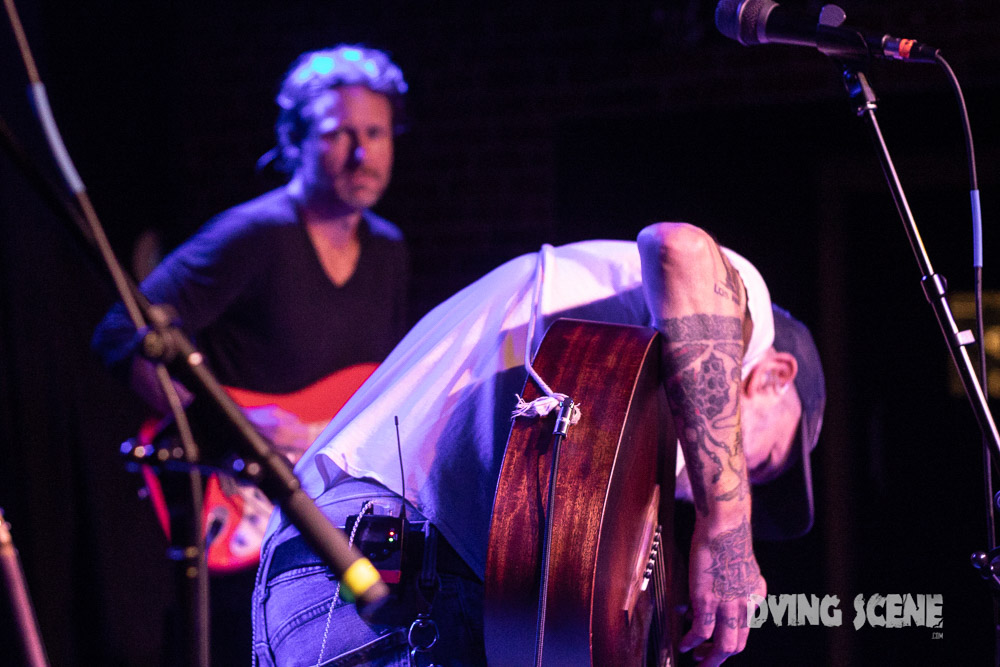
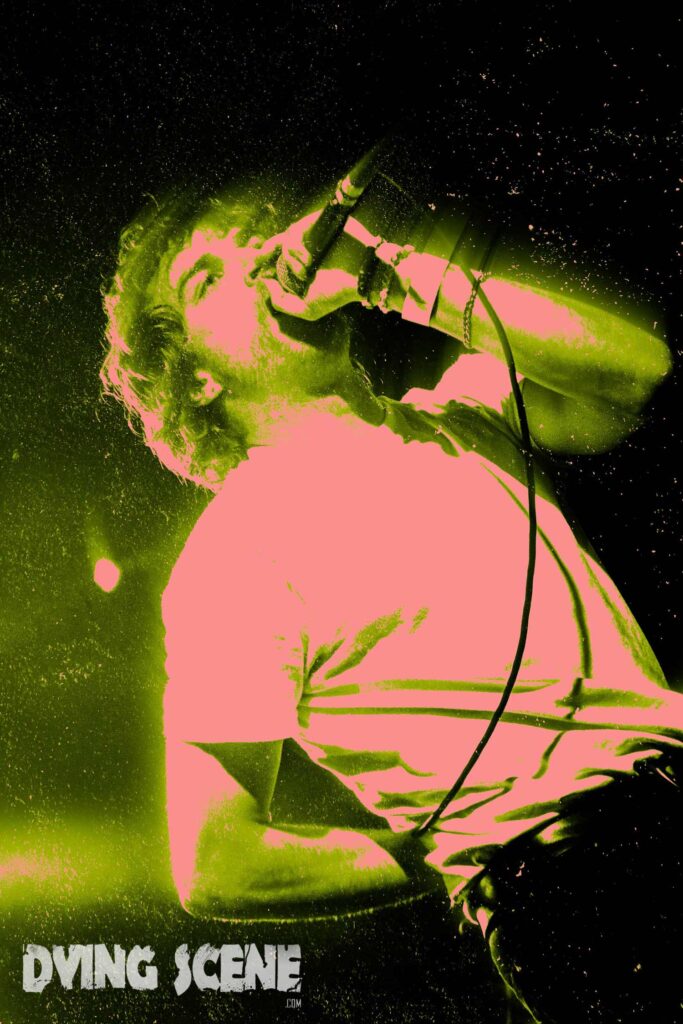
Montanez at the Zumiez show on August 8th, 2026.
GODCHAIN has a song out on platforms now entitled “The American Dream:” a song that Campos explained is about nuclear weapons, race, protests, and the criticism of religion. He explains that there won’t be a single GODCHAIN song where they’re not attacking a certain injustice or speaking out against a certain wrongdoing. It is innate within the message of GODCHAIN to be deliberate yet always heard, and is unequivocally a huge part of the culture they create at their shows. Unrest lies within the scene, and GODCHAIN does not forgive that.
30 years after the release of their first album, Chicago melodic punk band Sludgeworth return with their 2nd LP, Second Time Around. According to their Bandcamp bio, this is a culmination of both a reunion from Riot Fest and weekly booze-filled jam sessions. What they present to us is a new collection of melodic punk […]
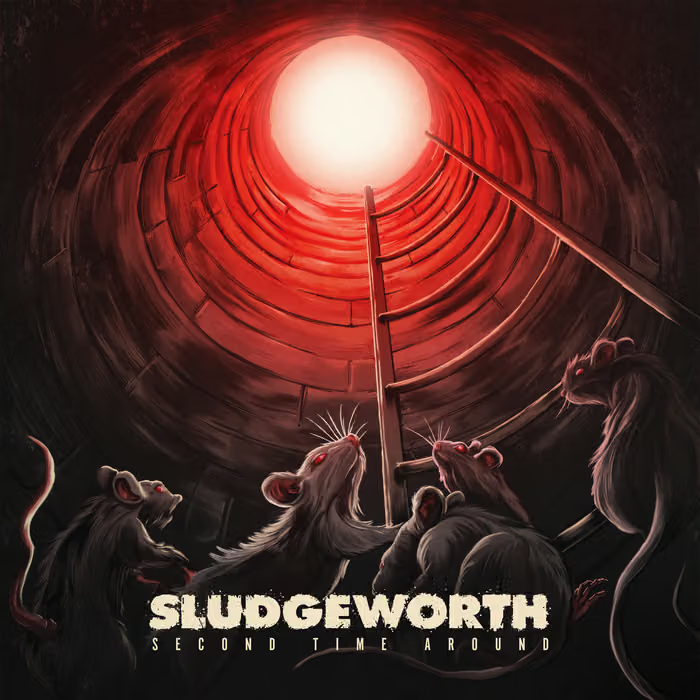
30 years after the release of their first album, Chicago melodic punk band Sludgeworth return with their 2nd LP, Second Time Around. According to their Bandcamp bio, this is a culmination of both a reunion from Riot Fest and weekly booze-filled jam sessions.
What they present to us is a new collection of melodic punk rock songs to get you headbanging and remembering the good old days. It may have just been a natural result from multiple hangouts, but there is very noticeable attention given to the creation of Second Time Around that has very clear messages that go beyond being an old punk band.
Ultimately, it is a personal album for the band. The core themes from this album include reminiscing and offering advice for their younger selves (“Can’t Change Yesterday”, “Hurry Up, I Don’t Have Forever”). It does also address the present and the uncertainties of the nation in songs such as “Simulation” and “Tipping Point”.
Second Time Around also features some really great guitar riffs, standout beats, and clean vocals. It’s very well an album that could’ve been released in the early 90s if the band stuck around, sharing the same melodic punk sounds as No Use For A Name and Propagandhi.
Overall, this is a fantastic melodic punk album that sounds like it’s from the 90s punk era. Despite a 3-decade time skip, Sludgeworth has aged finely and proves that older punk bands can still put out absolute bangers. So hit up an old friend, grab a beer, and laugh about the past, because Second Time Around is meant just for that.
Somehow, I’ve never been to Syd For Solen. I don’t really have any excuse for my lack of interaction with the festival in previous years. The lineup is usually full of artists that I listen to anyway, and this year especially felt like someone had taken a concerningly close look at my streaming service and […]
Somehow, I’ve never been to Syd For Solen. I don’t really have any excuse for my lack of interaction with the festival in previous years. The lineup is usually full of artists that I listen to anyway, and this year especially felt like someone had taken a concerningly close look at my streaming service and started booking after that. Geese, Turnstile, Horsegirl, Blood Orange, and so on – there’s a lot on my plate for three days.
So, of course I decided to give it a chance. And over three days, thirteen artists on my original schedule, with absolutely no consideration for whether my body will call it quits on the Saturday evening. I decided to map everything out, or try to. supermodel* was supposed to open my Thursday, but sadly his airline lost his bags, and he needed to cancel a few dates. Friday, my heart was set on Wilco and Turnstile, and they delivered. Saturday it was Geese and me.
Syd For Solen turned out to be very different from the other festivals I attend. There’s no enormous field to cross, no camping area to avoid, and I spent no time having to calculate how many songs I could see of an artist before I had to leave and see someone else. Instead, Syd For Solen proved to be a very relaxing festival over three days, and even though the lineup was stacked, it was the perfect end to my festival season.
And maybe that’s what I’ve fallen for. In hindsight, there were a few clashes, but nothing to cry about or get frustrated about. I could watch things, be in the moment; I could wander around and get food without feeling like I had to sacrifice half of a set I wanted to see. And somewhere between Amyl and the Sniffers set on a warm Thursday and me reaching Fcukers on a Saturday night, considerably more tired of myself the week prior that had made this schedule, it clicked inside me why people come back.
In the years before, as with any new festival, there are small issues to work out, and from what I experienced and heard from others, it seems they listen to feedback and their audience, making sure the following year runs a bit more smoothly. But we’ll get to that later.
With supermodel* canceling earlier in the day, Amyl and the Sniffers ended up being my first proper concert at Syd For Solen. It was ridiculously hot, the field wasn’t packed, and they were playing at 16:30, but somehow none of that mattered once Amy Taylor got onstage.
It was hot. Like, standing-in-the-middle-of-a-field-under-the-sun hot. The crowd was there, but it wasn’t packed, and there was still plenty of room around us to dance and give each other space. That didn’t stop a mosh pit from forming, though, because apparently no temperature is high enough to stop people from throwing themselves into each other at an Amyl and the Sniffers show.
A lot of that came down to Taylor. From the moment she walked onstage, she seemed genuinely excited to be there. She barely stopped moving, bouncing around the stage while I was somehow already tired from simply standing in the sun. The rest of the band matched her energy, and drummer Bryce Wilson turning up in a Danish football shirt obviously went down well with the Copenhagen crowd.
But Amyl and the Sniffers didn’t need a packed field to make the set work. “Security,” “Me and the Girls” and especially “Guided by Angels” sounded exactly like I wanted them to in the middle of a festival: loud, uncomplicated and ridiculously fun. People danced, shouted along, and disappeared into the mosh pit while I stayed safely in the middle and watched everyone else make questionable decisions with their bodies.
Amyl and the Sniffers weren’t the most mind-blowing band I saw over the three days, but they were exactly what that first afternoon needed. They took a hot, early slot with plenty of space around the crowd and made it feel like none of those things were a problem.
Sometimes a festival set doesn’t need to be bigger than that. It just needs to be fun.
Sombr is ridiculously theatrical, and I still can’t decide if that’s one of the best things about him or if someone occasionally needs to tell him to calm down. At Syd For Solen, it was probably a bit of both.
I spent the first four songs taking pictures before putting my camera away and walking towards the back. By then, everyone who had been at work was finally starting to arrive, and the festival suddenly felt a lot busier. The front rows were full of young girls waiting for Sombr, many of them with their parents, and I genuinely loved seeing it. Maybe it’s because I’m a parent myself, but watching them get that excited while their parents stood next to them was sweet. I kept thinking about how special that concert probably was to some of them.
And Sombr knows how to give people a show. There were roses, a Danish flag, someone threw a plushie onstage, he spray-painted a banner, and eventually he and the band jumped into the water behind the stage. Of course they did.
Sometimes, though, it was a little too much. There were moments where the whole rock-star thing felt forced, and that’s frustrating because he really doesn’t need to try that hard. “Back to Friends” had people singing along, “12 to 12” was ridiculously fun live, and when you have songs that can get that kind of reaction, you don’t need to manufacture a moment every five minutes.
For me, it was “Undressed.” It’s a special song to me, so I knew that was going to be the one I cared about most. By then, I was standing way at the back, my camera was put away, and I could listen to it. No pictures, no thinking about the review afterward, just a song I love being played in front of me.
Maybe that’s why I ended up liking the show as much as I did. Sombr didn’t blow me away, and I still think he needs to trust himself a little more instead of constantly trying to prove that he’s a rock star. But I had fun. The atmosphere was great, the songs worked live, and watching the people at the front have the time of their lives made it even better.
I’d happily see him again. Just maybe with a little less trying to convince me to.
20:15 – UNDER HIMLEN: DIJON
Two songs into Dijon’s set, I was sold. During “Higher!” I remember zoning in and just watching what was happening onstage. The whole thing felt like a bunch of friends fucking around and seeing where the songs could go, except somehow, they always knew exactly where they were going. It was messy, loud, and chaotic in places, but never out of control. And honestly, I wasn’t expecting a Dijon show to get that noisy.
“Rodeo Clown” was another one that got me, and the setlist was even better than I had hoped for. Dijon was already high on my list going into Syd For Solen, but the songs hit differently live. They felt more emotional, especially when Dijon started pushing his voice, and I couldn’t stop watching him. The crowd was packed too, and while people were talking around, for once it didn’t bother me. I was too invested in what was happening onstage.
My only complaint is the timing. Dijon should have played later. This was not a daylight show. I wanted it darker, with the lighting having a chance to add something to all the noise and emotion happening onstage. But if my biggest complaint about a concert is that I wish I’d seen the same thing a few hours later, we’re doing well. I would see Dijon again – 5000%.
21:30 – OVER HAVET: MEDINA
I knew Medina would be fun, but I underestimated just how fun it would be to stand in a field with thousands of people screaming the same songs back at her. Thursday basically ended as one massive singalong. “Kun for mig,” “Vi to,” “Jalousi” – everyone knew everything, everyone was dancing, and there was absolutely no pretending you were too cool for Medina once those songs started.
Personally, I was waiting for “Ensom.” I said before Syd For Solen that I would hear no arguments about that song being a jam, and I was correct. It was perfect. But that was the entire show. One song would end, another one you’d forgotten you knew would start, and suddenly everyone around you was singing again. It wasn’t the kind of concert where I spent much time thinking about what Medina was doing right or wrong. I was too busy having fun.
I could have lived without the AI visuals. Actually, I would very much like to live without AI visuals altogether. But otherwise? Medina knew exactly what kind of show she was playing. It was Thursday night, everyone was finally at the festival, and thousands of people wanted to sing songs they’d known for years. So that’s what we did.
FRIDAY
By Friday, I knew my way around Syd For Solen, knew where to get food without standing in line forever, and, most importantly, had accepted that sitting down whenever possible was probably a good idea.
Friday was also the day I had been looking forward to the most. I was finally seeing Wilco after being told repeatedly I would be an idiot to miss them; we are a Turnstile family around here, and Lorde was one of those bookings where I knew exactly where I would be when she walked onstage.
So, after a surprisingly sensible amount of sleep and with Thursday still very much in my legs, I went back to Valbyparken. We had Wilco to see, Turnstile to pit to, and fall under the spell of Lorde.
17:45 – UNDER HIMLEN – WILCO
I had been told before Syd For Solen that I would be an idiot if I missed Wilco. Fine. You were right. It took me a little while to get there, though. The beginning of the set was slow, maybe a little too slow for me, but somewhere along the way it started to feel less like I was waiting for something to happen and more like I could settle into it. The guitar playing helped. Nels Cline was ridiculously good without making the whole thing feel like an excuse to show off how ridiculously good he is.
Then they played “Jesus, Etc.” That was one of the first Wilco songs I ever heard, and every time I hear it, it just completely takes over. Hearing it live was no different. There was something about standing in that crowd while it was happening that felt like a warm hug. That’s probably the best way I can describe Wilco at Syd For Solen. Nothing about the show demanded my attention, but somewhere between the slower beginning and “Jesus, Etc.,” I realized I didn’t really want to be anywhere else.
I don’t think I can properly judge Wilco from this show, though. Ten songs and an hour at a festival felt more like an introduction than the full thing, especially for a band with this much music behind them. What Syd For Solen did give me was enough to know that everyone telling me to see Wilco was right. Now I need to see them at their own headliner, because I have a feeling that’s where I’ll really understand why people love this band as much as they do.
Turnstile was insane. I had never seen them before; I had ridiculously high expectations, and they still blew past them completely. They opened with “NEVER ENOUGH,” and from the safety of the photo pit I could see the crowd go almost immediately. A pit opened, the dust started flying, and that was it. There was no easing into this one.
Once I was done taking pictures, I moved over to the right side where I could safely watch everyone destroy themselves instead. The amount of dust coming from the crowd was ridiculous. People were disappearing into it and coming back out absolutely filthy, and somehow, I still managed to leave with my own little Syd For Solen festival tan despite staying nowhere near the pit. “BIRDS” was fucking chaos. Dork calling it apocalyptic isn’t even an exaggeration. Then you have “BLACKOUT,” “MYSTERY” and “HOLIDAY,” and I don’t think I stopped smiling through any of them.
Brendan Yates is great live, but Turnstile aren’t a band where you only watch the frontman. I kept looking somewhere else because everyone on that stage was moving. There was always something happening, and the crowd matched them the entire time. This is also a band that has gotten huge, but nothing about the show made me feel like I was watching a watered-down version of a hardcore band now playing bigger stages. It still felt like a hardcore show. People were throwing themselves around; it was aggressive as hell, and everyone looked so fucking happy.
The band also kept checking on the crowd. I noticed it several times, and I think that matters when you have a pit like that in front of you. People wanted to go hard, but they were also looking after each other. And yes, farther back, people were drinking wine while watching all of this unfold. Apparently, that’s funny because it’s Syd For Solen, but who the fuck cares? Drink your wine. You don’t have to be in the pit to enjoy Turnstile. I wasn’t, and I was having the time of my life.
The crowd ended up being one of my favorite parts of the whole thing. I can be shy, and sometimes I want to be included without really knowing how to make myself part of something. As I moved around with my camera, people noticed what I was trying to do and made space for me. They helped me through, checked that I was okay, and made me feel protected. That’s what I remember when I think about the crowd at Turnstile. From where I was standing, it looked like destruction. Once I was actually in it, everyone was lovely.
And Turnstile changed Friday. Before them, I’d been standing in the crowd at Wilco feeling like I was getting a warm hug. Then Turnstile came out and basically kicked the entire festival awake. When they finished, you could feel the adrenaline everywhere. My only real complaint is that I wanted the set to be longer, and the front looked packed to the point where I was glad I stayed out of it.
21:30 – OVER HAVET – LORDE
The last time I saw Lorde, Pure Heroine had just come out. More than a decade later, the biggest difference was obvious almost immediately: she’s become an incredibly confident performer. The way she moves around the stage, the way she carries herself, and how comfortable she looks up there is completely different from the Lorde I remember seeing back then. And damn, she’s fast. I spent parts of the show wondering how she was getting from one side of the stage to the other that quickly while still sounding that good.
I was supposed to see her in Copenhagen in December but ended up sick, so Syd For Solen finally gave me another chance. There was a photo ban, which I honestly respect, so for once there was no camera to think about either. “Green Light” is and will always be a banger; “Girl, so confusing” was epic live, but I was waiting for “Team.” I’ve always been more of a “Team” girl, and somehow, despite seeing Lorde back when Pure Heroine came out, I had never actually heard her play it live.
So yeah, “Team” did its job. Thirteen years after I first saw Lorde, I finally got to hear one of my favorite songs from that album, except this time I was standing with people I’d been friends with for years. I didn’t have some massive emotional moment, and I don’t need to pretend I did. I just got to sing a song I love with people I love being around. That’s enough. More than anything, though, Lorde impressed me with how much she’s grown as a performer. She sounded amazing, completely owned that stage, and made thirteen years feel like a very long time since I last saw her.
23:00 – UNDER HIMLEN – MARIBOU STATE
After Turnstile and Lorde, Maribou State was exactly what I needed. Turnstile had left everyone running on adrenaline, Lorde had been huge, and by the time Maribou State came on, I was ready to come down a little.
And that’s basically what the set became for me. I could still dance and enjoy the last part of Friday without feeling like I needed another massive festival moment. After two shows where I had been completely locked in, it was nice to have something that felt a little easier. Maribou State wasn’t my highlight of Friday, but they didn’t need to be. They were the right band at the right time, and a really nice way to end the day.
SATURDAY
I’m not going to lie, by Saturday I was tired. Two days of standing, walking, taking pictures, and apparently refusing to sit down for any meaningful amount of time had caught up with me. But there was also no chance I was staying home.
Saturday had Horsegirl, Blood Orange and, most importantly, Geese. I had been talking about Geese all weekend. I had told people to see Geese. I had annoyed people by talking about Geese. At this point, they had no choice but to be good.
That’s also the dangerous part about seeing a band you already love. My expectations were ridiculously high, and I knew that. There was every chance I’d spent weeks hyping up a show that could never actually live up to the version I’d created in my head.
15:30 – DE FØRSTE STRÅLER – HORSEGIRL
Horsegirl is really fucking good at being Horsegirl. They didn’t blow me away, but they did amaze me, and I don’t think those two things have to mean the same thing. Sometimes you watch a band and immediately become obsessed. Other times, you spend the set thinking, okay, these people seriously know what they’re doing. Horsegirl was the latter for me.
What kept me interested was how good they were together. No one constantly demanded my attention; I found myself watching different parts of the band and actually paying attention to what each of them was doing. They could keep things simple and then let everything get noisier without suddenly sounding like a completely different band. It was a solid way to start Saturday, especially for someone whose body was already asking why we were doing another day of this.
18:50 – OVER HAVET – BLOOD ORANGE
Blood Orange was one of the best decisions I made all weekend.
I already knew I wanted to be there, but I didn’t expect the set to end up sitting next to Turnstile as my highlight of Syd For Solen. And considering those two shows had almost nothing in common, I think that says a lot. Turnstile had me watching people disappear into clouds of dust. Blood Orange just had me completely locked in.
Dev Hynes is the kind of performer I could watch for hours. I wasn’t waiting for a huge festival moment or wondering when things would kick up another level. I didn’t need that from Blood Orange. I was happy exactly where I was, listening and watching Hynes do his thing. After two days of running around Valbyparken, taking pictures, thinking about reviews, and constantly checking where I needed to be next, getting completely sucked into a show felt pretty fucking nice.
That’s why Blood Orange ended up so high on my weekend. There wasn’t one giant moment that did it. I just loved the whole thing. I loved being there; I didn’t want my attention anywhere else, and when I started thinking about my favorite sets afterward, Blood Orange was immediately up there with Turnstile.
I love Geese. Let’s get that out of the way immediately.
I spent the entire weekend talking about them, telling people they needed to see them, and generally behaving like Geese had personally hired me to get people to that stage. My expectations were ridiculous. There was almost no possible way they could live up to the version of this concert I’d already created in my head.
They did, and that’s what I love about Geese. They’re weird. Genuinely weird. And somehow this weird little band has reached the point where thousands of people are standing in a field waiting to see what they’re going to do. Nothing about them has been cleaned up to make that happen either. They still sound like Geese. They still take songs in directions that make absolutely no sense until suddenly they do, and Cameron Winter still sounds like nobody other than Cameron Winter.
This wasn’t me standing there desperately trying to justify all the Geese propaganda I’d been spreading for three days. I didn’t have to. I was having exactly as much fun as I’d hoped I would. When you already love a band, there’s always that tiny fear that seeing them live won’t match what you’ve built them up to be. Geese didn’t give me that problem. If anything, watching them made me understand why I’ve become this annoying about them in the first place.
So, I don’t have a dramatic revelation here. I didn’t discover Geese at Syd For Solen. I didn’t suddenly understand them differently. I already fucking loved Geese. I just got confirmation that I was right.
Geese forever.
22:50 – UNDER HIMLEN – FCUKERS
By the time Fcukers came around, I had been at Syd For Solen for three days; I’d just seen Geese, and I was running on whatever was left (Red Bull) in my body at that point. Honestly, that feels like an appropriate state in which to see Fcukers.
They were the opposite of winding the festival down gently. There was no nice little goodbye where everyone slowly accepted that the weekend was over. Fcukers were there to keep the party going, and after everything I’d already seen over those three days, I appreciated the stupidity of ending it that way.
Did I have the same amount of energy as the people around me? Absolutely not. My legs had opinions. But Fcukers made it very difficult to stand there completely still, and there was something funny about watching everyone find one final bit of energy after three days in Valbyparken.
So, did Syd For Solen work?
For my first Syd For Solen, I came away pretty impressed. It’s an easy festival to be at. It’s not so big that half your day disappears trying to get from one stage to another; the crowd was pleasant, and outside of the biggest shows, I never really felt like there were too many people crammed into Valbyparken.
The lineup was probably what impressed me most. Over three days I somehow went from Amyl and the Sniffers to Sombr, Dijon and Medina, then Wilco, Turnstile, Lorde and Maribou State, before ending with Horsegirl, Blood Orange, Geese and Fcukers. And none of it felt particularly out of place. I liked that Syd For Solen didn’t seem interested in making everyone attending like the same kind of music. You could spend one hour watching people destroy themselves at Turnstile and another singing every word with Medina. There was room for both.
The practical stuff mostly worked too. Food and drink prices were very Copenhagen, so make of that what you will, but the selection was great. You could get everything from a flæskesteg sandwich to gyros, and the drinks went well beyond one sad festival beer. Palomas? Yes. A decent beer selection? Also yes. The toilets were surprisingly good too, although trying to use one immediately after a big set was a terrible idea. A few more wouldn’t hurt next year.
And then there’s the dust.
Whoever decided that putting fresh dirt down on the festival grounds was a good idea needs to get their head checked. Turnstile obviously created the worst of it, but the dust was everywhere. By the end of a show, people weren’t just sweaty; they were covered in a fine layer of Valbyparken. I joked about the Syd For Solen festival tan earlier, but seriously: please don’t make that a recurring feature.
I also have to give Syd For Solen credit for how they treated press. The conditions were great, but more importantly, it actually felt like they wanted us there. That’s not something I take for granted anymore. When you’re spending three days running around taking pictures, watching shows, and trying to cover as much as possible, being treated like you’re supposed to be there makes the job considerably easier.
So yes, I’d go back. Syd For Solen isn’t perfect, but I don’t really need a festival to be perfect. Give me a lineup that lets me watch Wilco, Turnstile, and Lorde on the same day, good food, a pleasant crowd, and people behind the scenes who actually want press there, and I’m pretty easy to convince. Just maybe leave the fucking dirt alone next year.
When we talked to Ben Nichols about his solo record In The Heart Of The Mountain back in the summer of 2025, he wicked out loud about being able to bring the full lineup that played on the record – Cory Branan on electric guitar, Todd Beene on electric and pedal steel, MorganEve Swain on […]
When we talked to Ben Nichols about his solo record In The Heart Of The Mountain back in the summer of 2025, he wicked out loud about being able to bring the full lineup that played on the record – Cory Branan on electric guitar, Todd Beene on electric and pedal steel, MorganEve Swain on violin and backing vocals – out on a proper tour some time in the future. We here at DS are no strangers to seeing Nichols solo, but it’s usually in a whiskey-soaked solo performance at the inimitable Crossroads in Garwood, New Jersey. It certainly took long enough, but August 2026 finally brought that aforementioned full-band performance on a proper Northeast tour, and the most Boston-area of the tour’s stops took place at Deep Cuts in Medford, an up-and-coming venue that’s quickly carved out a name for itself as one of the area’s premier small (<250 cap) venues. (The attached pinball arcade and record shop certainly don’t hurt.)
This leg of the tour also featured a very familiar face as its opener; none other than Cory Branan. Backed by only his trusty Martin acoustic or a pretty sweet Nash Guitars JM-63 and a mothership’s worth of effect pedals, Branan kicked things off with the first track from his forthcoming full-length, You’ll Live. The track also appeared on Branan’s self-released Covid-era classic Quarantunes: Now That’s What I Call Isolation VOL. 2 and served as a sort of a test balloon for the singer-songwriter. He’d been knocked down a few pegs by a sinus infection for the better part of this week, but the punked-up, 45-second burst that is “Teeny Says” showed that he was back in prime fighting form. From there, it was off and running for a 45-minute set that included a handful from his last record, When I Go I Ghost, especially “When I Leave Here” and the murder ballad “Pocket Of God” both of which tend to find Branan channeling a sort of inner anger that belies the bulk of the rest of his work. Arguably his two biggest hits, Mutt staples “Survivor Blues” and “The Corner” made appearances, as did “Yesterday (Circa Summer 80 Somethin)” and “The Freefall,” a pair of songs that I’ve always thought were the prologue and epilogue to a story of young love. The set closed out with another audience request from Mutt, this time “Hold Me Down,” which is a song that I’m not sure I’ve ever heard Branan play despite having caught him nearly two dozen times over the years. It was a particularly weighty version too, which might have made yours truly realize how dusty it was inside Deep Cuts on that particular Sunday night. Wouldn’t be the last time that’d happen.
Upon the conclusion of Branan’s solo opening set, all he had to do was maneuver his battleship to the left rear of the stage and swap out the Martin for a Stratocaster, and then it was time for Nichols and Swain and Beene to join him. The quartet kicked things off with “The Last Pale Light In The West” and “The Kid” from Nichols’ 2009 Cormac McCarthy-inspired solo album The Last Pale Light In The West. The TLPLITW songs shine in this particular four-piece format, as they should: Beene played pedal steel on the album versions, and Swain’s violin playing adds a haunting, forlorn quality that’s true to the source material. From there, it was into In The Heart Of The Mountain. The album was played in order, and the live versions don’t stray too much from their recorded versions, though there were ample occasions on which Nichols let his extremely talented crew take their individual moments to musically shine. Nichols made frequent mention of how appreciative he was to have Beene, Swain and Branan supporting him both in the studio and on the road, bringing life to his songs. After the scripted, album-related portion of the set, things loosened up a bit, as they’re wont to do at a Nichols/Lucero show. There was a trio of songs related to movies that Nichols’ younger brother Jeff has put out, “Loving,” “Bikeriders,” and an impromptu version of “Shelter” (from Jeff Nichols’ 2011 film Take Shelter) that was not only unrehearsed but that none of Nichols’ formidable backing band had ever so much attempted in any format before. Last Pale Light tracks “Chambers” and an incredibly haunting version of “Toadvine” made appearances, as did a handful of Lucero tracks, most notably the audience-request “Old Sad Songs,” which originally appeared on Lucero’s 2002 classic Tennessee and which Branan, I think, originally played on? Maybe? “Texas & Tennesee” and “Nights Like These” roudned out the set in traditional, full-throated singalong fashion.
As someone who has seen either Lucero as a band or Nichols solo many dozens of times over the years, it’s a real treat to see these songs – both solo and band originals – in this particular format. Swain and Beene and Branan are each uniquely talented, and watching the interplay between them, knowing when and how to both bring their own chops to the forefornt and to create space for the others to bob and weave, all behind Nichols’ generationally-talented songwriting is pretty special (especially when it takes place a few steps from my day job). Now lets get to work on the new Lucero record!
Welcome to Four Records! Each episode, we feature one guest as they discuss the four records that helped shape them at four different times in their life. This week, our guest is Daryl Wilson from the Bollweevils. Daryl has a new band, Pressure Set, whose self-titled record will be released on October 2nd. You can […]
Welcome to Four Records! Each episode, we feature one guest as they discuss the four records that helped shape them at four different times in their life. This week, our guest is Daryl Wilson from the Bollweevils. Daryl has a new band, Pressure Set, whose self-titled record will be released on October 2nd. You can pick up a physical copy through Dr. Strange Records. See Daryl at one of the shows below:
10/23/2026 – Vivid Music Hall – The Fest w/ A Wilhelm Scream, Pulley, Toys That Kill and more – Gainesville, FL
10/24/2026 – The Backyard @ Boca Fiesta & Palomino – The Fest
12/12/2026 – Concord Music Hall w/ Face to Face, Sparta, and Sludgeworth
For as long as I can remember – 13 years? maybe? – the great Tim Barry has made an annual appearance at a traditional-style Irish pub in the old mill town of Manchester, New Hampshire. It’s a seemingly random place for Barry to make a stop that is almost exclusively a one-off, not part of […]
For as long as I can remember – 13 years? maybe? – the great Tim Barry has made an annual appearance at a traditional-style Irish pub in the old mill town of Manchester, New Hampshire. It’s a seemingly random place for Barry to make a stop that is almost exclusively a one-off, not part of a greater tour of the Northeast or a stop on the way to/from a place like Pouzza. And yet, in many respects, it’s almost a perfect spot, as Manchester shares a parallel history with Barry’s beloved hometown of Richmond, Virginia; Shaskeen is a nondescript spot on a main drag in a generationally working-class city that traces its roots to pre-Revolutionary times based around a mighty river and which has influenced numerous cycles of rise and fall and reinvention. (And yes, we know that Richmond has a neighborhood named Manchester that Barry named his third solo record after in 2008, although it seems that the two Manchesters draw their names from different sources, oddly enough.)
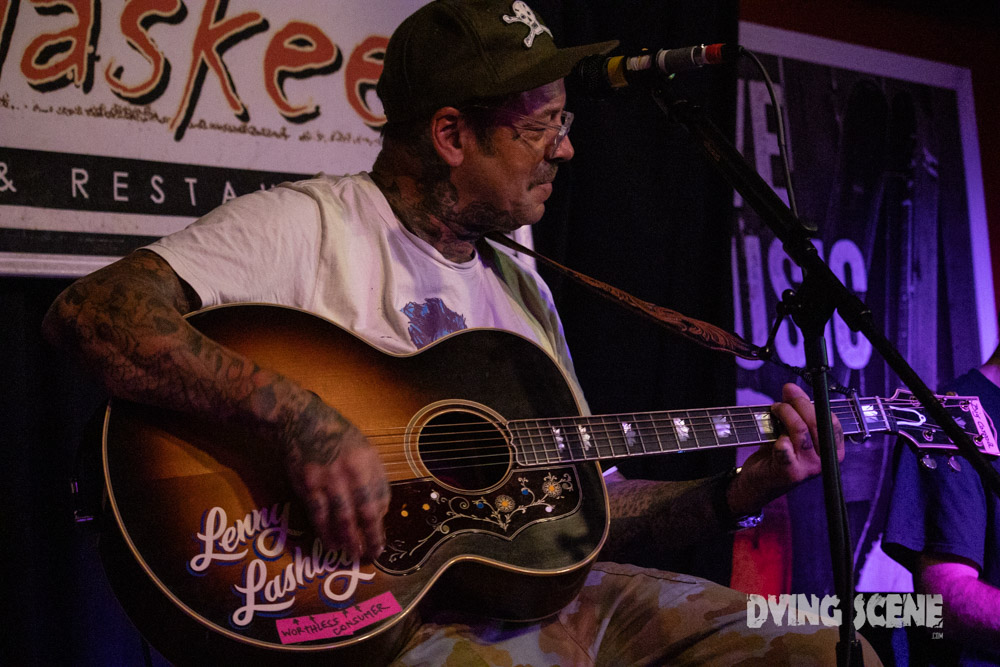
For the last handful of these annual Shaskeen shows, Tim Barry has been joined by a couple of New England heavyweight singer/songwriters, Matt Charette and Lenny Lashley. Like Barry, both play largely acoustic Americana-tinged music that doesn’t stray too far from their respective punk rock roots. Charette was first up on this night, and in a unique turn, he was joined on acoustic guitar for the evening by his partner, Isabella Febbroriello. The pair were both severely injured in a motorcycle accident back in May and a broken bone in his left wrist has left Charette unable to play guitar for the foreseeable future. Luckily Febbroriello is no slouch with a guitar, which she normally dons in her own band, The Welcoming Committee. The duo kicked things off with “I’ll Sleep When I’m Dead” from Charette’s brilliant 2015 record Back East, a three-and-a-half-minute singalong that is always heavy and is especially poignant given the events of the last year. Same goes for the equally singalongable “4X4” that closed the set. While maybe frustrated that he couldn’t play and stomp along as he’s been accustomed to for a few decades, Charette soudned as good as ever and appeared appreciative of the opportunity to get back out on stage, now with Febbroriello by his side.
Lenny Lashley filled the middle spot on the bill. Len’s been one of the more unique and vital voices in the Boston punk scene for as long as I’ve been around it, even as a 61-year-old roofer by day circa 2026. Lashley’s brand of punk-tinged Americana works in a variety of settings and musical formats; we’ve seen him run a gamut that ranges from totally solo to fronting full rock bands featuring horn sections, and we’ve seen him pair with any number of stringed instruments manned by talented local artists. That was front-and-center at Shaskeen on this occasion, when he was backed by Tom West on accordion and Troy Caruana on pedal steel. This particular combination allows Lashley to lean into the sometimes melancholy side of his songwriter chops, adding a certain beautiful heaviness to the texture. Particularly weighty were “Gone World” from his latest full-length, last year’s Pray For Death, and “Bruiser” which is an ode to a lost pup as written but took on extra gravity given the very recent loss of Boston scene icon Babs O’Brien, which left nary a dry eye in the house.
As he is wont to do, Tim Barry kicked things off with “Dog Bumped,” a barn-burning anthemic ode to a friend who’s doing a few decades of prison time for doing what he had to do. It’s been more than two decades since began his full-time solo career as a Martin-wielding working class troubadour. Barry is at his best – and his most punk rock – in venues like Shaskeen and among crowds like that from the greater Manchester area. Blue collar, honest people who aren’t afraid to dance and sing at the top of their lungs about love and loss and redemption and picking yourself up and keeping things moving. There’s frequently very little difference between audience and performer at a Tim Barry show. There’s a sense that we’ve all worked through some shit – and maybe that we’re still working through some shit – and that it’s better to do that in a communal setting. It leads to maybe not a religious feel but certainly a revivalist one, even to the new Clear Blocks Ahead tracks like “WW Pool” and “Waltzing The Cell” and “Hello From Roanoke” and especially the somber “Loads East, Empties West,” that are already peppered into the setlist like the classic singalong staples that they’re destined to be. Barry seemed as happy as we’ve seen him in a minute and it lead to maybe the best set we’ve seen from him in a long time; free, passionate, energetic, at one with the crowd.
Check out more shots from a cathartic night at the galleries below!
It seems like at least once a year, the Palladium puts on a stacked punk rock show with a bill that catches my attention. Years ago, I dragged my wife to a Circle Jerks, Negative Approach, 7 Seconds, and Bouncing Souls show. It gave me a chance to catch up on bands I had missed […]
It seems like at least once a year, the Palladium puts on a stacked punk rock show with a bill that catches my attention. Years ago, I dragged my wife to a Circle Jerks, Negative Approach, 7 Seconds, and Bouncing Souls show. It gave me a chance to catch up on bands I had missed or hadn’t seen in a while. This show did the same thing. This time around, Goldfinger headlined a night that saw sets from the Vandals, The Suicide Machines, Pulley, and Sullvn. It was a fun night that celebrated the endurance and timelessness of ska, punk, and what happens when you combine both.
Sullvn is a ska band from San Diego, CA. They played a style of ska similar to Goldfinger’s, but it was a little too poppy for my taste. They made sense as an opener for Goldfinger, but not for Pulley, the Suicide Machines, or the Vandals. They played a handful of laid-back ska songs, including a cover of the English Beat’s version of “Tears of a Clown” and “The Impression That I Get” by The Mighty Mighty Bosstones, along with Aaron Barrett from Reel Big Fish; more from him later. Dicky stayed out and played another song he had written with the guys in Sullvn and John Feldmann from Goldfinger. While most of the night could be considered ska punk dad music, this set embraced it a little too hard.
It’s been a minute since I’ve seen Pulley. They played a set that stuck to songs from their older catalog, playing songs like “Second Best” and “Working Class Whore.” This lineup of the band sounded great, but I forgot how depressing their lyrics can be. It was great to see a good-sized crowd react to them, but they would have sounded better in a smaller venue. Alas, we cannot control the success of thirty-year-old punk rock bands finally getting their due. The Palladium’s acoustics probably weren’t built for punk rock.
The Suicide Machines played the entirety of their ska punk classic, Destruction by Definition, in celebration of its 30th anniversary. While the band has gone through many changes, this iteration of the band sounded pretty spot on. For the tour, Aggrolites drummer, Chris Borbon, is handling duties behind the kit, which meant that Jay Navarro wanted to default to him to sing “Face Values,” which he obliged and did well. Sometimes fun, sometimes poignant, but always energetic, the band blew through the seventeen songs of the record, playing up to and including their take on the Minor Threat classic, “I Don’t Wanna Hear It.” With less than a minute left, they capped the set with the more and more relevant “DDT” from Destruction by Definition‘s follow-up, Battle Hymns.
In my twenty-plus years of seeing the Vandals, I have never seen them put on a bad set. This set was no exception. They never play a bad set. Sometimes they just don’t play the song I want to hear. That being said, their song choices were pretty good. Split pretty evenly between their 1990s releases, the Vandals did play 1980s fan favorites “Urban Struggle” and “Anarchy Burger (Hold the Government).” I miss hearing “Wanna Be Manor” in their sets and their “Superficial Love” cover in the middle of it. There was a strong NOFX presence at this show. For these last couple of Vandals’ shows, Smelly from NOFX has been sitting in on drums for the ever-busy Josh Freese, giving the band the opportunity to cover and show love to one of their friends and play “The Moron Bros.” More NOFX stuff later. As with all shows, they closed their set with Warren singing a cover; this night was no exception as the band closed out the set with “I Have a Date,” a song that never gets old played live.
By the time Goldfinger got on stage, most of the crowd, whether they were too young or too old, was tired, but the band remedied that pretty fast. The band walked out to “Superman,” not their song from Tony Hawk, but the band playing the theme to the movie from the 1970s. Dan Regan and Scott Klopfenstein played the melody on their horns as the band walked out and jumped into the song “Spokesman” from 2002’s Open Your Eyes. Playing what I assume is a normal set and fitting all the hits in, they also snuck in their cover of “Just Like Heaven.”
Goldfinger had teased that this would be a special night with surprises. Halfway through the set, El Hefe came out and played “Open Your Eyes” with the band and then led into “Linoleum,” after which Feldman told the story of a band he went and saw years ago at the Barn in Riverside. That band was Reel Big Fish, and Aaron Barrett came out to play “Sell Out” and “Superman” with the band. If that wasn’t enough, they pulled Darren Pfeiffer and Simon Williams from the original lineup out to play “Anxiety,” “Answers,” and “Mable.” They closed the night with a cover of Nena’s “99 Red Balloons,” where they unleashed, you guessed it, 99 red balloons.
This show would have made a mostly great stage at a festival, without the gauntlet of being at a festival. It was very reminiscent of older days where you’d get some weird bills in the smaller venues when all these bands were starting out. Punk and ska are still very much alive, and shows like this prove it.
Mannequin Pussy has been one of my go to comfort bands since around 2017, so it was honestly a very humble honor to just be in attendance. Their music has gotten me through breakups, moments of figuring myself out, getting through the current state of the world, and some of the harder chapters of my […]
Mannequin Pussy has been one of my go to comfort bands since around 2017, so it was honestly a very humble honor to just be in attendance. Their music has gotten me through breakups, moments of figuring myself out, getting through the current state of the world, and some of the harder chapters of my life. Having first seen them back around that time in smaller venues like Johnny Brenda’s and Boot & Saddle (RIP) in Philly, there’s something really special about watching that same feeling and energy carry over to a way larger space. While the scale of the venue has changed… their intimacy, honesty, and advocacy behind their words haven’t.
The Brooklyn based quartet Lip Critic opened the night with a setup that caught my attention off the bat; two drum kits, two samplers/vocals. There was no amp walls or elaborate stage production, just four people surrounded by their gear, ready to make as much noise as possible and I really dig that. I’ll be checking them out live again for sure.
As far as MP’s setlist went, it was stacked start to finish. From opening with I Got Heaven and a lot of songs off of their most recent album I Got Heaven, to some classics mixed in like Everything from their second full length album Romantic bringing me back to the small-venue-Philly-days.
I was also really stoked to hear them play a new unreleased song I Stuttered, meaning that there will be an upcoming album release in the near future, woohoo!
As mentioned earlier, the jump in scale has not taken away a single thing from their performances. If anything, I’m genuinely proud to see how much recognition they’ve gained over the years. Watching a band that you’ve loved for 10+ years grow from playing smaller rooms in Philly, to selling out a venue like Starland Ballroom feels like a proud parent moment? They’ve earned every bit of that recognition. It was such a moment for me seeing so many people alike come together for this show.
They’ll be resuming their tour with The Foo Fighters and Queens of the Stone Age (major!), following another tour with Amyl and the Sniffers, following another tour with Wednesday… all before the year ends!
Chicago’s infamous DIY punk scene thrashes through the city constantly – unashamed of the grime, grit, and fire that lies woven within the community. So much of the greatest music of this scene is the young punks lit up with rage, societal nonconformity, & political unrest. This is my love letter to 3 of those […]
Chicago’s infamous DIY punk scene thrashes through the city constantly – unashamed of the grime, grit, and fire that lies woven within the community. So much of the greatest music of this scene is the young punks lit up with rage, societal nonconformity, & political unrest. This is my love letter to 3 of those bands.
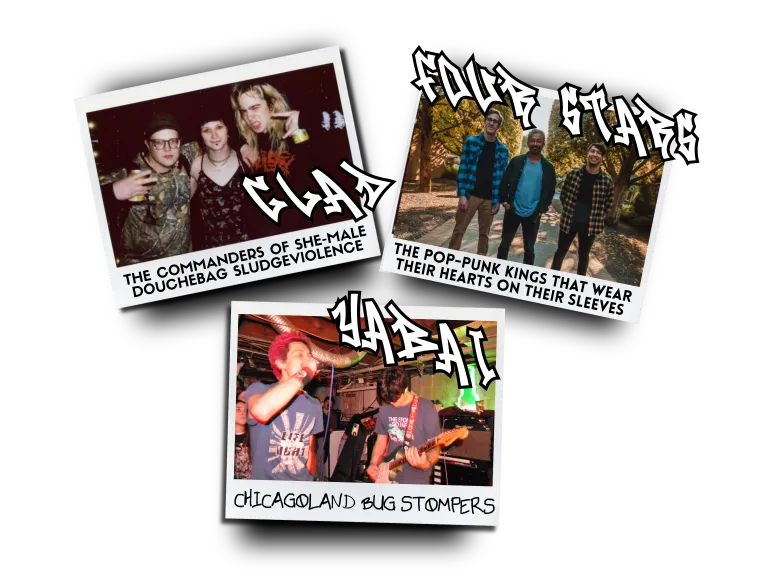
GLAD: THE COMMANDERS OF SHE-MALE DOUCHEBAG SLUDGE-VIOLENCE (@glad.violence)
Rain Lopez, Liz Covalt, and MJ Ultra conduct the wizardry that is GLAD: the she-male-fronted, douchebag sludge-violence band that transformed my connection with the scene forever. I met GLAD in an aforementioned “shitty basement,” dripping in other people’s sweat, and writing bullshit on any blank space I could find on the wall. I carved my initials into the interworkings of the low ceiling while I avoided making conversation with the various bassists in the room who dated my friends. But there was something instantly commanding about the way that GLAD started their set. MJ threw herself into the crowd while she sang, Rain tore it up on the drums, and Liz was a killer on the bass. But perhaps even more endearing than that, my friends and I smoked a cigarette alongside MJ in the backyard.
The duality of the Chicago punk & hardcore scene had never been more apparent to me than in this very moment. I got to watch these three people absolutely destroy a room, lighting something inside of me ablaze that would lead me to want to cement my place in the local scene forever. But more than that, the scene became approachable to me. Something pinched in my brain, and I realized that there is no imaginary posterchild that represents who you’re supposed to be when you go to these gigs. I didn’t need to bring my shitty boyfriend with me cause I thought it made me look cooler. I could come to a show after a 9-to-5 and melt away into the tinnitus-inducing trash music that I loved, and I didn’t need to do anything else except exist. And after almost an entire year of living in this post-transcendent aftermath, I finally got the chance to sit down with GLAD to talk about this, the scene, and the future of it.
When asked about what made all of them feel so connected to the scene, Ultra exhaled. “With GLAD, I feel like I get to be a bad person. You know? Like, when we’re playing for 20 minutes, and I get to let all that anger and disgust and hatred out. If you’re in the front, I might hit you, I might kick you, I might spit in your face, right? And in this moment, I don’t matter! But neither do any of you.”
We discussed how “punk behavior” is integral to the scene – the ability to jump, kick, mosh, and scream are all necessary parts of the experience. The big venues of Chicago don’t welcome that, and the endearingly shitty basements that do usually end up closing. We then started to talk about how many of our favorite nights were spent in these venues, and how modern spots like Casa Cafe (@casacafeshows) have quickly become the new ringleaders.
“I think punk used to live in shitty basements,” Lopez said. “And with any luck, it’s just a transitional phase. I do think that it will come back. That’s what’s always been so special about Chicago.”
YABAI: A versatile piece of Japanese slang meaning anything from “sick” to “WHOA!”, secondarily referred to as THE FUTURE OF CHICAGO PUNK!
YABAI is a local punk band that makes self-proclaimed “evil music,” consisting of frontman Jesse Vasel, his brother Jaden Vasel on the drums, and friends Austin Martinez and Elian Gonzalez, both on guitar.
It’s confirmed: Lightning DOES strike twice! I first discovered YABAI in the same basement I found GLAD. What’s so much fun about YABAI is how apparent it was that we were all witnessing the future of the scene – spiky hair, killer style, and stage presence that could light a room on fire.
YABAI’s music is hardcore, it’s punk, it’s quintessential rage. YABAI delivers, and the entire crowd responds: they mosh, they stomp, and they scream. This band is a wicked force of passion and young rage.
“We want to trick [non-punks] into thinking we’re like, not evil. Like really really cool,” Jesse said. “Then they come to the show and see like the chaos and it’s like, oh, what the fuck? But then they like it. That’s what we want to happen.”
YABAI is that in a nutshell! An unexpected meteorite of hardcore morals, vibes, and demeanor. These four come together to create something very special, something that thrives off the energy of a bunch of no-good kids going crazy in a dimly lit basement. *THAT* is what the Chicago scene is about, and as a fan, I couldn’t not talk about how crucial that is to the punk scene in our interview.
Before they reworked their Spotify, their songs CORPO and WAKE UP CALL were in my ‘Most Listened To.’ I loved how listening to their studio recordings felt like I was at a show even if I was actually on the Red Line, and one of the things I love about the scene is how much you wish you were there when you’re anywhere else.
We spoke again about the state of Chicago DIY venues. “This shit is run by hardcore kids, for hardcore kids, and it’s just like a pure scene,” Jesse stated. “These venue owners aren’t some outsiders, they’re just grown up hardcore kids.”
YABAI consists of hardcore kids who love hardcore more than anything.
FLY THE CHI-TOWN FLAG: IT’S FOUR STARS! (@fourstarsil)
I actually met the guys of Four Stars in a slightly more established non-basement: Beat Kitchen. The Chicago-based Pop-Punk band is made up of lead singer Aida Ahmed, drummer Mikey Williams, and guitarist Danny Escobar.
I found them after I tuned into their soundcheck after an interview with a separate artist – they played Fall Out Boy to get their ball bearings aligned before their set which immediately perked my ears up. We connected through social media, and I’ve had the greatest fun sharing how crucial pop-punk has been to our lives with each other. What I love about Four Stars is how quickly they turn into “Four Stars,” in the sense that it takes mere seconds for them to turn into the wickedly talented performers that they have built alongside each other. They are funny, they’re fresh, and they’re raw – they love to wear their hearts on their sleeves with no shame at all. They talk about break-ups, relationship problems, and their gripes with this crazy, crazy world all in the form of music. They are unbelievably them as well as unbelievably punk in a city that has so many wonderful sounds.
But it is in these bars and local venues that they become most themselves. Even their name is a tribute to the iconic Chicago flag, featuring blue and white stripes with four bright red stars in the middle. These 3 grew up on the scene with famous pop-punk bands like Yellowcard, Blink-182, and Sum 41, which turned them into the musicians they are today. They are unabashedly Chicago punk, living off the energy of the locals and all those who love to go crazy to emotionally distraught lyrics. “Four Stars” is Chicago through and through, and it would be an understatement to say that Ahmed, Williams, and Escobar are amazing examples of the endlessly giving Chicago DIY scene.
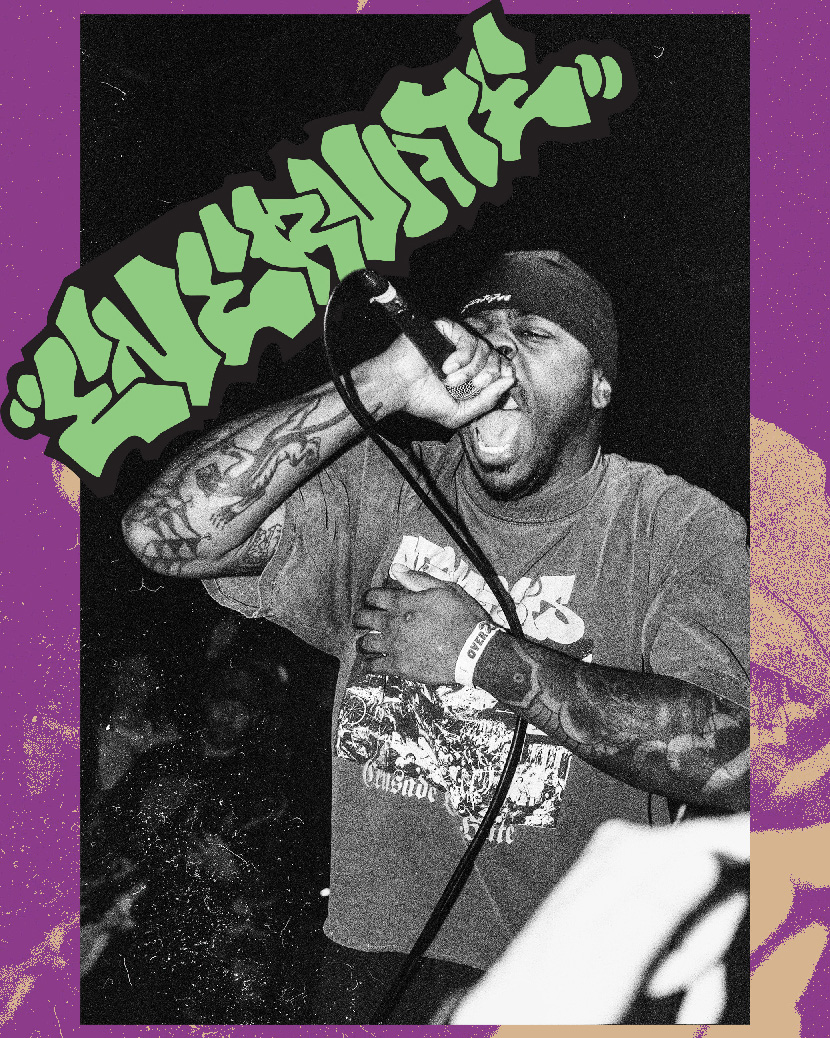
Enervate is one of my favorite bands to come out of the Midwest in a while representing the exploding DIY scene in Milwaukee. All I have to say about this band is if you don’t know them you’re going to be stoked on them by the end of this article. I found Enervate initially because […]
Enervate is one of my favorite bands to come out of the Midwest in a while representing the exploding DIY scene in Milwaukee. All I have to say about this band is if you don’t know them you’re going to be stoked on them by the end of this article.
I found Enervate initially because they were opening up for one of my favorite bands at the time, Buggin, at Schubas in Chicago. Like most hardcore lineups this one had five to six openers with Enervate’s set in the middle. I try to listen to all the openers before a show to hype myself up and get a sense for how the night is going to go.
The band had just released their EP “All Said and Done” and Don’t Need You was the first in their Top Songs section. I was chilling in my friends basement and we put the song on and immediately had an “OH SHIT these guys are sick” moment. The songs on the EP are heavily emotion driven with super heavy breakdowns and you’ve gotta keep your head on a swivel in the pit.
“My Own Piece of Mind” picks right up where their previous projects left off. Their hard nosed sound is driven by lyrics that exude anger and frustration coming from state of the community and the haters that pretend to be a part of it, and the feeling of being stuck in life with no way out. While the EP airs a lot out its also combined with a sense of optimism that through it all you can change your situation through determination. This sense of hopefulness comes through in a more subtle way as songs like Pass Me By and Keep My Flame show the band’s sense of self exploration both personally and musically.
I had a chance to catch up with bassist, Tom Hively, about the new EP and here is what he had to say about inspiration and behind the scenes process of recording the project.
Dying Scene (Max Rubin): Milwaukee has a really cool hardcore scene, but I feel like it’s not as well known outside of the Midwest. What was it like coming up in that scene and how do you feel like it helped to shape your identity and sound?
Enervate (Tom Hively): “Milwaukee has always been a scene where you have to work hard for what you want and nothing is handed to you. Whether it’s getting bands to come play here, finding venues to even book shows at, or to get people to come to your shows. I feel like Enervate has always kept that DIY mindset in the approach to the band. We started the band to play local shows and to have fun with our friends. Nothing more. And we are very thankful for anything that we get to do besides that.”
How did you guys get started?
Adam (guitar) and Sean (drums) had been jamming together a little bit in 2019 in between tours of their previous band Low End. I had always wanted to do a band with Adam so the 3 of us started jamming together. We had met Lan (vocals) the previous year and thought he would be the perfect person to front it. We recorded the first demo in Feb 2020 with plans to play the first show in March 2020 and well, we all know what happened there. By the time we were able to play our first show in September of 2021, Marcus (guitar) had joined us to solidify the lineup.
What is/was your songwriting process? Where were you guys pulling inspiration from for the EP? What are your inspirations in general as a band?
“Typically, someone will have a song written (or at least an idea) and bring it to practice and we’ll all provide feedback / input. It’s a collaborative process for sure. A Lot of the times what we start out with is not at all how the song actually ends up. I personally don’t write any of the music but for inspiration, we always pull from the NYHC sound but try to insert our own flair to it. We want our songs to be simple and groovy and get stuck in your head. We’re not a dance hard band but if you want, that’s cool; if you want to just bob your head and have a good time, that’s cool too.”
What was the recording process like? Who was the EP recorded with? Are there any good stories you have from the studio?
“We recorded the EP with Collin St Mary at 19 Stars Recording in Northwest Indiana. He has recorded everything we have put out thus far besides the first demo. I believe we were able to get everything done besides vocals in 2 days. Collin always offers advice / input but isn’t pushy or anything and just lets us do our thing. No crazy studio stories or anything but I did make Adam record the bass parts because I wanted them to sound better than if I did it.”
Songs like Pass Me By and Keep My Flame tease a little bit of a new direction for the sound. What was the intention there? What’s the vision for the sound going forward?
“We wanted to try something new without totally changing the sound up. Don’t worry, we won’t ever write a pop punk record or anything. But every now and again, Lan would throw in some melodic vocals live and we knew we could do something cool with it. We didn’t have a goal to do more melodic parts really, it just kind of happened. We want it to feel organic and not forced and I think we captured that feeling.”
Overarching themes are pretty strong and seems to be a fear of getting stuck, both literally and metaphorically, and a determination to not let people or circumstances get in your way. What’s the story behind this or if there are a bunch of things where are they coming from?
“Lan writes all of our lyrics but he actually provided some insight in our interview with Tyler from LDB Records and I will provide that here. “I tried to write on topics that occupied my mind a lot in the time leading up to recording. No Turning Back was a song of frustration – people that love to critique things from the outside but claim to be in it. Never actually contributing to a solution and eventually moving on to the next thing to critique. Whether it’s hardcore, real-life shit, whatever. Pass Me By was a reflection of how I felt in my own life experience at the time, feeling stagnant. I wish there were cooler stories behind some of it, but that’s how this record developed lyrically. Felt a lot like venting”.”
It’s really cool you teamed up with Hold My Own for the title track. How did you guys get linked up with them/what was it like working with them? Any good stories there?
“We’ve known Anchit for a long time, I want to say like 2011 or 2012. I met Greg in 2021 when I booked Hold My Own in Milwaukee. We’ve played a bunch of shows with them and love their band and them as people. We wanted someone to feature on My Own Peace Of Mind and Greg was one of the first people we thought of. We asked and he immediately said yes.”
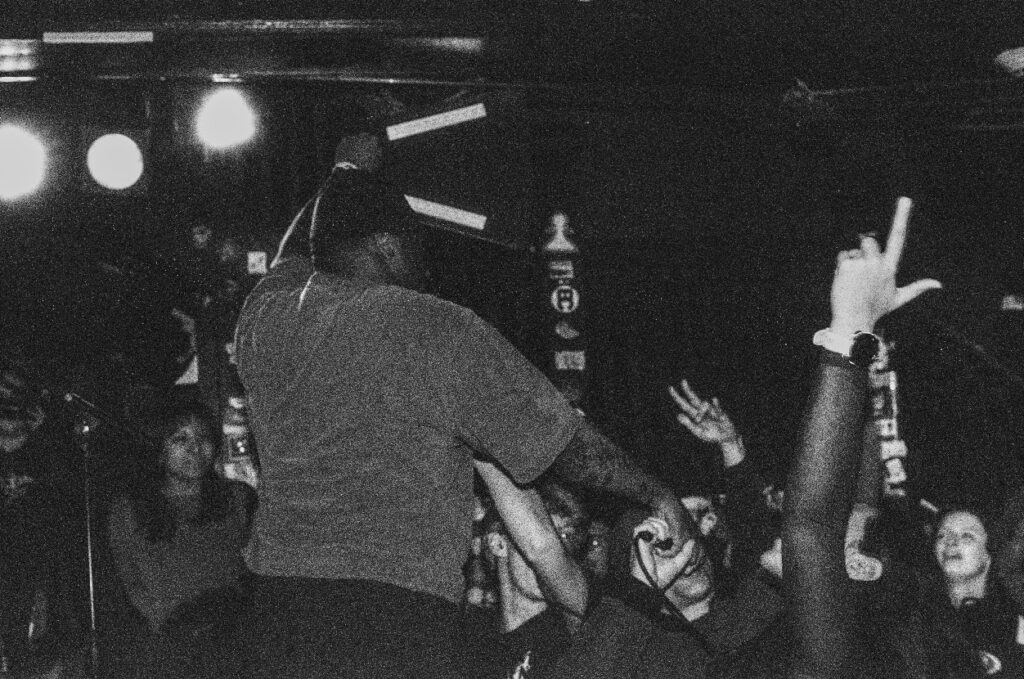
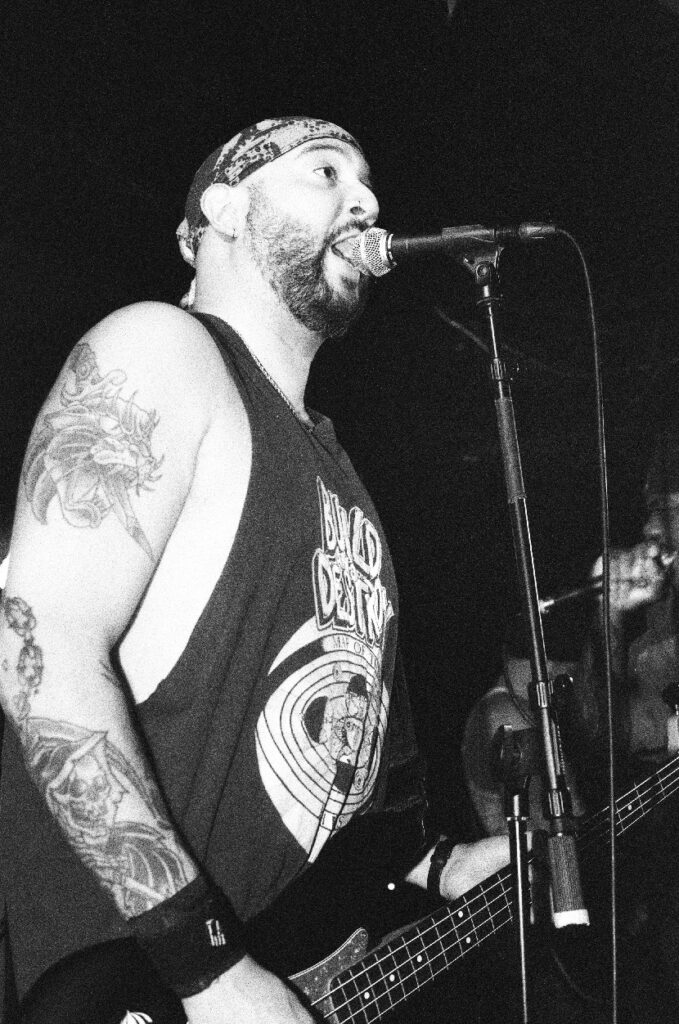
*All photos are from their first show in Chicago post-release.