Mad Caddies almost did not make its headlining gig at Reggie’s. The band had been stranded in an airport in Halifax for nearly 18 hours due to a canceled flight. But of course, the operative word is “almost” because the band did make it to the venue as the opening bands were on stage. Those […]
Mad Caddies almost did not make its headlining gig at Reggie’s. The band had been stranded in an airport in Halifax for nearly 18 hours due to a canceled flight. But of course, the operative word is “almost” because the band did make it to the venue as the opening bands were on stage. Those opening bands, Something To Do and The Iron Roses provided strong support. What a terrific evening of music!
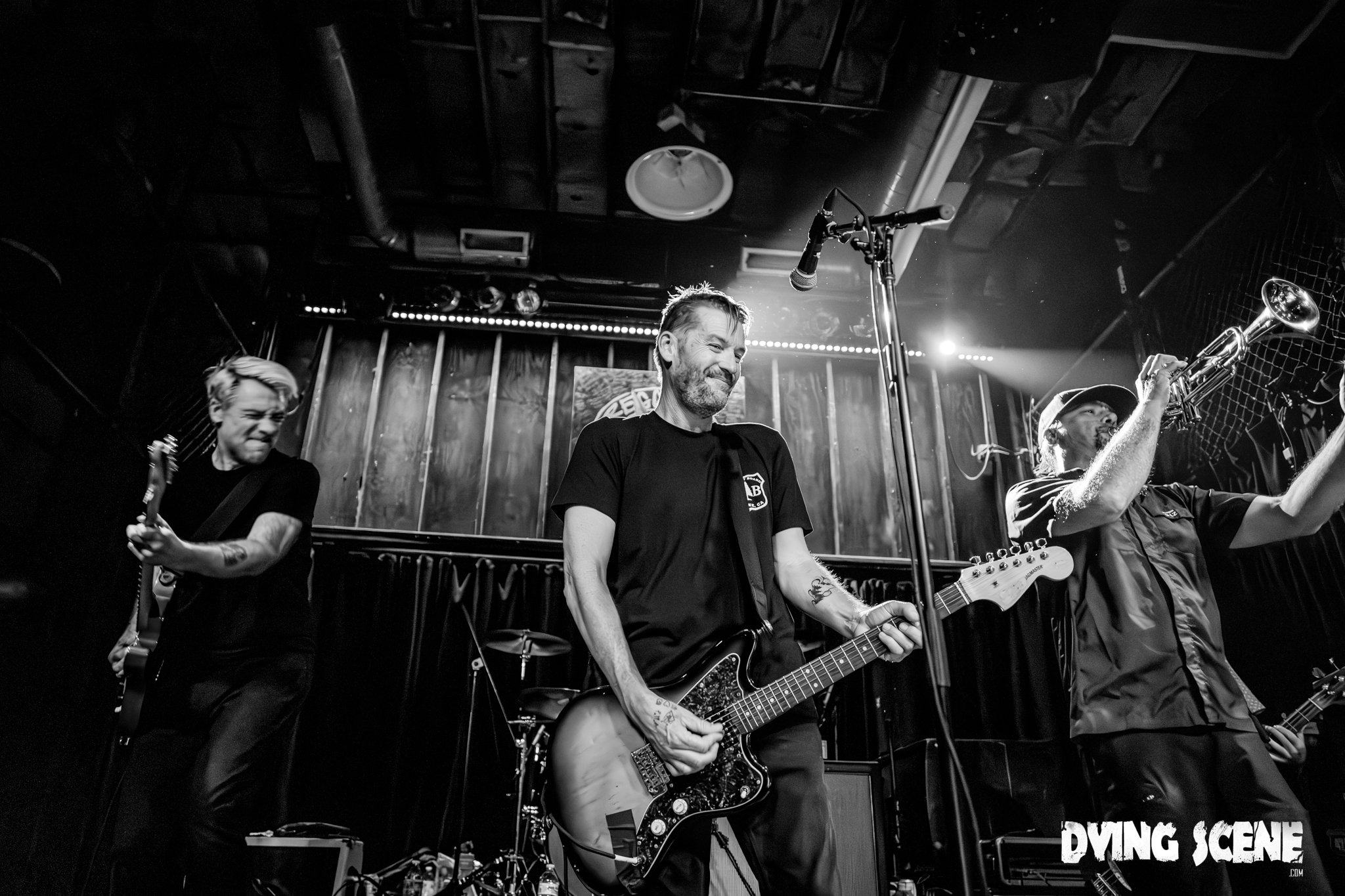
Mad Caddies, out of Santa Barbara, CA, brought the punk/ska fusion to the S. State St. stage. Perhaps due to the aforementioned travel issues the band members arrived ready to bust out. And bust out they did, with an upbeat and energetic performance. The set included “The Dirge,” “Reflections,” “Backyard,” “Tired Bones,” and “Lay Your Head.”
Mad Caddies has a run of September shows with Ballyhoo! on deck. In November, the band hits the road with Authority Zero and Belvedere.
Perhaps the most exciting show will occur on October 5th in San Pedro, CA as part of the Punk In Drublic Festival. There, the band will provide support on “Faturday” for NOFX‘s penultimate show. That should be a blast.
The Iron Roses is a fairly new ska/punk band composed of veteran musicians. Nathan Gray of Boysetsfire and Becky Fontaine share lead vocals. The band put on a snappy, boisterous performance with both singers taking leave of the stage to groove in the center of the crowd on the floor. The rest of the group killed it as well. Tight yet fun work.
Iron Roses complemented Maddie Caddies perfectly. The band’s showing at Reggie’s makes me look forward to the next time I can catch the band.
Iron Roses has North American tour dates scheduled for September and October. The band is also on the lineup at The Fest 22 in late October, in Gainesville, FL.
Something To Do out of Milwaukee had something to do at this show and they did it marvelously. That is, kick off the show with a bang. With all members seeming in perpetual motion, the band tested the attendees’ stamina. The horn section was particularly kinetic. The entire group was both in grand unison, with each member’s personality shining through.
The rowdy set included “Sweet Caffeination” and “Draw Me Like One of Your French Girls.” Both of those tunes are off Something To Do’s new album called Here Comes the Panic!
This month Something To Do will be sharing the stage with Mustard Plug and Authority Zero a few times. If you need something to do…well you get the idea.
As so often is the case, Reggie’s was the cool place to be for a hot show on a warm summer night. Cheers!
This time next week, Minneapolis hardcore punk band Texture Freq will be releasing their new 7″ What May Come on Dirt Cult Records. This time this week, Minneapolis hardcore punk band Texture Frequency is premiering a brand new track called “So What? It’s the Future” exclusively(!!!) on Dying Scene. Fuck yeah! Check that shit out […]
This time next week, Minneapolis hardcore punk band Texture Freq will be releasing their new 7″ What May Come on Dirt Cult Records. This time this week, Minneapolis hardcore punk band Texture Frequency is premiering a brand new track called “So What? It’s the Future” exclusively(!!!) on Dying Scene. Fuck yeah! Check that shit out below and buy the 7″ while yer at it.
This premiere is brought to you in part by Punk Rock Radar. If you’d like your band’s music video to be premiered by Dying Scene and Punk Rock Radar, go here and follow these instructions. You’ll be on your way to previously unimagined levels of fame and fortune in no time!
“So What? It’s the Future” occupies an odd place in Texture Freq’s discography, emerging from a troubled period of reconfiguring what it meant for me to write after first surviving a mass shooting, then in the early days of the most recent iteration of the ongoing genocide in Palestine. Struggling with a sense of futility, writing this song was an exercise in forcing myself–and hopefully the listener–to refuse that futility in favor of the forms of resistance that have carried so many through so much. What could I possibly say? There is no need to reinvent the necessary. We already know what it takes to build a better world.
Deleuze writes, “There is no need to fear or hope, but only to look for new weapons.” The sense that I had nothing to say mutated into a sense that what was necessary had already been said and an urgency in the saying itself: to continually lift ourselves up, together; to continually repeat and reinvent ourselves in moving forward with lessons learned time and time again; to make meaning from these repetitions. A song is barely a weapon, but remains a method, a cathexis, a reiteration of accumulated meaning finally disseminated as a call to arms against the despair in the mundane it’s so easy to remain mired in.
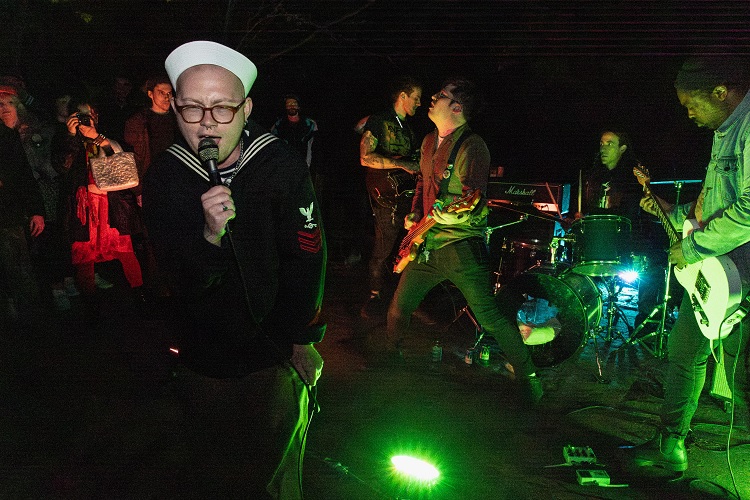
Veteran Swedish melodic punk four piece Rebuke has risen from the ashes with a brand new single “Sharp Left Turn (The Trolley Problem)”! The track has already been melting faces for a few days on Spotify and elsewhere, and now we have the distinct honor of bringing you the exclusive premiere for this lil ripper’s […]
Veteran Swedish melodic punk four piece Rebuke has risen from the ashes with a brand new single “Sharp Left Turn (The Trolley Problem)”! The track has already been melting faces for a few days on Spotify and elsewhere, and now we have the distinct honor of bringing you the exclusive premiere for this lil ripper’s music video. Head down below and check that shit out right here, right now!
Vocalist and guitarist Petter Mossberg shares, “We like to say this is a song about running over Nazis with your car, but it’d be more fair to say it’s a rumination on courage, conviction, sacrifice, and ethics. A Straight up philosophical masterpiece, if you ask us. Please ask us.” The accompanying music video, shot in the band’s practice space captures Rebuke’s high-octane energy and no-holds-barred approach. Bassist Phil Nordling notes on the experience; “Yeah we also got out in traffic, in a truly death-defining stunt! We wanted to stay true to the Rebuke formula of fitting as many parts as possible into as short a time as possible, aiming for the end result to grab one’s attention and full-speed running away with it, while maintaining a cohesive, incisive song”.
Emo icons Taking Back Sunday brought their 2024 North American Tour with Citizen through Boston’s own Fenway-adjacent MGM Music Hall on Wednesday, August 14th. Taking Back Sunday stayed true to their word at their Boston show– they got the mic and we got the moshpit. Celebrating the release of their newest album “152 ” the […]
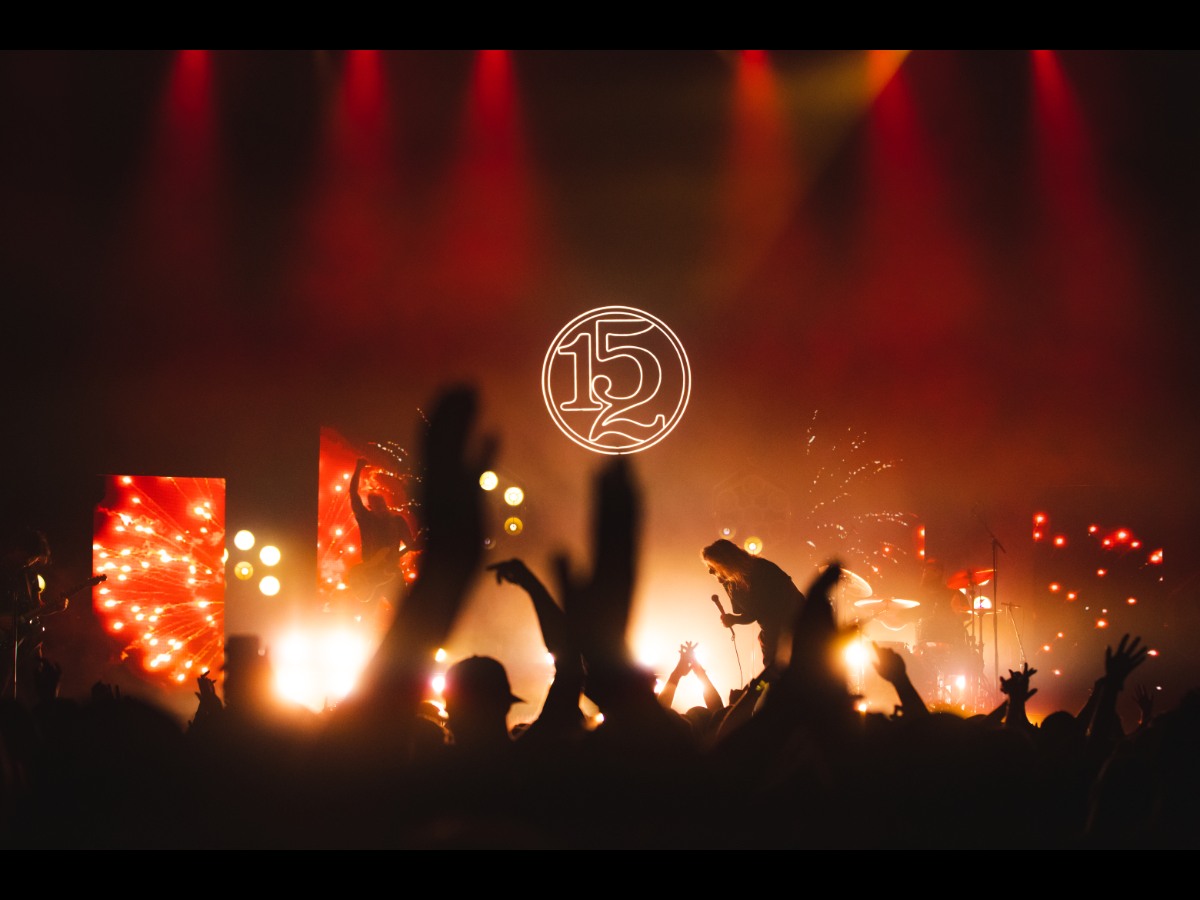
Emo icons Taking Back Sunday brought their 2024 North American Tour with Citizen through Boston’s own Fenway-adjacent MGM Music Hall on Wednesday, August 14th.
Taking Back Sunday stayed true to their word at their Boston show– they got the mic and we got the moshpit. Celebrating the release of their newest album “152 ” the band played career spanning hits, new and old. An excited crowd got to see the charismatic lead singer, Adam Lazzara, belt out beloved lyrics as well as his patented mic swinging skills.
Citizen brought the hops to the Boston show with a bulk of the crowd singing along. This band was a perfect fit for the support slot on this tour.
The connotations of “Emo” are always a mixed bag of assumptions. The genre has changed immensely from its 1980s roots with lyrics still keeping a political mindset and a DIY work ethic. As those first bands played shows for the next wave, the genre changed in the 1990’s, for better or worse. The residual anger […]
The connotations of “Emo” are always a mixed bag of assumptions. The genre has changed immensely from its 1980s roots with lyrics still keeping a political mindset and a DIY work ethic. As those first bands played shows for the next wave, the genre changed in the 1990’s, for better or worse. The residual anger and activism behind what the early architects of Emo were rallying against gave way to feelings of inflection and eventually morphed into the bastardized version that gets mocked as if it’s millennial hair metal.
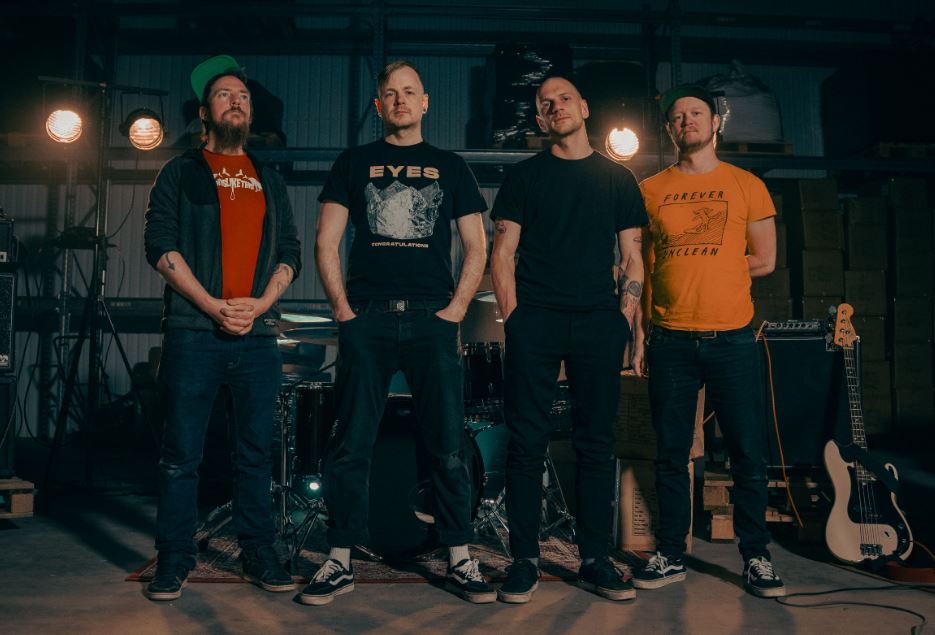
Enter Suburban Eyes; Eric Richter (Christie Front Drive), Jeremy Gomez (Mineral) and John Anderson (Boys Life). A trio of 1990s emo veterans whose self-titled album on Spartan Records aims to evolve the sound they once upheld. Suburban Eyes have written an album that doesn’t exactly evoke the feelings of youth from their heyday, but processes the new feelings of aging; an Emo album for the middle-aged.
The opening tracks, “Socal (Psycho)” and “Headlight Torches,” are arguments of what made this iteration of Emo great to begin with. “4AM” and “Never Ending” hit more of the marks one looks for in that 1990s Emo sound. The first side is a meditation on the genre’s past sound. We’ve listened to the albums of lost hope and isolation. This feels like the other side of that and accepting the sense that life will work itself out while learning to accept the quiet loneliness it gives us sometimes without putting up a wall. The album never gets too aggressive, but it doesn’t just shrug it’s shoulders.
“Floyd” picks things up a bit before a slowed extended breakdown and then builds up, ending strong. While “Uncomplicated Lives” is a little on the poppy side compared to the rest of this album, “Voices” and “Cocktail Ride” keep that moody feeling fans of popular rock in the early 1990s clung to as an alternative to grunge. Some of the songs on this album feel influenced by R.E.M. Do the 90s emo bands owe their sound to Rites of Spring or to R.E.M.? While 1990s Emo bands kept the DIY ethic championed by the pioneers of the genre and constructed their own scenes, there’s no denying R.E.M.’s influence on it, at least lyrically. Their therapeutic verses furthered 1990s Emo more than the seeds Embrace had planted during this time.
The three members of Suburban Eyes wear a few hats contributing to the instruments played on this album; Eric Richter and Jeremy Gomez both play guitar and sing on the album with Jeremy also playing the bass and keyboard on some tracks. John Anderson handles drums, percussion, and also some keyboard work. The method of arranging the songs before recording them instead of working them out in the studio makes this album a thesis on Emo rather than just a document of it.
Is the album overproduced or is it given the care bands like this deserve? It depends on your take. With Jeremy Gomez’s approach and thought being put into the songs themselves, there is also a lot of production on this record. Layering some acoustic guitars is a nice touch on some of the songs, but it seems like there was some type of enhancement making more atmosphere than expected. It seemed like a little much during the first few listens. Gomez did most of the producing of the tracks and they were mixed by Peter Katis. Katis has a resume that boasts Emo adjacent bands such as Death Cab for Cutie and the Get Up Kids, but is also known for working with artists such as Kurt Vile and the National.
Suburban Eye’s debut album isn’t Emo as we know it in its current form. In a time when most bands are reuniting to celebrate the anniversary of a classically revered album, it’s refreshing to see veterans of the scene creating a different type of energy with a new band. If you are a fan of this era of Emo, pick up this record.
The Gaslight Anthem finally brought their History Books album tour through Boston, Massachusetts on August 18, 2024. Joyce Manor and Pinkshift were in tow for what turned into a tight, no-nonsense rock-and-roll soiree at the cavernous MGM Music Hall at Fenway. Baltimore’s Pinkshift kicked off the evening, by my math, a couple of minutes early. […]
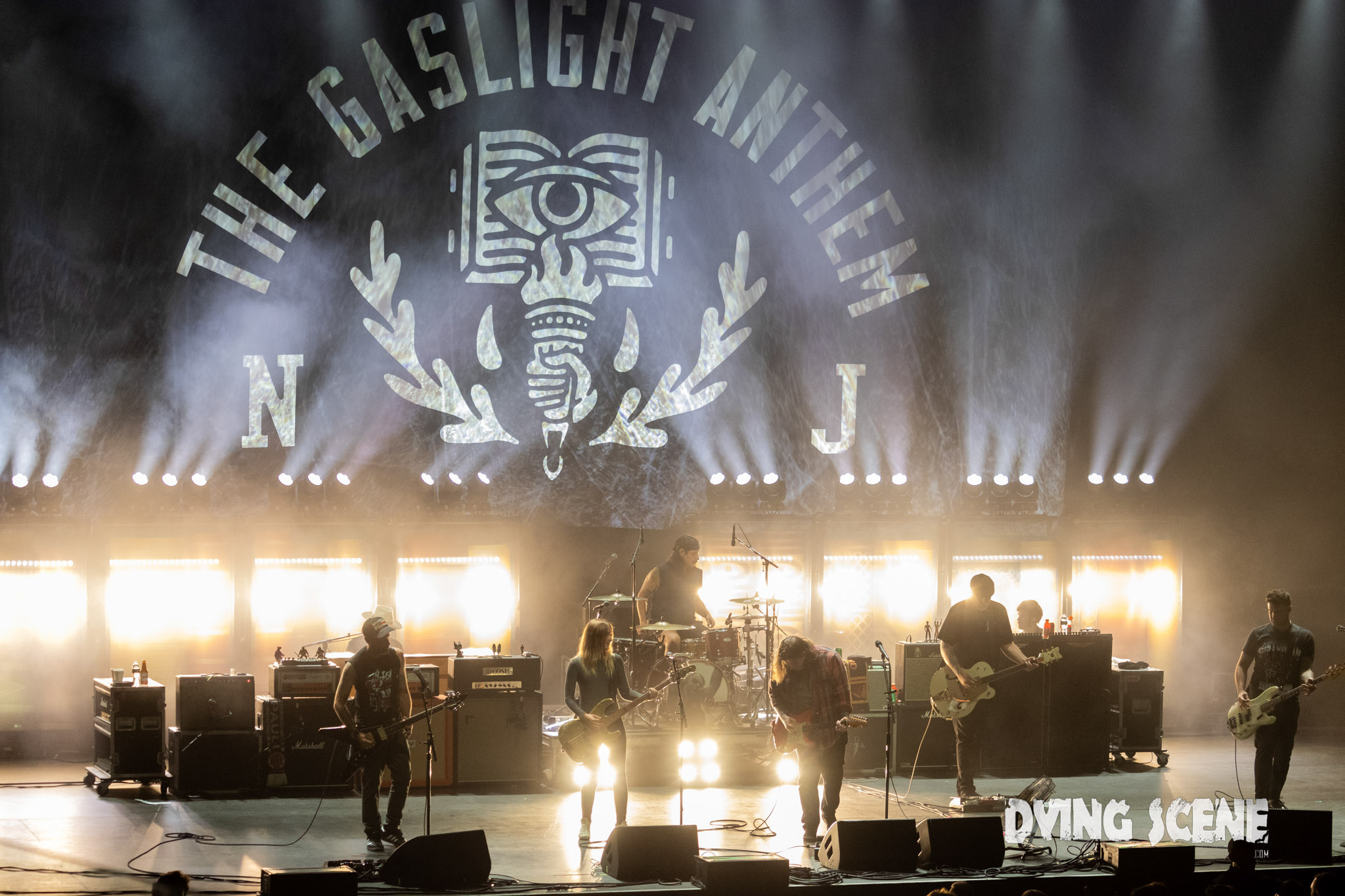
The Gaslight Anthem finally brought their History Books album tour through Boston, Massachusetts on August 18, 2024. Joyce Manor and Pinkshift were in tow for what turned into a tight, no-nonsense rock-and-roll soiree at the cavernous MGM Music Hall at Fenway.
Baltimore’s Pinkshift kicked off the evening, by my math, a couple of minutes early. I’ve made repeat mentions on these pages about how the MGM is a massive facility, but it’s not to be understated, particularly for an opening band who’s playing at a comparatively early time on a Sunday night as the crowd is filling in. Not to project, but I can imagine that might be a daunting task. That said, this marks the second time that I’ve seen a “smaller” band grab this sort of opportunity by the throat and make it their own on this very stage (the first was Grumpster opening for Jawbreaker/Joyce Manor a year ago). If you’re later to the game than I was, the core trio – Ashrita Kumar on vocals, Paul Vallejo on guitar and Myron Houngbedji on drums – formed in the halls of the prestigious Johns Hopkins University – and put their respective careers/educations on hold to make a go of the band thing. The older I get, the more infrequently I see bands for the first time whom I think feel “important.” Pinkshift feels important. With a live sound filled out by Kirby the Immortal1 on bass and Michael Stabekis on guitar, the band plowed through a 35-ish minute set that included “nothing (in my head)” and “Trust Fall” and of course their breakthrough single “i’m gonna tell my therapist on you”. Super fun stage presence, emotional and cathartic vocals, powerful – nay, punishing – hooks. What a trip.
The one-and-only Joyce Manor provided direct support on this Gaslight run. Much like they did at the aforementioned Jawbreaker show a year ago at the same venue, Joyce Manor not only came ready to play but brought a had a sizeable portion of the crowd singing along with every word from the anthemic opening notes of “Heart Tattoo” that set the tone for the rest of the set. From there, the quintet (core trio of Barry Johnson, Chase Knobbe and Matt Ebert joined by Neil Berthier on acoustic guitar and Jared Shavelson on drums for this run) blitzed through nearly two dozen songs over the course of a tight forty-five-minute set. The set was heavy on tracks from the band’s ten-year-old full-length Never Hungover Again, including the above-mentioned opener, and closer “Catalina Fight Song.” Other highlights included “House Warning Party” and “Beach Community” and of course “Constant Headache.”
At promptly 9:00pm and accompanied by the dulcet tones of Cyndi Lauper’s “Girls Just Want To Have Fun,” the Gaslight Anthem strode to the stage and immediately broke into the familiar buildup that is the intro to “American Slang.” From my vantage point in the photo pit, it sounded as though the band ground the gears of the ol’ big rig a little bit before finally getting up to cruising speed, although I’ve gone back and watched a few of the videos floating around YouTube and it seems like that might be more a result of a reverb issue at the front of the house than anything else, as they sounded dynamite from further out in the crowd. Crowd-favorite singalong “45” followed, a one-two punch that did a more than exceptional job of picking up the gauntlet that had been thrown down by Pinkshift and Joyce Manor. The last of the “photo pit three” that started the set was “We Came To Dance” from 2007’s Sink Or Swim, a song I hadn’t seen the band perform since pre-hiatus, so probably nine or ten years ago.
The setlist that followed, I have to say, was pretty great. The four History Books tracks – “I Live In The Room Above Her,” “Michigan 1975,” “The Weatherman” and “Positive Charge” fit in nicely with the comparatively deeper cuts. Much of the back catalog was well represented – although the only Get Hurt song to make an appearance was “Helter Skeleton,” a fact I thought was a little interesting given that we were just a couple days past the tenth anniversary of what is a desert island for yours truly. But I digress. Other highlights from the main set were “Bring It On” and “1930” and the Boston Bruins’ radio anthem “The Patient Ferris Wheel” and the left-right combo of “High Lonesome” and “Here’s Looking At You, Kid.” (Side note: if you haven’t read our recent interview with Benny Horowitz which talks about weaving the new tracks into a setlist of staples and also hints at the epic show closer, what are you waiting for?)
The band sounded pretty finely tuned; dare I say as good as ever. Frontman Brian Fallon’s voice had a little more growl in it than normal, a byproduct of the road (and being only 48 hours removed from a massive sold-out show on their home turf at the Stone Pony), and he was noticeably much less chatty than as has become standard. Less chatty, but no less having fun, and he frequently wore a wide smile across his face and seems genuinely happy to still be doing this with the same guys – Alex Rosamilia (not to get all “Fashion Police, but who was not only not wearing a hoodie but was wearing a sleeveless t-shirt and playing a Gibson Flying V and looked like rock and roll personified), and Benny Horowitz and Alex Levine and of course the mighty Ian Perkins and the more recent touring addition of Brian Haring – again nearly two decades down the road. Karina Rykman, who appears on the studio version of Gaslight’s cover of Billie Eilish’s “ocean eyes” joined the band on second bass (“two bass players for the price of one!) and vocals on that song and stayed out on stage in the same role for the remainder of the set. And what a remainder of the set it was: “ocean eyes” into “Mae” into “Great Expectations” into normal closer “The ‘59 Sound,” a foursome that was worth the price of admission in and of itself. But it was capped off by a return to the stage from Pinkshift, who joined Karina and the rest of the Gaslight crew for a rousing rendition of the Nirvana classic “Smells Like Teen Spirit.” It’s a song that has a different sort of cathartic energy than it did thirty years ago, less of a dangerous catharsis and more of a “hey, we’re still here and still kicking and still a vital force” catharsis.
Happy debut LP release day, Cloakz! The Philadelphia-based indie rockers (that’s them up above – say hi Cloakz!) are unleashing their new record, Control Program, on Mint 400 Records today! Debut full-length records are always meaningful moments in time; here’s how Cloakz’ ringleader Zac Ciancaglini explains the origins of Control Program: “The initial songwriting seeds […]
The Philadelphia-based indie rockers (that’s them up above – say hi Cloakz!) are unleashing their new record, Control Program, on Mint 400 Records today! Debut full-length records are always meaningful moments in time; here’s how Cloakz’ ringleader Zac Ciancaglini explains the origins of Control Program:
“The initial songwriting seeds and ideas started coming together for me right after my first kid was born in 2020, not long after COVID shut the world down and just fully wiped out anything that felt familiar or secure…I kept finding myself thinking, ‘Can someone please just build a goddamn program that can run everything for me?’”
If you’re in or around the City of Brotherly Love, you can catch the album release show at Johnny Brenda’s this Sunday, August 25th. The rest of you can stream that jawn down below!
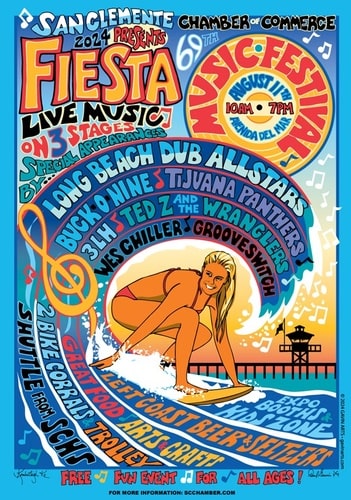
The Sixty-Ninth Annual San Clemente Fiesta took place on August 11th, 2024. The event was an end of summer street festival with Avenida Del Mar blocked off for food, vendors, and a stage with a pretty decent line up. First up was 3LH, a four piece garage and surf rock band from Long Beach and […]
The Sixty-Ninth Annual San Clemente Fiesta took place on August 11th, 2024. The event was an end of summer street festival with Avenida Del Mar blocked off for food, vendors, and a stage with a pretty decent line up.
First up was 3LH, a four piece garage and surf rock band from Long Beach and Garden Grove. This band had a pretty lively set. Melding the riffs of the Ventures with the steady driving beat of Link Wray, kind of reminded me of early Dead Kennedys’ songs in the vein of “Too Drunk To Fuck” and “Police Truck.” Yet, their set went other directions with their song “Shadow” that has kind of a Strokes vibe to it and a Beatles like song with very un-Beatles lyrics called, “Don’t Wanna Hold Your Hand.” 3LH was an unexpected surprise I will be seeking out to see again soon.
The next band keeping with the surf sound, albeit less riffy than 3LH, was the Tijuana Panthers from Long Beach, Ca. This three piece band was a little poppier. The three members, Daniel Michicoff (bass), Chad Pachtel (guitar), and Phil Shaheen (drums) shared vocal duties, belting out songs like “Summer Fun” and “Creature,” which uses 1950s and 1960s horror tropes as an analogy for the angst and awkwardness of being young. They saved their more aggressive songs like “Torpedo” and “Slacker” for the end of their set. The Tijuana Panthers remind of a surfy, but serious version of the Dead Milkmen with almost Buzzcocks-like lyrics.The band powered through a solid set, despite some technical difficulties at the beginning.
More people started to gather at the stage before 1990’s ska band, Buck-O-Nine, had started. They had the set of the day, playing songs that spanned most of their career including, “Calling in Sick,” “Records Store,” and “Pain Inside.” They also played their 1990s radio hit, “My Town,” and some pretty fun covers of Musical Youth’s “Pass the Dutchie,” Joe Jackson’s “I’m the Man,” and Operation Ivy’s “Sounds System.” The crowd went crazy for these and the band did each of the songs justice. I didn’t expect them to be nearly as fun as they were or to have that much energy. The only disappointment was they didn’t play, “Irish Drinking Song,” but given that this was billed as a family event, it was expected.
Headlining the event was the Long Beach Dub Allstars. This was my third time seeing them and they just didn’t click with me. While a good portion of the band were architects of what Sublime and Skunk records built, their songs sound bland to me. Lead singer Opie Ortiz is a great artist whose contributions of album covers and murals throughout Long Beach is unmatched. Miguel Happoldt did a fantastic job collaborating and producing Sublime’s 40 oz. to Freedom and Robbin’ the Hood. Throwing in the keys of Roger Rivas makes this a murderer’s row of talent. It just doesn’t work for me. That being said, I will always stop and give them some of my time because of the caliber of talent. More power to them for still being able to draw a crowd.
Breakdown and set up was pretty fast and each band played about forty minutes, starting promptly on the hour. It’s been a minute since I came home from a show with a sunburn. Nevertheless, this was a fun and good sized street fair taking up about a couple city blocks and three other smaller stages I didn’t even have a chance to get to. This is a free event put on by the city that I look forward to attending again in the future.
Legendary punk rockers, the Circle Jerks kicked off their Canadian tour in Calgary, Alberta last week. Headlining The Palace Theatre in downtown Calgary; accompanied by fellow veterans, The Adolescents, and locals, No Brainer. No Brainer‘s high-adrenaline show was exactly what the audience needed to energize the evening; their melodic style made them the perfect opener. […]
Legendary punk rockers, the Circle Jerks kicked off their Canadian tour in Calgary, Alberta last week. Headlining The Palace Theatre in downtown Calgary; accompanied by fellow veterans, The Adolescents, and locals, No Brainer.
No Brainer‘s high-adrenaline show was exactly what the audience needed to energize the evening; their melodic style made them the perfect opener. Ripping through a vigorous set of their hits, they kept the crowd cheering while keeping the vibe old-school.
The Adolescents were up next. Announcing that this was their first time in Calgary, ignited the crowd. Opening their set with 1981’s No Way, only fueled the fire; it was the first of many tracks off their self-titled debut album, including fan favorite, “Amoeba”. The Adolescents killed it, they were an ideal choice to open for the Circle Jerks and Calgary was grateful for the opportunity to see them live.
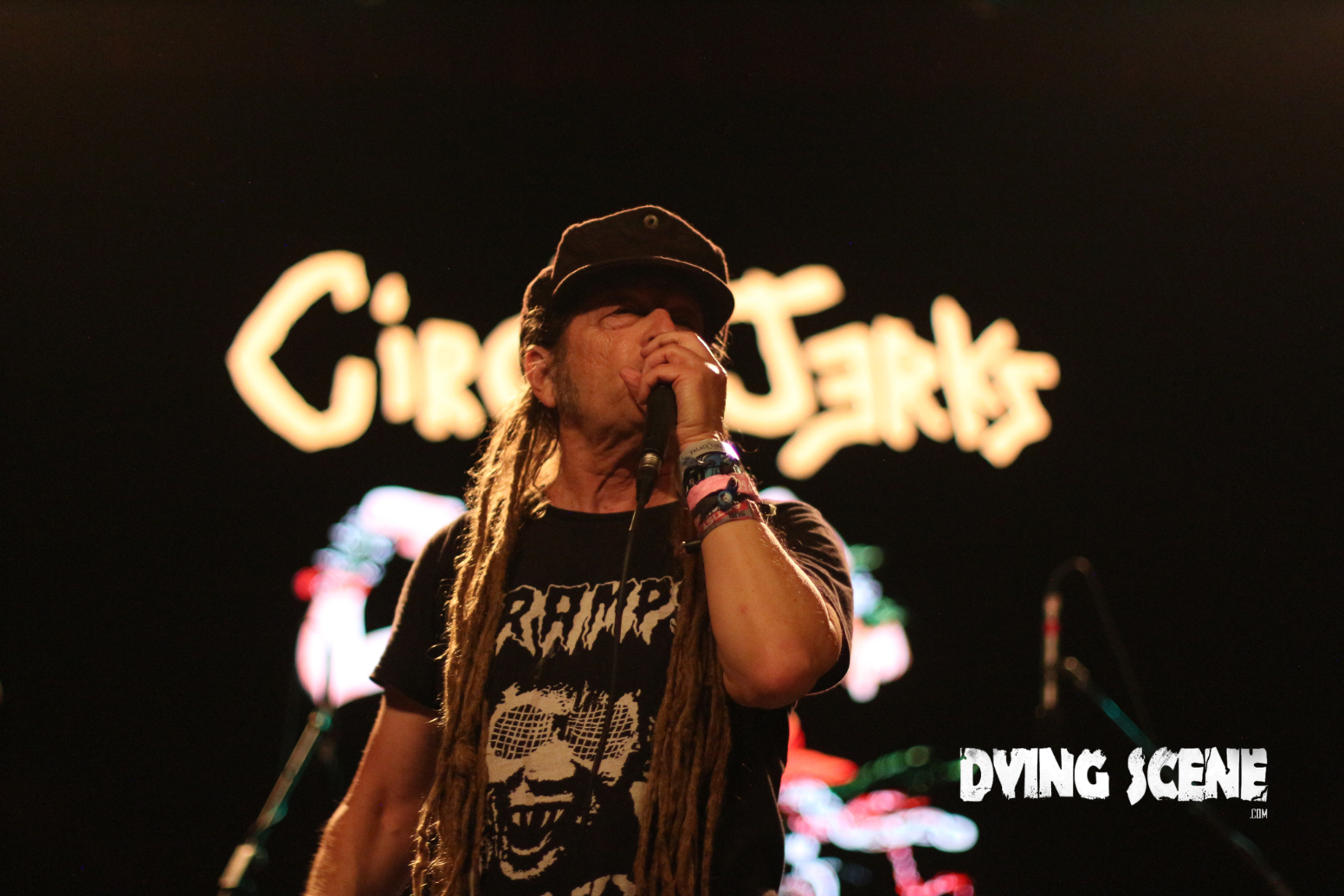
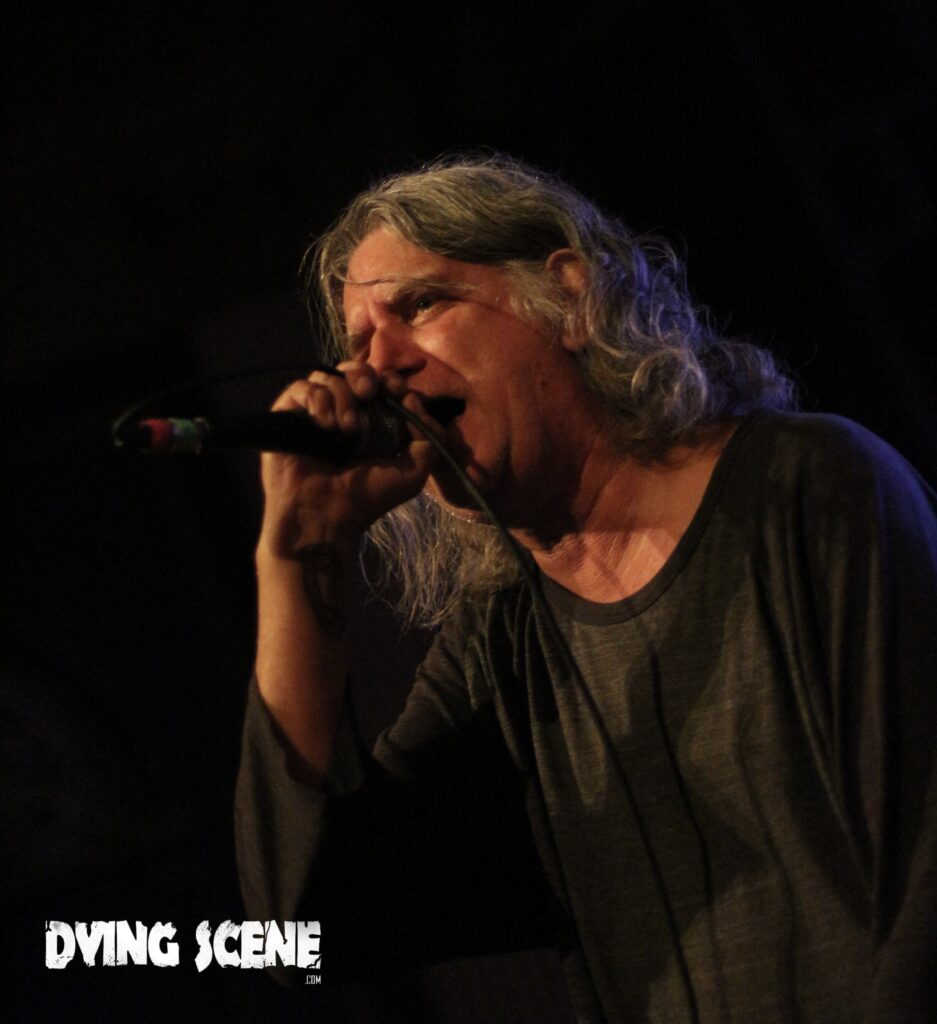
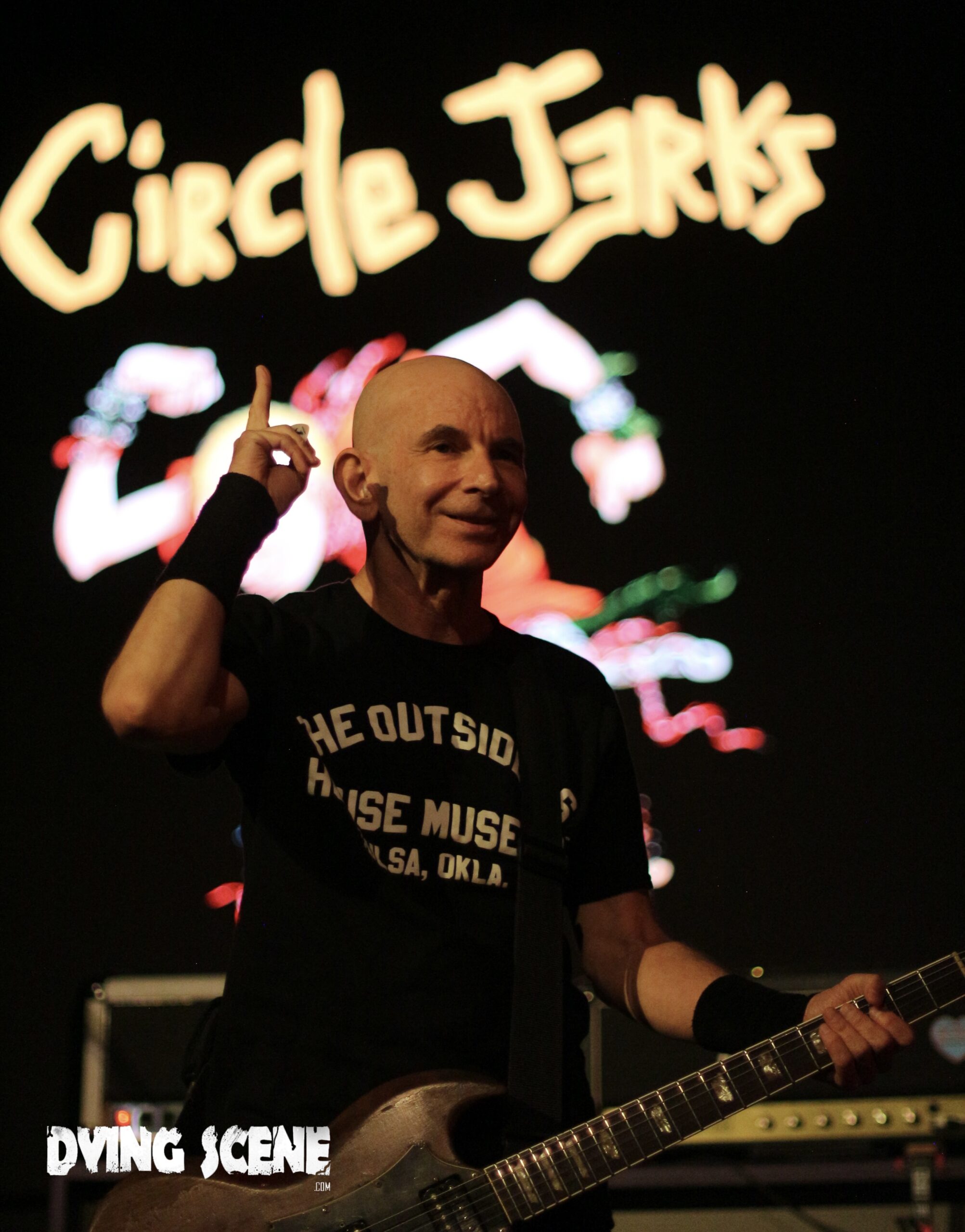
It was a packed house when the Circle Jerks took the stage. After all, it had been 18 years since their last visit. Keith Morris had the honor of introducing the band and all of their many accomplishments; a punk rock history if you will, drenched in sweat and bands of punk’s past.
But enough of the chatter, it’s time for the show. Starting it all off with “Deny Everything”, from their 1980 debut album, Group Sex; one note was all it took for the crowd to lose their shit. With six albums under their belts; songs like, “Wild in the Streets” and “World Up My Ass” had the entire venue singing and chanting along. The Circle Jerks gave a stellar performance at the Palace Theatre. Then, after an hour-long set and an encore of four or five songs, they called it a night and thanked Calgarians for the evening.
If you don’t want to miss your chance to catch the Circle Jerks on one of their many stops across Canada and the US. Check out their tour schedule here.
Once upon a time, there was a relatively predictable template that bands would adhere to fairly strictly in the life cycle of an album. There were exceptions to the rule for sure, but it generally went something like: write, record, do press, play live; write, record, do press, play live; lather, rinse, repeat ad infinitum […]
Once upon a time, there was a relatively predictable template that bands would adhere to fairly strictly in the life cycle of an album. There were exceptions to the rule for sure, but it generally went something like: write, record, do press, play live; write, record, do press, play live; lather, rinse, repeat ad infinitum if you’re lucky. That cycle could span anywhere from, say, nine months (Ramones releasing S/T,Leave Home, Rocket To Russia and Road To Ruin between April ‘76 and September ‘78 for example) to, say, two years (Ramones releasing Halfway to Sanity, Brain Drain, Mondo Bizarro, Acid Eaters and Adios Amigos between September ‘87 and July ‘95 for example).
For myriad complex reasons including but certainly not limited to production delays, the changing habits of the music consumer, the proliferation of cell phone-carrying showgoers and their corresponding social media accounts, the cycle has become much more of a fluid situation. Case in point: The Gaslight Anthem toured the US fairly extensively during the Spring of 2023, essentially serving as a second leg of their reunion tour that kicked off the year prior. October 2023 brought with it History Books, the band’s first new studio album since 2014’s brilliant Get Hurt. That was followed, at least initially, by radio silence from a US touring perspective, until the official kickoff of the US History Books tour in Denver a couple of weeks ago. Tour kickoff coincided with a pair of uncommon moves in this day and age; the digital-only release of a remixed version of History Books, and Dying Scene catching up with Gaslight Anthem’s affable timekeeper Benny Horowitz.
Let’s start at the end and work backwards, specifically with the reissue of the band’s sixth studio album, History Books, officially referred to on digital platforms as History Books: Expanded Edition. The new version includes the four-song EP Short Stories that the band put out a few months back (which features a stellar version of Billie Eilish’s “Ocean Eyes”) and a new version of “Little Fires” that features the one-and-only Bully. But the real meat and potatoes is an entirely remixed version of the original album. If you’re like me, you saw the initial announcement about the Expanded Edition and thought “well, huh, that’s weird, I really like the original record, so I’m not sure why they’d remix it.” (Side note: based on Reddit comments, many of you are not, as it turns out, like me in that regard.) But if you’re still like me, you put the Expanded Edition on in your headphones and from the opening moments of “Spider Bites” on, you thought “ohhhhhh I get it now.” And that’s exactly by design.
“The only way it was going to come out,” Horowitz explains, “is if we heard it and kind of had the same reaction you did, which was like “oh okay, this sounds different and pretty good, and it’s kind of making certain things pop in a certain way, and things we weren’t hearing before kind of pop out.” That’s not to say the original mix – which still sounds great on vinyl – has fallen out of favor with the band. Far from it. “We were going for something. Us and Peter (Katis, producer) were going for something that I think we achieved, and I think it’s vibey as fuck and super cool.” Still, that doesn’t mean they couldn’t approach some of the feedback they heard with open ears. “People were like “I like these songs, but it just doesn’t sound like Gaslight,” says Horowitz. “The thing that I didn’t kind of realize – and even as a music fan I empathize with more now – it’s just like there’s a consistency in production and sound for a band. And it’s not just the songs but you kind of expect a band you like to sound a certain way to a point, you know?”
I suppose it’s worth reiterating that the album is not remastered, as is often the case with reissues, anniversary editions, etc. It is, in fact, entirely remixed and yes that’s an important distinction and if you’re a Luddite like me, Benny does a good job of explaining that distinction in the Q&A down below. The band decided to give the original stems to the History Books tracks to Chris Dugan for a fresh set of ears, though that still wasn’t a guarantee that the results would be different enough to release into the wild. It was a bit of a risky proposition. “I don’t like making decisions in this business without historical precedent, and there was not a lot of historical precedent for this. Not a lot of bands have done it,” he explains. “We didn’t know if it was going to be good or bad,” says Horowitz. “It wasn’t like a certainty that we were going to hear it and be like “this has to come out.” So I think on our level – on a creative level – it was fun hearing it like that…I think it sounds cool.”
The Gaslight Anthem (L-R: Alex Rosamilia, Brian Fallon, Benny Horowitz, Alex Levine). Photo credit: Kelsey Ayres
So armed with a retooled version of History Books under their collective belts, the band partook on their first US album release tour in a decade. If you’re headed out to any of the shows – (like Boston – come say hi!) you’ll hear a high-voltage, two-hour set chock full of songs from across the six-plus album catalog. “We try not to harass the crowd by doing more than like three or four (new songs) in one set,” Horowitz laughs. “I’m not far off from being just a normal ass music fan, and I remember what it’s like going to shows of a band you really like. Maybe or maybe not you love the new record but you don’t want to hear like eight of them.” Who knows, you might even catch the band taking a hard left and opening a set with a cover of “Smells Like Teen Spirit,” as they did in Dallas a few nights back. “That’s either really funny and bold or just, like, stupid,” he exclaims. “It was the one time I was like “you know what? I don’t get to say this too often but I’ve been practicing my whole life for this moment!” I learned this song when I was like 12 fucking years old!”
It was a moment that, like so many others in a live setting circa 2024, was captured on an infinite number of smartphones and uploaded far and wide within minutes. Hell, it’s why I knew about it the night it happened despite living 1800 miles away, thanks to a certain Andy Diamond and his Church Street Choir. The times, they have a-changed. “That is an exact case of like out of nowhere faces turn into phones, you know what I mean?” he asks. “I look out and all I see is, like, a sea of flashlights and phones now instead of faces. I’m not saying it’s like bad or good, I’m not going to be the old Luddite on here, but it is different.” Gone are the days when a band could work out unfinished versions of new songs live on stage, sometimes resulting in tracks that either never appear in final form, or end up radically different than they started by the time there’s an “official” version.
Since they’re a band that was born in the age of cell phones, it’s a phenomenon that Gaslight haven’t dealt with extensively “I think by the time we really started gaining any like real interest in this industry, where people would actually like give a shit about us having a new song, it had already co-opted into “phone time.” Still, it’s not exactly a foreign concept to the New Jersey quartet. “I remember we kind of had a lesson actually in this where we played a song – the earliest version of the song “Biloxi Parish” – we played on an Australian tour before we put out Handwritten, and then the song wound up on YouTube and was up there for quite a while by the time we got around to actually doing the record. And a lot of people like you know the changes we decided to make on that song were resented by the people who had already listened to YouTube.”
While the shows have certainly grown in scale in all the possible ways since a young Benny Horowitz was booking shows in northern New Jersey Elks Lodges (editors note: there’s a sweet anecdote about young Benny at the end of the Q&A below, but you’ll have to keep reading to get to it) thirty years ago, but that doesn’t mean they don’t carry the same weight. It’s just most of us on our side of the barricade are all older, heavier, less limber, and sometimes have to work in the morning. “I’ve actually had to train myself to not judge a show’s quality on that inert physical quality of a show,” he laughs. “Because they’re not necessarily the same thing anymore. A good show – especially in the US or England – kind of used to be dictated by how many people are going nuts…if you happened to get into us when you were like 25, you’re in your mid-40s these days. You might have retired moshing and crowd-surfing by now!“
Check out where you can find Gaslight on the road in the States the rest of this year (including not one but two dates on their home turf in Asbury Park). And keep scrolling to check out History Books: Expanded Edition and our full Q&A with the great Benny Horowitz. Maybe check out his awesome podcast, Going Off Track, while you’re at it.
The Q & A below has been edited and condensed for the sake of content and clarity. We pick up our conversation partway through, after some trading of snack time and parenting style stories…
Jay Stone (Dying Scene): Anyway, so thanks for doing this. We have chatted a few times in passing at shows over the last 10 or 12 years, but never done the actual interview thing, so I appreciate this.
It always floors me when people say that. Because I like to live in a bubble and not pretend it’s as big a deal as some people think it is. So it always warms my heart when people say that they have actually read it before. It means we’re not doing it for nothing.
Oh yeah, as an underground heavy music fan, it’s one of the stops, for sure.
So long story short, the site crashed entirely for a few years. And so since having it rebuilt we’ve tried to do a lot less in the way of just regurgitating press releases and stuff like that. And more on focusing on original content and actually talking to people, taking pictures at shows, publicizing smaller bands, stuff like that. We’re trying.
That’s great. And it’s smart too. I mean just this day and age you gotta own some of your own content or else you’re fucked. (*both laugh*) Like all the photos and all that. That’s the only way to drive it at this point. AI is going to take the other job of regurgitating press releases. (*both laugh*) I’m pretty sure AI is actually writing press releases already! Press releases have always kind of sounded like AI in a way, right?
Yeah. I quite literally got one this morning…not to go off track…I quite literally got one this morning with the band’s name spelled wrong.
Noooo, really? Oh no!
I’ve seen it happen periodically but I quite literally saw it today. And it seemed like maybe somebody was dictating because it was a funky-spelled name. It seems like somebody was dictating and then didn’t check. And I went oh no. That’s horrible.
ANYWAY, we will talk a bit about History Books because I think that the album and the History Books tour were the prompt for this, but in sort of checking the calendar I realized that this week is anniversary week for both Get Hurt which was 10 years yesterday and I think 59 Sound is 16 years old this weekend. Which to me is amazing because I keep track of anniversaries like that. That’s how my brain works. Is that a thing that you guys are mindful of? Or the longer that you’ve been a band, does it become like every day at some point is an anniversary of something, so does that stuff does not mean the same thing as it used to?
Yes and yes honestly. We heard about Get Hurt being 10 years and that was one of those dates that was a little jarring to us. We’re like “wow really? 10???” But the ones like 59 Sound being 16, I have no idea because if we played that game…we have six records now, so, you know, at some point every year each record turns something and it does get a little much. I think it works the same way as birthdays now. It’s like if it’s not based on like 10, 15, 20, you know one of the major marker kind of things, then probably we don’t pay too much attention to it.
Like when something is like “oh it’s like eight years old”…Like I’m 43 now right? With kids. I don’t expect to get another real birthday party until I’m like 50. (*both laugh*) And I think records kind of work the same way. Like you hit 10, you hit 20, 25, you know, you start doing something.
I feel like with 59 Sound, I noticed because it’s one of those albums to me. But also like my kid was born in 2008 so my kid is 16. That record and that second Loved Ones record, Build & Burn, they both came out in 2008. And so to me like those lined up with when my kid was born.
So that one has always stuck with me because that album will always be as old as my kid was. Plus those two records, Get Hurt and 59 Sound are probably desert island records for me. Like if you only got to bring five records to the desert island, I think two of them are Gaslight Anthem and they’re those records.
And we also opened for The Loved Ones on the Build & Burn tour. It’s kinda funny.
Oh, I remember. And it’s wild to think that was that long ago and the arcs you’ve taken since
So anyway, back on track. Where are you today? You’re in Atlanta, yeah?
Yeah, I’m in the back of our truck right now in Atlanta, Georgia. The only quiet place, because there’s a soundcheck going on inside.
These are the first real US dates since History Books came out right? Because there was the tour before the album came out, but I feel like in my brain – which is half mush at this point – but that there wasn’t an awful lot of touring here after the album came out. So is this really kind of the first run that a lot of these songs have had for US audiences anyway?
Yeah for the most part it is. You know it was kind of a bizarre thing the way the album rolled out and the fact that we didn’t have a tour when it did come out. You know that seems like kind of music industry 101. So it wasn’t the best way to do this. But yeah technically this is. We’ve been to Europe twice since it’s been out. But haven’t done a proper US run yet.
I’m assuming that most of the songs translate pretty well? What’s the sort of feedback you get now that people have had a chance to sort of hear them live or check them out on YouTube if they haven’t gone on to shows or whatever yet? How do the new songs translate live? What gets the kids sort of as excited as the old days?
Well to say “as excited as the old days” you know…Speaking of all these dates, you know, if you happened to get into us when you were like 25, you’re in your mid-40s these days…
Yeah, I’m 44.
Yeah, you might have retired moshing and crowd-surfing by now. (*both laugh*) So by default I’ve actually had to train myself to not judge a show’s quality on that like inert physical quality of a show. Because they’re not necessarily the same thing anymore. Like, a good show – especially in the US or England – kind of used to be dictated by how many people are going nuts. You know as time goes on and maybe even songs like start taking on some new shapes, it’s not necessarily the way to gauge it anymore. I mean it’s always an interesting thing playing songs off a new record, because you know you write them you play them together and then you record them and certain things flush out in certain ways. When you start playing them live again, it is literally the first time you’re playing these versions of these songs. And when you start translating it to live some stuff works some stuff doesn’t work, and you kind of have to adapt some things. It takes a little time sometimes to settle in and know what that’s like.
We’ve been actively (playing) “Positive Charge” most nights, “Weatherman” most nights, “Michigan 1975” most nights. And then you know “History Books” and “Spider Bites” and “Live in the Room Above” are all peppered in. We try not to harass the crowd by doing more than like three or four in one set. (*both laugh*) You know like I’m not far off from being just a normal ass music fan, and I remember what it’s like going to shows of a band you really like. Maybe or maybe not you love the new record but you don’t want to hear like eight of them. That’s just crazy. So we do try to limit it and still kind of represent every record too in each setlist.
Did you play any of the History Books songs live on that US tour before the album came out, whenever it was, like a year ago I guess?
I think we had like the ones… you know the way this weird industry works now, they like start rolling out songs in the record much prior to the record coming out and all that stuff. So I do believe we were definitely playing “Positive Charge” I think, because that was definitely out. And maybe “History Books” too. So you know those songs that were actually released as like singles we could play. But we couldn’t play any of the album tracks yet.
Is that different? Do you miss the days of being able to play things before people had sort of heard it? Or has YouTube and TikTok or however people consume music nowadays has that sort of ruined that “we’re going to test music out live” thing? I mean thinking back to the music of when I was growing up. That was the way that you found out about new music is you heard like maybe a bootleg. Like, I was a big Pearl Jam fan as a kid, so you would hear all the working versions of like random songs that would end up coming out two or three albums later sometimes. Do you miss sort of like being able to do that? Or is that not really even a thing anymore?
I do miss it. I mean I think by the time we really started gaining any real interest in this industry, where people would actually like give a shit about us having a new song, it had already co-opted into “phone time.” I remember we kind of had a lesson actually in this where we played a song – the earliest version of the song “Biloxi Parish” – we played on an Australian tour before we put out Handwritten, and then the song wound up on YouTube and was up there for quite a while by the time we got around to actually doing the record. And a lot of people like you know the changes we decided to make on that song were resented by the people who had already listened to YouTube a lot. And fans can fall victim to the same thing that artists can. Like, demo-itis is an extremely real thing, and once you just get used to hearing something a certain way, anything else is going to fall short. You know like you just fall in love with some weird version of it for whatever reason, and any other version of it is going to be lesser, you know?
So yeah I think it is totally taken out of the pantheon now essentially, unless you have a song that’s just like so worked out already, that you know 100,000% there’s not going to be any changes or anything. But I think that’s the whole point of testing it out live and doing the thing is like seeing how it sounds and seeing how it goes. So yeah I think the long-winded answer to that is yes, I think that concept is basically totally dead now.
I feel like and I can’t remember specific Gaslight examples, but I know that like Tim Barry for example, there’s a few Tim Barry songs like “Walk 500 Miles.” There’s like a live bootleg that came out, I don’t know seven or eight years ago now, that because of the way that song got performed on that bootleg, that’s the way people started to hear it and then do that call and response thing that isn’t in the original song. So that now the live version is different than it used to be just based on like a one-off live recording that happened to circulate at the right time. It’s really sort of interesting when that works.
I know it’s kind of cool. I also think someone would probably start giving you shit too for, like, you know…it is something that after that “Biloxi” experience, it’s not something we tinker around with anymore. For now! It’ll be a cool way to do it again, I hope.
Yeah, and EVERYBODY does have their phones out.
So it’s just a matter of the second we do anything even remotely like that…I see it, you know? I look out in the crowd a lot when I play I kind of see what’s going on. And if we play a song we haven’t played in a long time or a cover or something like that that people weren’t expecting, I mean…
Exactly! And that is an exact case of like out of nowhere faces turn into fucking phones, you know what I mean? I look out and all I see is, like, a sea of flashlights and phones now instead of faces. I’m not saying it’s bad or good, I’m not going to be the old Luddite on here, but it is different.
There’s probably multiple videos of that going around from wherever, I guess it was Dallas the other night, and I watched one and I sent it to my wife. I was like “holy shit look what they opened the set with! That’s wild!” And she said “yeah look, once you can see that that’s what’s happening, you can see from the audience perspective all the phones going up too.” So it’s interesting to hear you say like that’s obviously what you see because you can see it on the video too.
Well I realized too…that version in Dallas was literally the third time we’d ever played that song as a unit. Like, we just thought about doing it, we ran it a couple of times in soundcheck and we’re like “fuck it let’s play it!” We were like “yo, it would be funny to open with it!”
Oh, it was amazing!
And we’re like, you know people are going to think we’re just doing like the intro for fun, we got to do just the whole fucking thing. But there was actually a bit of a backstory to that because one time we played a very, very ridiculously corny radio festival in Dallas, I believe at the MLS stadium. It was just one of those really strange, awkward radio events with other bands that you would never play with and stuff. And in order to have some fun and not hate our lives that day we played a cover set. We just played like six cover songs we knew in the 25 minutes we had. So there was kind of like a ‘spirit of Dallas’ thing going on, where if we’re going to do that, we’re going to do it in Dallas I guess.
Yeah and I think that’s still a way to hold on to like the old-school punk rock sort of sentimentality too. I think that’s fun.
Yeah I mean that’s it. That’s the conversation I had with Brian beforehand. I’m like “well, is it fun to play?” We’re like “yeah.” And I’m like “well let’s have fun and play it!” It wasn’t about “let’s try to cook the audience” or something like that, it was just kind of a whim. I had another funny element of that too. I do get some general anxiety and jitters before I play shows. I still get it. And I had a bunch that night because I was like “Jesus we’ve played this song fucking twice, and we’re coming out with one of the greatest songs in rock and roll history. That’s either really funny and bold or just, like, stupid.” And then it was the one time I was like “you know what? I don’t get to say this too often but I’ve been practicing my whole life for this moment!” (*both laugh*) I learned this song when I was like 12 fucking years old. I’ve known it and periodically played it from then till now. So it’s like if there’s any song I could walk up and actually get through and know all the changes and the parts, that’s one of them for sure.
That’s what I was going to say, between the I guess five of you including Ian, you’ve probably played that song 7,000 times over the last 30 years. Maybe not together.
Yeah, just with someone or on your own or something.
I’ve probably played it a thousand times on my couch just for the hell of it.
But that can be dangerous too because sometimes when you play a song a million times, you completely lose sense of the fact that you’re playing it wrong. You’re just like doing something like close to it, and like you said in this fucking internet age, I’m not trying to fuck up “Smells Like Teen Spirit” drum parts. (*both laugh*) That’ll get called out. It’s like “oh he’s not doing the double hits in this thing” or something.
Especially to open a set too, because I feel like you would know if you got a part wrong or if you flipped something around or whatever, and I feel like that would just like rent space if you let it. \
Yeah, yeah! I mean that’s why it’s bold, because it can definitely go wrong. Pretty easily!
Well good on you guys for doing it. That made my day or week or whatever. (*both laugh*) So, History Books, now that you’re on the road for it, it did just get sort of are we calling it a reissue or extended-release or whatever. But the newly remastered version is out now. And that feels like a thing that I didn’t realize…like I’ve liked the album from first listen, I thought it was great (and I reviewed it here) and I was super glad that you guys are back and made it. And I said oh I don’t really feel like they need to remaster that album, it seems fine. And then I listened to (the new version) once, and I was like “oh, I get it!” Granted I’m a complete Luddite when it comes to like music technology and barely know what mastering is, particularly as compared to mixing and whatever. But where did that idea come from? And was that something you talked about doing before?
No, no. And to be clear, it’s not a remaster, it is remixed.
Oh okay. See, I told you I don’t understand the difference!
Yeah, so mastering is what happens at the very end of a record. Like, a record is mixed, and mastering kind of puts an overall compression on it. It like takes all the instruments essentially and is supposed to put them together into one thing in a relatable package while keeping everything separate but compressing it into an audio-friendly type of thing. It also works with sequencing. Like mastering will be, okay “two seconds between each song” and things like that. But the actual mixing mixing is done prior to that. So when you see the old reissues and stuff that are remastered, they’re kind of just tweaking sounds but they’re probably not changing volumes and stuff on the original mixes. So we actually gave the original stems of the songs and the mixes to a different mixing engineer, and we didn’t know if it was going to be good or bad. Like, it wasn’t like a certainty that we were going to hear it and be like “this has to come out.” The only way it was going to come out is if we heard it and kind of had the same reaction you did, which was like “oh okay, this sounds different and pretty good, and it’s kind of making certain things pop in a certain way, and things we weren’t hearing before kind of pop out.” So I think on our level – on a creative level – it was fun hearing it like that. And then you know I think, you know, one of the things was like the original way it was mixed was not a mistake, you know? Like we were going for something. Us and Peter (Katis, producer of History Books) were going for something that I think we achieved, and I think it’s vibey as fuck and super cool. The thing that I didn’t kind of realize, and even as a music fan I empathize with more now, it’s just like there’s a consistency in production and sound for a band. And it’s not just the songs but you kind of expect a band you like to sound a certain way to a point, you know? And I think that’s where it kind of really was bumming out fans. People were like “I like these songs but it just doesn’t sound like Gaslight.” That seemed to be kind of the effect of it. And when we had somebody awesome take a look at it and heard it, it was like “all right like let’s put this out.”
You know, we won’t change the vinyl; we’ll keep that like that nice, original thing we were going for, but now there’s this kind of polished digital version. It was crucial to me that people who already bought the record didn’t have to buy it again. You know, like some of the logistical stuff. And then also just like adding some elements to it just to make it worth people’s time, like you know adding the like the EP at the end of it and the thing we did with Bully. You know just so it’s like “oh okay, there’s something different here to listen to.” And then we just went for it. It was a strange thing because I had a hard time finding like…I don’t like making decisions in this business without historical precedent, and there was not a lot of historical precedent for this. Not a lot of bands have done it, so I was like “I don’t know if this is gonna be a terrible idea or a good idea.” But I think it sounds cool. You know let’s go for it. And I don’t read too much of the Internet but it seems fairly positive.
Yeah the people on Reddit and whatever seem to like it. Not that I am a big Reddit person but I tend to follow along and they tend to like it.
I read everything from Reddit. I check it every day and I base my mental well-being on whatever I read. (*both laugh*)
That’s a terrible decision. (*both laugh*) Yeah the people seem to like it. And you’re right, there aren’t I don’t think of many examples of bands doing it this early, or this close to the release of an album. We were talking about before like a “20th anniversary, we remixed a record.” Like Pearl Jam did with Ten and a couple other records.
Yeah, we try to not be afraid you know?
Yeah right! Okay, one more! So I’m gonna steal one of your own questions. I happened to be listening back to a Going Off Track episode that you did with Dave Hause because Dave’s been a buddy of mine forever, and you asked him something about – I’m paraphrasing a little – but would 15-year-old you like 45-year-old you. And talking about the sort of ethos and the mentality and where he ended up (in his career). And I was sort of thinking about that in the context of like 15-year-old Benny booking shows in basements in Jersey and whatever, and now like – I’m in the Boston area and this weekend you’re at MGM and you get to play like essentially the back door of Fenway Park. And so would 15-year-old Benny think that stuff like that, or playing the Winter Classic and whatever is cool, or would 15-year-old Benny be like “fuck that guy”?.
You know it’s one of those things, I think, that’s almost like hard to come to terms with.
And I’m kind of thinking about it as you ask it. And it’s hard to frame now, because of the fact that like I’m an adult who tries to be easy on myself, you know, especially if there’s space in the game. But if I’m completely honest with who I remember that 15-year-old to be, he was a pretty sweet kid. He had a good heart. He was nice to people. But he hated fucking bands that got too big. (*both laugh*) So, I don’t know man. I think the 15-year-old version of me would have probably had a “fuck Gaslight” period. Especially if I started on like Sink Or Swim or something. I probably would have had, you know, almost just that punk rock way of like. “Oh everyone likes The 59 Sound, I’m going to go like something else. Because too many people like this fucking record. Too many people are hyping it up for me to like this.” And that’s kind of the way I was if I’m honest.
Sure! Like a lot of us!
So yeah, I think 15-year-old me probably would have thought I was a bit of a fucking herb.
But it’s also got to be pretty cool. I mean maybe Fenway isn’t Yankee Stadium to you...
Yeah, see I do also remember that kid as reasonable and sweet, so I think if I like got his ear for about half an hour, I’d be able to explain it in a way that he’d be like “Oh all right, I got you.” But right off the bat? Yeah no totally “fuck Gaslight”. (*both laugh*)
I appreciate your honesty. I do.
Yeah. No problem…just having a stark look at my own childhood. (*both laugh*)
Right! I’ve looked in that mirror many a time.
I was doing fucking Elks Lodge shows. I mean the kind of shit I thought was corporate then, was literally like baseline industry standard.







Seymour Butts
These guys are sexy as hell!