DS Interview: Dave Hause On Lessons Learned From Skateboarding And Bouncing Souls And His New Record “…And The Mermaid”

Dave Hause has had a good summer.  Since he’s been off the road for the bulk of the calendar’s warmest quarter, one could argue that by some metrics, it’s been a comparatively quiet summer given his normal line of work. That said, the California transplant has been busy at home with his twin boys – […]

Dave Hause has had a good summer. 

Since he’s been off the road for the bulk of the calendar’s warmest quarter, one could argue that by some metrics, it’s been a comparatively quiet summer given his normal line of work. That said, the California transplant has been busy at home with his twin boys – Harrison and Smith – doing all of the things that you do as a dad of kids who are about to enter first grade. Days filled with music and superheroes and lamenting the pending fall of democracy (in an age-appropriate way, naturally) and, if you’re a punk rock dad of a certain age, teaching them skateboarding. There are a lot of lessons to be taught – and learned – when trying to tutor the younger generation on the fine art of dropping in on a v-bowl or how to pull off your first ollie. This is particularly true when your audience is too young to know better or to be scared of the dangers inherent in barreling full-speed down a concrete ramp. Lessons about learning when to kick and when to push and when to coast; lessons in patience and resilience and balance and how to stay fearless and how to dodge obstacles and how to be determined and how to adapt to new and undulating terrain and especially how to fall in a way that minimizes disaster and keeps you motivated to not only not quit but to do better the next time and the time after that and the tome after that and so on.

As the boys will no doubt begin to understand as they grow up, those lessons that dad imparted through endless summer days down at the skate park are no doubt translatable to life that exists off of four polyurethane wheels. Those lessons are especially poignant when you’re a dad who is on the other side of forty and who has spent more than two decades making a living as a musician to the left of the dial; hauling gear, changing strings, living out of vans and suitcases, trying to continually write songs that are thoughtful and poignant and still catchy enough to be able to continue putting coins in the dual college fund tip jars. 

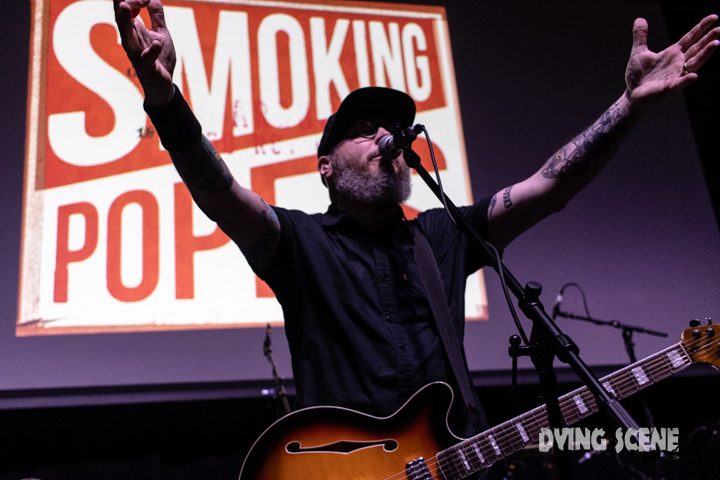
On September 26th – the first Friday of fall – Hause will release his latest studio full-length. Entitled …And The Mermaid, the record marks the seventh of his solo career (we’re not counting the Hearses/Versus/Curses trio obviously – more on that later). But just as being the father to soon-to-be seven-year-old boys has found Hause returning to the skateboard-heavy roots of a past life, soon-to-be-released album seven follows a similar path. Rather than rest on the laurels that his last few Americana-tinged, singer/songwriter-heavy albums have provided, …And The Mermaid finds Hause more charged up and leaning back into an old familiar role: front man of a punk-rock-infused rock and roll band. “(This album) is the first one in a while that’s unabashedly rock and roll,” Hause explains. “I’m excited to play it live. I’m excited to put the band back out on the road.” 

The idea of leaning into the high-energy, full-band rock and roll thing again stems from a few different places. One was falling in love with the band IDLES in recent years, and all of the passion and intensity that they bring. Two was introducing his boys to the world of punk rock through what I guess we’d call “classic” bands at this point like Green Day and Rancid and Bouncing Souls. And three, perhaps most poignantly, was from a conversation with friend and fellow punk rock songwriter Dan Andriano. The conversation came after Hause nudged Andriano into going to see a singer/songwriter who was coming to town. While Andriano enjoyed the show, his positive feedback came with a caveat to Hause: “If I see you make a show like that, I’m going to be bummed,” stated the Alkaline Trio bassist. As Hause tells it, Andriano elaborated: “You have a certain energy and a punk rock edge, even when you’re fingerpicking and playing quietly. That is so unique to you. Don’t lose that. Whatever you do, don’t lose that. Don’t have like a mild, chill show. That’s just not what I’m here for when it comes to you.”

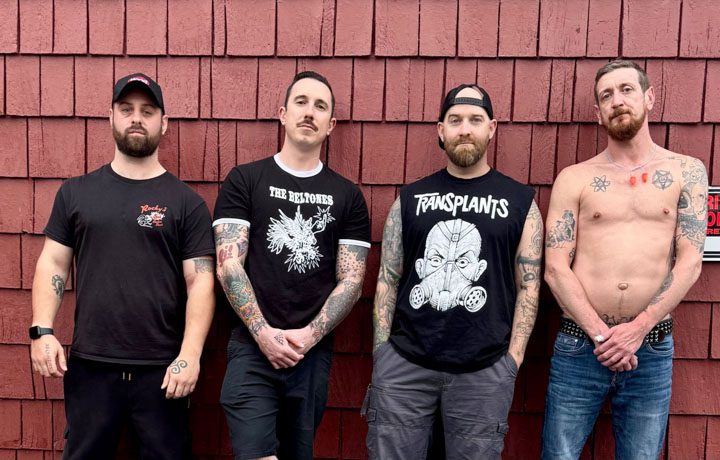
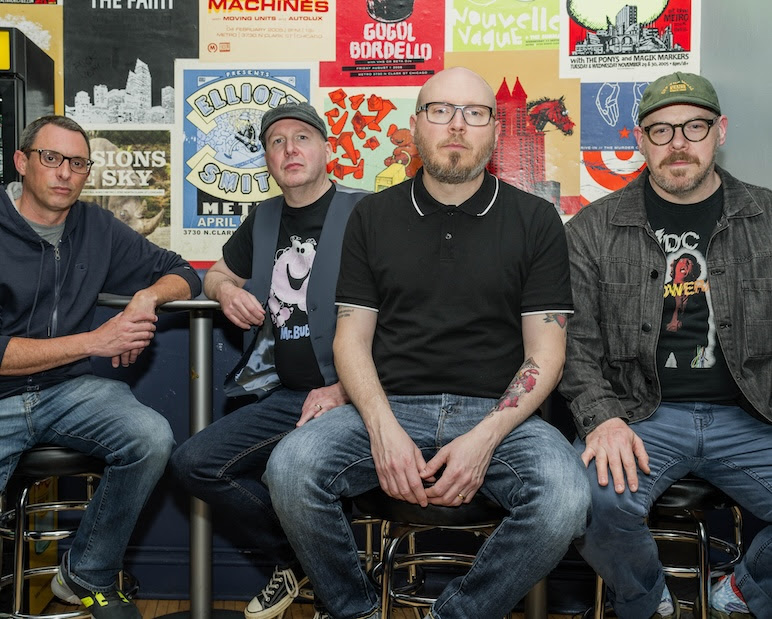
The Mermaid (L-R): Kevin Conroy, Tim Hause, Dave Hause, Luke Preston, Mark Masefield. Photo by Jesse DeFlorio

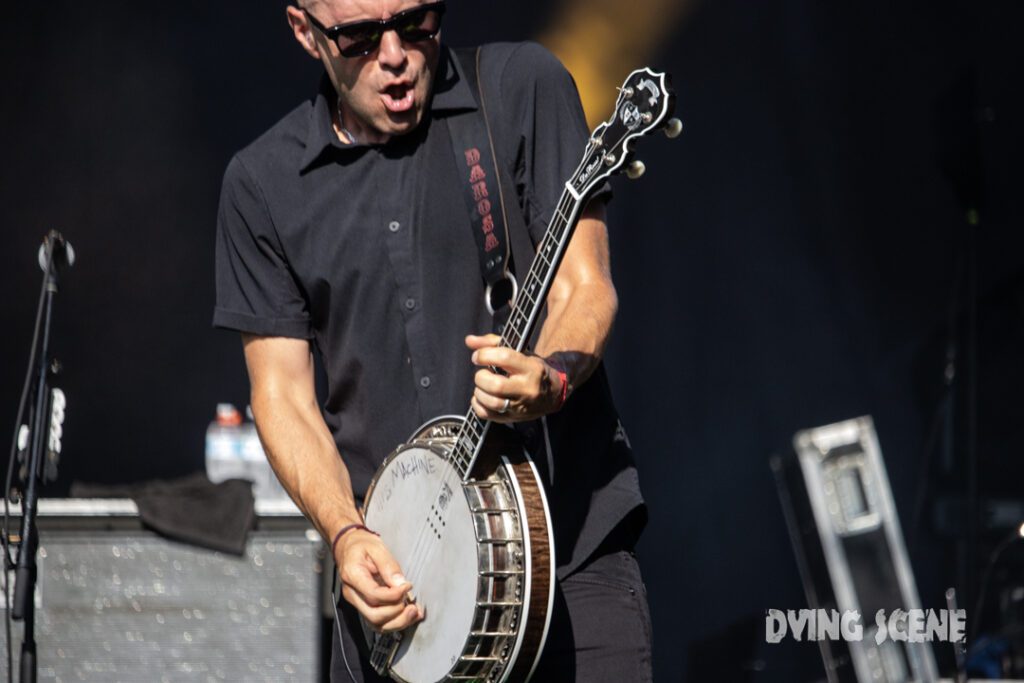
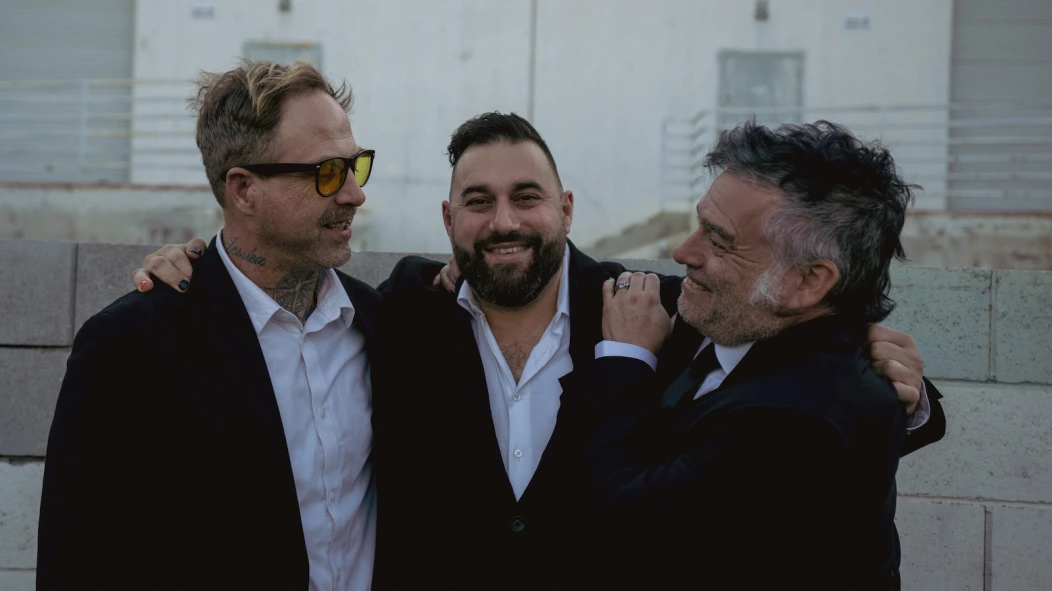
The aforementioned band that Hause will be firing up and putting back out on the road again, obviously, is better known as The Mermaid. When Hause started playing shows with a backing band years ago, the idea was effectively to compile a lineup of musician friends based on their need and availability; a rotating project that might produce a different show every time they came through your town. “I think that’s why it’s always been called the Mermaid,” he states. “It feels like an oasis; a mirage; something you see and you can almost touch and then it swims away.” That concept has changed a little bit in recent years. With few exceptions, the core of The Mermaid has calcified around Hause’s brother and longtime songwriting partner Tim on guitar, increasingtly frequent collaborators Mark Masefield on keys and Luke Preston on bass, and the incredibly versatile and always rock steady Kevin Conroy on drums. It’s a group that came together in the live format and developed a high-energy chemistry on the road. While Hause is no doubt aware of the positive chemistry the band has together on his own, some of that was solidified during a run of shows last year with the iconic Bouncing Souls. Hause was taken under the wing of the Souls crew decades ago at this point, and while he might be the elder statesman of the Mermaid crew, the tables turn when the Souls are around. The Souls – to Hause and his crew and the rest of us true believers – have been guiding lights for thirty years, in the way they write music and the way they operate both in the scene and in the world. “It’s sort of like they’re my big brothers, and here I was bringing my little brothers around. To see this band click with the Souls was cool,” he explains. “It was a great moment of the two worlds not just colliding, but coalescing. I think you can feel that on stage and you can feel that in the songs. There’s something really special about that.

So when it came time to really bear down and write and ultimately record LP #7, who better to turn to than the band that he’d found himself fronting night in and night out in enjoyable and powerful fashion than his very own band. …And The Mermaid marks the first time that the quintet has recorded together, as Hause eschewed his more recent trend of recording in Nashville with talented studio musicians. Instead, the band made its way to Vancouver earlier this year for an epic recording session with Jesse Gander (Japandroids, Fire In The Radio, etc). “There’s some special alchemy that happens when you put a bunch of people in a room with a really adept engineer,” Hause reports. “I was like, ‘I don’t know what’s going to happen. Let’s just try to get as much good work done as we can.” And it opened up this channel that felt really good.” So good, in fact, that starting with the blistering, Clash-style rocker “Enough Hope,” the band ripped through four songs in the first day of recording. Not a bad way to start. “I just thought, ‘let’s go in there and cut as much material as we can,’ because I really believed in the band’s ability. We were a little unsure what it would be like because we’ve never done it, but man, did we just hit the ground running?” Save for a few odd vocal harmonies and overdubs here and there, most of the material was cut live on the floor in the studio together. Five guys in a room writing and recording up-tempo tracks fueled by an increasingly bright punk rock intensity.

The band took full advantage of their time together, building on the relationship they’d long-since been creating in the live show format and translating that into an energy and work ethic in the studio. All told, close to two dozen songs were tracked, well more than the ten that appear on …And The Mermaid.There’s a little bit of a goal that started to come in because we were like, “well, we are pretty old. We’re all between thirty-one and forty-seven. We’ve been doing this a lont time, we should be able to rise to the occasion,” laughs Hause. Rise to the occasion they certainly did. The album kicks off with “Knife In The Mud,” an anthemic, horn-infused barn-burner of a song centered on a bombastic Conroy drum pattern and a singalong chorus that is somehow both triumphant battle cry and ominously bleak warning. The track was co-written by Preston, and Hause reports that the two of them had differing opinions on the track’s ultimate point of view. Regarding the cathartic chants of “We’re never gonna die!” that appear throughout the song, Preston was of the opinion that the line was a challenge. “He was like “I want it to be defiant!” And I was like, “well, I think of we’re never going to die as a threat. It’s a threat to the planet. It’s a threat to ourselves,” Hause explains. “He and I have totally different views on what the song even means, and I think the tension in those two ideas is what makes it pretty cool.”

From there, the album finds the band continuing to do what it does best as a unit and the Hause’s do best what they do as songwriters; pointed, sharp commentary and witty turns of phrase that point their swords both outward and inward. There are lead singles “Enough Hope” and “Look Alive” which are pointed looks at the world around us falling to shit in the wake of the billionaire oligarch class. There’s the four-on-the-floor singalong celebration of the trials and tribulations that bond a long-term group of compatriots for life that is “Cellmates.” The chaotic “Mockingbird Blues” and similarly themed “Revisionist History,” the tongue-in-cheek Boomer-ific ode to days gone by. There’s the Tom Thumb-meets-Dropkick Murphy-ish “Rumspringa,” which is a bit of a high-water mark in regards to strictly fun songs in the Hause oeuvre. “Those were sort of placeholder lyrics. They were sort of silly. They were sort of fun. And then I just was like, “why don’t we just sing that? Yeah, this is fun!” It doesn’t have to always be about, you know, the existential dread or these intense feelings,” he explains. There is the more mid-tempo “Yer Outta My Hair,” which tells of the need to finally end a relationship after years spent hoping the other person would get their life in order. 

There’s also the first cover on a Dave Hause solo record. At first listen, the blood harmonies on “Bible Passages” seem like they were written not only by Hauses, but specifically for the Hauses to play in all as a duo in a haunted, centuries-old European church. In fact, the song wasn’t written by them at all, but by Rise Against’s Tim McIlrath. While he’s no-doubt known for writing stadium sized anthemic modern rock bangers, McIlrath, like Hause, is first and foremost a songwriter at heart. Hause explains: “I would always ask him, “what are you gonna do with that song?” “Oh, I don’t know. I don’t know.” And somewhere in there, he either said like, “you should cut it.” Or I said like, “well, what if I cut it?” He’s like, “go for it.” I can’t remember exactly how it went down, but you know, we admire one another. And I just think like that side of him is so special and sweet. And so it’s an honor to have that song on the record.

And what Dave Hause album circa the 2020s would be complete without an ode to his growing boys. …And The Mermaid closes with “May Every Last Fever Break,” a tendersong about guiding the next generation through the early, developing years as best you can, holding on when you need to and knowing that you’re doing their best for the day the training wheels come off. “I can see (the world) through their eyes,” Hause explains. “I can try to make that my main job. Like, “hey, let’s show them the world, show them what’s great about it, show them what’s wrong about it, show them their own agency in changing it and molding it.” Though it’s a bit of a stylistic departure from the bulk of the rest of the album, all were in agreement that “May Every Last Fever Break” not only works on its own, but shines as a closer. “Tim cried when I played it for him, so I knew I was onto something. It’s really tender. Alex, our manager, said “It’s my favorite song on the record,” which I thought was so awesome to have a manager that’s not looking at the catchiest song as his favorite because obviously, his job is to monetize the project. I love that song, and I feel so lucky to be able to make it.”


To return to the skateboarding metaphor, there’ll be no time for coasting for the remainder of the year for Harrison and Smith’s dad. It’ll be all kicking and pushing as Hause gears up for a loud fall and winter and beyond. Full-band shows in his home state of Pennsylvania kick off album release month before Dave and Tim head to Canada for a run of shows with Joey Cape. Then a few shows down the West Coast before a run in continental Europe and the UK. Then it’s back to the East Coast in November, followed by a run opening for the almighty Bouncing Souls out west again to close out the year. Most of those shows are more of the stripped-down variety, which means it’ll be 2026 before most of us get to see The Mermaid performing …And The Mermaid. There’ll also be more new music to follow in what seems to be short order. “My goal is to have made 10 studio solo records by the time I’m 50. And I’m 47,” says Hause. “And by this I mean made and put out. I’m not counting those three Loved Ones things – Versus, Nurses and Hearses. So that means I got work to do! I think, you know, because my mom died at 49, if I make it that far, I feel like I can reassess and who knows… I better get rhyming!”You can find all of Dave’s tour dates here. You can also still pre-order …And The Mermaid straight from the Hause brothers themselves via Blood Harmony Records. And you can listen to the first couple of singles below while you check out our full, extensive chat!


***Editor’s Note: The conversation below has been edited and condensed for content and clarity. Yes, really.***

Dying Scene (Jay Stone): So, my friend, I really love this record. Not that I’m ever nervous about a Dave Hause record because the bar is only going to go so low (*both laugh*). I have done it a couple times where I don’t know I feel like I get a feeling the first time I listened to something, even from the first couple of notes of the first song on the record, like, I was like, “Oh, I get it. I love it already.” I know that there are 9.75 songs left to go, but even from the start of “A Knife In The Mud” I was like “Yup…this is the album I need right now.”

Dave Hause: That’s great. I’m really excited about it. I’m excited to get back on that kind of horse, which is like, if we’re using that weird metaphor I just walked into, this is like a conquering horse, you know? It’s the first one in a while that’s like, unabashedly rock and roll it, and I’m excited to play it live. I’m excited to put the band back out on the road. I mean, it’s interesting, because what we’re doing is releasing the album, doing some touring as a trio, and as a duo, to kind of get the word out and let people kind of get used to the record. And then next year, we’ll tour as a full band, kind of all over, where we’re used to going. I’m super excited to do that. I’m also looking at the budgets and going like, “Whoa, it’s hard, it’s hard to move a lot of people around day after day.” But every time I do an interview or listen to any part of the record, just for reference, I’m reminded about our mission statement, which is “let’s take this thing out and do it in rock clubs,” which we haven’t done in a while.

When did the album sort of calcify around that, like, rock and roll sound? Was it a conscious decision from the writing process to make a more rock record, or did you realize that’s how it was turning out as you went?

There were a couple of things; a couple of pivotal things. There’s a songwriter that I really love, who I had been pushing on Dan Andriano. It’s like, “man, you got to listen to these records. You got to go see him.” This is a couple of years ago. And he went and he went to the show. I checked in with him, and he’s like, “I liked it. But if I see you make a show like that, I’m going to be bummed.” I was like, “what do you mean?” And he said “you have a certain energy and a punk rock edge, even when you’re fingerpicking and playing quietly. That is so unique to you. Don’t lose that. Whatever you do, don’t lose that. Don’t have like a mild, chill show. That’s just not what I’m here for when it comes to you.” And I said, “OK, cool.” I kind of filed that away. And as my kids have come more and more online, they gravitated naturally towards Green Day. My wife and I are big fans, so I’ve been playing Green Day for them, especially in anticipation of that tour coming through. We took the boys to see Green Day, and it just I was just as into it as they were. I was like, “wow, this is spectacular.” That’s one of my favorite bands. Rancid as well. And the boys were just so into it, so it’s been a rediscovery of that and playing a lot of Bouncing Souls for them. We had the Souls at our festival, so there was just a lot of gearing up in that direction. And then I really fell in love with IDLES a couple of years ago. A lot of people had been bothering me like, “hey, dude, this is going to be your band.” And I sort of actively avoided it because I thought if “I love this as much as everyone thinks I’m going to, I’m going to really want to do something more in that realm, and I don’t have that’s not within my purview right now.” At that point, we had been working hard on the festival. We had done a bunch of stuff that was more listening-roomy and singer/songwriter stuff. But it was those three things – getting the boys into a lot of punk rock, falling in love with IDLES and then also Dan’s sort of planting that seed a couple of years ago. Also, I just think at some point, doing a bunch of stuff in Nashville and playing with a lot of singer-songwriters that are outside of like the punk thing, I kind of proved to myself that I could do it and feel comfortable. Blood Harmony and Drive It Like It’s Stolen were accepted enough that I didn’t feel like I had as much to prove, in terms of like, “well, I’m going to actively avoid playing like super loud or fast or whatever.” And so in this, it was just like, “let me just be open to whatever the band and I want to do in the moment. We’ll record a ton of stuff and then we’ll just see what we have.” I think that was kind of the way it all coalesced. 

Sort of like Dan said, you have always been, I think, even when doing solo stuff, you’re always a “front man.” Like you’re a singer, a brilliant songwriter, but you’re very much still a frontman. You have that ability, I think, whether it’s just you solo, or you and Tim in a stripped-down acoustic setting, you still have a way of commanding a crowd, getting out in front of the microphone, pulling people in towards you – it’s that sort of frontman magnetism that is so natural in a punk or rock band setting. 

Yeah! And I think I appreciate that. And I think instead of being shy about it, I’m just more comfortable with that idea. As I go on, you know, I was a fan of Bryan Adams. I think even you go see Flogging Molly, Dave King has this thing about him, or David Lee Roth. There’s all these people that I can kind of reference that I truly am inspired by. And I do think like on some level, you’re always putting on a show. Someone paid to come see a show, and I think, you know, as much as you hew to sort of this punk rock or purity kind of way of delivering the material, you also want something transcendent. I think sometimes that’s like taking some weird quality in yourself that maybe isn’t always on display and amping it up in order to have everybody feel like we’re doing something a little bit more special than just gathering in a room. So I think that’s kind of what it is. But I’ve just been more willing to embrace and feel more comfortable with that. I also think that the further I go, the more you want to just be you. If you have the opportunity to share your own artistry with an audience, make it as close to being what you think is great and not, “well, maybe I should pull this other thing and try this.” You know, it’s always good to follow the muse, but for now, for this record, it was more just like, “let’s not overthink it.” 

Did you have everything written before you went up to Vancouver – which is another thing I want to talk about after, the Vancouver thing. Did you have everything written or like skeletons of ideas…

We recorded like twenty-one or so songs in two weeks so… 

Wasn’t there talk of a double record? Am I making that up? Maybe that was a conversation I had with Tim and he was hinting about it, but was there talk of a double record at some point? 

I mean, there always is, right? And then you realize you’re living in 2025. (*both laugh*) I mean, for all intents and purposes, that’s what we did. We recorded a double record. And no, it wasn’t all done. It’s still not all done. And again, I think like on some level, the further I get, the more you go like, “well, let’s leave a little room for like Quincy Jones used to say in the recording process, like leave enough room for the Holy Spirit.” And obviously that’s got some strange, you know, Christian overtones. But I think that there’s something to it. In the modern age, you can essentially make a demo and have it sound almost exactly like it would sound, you know, if you went into a studio. There’s just so many tools at your disposal. And so having that power almost neutralizes that ability because you’re like, “Well, I could just do this at home. I can get these stems from Josh Freese’s drums.” And, you know, I think in that realm, knowing that there’s some special alchemy that happens when you put a bunch of people in a room with a really adept engineer, we were more open to the process. I was like, “I don’t know what’s going to happen. Let’s just try to get as much good work done as we can.” And it opened up this channel that felt really good. And so, yeah, you said you wanted to talk a bit about the Vancouver thing. That was amazing. I mean, Jesse Gander, I love his work. I love the sounds he gets. I like those Japandroids sounds quite a bit. The other stuff he’s done, I’ve always loved.

He did the last Fire In The Radio record, right?

Yes, yes, exactly. And that’s the link. So Jon Miller, who’s the songwriter for that band, has been friends with Jesse for a long time, and we’ve been friends here in Santa Barbara for 10 years now. He’s a wonderful guy. And he’s been saying, like, “You guys should work together. When you have a rock batch, you’ve got to work with Jesse.” And Jesse and I talked about it, and at first, it seemed cost-prohibitive because, you know, you can go to Nashville and it’s all kind of set up. You can have session guys come in and cut all day long and get a lot of work done in an efficient way. And this was more like, “well, we have to get everybody to Canada. We have to stay somewhere. We have to pay for the studio time. Like, it’s going to be a mountain when it comes to cost.” And Jesse was like, “Well, there’s a grant that the Canadian government or the British Colombian province offers that you would be perfect for because they want somebody who’s got an international fan base and will actually go out and play the record and the record will be heard, and they’ll subsidize it because it’s made here in Vancouver.” And that was true for like all these records back in the 80s and 90s. I think even like Aerosmith’s Pump was done there. And, you know, like there’s been a link to the Vancouver recording scene for a long time. So we ended up applying and we got the grant, and that defrayed a ton of the costs that would have prohibited our ability to go there and do it.

That’s amazing. Imagine when you actually pay attention to the arts and support the arts, right? 

Yeah. You get hopefully inspiring work and you put people to work in your province. And yeah, I mean, we could digress on that. 

Yeah, really. 

But it was wonderful. And so now we have this link to Jesse and we’re able to see how it works and we were able to live out the dream of what a band does. But rather than do what a lot of bands do, which is like, “OK, let’s hone in on the nine most catchy songs or whatever,” it was “let’s go in there and cut as much material as we can,” because I really believed in the band’s ability. We were a little unsure what it would be like because we’ve never done it, but man, did we just hit the ground running? We cut “Enough Hope” first and we were done it in under two hours. It was like “OK, here’s how the song might go. Let’s mess with it a little. OK, try this. Try this.” And it was done. And so rather than take our foot off the gas, we applied pressure. We’re like, “let’s try to get two today.” And I think we got four that day or something crazy. (*both laugh*) And Jesse was pumped. He was game to work that way. He wasn’t super precious with like, “OK, well, let’s get it exactly whatever you would think of is perfect” because there is no perfect. We just kept working and working and working, and then closer to the end, when guys had to start going home, it became clear what the record was probably going to be, and we were able to hone in on stuff and then put some stuff that’s like, you know, either joke songs or stuff that was like less fleshed out or weirder. We were able to prioritize. 

How live in the studio did you record? Because not that it sounds like a live record, and I don’t mean it that way, but there are times where like it sounds like you’re all in the room playing together. And there’s sort of mostly that like that Holy Spirit thing, I guess, that Quincy Jones was talking about, right? Like that sort of magic between the five of you?

That’s most of the record. I mean, even stuff you would think are obvious overdubs, like the beginning of “Cellmates,” where you hear that synthesizer come in, that was live in the room. Mark got that sound and arpeggiated it or whatever he did to get that, and we played right to that, and so we’re responding to that loop in real time. I don’t think we went back in and relayed in any overdub. There’s some obvious overdubs on the record. Obviously, you know, Tim didn’t sing the background vocals live. He probably could have actually, but we just didn’t set up for that. We just thought like, “oh, let’s try to get the basic tracks.” Most of what you hear is that band playing the songs, which is so fun. And I think there’s this like fantasy that all the Beatles would go in and they learn a song at nine a.m. and by noon they’d have it recorded. There’s a little bit of that goal that started to come in because we were like, “well, we are pretty old. We’re between like thirty-one and forty-seven. We’ve been doing this a long time, we should be able to kind of rise to the occasion.” And the confidence that builds when you get one down and they get another one down and you’re like, “oh, wait, maybe I’m not able to do all the stuff that like a Nashville guitar player could do, but maybe it sounds like me.” I can play like me in time and in tune. And so there was like a real confidence to start to build with the band as we took off in those first couple of days. 

This iteration of the Mermaid is like the iteration of the Mermaid sort of going forward, yeah? Obviously we’ve talked before that the idea was sort of that there would be maybe moving parts, and people have rotated in and out at times, but like seems like once you had this five together, like it’s kind of changed from maybe that initial idea into ‘a band.’ 

That’s the hope and that’s also the fear, right? So you hope that that’s true. You hope that we can keep this together for as long as we possibly can, maybe till our older days. But the fear is like every other band, bands are really hard to maintain. It’s really hard for people to be able to commit, given the limits of financial security and so forth. I think that’s why it’s always been called the Mermaid, you know? It feels like an oasis, a mirage, something you see and you can almost touch and then it swims away. And I think now more than ever, I would love for this to be the group of people we make music with until we’re good and old. I have much less interest in going in with hired guns now that I see what this band is capable of. But I’m also a realist and unfortunately – to use the skateboard analogy – like I’ve taken slams when it comes to that.

Right. 

And so, you know, hey, don’t hold it too tight and don’t be so loose that you that you don’t tell people how much you appreciate them. So it’s a balance. 

Yeah. You can hear that the band really gels on this record. We could talk at length about the whole record but there are a few moments that highlight that, like in “Mockingbird Blues,” there’s that line about “…out here in the wilderness, it’s hard to find a friend like that.” The first time I listened to the record was in the car with driving to my wife’s dad’s house in Connecticut and she pointed out that there are times where you say “it’s hard to find a friend” and then you can hear Mark twinkling on the keys, or then there’s like a cool little bass run. You can sort of hear everyone in the band separately. It’s sort of this unifying thing, like “out here in the wilderness, it’s hard to find a friend, but I’ve got four of them right here.” I feel like that feeling really translated.

Yeah, I mean, that’s really true. It was fun to be out with the Bouncing Souls together on tour because that is one of those magic bands that I got to spend a lot of time with that really is fun to be around, and what you see on stage is the distillation of that relationship backstage. They get along and there’s a shorthand and it’s just a beautiful group of people. It’s sort of like they’re my big brothers and here I was bringing my little brothers around, and to see this band click with the Souls was cool. They kind of know Mark from doing sessions in Asbury Park and he lives down there in Bradley Beach. They obviously know Tim. Kevin worked for them, but Luke was the wildcard, and Luke got in there and became buds with them. And within a couple of days, the Souls are like, “Well, we’re having a pizza party with The Mermaid on the bus!” Or after the show they’d be like “come on, come hang out!” It was really fun to see that gel. There was a really funny moment where the Souls wanted us to sing sort of like a backup to Greg’s version of “Ghosts on the Boardwalk,” and we’re standing there in the wings ready to go on. And I had a denim jacket on, and it was dark, dark lighting, and Bryan Kienlen is like “you’re kind of looking like Bruce Springsteen right now.” And I was like,”oh, thanks, man!” Bruce is a handsome guy, and I kind of like, you know, feeling myself. And he goes, “current Bruce Springsteen, of course.” (*both laugh*)

Seventy-whatever-year old Bruce. 

Yeah! And I was like, “oh, you had to do it, didn’t you?” And he starts cracking up. The band all falls out laughing. And he turns to the band and he goes, “you’re the little brothers, but the big brothers are here now.” (*both laugh*) And it was a great moment of like, you know, the two worlds kind of not just colliding, but coalescing. And so just to your point, it’s like having that friendship, having those bonds. I think you can you can feel that on stage and you can feel that in the songs. And there’s something really special about that.

Let’s get into subject matter on the record. 

OK!

You know this. I’m a one-trick pony when it comes to Dave Hause records, because you know the esteem with which I hold Devour in. So this like this is very much an amalgamation of the guy who wrote Devour and the guy who wrote Kick. There are some interesting like grown-up, but overlapping themes from those records. 

I think I might be the one-trick pony, man. (*both laugh*)

No! That will forever be my frame of reference for a lot of music, not just for yours. Like, that’s the album I’ve listened to most for the last 12 years, I think. 

Amazing. 

But there are times on this record where I will find myself singing along to it and getting goosebumps the way that I did to Devour the first couple of times I heard it. First time I heard “Autism Vaccine Blues” was at that Flogging Molly show in Boston 12 or 13 years ago now, which I think is the first time we met in person. I remember my brother and I looking at each other and just going “whoa…” That song gave me goosebumps and still tends to. And there are moments on this record that do the same thing. That’s happened, obviously, at other times in your catalog before. But even from the trumpet at the beginning of “Knife in the Mud”…I feel like we could talk for a while just about that trumpet line in a “Knife in the Mud” that comes back at the last song, because it sounds very much like a battle charge, but it also sounds very much like “Taps”…like a funeral procession. Which creates this feeling of “we’re either marching into battle…or we’re already dead. We’re already fucked.”  

That’s the weird thing about that song. We’re making a documentary about this record, and we just got the cut about that song. So everybody was interviewed about the record, and Luke had a demo of that, you know, basically the guitar part and the trumpet, and he called it Olympics. As we were kicking around ideas for the lyric, he didn’t have a melody or a lyric and we were building it. He was like, “I want it to be defiant!” The line “we’re never going to die!” came out of that idea. And I was like, “well, I think of we’re never going to die as a threat.”

Right!

It’s a threat to the planet. It’s a threat to ourselves. So when you see this cut in the documentary, if it stays this way, he and I have totally different views on what the song even means. And I think the tension in those two ideas is what makes it pretty cool, because I don’t think that that’s necessarily the best thing, that we’re never gonna die. But also you’re left with this feeling like, well, what else is there? There’s a Father John Misty song that he put out some years ago where it was like, well, “all we have is this.” So there’s some, he comes to some conclusion like that, where it’s like, “this is how fucked up it all is, but this is what it is.”

Right, what’s the alternative? 

Yeah. And I think that there’s a certain defiance in that, and there’s a certain amount of succumbing where you’re like, all right, it may not get better. And so I think the tension in that song is what makes it special. But I could tell, like Luke saw the cut and texted me, he’s like, “how do we have two totally different perspectives on a song we wrote together?”

I don’t know if you saw that Storytellers show or whatever it was, the VH1 show, but before Pearl Jam played “Alive,” Ed told a story about how he thought the “I’m still alive” line was meant as a curse. Like, “all this shit has collapsed around me, why do I still have to be alive to bear all of this” but then the crowd singing it for years turned that into a cathartic thing and lifted that curse.

Part of growing up is there is that tough couple decades of, “do I wanna be here? Why would I stay?” And then if you can get over a certain hump, you’re like, “Well, this is all there is and I’m lucky to get to see it. And I wanna stick around for as much of the pain as I can.” I mean, I just did an interview with Craig Finn for his podcast and he and I were talking about like, you got two options…you can either push the boulder up the hill or you get flattened by it. And those are your options.” And I would rather at least push, you know? Especially as you get older, because like the weddings and the firsts are all in the rearview, you know? Your first kiss and all that other, like that’s all so far behind. All those exciting things you’ve done. And so you’re left with like, well, “how do I derive meaning and purpose?” And that takes work.

That math has changed since the boys were born I’m assuming…

Totally, yeah.

I mean, it should, right? 

Yeah, I mean, I think that’s part of it. Now I can see it through their eyes. I can try to make that my main job. Like, “hey, let’s show them the world, show them what’s great about it, show them what’s wrong about it, show them their own agency in changing it and molding it.” Yeah, I mean, that’s definitely, that purpose is a major shift for me.

Is the “waiting on vultures” line at the beginning of “Knife In The Mud” a callback to the vulture theme at the end of the last record? It’s fun that the first line of this record is an immediate callback to the last song on the last record. 

I love it that you saw that.

Yeah, oh, right away. Well, to be fair, I knew it was a callback to the last record and I was pretty sure “The Vulture” was the last song on the last record but I did have to look to confirm that because I do have it on “shuffle” sometimes…

That’s right. Well, we also put out all those Loved Ones things too, so it’s confusing. You know, we need to relegate those to something other than full albums that we put out. But like on Spotify, it looks like we put out two or three records since Drive It Like It’s Stolen, which we haven’t. I mean, we have in theory, but you know, for those of us having this conversation, that is like the people who are most out into the work as it progresses, that’s old shit. 

Yeah, right, right. Although it’s interesting to me, there are a lot of people now, I think, who have discovered The Loved Ones through Dave Hause and not the other way around. I think that that has shifted over the last, I don’t know, well, probably 10 years at this point, but like there are people who stumbled into The Loved Ones because of your solo career and worked backwards. 

Well,  The Loved Ones headlined the last day of Sing Us Home 2024, and it was a smaller crowd than The Mermaid. So it was- 

That’s interesting. 

Yeah, it’s just, it’s what happened. It was a goal to not get eaten by the earlier work. And it was a goal that I have achieved, which is not easy in punk rock. I mean, I’m sure Rancid still has to talk about Operation Ivy, you know? And they’re one of the greatest bands of all time.  I think like to have that freedom is wonderful. And that’s what I wanted. I wanted it to feel free. I didn’t want to have to play old stuff just to keep people engaged. Now I feel like I’ve added that material to what the band or I can do whenever we want to rather than feeling like we have to. So it’s a wonderful treat to have had that sort of progress in that way.

My brother was not as into the depth of punk rock when as early as I was, but he’s a big fan of your solo work. So when I told him that we were talking again, he was like, “didn’t he just put out a new record? Like Nurses?” I was like, or Versus or Hearses, I forget which, whichever one came up on Spotify last. I was like, oh, hold up…you’re gonna have a little history lesson now. 

Yeah, yeah. You know what’s interesting is we live in these bubbles in music. You write about music, you’re very attuned to what’s happening and what artists are doing. I’m making this stuff, so I’m very precious about it and so forth. But there’s something leveling about having to go to school functions with people who have kids your age and go, “I’m a musician.” And they go like, “anything I’ve ever heard?” And you go, “probably not.” (*both laugh*) And then they sort of inevitably wanna know more. They wanna follow. And then you get into this funny thing where you’re like, they’re like, what’s your latest record? And I’m like, well, it’s this thing called Versus, but it’s not a real record. And you’re like, oh my God, this is like so inside baseball. These people are just trying to get the kids dropped off on time and get to work. They’re not looking for a David Lynch style deep dive into all the meaning behind your work. They wanna know if that shit slaps and they can put it on after Benson Boone and go, hey, this is Smith and Harrison’s dad’s music. It’s a good reminder of like, fuck man, people in America specifically are very, very inundated with information. Don’t get so precious with the delivery system. So in a weird way, I’m trying to play to you or to like our two people who run the fan club, Susan and Manuela. I’m trying to play to you and those two, right? That’s the bullseye. But I’m also very aware of the other rings of people who are like, “look, I got about 20 minutes here. What do you got? Play me the catchiest shit.” 

Right, right. Can I put this on my Peloton playlist or? 

Yes. Well, with this record, the answer is yes. (*both laugh*)

Yeah, I think so. Especially the anthemic stuff. “Look Alive,” absolutely. There’s a sense too, it may be this is just me storytelling, but even the big anthemic rock and roll songs on this record have that like Jersey punk rock, like the Souls thing, right? Like the “yas” and the “woahs.” I forget if it was you or Fallon or somebody else I have seen live talk about that it’s such a Jersey thing…Jersey, Philly, whatever…that like there’s always gotta be “yas” and “woahs” in a song. Maybe it was Sammy Kay, I don’t know. But to me, that’s like pulling the audience – like pulling us – into The Mermaid in a sense, right? Like The Mermaid isn’t just four plus you, it’s like us, Susan, Manuela, the Rankers…that pulls us into part of it. 

I think it’s important that songs get sung. And I also am well aware that I’m unpacking lots of stuff in the lyric, in the verses and in the bridges and often in the chorus. But I was raised in the church and I think you can get to it in the sermon but you gotta have spots where the “amens” are there. And I think it does make for a communal experience if you add that. I feel like that song “Cellmates” – there’s a lot of information coming at you and there is this reprieve in the “whoas” where we can all just sing and whatever that song might mean to you, you have an opportunity there, or in “Damn Personal” to like just sing along. It’s pretty simple. And so there’s something special and useful about that to me. They’re songs, you’re supposed to sing them. 

That “Cellmates” song…it’s hard to find a favorite on the record because every time I put the record on I’m like, “oh yeah, this is my favorite song.” “Cellmates” comes on and I’m like, oh wait, no, this might be my favorite song on the record. And then “Look Alive” comes on and then “Mockingbird…” comes on. It’s like, we just keep going, hit after hit after hit. But that one especially, like I’d love the nod to the Hold Steady in there. “Pills and powders, baby, powders and pills.” 

Yeah, yeah, we’ve been able to play together a bunch, whether it was with The Loved Ones, and then just in recent years, I’ve opened for them at various spots. Craig came and played our festival. There’s some overlap. And I think the cool thing about that community is they know when artists are huge fans of the Hold Steady. Like they know that like Frank Turner or me or whoever is like our Hold Steady boosters. We’re in the Unified Scene. And so they go like, oh, check it out. So I think that to me, it just really fit what I was singing about. We did lots of pills and took lots of powders. And so why not, if somebody has said it better and he’s a pal and he’s not gonna sue me, why not? He was pumped. He asked me about it when we did the interview and he was fired up. 

Yeah I could see that!

It was interesting in that song because I think we had a better lyric than the one we used. It went, “you should have seen us at 22 like a stick and poke jail tattoo.” We were way out of line, crooked and wild, we were loose.” And we were making the song and I was pretty convinced on that line. And then Luke was like, “yeah, but look at those tattoos you have. They’re so bad on your leg.” And I was like, “well, those were Kienlen’s first tries at tattoos.” “Oh really?” “Oh yeah.” And he was like, “why don’t we do that like a prank?” And I was like, “well, I don’t think he’s gonna go for that. He’s a successful tattooer now. He’s really good. He owns a shop.” And so he was like, “well, ask him.” And I was like, “ah, it’s a weird thing to ask him via text.” So I played with the Souls in Anaheim or somewhere. And Bryan is one of these like genius artistic types where he’s so busy taking in his surroundings and he’s kind of like a wild card, but if you ask him a question about creativity, he locks in. And he was getting ready to go on stage. I think he had taken his tequila shot and he was like, “all right, I’m ready.” And I was like, “I don’t know if I’m gonna be here when you guys get off stage.” You know, he’s kind of annoyed. And I was like, “I just gotta run this by you.” And I gave him the two options. And I was like, “it’s not meant as a diss. It’s meant as like, I know you’re a successful tattooer with this wonderful shop that’s always booked. What do you think?” He goes, “I wanna be in that song, of course! And he was like, “I don’t have an ego about it. My first tattoos, they were first tattoos.” And so it was cool. I got his buy-in and then we went with that. I still like the other lines better, but I want my friend in there. Like, I love Bryan. Bryan Kienlen’s one of my favorite people on the planet, so. 

Absolutely, yeah, same. 

Yeah, so it was cool that he was down for it. He was like, oh, sure, put it in. 

Yeah, the sentiment isn’t that he’s a sketchy tattoo artist. The sentiment is like, at 22, that’s what we were. We were all sketchy. We were learning as we went, right? 

Right, right. And right, we were taking our skateboard slams. And he landed it. I mean, his shop is never not busy. So it worked out. 

He did my True Believer tattoo at his little shop. 

I love it, I love it. He’s such a beacon of light for how to live. He’s taught me more about like how to conduct myself as a person than most people. He’s just “go for it, figure it out. You’re gonna get punched in the mouth, keep going.” I just love that guy. 

Yeah, that whole group, but he’s one of a kind. They really all are though, aren’t they? 

Oh, absolutely, absolutely. I mean, they’ve been a beacon of light for me for… man…30 years. Yeah, they’re all wonderful. I mean, Pete, obviously I’ve made so much music with him. He was a cellmate, man. We go deep. We’ve been through a lot together. And then Greg too, like this is a very gracious person. The Souls did the festival and then Greg gave me a report on what he thought was the best parts of it, stuff that could have used work, whatever like that, which he didn’t have to do that. He could have just taken the money and ran. But he believed in it enough to keep doing more stuff like this. And maybe this thing didn’t work as well. I just love those guys so much. 

I feel like my admiration and appreciation for them, like every year just sort of deepens. Like, I might get further from some of the early punk rock music that I listened to and kind of left behind. But that band, especially, my admiration and appreciation for them just keeps like every year just keeps getting stronger and stronger. 

Luke, you know, he’s in Nashville. He’s a Nashville songwriter. And he also plays in Reliant K. And he gets hired to do gigs where country guys that are on the radio, like they ask him to play bass for a weekend. And so he sees a lot of pockets of the music industry. And we did that Souls tour. And he just was like, “This is the best. This is the best. This is the way you want your life to feel.” And it was good! It was like, it was affirming. Cause you never know, right? You think the grass might be greener in these pockets where it’s more successful or whatever. And Luke was like, “dude, the room is full. The room’s been full for them for 30 years. They have the best attitude. They have friends everywhere. It feels like a family reunion. Like this is the best it gets.” And that was such a cool thing to see to a newcomer. 

Yeah, yeah, yeah. But he’s a newcomer who’s been around a little bit. 

That’s right. Yeah. A newcomer to their world. Yeah, yeah, yeah.

“Bible Passages,” the Tim McIlrath song. That song sounds like it should have been written by and for you and Tim in like one of the haunted churches. Like that, that song sounds like I would imagine those shows sound. It seems like a perfect you and Tim song. 

Yeah. Yeah, I’m excited about that one. I just feel like that was a song that should be in the world. And it’s so cool that he’s excited that we made it. It was funny. Even his manager emailed Alex (Fang, the Hause brothers’ manager). It was like, “This turned out great. Like we’re excited about this.” He’s just a wonderful songwriter. And I think a lot of times when you’re in punk bands and really big rock bands, it becomes about that. And you sometimes forget how great a songwriter, you know, Rage Against the Machine is, or, you know, you don’t think as much in those terms because it’s just not the way it’s delivered, but they’re great at writing songs. That’s really what they’re truly great at. They’re also great performers and they have a whole aesthetic and all that is true. But, you know, you hear that song “Violence” off of Wolves and it’s like just masterful songwriting. And so, yeah, I would always ask him, “What are you gonna do with that song?” “Oh, I don’t know. I don’t know.” And somewhere in there, he either said like, “you should cut it.” Or I said like, “well, what if I cut it?” He’s like, “go for it.” I can’t remember exactly how it went down, but you know, we admire one another. And I just think like that side of him is so special and sweet. And so it’s an honor to have that song on the record. 

Is that a thing that you consciously think about or worry about when writing a rock record versus a more Americana songwriter record? You talk about that you kind of forget sometimes how good a songwriter Tim is because they make these big rock and roll songs and it’s about the theatrics of it. Is that a thing that you consciously think about when switching back to like the sort of punk rock part of your brain? 

I didn’t, I just thought like, “let’s just go full energy.” I’m not as worried. I mean, I guess in some way, the construction of it, I’m still worried. Like we’re still going around and going, “what’s the best lyric? What’s the thing we want to say?” We did that, that kind of work, Tim and Luke and I, especially. I used to be more worried and now I’m just like, “I want this to be fun.” And I feel like, I mean, as fun as the Dave Hause record can be. (*both laugh*) Like, we’re still dealing with existential dread and the erosion of everything we thought we held dear. You know, we’re still in the deep end, but like, let’s splash a little. (*both laugh*)

Well, “Rumspringa” is a pretty fun song. That’s such a uniquely Pennsylvanian song too, by the way. 

Yeah, well, with a German nod. That’s a Southern German word that means “to jump around.” So I knew about that. And obviously, you know about the Amish word for like when they’re allowed to go sow their wild oats. And I had that riff. It was a friend of mine, Mitchell, who helped me make Devour. That was his riff. And I had it sitting around, “oh, I gotta do something with Mitchell’s riff.” And those were sort of placeholder lyrics. They were sort of silly. They were sort of fun. And then I just was like, “why don’t we just sing that? Yeah, this is fun!” It doesn’t have to always be about, you know, the existential dread or these intense feelings. And it’s fun, you know? I mean, I love the Dropkick Murphys. I love to see them play. And some of their songs are just fun. And everybody’s having a great time. I mean, you know better than anyone. You’re a Massachusetts man. And so- 

Talk about another band that I appreciate a lot more now than I did. And I’ve seen that band more times than I can count. I don’t wanna I have a weird relationship with the band, but there’s like that whole weird part of their fandom sometimes. Maybe that’s specific to up here, but like there’s a really weird portion of their fan base, which I think they’ve tried to eliminate. There was a weird section of their fanbase at shows that turned me off for a while, but I’ve enjoyed the hell out of the last half dozen years of Dropkick Murphys shows that I’ve gone to. And I’ve really developed more of an appreciation for that band, especially now with how public they’re being about like where they stand on everything. 

Yeah, Ken is a treasure. He’s a punk rock treasure. He’s a born leader. And he’s leading the band and that fan base. In the right direction in terms of history and that is commendable. 

And I think that it’s a conscious decision for him. Like, I really appreciate that because he could have not done that, right? Like- 

I had a visceral reaction to a quote I saw. I saw him say, “you’re being conned by the most successful con man in history.” And I went, I’m not, I know he’s not. Cause I didn’t want to give that much credit to Trump, you know? 

Yeah, right.

But then I sat and thought about it. I was like, why am I having this reaction? And I thought, wait a minute, he’s right. He’s leading the American people. You don’t really get much more influential than that. 

Right. 

And he is a con man. And so when it comes to cons, this is the biggest one in at least modern history. And I thought, “wow, Ken really nailed it on that one.” And yeah, he’s been incredible in terms of like what he’s willing to say, putting his ass out there on the line with fans that might, you know, if there’s a band that is walking that line with having fans on both sides of the political spectrum, it’s them. To their credit, you know? I think he speaks his heart. I think he’s just working class. He understands that most police officers and firefighters are working-class people. And, you know, I think he’s willing to say some things that a lot of people that are much more radically motivated would turn their noses up to. But then he’s also willing to go whole hog at the leader of the free world, which is these days not, it can be fairly terrifying to do so. 

Yeah, that’s not necessarily a business decision. 

No, Stephen Colbert and- 

Yeah, and I think that he doesn’t get enough credit sometimes as a songwriter too. 

I agree.

I think especially on the new record. The new record I enjoy more than any Dropkick record in years. Like, I really liked the Woody Guthrie records because they’re different. But in terms of an actual Dropkick Murphy’s record, I really liked this one more than I have that last probably half dozen. There’s some real emotional depth to it. And you don’t necessarily go into a Dropkick record thinking emotional depth because you’re used to “Shipping Up To Boston” and “Tessie” and “Mick Jones Nicked Me Pudding” or whatever the fuck, like that sort of fun thing, right? 

Yeah, and good on them for having fun! Yeah, they don’t get enough credit in the songwriter world, but they do, but they are like a huge band. It’s great to see them pushing everything forward and not resting on their laurels. I love that whenever a band keeps taking chances, you got my vote.

Right! What other songs did I wanna pick your brain about? Oh, so without getting too in the weeds, a song like “You’re Out of My Hair,” clearly written about a specific person or whatever, but do you write knowing that the person that this is about is going to hear it? I’ve always wondered about that. If there’s a song that sounds like, and it’s not just with yours, but that sounds like there’s clearly a person in mind, do you write with the intention that the person’s going to hear it or do you not worry about that? 

The rest of our band worried about that. (*both laugh*) And at different points encouraged me to pull a punch or two, knowing that the person would hear it and I didn’t (pull those punches).

Or is that like a Carly Simon, like you’re so vain, you think this song’s about you. Like, do you think that there are a dozen people out there that will think, “oh, this song’s about me?” Or do you think that the person who it’s about is gonna know? 

I think the person will know. And I think a couple of people will think it’s about them, or will assume it’s about them. I think that’s a weird thing to straddle because you don’t ever want to hurt anyone intentionally…

Right. 

…but also like pulling a punch seems weird because like, what’s the best thing for the song? The best thing for the song is to say what I said, I think. 

The authenticity, right.

Yeah. And there’s references in that song that no one will get but that person and the guys in the room. I think that the verdict’s still out. I mean, I think as you get older and further into life, the tendency is to not be as sharp with some of those kinds of things, knowing that it could bring pain. But it’s not like publicly anyone’s gonna know that it’s about this specific person and then therefore that person would feel pain in that sort of public way, that like doxxing sort of way or whatever. I think they’ll be all right. 

I think the authenticity of it, I think is what makes the song good. 

I think in the end, to say you’re out of my hair, everybody knows what that means. Like, I don’t have to deal with you anymore, right? Everybody can relate to that. I’m like, I gotta get this person out of my hair. And then it’s just qualified right away. Like, I’m pretending I don’t care. I do care. It hurts. I miss this person. I love this person. I wish they could change. I wish I could make room for them in my life. And, you know, I’m a victim of somebody who believes way too long in the promise of somebody and what they’re capable of. And I hold out for people who I see the shine in. I see it and I go like, “well, if they just do this, they’re going to achieve some level of self-actualization.” And sometimes I just hang on too long. So I think in that sense, if the person hears it and is bummed, they’ll at least know I love them because I’m pretending I don’t care. I do care. 

Right. That’s part of the recovery thing, right? Like knowing that maybe they fucked up ninety-nine times – to go back to the skateboarding thing again – maybe they fucked up ninety-nine times, but it’s the hundredth time of hearing the message, that is the time that it’s going to actually land. 

I also think that, you know, the older I get, one of the things for me is like, I believe this person will get it together. But I also am OK if I’m not there to see it. I guess I’ve got to be done. I can wish you well, I can send my love, but we don’t have to interact all the time. I think that’s a hard lesson to learn. A hard thing to kind of go with. But I think it’s necessary sometimes. I mean, I got other things I got to do. 

Switching gears a little. “Enough Hope.” What a great, great song. Is that the one that you said you wrote first?

No, that was what we cut first. That was the first one in that process. No, I had it pretty early on, but (originally) it was “enough rope,” and I was like, “I can’t sing that, that’s a Clash lyric.” And then Tim was like,”what about enough hope? They’ll hang themselves.” And I was like, “oh, that’s good. I wish I wrote that.” 

Nice of him to donate it to you. 

Oh, yeah. He’s very, very giving. No, the first song I wrote for the record was “Mockingbird.” At the time, I thought I was going to make like a Tom Waits-esque bash when I had that one. “Enough Hope” was a weird thing to put out first. I was sort of hedging the bet knowing we had “Look Alive” to follow it up with because it is bleak. It doesn’t sound bleak, but it is a bleak thing. Like “give them enough rope and they’ll hang themselves…” What do you do with that other than sit in it? I do think that was the cynical nature with which we were treated by the American political machinations. I mean, even the Kamala / Joe Biden thing, it was like, you know, Joe Biden drops out of the race or whatever, and he’s like, “oh, now you have to vote for this lady.” 

Yeah, right.

Which I was fine to do, you know, because I know what the alternative was. But it did seem cynical. 

Push the boulder or let it crush you.

Right. Right. Sure. So I can make that adjustment in my head. But I also knew…I don’t know if this is going to work and this isn’t really what you promised. It’s not really what we want. Whether you like her or not or like him or not, it seems cynical. It was like, “dude, you are not up for this. And you said you were going to be a one-term president. And now the cynicism and hubris with which you approach this…and we’re supposed to hang on this? Yeah, we hung. We hung, alright. Yeah, we fucked up! And then I mean, but that’s not to say anything of what it must feel like to be Elon Musk or Mark Zuckerberg and have the immense power of the billions and then to want more. “I want to influence public policy.” It’s like, man, fuck you. And so with that, you know, I just think like we can all agree on “fuck billionaires.” What’s there for you that we like? We like Taylor Swift. We like Bruce Springsteen and we like Jay-Z, I guess. But like. Other than that, fuck ‘em! (*both laugh*)

Is it tough writing a song like that from that perspective? Not that you necessarily put yourself in the shoes of a billionaire or whatever, but like you sort of write from the other perspective in that sort of “Stockholm Syndrome” way…to go back to my one-trick pony thing. 

Yeah, you go to what it feels like to bully. You know, like, it’s gross, but we can all access that. We’re human, you know? Like, what would it feel like to have ultimate power and completely divorce yourself from your humanity and empathy? You’d laugh at people who can’t make the rent checks. 

Yeah, right. 

It’s disgusting, but if you put yourself into that monstrous headspace, you can see that complete distance between your reality and someone else’s. 

The record ends on maybe the sweetest song – or at least one of the top five sweetest songs in the Dave Hause catalog – “May Every Last Fever Break.” What a gorgeous little tune. 

Thank you. I had an old friend say it was so sad they almost had to turn it off. And I said, “it’s a love letter to my sons.” This is an old friend who’s a hardcore guy. And he wasn’t paying attention to the lyric, it just sounded sad. And I was like, “all right, well, thanks for nothing.” (both laugh*) But Tim cried when I played it for him. so I knew I was onto something. Yeah, it’s really tender. Alex, our manager, said “it’s my favorite song on the record,” which I thought was so awesome to have a manager that’s not looking at the catchiest song as his favorite because obviously, his job is to monetize the project. I love that song, and I feel so lucky to be able to make it. And we played it the second day of Sing Us Home and my father-in-law was there. He’s the boys’ grandpa on my wife’s side. He was like, “Hey, that last song, people around me were crying.” It really felt that he was like, “I could feel all the feels” and I was like, “Whoa!” He’s like a retired firefighter, California guy. Works the land. He’s a wonderful dude, but he’s not necessarily gonna cry at a movie or whatever. And so to have him engaged in that way was really touching. I love how that turned out. And hopefully the fans love it enough that we could like end the show with it. It’d be really fun. 

Oh, absolutely. I think it’s a good end to that record. Like it’s very much a rock and roll record, obviously. But that’s such like a like a, I don’t know if like a soft landing for the record is such like, like a like a perfect little way to end the record. 

Thanks, man. 

Like, “I’m still a songwriter, damn it! (*both laugh*) I’m not just a punk rock frontman! I’m also like I can write that.”

Well, it’s really more I’m just the dad who’s well aware of my own limitations. And hopefully I’m writing something that people can relate to if they’re parents. Or even if they’re not like, we are wishing against all odds that there’ll be a California out there or a utopia of some kind that isn’t going to get waterlogged by climate change or set on fire. And I think increasingly, it doesn’t feel like there will be, but we are hoping for that. There were two instances that inform that song. One was the second year of Sing Us Home. It rained for 48 straight hours. We were losing money. And it was scary. The Mermaid played and I had to drive my wife and kids back to the Airbnb because they were kind of coming unglued. And my son Smith is really empathic. He was like, “Dad, I’m proud of you.” And it was little kid, you know, five years old or whatever..and he’s holding my hand as I was driving. And I was like, “I gotta let go but only so I can steer buddy!” And so I go “Shit, I gotta put that down.” And so there was that “hold your hand, but I gotta get us into the clear” kind of thing came after that. But then also my son Harrison…with twins, you got to at least come up with two songs or two ideas…(*both laugh*) And Harrison later got sick. He had one of those fevers that freaks you out, and you can do nothing but hold them. You know that feeling, man! Your kid gets a fever and the world starts to just completely cave in. So those two things were what drove me, you know, through most of the song and then “may every last fever break.” I guess I just got that in a clutch moment as I finished up. I needed a postscript or a final thing to say and I don’t know, it just kind of blew in. It felt like I was kind of channeling, which is always a good feeling. 

Yeah, just like the instrumentation sort of pulling out and it just ending on that note, and then circling back to the trumpet from the first song…what a perfect way to link the whole thing together. 

Yeah, that was an accident. 

Oh, really? 

Yeah, I had it sequenced, and was listening in that sequence. And the song ended with “may every last fever break” and then this record started over. And the trumpet hit and I was like, “Oh, wait, it’s gotta do that.” I called Jesse and was like, “Hey, this just happened as I was listening to make sure that the spacing was right and all that stuff. Can we add that?” And he was like, “Oh, great idea.” It bookends it and brings back that idea that you said where it’s like, it’s a little bit of the Olympics, and it’s a little bit of Taps with that trumpet line. And then in the end there, you feel like it’s a slightly preemptive, sad way to wrap things up.

Yeah. And then when it immediately starts over again, it sort of informs the whole record that way. Listening to it the second time is very different than listening to it the first time. And I don’t know if it would have been as noticeable that way if there wasn’t just that little bit of the trumpet fade at the end to add an interesting context to listening the second time. 

Thanks, man. I thought so. I’m always glad when those things connect with anybody because a lot of times you’re in the business of promoting the record and you’re like, “Hey, I have this song, Enough Hope” or “I have this song Look Alive, please stream it.” And that part is necessary. It’s part of the process of like, making people aware of what you’re doing. But the real goal and passion and all this is that more nuanced and subtle story you’re trying to tell. 

You’re always going to be a guy that writes a record, right? Like, l know the trend has been to write singles and whatever, but like, you’re going to be a guy who writes records, which I love and appreciate. 

I think so. I mean, my goal, which I don’t think I’ve said out loud, but better to say it here than anywhere. My goal is to have made 10 studio solo records by the time I’m 50. And I’m 47. And by this I mean made and put out. I’m not counting those three Loved Ones things, Versus, Nurses and Hearses. So 10 full-length studio albums at the time I’m 50. So that means I got work to do! *both laugh*) I think, you know, because my mom died at 49, if I make it that far, I feel like I can reassess and who knows, I might just make singles after that. But I feel like that is a mountain I’m trying to climb. And I’m afraid because now I just said it out loud. 

Now it’s in the universe, so you have to materialize, right? 

I hope so. Yeah, I better get rhyming. (*both laugh*)

This is what you would is number seven, but you said eight is kind of mostly in the bag, right? Or at least you have a bunch of songs written. 

I don’t know, I got a wild hair to do something else. I have those songs recorded and in the vault. But now I’ve got this other plan that just developed.

Now you’re gonna do the Tom Waits-esque record? 

No, I don’t know. I’m feeling pretty punk. 

Good! 

So maybe even further. (*both laugh*) At least that’s what’s compelling me right now. I called Luke the other day and I was like, “let’s go full bore.” And he was like, “Okay, I’m game.” You know, we’ll see what Tim says. Tim usually will be the guy going like, “it needs a chorus.” And he’s right.

Post a Comment

Your email address will not be published. Required fields are marked *

DS Interview: Ben Nichols on the Southern Gothic storytelling in his new solo record, “In The Heart Of The Mountain”

In the interest of full disclosure, I should start with a bit of a confession. It could be due in large part to the fact that I am a multi-multi-generational New Englander (fourteen generations on one particular branch of the Stone family tree), I think I only have half an understanding of what Southern Gothic […]

In the interest of full disclosure, I should start with a bit of a confession. It could be due in large part to the fact that I am a multi-multi-generational New Englander (fourteen generations on one particular branch of the Stone family tree), I think I only have half an understanding of what Southern Gothic literature is or what the term even means. Aside from maybe Their Eyes Were Watching God and I guess To Kill A Mockingbird, I don’t think I really dipped my toe into the worlds of Faulkner and McCarthy and Flannery O’Conner until I was on this side of 30. But I sort of have an idea. 

Parts of the American South, and especially the small towns of the rural American South, look familiar to my Yankee eyeballs. A quick Google Street View search of places like one of Ben Nichols’ familial stomping grounds of a place like Altheimer, Arkansas, reveals a small town the likes of which may have one time hustled or bustled but have, in more recent years all-too-commonly collapsed in upon themselves. Change out the kudzu for northern pine and you could very realistically be in a own like one of my own familial stomping grounds of Swanzey, New Hampshire. But there’s a different sort of darkness in the south. While places up north were busy fighting things like devastating winters and, I suppose, the American Revolutionary War, the rural south was very much still the wilderness, at least to the white man. It would be generations before the Louisiana Purchase would annex much of the region to a growing United States and even more time before the cotton gin and, with it, slavery would cast a pall over the region that, frankly, still lives on in vast stretches of society. It is in this darkness and struggle that Southern Gothic literature and imagery was born, a macabre, sometimes grotesque and and certainly haunting way of looking at death and class and poverty that were – and still are – unique to the American South.

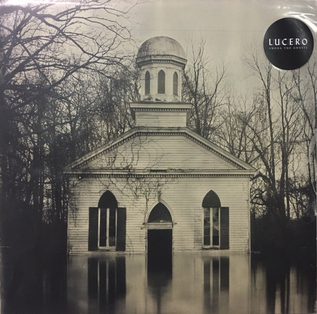
It’s this world that much of Lucero frontman Ben Nichols’ new solo record, In The Heart Of The Mountain (July 25, Liberty & Lament), exists in. The record – which is Nichols’ first solo effort since 2009’s The Last Pale Light In The West (and in many ways is his first original solo full-length given that Last Pale Light… was a seven-song record centered on the characters in Cormac MacCarthy’s anti-Western classic Blood Meridian) – is not the first time that Nichols has dallied in Southern Gothic storytelling. Lucero’s 2021 record When You Found Me is rife with songs like “Coffin Nails” and “Have You Lost Your Way” and its predecessor is literally called Among The Ghosts and has cover art that features a tintype photo of an abandoned Baptist church in Rodney, Mississippi. But to hear Nichols tell it, the idea of incorporating some version – his version – of Southern Gothic storytelling stretches back unexpectedly further, as he started to flex his songwriting muscles nearly decade-and-a-half ago for Women And Work, specifically with tracks like “Sometimes.” “There’s these stories, possibly imagined from my youth in a rural Arkansas environment populated with these kinds of ghosts and maybe myths and folktales and things that I’ve absorbed over the years,” Nichols explains. “I’ve got this kind of made-up family history where I’ve incorporated all of that into my grandparents’ story and my father’s story and where they were from. It’s all kind of that graphic novel I’ve always talked about writing one day. I’ve never done it, but it’s all in my brain and then that comes out in the songs.”

Lucero’s 2017 Southern Gothic masterpiece, “Among The Ghosts”

The idea for a second solo record is one that Nichols had been toying with – publicly and privately – for a long time. “(It) had been in the back of my mind for a while. I started stumbling across these guitar parts that might actually work for that idea,” he says. “I just kind of set them aside and I kept tinker with with them. Then I had a few lyrics – just a couple of lines here and there.” The creative process for the album started to pick up steam in a bit of an unlikely way, specifically when it came to trying to nail down names for a couple of ideas, like the song that would eventually become “From A Western Or A War Movie.” “That song could have easily become overtly cheesy…and it was at first!” Nichols laughs. “That one involved some wrangling. I didn’t have a good title that I liked for it. The chorus didn’t make a good title. But then one time just randomly doing chores around the house it popped into my brain and I was like, “ah, that song’s, it’s kind of like it would be a scene from a western or a war movie.” And I just ran through my head and I was like, “ooh, From A Western Or A War Movie, that’s it! That’s a good title!” 

When added to the list of songs like “The Darkness Sings” and “In The Heart Of The Mountain” that were already named and completed, Nichols started to notice that the potential tracklist could be poetic in its own right. “I’d already kind of been thinking that “The Darkness Sings” and “In The Heart Of The Mountain” kind of go together as a sentence. And then I was like, “the darkness is singing a song from a western or a war movie…” I’m like, “ooh, I can make all four song titles go together kind of like a phrase or a sentence.” And then that got me thinking about what if I did all 10 song titles that actually made up almost a poem. And so once I got the title “From A Western Or A War Movie,” then I was like, “okay, these are all gonna be one big project.” And so then I actually kind of started writing different titles that could fit into my poem. And some of the songs were written specifically because I needed a song with this title.” One of the songs that followed was “While The Stars Disappear,” another track that plays on the album’s recurring themes of darkness and light constantly being present, pushing and pulling in spite of – or perhaps because of – one another. “I just had that phrase, because it fit in between the two songs on either side of it. Then the lyrics for it, I wrote specifically to fit that little spot that I needed in the poem. It was kind of a long hit-and-miss process, but it all fell together in the end.” The song title poem, while admittedly a little loosely defined, was the sort of spark needed to turn the solo record idea into a tangible project. With the exception of the aforementioned Last Pale Light In The West EP in early 2009, “every lyric, every guitar part, everything I do has pretty much 100% gone into Lucero for the last 27 years, so to get my brain wrapped around doing something other than Lucero, I kind of had to have it clearly defined.”

The album closes with a triplet of songs – “The Prayer,” “The Swamper’s Lament” and “The Devil Takes His Leave” – that work together not only in terms of the tracklist poem, but as an interesting look into the contrast between good and evil in the strictly Biblical sense. The first of those tracks should be recognizable to Lucero fans, as it is also featured on the acoustic record that Nichols and longtime Lucero keyboard player Rick Steff collaborated on earlier this year. Its origin actually dates back several decades, however, to a time when Nichols’ younger brother Jeff was still in film school in North Carolina. The younger Nichols was working on a short film that centered on an 1806 duel in which Andrew Jackson shot and killed Nashville attorney Charles Dickinson over an argument that started over horse betting. “I kind of wrote that from Andrew Jackson’s perspective,” states Nichols. “Andrew Jackson’s definitely not a well-liked historical figure, especially today. It almost makes me a little uncomfortable to sing…because it’s about making your will God’s will; it’s co-opting God and calling on the power of God to fulfill your wishes.” 

“The Prayer” is followed by “The Swamper’s Lament,” a tale that finds our protagonist sitting on death row for taking the life of Big Jim Stone (no relation) in order to win a prospective lover’s affections. Nichols explains that the song was written fairly quickly with the intention of it being included on a soundtrack to another film that never got made, and while the story told is purely fictional, the setting was at least inspired by a bit of family history. “There’s a little bit of my granddad on my mom’s side in there,” Nichols explains. “He was a little bit older. I think he was born in 1911. And so when he was 14 in the 20s, he was working, doing some logging and working in some lumber yards or with some lumber companies in southeastern Arkansas, like driving mules and hauling logs as a kid. And so that was kind of the original idea. I was like, “ah, I’ll do something like where Pawpaw was as a kid.” 

The trilogy – and the album – are brought to a close by “The Devil Takes His Leave,” perhaps yours truly’s favorite song on the record. “The Devil Takes His Leave” is another one that I kind of had to figure out,” he states. “That one really started with the lines, “I don’t mind the company, but we don’t have to talk,” and then “You’ve got all the answers. And all I ever knew was I’m not like you.” Taken on their own, the two lines could be about myriad situations, like picking up a hitchhiker, for example. But Nichols also used the line “I don’t know if God has a plan, but I’m sure the Devil does” on the synth-rock record he did with his stepdaughter Joslyn during Covid, and he was taken enough with that line that he new he wanted to reuse it, essentially to plagiarize himself. “I had that God and Devil line and I was like…what if I stick those together? And then I was like “oooh, then you’ve got a whole song about the Devil calling God out for being a hypocrite…can I write a whole song about the problem of evil in a monotheistic religion?” And that became one of my favorite ones on the record.”

From a songwriting perspective, In The Heart Of The Mountain became an interesting and thoughtful way for Nichols to exercise some muscles that he doesn’t normally. “A lot of Lucero songs are like ‘oh, I’m heartbroken’ or ‘oh, I’m too drunk’,” Nichols jokes. “It was fun to write (songs) that were a little more…different, out of my paygrade. “Swamper’s Lament” and “The Prayer” and “The Devil Takes His Leave” in particular are definitely not, you know, from last Saturday night in Ben Nichols’ real life.” From a sonic perspective, the emphasis was also placed on making it not sound like a Lucero record. “It’s not that they wouldn’t have worked as Lucero songs, but they would have sounded different in the end,” he explains. “I wanted a more acoustic-based record with some instrumentation that Lucero just doesn’t have at the moment, with the pedal steel and the violin.” 

Much like the last few Lucero records, including the Unplugged record earlier this year, In The Heart Of The Mountain was recorded in Memphis at Matt Ross-Spang’s Southern Groove Studio. And while Ross-Spang engineered the record and collaborated with Nichols in the recording process, Nichols very much produced the record and crafted its unique sonic direction on his own. Fairly early on in the process, Nichols had identified the ideal lineup to provide the perfect Southern Gothic soundscape for his stories to exist in. “Ever since Todd Beene left Lucero to play with Chuck Ragan and just go his own way, I was hoping that one day I’d get to play some songs with him again. He’s just such a great guy. He’s such a friendly guy and a really good musician.” Beene has a way of approaching the pedal steel that lift it from being a throw-in, pop country-by-numbers instrument to an atmospheric, spooky-yet-melancholy-yet haunting texture that provides emotional depth to a record. He also plays electric guitar on the record, as does the inimitable Cory Branan. Branan has long been thick-as-thieves with Nichols, and has served as sideman at a handful of Nichols’ solo shows over the years. “There’s always a certain ‘it could go off the rails at any moment’ edge to Cory Branan, which I love. It’s part of what makes him so special,” Nichols explains. Branan and Beene at times trade lead electric guitar duties on the record, though most moderately-trained listeners will be able to identify each’s unique style and how it fits into the overall mix. (Branan has semi-jokingly acknowledged that he enjoyed adding his “Mark Knopfler falling down stairs” thing to the record, and if you have ever heard a Dire Straits song, you get it.)

Rounding out the mix was MorganEve Swain, perhaps best known in these pages from her role in The Huntress And Holder Of Hands, the string-heavy post-metal Americana band that joined Lucero in opening for Flogging Molly on a full US tour back before Covid. She’s also more recently been featured in The Devil Makes Three, the folk/bluegrass project that has occupied much of her time recently. “MorganEve could only come in for a couple of days…really just one night. She landed at the airport and came straight to the studio,” explains Nichols. What happened next was, essentially, magic. “We just started playing the songs for her and she would lay down a violin part and she was like, “okay, let me do it one more time.” And then she played a different violin part. She’s like, “okay, one more time.” And she would play a third violin part. And she wasn’t trying different things because she’d messed up the time before, she was building a three-part violin section. And she’d be like, “all right, play them all back at the same time.” And it was just gorgeous. It was like a your own little orchestra.” 

Nichols kicks off a few weeks of solo album release shows this Thursday and Friday in his old hometown of Little Rock, Arkansas. He’ll have Swain, Beene and Branan in tow for the first week of shows (full schedule here), while Swain will have to duck out of the second week, meaning the live band will be a trio. Some semblance of that may be the way things work going forward from a solo, in-between-Lucero-tour perspective. I would love to do more of it, but getting all three of them together is really tricky,” Nichols explains “One of the thoughts I had when I was making the record is like, “well, if I get all three of them, then whatever tour I do, I can probably get at least one of them, and then if one of them’s not available, I could get another one of them and I could just switch them out.” So even though they’re not all three available at the same time, I’ll take whoever I can get. It’ll be really cool.”

And don’t worry, Lucero fans…the band itself isn’t going anywhere. If anything, crafting the solo record has gotten the creative juices flowing for the next Lucero record too. “I want to do Lucero songs. I want to do Lucero songs for Lucero, and I know exactly what those sound like in my brain now, at least for me. I know the next version of Lucero that I want to do.” What will that sound like, you ask? “It‘s not necessarily this spooky Southern Gothic stuff that is all over this In The Heart Of The Mountain solo record,” he reports. “I want to get back and do a rock and roll record, but not necessarily like the last two, And not necessarily like Among the Ghosts either. I want to kind of find a new path with Lucero. And I’m actually excited to get back into that, which was kind of a residual effect of the solo record that I didn’t really plan on, but I’m really excited about. And I’m glad it kind of reinvigorated me.”

Check out the videos from In The Heart Of The Mountain, and keep on scrolling to get our full Q&A. Lots more details about the writing process and the recording process and the concepts of good and evil in a monotheistic religion and about Southern Gothic storytelling and family history and why he thought it necessary to have my uncle Jim tossed into a band saw!

(*Editor’s Note: The following text has been edited and condensed for content and clarity’s sake. Yes, really.)

Jay Stone: I was trying to figure out the best place to start because it’s sort of a unique situation where somebody that’s been in a band for 27 years does like their first real all original solo record while still being in the band. This is a thing you were talking about for a while, but when did it go from something you were thinking about to like, all right, now’s the time to actually do like the next Ben Nichols solo record?

Ben Nichols: I started working on these songs about three years ago. And like with everything else, it’s kind of insane how long it takes to go from writing the first few chords and getting excited about a new song to actually having the record in people’s hands. And for me, yeah, it’s probably about a three-year process. But you know, that first year was figuring out if I had enough songs to actually make an album and enough songs that I liked that I thought fit together well enough to make doing an album make sense. I was still doing plenty of Lucero stuff. And I mean, I guess really three years ago, it was either during or right after the last Lucero album kind of cycle, Should’ve Learned By Now. So the beginning was right on the heels of that last Lucero record. I started, you know, stumbling across a few more little guitar lines that I liked. And I was playing a lot of acoustic guitar. Like you said, a solo record had been in the back of my mind for a while. And so I started stumbling across these guitar parts that I thought might actually work for that idea. I just kind of set them aside and I kept tinkering with them. And then I had a few (lyrics). I had just a couple of lines here and there. Lyrics always come last for me. That’s always kind of the last stage of the songwriting. But I had one of the older songs ended up being “From A Western Or A War Movie.” 

I love that song. And we’ll talk about that later, but I love that song.

That one was, it was kind of a puzzle for me. I liked the idea of the song. It took me a while to edit the lyrics to where I got them to a point that I actually did like them and they weren’t too cheesy. That song could easily become overtly cheesy. And it was (at first). That one involved some wrangling, and the title of it was actually a big part of it. I didn’t have a good title that I liked for it. The chorus didn’t make a good title. But then one time just randomly doing chores around the house it popped into my brain and I was like, “ah, that song’s, it’s kind of like it would be a scene from a western or a war movie.” And I just ran through my head and I was like, “ooh, From A Western Or A War Movie, that’s it! That’s a good title!” And I’d already kind of been thinking that “The Darkness Sings” and “In The Heart Of The Mountain” kind of go together as a sentence. And then I was like, “the darkness is singing a song from a western or a war movie…” I’m like, “ooh, I can make all four song titles go together kind of like a phrase or a sentence.” And then that got me thinking about what if I did all 10 song titles that actually made up almost a poem. And so once I got the title “From A Western Or A War Movie,” then I was like, “okay, these are all gonna be one big project.” And so then I actually kind of started writing different titles that could fit into my poem. And some of the songs were written specifically because I needed a song with this title.

Yeah, yeah, yeah, right. What an interesting way to work. That’s a very different way to work.

It’s definitely different than what I’ve done in the past. And “While the Stars Disappear,” that one I just had that phrase, because it fit in between the two songs on either side of it. And then the lyrics for it, I wrote specifically to fit that little spot that I needed in the poem. But so yeah, it was a different way of working. And it was kind of a long kind of hit-and-miss process, but it all fell together in the end. And yeah, I’m glad I finally got to do this. It’s been something I’ve been wanting to do for a while. 

Is that really when you sort of pressed on the gas pedal? Once you realized that like you could have the song titles make up the poem, does that get the sort of creative juices flowing as to what this whole thing is actually gonna be? So it’s not just like this theory of a Ben Nichols record?

Right. Yeah. And I don’t know if it’s just me, but I feel like I need an excuse to make them something other than Lucero songs. Like the only other project I’ve done close to this would be The Last Pale Light in the West, which was 2008, 2009. And that was easy to compartmentalize because I was writing songs with Cormac McCarthy lines from Blood Meridian, or I was writing songs around the Cormac McCarthy lines. So all those songs were very specific to that piece of work. So that was easy to separate in my brain from Lucero, because for the most part, everything…every lyric, every guitar part, everything I do has pretty much 100% gone into Lucero for the last 27 years, except Last Pale Light in the West. So I guess, for me personally, to get my brain wrapped around doing something other than Lucero, I kind of have to have it clearly defined. And so, even though it’s not necessarily that big a part of the record, the fact that the song titles kind of combine into a poem, it allowed me to separate it from my day job and focus on it and feel comfortable working on it outside of the band. Yeah, and it sort of does paint a theme for the record.

There’s a lot of songs that are push and pull. There’s light and darkness and that sort of conflict. There’s a lot of good and evil. I feel like some of those things sort of have leaked into Lucero, maybe since Among the Ghosts. But this seems a lot more like, I don’t know if cinematic is the right word, but it seems like that’s sort of a bigger concept. And not because one song is called “From A Western or a War Movie,” but in my mind while I was thinking about it, I was like, this seems like a cinematic record. I feel like I can picture myself in some of those scenes. 

Yeah, I love those kind of records. And I felt like Among the Ghosts, the Lucero record, was an embodiment of that idea. And that’s still one of my favorite Lucero records as a whole. I thought it flowed really well and kind of carried that theme throughout the whole album. Some Lucero records are just kind of a group of mutts that are all kind of strays that are all stacked together just because that’s the songs we had at the time. In fact, putting a full album together that has a unity of vision and that kind of cinematic feel is, yeah, I like that on Among the Ghosts and I’ve been trying to pursue that more since then. That was definitely part of my thinking going into In the Heart of the Mountain

These songs were written specifically for this record versus a Lucero record, but does that change how you physically write a song? Like, are there things that you know you can write for yourself that you couldn’t write for Lucero or vice versa? 

Not necessarily. I think it’s just more what this album and what this idea called for. I just wanted to make sure the things, especially the lyrics, but also the chord choices and the instrumentation choices and just the mood of the music, I wanted to make sure that it all fit together in a cohesive way. And so it’s not that they wouldn’t have worked as Lucero songs, they would have sounded different in the end, a lot different, I think. I wanted a more acoustic-based record with some instrumentation that Lucero just doesn’t have at the moment, with the pedal steel and the violin. And so I really wanted to focus on that cohesiveness and that, whatever it is, that kind of Southern Gothic.

I was just gonna say, yeah, yeah. I wrote that a few times in my notes. I’m from up here, obviously, so I don’t know Southern Gothic, but this feels like a Southern Gothic record.

I’m not sure if I really know really what Southern Gothic is, but I know what I think it is in my brain. (*both laugh*) Now, whether that would pass a literary professor’s definition of what Southern Gothic is, I’m not sure. But that’s the idea that I was working in. And yeah, like you said, it’s popped up over the last few Lucero records here and there with songs like “Coffin Nails” from When You Found Me. And even way back, I re-sang a song called “Sometimes” from Women and Work, I think, where there’s these stories, I don’t know, possibly imagined from my youth, rural Arkansas environment populated with these kind of ghosts and maybe myths and folktales and just things that I’ve absorbed over the years. And nobody really knows this necessarily, but I’ve got this kind of made-up family history where I’ve incorporated all that into my grandparents’ story and my father’s story and where they were from. And this is all kind of that graphic novel that I’ve always talked about writing one day. And I’ve never done it, but it’s all in my brain. And then that kind of comes out in the songs. I’m not getting a graphic novel done, but it’s still in there and I want to use it for something. And so it comes out in bits and pieces in these lyrics. So yeah, I guess that’s my version of Southern Gothic. 

So just, because I feel like I have the idea, right? But like these characters sort of exist in a fictionalized version that your dad, granddad, great-grandparents, whoever, grew up with. Like these are songs in their world, but not of them specifically. 

Exactly. Yeah. 

That’s real cool. 

That’s definitely how I think of “Coffin Nails,” which is a similar song. I’d read an Irish folktale somewhere about someone, a person in the village dying and you hear the banshee howling. But there was something about, something flew out of the sky and landed on the window sill, and they couldn’t tell what it looked like it was howling all night long. And I took that and I took my grandfather’s and great-grandfather’s names and imagined my great-grandfather’s passing in rural Arkansas and put this kind of weird banshee creature into the story. Just melding classic folklore from all over the place with my personal family history. That’s really fun for me. And so it’s not overt. This isn’t like a concept record. It doesn’t necessarily tell a story, but all of these songs would be appropriate within that environment, I think. 

So they’ll be the soundtrack to the graphic novel someday. 

Exactly. Exactly. It’s actually, yes, that synth record that I did with my stepdaughter, Joslyn…that and this combined to make a double album soundtrack for the graphic novel. Coming soon. (*both laugh*)

Without knowing that that was the idea, I have written down that there are some themes that you sort of borrow from yourself and revisit. And I think from the record you did with your stepdaughter too, that like some of those ideas and concepts and even lines from this record might be directly from that one…

Totally, yeah, yeah. There was one that was just too good not to use. Cause not a lot of people listened to that synth record. Some did, and I appreciate it. And you know, I still might, if I can scrape the money together one day, I might put it on vinyl just so it exists. A few copies of it at least. But I knew those songs weren’t going to be heard by a whole lot of folks. And so, yeah, there was one line, that line about and the devil takes his leave, and I don’t know if God has a plan, but I’m sure the devil does. I was like, “that’s too good for more people not to hear,” so, yeah, I just blatantly plagiarized myself. That line is in a song on the synth record, and it’s the chorus to “The Devil Takes His Leave.” And yeah, that song is another one that I kind of had to figure out. It wasn’t originally about the devil, you know, talking to God or bitching out God. That one really started with the line, “I don’t mind the company, but we don’t have to talk,” and then “You’ve got all the answers. And all I ever knew was I’m not like you.” I had those lines, but those could have been in anybody’s story. I wasn’t sure who it was about at first. I had a guy hitchhiking and talking to the guy that picked him up. And I had a few different scenarios where those lines could be said. But then I had that God and devil line, and I was like, “that’s really good…what if I stick those together?” And then I was like, “ooh, then you’ve got a whole song about the devil calling God out for being a hypocrite. I’m like, “can I write a whole song about the problem of evil in a monotheistic religion?” And that became one of my favorite ones on the record. I wasn’t planning on writing a song about that but once I combined that line with some others that I had, that’s what it became. And that’s songwriting at its most fun , when you accidentally kind of piece things together and it actually works, and then you can build on that. I think that’s what’s attracted me to songwriting since I was a kid, like those little accidents, seeing what happens. I got lucky with that. 

Yeah, that line in “Devil Takes His Leave” – “my brightness dims with the rising sun.” That’s such a cool visual. And it’s like the perfect sort of embodiment of that battle between the two of them, of good and evil, right and wrong, light and dark, the whole thing. That’s such a perfect phrase. 

There’s all those little bits and pieces of stuff that wasn’t necessarily in the Bible, but then it’s like the whole Lucifer being the morning star, maybe, I don’t know. And it’s pieces that, it kind of doesn’t matter if I remember it correctly, it’s just whatever I remember goes into this song. So it’s not gonna pass muster in a theology course, but it works in my songs. And I was thinking possibly the rising son, maybe there’s a Jesus reference in there. 

Yeah, absolutely. 

It’s kind of like, it’s almost like the Old Testament. Oh, I can’t remember what it was, because there’s no real devil in the Old Testament. It was like the Malach or something or other that was doing God’s bidding, like killing the firstborn sons of the Egyptians and bringing plagues and testing Job. It wasn’t necessarily Satan, but it was just, it was an angel doing God’s bidding, basically. And I guess- 

You paid a lot more attention in Sunday school than I did. 

I’ve been listening to a lot of podcasts. (*both laugh*) I’ve never thought I’d be so into Bible study in the last couple of years of my life, but it’s mainly more…saying “devil study” sounds really bad. I’m interested in the folklore and the mythology around the Bible, just the history of the Bible. That’s really intriguing to me, more in that way than a religious way. It’s kind of fascinating. But yeah, I’ve been listening to a lot of Bible studies. Maybe this is going from that Old Testament Bible devil to the New Testament Bible Devil. And this song is kind of about that transition from the Old Testament God to the New Testament God and what that means for the Old Testament devil to the New Testament Devil. Whereas in the Old Testament, they’re almost one and the same. And then in the New Testament, they want this hard split between an all good God and an all bad Devil to take the heat off of God. God has to answer a lot fewer questions. God’s life is a lot easier if he doesn’t have to answer that whole evil question. And so, in my song at least, the devil’s taking umbrage with the fact that it’s getting all laid on in his lap. I don’t know. A lot of Lucero’s songs are like, “oh, I’m heartbroken or I’m too drunk.” (*both laugh*)  It was fun to write a song that was a little more, I don’t know, just different, out of my pay grade, just a whole different type of thing. 

When did the instrumentation come along? You sort of mentioned the wanting different sounds that Lucero just doesn’t have in the fold right now. But when specifically did you think of, “I should call Cory, I should call Todd Beene, I should call MorganEve Swain”? Did you write with them specifically in mind or just the idea of their instruments? 

I think pretty early on, once I had three or four songs and maybe the idea of the song titles, I was like, “okay, yeah, I’m gonna call these folks.” Cory Branan had sat in with me on some Bike Rider shows, just kind of improvising on electric guitar, and when it sounded good, it sounded really good. And even when it wasn’t perfect, it still sounded pretty good. And that was just him playing on the fly, just doing what Cory does. And I was like, “man, that would be really fun to get in the studio and really kind of nail some of that down.” And then ever since Todd Beene left Lucero to play with Chuck Ragan and just go his own way, I was hoping that one day I’d get to play some songs with him again. He’s just such a great guy. He’s such a friendly guy and a really good musician and a really good electric guitar player. I was always a big fan of his electric guitar in Glossary. And it’s a totally different type of electric guitar than what Cory does on electric guitar. And that’s part of what I love about this album is even when they’re both playing electric guitar, you can tell who’s Cory and who’s Todd. You can tell their parts apart just with their style of playing. So that was fun too. And then MorganEve from The Huntress… I just think I’m such a big fan of Huntress and The Holder of Hands from when we toured with them and Flogging Molly a few years back. Just because they’re so good and kind of classy and just, MorganEve is just musician’s musician. She’s just can do anything. And so the fact, like one night on tour, when I first met them, she’s like, “you should play ‘Long Way Back Home.’ I’m a fan of that song.” That just kind of blew me away. I didn’t think she’d actually even pay attention to us or listen to us at all. And the fact that she had said that, I was taken aback. And then we kind of became friends and kept in touch. And she always joked about, “we should play songs together sometime.” And so when I got into writing these, I let her know. I was like, “okay, I’ve got something in the works. I’m gonna fly you to Memphis sometime and you’re gonna record some violins for me.” And so, yeah, she was kind enough to actually do it. 

Yeah, that’s a really great trio. Separately and together, that’s a really great trio. And I’ve been fans of all of theirs for a long time, but it’s cool to have them behind you. 

Yeah, it’s huge. It gives me goosebumps right now, just thinking about it. 

Did you have to give them much direction or do you just go “here’s the song, do whatever you’re gonna do on it?”

Half and half, really. With MorganEve, I just let her go and she was amazing. The way the studio worked is that I went in for a couple of days and laid down kind of the basic guitar and vocals. And then Cory came in and started laying down some guitar and Todd came in pretty much at the same time. And those two were working. And that was a little trickier, figuring out who goes where, kind of, because they both didn’t play the whole thing, and so piecing those together took a little bit of work. I had written some guitar parts, some lead electric stuff and Cory was really good at just like, “oh, you want that part like that on the demo? Yeah?” and he just would play it. And that was amazing. But then MorganEve came in. She was so busy with The Devil Makes Three, she could only come in for like a couple of days. Really just kind of one night. She landed at the airport and then came straight to the studio. We just started playing the songs for her and she would lay down a violin part and she was like, “okay, let me do it one more time.” And then she played a different violin part. She’s like, “okay, one more time.” And she would play a third violin part. And she wasn’t trying different things because she’d messed up the time before, she was building a three-part violin section. And she’d be like, “all right, play them all back at the same time.” And it was just gorgeous. It was like a your own little orchestra. 

I can’t imagine having that kind of talent, like just in your brain. 

Right? It’s insane. And she would do the same thing with the backing vocals. She’d kind of layer the backing vocals and just do three takes, but they’re all different. “You can put them all together and then just use what you want.” It was a really fun recording process. 

Yeah, I like the times where you let Cory do the sort of thing I think he jokingly calls “like Mark Knopfler falling downstairs” – that super clean, spanky sound that is such a Dire Straits, Mark Knopfler tone.

Yeah that became a big part of “The Darkness Sings.”

Yeah, it’s a little bit on “When The Stars Disappear” too. That twangy thing. I mean, I love Cory anyway, but I like when he does that. 

Yeah, I love that style, but he’s one of those you can dial in different sounds with. There’s always an insane edge to whatever he’s doing. (*both laugh*) There’s always a certain ‘it could go off the rails at any moment’ edge to Cory Branan, which I love. It’s part of what makes him so special. But yeah, the fact that he could do that and then an Eddie Van Halen guitar solo. And you can probably pick which Van Halen record you want. “Do you want more 1984? Right. Or do you want more…” you know? And he can dial in. He’s got a great knowledge of music, rock and roll history and he’s pretty good at dialng any of those sounds in that you want. And then yeah, Todd Beene as well. Todd Beene’s very professional. He’s like, super on top of it. And Todd’s really good at knowing what I would want. He’s like, “I can just tell from the way this chorus goes into this bridge. I know what you’re doing. I know what you’re doing.” And then he just does it. And yeah, you always know what you’re getting with Todd and it’s always gonna be good. It’s really cool. 

Yeah obviously he’s been out with Chuck a lot and Chuck actually came out for a while earlier this year and played shows up here and it was supposed to be the two of them…

And then I think that’s when he broke his arm!

Yeah!

He felt terrible. I remember he called me and told me what had happened and he felt awful for having to miss those shows. I feel for him. That kind of injury… if you’re a pedal steel player, you need all your limbs working in conjunction. It’s like flying a helicopter. You’ve got to use all your feet and toes and hands and arms. (*both laugh*)

Yeah, I felt bad for him. I was actually at a Hot Water show, I think the day that Chuck found out. So I’ve been friendly with some of those guys for a long time, and Michael, their merch guy, knew I was going to a couple of the solo shows and was like, “Chuck’s freaking out. He doesn’t know what he’s going to do. Because he’s got no Todd now. And is he going to even do it?” 

Yeah, Todd is so good. I understand the feeling of like, wait, I can’t do this without Todd. 

And he’s all over Chuck’s new record, too. 

100%

It’s a Chuck record, but it’s a Todd Beene record, too. 

100%. Yeah, 100%. And yeah, I was glad that I could steal Todd away and borrow some of that Todd magic for this record. But at the same time, I think we did a pretty good job of blending it all in. It’s a MorganEve record and a Cory Branan record and a Ben solo record. 

Yeah, they did an amazing job. 

And then I’ve got to credit Matt Ross-Spang, too, for taking all those people…like any one of them individually could have carried the whole record and taking all three of those and editing the stuff to make it all make sense and really making the record work. Me and Matt spent a lot of time on that, and Matt Ross-Spang did a great job, too.

And to make it ‘not a Lucero record.’ I mean, because they’re not Lucero songs. There’s obviously some that, like you said, could pass, but he’s worked with the band for so long that he knows kind of how the band works. So to make this definitely not a Lucero record, too, was important. 

Right. And he also helped me mix that Last Wolf in the Woods synthesizer record. So he’s seen Ben in full Lucero mode, Ben in exactly opposite Lucero mode with the synthesizers. And then this was somewhere in between, which is actually that’s a perfectly fine way of looking at it. This kind of crosses…this is the bridge between the synth record and the traditional Lucero stuff. This record exists somewhere in between. And Matt knew exactly how to capture that.

So I was sort of curious about this. Knowing that there’s a lot of guys in the scene, like whether it’s Fallon or whether it’s Chuck or Craig Finn or whatever, that have sort of balanced both doing their own thing and doing the band thing…do you ever toss this idea around with those guys? Like, “how do you make it work? How do you make it land OK with the band that I’m going to do my own thing and still do the band thing?” Like, is that a thing you talk about? 

I probably should have. (*both laugh) I probably should have asked people, in hindsight, how to make that work? Yeah. All those guys would probably have some wisdom and some insight. No, I didn’t really talk to them about it. Yeah, maybe I should have. With Lucero, I just kind of assume Lucero is always going to be there. Maybe for better or for worse, I take it for granted. Lucero is, yeah, it’s just my life and it’s Brian and John and Roy and Rick’s life right now, too. And in my head, I just don’t see it changing. If I stopped and thought about it and thought about reality, we’re all getting older and time passes and things change, I should maybe start, you know, thinking about how Lucero progresses into the future and what that actually looks like. But to be honest, I’ve avoided that. 

That’s what management is for. That’s what I assume. 

Yeah, exactly. I don’t know. In my brain, yeah, just from the outside, you see all those guys like Craig Finnn or Brian Fallon, and I was like, “they make it work.” And so I didn’t even think twice. I was just like, “yeah, I can make this work.” But yeah, the logistics and the reality of it do get a little tricky, especially just the fact that Lucero makes all of our money pretty much playing live shows. And so routing is important. And yeah, things are still tight. Lucero’s never bounced back completely from the pandemic. I felt like we were really going pretty strong in 2018, 2019, and the pandemic stopped us in our tracks, just like everybody else. But coming back, that climb has been pretty steep. Ticket sales have been tough. We super appreciate our hardcore fans that have been with us for so long and are still there. They’re great. But bringing new people on board and getting those, you know, kind of casual listeners out to the shows has been a lot tougher for Lucero in recent years. And so now with me booking solo shows, and I’m not booking a lot, but even a few that I’m trying to book, like, it’s like I’m my own competition all of a sudden between Ben Nichols and Lucero. And promoters, like if Lucero’s played that town that year, they don’t want to do a Ben Nichols show. Or if they do a Ben Nichols show, they’re not going to do a Lucero show next year. It shouldn’t be this complicated. But it’s tricky.

So we’re navigating that. They’re all aware of it. And I hope they’re not worried. One of the upsides to the solo record, which I didn’t really think about when I started it, because I was just so happy with the way these songs were coming out. And I was like, ‘Oh, this is exactly what I want to be doing right now. These musicians are fun.’ These songs are fun for me. But now that the process has kind of come, well, not to a close, but the record’s actually being released. And so the creative process of it is at an end, and now it’s releasing the record process. But now I’m like, ‘Ooh, I want to get back to writing. I want to do Lucero songs. I want to do Lucero songs for Lucero.’ And I know exactly what those sound like in my brain now, at least for me. I know the next version of Lucero that I want to do. And it’s not necessarily this spooky Southern Gothic stuff that is all over this In The Heart Of The Mountain solo record. And it’s more of a… I want to get back and do a rock and roll record. But not necessarily like the last two. And not necessarily like Among the Ghosts either. I’ve got, I don’t know, I want to kind of find a new path with Lucero. And I’m actually excited to get back into that, which was kind of a residual effect of the solo record that I didn’t really plan on, but I’m really excited about. And I’m glad it kind of reinvigorated me and got me excited about writing some new Lucero songs too. 

You sort of hinted at that, actually, when we talked six months ago about the unplugged record, that knowing that the solo record was almost done and almost going to be out, you were already sort of amped up about the next Lucero record too. So it’s good that six months later that’s still the case.

Yeah, I am. I’m really looking forward to getting into it. I got my baggage out of the way now. And I just want to focus on doing Lucero songs with the Lucero guys. Just, I want to get in there and just do what Lucero does best is kind of what I’ve decided now. Instead of trying to make Lucero everything that I want to do and Lucero having to carry the weight of all of my whims and notions…Instead of forcing all of that into Lucero, now I’ve had a chance to kind of get some of that out of my system, all in a good way. I can just really enjoy letting Lucero do what Lucero does well. So yeah I don’t have a lot yet, but I’ve got a couple of pieces. I’ve got the start of a new record. And so yeah, yeah, I’m looking forward to it.

Before we get all the way through your afternoon, I have to ask about “Swampers’ Lament.” So I have like three, maybe four favorite songs on the record, and that’s one, but as I’m listening to “Swampers’ Lament,” my first thought was, “wait, what did my Uncle Jim ever do to Ben?” (*laughs*) Because have an uncle Jim Stone.

That’s funny!

And so I was like, oh, wait, what did Uncle Jim ever do to Ben to get thrown in a bandsaw.

I know! Ouch! That one had been floating around for a little while. And I think there’s a Lucero version of that recorded somewhere. But a guy, John Michael McCarthy, a Memphis filmmaker, who’s made kind of low-budget, raw drop films since forever ago. He’s always been around making these kind of crazy indie films. And he called and was like, “I’m going to try to make a new movie.” This was right before the pandemic. And when the pandemic hit, I don’t know what happened to it. I haven’t really heard about it since then. But he’s like, “I want the whole soundtrack to be murder ballads.” I was like, “ooh, yeah, I could try a murder ballad or two or three.” And I only ended up writing one. But it was “Swampers’ Lament.” And so I’d kind of been sitting on it for a while. Not sure if it was going to be used in this movie or not. And it never came to fruition. So I was like, “all right, this is actually mine.” And I kind of grew to like it. I kind of wrote it really fast. And I didn’t think much of it at first. But I’ve really grown to love it. 

Yeah, it’s different thematically. It’s different musically.

For sure. And yeah, because that was supposed to be not necessarily a Lucero song. Not necessarily a Ben Nichols song at all. It was just supposed to sound like a… I wanted it to sound like it could be a traditional or an old school kind of murder ballad. But it tells a whole lot of story in just two verses. And when I went back and looked at it, I was like, “oh, man, there’s actually a lot in there.” And yeah, I don’t know where I got Big Jim Stone. You’re just kind of singing it as you go along, making up words as you go along, and that just kind of flowed. I didn’t put a lot of thought into it, but Big Jim Stone is just what happened to come out. I’m sure like with everything I do, I had to have stolen it from somewhere. There’s probably another song with a Big Jim Stone or a movie. 

Well, so I actually thought about that. I was like, “oh, I wonder if this is a character in something I’m not familiar with.” I Googled it and I quite legitimately couldn’t find anything. There was like a Canadian soldier or something like that. But it wasn’t from anything.

Oh, that’s funny. Well, good! Usually, whether you know it or not, you’re usually stealing it. Even if you’ve never heard of it before. There’s so much out there that’s already been written, so that’s nice to hear that it’s not easy to Google Big Jim Stone. But there’s a little bit of my granddad on my mom’s side in there. He was a little bit older. I think he was born in 1911. And so when he was 14 in the 20s, he was working, doing some logging and working in some lumber yards or with some lumber companies in southeastern Arkansas, like driving mules and hauling logs as a kid. And so that was kind of the original idea. I was like, “ah, I’ll do something like where Pawpaw was as a kid.” And so that was the idea for the setting, I guess, originally for that one. 

Are those stories talked about a lot in your family? Because I mean, obviously whether on purpose or on accident, you weave a lot of family history into the songs. But are those stories like that get passed down and talked about and like, “so-and-so did this as a job and so-and-so was here in the war” and so on? Is that a regular thing?

I wish it was more regular. Yeah, I wish it was more regular. I think it’s just a little bit. I guess maybe it was a pretty regular topic of conversation (years ago) and I’ve been able to hold on to a few bits and pieces that end up in the songs. And there’s probably a lot more that I wish I could remember and that I wish maybe had been talked about more. But yeah, I eat that up. Everybody does, you know? That’s why Ancestry.com is so popular. Everybody’s super fascinated by their own family history and where everybody comes from, of course, that fascinates each person. And it’s the same for me. And so, yeah, I don’t know, I haven’t thought about this in a while…and I don’t know, this is a silly way to frame it, but if I could make some wishes, being able to go back and kind of watch some of my family history, different scenes from the past, if I could have that superpower or be granted that wish, that would be something I would be really interested in. Even just, you know, my dad working in the drugstore as an 8-year-old kid in 1950s, if he was 8, it’d be 1956 in Altheimer, Arkansas, when all the cotton field workers would come in on a Saturday night. And my dad’s, you know, selling comic books and cigarettes and soda pop at the drugstore. And he said it was like Mardi Gras. Like the street, it’s just this one row of buildings. And he’s like, between those and the train tracks on the other side of the street, it was just like Mardi Gras every Saturday night. And I would just love to see that. And then, of course, my granddad in the war and and when he comes home from the war. There’s just so many different things I would love to actually be able to go back and witness. So yeah, I’m holding on to a few little stories. Yeah, it makes me want to call my mom and dad and talk more. 

Yeah, right! When you travel, because you obviously travel a lot more than I do, but if you are places where you know that you’ve had some family history or connection to, or that you know of historical things that have happened, do you ever just stop and put yourself there? Because I do that. Especially in and around Boston. Just to even stop and be like…to try to put yourself in what it was like at the time, but like how your ancestors kind of navigated in there. I haven’t been to Gettysburg yet, which is a bad thing for me, but I have a family member who was killed there. John Stone from New Hampshire. 

Oh wow!

Yeah, and my dad actually has his knife, like his field knife. 

No way!

Yeah, it’s really cool. And I haven’t been there, although my kid has…but just to like, put yourself there and know what that battle was like, and where like, they died in the peach orchard or whatever, like. 

Oh, that’s, that’s, that’s intense. Yeah, I do that in a much more mundane way too. A lot of times I’ll be driving from Memphis to Little Rock. And instead of taking I-40 straight across, I’ll take little highways and go through some of those small Delta towns. And sometimes I’ve even gone all the way down to Altheimer, which is a little out of the way, but yeah, passing through those towns, which are pretty much obliterated now, like literally just caved in on themselves, wiped away, and now there’s maybe a brand new little post office, and that’s all there is, where there used to be, you know, a main street. There’s like a water tower next to the post office, and the post office was built in 2002, so it doesn’t look anything like it did in the old days. There might be some houses still and a couple of buildings and a church or two, but trying to picture it…like I remember when I was a kid in the 70s and 80s, and that was completely different. There was a lot left then, and then trying to piece it together from old family photos and stuff. I love that. I love trying to, yeah, put myself into their shoes and into their place. And that was, that’s where that old Lucero song “The War” came from. That was just me trying to put myself in my granddad’s shoes as a 20-year-old kid in Europe in World War II. Yeah, that’s important to me for sure. 

Isn’t it asinine to think that like, those kids were 20, 18, 17 in some cases? Like…

Insane! Insane!

Like your stepdaughters are older than that now. My kid is 17 and a half. Can you imagine them being on the front lines? 

Yeah, it absolutely boggles my mind. And it’s such a, just such a momentous time and a momentous piece of history that, you know, he was a part of. Just like your, just like your ancestor in Gettysburg, such a pivotal moment in American history. And the fact that, yeah, yeah, people have family members that were actually, they were real people. And they were real kids at 20 years old, doing this stuff and changing the world. It’s fascinating and inspiring and yeah, yeah, a little intimidating. 

Yeah, we always think about like veterans as older people, right? Because when you’re growing up, it doesn’t matter how old you are, the veterans you see are always older than you so you just equate them with old people sometimes. And then you realize like, for example, my grandmother had a half brother who she never met, but he was killed at Iwo Jima and he was like 19, 19-and-a-half, something like that. And I’m like, what the hell? 

I remember, I remember being 18 and I might as well have been 12. 

Absolutely. I still think that and I’m 46. (*both laugh*)

Yeah. Yeah. Mentally, I’m pretty slow. Like at 18, I was still functioning pretty much as a 12-year-old in an 18-year-old’s body. 

Right!

And now I’m a 50-year-old functioning as an 18-year-old in a 50-year-old’s body. (*both laugh*)  So yeah, I can’t imagine what was going through their minds and how they saw the world. And trying to figure out, what am I missing? Am I missing something? Did they see it the same as me or were they completely mature? 

It’s funny to say that you can’t imagine because at some level, you have. Like that has been part of your job. 

Trying to, yeah. I guess I try to imagine is a better way of saying it than I can’t, because I mean, obviously I can’t know exactly what’s going through their head, but I do try. I do try. I try to get as close as I can sometimes. 

“The War” sounds probably pretty accurate, at least to me.

I think so. 

“The Prayer,” too. It isn’t about war, but if you pull back a little it could be about a lot of different situations, about what somebody’s thinking when they are about to go to battle…that was for your brother’s old student movie, right?

 Right. Yeah. I’d actually heard a story in a history class – in my American History college course that I had taking and Jeff needed a story for his student film that year. He was still in the North Carolina School of the Arts, in the director’s program. And it was the story about Andrew Jackson getting into a duel. And so I kind of wrote that from Andrew Jackson’s perspective. Um, and Andrew Jackson’s definitely not a well liked historical figure (*both laugh) especially today. But it was a cool story and it made a great little short student film and I had this song left over. And it almost makes me a little uncomfortable to sing it because as much as “The Devil Takes His Leave” is calling out God, “The Prayer” is making your will God’s will. It’s kind of co-opting God. “The Devil Takes His Leave” is calling him out, where “The Prayer” is co-opting him and calling on the power of God to fulfill your wishes. 

And your wish is to kill this guy.

Exactly, You’re saying you’re doing this in His name, but really it’s just, you want to kill this guy.  And so, yeah, it sounds like a heavily Christian song, but in reality it’s, uh, I’m very skeptical of that narrator’s intentions. Um, and so, yeah, I was glad I could go to some of these places with some of these songs, like the, the murder ballad, “Swampers Lament,” and “The Prayer” and “The Devil Takes His Leave,” those last three songs in particular are definitely not, you know, that’s not from last Saturday night in Ben Nichols’ real life (*both laugh*) like a lot of other Lucero songs. It was really fun to step into other characters. But I gotta say “The Prayer,” that’s another kind of rediscovered one that I wrote… 20 years ago? I kind of switched up the arrangement just a little bit and tidied it up, but I kind of rediscovered that one and I was like “ Ooh, um, I don’t want that one to disappear.” And so it’s nice that it exists out in the world now too, even though the narrator’s not necessarily the most reliable. 

Well, no, but unfortunately, thematically, that’s a thing that’s still pretty prevalent now, right? Co-opting, uh, your will onto God’s will for nefarious purposes…

Yeah, right!  And so I’m glad that it’s quickly followed up by a murder ballad and then “The Devil Takes His Leave.” I’m glad that all three of those work almost in conjunction, like one alone would be maybe too heavy, but with all three, you’re like, “Oh, I don’t know what Ben actually believes in.” And that’s just fine with me. 

Yeah, yeah, right. Sometimes it’s better that way. 

Exactly. Exactly. Just confuse them. And, uh, yeah, just put it all in there. But I think… I’m proud of the songwriting and all three of them.

The album’s out officially, what, next Friday? The 25th?

Yes, the 25th.

Is it a different sort of like anticipation or even vulnerability knowing that it’s just Ben Nichols on the front and not Lucero? Like, even if you might be the principal songwriter in Lucero and whatever, does it feel different when it’s just your name and picture on the cover? 

Yeah, it’s funny…Lucero is just…for better or for worse, we’ve been going for so long. Lucero has a certain momentum even still. And so I know this release won’t be as big. It’ll be a more limited release, and I’m okay with that. I understand that.  Any bad reviews I would probably take even more personally.

Yeah, right. For sure. 

But, so far the little bit of press that it’s had has been pretty encouraging and pretty positive. But no, it’s kind of the same, just a slightly smaller scale, which is fine. I would love to do more touring, especially with Cory and MorganEve and Todd. I’ve got them all for one week and then MorganEve has to drop off and I’ve got Todd and Cory for a second week. And then we’ll see in the future. I would love to do more of it, but getting all three of them together is really tricky. So yeah, we’ll see what kind of touring I can do, but I’m actually hoping…one of the thoughts I had when I was making the record is like, “well, if I get all three of them, then whatever tour I do, I can probably get at least one of them, and then if one of them’s not available, I could get another one of them and I could just switch them out.” So even though they’re not all three available at the same time, I’ll take whoever I can get. It’ll be really cool. So that’s kind of my plan for solo tours for the near future is just to get whichever one of them’s available, they’re coming with me, and they’re all going to be great no matter what.

It’s almost like four different shows. Like you could see Ben Nichols four different times in the same year with four entirely different projects. 

Yeah!

And it’ll all be good. 

I feel like it’ll do the song’s justice, no matter who’s with me. So yeah, that’s the plan now that the record’s coming out. I’ll try to squeeze in as much solo touring as I can in between Lucero’s stuff, and hopefully take those folks out with me whenever I can.

I look forward to it coming up here someday. Uh, I think I looked at the routing. I was like, “well, at least we had Ben and Rick earlier this year, because Cleveland is the closest thing now.”

Yeah. So my plan is maybe I could get to the West Coast at the end of this year with some version of this solo tour, and then I’m hoping early next year to do a version of the solo tour and on the, on the East Coast. So don’t, don’t hold your breath, but don’t forget about me either, and I’m not going to forget about y’all.

Post a Comment

Your email address will not be published. Required fields are marked *

DS Show Review and Photo Gallery: Dropkick Murphys celebrate Quincy’s 400th birthday and new record “For The People” with massive free outdoor hometown show

The city of Quincy, Massachusetts, is celebrating its 400th anniversary this year with a series of celebrations that honor the places and faces who have made up the community for the last four centuries (or at least the last four centuries since the Europeans arrived, but that’s a long complicated essay for another time). If […]

The city of Quincy, Massachusetts, is celebrating its 400th anniversary this year with a series of celebrations that honor the places and faces who have made up the community for the last four centuries (or at least the last four centuries since the Europeans arrived, but that’s a long complicated essay for another time). If you’re not from around here, Quincy is a coastal community separated from Boston proper by the Neponset River. Colloquially known as the “City of Presidents” because not one but two President Adamses were born and raised there (as was John Hancock who wasn’t President but was at least able to write his name really big), Quincy in many ways has really embodied a lot of what has been considered sterotypically “Boston” since at least the middle of last century. As the socioeconomic landscape of its neighbor to the north has continued to change rather drastically over the last few decades, Quincy has maintained its reputation a tough, bluest-of-blue collar city, a tradition that dates back centuries, when Quincy was a home to shipyards and granite quarries and the first commercial railroad in the US. I have absolutely no way of verifying this, but my gut tells me that Quincy is probably home to probably the largest ratio of active union members among all of Massachusetts’ 351 cities and towns. The ethnic makeup of the community has ebbed and flowed for years, as is the case in most traditionally working-class communities, but the rough and tumble issues have not, nor have the sense of local pride. Hell, Quincy is also the home of the back-to-back-to-back Major League Rugby champion New England Free Jacks and if there’s a more rough-and-tumble blue-collar sport than rugby, I’m not sure what it is. Oh, and it’s also where Dunkin Donuts started. 

As such, it would make sense that when Quincy decided to throw a year-long birthday party, it would include its punk rock native sons in the festivities. Long obviously associated with the Boston punk scene, the original Dropkick Murphys lineup got their start essentially on a bet offered to founding bassist/current lead vocalist Ken Casey close to thirty years ago, and set up shop in a Quincy practice space. Casey is the lone member of the original four-piece lineup still in the band, and it can be reasonably argued that, with Casey at the helm, no band of their size in this or any scene has been as proactive and outwardly vocal about supporting blue-collar, working-class causes, loudly and proudly trumpeting, labor unions, anti-fascist causes and supporting programs for underpriviledged kids, people struggling with substance use issues and, of course, veterans. In many ways, they’ve very much become the Irish-infused spiritual heirs to the Woody Guthries and Pete Seegers and Bruce Springsteens and Clash who came before them.

And so it was that the Dropkick Murphys took over the heart of Quincy Center last Saturday afternoon. The normally bustling Hancock Street was shut down for several blocks, and a giant stage was set up a literal stone’s throw from the resting places of a former President and First Lady. By most official estimates, more than 10,000 fans made the trek to bask in the warm summer afternoon sun with Casey and crew to celebrate both Quincy’s official 400th and the coinciding release of the Dropkick Murphys 13th studio record, For The People. Those who arrived early enough – it was a free, outdoor show in a popular urban center after all –  early enough to arrive were able to see the band work through a few of For The People’s tracks at soundcheck for the first time, including the stage debut of the uilleann (Irish) pipes pulled off by the band’s recent bagpipe/tin whistle player Campbell Webster. Ever the man of the people, Casey made his way around the barricade area for a round of fist-bumps and high-fives to the early arrivers. Then local favorite DJ Stenny took the stage to provide the soundtrack as the masses arrived, playing a list that largely consisted of 70s rock and classic hip hop tracks for the gathering crowd to dance and sing along too.


At shortly after 5:00pm and accompanied as usual by the dulcet tones of the Chieftains/Sinead O’Connor version of the traditional Irish Easter Rebellion-inspired “The Foggy Dew,” the Dropkicks returned to the stage and immediately ripped into “Who’ll Stand With Us,” the lead single from For The People, followed immediately by longtime classic and fan favorite “The Boys Are Back” from 2012’s Signed and Sealed in Blood. In the half-dozen-or-so years since Casey officially handed off live bass-playing duties to longtime band tech Kevin Rheault – and especially since co-lead vocalist Al Barr has been on hiatus tending to his ailing mother – he’s been a constant source of energy on stage, endlessly pacing back and forth and frequently engaging in singalongs with showgoers at the barricade. The band blazed through close to two-dozen songs over the course of ninety-ish minutes. The new record was well represented, with a total of seven new tracks sprinkled amidst the longtime favorites. Particularly poignant were the new tracks “Chesterfields And Aftershave” “Kids Games” and “Streetlights.” It being the greater Boston area still, of course “Tessie,” “Skinhead On The MBTA,” “The State of Massachusetts” and “Shipping Up To Boston” made requisite appearances. “(F)lannigan’s Ball” and “Barroom Heroes” were crowd favorites, as was the circle-pit-inducing “The Big Man,” the band’s new ode to Pennywise’s Fletcher Dragge, a song that found Casey jumping into the crowd and performing from the middle of the chaos.


And speaking of constant energy…it will never cease to amaze me how many moving parts there are on stage during a Dropkick Murphys show. Webster and his bagpipes, uilleann pipes and tin whistle stood ground at stage right rear, longtime guitarist James Lynch mans stage left accompanied generally by his trademark low-hung Les Paul and Matt Kelly remains perched on his throne, providing the rhythmic backbone to the whole shebang, but Casey, Rheault, and the endlessly multi-talented duo of Tim Brennan and Jeff DaRosa do…not…stop… pacing the stage, whipping the crowd up, and genuinely revelling in the mood as much or more than the show goers. Brennan was constantly switching between the accordion and a couple of Motor Ave electric guitars, while I’m fairly certain I counted ten different instruments for DaRosa – a green Duesenberg electric, two different banjos, a harmonica, a Martin acoustic, a bouzouki, a Telecaster, an F mandolin and the keyboard – across the set’s 23 songs. Amidst the clamor and chaos of a punk rock show, the band and their crew present as a finely tuned and well-oiled machine. Must be something about those blue-collar, working-class roots. 

Check out more pics below, including one gallery dedicated solely to the multi-instrumental exploits of Jeff DaRosa!

Post a Comment

Your email address will not be published. Required fields are marked *

DS Show Notes: Less Than Jake’s Summer Circus rolls through Boston with Suicide Machines, Fishbone and Bite Me Bambi!

Prior to this year’s Summer Circus tour, it had been a while since yours truly saw Less Than Jake headline a show. Sure there were Warped Tours and more Warped Tours and even more Warped tours, and a Vans Triple Crown skateboarding thing with Andy MacDonald and Bob Burnquist (and I think Radish also played), […]

Prior to this year’s Summer Circus tour, it had been a while since yours truly saw Less Than Jake headline a show. Sure there were Warped Tours and more Warped Tours and even more Warped tours, and a Vans Triple Crown skateboarding thing with Andy MacDonald and Bob Burnquist (and I think Radish also played), but if memory serves, the last time I saw Less Than Jake headline a club show was the long-since defunct Elvis Room in Portsmouth New Hampshire. So long ago that Jessica and Derron were still in the band and JR was still (Re)Pete from Spring Heeled Jack. I don’t call myself the resident old guy here for nothing…BUT I DIGRESS! The Boston stop on the Summer Circus tour seemed as good a time as any to both return to the House of Blues for only the second time since Covid, and more importantly to check out the Good Ship LTJ again, especially with the dynamite lineup they put together for the early summer festivities.


Bite Me Bambi were first out of the gate for this night, as they were for the entirety of the three-week East Coast run. I was as eager to catch Bite Me Bambi as I was to catch anyone else on this stacked bill, in part because the Orange County-based ska punks don’t make it up to this corner of the globe with any regularity, and also because they’re one of the few modern ska bands that reignited my interest in the genre I first fell in love with three decades ago. Led by the enigmatic Tahlena Chikami, the band kicked off their half-hour spot with “Too Many People” from their most recent release, Eat This. A large portion of the crowd at the 2200 capacity venue had arrived early enough to catch BMB’s high-energy set which included the evening’s first attempt at a circle pit (very much not a Bosotn thing) alongside tracks like “Strippers On A Sunday,” “Gaslighter’s Anthem” and their cover of The Offspring’s “Want You Bad,” a song that is now somehow a quarter-century old and that makes me want to walk into the ocean with rocks in my pockets. Bite Me Bambi’s set was super fun and they sounded super tight, which was especially noteworthy as the touring lineup is a bit of a moving target.

Speaking of bands who feature bold, enigmatic leaders at the front and center, the incomparable Fishbone were up next. Somehow, it was yours truly’s first time shooting Fishbone, and it was every bit as wonderfully chaotic as I’d hoped. Speaking of moving part lineups, the current touring iteration of Fishbone features the iconic Angelo Moore, the return of Tracey “Spacey T” Singleton on guitar, OG trombone/keyboard player Chris Dowd, and newer recruits Hassan Hurd (drums), JS Williams (trumpet/vocals) and James Jones (bass). It also features Moore’s daughter Cheyenne aka Whoop-Dee-Doo, who joined on guest vocals right from jump street on a rousing rendition of the classic “Skankin’ To The Beat.” The stage was constant motion, pure frenetic energy. In addition to lead vocal bandleading duties, Moore oscillated between the theremin and a few different horns (shoutout to Lucero’s longtime stage man Scott for keeping the ship running; not an easy task). The band blitzed through a tight 40 minute set that included classics new and old like “Party At Ground Zero,” “Last Call In America” and of course “Racist Piece Of Shit” before bringing the set to a fun, dancealong close with “Dance To The Music/Everyday Sunshine.”


Suicide Machines occupied the third spot on the four-band bill. My memory from shows from two and three decades ago is more than a little bit foggy, but I do have a vivid recollection of Suicide Machines playing early in the day at my first Warped Tour (Northampton MA 1997 – who was there???) and I definitely remember sneaking my Kodak Fisher Price 110 film camera in and shooting some pictures at that show. I’d never snuck my camera into a show before, and so that means there’s a very distinct possibility that Suicide Machines were the very first band I “shot.” Those pictures may be lost to time, but I should look for them. Anyway, the Detroit four-piece are as good or better now than they ever have been. The always fiercely anti-racist, anti-fascist quartet kicked things off with “Too Good” from their landmark 1996 debut LP Destruction By Definition and never really took their collective feet off the gas pedal. Spearheaded by the dynamic Jason Navarro, the band squeezed fifteen songs into their thirty-five-ish minute set. The bulk of the setlist consisted of songs from Destruction… – an album that they promised to revisit in full on an anniversary tour next year, with a smattering from A Match and Some Gasoline and Battle Hymns and Revolution Spring composing the other half of the set. Brand new standalone single “Never Go Quietly” fit right in as a new classic.


Which brings us to the piece de resistance, the one and only Less Than Jake. With a stage adorned in full Bit Top Circus-esque regalia, the Gainesville-based quintet kicked things off with their ode to their hometown, “Gainesville Rock City,” from 2000’s Borders & Boundaries. “Lie To Me” and “Johnny Quest Thinks We’re Sellouts” followed, with the latter still being one of my favorite songs in the ska/punk world. Pezcore and Losing Streak (and Losers, Kings… and Greased, if I’m being honest) were staple albums in my crew in the days they came out, the soundtrack to endless adventures packed into a friend’s station wagon, singing along at the tops of our lungs while searching for anything at all to do in our corner of suburban New England. I had a moment while standing in the wings, looking at the constant motion on stage – Chris and Roger constantly moving around and playing to the audience when off mic, Buddy never standing still for more than maybe 9 seconds, stage managers endlessly bringing different circus-themed props [rainbow wigs, clown noses, some strange banana-weilding guy in a monkey costume (hi Warren!)] that this is now the fourth decade I’ve seen Less Than Jake in. Sure maybe a little of the hair is greyer (mostly mine) but the band really show no signs of slowing down.


And so, as you might imagine, it was a personal high point of the set when JR’s former Spring Heeled Jack bandmate Chris Rhodes came out for a few songs toward the end of the set. Rhodes and JR occupy a great many memories in my increasingly foggy brain, as Spring Heeled Jack felt like they were one of our bands, even though they were from Connecticut and I was from New Hampshire. Static World View remains one of my favorite albums by anyone, and so it warmed the heart to see two-thirds of SHJ’s OG horn section (RIP Tyler Jones!) side-by-side again. That’s not to say the evening was ALL nostalgia. Less Than Jake played about half of their new EP Uncharted across their set, and the new tracks rock just as hard as ever, especially “Walking Pipebomb.” There have obviously been some weird and misguided jokes about ska and ska punk music for a while now, and I’m not really sure where they come from (sort of like the bad rap emo gets for some reason), but I do believe that bands like Less Than Jake and, really, all four of the bands on the bill for the East Coast leg of the Summer Circus Tour (West Coast gets Catbite and they certainly count too!) demonstrate what is really good and true and positive and celebratory and unifying about the music and the scene, especially given the seemingly neverending shit storm going on outside the venue walls.


The West Coast leg of the Summer Circus tour kicks off July 25th in Phoenix and runs through August 13th in Dallas. Check the full rundown here, and check out more pics below!


Post a Comment

Your email address will not be published. Required fields are marked *

DS Exclusive: Massachusetts punks Already Dead unveil new EP, “I Think It’s Time To Leave…”

We here at Dying Scene Corporate Headquarters are stoked to bring you some brand-new working class punk rock music from yours truly’s stomping grounds…the suburbs north of Boston. Now a four-piece outfit with the addition of Ian Killpatrick (bass) and Forgie (drums) to the pre-existing dynamic duo of Dan Cummings (vocals/guitar) and Brandon Bartlett (vocals/guitar), […]

We here at Dying Scene Corporate Headquarters are stoked to bring you some brand-new working class punk rock music from yours truly’s stomping grounds…the suburbs north of Boston. Now a four-piece outfit with the addition of Ian Killpatrick (bass) and Forgie (drums) to the pre-existing dynamic duo of Dan Cummings (vocals/guitar) and Brandon Bartlett (vocals/guitar), Already Dead are unveiling a brand-new EP to the masses. It’s called I Think It’s Time To Leave… and the band are self-releasing it this coming Friday (June 20th) on the normal vinyl and digital formats.

Here’s what founding frontman Cummings had to say about the new tracks:

“These were the first batch of songs we had after Something Like a War and we were really happy with them. All five felt pretty cohesive together, and it’s five songs in 10 minutes. All killer, no bullshit. It felt like the right move after the long process of making an album.”

Fire up I Think It’s Time To Leave… below and then fire it up again right away because the blistering pace of the five songs in under ten minutes is ‘blink and you miss it’ speed. Then get your own copy!

Post a Comment

Your email address will not be published. Required fields are marked *

DS Exclusive: Boston’s Pimmer debut new track “Things We Did For Fun”

Happy Tuesday, comrades! We’ve got some more new music to bring to you today, and this time it comes to you from one of my favorite cities on earth…Boston, Massachusetts! The band is called Pimmer, and it was initially the brainchild of frontman Sanford Schaffer. Schaffer enlisted the help of a couple of esteemed Berklee […]

Happy Tuesday, comrades!

We’ve got some more new music to bring to you today, and this time it comes to you from one of my favorite cities on earth…Boston, Massachusetts!

The band is called Pimmer, and it was initially the brainchild of frontman Sanford Schaffer. Schaffer enlisted the help of a couple of esteemed Berklee alum, Jack Rooks and Izzy Davis, to round out the lineup, and they’re planning on releasing a full-length, I Wish I Could Care, in the not-so-distant future. Today, they’re bringing you the album’s second single, “Things We Did For Fun,” and we get to bring it to you first. Check it out, and stay tuned for more from Pimmer, because they’re already working on a brand-new EP!

Post a Comment

Your email address will not be published. Required fields are marked *

DS Show Review and Photo Gallery: Smoking Popes “Born To Quit” and Off With Their Heads “In Desolation” from Arts At The Armory in Somerville MA

It was a double-whammy night for the punkers of a certain age a week ago Thursday when a two-headed monster of beloved Midwestern-area bands – Smoking Popes and Off With Their Heads – brought their tour of full-album sets to the northeast for a stop in the metro Boston area. The tour marks the fifteenth […]

It was a double-whammy night for the punkers of a certain age a week ago Thursday when a two-headed monster of beloved Midwestern-area bands – Smoking Popes and Off With Their Heads – brought their tour of full-album sets to the northeast for a stop in the metro Boston area. The tour marks the fifteenth anniversary of the release of the OWTH staple In Desolation and the thirtieth (?!?) of the Popes’ classic Born To Quit, and so it was a perfect time to double up on the back pain medication and head out into the monsoon that spent a full day bludgeoning the area for some punk rocking good fun on a week night.

Located in the metro Boston suburb of Somerville, the venue – Arts At The Armory – is essentially exactly what it sounds like: the old drill shed of a 122-year-old armory that was an active National Guard outpost through the 1970s and now serves as a unique multi-purpose arts and education space in the vibrant community just a few miles from the center of Boston. It’s the kind of place that, depending on the day of the week and the time of day, hosts farmers markets and poetry slams and a regular Joe Strummer-inspired ukulele slam and speed-dating for the polyamory-curious (yes, really). Oh, and punk shows! In some ways, the building’s history and its utilization as a repurposed space for creating art and community might be perfectly symbolic of the community of Somerville as a whole, tightly packed and tightly-knit and ever-changing, from old multicultural blue-collar urban factory center to newer multicultural hub of education and art and innovation. Maybe that’s a not-fully-formed think-piece for another time… In any event, it really is a great spot for a show. Sure, parking sucks (especially in the driving rain), but it’s a big open room with great sightlines and much-better-than-expected sound and lighting and a full video screen behind the stage. It was yours truly’s first time, and it certainly won’t be the last.

ANYWAY, the two-band bill meant that OWTH took the stage at the old punker-friendly time of 7:30pm (seriously!). The three-piece – the inimitable Ryan Young on guitars and vocals, Kevin Rotter on bass, and the return of longtime drummer Ryan Fischer on, well, on drums – ripped into “Jackie Lee” from 2006’s Hospitals to kick things off. The band chose to forgo the traditional band-logo artwork backdrop and instead utilized the video screen to advertise a pretty sweet deal on twin lobster rolls from D’Angelo for the duration of their set, albeit a deal from seven years ago. (Side note – Romaine lettuce doesn’t belong on a lobster roll, but I suppose if you’re in New England and you’ve opted to get your lobster rolls from D’Angelo, you’ve long since thrown caution to the wind.) After a few more crowd favorites, it was into the business at hand, celebrating In Desolation cover-to-cover. Ryan made a few comments about how In Desolation is the album nobody actually likes, which may have just been Young taking the piss as he is wont to do. In fact I hope it was him taking the piss, in no small part because In Desolation is probably my favorite OWTH record. Its raw emotion holds up extraordinarily well after a decade-and-a-half, “Just Breathe” and “Old Man” and obviously “Clear The Air” especially. Young has obviously had time and distance between the events that went into the album’s writing, but from a performance standpoint, the material is as haunting as ever and Young channels every bit of the same visceral reaction night in and night out. It’s a lesson in startling intensity, balanced with plenty of inter-song banter (and lobster rolls) to keep things from overdosing on bleakness.

Then, around about 8:30pm, it was time for the headliners to take the stage (accompanied by an actual Smoking Popes backdrop). The foursome – frontman Josh Caterer and longtime drummer Mike Felumlee accompanied by touring bandmates Reuben Baird on bass and Jack Sibilski on guitar at stage right and stage left respectively – ripped into “Golden Moment” to kick off their portion of the festivities. The lead single from their latest album, last month’s Lovely Things, is a perfect, uptempo shredder that sets a pitch-perfect tone for what’s to come. Then it was on to the matter at hand, Born To Quit start-to-finish. The band released an updated and recorded live-in-studio version of Born To Quit last year – here’s our interview with Josh about it and it’s fair to say that both that version (which included lifelong Popes Matt and Eli Caterer on their traditional bass and guitar duties) and this version demonstrate that the album itself has legs. It’s songs of falling in and out of love (sometimes in back-to-back songs, a la “Mrs. You & Me” and “Just Broke Up”) performed with such sincerity and earnestness that they belie the sometimes juvenile nature of many of the similarly themed albums written by the Popes pop-punk scenemates of the early and mid 1990s.

When Caterer and I chatted about the new album a month or so ago, I made an off-hand comment about how for some of us for whom organized religion had fallen out of favor, we replaced that sort of connection and worship for lack of a better word with live music. I don’t necessarily mean to suggest that seeing the Smoking Popes live circa 2025 is a religious experience…but it’s not far off. The band is tight as a drum live, anchored by the lockstep connection between the rhythm section. The stretched out length of the headlining set (compared to the last time we shot the Popes, on their opening slot supporting Get Up Kids last year) gave Caterer and Sibilski the space to constantly take turns trading lead guitar licks, with Sibilski maintaining a sense of constant motion on his half of the stage, endlessly jumping, head-banging, and perfecting his Townshend-esque windmill. We’ve spoken before on these pages about Caterer’s ability to write songs of love and heartbreak in a way that still holds up over the decades without turning sappy (at best) or overly cringey (at worst). That’s certainly true on record, but it’s especially on display in a live setting whether on classics like “Need You Around” and “Megan” or on more recent jams like “Madison” and the post-Lovely Stuff anthem “Allegiance.” The Popes brought the evening to a close with a full-crowd singalong version of their 1997 classic “I Know You Love Me” that found Caterer shedding himself of his gorgeous sunburst Coronado II (which somehow sounds even better than it looks, which is a high bar) and singing with the crowd from the front of the stage. It felt perfect; a cathartic, revivalist moment acknowledging that we’re all in this fight together and that if we stay pulling in the same direction in the face of all the bullshit and focus on love and community, we just might be alright.

Flip through our IG galleries for more shots from the evening below!


Post a Comment

Your email address will not be published. Required fields are marked *

Sam King, Ceschi Ramos and Fat Mike hugging on a rooftop. All wearing white button-down shirts and black suit jackets.

DS Interview: Ceschi Ramos (and friends!) on Codefendants’ new single, “Right Wrong Man,” their upcoming full-length, the Connecticut hardcore scene and more!

If I can be allowed a moment of self-indulgence before we begin this story, allow me to peel back the curtain on the process of creating a feature story here at Dying Scene HQ. Most times when you book an interview – even for a fly-by-the-seat-of-your-pants operation like Dying Scene – things tend to go […]

“My whole life has been a trip since I met these guys.” – Ceschi Ramos (L) on his relationship w/fellow Codefendants Fat Mike (C) and Sam King (R) – Photo by Nic Hampshire. Cover photo by Sean Carlton Jones

If I can be allowed a moment of self-indulgence before we begin this story, allow me to peel back the curtain on the process of creating a feature story here at Dying Scene HQ. Most times when you book an interview – even for a fly-by-the-seat-of-your-pants operation like Dying Scene – things tend to go generally according to plan, occasional technical glitches notwithstanding. You pick your preferred method of communication, find a place where you’re relatively free of interruptions, make the scheduled call, exchange pleasantries, and get down to business, largely sticking to your predetermined bullet point questions, leaving room for the conversation to wanted and twist and turn in ways you maybe didn’t foresee along the way. Then, you exchange thank yous and joke about how long it’s going to take to transcribe and you wrap it up and begin work on the actual story. But then there are those times that the plan shifts on you right from the jump and it turns into something cool and wonderful in ways you hadn’t expected and makes the story better than you’d hoped and it was no fault of your own. Such was the story of the trip we took here…

The plan here was to chat with Ceschi Ramos, who alongside Sam King (Get Dead) and obviously Fat Mike (NOFX, etc) makes up the three-headed songwriting monster that is Codefendants. Yours truly has interviewed both Sam and Mike on a few occasions, but had never had the chance to chop it up with Ramos, who in addition to his spot in Codefendants has been an extraordinarily unique singer and songwriter and storyteller in the acoustic folk punk indie hip hop crossover world, if that’s a thing. He’s also from the state of Connecticut, and while my interview career at DS is well into its stubborn teenage years at this point, and while Connecticut is the state I’ve spent far-and-away the most time in without actually living there, a quick check at my list reveals that I’ve never actually chatted on the books with someone from the Constitution and/or Nutmeg State. The plan – at least in my head – was to chat about the new standalone Codefendants single, “Right Wrong Man,” and about their upcoming gigs at Punk Rock Bowling and the Punk Rock Museum in Vegas and Rhyme Fest in LA and probably a little about the New Haven music scene (shut up, it’s a real thing).

And so imagine my surprise when Ceschi’s camera jumped to life and revealed not only his face, but those of Sam and Mike over his right shoulder. As it turns out, Codefendants were actively working on new music, and so we connected with Ceschi and friends from Fat Mike’s recording studio in the middle of a session for what will become the group’s second full-length. We can’t tell you many spoilers, although we can tell you that there is another track that features legendary rapper The D.O.C. in a bigger role than he had on “Fast Ones.” And while the album isn’t in the can yet, we can tell you that the aforementioned single/video “Right Wrong Man” won’t be on it. “The new single is a song that we’re dropping off the album cause we didn’t think it was good enough for the album,” Mike explains. “I just think the other songs are better,” adds Ceschi, “(but) the video was my most fun video moment for me. It’s a lot of fun. And I love working with INDECLINE.

Codefendants’ previous full-length, 2023’s This Is Crime Wave, and the stand-alone singles like “Living Las Vegas” and “Counting Back From 13” have been self-described as “genre-fluid,” and that trend continues on both “Right Wrong Man” and the still-to-be-completed upcoming full-length, though Mike quips “it’s (called) riot pop. It’s a new genre.” “It sounds like if Gorillaz had more balls…or drug problems,” jokes Ceschi.

Ceschi Ramos performing in Somerville, MA. 2024.
Ceschi Ramos performing with Codefendants, Somerville, MA

Much of that genre fluidity has been by design, with none of the band’s members being too eager to recreate sounds they’ve already used in other projects. “When we first started the project, Mike was REALLY adamant about not sounding too punk rock,” Ceschi explains. “We had what I think were some really great punk rock songs that he totally canned because “oh that one’s got too fast a beat” you know?”Just now we’re entertaining hardcore again.” And it wasn’t just NOFX sounds that the band are careful to not recreate. “Sam and I wrote this song, and it felt too much like a Get Dead song, so we canned that one as well…it might actually be a Get Dead song now!

Mike and Sam and Ceschi have close to three-quarters of a century of combined songwriting experience between them in their prior projects, but that doesn’t mean the collaborative process in this project has been easy, particularly when it comes to lyrics. “I’ve never been in a project with two great songwriters,” explains Mike. “We all have to be happy with something. We all have to love it before we release it, and it really works that way.” “We’re all really good friends and trust each other too,” adds Ceschi. “We’ll shout out edits. Sometimes it’s chaotic, sometimes people fucking run out of the studio!

The bond that has been formed between the three might be publically centered on music and creation, but it’s a marriage that’s helped shepherd them each through some difficult personal times. When work started on new material a couple of years back, “I think we were all kind of depressed or going through our shit,” says Ceschi. “I was,” adds Mike. Even the band’s origin story dates back to some trying personal times that coincided with peak pandemic lockdowns. As Ceschi explains it: “I flew from Puerto Rico where my family’s from and Sam was just on his shit and he was just going through a divorce and he’s like, “come out to L.A. I got a session” and I couldn’t have guessed that it would have led to what it led to. But it’s changed my entire life and I’m very grateful.” “Changed my life too,” Mike adds later.

And while any relationship formed during and after trauma and personal hardships can be a tumultuous one – “this band is going to end tragically,” jokes Mike – it’s also capable of creating some beautiful and surreal and compelling moments. “That tour with NOFX was an unbelievable privilege,” states Ceschi. “I have been doing this for 20 years DIY, running my own label. I feel like I grinded my way to some attention, but it took a lot of teeth-pulling to get where I was. And the fact that I can now play to 10 or 20 thousand people at a show…past age 40…is unheard of, you know?

A quick search through the back end of the DS Archives (don’t try it on the front end – it’s broken because this site is super wonky, but that’s punk rock baby!) reveals pages and pages of stories featuring Sam’s work in Get Dead and obviously Fatty’s work in NOFX and obviously in helping to build and maintain the punk rock scene over the course of several decades with Fat Wreck Chords. But it also reveals that we’ve been woefully behind covering Ceschi’s career, which has been lengthy and genre-fluid in its own right. Ceschi moved from Berkeley to southern Connecticut early in his teenage years and quickly enmeshed himself in a burgeoning scene that centered on places like the Tune Inn in New Haven. In the annals of rock history, New Haven specifically and Connecticut in general tend to be overlooked due to their relative location wedged as a drive-thru between the Boston and New York markets, but maybe for that reason it became a bit of a unique and diverse gem of a scene. “New Haven had a huge hardcore and ska scene,” Ceschi explains. “Probably the most well-known band from New Haven from the ska scene was Spring Heeled Jack. I also saw the birth of Hatebreed. I saw the birth of a hardcore scene that was one of the biggest hardcore scenes in the nation.” And no, that’s not hyperbole. “Being there at the time, we were on fire. Everybody was there. In fact, I listened to an interview with Madball – and it’s funny, because we’re actually opening for Madball in Italy – and they were like “yeah, Connecticut was actually a bigger scene for us than New York.

As indicated above, Ceschi’s solo career doesn’t really fit in with a particular genre, unless folk-punk-progressive-hip-hop-latin-art-collective is a genre. As such, he started his own record label, Fake Four, in the mid-00s as a way to release music for he and his brother and their friends and crew who were navigating in similar underground spaces. “I’ve run a record label since 2008 because of necessity,” says Ceschi. “And in meeting Mike, it’s just kind of like my, I had a big brother moment with him where it’s literally the same shit I did, but he just did it on the biggest scale possible, you know?

Speaking of some of the biggest scales possible, Codefendants are playing Punk Rock Bowling TOMORROW (Sunday 5/25) at 4:10PM on the Monster Party Stage. The single release party for “Right Wrong Man” will take place at the Punk Rock Museum on Tuesday the 27th, and will feature Sam and Ceschi giving a guided tour, then playing a set in the Pennywise garage with Zeta as their backing band (minus Dani – details on that below). Next on the docket after the Vegas festivities is an appearance with the legendary D.O.C. at Rhyme Fest at the LA Coliseum on August 16th. Tickets here. Fire up the “Right Wrong Man” video and check out our full wide-ranging conversation with Ceschi (and surprise appearances by Sam and Fat Mike) below!

***The interview below has been edited and condensed for content and clarity. Yes, really. ***

Dying Scene (Jay Stone): Thanks for doing this. This is awesome. I didn’t know all of you were there together. 

Ceschi Ramos: We didn’t know that it was going to happen either. 

This is pretty awesome.

Fat Mike: It is awesome. We just finished a song and we’re almost finished another song. And boy are these guys drunk. They don’t do cocaine like me, so they can just get drunk. 

Sam King: I wear long sleeves now. (*all laugh*)

Fat Mike: Alright, what do you want?

Well let me start by saying thanks to all of you because this is pretty rad and unexpected. I thought I was just going to have Ceschi and we’d talk about Connecticut and shit. 

Ceschi: We can do that!

So you’re writing actively. You’re quite literally in the studio as we speak. Like almost finished with Crime Wave Two Electric Boogaloo or whatever we’ll call it?

Ceschi: The Next Album. 

Fat Mike: It’s riot pop. It’s a new genre.

Ceschi: Every album is a new genre. 

Fat Mike: We’re actually working on lyrics together, which is really nice.

How does that work? How do you guys write, just in studio? Do you bring ideas to each other or do you just kind of riff? How does that whole thing work?

Fat Mike: Well the thing is, I don’t like doing that at all. 

Right!

Fat Mike: I just fucking write my lyrics.

Ceschi: This guy was a dictator before. I had to be like “Yo, stop! Stop editing my lyrics!” 

Fat Mike: Eric Melvin has a song called “Riot.” He sings “Riot!…Riot!…Riot!…” He sounds like a fucking frog. (*all laugh*) 

Ceschi: Are you saying this because you’re not involved in writing his lyrics? (*laughs*)

Fat Mike: I’ve never been in a project with two great songwriters, and we get the best. We all have to be happy with something. We all have to love it before we release it, and it really works that way. We have this song “The Fix,” and I wrote all these lyrics and they’re like “nah…nah…I’m not singing that. You can sing it, Mike, but I ain’t singing that.” And I’m not a singer in the band, so it gets frustrating, but today it’s been working so well. 

Ceschi: Yeah, we’re all lead singers in our own rights, so it’s a little bit challenging for us to have this group, but we’re all really good friends and trust each other too, so we write together. Sometimes we bring ideas to the table and it gets edited in the studio. I mean, Marcel too (*waves*) Marcel has been recording a lot of our new album, and he sees it. He sees us editing together. We’ll shout out edits. Sometimes it’s chaotic. Sometimes people fucking run out of the studio. 

Fat Mike: It’s ridiculous. We’ve been working on this record for two years. 

Ceschi: Yeah. We used to, and so it started when we lived together at this mansion in Las Vegas that Mike rented kind of, we were all, we were all going through splits at the time with our partners, and we ended up in this big ass house together. I think we were all kind of depressed or going through our shit. 

Fat Mike: I was.

Ceschi: Yeah, I was too.

Fat Mike: And Sam beat up my fucking vacuum cleaner.

Ceschi: We had a lot of interesting nights there.

Fat Mike: It was racist because my vacuum cleaner was black. And a robot. So I’m clearly a plantation owner. (*all laugh*)

Ceschi: Sam’s white rage, you know? I was trying to explain to him how Irish people weren’t even white when they first came here. 

A hundred percent right. 

Ceschi: Oh I know, that was what I studied in school I was a cultural studies major. 

Yeah, but that’s a weird conversation to have…

Ceschi: It’s a very difficult thing for people to wrap their heads around, the origins of whiteness, but I studied that shit in university and I mean, like I was trying to explain that to Sam, he got so frustrated, he kicked a Roomba across the fucking hallway. 

Well, I mean, it’s a good thing you guys have writing to fall back on in living in a situation like that, because that could have gone like…like the fact that you had a positive outlet is good because even with the positive outlet, you were shooting shotguns into doors and kicking the vacuum. So it’s a good thing you have music because that could have like ended tragically, the three of you being depressed and coming out of relationships, living in pretty close quarters…

Fat Mike: This band is going to end tragically. (*all laugh*) Don’t fucking..

Ceschi: … that might be why we’re going to be the biggest band. I mean, it’s definitely going to be the biggest band in my life. It’s just going to end tragically. 

Fat Mike: What’s your name? 

My name’s Jay.

Fat Mike: Hi Jay. What’s your last name? 

Stone.

Fat Mike: Oh, I like people with two-syllable full names. Jay Stone. You know? It’s easy to say. I bet people call you that. They use both your names. 

They call me Jay Stone, yeah. It just becomes one word, it’s easier that way. 

Ceschi: It’s like an actor’s name. That’s a strong name.

Fat Mike: It’s a strong name. Jay Stone. So Jay Stone, have you heard this new record yet? 

Um, no, it’s not even done yet! I heard the new single. The new single’s cool.

Fat Mike: You know that the new single is a song that we’re dropping off the album cause we didn’t think it was good enough for the album. 

Is that right? I’m well, I wondered why that came out, but then there’s like no word of an album.

Fat Mike: We didn’t want to give them a good song off the album. So we gave this song that we all planned on dropping. (*both laugh*) 

Ceschi: It’s kind of grown on me though.

And what do you not like about it? 

Ceschi: I like it now. 

Fat Mike: The other songs are better, that’s the only thing.

Ceschi: I just think the other songs are better.

That’s fair. 

Ceschi: And the video might’ve been one of the most…that was my most fun video moment for me. It’s a lot of fun. And I love working with InDecline. 

The InDecline guys are awesome. That crew is awesome. 

Ceschi (*sits down solo on couch*): Ask me some real questions now, man. (*both laugh*)

This is a…this is a trip already. 

Ceschi: My life has become an absolute trip since I met these guys. (*laughs*)

I can only imagine. And so actually that’s one of the things I wanted to talk about. Like you’ve been around for a long time by yourself and obviously Codefendant’s been around for a few years, but for somebody who’s been around for a while, do you still get moments that like, holy shit, this is my life? Like, and I ask, I ask you because like, even just the limited shows that are coming up for Codefendants is like Punk Rock Bowling, then the release party and the tour at Punk Rock Museum and then like Rhyme Fest with The D.O.C. and Onyx and Dilated Peoples…

Ceschi: And then it’s like Europe with the Refused and Madballs. 

That’s fucking rad. Like, isn’t it? I mean, that’s still a thing for you, these “pinch me” moments or whatever?

Ceschi: All the time, man. That tour with NOFX was just an unbelievable privilege, you know what I mean? I have been doing it 20 years DIY, running my own label. I feel like I grinded my way to some attention, but it was like, it took a lot of teeth pulling to get where I was. And the fact that I can now play to 10 to 20,000 people at a show…at past age 40, it’s like, it’s unheard of, you know?

It’s pretty fucking awesome. And I have to say, like, at some level, I have to say thank you to you guys collectively, because I’ve been doing this thing with Dying Scene for a long time. I’ve been in and around the punk rock scene for a long time. And I get bored all the time. And like, cause things just sound stale, and I end up listening to the same eight bands I’ve listened to forever. And then I remember hearing about this Codefendants project first coming together, because I’ve been a fan of Mike’s forever and yours for a long time and Sam’s forever through Get Dead and I remember thinking, “well, how the fuck is that going to work? Like that sort of amalgamation…” and then hearing it, I was like, “oh, this is awesome.” And it like reignited that sort of like thing in me. So I thank you guys for that, man.

Ceschi: That’s really, really kind. I think it works because we’re actually friends. We actually respect one another and we could actually yell at one another and kind of like, you know what I mean? 

Fat Mike: Like I was yelling the other day and I came back like 30 seconds later and I apologized and I realized what a dick I was being. 

Ceschi: Cause I was living with one of my lyrics. I really liked one of my lyrics and I, you know, I’m in a song. I think I’m a pretty, pretty decent songwriter and I think Mike’s a very great songwriter. And I think Sam is too. 

Fat Mike: We had other lyrics that we worked on together. And I had this guy sing harmonies on it and it’s like Simon and Garfunkel, and I worked so long on it that I was attached to how hard I worked on it. And when he told me how important his lyrics were to him, it took me a few minutes to realize, “yeah, wait a second, this is important to Ceschi.”

Ceschi: It was a good moment of like camaraderie…

Fat Mike: and humility for me. 

Ceschi: And yeah, ’cause Mike’s the boss, you know what I mean? Like this motherfucker built a DIY empire, you know what I mean? That’s the way I talk about it. I think Mike is the biggest DIY artist of all time. 

Yeah, I could agree with that. 

Ceschi: You know, it’s the same shit we’ve all done. I’ve run a record label since 2008 because of necessity. A hip-hop label called Fake Four. And in meeting Mike, it’s just kind of like my, I had a big brother moment with him where it’s literally the same shit I did, but he just did it on the biggest scale possible, you know? It’s amazing. Even these festivals, Mike said “fuck off Live Nation.” Mike told a lot of people to fuck off because he wanted to do it his own way. And that’s what the last NOFX tour was. It was his way. It was like it was an entire team of people that he had known for sometimes like 30-plus years. And it’s it’s incredible to be included in that world. And I feel I’m super grateful. And to answer your original question, I’m constantly, I’m constantly in these states of like, “what the fuck is my life now?” Like my personal life in many ways has completely imploded, but it’s all worth it because it’s sort of like this marriage to music that I never thought (would happen). I was very ready to quit music and get a regular job, be a teacher again or something, maybe go back to school, you know? Very close. I’m going to get out of here because you guys are working on this song.

You had known Sam before knowing Mike, but then like how long after meeting them, did you realize that like, “oh, this could actually be a thing? Like put our egos aside because that’s a thing, right? Let’s put our egos aside and do this actual like project.

Ceschi: I think it was just the first sessions with Sam, just Sam and I. Sam kind of filled some void in my life, and I think I feel some void in his when we first met. We had recently lost some of our best friends. You know, I lost like 10 friends – like my best friends since childhood – in the span of a couple of years, right? He did, too. He lost some of the closest people. I think that connection, we feel that for each other. And we were also kind of like I think a lot of the theme of this new album is that we’re lifers. This is our marriage. You know, I’m actually going through a divorce right now, like an actual divorce. I think it’s solidified this whole thing of being lifers for music. Whatever this job is (*both laugh*). I think I think my connection with Sam, I think being around Mike, Sam and Mike are such good friends. We were writing a lot of the stuff at Mike’s house, even when before Mike was involved. I remember writing, sitting in Mike’s tennis court. Mike was inside recording like NOFX stuff. I specifically remember him recording that song “I’m A Rat,” which is one of the newer NOFX records. And we’re hearing him sing that. And we had to walk away from the studio because we were being too loud, writing the song “Suicide by Pigs.” We finished that shit in like Mike’s tennis court sitting on the floor, you know, and Mike started noticing and then we brought him like three demos and he’s like, “wait, I want to be involved with this. This is like this is special.”

Was that intimidating? Having somebody like Mike, who is obviously a legend in DIY, a legend in punk rock, but he’s very much his own like songwriter, too. So is that like did that become like an intimidating thing or was it just kind of natural because you were friends? 

Ceschi: Yeah, you know, the thing is, even though I’ve known NOFX’s music since I was about 13 years old…

Like all of us…

Ceschi: Right! I’ve met a lot of famous people. And I kind of just treat them all as artists, right? Like my equal. Like, I met Christina Ricci recently, right? I looked at her as another artist that I respect. You know what I mean? That I wanted to talk to. I met Morrissey oddly. You know, Mike was my friend first in a way, and we didn’t even think about making music together. And when he got involved, I knew that it would make the whole thing bigger. But we were willing to do it even if Mike wasn’t involved. We were willing to fucking grind this shit DIY and like, you know, put it through our outlets and Fake Four and whatever. His involvement changed the whole trajectory, right? It made it all more important or whatever. But the best part of it was actually this camaraderie that was built like this. I remember like just late nights at his studio in Sherman Oaks and writing songs together. I hadn’t done that so long, I was a solo artist for so long.

I stopped thinking about fame and I really don’t entertain fame very much. I understand the farce of it all. So, of course, I respect him very much. But it was like he was just another artist equal to us. And yeah, I think all three of us maybe checked each other’s egos at times. But that was really good for all of us. And, you know, so I should say this was like a lockdown time.

Like there was still deep, deep pandemic when we all met and started this band. I shouldn’t have flown to L.A. when I did. (*both laugh*) I flew from Puerto Rico where my family’s from and Sam was just on his shit and he was just going through a divorce and he’s like, “come out to L.A. I got a session” and I couldn’t have guessed that it would have led to what it led to. But it’s changed my entire life and I’m very grateful.

Fat Mike: (*walks through the background*) Changed my life! 

Ceschi: I mean, I think we’re like very close friends and like that’s really the most important part of it all. You think that I saw a lot of… honestly, Mike is such a legend, and maybe this is some inside baseball shit…I guess from afar I came in and I saw a lot of people that were just leeching off him and kind of doing fake jobs. This is what it’s like to have like a hundred employees. It’s like, “what does that guy do? This guy is lazy. This guy is terrible at his job.” Like I wasn’t saying these things. I was just noticing. I was like, and I’m proud of him. I’m actually proud of him for retiring. NOFX caused him a lot of stress. You know what I mean?

Like anything, it becomes a business, right? Like, it can be DIY still, but the bigger…

Ceschi: But that’s still like… there were 20,000 people in Montreal, 20,000. We played the 15,000 people in Los Angeles. I mean, NOFX sold over a million dollars in merch on the final shows alone. 

That’s crazy.

Ceschi: It’s beyond just “the business.” It’s stressful. 

Yeah, right. 

Ceschi: The more money’s involved, you know…

Right! More money, more problems, right? 

Ceschi: But yeah, I saw it. I saw the stress and I care about him. So I was like, “fuck, dude, you do this for so many people and so many people don’t appreciate it.” Like any boss. I’ve been a boss, too. You know, unfortunately, it’s kind of like I fell into that position. I call myself an anti-boss because of my politics and whatever. But that is like I’ve fallen into that position where I’m the person helping people pay for their kids, working on it still and shit. It’s a weird position to be in. It’s stressful.

That’s why I don’t do it anymore. Right. 

Ceschi: So for him, it’s that times a hundred? Like, damn, bro. So I was very aware of that coming into it. And yeah, I don’t know. I don’t even know where this conversation started. (*both laugh*)

I don’t either. But it’s going in a good place, I think. So I was actually looking at my list. I’ve done, I don’t know, a few hundred interviews now for this thing, but I don’t think I have ever interviewed anybody who hailed from my wife’s home state of Connecticut. (*both laugh*) She grew up not far from New Haven. Her dad still lives not far from New Haven.

Ceschi: Oh where? 

He lives in Milford now. She grew up in New Britain. 

Ceschi: I have a lot of friends from Milford.

Yeah, it’s an interesting place. New Haven’s an interesting place. Having spent some time in that area, like the haves and the have-nots all live really sort of close together, like on top of each other. And like, even just the campus of Yale is both ends of the spectrum in the same place. But I’m sort of curious, like like what the scene was like growing up in Connecticut and like whether a folk punk scene or a punk rock scene or a hip hop scene…was it all of the above, or was it sort of siloed?

Ceschi: OK, so we’re probably from similar eras. I moved from Berkeley, California to New Haven when I was thirteen. So, man, I got to say it was a very exciting time in New Haven. New Haven had a huge hardcore and ska scene.

I was going to say they had a big ska scene.

Ceschi: Yeah. So probably the most well-known band from New Haven from the ska scene was a band called Spring Heeled Jack. 

One of my favorite bands of all time.

Ceschi: Yeah! I’m friends with all of those guys. And in fact, like J.R. from fucking from Less Than Jake still lives in Connecticut.

He will always be J.R. from Spring Heeled Jack. Like he’s been in Less Than Jake for 20 years or whatever, but he will always be J.R. from  Spring Heel…Chris Rhodes will always be Chris Rhodes from Spring Heel. 

Ceschi: You know, all those guys, Rick, Mike Pellegrino. Like I know Tyler, who ended up joining…

Both: Rest in Peace.

Ceschi: Yeah…he ended up joining, you know, Real Big Fish, I believe he was in there for a while. You know, these are characters, elders of mine that I looked up to. Also, I saw the birth of Hatebreed, you know? I saw the birth of a hardcore scene that was one of the biggest hardcore scenes in the nation, I’m pretty sure. You know, the first person to ever record my music was a member of 100 Demons. You know, my cousin, who is 10 years older than me, he was in a band that was managed by the management of Rage Against the Machine. And they were a band called Gargantua Soul. And they played like the New Haven Coliseum with At The Drive In and Gang Starr and Rage. You know, like they did Woodstock 99. The 90s in New Haven was really an amazing time. And there was a venue called the Tune-Inn that was like our main spot. 

I would go to shows with my now-wife there. One of our first shows together was a Big D and the Kids Table show with like Thumper and Sgt. Skagnetti.

Ceschi: Oh, Sgt. Skagnetti! Those guys are my boys. They’re like fans of my solo music, and I’ve opened for them. And past the point, I probably should be opening for them. You know what I mean? Just out of respect to them.

Like, right, right, right. Yeah, that’s so funny. One of the first things my wife and I ever did when we were dating, like 20, no, almost 30 years ago was a show in Tune-Inn.

Ceschi: No way. I’m talking to a person who actually knows what the Tune-Inn is. That’s awesome. 

Oh, hell yeah. Didn’t they have like a fence down the middle, where like the under 21 people were on one side and 21 plus or the drinking people were on the other?

Ceschi: That happened later. They didn’t introduce alcohol to the Tune Inn for years and years. That was like late 90s. Before that, it was all ages and there was no alcohol. 

Oh, wow. 

Ceschi: And it was just like us, like smoking cigarettes until I became straight edge (*both laugh*) and just fucking beating each other up. I remember some of my most. This is funny now, but I think some of the most exciting shows were like, 25 Ta Life. 25 Ta Life at that time was so exciting. He would bring like a whole flea market of fucking underground gear. And then I think I saw Candiria there for the first time. That totally changed the trajectory of my music. Candiria was this band, I don’t know if you ever heard of those guys. They fell into the hardcore scene, but they were a metal band who played like jazz fusion. So this is before Dillinger Escape Plan and all that. I think they were quite influential to them. I think they must have been quite influential and an influence on Dillinger Escape Plan, in fact. So they were like crazy musicians. I saw them in like ninety-five, ninety-six for the first time. I went to any show I could at that at that venue. It was it was just my. I went every weekend, no matter what the event. I remember going to shows there that were bad, that were like indie rock bands that three people would show up or five people. I just went no matter what. 

Is that where some of like the seed was planted? Like “I could do this!” Whether it was punk rock or hip hop or whatever.

Ceschi: No, that was my cousin. My cousin Opus. He’s the drummer of Cro-Mags right now. He’s been a thrash and punk drummer since he was 16 and he’s 10 years older than me. So it was just watching him doing it. Honestly…I’ll be honest. Opus was a weed dealer and a drummer. And I did all those things, too. (*laughs*) I went to fucking prison for weed. I think he went too. I think he caught a case for that, too, honestly. It’s so silly sounding now.

Isn’t wild to tell younger kids today that like you could do legit prison time for weed? Like you could do numbers

Ceschi: It’s crazy. I’ve had friends that did five, six years for weed. Like federal. It’s insane. 

Yeah, right. It’s insane.

Ceschi: And at the time that it happened, it was insane. 

Yeah, right, right. 

Ceschi: I was very aware of the fact that it was a really dumb law that I was going under for. So, yeah, it’s so cool to me that, you know, about this place. Did you ever know? I loved a band called Jiker that was based out of New Haven. They were like a skate-punk ska band. They had they were just fast skate punk. But like with horns. They were one of my favorite bands. All of them. And the thing is, Fernando, who ran the Tune Inn, he had a record label and he had a little record store in the Tune Inn.

Yeah, right, right, right, right.

Ceschi: Yeah. And a lot of those bands. In fact, the band called Blind Justice…the singer of Blind Justice, Kris Keyes, was another huge influence on me, and he became the singer of my cousin’s band Gargantua Soul. So there was just… there’s a lot of that. The guitarist of Dismay, which was a hardcore band out of New Haven, became the guitarist of Gargantua Soul. One of my best friends, Viquel James from Blind Justice, you know, went on some of my first tours. He was Talib Kweli’s guitarist as well. 

Yeah, yeah, yeah. 

Ceschi: You know, it was just a lot of like elders. These guys are like a lot of my buddies, they’re like almost 10 years older than me, you know, so. 

I think that scene doesn’t get enough credit for…

Ceschi: At the time, though…being there at the time, we were on fire. Everybody was there. In fact, I listened to an interview with Madball. And it’s funny because we’re actually opening for Madball in Italy. But like. Which…my childhood shit is flipping over that. But I listened to an interview and they were like, yeah, “Connecticut was actually a bigger scene for us than New York.”

Interesting. Yeah. Interesting.

Ceschi: It makes a lot of sense when I think about my friends who came out of Connecticut: With Honor, all the Stillborn shit, 100 Demons, Hatebreed, you know. 

Yeah, I feel like Connecticut and Jersey, like at least for me and my music became like like more influential than even than a lot of the Boston scene was. And I grew up like half an hour from Boston.

Ceschi: But I remember some cool bands from Boston. I remember that band. I like that band Tree.

Yeah, Tree was all right. Yeah. 

Ceschi: And eventually I was in a band called Dead by Wednesday and we played we played Massachusetts a lot. Yeah. And we played all over. New Bedford to Boston. Yeah, I can go on and on about that. 

Yeah, right. Do you think that the fact that the scene was as vital and as varied as it was at the time – you guys have mentioned Codefendants as being “genre fluid”…

Ceschi: Haha, yeah, Mike said that. I would never have said it like that … (*both laugh*)

Yeah, but it makes sense!

Ceschi: Oh it does! It is true.

Even internally, you had this career in the folk punk scene, Mike was obviously NOFX, Sam, our people probably know most from Get Dead of course, but his roots are 100% hip hop. 

Ceschi: Straight up. That’s another crazy connection. His entire crew from San Francisco is people I’ve known for twenty years. I just never met Sam during that time, but I know literally everyone else from his group. 

That’s really weird. 

Ceschi: I met them because of touring in Europe too. And like, Derek Weisberg, who did the cover for one of my albums, he knew about Sam years before I did. It’s crazy (*laughs*)

You met when you were supposed to meet, right? Like, maybe Codefendants wouldn’t be Codefendants if you had met in 2004 versus 2020 or whatever, right? Whether you believe in that shit or not, maybe it happens for a reason.

Ceschi: Oh it very much feels like that. It’s one of those moments in life that is still surreal to me, man. All the time. I keep experiencing shit that blows my mind. 

That’s awesome, and I like that as someone who is a fan of yours and roots for you. I think that what you’re doing is different enough. Like, when it comes to writing new music, you’re not writing a new NOFX song, you’re not writing Ceschi songs, you’re not writing Get Dead songs, so I’m sorta curious how that process even starts, and can you call each other on like “no, that sounds too much like this old song” or whatever. 

Ceschi: I think when we first started the project, Mike was REALLY adamant about not sounding too punk rock. We had what I think were some really great punk rock songs that he totally canned because “oh that one’s got too fast a beat” you know? Just now we’re entertaining hardcore again. We were just listening to Bad Brains in the studio thinking about how we could do like a two-step beat. We’re just entertaining this stuff now because he wanted to get so far away from what he was known for. Luckily most of the things we were bringing to the table were pretty far from the things he was known for. But I remember bringing a fast punk song to the table, and they threw it on the B-Side of a ten-inch. I thought that song was pretty damn good, but because it was a fast punk song – it was like a Jawbreaker kind of vibe – he was like “absolutely not. It’s too punk.” (*both laugh*) And we were just talking about this, Sam and I wrote this song – Sam wrote most of it, I think I wrote the guitar. And it felt too much like a Get Dead song, so we canned that one as well, and it might actually be a Get Dead song now. It’s a super good song, it just didn’t fit with the vibe that we were going for. This new album is almost like if Gorillaz had more balls or something. (*both laugh*) Like if Gorillaz all had drug problems. (*both laugh*) 

When you’re writing new music, do you have to figure out how you’re going to be able to pull this stuff off when you’re playing live? Because sometimes it’s you and Sam, sometimes it’s you and Zeta, sometimes it’s you and the Get Dead guys? Do you talk about that stuff when you’re writing or is it just like “fuck it, we’ll figure it out later”?

Ceschi: We’re normally like “Fuck it,” but that’s changed a bit on the new album. We have a few songs that I don’t think we’re going to be able to do live, which is going to be a bummer to some people because one song in particular is a song where The D.O.C. is the prominent voice on the song. He’s got hte biggest verses, it’s one of the best songs on the album, and it’s him! We’re going to be able to do it at Rhyme Fest because he’s coming out for that, but we won’t be able to really play that one live and it’s kind of a bummer. I’m not going to go up there and imitate The D.O.C. I’ll go up there and imitate Mike because Mike’s a closer friend of mine. (*both laugh*) “That’s right, right where it all went wrong!” (*both laugh*) 

And Mike certainly wouldn’t mind you taking the piss out of him for doing that.

Ceschi: Yeah, we were just talking about that. But The D.O.C. wouldn’t be possible. It’s not authentic. You can’t mimic that voice. With “Fast Ones,” he’s the last verse, so it’s a little easier. With this one, there’s multiple verses in between our verses. But that’s one of the only songs that’s like that, and hopefully people like the other songs too. (*both laugh*) I think they’re pretty good too.

You’ve all but wound down playing shows solo and wrapped up the solo discography as Ceschi. Do you mind commenting on why? Does it feel like the solo project has run its course, or is it a desire to go all in on Codefendants going forward?

Ceschi: You know…..I never really came into music hoping to be a solo act. It was something that happened naturally because it was an economical choice for touring, recording etc. It never would have been my number 1 choice to be the guy alone on stage that everyone stares at and analyzes. Yet, that’s kind of the thing people knew me for even though I had been in 3 other bands. I like the idea of wrapping up a discography after 20 years – proud of the work I’ve done without compromising my artistic integrity ever. To be honest I think more artists should do that. We are in an era where churning out music like a machine is what tech companies want us to do. People do throw away art to keep their monthly listener counts high. fuck all that noise. Yes, Codefendants is something I’m fully going for. Perhaps my last major hurrah. 

In both your solo music and with Codefendants, you’ve been very honest about some of the struggles you go through – depression, trauma dumping, etc. And really, Sam and Mike are similar). The line in “Right Wrong Man” about being a “self-saboteur since the day (you) were born” as a recent example. When you’re vulnerable like that, I’m sure you’re no stranger to fans approaching you about how much a song resonated with them, and telling you about their own struggles. Is that a thing that you get used to and does that ever get uncomfortable having to be a sort of therapist to people?

Ceschi: Talking to Sam about this recently… I realize I never made music for money or girls or social clout or whatever….it was my only form of therapy as a juvenile delinquent dealing with a difficult childhood, depression, etc. I think we want to be voices for the voiceless – write words clearly for people who don’t have that same outlet of expression. Still, it’s absolutely challenging to be looked at as a therapist or even a best friend to strangers who just know me from my music. People come at me like they’ve known me for years when we’ve never met. That’ll always be a trip.   

Last time I saw you up in this neck of the woods – at the Crystal Ballroom in Somerville – was one of the cooler shows I’ve bene to in a long time, in part because the lineup had Ian “the punk cellist” on it and because Ian and Zeta and Myles “beatbox poet” all hopped on stage with you at different points. It felt loose and artistic and inspiring. In an ideal world, is that like a perfect example of what a Codefendants should be for you (because I feel like it was for me)? (Side note: it makes me happy to see Zeta play w/you guys. That band is ferocious and they don’t get enough credit. I saw them up here a few years back at free afternoon Labor Day celebration in a local park and it was one of the most cathartic sets I’ve seen in a long time.)

Ceschi: That was a really fun night ! Yes. I think we’d love to have that element at Codefendants shows more often. We’re even doing stuff like that at some big festivals. At the final NoFX show in San Pedro we had Zeta, The D.O.C., Stacey Dee & N8NoFace all up on stage with us.  All codefendants in their own right. We see This Is Crime Wave as a growing movement of like minded artists that’s just spearheaded by Codefendants. And, yes, Zeta is one of the greatest live bands of all time in my opinion. It’s been an incredible honor to work with those brothers. Sadly, Dani has been forced to leave the United States – but we hope to all join forces again. 

Post a Comment

Your email address will not be published. Required fields are marked *

DS Interview: Josh Caterer on songwriting, faith, “Allegiance” and the Smoking Popes new record, “Lovely Stuff”

When last we spoke with Smoking Popes frontman Josh Caterer toward the end of 2024, the band were in the midst of what would ultimately be one of their busiest touring years in over a decade (and maybe closer to two). We spoke mostly about the unique re-recording of the band’s seminal 1994/1995 full-length Born […]

When last we spoke with Smoking Popes frontman Josh Caterer toward the end of 2024, the band were in the midst of what would ultimately be one of their busiest touring years in over a decade (and maybe closer to two). We spoke mostly about the unique re-recording of the band’s seminal 1994/1995 full-length Born To Quit which was released last year and about the changes in touring over a career that has spanned three full decades. But there were also tidbits in there about an as-yet-to-be-revealed new full-length record. The record was already in the can and was, as is so often the case, just patiently waiting for a release date.

Fast forward six months, and the release date for that then-untitled record is now upon us. The record, of course, is called Lovely Stuff, and it marks the band’s first full-length since 2018’s Into The Agony. On paper, it’s the longest break between full-length albums in the band’s thirty-plus-year career, which is a bit noteworthy given that the band were broken up from late 1998 until early 2005 (for the uninitiated, the band self-released their covers album The Party’s Over mid-breakup in 2003, five years after it was initially recorded). This time, the band never really went away, staying active on the road and in writing and recording music for a variety of projects as time allowed. But we also had a pesky little pandemic in the middle of this most recent break in released music, causing plans to change and change and assumedly change again. But according to the Popes’ frontman and principal songwriter Josh Caterer, the formation for what would eventually become the follow-up to Into The Agony found its genesis from a bit of a unique starting point. 

I was commissioned to write a song for an independent film that has yet to be made,” he explains rather candidly. A friend put Caterer in contact with the director of the film, and the as-yet-unnamed director gave Caterer a loose framework of what he was looking for. “He didn’t give me specific lines or phrases to use,” Caterer explains, stating instead that he was given the loose framework that the movie’s main character has a series of obstacles to overcome in her life and the rough narrative arc that might involve. The rest was left to Caterer, who is of course no stranger to writing songs about pain and anguish and loss and heartache. “The protagonist of the song,” he explains” is determined to not be overcome by darkness, and is determined to not give up. There’s a ferocity in this person that is like “I’m not going to surrender to my circumstances, no matter how bleak they might be.”

Caterer found himself inspired not only by the core of the character of the song, but by the unique nature of the process of crafting the song itself. Because while Caterer has a long history of creating characters and carving a narrative and a set of experiences for them, the characters are all created by him, and thus contain bits and pieces of his real-life experiences. This process – which resulted in the Lovely Stuff track “Never Gonna Break” – meant creating a story from someone else’s character’s story. “I was really inspired by the process of connecting with that part of being a person. The way that that sentiment was expressed in that song really inspired me to keep writing.” 

It is fair and not hyperbolic to say that Lovely Stuff contains some of the band’s best material to date, a statement that is not made lightly by any stretch. Few and far between are the bands who’ve been able to successfully navigate the terrain in what I guess is the pop-punk end of the musical landscape for more than three decades, and especially to do so in a way that doesn’t come across as stale or repetitive or, dare I say, cringy. Caterer is conscious of maintaining a fresh perspective on songwriting as a songwriter as he grows as a person. “It should be an ongoing, interesting experience to kind of figure out what’s really driving you in life,” he explains, continuing that “some people seem like they get to a point where they’re just not wrestling with those questions anymore. And that’s a little frightening. I think we always should be.”

That initial burst of inspiration that spawned “Never Gonna Break” also spawned other new tracks, like lead single and already crowd-favorite “Golden Moment.” Other new tracks like “Madison” made their way into the band’s setlist as far back as 2023, part of what has been the band’s busiest touring calendar in decades. Allow me to insert myself into the story briefly by confirming that the live edition of the Smoking Popes circa 2024 sound as vital and important as they ever have, and that remains true from both sides of the stage even three-plus decades into the experience. “The live show is a chance for everybody in the room – artists and audience – to kind of share a relationship with the music,” Caterer tells. “These songs have a place in your life, and they mean something to you. That can all be mutually expressed and shared communally at a show, and it’s a beautiful thing.”


As was the case on previous Popes albums like Born To Quit, much of the new record was written and recorded in small, sometimes two-song batches. As writing continued, Caterer not only drew collaboration from feature-film makers, but found himself co-writing punk rock songs for the first time. A scan of the liner notes shows co-writing credits given to Caterer’s bandmate Mike Felumlee, and his wife, Stefanie. The former track, the acoustic-driven “You Will Always Have My Heart,” was a bit of a peculiar co-write, as it originally stemmed from a Felumlee solo song from two decades ago. The original version was entitled “The Drive Home,” and appeared on Felumlee’s solo record 64 Hours. Caterer fell in love with the song, reworked a few parts, added his own lyrics, and ran the new version by Felumlee. While inspired by the original song, it was different enough to warrant a name of its own as a Smoking Popes track. The latter song, the Stefanie Caterer co-penned “Fox River Dream,” was a bit more of a traditional co-write, where Josh got the process started, showed it to his wife – a writer in her own right – and incorporated some of her ideas. It was a bit of a new experience for Caterer. “I have a pretty strict internal editor” he states. “I feel like it’s cool to push yourself out of your comfort zone sometimes and collaborate with people in a way that makes you feel a little bit vulnerable. I think the thing that I don’t like about co-writing is you have to show people your process and you have to show people things before you’re done with them.”

And then, of course, there’s the album’s cover, the Wizard Of Oz classic “Over The Rainbow.” Made famous in its original version by the incomparable Judy Garland, the song perfectly encapsulates the overarching themes of the album, which involve finding light and resolve in the darkness and turmoil we’re all prone to experiencing. Caterer and the Popes are no strangers to incorporating Judy Garland’s work into their oeuvre – Into The Agony even had an unrequited love ode to Garland herself – but for many years were a little gunshy about attempting the iconic “Over The Rainbow.” “She is, it could be argued, the greatest singer of all time, and so it’s like you’re going to try to climb in the ring with Judy and you feel like your contribution to that song is going to be valid up against hers?” he laughs. “I’ve always been kind of sheepish about doing that – and I still am – but I just kind of developed a different perspective on it where I’m not trying to compete, it’s more of just an homage to the song. It really did feel like there was something written into this song that was perfect thematically and tonally for this album.”

Astute observers will note that the Popes have continued to release new material that isn’t even on Lovely Stuff. The track “Allegiance” was penned late last year and was released early this year as a unique, standalone track that is weighty enough to exist all on its own. It’s yet another track that came together in somewhat atypical fashion. “I wrote that song really quickly, two days after the election,” explains Caterer. Normally one to take his fair share of time parsing over lyrics and song structure, this song was written much more spur-of-the-moment. “I don’t even know how to describe how I felt at that time. I was filled with overwhelming emotions: rage and disgust, and I just had to get it out,” says Caterer. “That’s one of these times when I just picked up the guitar and just or of tried not to overthink it.”

While many – and I’d assume the overwhelming majority – of us were (and still are) feeling similar feelings of rage and despair and disgust about the election results, the feelings cut especially deep for Caterer, who has long since very publicly lived a life of faith and worship, only to see much of that belief system co-opted by a political party as a sinister means to an even more sinister end. “I feel like probably my own personal motivation for feeling like I need to say that has to do with the fact that people know I’m a Christian, so a lot of folks probably assume that I’m also a Republican and that I probably voted for Trump. The thought makes me sick that there would be anybody out there mistakenly assuming that I voted for this monstrosity.” And so, as a means of providing his own personal light in the darkness, Caterer did what he knows best. “I know that it’s possible to feel hopeless and like there’s nothing I can do, but I know there is one thing I can do: I can write a song.”

Head below to check out our full and wide-ranging interview with Josh Caterer. We caught up on the eve of Good Friday, arguably the busiest and most important time of year for those who live and work in the Christian faith. From a deep dive on his songwriting process to his last Easter season working as a worship pastor (at least for now) to what it means to be in a touring rock band in the year 2025 amidst all of the horrors we’re bombarded with every day, it is a lengthy and dare we say compelling read due to Caterer’s ever-so-thoughtful answers. (*Editor’s note: Josh was already one of my favorite brains to pick in this little corner of the world before this interview, but that sentiment was only strengthened here.*) Oh and also find out where you can catch the Popes on tour this Spring. They’ll look a little different than in the photo below; Josh’s brothers Eli and Matt have hit the “Pause” button on touring, so he and Felumlee will be joined once again by Reuben Baird (bass) and Jack Sibilski (guitar). They’re playing Born To Quit in its entirety and they’re playing alongside Off With Their Heads, who will be playing In Desolation in full as well. It’ll be a party.

***The following chat has been edited and condensed for content and clarity. Yes, really.***

Josh Caterer (Smoking Popes): Jason!

Jay Stone (Dying Scene): Mr. Caterer, how are you, sir? 

Not bad. How are you doing? 

I’m well. The sun is finally shining, so I’m well. 

Good, yeah. It’s amazing what a difference that makes in your emotional well-being.

It really is. It was dark and cold and rainy for what seemed like months, but was really only probably four days. But the sun’s out, things are blooming now. It’s spring in Massachusetts. It’s good, we’re good. 

Excellent.

How are you? How are you? How’s the new year? How’s the Easter season treating you? This is a busy week. I know with touring coming up and Holy Week this week, it’s a lot. 

It’s a lot. And, you know, starting tomorrow, things are going to be crazy. I’m leading worship at two Good Friday services and a total of six Easter services, two on Saturday and four on Sunday. So it’s going to be kind of intense. But today is just a down day to rest and get ready for that. So it was a good day to have a little conversation with you. 

Yeah, I appreciate that. I appreciate you fitting me into that schedule. 

Yeah, it is. And it’s going to be my last Easter as a worship pastor. 

Oh, really? 

Yeah. I have given notice at this church. And I mean, that’s a long story…There’s a lot that I could say about it, but I think I could put it sort of all under this heading is that I have been doing, like, I’ve worked at churches for the last 24 years in some capacity, either as a worship director or a worship pastor. And I’m just kind of burned out on it. And particularly at this church that I’ve been at for the last six years, I just have been feeling over the past few years that this isn’t a good fit. Which makes it weird to work there. If you stay in that situation, it sort of starts to make you feel like there’s a deep spiritual compromise happening. 

Yeah, right, right.

Which is not healthy. And so I finally decided to just not work there anymore. And to not work at churches, at least for the foreseeable future. My wife and I are excited about going to a church that I don’t work at. It’ll just be a simpler and more pure way of being involved in church. 

Do you feel that a church would want, like, because they know that you’ve been a worship director, there’s always going to be that pull to, hey, we need somebody to fill XYZ role.

I feel like I would serve as a volunteer on a worship team. I would happily do that, as long as I was not the guy in charge of it. And I’m not doing that as my living. 

That’s obviously a hard decision, but it sounds like the right one. And especially for that sort of spiritual compromise to come in what’s supposed to be a place of worship, and is a place of worship, but that’s a tough place to have a spiritual compromise. 

It is. It is. And I’m sort of looking forward to sort of returning to, like, you know, when I became a Christian, however many years ago it was now. I started playing music at church just out of an act of worship of God. Like, I just wanted to do it. And it’ll be cool to get back to that. It’ll feel nice.

Yeah, when you don’t rely on it for a paycheck, it’s wonderful how freeing it can be. Which I’m sure is probably true of music at some level, right? Like with you guys, if music isn’t your sole paycheck, then it becomes a little, I would assume, more enjoyable. 

Yeah, it’s hard to make a full-time living out of being a musician for a variety of reasons, one of which is that you end up feeling like you have to fill your time with a musical activity that you can monetize, even if it’s not exactly what you would prefer to be doing musically. So there’s always some degree of compromise in it, if you’re doing something as a living. And that’s not to say that everybody who works at a church is compromising. I know people who are pastors in churches, and they’re great, and they feel passionate about it, and they feel called to it. Like, that’s what they’re supposed to be doing, and they’re called to the specific church that they’re at, so they feel like they’re in the right place. I’ve always felt like serving in a church is something that I enjoy doing, but my real musical passion is the Smoking Popes. So working at a church, to some degree, is just a job, which makes it weird for me. I shouldn’t be doing that that way. Man, we got right into it. (*both laugh*)

Yeah! Congratulations on life stuff, but congratulations on Lovely Stuff. What a damn fine record you have made. 

Thank you. I appreciate that. 

And I was thinking about this as I was listening to it, I don’t know, maybe last week. You’re supposed to think that everything that you do is the best thing that you’ve done and whatever, but at some level it does feel like that. It feels like this is. It also feels like I have grown with the Smoking Popes. And it doesn’t always track that a band’s musical career sort of progresses and mirrors some of the things that you’re going through yourself. Some bands you’ll find at a particular point and they’ll always be a “high school band” or a “college band” for you. But I feel like I have grown alongside the Smoking Popes. And so each album that you put out and each time that we talk, there’s like a new appreciation for what you do. 

I think I know what you mean, because I have felt that in my life, and it’s this strange kind of communal or connective power of music and of art. I mean, when an artist creates something, on the one hand, it’s very personal. It’s just them expressing themselves. But once they put it out into the world, it connects people to the artist, and it connects people to each other through mutual appreciation of that piece of work, whatever it is. And it connects the artist to the world at large. And this is something I appreciate more and more, the older I get, the more we do this, is the way that releasing recorded music and playing shows kind of are interwoven in this way where the live show is like a chance for everybody in the room – artists and audience – to kind of share an experience of having a relationship with the music, whether you’ve created it, or whether you’re just listening to it. These songs have a place in your life, and they mean something to you. And that can all be mutually kind of expressed and shared communally at a show, and it’s a beautiful thing.

Yeah, and I grew up in the Catholic Church, which for a lot of people in your mid-40s means that you no longer go to the Catholic Church. (*both laugh*) But I have long thought that for myself, the music community and live music, live shows, whatever, that was sort of my version, and a lot of people that I knows version of worship, or a version of church, or a version of communal celebration. The music was our church. The live shows, whether they were in basements or stadiums, that’s our form of coming together and celebrating together in worship. 

There are definitely similarities between going to a show and going to church, and it definitely is something that contains a transcendent element. Music can do that in a way that’s even hard to define. It connects emotionally with people in a way that feels cathartic, and it feels like you’re plugged into something bigger than you, which is definitely what’s happening when you’re at church. I don’t really think that live music is a truly satisfying substitute for having a relationship with God. But it does scratch certain itches that are very important.

This is the longest, I think, that the Popes have gone between studio albums, which seems weird on paper, because it doesn’t feel like you went away for the last seven years. Into The Agony seven years ago, six and a half years ago, something like that. 

Yeah, it came out in 2018. 

That’s wild. But like I said, it doesn’t seem like you went away. Obviously life happened in between there, and COVID and whatever happened in between there, so that skews a lot of people’s release histories. 

Now that you mention it, it’s true, but there’s a strange caveat to that, which is that we were broken up for seven years between 1998 and 2005. And so we weren’t creating any new music during that time. But I guess we did release an album a couple of years into the breakup, which ended up shortening the time between releases. And so that creates an illusion of activity when there wasn’t really any. And in this case, even though we’ve released the new album in 2025, we started releasing singles from the album a couple years ago. 

Was it that long ago? 

Yeah, I think “Madison” was released as a single two years ago. 

Oh, wow. I know you were playing live last year.

Yeah, “Allegiance” actually came out in January of this year. “Golden Moment,” 2024. “Madison” was in 2023. And “Don’t You Want Me” was in 2023 also. We considered putting that on the album. But then we recorded “Over the Rainbow,” and we didn’t want to have two covers. 

Well, so let’s talk about “Over the Rainbow,” because what a perfect way to sum up the album, I think sonically and more importantly, thematically. So I guess, where did the decision to record “Over the Rainbow” come in? Because I could see a situation where you had that song like in your brain, like it’s been in all of our brains for probably since the first time we saw Wizard of Oz. But thematically, so much of the album sort of relates to that. Did that dawn on you at the beginning of the process, or at the end of the process, that that song just fit so perfectly? 

I think toward the end of the process. It’s a song that we started playing on tour last year. At some of the shows, we would come out and do “Over the Rainbow” as an encore. And it was surprising to us that we hadn’t done that before.

Yeah, it was surprising to me. 

It seems like such a no-brainer. Having done “Pure Imagination” so many years back, you would think that we would be looking for those kind of songs to keep sprinkling throughout our catalog. There aren’t a million songs that are like “Over the Rainbow” because it’s not only a show tune, but it’s like a certain kind of show tune. It’s a show tune that has a certain kind of yearning, transcendent quality to it. But it’s also a show tune that is not associated with Broadway as much as it is with film. So I think if I’m to be honest, I’ve always kind of avoided “Over The Rainbow” because I was intimidated by Judy Garland’s version of it. And I’ve done her songs before. We did an album that had “Zing Went The Strings Of My Heart” on it. 

That was almost my wedding song, by the way.

Oh, nice. But there’s something about “Over the Rainbow” that is so closely associated with Judy. She owns the song, no matter who covers it. And I know there have been a lot of versions of it, but she owns it and every version of it will be compared to her version of it. And she is, it could be argued, the greatest singer of all time. I would put her in that category. And so it’s like you’re going to try to climb in the ring with Judy and you feel like your contribution to that song is going to be valid up against hers? (*both laugh*) I just think I’ve always been kind of sheepish about doing that. And still am! But I just developed a different perspective on it where I’m not trying to compete, it’s more of just an homage to the song. It really did feel like there was something written into this song that was perfect thematically and tonally for this album. And, you know, if I feel like I can’t compare to Judy! (*both laugh*)

Yeah, right. You’re not going to get closer to Judy, right? 

Yeah! (*both laugh*)

And to know that that song was written for her, too, and for that specific scene in the movie. I feel like I read something like the guy who wrote it, Yip Harburg, I think, he wrote it like on the side of the road. He was struggling with needing something for that Kansas scene in the movie and just like pulled over on the side of the road while his wife was driving and wrote it out in front of like Grauman’s Chinese Theatre or something like that. For some reason, that song came to him. One of those classic examples of like the song came to you in five minutes but you had really been working on it or thinking about it forever. But yeah, I feel like tonally that song perfectly encapsulates the album. The album is obviously called Lovely Stuff. And at least to me, there’s an awful lot of focusing on like the light in the darkness and focusing on like the good memories and the positive and that, like, this is all fleeting, so let’s focus on love and lightness and things like that. And that’s exactly what that song was written for. It’s exactly like where it fits in the movie. Like, that’s a perfect choice.

Yeah, it is. 

Is that a fair read of the album and sort of what you were going through and going for, lyrically especially? Not to peel back the curtain too much, because I like when people have their own stories of what the album means to them, but to me, it sounded like, “boy, this is a bright album. The album cover is like, is bright and rainbowy. Jennie (Cotterill) did an an awesome job, as she always does. And then listening to it, it’s like, well, there’s still some darkness here. But then it’s also like we’re going to focus on the cracks, like where the light gets in.” 

Well, I’ll tell you how this album started. I was commissioned to write a song for an independent film that has yet to be made. And I don’t know if I’m at liberty to discuss the details of it. But I had a conversation with the director of this movie. Some friends of mine put me in touch with the director and he sort of shared with me some ideas that he had about the main character. It’s about a young woman who is struggling with some stuff and wants to kind of overcome certain obstacles in her life. And he sort of described to me the trajectory that he saw her taking and just said, “OK, let this serve as kind of like (a guide).”  He didn’t give me specific lines or phrases or anything to use or any specific parameters of what the song would be. He just talked to me about the narrative journey of the main character and said, “OK, now that you know that, whatever you come up with is good. Just sort of like write something that seems to go along with that.” And the song that I came up with was “Never Gonna Break.”

I love that song. 

Thank you! Yeah, it was an interesting challenge for me as a songwriter. I hadn’t done that before where I was commissioned to write something about a specific character in a film. And so I sort of had to get into the headspace of the person that he had kind of painted a mental picture of for me and in ways that I could relate to, because, you know, there were things there that sort of reminded me of elements of my own life, especially when I was starting out as a younger musician. And so I ended up writing that song. And there is a quality to the song that really acknowledges the darkness around us. But the protagonist of the song is determined not to be overcome by that darkness and determined not to give up. And there’s like a ferocity in this person that is like, “I’m not going to surrender to my circumstances, no matter how bleak they might be. I’m going to go somewhere and I’m going to accomplish some things. And I’m going to kind of believe in my own ability to do that.” And I was really inspired by the process of connecting with that part of being a person. The way that that sentiment was expressed in that song really inspired me to keep writing.

And I do feel like a few of the other songs on the album flowed out of that song. And I was plugged into the same outlet to produce some of the other songs on that album, like, for example, the first song, “Golden Moment,” I think has a bit of that sentiment in it. And I feel like “Never Gonna Break” was sort of like the seed from which the entire album grew. And now looking back on it, listening to these songs as a complete collection, it does seem like there are strands of positivity and hope running through this album that haven’t been as evident on other albums of ours. And that’s kind of cool. I’m enjoying that. And that also pertains to maybe it’s a stage of life for me, you know, having turned 50. I started to think about time and mortality in a new way. Like there’s a finite amount of viable time in front of me.

Right!

And what I find in the face of that is that I have a certain determination to maximize that time and to use it for that which is important to me. 

I think that more eloquently sort of sums up the thought that I had when we started this conversation about that I feel like I have grown with the band. I was thinking about the idea of sort of love songs and writing love songs and what that sentiment even means at different stages of your life. Like, what love even means when you’re in your 20s writing a song or listening to music versus in your 30s versus in your 40s and versus when you have children and like how much that changes the equation and how difficult it can be. This is not to take a shot at other songwriters, but I think it is difficult for other songwriters to sort of move through that space eloquently, if that makes sense. Like there are obviously there are songs, bands, whatever that we listen to when we’re 14, 15, 17 and that music is still good when you’re 14, 15, 17, but it’s different for those people to write songs when they’re in their 40s or 50s now if they haven’t sort of matured along and if their fans haven’t matured along with them. I think that the way you put it, as you would imagine, is more eloquent than I would fumble through it. (*laughs*)

There is something about the kind of yearning that you have when you’re young that really serves as fertile ground for artistic expression. So the key then is how do you keep tilling that ground as you move forward in life? Because you don’t want to fall into certain traps. You don’t want to like be 55 years old, still writing teenage love songs. 

Yeah, right. 

But you also don’t want to completely let go of that fire that was burning and whatever was inspiring that sense of longing. Because when you’re young, you have this yearning about life and you’re convinced that if you just hook up with the right person, that’s going to answer all those questions and solve all those problems. You later discover that it doesn’t. But the key is to sort of look at that fire and that yearning and see what it is. And maybe it’s not entirely ever satisfied by one thing; it’s a growing collection of things that kind of address that issue. Or maybe it’s something bigger than you thought you were looking for. So it should be an ongoing, interesting experience to kind of figure out what’s really driving you in life. I don’t know, some people seem like they get to a point where they’re just not wrestling with those questions anymore. And that’s a little frightening. I think we always should be. 

Oh, I agree with you. Yeah, I agree with you. There was something you just said about “Never Gonna Break,” and trying to get in the headspace of a character that somebody else created as an exercise. But I wonder like when you write, obviously, there are threads of your own life, even if you’re not necessarily writing everything in first person has happened to Josh Caterer. But when you write songs yourself, do you craft a character in your head and then put them in these situations and write from that? 

I often do that, yeah. 

That’s interesting. 

It usually is some version of myself. I create a character that has elements of me in it. It has to be someone that I can relate to, who I can understand emotionally, so that I know their heart and I know where they’re coming from, even though they might have a different set of circumstances than me.

But it could be like if you had zigged instead of zagged one day, this is where that person ends up versus where you ended up. But it still started out as you. 

Exactly. I think if you have any maturity, you will recognize that you can’t really look down on anybody in this world because you were maybe a few decisions away from ending up just like them or however they are. 

I have to tell you, I work in public health now, but for many, many years I taught groups in an alternative sentencing program, for people who are on probation or parole. I have not been on probation or parole myself, and so I have said a thousand times in front of both groups and in professional conferences, that one of the ways that you build a rapport with your clients, if you have never walked specifically in their shoes, is to remember that if a couple nights or one night in particular in your life had gone a little bit differently, then you’re sitting on the other side of the table in the crowd instead of being the one teaching the class. I have said that a thousand times, so for the fact that you just said that, that is very self-reassuring to me. 

Sometimes songwriting is like, well, what if I had made a couple of those decisions differently? What if I got caught? 

What if I didn’t run fast enough? What if I wasn’t like a middle-class white kid, truthfully? 

What if my circumstances were a little more desperate than they seem to be right now? There’s part of that even in imagining yourself to be a younger person or a single person rather than a married person or someone who’s kind of trapped in a relationship that’s different and more difficult; more extreme than any relationship that I’ve actually been in, but I could feel the potential of being there. Some of the first songs I ever wrote for the Smoking Popes were songs that had this kind of extremist approach to romantic love. I think technically the first Smoking Popes song – the first song on the very first EP that the Popes ever put out was a song called “Sandra,” which is about a person who is stalking Sandra Bernhardt.

Oh, right, right, right. 

And at that time I was watching a lot of Martin Scorsese movies. So, I was kind of taking elements of Taxi Driver and The King of Comedy and like wrapping them together and really imagining myself stalking another person and like, you know, parking outside their house, monitoring all their activities and keeping track of what they do and, you know, trying to furtively take photographs of them and all that. And I never did that (in real life) 

Oh, no? You didn’t? (*both laugh*)

I had to recognize that there was a part of me that would definitely have considered following through on that. I almost did just for artistic purposes. I was like, “well, maybe I should try stalking someone.”

That’s dark. (*both laugh*)

I’m glad that I didn’t. 

Yeah, right. 

I can think of a couple other artists who kind of seem to explore these things. I feel like the work of David Lynch, for example, is like, from what I know about him personally, he wasn’t that dark in real life, but his films certainly were. 

Oh, sure. I have had a similar conversation, actually a couple of times, with Brendan Kelly, your fellow Chicago area person, about how, like, the thing we do with songwriters where, because they’re, especially if they’re the one singing the song that they’re writing, that, like, we assume that it’s always first person. Brendan has written some really dark stuff, especially with The Wandering Birds. And he’s like, “I clearly don’t have, like, dead hobos under the front porch of my house. Like, that’s clearly something I have never done.” (*both laugh*) But we put this weird thing on songwriters, lke, they’re writing these things first person so it must be about them, but we don’t put that same sort of thing on film writers or directors. Like, we clearly know that David Lynch wasn’t writing documentaries, so why do we do that to songwriters sometimes? I don’t know…that’s an aside. 

I don’t know. It’s a good question. A lot of songs are written in first person. And I think there’s something about the format that invites the listener to participate in it in a first person way. Like, if you hear a song, you sing along the lyrics, and then you feel like they’re coming from you. And when you’re singing a song, you feel like it’s supposed to be an expression of how you feel when you’re singing it. And so I think you experience music in a different way than you do the other.

Whereas you don’t put yourself in the first person of, like, Mulholland Drive or whatever. 

Exactly. 

That’s a good perspective. I don’t know why I never quite dawned on me that way. That’s a good perspective. 

I’ve never thought about it either. Spitballing here. (*both laugh*)

No, that worked! But I do also wonder, and I have asked actually numerous songwriters this over the years because it’s a thing that I’m fascinated by, in the ability to write a song that is either a song of unrequited love or a breakup song or a heartbreak song, things like that, when it is not pertinent to your situation right now. And so I was fascinated to see that “Fox River Dream,” – which obviously talks about love lost and choosing to remember what was versus how things ended up – was co-written by your wife. I think that’s awesome. Because I think that that’s an interesting needle to thread sometimes as a songwriter, to write a song about heartbreak and love lost or unrequited love if you’re in a happy and committed relationship and how awkward it can be at times for your partner, your spouse, and how much you have to fill them in ahead of time. Like, “hey, you’re going to hear a song. It’s not about you, I promise.” So it’s cool that “Fox River Dream” was co-written by your wife. Is that math that you have to do in your head sometimes if you’re writing a song? Do you have to say, “no, this song isn’t about us? You’re not the unrequited love. We’re good.” 

Well, she kind of knows. She is a writer herself. And so she understands the parameters of creating characters and finding inspiration to write that isn’t autobiographical. That probably helps. And several of the songs that I’ve written are about her. And I think she’s developed a kind of sixth sense in order to tell, “ah, here’s another one about me.” So she can discern those from the ones that are not about her.

Right. 

In the case of “Fox River Dream,” I think I had written the chorus. And I had a melody. So I had lyrics for the chorus. And I had a melody for the verses. And I may have had one or two lines for the first verse. And the rest of it, I just played it for her. And I hummed her the melody that I had in mind. And I said, “what do you think? When you hear this, what does it inspire in you?” And I didn’t have a conversation with her about motivation or who the people were that were supposed to be involved in it. I just said, “here’s what I got. See if you can come up with any lyrics for it.” She ended up writing a couple of stanzas of poetry inspired by what I had played for her. And I grabbed some of those lines and put them into the second verse of the song. I don’t know if this is going to ruin it, showing people how the sausage is made. (*both laugh*) In this case, the first verse ended up being written entirely by me. And the second verse is collaborative. And I think there are three or four lines in there that I took from her writing that she had given me for this song. But then I finished verse one, and she was like, “man, if I had known that you were going to reference Jeff Goldblum in there, I would have written some different stuff.” (*both laugh*) “I just didn’t know you were going to talk about The Walking Dead and The Fly.” I was like, “well, too late! I like what you wrote, so I’m going to keep it.” (*both laugh*)

That’s funny. And how was that process? Is that the first time you had written or that you have lyrics that were written with somebody else? I can’t think, top of my head, of another one. 

Let me think. I think for The Popes, it is the first time I’ve done that. I have co-written songs with people for church. I’ve been involved in a lot of collaborative songwriting situations with people. Worship songwriters do that a lot. I’ve never been entirely comfortable with it, but I’ve tried. I feel like it’s cool to push yourself out of your comfort zone sometimes and collaborate with people in a way that makes you feel a little bit vulnerable. I think the thing that I don’t like about co-writing is you have to show people your process and you have to show people things before you’re done with them. I have a pretty strict internal editor. By the time the public hears a song, I have gone over these lyrics with a fine-tooth comb countless times and I have rooted out every single word that I didn’t want there. It looks vastly different than whatever I was coming up with off the top of my head when I was first writing it. You have to trust somebody enough to show them. I’ve had this where I’ve tried to write a song with somebody and the thing that I come up with off the top of my head really sucks, and if it was just me, I could have found something in there that I could have refined it and polished it and turned it into something. But when I first do it in front of somebody else, I’m like, “this sucks, and now this person is convinced that my entire songwriting ability is a hoax.” (*both laugh*) Either I didn’t really write those songs or I’m washed up now. Whatever I had is gone and now I just write crap. 

And then add to that layer the fact that you co-wrote with your wife. That’s got to be an interesting dynamic too that’s different than if you’re co-writing with your brother or another songwriter or a hired gun or whatever.

Right. The sort of collaborative songwriting that I’ve done in worship situations has been like multiple people sitting in a room with a guitar. Like, “let’s just hammer this out right now.” But that’s not how I would choose to co-write. The way that I did this with Stef is like I had written something when I was by myself and it just wasn’t finished. But I played it for her and then she sort of went off and days later she showed me some lyrics that she had written. So it’s still a sort of private affair to be writing. You’re taking something that somebody else wrote by themselves and you’re fleshing it out. And that’s the way that it has worked with some of the co-writes that I’ve done in the band. There’s another song on the album called “You Will Always Have My Heart.” It’s listed as being co-written by me and Mike Felumlee, our drummer. But what that means is that he wrote a song that he actually released years ago on one of his solo albums. It’s a song called “The Drive Home.” And I heard that song and just fell in love with it. Some of the lyrics in it inspired me to think about certain specific experiences that I had had. So what I did is I kept the first couple of lines from his version of it, and from there I just wrote a new set of lyrics and I changed the chorus. So the chords and melody in the verses are exactly what he wrote with 85% new lyrics in the verses. And then I completely changed the chorus. So again, it’s something that he wrote by himself a long time ago. And then I took that and added to it by myself. So it’s not like at any point he and I were sitting down together trying to decide anything. 

Did you tell him you were doing that? Or did you present it to him afterwards? 

I presented it to him afterwards and I just said, “what do you think of this? Do you like it? And are you upset that I changed your song?” 

Yeah, right, right. 

And he said, “no, this is great.” And for a minute there, the idea was to turn it into an uptempo, fast, punky song. Because his version, if you listen to the drive home off of his album, it sounds like a smoking punk song with guitars and drums. That’s what we were going to do with it. But I sent him this acoustic demo of my new arrangement of it. And the more we listened to it, we just sort of mutually agreed that this has a nice quality as an acoustic song. And then it was Mike’s idea to try to put some strings on it. And also for a while we were still calling it “The Drive Home.” But then as we got closer to finalizing the album, I was like, “Mike, I feel like this is different enough from your original version of the song that we should change the name of it. Like your song and this song can coexist in the world. They’re not the same, they’re distant cousins of each other.” 

Yeah, and it might be confusing for people that were familiar with Mike’s.

Exactly. So that’s what we did. Collaboration is interesting. Even if I had to sit down in a room with somebody and write a song, I still think every so often, I’d be like, give me 10 minutes and I would go downstairs. I would need to be by myself. I heard this story about The Doors. Stop me if you’ve heard this one. 

I probably haven’t, because I don’t like The Doors. 

Oh, you’re one of those Doors haters? 

I’m one of those Doors haters. I went through a phase when I was 14, and later I was like “Oh, no, wait, I don’t think Jim Morrison was a poet, I think he was just a drunk asshole.” And yes, you can be both, I understand that. 

Okay, yeah, a lot of people are both. 

Yeah, for sure. 

No, it was the story of Robbie Krieger. I heard a little interview with him and he was saying that they were at band practice one week and they all decided, “okay, everybody write a song this week and bring it back next week.” And next week, Robbie Krieger showed up with “Light My Fire.” But he only had one verse, which is, “You know that it would be untrue. You know that I would be a liar // If I was to say to you, girl, we couldn’t get much higher. Come on baby, light my fire.” That’s what he had. And so he shows that to the band and they all thought it was pretty good, but they needed a second verse. So he says that Jim Morrison said, “okay, give me a minute.” And he left the room and he was gone for about 10 minutes. And then he came back in and he said, “okay, here’s what I got. ‘The time to hesitate is through, no time to wallow in the mire // Try now, we can only lose and our love become a funeral pyre.” And Robbie goes, “so I said to him, well, it’s a little dark, Jim, but okay, let’s try it.” (*both laugh*) 

That’s funny. 

I love that story, especially because Jim Morrison, he couldn’t have done that in the room with other people. He just had to go off by himself for a few minutes. There’s something very private. It’s almost like a bodily function or something that you can’t really show people is when you’re writing lyrics. 

Do you think it would change if you were forced to be in a room with somebody like passing around an acoustic guitar or whatever? Would that be how you write or do you write all sorts of different ways, so that being in a room trying to actually physically write with somebody in and of itself is like foreign, right?

Oh, it depends. Different ways. It’s interesting that you said that when “Over the Rainbow” was written, he was in a car and he pulled over because I’ve definitely had that happen where I’m driving along. And there’s something about driving, looking out the window and thinking and you’re getting all meditative and contemplative. I’ve written a lot of lyrics that way. I wrote “Need You Around” that way. I was driving in my car listening to Frank Sinatra on cassette. And I just, I was in the zone, I just pushed stop on the cassette and started singing to myself and came up with “Need You Around” and then I drove home and put chords to it. 

I was going to say, so what was the process back then? Because now everybody has an iPhone or a smartphone, whatever, and you have a voice notes app and if you get those moments of inspiration, it’s probably second nature to people now to just hit the voice notes app and record whatever you have and then go back to it. But what was the process before cell phones? 

The only thing about that that has changed is that now if you record it on your voice app, then you can forget about it because you know it’s there. It used to be, if you had something going in your mind, you had to keep it going until you could get home, or you could get somewhere where you could write it down or you could get to your little dictaphone or whatever. So you had to be like, “all right, don’t talk to me and don’t go anywhere where there’s music playing or I’m going to lose it. I’m going to lose the thread.” 

That’s funny. I realize we’re at like the hour mark right now, which seems like it’s been quick, but I did want to talk about “Allegiance” because I love that song. I find that song so incredibly… inspirational I guess is probably the best word for it. Particularly for this point in time and what we’re going through. And so I sort of said before that the album itself is a lot of trying to find light in the darkness. A lot of that is interpersonal relationships. But “Allegiance” does that sort of on a bigger level. I love that song. I see why it wasn’t included on the album because like it’s a little more macro versus micro, I guess. But I guess, where did that song come from? 

I wrote that song really quickly, two days after the election. 

Wow. That tracks, yeah.

Usually when I write a song, I’ll write the music quickly and then it’ll take me weeks to hone the lyrics and change them and rework them. But in this case, I wrote that song on November 7th. I don’t even know how to describe how I felt at that time. I was filled with a lot of overwhelming emotions: rage, disgust. And I just had to get it out. And that’s one of these times when I just picked up the guitar and just sort of tried not to overthink it, just get it out there. And by that time, the rest of the album was written and recorded and mixed and mastered. So I guess technically we could have added another song, but we would have had to jump through a couple of hoops to add it. And we already had 10 songs, so it would have made it an 11 song album. And it was just like, “this feels like a different thing. It feels like the album’s already done.” 

A thousand percent, yep.

And this is its own entity. So that day I recorded an acoustic demo and I sent it to Mike. And I was like, “I don’t know if we want to do anything with this, but I just wrote this song.” And he was like, “I love it and we should record it as soon as possible.” So we set up a studio session for a week and a half later and went in and tracked it. I called Jamie Woolford, who had mixed our album, and said, “hey, we got another song. Can you mix it real quick for us?” He was like, “yep.” And I don’t know. It felt like it was one of those things where I was just so upset and horrified at the prospect of what was going to be unfolding as a result of this election that I needed to, like before any of that stuff even started to happen, I felt like I need to make this proclamation that I’m not on board with any of this.

Yeah, right. 

And I feel like probably my own personal motivation for feeling like I need to say that has to do with the fact that people know I’m a Christian. 

Yeah.

So a lot of folks probably assume that I’m also a Republican and that I probably voted for Trump. That thought makes me sick. The thought that there would be anybody out there mistakenly assuming that I voted for this monstrosity. I have to set the record straight. Let the record show I did not vote for this man. I never voted for him once. 

Right. 

I had three opportunities to vote for him, and I voted against him all three times. 

Right. And it is sad. It’s a sad reflection of how that particular party has co-opted not even just religion in general, but especially has co-opted Christianity, has co-opted the evangelical wing of Christianity. It’s sad. 

It is sad, and it’s very, very upsetting to me. I feel like, I don’t know, this is a tricky comparison to make. I’m not actually trying to compare myself to Jesus Christ. 

Right, right, right, right, right. 

Because I fall short on every level. (*both laugh*)

Yeah, right.

But I feel like that thing that motivated Jesus to flip over the tables of the money changers in the temple, he was angry about something specific there. He was angry that people were coming in and trying to take advantage of God’s people. 

Right.

And that is the exact sense of anger and outrage that I felt when Trump got re-elected. I was like, “this has happened because Christians in America have been targeted by decades of propaganda from the political right wing.” So, because the people that I know, like my experience of going to churches where the majority of people who attend these churches that I’ve been a part of voted for Trump. But I know these people. It’s not that they’re horrible people. It’s not that they’re racists. It’s not that they are hateful bigots. It’s that they have been conditioned to believe that they are under attack. And that all that we hold dear is under attack. They’re all listening to these voices, these right-wing voices that tell them every day over and over, “the left is trying to destroy families. The left is trying to destroy our freedoms. The left is trying to destroy this country. And the left is trying to destroy the Christian faith…” 

Right.

…and they’re coming for our children.” And that’s like all these things where you just have this like perpetual fight or flight response that is being activated in people so that they become genuinely convinced over time that voting for Donald Trump is like the good and right thing to do. And that is so deeply ingrained in them that I cannot, through argumentation, make them see otherwise. 

Right, right, right. 

Even though it seems like obvious hypocrisy to anyone outside of the sphere of influence of like right wing media. Like the entire rest of the world looks at that and is like, “how can you follow Jesus and support Donald Trump?” Those two things are polar opposites. 

Right, they are a Venn diagram that doesn’t overlap. 

There’s no overlap! It’s sort of like, I don’t know, have you ever tried to talk to someone who was like, had actually been brainwashed? 

Yeah, yeah. There’s a writer, he’s a national writer, but he’s from here, Luke O’Neill, who has written a couple of books and this may be in one of his books, but he wrote a big long article about essentially like losing your parents to the cult. It was sort of a little bit pre-Trump, I think was the origins, but at least the Fox News sort of thing. And losing a loved one to that being brainwashed and that there is no sense of like reason or rationale or conversation that you can have with them. It is quite literally the same as being like brainwashed, like whether in a cult or however. 

It’s really upsetting to me because I feel like a lot of the people around me in church world have been subjected to this. And these are wonderful, loving people. Just who, when it comes to politics and specifically the relationship between faith and politics, they have been systematically just programmed to hold religious beliefs and political beliefs that are completely contradictory to each other. And there’s an elaborate web of like justification that they have built up in their minds as to how both of those things can coexist. 

Yeah, right. 

I don’t even know what to do about it.

Yeah, I mean, it’s demoralizing in the both figurative and I guess literal definitions of that word, right? Like it’s a lot. It’s a lot. And I don’t know how we combat it. I mean, like what it takes for light to dawn on Marblehead and for folks to realize that they’ve been brainwashed, like being in a cult or whatever. There’s no one right answer, but I think the only way out is through, right? And focusing on the good and the positive and the love, as naive as it can sound sometimes, focusing on the love and the positivity and the communication between us and the relationships. I think that’s the only way we pull out of the tailspin. But I use songs like “Allegiance” as sort of like a way to pull myself out of my tailspin. Like I said earlier, I work in public health and public health is being run by RFK Effing Jr. right now. And so every day is having to combat like pulling yourself out of a tailspin because, like, what new fresh horrors are we going to have come down the pike today? 

Right. And I feel like we are all of us being subjected to this psychological and emotional endurance test where every day there are things happening that we should be outraged about. But if you’re outraged afresh every day, you just become exhausted. And you get to this point where you’re like, “you know what, I just can’t do it anymore.” And so you check out and you’re like, “you know what, I don’t care anymore.” But then they’ve won. So if you’re not outraged and you’re not paying attention anymore, they’ve won. But if you’re constantly paying attention, then they’ve won also because you’re so frazzled about it that you can’t really function. There’s got to be some in between where it’s like, “OK, we see what’s going on. We’re tracking it. We’re not responding emotionally to everything. And we know that what’s happening here is that they’re flooding the zone.” I’ve heard that expression a lot lately. 

Yeah, that’s the Steve Bannon playbook. Everything, everywhere, all at once, knowing that not everything’s going to stick, but you at least create enough chaos that something will get through. 

Right. And so it causes us, the rest of us to go, OK, well, are we supposed to respond to everything? Or are we supposed to stop responding to any of it? Are there people out there who are responding to all of it? Because it seems like any attack on due process or any attack on the law or the Constitution, all of it should be addressed. I don’t have to personally be outraged about it. But I am sort of like paying attention to the people who are supposed to be responding to that and trying to support, you know, the Bernies and the AOCs of the world.

Yeah, right, right. Yeah, I think I find myself being outraged by all of it. But at the same time, knowing that some of that isn’t for me to deal with. I have to focus on the things that I can do to make my little world, my little community better. Because somebody has to, right? So if you’re in a position to do that, why not you? 

Right. And I think that’s kind of part of the reason why I wrote “Allegiance.” Because I knew that it’s possible to feel hopeless and like there’s nothing I can do. But I know there’s one thing I can do. I can write a song. 

Yeah, yeah, yeah. Right.

And I can put that out there into the world. And so if that’s what I can do, that’s what I’m going to do. And so I think that’s true of anybody. Maybe you can’t single-handedly change the situation, but there’s going to be one thing that you can do. Whatever that is, you should do it. Maybe you’re going to send 50 bucks to the ACLU. Or you’re going to go to a demonstration. Or you’re going to sign a petition. Or you’re going to put in a phone call to your congressperson or something. You’re still going to do one thing. And maybe you’ll do more things in the future. But I just started by saying, you know what? I do have a voice. And I’m going to raise it to say “no to Donald Trump.”

Yeah, right, right. I’m glad you did. I’m glad you wrote that. I’m glad you’ve written dozens of songs. But I’m glad you wrote that song. That song means, like, it’s one of those sort of, like, keeps your barometer on true north when you kind of get stuck in the mire sometimes.

Wow. 

I appreciate you writing that song. 

Post a Comment

Your email address will not be published. Required fields are marked *

DS Premiere: The Jack Knives unveil video for new track “Kill Me First” from upcoming album “Into The Night”

Anaheim’s The Jack Knives are back! The foursome recently spent some time in Asbury Park working with the one-and-only Pete Steinkopf, and the result is probably their tightest and most focused work to date – though given that they worked with Pete at Little Eden, you’d expect nothing less. The new album is called Into […]

Anaheim’s The Jack Knives are back!

The foursome recently spent some time in Asbury Park working with the one-and-only Pete Steinkopf, and the result is probably their tightest and most focused work to date – though given that they worked with Pete at Little Eden, you’d expect nothing less.

The new album is called Into The Night and it’s out May 2nd on digital platforms, and you can check out the lead video, “Kill Me First,” below!

The Jack Knives will make key festival appearances this summer, including: Punk Rock Bowling’s 25th Anniversary — a special club show appearance with Hot Water Music Hoochenanny Whiskey and Music Festival in Rochester, NY — sharing the stage with Joan Jett and The Blackhearts. In an effort to reward their loyal fanbase, Into the Night has been exclusively available on vinyl for the past three months ahead of the digital release.

Post a Comment

Your email address will not be published. Required fields are marked *