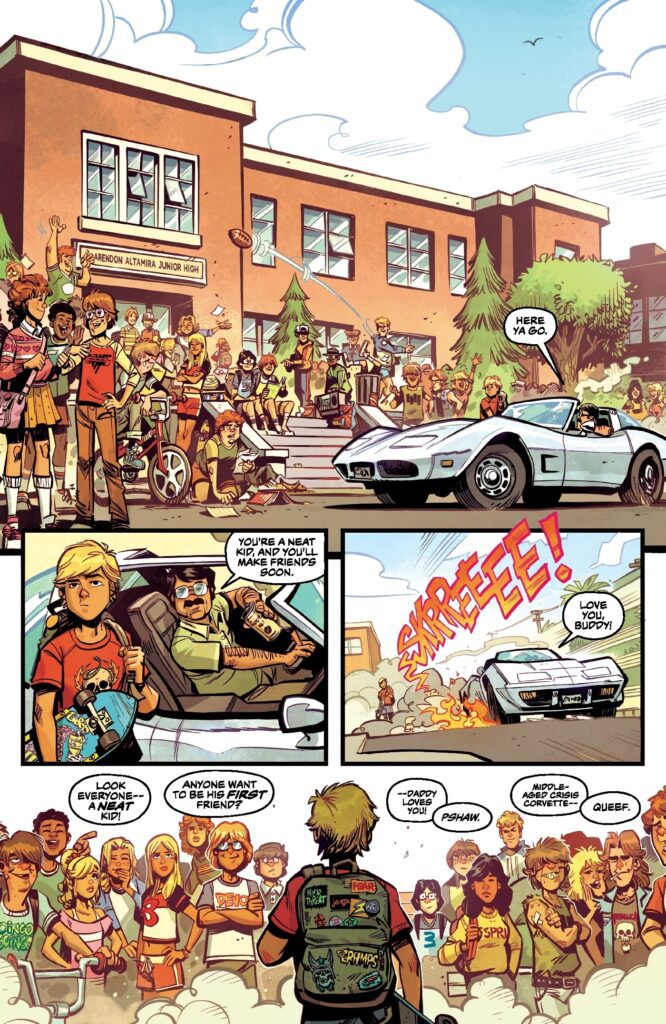
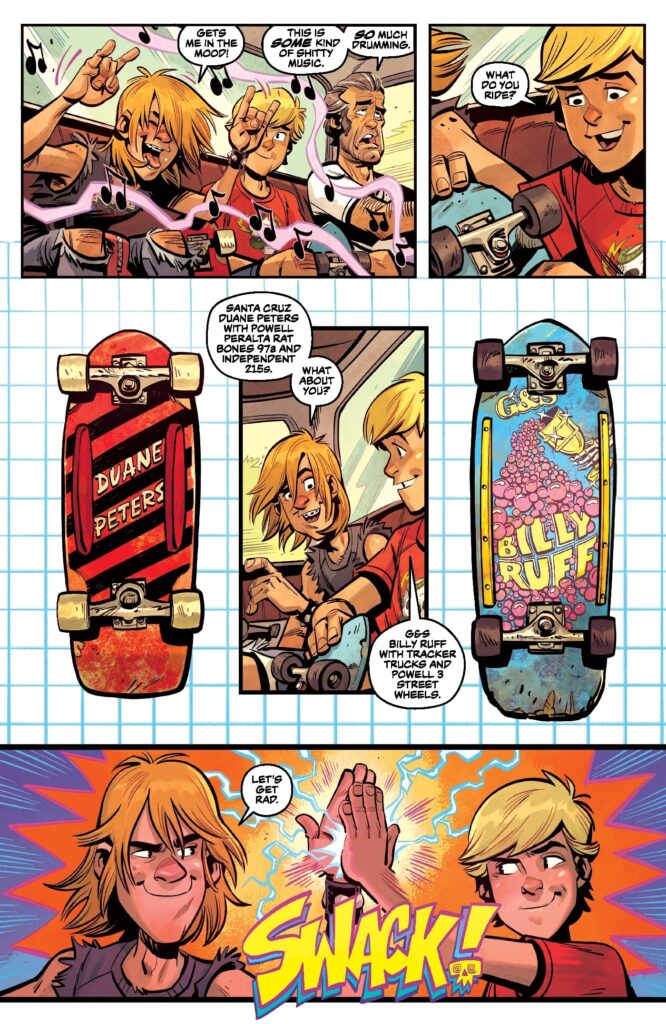
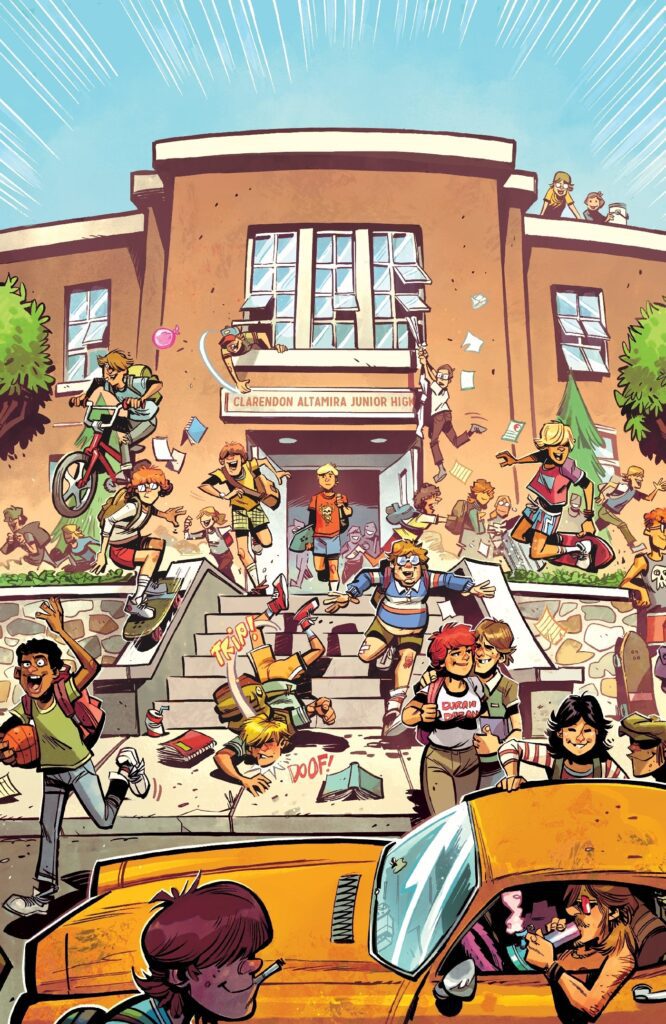
Rick Remender and Brian Posehn draw from their youth and 1980s skater culture in their comic Grommets, published by Image Comics. This first collects the first seven nostalgia-dripping issues. The comic itself plays like a cross between a cult classic skate movie and a 1980s teen movie. Despite its occasional cartoonish demeanor, Grommets does a […]
Rick Remender and Brian Posehn draw from their youth and 1980s skater culture in their comic Grommets, published by Image Comics. This first collects the first seven nostalgia-dripping issues. The comic itself plays like a cross between a cult classic skate movie and a 1980s teen movie. Despite its occasional cartoonish demeanor, Grommets does a great job depicting the era and the early days of skateboard culture.
It’s 1984, and Rick is having a hard time with his latest move to Sacramento, CA, and his new junior high school. Despite being an okay skater, he has no one to hang out with until he meets Brian. The two become skate buddies when it’s revealed that the rest of the skaters think Brian is a poser, too. They navigate jocks, girls, and gnarly skate accidents that bond them into an unlikely friendship.
Right off the bat in Grommets, you get an authenticity of the 1980s not seen in any type of media today. Things like a parent picking up beer on the way to work or getting a ride from a stranger are usually played up as a plot point, but here it’s just commonplace. The grit and grime of the 1980s vernacular are on full display. A lot of the injuries are played for comic effect; one in particular at the end of issue one is pretty fucked up. There’s a lot more violence than one would expect, which isn’t played for comedic effect but is just as brutal.
Grommets is also a pretty good depiction of the skate culture of its time. Despite its current popularity and now legendary status, skateboarding was looked down upon by mainstream society. However, Rick and Brian find their own community. The supporting cast of characters in Grommets is fantastic. Sometimes the introduction of them is a little off, as in the case with Rick’s love interest, Samra, or with punk rock kid Liberty Spike Mike. The inclusion of a trio of skater girls known as the Jens serve as a great foil for Brian’s constant drooling over them.
We get depictions of encounters with jocks, rednecks, and security guards. While each of these can definitely serve as your typical villains in these types of stories, in some ways, the parental figures are worse. Both Rick’s and Brian’s home lives are messed up in ways that have only evolved in the last forty years as distractions have manifested in different ways. Parents and police alike assumed that most skaters were punk and metal fans just looking to start trouble.
These assumptions are the only things that lead to the skater kids getting in trouble in Grommets. In fact, the trouble depicted that they get into is no worse than what popular kids would get into. The knee-jerk consequences of these small crimes are a bit hard to watch in a time where we have seen the effects of verbal and physical abuse dealt out. Brian is living with his tough-as-nails grandfather after a falling out with his mom. Rick’s dad constantly moves his family around. Even his pending sobriety just makes his attacks and struggles for control more direct and focused.
Brett Parson’s art feels a little cartoony, but it fits this story well. The art has almost a Disney or Don Bluth feel to it. His backgrounds have the zaniness of old movie posters from the late 1970s and early 1980s, reminiscent of Animal House or Rock ‘n’ Roll High School. Parsons litters this world with punk rock and metal shirts, mostly sticking to the original California skate punk bands of the time, like Black Flag and Agent Orange. While Brian may be the metalhead of the duo, Rick is all punk rock and even quotes Minor Threat as his favorite band.
Despite its real-life teen story, much is played up for comic effect. However, it is bloodier than you’d expect and takes a real turn at some point that you don’t see coming. Not taking anything away from skateboard movies of the 1980s, but this story does what none of those could do. This plays closer to a John Hughes story than Thrashin‘s Romeo and Juliet structure, or the skeletal structure of noir stories with Gleaming the Cube. It’s clear that this story is a love letter to Brian Posehn and Rick Remender’s youth; the good, the bad, and the ugly of it.
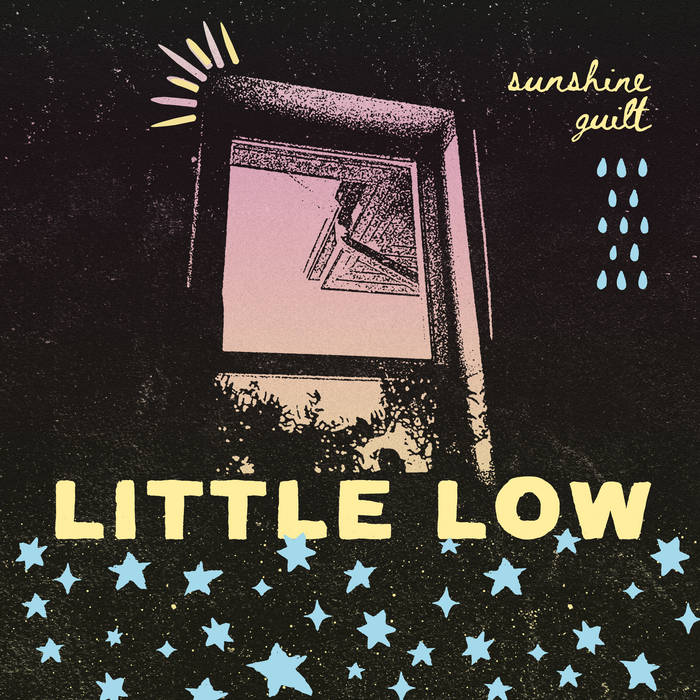
Despite being called Little Low, the energy on the Boston, MA band’s full-length debut is anything but that. Sunshine Guilt’s eight tracks deliver sharp, emotional pop punk that touch on love, loss, and those longing feelings in between. Little Low presents a fantastic record that runs twenty-two minutes long, but you’ll wish it was longer. […]
Despite being called Little Low, the energy on the Boston, MA band’s full-length debut is anything but that. Sunshine Guilt’s eight tracks deliver sharp, emotional pop punk that touch on love, loss, and those longing feelings in between. Little Low presents a fantastic record that runs twenty-two minutes long, but you’ll wish it was longer.
Sunshine Guilt opens with the song “Dark Beer Archives,” a great song about finding your footing in your mid-twenties. From the first chords, you get the impression that Little Low knows what it’s like to be stuck between adolescence and adulthood. “Stress Level Midnight” initially caught my eye due to its semi-reference to The Office, but I was happy to find an equally great song. The standout track for me was “Head in the Clouds,” but I also liked the slower pace of “Gloucester” and its addition of Ian Legge’s cello. Title track, “Sunshine Guilt,” is a nice bow on top of an optimistically dark album.
Despite its very emo title, Sunshine Guilt doesn’t wallow, it rocks. Drawing from the late 1990s and early 2000s pop-punk and emo, the album’s catchy riffs and power chords with drums that are very tom-heavy, with lyrics that can double as a therapy session, make for a great album. Mike Assatly’s drums would be manic if they weren’t so precise and full of energy. Christine Atturio and Tom Ciesluk’s guitars create a great sound with Brad Rheault’s bass and probably make my favorite pop punk album of the year so far. There are many ways to arrange pop-punk songs, and Little Low hits the target on all of them.
This album handles identity and self-worth well. Where others see pop punk as emotional potential unrealized, Little Low leans into its clarity. This album, these lyrics are about self-redemption and finding yourself. Whether you’re looking for catharsis or catch an honest songwriting, Sunshine Guilt is easily one of the best pop punk offerings of the year. It’s a great album from a band I hope to hear more from in the future. Check them out on Sell the Heart Records.
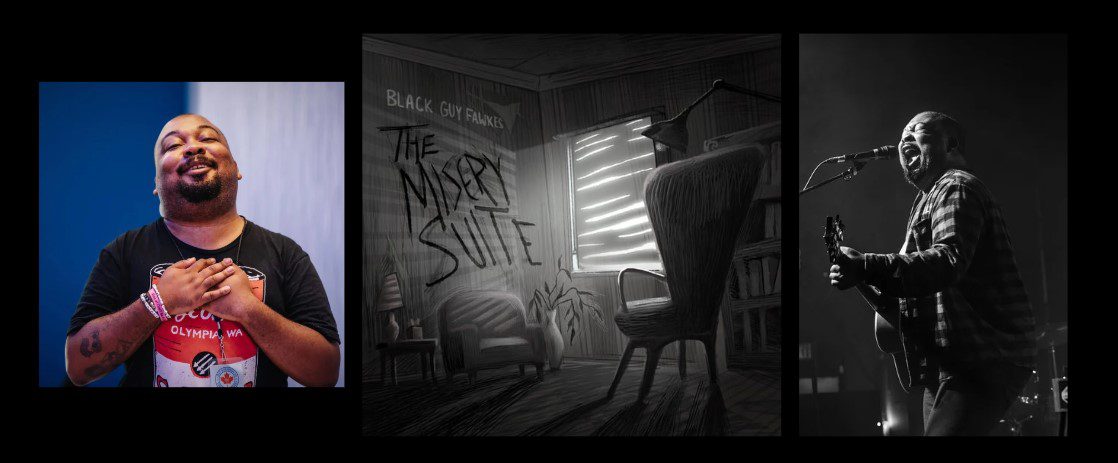
I first met Ian Robinson, aka Black Guy Fawkes, a little over a year ago hear at my home base of Nashville. We’ve got a little festival here that’s grown to be not so little any more called Jorts Fest and last year, along with New Junk City, Devon Kay and the Solutions, and Dollar […]
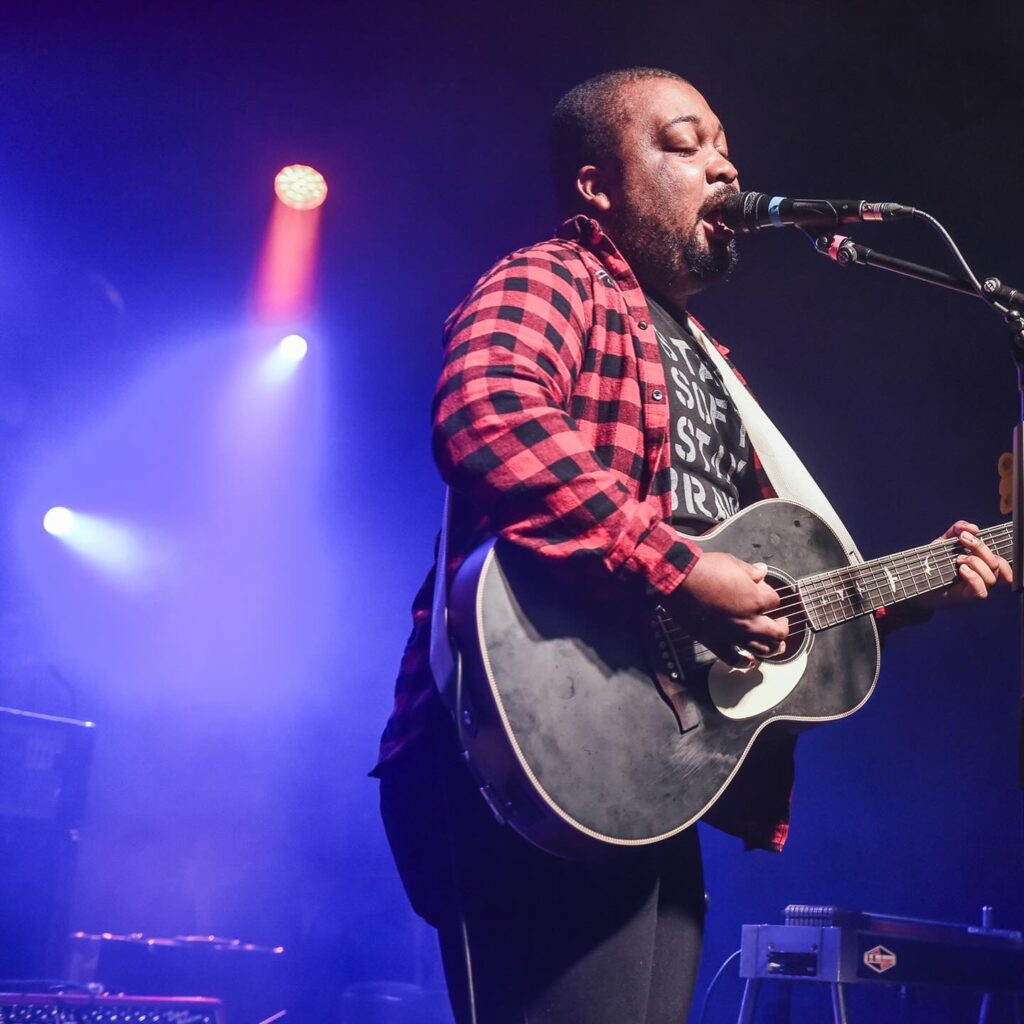
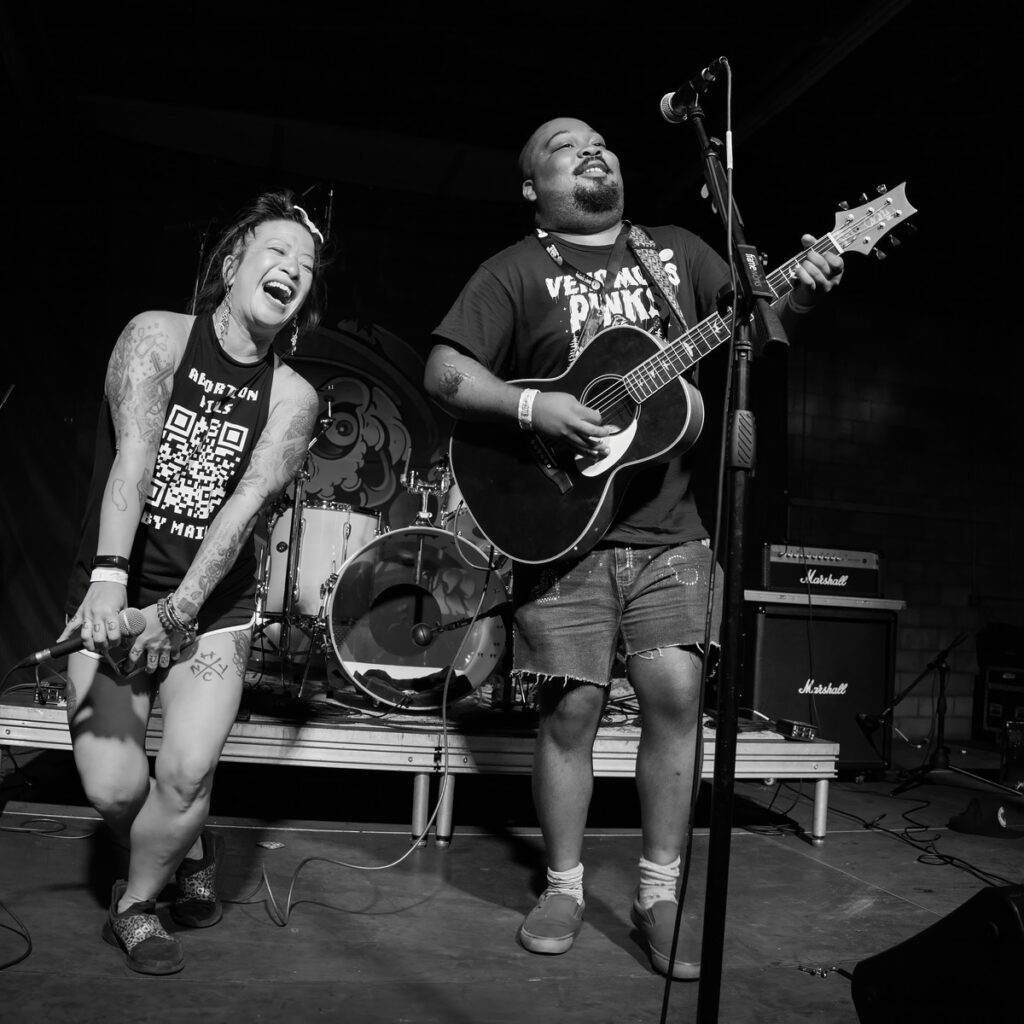
I first met Ian Robinson, aka Black Guy Fawkes, a little over a year ago hear at my home base of Nashville. We’ve got a little festival here that’s grown to be not so little any more called Jorts Fest and last year, along with New Junk City, Devon Kay and the Solutions, and Dollar Signs, Black Guy Fawkes was one of the notable out of town acts. Through a couple mutual friends and a day or two to kill before he skipped town, I had the pleasure of spending several evenings just shooting the shit and showing Ian a couple of the not so shitty parts of the city. And man am I glad I did!
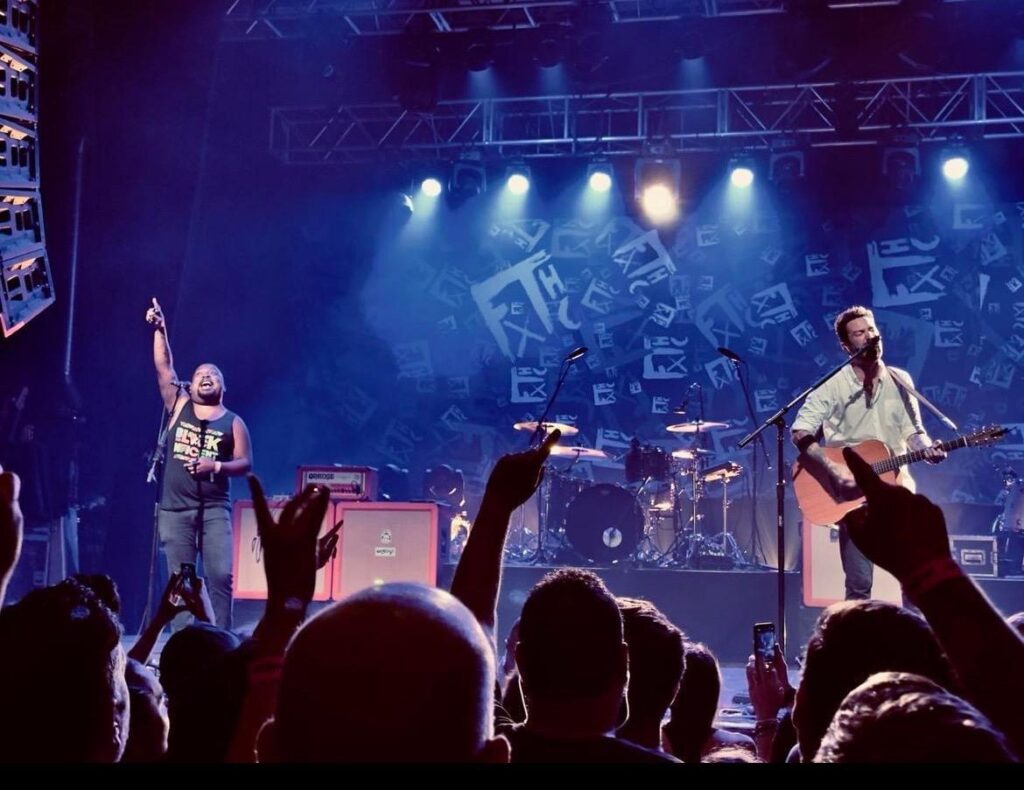
Music aside, Ian is one of the most heartfelt and legitimate people I’ve met. The guy’s positivity is infectious and he’s a joy to just hang around for a bit if you’re able to track him down, easier said than done because of the massive amount of touring he’s taken part in as of late. Given my love of anything Frank Turner/Dave Hause/Brian Fallon-esque, I probably would have stumbled upon Black Guy Fawkes eventually, but I’m extremely grateful to have met him as his music trajectory starts to skyrocket. Although the chances of me sharing the stage with Chuck Ragan, Dave Hause, Frank Turner, musical heroes in my book, is essentially 0%, it’s pretty damn cool seeing somebody I consider a pretty good friend get to do it instead, especially given that Ian respects those guys as much, if not moreso, than I do.
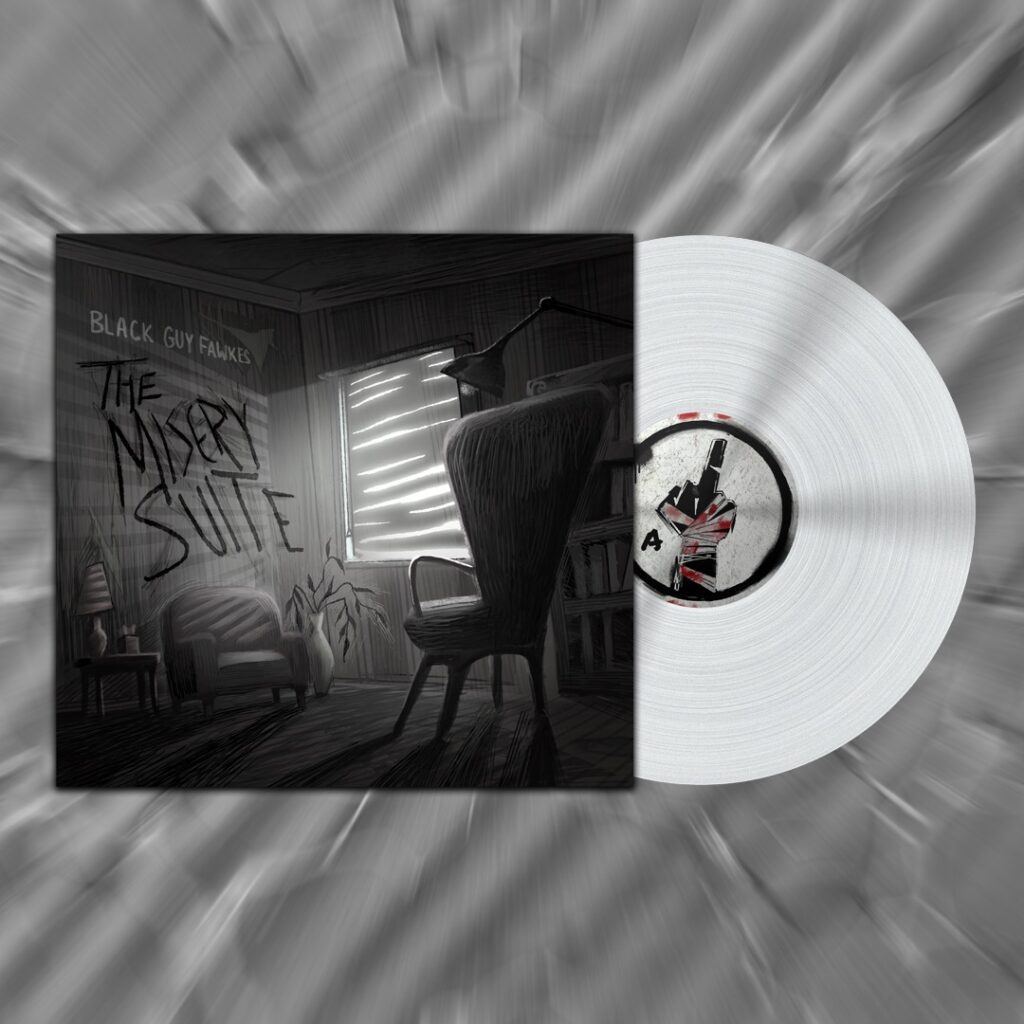
Now on the the actual reason for this piece: BGF LP #3, “The Misery Suite”. Black Guy Fawkes records are incredibly dynamic, drawing from loads of different influences. In a genre that could pretty easily become stale and boring, I’m constantly amazed at how Americana and Folk is able to stay fresh and how artists like Roger Harvey, Tim Barry, and Cory Branan are able to keep from falling into the cookie-cutter songwriting that has plagued other genres. I think Black Guy Fawkes showcases perfectly what I have loved for so long about guys of the punk/americana genre, not only is the music unique and attention-grabbing, but they’re able to do whatever the hell they want.
The reason I slap the Americana label on Black Guy Fawkes is not really at all to do with the upcoming release, but from the records prior. “Life, Love & The Bomb” and “Trying Times” both, for me, fall into the category of what Brian Fallon has been doing outside of Gaslight Anthem music the last decade or so: not exactly what can be described as traditional Americana or Folk, but something else hard to describe with another genre other than alternative.
“The Misery Suite”, in my opionion, sounds quite different than either of the previous BGF full-lengths. We talk a bit about the grunge influence that went into writing this record:
“I wanted to have this, this very like Weezery, undone, mixed with kind of like Teen Spirit. I wanted to just be this very repetitive thing where you just get into the rhythm of it… I always knew that I wanted it to be this very, like beastly voice, ragey type sound to it. So, in a way, the way I write records, usually I try to find some sound that I really enjoy, that’s why I like the grunginess. And that’s why I feel like to an extent, [this record] is kind of my love letter to the 90s and to like 90s alternative, 90s grunge.”
Aside from even the grunge influence, Ian elaborates on how records are a portrayal of one’s life at the time. Therapy is the primary subject matter of “The Misery Suite”, giving it an entirely different form than records before.
“I think of records kind of like movies, right? I wanted to have a very cohesive beginning, middle, and end for it. So the theme of this record was basically, in 2023, I started therapy for the first time. And it was me confronting a lot of things that happened in my life. I finished two years of it, and just remembering that first year, I wanted to just write a record about what I went in there, what baggage I went in there with, but also what I walked out learning at the same time. So the first half of the record is kind of, the record is 10 songs, the first half is about me, my baggage. Then the second half is me unpacking it, basically.”
Having hung out and talked with Ian quite a bit, I knew he was a big fan of theatre; his vocal style has always kind of reminded me of what I have heard in the few musicals I have seen. But it was fascinating hearing in-depth about the role that film scores and theatre played in not only influencing the sound of this record, but in crafting the record’s playability.
“Musical theater has always been a very big influence. Again when you hear like these, these recurring themes in songs and in musicals too, recurring on musical interludes and stuff, you really, you start paying attention to what they’re saying a lot more. Like Jesus Christ Superstar, you hear Mary Magdalene sing about Jesus, ‘I don’t know how to love him’, because she doesn’t know how to appreciate him. She doesn’t know how to be there for him, or anything like that. Not that she doesn’t know what to do, if he loves her too. And then like later on, when Judas betrays Jesus and when he finds out that Jesus is going to be crucified and also died, he says the same thing, he repeats that same melody, ‘I don’t know how to love him’. Stuff like that is very powerful to me.”
“I have always felt movies and music, they’re so interconnected. And I love film scores, because they really do show you what the movie is portraying, I don’t feel like some people pay attention to them… it’s powerful to me because I don’t think anybody really pays attention to like, those close finite details.”
When Ian reached out several months back about a new record in the works, I was ecstatic, I’ve loved everything he’s done up until this point, even having known him a relatively short amount of time. Now having heard it, I’m ecstatic for everyone else to hear it as well. He’s got an extremely unique sound that brings few comparisons to mind, and he’s out there busting his ass to promote it.
September 19, Black Guy Fawkes’ “The Misery Suite” hits streaming everywhere via Asbestos Records. Attached below is the first single, ‘Racial Battle Fatigue’ featuring Angelo Moore from Fishbone, along with the preorder link and some other of my favorite tracks. Be sure to read the full interview below as we dive into a whole lot more than what I alluded to earlier. Be sure to keep a special eye on the Dying Scene site throughout the middle of August, we may just have another Black Guy Fawkes surprise coming your way! Cheers!
Dying Scene (Nathan Kernell NastyNate):What’s going on, man? How are you doing?
Ian Robinson (Black Guy Fawkes): I’m doing good, I’m currently sitting in my friend’s house in Denver on tour with Pet Needs. We did Tempe, Arizona, we did Anaheim. Tonight we’re, no, tomorrow, not tonight. Oh my, time’s not real right now. We’re at the Skylark Lounge tomorrow in Denver. And then they’re doing a show in Lincoln that I’m not on. So we’re driving up there two days from now. Then we have Madison, then we’re doing some of Midwest, East Coast and back to Midwest.
Oh, that’ll be cool, man. Where’d you play in Tempe?
We were at Yucca Taproom.
Okay, yeah, I had a buddy play there not too long ago. That’s a cool spot.
Yeah, I played like a shorter set because I realized that not only are seasonal allergies a thing, but also desert allergies are a thing too, and I’m not accustomed to that desert life. So I’m like, I’m slowly getting over the allergies right now, I’m a little bit stuffed up, but trying to get ready for tomorrow.
I’m completely with you, dude. I’ve been out there a little bit and it tears me up, man. So tell me a little bit about what you’ve been doing, man. You’ve been real busy lately, doing a lot of cool shit.
Yeah, I mean, predominantly I’m doing some more Pet Needs shows and then we’ve got Camp Punksylvania. Then I’m just getting ready for this next record for the most part, just getting everything in order. I’ll be announcing it here soon. And yeah, that’s pretty much it, touring has taken up a good part of this year so far.
Do you have anything planned for the record, like promotion for it?
Yeah, so we’ll be announcing the record on Juneteenth. We’ve got a lyric video coming out for it that day alongside the lead single for it as well. And we’ve got a few otherreleases happening throughout the summer and going into fall. We’ll be announcing some more fun stuff too with the full band as well.
Nice, so yeah, tell me a little bit about the full band, who’s in it, because from when I’ve seen you and when we’ve hung out, it’s always been solo stuff. I’m interested in the guys you’re playing with.
Yeah, so this is it. It’s Corey Mackereth, one of those guys who predominantly have been playing with me for the last few years, for like the last 10 or 12 years now. He’s one of my closest buddies. There’s Zach Dodge, he plays bass and also does some of those harmonies as well. I consider this man to be kind of like our George Martin, but his name is Derek Shank. And he’s produced every single record that I have. And he’s also played drums on Life Over the Bomb and this one too. So that’s predominantly the band and that’s who I’ll be bringing out to Camp Pennsylvania this year. Everybody gets to experience that. We played full band, I think in 2023. And last year we just did a duo with me and Corey, but this one, since we got this new record, we’re going to be bringing everybody in. So it’s going to be a fun one.
That’ll be fun, man. You’ll have to let me know how Camp Punksylvania is because I’ve got some buddies playing it also. Stuck Lucky, you’ll have to check them out, really cool ska punk band from here. Is there anybody you’re particularly excited to see up there?
I’m fucking excited for Lawrence Arms. I’m excited for the Vandals, they’re my good buddies, I love them to death. I’m excited for fucking OBGMs because they are going to fucking rip it. They are one of my favorite bands out right now without a shadow of a doubt.
That’ll be cool, man. I’ve got buddies that are going up there, they’re pumped for Dillinger 4 and Lawrence Arms because they’d never really gotten to see either of them.
D4, that’s going to be so good. I think I’m going to be there the whole weekend, I’ve gotta find out if I am or not, but if I am, then I’m going to be up front fucking screaming along to D4. It’s going to be so good.
What day are you playing?
I’m playing the 21st, Saturday.
That’s a good day, man, with like Make War and Get Dead playing.
I’m so hyped for Get Dead. So it’s funny, like I’ve known Ceschi for a little bit, I just met Sam King like not long ago, too. Oh my God, they invited me out to play this after party for Punk Rock Bowling. The debauchery I saw happen at that party *laughs*. I didn’t think Get Dead played, but Codefendants played at PRB this year. I didn’t get to see them, unfortunately, because I was on the barricade for Laura Jane Grace.
That’s a good excuse.
Yeah, that’s a good excuse. Well, I saw they had Fat Mike join them on a song, which I was upset I missed.
So with the new record, I listened to it, dude, and I absolutely loved it. It sounds awesome, you killed it. So tell me, I always like starting off with this, is there kind of a theme to this record? Were you writing with a common theme or are these kind of sporadic songs you’ve had?
So the way I write music is, I think of records kind of like movies, right? I wanted to have a very cohesive beginning, middle, and end for it. So the theme of this record was basically, in 2023, I started therapy for the first time. And it was me confronting a lot of things that happened in my life. I finished two years of it, and just remembering that first year, I wanted to just write a record about what I went in there, what baggage I went in there with, but also what I walked out learning at the same time. So the first half of the record is kind of, the record is 10 songs, the first half is about me, my baggage. Then the second half is me unpacking it, basically.
So I like asking this also, were any of these songs ones you had had for a while, or did you kind of write all these at one time?
So it was a mixture of both. There’s some songs I wrote a while before. There’s one song on the record called Glass Houses, which I wrote back in, I think, 2023? I had the concept for it. But then I, so originally I wanted to write a record that was very, that was in the vein of, like Block Party / Radiohead, but it wasn’t. For some reason, I just put on In Utero, and I was really inspired. And it gave me the idea of writing what now is called “Misery Suite”. So it inspired me to kind of write that about the way that therapy for me was very, it was healing, but it was also kind of dirty. You had to get down and dirty with therapy so you could confront some demons. So I wanted the record to kind of have that dirty, like, grungy sound to it.
Well I really, really enjoyed it. Do you have any favorites off of it?
It’s hard to pick. It’s weird, this record is, it’s like me picking my favorite child, and I can’t, it’s hard for me to do that. But, like, the one that I had fun, like, writing it, and just recording the most, the song called ‘Racial Battle Fatigue’, which will be the first single that we put out for this. That one kind of took me a little bit longer to write. So we started tracking this back last year around June. Like, during that time, that was right after we met and hung out at Jorts Fest in Nashville.
Yeah, that’s right, like June or July.
Right, yeah. So, when I was writing this record, I had the melodies already, but I was struggling with finishing the lyrics. So we tracked drums, and we tracked, like, second guitar with Derek. Then after that, I just kind of listened back over it and started writing, like, writing along to it, just kind of feeling. I was like “all right, how do you feel right now, and what kind of vibe are you going for?” So, I feel like this was, this was a slow process of writing, we really took our time, when you hear it, there’s a lot of intent when it comes to, like, themes, and when it comes to musicality in it.
What’s your writing process normally look like, because the way you put it sounds like this was a bit of a change for you in terms of length of time. But how do the ideas start, were you writing this with your band, or did you have these kind of ideas by yourself, and you brought them to the band and they interpreted it? What did that look like?
Pretty much all the songs start out, I pretty much write all the songs, and I just take it to them and they add their own parts onto it, too. But then, we get into the studio, and it is, like, semi-collaborative. It’s weird, like, for the first two records, “Life, Love & the Bomb” and “Trying Times”, it was, like, they’re kind of showing us what to do, just giving us different ideas. But this time, this time was kind of more me and him, putting in input, working together on it.
Gotcha, okay, that’s cool. One thing I always love to hear the answer to, with your personal writing style, how does a song start? Like, do you come up with a melody first, or do you have a vocal melody? I’ve heard guys that talk about having a line, that they write around one vocal line. What’s it look like for you?
It goes back and forth. So, usually, it may start just with one simple line, or one simple melody. Sometimes, I’ll just start out with just a guitar strum or something like that. There’s one song off the new record, it’s the last song, it’s called ‘Spotlight’.
I love that one.
Thank you. That’s probably one of my favorites off of it. So I wanted to have this, this very like Weezery, undone, mixed with kind of like Teen Spirit. I wanted to just be this very repetitive thing where you just get into the rhythm of it. So, um, that one, it just started out with that opening line, “Dear sweet misery, fuck off from me”. From then on, the song was written. But then there were songs like, ‘Racial Battle Fatigue”, it started out with “you got me fucked up”. After that, it took a while to get all the lyrics down for it. But I always knew that I wanted it to be this very, like beastly voice, ragey type sound to it. So, in a way, the way I write records, usually I try to find some sound that I really enjoy, that’s why I like the grunginess. And that’s why I feel like to an extent, [this record] is kind of my love letter to the 90s and to like 90s alternative, 90s grunge.
Like I said, out of every record I wrote, I’m the proudest of this one, because we were there, we really did take our time, we literally spent a year working on it. I think it’s gonna be something that somebody can find like a little piece of themselves in along the way.
So ‘Spotlight’ was definitely one of my favorites. And what’s the one right before Spotlight?
Right before Spotlight was ‘This Radio’.
Yeah, those two are probably my favorite. And I see what you’re saying, where it’s like a movie, you finish really strong, you feel that the record is concluding. I really dig that.
I have always felt movies and music, they’re so interconnected. And I love film scores, I don’t feel like some people pay attention to them. So, I love the show, Shrinking, oddly enough, while in therapy and while writing this record. And there’s a moment in the song where, so if you haven’t seen it, spoiler alert, Jason Segel’s wife, she dies in a car accident from a drunk driver. And in season two, they run into the drunk driver and like they have a flashback episode, they show Jason Segel and his daughter. His wife died and he doesn’t know how to be a dad anymore. And it shows the drunk driver side, where he murdered somebody and it’s pushing away the love of his life too. And then there’s a song playing like during that whole montage, and I forget the actual name of it. But the line was, ‘for a minute you’re my whole world’. And when you hear that song and then when you listen to it,like what it’s saying during that scene, that’s powerful to me because I don’t think anybody really pays attention to like, those close finite details.
That’s really cool, I know you’re big into theater, do you see any of that kind of influence coming over here too?
Oh, 100%. So I got a lot of shit for this, but I love Jesus Christ Superstar. Un-ironically, I love Cats. I don’t care what anybody says, I will watch that all the time. I’ve heard people that hate it, I’ve heard people that love it. You gotta go in there with the right mindset. And when I say the right mindset, I mean being either on drugs,or just knowing what Cats is *laughs*. But yeah, musical theater has always been a very big influence. Again when you hear like these, these recurring themes in songs and in musicals too, recurring on musical interludes and stuff, you really, you start paying attention to what they’re saying a lot more. Like Jesus Christ Superstar, you hear Mary Magdalene sing about Jesus, ‘I don’t know how to love him’, because she doesn’t know how to appreciate him. She doesn’t know how to be there for him, or anything like that. Not that she doesn’t know what to do, if he loves her too. And then like later on, when Judas betrays Jesus and when he finds out that Jesus is going to be crucified and also died, he says the same thing, he repeats that same melody, ‘I don’t know how to love him’. Stuff like that is very powerful to me. Like in “Misery Suite”, there’s a couple of them. At the end of “This Radio” there’s a very special guest who I cannot name right now, but he repeats a line because I wanted to show that that song was kind of about the fact that music has saved my life on many different occasions. And some of the artists I listened to back then, that inspired me to do Black Guy Fawkes, are now friends of mine. So I wanted to get somebody who I grew up listening to to be on this record and to repeat that line. I just wanted to show that they sing about the same stuff that I do basically, there’s no actual like gray area or anything like that, like every artist has been through what we’ve been through at some point, that’s why we connect with that. Music has always been like the universal thing for me, because it brings everybody together. It doesn’t matter what class, to an extent, you come from, everybody listens to it and everybody feels the same thing or something similar to it.
So do you have plans for this record? Are you putting it out with anybody that you can name, are you doing vinyl?
We’ll be doing a vinyl run, we’ll do pre-orders on the 19th, it’s gonna be with Asbestos records again. I work with Matt Flood from Asbestos. I can say with a whole heart, I would take a bullet for that man. He has put me on to just so many different acts, introduced me to so many different people, he came at a time where I thought nobody really gave a shit about what I was doing. But then he heard Intrusive and I was able to talk to him and he really praised me on what I was trying to do and he really wants to help out as much as he can. So we’ll be doing another release with him, it’ll be out this fall.
Were you impacted at all? Didn’t Asbestos Records, didn’t their warehouse or something flood?
Luckily, that did not affect me at all. It affected quite a few people, but he did a fundraiser, we were helping raise money for that, and he got enough funds to get back on track with it.
Good, I’m glad to hear that. So, you talked about this being kind of centered around you starting therapy and going through therapy. I’ve asked this before to other guys and I kind of get mixed responses, but is songwriting and the music you’re doing, is that a type of therapy for you at all?
It is, music has always been a very therapeutic thing for me, I always try to write, like, what I’m feeling at the time. It happened a little bit during “Life, Love & The Bomb”, but then when “Intrusive” happened, when I started writing that, it kind of got more personal. I feel like that was the crux of where, I always thought that Black Guy Fawkes would just be kind of a separate entity, but the more that I write, the more that I get into this project, the more I see they’re becoming more synonymous. But yeah, it’s always been a major form of therapy for me. This record in particular too, because I really wanted to capture, like, what I was going through in therapy at the time, so it gets heavy. There is some, like, tongue in cheek humor, there are parts that might make you weep. But that’s what therapy is, basically, it’s not a fun process, it is scary, but it’s just, it’s healing, and healing is a down and dirty thing.
Right. I think, I think you would agree, but what drew me to punk initially, was just how real it is and how, um, I guess how just personal it is. You can find personal things in a lot of punk music, it’s a lot of normal people singing about real things. I always like to talk shit about like mainstream country, especially being in Nashville. All the country songs are cookie cutter, you know what it’s about, trucks, beer, or whatever. Whereas punk, it’s about so many different things, it’s just personal experiences that are applicable to everybody, and that’s kind of what I see in a lot of your stuff too, it’s just very relatable.
So that’s one reason why I’m happy that I’ve been able to meet people like Frank, like Chuck, like Laura Jane, like Dave Hause and all of them. Like my list of Frank Turner songs, it shows a flawed human, and he’s very open about addressing that. Same with Dave Hause singing about sobriety, you hear him singing about things he’s going through, and Laura Jane dealing with when she was first coming out and the dichotomy of being trans, stuff like that too. It’s comforting, being in the scene where you’re meeting these people and they’re writing about the same things, it helps you realize they’re wanting to get better too, and it helps you kind of realize that I can do it too.
So I know this record’s not even out yet, but are you working towards another one already? I don’t understand how people do it because I cannot personally pump out songs like that, but a lot of guys already have like another record lined up or something.
Let me say this, this record took me a year to write, and it may take me a year to write the next one *laughs*.
I really appreciate you doing this, dude, I am pumped for this record to come out. I know everybody’s going to think it’s as great as I think it is. You killed it.
Thank you so much. Yeah it’ll be out in September.
Sounds good man. Have a good time on the road these last few dates, and keep killing it, dude. I love keeping up with you on Instagram and seeing all the cool shit you’re doing.
In the interest of full disclosure, I should start with a bit of a confession. It could be due in large part to the fact that I am a multi-multi-generational New Englander (fourteen generations on one particular branch of the Stone family tree), I think I only have half an understanding of what Southern Gothic […]
In the interest of full disclosure, I should start with a bit of a confession. It could be due in large part to the fact that I am a multi-multi-generational New Englander (fourteen generations on one particular branch of the Stone family tree), I think I only have half an understanding of what Southern Gothic literature is or what the term even means. Aside from maybe Their Eyes Were Watching God and I guess To Kill A Mockingbird, I don’t think I really dipped my toe into the worlds of Faulkner and McCarthy and Flannery O’Conner until I was on this side of 30. But I sort of have an idea.
Parts of the American South, and especially the small towns of the rural American South, look familiar to my Yankee eyeballs. A quick Google Street View search of places like one of Ben Nichols’ familial stomping grounds of a place like Altheimer, Arkansas, reveals a small town the likes of which may have one time hustled or bustled but have, in more recent years all-too-commonly collapsed in upon themselves. Change out the kudzu for northern pine and you could very realistically be in a own like one of my own familial stomping grounds of Swanzey, New Hampshire. But there’s a different sort of darkness in the south. While places up north were busy fighting things like devastating winters and, I suppose, the American Revolutionary War, the rural south was very much still the wilderness, at least to the white man. It would be generations before the Louisiana Purchase would annex much of the region to a growing United States and even more time before the cotton gin and, with it, slavery would cast a pall over the region that, frankly, still lives on in vast stretches of society. It is in this darkness and struggle that Southern Gothic literature and imagery was born, a macabre, sometimes grotesque and and certainly haunting way of looking at death and class and poverty that were – and still are – unique to the American South.
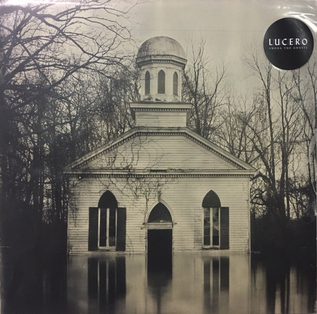
It’s this world that much of Lucero frontman Ben Nichols’ new solo record, In The Heart Of The Mountain (July 25, Liberty & Lament), exists in. The record – which is Nichols’ first solo effort since 2009’s The Last Pale Light In The West (and in many ways is his first original solo full-length given that Last Pale Light… was a seven-song record centered on the characters in Cormac MacCarthy’s anti-Western classic Blood Meridian) – is not the first time that Nichols has dallied in Southern Gothic storytelling. Lucero’s 2021 record When You Found Me is rife with songs like “Coffin Nails” and “Have You Lost Your Way” and its predecessor is literally called Among The Ghosts and has cover art that features a tintype photo of an abandoned Baptist church in Rodney, Mississippi. But to hear Nichols tell it, the idea of incorporating some version – his version – of Southern Gothic storytelling stretches back unexpectedly further, as he started to flex his songwriting muscles nearly decade-and-a-half ago for Women And Work, specifically with tracks like “Sometimes.” “There’s these stories, possibly imagined from my youth in a rural Arkansas environment populated with these kinds of ghosts and maybe myths and folktales and things that I’ve absorbed over the years,” Nichols explains. “I’ve got this kind of made-up family history where I’ve incorporated all of that into my grandparents’ story and my father’s story and where they were from. It’s all kind of that graphic novel I’ve always talked about writing one day. I’ve never done it, but it’s all in my brain and then that comes out in the songs.”
Lucero’s 2017 Southern Gothic masterpiece, “Among The Ghosts”
The idea for a second solo record is one that Nichols had been toying with – publicly and privately – for a long time. “(It) had been in the back of my mind for a while. I started stumbling across these guitar parts that might actually work for that idea,” he says. “I just kind of set them aside and I kept tinker with with them. Then I had a few lyrics – just a couple of lines here and there.” The creative process for the album started to pick up steam in a bit of an unlikely way, specifically when it came to trying to nail down names for a couple of ideas, like the song that would eventually become “From A Western Or A War Movie.” “That song could have easily become overtly cheesy…and it was at first!” Nichols laughs. “That one involved some wrangling. I didn’t have a good title that I liked for it. The chorus didn’t make a good title.But then one time just randomly doing chores around the house it popped into my brain and I was like, “ah, that song’s, it’s kind of like it would be a scene from a western or a war movie.” And I just ran through my head and I was like, “ooh, From A Western Or A War Movie, that’s it! That’s a good title!”
When added to the list of songs like “The Darkness Sings” and “In The Heart Of The Mountain” that were already named and completed, Nichols started to notice that the potential tracklist could be poetic in its own right. “I’d already kind of been thinking that “The Darkness Sings” and “In The Heart Of The Mountain” kind of go together as a sentence. And then I was like, “the darkness is singing a song from a western or a war movie…” I’m like, “ooh, I can make all four song titles go together kind of like a phrase or a sentence.” And then that got me thinking about what if I did all 10 song titles that actually made up almost a poem. And so once I got the title “From A Western Or A War Movie,” then I was like, “okay, these are all gonna be one big project.” And so then I actually kind of started writing different titles that could fit into my poem. And some of the songs were written specifically because I needed a song with this title.” One of the songs that followed was “While The Stars Disappear,” another track that plays on the album’s recurring themes of darkness and light constantly being present, pushing and pulling in spite of – or perhaps because of – one another. “I just had that phrase, because it fit in between the two songs on either side of it. Then the lyrics for it, I wrote specifically to fit that little spot that I needed in the poem. It was kind of a long hit-and-miss process, but it all fell together in the end.” The song title poem, while admittedly a little loosely defined, was the sort of spark needed to turn the solo record idea into a tangible project. With the exception of the aforementioned Last Pale Light In The West EP in early 2009, “every lyric, every guitar part, everything I do has pretty much 100% gone into Lucero for the last 27 years, so to get my brain wrapped around doing something other than Lucero, I kind of had to have it clearly defined.”
The album closes with a triplet of songs – “The Prayer,” “The Swamper’s Lament” and “The Devil Takes His Leave” – that work together not only in terms of the tracklist poem, but as an interesting look into the contrast between good and evil in the strictly Biblical sense. The first of those tracks should be recognizable to Lucero fans, as it is also featured on the acoustic record that Nichols and longtime Lucero keyboard player Rick Steff collaborated on earlier this year. Its origin actually dates back several decades, however, to a time when Nichols’ younger brother Jeff was still in film school in North Carolina. The younger Nichols was working on a short film that centered on an 1806 duel in which Andrew Jackson shot and killed Nashville attorney Charles Dickinson over an argument that started over horse betting. “I kind of wrote that from Andrew Jackson’s perspective,” states Nichols. “Andrew Jackson’s definitely not a well-liked historical figure, especially today. It almost makes me a little uncomfortable to sing…because it’s about making your will God’s will; it’s co-opting God and calling on the power of God to fulfill your wishes.”
“The Prayer” is followed by “The Swamper’s Lament,” a tale that finds our protagonist sitting on death row for taking the life of Big Jim Stone (no relation) in order to win a prospective lover’s affections. Nichols explains that the song was written fairly quickly with the intention of it being included on a soundtrack to another film that never got made, and while the story told is purely fictional, the setting was at least inspired by a bit of family history. “There’s a little bit of my granddad on my mom’s side in there,” Nichols explains. “He was a little bit older. I think he was born in 1911. And so when he was 14 in the 20s, he was working, doing some logging and working in some lumber yards or with some lumber companies in southeastern Arkansas, like driving mules and hauling logs as a kid. And so that was kind of the original idea. I was like, “ah, I’ll do something like where Pawpaw was as a kid.”
The trilogy – and the album – are brought to a close by “The Devil Takes His Leave,” perhaps yours truly’s favorite song on the record. “The Devil Takes His Leave” is another one that I kind of had to figure out,” he states. “That one really started with the lines, “I don’t mind the company, but we don’t have to talk,” and then “You’ve got all the answers. And all I ever knew was I’m not like you.” Taken on their own, the two lines could be about myriad situations, like picking up a hitchhiker, for example. But Nichols also used the line “I don’t know if God has a plan, but I’m sure the Devil does” on the synth-rock record he did with his stepdaughter Joslyn during Covid, and he was taken enough with that line that he new he wanted to reuse it, essentially to plagiarize himself. “I had that God and Devil line and I was like…what if I stick those together? And then I was like “oooh, then you’ve got a whole song about the Devil calling God out for being a hypocrite…can I write a whole song about the problem of evil in a monotheistic religion?” And that became one of my favorite ones on the record.”
From a songwriting perspective, In The Heart Of The Mountain became an interesting and thoughtful way for Nichols to exercise some muscles that he doesn’t normally. “A lot of Lucero songs are like ‘oh, I’m heartbroken’ or ‘oh, I’m too drunk’,” Nichols jokes. “It was fun to write (songs) that were a little more…different, out of my paygrade. “Swamper’s Lament” and “The Prayer” and “The Devil Takes His Leave” in particular are definitely not, you know, from last Saturday night in Ben Nichols’ real life.” From a sonic perspective, the emphasis was also placed on making it not sound like a Lucero record. “It’s not that they wouldn’t have worked as Lucero songs, but they would have sounded different in the end,” he explains. “I wanted a more acoustic-based record with some instrumentation that Lucero just doesn’t have at the moment, with the pedal steel and the violin.”
Much like the last few Lucero records, including the Unplugged record earlier this year, In The Heart Of The Mountain was recorded in Memphis at Matt Ross-Spang’s Southern Groove Studio. And while Ross-Spang engineered the record and collaborated with Nichols in the recording process, Nichols very much produced the record and crafted its unique sonic direction on his own. Fairly early on in the process, Nichols had identified the ideal lineup to provide the perfect Southern Gothic soundscape for his stories to exist in. “Ever since Todd Beene left Lucero to play with Chuck Ragan and just go his own way, I was hoping that one day I’d get to play some songs with him again. He’s just such a great guy. He’s such a friendly guy and a really good musician.” Beene has a way of approaching the pedal steel that lift it from being a throw-in, pop country-by-numbers instrument to an atmospheric, spooky-yet-melancholy-yet haunting texture that provides emotional depth to a record. He also plays electric guitar on the record, as does the inimitable Cory Branan. Branan has long been thick-as-thieves with Nichols, and has served as sideman at a handful of Nichols’ solo shows over the years. “There’s always a certain ‘it could go off the rails at any moment’ edge to Cory Branan, which I love. It’s part of what makes him so special,” Nichols explains. Branan and Beene at times trade lead electric guitar duties on the record, though most moderately-trained listeners will be able to identify each’s unique style and how it fits into the overall mix. (Branan has semi-jokingly acknowledged that he enjoyed adding his “Mark Knopfler falling down stairs” thing to the record, and if you have ever heard a Dire Straits song, you get it.)
Rounding out the mix was MorganEve Swain, perhaps best known in these pages from her role in The Huntress And Holder Of Hands, the string-heavy post-metal Americana band that joined Lucero in opening for Flogging Molly on a full US tour back before Covid. She’s also more recently been featured in The Devil Makes Three, the folk/bluegrass project that has occupied much of her time recently. “MorganEve could only come in for a couple of days…really just one night. She landed at the airport and came straight to the studio,” explains Nichols. What happened next was, essentially, magic. “We just started playing the songs for her and she would lay down a violin part and she was like, “okay, let me do it one more time.” And then she played a different violin part. She’s like, “okay, one more time.” And she would play a third violin part. And she wasn’t trying different things because she’d messed up the time before, she was building a three-part violin section. And she’d be like, “all right, play them all back at the same time.” And it was just gorgeous. It was like a your own little orchestra.”
Nichols kicks off a few weeks of solo album release shows this Thursday and Friday in his old hometown of Little Rock, Arkansas. He’ll have Swain, Beene and Branan in tow for the first week of shows (full schedule here), while Swain will have to duck out of the second week, meaning the live band will be a trio. Some semblance of that may be the way things work going forward from a solo, in-between-Lucero-tour perspective. I would love to do more of it, but getting all three of them together is really tricky,” Nichols explains “One of the thoughts I had when I was making the record is like, “well, if I get all three of them, then whatever tour I do, I can probably get at least one of them, and then if one of them’s not available, I could get another one of them and I could just switch them out.” So even though they’re not all three available at the same time, I’ll take whoever I can get. It’ll be really cool.”
And don’t worry, Lucero fans…the band itself isn’t going anywhere. If anything, crafting the solo record has gotten the creative juices flowing for the next Lucero record too. “I want to do Lucero songs.I want to do Lucero songs for Lucero, and I know exactly what those sound like in my brain now, at least for me. I know the next version of Lucero that I want to do.” What will that sound like, you ask? “It‘s not necessarily this spooky Southern Gothic stuff that is all over this In The Heart Of The Mountain solo record,” he reports. “I want to get back and do a rock and roll record, but not necessarily like the last two, And not necessarily like Among the Ghosts either. I want to kind of find a new path with Lucero. And I’m actually excited to get back into that, which was kind of a residual effect of the solo record that I didn’t really plan on, but I’m really excited about. And I’m glad it kind of reinvigorated me.”
Check out the videos from In The Heart Of The Mountain, and keep on scrolling to get our full Q&A. Lots more details about the writing process and the recording process and the concepts of good and evil in a monotheistic religion and about Southern Gothic storytelling and family history and why he thought it necessary to have my uncle Jim tossed into a band saw!
(*Editor’s Note: The following text has been edited and condensed for content and clarity’s sake. Yes, really.)
Jay Stone: I was trying to figure out the best place to start because it’s sort of a unique situation where somebody that’s been in a band for 27 years does like their first real all original solo record while still being in the band. This is a thing you were talking about for a while, but when did it go from something you were thinking about to like, all right, now’s the time to actually do like the next Ben Nichols solo record?
Ben Nichols: I started working on these songs about three years ago. And like with everything else, it’s kind of insane how long it takes to go from writing the first few chords and getting excited about a new song to actually having the record in people’s hands. And for me, yeah, it’s probably about a three-year process. But you know, that first year was figuring out if I had enough songs to actually make an album and enough songs that I liked that I thought fit together well enough to make doing an album make sense. I was still doing plenty of Lucero stuff. And I mean, I guess really three years ago, it was either during or right after the last Lucero album kind of cycle, Should’ve Learned By Now. So the beginning was right on the heels of that last Lucero record. I started, you know, stumbling across a few more little guitar lines that I liked. And I was playing a lot of acoustic guitar. Like you said, a solo record had been in the back of my mind for a while. And so I started stumbling across these guitar parts that I thought might actually work for that idea. I just kind of set them aside and I kept tinkering with them. And then I had a few (lyrics). I had just a couple of lines here and there. Lyrics always come last for me. That’s always kind of the last stage of the songwriting. But I had one of the older songs ended up being “From A Western Or A War Movie.”
I love that song. And we’ll talk about that later, but I love that song.
That one was, it was kind of a puzzle for me. I liked the idea of the song. It took me a while to edit the lyrics to where I got them to a point that I actually did like them and they weren’t too cheesy. That song could easily become overtly cheesy. And it was (at first). That one involved some wrangling, and the title of it was actually a big part of it. I didn’t have a good title that I liked for it. The chorus didn’t make a good title. But then one time just randomly doing chores around the house it popped into my brain and I was like, “ah, that song’s, it’s kind of like it would be a scene from a western or a war movie.” And I just ran through my head and I was like, “ooh, From A Western Or A War Movie, that’s it! That’s a good title!” And I’d already kind of been thinking that “The Darkness Sings” and “In The Heart Of The Mountain” kind of go together as a sentence. And then I was like, “the darkness is singing a song from a western or a war movie…” I’m like, “ooh, I can make all four song titles go together kind of like a phrase or a sentence.” And then that got me thinking about what if I did all 10 song titles that actually made up almost a poem. And so once I got the title “From A Western Or A War Movie,” then I was like, “okay, these are all gonna be one big project.” And so then I actually kind of started writing different titles that could fit into my poem. And some of the songs were written specifically because I needed a song with this title.
Yeah, yeah, yeah, right. What an interesting way to work. That’s a very different way to work.
It’s definitely different than what I’ve done in the past. And “While the Stars Disappear,” that one I just had that phrase, because it fit in between the two songs on either side of it. And then the lyrics for it, I wrote specifically to fit that little spot that I needed in the poem. But so yeah, it was a different way of working. And it was kind of a long kind of hit-and-miss process, but it all fell together in the end. And yeah, I’m glad I finally got to do this. It’s been something I’ve been wanting to do for a while.
Is that really when you sort of pressed on the gas pedal? Once you realized that like you could have the song titles make up the poem, does that get the sort of creative juices flowing as to what this whole thing is actually gonna be? So it’s not just like this theory of a Ben Nichols record?
Right. Yeah. And I don’t know if it’s just me, but I feel like I need an excuse to make them something other than Lucero songs. Like the only other project I’ve done close to this would be The Last Pale Light in the West, which was 2008, 2009. And that was easy to compartmentalize because I was writing songs with Cormac McCarthy lines from Blood Meridian, or I was writing songs around the Cormac McCarthy lines. So all those songs were very specific to that piece of work. So that was easy to separate in my brain from Lucero, because for the most part, everything…every lyric, every guitar part, everything I do has pretty much 100% gone into Lucero for the last 27 years, except Last Pale Light in the West. So I guess, for me personally, to get my brain wrapped around doing something other than Lucero, I kind of have to have it clearly defined. And so, even though it’s not necessarily that big a part of the record, the fact that the song titles kind of combine into a poem, it allowed me to separate it from my day job and focus on it and feel comfortable working on it outside of the band. Yeah, and it sort of does paint a theme for the record.
There’s a lot of songs that are push and pull. There’s light and darkness and that sort of conflict. There’s a lot of good and evil. I feel like some of those things sort of have leaked into Lucero, maybe since Among the Ghosts. But this seems a lot more like, I don’t know if cinematic is the right word, but it seems like that’s sort of a bigger concept. And not because one song is called “From A Western or a War Movie,” but in my mind while I was thinking about it, I was like, this seems like a cinematic record. I feel like I can picture myself in some of those scenes.
Yeah, I love those kind of records. And I felt like Among the Ghosts, the Lucero record, was an embodiment of that idea. And that’s still one of my favorite Lucero records as a whole. I thought it flowed really well and kind of carried that theme throughout the whole album. Some Lucero records are just kind of a group of mutts that are all kind of strays that are all stacked together just because that’s the songs we had at the time. In fact, putting a full album together that has a unity of vision and that kind of cinematic feel is, yeah, I like that on Among the Ghosts and I’ve been trying to pursue that more since then. That was definitely part of my thinking going into In the Heart of the Mountain.
These songs were written specifically for this record versus a Lucero record, but does that change how you physically write a song? Like, are there things that you know you can write for yourself that you couldn’t write for Lucero or vice versa?
Not necessarily. I think it’s just more what this album and what this idea called for. I just wanted to make sure the things, especially the lyrics, but also the chord choices and the instrumentation choices and just the mood of the music, I wanted to make sure that it all fit together in a cohesive way. And so it’s not that they wouldn’t have worked as Lucero songs, they would have sounded different in the end, a lot different, I think. I wanted a more acoustic-based record with some instrumentation that Lucero just doesn’t have at the moment, with the pedal steel and the violin. And so I really wanted to focus on that cohesiveness and that, whatever it is, that kind of Southern Gothic.
I was just gonna say, yeah, yeah. I wrote that a few times in my notes. I’m from up here, obviously, so I don’t know Southern Gothic, but this feels like a Southern Gothic record.
I’m not sure if I really know really what Southern Gothic is, but I know what I think it is in my brain. (*both laugh*) Now, whether that would pass a literary professor’s definition of what Southern Gothic is, I’m not sure. But that’s the idea that I was working in. And yeah, like you said, it’s popped up over the last few Lucero records here and there with songs like “Coffin Nails” from When You Found Me. And even way back, I re-sang a song called “Sometimes” from Women and Work, I think, where there’s these stories, I don’t know, possibly imagined from my youth, rural Arkansas environment populated with these kind of ghosts and maybe myths and folktales and just things that I’ve absorbed over the years. And nobody really knows this necessarily, but I’ve got this kind of made-up family history where I’ve incorporated all that into my grandparents’ story and my father’s story and where they were from. And this is all kind of that graphic novel that I’ve always talked about writing one day. And I’ve never done it, but it’s all in my brain. And then that kind of comes out in the songs. I’m not getting a graphic novel done, but it’s still in there and I want to use it for something. And so it comes out in bits and pieces in these lyrics. So yeah, I guess that’s my version of Southern Gothic.
So just, because I feel like I have the idea, right? But like these characters sort of exist in a fictionalized version that your dad, granddad, great-grandparents, whoever, grew up with. Like these are songs in their world, but not of them specifically.
Exactly. Yeah.
That’s real cool.
That’s definitely how I think of “Coffin Nails,” which is a similar song. I’d read an Irish folktale somewhere about someone, a person in the village dying and you hear the banshee howling. But there was something about, something flew out of the sky and landed on the window sill, and they couldn’t tell what it looked like it was howling all night long. And I took that and I took my grandfather’s and great-grandfather’s names and imagined my great-grandfather’s passing in rural Arkansas and put this kind of weird banshee creature into the story. Just melding classic folklore from all over the place with my personal family history. That’s really fun for me. And so it’s not overt. This isn’t like a concept record. It doesn’t necessarily tell a story, but all of these songs would be appropriate within that environment, I think.
So they’ll be the soundtrack to the graphic novel someday.
Exactly. Exactly. It’s actually, yes, that synth record that I did with my stepdaughter, Joslyn…that and this combined to make a double album soundtrack for the graphic novel. Coming soon. (*both laugh*)
Without knowing that that was the idea, I have written down that there are some themes that you sort of borrow from yourself and revisit. And I think from the record you did with your stepdaughter too, that like some of those ideas and concepts and even lines from this record might be directly from that one…
Totally, yeah, yeah. There was one that was just too good not to use. Cause not a lot of people listened to that synth record. Some did, and I appreciate it. And you know, I still might, if I can scrape the money together one day, I might put it on vinyl just so it exists. A few copies of it at least. But I knew those songs weren’t going to be heard by a whole lot of folks. And so, yeah, there was one line, that line about and the devil takes his leave, and I don’t know if God has a plan, but I’m sure the devil does. I was like, “that’s too good for more people not to hear,” so, yeah, I just blatantly plagiarized myself. That line is in a song on the synth record, and it’s the chorus to “The Devil Takes His Leave.” And yeah, that song is another one that I kind of had to figure out. It wasn’t originally about the devil, you know, talking to God or bitching out God. That one really started with the line, “I don’t mind the company, but we don’t have to talk,” and then “You’ve got all the answers. And all I ever knew was I’m not like you.” I had those lines, but those could have been in anybody’s story. I wasn’t sure who it was about at first. I had a guy hitchhiking and talking to the guy that picked him up. And I had a few different scenarios where those lines could be said. But then I had that God and devil line, and I was like, “that’s really good…what if I stick those together?” And then I was like, “ooh, then you’ve got a whole song about the devil calling God out for being a hypocrite. I’m like, “can I write a whole song about the problem of evil in a monotheistic religion?” And that became one of my favorite ones on the record. I wasn’t planning on writing a song about that but once I combined that line with some others that I had, that’s what it became. And that’s songwriting at its most fun , when you accidentally kind of piece things together and it actually works, and then you can build on that. I think that’s what’s attracted me to songwriting since I was a kid, like those little accidents, seeing what happens. I got lucky with that.
Yeah, that line in “Devil Takes His Leave” – “my brightness dims with the rising sun.” That’s such a cool visual. And it’s like the perfect sort of embodiment of that battle between the two of them, of good and evil, right and wrong, light and dark, the whole thing. That’s such a perfect phrase.
There’s all those little bits and pieces of stuff that wasn’t necessarily in the Bible, but then it’s like the whole Lucifer being the morning star, maybe, I don’t know. And it’s pieces that, it kind of doesn’t matter if I remember it correctly, it’s just whatever I remember goes into this song. So it’s not gonna pass muster in a theology course, but it works in my songs. And I was thinking possibly the rising son, maybe there’s a Jesus reference in there.
Yeah, absolutely.
It’s kind of like, it’s almost like the Old Testament. Oh, I can’t remember what it was, because there’s no real devil in the Old Testament. It was like the Malach or something or other that was doing God’s bidding, like killing the firstborn sons of the Egyptians and bringing plagues and testing Job. It wasn’t necessarily Satan, but it was just, it was an angel doing God’s bidding, basically. And I guess-
You paid a lot more attention in Sunday school than I did.
I’ve been listening to a lot of podcasts. (*both laugh*) I’ve never thought I’d be so into Bible study in the last couple of years of my life, but it’s mainly more…saying “devil study” sounds really bad. I’m interested in the folklore and the mythology around the Bible, just the history of the Bible. That’s really intriguing to me, more in that way than a religious way. It’s kind of fascinating. But yeah, I’ve been listening to a lot of Bible studies. Maybe this is going from that Old Testament Bible devil to the New Testament Bible Devil. And this song is kind of about that transition from the Old Testament God to the New Testament God and what that means for the Old Testament devil to the New Testament Devil. Whereas in the Old Testament, they’re almost one and the same. And then in the New Testament, they want this hard split between an all good God and an all bad Devil to take the heat off of God. God has to answer a lot fewer questions. God’s life is a lot easier if he doesn’t have to answer that whole evil question. And so, in my song at least, the devil’s taking umbrage with the fact that it’s getting all laid on in his lap. I don’t know. A lot of Lucero’s songs are like, “oh, I’m heartbroken or I’m too drunk.” (*both laugh*) It was fun to write a song that was a little more, I don’t know, just different, out of my pay grade, just a whole different type of thing.
When did the instrumentation come along? You sort of mentioned the wanting different sounds that Lucero just doesn’t have in the fold right now. But when specifically did you think of, “I should call Cory, I should call Todd Beene, I should call MorganEve Swain”? Did you write with them specifically in mind or just the idea of their instruments?
I think pretty early on, once I had three or four songs and maybe the idea of the song titles, I was like, “okay, yeah, I’m gonna call these folks.” Cory Branan had sat in with me on some Bike Rider shows, just kind of improvising on electric guitar, and when it sounded good, it sounded really good. And even when it wasn’t perfect, it still sounded pretty good. And that was just him playing on the fly, just doing what Cory does. And I was like, “man, that would be really fun to get in the studio and really kind of nail some of that down.” And then ever since Todd Beene left Lucero to play with Chuck Ragan and just go his own way, I was hoping that one day I’d get to play some songs with him again. He’s just such a great guy. He’s such a friendly guy and a really good musician and a really good electric guitar player. I was always a big fan of his electric guitar in Glossary. And it’s a totally different type of electric guitar than what Cory does on electric guitar. And that’s part of what I love about this album is even when they’re both playing electric guitar, you can tell who’s Cory and who’s Todd. You can tell their parts apart just with their style of playing. So that was fun too. And then MorganEve from The Huntress… I just think I’m such a big fan of Huntress and The Holder of Hands from when we toured with them and Flogging Molly a few years back. Just because they’re so good and kind of classy and just, MorganEve is just musician’s musician. She’s just can do anything. And so the fact, like one night on tour, when I first met them, she’s like, “you should play ‘Long Way Back Home.’ I’m a fan of that song.” That just kind of blew me away. I didn’t think she’d actually even pay attention to us or listen to us at all. And the fact that she had said that, I was taken aback. And then we kind of became friends and kept in touch. And she always joked about, “we should play songs together sometime.” And so when I got into writing these, I let her know. I was like, “okay, I’ve got something in the works. I’m gonna fly you to Memphis sometime and you’re gonna record some violins for me.” And so, yeah, she was kind enough to actually do it.
Yeah, that’s a really great trio. Separately and together, that’s a really great trio. And I’ve been fans of all of theirs for a long time, but it’s cool to have them behind you.
Yeah, it’s huge. It gives me goosebumps right now, just thinking about it.
Did you have to give them much direction or do you just go “here’s the song, do whatever you’re gonna do on it?”
Half and half, really. With MorganEve, I just let her go and she was amazing. The way the studio worked is that I went in for a couple of days and laid down kind of the basic guitar and vocals. And then Cory came in and started laying down some guitar and Todd came in pretty much at the same time. And those two were working. And that was a little trickier, figuring out who goes where, kind of, because they both didn’t play the whole thing, and so piecing those together took a little bit of work. I had written some guitar parts, some lead electric stuff and Cory was really good at just like, “oh, you want that part like that on the demo? Yeah?” and he just would play it. And that was amazing. But then MorganEve came in. She was so busy with The Devil Makes Three, she could only come in for like a couple of days. Really just kind of one night. She landed at the airport and then came straight to the studio. We just started playing the songs for her and she would lay down a violin part and she was like, “okay, let me do it one more time.” And then she played a different violin part. She’s like, “okay, one more time.” And she would play a third violin part. And she wasn’t trying different things because she’d messed up the time before, she was building a three-part violin section. And she’d be like, “all right, play them all back at the same time.” And it was just gorgeous. It was like a your own little orchestra.
I can’t imagine having that kind of talent, like just in your brain.
Right? It’s insane. And she would do the same thing with the backing vocals. She’d kind of layer the backing vocals and just do three takes, but they’re all different. “You can put them all together and then just use what you want.” It was a really fun recording process.
Yeah, I like the times where you let Cory do the sort of thing I think he jokingly calls “like Mark Knopfler falling downstairs” – that super clean, spanky sound that is such a Dire Straits, Mark Knopfler tone.
Yeah that became a big part of “The Darkness Sings.”
Yeah, it’s a little bit on “When The Stars Disappear” too. That twangy thing. I mean, I love Cory anyway, but I like when he does that.
Yeah, I love that style, but he’s one of those you can dial in different sounds with. There’s always an insane edge to whatever he’s doing. (*both laugh*) There’s always a certain ‘it could go off the rails at any moment’ edge to Cory Branan, which I love. It’s part of what makes him so special. But yeah, the fact that he could do that and then an Eddie Van Halen guitar solo. And you can probably pick which Van Halen record you want. “Do you want more 1984? Right. Or do you want more…” you know? And he can dial in. He’s got a great knowledge of music, rock and roll history and he’s pretty good at dialng any of those sounds in that you want. And then yeah, Todd Beene as well. Todd Beene’s very professional. He’s like, super on top of it. And Todd’s really good at knowing what I would want. He’s like, “I can just tell from the way this chorus goes into this bridge. I know what you’re doing. I know what you’re doing.” And then he just does it. And yeah, you always know what you’re getting with Todd and it’s always gonna be good. It’s really cool.
Yeah obviously he’s been out with Chuck a lot and Chuck actually came out for a while earlier this year and played shows up here and it was supposed to be the two of them…
And then I think that’s when he broke his arm!
Yeah!
He felt terrible. I remember he called me and told me what had happened and he felt awful for having to miss those shows. I feel for him. That kind of injury… if you’re a pedal steel player, you need all your limbs working in conjunction. It’s like flying a helicopter. You’ve got to use all your feet and toes and hands and arms. (*both laugh*)
Yeah, I felt bad for him. I was actually at a Hot Water show, I think the day that Chuck found out. So I’ve been friendly with some of those guys for a long time, and Michael, their merch guy, knew I was going to a couple of the solo shows and was like, “Chuck’s freaking out. He doesn’t know what he’s going to do. Because he’s got no Todd now. And is he going to even do it?”
Yeah, Todd is so good. I understand the feeling of like, wait, I can’t do this without Todd.
And he’s all over Chuck’s new record, too.
100%
It’s a Chuck record, but it’s a Todd Beene record, too.
100%. Yeah, 100%. And yeah, I was glad that I could steal Todd away and borrow some of that Todd magic for this record. But at the same time, I think we did a pretty good job of blending it all in. It’s a MorganEve record and a Cory Branan record and a Ben solo record.
Yeah, they did an amazing job.
And then I’ve got to credit Matt Ross-Spang, too, for taking all those people…like any one of them individually could have carried the whole record and taking all three of those and editing the stuff to make it all make sense and really making the record work. Me and Matt spent a lot of time on that, and Matt Ross-Spang did a great job, too.
And to make it ‘not a Lucero record.’ I mean, because they’re not Lucero songs. There’s obviously some that, like you said, could pass, but he’s worked with the band for so long that he knows kind of how the band works. So to make this definitely not a Lucero record, too, was important.
Right. And he also helped me mix that Last Wolf in the Woods synthesizer record. So he’s seen Ben in full Lucero mode, Ben in exactly opposite Lucero mode with the synthesizers. And then this was somewhere in between, which is actually that’s a perfectly fine way of looking at it. This kind of crosses…this is the bridge between the synth record and the traditional Lucero stuff. This record exists somewhere in between. And Matt knew exactly how to capture that.
So I was sort of curious about this. Knowing that there’s a lot of guys in the scene, like whether it’s Fallon or whether it’s Chuck or Craig Finn or whatever, that have sort of balanced both doing their own thing and doing the band thing…do you ever toss this idea around with those guys? Like, “how do you make it work? How do you make it land OK with the band that I’m going to do my own thing and still do the band thing?” Like, is that a thing you talk about?
I probably should have. (*both laugh) I probably should have asked people, in hindsight, how to make that work? Yeah. All those guys would probably have some wisdom and some insight. No, I didn’t really talk to them about it. Yeah, maybe I should have. With Lucero, I just kind of assume Lucero is always going to be there. Maybe for better or for worse, I take it for granted. Lucero is, yeah, it’s just my life and it’s Brian and John and Roy and Rick’s life right now, too. And in my head, I just don’t see it changing. If I stopped and thought about it and thought about reality, we’re all getting older and time passes and things change, I should maybe start, you know, thinking about how Lucero progresses into the future and what that actually looks like. But to be honest, I’ve avoided that.
That’s what management is for. That’s what I assume.
Yeah, exactly. I don’t know. In my brain, yeah, just from the outside, you see all those guys like Craig Finnn or Brian Fallon, and I was like, “they make it work.” And so I didn’t even think twice. I was just like, “yeah, I can make this work.” But yeah, the logistics and the reality of it do get a little tricky, especially just the fact that Lucero makes all of our money pretty much playing live shows. And so routing is important. And yeah, things are still tight. Lucero’s never bounced back completely from the pandemic. I felt like we were really going pretty strong in 2018, 2019, and the pandemic stopped us in our tracks, just like everybody else. But coming back, that climb has been pretty steep. Ticket sales have been tough. We super appreciate our hardcore fans that have been with us for so long and are still there. They’re great. But bringing new people on board and getting those, you know, kind of casual listeners out to the shows has been a lot tougher for Lucero in recent years. And so now with me booking solo shows, and I’m not booking a lot, but even a few that I’m trying to book, like, it’s like I’m my own competition all of a sudden between Ben Nichols and Lucero. And promoters, like if Lucero’s played that town that year, they don’t want to do a Ben Nichols show. Or if they do a Ben Nichols show, they’re not going to do a Lucero show next year. It shouldn’t be this complicated. But it’s tricky.
So we’re navigating that. They’re all aware of it. And I hope they’re not worried. One of the upsides to the solo record, which I didn’t really think about when I started it, because I was just so happy with the way these songs were coming out. And I was like, ‘Oh, this is exactly what I want to be doing right now. These musicians are fun.’ These songs are fun for me. But now that the process has kind of come, well, not to a close, but the record’s actually being released. And so the creative process of it is at an end, and now it’s releasing the record process. But now I’m like, ‘Ooh, I want to get back to writing. I want to do Lucero songs. I want to do Lucero songs for Lucero.’ And I know exactly what those sound like in my brain now, at least for me. I know the next version of Lucero that I want to do. And it’s not necessarily this spooky Southern Gothic stuff that is all over this In The Heart Of The Mountain solo record. And it’s more of a… I want to get back and do a rock and roll record. But not necessarily like the last two. And not necessarily like Among the Ghosts either. I’ve got, I don’t know, I want to kind of find a new path with Lucero. And I’m actually excited to get back into that, which was kind of a residual effect of the solo record that I didn’t really plan on, but I’m really excited about. And I’m glad it kind of reinvigorated me and got me excited about writing some new Lucero songs too.
You sort of hinted at that, actually, when we talked six months ago about the unplugged record, that knowing that the solo record was almost done and almost going to be out, you were already sort of amped up about the next Lucero record too. So it’s good that six months later that’s still the case.
Yeah, I am. I’m really looking forward to getting into it. I got my baggage out of the way now. And I just want to focus on doing Lucero songs with the Lucero guys. Just, I want to get in there and just do what Lucero does best is kind of what I’ve decided now. Instead of trying to make Lucero everything that I want to do and Lucero having to carry the weight of all of my whims and notions…Instead of forcing all of that into Lucero, now I’ve had a chance to kind of get some of that out of my system, all in a good way. I can just really enjoy letting Lucero do what Lucero does well. So yeah I don’t have a lot yet, but I’ve got a couple of pieces. I’ve got the start of a new record. And so yeah, yeah, I’m looking forward to it.
Before we get all the way through your afternoon, I have to ask about “Swampers’ Lament.” So I have like three, maybe four favorite songs on the record, and that’s one, but as I’m listening to “Swampers’ Lament,” my first thought was, “wait, what did my Uncle Jim ever do to Ben?” (*laughs*) Because have an uncle Jim Stone.
That’s funny!
And so I was like, oh, wait, what did Uncle Jim ever do to Ben to get thrown in a bandsaw.
I know! Ouch! That one had been floating around for a little while. And I think there’s a Lucero version of that recorded somewhere. But a guy, John Michael McCarthy, a Memphis filmmaker, who’s made kind of low-budget, raw drop films since forever ago. He’s always been around making these kind of crazy indie films. And he called and was like, “I’m going to try to make a new movie.” This was right before the pandemic. And when the pandemic hit, I don’t know what happened to it. I haven’t really heard about it since then. But he’s like, “I want the whole soundtrack to be murder ballads.” I was like, “ooh, yeah, I could try a murder ballad or two or three.” And I only ended up writing one. But it was “Swampers’ Lament.” And so I’d kind of been sitting on it for a while. Not sure if it was going to be used in this movie or not. And it never came to fruition. So I was like, “all right, this is actually mine.” And I kind of grew to like it. I kind of wrote it really fast. And I didn’t think much of it at first. But I’ve really grown to love it.
Yeah, it’s different thematically. It’s different musically.
For sure. And yeah, because that was supposed to be not necessarily a Lucero song. Not necessarily a Ben Nichols song at all. It was just supposed to sound like a… I wanted it to sound like it could be a traditional or an old school kind of murder ballad. But it tells a whole lot of story in just two verses. And when I went back and looked at it, I was like, “oh, man, there’s actually a lot in there.” And yeah, I don’t know where I got Big Jim Stone. You’re just kind of singing it as you go along, making up words as you go along, and that just kind of flowed. I didn’t put a lot of thought into it, but Big Jim Stone is just what happened to come out. I’m sure like with everything I do, I had to have stolen it from somewhere. There’s probably another song with a Big Jim Stone or a movie.
Well, so I actually thought about that. I was like, “oh, I wonder if this is a character in something I’m not familiar with.” I Googled it and I quite legitimately couldn’t find anything. There was like a Canadian soldier or something like that. But it wasn’t from anything.
Oh, that’s funny. Well, good! Usually, whether you know it or not, you’re usually stealing it. Even if you’ve never heard of it before. There’s so much out there that’s already been written, so that’s nice to hear that it’s not easy to Google Big Jim Stone. But there’s a little bit of my granddad on my mom’s side in there. He was a little bit older. I think he was born in 1911. And so when he was 14 in the 20s, he was working, doing some logging and working in some lumber yards or with some lumber companies in southeastern Arkansas, like driving mules and hauling logs as a kid. And so that was kind of the original idea. I was like, “ah, I’ll do something like where Pawpaw was as a kid.” And so that was the idea for the setting, I guess, originally for that one.
Are those stories talked about a lot in your family? Because I mean, obviously whether on purpose or on accident, you weave a lot of family history into the songs. But are those stories like that get passed down and talked about and like, “so-and-so did this as a job and so-and-so was here in the war” and so on? Is that a regular thing?
I wish it was more regular. Yeah, I wish it was more regular. I think it’s just a little bit. I guess maybe it was a pretty regular topic of conversation (years ago) and I’ve been able to hold on to a few bits and pieces that end up in the songs. And there’s probably a lot more that I wish I could remember and that I wish maybe had been talked about more. But yeah, I eat that up. Everybody does, you know? That’s why Ancestry.com is so popular. Everybody’s super fascinated by their own family history and where everybody comes from, of course, that fascinates each person. And it’s the same for me. And so, yeah, I don’t know, I haven’t thought about this in a while…and I don’t know, this is a silly way to frame it, but if I could make some wishes, being able to go back and kind of watch some of my family history, different scenes from the past, if I could have that superpower or be granted that wish, that would be something I would be really interested in. Even just, you know, my dad working in the drugstore as an 8-year-old kid in 1950s, if he was 8, it’d be 1956 in Altheimer, Arkansas, when all the cotton field workers would come in on a Saturday night. And my dad’s, you know, selling comic books and cigarettes and soda pop at the drugstore. And he said it was like Mardi Gras. Like the street, it’s just this one row of buildings. And he’s like, between those and the train tracks on the other side of the street, it was just like Mardi Gras every Saturday night. And I would just love to see that. And then, of course, my granddad in the war and and when he comes home from the war. There’s just so many different things I would love to actually be able to go back and witness. So yeah, I’m holding on to a few little stories. Yeah, it makes me want to call my mom and dad and talk more.
Yeah, right! When you travel, because you obviously travel a lot more than I do, but if you are places where you know that you’ve had some family history or connection to, or that you know of historical things that have happened, do you ever just stop and put yourself there? Because I do that. Especially in and around Boston. Just to even stop and be like…to try to put yourself in what it was like at the time, but like how your ancestors kind of navigated in there. I haven’t been to Gettysburg yet, which is a bad thing for me, but I have a family member who was killed there. John Stone from New Hampshire.
Oh wow!
Yeah, and my dad actually has his knife, like his field knife.
No way!
Yeah, it’s really cool. And I haven’t been there, although my kid has…but just to like, put yourself there and know what that battle was like, and where like, they died in the peach orchard or whatever, like.
Oh, that’s, that’s, that’s intense. Yeah, I do that in a much more mundane way too. A lot of times I’ll be driving from Memphis to Little Rock. And instead of taking I-40 straight across, I’ll take little highways and go through some of those small Delta towns. And sometimes I’ve even gone all the way down to Altheimer, which is a little out of the way, but yeah, passing through those towns, which are pretty much obliterated now, like literally just caved in on themselves, wiped away, and now there’s maybe a brand new little post office, and that’s all there is, where there used to be, you know, a main street. There’s like a water tower next to the post office, and the post office was built in 2002, so it doesn’t look anything like it did in the old days. There might be some houses still and a couple of buildings and a church or two, but trying to picture it…like I remember when I was a kid in the 70s and 80s, and that was completely different. There was a lot left then, and then trying to piece it together from old family photos and stuff. I love that. I love trying to, yeah, put myself into their shoes and into their place. And that was, that’s where that old Lucero song “The War” came from. That was just me trying to put myself in my granddad’s shoes as a 20-year-old kid in Europe in World War II. Yeah, that’s important to me for sure.
Isn’t it asinine to think that like, those kids were 20, 18, 17 in some cases? Like…
Insane! Insane!
Like your stepdaughters are older than that now. My kid is 17 and a half. Can you imagine them being on the front lines?
Yeah, it absolutely boggles my mind. And it’s such a, just such a momentous time and a momentous piece of history that, you know, he was a part of. Just like your, just like your ancestor in Gettysburg, such a pivotal moment in American history. And the fact that, yeah, yeah, people have family members that were actually, they were real people. And they were real kids at 20 years old, doing this stuff and changing the world. It’s fascinating and inspiring and yeah, yeah, a little intimidating.
Yeah, we always think about like veterans as older people, right? Because when you’re growing up, it doesn’t matter how old you are, the veterans you see are always older than you so you just equate them with old people sometimes. And then you realize like, for example, my grandmother had a half brother who she never met, but he was killed at Iwo Jima and he was like 19, 19-and-a-half, something like that. And I’m like, what the hell?
I remember, I remember being 18 and I might as well have been 12.
Absolutely. I still think that and I’m 46. (*both laugh*)
Yeah. Yeah. Mentally, I’m pretty slow. Like at 18, I was still functioning pretty much as a 12-year-old in an 18-year-old’s body.
Right!
And now I’m a 50-year-old functioning as an 18-year-old in a 50-year-old’s body. (*both laugh*) So yeah, I can’t imagine what was going through their minds and how they saw the world. And trying to figure out, what am I missing? Am I missing something? Did they see it the same as me or were they completely mature?
It’s funny to say that you can’t imagine because at some level, you have. Like that has been part of your job.
Trying to, yeah. I guess I try to imagine is a better way of saying it than I can’t, because I mean, obviously I can’t know exactly what’s going through their head, but I do try. I do try. I try to get as close as I can sometimes.
“The War” sounds probably pretty accurate, at least to me.
I think so.
“The Prayer,” too. It isn’t about war, but if you pull back a little it could be about a lot of different situations, about what somebody’s thinking when they are about to go to battle…that was for your brother’s old student movie, right?
Right. Yeah. I’d actually heard a story in a history class – in my American History college course that I had taking and Jeff needed a story for his student film that year. He was still in the North Carolina School of the Arts, in the director’s program. And it was the story about Andrew Jackson getting into a duel. And so I kind of wrote that from Andrew Jackson’s perspective. Um, and Andrew Jackson’s definitely not a well liked historical figure (*both laugh) especially today. But it was a cool story and it made a great little short student film and I had this song left over. And it almost makes me a little uncomfortable to sing it because as much as “The Devil Takes His Leave” is calling out God, “The Prayer” is making your will God’s will. It’s kind of co-opting God. “The Devil Takes His Leave” is calling him out, where “The Prayer” is co-opting him and calling on the power of God to fulfill your wishes.
And your wish is to kill this guy.
Exactly, You’re saying you’re doing this in His name, but really it’s just, you want to kill this guy. And so, yeah, it sounds like a heavily Christian song, but in reality it’s, uh, I’m very skeptical of that narrator’s intentions. Um, and so, yeah, I was glad I could go to some of these places with some of these songs, like the, the murder ballad, “Swampers Lament,” and “The Prayer” and “The Devil Takes His Leave,” those last three songs in particular are definitely not, you know, that’s not from last Saturday night in Ben Nichols’ real life (*both laugh*) like a lot of other Lucero songs. It was really fun to step into other characters. But I gotta say “The Prayer,” that’s another kind of rediscovered one that I wrote… 20 years ago? I kind of switched up the arrangement just a little bit and tidied it up, but I kind of rediscovered that one and I was like “ Ooh, um, I don’t want that one to disappear.” And so it’s nice that it exists out in the world now too, even though the narrator’s not necessarily the most reliable.
Well, no, but unfortunately, thematically, that’s a thing that’s still pretty prevalent now, right? Co-opting, uh, your will onto God’s will for nefarious purposes…
Yeah, right! And so I’m glad that it’s quickly followed up by a murder ballad and then “The Devil Takes His Leave.” I’m glad that all three of those work almost in conjunction, like one alone would be maybe too heavy, but with all three, you’re like, “Oh, I don’t know what Ben actually believes in.” And that’s just fine with me.
Yeah, yeah, right. Sometimes it’s better that way.
Exactly. Exactly. Just confuse them. And, uh, yeah, just put it all in there. But I think… I’m proud of the songwriting and all three of them.
The album’s out officially, what, next Friday? The 25th?
Yes, the 25th.
Is it a different sort of like anticipation or even vulnerability knowing that it’s just Ben Nichols on the front and not Lucero? Like, even if you might be the principal songwriter in Lucero and whatever, does it feel different when it’s just your name and picture on the cover?
Yeah, it’s funny…Lucero is just…for better or for worse, we’ve been going for so long. Lucero has a certain momentum even still. And so I know this release won’t be as big. It’ll be a more limited release, and I’m okay with that. I understand that. Any bad reviews I would probably take even more personally.
Yeah, right. For sure.
But, so far the little bit of press that it’s had has been pretty encouraging and pretty positive. But no, it’s kind of the same, just a slightly smaller scale, which is fine. I would love to do more touring, especially with Cory and MorganEve and Todd. I’ve got them all for one week and then MorganEve has to drop off and I’ve got Todd and Cory for a second week. And then we’ll see in the future. I would love to do more of it, but getting all three of them together is really tricky. So yeah, we’ll see what kind of touring I can do, but I’m actually hoping…one of the thoughts I had when I was making the record is like, “well, if I get all three of them, then whatever tour I do, I can probably get at least one of them, and then if one of them’s not available, I could get another one of them and I could just switch them out.” So even though they’re not all three available at the same time, I’ll take whoever I can get. It’ll be really cool. So that’s kind of my plan for solo tours for the near future is just to get whichever one of them’s available, they’re coming with me, and they’re all going to be great no matter what.
It’s almost like four different shows. Like you could see Ben Nichols four different times in the same year with four entirely different projects.
Yeah!
And it’ll all be good.
I feel like it’ll do the song’s justice, no matter who’s with me. So yeah, that’s the plan now that the record’s coming out. I’ll try to squeeze in as much solo touring as I can in between Lucero’s stuff, and hopefully take those folks out with me whenever I can.
I look forward to it coming up here someday. Uh, I think I looked at the routing. I was like, “well, at least we had Ben and Rick earlier this year, because Cleveland is the closest thing now.”
Yeah. So my plan is maybe I could get to the West Coast at the end of this year with some version of this solo tour, and then I’m hoping early next year to do a version of the solo tour and on the, on the East Coast. So don’t, don’t hold your breath, but don’t forget about me either, and I’m not going to forget about y’all.
I am at Reasons and Ruckus once again, sipping soda and hanging out with the door crew. It’s been a couple weeks since I came here, and I’m happy to be back. I can hear the vague echo of pool balls clunking together over piped in music as the opening band begins sound check, blasting […]
I am at Reasons and Ruckus once again, sipping soda and hanging out with the door crew. It’s been a couple weeks since I came here, and I’m happy to be back. I can hear the vague echo of pool balls clunking together over piped in music as the opening band begins sound check, blasting us with (at the very least) 120 dB of drum and bass. It was incredibly hard not to immediately dip on my friends, so I said good-bye and slipped away to the dance floor of Reasons.
First up was The Snorts, fronted by a friend. I had been wanting to see them for ages, so seeing them tonight was a dream come true. It’s hard to get what they played wrong, but they played it stellarly, a mix of pop-punk and hardcore with occasional dips into gentle, more subdued songs. Aaron seemed like he was going to faint with every lyric screamed out, and their energy continued after the set. They played a bucolic mix of hardcore and pop-punk that blended beautifully
Next was touring band Megan From Work, fronted by the eponymous Megan. They contributed to the feeling of a mixed bill, with the band playing backup for her incredibly sensitive vocals. Her sound was another mixture of hardcore and poppy vocals.
The second touring band was Hell Beach, a wild combination of Dropkick Murphy’s and the Dead Kennedys. Screaming energetic vocals, drums played with distinct and hungry rage, the New Hampshire rock-pop punk band bought an incredible energy to the stage. As you can see in the photos, the lead singer danced and threw himself into every song. Another wonderful mix of hardcore and softer pop-punk songs, they took a moment to thank the audience and emphasis their support for Palestine and queer rights.
The closing act was one I have had a deep affection for since the moment I saw them live for the first time, MEOW MEOW. They play an insane mix of sounds that somehow blend together into something beautiful. The band members dance around the stage, jumped off it to dance within the pit, go off-stage and jump into the pit to nearly push me on my ass from behind (thank you). A saxophone and bass solo to end the set, two screamo songs, and some of the hardest queerpunk songs I’ve heard in awhile, they were a fantastic way to end the night.
Check down below for images of the rest of the show and check all the bands out!
Punk rock is alive and well in Mexico, but you’d never know it because a lot of the bands don’t get the credit they deserve. Los Chalmers is a punk rock band from North Mexico City. Blending a sound from punk rock’s past and present, the members of Los Chalmers sound like they’ve been fed […]
Punk rock is alive and well in Mexico, but you’d never know it because a lot of the bands don’t get the credit they deserve. Los Chalmers is a punk rock band from North Mexico City. Blending a sound from punk rock’s past and present, the members of Los Chalmers sound like they’ve been fed a steady diet of Ramones and the Beach Boys with a shot of 1980s California surf punk. Their eleven-song LP,Punk Rock Local, is a record of just that.
Opening song “Somos Los Chalmeros” starts as a dark surf instrumental but quickly turns into a song introducing the band and the chaos they are about to bring to your ears. What’s clear from this album is the band’s love for the Ramones. Not just the first three albums before Tommy left, these lean harder into mid-career 1980s Ramones. Songs like “Masacre,” “Piece of the World,” and “Punk Strike Back” would fit nicely next to songs from Subterranean Jungle and Too Tough to Die.
Yet, like the Ramones, the band has a poppy side. “Have Fun” and “Surf Chalmero” lean hard into the Beach Boys and surf music. A lot of these songs have the fingerprints of Brian Wilson and crew, but also include a cover of “Necesito Decírtelo” by Cardenales de Nuevo León. The album strikes a good balance. Make no doubt, this is a fun punk rock album.
Punk Rock Local reminds me of the records you’d make as a kid, and I mean that in the best way. A few people in a room melding their love for a genre or band and playing their hearts out to show respect. The recording quality isn’t great, but that almost feels like by design. If you like punk rock down to its most stripped-down and purest form, check out Punk Rock Local from Los Chalmers
The city of Quincy, Massachusetts, is celebrating its 400th anniversary this year with a series of celebrations that honor the places and faces who have made up the community for the last four centuries (or at least the last four centuries since the Europeans arrived, but that’s a long complicated essay for another time). If […]
The city of Quincy, Massachusetts, is celebrating its 400th anniversary this year with a series of celebrations that honor the places and faces who have made up the community for the last four centuries (or at least the last four centuries since the Europeans arrived, but that’s a long complicated essay for another time). If you’re not from around here, Quincy is a coastal community separated from Boston proper by the Neponset River. Colloquially known as the “City of Presidents” because not one but two President Adamses were born and raised there (as was John Hancock who wasn’t President but was at least able to write his name really big), Quincy in many ways has really embodied a lot of what has been considered sterotypically “Boston” since at least the middle of last century. As the socioeconomic landscape of its neighbor to the north has continued to change rather drastically over the last few decades, Quincy has maintained its reputation a tough, bluest-of-blue collar city, a tradition that dates back centuries, when Quincy was a home to shipyards and granite quarries and the first commercial railroad in the US. I have absolutely no way of verifying this, but my gut tells me that Quincy is probably home to probably the largest ratio of active union members among all of Massachusetts’ 351 cities and towns. The ethnic makeup of the community has ebbed and flowed for years, as is the case in most traditionally working-class communities, but the rough and tumble issues have not, nor have the sense of local pride. Hell, Quincy is also the home of the back-to-back-to-back Major League Rugby champion New England Free Jacks and if there’s a more rough-and-tumble blue-collar sport than rugby, I’m not sure what it is. Oh, and it’s also where Dunkin Donuts started.
As such, it would make sense that when Quincy decided to throw a year-long birthday party, it would include its punk rock native sons in the festivities. Long obviously associated with the Boston punk scene, the original Dropkick Murphys lineup got their start essentially on a bet offered to founding bassist/current lead vocalist Ken Casey close to thirty years ago, and set up shop in a Quincy practice space. Casey is the lone member of the original four-piece lineup still in the band, and it can be reasonably argued that, with Casey at the helm, no band of their size in this or any scene has been as proactive and outwardly vocal about supporting blue-collar, working-class causes, loudly and proudly trumpeting, labor unions, anti-fascist causes and supporting programs for underpriviledged kids, people struggling with substance use issues and, of course, veterans. In many ways, they’ve very much become the Irish-infused spiritual heirs to the Woody Guthries and Pete Seegers and Bruce Springsteens and Clash who came before them.
And so it was that the Dropkick Murphys took over the heart of Quincy Center last Saturday afternoon. The normally bustling Hancock Street was shut down for several blocks, and a giant stage was set up a literal stone’s throw from the resting places of a former President and First Lady. By most official estimates, more than 10,000 fans made the trek to bask in the warm summer afternoon sun with Casey and crew to celebrate both Quincy’s official 400th and the coinciding release of the Dropkick Murphys 13th studio record, For The People. Those who arrived early enough – it was a free, outdoor show in a popular urban center after all – early enough to arrive were able to see the band work through a few of For The People’s tracks at soundcheck for the first time, including the stage debut of the uilleann (Irish) pipes pulled off by the band’s recent bagpipe/tin whistle player Campbell Webster. Ever the man of the people, Casey made his way around the barricade area for a round of fist-bumps and high-fives to the early arrivers. Then local favorite DJ Stenny took the stage to provide the soundtrack as the masses arrived, playing a list that largely consisted of 70s rock and classic hip hop tracks for the gathering crowd to dance and sing along too.
At shortly after 5:00pm and accompanied as usual by the dulcet tones of the Chieftains/Sinead O’Connor version of the traditional Irish Easter Rebellion-inspired “The Foggy Dew,” the Dropkicks returned to the stage and immediately ripped into “Who’ll Stand With Us,” the lead single from For The People, followed immediately by longtime classic and fan favorite “The Boys Are Back” from 2012’s Signed and Sealed in Blood. In the half-dozen-or-so years since Casey officially handed off live bass-playing duties to longtime band tech Kevin Rheault – and especially since co-lead vocalist Al Barr has been on hiatus tending to his ailing mother – he’s been a constant source of energy on stage, endlessly pacing back and forth and frequently engaging in singalongs with showgoers at the barricade. The band blazed through close to two-dozen songs over the course of ninety-ish minutes. The new record was well represented, with a total of seven new tracks sprinkled amidst the longtime favorites. Particularly poignant were the new tracks “Chesterfields And Aftershave” “Kids Games” and “Streetlights.” It being the greater Boston area still, of course “Tessie,” “Skinhead On The MBTA,” “The State of Massachusetts” and “Shipping Up To Boston” made requisite appearances. “(F)lannigan’s Ball” and “Barroom Heroes” were crowd favorites, as was the circle-pit-inducing “The Big Man,” the band’s new ode to Pennywise’s Fletcher Dragge, a song that found Casey jumping into the crowd and performing from the middle of the chaos.
And speaking of constant energy…it will never cease to amaze me how many moving parts there are on stage during a Dropkick Murphys show. Webster and his bagpipes, uilleann pipes and tin whistle stood ground at stage right rear, longtime guitarist James Lynch mans stage left accompanied generally by his trademark low-hung Les Paul and Matt Kelly remains perched on his throne, providing the rhythmic backbone to the whole shebang, but Casey, Rheault, and the endlessly multi-talented duo of Tim Brennan and Jeff DaRosa do…not…stop… pacing the stage, whipping the crowd up, and genuinely revelling in the mood as much or more than the show goers. Brennan was constantly switching between the accordion and a couple of Motor Ave electric guitars, while I’m fairly certain I counted ten different instruments for DaRosa – a green Duesenberg electric, two different banjos, a harmonica, a Martin acoustic, a bouzouki, a Telecaster, an F mandolin and the keyboard – across the set’s 23 songs. Amidst the clamor and chaos of a punk rock show, the band and their crew present as a finely tuned and well-oiled machine. Must be something about those blue-collar, working-class roots.
Check out more pics below, including one gallery dedicated solely to the multi-instrumental exploits of Jeff DaRosa!
Portland, Oregon post-punk group combobox‘s new EP, Oh No! seems to cull its sound from several places. My brain went to a combination of bands from my past, specifically Devo and Tokyo Police Club. Driving drums and bass with guitars that rely on riffs more than chords make for a great record. Lyrically, it has […]
Portland, Oregon post-punk group combobox‘s new EP, Oh No! seems to cull its sound from several places. My brain went to a combination of bands from my past, specifically Devo and Tokyo Police Club. Driving drums and bass with guitars that rely on riffs more than chords make for a great record. Lyrically, it has the satire and bite of the Dead Milkmen. Musically, everything feels intentional and precise.
The opening track, “Worth It,” goes back and forth between frenetic verses and a calm chorus. The chorus of the title track “Oh No!” has a guitar riff that makes you feel like you’re falling, only to be swooped up by the verse right before you hit the ground. The EP itself is aggressive where it needs to be, but also knows where to stick in its moments of reprieve. One thing is for sure: it’s fun. My favorite track is probably “Coffee Shop.” Between bass riff and build-up before each chorus, it would be easy to write the song’s humorous lyrics off as goofy, but there’s some smart stuff bubbling beneath. We spoke with Zach and Tyler about the band and Oh No!
How did you form and how long have you been playing for?
Zach: combobox initially formed in the summer of 2022 when Ty and I had a conversation about starting a band, and Ty said, “Sure, you wanna play post-punk?” We’ve been friends since around 2016, but despite us both having formal music backgrounds and decently overlapping tastes, it took us years to actually get around to playing music together! So we started writing that summer, but then life got in the way in various ways, and we ended up playing one singular show in January of 2023 before I took an extended trip around the world for the next several months, which ended with the two of us and some other friends of ours in New Zealand in July/August 2023 to watch the Women’s World Cup.
Our conversations naturally turned back to the band, and we put up a Craigslist post looking for a bass player before we even got back to the States. We played our first show with bassist Cody and our old drummer Ben in October of 2023, and I’d say that’s when we really started being an actual band. And then Amy joined us last summer, so this current lineup has been together for almost exactly one year.
Tell us about the Oh No! EP.
Zach: As a band, we’ve talked a lot about what defines the combobox sound, and this collection of songs is kind of our best guess at an answer to that question (at the time of recording, about eight months ago). A big part of that, to me at least, is that our lyrical themes acknowledge and address the big human emotions we all have, while also acknowledging the absurdity present in a lot of those emotions. For example, “Oh No!” (the song) is about Trump running for president (yet again) and how, even though it is a literally deadly serious real-world current event, he is also an inherently ridiculous person, and the idea that he can still be taken seriously as a legitimate candidate for any elected office is just absurd and also devastating.
And that’s just kind of one example of something I see a lot in our modern experience and try to reflect in the songs. There’s so much bad stuff that we’ve constructed as a society over decades or even centuries, and things are particularly bad right now in the year 2025, so it’s almost a coping mechanism to kind of lean into the unseriousness of these systems. Playing loud music is also a great coping mechanism, if you were wondering.
What bands were you listening to when you wrote these songs?
All of us in unison like a Greek chorus: We like a lot of bands! Some key ones during the development of this EP were Ex Models, Gustaf, Mannequin Pussy, METZ, Dry Cleaning, Cool Greenhouse, Wet Leg, Buddy Wynkoop, and Yuvees.
What would be the most surprising influence?
Ty: combobox has always been a live-first project, meaning that band decisions, songwriting, etc. prioritize the experience of our live show. So, when we stepped into the studio to record, all of our songs were in a sort of battle-tested state as part of our live set, and initial tracking went quickly. However, during vocal sessions & final mix, we had the opportunity to really sit with and dissect the emotional impact of our tracks, and especially the character of the various narrators Zach plays, and found a new source of inspiration in Amy’s experience working in theatre. So, I’d say the most surprising influence is probably the theatre scene in Portland in general.
I’ve audibly laughed at the lyrics, but they seem very sporadic. Do you improvise them or work them out before?
Zach: I’m far from the main songwriter in this band, but for whatever reason, it worked out that I wrote almost all of the words on this EP. As Ty mentioned above, we’re a live-first project, so all of these songs had been written and tested and mostly set in stone before we ever stepped into the studio, and that’s true of the lyrics as well.
There’s definitely a period of lyrical fluidity in the early stages of a song’s lifespan, as drafts get evaluated through rehearsal and performance, and either something doesn’t quite physically feel right to deliver, or we decide we don’t like a line, etc. “Oh No!” is a great example of that, where my first draft was far less silly, and Cody contributed some significant rewrites to add the sense of absurdity that I imagine you were laughing at (Freedom Legumes, et al.).
Are there plans to do a full-length?
Zach: In short, not immediately. We recently returned to Empty Lane Studio to record a second EP, which we’re excited to start releasing with a first single in late summer or early fall. We’d love to do a full-length eventually, but we want to make sure we’re not rushing it and that the band is at a place where it makes sense both artistically and financially/logistically before tackling a project that big!
Greetings, and welcome to the Dying Scene Record Radar. If it’s your first time here, thank you for joining us! This is the weekly* column where we cover all things punk rock vinyl; new releases, reissues… you name it, we’ve probably got it. Kick off your shoes, pull up a chair, crack open a cold […]
Greetings, and welcome to the Dying Scene Record Radar. If it’s your first time here, thank you for joining us! This is the weekly* column where we cover all things punk rock vinyl; new releases, reissues… you name it, we’ve probably got it. Kick off your shoes, pull up a chair, crack open a cold one, and break out those wallets, because it’s go time. Let’s get into it!
Check out the video edition of this week’s Record Radar, presented by Punk Rock Radar:
Guttermouth’s 1997 classic Musical Monkey is back in print for the first time ever, 28 years after its original release. This is the first of many Guttermouth reissues to come thanks to their new partnership with Rad Merch Co. Limited to I don’t know how many copies on yellow colored vinyl and due out this October – pre-order here.
You’ve probably heard by now Fat Wreck Chords has been sold to Hopeless Records, but in case you haven’t now you know! Coinciding with the sale they’ve announced three new releases – the 20th anniversary edition of Strung Out’s Exile in Oblivion (remixed and remastered by Kyle Black), Bad Cop / Bad Cop’s new record Lighten Up, and the first entry in NOFX’s three part A-Z series of rarities, demos, and unreleased songs.
All three records are available to pre-order now in the US, UK/EU, and Australia. Colored vinyl for the Strung Out record (limited to 700 copies) is sold out everywhere except Australia.
Another long out of print Nitro Records release, AFI’s Answer That and Stay Fashionable just got a surprise repress. This wasn’t out print nearly as long as Musical Monkey, but it’s nice to see it back on shelves. Black vinyl! Get it here among many other places.
People of Punk Rock Records has issued a new pressing of 30FootFall’s The Doppler Effect, with two bad ass new color variants limited to 100 copies each. Grab ’em before they’re gone once again!
People of Punk Rock’s actually got a fuckload of new records to talk about, with the next set of two being some sick nasty Craig’s Brother reissues for 1998’s Homecoming and 2001’s Lost at Sea. Buy buy buy
POPR is also releasing Quebec melodic punks Downstater’s 2019 Mourning Vibes II EP on vinyl for the first time. Get it on laguna blue colored vinyl – limited to 100 copies – right here.
And last but not least, People of Punk Rock has announced reissues of four(!!!) records from Montreal ska-punks Subb. This is the first time all four of these albums have been released on vinyl and they’re all limited to 100 copies. BUY!
Our friends at Mom’s Basement Records are doing cool shit but what else is new? Head over to their webstore and grab a new 6-song CD EP from Canadian ramonescore quartet The Smelters, the debut LP from Ottawa punks Sunshine Overload (fronted by Jeff Martin of NECK) on orange vinyl, and a brand new 15th anniversary reissue of the Dopamines’ Expect the Worst.
The Punk Rock Museum continues its Original Demos series is Rise Against’s original Transistor Revolt demo, recorded shortly after 88 Fingers Louie’s breakup in 1999. Available on three color variants – silver, green, and red – from The Punk Rock Museum webstore. There’s also a Black Ice with Splatter variant limited to 158 copies exclusive to the museum’s on-site record store Vinyl Threat.
SBAM Records has two new records on the way. Up first is UK pop-punks SLACKRR’s new LP A Light on the Horizon, due out August 1st, followed by Dave Hause’s new album …And The Mermaid, releasing September 26th. Pre-order both records here. If you’re in the states you can save on shipping for the Dave Hause record by grabbing it here.
Little Rocket Records has unearthed Leatherface’s long (kinda-sorta) lost 90’s BBC John Peel Sessions. This is the first time these recordings have been officially released, following an attempt in 2014 that didn’t make it past the test pressing phase. Grab it on a fuckload of color variants right here.
Frank Turner’s old hardcore band Million Dead is getting back in the saddle for their first shows in 20 years, and what’s more hardcore than $30+ records? In other words, the band’s 2003 debut A Song To Ruin is being released on vinyl for the first time and 2005’s Harmony No Harmony is back in print for the first time in a decade. You can get both records for prices in excess of $30 here. Also Xtra Mile Recordings has an exclusive blue variant of Harmony No Harmony that clears $40. Holy shmolies!
Well, that’s all, folks. Another Record Radar in the books. As always, thank you for tuning in. If there’s anything we missed (highly likely), or if you want to let everyone know about a new/upcoming vinyl release you’re excited about, leave us a comment below, or send us a message on Facebook or Instagram, and we’ll look into it. Enjoy your weekend, and don’t blow too much money on spinny discs (or do, I’m not your father). See ya next week!
Wanna catch up on all of our Record Radar posts? Click here and you’ll be taken to a page with all the past entries in the column. Magic!
Las Vegas punks Mercy Music are releasing a brand new split 7″ with international punk collective Danger Days tomorrow on Double Helix Records. Aaaaand they’re also exclusively premiering the music video for their new track “Big Fucking Mess” today on Dying Scene! Check that fuckin’ shit out below and grab the 7″ on five (5!) […]
Las Vegas punks Mercy Music are releasing a brand new split 7″ with international punk collective Danger Days tomorrow on Double Helix Records. Aaaaand they’re also exclusively premiering the music video for their new track “Big Fucking Mess” today on Dying Scene!
Check that fuckin’ shit out below and grab the 7″ on five (5!) color variants right here. It’s available from Double Helix here in the states, and from Disconnect Disconnect in the UK, and Pee Records in Australia. Fawk yeah
This premiere is brought to you in part by Punk Rock Radar. If you’d like your band’s music video, song, album or whatever to be premiered by Dying Scene and Punk Rock Radar, go here and follow these instructions. You’ll be on your way to previously unimagined levels of fame and fortune in no time!
With The Bombpops 7/12 – Venice, CA @ Venice West 7/13 – Anaheim, CA @ Chain Reaction 7/15 – San Diego, CA @ Soda Bar 7/16 – Phoenix, AZ @ Valley Bar 7/17 – Albuquerque, NM @ Launchpad 7/18 – Colorado Springs, CO @ Vultures 7/19 – Denver, CO @ Punk In The Park Festival
With Agent Orange 7/26 – Las Vegas, NV @ Swan Dive
With Homegrown and Cigar 8/14 – Mesa, AZ @ The Nile 8/15 – Ventura, CA @ Ventura Music Hall 8/16 – Oakland, CA @ Crybaby